Review: Ghost Stories (Sydney Opera House)

ghoststories1Venue: Sydney Opera House (Sydney NSW), Jul 8 – Aug 15, 2015
Playwright: Jeremy Dyson, Andy Nyman
Director: Peter J. Snee
Cast: Tim Franklin, John Gregg, Lynden Jones, Aleks Mikić, Ben Wood

Theatre review
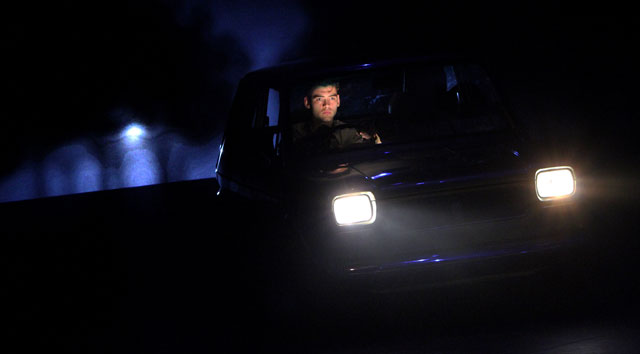
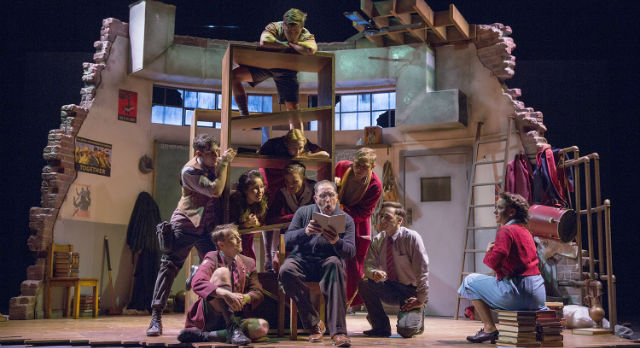
Horror movies have existed since the dawn of film technology in the 1890’s. It is a genre of storytelling that has always existed, and as such, should be thought of as integral to the way we communicate as a species, yet live theatre does not seem to have embraced that particular mode of presentation. Jeremy Dyson and Andy Nyman’s Ghost Stories adopts for an assembled crowd, the tradition of telling scary tales of the paranormal, with the intention of fascinating our senses and entertaining us. The work aims simply to frighten and thrill, so the script is tailored precisely for that purpose. It does not add much else to the experience, but its unpretentious simplicity helps it achieve an unusual show format that is refreshing and often very scary indeed.

Peter J. Snee’s direction cleverly manipulates all audio and visual cues in the venue to create the familiar sensations one derives from the horror genre. Unlike film though, we seem to require less extreme stimuli to respond with fear in live theatre. Thankfully, Snee does not push our limits too much, and the experience he provides never becomes unbearable. His design team (comprising Phil Shearer on production design, Christopher Page on lights, and Lana Kristensen on sound) does an excellent job of fulfilling its brief of creating a relentless air of skin-crawling foreboding that keeps tensions high, and when appropriate, shock us with powerful effects that literally make us jump.

There is a glaring lack of gender and ethnic diversity in the piece, but its all male cast is an accomplished one, with Lynden Jones’ performance as Professor Goodman providing the show with an inviting and dynamic energy. The actor is charmingly compelling, with an ability to turn the outlandish contexts believable, and a warmth that engages us for the entire duration, even when the plot starts to lose its resonance in its final moments.

Ghost Stories is a rare form of entertainment in the live arena, but it certainly does what it says on the bottle. The scares diminish with time, perhaps because of our acclimation to the production’s provocations, but on the occasions that it is effective, few things are quite as electrifying. There are many ways to have frivolous fun at the theatre, but choosing a night of horror over yet another musical is more than a novel option.

www.sydneyoperahouse.com

Review: The Dream (The Australian Ballet)

ausballetVenue: Sydney Opera House (Sydney NSW), Apr 29 – May 16, 2015
Choreographer: Frederick Ashton (reproduced by Francis Croese)
Image by Daniel Boud

Theatre review
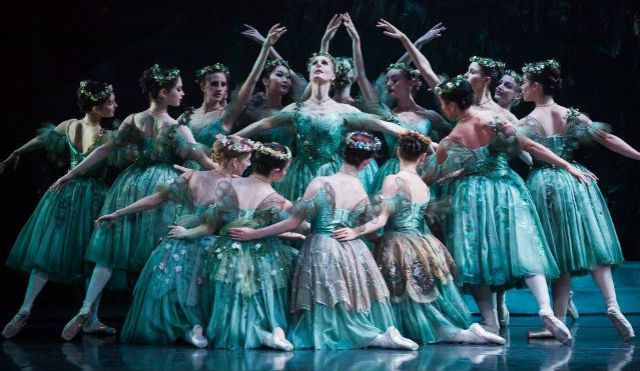
Frederick Ashton’s adaptation of Shakespeare’s A Midsummer Night’s Dream distils all the magic and fantasy of Titania and Oberon’s Fairyland, and uses the ethereal qualities of ballet to provide lyrical expression. Familiar characters are vividly brought to life in dance form, with performers from The Australian Ballet investing in their roles surprising colour and fitting charm. Particularly engaging is Chengwu Guo as Puck, whose powerful and nuanced work is an effervescent highlight of the production.

Retaining original visual design elements for the programme is perhaps unexpectedly effective, especially for Ashton’s Symphonic Variations, which is presented as a prelude to The Dream. Sophie Fedorovitch’s delightful set and costumes for the 1946 piece looks as modern today as it must have seven decades ago, with a stunning backdrop reflective of the early emergence of post modern design at the end of the second World War and in the wake of the Art Deco movement. Ashton’s work features six dancers, all of whom remain on stage for its entire duration, and although adventurous and dynamic by nature, its presentation on this occasion seems too aloof, and energy levels too consistent, to portray the multi-dimensional qualities of its choreography.

The first (of three) Ashton works in the schedule is Monotones II, created in the mid 1960’s to the music of Erik Satie. With just three dancers and a disarming starkness to its visual language, the piece is absolutely unforgiving, and requires of its performers, the utmost in precision, focus and cohesion. When moments coalesce, we obtain the kind of sublime beauty that we seek of the art form, and as inevitable imperfections reveal themselves, one is reminded of the “wabi-sabi” philosophy from Japanese aesthetic principles. Absence makes the heart grow fonder, but it also gives greater meaning to the rest that are present. Perhaps more than any other discipline, ballet’s incessant pursuit of perfection is fundamental to its very meaning and existence. For those of us who deny the possibility of perfection (and hence probably not possess the traits required of professional dancers), it is that very act of pursuance that appeals. The spirit is always willing and pure in our best performers, so even if the body can never live up to our abstract fabrications, what we witness in good theatre is always that passionate belief in something greater, something borne of the brave hearts of our most courageous idealists.

www.australianballet.com.au

Review: Jumpy (Sydney Theatre Company / Melbourne Theatre Company)

Venue: Sydney Opera House (Sydney NSW), Mar 26 – May 16, 2015
Playwright: April De Angelis
Director: Pamela Rabe
Cast: Laurence Boxhall, Caroline Brazier, John Lloyd Fillingham, Brenna Harding, Tariro Mavondo, Marina Prior, David Tredinnick, Jane Turner, Dylan Watson
Images by Brett Boardman

Theatre review
With each scene of Jumpy, pieces of furniture travel across the stage on castor wheels, moving past its protagonist Hilary. She is fifty of age, her only daughter Tilly has turned sixteen and is beginning her own sex life, and we meet them at a time when Hilary has come to realise that a period of stasis is coming to an end. Like the set that keeps rolling past, life seems to have left her behind while she dutifully plays the role of mother and wife. April De Angelis’ script is concerned with women who had grown up with second-wave feminism, particularly those from the era marked by the legacies of Germaine Greer, Gloria Steinem and Helen Reddy. Idealism and militancy fades or perhaps evolves into a modernity that bears little resemblance to the dreams that were birthed, like Hilary, half a century ago. Tilly is in some ways, a disappointment for her mother. De Angelis is critical as well, of the young woman’s need to build her identity around the male gaze. She allows many of her decisions to be determined by a need for the affections of men, and the dissatisfaction she derives from those behaviour evade her self-awareness. Hilary is confounded, and we all wonder how it has come to be that a generation can grow so contrary to its parental intentions. The text does not however, go so far as to say that child-bearing is pointless (although there is a tendency to characterise some parents as being selfish and afraid of loneliness), but we are certainly encouraged to assess the choices Hilary had made for herself.

The context is simple, with a sense of the everyday found in all aspects of its plot. Characters and events are familiar, but De Angelis’ ironic humour is omnipresent. Her comedy depicts middle class existence with a healthy cynicism, and is indeed, thoroughly entertaining. Each personality’s flaws are exposed shamelessly, but the writer’s compassionate approach prevents anyone from turning into clowns or villains. In fact, we identify with all of them, and find most to be very charming. Pamela Rabe’s direction is nuanced and gentle, with no big political proclamations and few dramatic gestures. Relationships are established convincingly, and every narrative is delivered clearly to make us care, and to keep us engaged.

Star of the show, Jane Turner’s outstanding ability and likeability as one of Australia’s top comic performers is well utilised in the production. We are always on her side, and we laugh whenever she wants us to. Turner’s trademark vaudevillian style of performance keeps her at some distance from her role, but there is enough authenticity and commitment in her portrayal to keep things believable. Reasons for the production not being transposed to an Australian context is unclear, but Turner’s British accent is less than satisfactory. It is an unnatural and overly posh affectation that can be uncomfortable to hear, and slightly inappropriate for the story being told. Other cast members are more adept speech-wise, and every supporting character is colourfully performed and memorable. Hilary’s best friend Frances is played by Marina Prior whose captivating vibrancy and self-deprecating humour keep the show buoyant. The contrast, and similarities, between the two middle-aged women are fascinating to observe, and their friendship is deeply meaningful, even though other relationships are given greater weight in the text. Also impressive is Tariro Mavondo’s performance as Lyndsey, the sixteen year-old new mother who treads the fine line between ignorance and purity, spouting pearls of wisdom when least expected. A heart of gold can be tricky to inhabit, but the actor’s effortless charisma turns her character’s innocence into a thing of beauty, and poses a challenge to the way we think about teen moms.

The production is a hugely enjoyable one that keeps our attention firmly under its control. There is a mildness in tone that reflects the theme of maturation, but it finds ways to amuse us from start to end. Its message arrives in the form of questions, but it leaves answers ambiguous. Middle class lives are full of anxiety, and Jumpy shows that the state of peacefulness does not emerge spontaneously with age and happiness does not necessarily materialise upon the fulfilment of duties of one’s choosing. The show does not hold the key to peace and happiness, but it provides inspiration, or at least a reminder, that it is never too late.

www.sydneytheatre.com.au | www.mtc.com.au

Review: As You Like It (Bell Shakespeare)

Venue: Sydney Opera House (Sydney NSW), Feb 21 – Mar 28, 2015
Playwright: William Shakespeare
Director: Peter Evans
Cast: George Banders, John Bell, Gareth Davies, Alan Dukes, Emily Eskell, Charlie Garber, Zahra Newman, Kelly Paterniti, Dorje Swallow, Tony Taylor, Abi Tucker
Images by Rush

Theatre review
As You Like It is not one of Shakespeare’s phenomenally poignant stories, nor is it an exceptional work of fantastical exuberance. It offers interesting personalities and amusing situations, but lacks a sense of grandeur and elements of surprise. Shakespeare might be idolised in all the right quarters, but his writing is certainly not without its detractors. His use of language especially, can be alienating for twenty-first century audiences, and when handled with less than expert proficiency, productions rarely deliver good results. Peter Evans’ direction never quite takes flight. There is plenty of investment into characters who seem to be dynamic and colourful, but we struggle to relate to anyone. Action on stage is lively and confident, but nobody connects with authenticity.

It is never certain where the centre of the play lies. The obvious focus would be on the love story between Rosalind and Orlando, but the remarkably poor chemistry between the two leads leave us searching for something more meaningful, or at least with some level of appeal. Zahra Newman as Rosalind is effervescent and a joy to watch when given the opportunity to take centre stage, but the important quality of romance in her narrative does not convince. Playing Orlando is the regrettably miscast Charlie Garber, whose charming presence and considerable comedic talents prove not to be sufficient for the role to take shape in our imagination. He does his best to exhibit commitment to the more dramatic sequences, but his efforts pale in comparison to when he gets to play the fool.

The stars of the show are its designers. Michael Hankin’s set brings to the stage a glorious interpretation of a Shakespearean forest, with floral garlands cascading from above, adding beautiful dimension and breathtaking hues to the performance space. Lighting by Paul Jackson is sensual but also varied, effectively depicting the movement of time and transformation of space. Kate Aubrey’s costumes are subtle and elegant, with just enough theatrical flourish to help actors establish mood and traits of individuality. Music and sound are utilised with great impact to influence atmosphere and to provide a sense of unpredictability. Kelly Ryall’s songs are pure entertainment, and an excellent touch that helps enrich an otherwise unexciting plot structure.

John Bell plays Jacques, and late in the second act, delivers the famous “all the world’s a stage” monologue. For a moment, the theatre turns electric, and descends into an attentive hush. The magic is real, and there is no mistaking its existence when it does take over. It takes a village to raise a child, and it takes a very big team of talents to put on a show of Bell Shakespeare’s usual ambitious scale, but on this occasion, it seems that the sum of its parts has not resulted in a collaboration greater than the whole.

www.bellshakespeare.com.au

Review: Suddenly Last Summer (Sydney Theatre Company)

Venue: Sydney Opera House (Sydney NSW), Feb 9 – Mar 21, 2015
Playwright: Tennessee Williams
Director: Kip Williams
Cast: Paula Arundell, Melita Jurisic, Brandon McClelland, Robyn Nevin, Eryn Jean Norvill, Susan Prior, Mark Leonard Winter
Images by Brett Boardman

Theatre review (originally published at Auditorium Magazine)
The very nature of trauma is dramatic. It disrupts the heart and mind, and leaves in its wake, disorientation and damage. To repair and to move on, fragmented pieces must first be assembled so that a sense of narrative and coherence can be found. The business of theatre involves storytelling, but it also involves a representation and expression of the human condition. At its best, art communicates something that is deep, but also universal. We want to be able to connect on some meaningful level, whether obtuse or simple. Like psychotherapy and other healing processes, theatre can often be difficult and confusing, but what matters is that artists and audiences emerge with something of value, and perhaps something new.

More than half a century has past since Tennesse Williams’ Suddenly Last Summer first appeared off Broadway, but its ideas remain seductive, and his words have proven themselves to be eternally sublime. Scripts in the theatrical canon are timeless because they are of themselves exceptional, or are able to initiate something extraordinary. Williams’ brilliant work appearing on any stage today will spark debates on the degree to which a new interpretation should stray from the predictable. There will always be purists who prefer faithful renditions that acknowledge the perfection of what is already established on paper, and then others would applaud daring departures that take the text to unexpected realms. Kip Williams’ production places three video cameras on stage with his cast. The revolving stage contains a plain cyclorama that doubles as a screen, so that multiple perspectives of the same stage moment can be offered. The show opens with just the back of the screen in view, and the first scene is projected onto that backdrop so that we can only see a movie sized projection of the performance. The stage then turns to reveal its other side where the actors and set are situated. The projection now continues on the front of the backdrop as the action takes place right before it. The camera operators do not hide from our sight, and although all its design harks back to 1937, our experience is a thoroughly modern one.

The actors portray characters with a sense of nostalgic accuracy, but there is no conventional theatrical experience to indulge in. Our eyes are constantly being pulled away from one image to another, and yet another. We are never allowed to focus too long on any dramatic moment. The work distracts us from itself, and we become frustrated and anxious, like the disturbed people we are studying. The concept of the stage is redefined by the use of video in Suddenly Last Summer. Surely, what we see in the theatre constitutes the performing space, but if our eyes are being manipulated by technology so that we are exposed to something strange, then space takes on different form and notion. If all we can see in the 544-seater is a needle piercing into the leading lady’s arm, then something magical has happened on that stage. Similarly, if a man runs off stage but appears to continue running up the fly tower on screen, then the confines of the proscenium can be seen to have vanished. It is certainly experimental work, and with everything that is unusual, we react first with bewilderment, and if our mental capacities are able to process beyond the immediate, then perhaps the work has achieved interesting intellectual effects. When the director’s work is good, it is because he is immensely inventive, but when bad, it is for the same reason.

Less ambiguous is the quality of performance from Eryn Jean Norvill, phenomenal in the role of Catharine. Through madness and fear, the most extravagant drama can materialise, and Norvill is stunningly uninhibited with the level of emotional and visceral intensity she achieves. Williams’ poetry is delivered through her voice as though singing the most sumptuous, yet tragic, of arias. Whether observing her in the flesh or through the lens, her star quality is undeniable, and it is clear that without her heartbreaking portrayal of a woman in agony, the production would not be remembered for much more than its formalistic inventions. Also captivating is Robyn Nevin, whose regal presence is a perfect match for the severe and menacing matriarch, Mrs Venable. The veteran actor’s portrayal is authentic and hugely engaging, which probably explains the camera’s frequent focus on her, even at moments when she is not taking centre stage. Nevin’s “reaction shots” are beautifully done, but a tricky element that can sometimes diminish the effect of what is actually unfolding in the plot.

Suddenly Last Summer has an astonishing story to tell, with exciting themes that would interest any audience, but the playwright’s efforts come dangerously close to being subsumed by the methods in which his story is told. The unorthodox staging eclipses the text itself. There is so much to discuss and think about when the curtains fall, but what takes precedence is the director’s orchestration of proceedings, which seem to be much more concerned with structure, rather than content. Of course, we should not prioritise the writer’s voice over the director’s simply because the play is well-known, but human impulse wants to revel in narratives, and any deprivation of that enjoyment will come up against resistance. Luckily, when the shock of the new fades away, we discover that it is the immortal soul of a classic tale that endures, and suddenly, last night’s turmoil is distilled and the essence left behind is the memory of Mr Tennessee Williams’ unparalleled legacy.

www.sydneytheatre.com.au

5 Questions with Dorje Swallow

dorjeswallowWhat is your favourite swear word?
I actually don’t mind the odd egad! And a simple bollocks goes a long way, I find.

What are you wearing?
Right now I’m favouring the blue shorts, white linen shirt, indoor soccer shoes ensemble. I’m trying to make it a thing. I’ve been sporting it for a whole summer now, and I’m still yet to have the satisfaction of seeing a single other person walking the streets with it. Having said that, if it ever did catch on, I’d stop wearing it. I’d hate for it to become like handball and 80’s music and suddenly ironic and cool for the kids. Actually that’s it. I’m done with this whole soccer/prep/Havana Night’s theme. It’s not me anyway – who am I kidding?

What is love?
Love is a wave of euphoric bliss, between two people who brighten and lighten each other’s days, and perhaps even add a little steam to the kitchen of life. Over time, it solidifies into the closest of friendships, and the feelings of joy and support one can appreciate when two people have shared so much together, and still have so much to look forward to. In effect, it moves from the kitchen to the living area. If you ever find yourself in the lavatory, or the rumpus, you’re in trouble. And we all know what happened to the Flowers in the Attic, and Colonel Mustard in the Conservatory with the Lead Piping, so let that be a lesson to you, ye students of love!

What was the last show you saw, and how many stars do you give it?
Masterclass. Charlie Garber and Gareth Davies. Old Fitzroy. 4 and a half stars out of 5. It features a brilliant revival of the montage sequence, which I would like to see more of in the theatre, please. A very funny show. Funny ha-ha, AND funny weird, which is, in my mind, the best combination.

Is your new show going to be any good?
Three weeks into rehearsal I can safely say that I think it’s going to be rather good, to say the least. Or, to quote a few people in the rehearsal room yesterday “This isn’t shit at all!” It’s a great play, that Shakespeare chap did seem to have a vague idea what he was doing, and in the hands of my talented cohorts I think we are building quite the theatrical, sumptuous feast! Come grab a seat in a few weeks and chow-down!

Dorje Swallow can be seen in As You Like It, by Bell Shakespeare.
Show dates: 21 Feb – 28 Mar, 2015 (the show then heads to Canberra and Melbourne)
Show venue: Sydney Opera House

Suzy Goes See’s Best Of 2014

sgs-best2014

2014 has been a busy year. Choosing memorable moments from the 194 shows I had reviewed in these 12 months is a mind-bending exercise, but a wonderful opportunity that shows just how amazing and vibrant, theatre people are in Sydney. Thank you to artists, companies, publicists and punters who continue to support Suzy Goes See. Have a lovely holiday season and a happy new year! Now on to the Best Of 2014 list (all in random order)…

Suzy x

 Avant Garde Angels
The bravest and most creatively experimental works in 2014.

 Quirky Questers
The most unusual and colourful characters to appear on our stages in 2014.

♥ Design Doyennes
Outstanding visual design in 2014. Fabulous lights, sets and costumes.

♥ Darlings Of Dance
Breathtaking brilliance in the dance space of 2014.

♥ Musical Marvels
Outstanding performers in cabaret and musicals in 2014.

♥ Second Fiddle Superstars
Scene-stealers of 2014 in supporting roles.

♥ Ensemble Excellence
Casts in 2014 rich with chemistry and talent.

♥ Champs Of Comedy
Best comedic performances of 2014.

♥ Daredevils Of Drama
Best actors in dramatic roles in 2014.

♥ Wise With Words
Best new scripts of 2014.

 Directorial Dominance
Best direction in 2014.

♥ Shows Of The Year
The mighty Top 10.

♥ Suzy’s Special Soft Spot
A special mention for the diversity of cultures that have featured in its programming this year.

  • ATYP

End

sgs-best2014a

Photography by Roderick Ng, Dec 2014

End

Best of 2018 | Best of 2017 | Best of 2016Best of 2015Best Of 2013

Review: Switzerland (Sydney Theatre Company)

Venue: Sydney Opera House (Sydney NSW), Nov 3 – Dec 20, 2014
Playwright: Joanna Murray–Smith
Director: Sarah Goodes
Cast: Eamon Farren, Sarah Peirse
Images by Brett Boardman

Theatre review (originally published at Auditorium Magazine)
The term masterpiece is used to describe a work of outstanding creativity, skill and workmanship. Although it is far too early to declare that Switzerland is Joanna Murray-Smith’s most celebrated work, there is no doubt that the playwright has founded something extraordinary with this fictional account of American author Patricia Highsmith’s very last days. Along with Sarah Peirse’s phenomenal performance as Highsmith, this is a production that will be remembered as one of the grandest achievements from two of contemporary theatre’s geniuses.

Highsmith died in Switzerland in 1995, but the story takes place in 2001. In her austere living room, she receives a guest Edward Ridgeway, who has arrived from New York as a representative from her publisher, despatched to obtain Highsmith’s signature on a contract for a new instalment to her famed Ripley series of novels. The young Ridgeway is bright and aspirational, but timid in the presence of the great writer, who has no qualms about berating and offending the rookie at every opportunity. Ridgeway presents himself as a devotee of Highsmith’s oeuvre, and uses all his might to complete the task at hand. The subject of his imploring however, is difficult and mean, and she proceeds to turn his visit into a living hell. Like Highsmith’s books of suspense in the crime fiction genre, Switzerland too is intriguing and seductive, with an unmistakeable Hitchcockian sensibility to its plot and pace. The breathtaking work is a remarkably gripping experience not commonly found in live performances that tend to appeal to emotions more than they do our very visceral responses and indeed, nerves.

It is always tempting to think of writings about writers to be at least partially autobiographical, and Murray-Smith does seem to be extremely personal and revelatory about that creative process in the palpable intimacy witnessed here. Highsmith was more interested in the “why” of murder, than the “how” of it, and this play thoroughly explores human behaviour and psychology, providing a window through which we discover the manifold logic behind the way we tick, especially in our dark moments. The characters thrive in their morbidity; conversations rarely veer from death and destruction, but the play is not deadly serious. It is often piercingly funny, particularly in the way Highsmith’s eccentricities and nastier qualities are accentuated. More than entertaining, Murray-Smith’s comedy helps with her macabre narratives, making them more convincing and threatening. It is the way light and dark vacillate that makes us lose ourselves, and fall headfirst into this indulgently baroque world of deception and narcissism.

Sarah Goodes’ direction is tense, taut and terrific. The deeply complex text is brought to life with crystal clarity in its narrative and characterisations, yet the astonishing multilayeredness of its themes is retained. It is the kind of play that seems to touch on everything, even though its story is ostensibly about something simpler. The context of a hermitic novelist is far removed from many of our own lives, but at no point does Goodes allow us to feel estranged from its themes and ideas. The script’s ambitious structure switches mode constantly within its three single-scene acts, taking cue from Highsmith’s unpredictable and capricious temperament. The direction’s acceding variances in tone and atmosphere are sensitively formed, and the results are edge-of-the-seat exhilarating.

In Switzerland, leading lady Peirse is perfection incarnate. She is at once Maria Callas, Greta Garbo and Bette Davis, bringing to the production a charisma that outweighs the Sydney Opera House, and a storytelling ability that seizes and manipulates our imagination as though reducing us to children hypnotised by a lullaby. Her Highsmith is obnoxious, contemptible, almost evil, yet we are drawn to her helplessly, desperate for her every utterance and gesture. There is a mysterious skill involved in the way Peirse makes each moment of her performance seem majestic, while letting us see textures of subtlety and importantly, authenticity. A real character exists on that stage, but the enormity of the actor’s power is its awe-inspiring double. Many excellent actors grace the stages in the lucky city of Sydney, but it is the splendour on this occasion that causes one to bemoan the ephemerality of the theatrical form.

The role of Ridgeway is equally substantial. The character is half of the story and script, even though he is necessarily subservient. Eamon Farren is a strong actor who tackles the role thoughtfully, and with evident conviction, but he is often eclipsed by Peirse. There is an unfortunate imbalance arising from the difference in levels of experience that is almost inevitable. Pitting an 80 year-old character against a twenty-something, and casting actors with over twenty years’ discrepancy in their respective craft maturation in a two-hander, proves to be more than a little precarious. Our attention resists being split 50/50, and Farren is outclassed and relegated to unofficial supporting actor. Nonetheless, the actor’s accomplishments in creating an interesting personality is significant and so is his contribution to the effectiveness of the plot. The chemistry of the pair is also noteworthy, with an impressive fluency to their dialogic rhythms.

All the action takes place in the living room. Michael Scott-Mitchell based his set design on Highsmith’s final home, suitably bringing to focus the Brutalist environs in which she dwelt. Taking a sharply angled perspective of the house, the stage is shaped like a dagger, reflecting Highsmith’s love of weaponry, and the harshness she had embraced into all aspects of life. Scott-Mitchell’s creation is masculine and perversely beautiful, with a large working fireplace in the centre that provides warmth to the visual aesthetic, but also a menacing sense of impending doom. Lighting is subdued but is central to mood changes and assists in illustrating character transformations. Nick Schlieper’s work is unassuming, but very elegant. Steve Francis’ memorable music compositions between scenes are cinematic and evocative, bringing to mind Hitchcock collaborator Bernard Herrmann’s more noir opus.

In Switzerland, Highsmith humorously claims to be neutral, never judging the actions of her characters, content to sit back and observe things unfolding, seemingly on their own accord. She washes her hands of all their sins and misdeeds, almost extricating herself from the part she plays as their sole architect. The show however, bears the fingerprints of all its authors and they should be immensely proud of their artistic marvel. Tom Ripley lives on as a literary landmark, and Joanna Murray-Smith’s play will likely go on to be a considerable part of Australian theatre legacy.
,

www.sydneytheatre.com.au

Review: Henry V (Bell Shakespeare)

bellshakespeareVenue: Sydney Opera House (Sydney NSW), Oct 21 – Nov 15, 2014
Playwright: William Shakespeare
Director: Damien Ryan
Cast: Michael Sheasby, Matthew Backer, Drew Livingston, Damien Strouthos, Gabriel Fancourt, Eloise Winestock, Danielle King, Darcy Brown, Keith Agius, Ildiko Susany
Images by Michele Mossop

Theatre review
As the years pass, we become increasingly accustom to war being a fact of life. Wartime is no longer a set of specific and exceptional circumstances, especially with the proliferation of mass media and the normalisation of conflict as a topic of daily interest. Shakespeare’s Henry V includes the ambiguities and tensions between tragedy and heroism, but four centuries on, we seem no longer able to tell a story like this without letting casualties take centre stage.

Damien Ryan’s vision certainly reflects contemporary attitudes on the essential destructiveness of war. The injured and the dead are not obliterated from our sight, but are left critically present on stage to abate any hint of glory that might surface. The use of symbols and the visual lavishness of Ryan’s work is fiercely thoughtful, almost omnipresent. Space is explored to its creative limits, with the astonishingly dynamic use of bodies, sets and props to convey emotions and concepts. Ryan’s brand of theatre is captivating and exhilarating, but also undeniably sensitive and intelligent. His Henry V is complex but accessible, innovative but unpretentious. It aims to be a theatre for all, catering to aficionados, students and everyone else, encompassing every age and background. Shakespeare’s language is challenging for many, and the director works thoroughly to bring elucidation, although detractors are unlikely to have a change of heart with this text, which is probably one of Shakespeare’s more obscure pieces.

The production is visually beautiful, with accomplished and adventurous work from designers on all fronts. Anna Gardiner’s intricate set gives the stage an intimacy and provides performers with extensive possibilities for inventiveness. Gardiner’s costumes are not extravagant but accurately and astutely conceived, consistently effective in each character transformation and evolution. Sian James-Holland’s lighting design is one of the show’s main features. Her work is ambitious and powerful, at times conveying the plot more completely than other more tangible elements can manage. Also outstanding are music and sound designer Steve Francis’ achievements in his very specific control over atmospherics, and vocal composer Drew Livingston’s many charming and surprising songs accompanying the script.

Clearly, the performances are not the only stars of the show, but this is an undeniably excellent ensemble of actors. The chemistry they have found with each other, and in every scene, is exemplary. There is an athleticism to their creation, assisted by movement director Scott Witt, that is often breathtaking and marvelous to behold. The constant variation in tone and mood that they manufacture gives the production an extraordinarily textured feel. Keith Agius plays the more mature roles and is memorable for the depth of meaning he is able to bring to his lines. It is the gravity and an intensity that he puts into speeches that sets him apart. Matthew Backer shines with a distinct sense of humour that follows his assured presence, and his singing voice is quite sublime. The most vibrant actor will always leave an impression, and on this occasion, it is Damien Strouthos who wins us over with his agile, flamboyant and impossibly energetic approach.

It is clear that Shakespeare is revered internationally, but the universality of his writing is arguable. As societies become more aware of ethnic, gender and other differences in experience and background, it becomes less likely that any artist can claim to be relevant to everyone, but theatre is in a unique position of sheer proximity where it has the potential to move and touch, in a visceral manner. Shakespeare’s words might not always make sense, but what it gives birth to, is often blisteringly remarkable.

www.bellshakespeare.com.au

Review: The King And I (Opera Australia / Sydney Opera House)

thekingandiVenue: Sydney Opera House (Sydney NSW), from Sep 7 – Nov 1, 2014
Music: Richard Rodgers
Book and Lyrics: Oscar Hammerstein II (based on Anna And The King Of Siam by Margaret Landon)
Director: Christopher Renshaw
Cast: Lisa McCune, Teddy Tahu Rhodes, Shu-Cheen Yu, Jenny Liu, Adrian Li Donni, Marty Rhone, John Adam
Image by Brian Geach

Theatre review
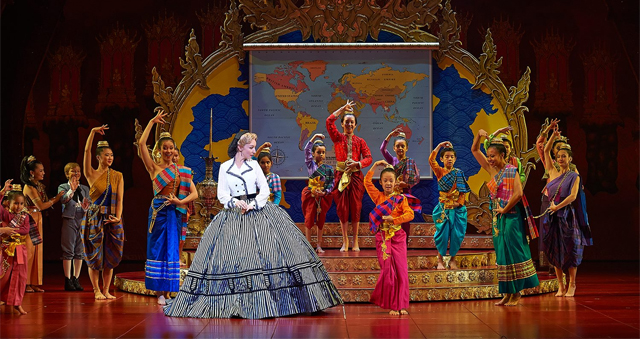
There is no denying the contentiousness of casting a performer who is not of Asian heritage to play the role of the King of Siam. It is a very rare occasion that a main stage production in Australia features a specifically Asian character in its lead, and to deprive Asian actors of the opportunity to headline a show of this grand scale is unfortunate. On the other hand, we are a culture that believes in meritocracy, where the best candidate for the job should win the part. Instead of background, we look at ability, and in the case of Teddy Tahu Rhodes who is King, in the Sydney season of The King And I, he proves himself a force to be reckoned with. Handsome, imposing and astonishingly talented, Rhodes is in many ways, perfect for the role. His humour is confident and sharp, and his rich baritone voice is immensely satisfying. Rhodes has charisma in abundance, which is key to his successful portrayal of royalty and chauvinism.

Anna is played by the endearing Lisa McCune, who is surprisingly animated in her depiction of the English language teacher from Wales. Her voice is not the most powerful in the cast, but her interpretation of classics like Getting To Know You and Shall We Dance is thoroughly accomplished, and her enthusiasm for the role is more than evident. McCune’s Anna is a delicate figure, but her energy is consistently buoyant, and her performance is compelling and enjoyable. The production features outstanding supporting players, including soprano Jenny Liu as Tuptim who provides the most ethereal and emotional singing in the production. Liu’s ability to convey passion and angst is a great asset to the show, and she embodies the tragedy of the plot effectively. The role of Lady Thiang is performed by Shu-Cheen Yu who delights with a stunning theatricality derived from traditional Chinese forms. Her use of physical and facial expressions is a rare treat on Australian stages, which simply must not be missed.

Designers never share top billing with cast members, but this is a production with a visual glory that will be remembered for years to come. Brian Thomson’s scenic design is luxurious and exquisite, with Nigel Levings’ lighting providing further variation to scenes. We never stray far from the King’s palace, but the stage looks and feels different in every scene, and nearly every change is awe inspiring. The glamour and vibrancy of Roger Kirk’s costumes are second to none, with every ensemble conveying beauty and romance. Choreography of the legendary segment The Small House of Uncle Thomas by Susan Kikuchi (based on Jerome Robbins’ original work) is sublime. Watching the famed sequence emerge from the familiar film into reality, in such fine form is a dream come true. Christopher Renshaw serves as director of the production, bringing with him great amounts of flair and elegance, especially in bigger scenes with groups of children and servants. There are always nuances to discover and flourishes to admire in the background. Renshaw handles the writing’s awkward (and dated) racial dynamics well. Jokes are made out of the clashing and discord between races, but caricatures are toned down significantly so that characters escape obvious degradation.

In spite of the productions efforts however, we cannot escape the core message of The King And I, which pits two cultures against each other and concludes at a point where the Siamese King experiences a dramatic transformation, while the Caucasian Anna remains the same person. The underlying message is clear; one side requires improvement and the other can stay unchanged. Furthermore, the Asian character’s evolution needs to be in line with the Westerner’s standards of taste and acceptability in order for the show to find resolution. It is understandable that the esteemed nature of Rodgers and Hammerstein’s work is resistant to radical alteration, and the fact that the story is based on famous memoirs places psychological constraints on artistic licenses, but creativity in the arts should know no bounds, especially when it takes on the responsibility to improve ideologies and advance civilisations.

www.thekingandimusical.com.au