Venue: Flight Path Theatre (Marrickville NSW), Nov 4 – 7, 2026
Playwright: Katie Picton (based on the short story by Carmen Maria Machado)
Director: Simon Porro
Cast: Amy Victoria Brooks, Jasmin Certoma, Rosie Forster, Molly Haddon, Susan Jordan, Natalia Nour, Katie Picton
Images by Patrick Phillips
Theatre review
Based on a short story by American writer Carmen Maria Machado, The Husband Stitch follows an unnamed narrator from girlhood through motherhood, tracing a life circumscribed by the enduring structures of patriarchy. Although she is defined largely through her relationships with men, her reflective pursuit of selfhood remains central, giving the narrative a compelling interior life.
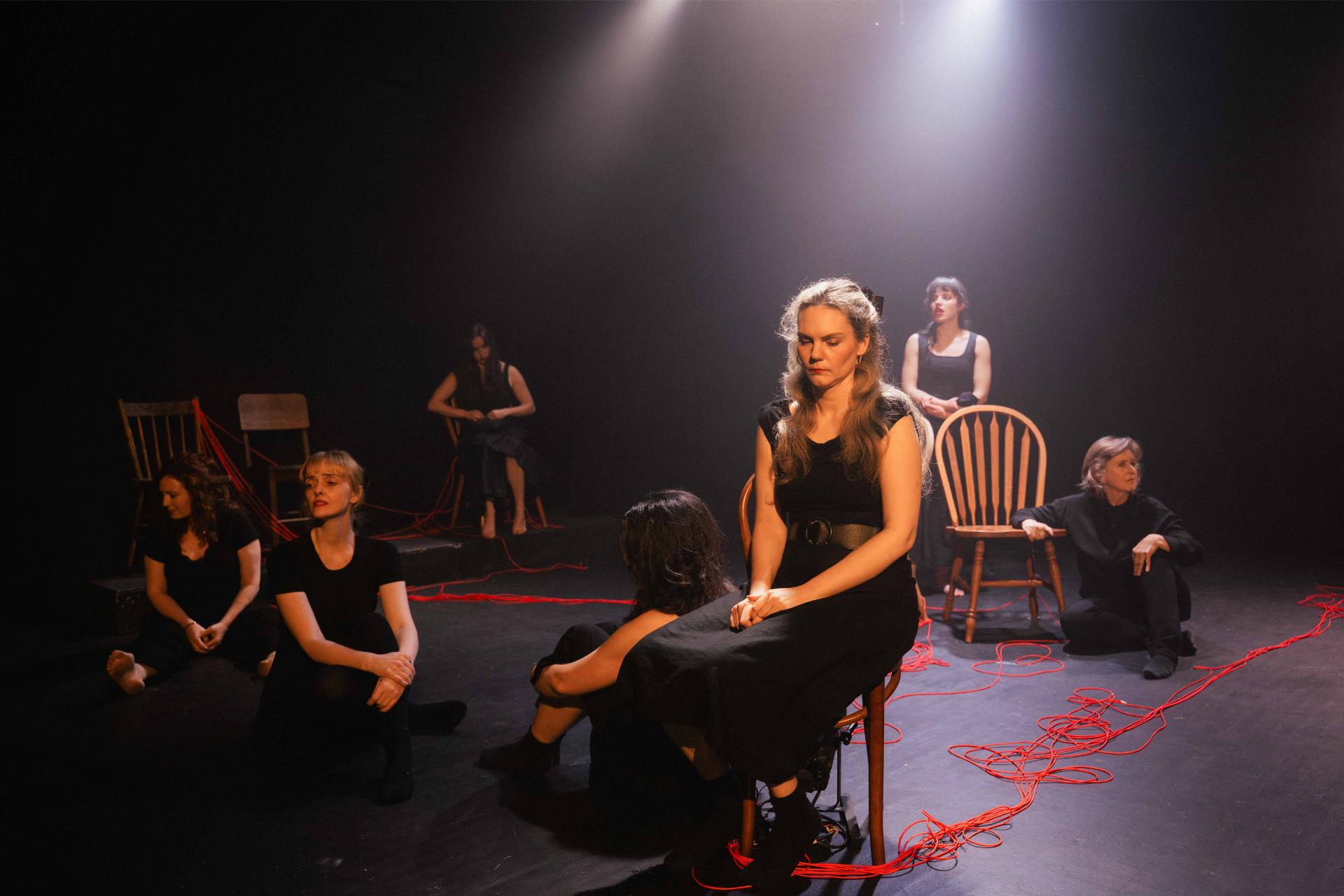
Katie Picton’s stage adaptation, however, finds insufficient theatrical expression for that interiority. Dividing the narration among seven women, it frequently amounts to a collective recitation of a monologue, with little structural transformation to generate the physical and dramatic momentum the material needs. The production seems continually poised for a kineticism that never quite arrives.
Simon Porro’s direction embraces the writing’s lyricism, cultivating a poetic atmosphere of sustained emotional intensity. Yet that intensity seldom translates into a meaningful connection with the audience. The experience remains curiously remote, its meanings too indistinct to move us beyond an appreciation of the evident care invested in the staging.
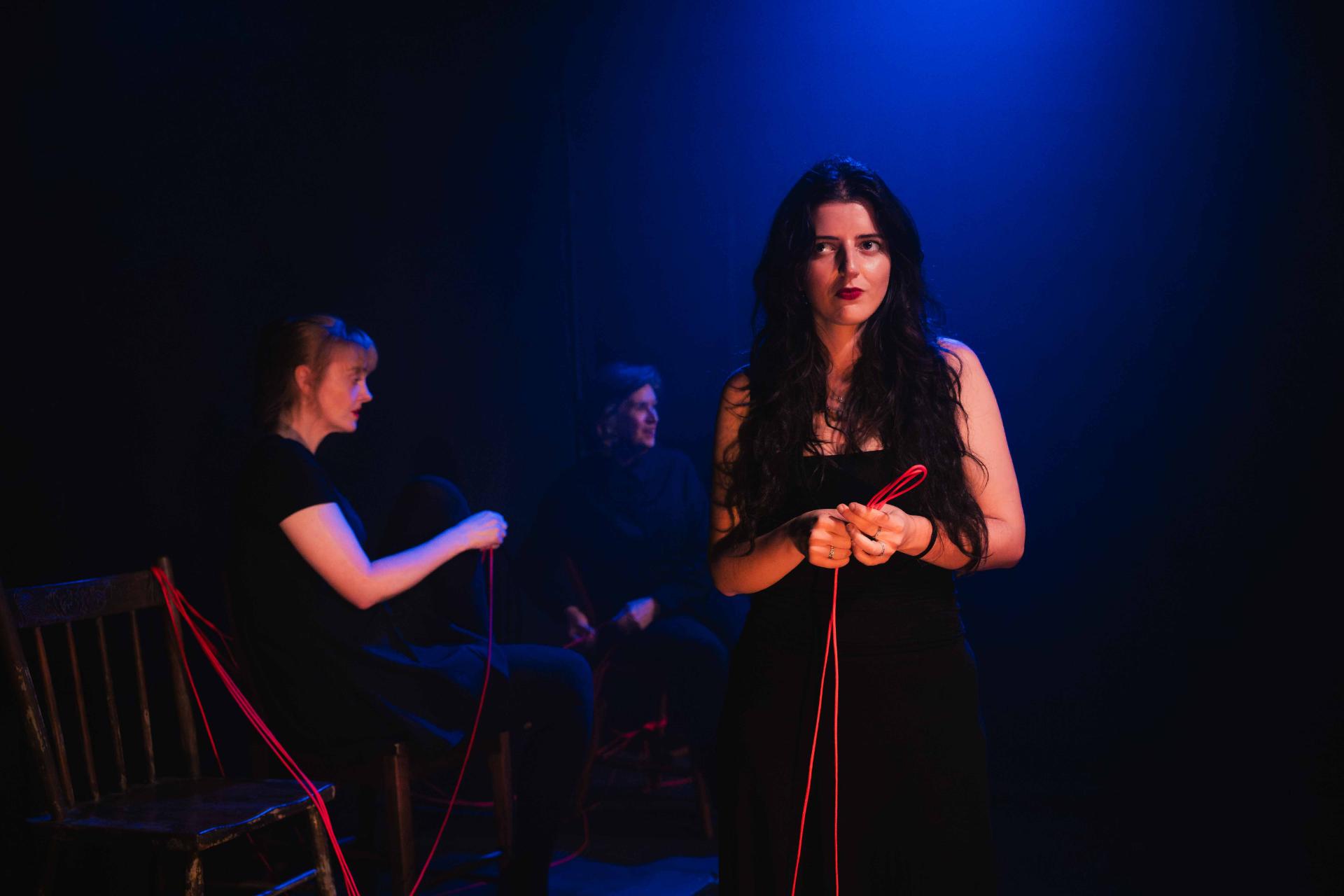
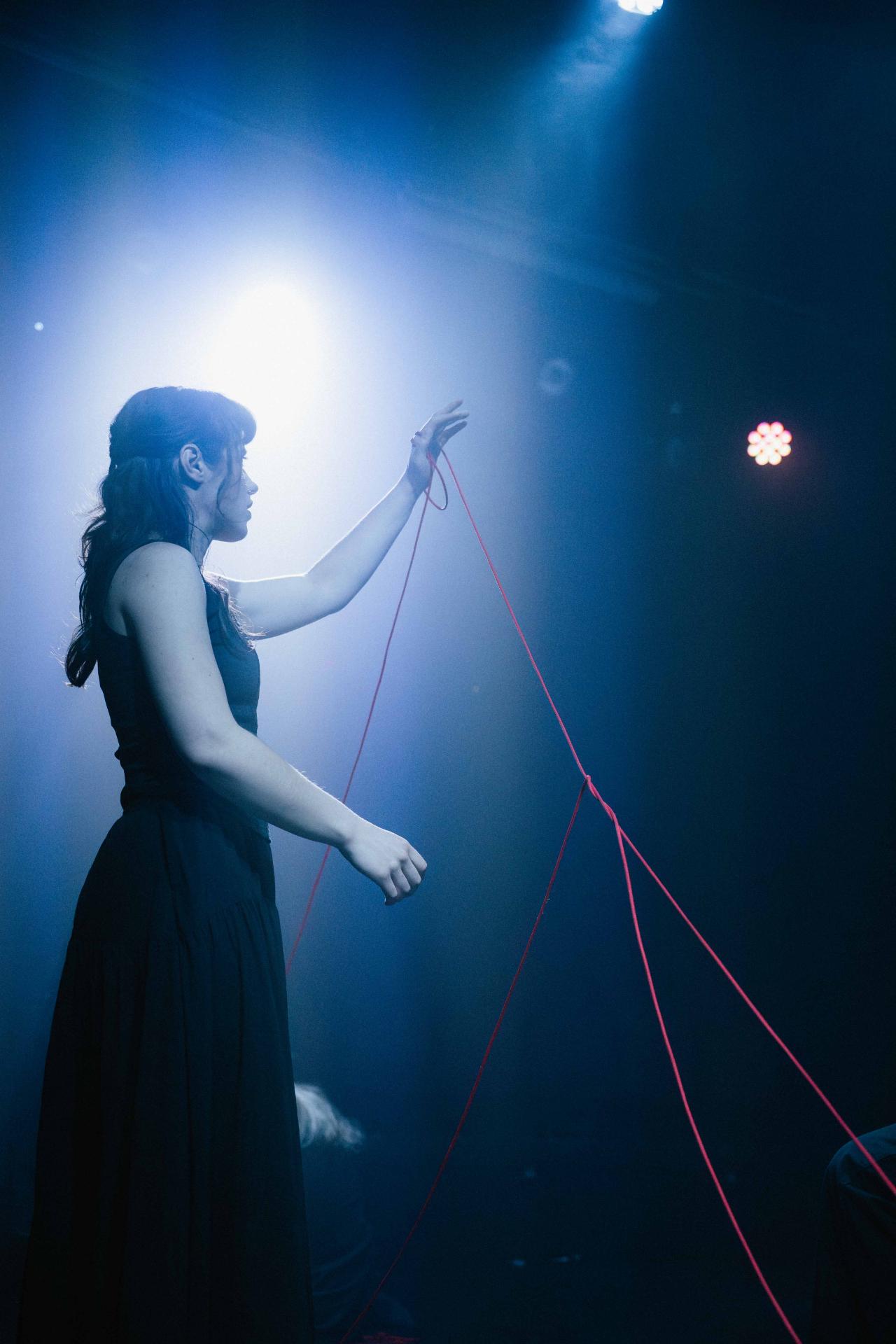
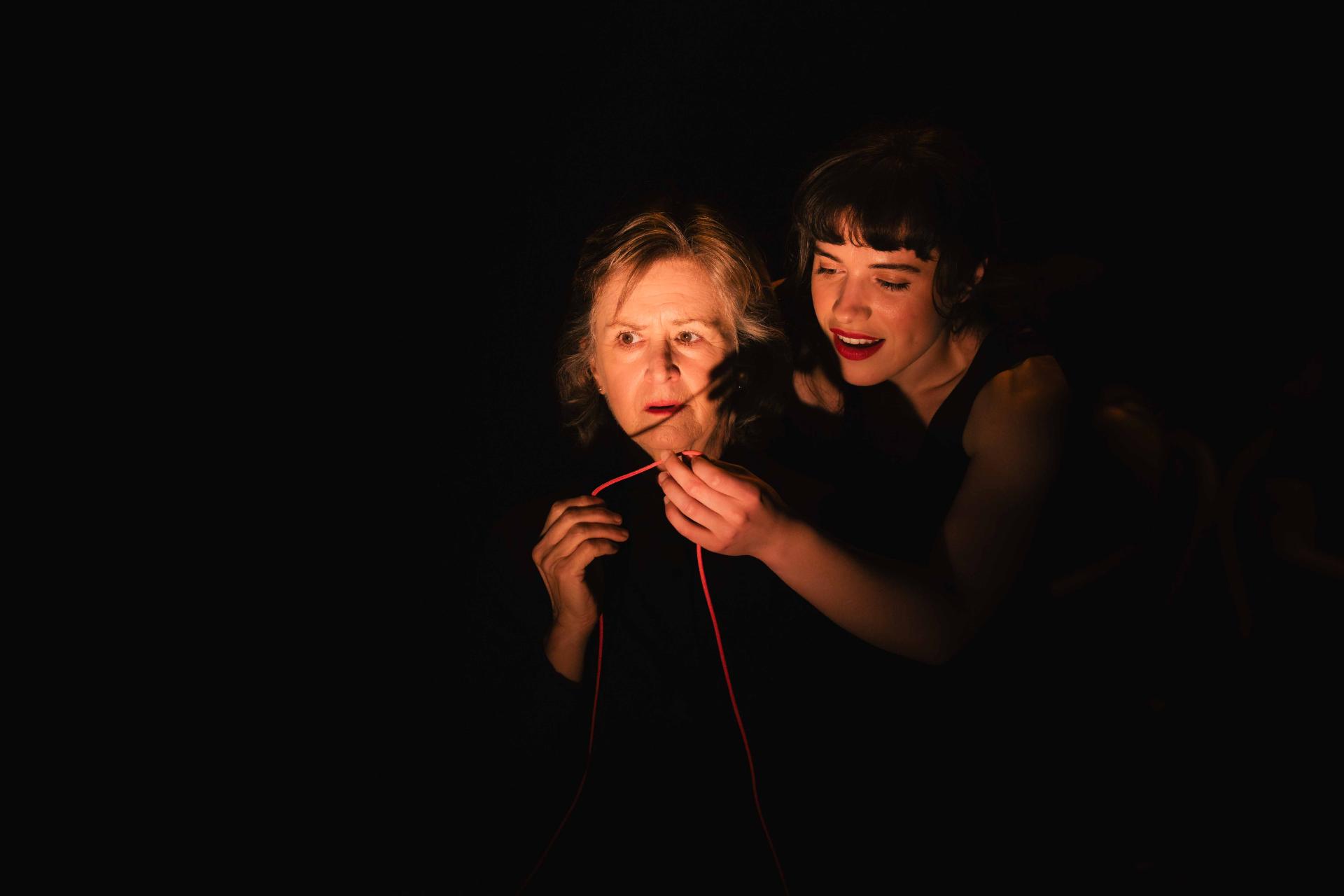
The cast demonstrates impressive cohesion in sustaining the work’s gothic sensibility. Ellie Wilson’s excellent score deepens its brooding atmosphere, introducing an undercurrent of sensuality that keeps the narrator’s desires perceptible beneath the forces seeking to contain them. Paris Bell’s pared-back design uses an abundance of black to concentrate attention on the performers, while Jasmin Borsovszky’s lighting seeks to heighten the drama, with uneven results.
Transposing literature to the stage requires a reconsideration of how a story lives in another form, how language might become action, and interior reflection acquire a physical presence. The Husband Stitch too often treats the passage from page to performance as a matter of redistributing prose as dialogue, without sufficiently accounting for the demands and possibilities of live theatre. Something of the original’s potency remains, but its unsettling intimacy proves elusive. We leave aware of the material’s significance, yet largely untouched by its force.
www.flightpaththeatre.org | www.virginiaplaintheatre.com