Review: Children Of The Sun (Sydney Theatre Company)

Venue: Sydney Opera House (Sydney NSW), Sep 8 – Oct 25, 2014
Playwright: Maxim Gorky (adapted by Andrew Upton)
Director: Kip Williams
Cast: Valerie Bader, James Bell, Justine Clarke, Yure Covich, Jay Laga’aia, Jacqueline McKenzie, Hamish Michael, Julia Ohannessian, Chris Ryan, Helen Thomson, Contessa Treffone, Toby Truslove
Images by Brett Boardman

Theatre review (originally published at Auditorium Magazine)
In Andrew Upton’s adaptation of Maxim Gorky’s Children Of The Sun, 12 characters of distinct and diverse personalities intermingle in the privileged Protasov household, each with their own sets of concerns and each holding world views that struggle to find cohesion and alliance. Written in 1905, but set 50 years earlier, Gorky’s play looks to the past in order that we may speak of the now. Created at a time of great political and social unrest, a fictional history was used to illustrate the disquiet of the day. The work is about the anxieties and uncertainties inherent in the process of revolution, and the troubling consequences of fragmentation in communities. In our age of technological modernity, we relate instinctively to its theme of individualistic narcissism, and the increasingly fracturing nature of our local and world affairs allows us to empathise with the writer’s angst and trepidation in the face of social upheaval.

The disharmony of relationships is strikingly enhanced in Upton’s version. Its farcical comedy is relentlessly witty and often surprisingly clever, but always subservient to the greater tension of unrest that gradually unfolds. The language we hear is modern, almost colloquially Australian, which not only makes for sharper punchlines, but also allows us to readily identify personality archetypes and status structures. The disconnect between the household’s apolitical characters and the political movement that intensifies on the outside is fascinating to observe. Upton’s dialogue portrays the insularity of daily life, with the characters unknowingly providing reverberations for a larger context. It is classic social commentary that seems immortal, because its necessity never seems to diminish.

Kip Williams’ marvelous direction of the piece works with all the nuances and philosophies of the script to deliver an irresistible production that is both entertaining and thought-provoking. Every character is intriguing and authentic, and Williams injects in each a dimension of dignity, refusing to make convenient fools of anyone. Herein lies the poignancy of work. The range of personalities is diverse, and even though we are unable to identify with everyone, we recognise the humanity in all of them. The vulnerability that they display is familiar, which means that the danger they encounter rings true for us.

Williams achieves a deliciously precarious balance between comedy and drama, effectively vacillating between frivolity and severity throughout the production. It is an intensely engaging show that manipulates our responses almost at will. There is an unpredictability to its plot that takes us off the beaten track and rejects our expectations, but it always enthralls our senses. Its rhythm is perfectly orchestrated in collaboration with our fluctuating emotions, and we become utterly lost in all its trials and tribulations.

Giving the narrative an impressive clarity is its extremely colourful and dynamic cast, many of whom exhibit extraordinary theatrical abilities that look very much like genius. Helen Thomson gives an unforgettable performance as Melaniya, a blundering seductress whose desperation is matched only by her beauty. Thomson’s work is precise and studied, but her instinctive timing creates a deceptive sense of spontaneity. Hilarious, playful, and larger than life, her every entrance is commanding and powerful. Thomson finds comedy in unexpected places, making us laugh while leaving us stupefied at the magnitude of her talents. Even more flamboyant is Hamish Michael, who is delightfully hammy as the painter Dimitri. His humour is unfettered and extravagant, always keen to highlight the vacuous pretensions of his role. Michael relishes the opportunity to play jester, with a wildness to his performance that is certainly amusing, and absolutely suited to the grand scale of the venue.

Pavel is the childlike patriarch, whose devotion to science renders him feckless in all other areas. Toby Truslove embodies the character’s eccentricity perfectly. The actor is slightly betrayed by his youthful appearance but his use of voice and physicality is very well-considered. Truslove’s ability to aggrandise what is basically an introspective personality helps establish Pavel as the charming man who finds himself the object of two women’s affections. Pavel’s sister Liza is his opposite. She is a creature of intuition and emotion, whose ill health is a symbolic manifestation of all the worries she carries for the world. Actor Jacqueline McKenzie is sensitive, elegant and tremendously affecting in the role. She demonstrates excellent range and an acute intellect that carves out the most intricate character on this stage.

Production design is restrained but highly evocative. David Fleischer’s big revolving stage holds several minimal structures that demarcate spaces, but all are in full view for the duration. The aesthetic is modern, but its sentiment is traditional. Significant plot devices like rain and fire are introduced gently, without causing a distraction from the story. Costumes and props are beautifully coordinated, with a sense of historical accuracy. Time and space is manufactured efficiently with minimal fuss, but every moment looks harmonious and beautiful.

This production of Children Of The Sun gives theatre lovers everything their hearts desire. It entertains, educates and thrills us, and it gives us so much to admire in the talent and skills that it showcases, but it does not provide answers to its own pressing questions. It is a quietly controversial work that makes statements about community, equity and political action. It makes us recognise the importance of social advancement, but seeks not to be divisive. It leaves with us a plea for progress and perhaps a yearning for a new revolution, but it relies on our own benevolence and intelligence to find a way.

www.sydneytheatre.com.au

Review: Not About Heroes (RGP Promotions )

notaboutheroesVenue: Sydney Opera House (Sydney NSW), Aug 4 – 6, 2014
Playwright: Stephen MacDonald
Director: Carla Moore
Cast: Roger Gimblett, Patrick Magee

Theatre review

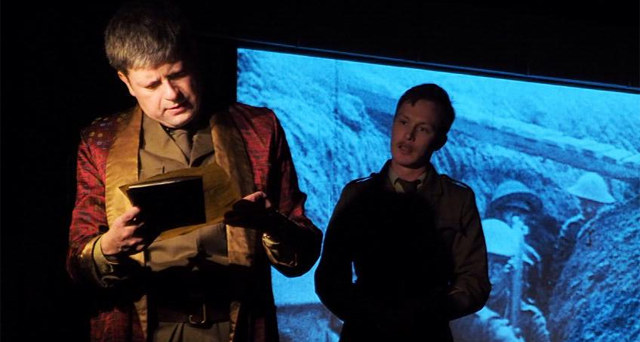
Stephen MacDonald’s Not About Heroes does not glorify war. It pays reverence instead to art, friendship and the loss of young lives. Siegfried Sassoon and Wilfred Owen were English soldiers in the first World War, remembered for their poetry about horrors they had faced while serving their nation. MacDonald’s play uses their work and other historical fragments to create a narrative out of the men’s extraordinarily intense and close friendship, which was forged out of their shared passion for poetry and the trauma they had both sustained from being caught in the middle of battlefield devastation. In each other, they had found a partner in life and art who was able to provide support and trust, with a unique understanding of the other’s inner world. MacDonald’s depiction of the relationship is vivid, emotional and grand, sometimes even romantic, and although their intimacy never extends into a physical one in his rendering, we feel a depth between the two that is no different from those of most marriages or families.

The play includes many passages by the poets, cleverly selected and contextualised to express the development of the characters, their relationship and their experience of the war. Direction by Carla Moore gives the production an emotional quality that is affecting and very sentimental. We feel the love between Sassoon and Owen, and even more so, we feel for all the soldiers who have been sent to war and the masses who have perished over the years. Moore is precise with what each scene is to achieve, and the show she creates is consistently clear in its plot trajectories and in the sentiments it wishes to convey at each juncture. Her control over performance ensures that the actors always provide appropriate nuances, with a noteworthy emphasis on speech that allows every powerful word to resonate for the audience. The use of a screen enhances the effect of sections in the play that delve into details of war, with sobering and impactful results.

Acting in the piece is sensitive and authentic. Both players show an enthusiasm for the material at hand, and their attachment to it is conveyed impressively. Roger Gimblett plays Sassoon with a stateliness that efficiently paints a picture of a man with stature and experience, giving credence to Owen’s very early admiration. Gimblett’s use of voice is outstanding, and diction is a crucial asset for a play that relies heavily on the legacy of poetry from the era. The boyish Owen is embodied by Patrick Magee who imbues beautiful spirit and purity to his work, and his understated vibrancy makes an important statement about wasted youth. Magee has excellent focus and presence that allows his role to remain in balance with his counterpart who performs with greater gravity.  Gimblett and Owen are lively entertainers who have successfully identified light and heavy sections of the play, and they deliver accordingly with performances that are captivating and surprisingly dynamic.

This review is written on the day that marks the centenary of the first World War. With the advent of information technology, we are more aware than ever, of atrocities that occur around the world, where communities are decimated in the name of religion, ethnicity, and honour. The “war to end all wars” has long been revealed to be a lie. Not About Heroes is a reminder that life in all forms is precious, and all sacrifice in war is tragic. Peace is hardest to achieve of all that is worthy, but the pursuit of it must never be surrendered.

www.sydneyoperahouse.com

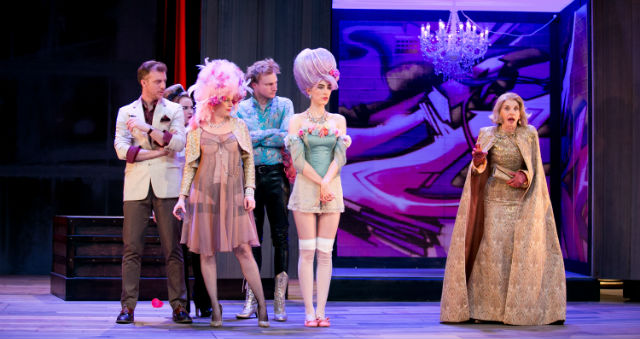
Review: Tartuffe (Bell Shakespeare)

bellshakespeareVenue: Sydney Opera House (Sydney NSW), Jul 26 – Aug 23, 2014
Playwright: Justin Fleming (after Molière)
Director: Peter Evans
Cast: Leon Ford, Sean O’Shea, Helen Dallimore, Geraldine Hakewill, Kate Mulvany, Charlie Garber, Tom Hobbs, Jennifer Hagan, Robert Jago, Russell Smith, Scott Witt
Images by Lisa Tomasetti

Theatre review (originally published at Auditorium Magazine)

Stories that stand the test of time contain truths that resonate across generations. They bear a universality that seems to derive from the very essence of being human, and a good retelling of those tales will always reveal to us, the nature of our being, and perhaps more importantly, the morals we should live by, however we choose to respond. Tartuffe has a central theme that does not age. Our relationship with religion as individuals and as collectives come into scathing scrutiny, and the way this resonance persists is a potent indication of the concerns we live with, and sadly, how little some things evolve. Molière’s play is now 350 years old, and what was controversial then, can still be used for contentious discussion today.

Justin Fleming’s exciting new script shows great talent and flair. It is an adaptation that feels updated and immediate, yet it preserves a classic sensibility, most notably through his use of rhymes. The original featured rhyming couplets, and Fleming’s decision not to deviate too far from it is felicitous, especially with new rhyme structures that are more varied and surprising. The play’s religious complexion is faithfully retained, but Fleming’s writing reconditions its gender dynamics to reflect modern day conventions. From this perspective, it is pleasing to observe the diminishment of sexism, even if religion’s place in the world seems to have obstinately endured over these centuries. By far the most drastic flourish is found in the overhauled ending of the piece. The change is a brave one, but its effectiveness is debatable. While it displays a quirky humour that can fit quite well with the style of Molière, the production falters at this point of “supernaturality”, not quite able to execute a vision with sufficient aplomb.

The venue is a large one, with a stage size that is challenging for any play featuring only a handful of performers in each scene. Director Peter Evans’ emphasis on authenticity in dialogue delivery is admirable, but memorable moments of the production come from performances that are more about flamboyance than nuance, and the frequently realistic level of interpretation seems to waste not just the vastness of the auditorium, but also the wildness of Molière’s concepts. As a result, performers like Scott Witt who have a greater command of physical capacities capture more of our attention (Witt also serves as Movement Director). Theatre is as much about space as it is about words. There are texts difficult to master, and likewise, there are stages that are harder to conquer. Not all characters are externalised enough, whether due to ability or creative choices, and the comedy is consequently uneven. Leon Ford as Tartuffe is neither majestic nor repulsive. The actor does have a captivating presence, but the role calls for more extravagant malevolence and a certain enigma that is never achieved. The play provides for his entrance tremendous build-up, but when he finally materialises, the Tartuffe we see does not live up to our imagined personality who is more evil and animated, and definitely less attractive.

The script is outlandish and titillating, always with an air of controversy, but what Evans puts on stage is safe by comparison. There is irreverence in content but not in its form. Bell Shakespeare is a professional theatre company doing theatre properly, and their Tartuffe is charming and polished. Expectations of a more anarchic rendering may be unrealistic, but Molière’s themes evoke heresy and inspire mischief, and without some quality of impoliteness, the play is reduced to something quite frivolous. There is social significance to this story, and due attention needs to be placed on its relevance to the community it plays for. We are after all, in the age of the Mad Monk (one of our Prime Minister’s nicknames), and we have political leaders who advocate the replacement of secular social workers in schools with chaplains. There is clearly fertile ground that can be penetrated, in order that a stronger social criticism can be made from taking on this platform.

The character of Orgon is played by Sean O’Shea, who becomes increasingly delightful as the hysteria escalates. Like many of the cast, his early scenes seem oddly subdued, but greater exuberance appears further into the piece. O’Shea has a playfulness that connects well with his audience, and establishes a good level of believability as both the master of the house and the fool. However, the mockery out of Orgon is not made strongly enough. It can be argued that the gravity of the play lies in Orgon and his mother’s irrational trust in Tartuffe, and the devastating effects that follow. The pertinence of their blind faith cannot be understated, and not giving it greater prominence seems to be missing the point altogether.

Stand out performances include Kate Mulvany’s Dorine, who is easily the most colourful and confident on stage. Mulvany’s remarkable wit is clearly a highlight, and her enthusiasm for creating theatrical magic out of every sentence is a marvel to watch. Charlier Garber’s comedy style is an excellent match for the frenetic energy of Molière’s crazed world. Garber capitalises on his extraordinary lankiness and idiosyncratic hairstyle, manufacturing an almost cartoonish character that never fails to amuse.

Also commendable are the production’s visual design aspects, especially Anna Cordingley’s work on costumes and sets. The script self-consciously mentions “Dolce, Galliano and McQueen”, indicating the family’s affluence and interest in style, and Cordingley certainly manages to impress upon us, a world of some extravagance and luxury, including an unforgettably exquisite costume for Madame Pernelle. Over-sized set pieces add a sense of wonder, and help with segmenting and shrinking stage spaces, but the unruly wheels on a very dominant chesterfield sofa need to be tamed to prevent its repeated, unintended and distracting slipping and sliding.

Bell Shakespeare’s Tartuffe is an entertaining work with committed performances and slick production values. Its level of professionalism is exceptional in an artistic landscape that tends to reserve our biggest talents for commercial musical theatre, and for productions overseas. Great stories however, are not only about entertainment and refinement. They are defined by the depth at which they move us, and as Molière’s immortality has shown, it is always the moral of the story that truly counts.

www.bellshakespeare.com.au

5 Questions with Roger Gimblett

rogergimblettWhat is your favourite swear word?
At my age I just appear embarrassing when I swear…

What are you wearing?
The Uniform of a Second Lieutenant in the Royal Welsh Fusiliers.

What is love?
A term used in tennis matches (possibly also an emotion discovered between two somewhat repressed English poets in a War Hospital in 1917).

What was the last show you saw, and how many stars do you give it?
Sherlock Holmes: The Final Adventure. I’m possibly biased but a HUGE number of stars- especially as we were in the bar by 10pm.

Is your new show going to be any good?
It apparently was rather good when we did it 6 years ago… of course my co-actor Patrick Magee is probably far too old to be playing Wilfred Owen now, so who knows?!!

Roger Gimblett plays Siegfried Sassoon in Not About Heroes by Stephen MacDonald.
Show dates: 4 – 6 Aug, 2014
Show venue: Utzon Room, Sydney Opera House

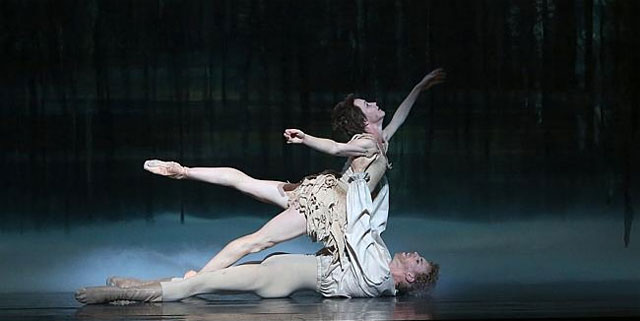
Review: Chroma (The Australian Ballet)

chroma
Venue: Sydney Opera House (Sydney NSW), Apr 30 – May 17, 2014
Choreographers: Wayne McGregor (CHROMA), Stephen Baynes (ART TO SKY), Jiří Kylián (PETITE MORT and SECH TÄNZE)
Image by Jess Bialek

Theatre review
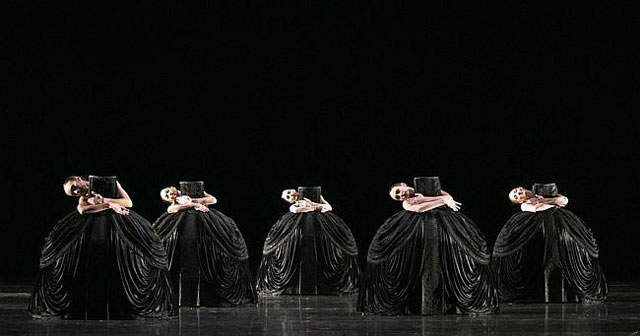
The programme begins with Wayne McGregor’s 2006 work, Chroma. Set against the powerful and aggressive music of Joby Talbot and Jack White III, this very modern ballet is instantaneously captivating. Its exquisite set is designed by John Pawson, evoking sensibilities proffered by the minimalist art movement. Covered in white and with its corners rounded off, the stage glows with a warm and quiet spirituality that finds a strange harmony with the vigorous soundscape conducted by Nicolette Fraillon. The dance creates a new grammar based on the balletic form. It is characterised by a dynamic desire for freedom, and it seeks in movement, the expression of all that is beautiful, emotive, and sublime. Inspired by a concept of nothingness, what transpires is a process of distillation with an outcome that displays honesty and necessity. The dance is fresh and new, but it is at no point hollow. There is an originality in its shapes and tempo that seems completely natural, even though it intends to break new aesthetic ground. McGregor’s earth shattering creation is a true work of art, but more than that, its deeply transcendent quality affects us as though it is by nature, sacred.

Stephen Baynes’ new piece Art To Sky is considerably more traditional. It is impressively technical, and the dancers’ athleticism is wonderfully pronounced here. The most well rehearsed and precisely performed work of the night, it showcases the company in glorious light. Chengwu Guo’s solo sequence is remarkably powerful, executed with great flair and exactness. An exceptionally tender pas de deux featuring Madeleine Eastoe and Andrew Killian is touching in its passionate fluidity, and sensitively embellished by the talents of lighting designer Rachel Burke.

Czech choreographer Jiří Kylián is featured twice. His Petite Mort (1991) is as sensual as the title suggests, but also unpredictable. Surprising movements, coupled with unconventional combinations of the dancers’ bodies make for startling and breathtaking beauty. There is however, a lack of depth with its realisation on this stage. The performers require a more thorough engagement with the work to muster a greater range of subtleties to exalt more life. Kylián’s Sechs Tänze (1986) is a delightful and theatrical creation that is equal parts camp humour and extraordinary choreographic innovation. It is engaging, provocative and endlessly fascinating, and the dancing seems to be particularly enthusiastic for this section. This morsel of genius is undeniably the perfect choice for closing the show on a high note.

www.australianballet.com.au

5 Questions with John Adam

johnadamWhat is your favourite swear word?
There’s only one left which still has any impact. No prizes.

What are you wearing?
Jeans. T-shirt. Sneakers.

What is love?
The only thing that gives life meaning.

What was the last show you saw, and how many stars do you give it?
Best recent show was The Cherry Orchard at Melbourne Theatre Company. 4.5/5.

Is your new show going to be any good?
The best bang-for-your-buck musical-goers are likely to get.


John Adam is appearing in The King And I with Opera Australia.
Show details: QPAC Brisbane from 13 Apr 2014, Princess Theatre Melbourne from 10 Jun 2014, Sydney Opera House from 9 Sep 2014

5 Questions with Marty Rhone

martyrhoneWhat is your favourite swear word?
The F bomb. It can sum up so many things in so many contexts. I don’t think there is a better word that can so expressively sum up a situation or feeling.

What are you wearing?
Jocks; it’s pretty warm here in Brisbane.

What is love?
Love can be so many things and so many emotions; from adoration and passion to admiration and respect, but most of all I think it is something or someone you always want to have in your life and without it or them your life would be an empty existence.

What was the last show you saw, and how many stars do you give it?
It was so forgettable I can’t even remember the title but the actors did their best with ordinary material so for that I give them 5 stars.

Is your new show going to be any good?
Potentially as good as any before it.

Marty Rhone is appearing in The King And I with Opera Australia.
Show details: QPAC Brisbane from 13 Apr 2014, Princess Theatre Melbourne from 10 Jun 2014, Sydney Opera House from 9 Sep 2014

5 Questions with Adrian Li Donni

adrianlidonniWhat is your favourite swear word?
It’s not one I use a lot, but the “C-word” really tickles me. Something about people’s reaction to it really makes me laugh. Don’t judge, Shakespeare used it.

What are you wearing?
I just got a spray tan in preparation for our first preview this weekend, so just ratty shorts, while I wait for it to settle.

What is love?
I don’t know how to answer that. Mucho complicated, as it is just a word. I’ll try and point to it though…

When I look at someone beyond his or her labels and ego, there is love; a deep knowing that I am Him and She is me. We were all created from a single moment in history. We are all made of star stuff. How awesome is that?

What was the last show you saw, and how many stars do you give it?
The Lion King at Capitol Theatre. Didn’t think much of it the first time I saw it, but this time I let go and really enjoyed it. 4 stars.

Is your new show going to be any good?
It’s going to be extremely good! The detail in the set design alone is worth the price of a ticket (has anyone mentioned that it’s covered in thousands of Swarovski jewels?). It’s a grand and stunning production with a stellar cast. Come check us out!

Adrian Li Donni is appearing in The King And I with Opera Australia.
Show details: QPAC Brisbane from 13 Apr 2014, Princess Theatre Melbourne from 10 Jun 2014, Sydney Opera House from 9 Sep 2014

Review: Manon (The Australian Ballet)

ausballetVenue: Sydney Opera House (Sydney NSW), Apr 3 – 23, 2014
Choreographer: Sir Kenneth MacMillan
Dancers: Madeleine Eastoe, Wim Vanlessen, Matthew Donnelly, Brett, Chynoweth, Dana Stephensen

Theatre review
With its extravagant production of Manon, The Australian Ballet once again brings ethereal beauty to life. Originally a novel from the 18th century, Sir Kenneth MacMillan’s work from 1974 is revived for contemporary audiences with generous measures of drama and humour that ensure broad appeal. The story interweaves romance with deception, murder and debauchery, resulting in a show that is full of entertainment, while providing extraordinary aesthetic pleasure.

Madeleine Eastoe is a delicate Manon. She anchors the show with a charming confidence, and her energetic execution of choreography delivers a characterisation that is endearing and precise. Eastoe’s captivating depiction of Manon’s journey is crystal clear, and her final moments are moving in their palpability.

Dana Stephensen is memorable as Lescaut’s mistress, with a striking vivacity that connects well with the audience. She plays up the comical elements of her role with subtlety, and attacks her dance with an alluring dynamism that is often breathtaking. Brett Chynoweth as Lescaut impresses and steals the show in Act 2 with sequences portraying his drunkenness. Chynoweth’s performance of the stunning choreography is highly amusing, but also technically powerful.

Manon‘s design elements are magnificent. Peter Farmer’s costume and set design are lavish and imaginative. It is an immense treat to have a fantasy world materialise before one’s eyes. Farmer’s six different sets are not just heavenly backdrops, and his costumes are not merely pretty adornment. We marvel at his genius, and lose ourselves in the sublime world he has created.

On display in Manon are artists of supreme talent and ability, almost not of this world. Their work lifts us out of our mundane realities, and takes us to a place far, far away.

www.australianballet.com.au

Review: Noises Off (Sydney Theatre Company)

noisesoffVenue: Sydney Opera House (Sydney NSW), Feb 17 – Apr 5, 2014
Playwright: Michael Frayn
Director: Jonathan Biggins
Actors: Alan Dukes, Lindsay Farris, Marcus Graham, Ron Haddrick, Danielle King, Genevieve Lemon, Tracy Mann, Josh McConville, Ash Ricardo

Theatre review
Sydney Theatre Company’s new production of the now classic farce, Noises Off, is comedy at its broadest. This comedy of errors is not sophisticated in concept but its execution under the directorship of Jonathan Biggins is highly accomplished and outlandishly dynamic. From men falling off staircases to women sitting on sardines, and girls in gartered lingerie to boys in bell bottoms and mullet hair cuts, Biggins approaches Frayn’s 1982 work with the most basic of motivations. He wants to make us laugh, and he is determined to pull out all the stops to make it happen.

The cast Biggins has assembled shares his vision. They show no qualms in playing for laughs at every available opportunity, which means that not all characters are clearly defined, and some plot lines get lost in all the mayhem, but the entertainment value of their show is guaranteed. Josh McConville as Roger/Garry impresses with his athletic agility and the most exaggerated physical gags in the production. The volume of his performance sets the standard for how extravagant the actors can go on that stage.

Tracy Mann plays Flavia/Belinda with more subtlety, but her use of voice is strongest in the cast. The excessively, and comically, stagey English accent from the era not only assists with a more distinct characterisation, its overt articulation actually provides clarity to the many twists and turns that occur in the busy story. Ash Ricardo as the Vicki/Brooke “bimbo” characters triumphs in spite of the restrictive and narrow scope given. Her energetic interpretation brings a fresh edginess, and the running joke about her contact lens is a big crowd pleaser. Marcus Graham, usually known for dramatically serious roles, is surprisingly effective as Lloyd. Like the rest of the cast, his enjoyment of the show is genuine, and infectious.

Laughter is the best medicine. Theatre goers can often be an uptight bunch. Jonathan Biggins’ Noises Off forces us to open up and it speaks to a different part of our minds. Like the brilliant extended section in Act 2 where virtually no words are spoken, but the biggest laughs are heard, our senses are kept busy. We work overtime to keep up, not with lines and ideas, but by observing all the funny unfold and responding with the thoroughly visceral, and biological, guttural guffaws from deep within… that space which is too often hidden away from the light of day.

www.sydneytheatre.com.au