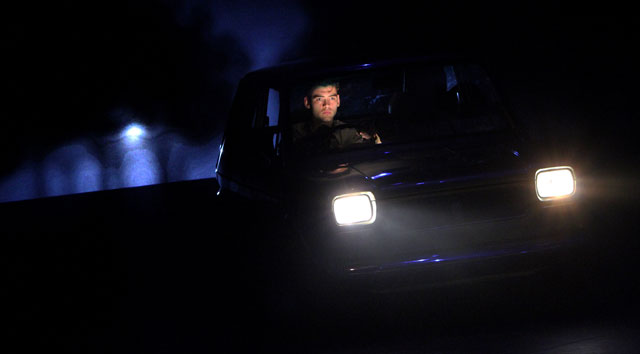
Review: Hay Fever (Sydney Theatre Company)

Venue: Sydney Opera House (Sydney NSW), Apr 11 – May 21, 2016
Playwright: Noël Coward
Director: Imara Savage
Cast: Briallen Clarke, Tom Conroy, Alan Dukes, Harriet Dyer, Genevieve Lemon, Tony Llewellyn-Jones, Josh McConville, Heather Mitchell, Helen Thomson
Images by Lisa Tomasetti

Theatre review
Judith Bliss and her family share an exquisite sense of humour, as well as dubious moral standards. They live out their self-obsession like a flamboyant form of high art, entangling unsuspecting acquaintances into their shenanigans, blurring the lines between fantasy and reality. Noël Coward’s Hay Fever is the pinnacle of British wit, transcending time and space with a style of frivolity that does not seem to age. Whether silly or edgy, the play’s air of sophistication never falters. Intelligent but not intellectual, it gives us feather light humour without ever being patronising. A sheer delight for fans of theatre, and rambunctious fun for those on stage.

Director Imara Savage finds room for creativity, and exercises her artistic freedom while retaining all the best of Coward’s essence. Savage’s rendition seems faithful to the writer’s milieu, even though its sensibilities are thoroughly modern, revealing an instinctive ability to locate the timeless and perhaps universal elements of the play. These are not characters with profound messages to convey but they offer opportunities for imaginative and extravagant use of the theatrical platform, and Savage certainly rises to that challenge. Her show is visually exciting, with an infectiously exuberant spirit that overflows the stage and demands our attention. Set and costume design by Alicia Clements is sublime. The Bliss home is rendered with a bohemian rustic beauty, and costumes although effortless, are rich with glamour and sex appeal.

A host of larger than life personalities is created with wild abandon by a remarkable ensemble, led by Heather Mitchell who appears to have amassed inexhaustible tricks up her sleeve for the depiction of a prima donna, and her Judith is spectacularly resplendent in grandiosity and excess. Performances in the production are exaggerated, but also nuanced and thoughtful. Grand gestures and overstatements are appropriately supported by its dramatic “show within a show” context. Tom Conroy and Harriet Dyer play Judith’s children, both powerfully inventive in their approach, using the entirety of their beings to embody the outlandish Bliss siblings. Conroy and Dyer are charming, funny and captivating actors whose creations are as engaging as they are eccentric.

In Hay Fever, there are the Blisses, and then there is everybody else. The world seems to be split into vibrant and dull, colourful and ordinary. It is a story about the joie de vivre that we should all be mindful of holding dear, no matter what age we find ourselves in life’s journey. Playfulness is a trait that many are afraid of. In the process of growing up and in the pursuit of individual ambitions, we often find ourselves feeling defeated by the ravages of time, and we begin to lose our natural lustre as optimism becomes hard to preserve. Judith and her loved ones live like there is no tomorrow. Fearless and audacious, they forge ahead, devouring all that life has to offer.

www.sydneytheatre.com.au

Review: Romeo And Juliet (Bell Shakespeare)

bellshakespeareVenue: Sydney Opera House (Sydney NSW), Feb 20 – Mar 27, 2016
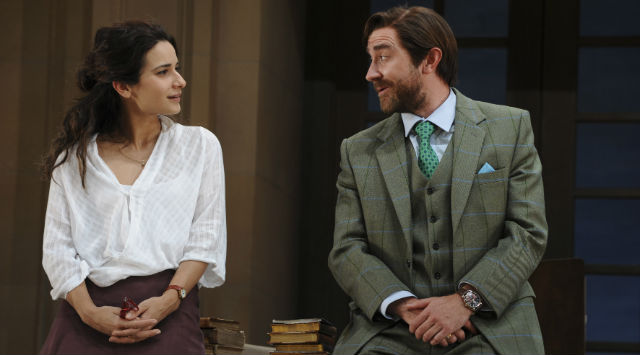
Playwright: William Shakespeare
Director: Peter Evans
Cast: Cramer Cain, Justin Stewart Cotta, Michelle Doake, Michael Gupta, Angie Milliken, Kelly Paterniti, Hazem Shammas, Tom Stokes, Damien Strouthos, Jacob Warner, Alex Williams
Image by Daniel Boud

Theatre review
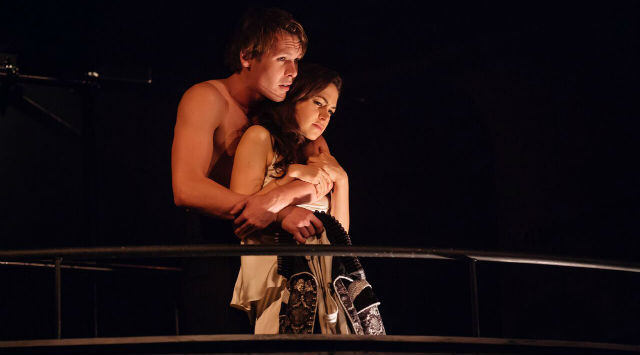
Youth is wasted on the young, but romance is best experienced at a tender age. Shakespeare’s Romeo And Juliet is the most romantic of stories, which by the same token, would mean that it is a play that can seem completely ludicrous to some. A pair of teenagers meet at a party, decide to get married hours later and over the next few days go through hell and high water to stop their families from prying them apart. Human attraction and the sexual impulse are often mysterious, but instantly recognisable when present. In Peter Evans’ iteration, we see an abundance of sophistication and polish, but chemistry is in scarcity.

The production’s first half sees several energetic performers providing effective comedy and lively interaction. Notable supporting players include Michelle Doake and Damien Strouthos who delight with flamboyant theatrics that help us engage with nuances of the plot, while delivering surprising swells of laughter. Stars of the show Kelly Paterniti and Alex Williams bring passion to the narrative, but we are never quite convinced enough about the relationship to invest our emotion into their dilemma. In the tragic second half, an unravelling seems to occur, and we become even less involved in the lovers’ plight despite their catastrophic fate. Kelly Ryall does marvellous work with music, and even though wonderfully executed throughout, does not help the concluding melodrama take flight, and the greatest of love stories leaves us cold.

Juliet and Romeo are in love with strangers. Like many things in life, their connection defies logic but are indisputably real. Something magical happens between the two, but we are not privy to it. They are overwhelmed and moved to extremes, while we observe with slight curiosity, wondering how it is that innocent love can fade without warning. Time does strange things to people, but we must be there to witness its power. Our protagonists have seen little, but we can find solace in the fact that they had only ever experienced purity, if nothing much else.

www.bellshakespeare.com.au

Review: Arcadia (Sydney Theatre Company)

stcVenue: Sydney Opera House (Sydney NSW), Feb 8 – Apr 2, 2016
Playwright: Tom Stoppard
Director: Richard Cottrell
Cast: Blazey Best, Ryan Corr, Honey Debelle, Andrea Demetriades, Jonathan Elsom, Georgia Flood, Julian Garner, Glenn Hazeldine, Josh McConville, Will McDonald, Michael Sheasby, Justin Smith
Image by Heidrun Löhr

Theatre review
Strong societies encourage each of their individuals to reach the greatest of their potential. Geniuses do not exist in vacuums; even though the uniqueness of their abilities easily becomes a source of isolation or detachment, they are part of communities that need to recognise the exceptional advantages they bring to the progress of our civilisations. In theatre, a conundrum exists with writers like Tom Stoppard. To produce a play such as his Arcadia, a team of highly accomplished talents must be employed in order that the density of his writing gets the best chance of finding elucidation, but that would necessitate considerable box office takings (at a time when government funding for the arts continues to plummet). Bringing Arcadia to the masses is a strange proposition. We are used to mindless sentimental tosh drawing in the crowds, but getting throngs into the Sydney Opera House for a night of intense intellectual exchange is, to put it mildly, ambitious.

Many will appreciate director Richard Cottrell’s sophisticated and vibrant take on the text, but there will be no shortage of viewers finding themselves entirely befuddled for its three-hour duration. The play is about mathematics, chaos theory, the second law of thermodynamics and English landscape gardens in the early 19th century, quite a different set of interests from what we encounter in Australia’s everyday media. Perhaps this is an indication that the public is actually capable of ingesting more than sporting scandals and partisan politics, but more realistically, this is a case of either seriously overestimating our cultural climate, or a very daring effort at lifting our game.

Art must challenge, but when it does, it often alienates. Cottrell’s show is energetic and seductive. Its jaunty rhythm and charismatic personalities are engaging but whether they make Stoppard’s subject matter enticing, is debatable. We are impressed by the passion depicted on stage. Some audiences might be able to get involved with the idiosyncratic obsessions of Arcadia‘s characters, but more are likely to be swept along by the cast’s incontrovertible thespian devotion.

Key roles are marvellously performed with an infectious glee that for the most part, keep us within the action of the play. Andrea Demetriades is sensational as Hannah Jarvis, completely convincing and natural in her approach, and irresistibly compelling. What she presents is a model for the kind of acting that forbids the detection of any divergence between actor and character. Her conflation of the two seems effortless, yet there is no denying the theatricality that allows her to communicate intentions and emotions with brilliant clarity. Similarly delightful is Josh McConville as Bernard Nightingale, deliciously pompous and shrewdly sardonic, playing the role as an effective archetype but with a solid authenticity to keep us convinced and endeared.

Stoppard and his characters strive for a mastery of their domains. They locate and identify pieces to puzzles that will form a finished and satisfying picture to intellectual pursuits that inevitably become more complex as processes develop. Watching Arcadia asks of us that same commitment of attention and effort. It is not easy-going for the vast majority, but we can certainly jump back into the action whenever we find ourselves in moments of confusion, to continue on that chase for meaning. As a contender in the popularity contest that is the live theatre industry, this show is unlikely to be a crowd favourite, but as inhabitants of this city, we must hold deep gratitude that programming of this calibre exists, and is available to more than the privileged few.

www.sydneytheatre.com.au

Review: The Magic Flute (Opera Australia)

Venue: Sydney Opera House (Sydney NSW), Dec 30, 2015 – Jan 16, 2016
Music: Wolfgang Amadeus Mozart
Libretto: Emanuel Schikaneder (English translation by J D McClatchy)
Director: Matthew Barclay (based on the original production by Julie Taymor)
Cast: Taryn Fiebig, John Longmuir, Samuel Dundas, Hannah Dahlenburg, Daniel Sumegi, Jane Ede, Sian Pendry, Anna Yun, Katherine Wiles, Kanen Breen, Adrian Tamburini, Malcolm Ede, Jonathan McCauley, Dean Bassett, Clifford Plumpton, Jack Kleem, Justin Chen, Ben Johnston
Images by Branco Gaica

Theatre review
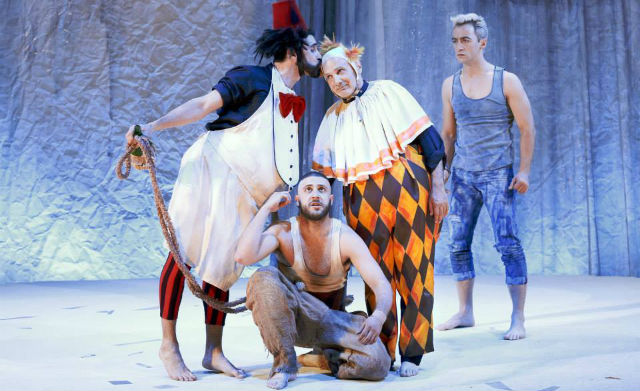
Julie Taymor’s reinvention of The Magic Flute first appeared at New York’s Metropolitan Opera in 2004. Whimsical and colourful, Opera Australia’s presentation of Taymor’s work with Matthew Barclay at the helm, speaks to audiences of all creed and ages. The story’s darker elements and its mischievous sexuality are left intact, but interpreted in a gentle manner that poses no threat to young minds and delicate sensibilities.

Marvellous use of puppetry and masks, along with animated performance styles ensure that we are captivated and constantly amazed. The extraordinary spectacle created by elaborate sets and costumes is the centre of our attention, and music becomes secondary for most of its duration. There are exceptions of course, most notably the arias by the Queen of the Night, thrilling and beautiful under Hannah Dahlenburg’s masterful execution. Technical brilliance and unbridled passion of the diva’s voice brings elevation to our spirit, and the mythological aspects of The Magic Flute become markedly resonant. The trio of young boys Justin Chen, Ben Johnston and Jack Kleem are memorable as adorable child-spirits, joined at the hip and perfectly harmonious with their delicate singing. Another trio of performers Jane Ede, Sian Pendry and Anna Yun create a humorously malicious gang of ladies who appear throughout the show quite out of the blue, effectively manifesting a sense of the supernatural for this magical opera.

If this is pantomime, then it is the most sophisticated that one could wish to see. There is artistic excellence at every turn that will satisfy any theatrical aficionado, and even though its emotional and intellectual capacities are moderate at best, this is a production that has extremely wide appeal, perhaps surprisingly so for its genre. In The Magic Flute, evil is banished and lovers unite with solace and happiness. The simple tale will never grow old, especially at this level of innovation that artists can tell it. The spirit of adventure and invention is alive in Mozart’s 225 year-old masterpiece.

www.opera.org.au

Review: Orlando (Sydney Theatre Company)

Venue: Sydney Opera House (Sydney NSW), Nov 9 – Dec 19, 2015
Playwright: Sarah Ruhl (based on the novel by Virginia Woolf)
Director: Sarah Goodes
Cast: Matthew Backer, Luisa Hastings Edge, Garth Holcombe, John Gaden, Jacqueline McKenzie, Anthony Taufa
Images by Prudence Upton

Theatre review
Virginia Woolf’s novel Orlando: A Biography was published in 1928, when discussion of sexuality was made in hushed tones, and inseparable from notions of gender identity. If a person loved a woman, they had to take the form of the masculine, and the reverse was true. The centrepiece of Orlando‘s story is a man’s magical transformation into a woman, wistfully described but scarcely explained, though by simple deduction, one could perceive more than an indication of sexual fluidity, and a desire to explore what is now known as sexual orientation. It would be remiss however, to reduce the work to be simply about sex, for its interest in fluidity extends to the whole of a person’s identity, or how one sees themselves, along with how society conceives of that individual.

Sarah Ruhl’s 2010 stage adaptation can be understood as a feminist piece. Orlando’s life as a man is depicted with an extroversion that is concerned with the character’s appetite and discovery of the world around him, but as a woman, she turns introspective and we are presented with constant interrogations about her place in relation to things as the fairer sex. In other words, maleness is seen as an unquestionable natural state, while the feminine requires persistent justification. In dramatic terms, Ruhl’s work is poetic, sublime theatre that uses all the capacities of language to excite, provoke and enchant, and to tell a fascinating story that is strangely engaging in spite of its contextual distance.

It is a humorous text, gentle in its approach, but always charming and amusing with its renderings. Director Sarah Goodes executes that subtle comedic tone with great sophistication, and although the production is seldom laugh-out-loud funny, her brilliant wit is deeply endearing. There is clever use of space, with a relatively small ensemble establishing an active and visually dynamic stage. Comprising two flights of mobile staircases and concentric revolving platforms, our eyes are kept busy and no time is wasted on scene changes, but the production is not strikingly lavish. It makes occasional reference to the well-known Sally Potter film of 1992, but that extravagant beauty, still fresh in many of our memories, is absent from this staging.

Our focus is placed squarely, and appropriately, on the title role’s narrative, but the show features a charismatic four-man chorus that helps with a lot of heavy lifting. Matthew Backer, John Gaden, Garth Holcombe and Anthony Taufa play a wide range of roles in all gender states, and provide commentary in song and narration that moves the plot along in spirited, gay fashion. Backer in particular, is impressive with his fervent embrace of the show’s vaudeville style of presentation, taking the opportunity to showcase delightful comic timing and a flair for exquisite camp.

In the role of Orlando is Jacqueline McKenzie, keeping us spellbound with a delivery that will be remembered for its intelligence, precision and unrelenting effervescence. It is noteworthy that the actor’s interpretation of Orlando’s personality does not alter significantly with the sensational gender transformation. Whether in male or female costume, McKenzie maintains a singular essence, reflecting a modern and enlightened attitude toward the construction of gendered identities. Her unfaltering energy gives life to two solid hours of stage time, every minute compelling and whimsical, keeping us engrossed in the development of Orlando’s extraordinary narrative with her captivating confidence.

The word “transgender” was recently announced as one of Collins’ dictionary’s “Words of the Year”. As Western societies begin to better understand the way we live out our gendered lives, we can recognise that a new dawn in civilisation is imminent, where people will no longer be persecuted for the way they express their gender, and individuals are free to adopt any form of gender identity they wish to inhabit. Hardly anyone bats an eyelid when Orlando emerges as a woman after living thirty years as the opposite sex. We may not share her aristocracy, wealth and power, but we can appreciate the nonchalance surrounding her transformation, and indeed realise the curious irrelevance of something that convention considers so crucial to how we understand life. Feminism is about achieving equality, and in equality, all that we think separates us, can be vanquished.

www.sydneytheatre.com.au

Review: Hamlet (Bell Shakespeare)

Venue: Sydney Opera House (Sydney NSW), Oct 27 – Dec 6, 2015
Playwright: William Shakespeare
Director: Damien Ryan
Cast: Philip Dodd, Ivan Donato, Robin Goldsworthy, Josh McConville, Julia Ohannessian, Sean O’Shea, Matilda Ridgway, Catherine Terracini, Michael Wahr, Doris Younane
Images by Daniel Boud

Theatre review
Director Damien Ryan’s rendition of Hamlet takes place in mid-20th century Denmark, with surveillance technology, airport last call announcements, and broadcasts of royal weddings. The prince is deeply upset by the death of his father, and by his mother’s very quick remarriage, but within this modern context, his very well known nervous breakdown seems to also involve the pressures of nobility as we understand them today. Our memory of Diana, Princess of Wales persevere, and the way she had been spoken off as having gone out of control, serves as a parallel to this Hamlet.

Ryan’s ideas are refreshing and plentiful. They can be meaningful, or merely ornamental, but his work is invariably engaging. In our age of collective attention deficit disorder, the production’s ability to retain our interest for over 3 hours is remarkable. Every scene is energetic, whether poignant, comedic, or transitory, Ryan finds a way to deliver entertainment and a quality of intrigue regardless of the text’s intentions. This is excellent directing, that has given rise to a show that can captivate even the most cursory of Shakespeare’s fans. Visual design contributes significantly to its pleasures. Alicia Clements’ versatile set produces dimensions on the stage with minimal fuss, and lighting designer Matt Cox’s nightmarish atmosphere administers a mesmerising effect that takes charge of our gaze.

In its efforts at bringing a newness to Hamlet, it might be argued that some dramatic tensions are unfortunately lost from the plot. The significant subdual of King Claudius’ villainy, along with the decision to play Queen Gertrude as an innocent, might be politically correct moves, but they take away from the power struggles that provide a certain spiciness to the admittedly clichéd foundations, especially in its first half. Nevertheless, the sophisticated and measured performances of the entire cast are enjoyable, and thankfully, easy to follow.

Josh McConville’s interpretation of the title role is a dynamically ranging one that exhibits a daring freedom eager to explore and experiment. McConville is powerful with all that he presents, playing comedy and tragedy equally well, but the distinction between both can appear too drastic. We understand the subject of madness involved, but it is debatable whether consistency of character can be improved in his expression of Hamlet’s state of mind. Ophelia is played by Matilda Ridgway, who shakes off the personality’s obligatory tweeness over the course of the play and puts on an impressive display of sorrow and rage in her concluding moments, for some of the most passionate and compelling scenes of the production. Philip Dodd is memorable and disarmingly funny in his parts as Polonius and Gravedigger. The actor’s confident and nuanced comic timing is a necessary element that helps with the show’s buoyancy, effectively preventing any monotony from setting in.

Revenge speaks to our base desires. A hallmark of advanced societies is the rejection of capital punishment, yet stories about vengeance resonate with no trouble at all. In Hamlet, revenge is a cancer that destroys from within. Its effects are contrary to the emotions that guide it. When enacted, the only ones who win are those from the outside, uninvolved in the eye for eye narrative. It is a profound lesson, one that is deeply, and appropriately for this text, Christian. To forgive and forget is an ideal that is unthinkable for many, but probably the only alternative to our prince’s tragic demise.

www.bellshakespeare.com.au

Review: Anything Goes (Opera Australia / Gordon Frost Organisation)

Venue: Sydney Opera House (Sydney NSW), from Sep 5 – Oct 11, 2015
Music and Lyrics: Cole Porter
Book: Guy Bolton & P.G. Wodehouse, Howard Lindsay & Russel Crouse, Timothy Crouse, John Weidman
Director: Dean Bryant
Cast: Gerry Connolly, Carmen Duncan, Bartholomew John, Wayne Scott Kermond, Debora Krizak, Claire Lyon, Todd McKenney, Caroline O’Connor, Alex Rathgeber
Images by Jeff Busby

Theatre review
Cole Porter’s songs are amongst the most familiar in the Western world, and Anything Goes boasts a whole raft of evergreen hits, all taking pride of place in the musical. Originally staged in 1934, the show has been revived many times, along with film versions in 1936 and 1956 and a television special in 1954. Porter’s music is unquestionably delightful and quite irresistible. The wit of his lyrics, and catchiness of his melodies were perfect for stage and screen during his active years from the 1920’s until his final TV score in 1958 for Aladdin. This latest rendering of Anything Goes is a nostalgic gem that brings back all that is wonderful of the era, and adapts it to contemporary tastes. Direction by Dean Bryant is snappy and bold, but the production is always mindful of the conservative American climate that it re-enacts and never allows itself to get vulgar, although moments of bawdy humour are plentiful and extremely well-received. Where there are forbidden fruits, the idea of “anything goes” can take hold anywhere, and Bryant’s less is more approach pays off. By being only slightly naughty, he makes us laugh from beginning to end, tapping into a sense of old-fashioned cheekiness that still works.

Anything Goes features an ensemble cast, with many small (and very lightweight) narratives held together by the conceit of a classic cruise liner setting. We do not usually expect definitive stars for this variety of show, but Caroline O’Connor’s presence clearly dominates. Her skill, energy and seasoned pizazz, together with supreme confidence and splendid comic timing, ensures that her talent is a cut above the rest and that her every appearance jolts the crowd into spasms of irrepressible excitement. Also fantastic are the young lovebirds, Claire Lyon and Alex Rathgeber, both with impeccable voices beautifully suited to the genre, and each with physical disciplines that let the depiction of their characters be believable, charming, and terribly romantic. Their rendition of De-Lovely is a show-stopper with demanding choreography by Andrew Hallsworth executed with tremendous flair and exquisite sentimentality, bringing to the show a sophistication that exceeds all expectations. Supporting players are effective comedians but less gratifying in their respective musical numbers, most of which appear in Act II, and causing an unfortunate dip in energy as the show attempts to reach its climatic conclusion.

Designers of the show must be lauded for a lavish production that looks outstanding in its refinement and elegance. Even though visual elements are probably derivative and significantly inspired by previous incarnations, costumes by Dale Ferguson are a treat to behold and a genuine highlight. Ferguson’s set, along with Matt Scott’s lights, are as dynamic and intelligent as they come. Every movement on stage occurs flawlessly, and our eyes shift effortlessly under the spell of their technical wizardry. Placement of the orchestra in the elevated centre stage is a genius touch that recalls big band formations of the past, and contributes to a wonderful acoustic dimension impressively balanced by Michael Waters on sound design.

The title might be Anything Goes, but nothing is left to chance. There is little logic in the stories and characters we see (and its occasional racial humour will undeniably offend some), but everything on the stage is measured to utmost precision. It is professional theatre at its strongest, and will provide benchmarks on many aspects of performing arts, in Australia and worldwide. Musicals are not the best at advancing a society’s politics and civilisation, and it rarely reveals rare truths of the human condition, but a work of this standard will inspire greatness in many forms. A night of sheer entertainment might not move mountains, but where we can find meaning, is the way it helps us see that mere mortals are the ones to make miracles happen.

www.anythinggoesmusical.com.au

Review: The Tempest (Bell Shakespeare)

bellshakespeare
Venue: Sydney Opera House (Sydney NSW), Aug 19 – Sep 18, 2015
Playwright: William Shakespeare
Director: John Bell
Cast: Robert Alexander, Matthew Backer, Felix Gentle, Brian Lipson, Arky Michael, Hazem Shammas, Maeliosa Stafford, Damien Strouthos, Eloise Winestock
Image by Prudence Upton

Theatre review
Shakespeare’s fantastical masterpiece The Tempest, with all its mystique and magic, is almost an allegory for the transportative and imaginary qualities of the world of theatre. On Prospero’s island, anything can happen, and on the stage, it is precisely that boundless unpredictability that makes it a special, and for many, sacred space. Whether it is the stories of everyday that are being presented, or manifesting scenarios beyond the wildest of dreams, theatre has the ability to provide something extraordinary to all its participants.

Like Prospero abandoning the magical arts at the play’s end, John Bell directs his last production with this rendition of The Tempest. The cast he has amassed is an impressive one, and Bell’s extensive acting background is clear to see, in the fascinating and intricate characters being brought to life. Every player is detailed, energetic and palpably present, yet the resultant show is oddly placid. Themes of the text fail to resonate. Ideas such as the distinctions we draw between nations, between nature and civilisation, between freedom and confinement, struggle to find illumination, even though their presences in modern life remain relevant. Exoticism is explored well in the show, but its sense of adventurous fantasy is not always established with sufficient dynamism. Music by Alan John and sound design by Nate Edmondson are outstanding features; helping to drive the production through atmospheric transformations and exquisite moments of ethereality. Less successful are its visual elements that seem to lack whimsy and ambition. The story being told is celestial and outlandish, but what we see is staid and dated. Even exits and entrances are awkwardly managed to accommodate the inconvenient access to stage wings of the uninspired set.

Prospero is played by Brian Lipson, whose nuanced and vibrant performance provides sustenance for the entire plot, and whose sharp focus keeps us compelled. The production suffers from an overall lack of poignancy, but Lipson depicts emotions with gravitas and complexity that assist with some level of audience identification. Arky Michael and Hazem Shammas are a show-stealing couple whose mischievous antics are a persistent source of amusement. They create some of the most memorable sequences with brilliantly broad comedic interpretations of their dual roles (Michael plays Sebastian and Trinculo, and Shammas is Antonio and Stephano), captivating us with what looks to be an updated, and improved, Laurel and Hardy act.

The story is about kingdoms, sorcery, and heavenly creatures, but the show does not bear the majesty of the famed text. With its delicate and sincere approach, it is easy to be disappointed by the production’s simplicity, even though the thoroughness of its thespian executions are evident. William Shakespeare’s imagination is a genius that is unparalleled, and it seems that our meagre capacities in the dark auditorium requires greater facilitation, in order to achieve the same vision he had intended.

www.bellshakespeare.com.au

5 Questions with Debora Krizak and Wayne Scott Kermond

Debora Krizak

Debora Krizak

Wayne Scott Kermond: You have interesting and diverse talents in show business, what do you enjoy most as a performer?
Debora Krizak: I enjoy hearing an audience laugh. I wondered for years what it was that I loved most about being on stage and then I started getting a few comedic roles and there was no doubt in my mind that this is what I wanted to do more of. Life’s too short not to laugh so laugh out loud, peeps. I also love a good spontaneous adlib. We have so many great ad-libbers in Anything Goes. I only wish I got more stage time with Wayne and Todd. That could be dangerous.

How did you get started in this business we call show?
I started out as a young four-year-old at a local suburban dance school in Adelaide. They used to put on amateur concerts and from the age of 11 they put us all around a piano and bashed out “As Long As He Needs Me” from Oliver. I think I might have been the only eleven-year-old there that day that could naturally pick up the melody and remain in tune. So the role was mine. It was a great learning experience. My mum would buy me all the soundtracks and videos and I would just try to mimic them all. I’ve always had a knack for mimicking. My first professional music theatre break came when I was cast in Mel Brooks’ The Producers. I was lucky enough to understudy Ulla and learnt a lot from that experience. Prior to music theatre, I toured the country in rock bands. That’s a book in itself. I saw the big banana, the big pineapple, the big ….the big… Yeah that was a decade of my life I’ll never get back sitting in the back seat of a Tarago van.

You are relatively a tall lady, do you like working alongside short men, or does it bother you they are constantly looking at your boobs.
I’m tall but not as tall as people think. I’m five foot ten. Girls are getting taller thankfully and hopefully more roles will become available to tall women in Australia! The comedy of a tall woman/short man has been around for years and I love working alongside Wayne. Yes he has to look at my boobs but I am juggling them in his face. They have their own spotlight and show. The things we do!

You are living 2 lives, during Anything Goes. Deb the performer, and Deb the wife and mother, how do you juggle the two so successfully.
I’m lucky that I have a wonderful husband who can work from his office at home in Sydney when needed which gives me the flexibility to skip a few school pick ups. I have 7 year old boy/girl twins who are in their second year of school. Touring is harder as the kids are in school and I don’t like up rooting them too much. I usually don’t like locking myself into run of play contracts that open in another city. Short contracts in each city can work as I have an arrangement with the kids school that they can travel with me for four weeks of a term and I home school them. It’s tough and exhausting but I’d rather that than spending too long away from them. As it is we’ve had to spend two weeks apart here in Brissy and it breaks my heart to be missing important things like their athletics carnival and gymnastics concert. Those days are hard. I’m lucky though that when the kids are with me, they will often come to work with me and sit in my dressing room and just take it all in. It helps to know where mum is and have an understanding of what I do so its not so inferior to them. I love being a mum and am also grateful for these extraordinary performing opportunities. I think being a parent gives you a whole different perception on life and a whole new layer as an actor. Gee it’s exhausting being the best version of yourself with both hats on though!

What are your plans for the future, after Anything Goes.
I’m very fortunate to have been offered a short contract in another wonderful show that I’m very excited about. It hasn’t been announced yet so I can’t say what it is but it will be fun. I start the very next day Anything Goes finishes at the opera house! What a year. Three shows back to back. How lucky am I?

Wayne Scott Kermond

Wayne Scott Kermond

Wayne Scott Kermond: You’re from a prominent show biz family, what was your first experience in the theatre?
Debora Krizak: I was first carried onstage for a bow with my parents at the tender age of two-and-a-half weeks old. My first musical appearance was playing a Tap Dancing Sailor in the production of Gypsy at Sydney Her Majesty’s Theatre starring Gloria Dawn and then Toni Lamond.

Where did you learn the art of slapstick and who do you get inspiration from?
Being a fourth generation performer it was passed on to me by my family. My grandfather and his 2 brothers (The Kermond Brothers) were physical comics, hoofers, acrobats, eccentric dancers, they and my Mum and Dad taught me the skills. Also growing up watching other acts and performing with my parents, I was always inspired by the funny guy, like Donald O’Connor, Buster Keating, Abbott & Costello, I learned I could make people laugh by falling over or walking into a door. Particularly for the girls when I was at school. Now I do it for a living.

You are a relatively short man. Do you like working alongside tall women or do they scare you?
When you’re my height everybody is taller than me. I love tall women, I’m married to one, she is a dancer. But as she says to me, it’s all the same lying down.

Do you have a favourite musical comedy performer?
No, as comics, I love and am inspired by Robin Williams, Jerry Lewis, Gene Wilder, Peter Sellers, Lee Evans and Jim Carrey, great physical and verbal comics and more importantly their pathos. They make me laugh and cry.

What’s been the best part of the Anything Goes experience for you so far?
I love playing the role of Moonface Martin, it allows me to perform my love for comedy and more importantly bring back the art of physical comedy to the older generation but more importantly introducing a new generation to the old style of physical comedy. Audiences still love a pie in the face.

Debora Krizak and Wayne Scott Kermond will be appearing in Anything Goes with Opera Australia.
Dates: 5 Sep – 11 Oct, 2015
Venue: Sydney Opera House

Review: Ghost Stories (Sydney Opera House)

ghoststories1Venue: Sydney Opera House (Sydney NSW), Jul 8 – Aug 15, 2015
Playwright: Jeremy Dyson, Andy Nyman
Director: Peter J. Snee
Cast: Tim Franklin, John Gregg, Lynden Jones, Aleks Mikić, Ben Wood

Theatre review
Horror movies have existed since the dawn of film technology in the 1890’s. It is a genre of storytelling that has always existed, and as such, should be thought of as integral to the way we communicate as a species, yet live theatre does not seem to have embraced that particular mode of presentation. Jeremy Dyson and Andy Nyman’s Ghost Stories adopts for an assembled crowd, the tradition of telling scary tales of the paranormal, with the intention of fascinating our senses and entertaining us. The work aims simply to frighten and thrill, so the script is tailored precisely for that purpose. It does not add much else to the experience, but its unpretentious simplicity helps it achieve an unusual show format that is refreshing and often very scary indeed.

Peter J. Snee’s direction cleverly manipulates all audio and visual cues in the venue to create the familiar sensations one derives from the horror genre. Unlike film though, we seem to require less extreme stimuli to respond with fear in live theatre. Thankfully, Snee does not push our limits too much, and the experience he provides never becomes unbearable. His design team (comprising Phil Shearer on production design, Christopher Page on lights, and Lana Kristensen on sound) does an excellent job of fulfilling its brief of creating a relentless air of skin-crawling foreboding that keeps tensions high, and when appropriate, shock us with powerful effects that literally make us jump.

There is a glaring lack of gender and ethnic diversity in the piece, but its all male cast is an accomplished one, with Lynden Jones’ performance as Professor Goodman providing the show with an inviting and dynamic energy. The actor is charmingly compelling, with an ability to turn the outlandish contexts believable, and a warmth that engages us for the entire duration, even when the plot starts to lose its resonance in its final moments.

Ghost Stories is a rare form of entertainment in the live arena, but it certainly does what it says on the bottle. The scares diminish with time, perhaps because of our acclimation to the production’s provocations, but on the occasions that it is effective, few things are quite as electrifying. There are many ways to have frivolous fun at the theatre, but choosing a night of horror over yet another musical is more than a novel option.

www.sydneyoperahouse.com