Review: Elektra / Orestes (Belvoir St Theatre)

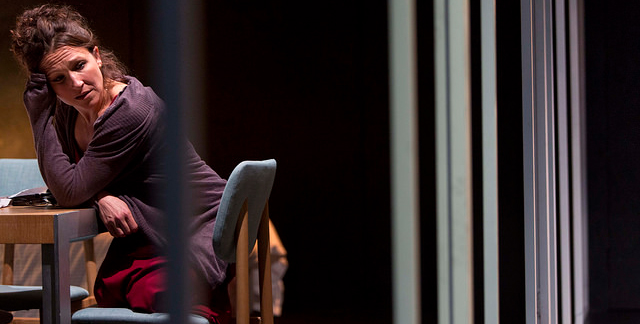
Venue: Belvoir St Theatre (Surry Hills NSW), Mar 14 – Apr 26, 2015
Playwrights: Jada Alberts, Anne-Louise Sarks
Director: Anne-Louise Sarks
Cast: Linda Cropper, Ursula Mills, Hunter Page-Lochard, Katherine Tonkin, Ben Winspear
Images by Brett Boardman

Theatre review (originally published at Auditorium Magazine)
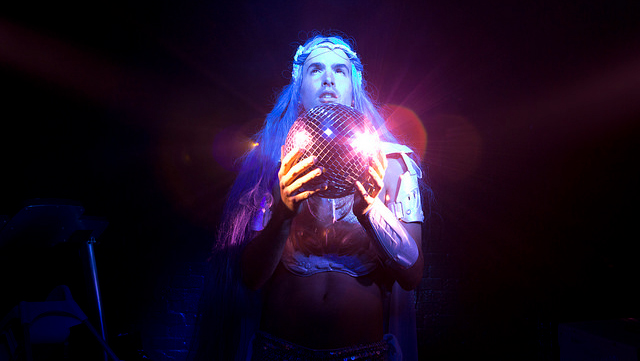
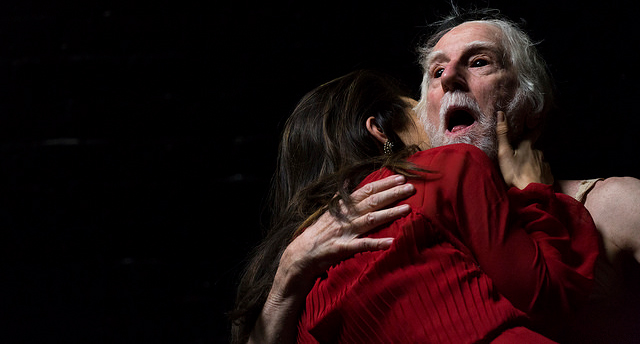
Classic Greek tragedies depict life at its extremities to explore the human condition. Elektra and Orestes are siblings, separated by grievous circumstances, but eventually united by a need for revenge. The death of their father King Agamemnon had torn the family apart. Murdered by their mother Clytemnestra and her lover Aegisthus, the legacy is one of blood drenched tragedy. In Jada Alberts and Anne-Louise Sarks’ retelling of the ancient tale, the female voice is given emphasis by placing attention on Clytemnestra’s narrative. The traditional villain is given fresh dimension, and the convenient diminishment of her person is transformed so that her legend is presented much closer in essence to our common beings. For centuries, men have ruled the world, and women’s stories are used to serve their purposes. Today, Clytemnestra states her case, and although Agamemnon’s demise remains unforgivable, we gain an understanding of her often buried rationale and arguments.

In addition to providing a new perspective, Alberts and Sarks’ script successfully creates a language that blends classic sensibilities with today’s colloquialisms. Combining the flavours from an epic yesteryear with contemporary domesticity, Elektra / Orestes invites us to relate to its royal characters with a new familiarity. They speak like we do, so their circumstances, although extraordinary, become accessible. The work intends to put focus on the parallels between us and them, finding points of connection through our attitudes toward family discord, and with its emotional universality. Although not unique to the genre, intense sentiments and passionate expression are characteristic. Direction of the piece by Sarks attempts to adapt that extravagant mode of performance for the updated context, with mixed results. Conversations in the play are often pedestrian in style, but with a heavy undertone coloured by sorrow, remorse and fury. The narrative is communicated with crystal clarity but the rejection of a more consistently melodramatic approach requires of its audience, a stronger reliance on logic, thereby sacrificing the more potent visceral effects of being in the presence of rupturing emotion. The story remains engaging, but one questions its relevance when told in a more subdued manifestation.

Performances are generally of a polished standard, but some of its characters are not sufficiently convincing. Linda Cropper as Clytemnestra shines in the second act when her warmer maternal qualities are called upon for a scene of tenderness, but the queen is never quite majestic and intimidating enough. The love for her children is evident, but it is difficult to believe that she is capable of committing the atrocity for which she is known for. Her son, Orestes is played by Hunter Page-Lochard whose star quality is clear to see. He makes his entrance at midpoint after much anticipation, but his interpretation needs greater depth in order for it to live up to our expectations of a broken young man caught in an enormously painful situation. Page-Lochard portrays the confusion of his role with excellent energy, but the qualities of anger and sadness crucial to his narrative does not reach its necessary boiling point. The complex character of Elektra is managed creatively by Katherine Tonkin whose unconventional choices give the show its cool, unconventional feel. Tonkin’s focused conviction is the propulsive force that keeps the entire first act moving quickly and unpredictably, but her chemistry with colleagues is not always strong. Elektra is the instigator of many moments of conflict, and the drama only comes when she manages to make the sparks fly.

The production is minimally designed, with a set by Ralph Myers that conveys a brutal coldness, and in spite of its simplicity, an impression of great wealth and status is achieved by a sense of sophisticated precision. The whiteness of its many bare surfaces represents an emptiness in the household that is waiting to be disrupted. Stage blood is introduced to upset the uncomfortable serenity, but it must be noted that its use is oddly restrained. The space, and the story, demand a bolder attack of red that do not materialise. Sound and lights are similarly conservative. The production is elegant in style, but greater tension could be achieved with a more vivid use of those design elements.

Vengeance is the darkest of human propensities. It is an urge that can be incredibly persuasive, but the price to pay for it afterwards is high, not least of which are the inevitable repercussive effects on the conscience. Sixteenth century philosopher Francis Bacon said that “in taking revenge, a man is but even with his enemy; but in passing it over, he is superior”. The challenge for the wronged is to find salvation without any dependency on the perpetrator’s state of mind or being. We experience this struggle on many levels, from our very personal selves, to the nationalistic ways our governments operate. Religion might lose its resonance with every passing year, but beliefs about the power of forgiveness are true and eternal.

www.belvoir.com.au

Review: Blue Wizard (Belvoir St Theatre)

belvoirVenue: Belvoir St Theatre (Surry Hills NSW), Feb 19 – Mar 15, 2015
Playwright: Nick Coyle
Dramaturg: Adena Jacobs
Cast: Nick Coyle
Image by Lisa Tomasetti

Theatre review
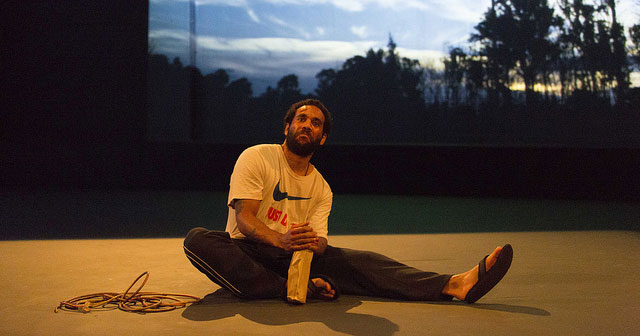
Post-apocalyptic stories are intrinsically moralistic. They make us think about our actions today that may lead to the utter devastation that is being presented. In Blue Wizard, an alien arrives from outer space but there is no longer any sign of human inhabitation. He is stranded, alone, except for an egg and its subsequent incarnations. Blue Wizard is unfamiliar with our planet but the very human-like visitor’s quest for survival and his disorientation are instantly recognisable, and our empathy for the misplaced being is effectively cultivated by an intuitively playful script by Nick Coyle. He declares upon arrival that he hails from a planet where all are gay, establishing a parallel with our own need for identity definitions based on sexuality orientation. Indeed, the one-man show is filled with cultural signifiers of male gayness and their affectations. Music by Britney Spears, Karen Carpenter and Cher add inspiration to the already camp sensibility of the artist, and his costuming, which is derivative of transvestism and drag.

The staging relies heavily on its talented team of designers to deliver a compelling context in which the action takes place. Damien Cooper’s lights are often show-stealing, and Steve Toulmin’s music and sound provide some of the most entertaining moments of the piece. Coyle’s performance is quirky and lighthearted, with the actor’s mischievous presence providing the absurd comedy with a playfulness that helps make the narrative strangely believable. His skills as a puppeteer are most impressive, with characterisations of the young aliens, Grubby and “Meryl Streep”, leaving powerful and lasting impressions. Dramaturg Adena Jacobs has guided Blue Wizard from its previous frankly bizarre manifestation when performed some seventeen months ago at PACT Centre for Emerging Artists, to its current form which is an engaging and brightly humorous show that sometimes surprises us, but always thoroughly amusing.

There is a sincere and earnest expression that underlies the frivolous tone of the production, and while its deeper meanings, if they do exist, are unclear, we do not feel as though we had been taken for a hollow ride. The moral of the story is one that the audience can decide for itself, but it is work of this nature that recalls the eternal question of whether art needs to serve any specific purpose. In other words, what is taken away from the theatre on this occasion is probably a lot more about the viewer than the creator.

www.belvoir.com.au

Review: Kill The Messenger (Belvoir St Theatre)

belvoir1Venue: Belvoir St Theatre (Surry Hills NSW), Feb 14 – Mar 8, 2015
Playwright: Nakkiah Lui
Director: Anthea Williams
Cast: Matthew Backer, Katie Beckett, Nakkiah Lui, Sam O’Sullivan, Lasarus Ratuere
Image by Brett Boardman

Theatre review
Nakkiah Lui has a sadness to share. Lui is a young Gamillaroi and Torres Strait Islander woman who has seen and experienced the extraordinary injustices suffered by our Aboriginal communities, and she brings a passionate commitment to the writing of a work that attempts to articulate the incredible complexities unique to our first Australians. She aims for truth on all fronts, because the need to expose history, emotions, hopes and confused turbulence is an urgent one, and it is clear that the expression and release of an inconceivable darkness is an imperative that resists any suppression. Lui’s script is a coherent but fragile one with seams that threaten to unravel at any moment. The difficulty of representing deep, personal wounds in text form is addressed directly in the play itself, with Lui speaking as its autobiographical protagonist and declaring the conundrum of maintaining authenticity in the process of creating a work for an audience. Indeed, the play is imperfectly structured, but its message is communicated with magnificent saliency and the poignancy it carries is exceptionally profound.

It is not the kind of presentation that provides solutions to our problems, because it works hard to avoid fiction. There is humour in much of the dialogue but the comedy is black, and the reality it makes us face is desperate and sombre. Kill The Messenger embodies a sorrow that is entrenched in many of our lands and its peoples, but it is never without hope. Lui’s fighting spirit is the loud voice that instigates every line and action, and it is one that refuses to surrender. Anthea Williams makes the right decision to place words at the very forefront of the show. Her directorial style is minimalist so that no theatrical factor is allowed to become an obfuscating agent, and all we can hear is the script, and consequently, all we see is the stark cruelty that some of our society is capable of. Performances, while not always consistent, are passionate and engaging. The strongest player is Lasarus Ratuere in the role of Paul, a tragic figure and an unfortunate stereotype perhaps, but depicted with sensitive nuance so that his humanity manifests infinitely larger than his faults. The actor’s work is impressively dynamic, with a surprising gravity barely hiding beneath an ability to portray hardship and misfortune in deceptive nonchalance. Also very moving is the playwright’s own presence on stage.  Lui can sometimes be overly animated in scenes with co-actors, but her many soliloquies are beautifully tuned. Her confidence is obvious, and her conviction, immense. When Lui speaks to (and confronts) us, her every intention and emotion reverberates, leaving us nowhere to hide.

Kill The Messenger is art at its most important and social activism at its most necessary. It is also a colourful and vibrant piece of theatre that has an irresistible power to captivate and engage. Nakkiah Lui’s work has all the bleak honesty of youth, but none of the pretension. Her play is barely resolved because she sees through the state of our affairs and recognises the dire plight that many of her sisters and brothers are living in. She does not pretend to know the way out, but her determination to find it is the foundation of this compelling work. We must cry, if only to acknowledge the undeniable grief that exists in the blood that pumps through the veins of this great continent, but afterwards, we will find clarity, if only in our hearts.

www.belvoir.com.au

Review: Radiance (Belvoir St Theatre)

belvoirVenue: Belvoir St Theatre (Surry Hills NSW), Jan 3 – Feb 8, 2015

Playwright: Louis Nowra
Director: Leah Purcell
Cast: Leah Purcell, Shari Sebbens, Miranda Tapsell
Image by Brett Boardman

Theatre review
Our relationships with parents may not all be bad, but they are certainly complex. Louis Nowra’s Radiance offers a look at the way one woman’s human errors reverberate for generations after, and accordingly, we observe the inevitable karmic inheritance from predecessors. Cressy, Mae and Nona are three sisters who have reunited in North Queensland for their mother’s funeral. Their personalities are vastly different, and there is no shortage of friction as they navigate their rare time together in the old house where they had grown up. Nowra’s script is dramatic and sensual, with an aggressive but beautiful energy that surprises in a milieu that is frequently dark and plagued with anxiety.

Leah Purcell’s direction suffers from her additional responsibilities as actor in the role of Cressy. The play is uneven, with group dynamics feeling lacklustre even though the portrayal of closeness between the women is successful. Their interchanges are believable but come across oddly tame, notwithstanding some quite sensational themes. There is an understated elegance to the piece, but it is needlessly subdued, with many missed opportunities for bigger laughs and more heightened drama. It is noteworthy however, that Purcell is able to find authenticity in the writing, and the emotions of the text are adequately played out so that we feel in touch with the essence of the narrative, despite the scarcity of a sense of theatricality.

As actor, Purcell is never convincing as an opera diva who has found success overseas, and her overly restrained interpretation not only does little to embody class, it also detracts from some of the more flamboyant sections of the play. Fortunately, Purcell’s ability to deliver gravity in key revelatory moments holds our attention, and she gives the plot an enjoyable coherence. Middle child Mae is played by Shari Sebbens whose presence is noticeably weaker than her counterparts’. Her work is focused and strong, but her depiction of seriousness can read a little dreary, and consequently, her character becomes too distant. On the other hand, the youngest role of Nona is engagingly and empathetically performed by Miranda Tapsell, who connects with us from her very first entrance. The vibrancy she introduces to her scenes is remarkable, if only that energy is sustained by the other players. Tapsell has an easy confidence that keeps us on her side, and the compassion she brings to her character allows us to believe the extraordinary circumstances we witness unfolding.

Sound design by Brendan O’Brien is thorough and thoughtful, adding a dimension to the show that facilitates the articulation of a complicated and deep emotional universe. Dale Ferguson’s set is sophisticatedly beautiful, but his design forces a substantial portion of the play to be performed quite far upstage, prohibiting us from getting more involved.

Louis Nowra’s script is undeniably rich and seductive. It deals with familiar difficulties of real life, but the world it inhabits is almost exotic. Radiance uncovers a wildness that exists in our own homes, one that hides in plain sight yet begs to be examined. Secrets are associated with shame, but it is the abandonment of shame that will ultimately set us free.

www.belvoir.com.au

Suzy Goes See’s Best Of 2014

sgs-best2014

2014 has been a busy year. Choosing memorable moments from the 194 shows I had reviewed in these 12 months is a mind-bending exercise, but a wonderful opportunity that shows just how amazing and vibrant, theatre people are in Sydney. Thank you to artists, companies, publicists and punters who continue to support Suzy Goes See. Have a lovely holiday season and a happy new year! Now on to the Best Of 2014 list (all in random order)…

Suzy x

♥ Avant Garde Angels
The bravest and most creatively experimental works in 2014.

♥ Quirky Questers
The most unusual and colourful characters to appear on our stages in 2014.

♥ Design Doyennes
Outstanding visual design in 2014. Fabulous lights, sets and costumes.

♥ Darlings Of Dance
Breathtaking brilliance in the dance space of 2014.

♥ Musical Marvels
Outstanding performers in cabaret and musicals in 2014.

♥ Second Fiddle Superstars
Scene-stealers of 2014 in supporting roles.

♥ Ensemble Excellence
Casts in 2014 rich with chemistry and talent.

♥ Champs Of Comedy
Best comedic performances of 2014.

♥ Daredevils Of Drama
Best actors in dramatic roles in 2014.

♥ Wise With Words
Best new scripts of 2014.

♥ Directorial Dominance
Best direction in 2014.

♥ Shows Of The Year
The mighty Top 10.

♥ Suzy’s Special Soft Spot
A special mention for the diversity of cultures that have featured in its programming this year.

  • ATYP

End

sgs-best2014a

Photography by Roderick Ng, Dec 2014

End

Best of 2018 | Best of 2017 | Best of 2016 | Best of 2015 | Best Of 2013

Review: Cinderella (Belvoir St Theatre)

Venue: Belvoir St Theatre (Surry Hills NSW), Nov 13 – Dec 14, 2014
Playwright: Matthew Whittet (based on an original concept by Anthea Williams)
Director: Anthea Williams
Cast: Mandy McElhinney, Matthew Whittet
Images by Brett Boardman

Theatre review
Fairy tales appeal to our basic desires. They address our need to be acknowledged and exalted, which is probably why they so often take the form of love stories. Matthew Whittet and Anthea Williams’s Cinderella is about our need for love, but it seeks to transform the fantasies and lies of Disney world, relocating it to a space of truth, lived experience, and disappointment. Its characters Ashley and Ash, are thoroughly familiar beings who remind us of ourselves and of people we meet everyday. They are strangers in the night who reach out to each other, hoping for a connection, and it is that possibility of a soul finding its other half that touches and engages us.

When both Ashleys meet, their accidental encounter is an awkward one. They are not brassy personalities, and their attempts at stretching beyond their individual comfort zones in the act of seduction becomes the comedic core of the production. The actors are brilliant comics who deliver laughs with precision, but the plot feels repetitive in its emphasis on creating jokes from that incessant awkwardness that subsumes the otherwise interesting development of character and relationship that takes place under the surface. A major tonal shift finally occurs in the last quarter of the show, bringing a breath of fresh air along with immense poignancy. The conclusion is beautifully crafted, although the depth that is eventually exposed feels sadly momentary.

The charismatic Whittet plays Ash with an attractive ease, consistently amusing his audience with a quirky instinctual approach. The actor has a slight physique and his countenance is plain, but the magnetic presence he adds to the stage assertively demands our attention, determined to entertain at every opportunity. Also enjoyable is Mandy McElhinney, who presents herself as a committed comedian, always sensitive to punchlines and timing. Her enthusiasm for creating laughter is infectious, but it also alienates us from the emotional arc of her character’s journey. We wish to dive into Ashley’s experience, but often find ourselves pushed out to observe only the funny side of scenarios. It is noteworthy that McElhinney and Whittet perform the final dark scenes with excellent and surprising intensity, leaving us wishing for more of their serious sides.

This Cinderella is an accurate and timely representation of romance in the digital age. Technology and commerce have penetrated every aspect of our lives, yet some of our notions of love and relationships are adamantly traditional and wholesome. The show looks at how we survive loneliness, and the meaning of sex and relationships in the era of dating apps and casual hook ups. The reality is unbearably grim, but it is human to shield our vulnerability with dreams. In affairs of the heart, delusions and hope are two sides of the same coin, and only the ones looking at the stars will stand a chance of fleeing the gutter.

www.belvoir.com.au

Review: A Christmas Carol (Belvoir St Theatre)

Venue: Belvoir St Theatre (Surry Hills NSW), Nov 8 – Dec 24, 2014
Playwrights: Benedict Hardie, Anne-Louise Sarks (after Charles Dickens)
Director: Anne-Louise Sarks
Cast: Kate Box, Peter Carroll, Ivan Donato, Eden Falk, Robert Menzies, Steve Rodgers, Miranda Tapsell, Ursula Yovich
Images by Brett Boardman

Theatre review
Religion provides salvation, and the most enduring stories touch us in a similar way. Benedict Hardie and Anne-Louise Sarks’ adaptation of A Christmas Carol does not include Christianity as a theme in its structure and composition, but the play uses Dickens’ tale of redemption to affect a spiritually uplifting experience for its audience. Ebenezer Scrooge’s journey from darkness to joy is an inspiring one, and this new retelling of his tale keeps focus on providing a tender optimism against the familiar backdrop of the Christmas season. The production is child-friendly, with simple characterisations and narratives, all serving to drive the basic, but important, point of happiness.

Sarks’ direction is vibrant, emotional and poignant. There is a depth to her work that prevents the show from feeling like a children’s production, but she encourages us to observe with wide-eyed wonder, as pains are taken to create a dreamlike quality with the text’s supernatural elements and colourful personalities. There is a heavy dose of playful energy that contributes to the festive atmosphere in which we find ourselves immersed (complete with overwhelming volumes of confetti snow), and performances are sensitively tuned to bridge the gap between spectators young and old. Robert Menzies is perfect as Scrooge; the man looks almost to have been born to play the role. The clarity of his trajectories and the conviction he applies to his motivations give shape to the plot, allowing us to follow his compelling evolution with palpable empathy. The ensemble is a delight, with Steve Rodgers leaving an impression as the very warm Bob Cratchit, and Miranda Tapsell stealing our hearts as the lovable Tiny Tim. Ursula Yovich’s beautiful singing voice finds opportunity to shine in the carols that feature in several scene transitions, and her tears as Mrs Cratchit are equally exquisite.

Michael Hankin’s set design is cleverly conceived and efficiently executed, with trapdoors and an elevating platform maximising theatrical effect with little fuss. Lights by Benjamin Cisterne are lively and dynamic, adding visual panache to every sequence. Mood transformations are very successfully manufactured, not only by lighting design, but also with the use of Stefan Gregory’s sound and music, which are particularly powerful in moments of mystery and surprise. The show will be remembered for several outlandish costume pieces by Mel Page, but her more subtle work is also effective and should not be overlooked.

Scrooge’s story is well-known, but it bears repeating. Its central message needs reiteration, and Belvoir’s production this Christmas time is a fresh approach that manages to connect with audiences of all ages. We need to instill in Australia’s children, a culture of theatre attendance and art appreciation, and shows like A Christmas Carol are an excellent introduction. It is entertaining, creative and meaningful, and significantly, it leaves you satisfied yet wanting more.

www.belvoir.com.au

Review: The Glass Menagerie (Belvoir St Theatre)

Venue: Belvoir St Theatre (Surry Hills NSW), Sep 20 – Nov 2, 2014
Playwright: Tennessee Williams
Director: Eamon Flack
Cast: Harry Greenwood, Luke Mullins, Pamela Rabe, Rose Riley
Images by Brett Boardman

Theatre review (originally published at Auditorium Magazine)
Tennessee Williams refers to The Glass Menagerie as a memory play. The work is semi-autobiographical, inspired by events, people and recollections from his own life. The making of art often involves the search for an understanding of the artists’ self and their immediate environment, through the expression of subjects that are familiar and intimate. Williams’ story examines the home life he had shared with an overbearing mother and a “crippled” sister. Seventy years have past since its initial staging, but their life together remains intriguing and poignant, covering timeless and universal themes that resonate with audiences today the world over. Film adaptations from India and Iran in the last decade demonstrate the wide appeal of the play’s premise and characters.

Williams’ language is romantically evocative of the American South in the 1930s, with old fashioned values that seem quaint and charming to our modern sensibilities, but that same regressiveness in attitude can prove to be harmful, as witnessed in the Wingfield family’s tribulations. Amanda has a definite, and narrow, view of the world and expects her children’s adherence to her every imagined obligation to society. It is a small mind that rules the household, and its painful repercussions are felt by all its members, including the matriarch herself. Eamon Flack’s direction is punctuated by inventive touches, but it is his effective exploration of the original’s concepts that strikes a chord.

A key feature of the production involves two large screens flanking the set, and several video cameras on tripods positioned on the periphery of the stage. Close ups of live action are periodically projected in black and white, shifting the audience between modes of theatre and cinema. This mechanism is slightly gimmicky, but it enriches the viewing experience by allowing an intrusion into more private spaces. Sean Bacon’s work on video design manages to bring elegance to the technology, finding a beautiful balance between stage and screen, rarely causing conflict or confusion for our eyes. Flack’s decision to have faces enlarged for our viewing pleasure enhances emotion and empathy for the piece, but it also brings into doubt the strength of performances that require that augmentation.

Also intensified in Flack’s direction is Tom Wingfield’s homosexuality. Before Williams’ lines are able to reveal the source of Tom’s disquiet, we observe from the very beginning, actor Luke Mullins’ purposeful flamboyance eagerly presenting an image of repressed and hidden gayness. The negation of that obsolete taboo inherent in the text, is an interesting and politically appropriate move for our times, and we are glad to see Tom, our narrator, approach us with fresh honesty. In terms of dramatic structure however, the build up of frustration and tension resulting from his gradual and inevitable disclosures is thus omitted.

Mullins is delightfully spirited in the role. He finds many opportunities for playfulness that helps maintain an electric atmosphere, regardless of moods being portrayed. The staidness of his home is placed alongside a confident showmanship that ensures entertainment in spite of the play’s many grim turns. Within the script’s shrewd treatment of secret sexuality, Mullins exercises a surprising range of nuance that conveys as much as Williams had tried to conceal.

The role of Amanda, the Wingfield mother and faded Southern belle, is played by Pamela Rabe who excels at locating authenticity in a highly dramatised character. Obsessive concern becomes comprehensible in Rabe’s depiction, thereby giving the tale its emotion and meaning. The woman’s severity leads to her own anguish, both qualities delivered by the actor with firm conviction. Amanda’s neurosis is strangely subdued at the play’s early stages, which slightly dampens the drama surrounding family dynamics, but when her hysteria sets in, its theatrical effects are quite wonderful.

Rose Riley’s interpretation of Laura is a fascinating one. Her family believes her to be disabled, but we do not see much evidence for it. The ambiguity surrounding Laura’s impairment sheds light on the changes in attitude over time that societies hold for notions of health and normalcy. Riley puts on an intense but introspective performance and her best moments occur when the camera catches her face in tight shots, revealing very strong and genuine outpouring of emotion. She is the perfect counterpoint to the loudness of her mother and brother, but a lengthy scene with a romantic interest Jim (Harry Greenwood) is unduly quiet and both actors’ subtlety leaves a blemish on an otherwise dexterously paced show.

Set design by Michael Hankin manufactures a sense of claustrophobia with the very small Wingfield home. An unbearable pressure exists together with their poverty, and their dysfunction becomes logical. The aesthetics of the production is fairly muted, with an emphasis on accuracy over theatricality, but Damien Cooper finds opportunities with his lighting design to implement instances of creative flair that add sensual and shifting textures to the plot.

Tom, like his father and his author, escapes oppression in search of a greater truth. The most significant of America’s patriotic qualities is freedom, and The Glass Menagerie gifts us a portrait of its opposite. Enslaved by archaic beliefs and antiquated values, the play’s characters endure a continuance of suffering and painful delusion. Today, the story looks to be a relic of a bygone era, but in fact, that same denial of liberty persists in our personal and social spheres, albeit in insidiousness. The play’s optimistic conclusion sees Tom taking action to remove his psychological shackles. The act seems at once desperately painful, and plainly simple.

www.belvoir.com.au

Review: Oedipus Rex (Belvoir St Theatre)

belvoirVenue: Belvoir St Theatre (Surry Hills NSW), Aug 21 – Sep 21, 2014
Dramaturg: Paul Jackson
Director: Adena Jacobs
Cast: Peter Carroll, Andrea Demetriades
Image by Pia Johnson

Theatre review
Sophocles’ Oedipus Rex is a classic tragedy remembered for its themes of fate and incest. Adena Jacobs’ sequel is a vision haunted by a blind and elderly Oedipus in throes of despair, suffering a living hell. His daughter, and sister, Antigone is his carer and companion, but the play features little conversation and no writer is credited. It is poetic and visual theatre, with influence from installation and performance art. Designer Paul Jackson’s creation is a bare clinical space that evokes the cruel agony of hospitals and bureaucratic offices. Ugly false ceiling panels with strategically positioned fluorescent tubes and halogen bulbs provide spine-chilling illumination that emphasise the horrific existence of the man who had been king. The 70-minute experimental work owes more to the paintings of Edvard Munch and Francis Bacon than it does Greek stage traditions. Meaning is created through imagery and sound, with spoken languages taking a back seat. Max Lyandvert’s involvement as composer and sound designer is not always prominent but his efforts are tremendously affecting, and when he does take centre stage, there is no hesitation to grab us by our core to deliver moments of astonishment.

The abstraction in Jacobs’ piece allows for numerous interpretations but the detailed and confronting depiction of an old man under palliative care addresses our universal mortality. The presence and sight of veteran actor Peter Carroll’s bare flesh resonates deeply. Our bodies unite us, and his vulnerable thinness is a visceral reminder of every person’s imminent and inevitable deterioration. The play’s muted narrative opens up the ways in which we can relate to Oedipus. When we no longer see him only as a man with specific circumstances, we are able to recognise more intimately the pain he embodies, and his torment speaks to us all, for true suffering requires no context to connect.

Oedipus Rex is the tour de force of a remarkable actor. Carroll’s performance is powerful and mesmerising, with more depth than any audience can deplete. There is enough drama in every fibre of his being to render narratives gratuitous. His director’s wisdom has allowed the production to strip back on storytelling and rely instead on the actor’s charisma and skill to impress upon us, the essence and soul of this artistic triumph. Carroll’s work is fearless, authentic and assertive, with a sense of traditional Asian theatre forms that focus on the craft of performance itself, rather than using it as a vehicle for saying something else. In this case, we are utterly enthralled by the man on stage, but also aware of the text’s subliminal messages. Antigone is played by Andrea Demetriades who provides solid support. The chemistry between both actors is outstanding, and the palpable trust they have harnessed is the source of many instances of frisson that occur throughout this thoroughly fascinating show.

We indulge in tragic stories because there is an intense beauty that resides in the darkness that befalls the innocent. There is an understanding that bad things can happen to good people, and as much as we strive for goodness, what results may not always be guaranteed. Life is dangerous, because it is uncertain. The ambiguity and risk in Adena Jacobs’ work puts her art in a position that challenges her audience, as well as the state of art production in our communities. Theatre often becomes too predictable and too lazy, and we need agents provocateur like Jacobs and Oedipus Rex to keep it alive.

www.belvoir.com.au

Review: Nora (Belvoir St Theatre)

belvoir1

Venue: Belvoir St Theatre (Surry Hills NSW), Aug 9 – Sep 14, 2014
Playwrights: Kit Brookman, Anne-Louise Sarks (after A Doll’s House by Henrik Ibsen)
Director: Anne-Louise Sarks
Actors: Blazey Best, Linda Cropper, Finn Dauphinee, Damien Ryan, Ava Strybosch
Image by Brett Boardman

Theatre review
It is no surprise that artists are drawn to the idea of reconstructing Henrik Ibsen’s A Doll’s House. The power of the original text and the stunning questions it poses have kept audiences debating for centuries. Kit Brookman and Anne-Louise Sarks’ updated version brings key characters to contemporary times, with the first act presenting a condensed re-telling of Ibsen’s story, and the second act continuing on from the legendary cliffhanger.

Act one is an elegant revisit that places focus on Nora, her husband Torvald and their children. It effectively communicates the anguish that could result from a life that includes only homemaking duties, and shifts Ibsen’s burden of blame away from Torvald, so that Nora’s own decisions and actions are implicated. This is an important new perspective that amplifies the play’s central theme of personal empowerment. We see Nora’s struggle and understand it to be a consequence of an individual’s poor decisions. The protagonist is no longer seen only as a victim of circumstances beyond her control, so her determination to find liberation resonates with greater complexity. Also successful is visual design of the production’s initial half. Marg Horwell’s set and Paul Jackson’s lights magically transform the stage into a middle class home with a deceptive foreboding warmth and see-through walls that indicate a sense of deficiency. The space is intimate and claustrophobic, giving us insight into a life that is visibly cosy, but oppressive under the surface.

Act two comprises mainly of a single scene, taking place only hours after Nora leaves her home. There are parallels with Ibsen’s original where Nora’s friend comes to her for help with seeking employment, but the show’s second half is largely a new invention that examines her future more closely. Unfortunately, Brookman and Sarks’ vision seems to dwell too heavily on Nora’s shock and confusion, which prevent character development and do not add enough interest to the unfolding aftermath. Also too obvious is the revelation that her responsibilities over her children must be met, regardless of the divorce. This commonplace discovery feels awkwardly trite, and it prevents drama and tension from taking hold. In 2014, we all know that there simply is no rationale for any woman to abandon everything she knows in order to cultivate a better life for herself in the Western world.

Damien Ryan’s performance as the updated Torvald is intelligently crafted. We see a man who has not been attentive to his spouse’s emotional world, but unlike his predecessor, his behaviour is not particularly undignified. He plays the familiar role of a regular modern day husband, and makes us wonder if our social conventions and expectations are enough for making a happy home life. This Torvald does not display glaring misjudgments, so we attribute guilt to him in a much more nuanced way. The dark and problematic role of Nora is played by Blazey Best who invests heavily into portraying her character’s torment. Her commitment is evident, but concluding moments reveal a less than convincing sequel to Nora’s story. Best plays her disorientation well, but that prolonged state of bewilderment seems to prevent the narrative from going somewhere more compelling and theatrical. The ultimate resolution or perhaps lack thereof, gives a feeling that the show is undercooked and prematurely unveiled.

The idea of Nora is experimental, but its spirit is less brave. It is radical in concept but not in execution. Nora’s story is about being stuck, and about the courage that is necessary for a breakthrough to occur, but the production appears to be confined by a shortage in risk and adventure. The original work ends at a point that fires up imagination. Thinking about the characters’ fates become irresistible, and their stories are brought to completion in private fantasies. Masterpieces are intimidating, and overhauling the great Ibsen’s writing looks to be as hard as building a new house that aims to improve upon a perfection that resides only in our minds.

www.belvoir.com.au