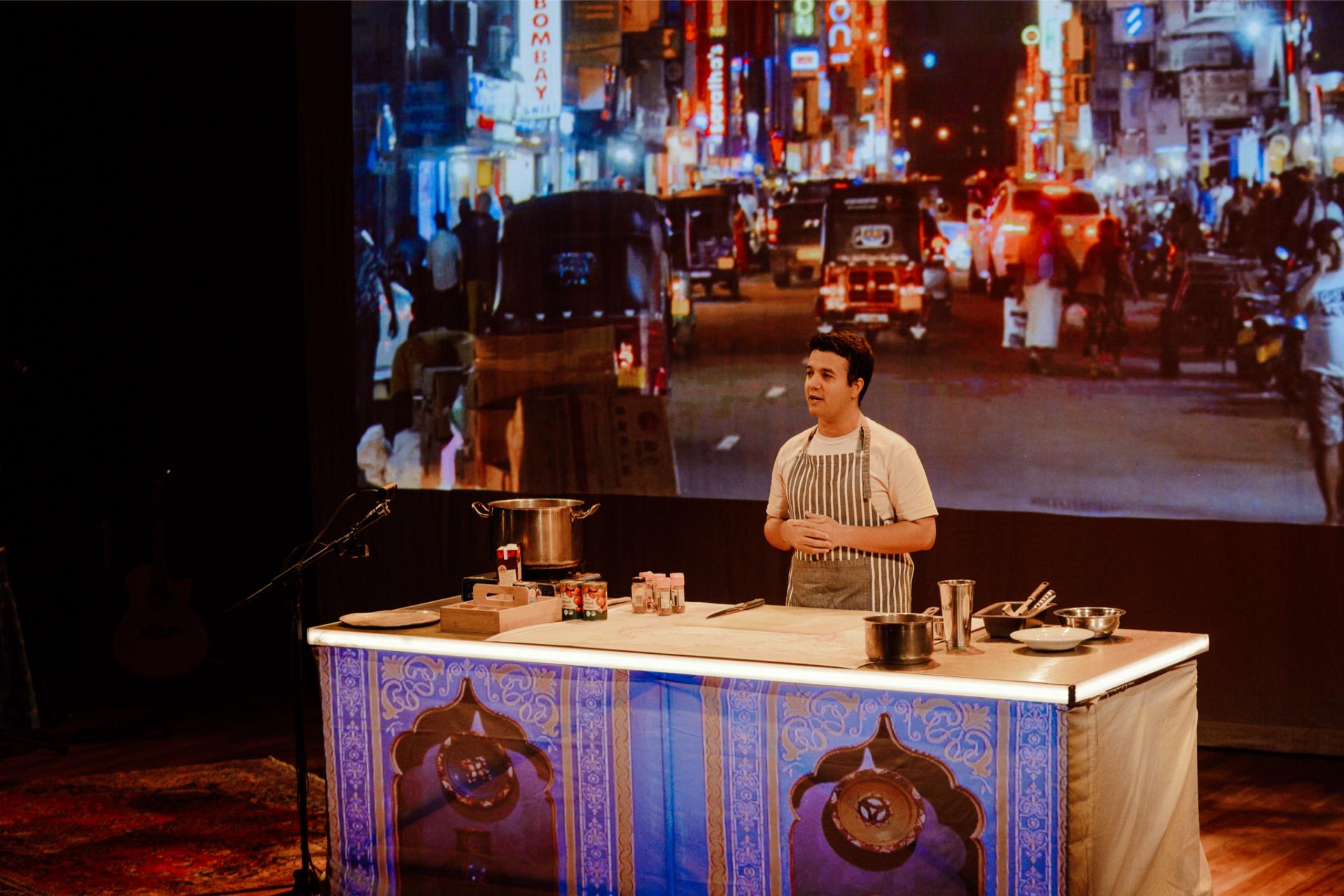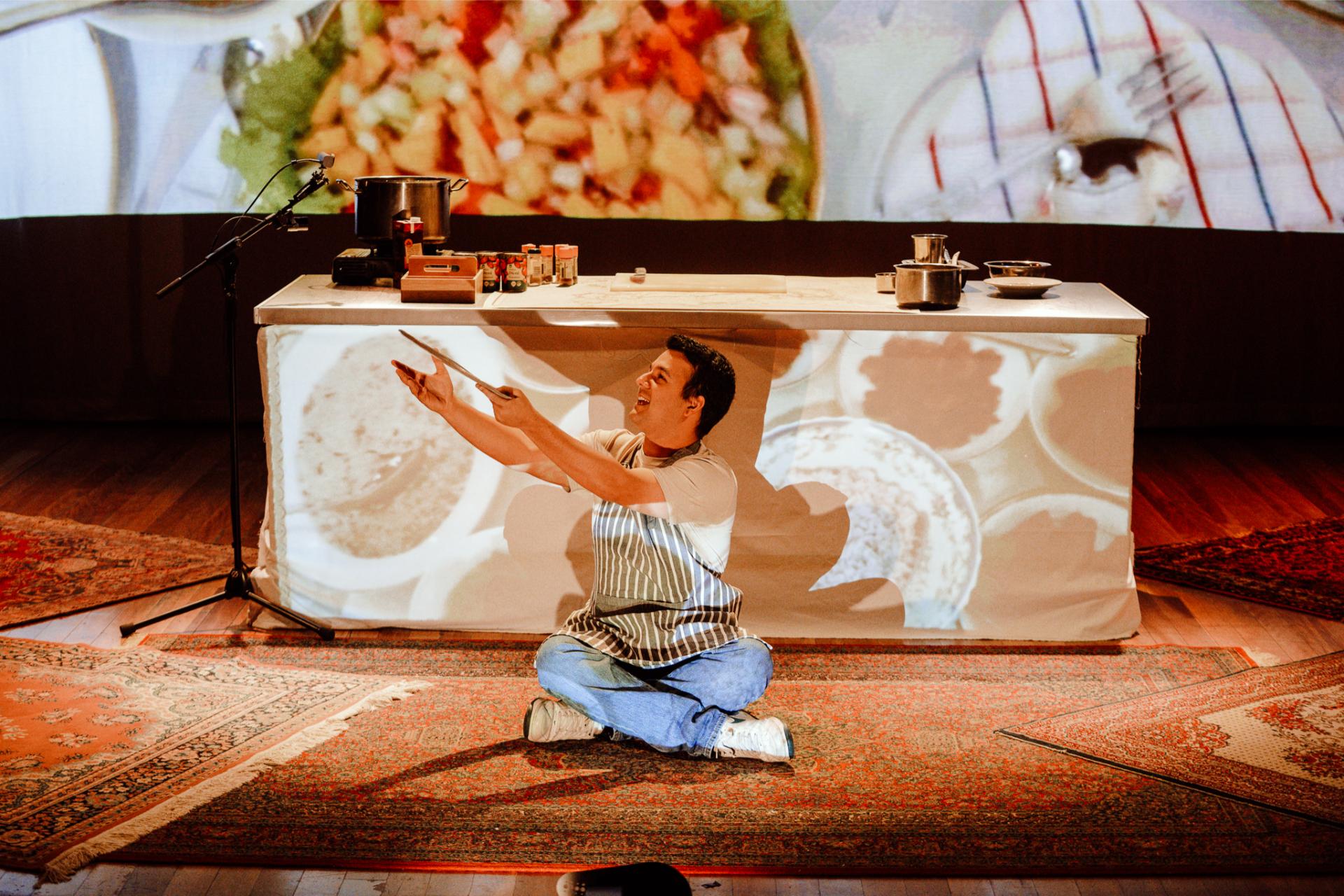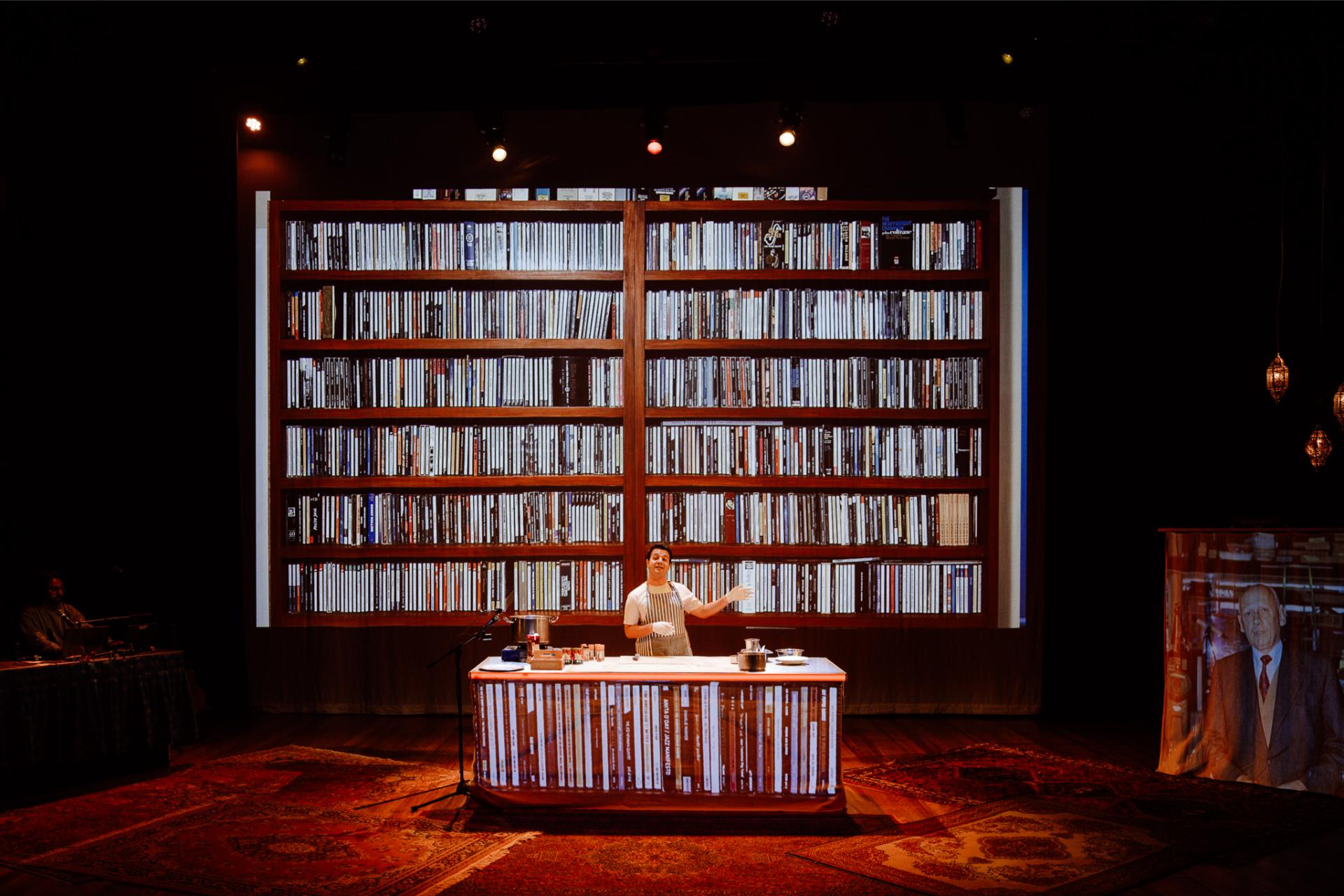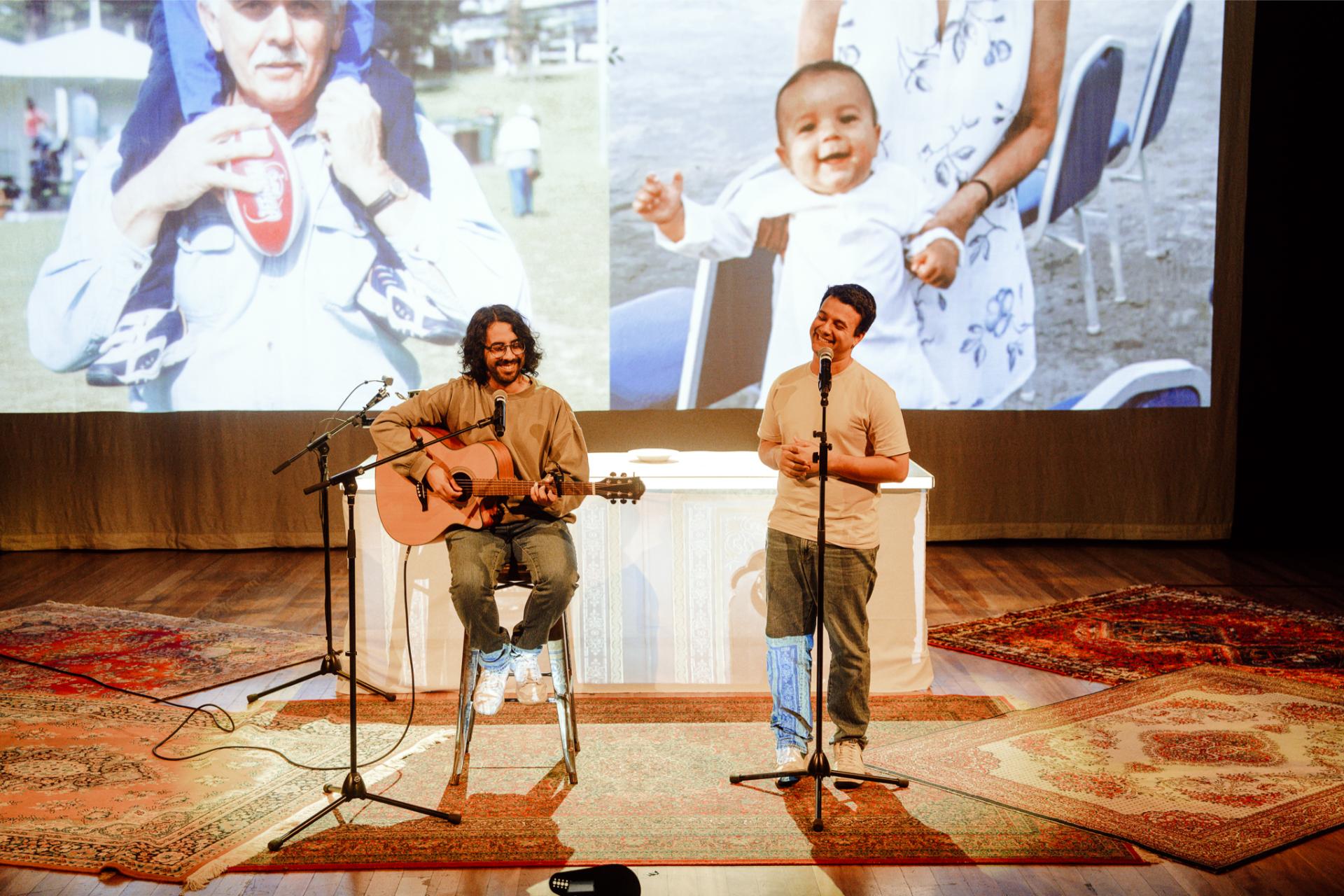
Venue: Sydney Opera House (Sydney NSW), Oct 14 – 17, 2026
Playwright: Joshua Hinton
Director: Leland Kean
Cast: Joshua Hinton
Images by Ravyna Jassani
Theatre review
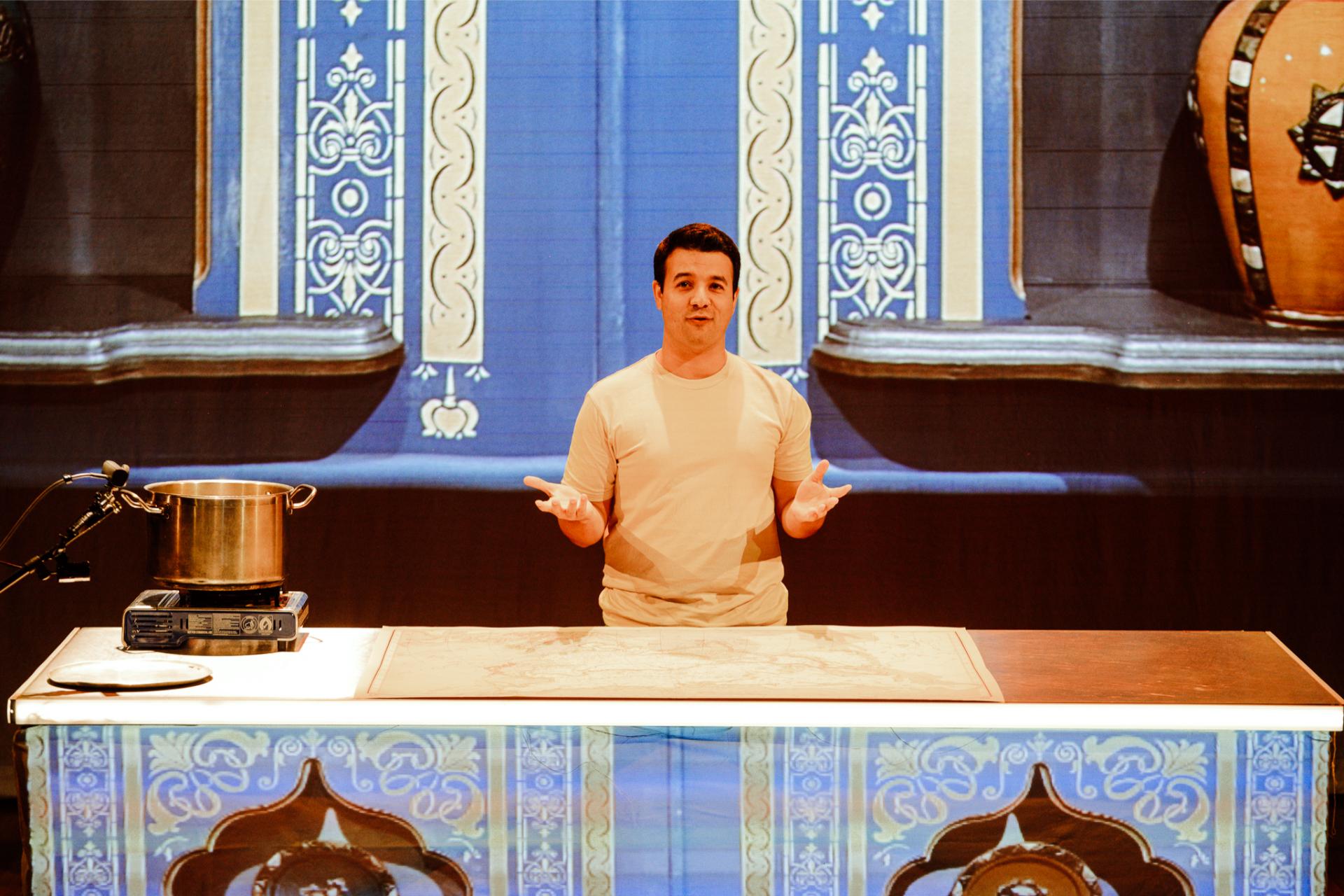
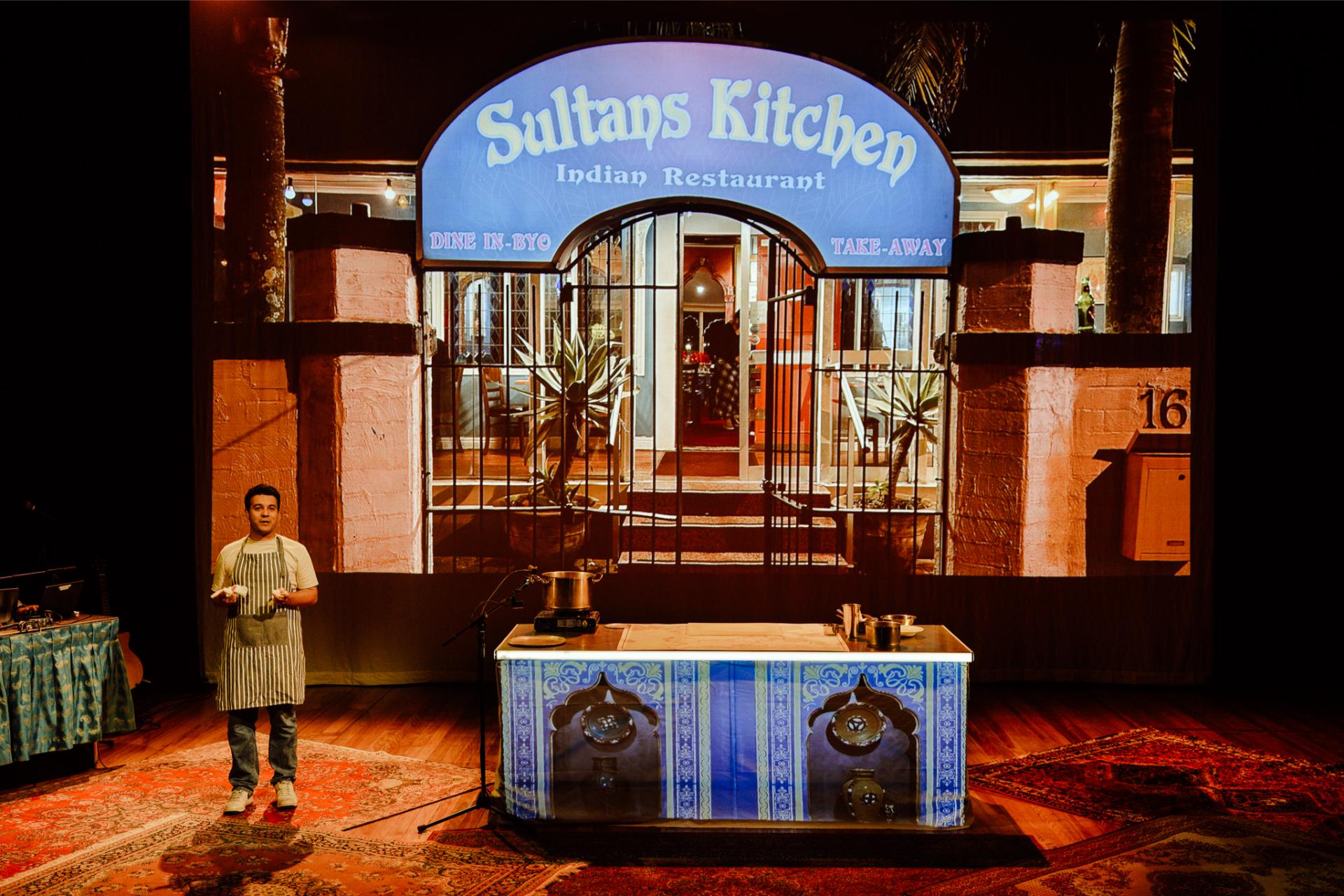
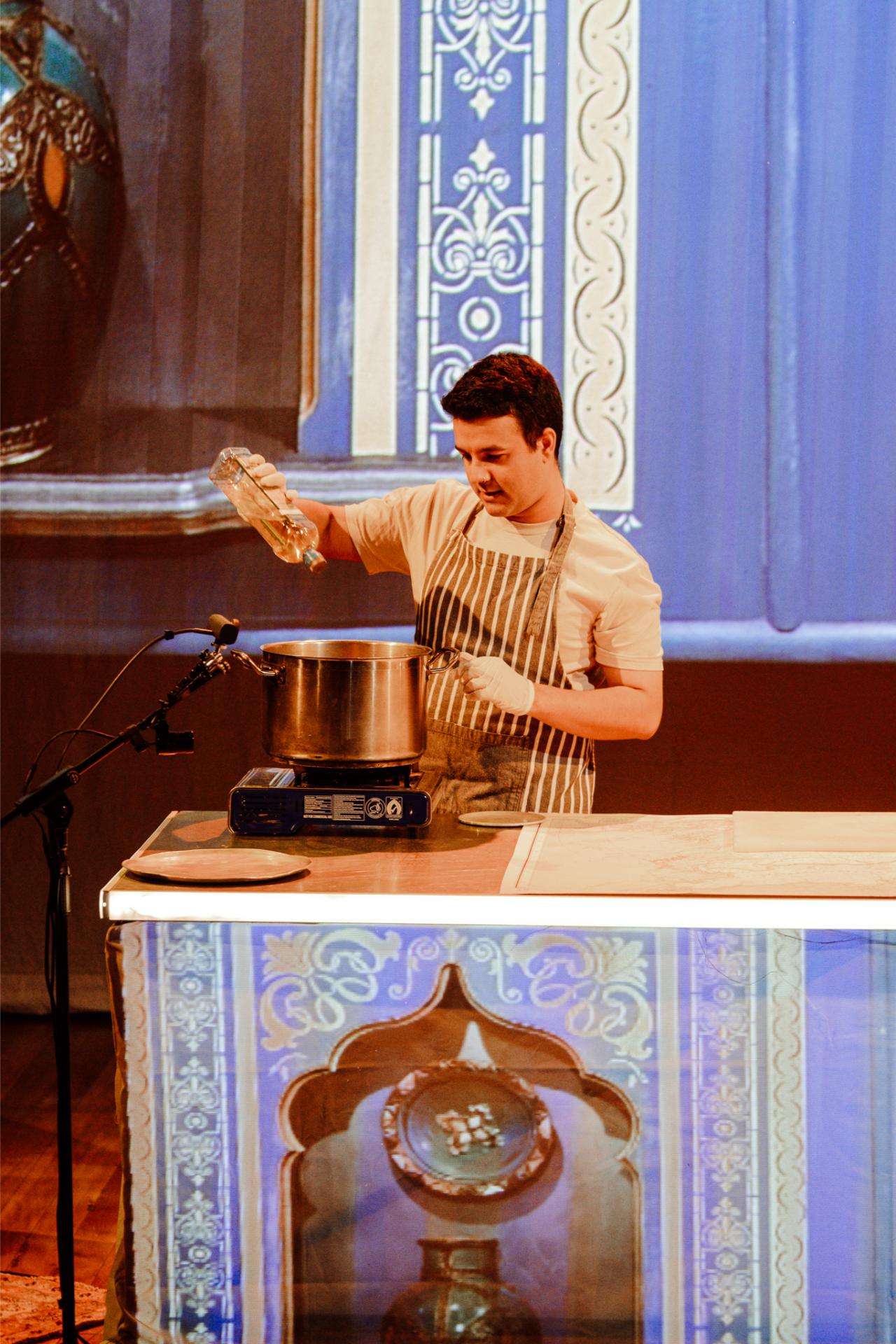
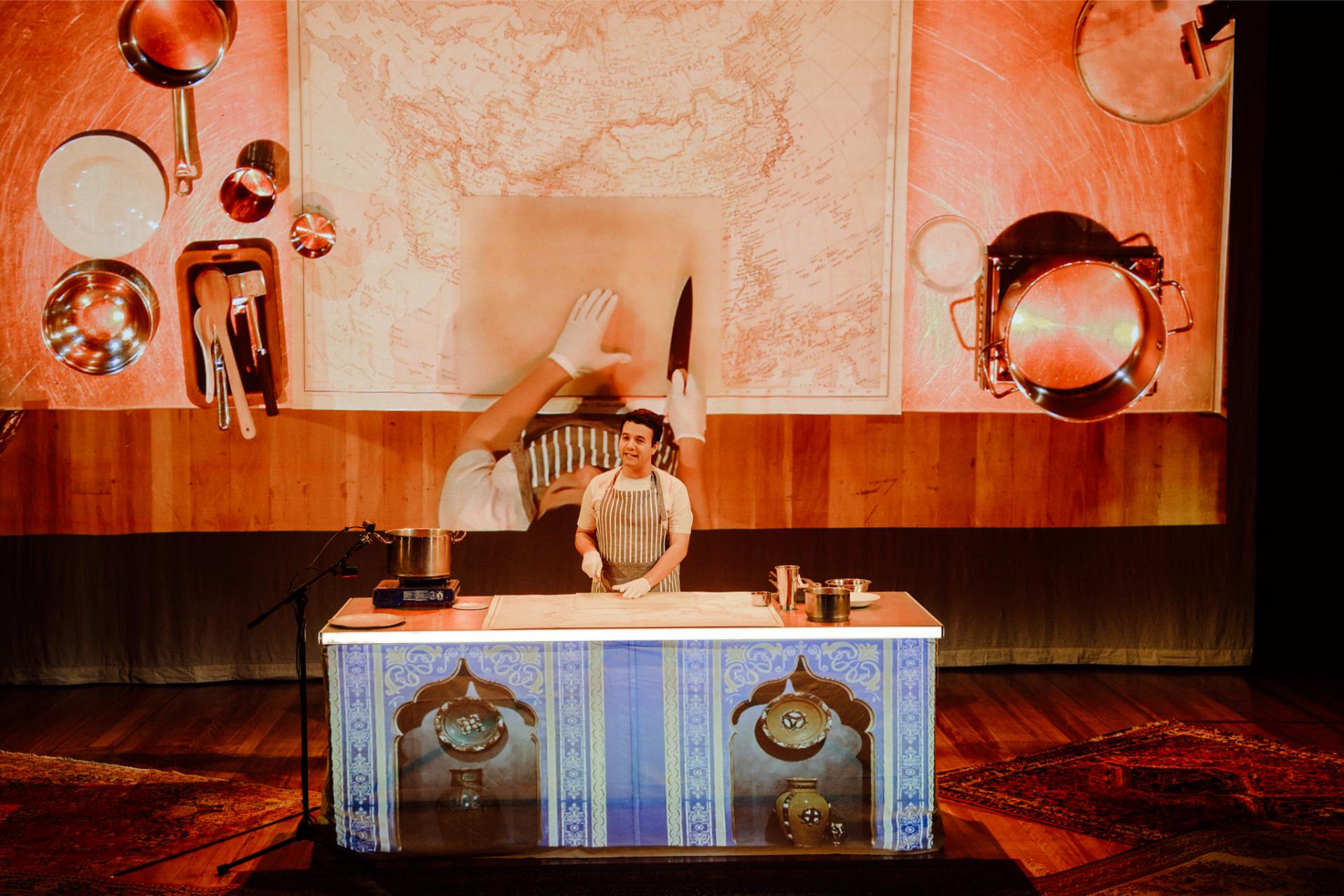
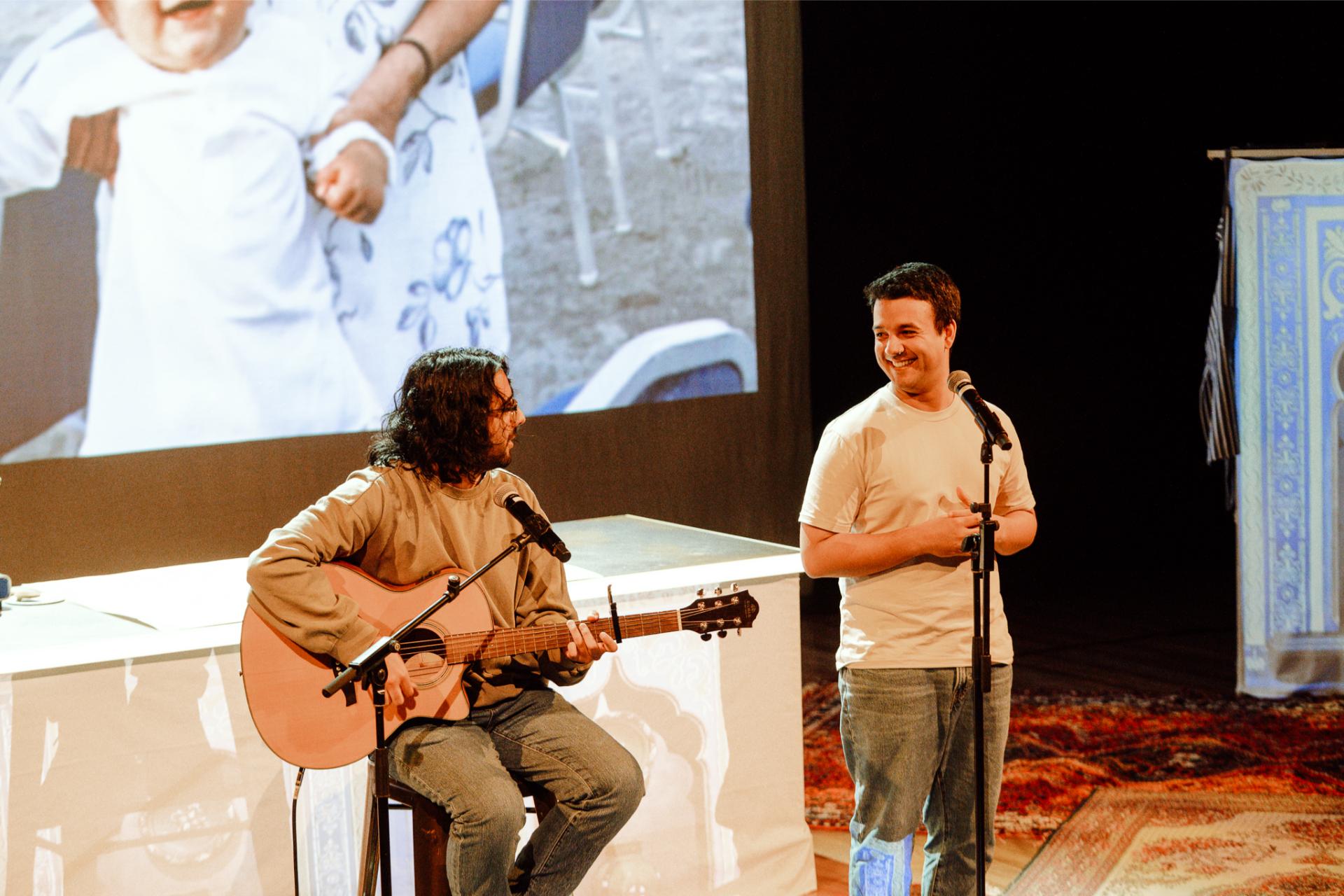
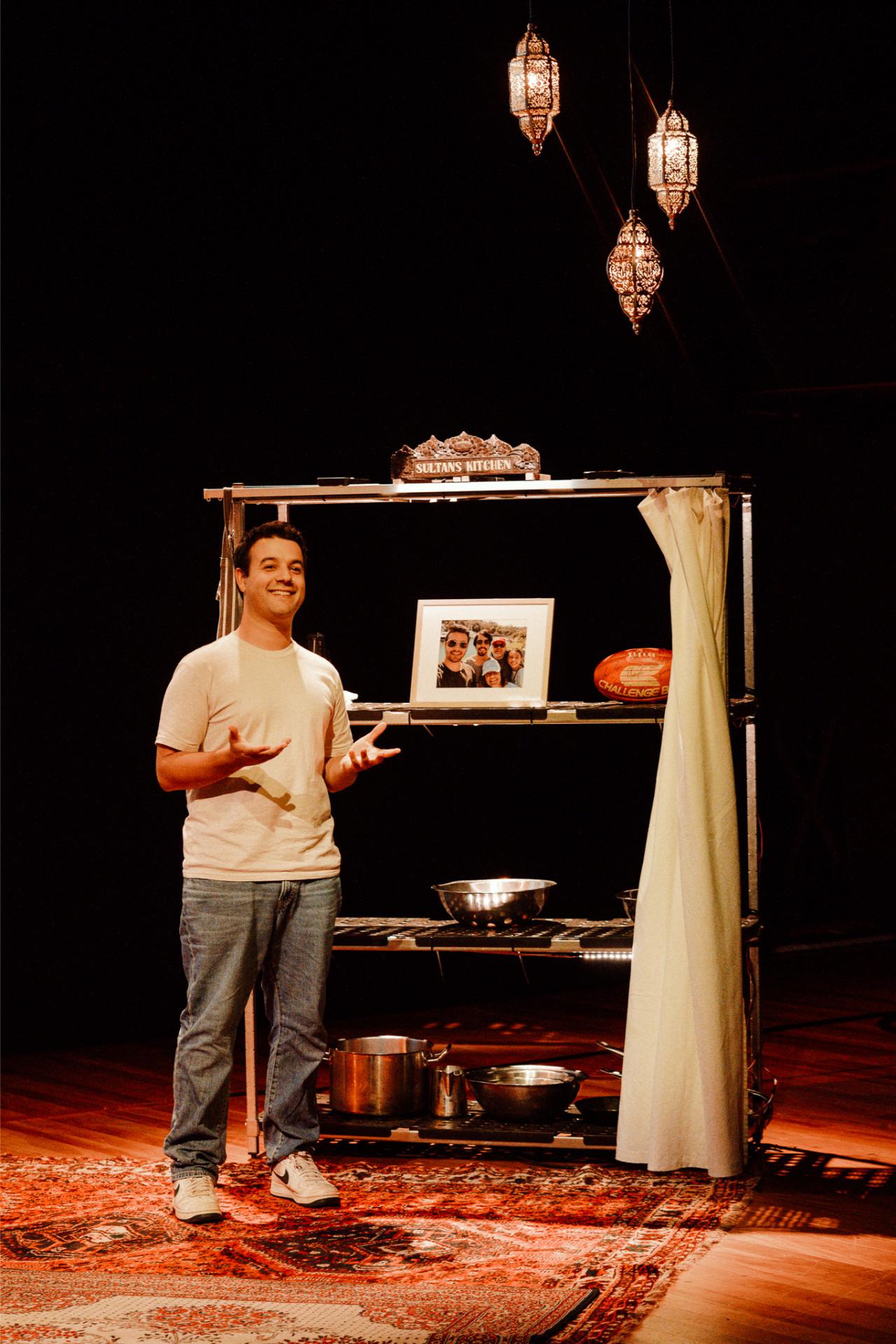
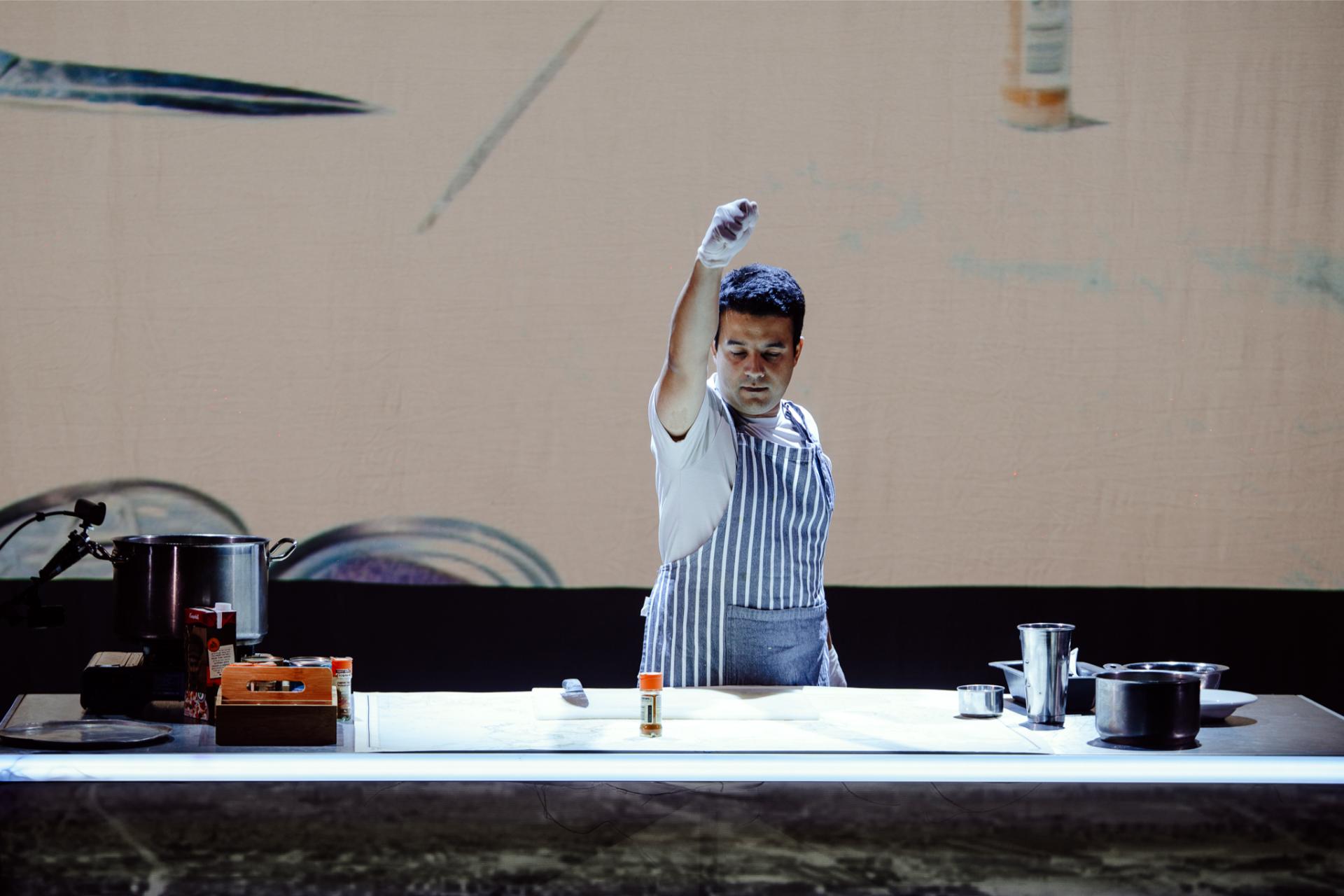
Josh Hinton was born in Australia 27 years ago, yet, like so many people of colour in this country, he is frequently confronted with the question, “Where are you from?” It can be a tiresome enquiry, particularly when one’s ancestry resists a straightforward explanation. Of mixed heritage, Hinton finds his family history too complex to distil into a convenient answer for casual conversation. Instead, he devotes A Place in the Sultan’s Kitchen to exploring his origins, spending 70 minutes tracing the intertwined histories of his grandparents and seeking a deeper understanding of his connections to Iran, Sri Lanka and England. Presented primarily as a monologue (with his brother Simon by his side, operating video and sound cues, and occasionally interjecting verbally) the work sees Hinton prepare his favourite curry while recounting stories of his grandparents’ lives before they eventually settled in Australia. These are rich and often colourful histories, and Hinton relates them with evident sincerity and considerable warmth. Yet the style of presentation lacks a certain dynamism, making it difficult to sustain one’s concentration throughout the performance.
Race is ostensibly the central concern of Hinton’s work. However, although he acknowledges that he has not been particularly conscious of experiencing overt racism himself, his engagement with the subject feels insufficiently developed. Hinton possesses an appealingly genial stage presence, but when addressing race, affability alone is hardly enough. While we can appreciate that his personal experiences may not have exposed him to the more egregious manifestations of racial prejudice, the decision to bring race into the public arena invites a broader engagement with the social and political realities that continue to shape the lives of people of colour. Racial discrimination remains a persistent feature of Australian life, and its renewed visibility in the present climate makes it difficult to understand why a work ostensibly concerned with race should leave questions of marginalisation and persecution largely unexplored. Personal experience need not be the sole basis for such an examination, and by declining to pursue these questions with greater urgency, Hinton’s work remains frustratingly superficial, its sincerity unable to compensate for the lack of critical depth.
At the conclusion of the show, Hinton reveals that he now answers the perennial question of where he comes from by saying, “I come from Wollongong.” It is a quietly satisfying resolution, affirming his sense of belonging to the place in which he was born and raised, and one that his ancestors would presumably have been glad to see him claim. Yet there is an irony in this assertion of uncomplicated belonging: the very ease with which Hinton can now locate himself within Australian society may owe something to the sacrifices and hardships endured by those who came before him. One cannot help wondering whether those ancestors might also appreciate a fuller acknowledgement of what they endured to make possible the relative security and comfort in which he now lives, when declaring his origins. To claim one’s place is meaningful; to recognise the historical cost of that belonging would have made this work considerably more resonant.