Review: 3 Billion Seconds (KXT on Broadway)

Venue: KXT on Broadway (Ultimo NSW), Apr 17 – May 2, 2026
Playwright: Maud Dromgoole
Director: Dominique Purdue
Cast: Izabella Louk, Victor Y Z Xu
Images by Phil Erbacher

Theatre review
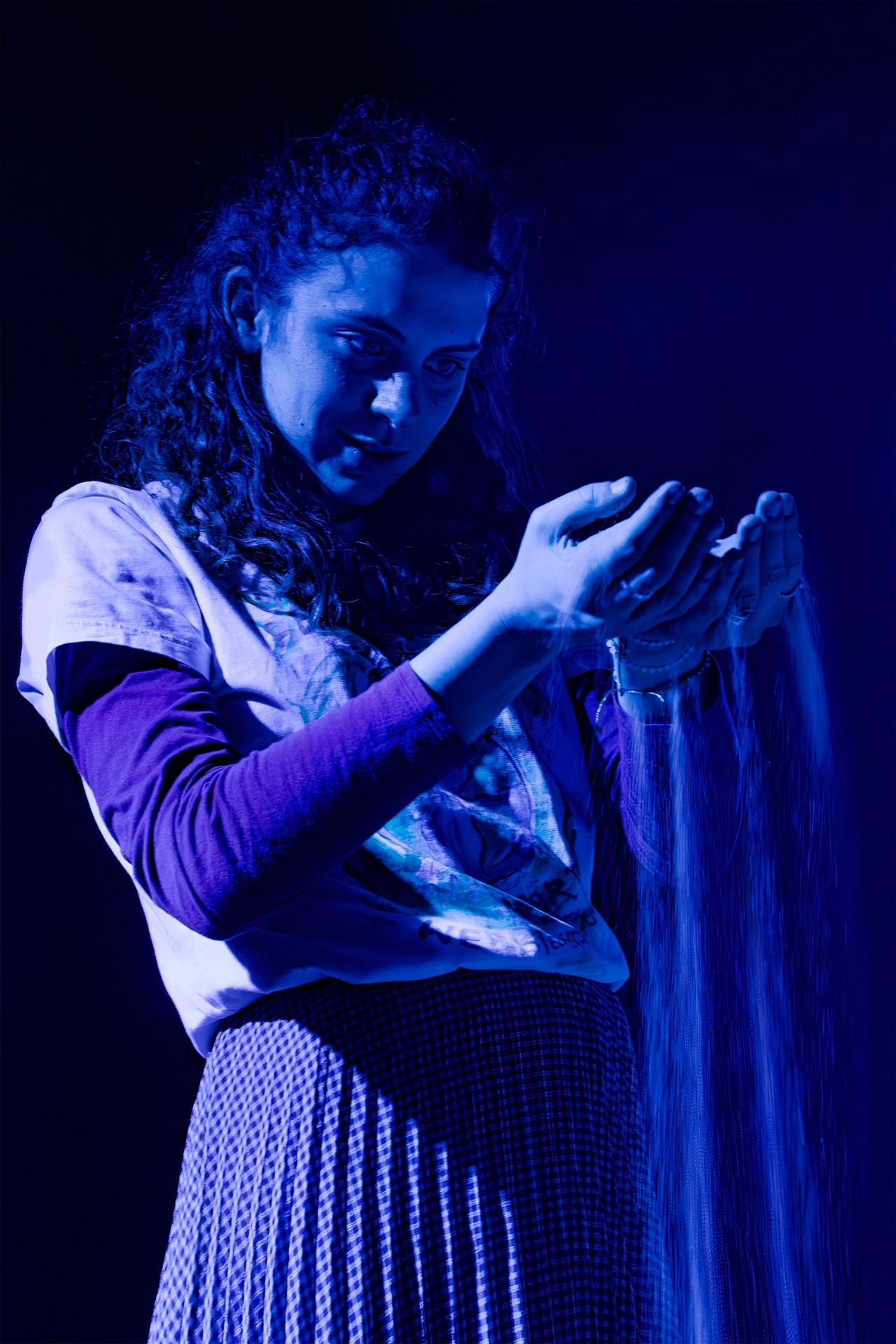
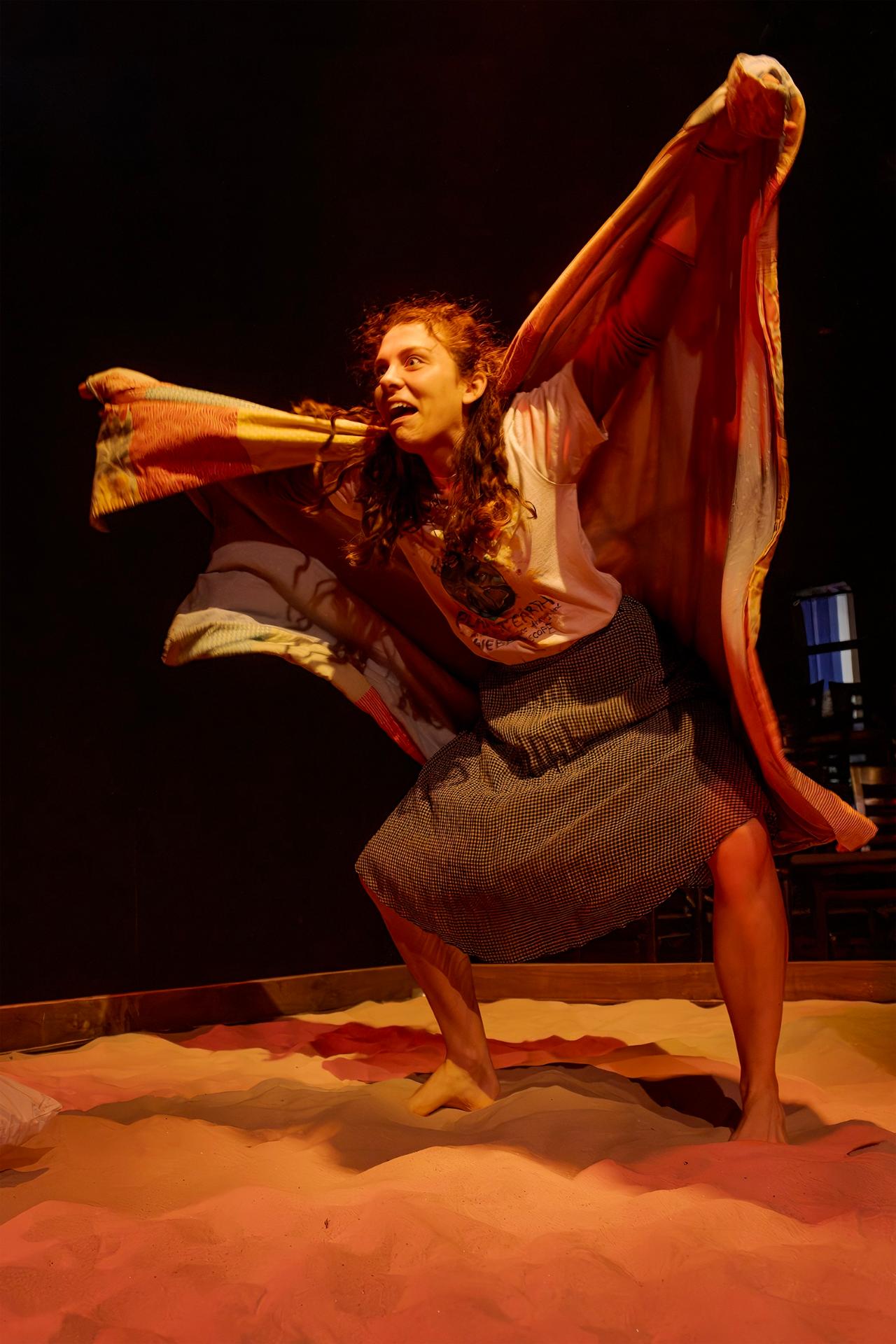
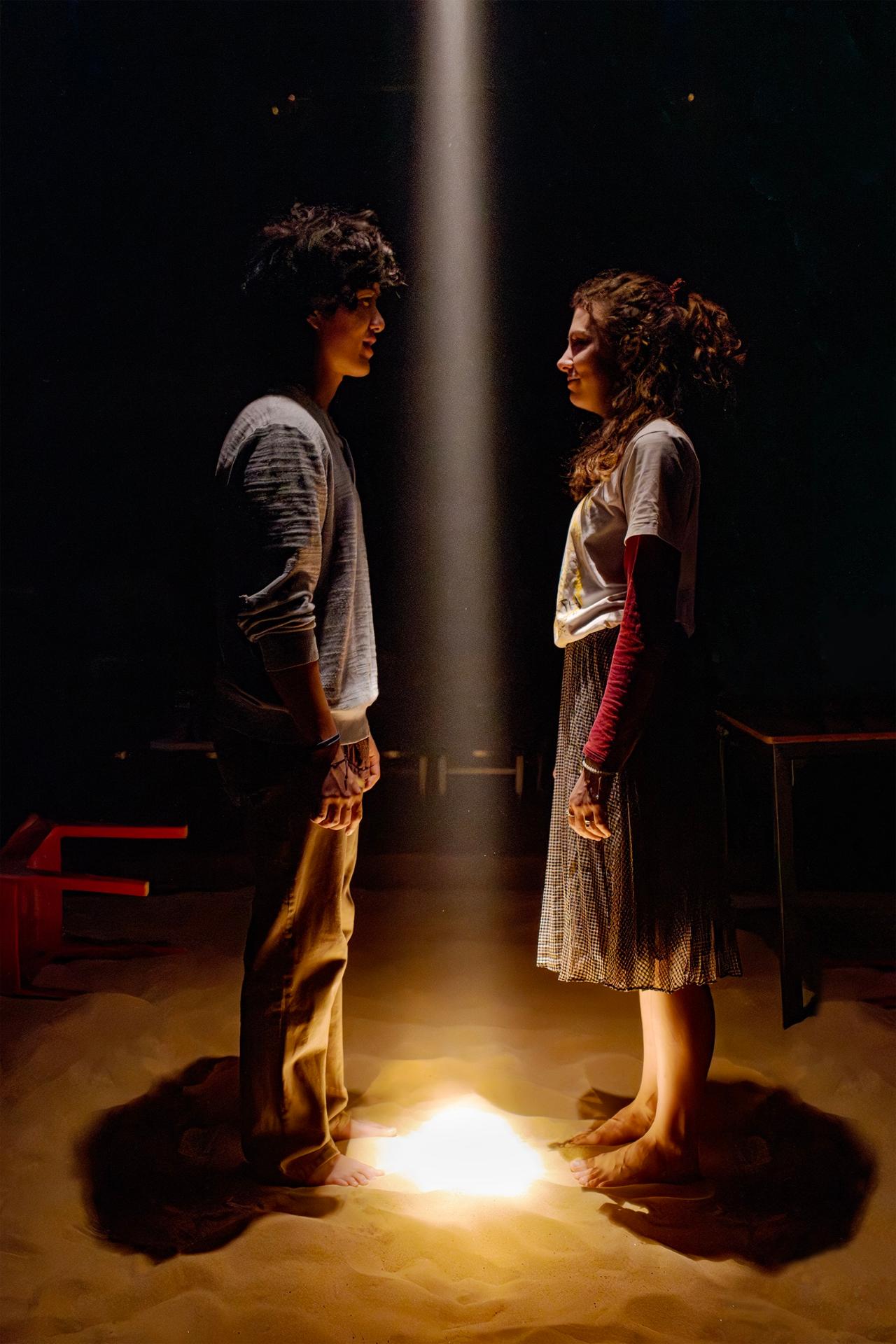
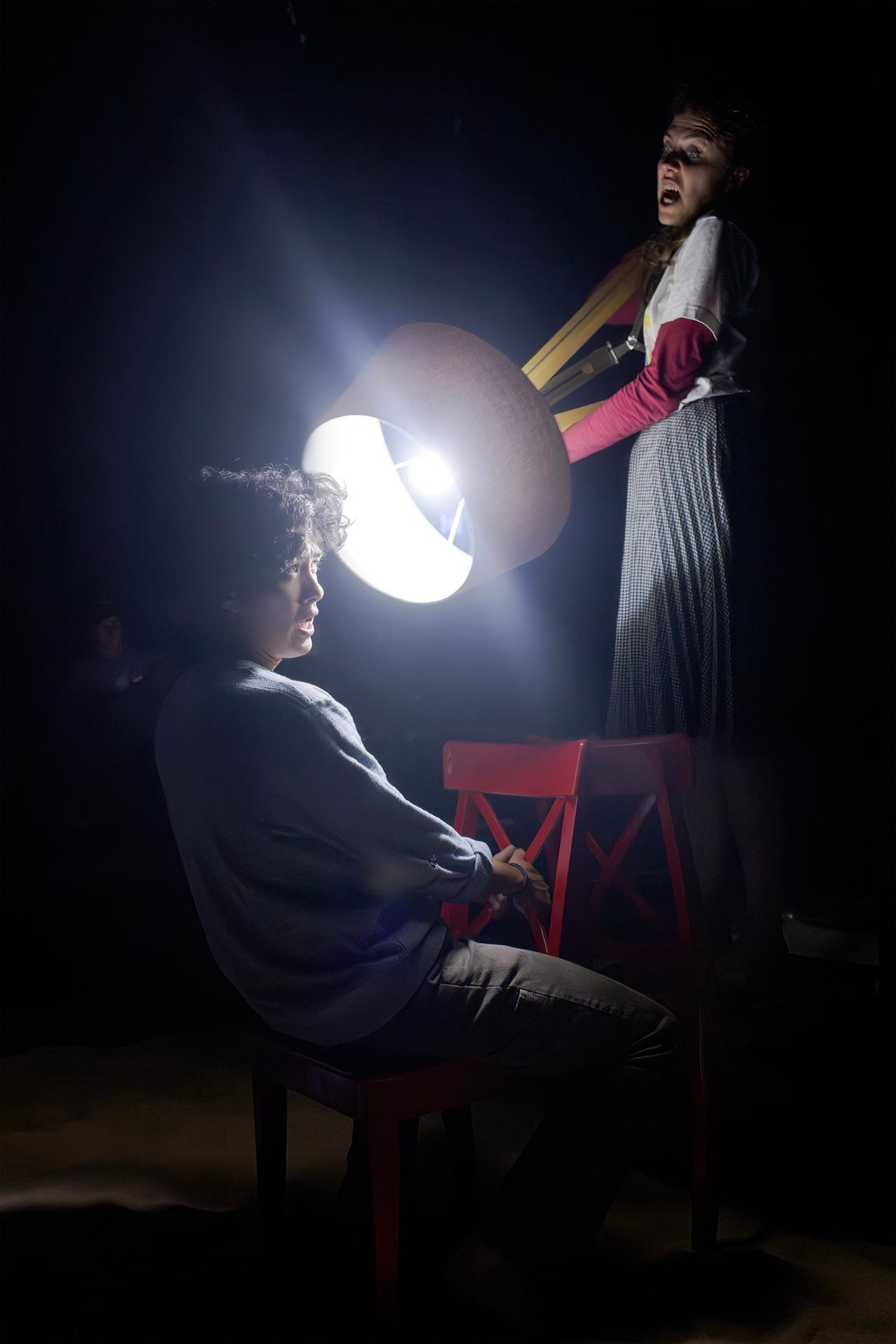
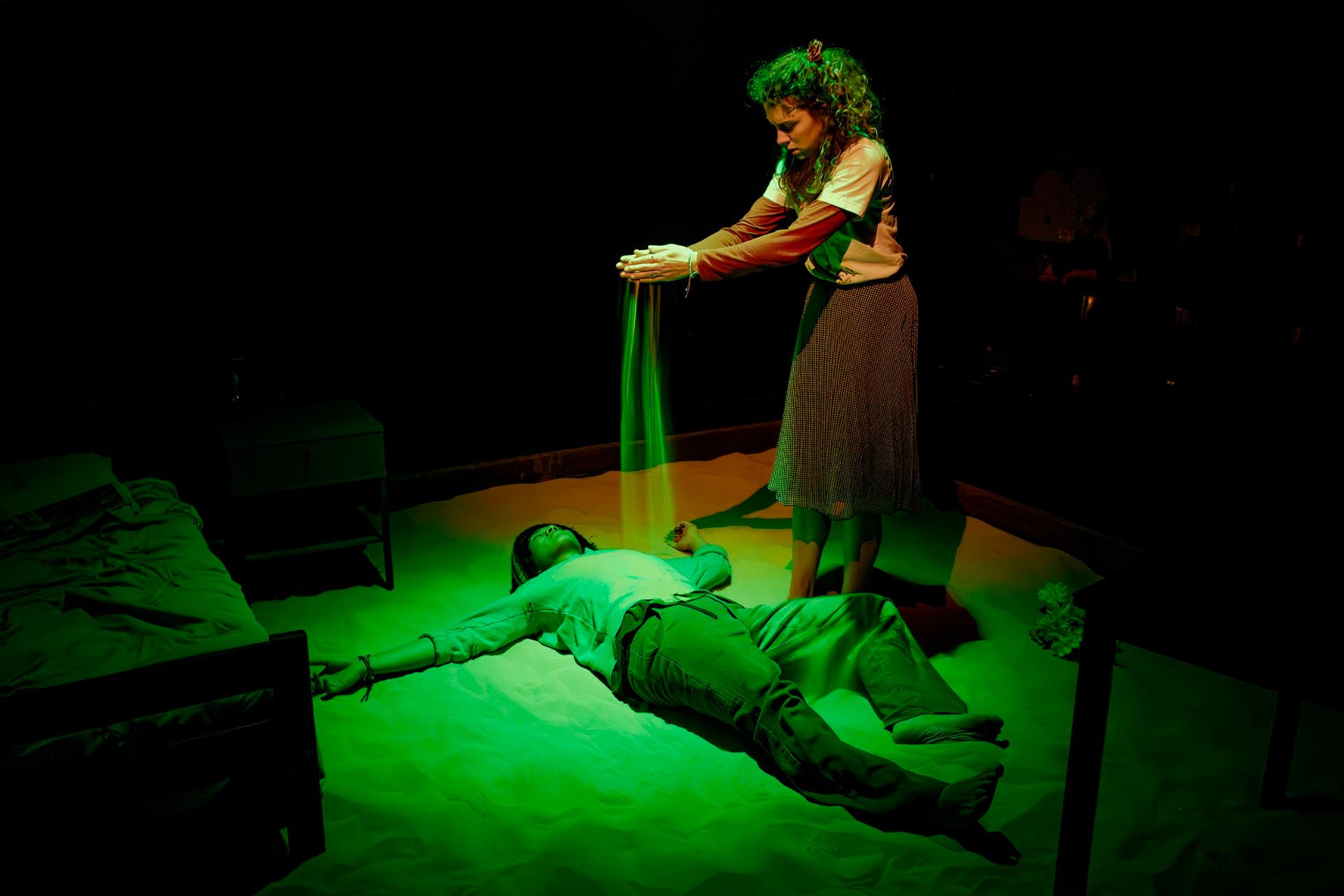
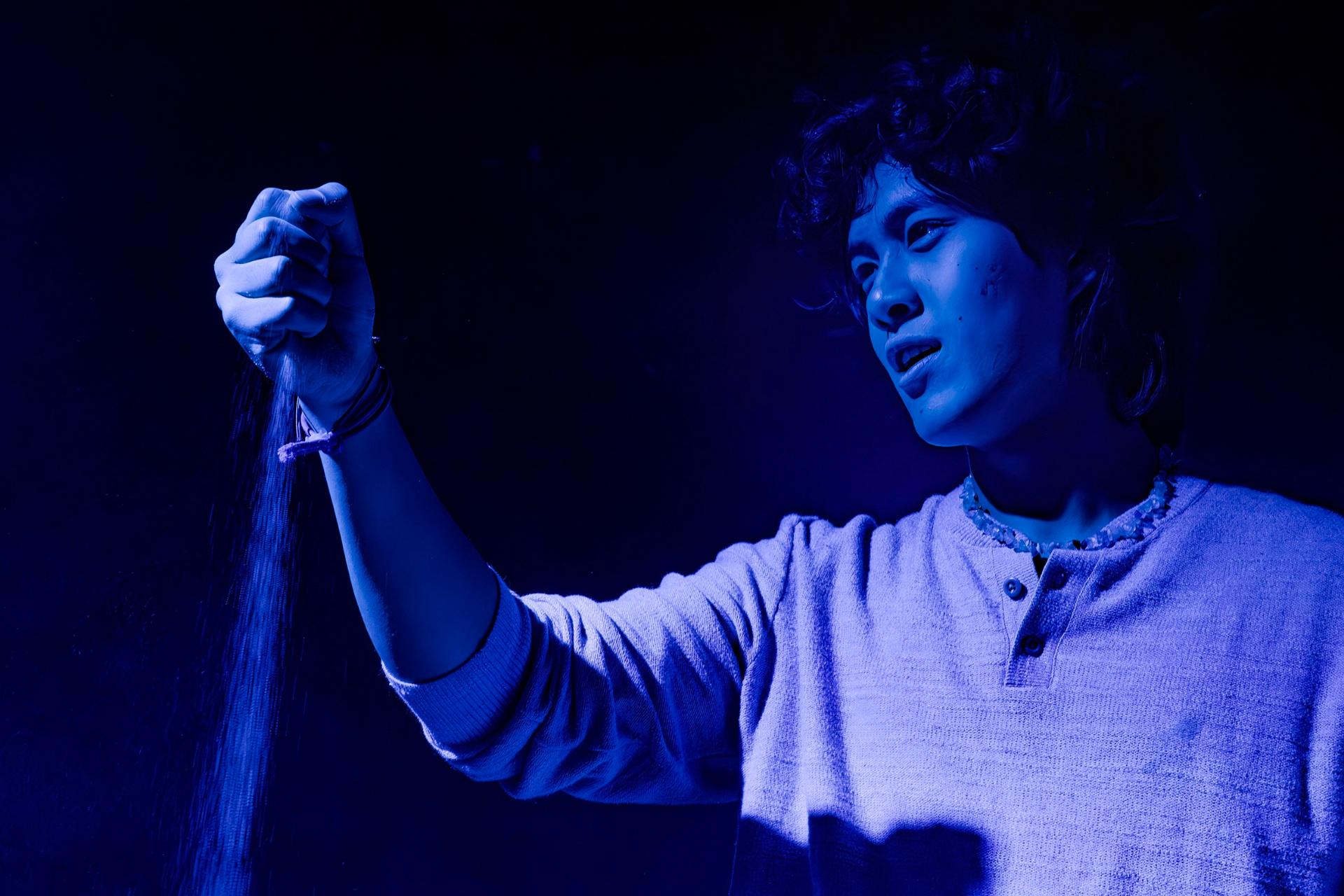
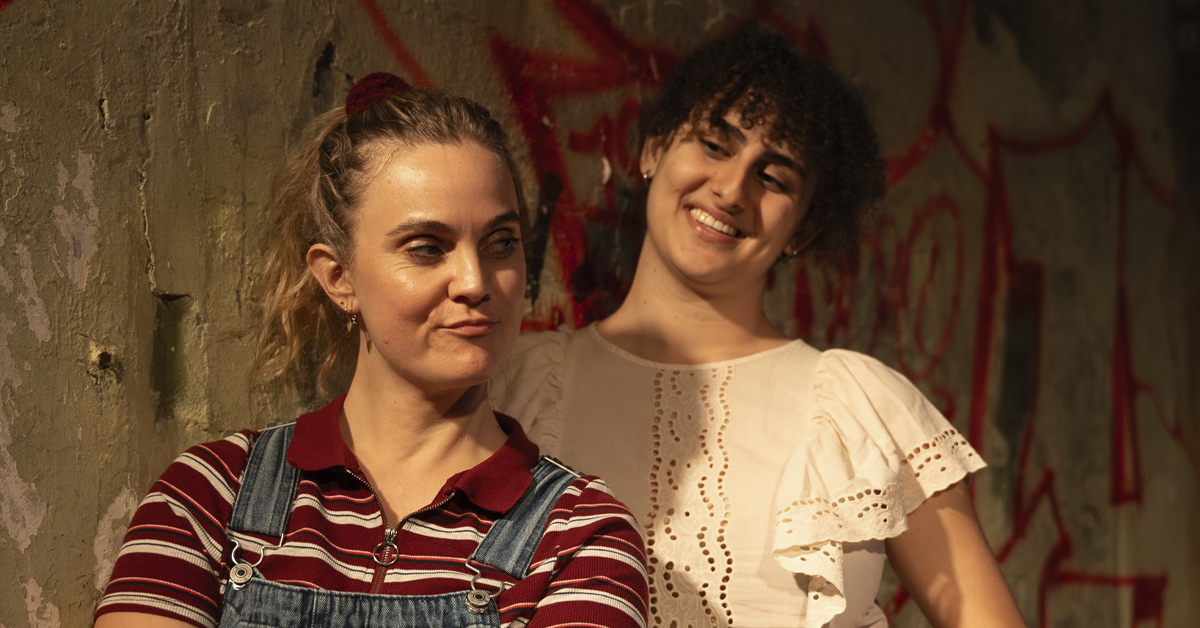
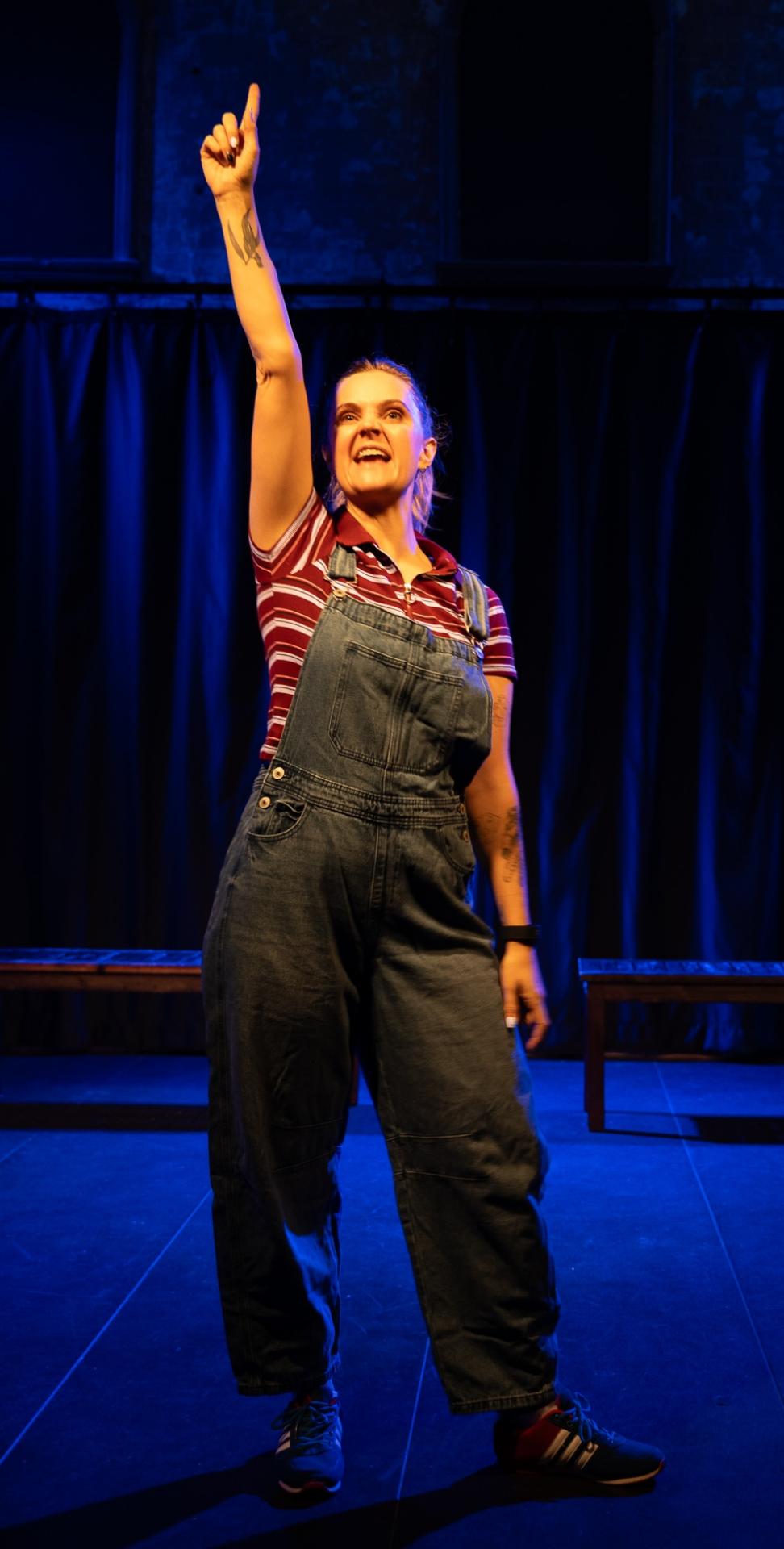
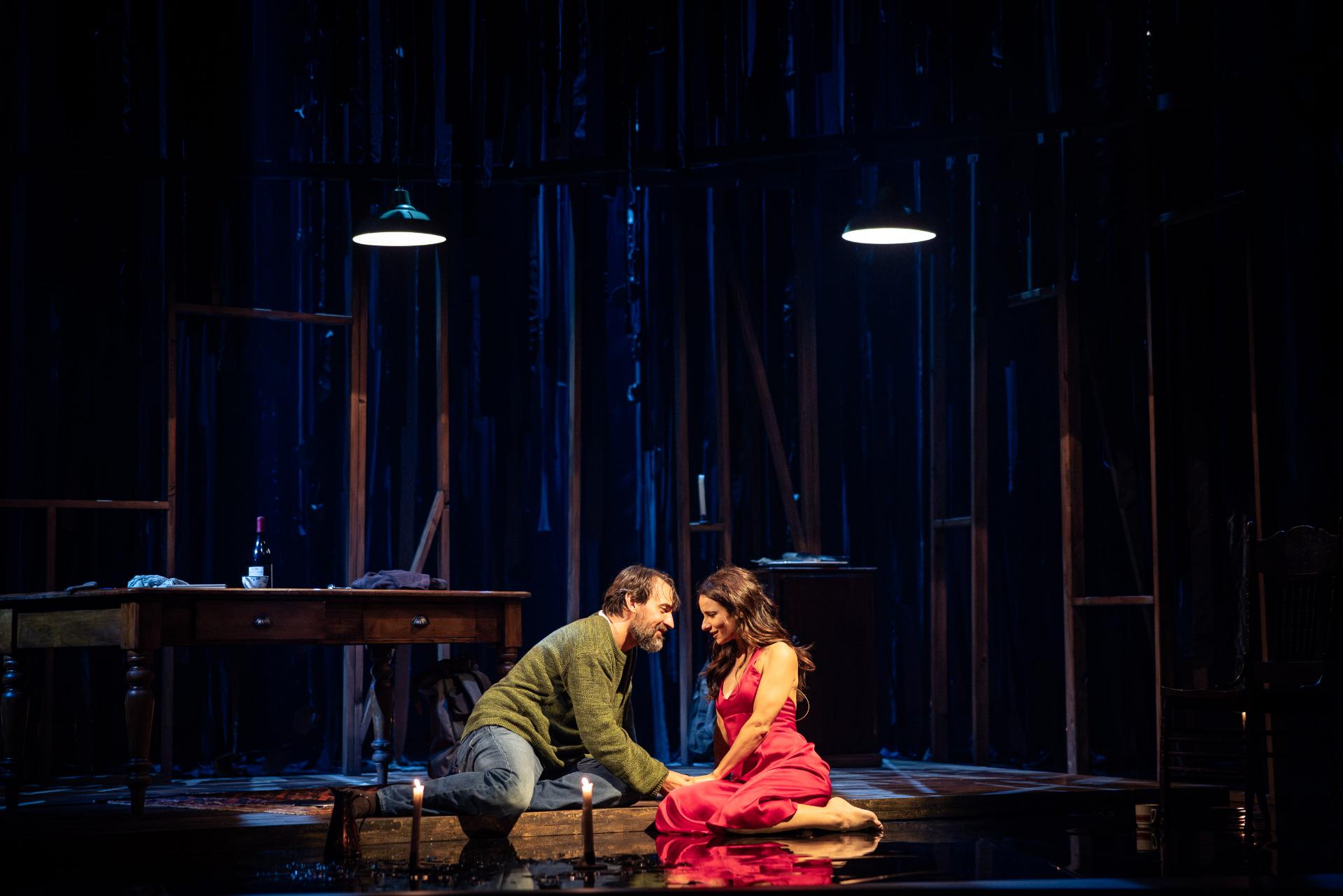
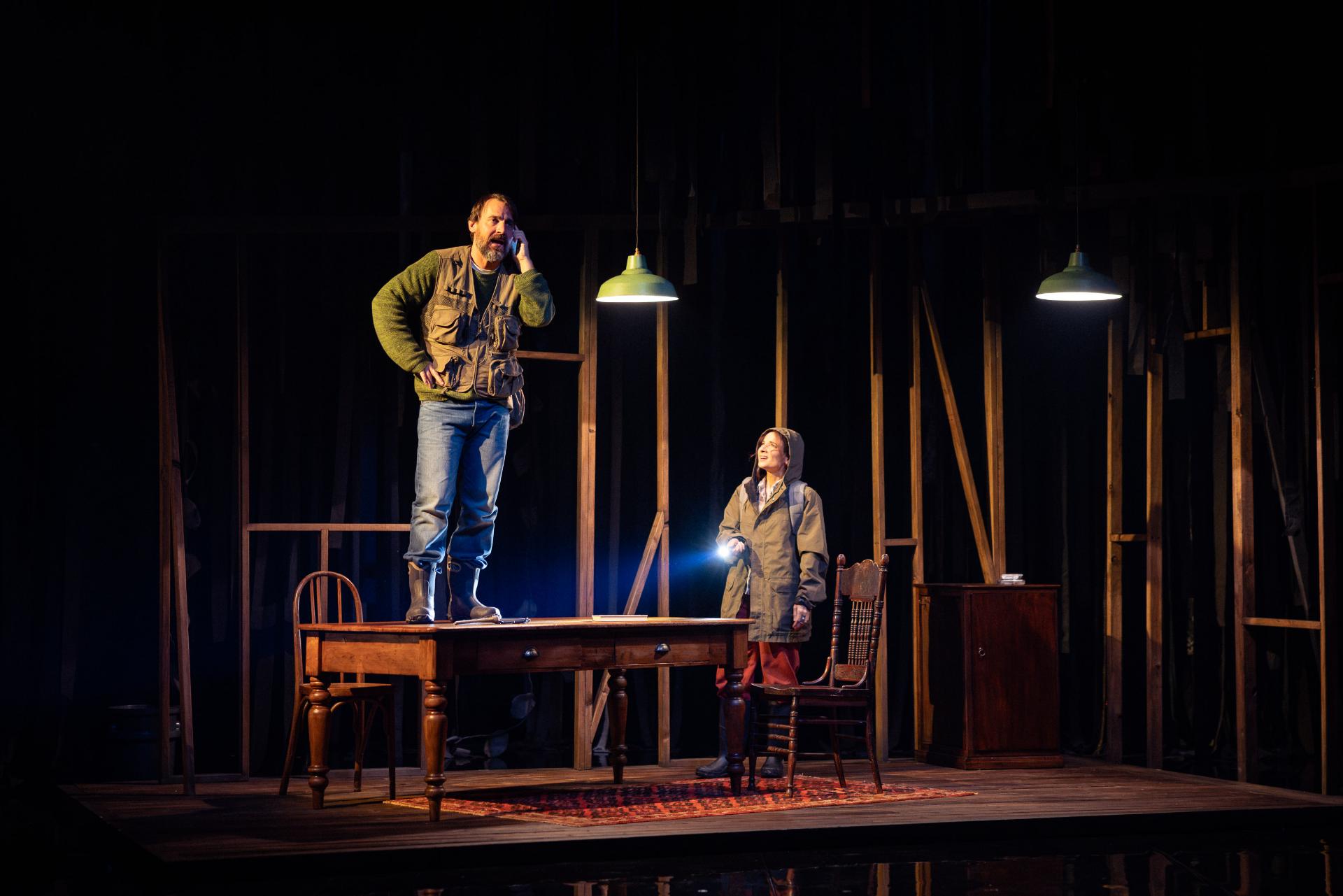
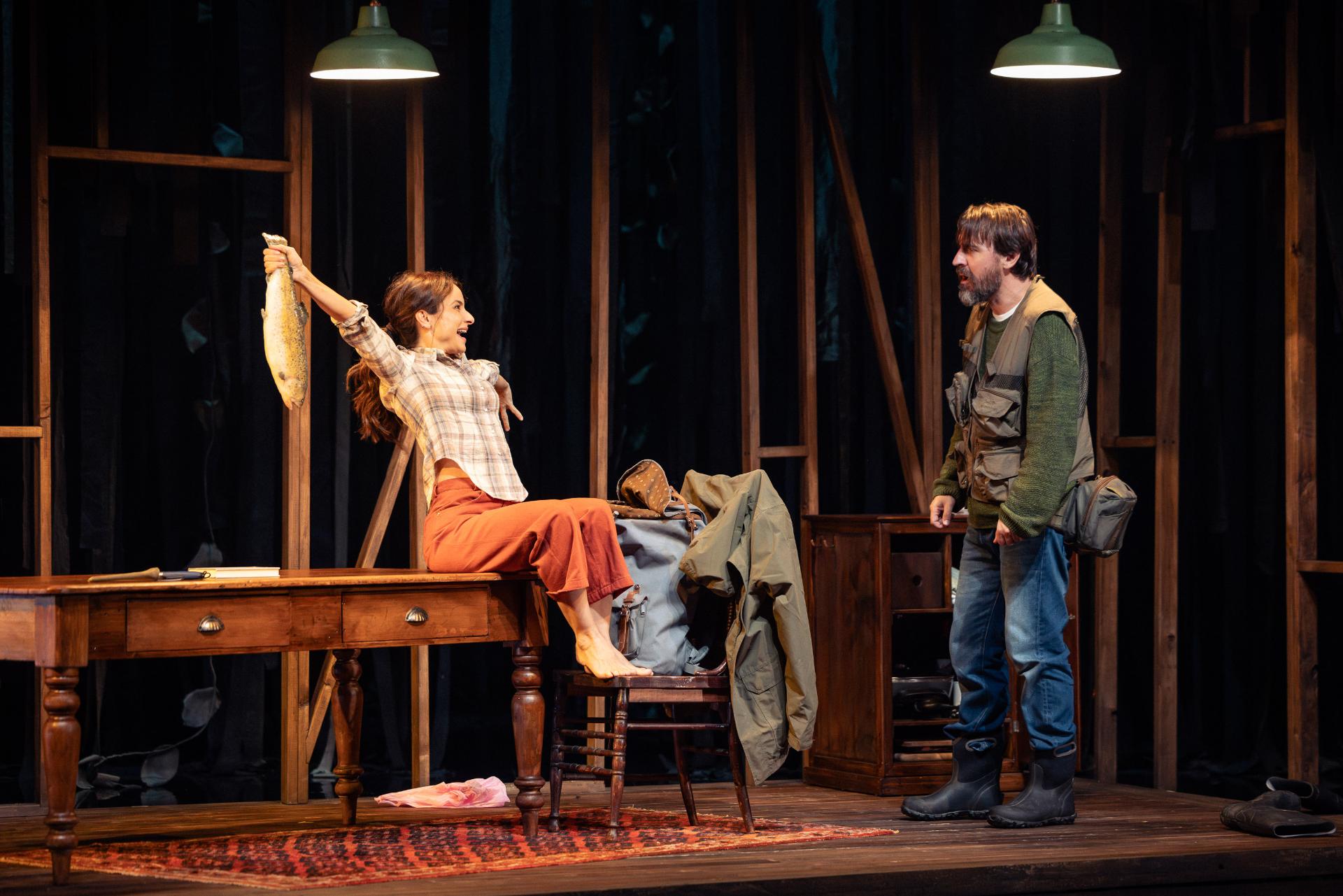
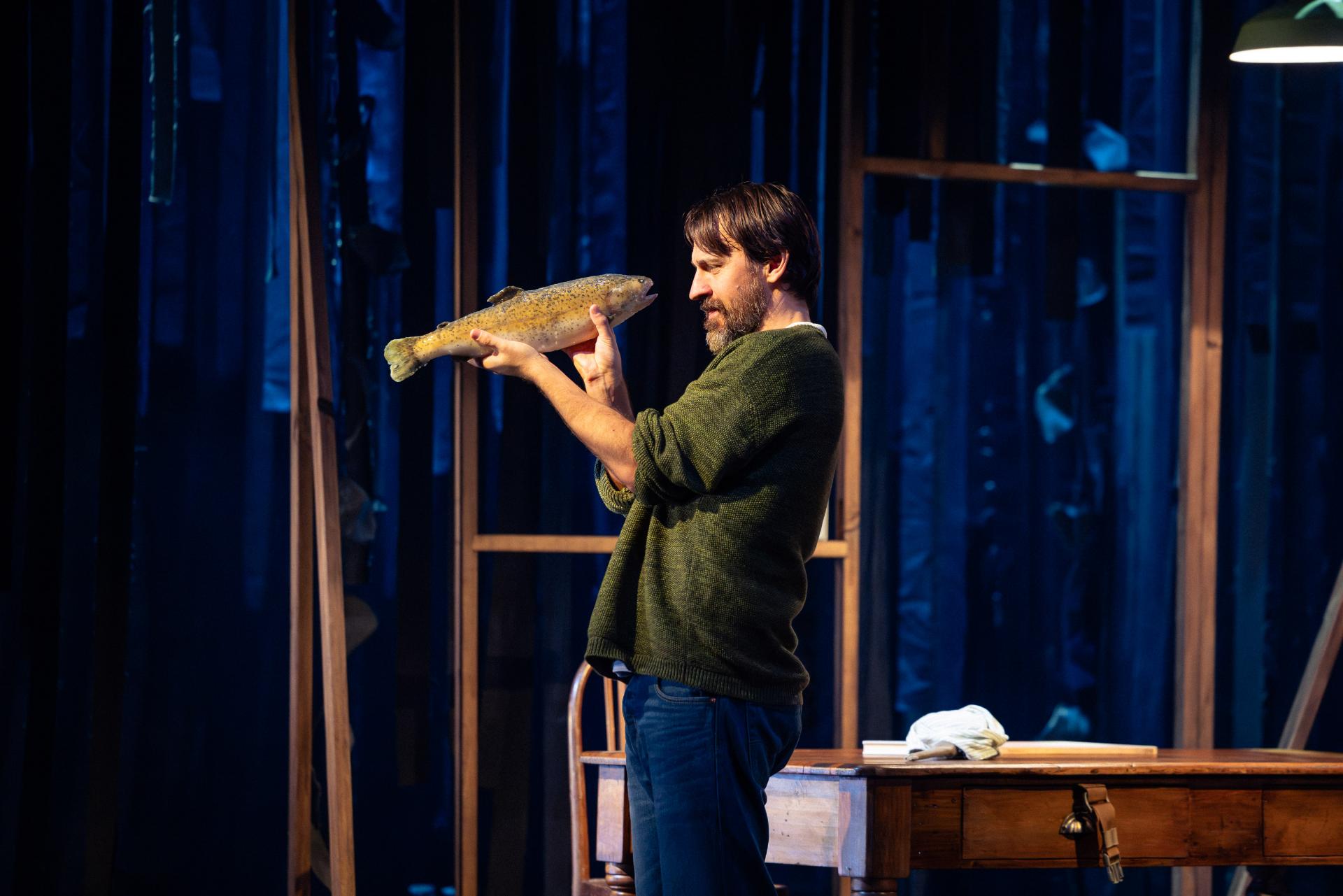
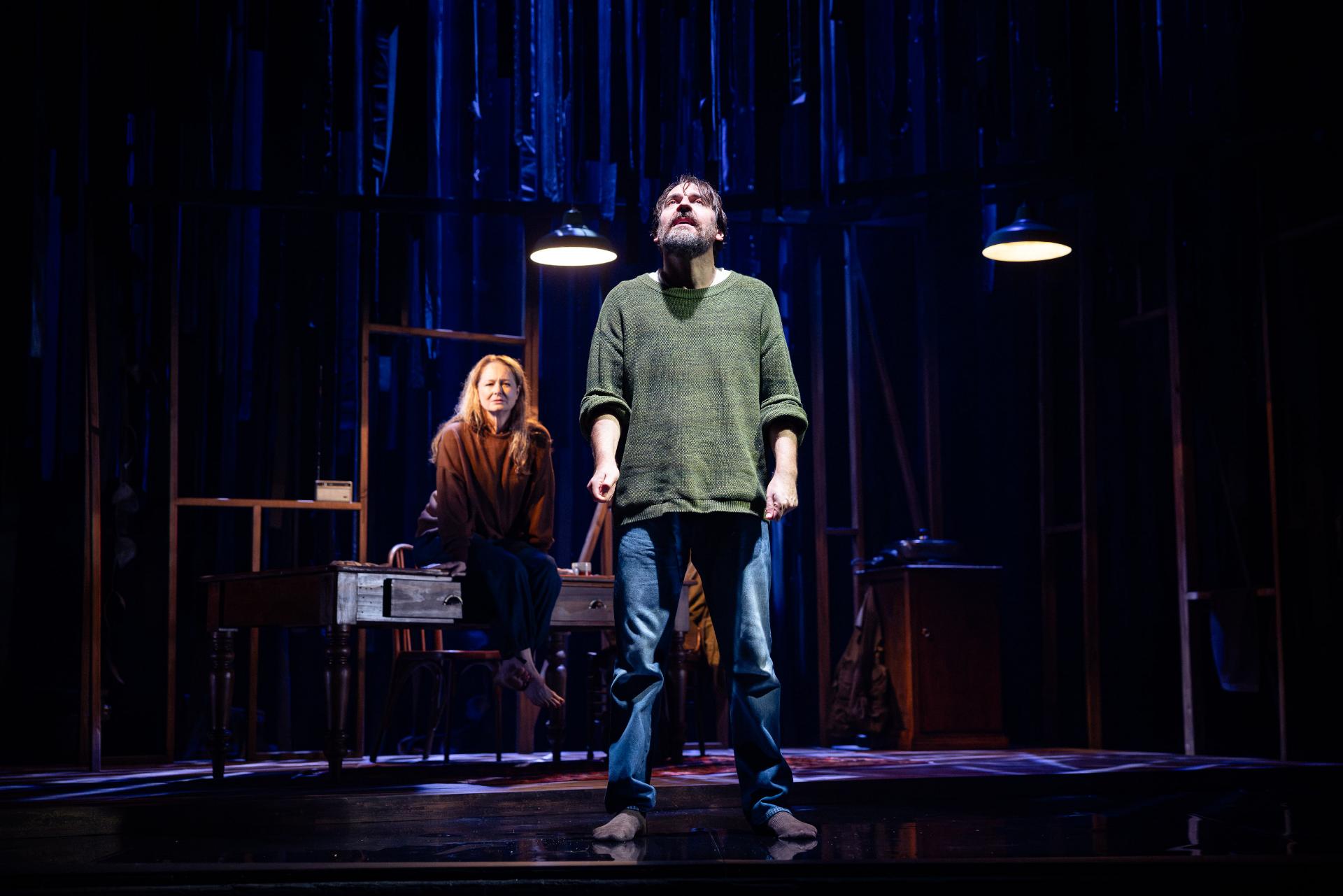
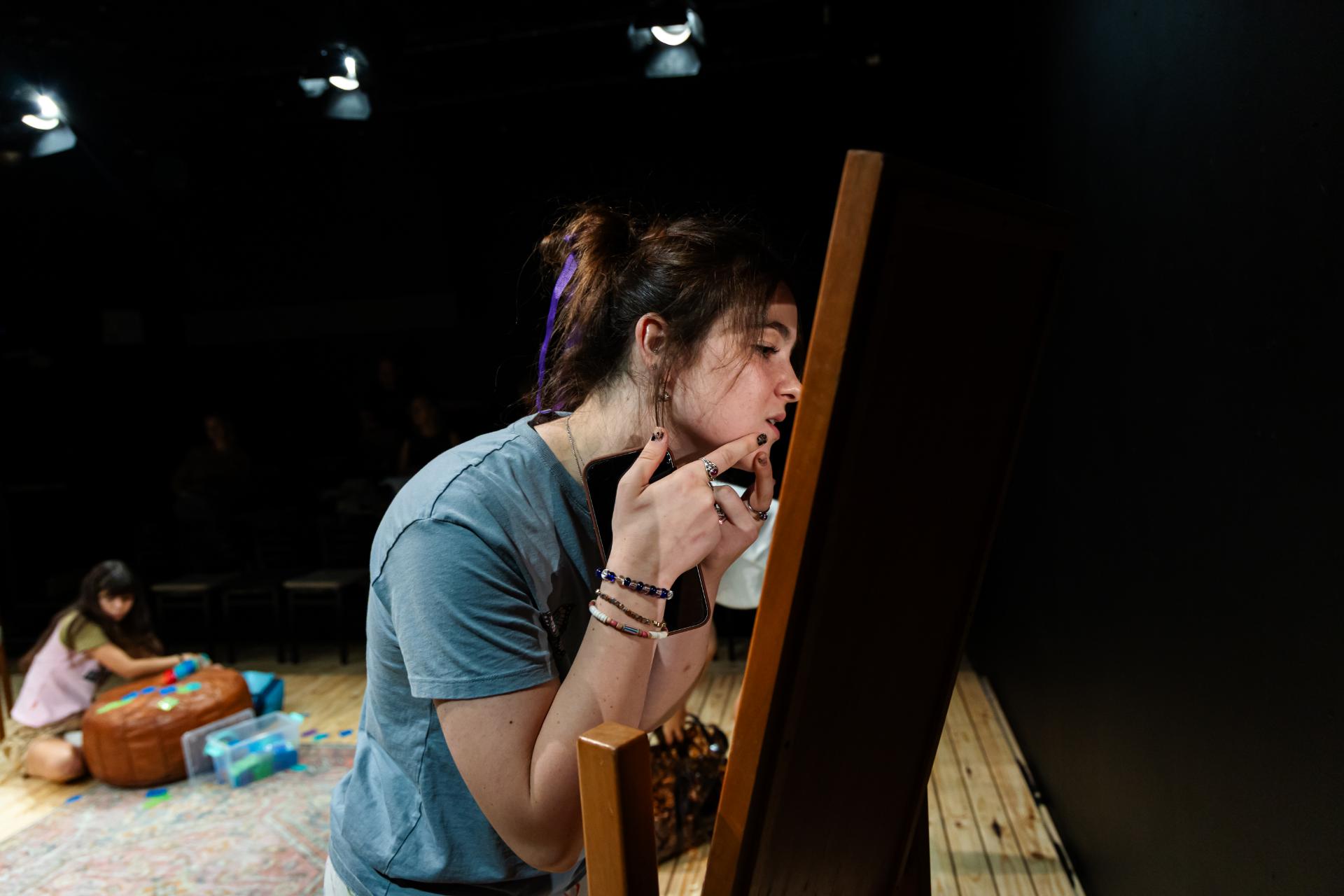
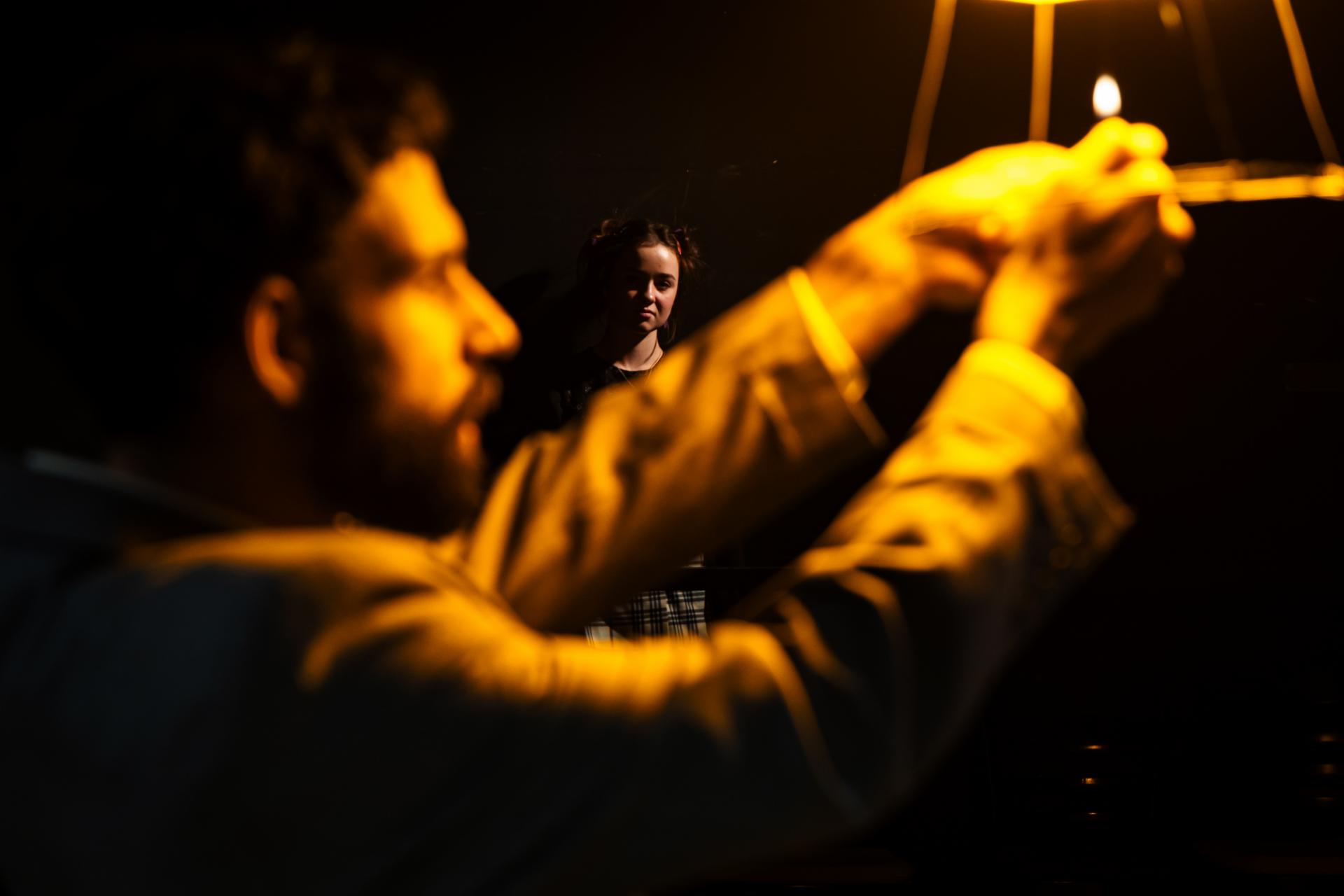
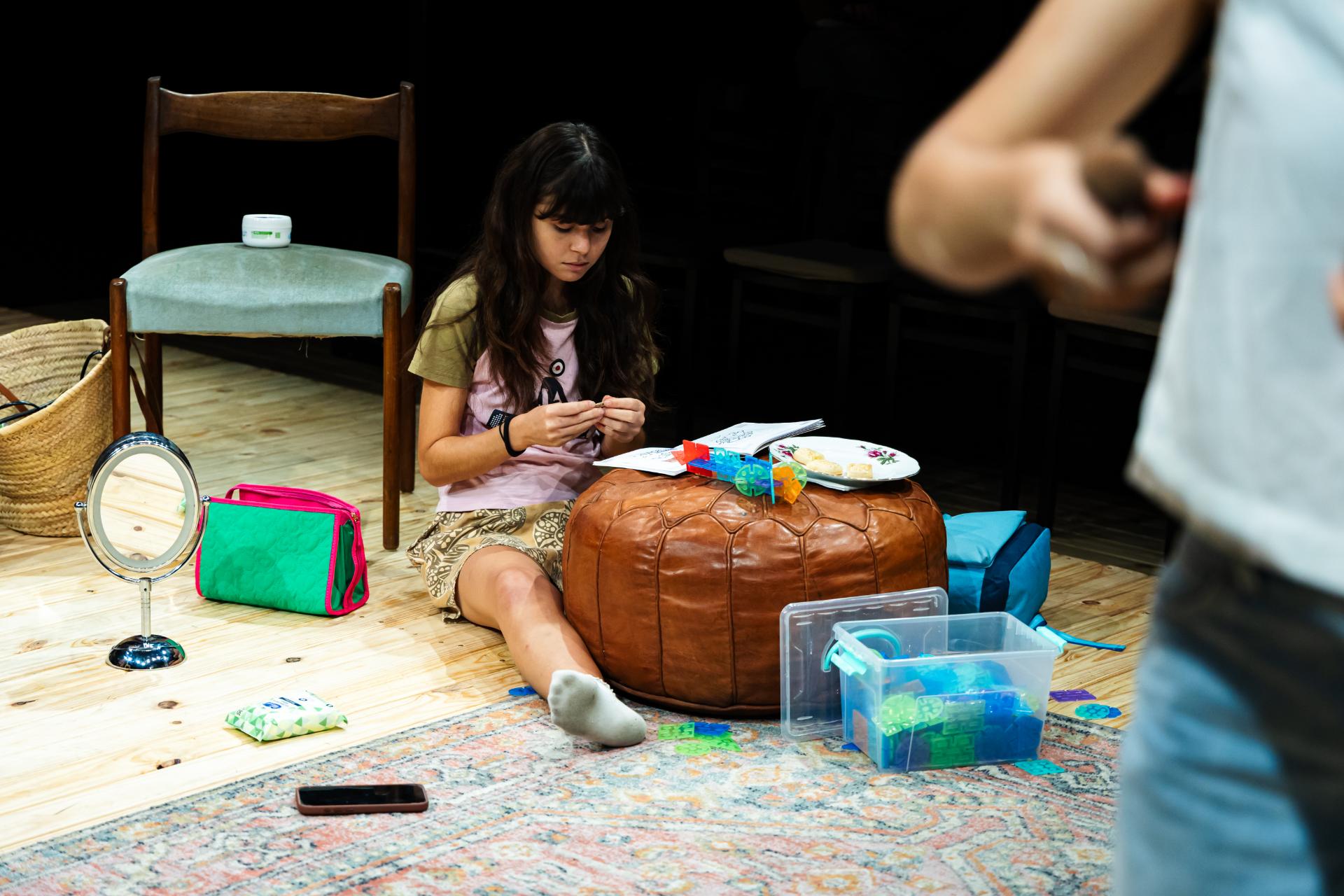
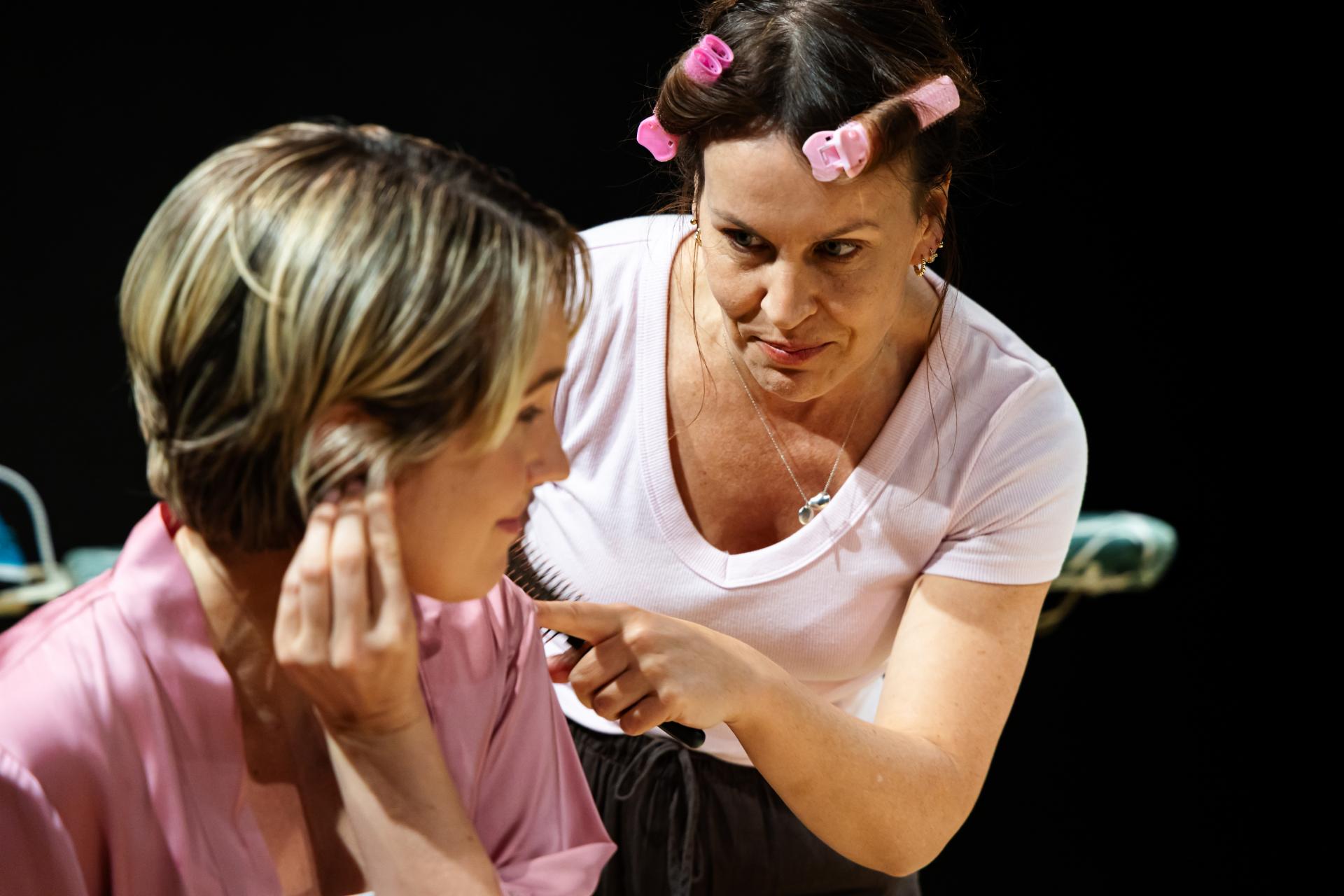
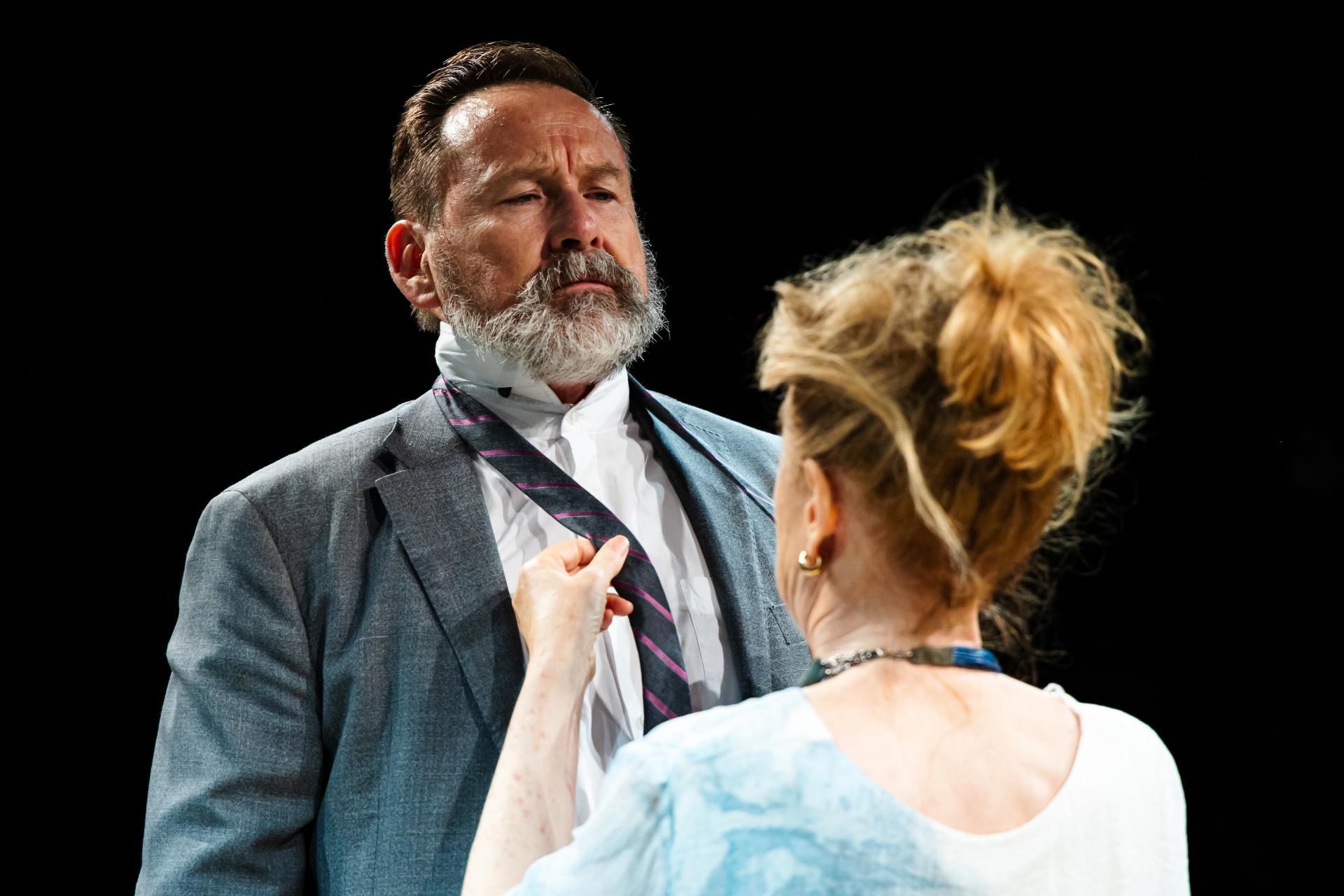
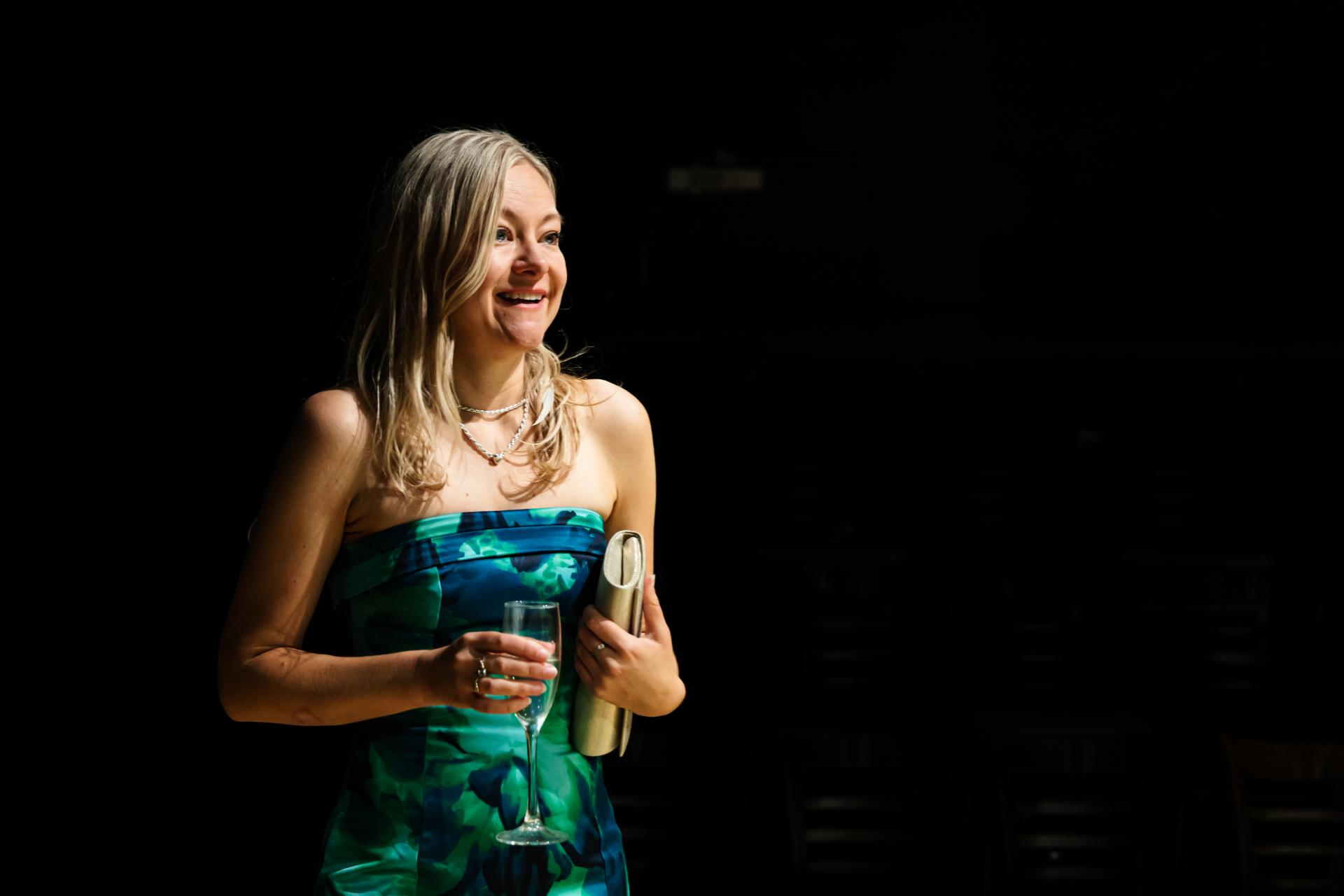
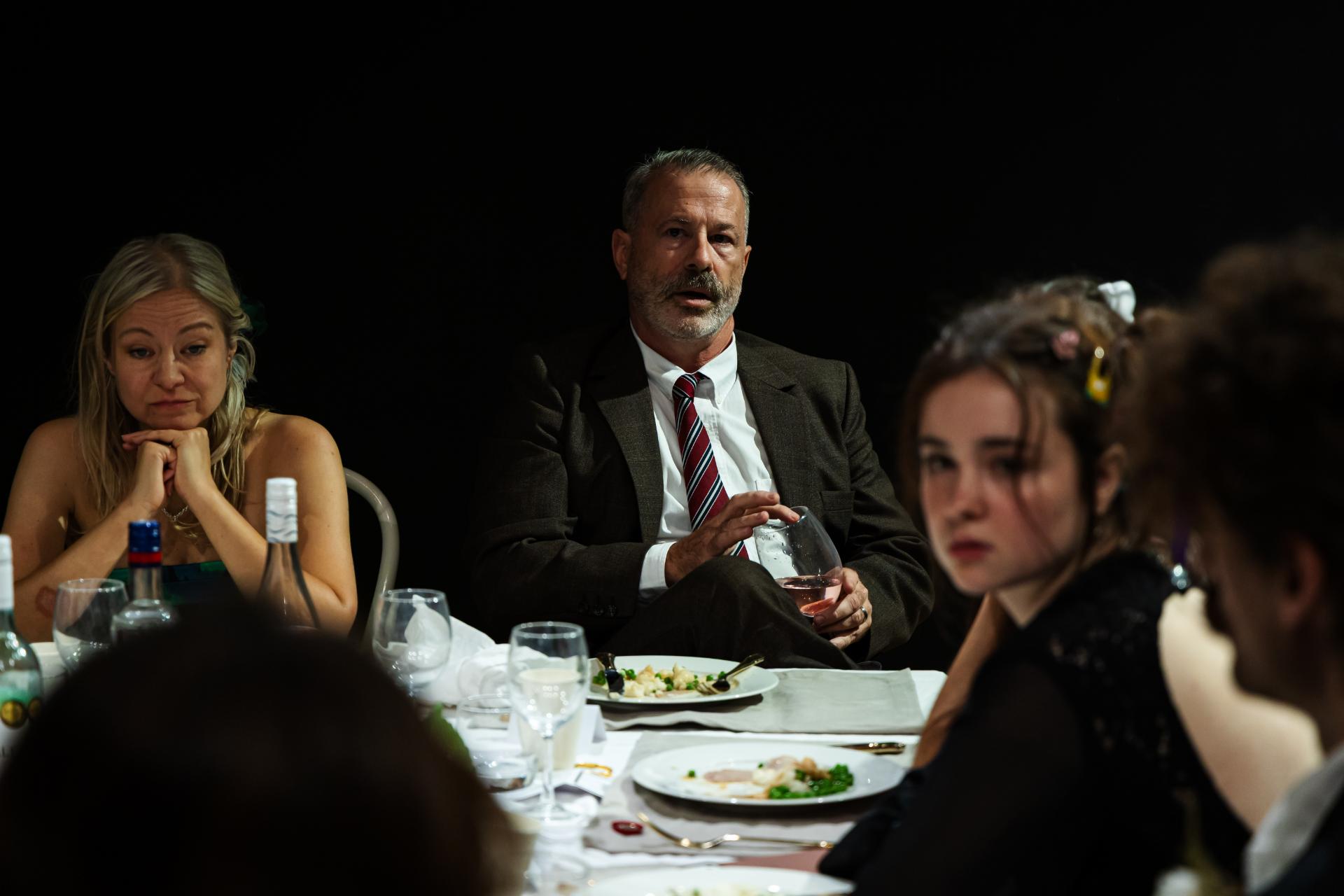
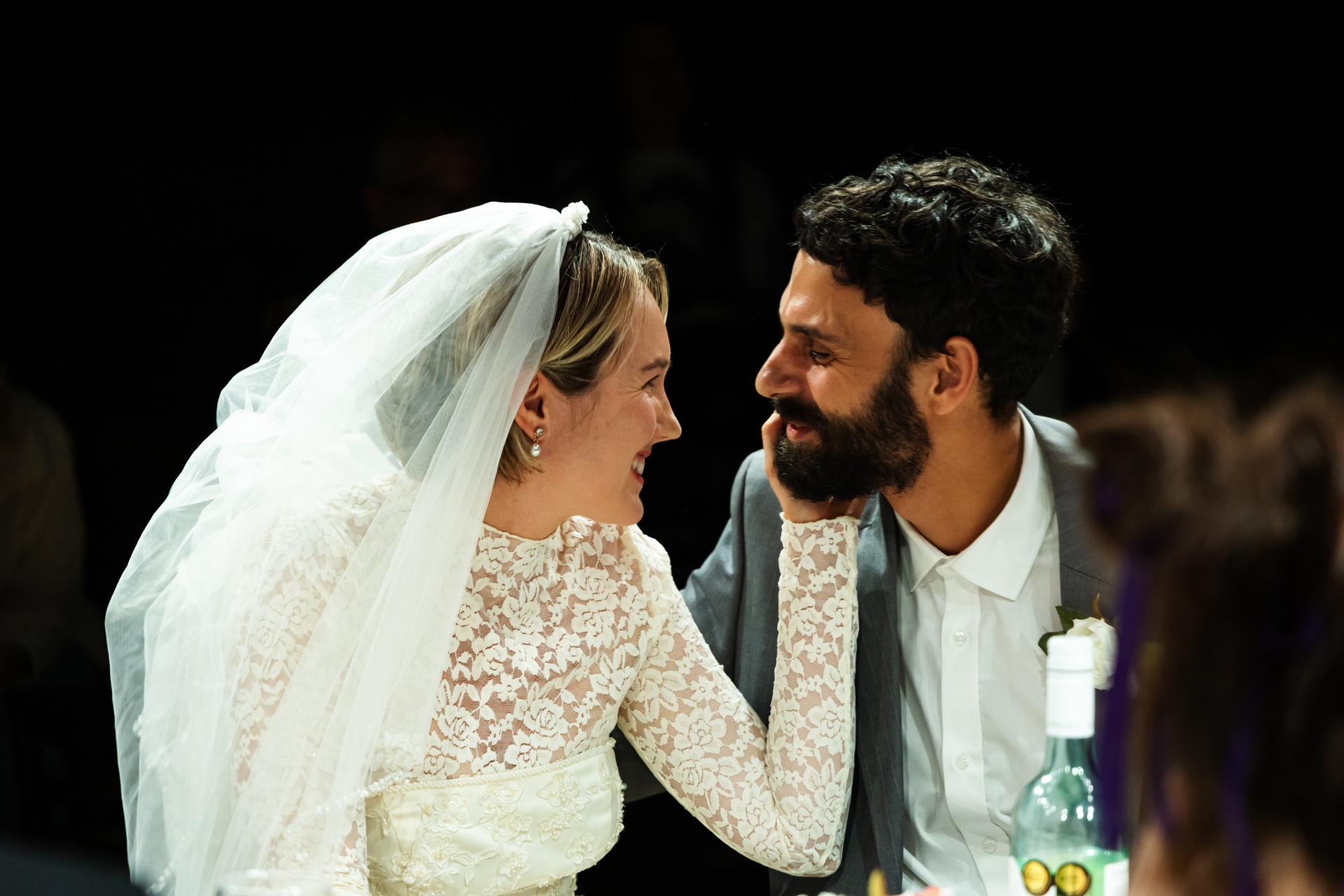
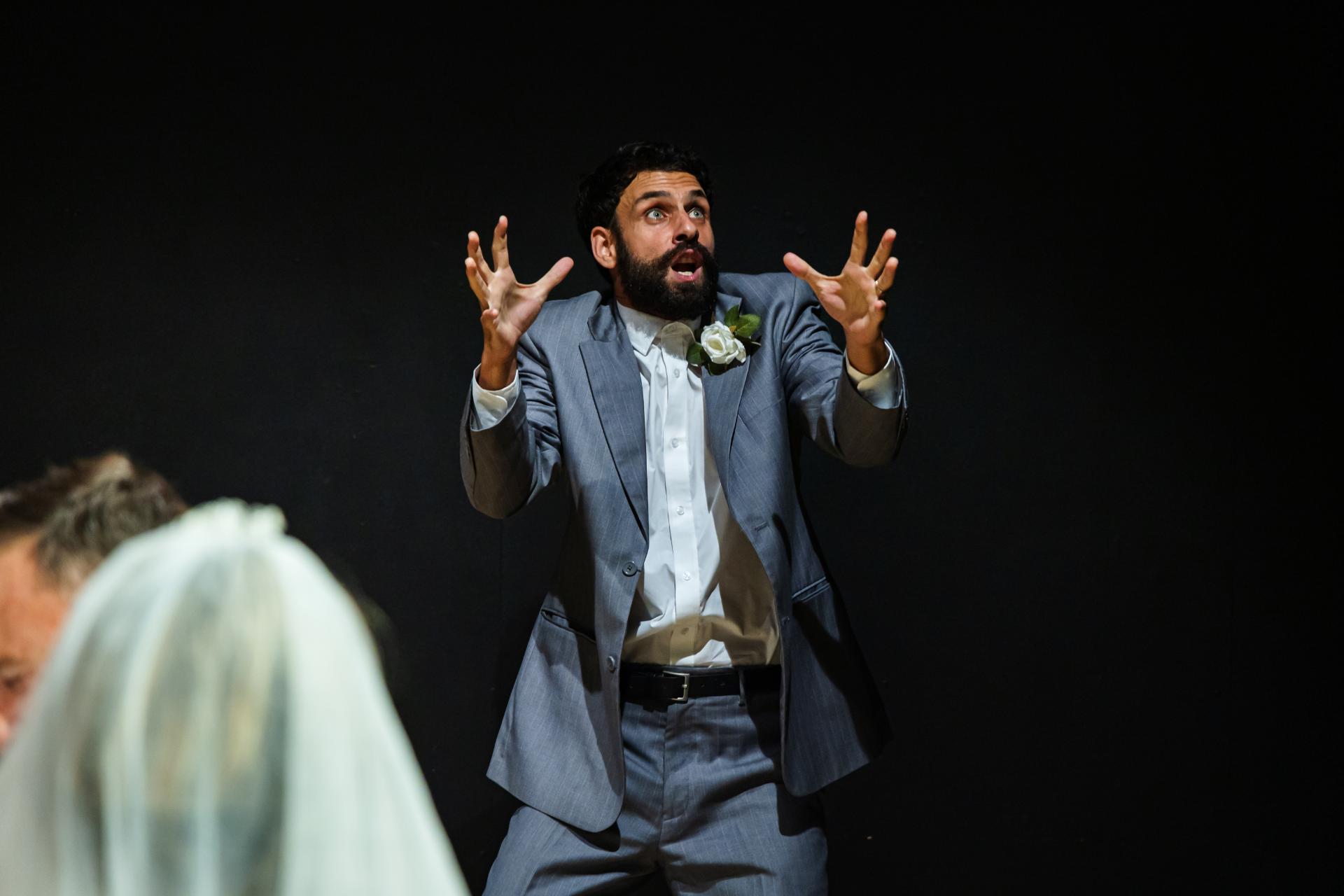
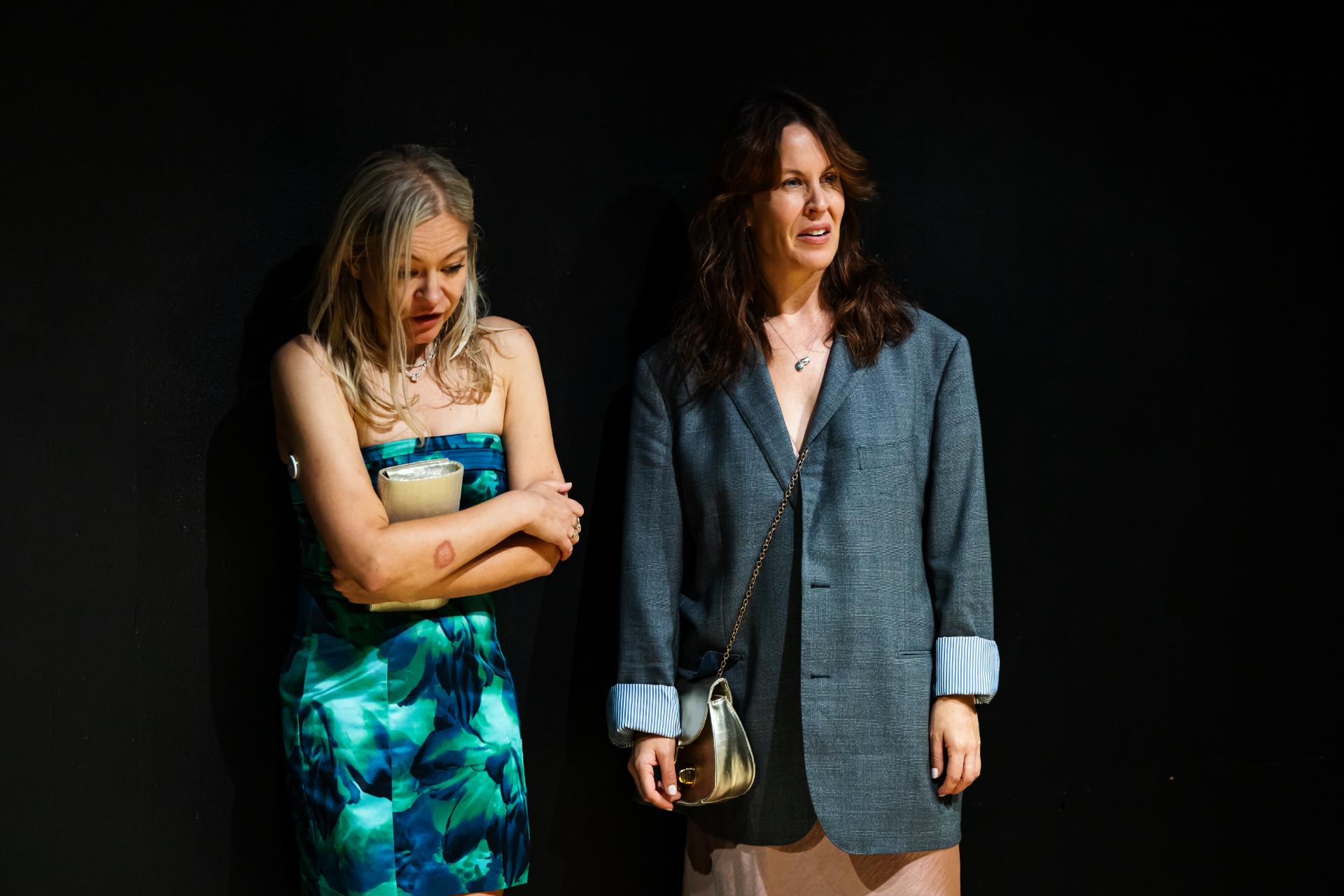
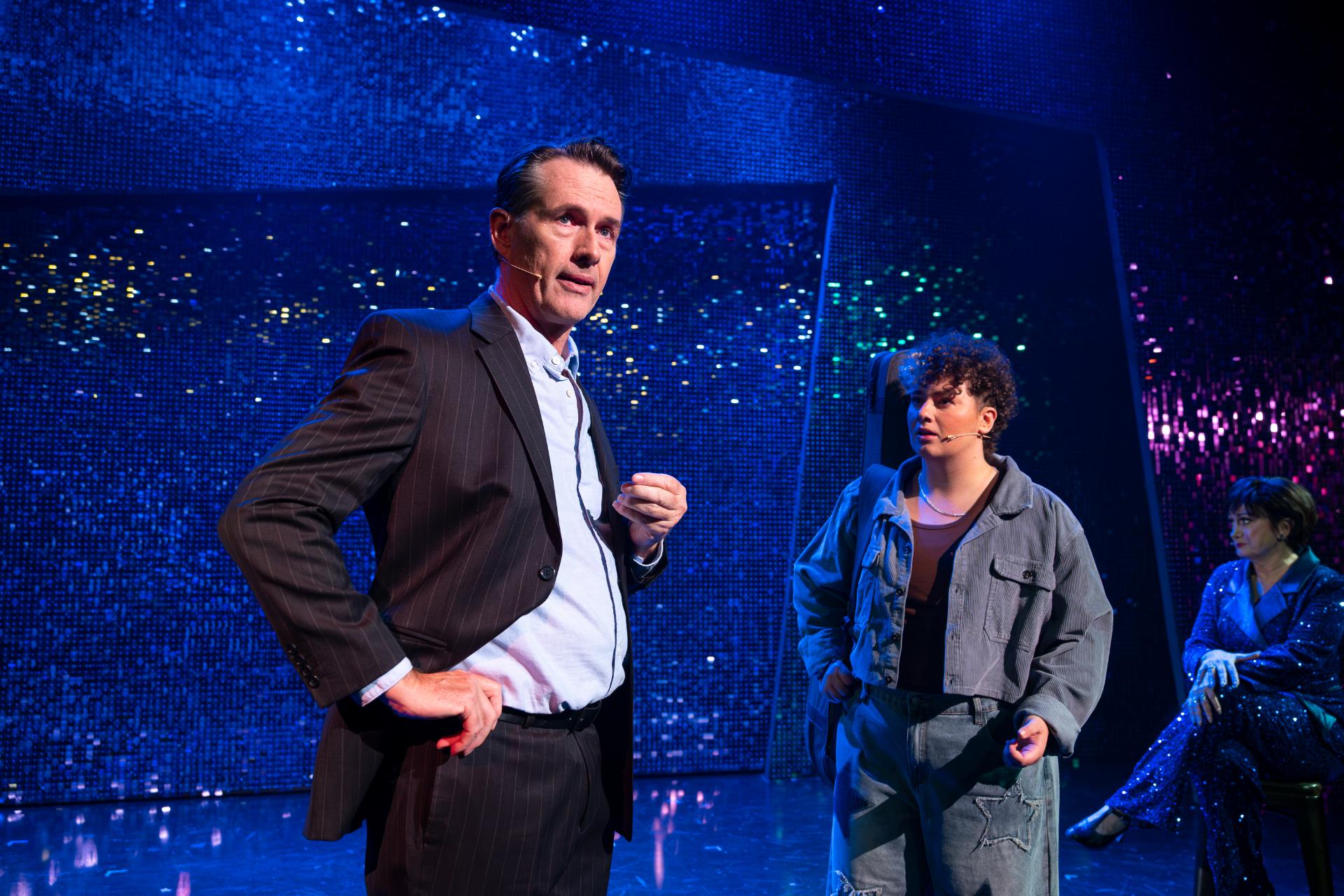
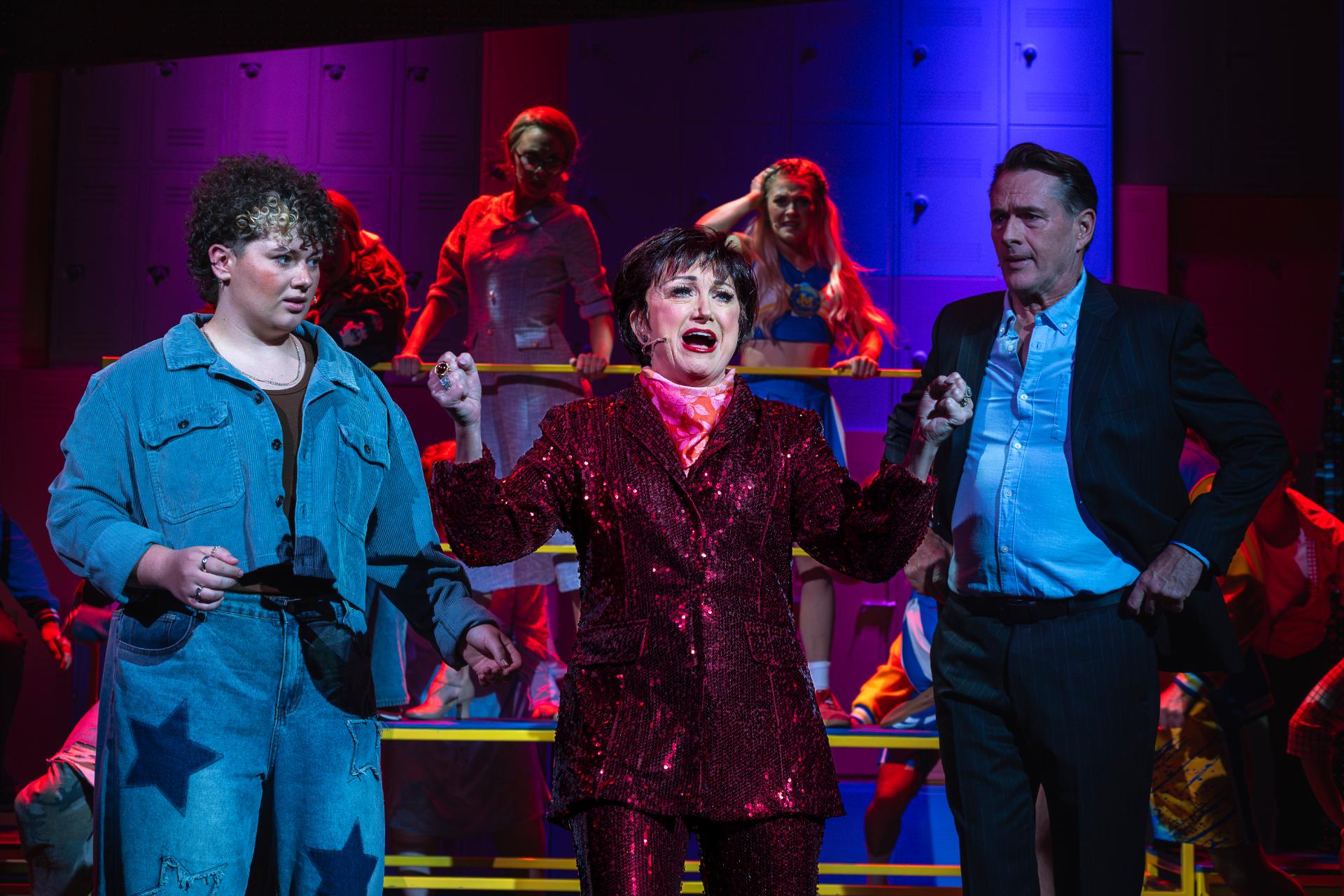
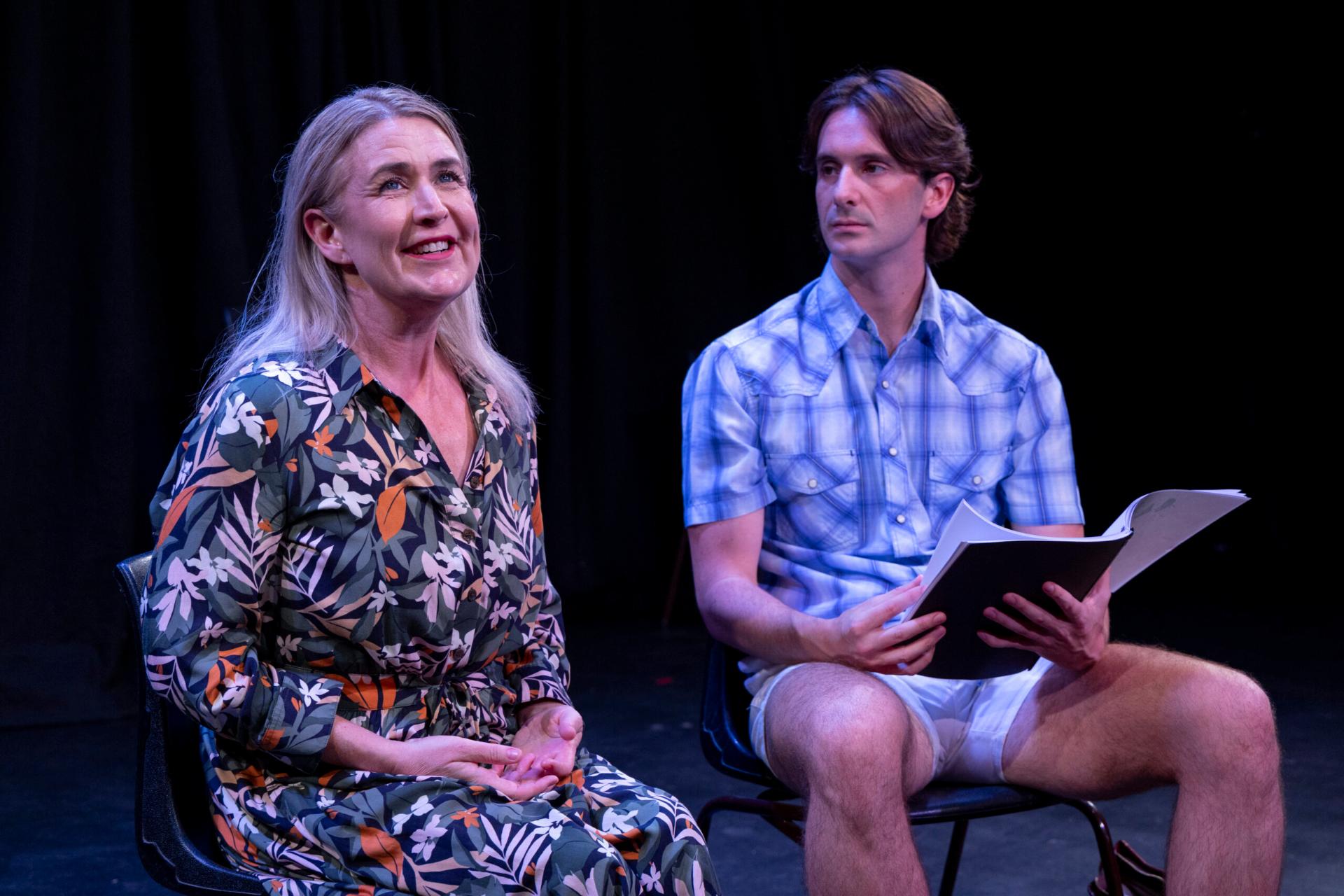
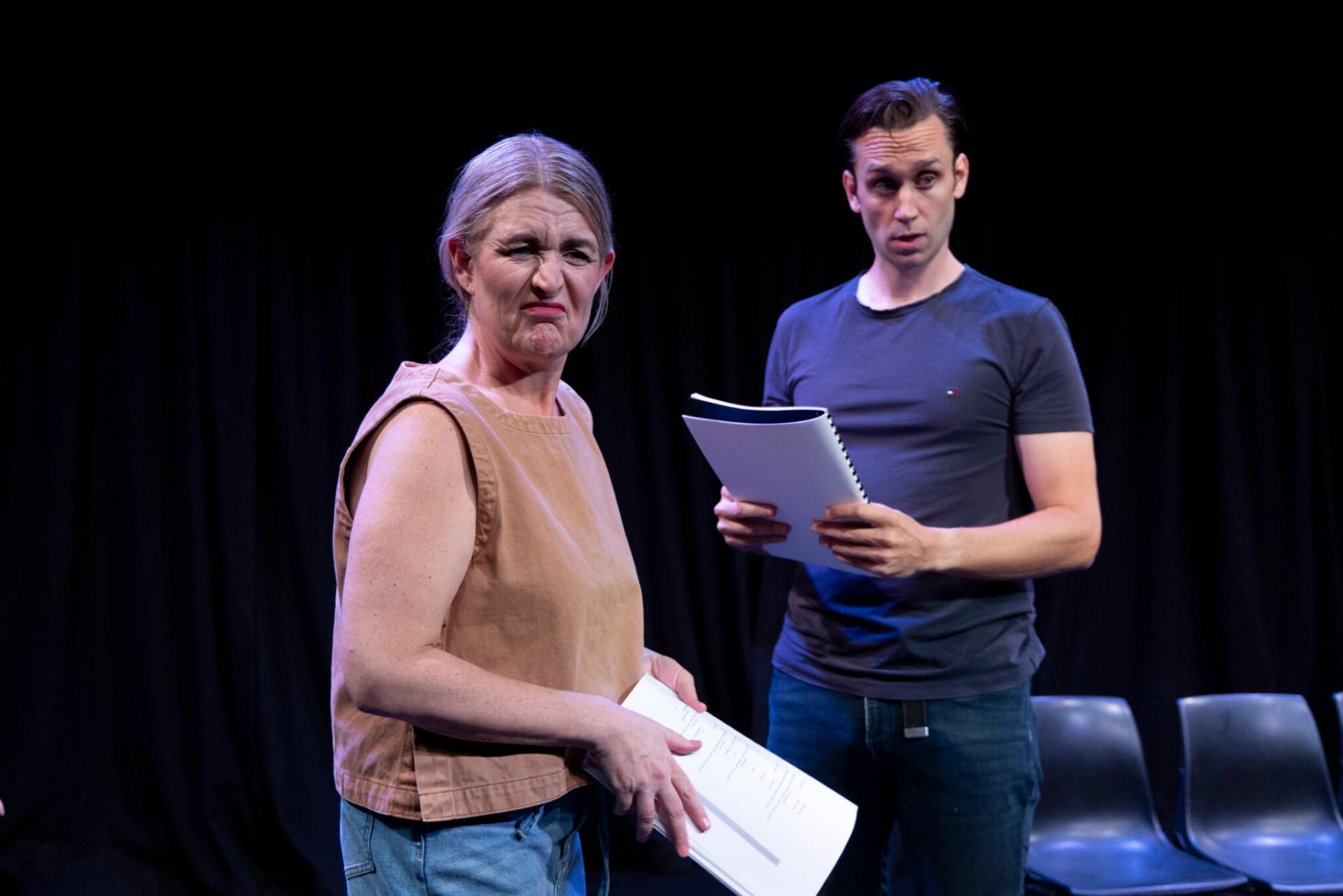
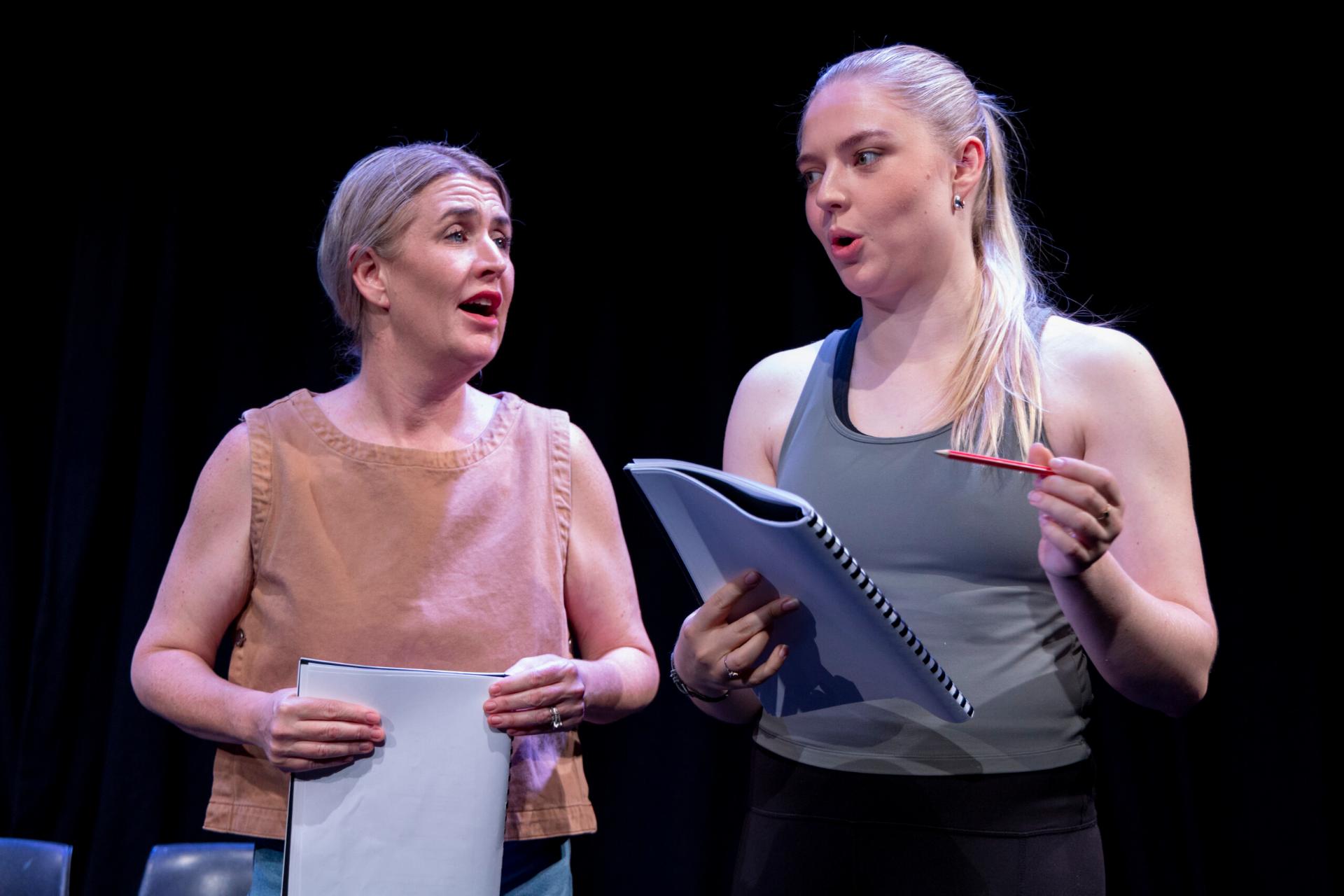
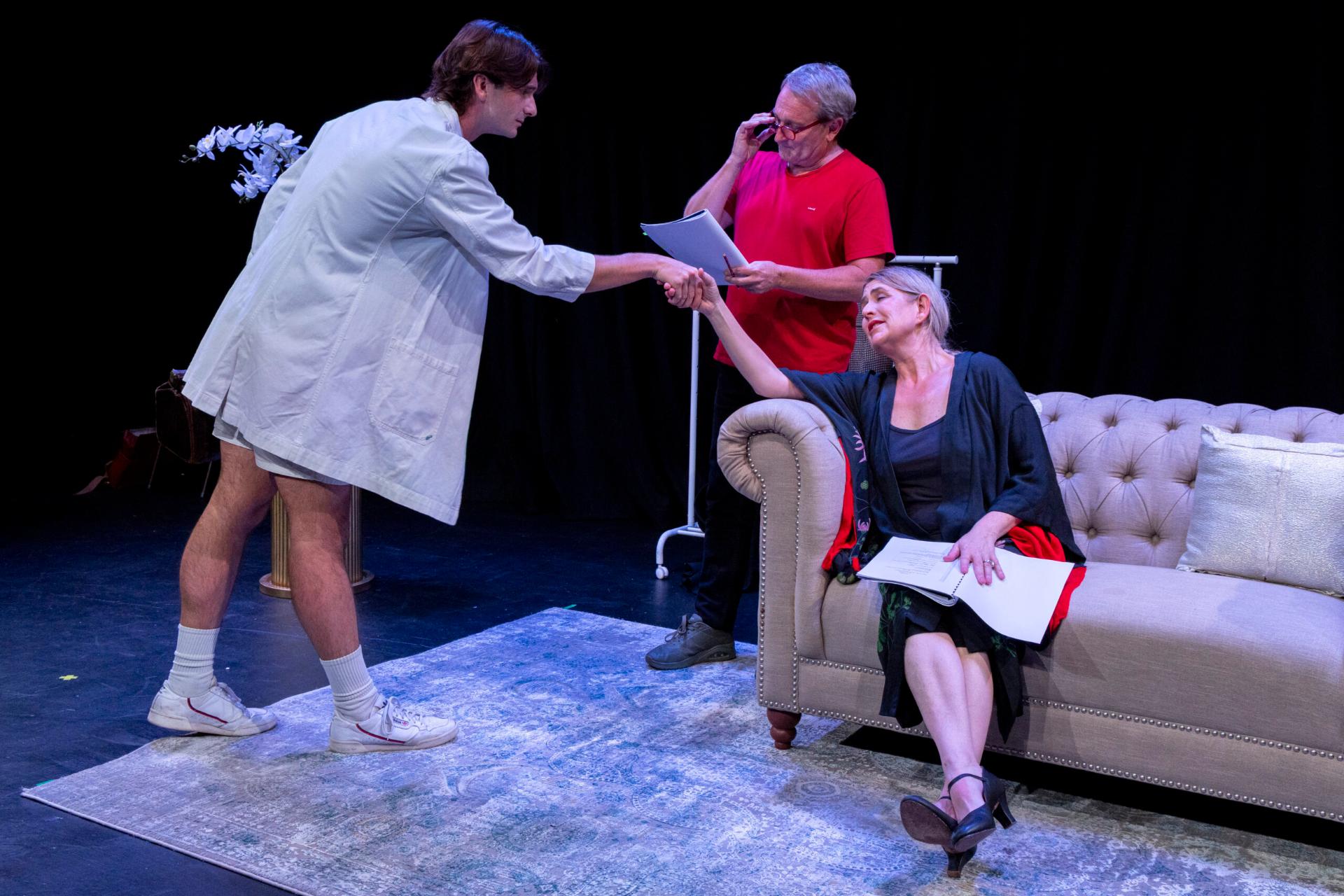
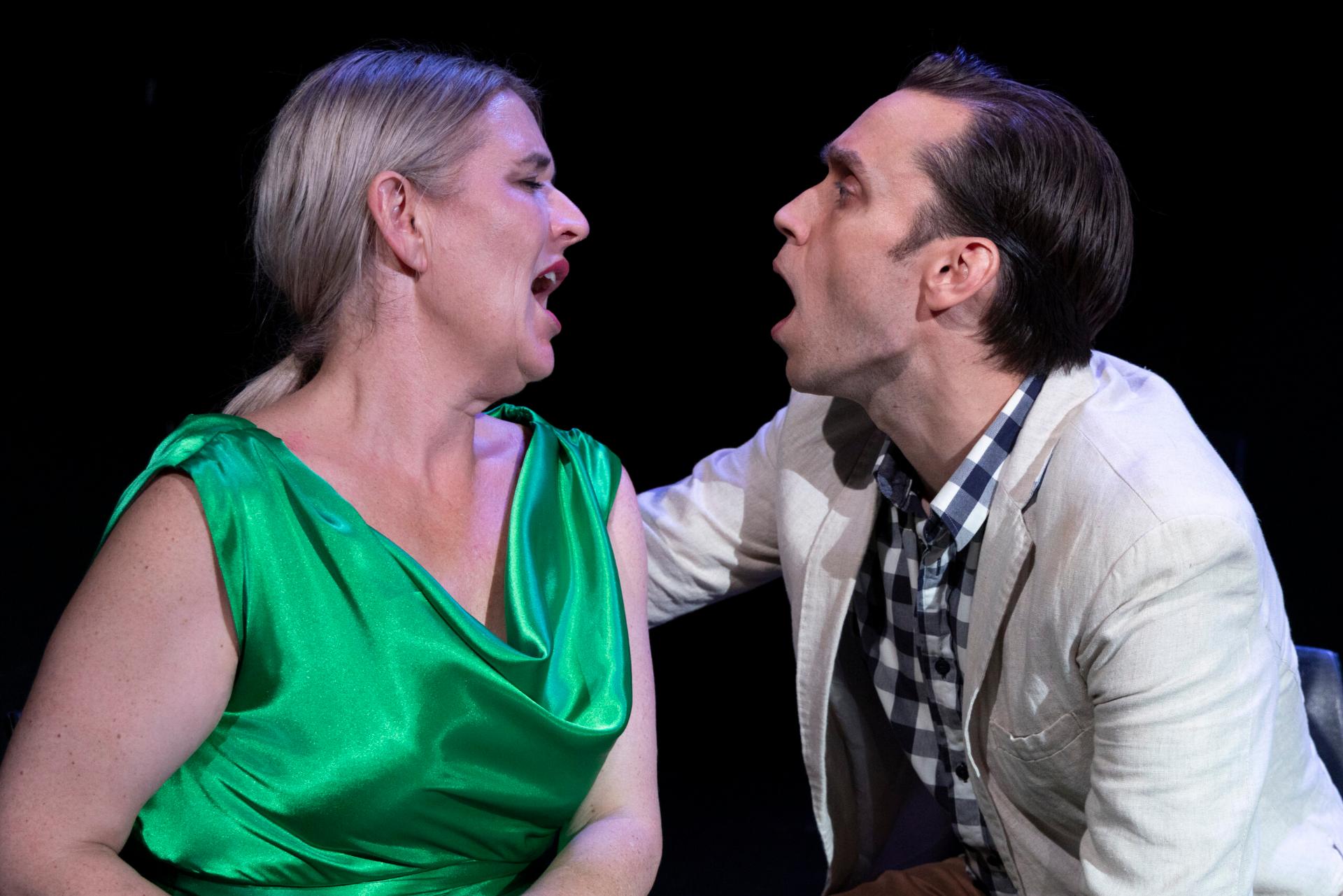
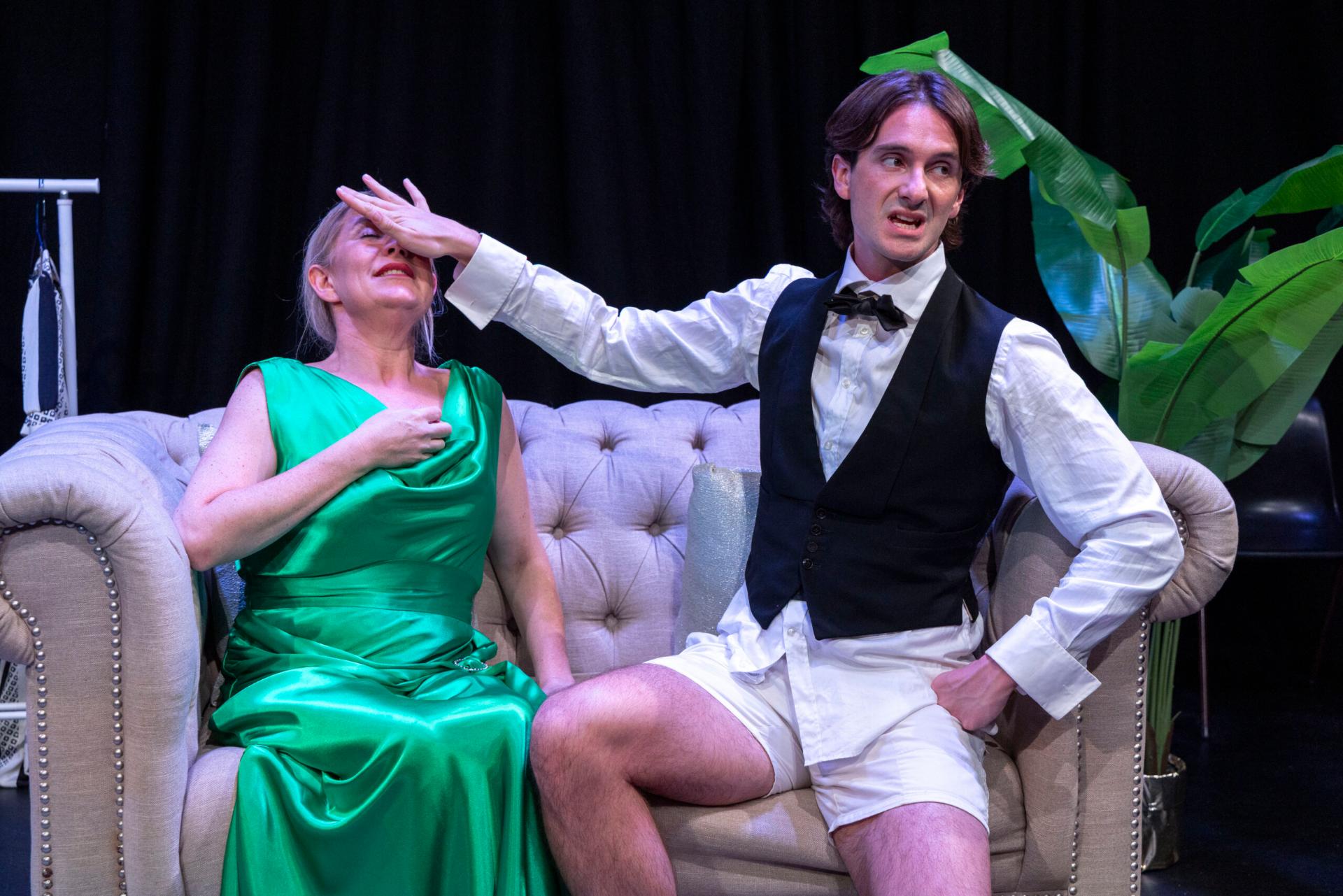
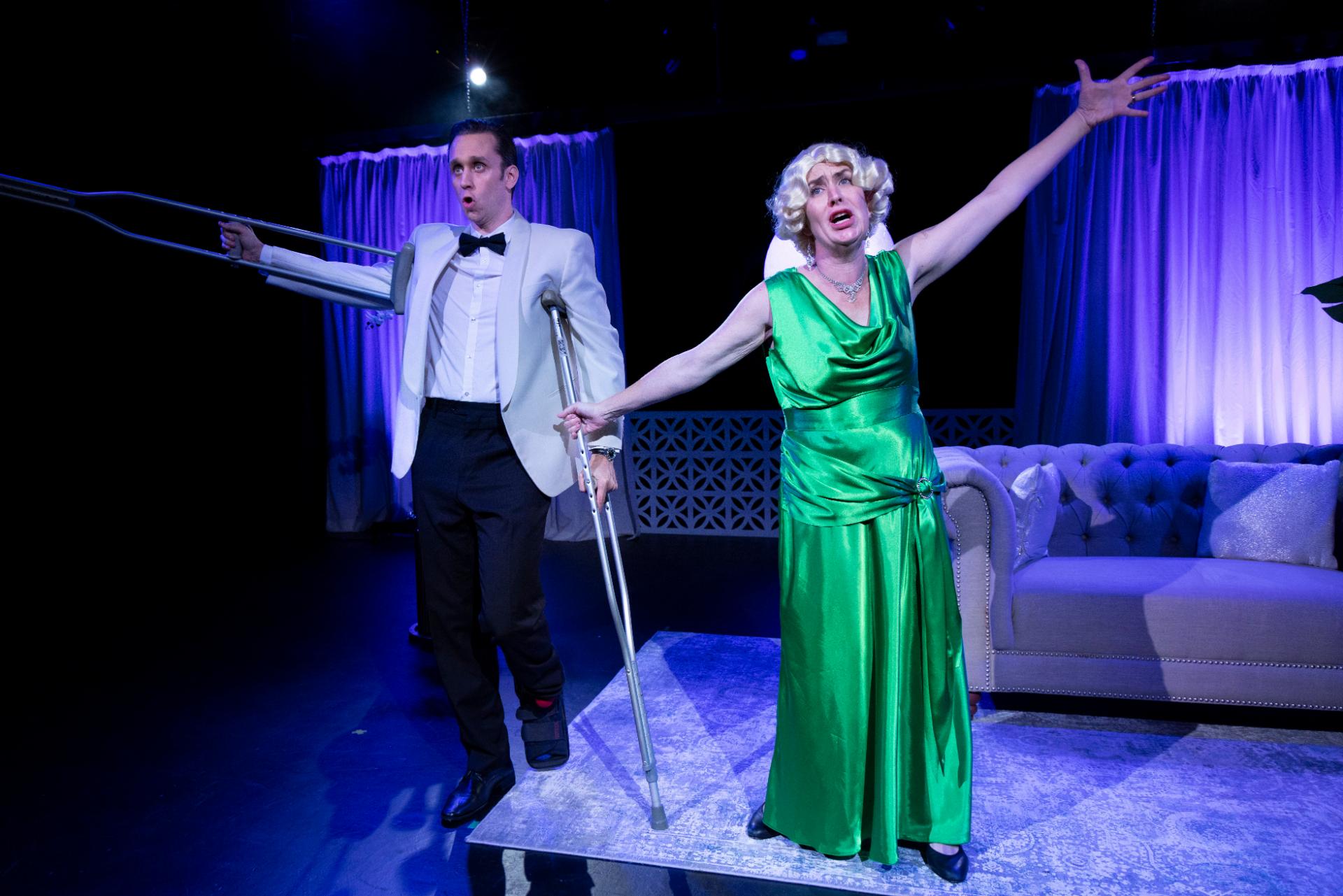
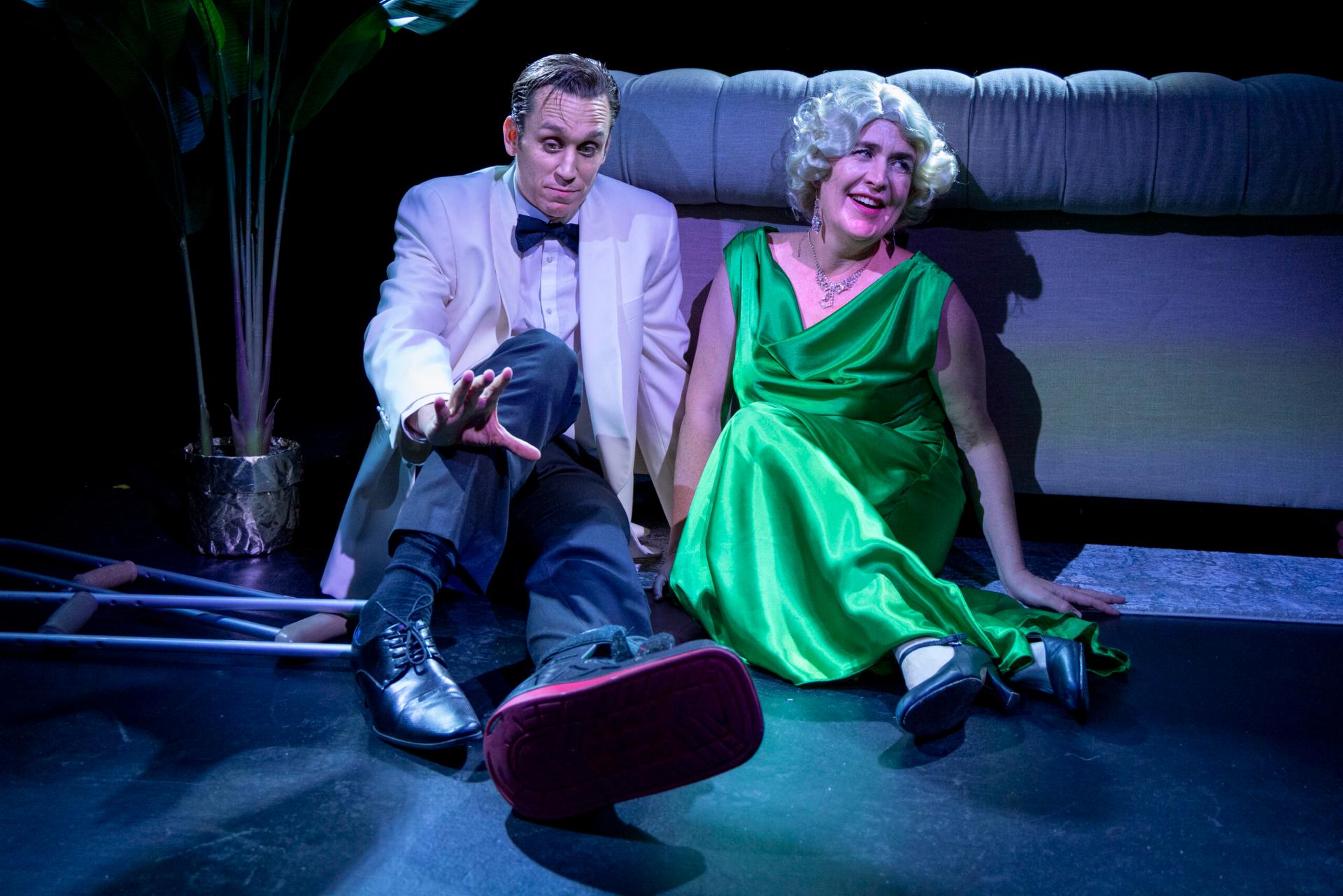
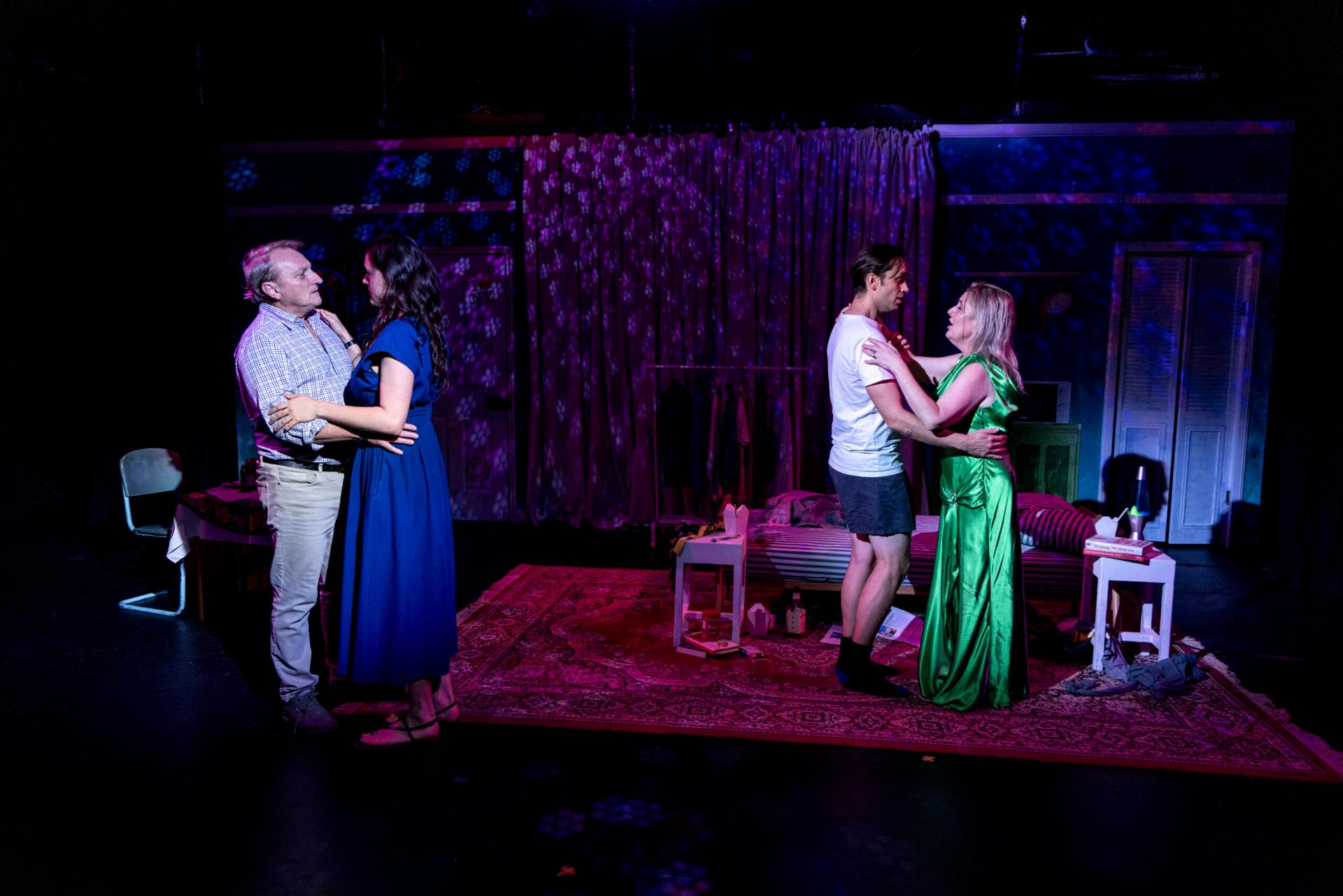
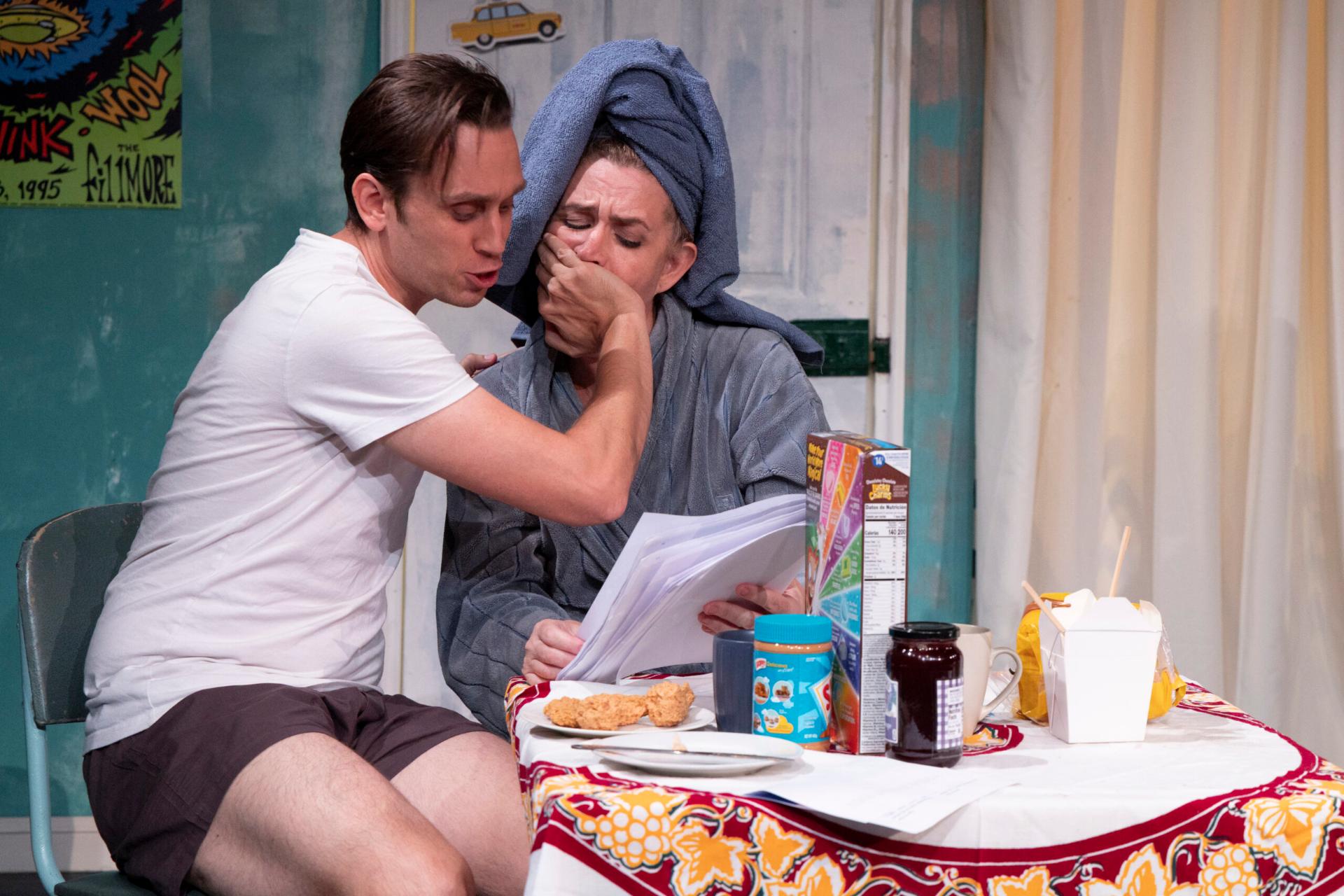
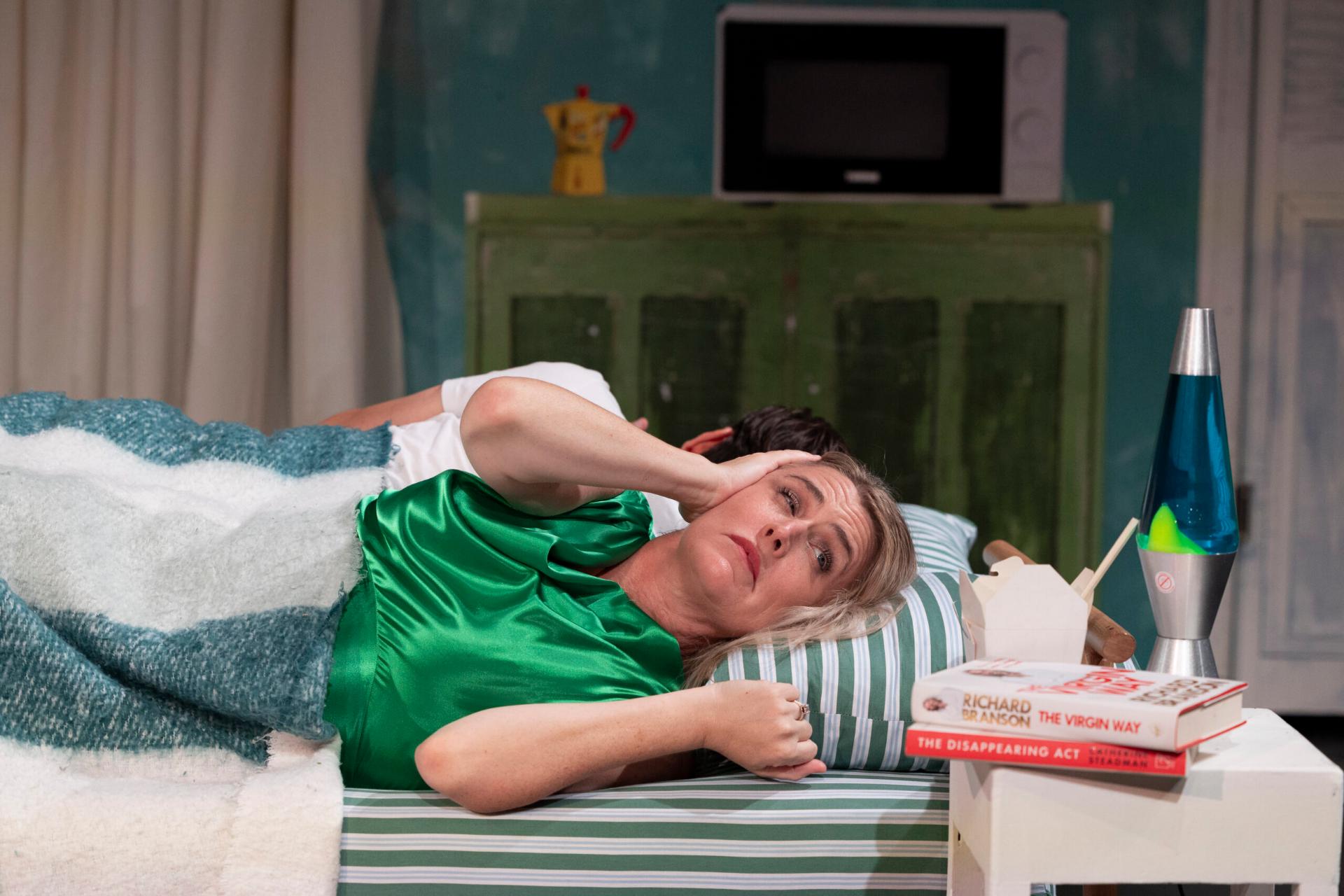
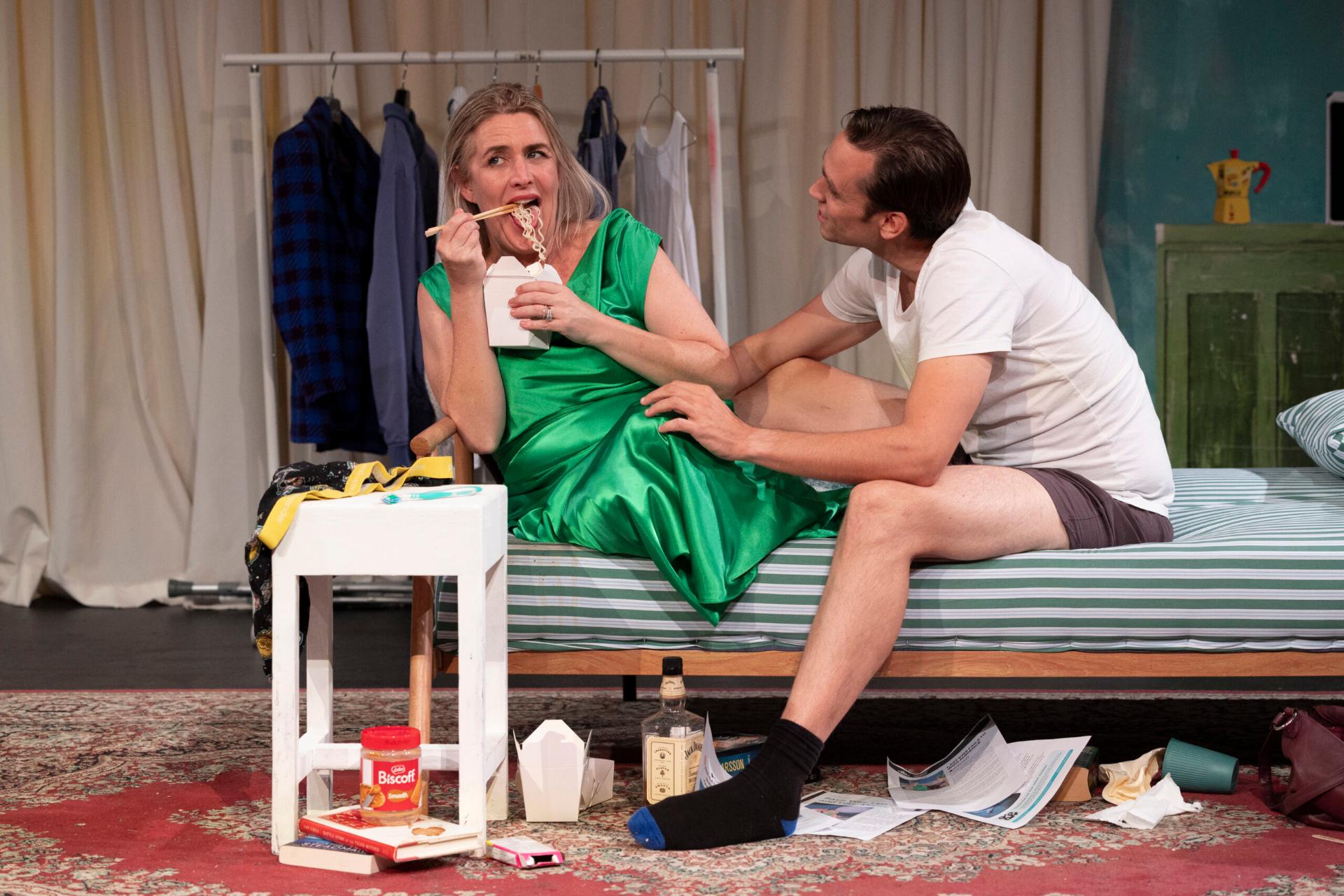
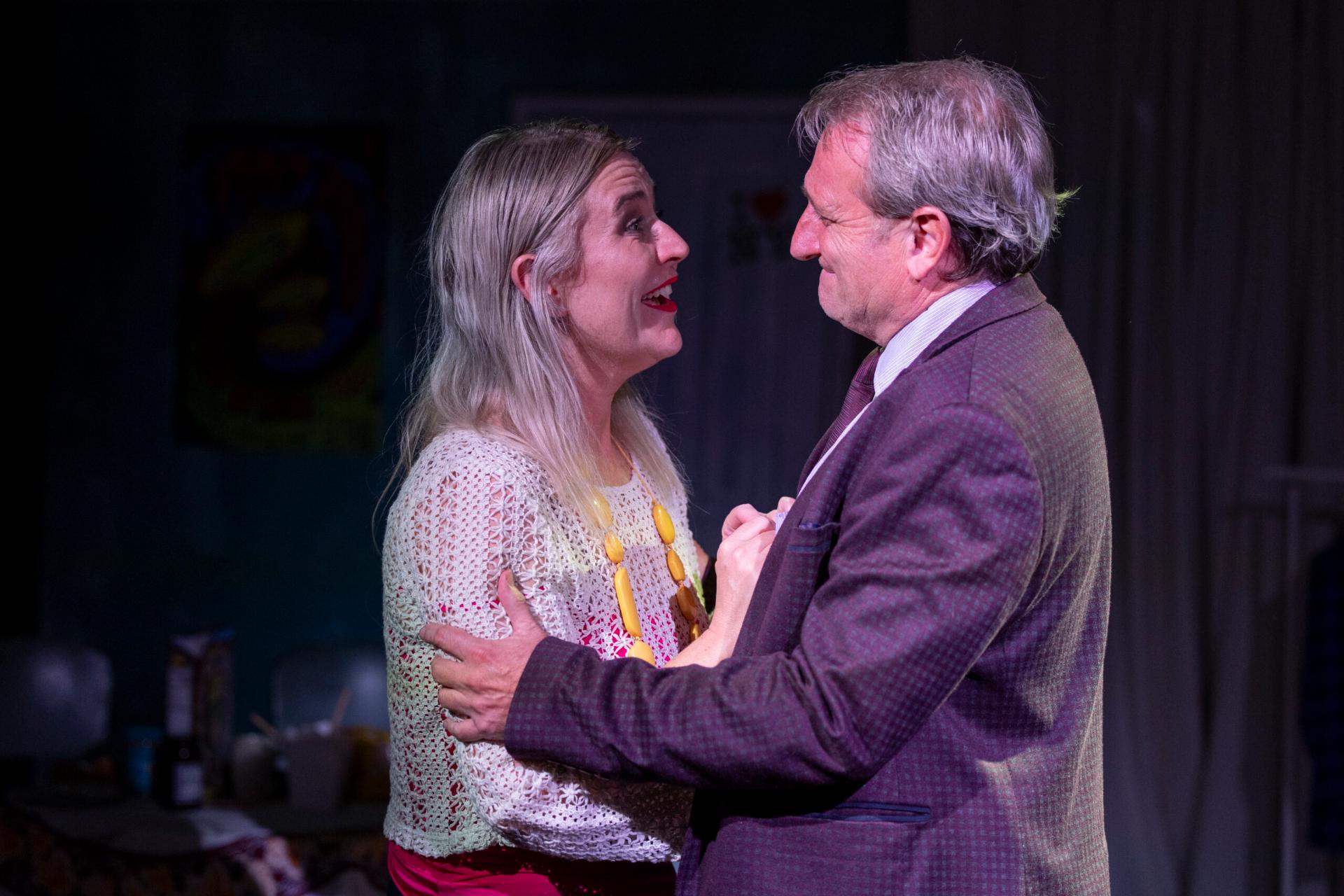
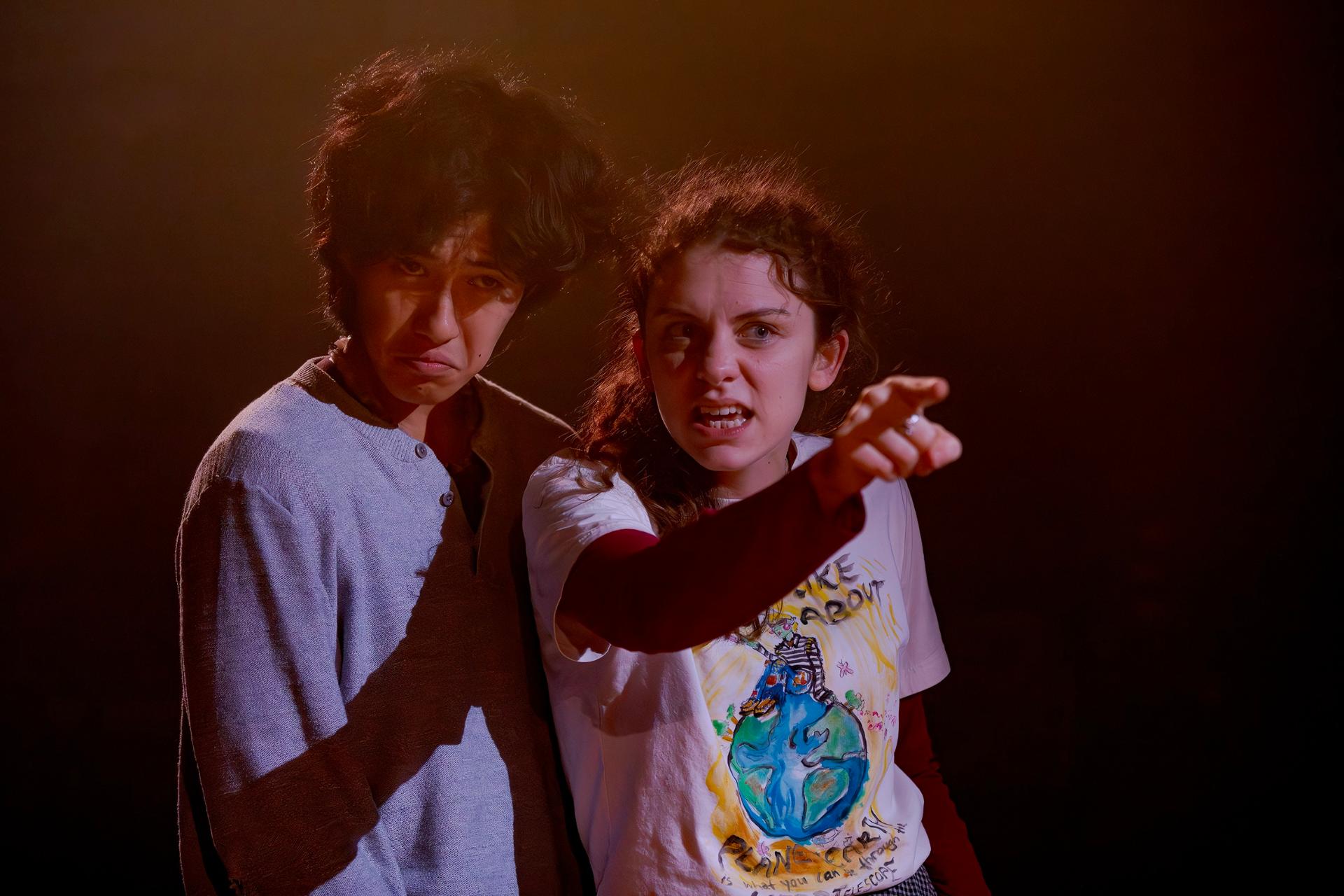
Daisy and Michael’s environmental conscientiousness is so absolute that the prospect of procreation could only ever encroach upon their lives by sheer accident. In Maud Dromgoole’s 3 Billion Seconds, we observe the couple’s increasingly frantic—and disquieting—efforts to assimilate their impending parenthood into their meticulously carbon-neutral existence. The play’s conceptual architecture is formidable, wielding acerbic indictments against the prevailing hypocrisies that pervade contemporary ecological discourse. Yet the production’s dark humour is rendered overly solemn under Dominique Purdue’s direction, which privileges the grotesque over the comic, perhaps sacrificing levity for its own ideological earnestness. Nevertheless, Purdue’s instinct for theatrical spectacle and visual dynamism remains incontrovertible, yielding a staging of considerable visual excitement.

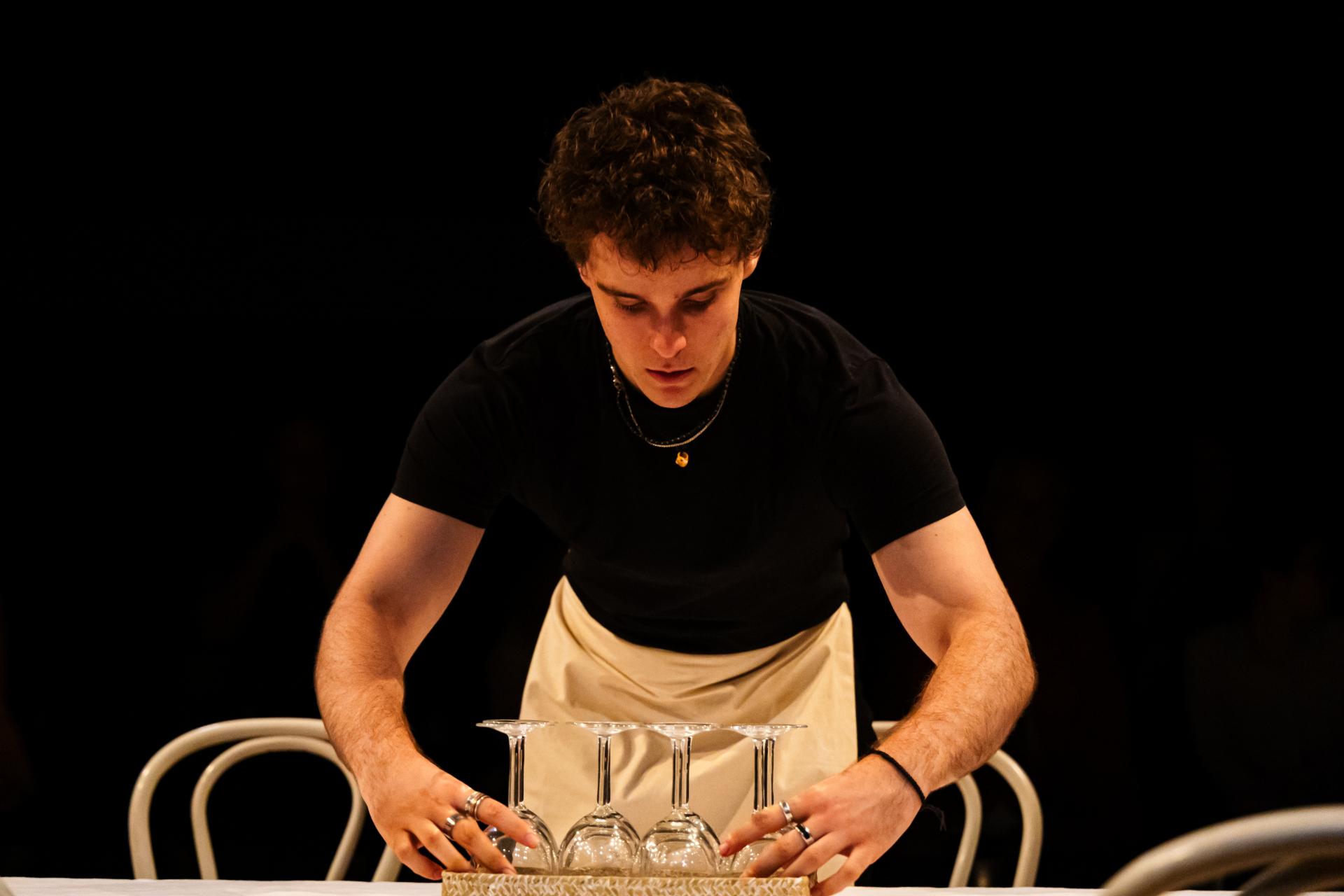
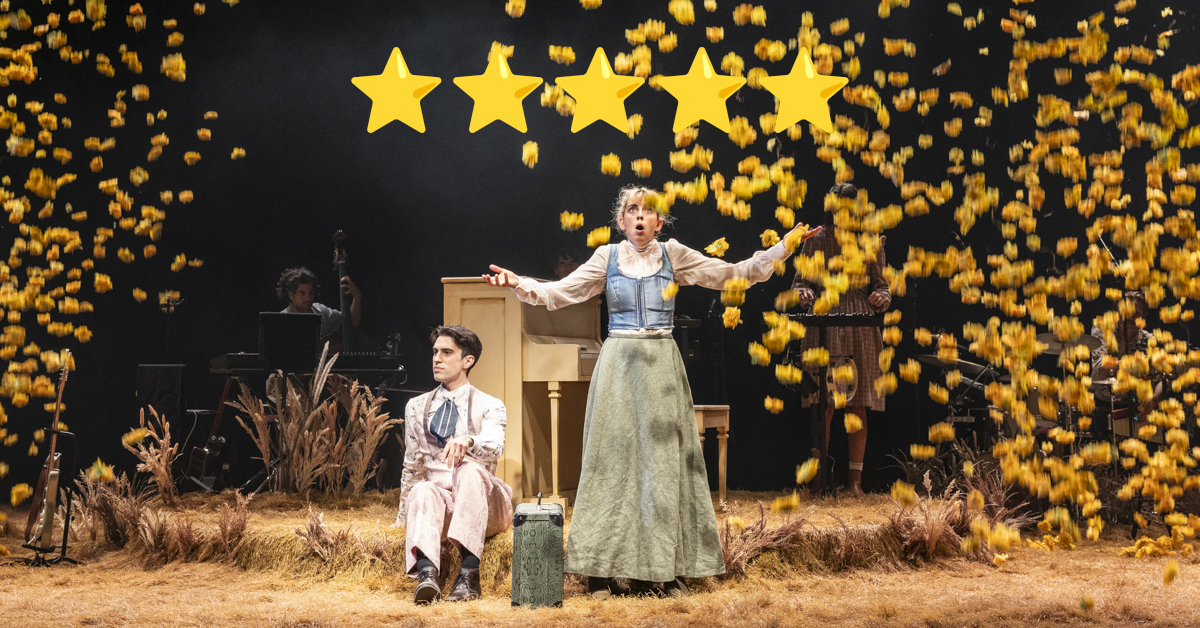
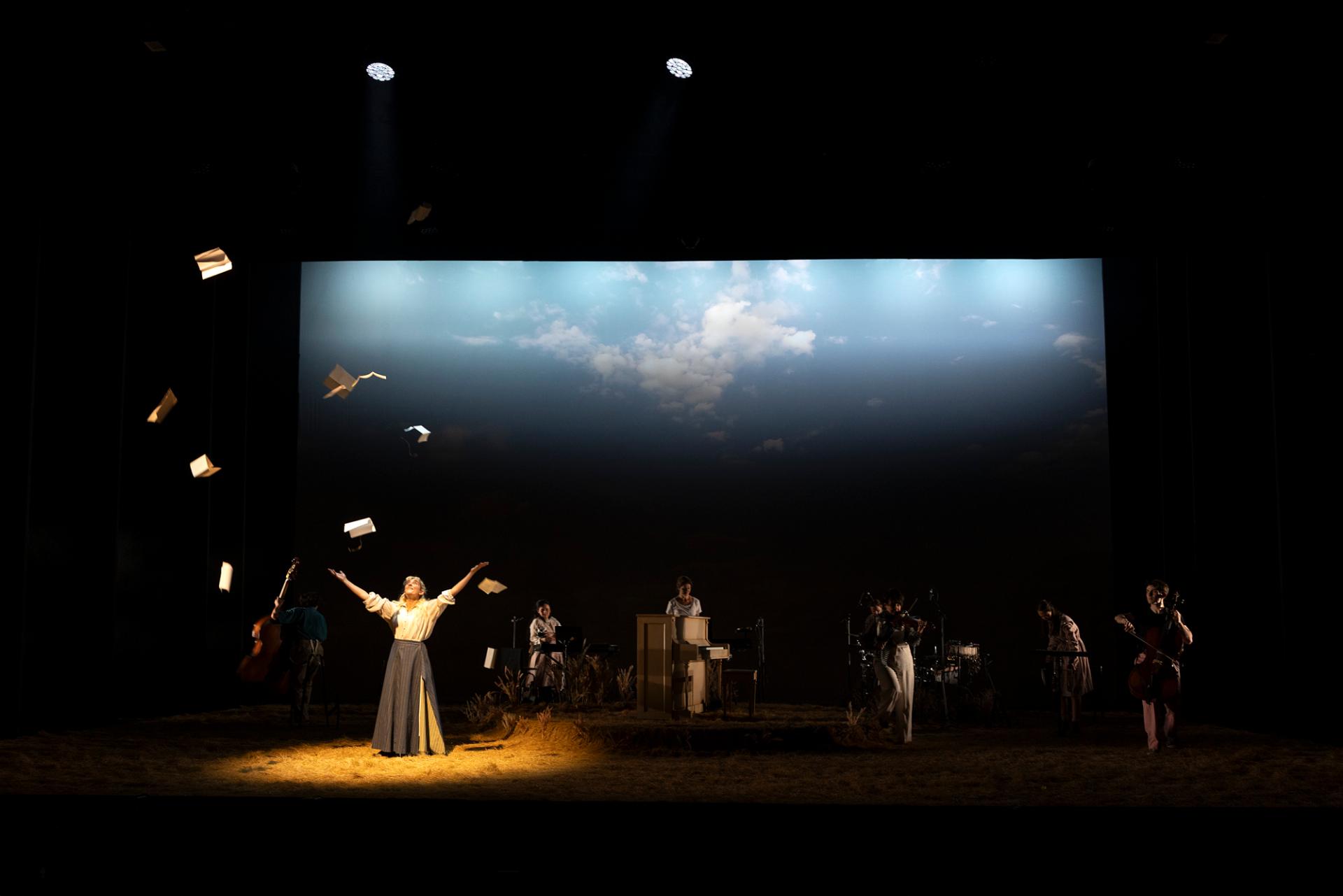
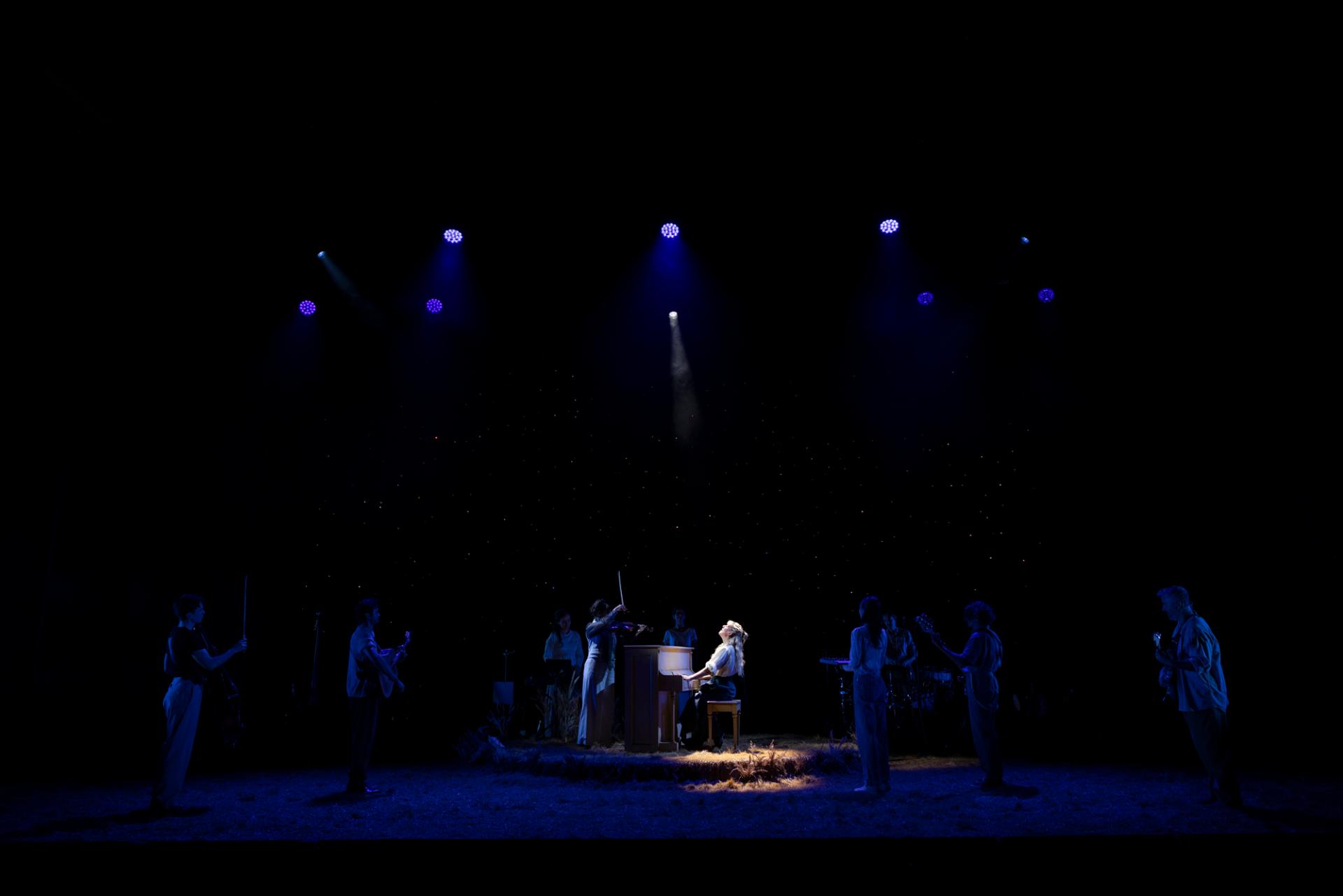
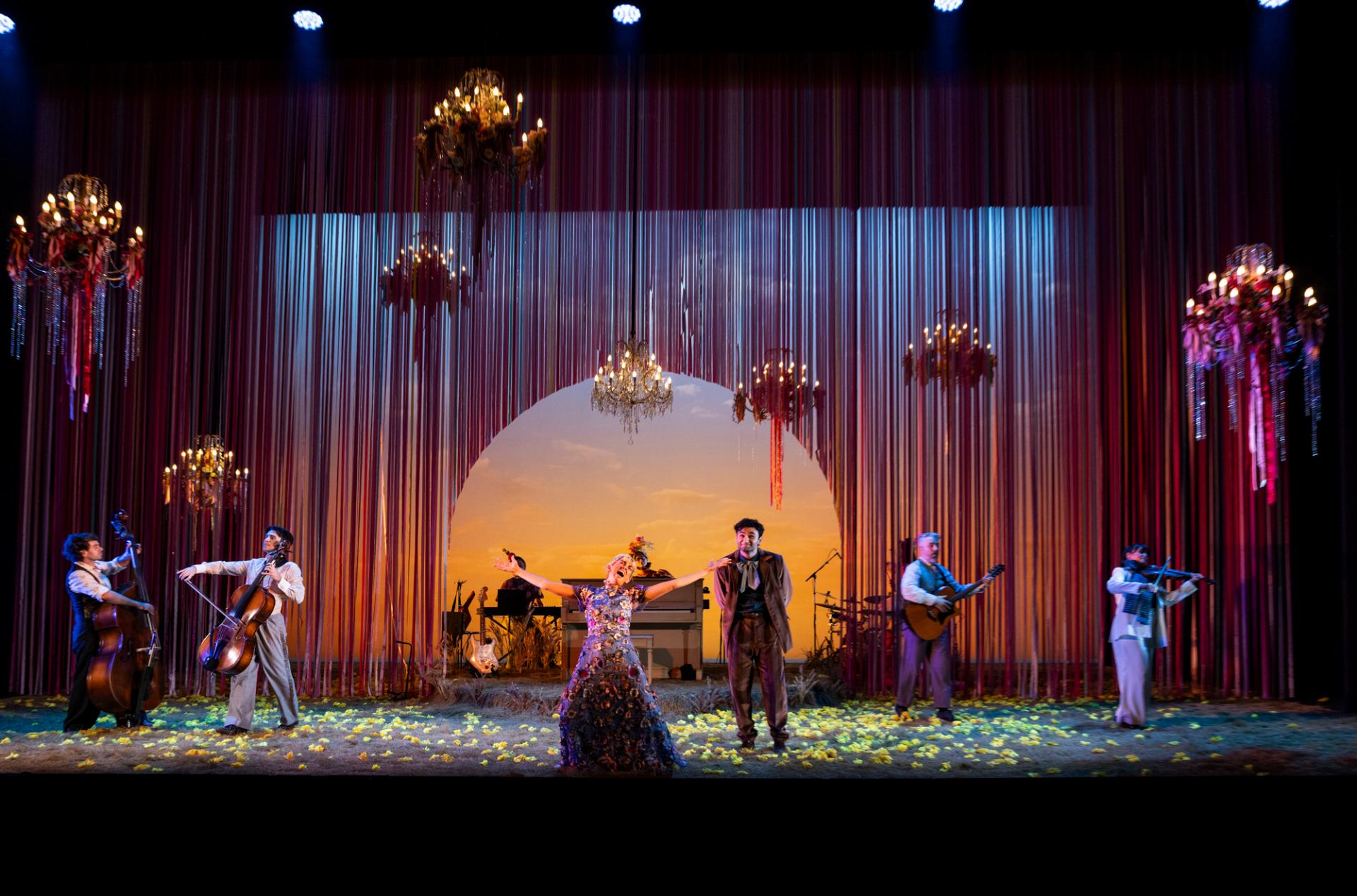
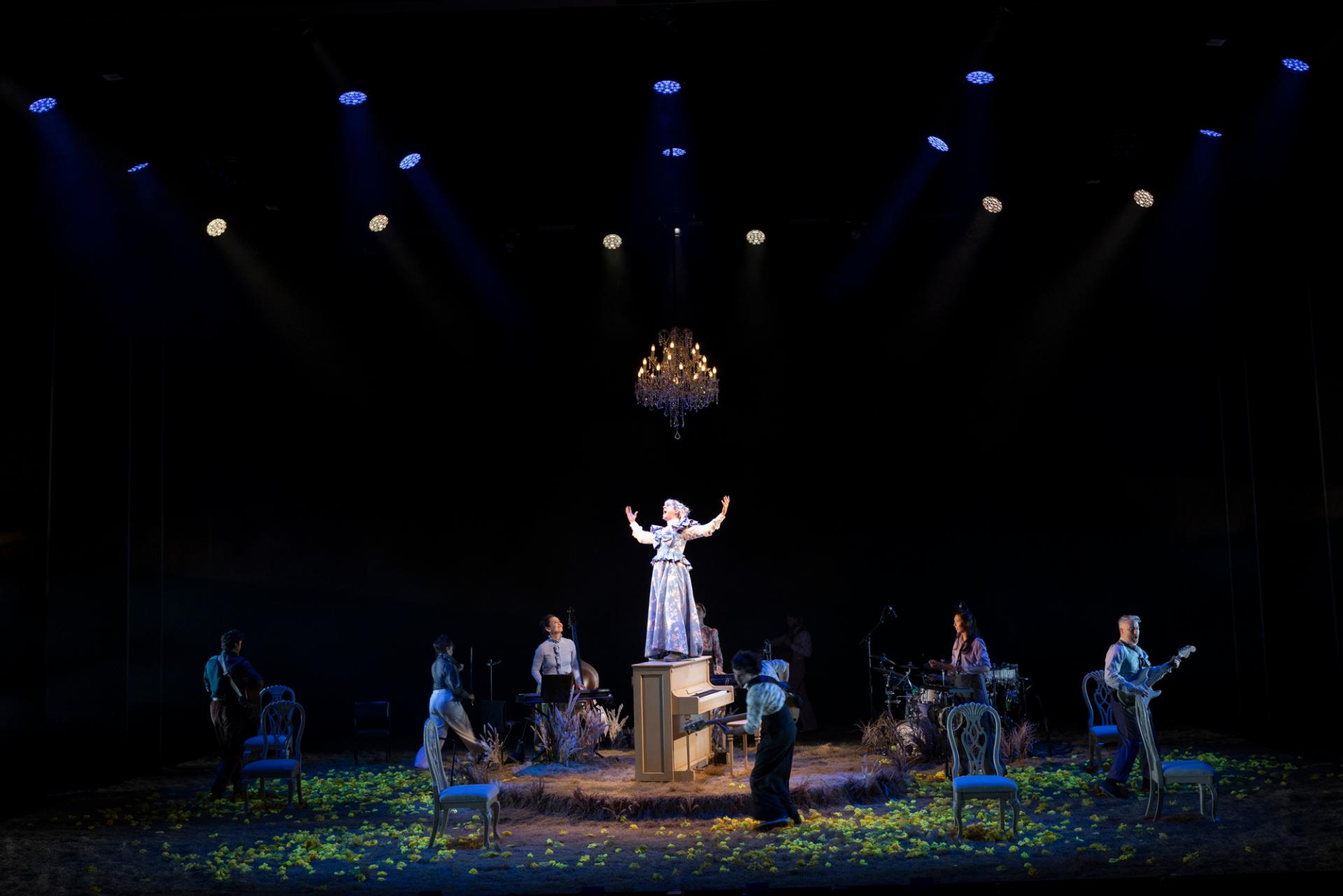
Mia MacCormick’s set design proves astute in its deployment of a sandpit as the production’s locus, a choice that amplifies the piece’s kinetic energy whilst furnishing a tactile materiality that resonates poignantly with its ecological preoccupations. Caity Cowan’s lighting design operates with commendable dynamism, demonstrating both laudable ambition and considerable intricacy. Cameron Smith’s soundscape ensures the audience remains oriented through the production’s rapid-fire succession of scene transitions.

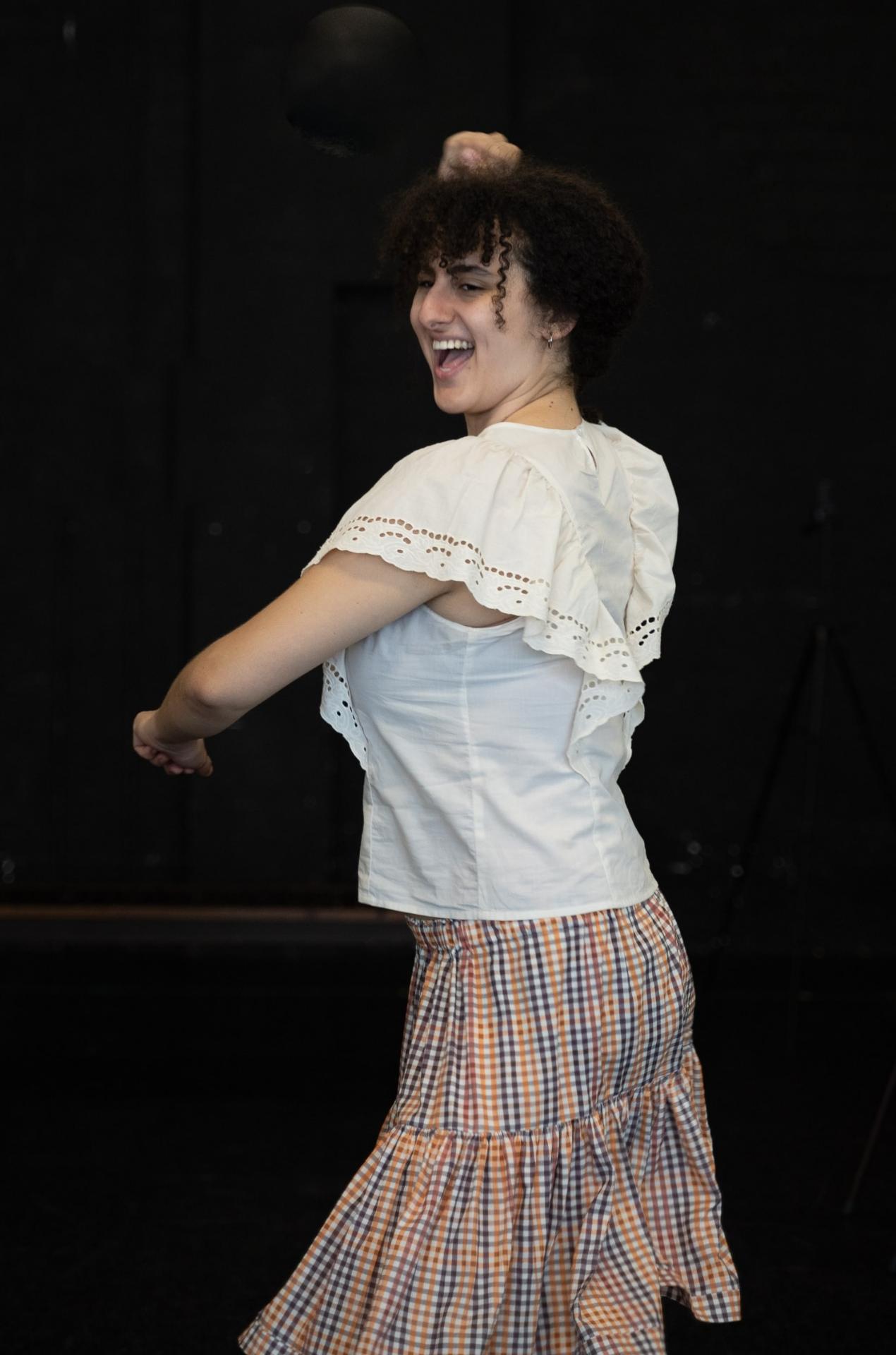
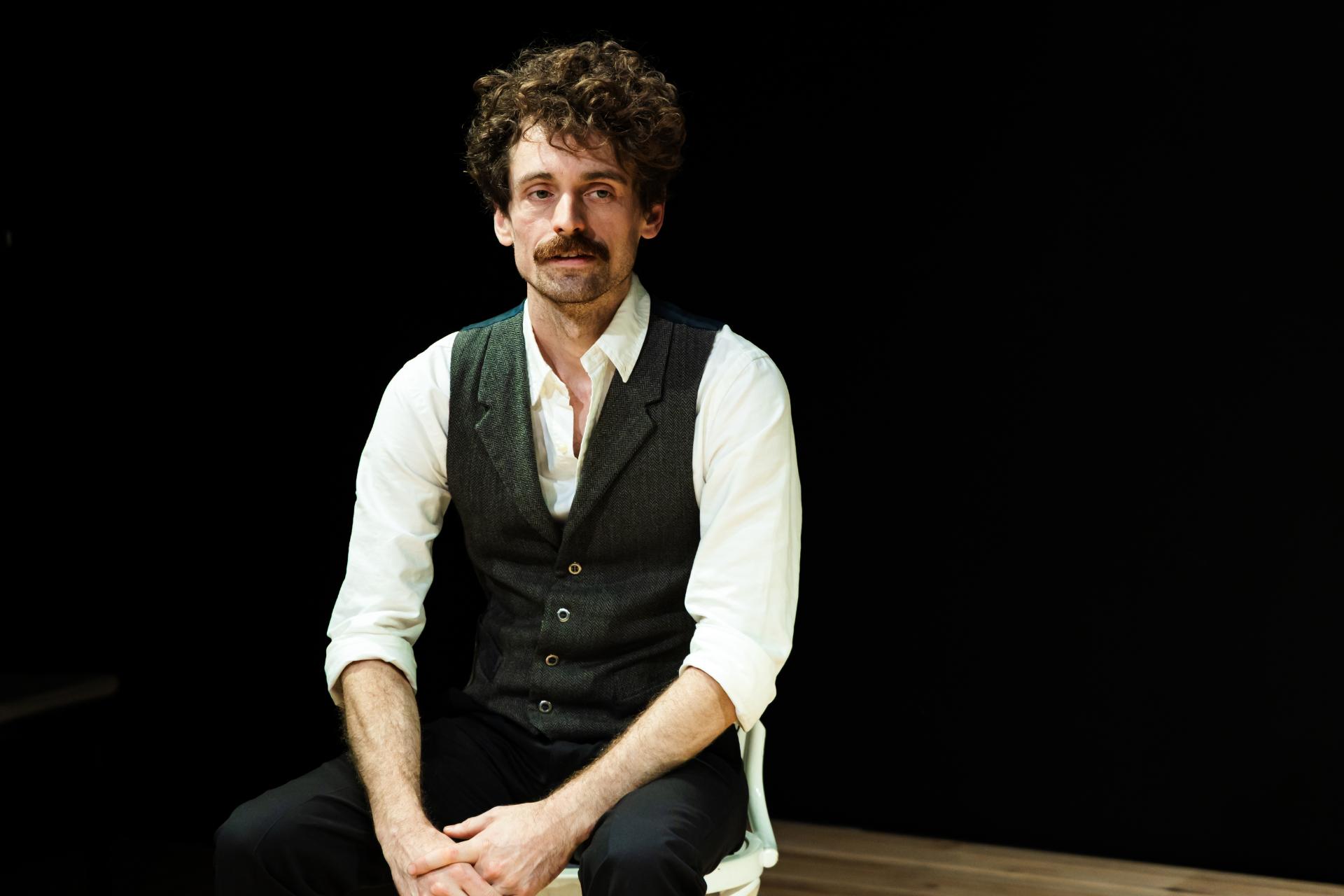
Performers Izabella Louk and Victor Y Z Xu are unquestionably committed to the material, maintaining an admirable focus throughout; yet a shortage of interpretive nuance and a certain intellectual superficiality in their characterisations ultimately diminish the production’s capacity to captivate, even if the narrative’s ethical through-line remains unimpeachably intact.

Those who elect to bear children will invariably marshal a multiplicity of justifications, just as those arguing against can advance an equally formidable array of objections. Ultimately, the principle of bodily autonomy must remain inviolable. Our collective opposition ought to be directed not toward individual choice but toward the billion-dollar industrial complexes that profit immeasurably from a discourse that displaces culpability onto private citizens—entities infinitely more complicit in our present environmental cataclysm than any single parent could ever be.

www.kingsxtheatre.com | www.blinkinglighttheatre.com
Review: An Iliad (Sydney Theatre Company)

Venue: Wharf 1 Sydney Theatre Company (Walsh Bay NSW), Apr 13 – Jun 28, 2026
Playwright: Lisa Peterson, Denis O’Hare (translated by Robert Fagles)
Director: Damien Ryan
Cast: David Wenham
Images by Daniel Boud

Theatre review
Adapted from Homer’s foundational epic, Lisa Peterson and Denis O’Hare’s An Iliad distils the siege of Troy to its devastating essence: the fatal confrontation between Achilles and Hector, and through their collision, an anatomy of conflict that transcends its Bronze Age origins. This adaptation adopts a telescopic vantage, favouring the sweep of history over the psychologies that could reveal architectures of the individual soul. The result is a work of considerable erudition that too often keeps its audience at the very distance it seeks to condemn.

Damien Ryan’s direction mirrors this chronicler’s impulse, maintaining an objective, almost scholarly remove even as the production stages the full, bloody magnitude of human sacrifice. We witness the apparatus of war meticulously arranged—its rituals, its mathematics of mortality, its perverse machinery of honour—but the emotional current frequently runs beneath the surface, visible yet untouchable. Sentiment is artfully composed; feeling, however, remains tantalisingly out of reach.

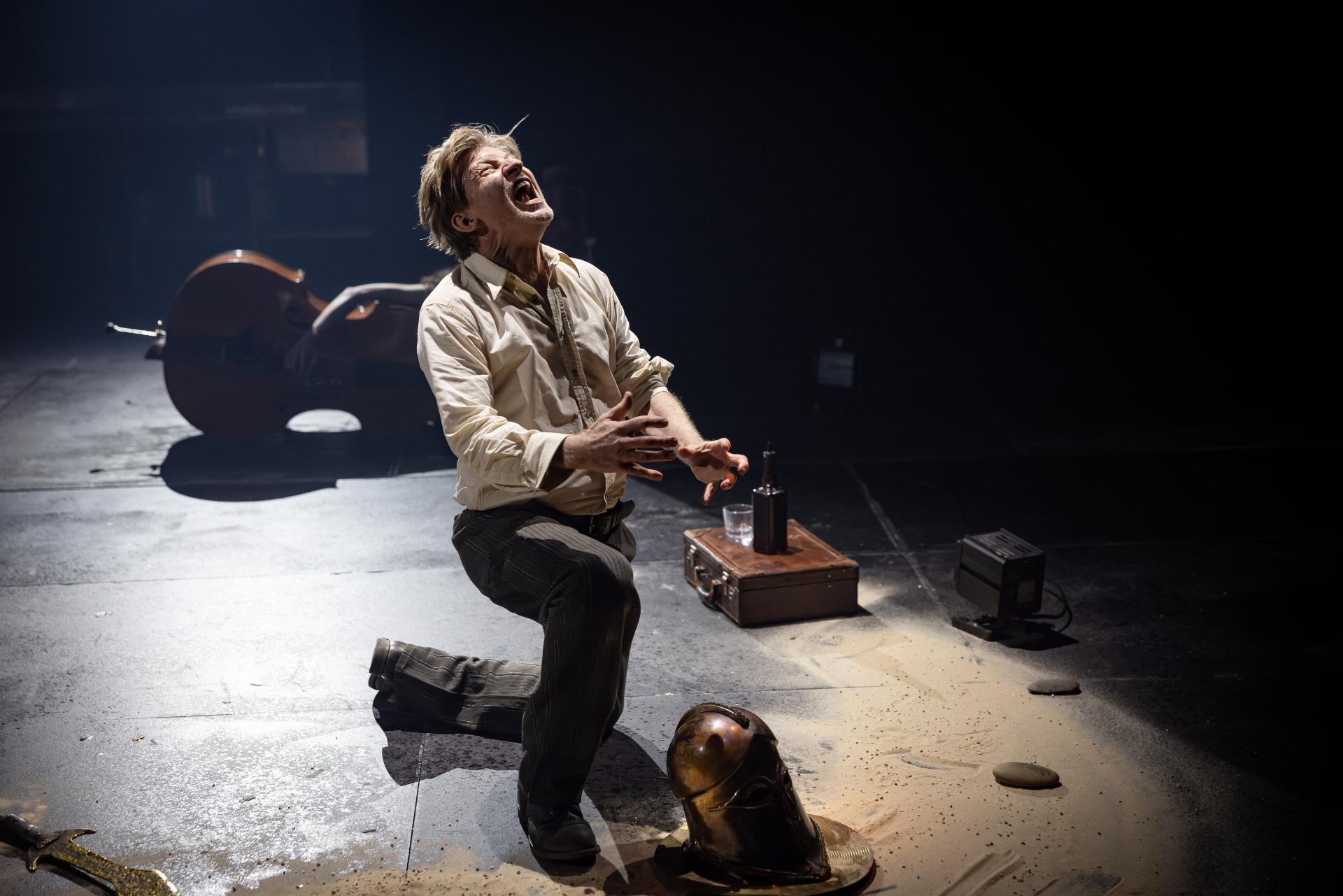
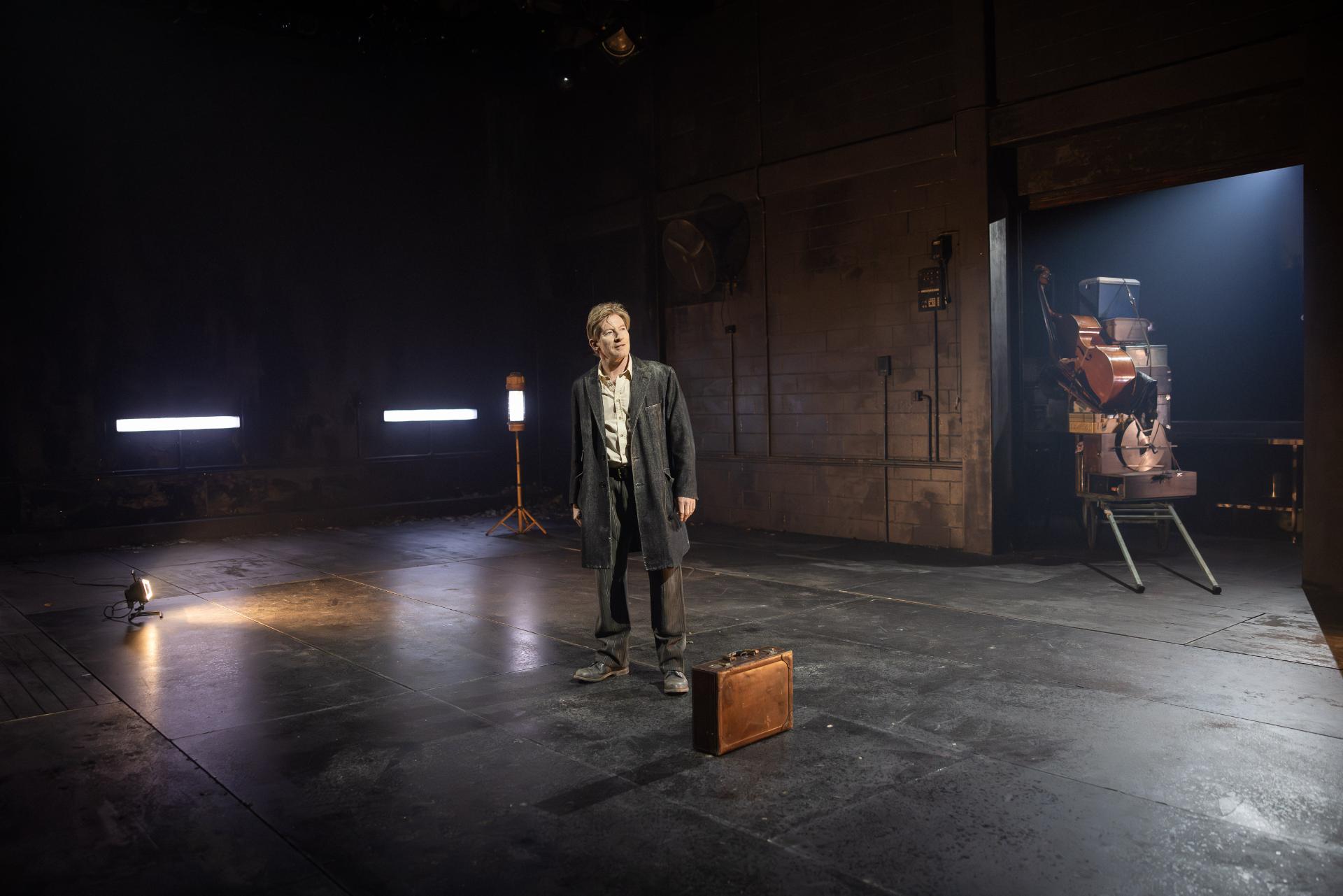
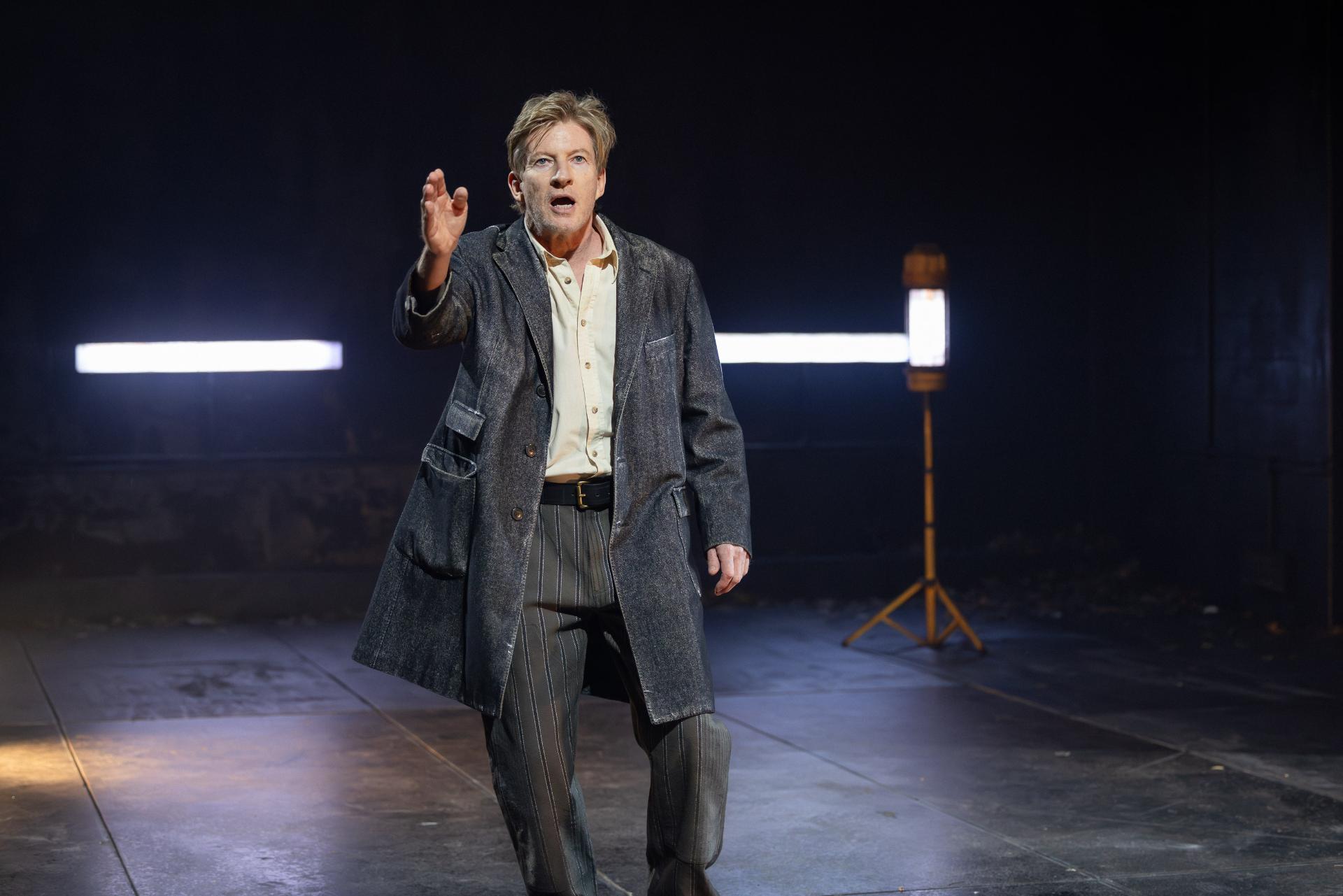
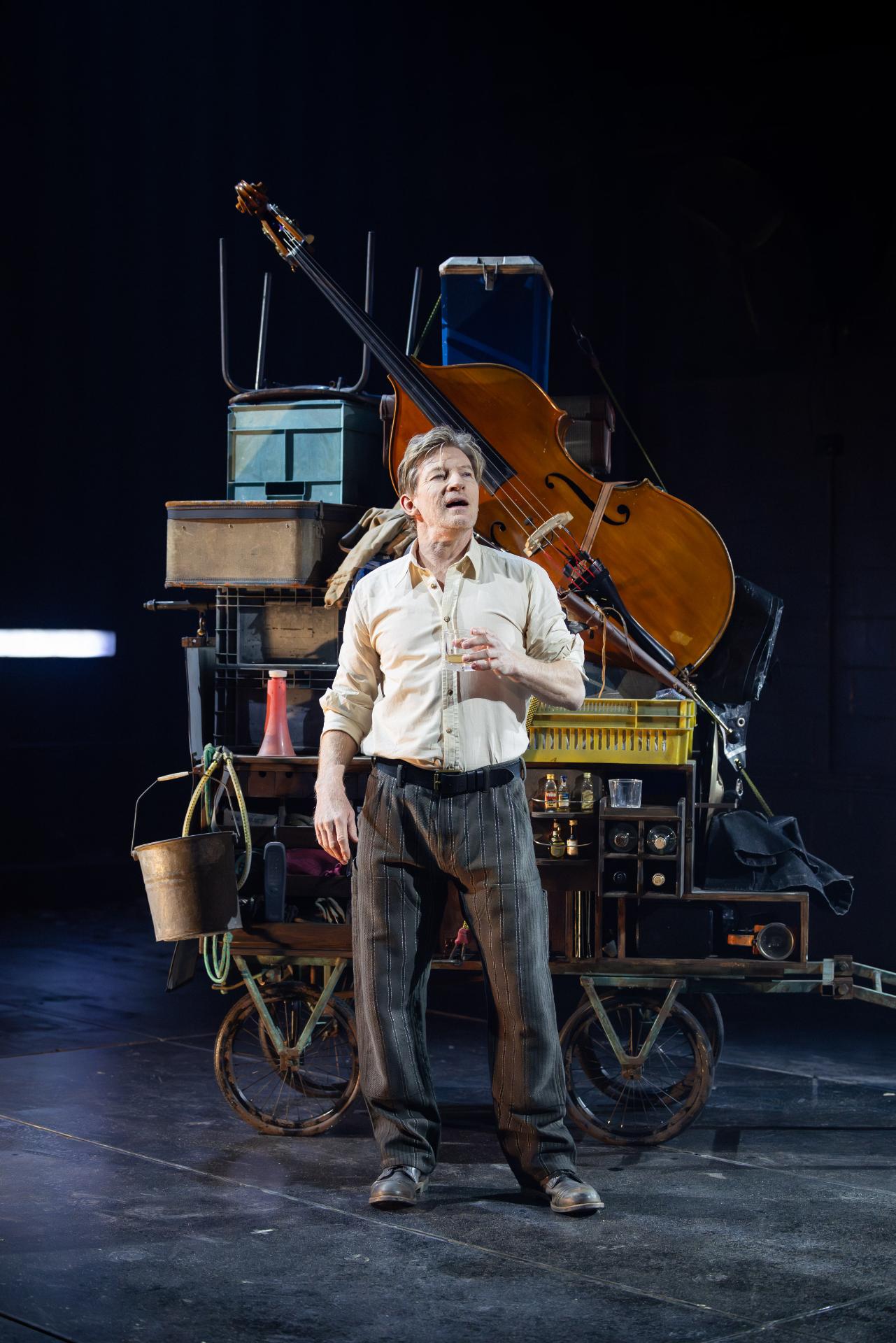
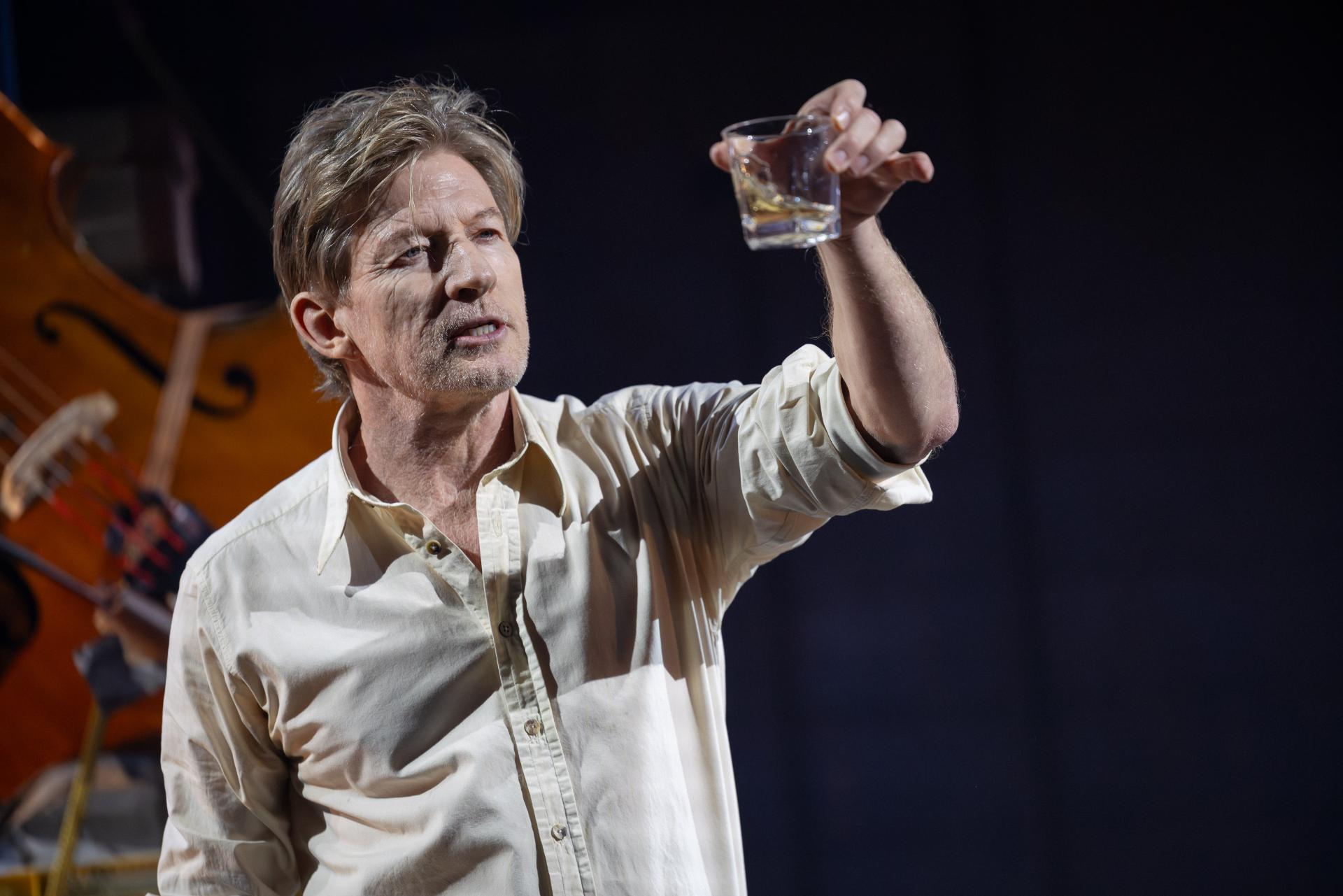
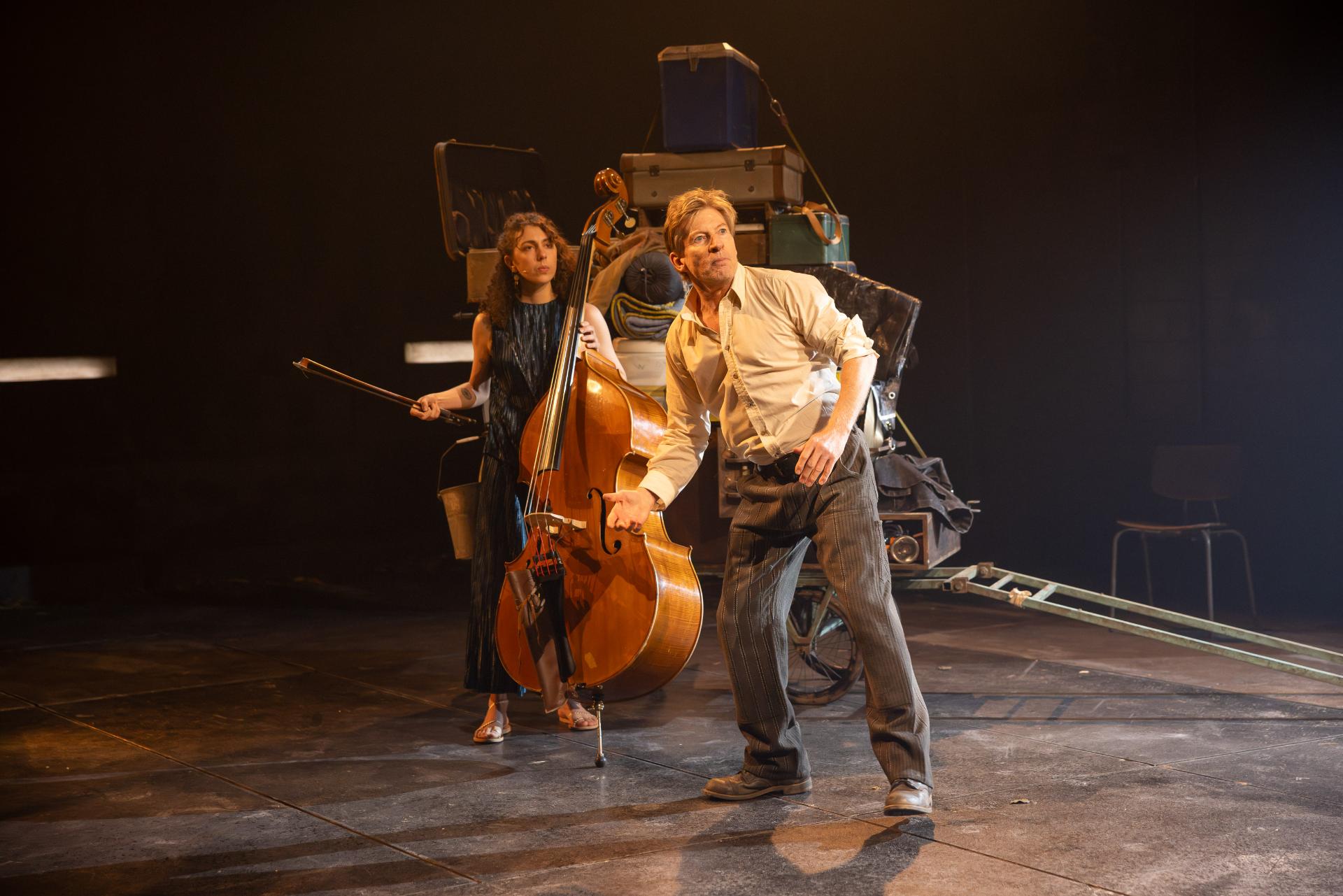
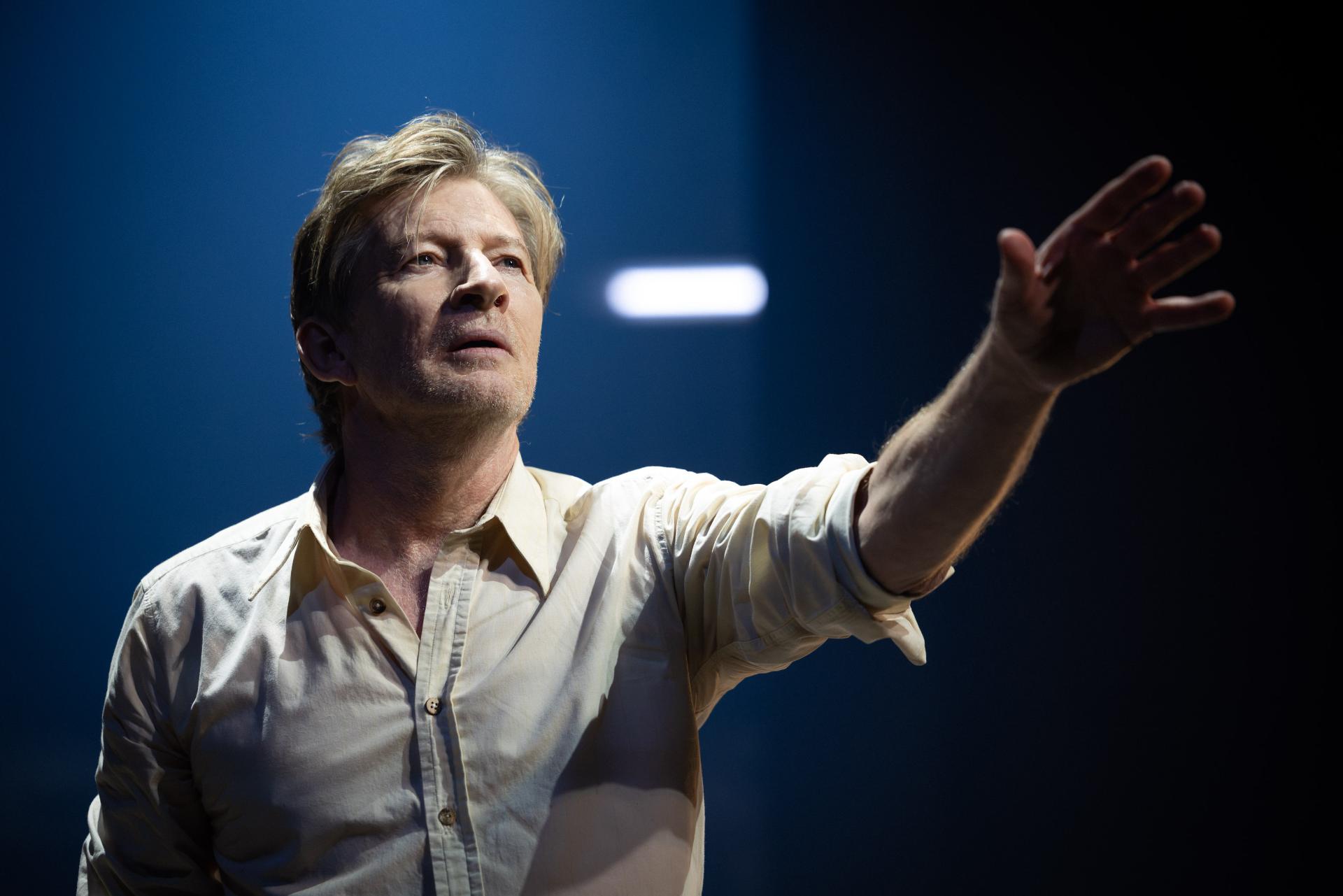
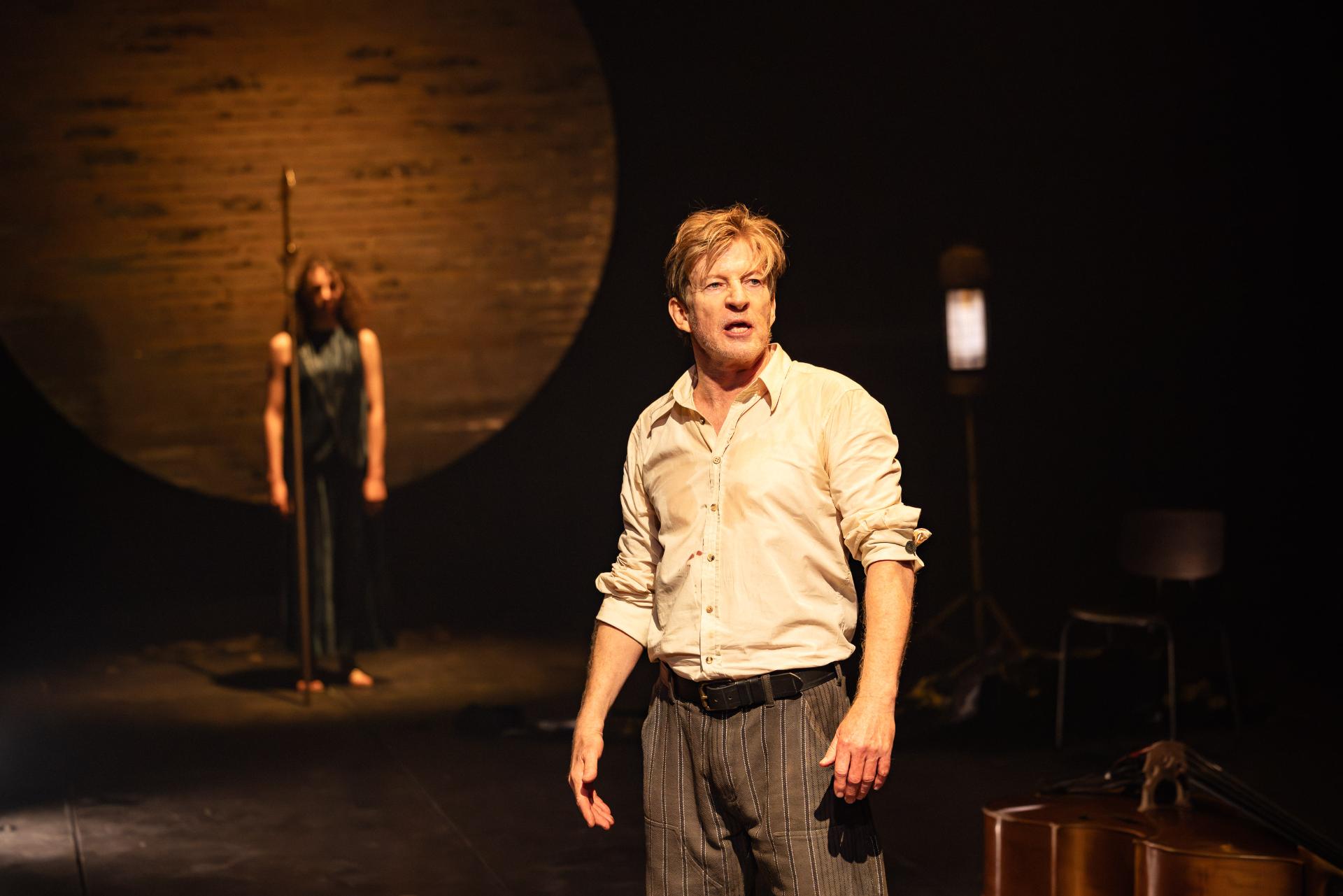
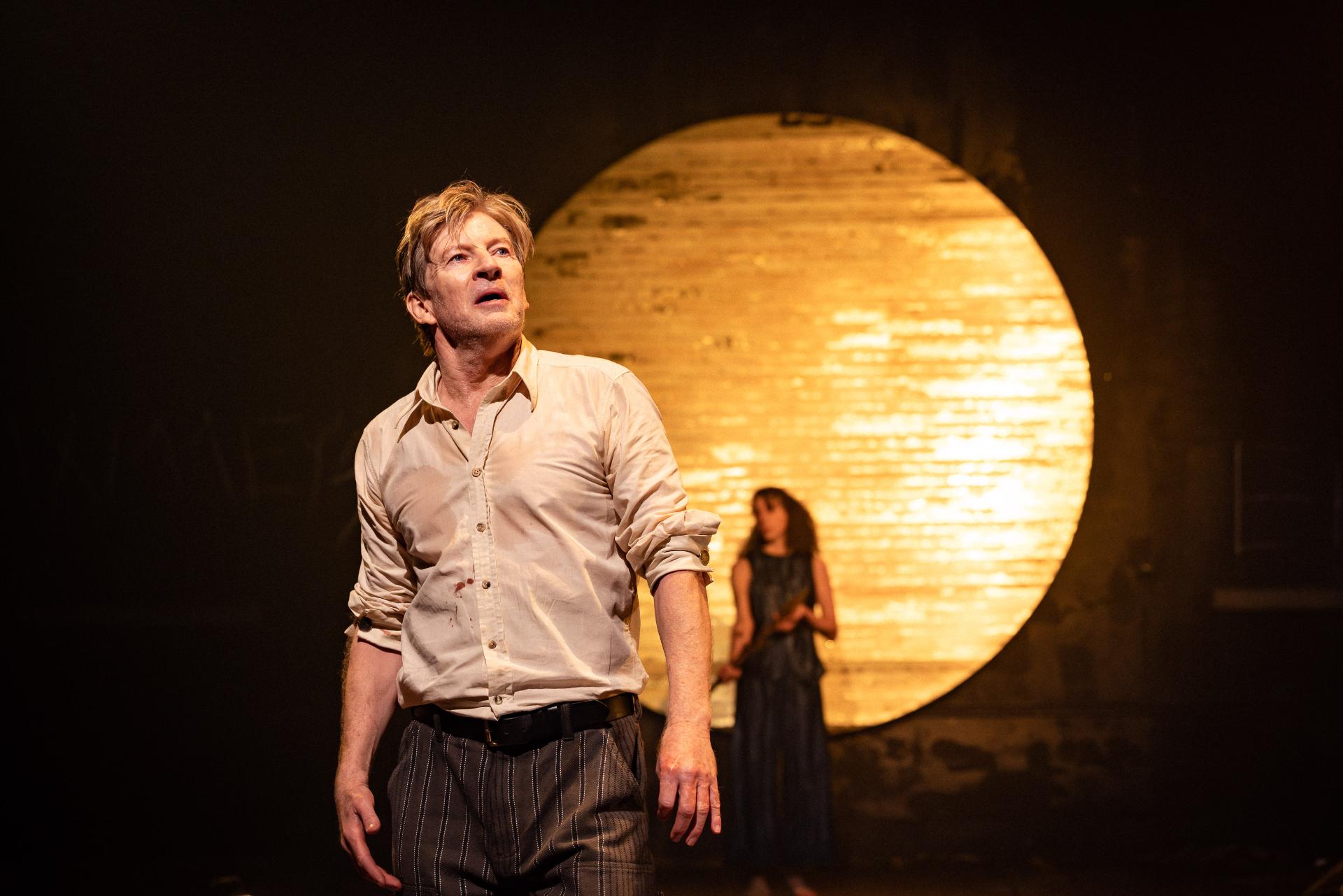
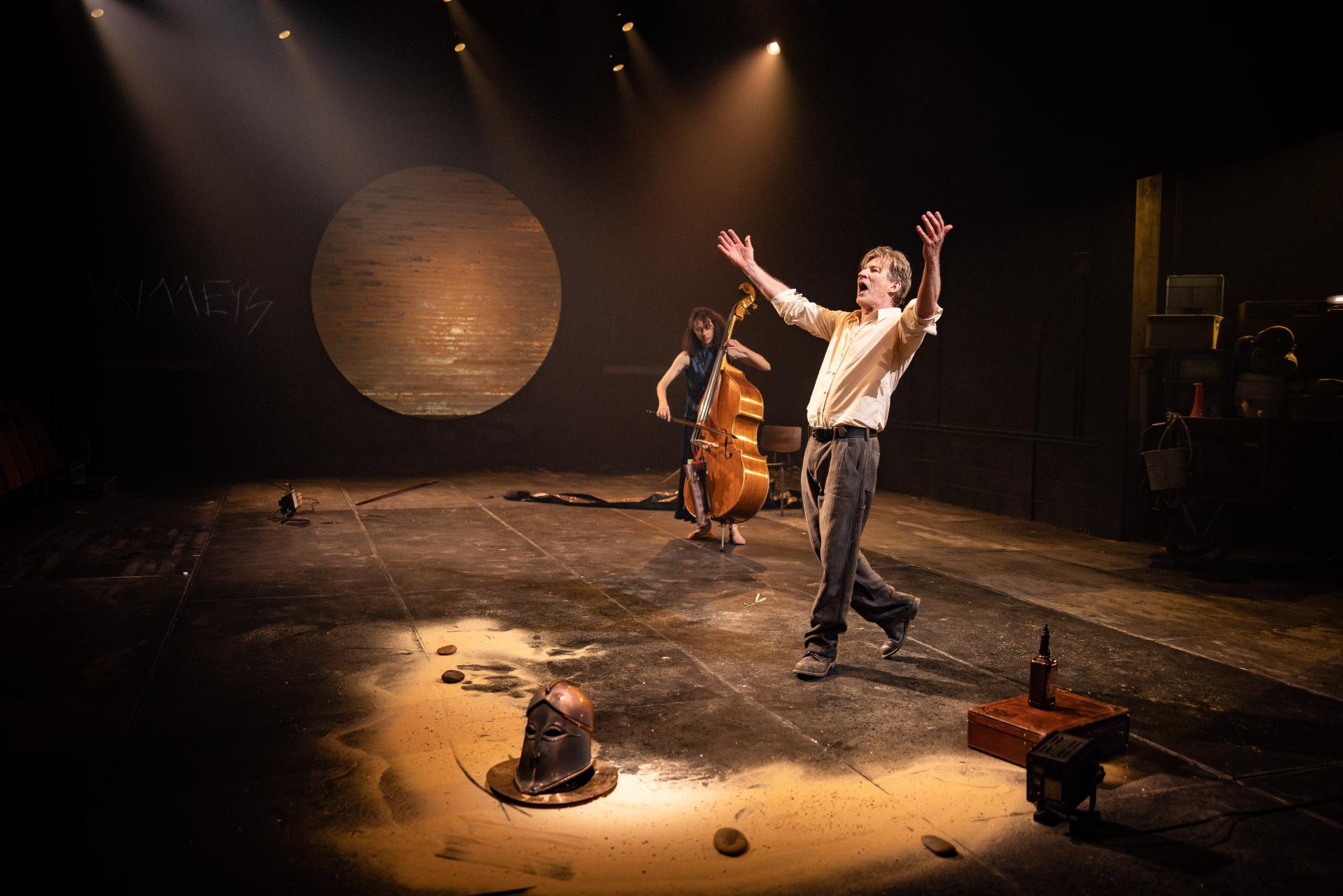
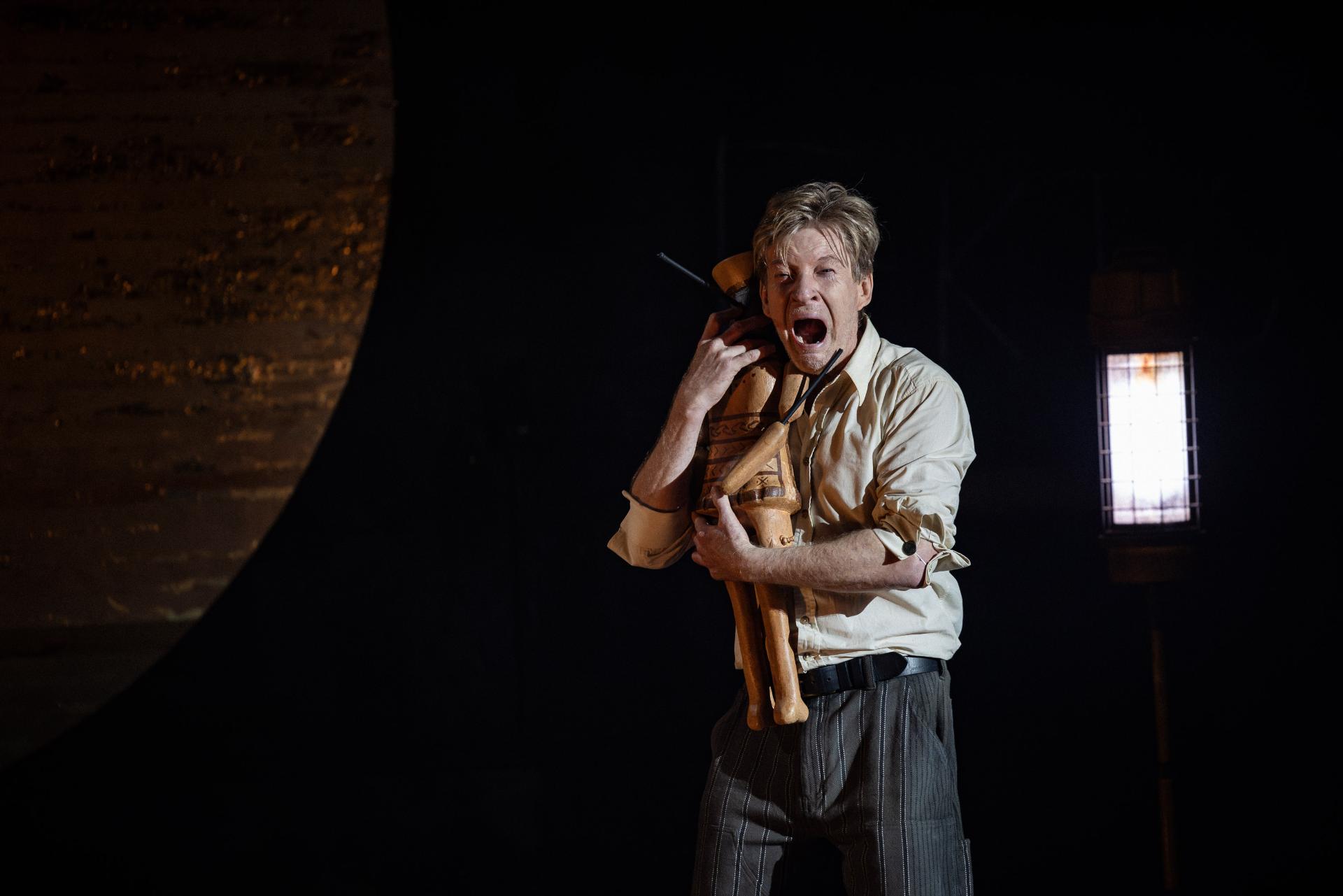
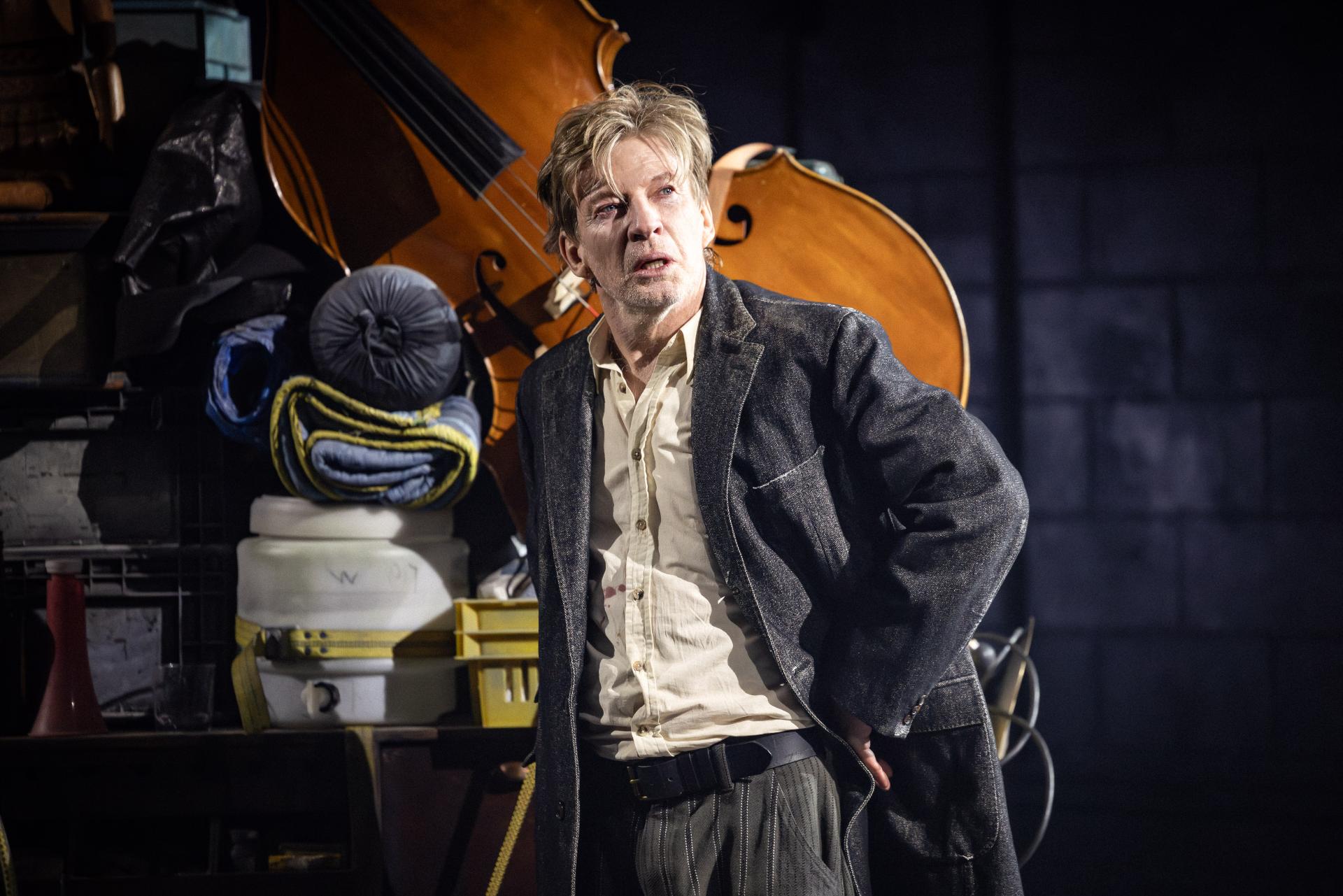
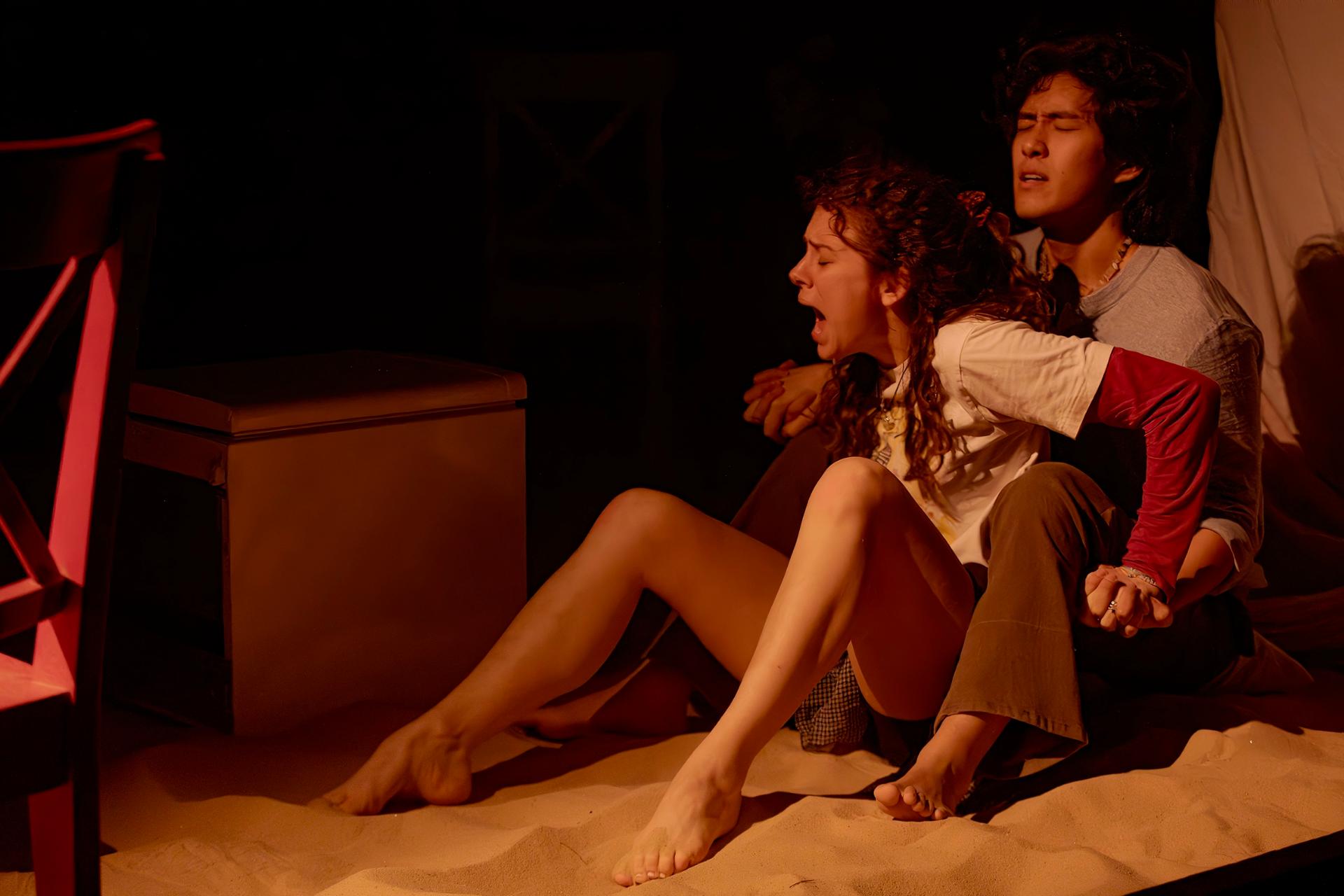
David Wenham, as The Poet, is the production’s undeniable gravitational centre. He commands the space with an effortless gravity that insists we treat this millennia-old narrative not as archaeological artefact, but as living testament. It is a performance of exquisite paradox: simultaneously casual and naturalistic, yet expansively theatrical, even operatic in its reach. Wenham achieves that rare alchemy where the actor’s own artistic intelligence becomes as captivating as the tale he unfolds. If the adaptation occasionally keeps us at arm’s length, Wenham’s magnetism draws us relentlessly back into the circle of the story.

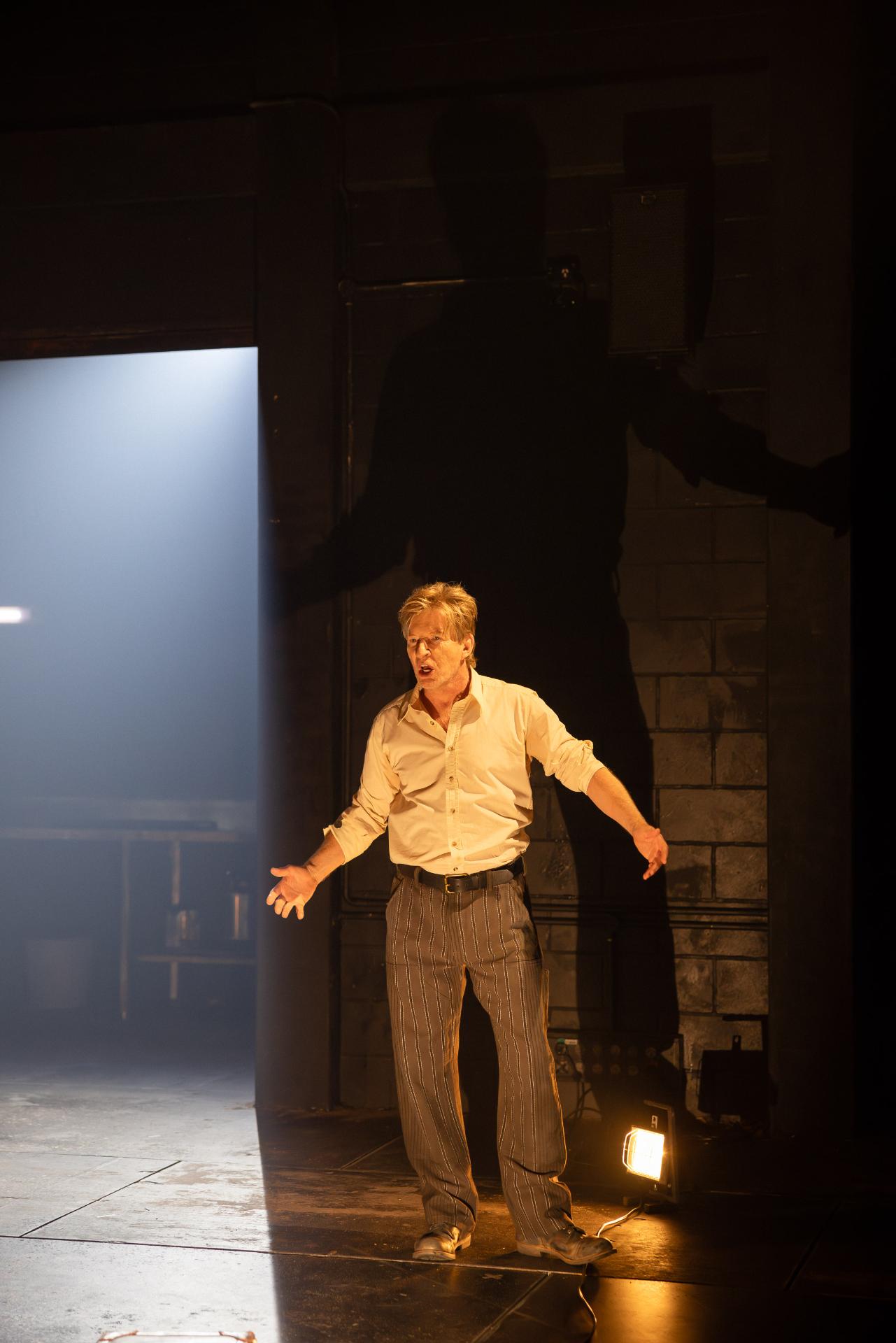
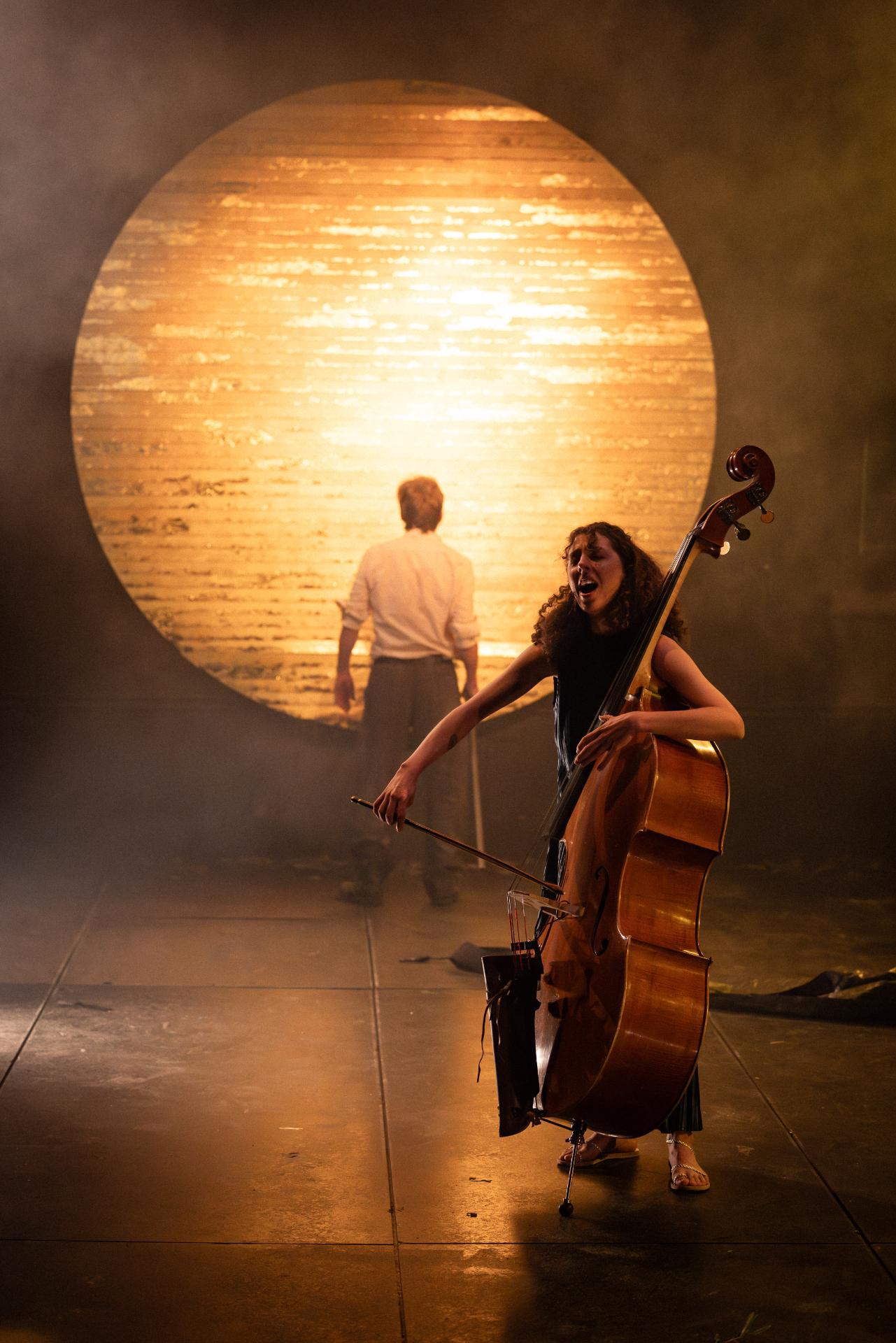
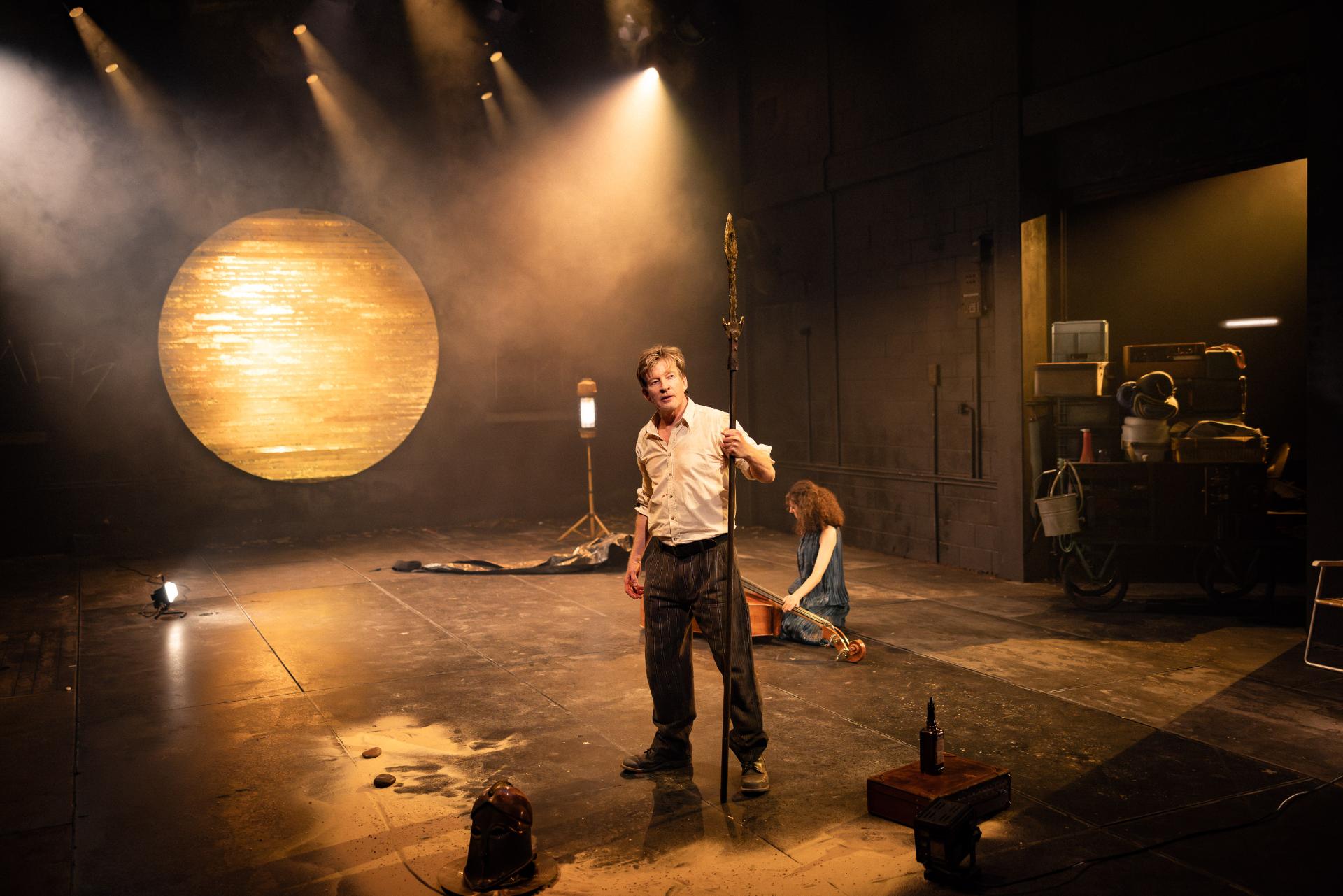
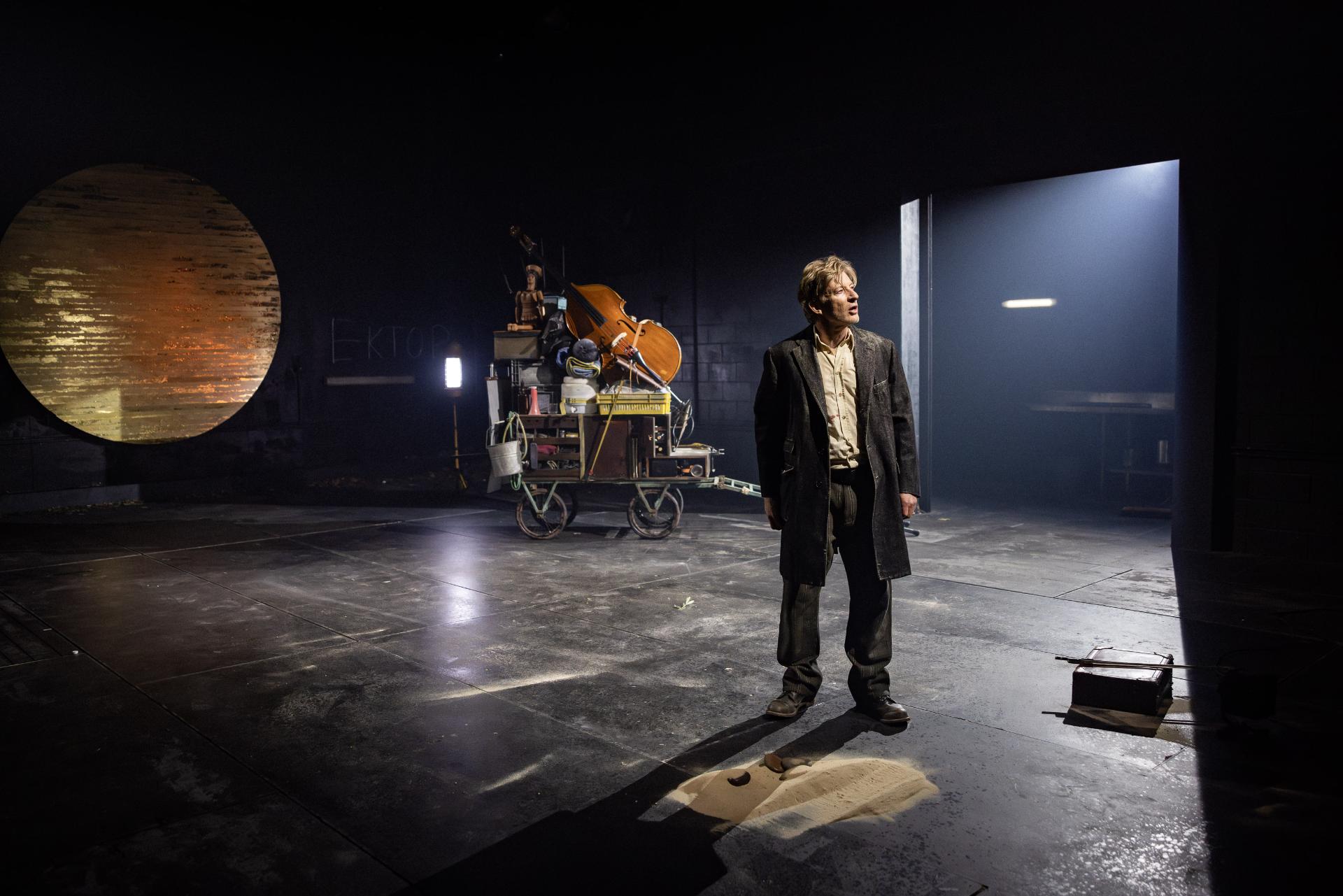
Appearing alongside him, musician Helen Svoboda performs much of the score live, to marvellous and haunting effect. In concert with Brady Watkins’ sound design, her compositions imbue the production with a visceral grandeur that makes tangible the true scale of the narrative. Alexander Berlage’s lighting matches this ambition with sweeping, monumental tableaux—shafts of amber and sudden abysses of shadow—yet never sacrifices intimacy for spectacle; his illumination is sombre, his darkness articulate, reinforcing the production’s cumulative gravity. Charles Davis’ production design is memorably austere, its disciplined sparseness thrown into relief by a single, totemic cart that The Poet drags through the narrative’s sombre hush, stacked to towering heights with the accumulated relics of a civilisation—each object a vessel of memory, each layer another stratum of war’s inexorable geology.

And here, perhaps, lies the work’s most unsettling power. We do not need to look to antiquity to find Troy in flames. Since 7 October 2023, Israel has killed more than 72,000 people in the Gaza region; concurrently, an estimated 48 are killed every day in Iran since the beginning of the recent US invasion. These are not aberrations or historical parentheses—they are the continuous present. Peterson and O’Hare’s adaptation reminds us that Homer’s poem has never really been about a war that happened, but about a war that keeps happening, under different names and different flags, across every century that congratulates itself on having progressed beyond bronze swords and walled cities. When Wenham’s Poet finally falls silent, what lingers is not the glory of heroes, but the terrible recognition that Achilles and Hector are not behind us. They are merely waiting in the wings. They always have been.

www.sydneytheatre.com.au

Review: English (Seymour Centre)

Venue: Seymour Centre (Chippendale NSW), Apr 9 – May 2, 2026
Playwright: Sanaz Toossi
Director: Craig Baldwin
Cast: Pedram Biazar, Nicole Chamoun, Neveen Hanna, Minerva Khodabande, Setareh Naghoni
Images by Richard Farland

Theatre review
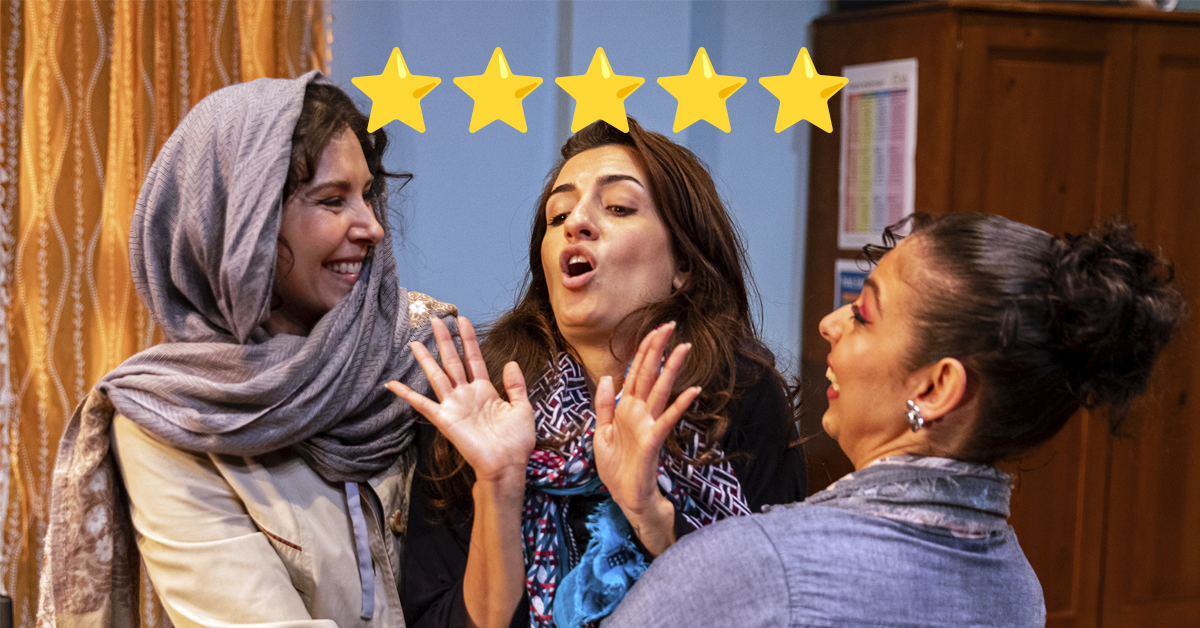
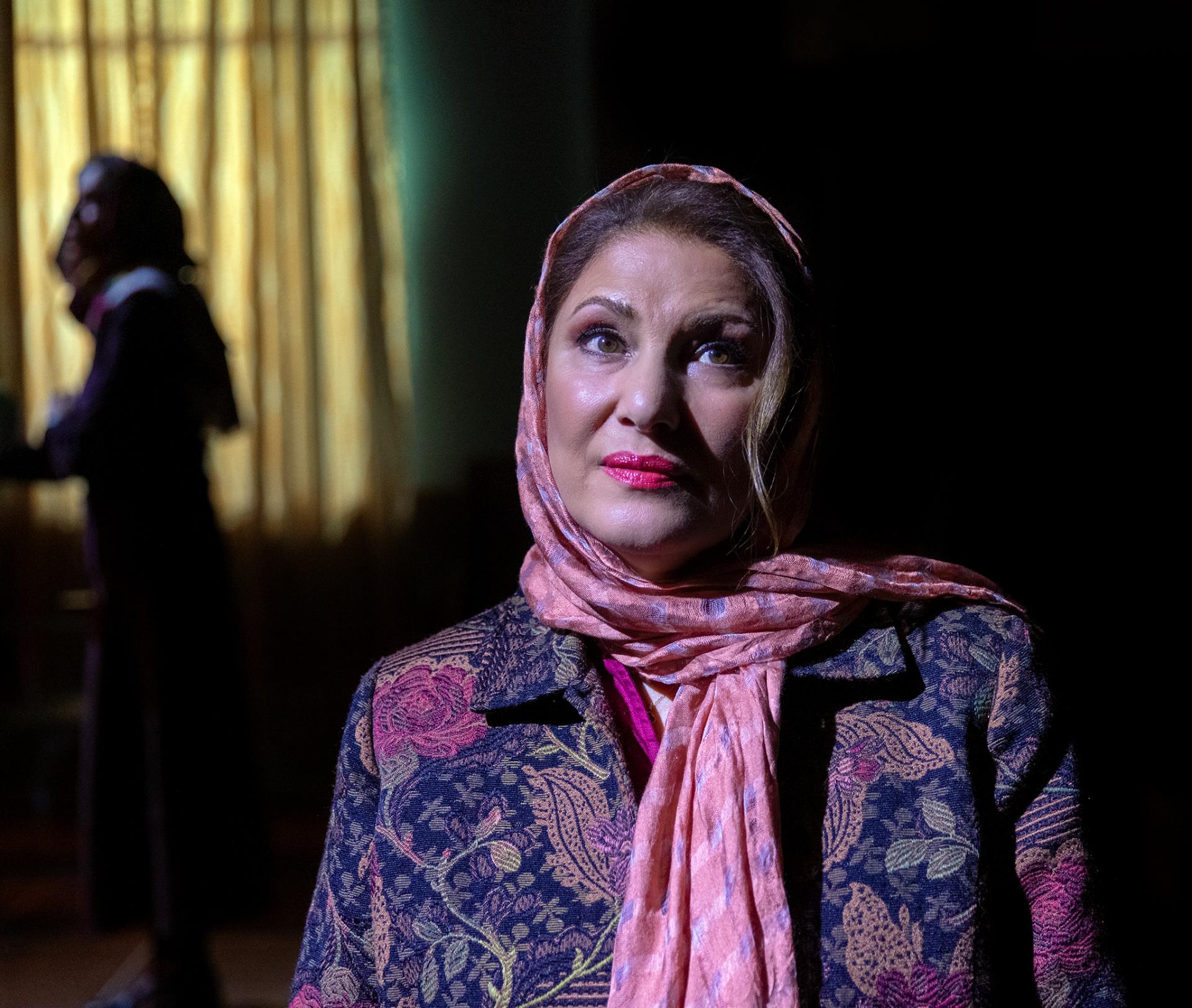
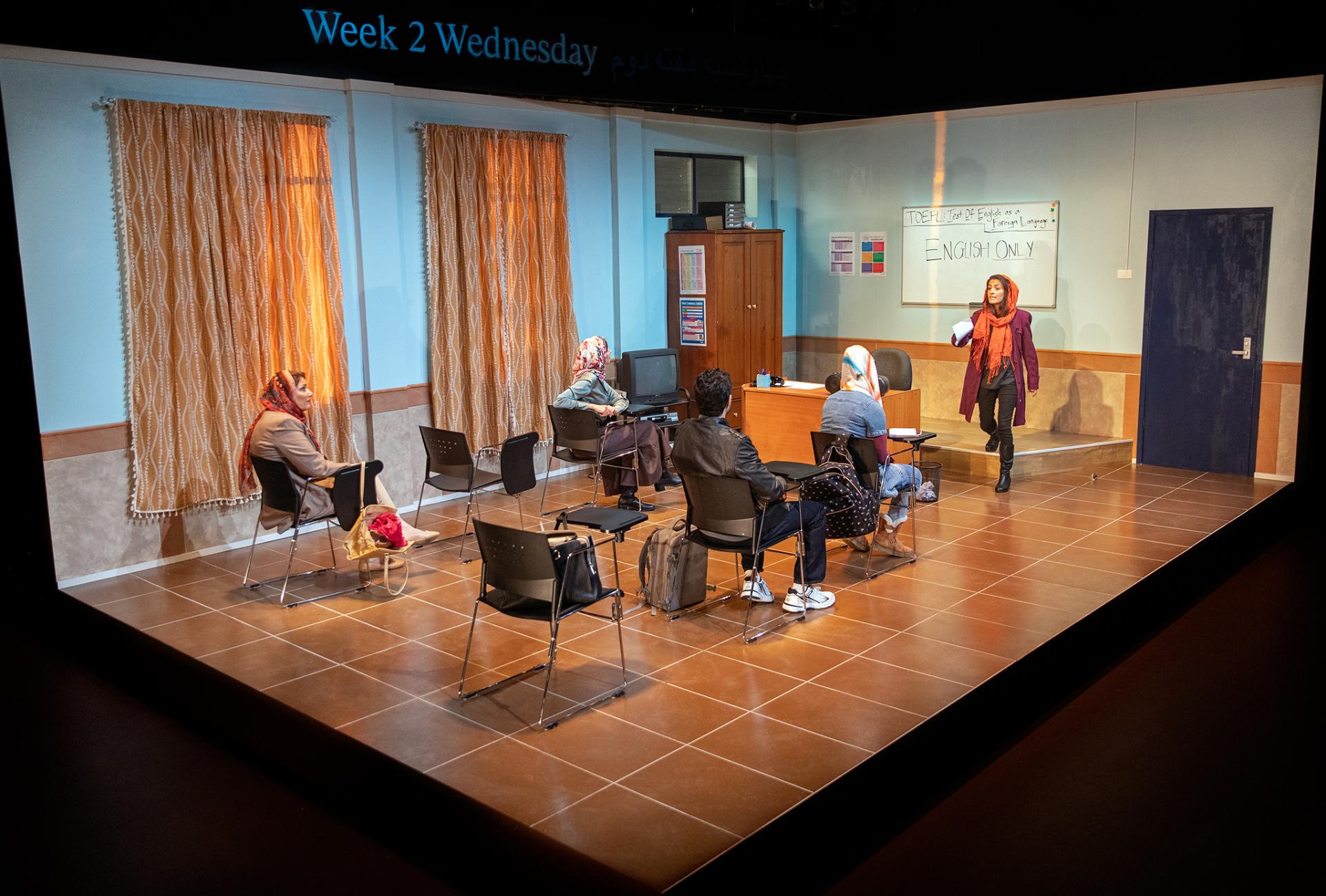
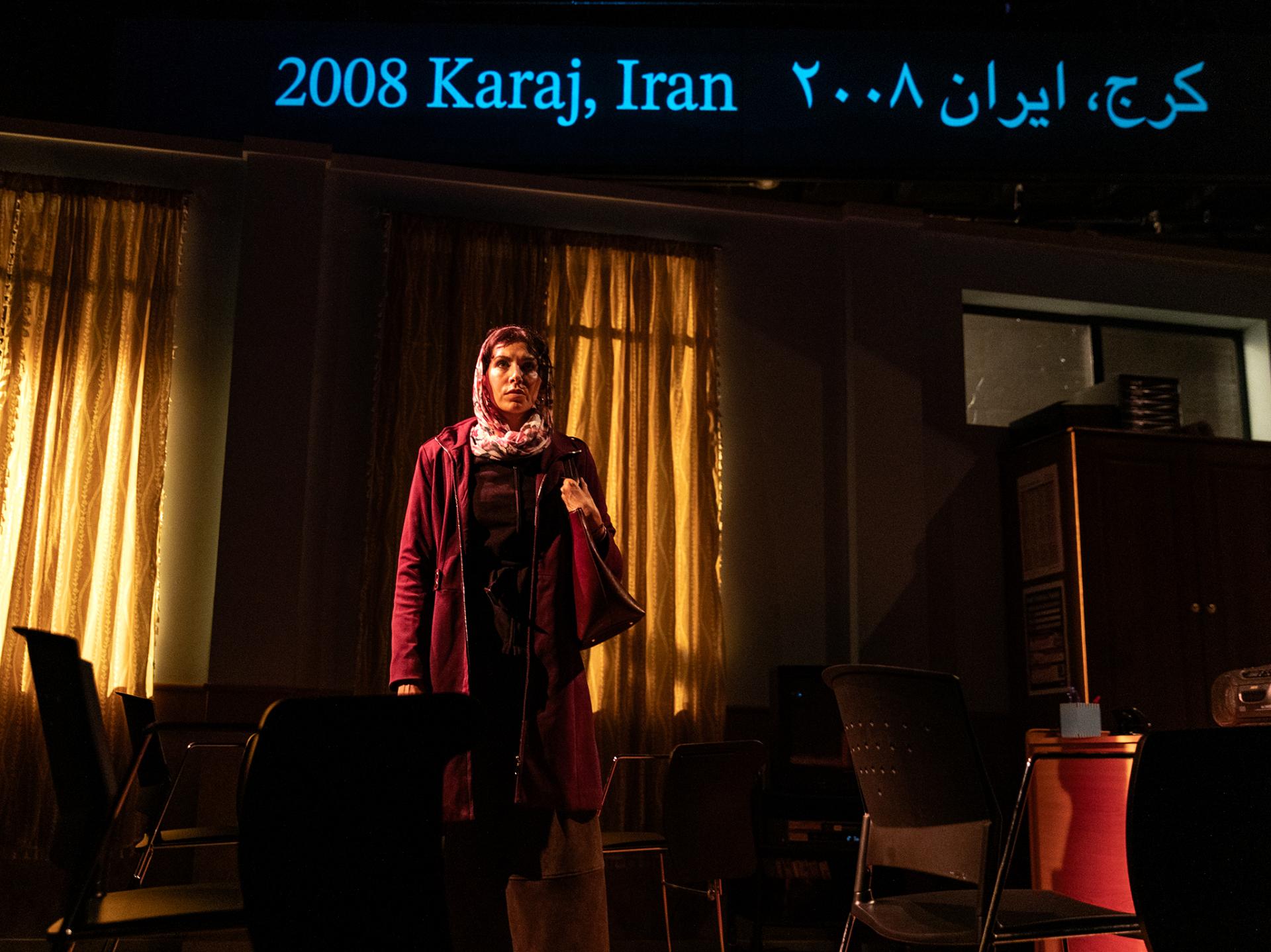
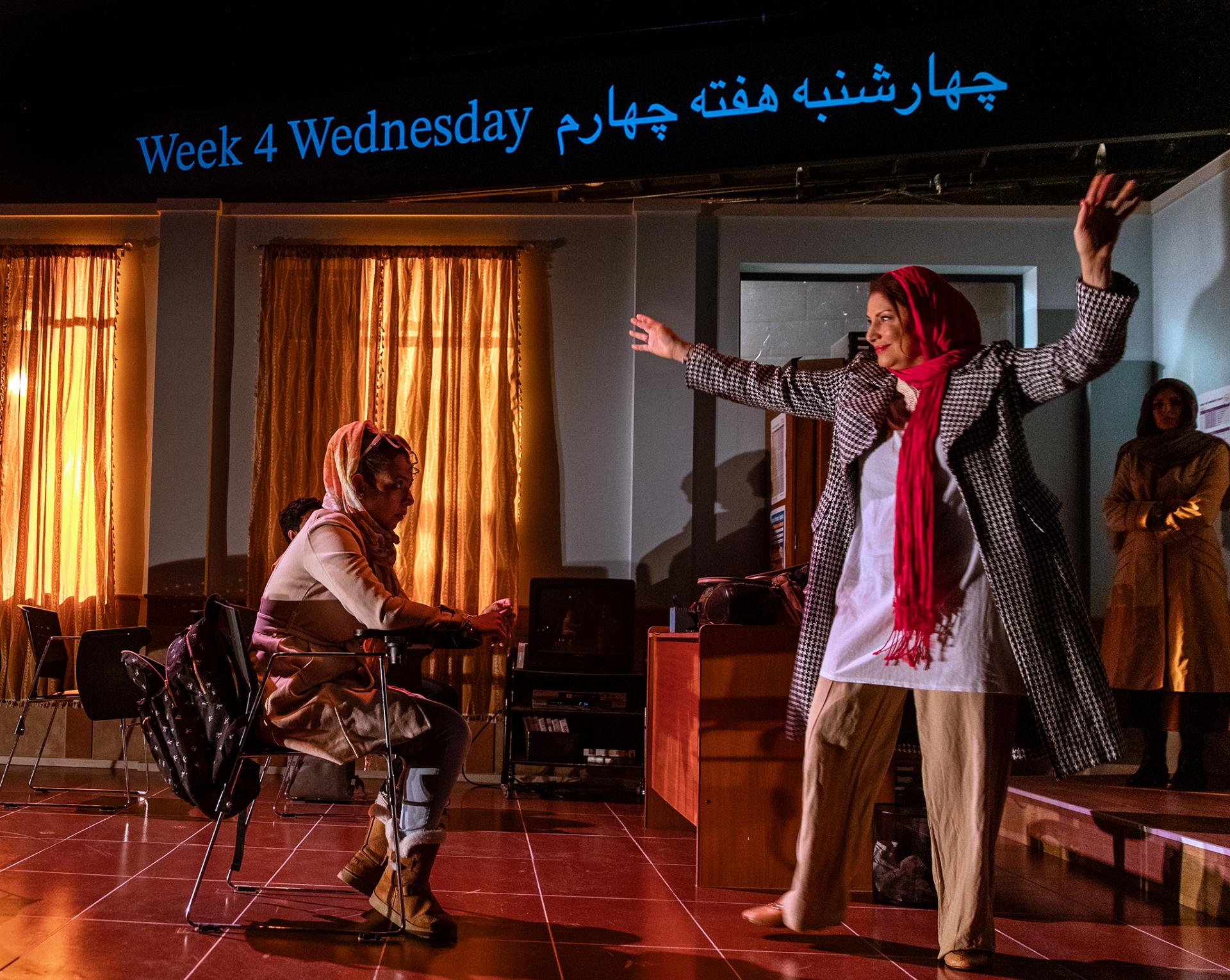
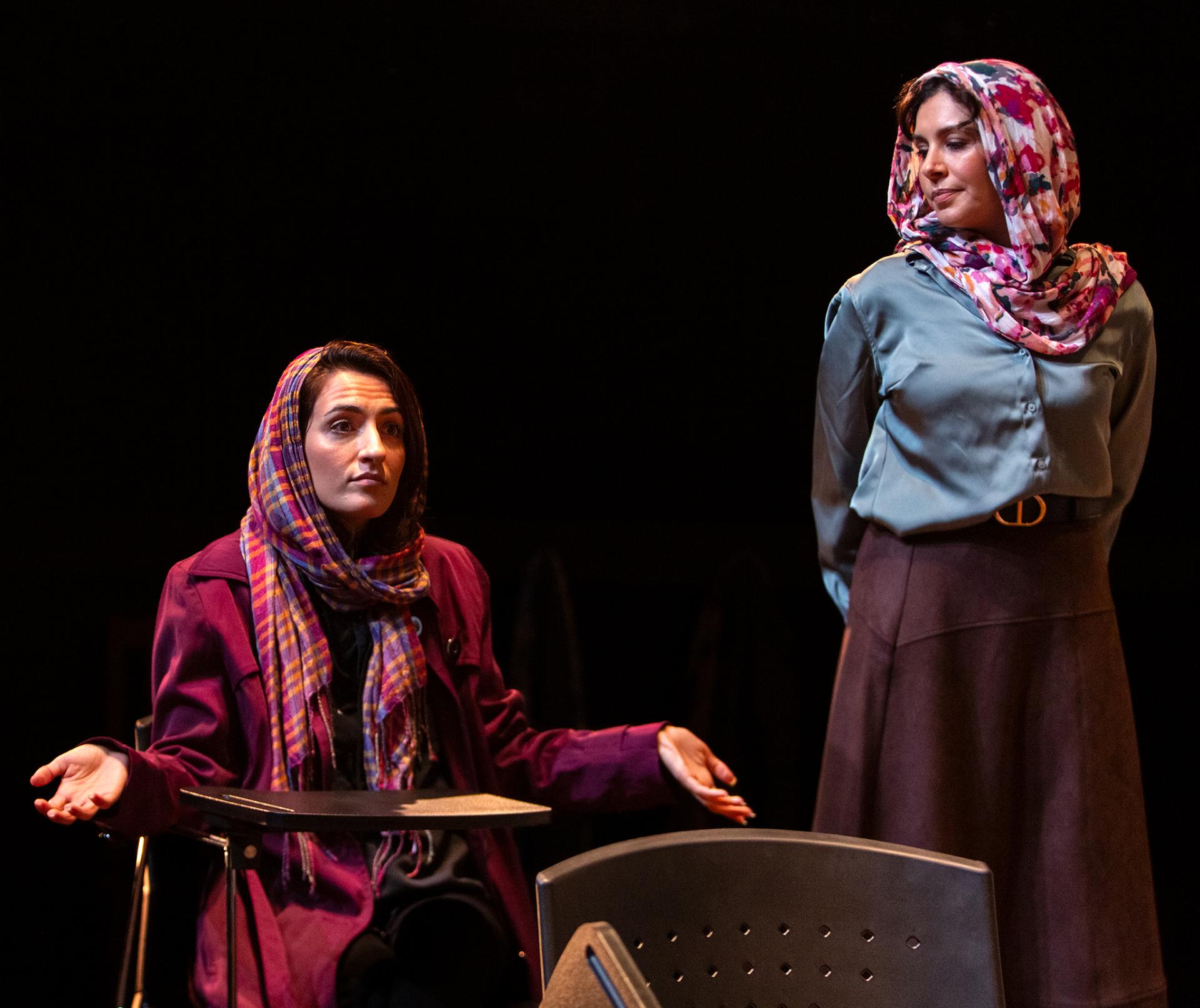
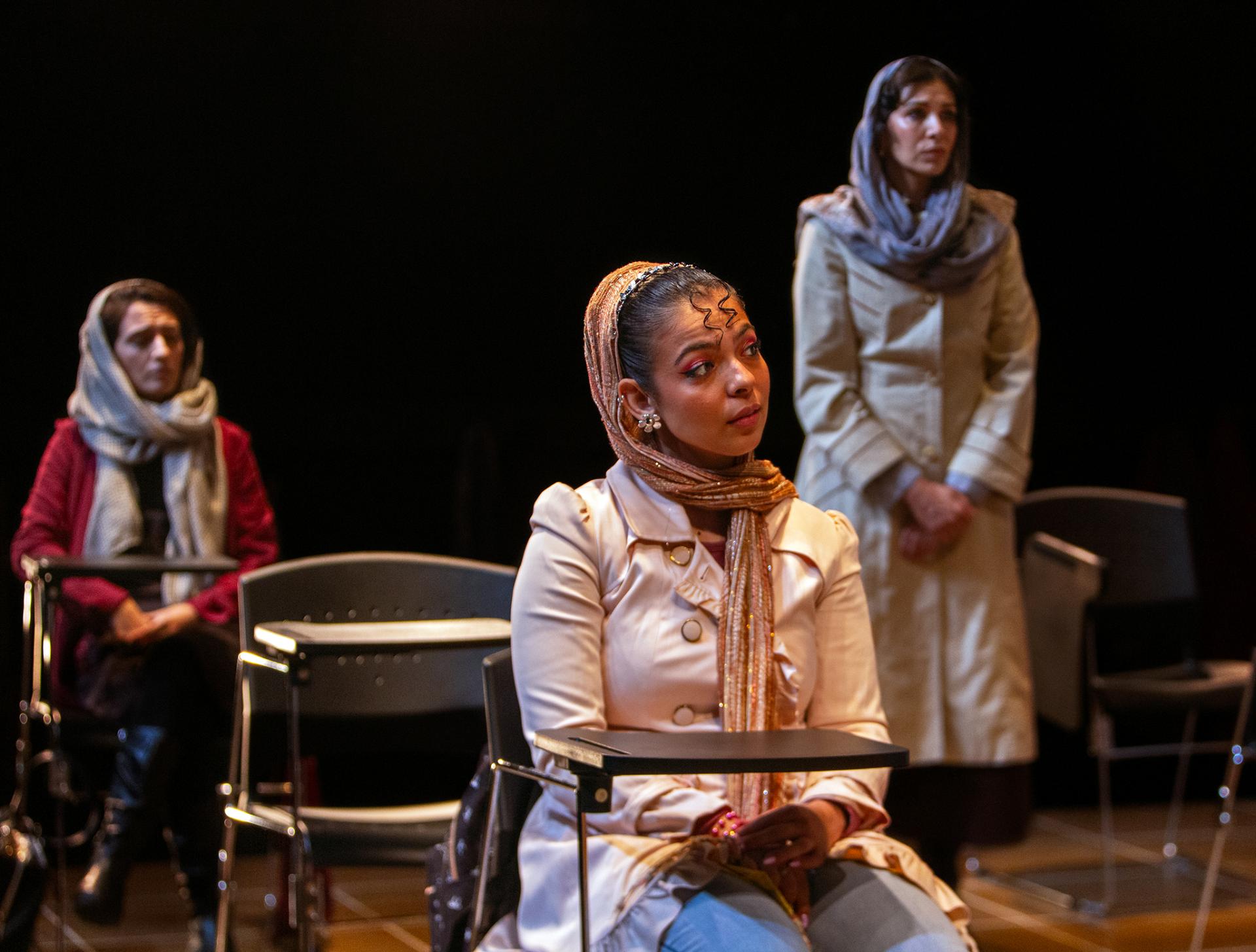
In a modest classroom in Karaj, 2008, where the air itself seems thick with unspoken anxiety, Marjan presides over a small cohort of Iranians preparing for the TOEFL (Test of English as a Foreign Language) examination. They arrive bearing different destinies but share a common condition: displacement. Sanaz Toossi’s English excavates the immigrant experience with surgical precision, revealing how language acquisition becomes both lifeline and loss, a means of escape that simultaneously erases.

Toossi’s work operates in the confluence of colonized trauma and pragmatic survival; it deftly weaves exploration of love for a homeland and the quiet grief of witnessing it unravel. The play captures the immigrant experience with astonishing complexity, yet articulates with remarkable clarity the intricate and often agonizing challenges of forging a sense of home in foreign, unfamiliar terrain. Under Craig Baldwin’s direction, the production holds the audience spellbound from start to finish—devastating in its most searing dramatic moments, yet threaded throughout with sharp, scintillating wit. It achieves the rare feat of being both thoroughly entertaining and profoundly resonant, offering the kind of theatre that feels deeply, viscerally satisfying. For those with personal ties to the themes Toossi explores, English becomes nothing less than cathartic.

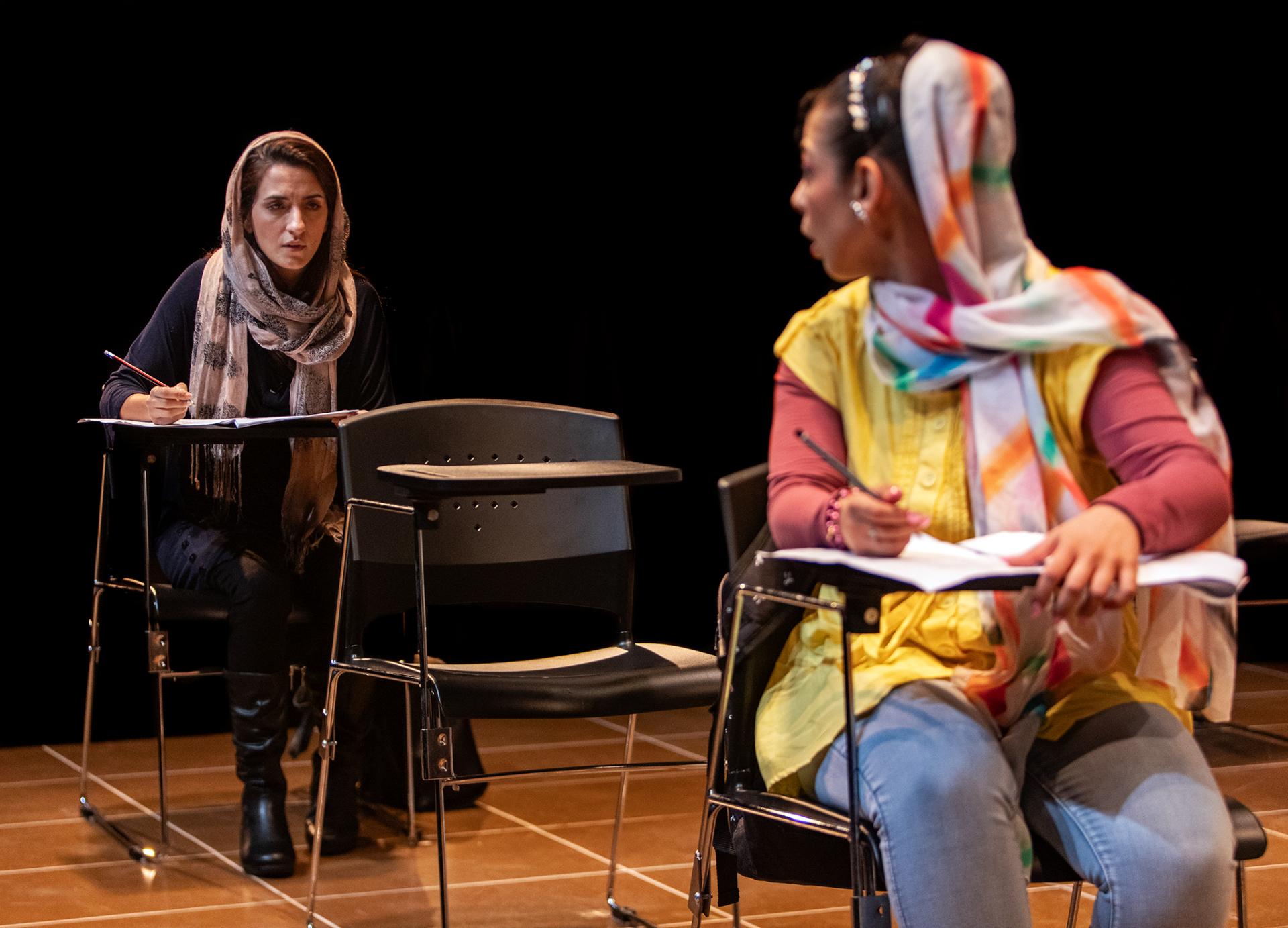
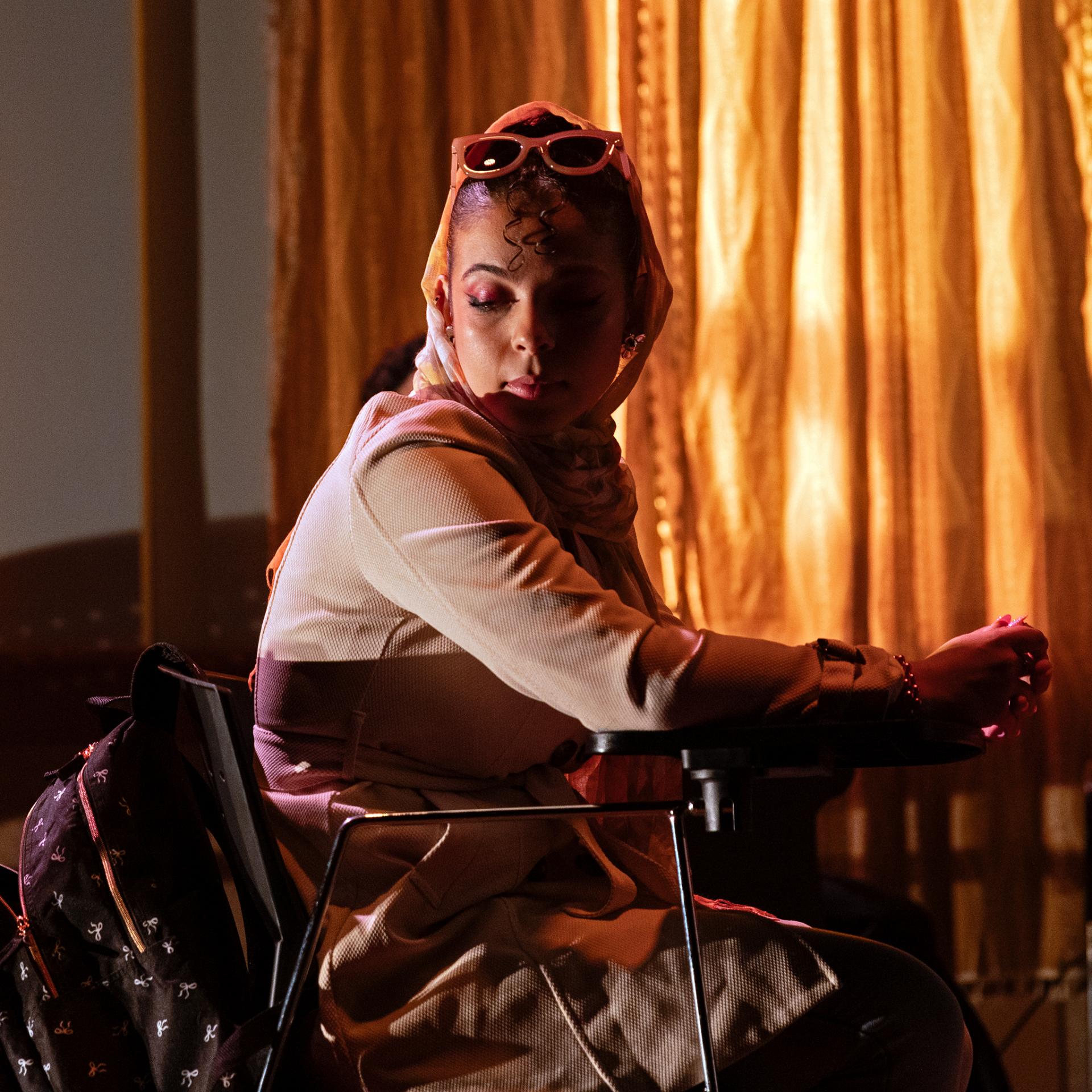
The ensemble executes this vision with extraordinary nuance. As Marjan, the eminently watchable Nicole Chamoun navigates the character’s post-colonial consciousness through restraint rather than histrionics—her trauma articulated in the tightening of a jaw, the careful modulation of vowels that betray her own complicated relationship with the English she peddles. Setareh Naghoni’s Elham embodies the paradox of the proud exile: armoured with abrasive humour yet perpetually vulnerable, her hard-headedness serving as both defence mechanism and prison.

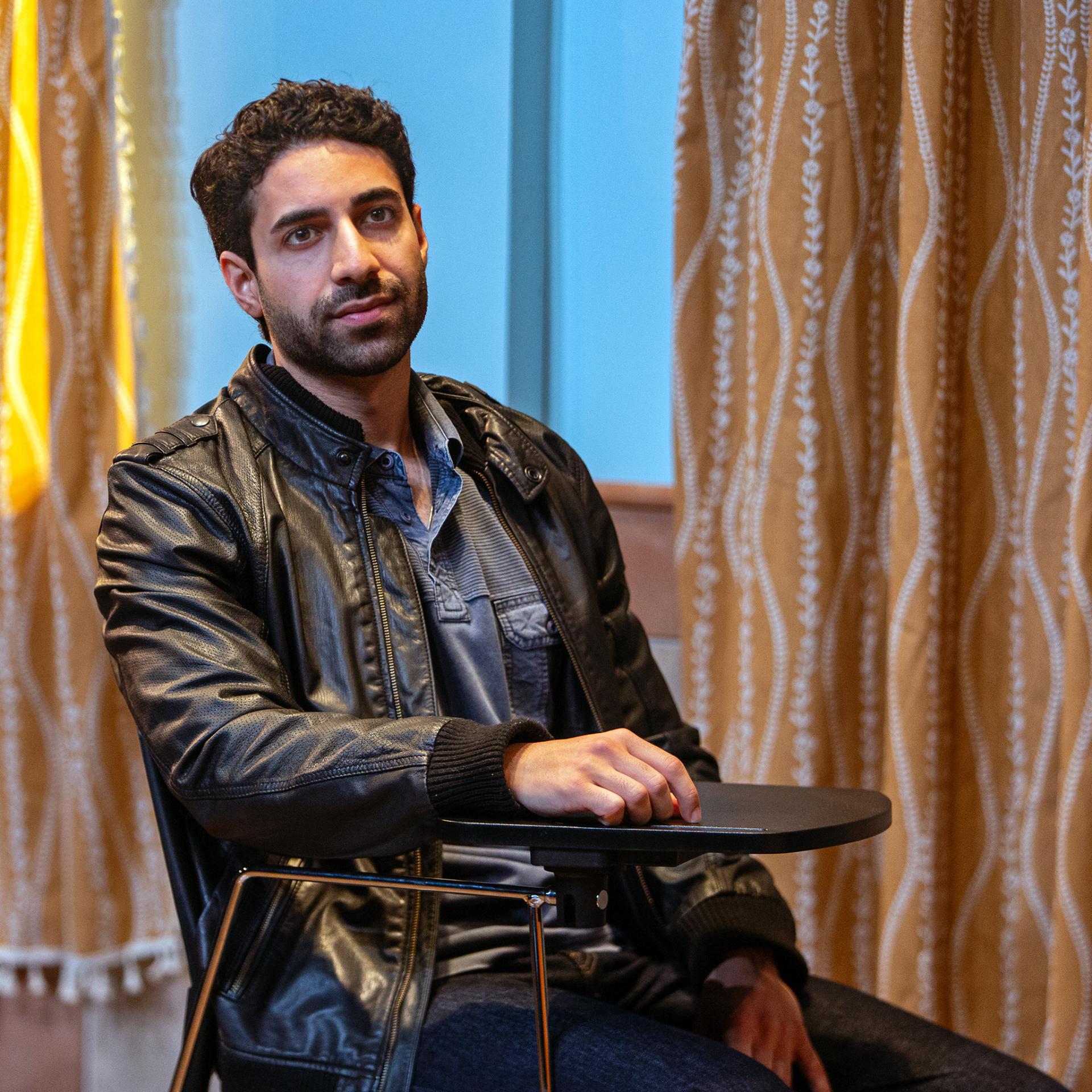
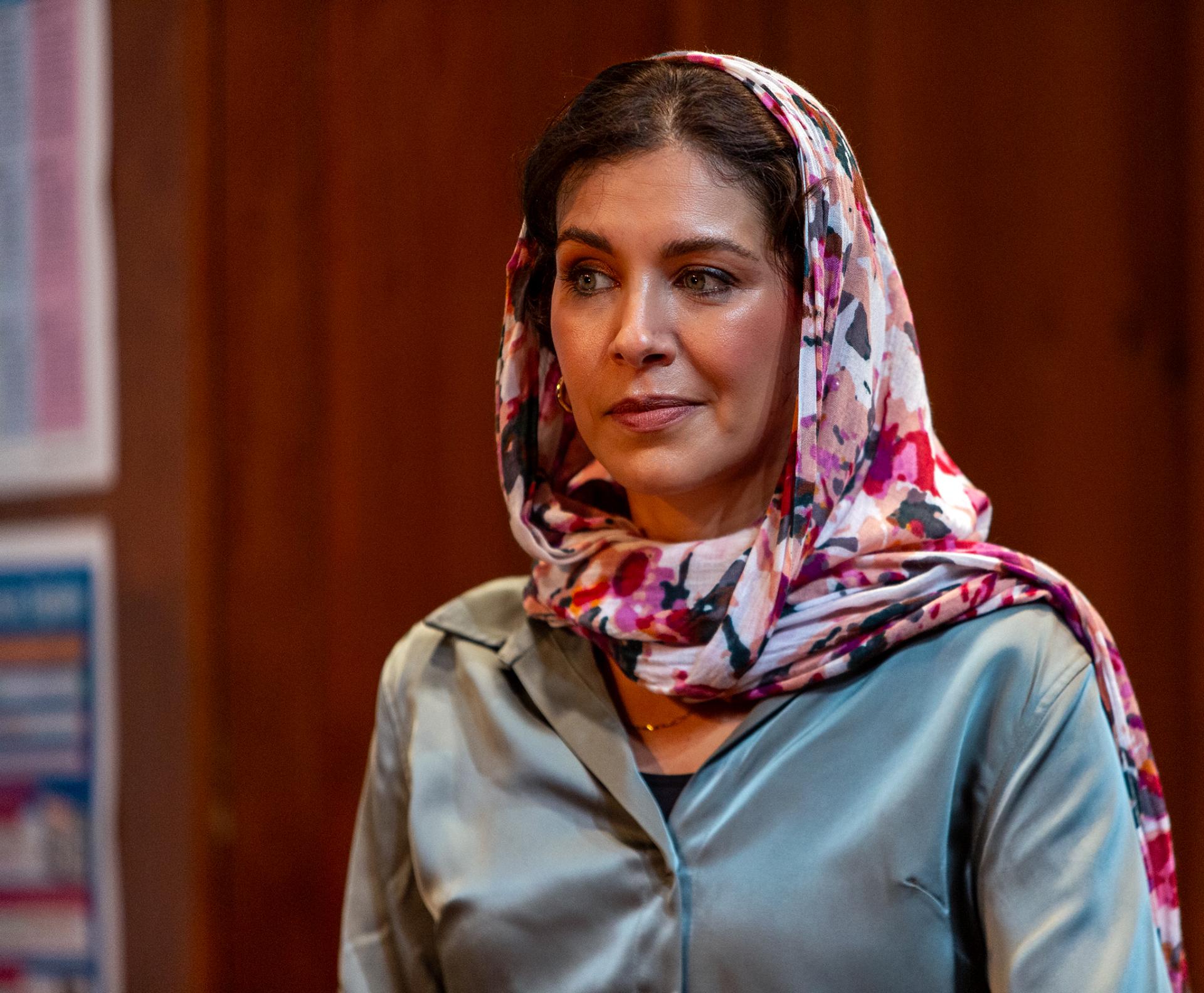
Minerva Khodabande’s effortless charm as Goli provides necessary luminosity, her youthful exuberance offering fleeting respite from the production’s heavier thematic weight, while the elegant Pedram Biazar’s turn as Omid maintains a dichotomy of warmth and opacity that complicates the narrative’s moral architecture, suggesting that escape always exacts its own particular tariffs. Most shattering is Neveen Hanna’s Roya, whose separation from her Canadian grandchildren becomes a meditation on intergenerational rupture. Hanna navigates the character’s desperation with such authenticity that her moments of comic relief—delivered with impeccable timing—land with twice the force, reminding us that grief and laughter often share the same respiratory system.

The technical elements eschew spectacle in favour of psychological acuity. Spencer Herd’s lighting design maintains a quotidian warmth during instructional scenes, then shifts during transitions to more expressionistic palettes that externalize the characters’ interiority. Hamed Sadeghi’s compositions function as aural set changes, traversing genres to evoke Iran’s cultural landscape while underscoring the disorientation in the very act of relocation. Soham Apte’s set and Rita Naidu’s costumes embrace a deliberate anti-theatricality; their unvarnished naturalism strips away distraction, forcing our attention onto the micro-gestures and linguistic stumbles that constitute the drama’s true intentions.

For many migrants, the journey begins long before their own lifetime. Where we find ourselves today is shaped not only by our individual choices and circumstances but also by the movement of ancestors who, generations earlier, sought better tomorrows for their children and their children’s children. Yet in the very act of building better lives, we often lose the language—or the permission—to speak of the hardships and ruptures that come with being pushed away from one’s homeland. English, however, refuses that silence, turning a searching gaze toward both the pain and the hope that bind so many of us together.

www.seymourcentre.com | www.outhousetheatre.org

Review: Eden (Qtopia)

Venue: Qtopia (Darlinghurst NSW), Apr 7 – 18, 2026
Playwright: Kate Gaul
Director: Kate Gaul
Cast: Karrine Kanaan, Lara Lightfoot
Images by Natalia Ladyko

Theatre review
In a parched country town where the heat seems to calcify tradition, Dan and Kit stand at the precipice of adulthood, shedding the protective guilelessness of childhood to confront a more sinister revelation: womanhood here is not merely circumscribed but surveilled, and the silence of those around them—neighbours, family, the very landscape—feels less like innocence than complicity. When a woman’s body surfaces by the river under circumstances the town seems determined to ignore, the water’s edge becomes a threshold. The girls recognize, with the slow horror of dawning consciousness, that their home is not merely backward but actively dangerous, its beauty a camouflage for violence.

Kate Gaul’s Eden wears its politics lightly, or rather, embeds them in the marrow of its aesthetic. Working within the registers of Australian Gothic—where the land itself is a protagonist, ancient and indifferent, bearing both sacred lore and the scar tissue of colonization—Gaul conjures a world where the metaphysical bleeds into the mundane. Lyrical and at times overly opaque, Eden possesses a surface simplicity that renders it unexpectedly inviting. Though it sacrifices overt agitational urgency, Eden proves potent as an impressionistic piece, compensating with raw theatrical vitality.

Karrine Kanaan and Lara Lightfoot bring their characters to life with amusing exuberance, emerging as warmly compelling presences whose effortlessly captivating chemistry deepens our investment in the narrative. Nate Edmondson’s music stands as an unequivocal highlight, amplifying the play’s metaphysical unease while maintaining a relentless grip on the narrative’s forward motion, ensuring that even as we contemplate the cyclical nature of time and trauma, we remain breathlessly attentive to the fate of these young women.

Some places are defined by arrival, others by the doggedness of those who stay. Country towns ossify around their permanent residents, demanding that newcomers dissolve into the prevailing chemistry; cities, by contrast, offer themselves as mutable terrains, melting pots where identity might be recast rather than inherited. Time has proven itself circular, history always seeming an infinite loop rather than an arrow, yet it is hard not to think of progress as linear. Dan and Kit will inevitably arrive at their destined authentic selves, yet that metamorphosis appears contingent upon an exodus from this unforgiving terrain.

www.qtopiasydney.com.au | www.sirentheatreco.com

Review: The River (Sydney Theatre Company)

Venue: Sydney Opera House (Sydney NSW), Apr 8 – May 16, 2026
Playwright: Jez Butterworth
Director: Margaret Thanos
Cast: Andrea Demetriades, Ewen Leslie, Miranda Otto
Images by Daniel Boud

Theatre review
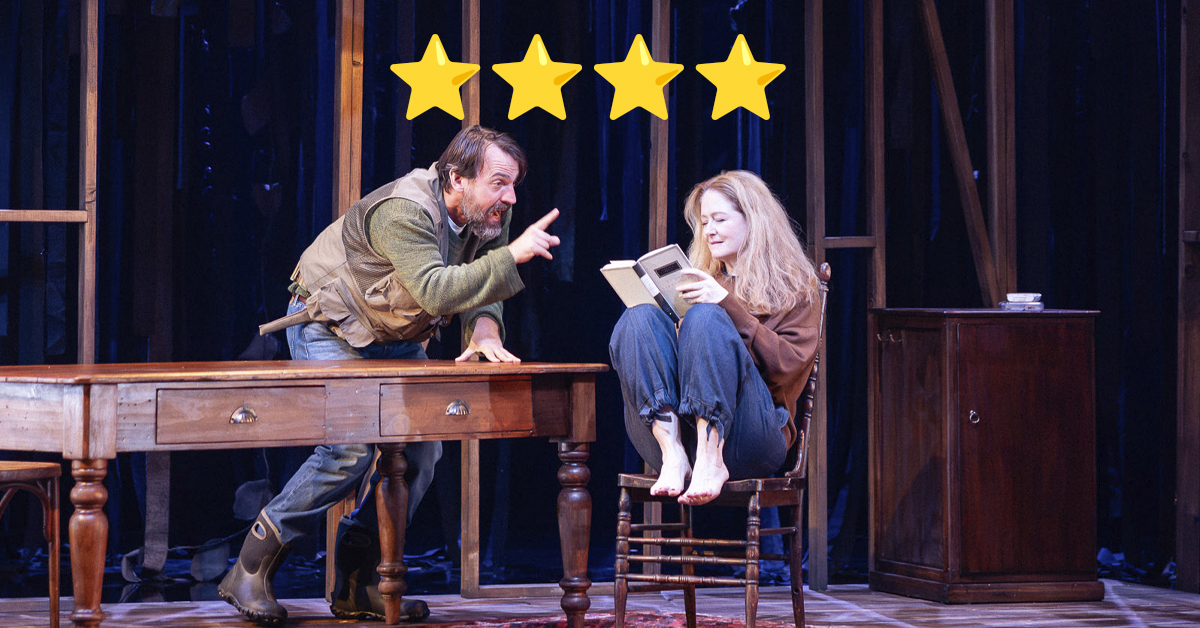
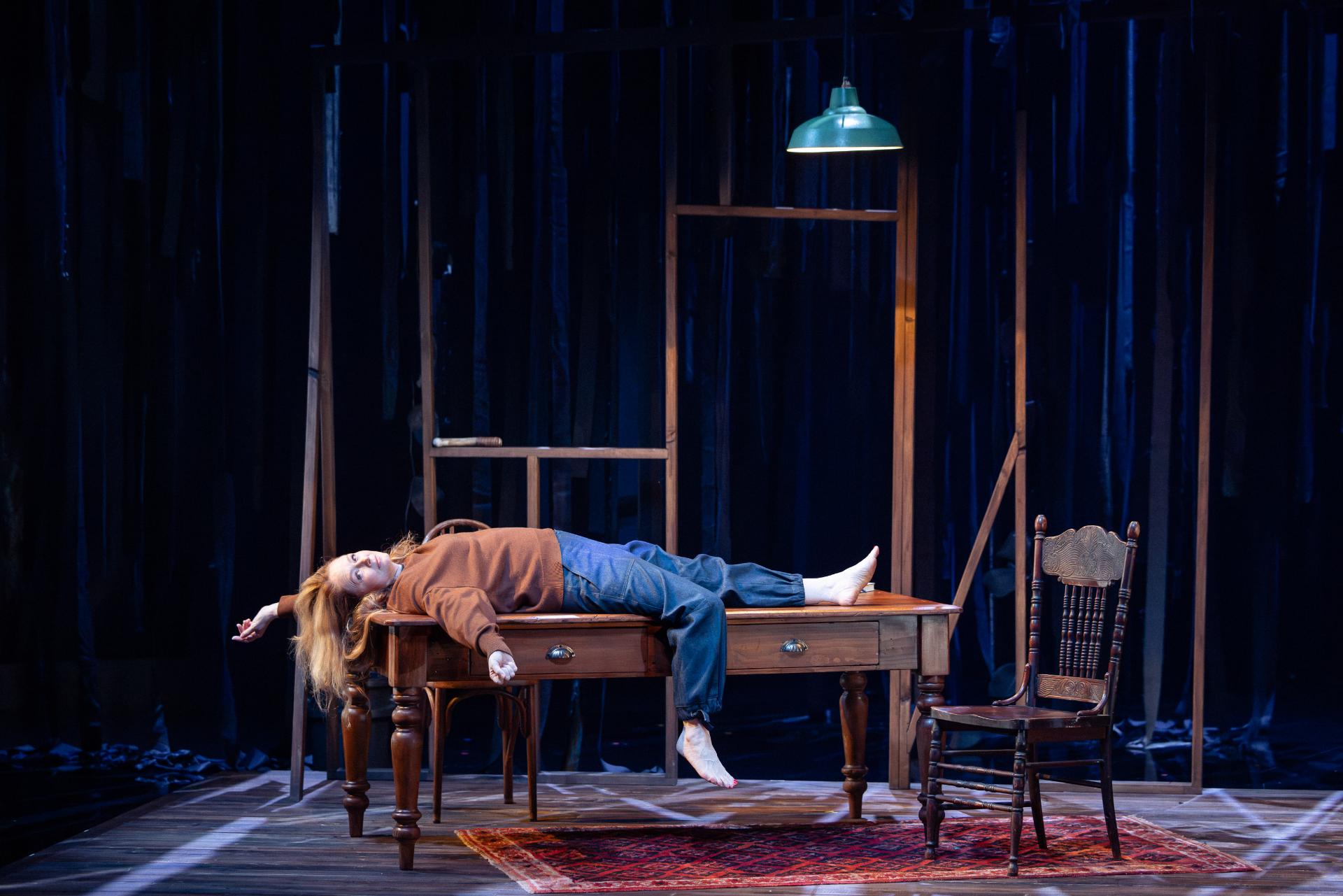
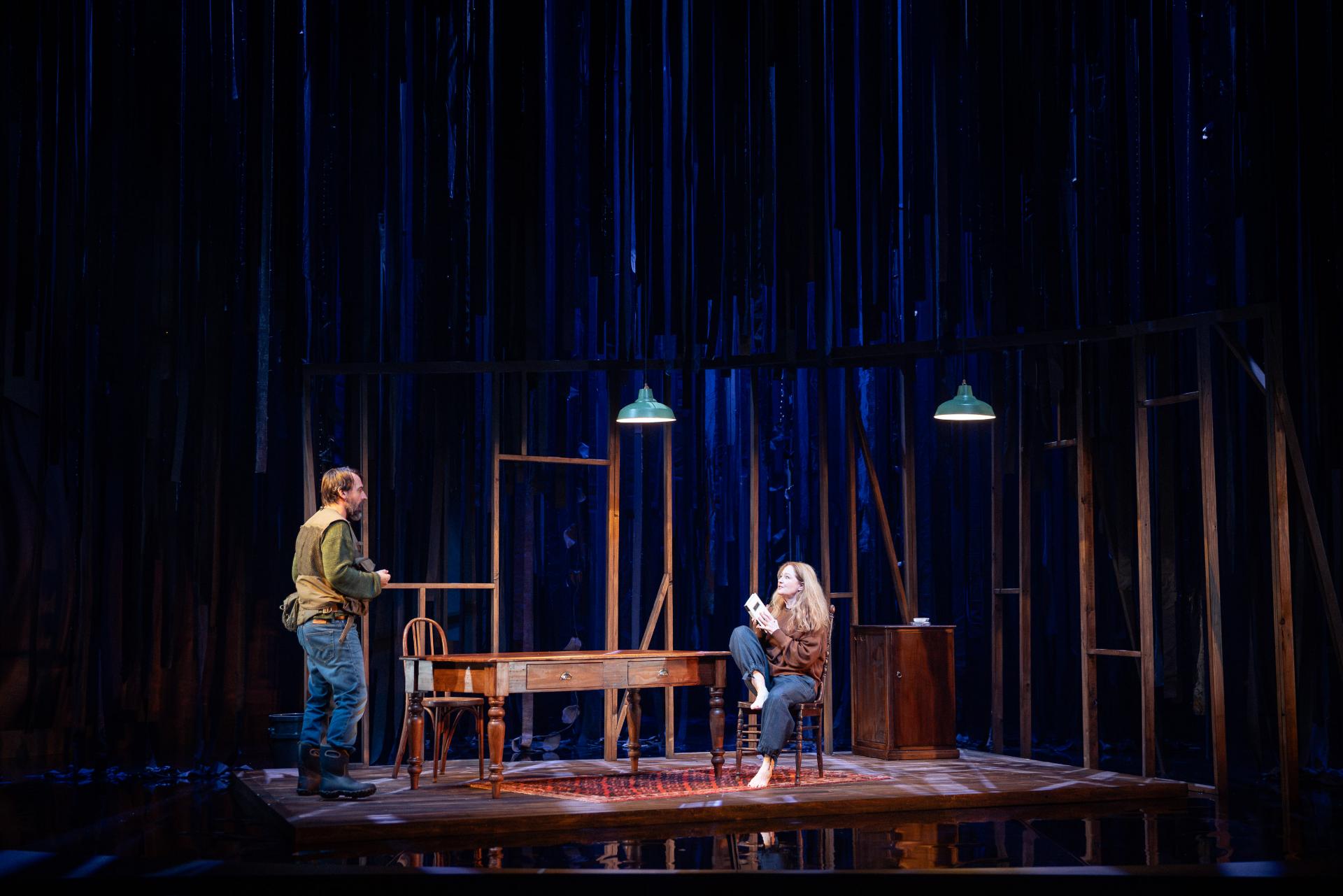
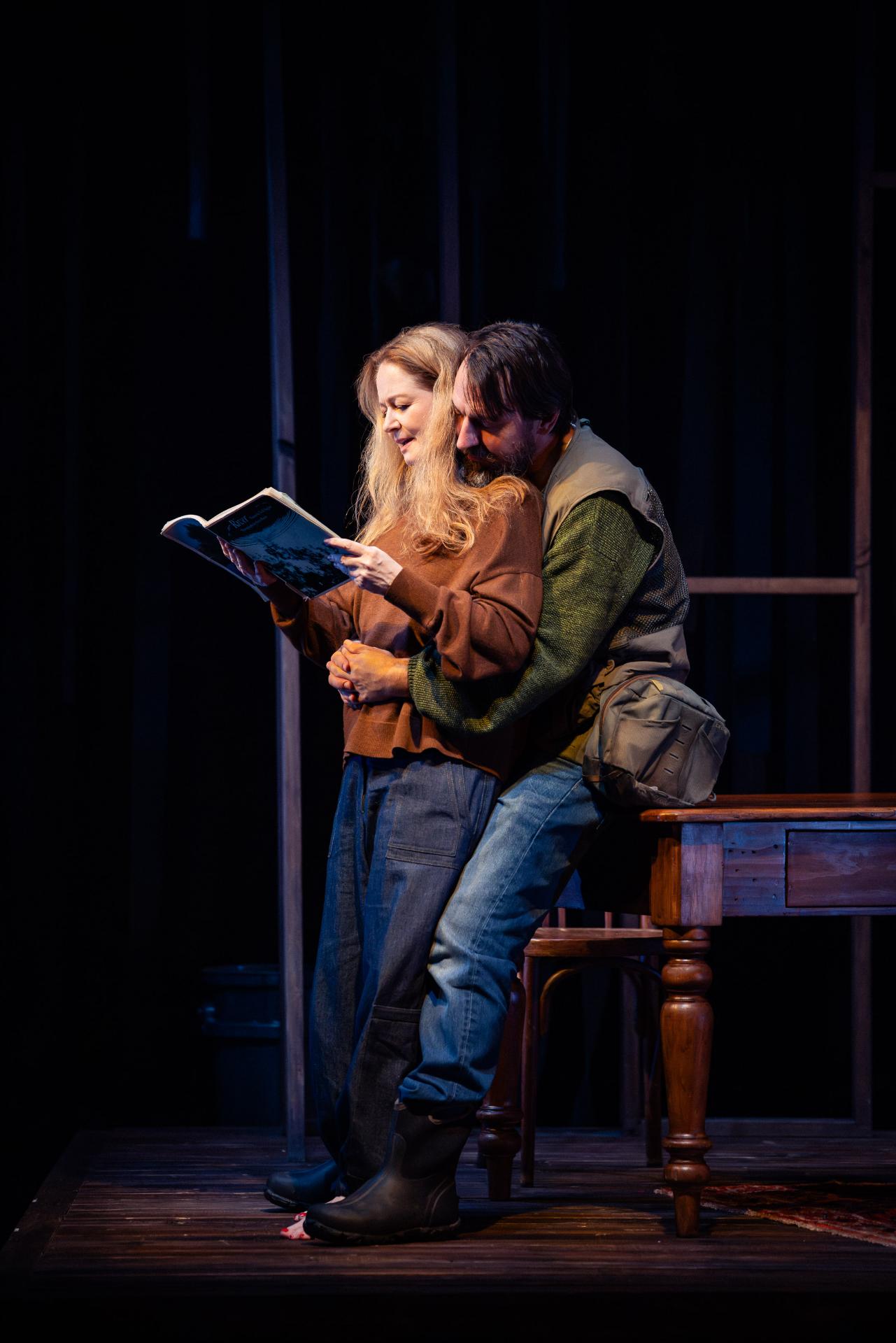
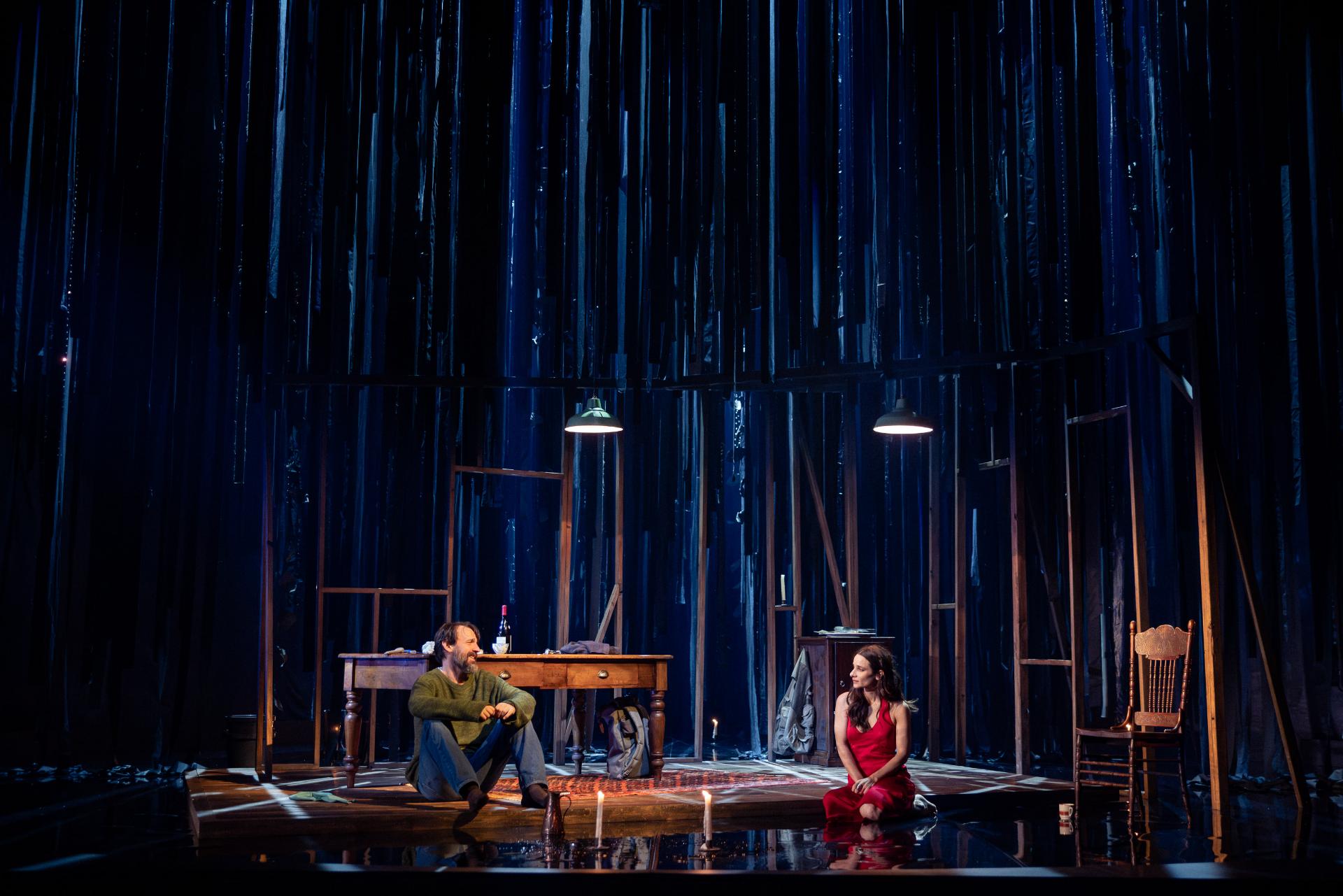
Nestled within the secluded confines of an English fishing cabin, a man confronts the ghost of unspeakable trauma—its spectral presence materialized in the image of a woman adorned in scarlet. Jez Butterworth’s The River emerges as a theatrical enigma of remarkable density, its narrative currents flowing through multiple interpretive channels while remaining anchored, perhaps most profoundly, in the murky depths of grief and regret. Though deliberately provocative in its withholding of certainties, the text is exquisitely wrought, offering precisely sufficient ambiguity to ignite the spectator’s imaginative faculties without descending into pedestrian opacity.

Margaret Thanos’ direction rises to meet this sophistication with an aesthetic of curated chicness—self-consciously stylish yet perhaps overly circumspect in its understated approach, occasionally sacrificing visceral immediacy for cerebral detachment. Anna Tregloan’s production design evokes flowing water through cascading ribbons and a minimalist hut-like structure—spare yet evocative, providing all necessary visual cues without distraction.

Damien Cooper’s lighting palette conjures the requisite haunting, vaguely sinister atmospherics essential to the piece’s creeping psychological dread, though one wishes for occasional modulation toward more flattering illumination to deepen our sympathetic attachment to the personalities portrayed. Sam Cheng’s sound design achieves moments of genuinely transcendent beauty—ethereal and devastating in its restraint—yet could benefit from greater dynamic range, allowing orchestral crescendos to match the text’s moments of heightened dramatic intensity rather than maintaining consistent atmospheric delicacy.

Ewen Leslie delivers a formidable performance as the lead, laudably infusing light and shade into a narrative that seems determined to remain stubbornly macabre. Without the crutch of expository dialogue, Leslie’s remarkable nuance conveys immense complexity, inviting us into a story that feels inexhaustibly layered. Andrea Demetriadis delivers exceptional intensity in several exquisitely crafted dramatic set pieces—operatic in their theatricality yet always anchored in coherent dramaturgical logic. Miranda Otto adopts a more reticent approach by comparison, effectively conveying inexorable realism though one desires greater creative adventurousness to fully spark our imaginative inspiration.

Throughout the drama’s unfolding, spectators find ourselves suspended in productive suspicion, perpetually interrogating our own comprehension even as our instincts register the underlying truth with uncomfortable accuracy. We discover ourselves actively denying our intuitive grasp of events—much as the protagonist must navigate his existence without full honesty regarding his past, and consequently, his present. Survival may indeed necessitate temporary aversion from unbearable truths, yet such evasion can only serve as provisional strategy; the ancient dictum remains immutable, and it is ultimately truth above all else, that will set you free.

www.sydneytheatre.com.au

Review: Till The Stars Come Down (KXT on Broadway)

Venue: KXT on Broadway (Ultimo NSW), Mar 27 – Apr 11, 2026
Playwright: Beth Steel
Director: Anthony Skuse
Cast: Jane Angharad, Peter Eyers, Amy Goedecke, Zoran Jevtic, Ainslie McGlynn, Kira McLennan, Brendan Miles, Jo Briant, Imogen Sage, James Smithers
Images by Braiden Toko

Theatre review
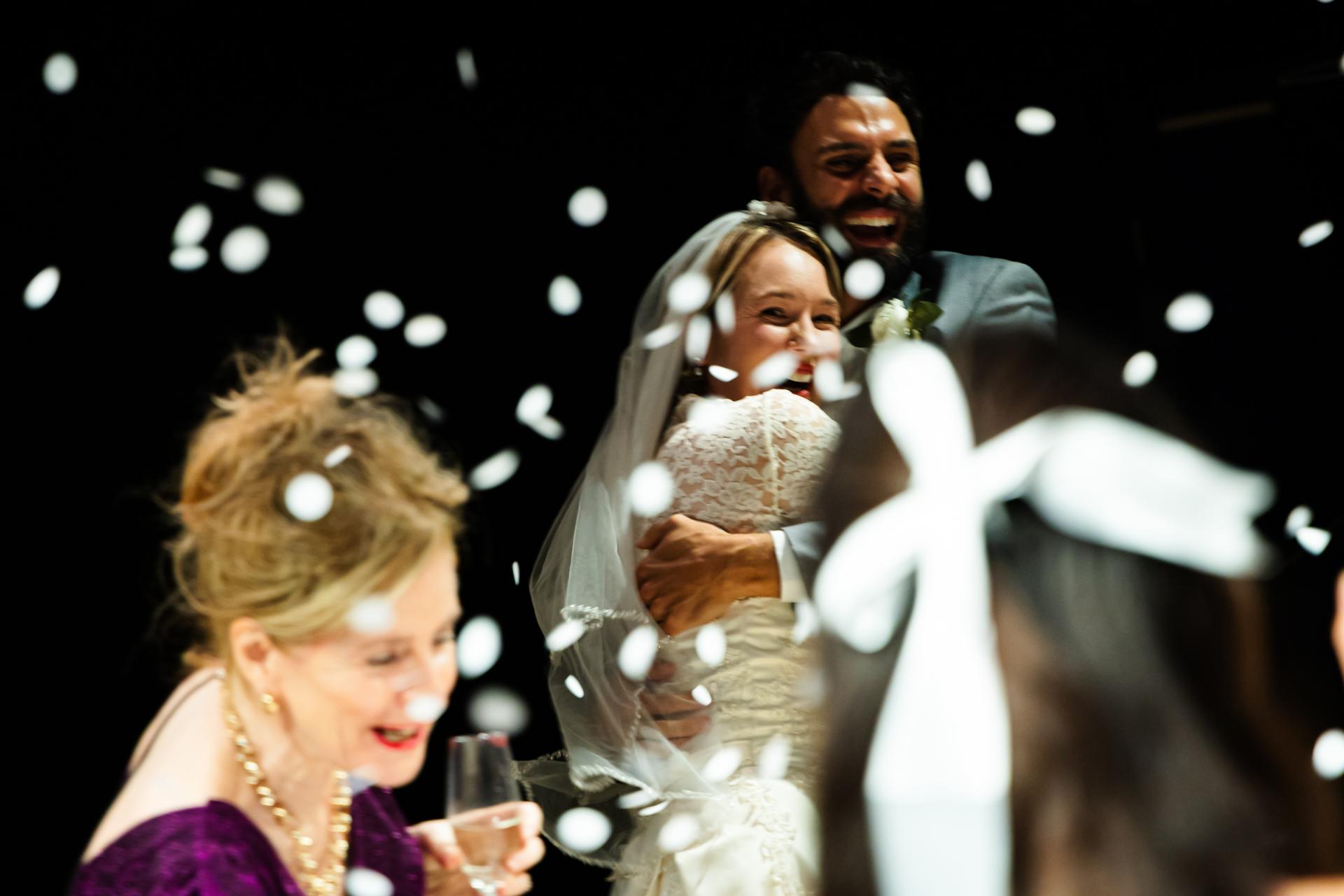
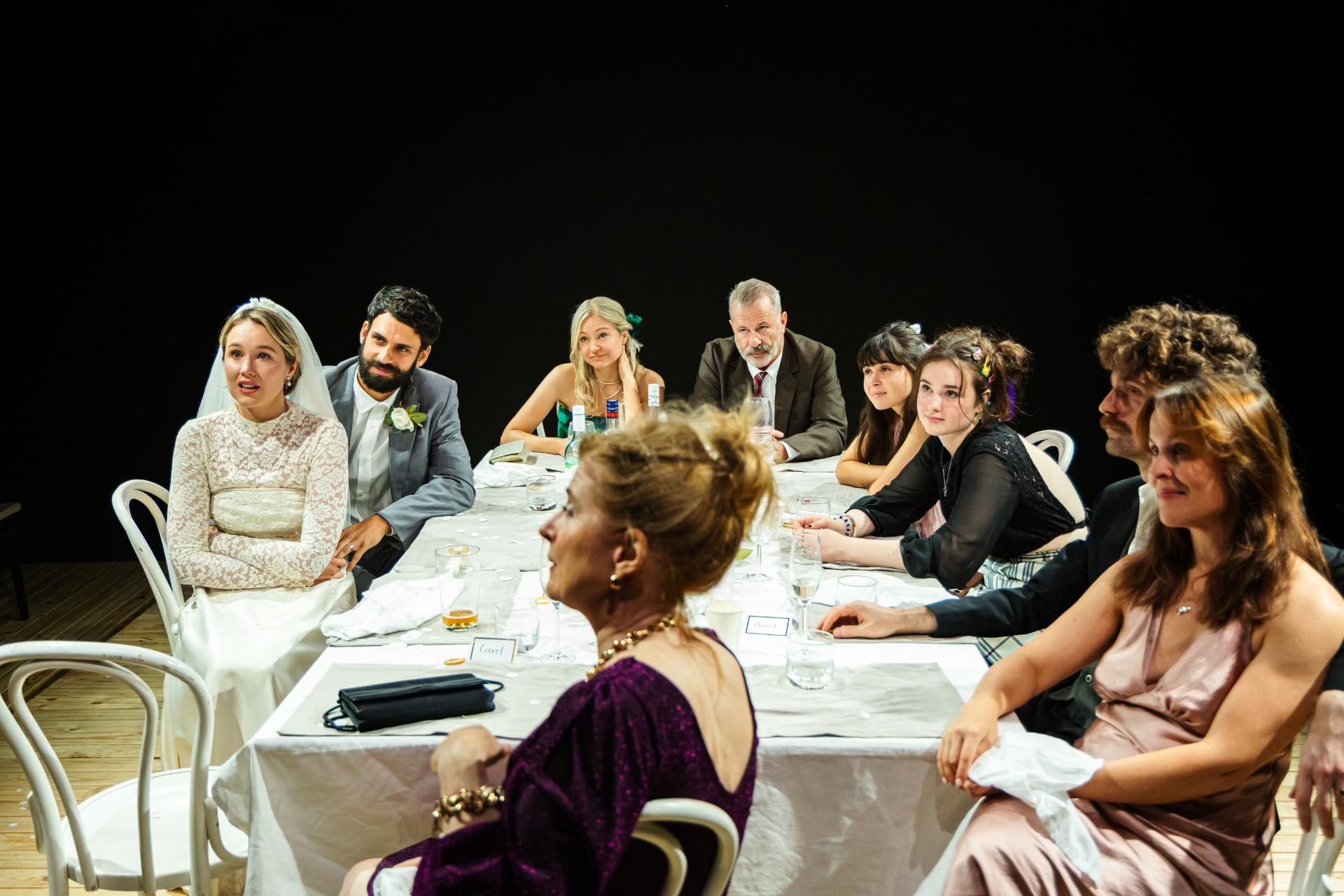
At Silvia’s wedding, the assembled family observes the ritual of good behaviour—upright postures, pleasantries exchanged with the precision of choreographed dance—only to find that the champagne, once flowing, dissolves the adhesive holding their performances together. Upheaval arrives not as surprise but as inevitability, and Beth Steel’s Till the Stars Come Down positions itself to excavate the sediment of grief, class anxiety, and generational fracture that such gatherings inevitably stir. Yet for all its archaeological ambition, the play remains frustratingly proximal to the surface, favouring the escalating rhythms of melodrama over the slower, more treacherous work of thematic investigation. Steel introduces fault lines that promise to rupture into revelation—economic precarity, maternal sacrifice, the performance of happiness itself—only to resolve them with a neatness that belies their complexity. The narrative plants its ambitions widely but harvests narrowly, leaving us not with the disturbing clarity of family truths exposed, but with the familiar aftertaste of soap opera: emotion without consequence, conflict without cost.

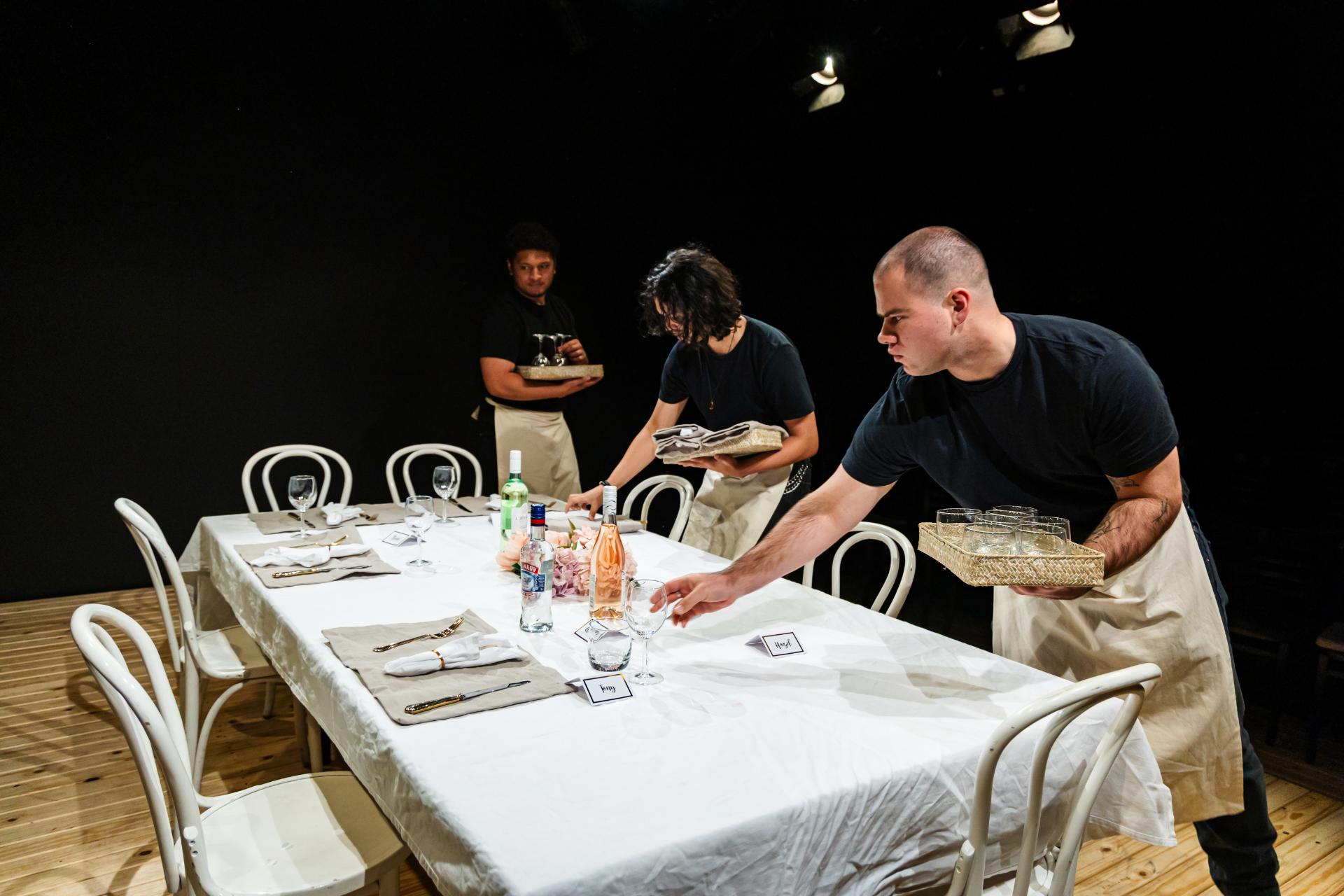
Director Anthony Skuse deserves credit for lending genuine gravity to the melodrama, grounding the characters’ anguish in palpable feeling even when their circumstances lean toward the mundane. The melancholy is further underscored by Layla Phillips’s music, whose interludes coax us into dwelling on the sorrow lurking beneath the festivities. James Smithers’s set, with its carefully appointed timber floor, evokes the familiar atmosphere of outdoor gatherings, though Charlotte Savva’s costumes, while fitting for the archetypes on display, could afford a more heightened theatrical sensibility. Topaz Marlay-Cole’s lighting captures subtle shifts in mood, yet it, too, might benefit from a more finely detailed approach.

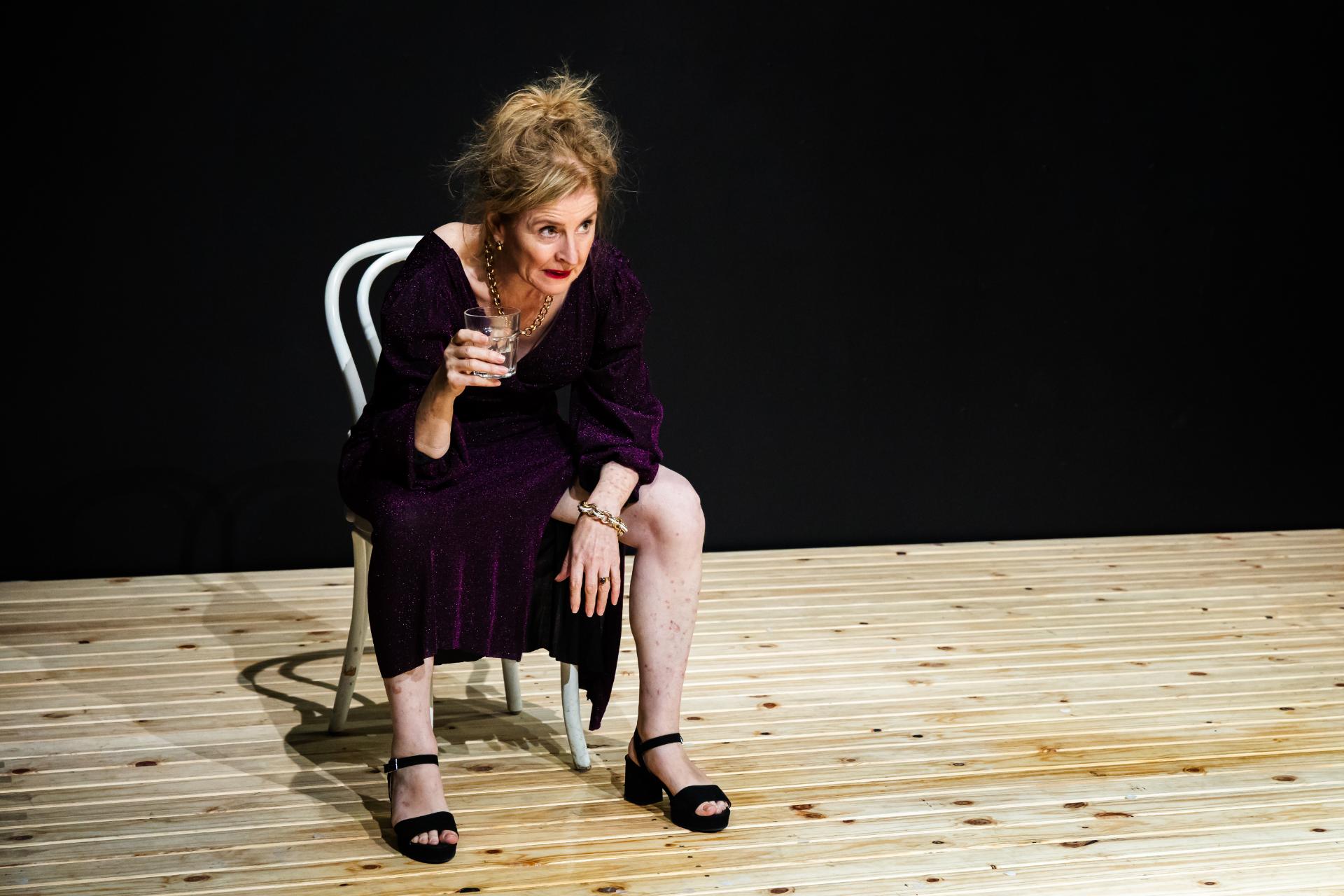
The ensemble of ten—augmented by three additional performers as silent waitstaff—delivers performances ranging from adequate to genuinely compelling. Jo Briant as the family friend Carol and Zoran Jevtic as the groom Marek leave the strongest impressions, infusing their roles with an exuberance that feels refreshingly natural. As Hazel, one of the bride’s sisters, Ainslie McGlynn drives the play toward its feverish conclusion with remarkable theatricality, managing to conjure extraordinary moments from a role that the text itself often leaves thinly drawn.

Weddings are, of course, theatre in its most naked form: elaborate productions mounted to legitimise private feeling through public display. Yet as Steel’s play ultimately suggests—and as this production cannot quite overcome—the grandeur of the gesture often outpaces the depth of understanding beneath it. We enact conventions we have inherited but not examined, mistaking volume for truth, spectacle for significance. Till the Stars Come Down offers abundant commotion that resembles drama—shouts, tears, revelations hurled across the timber floor—but commotion alone cannot substitute for insight. The production leaves us with the hollow grandeur of the unrehearsed speech: moving in its immediacy, perhaps, but finally unable to articulate what it truly means to love, to lose, or to gather in the shadow of both.

www.kingsxtheatre.com | www.secrethouse.com.au
Review: The Prom (Teatro)
Venue: Teatro (Leichhardt NSW), Mar 24 – Apr 26, 2026
Book: Rob Martin, Chad Beguelin
Music: Matthew Sklar
Lyrics: Chad Beguelin
Directors: Andrew Bevis, Nathan M. Wright
Cast: Erin Bruce, Renae Corser née Berry, Murray Cunninghame, Paige Fallu, Brad Green, Ewan Herdman, Nina Hurley, Scott Irwin, Abbey McPherson, Sophie Montague, Brendan Mungar, Caroline O’Connor, Luke Reynolds
Images by Robert Miniter

Theatre review
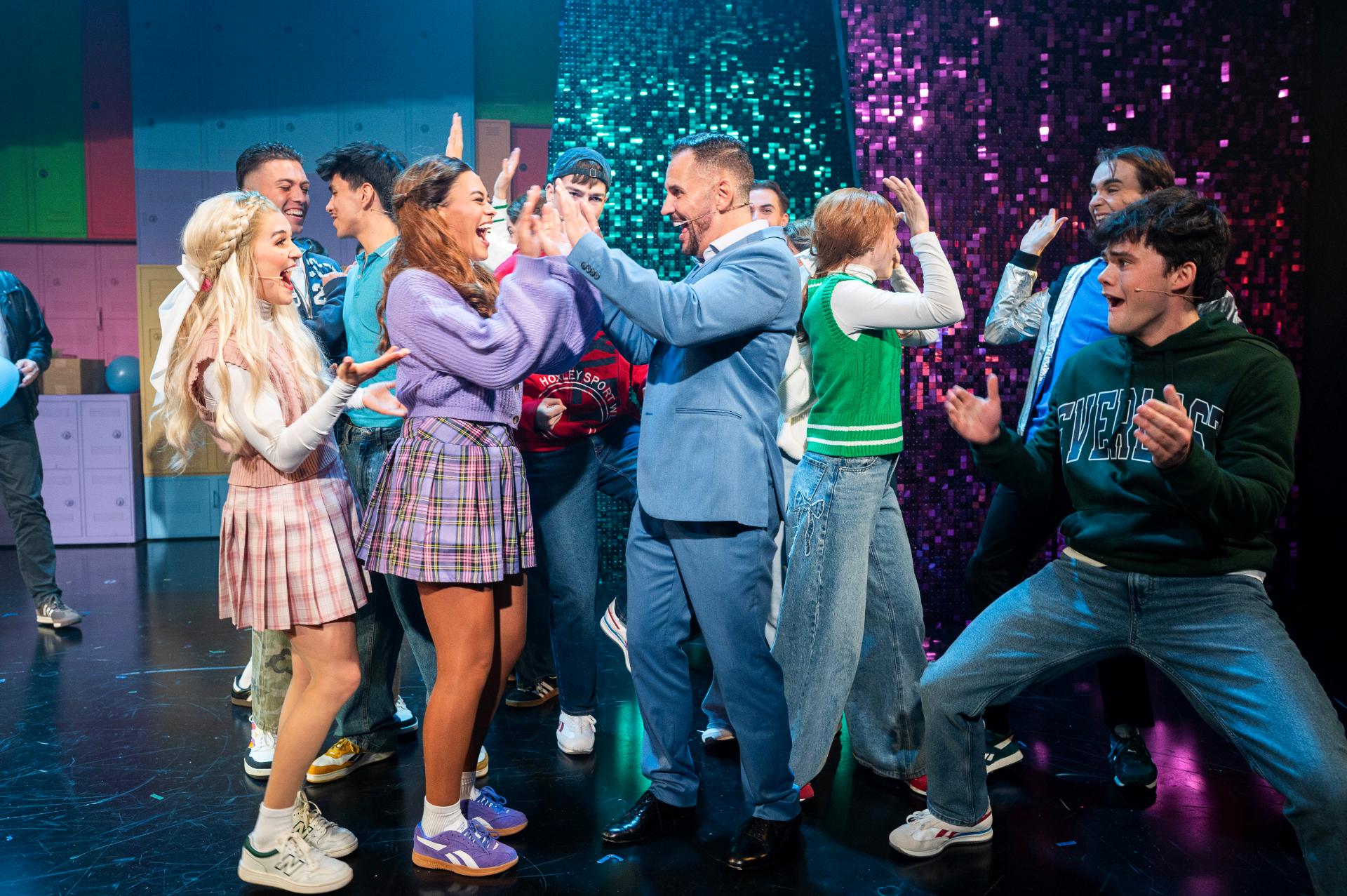
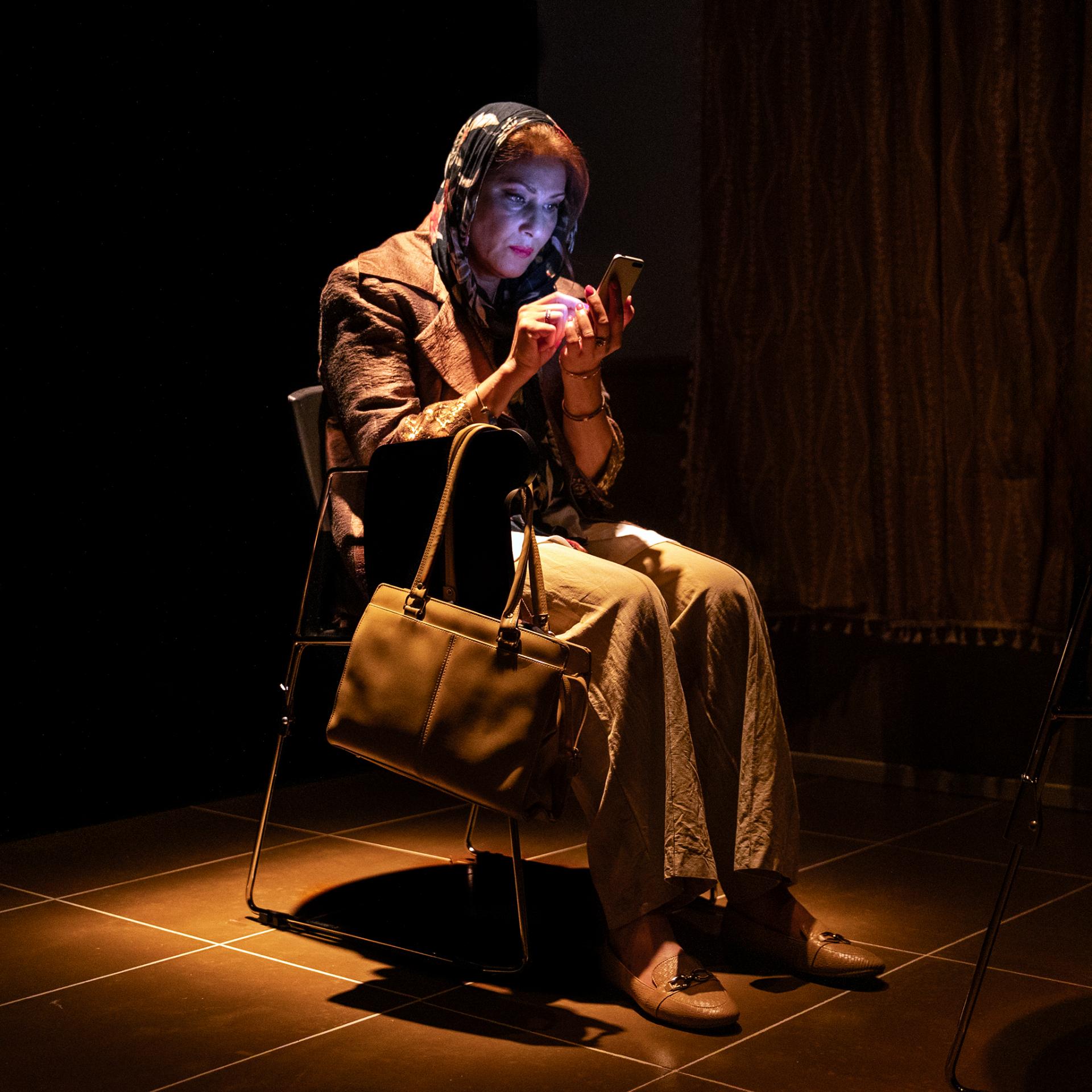
When a clutch of fading Broadway luminaries descends upon rural Indiana to champion a lesbian teenager barred from escorting her girlfriend to the high school prom, the 2016 musical The Prom possesses a compelling premise, yet its execution frequently falters; the book and songs, for what is ostensibly a deeply emotional story, seldom earn the investment they demand, and the humour often falls flat.
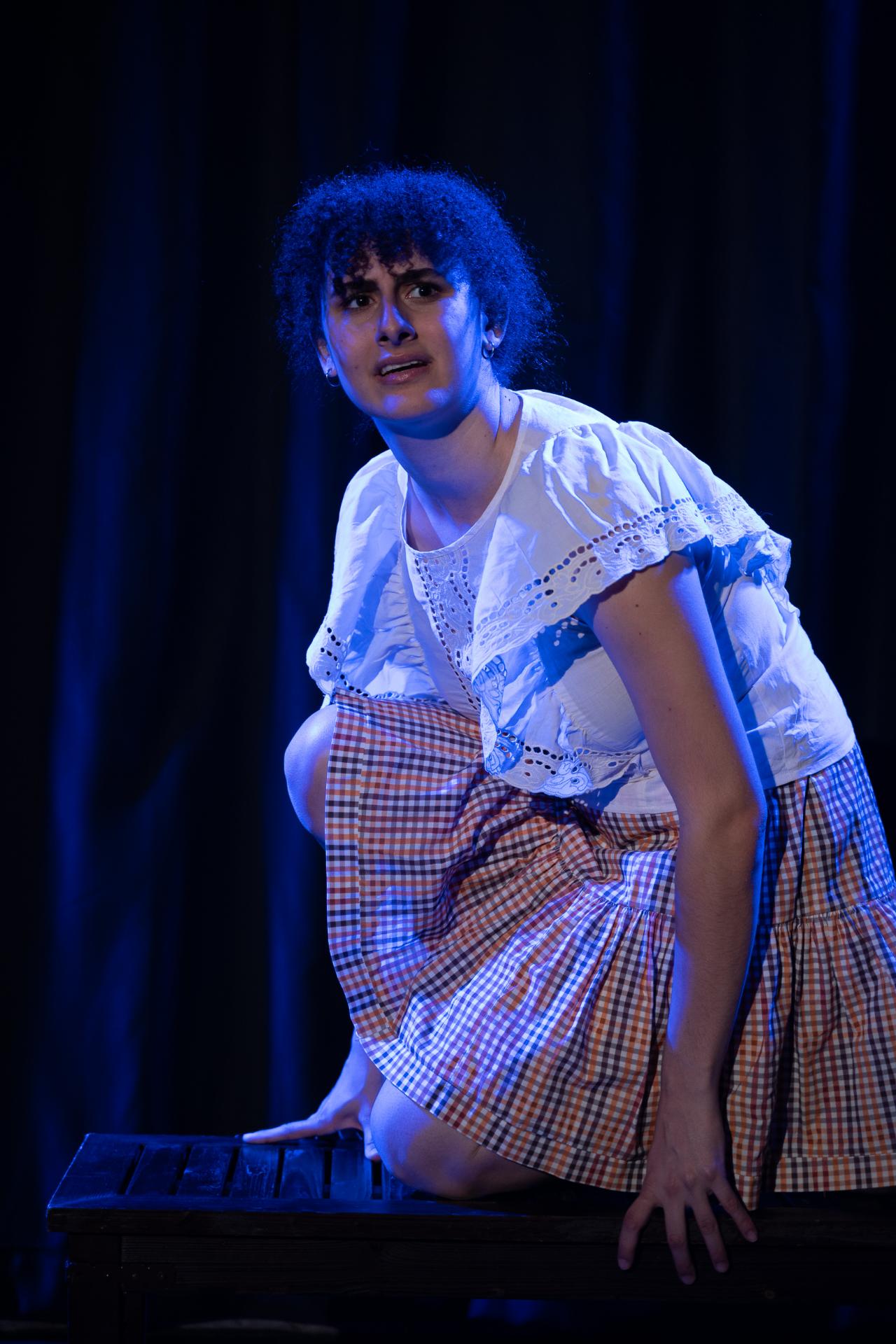
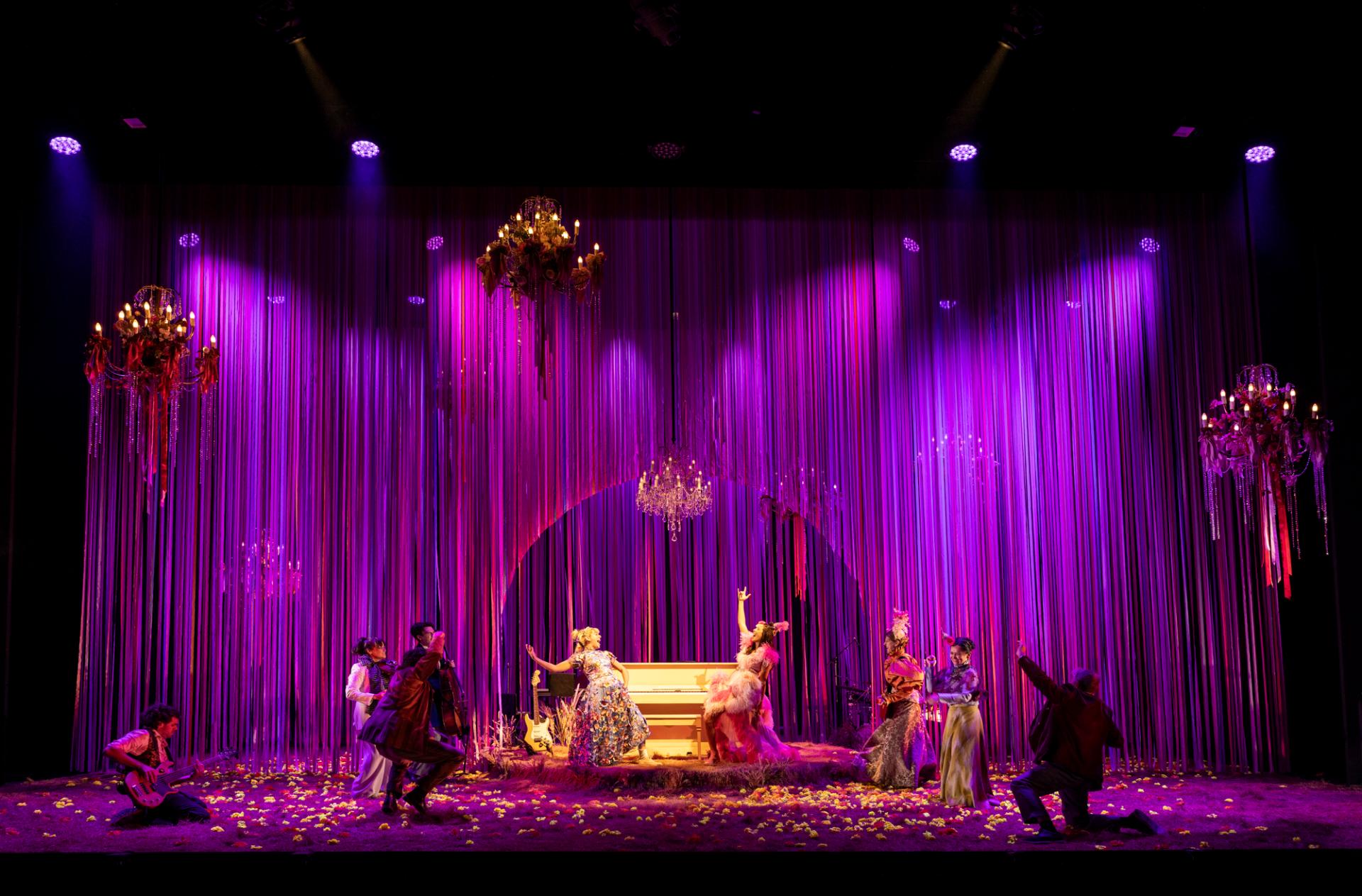
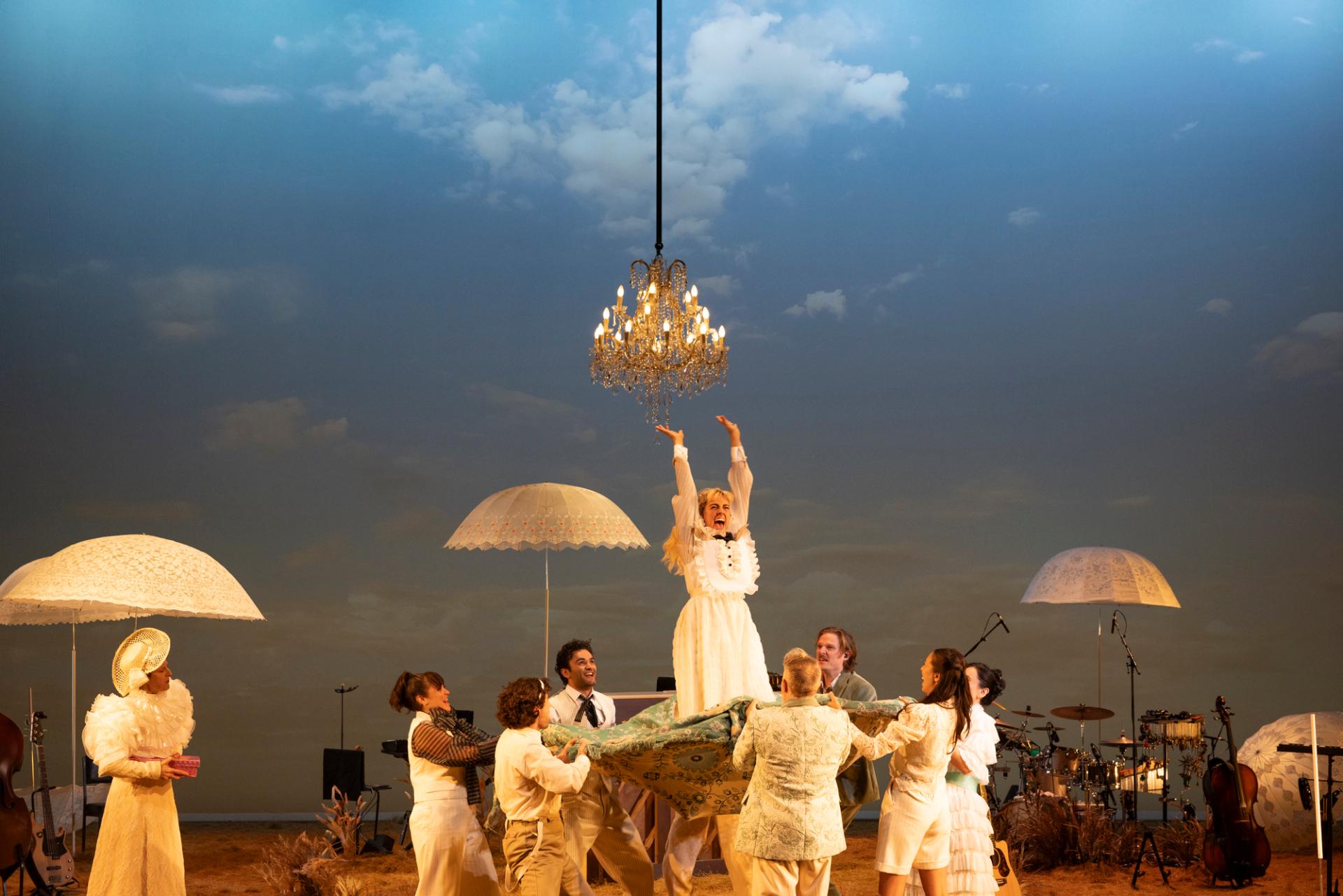
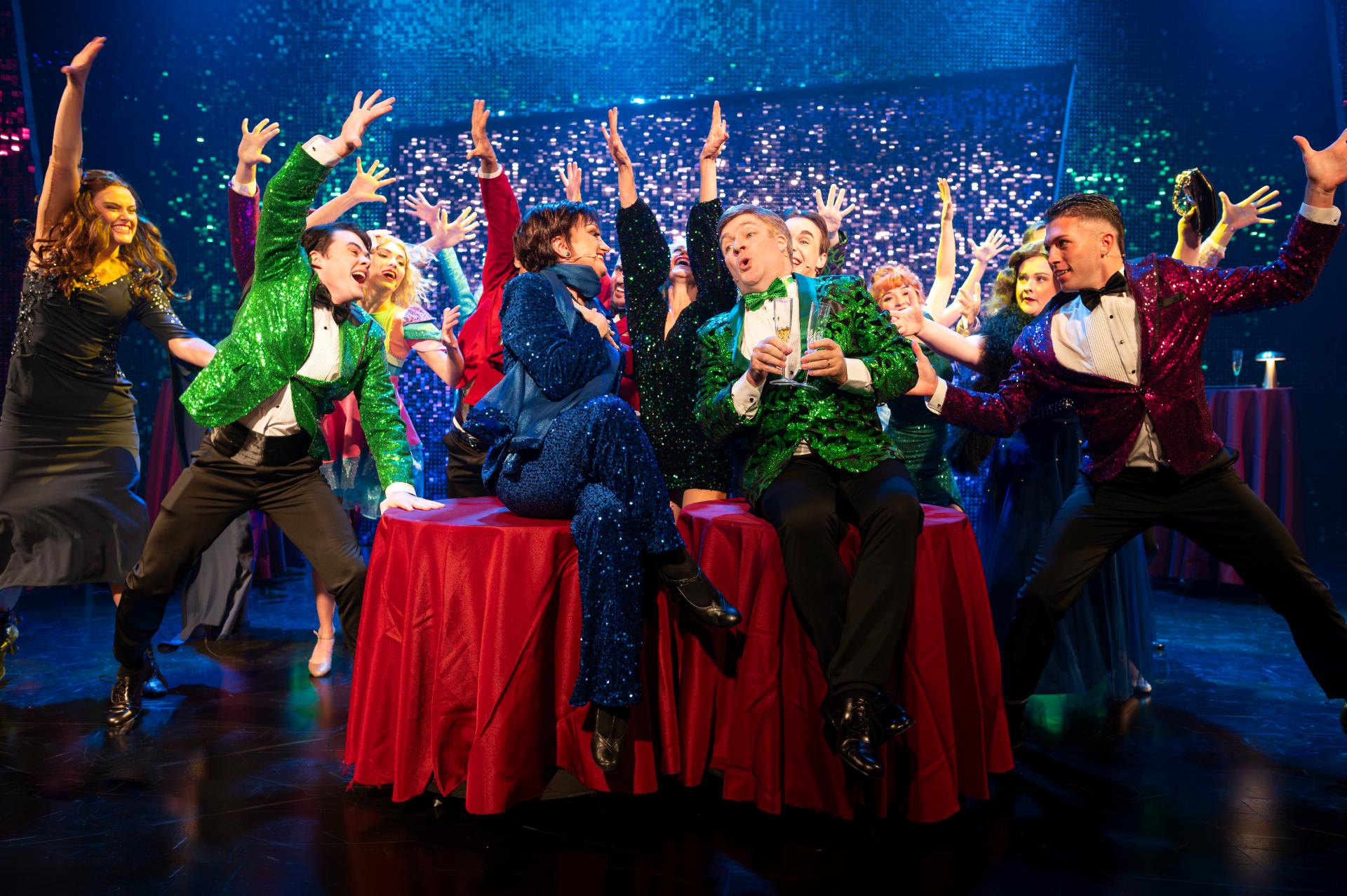
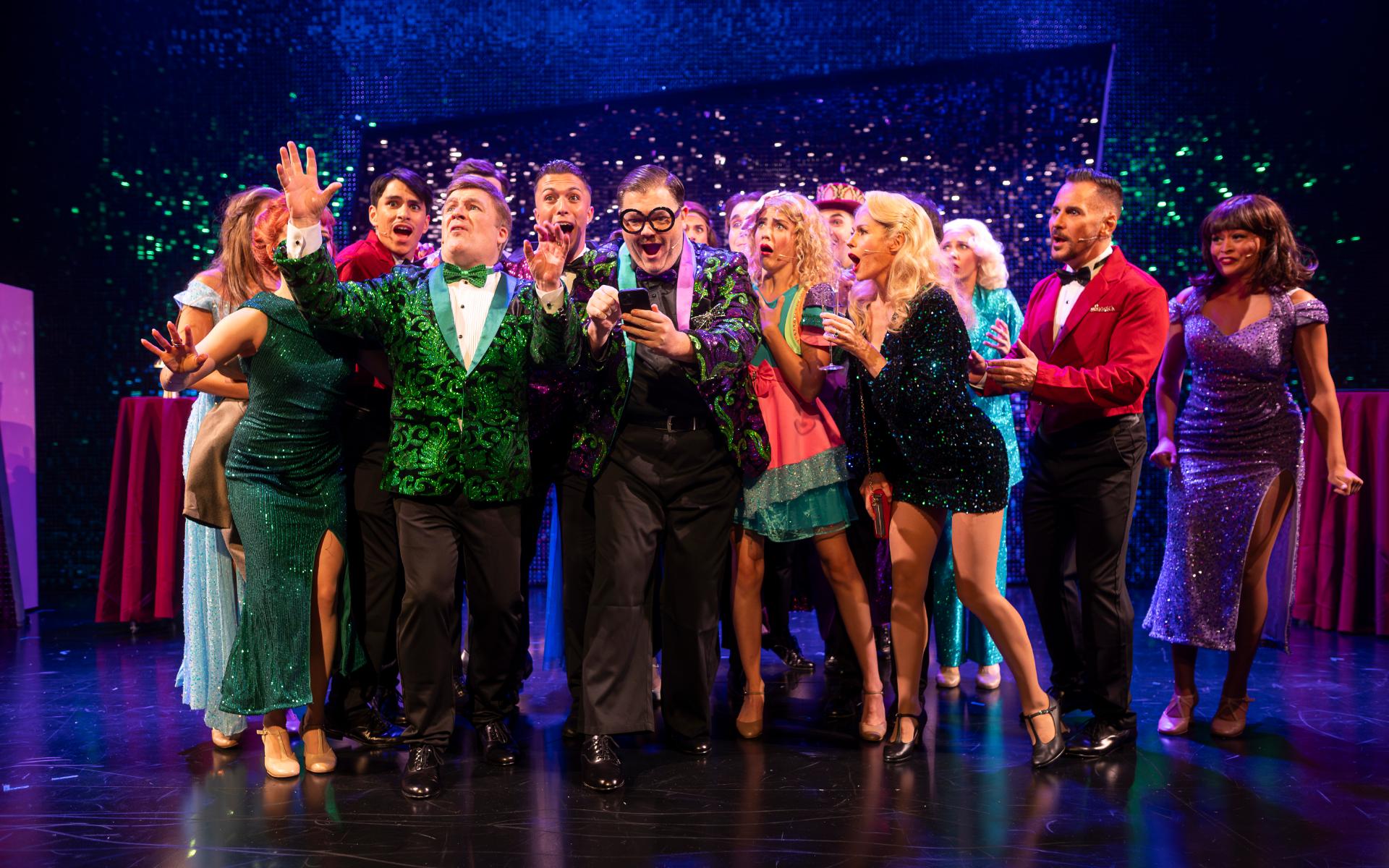
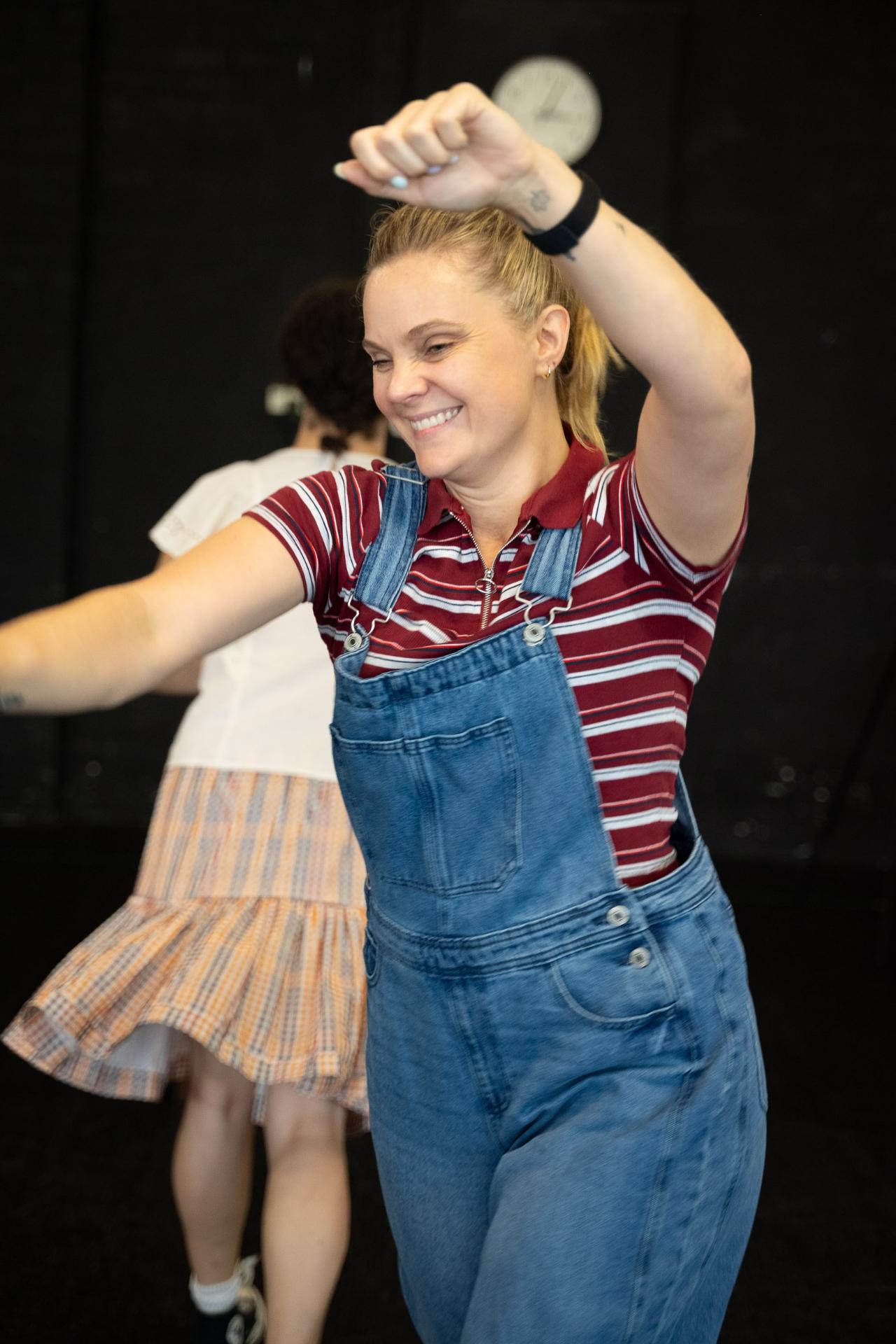
Directors Andrew Bevis and Nathan M. Wright nonetheless infuse the proceedings with ample dynamism and a spirited flair; Wright’s choreography, in particular, distinguishes itself through infectious exuberance executed with commendable vigour by a spirited young ensemble. Nick Fry’s set design is unapologetically flamboyant, draping the entire backdrop in shimmering, multi-hued sequins that delight the eye. Cornelia Cassimatis’s costuming matches this chromatic audacity, though occasionally sacrificing sartorial sophistication for spectacle. Roderick Van Gelder’s lighting, whilst compositionally conventional, nonetheless succeeds in amplifying the production’s kinetic vitality.

The cast labours with palpable dedication, their commitment evident even as the material proves resistant to transcendence. Among them, Brendan Monger’s Barry emerges as a singular delight, his impeccable comic timing compensating for the script’s deficiencies. Caroline O’Connor, portraying the narcissistic Dee Dee Allen, deploys a calculated theatrical excess that miraculously breathes life into even the most anemic one-liners.

That The Prom addresses queerphobia with such explicit moral clarity feels almost achingly prescient given its pre-Trump provenance; the subsequent decade has witnessed a grievous retrenchment of LGBTQIA+ rights throughout the American heartland, rendering the musical’s conceit not merely relevant but increasingly urgent—a sobering reminder that what once played as contemporary fiction now reads as documentary reality, contemplated with genuine anguish.

www.teatroitalianforum.com.au

Review: Bette & Joan (Ensemble Theatre)

Venue: Ensemble Theatre (Kirribilli NSW), Mar 20 – Apr 25, 2026
Playwright: Anton Burge
Director: Liesel Badorrek
Cast: Jeanette Cronin, Lucia Mastrantone
Images by Prudence Upton

Theatre review
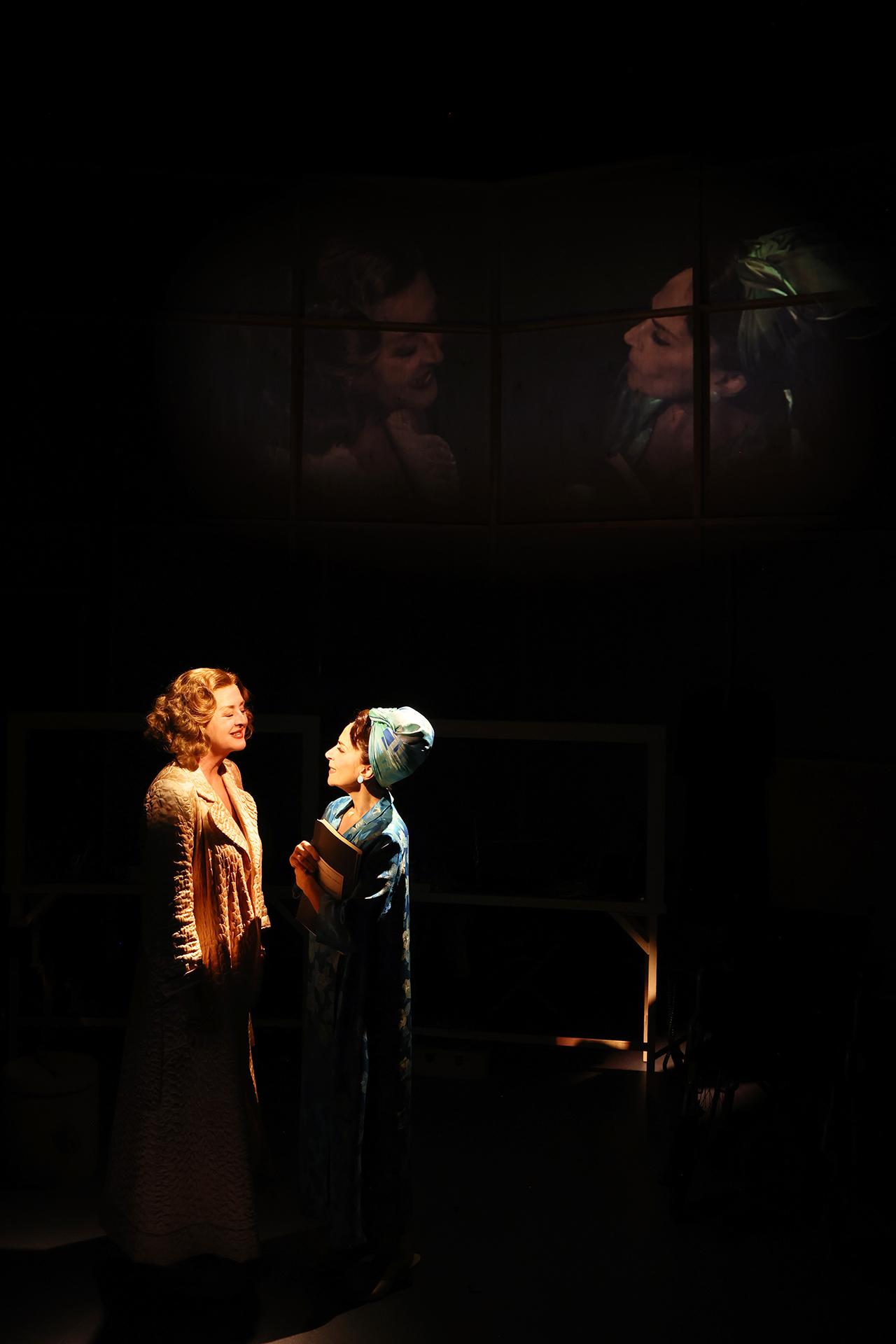
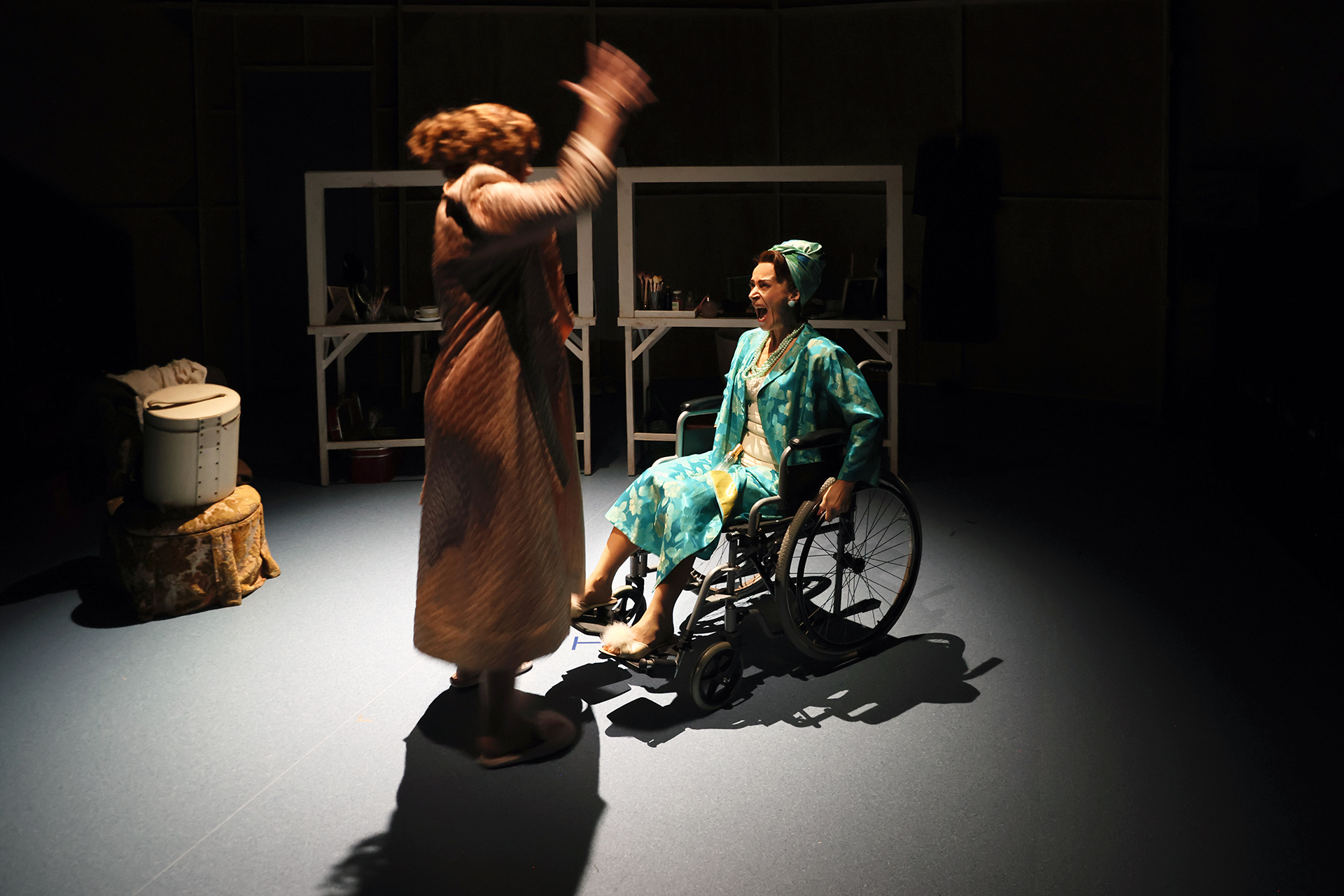
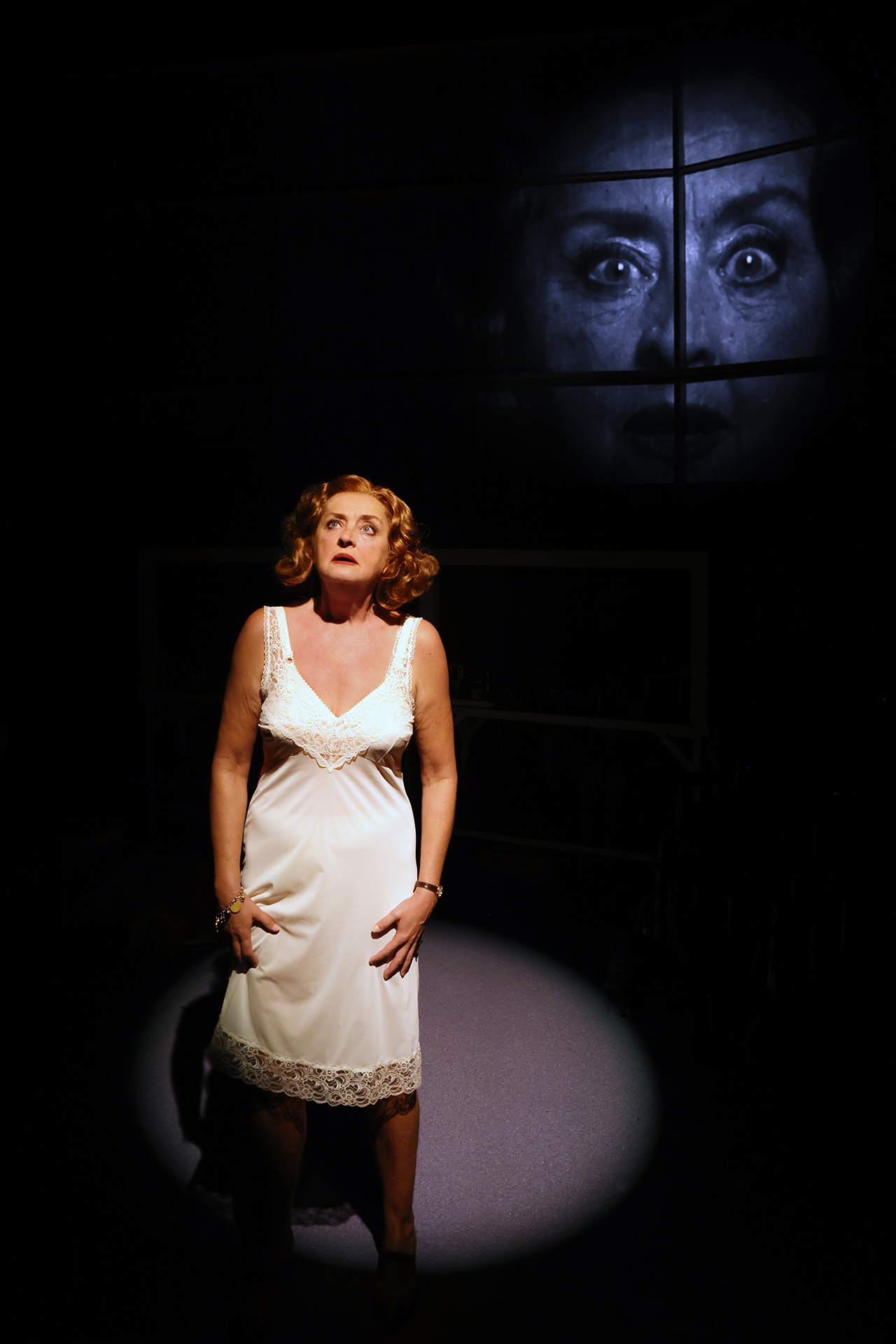
Anton Burge’s 2011 play Bette & Joan offers a backstage glimpse into the lives of Hollywood legends Davis and Crawford during the making of the classic film Whatever Happened to Baby Jane? Set against the fraught atmosphere of that production, the drama examines their legendary feud and fraught intimacy, while exposing the deeper vulnerabilities of two aging muses navigating a merciless industry built on rigid hierarchies and the constant threat of obsolescence.

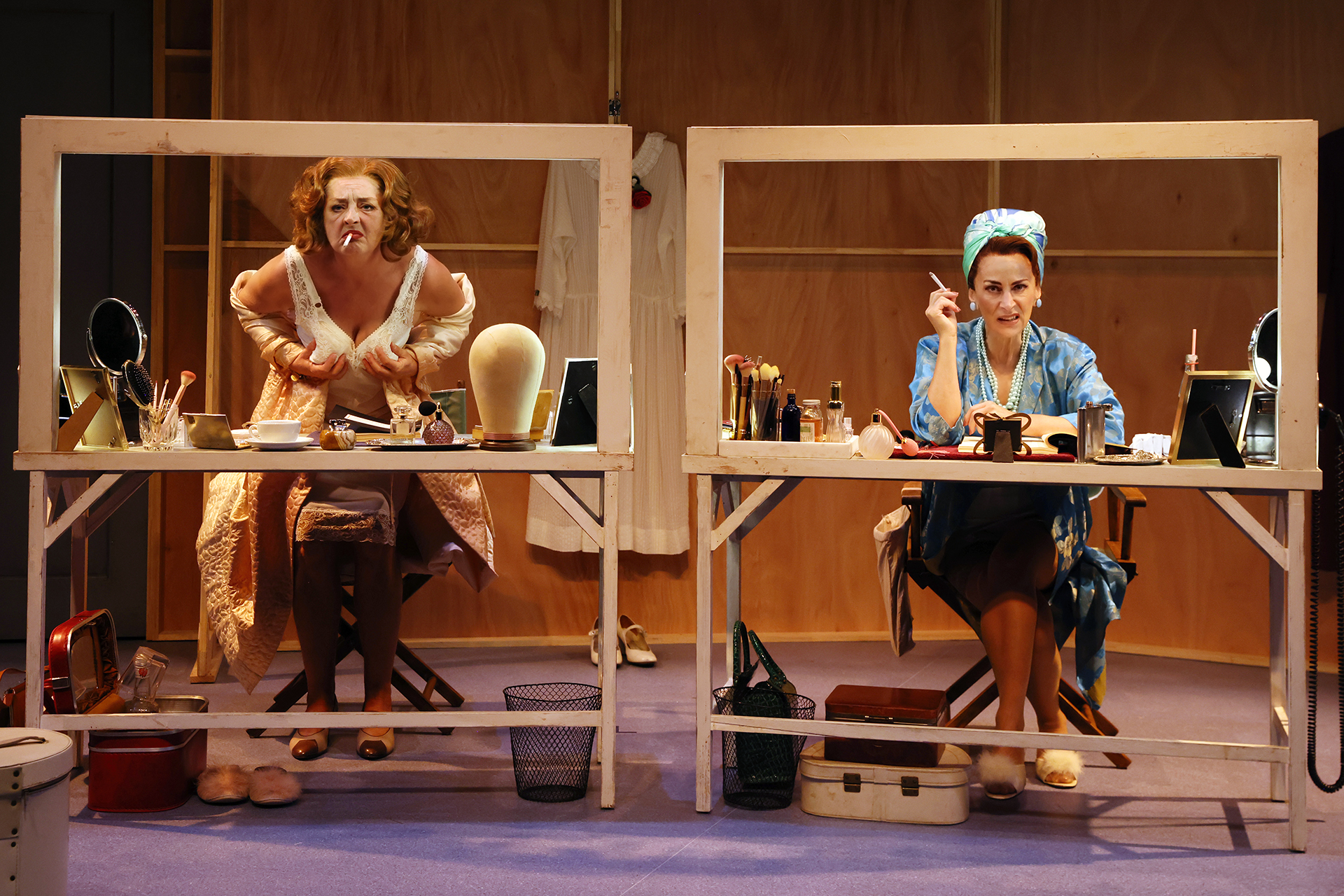
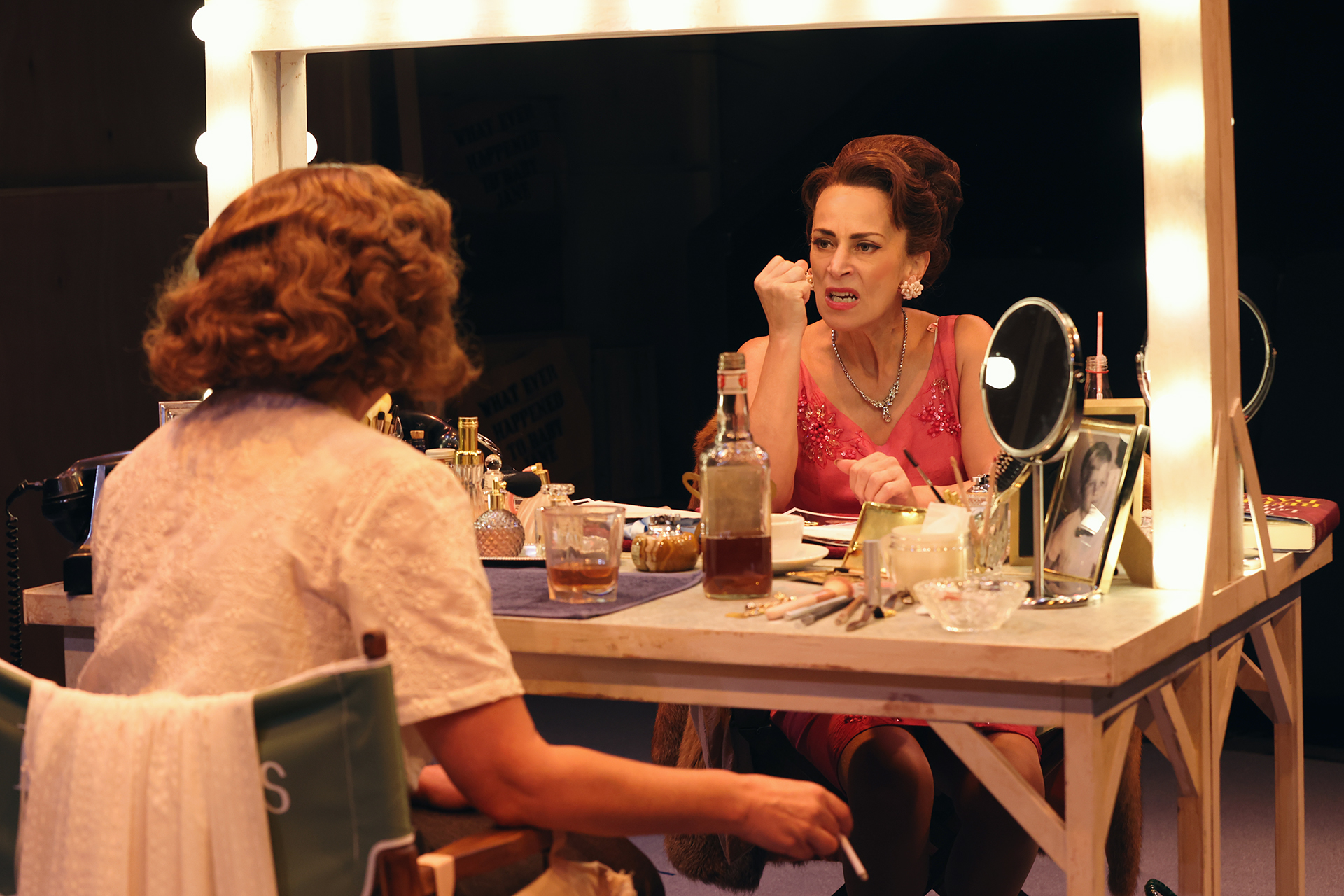
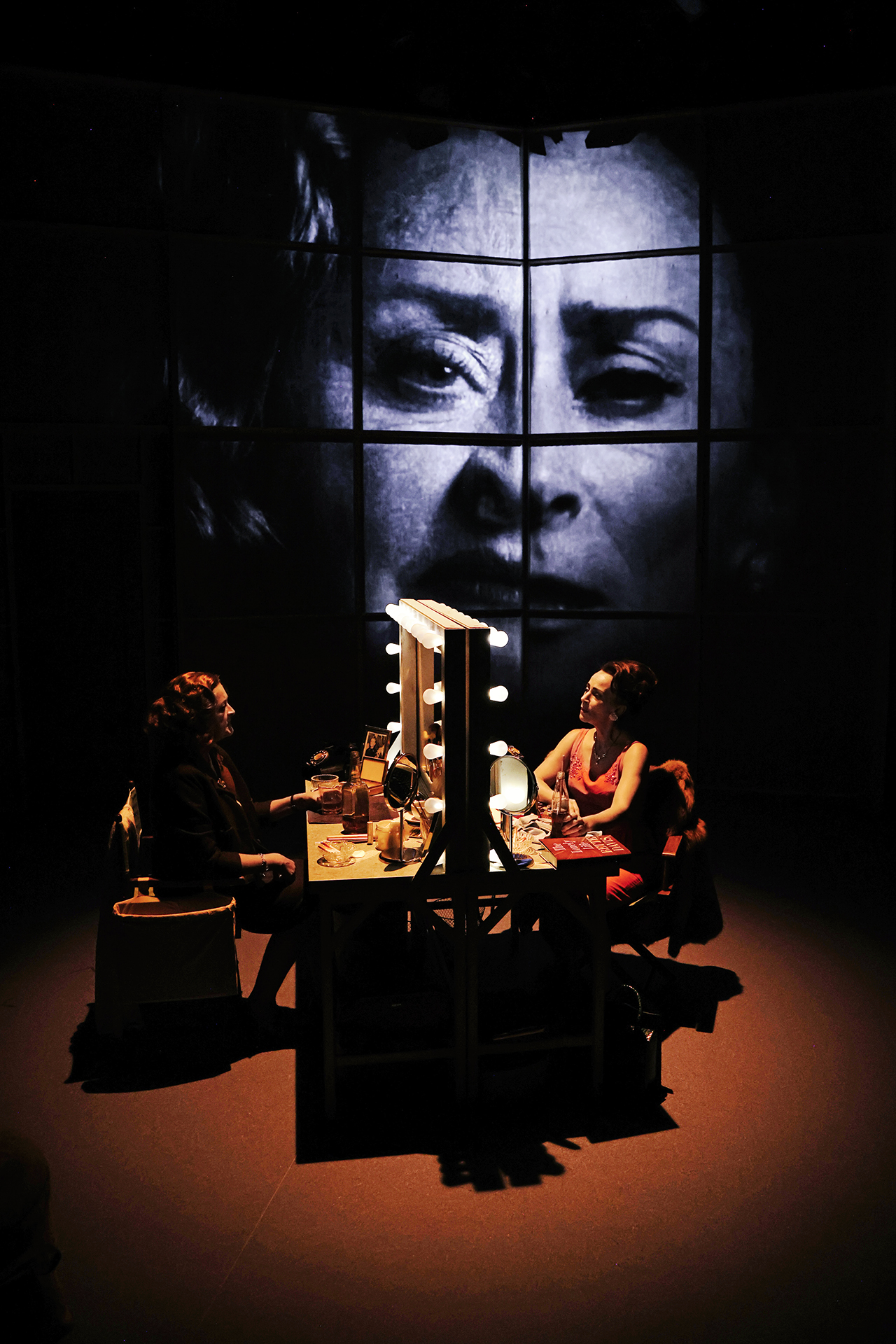
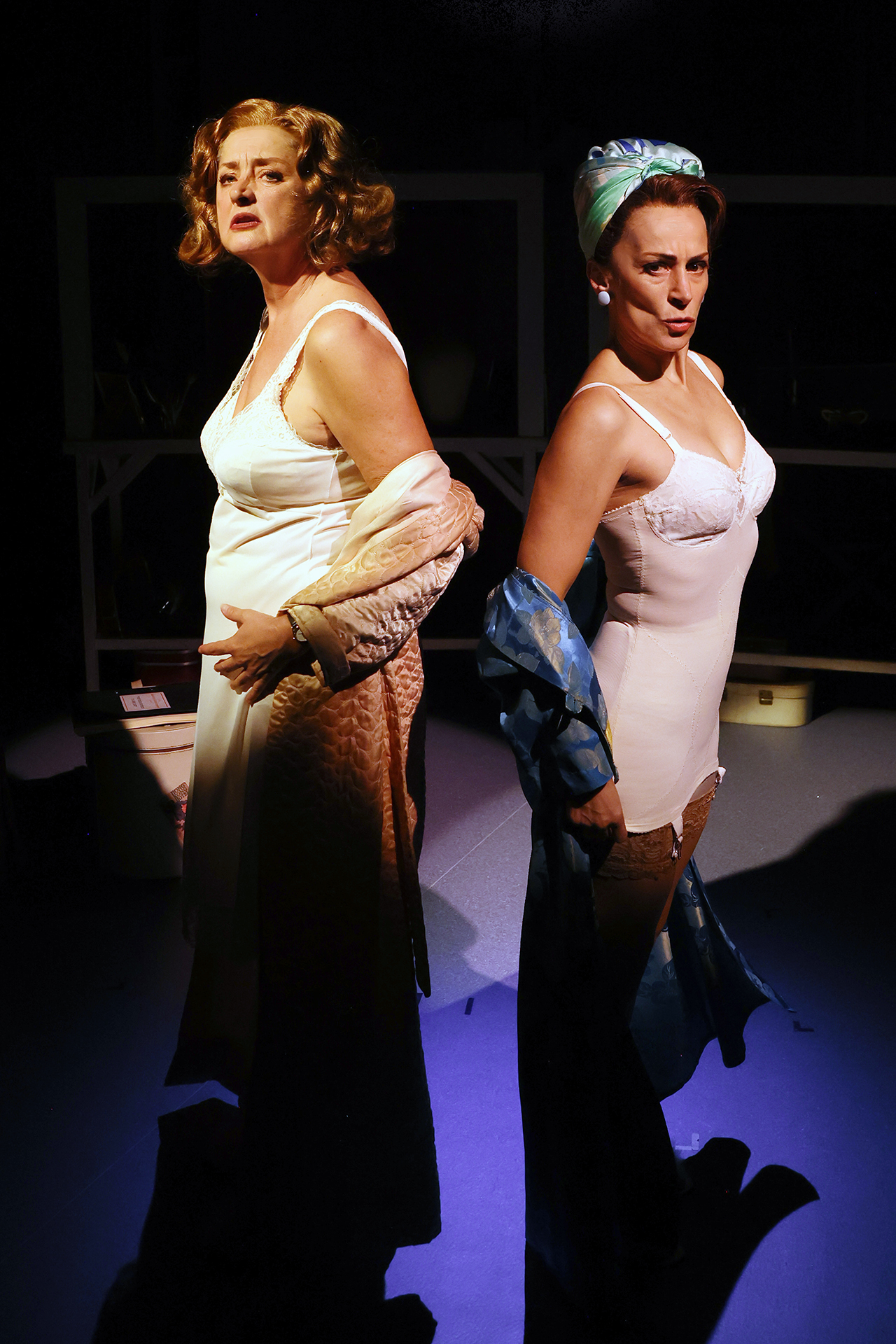
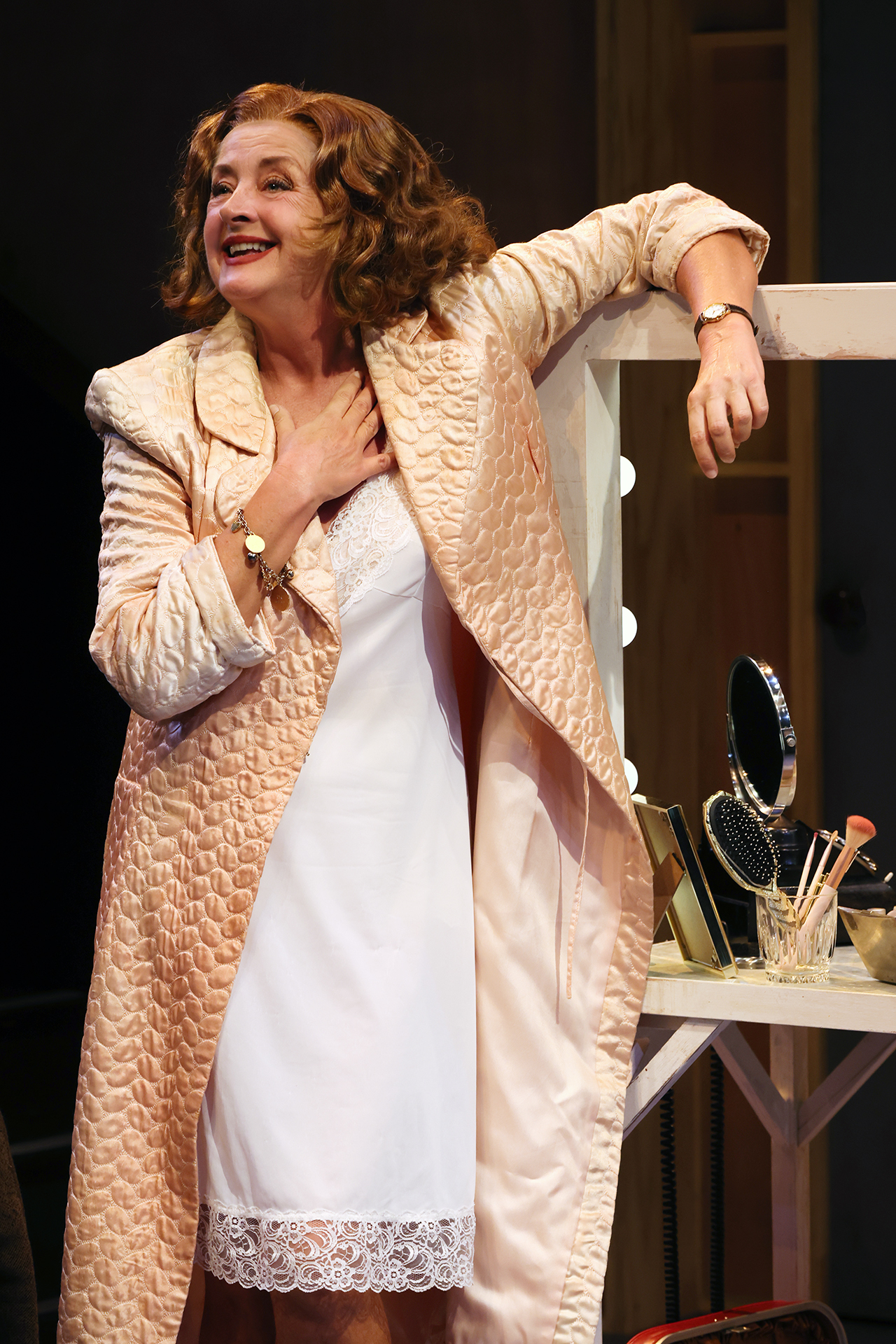
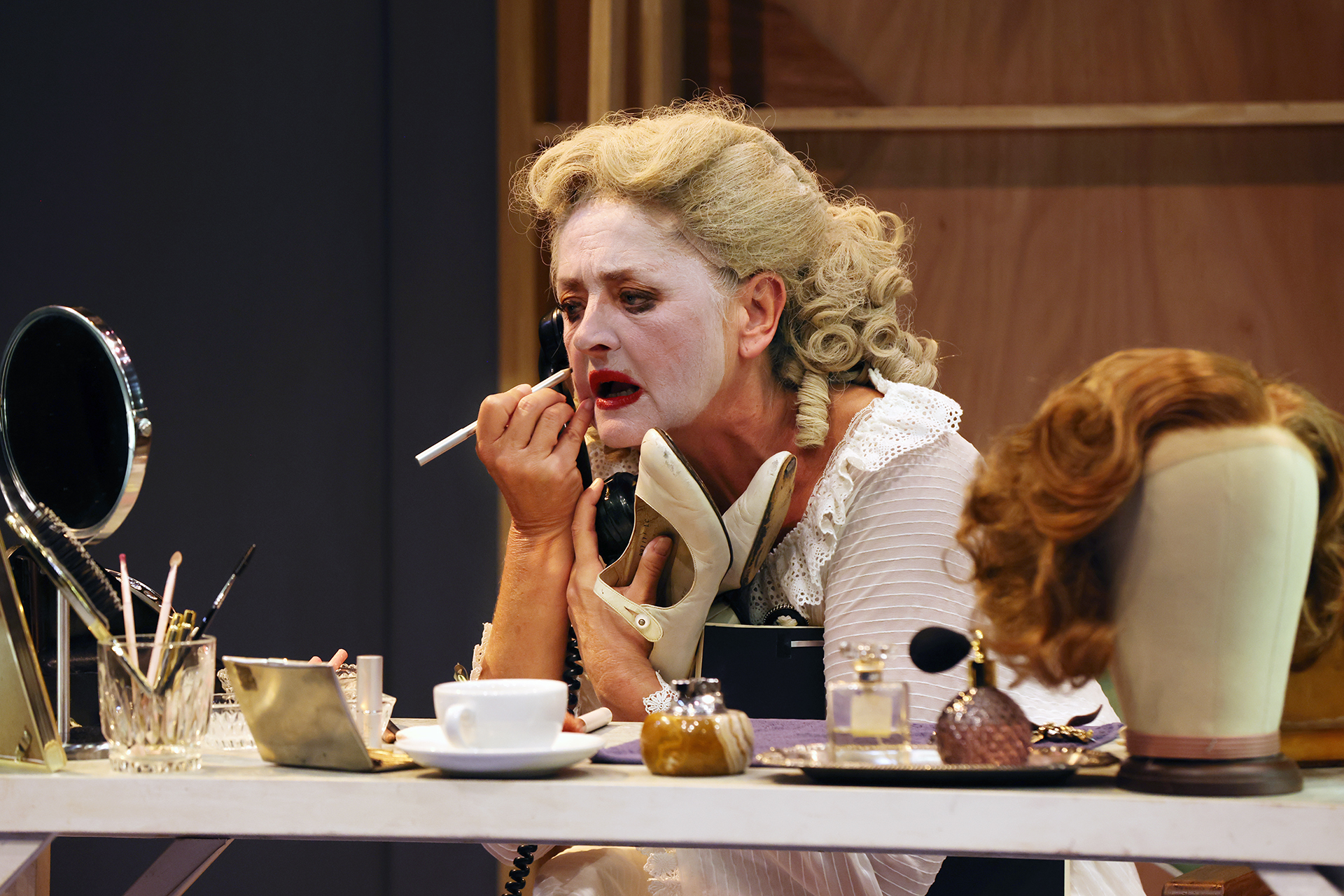
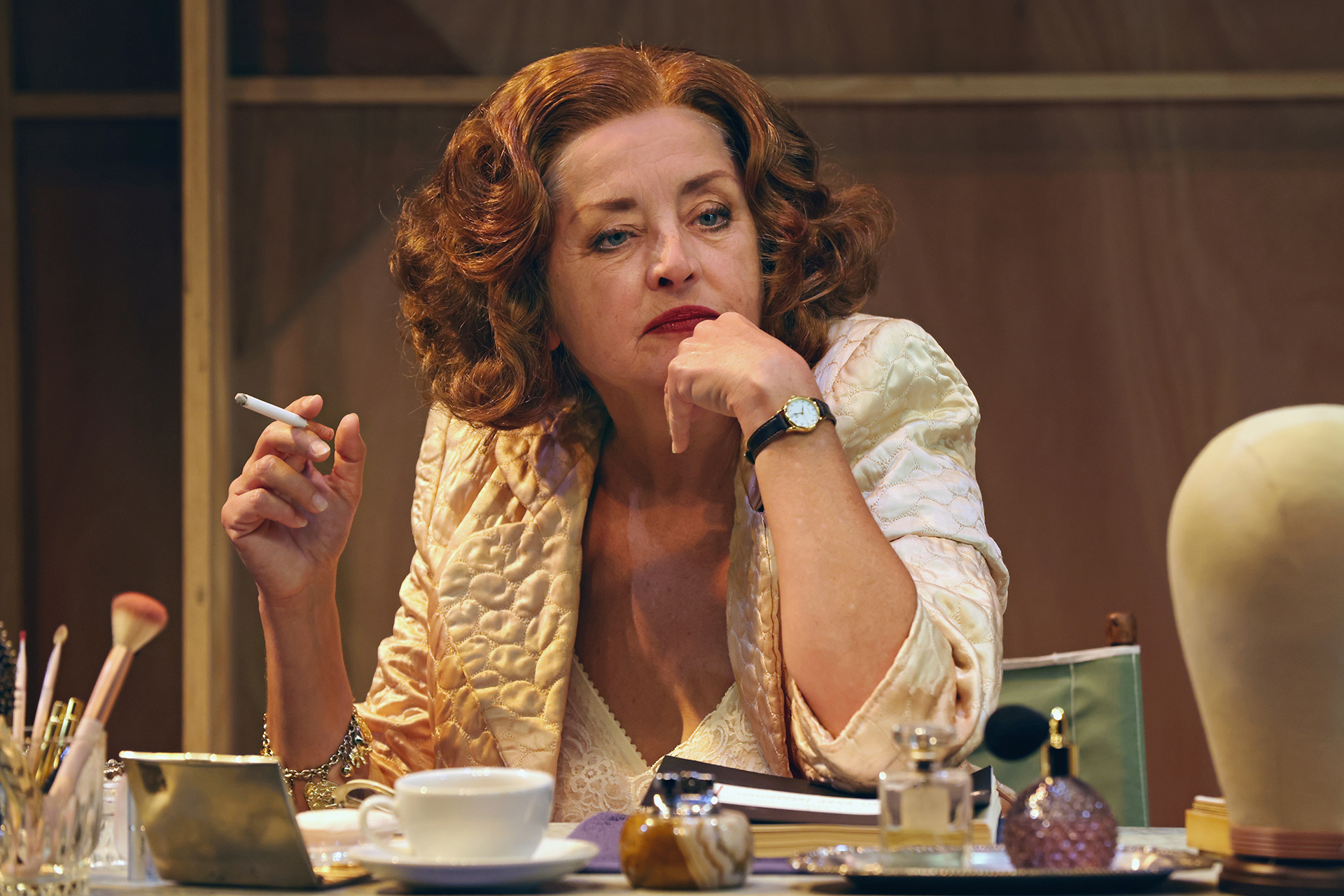
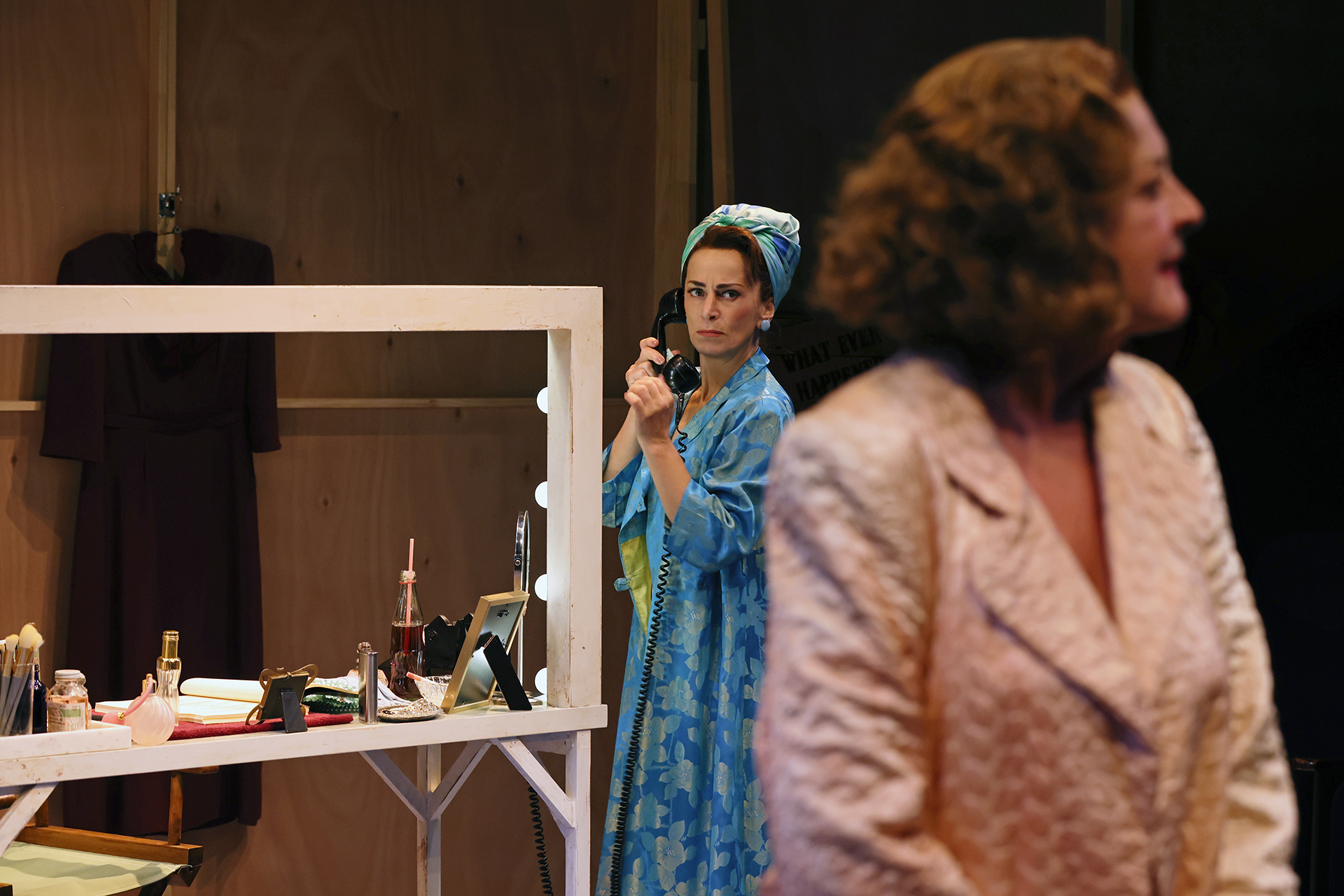
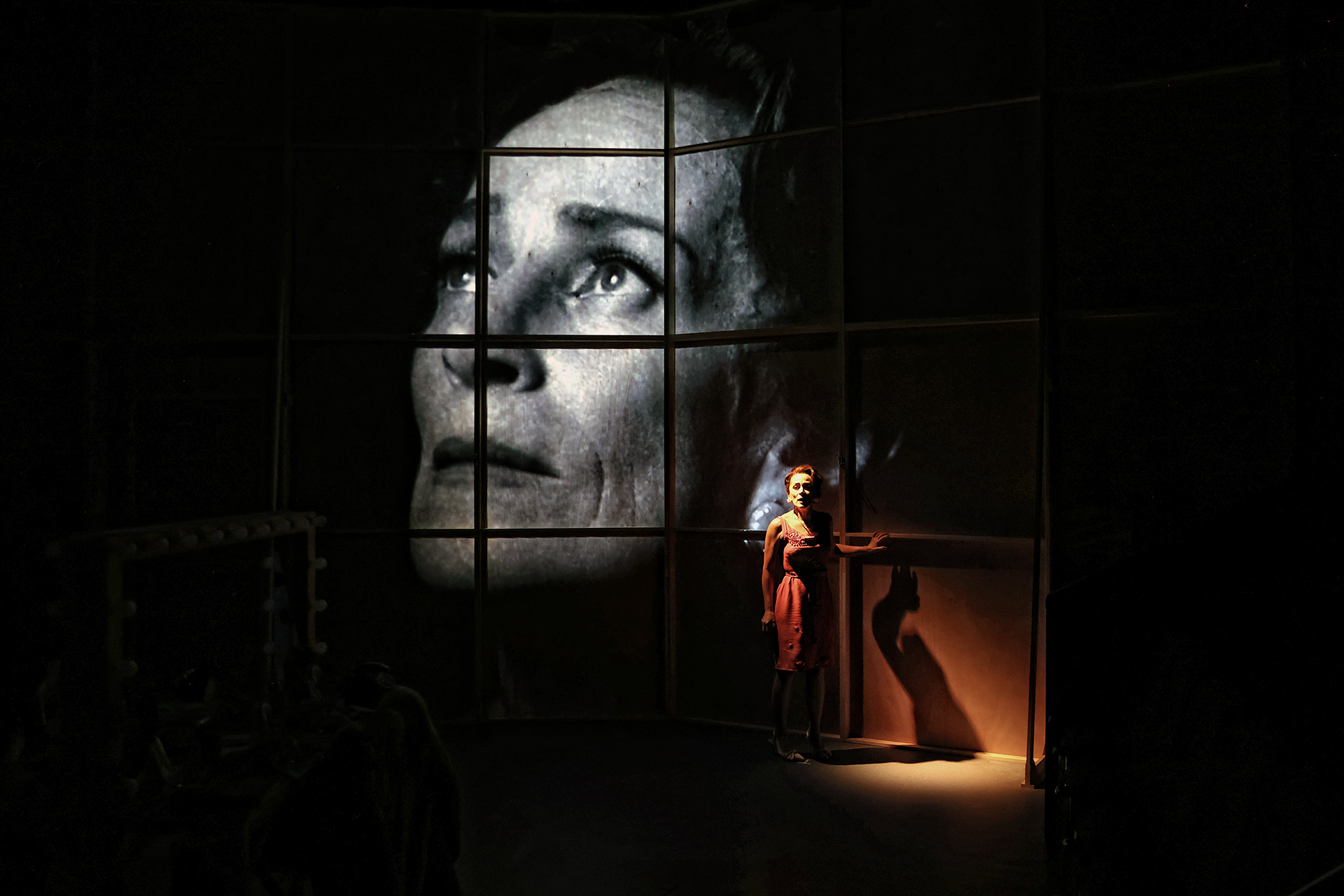
Burge’s script navigates the labyrinthine psychology of these titans with admirable precision, yet the work itself proves uneven in its ability to sustain engagement. Under Liesel Badorrek’s direction, the production’s stylistic elements are cohesively managed, resulting in a production that looks and sounds exquisite—but one that never quite draws us into its central concerns. Grace Deacon’s production design evokes the insular world of a soundstage, with the rear facades of filmmaking flats forming a backdrop. The two dressing tables, though impeccably glamorous, feel somewhat confining. Deacon fares better with her costuming, which achieves a haunting verisimilitude in resurrecting the stars’ 1962 silhouettes—the tweed and talons, the calculated armour of glamour under siege.

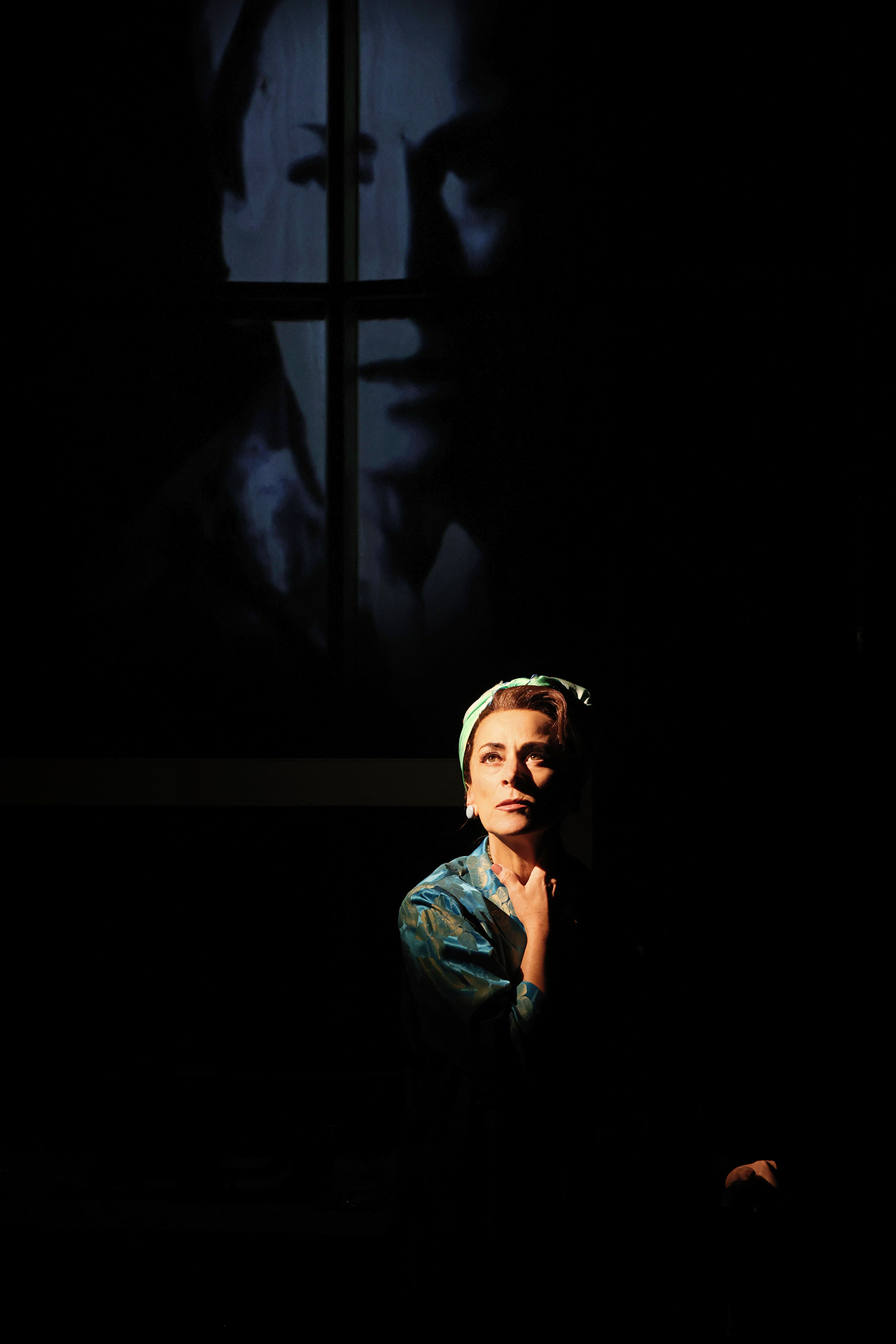
Cameron Smith’s video projections—whether pre-recorded or live—are seamlessly integrated and visually splendid, conjuring the texture of an earlier cinematic era. Lighting designer Kelsey Lee and composer Ross Johnston contribute moments of heightened drama, infusing this tribute to old Hollywood with flashes of theatrical beauty, even as the production rarely penetrates beyond surface-level homage.

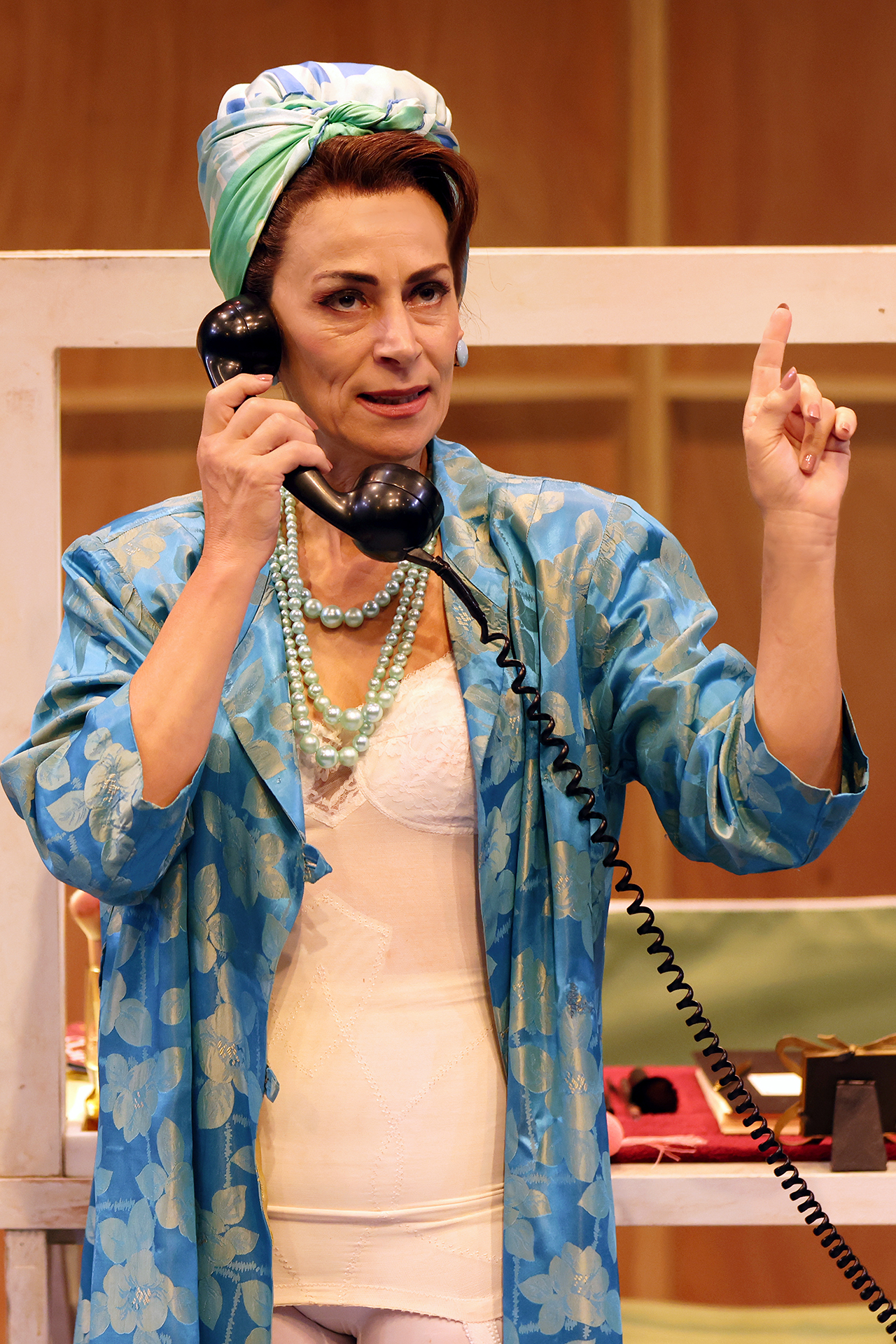
Performers Jeanette Cronin and Lucia Mastrantone command the stage with palpable confidence, holding our attention through the sheer artistry of their mimicry. Cronin, in particular, delivers a strikingly accurate portrayal of Davis, capturing her distinctive mannerisms, vocal inflections, and a face seemingly sculpted from the same volcanic material as her subject’s.

At its core, Bette & Joan grapples with the phenomenon of female rivalry, revealing that even at the highest echelons of success, women remain bound by shared struggles within a system that depends on their diminishment. By cannibalizing each other’s reputations, they performed the industry’s work of self-sabotage, ensuring that the true mechanisms of dominance remained invisible and intact. Power in its most insidious forms flourishes when the disenfranchised are kept apart—persuaded that their true enemy lies beside them, while the forces that exploit them operate with impunity.

www.ensemble.com.au

Review: My Brilliant Career (Sydney Theatre Company)

Venue: Roslyn Packer Theatre (Sydney NSW), Mar 21 – May 3, 2026
Book: Sheridan Harbridge, Dean Bryant (from the Miles Franklin novel)
Music: Mathew Frank
Lyrics: Dean Bryant
Director: Anne-Louise Sarks
Cast: Cameron Bajraktarevic-Hayward, Melanie Bird, Lincoln Elliott, Victoria Falconer, Kala Gare, Raj Labade, Drew Livingston, Ana Mitsikas, Christina O’Neill, Jarrad Payne, Jack Green, and Meg McKibbin.
Images by Pia Johnson

Theatre review
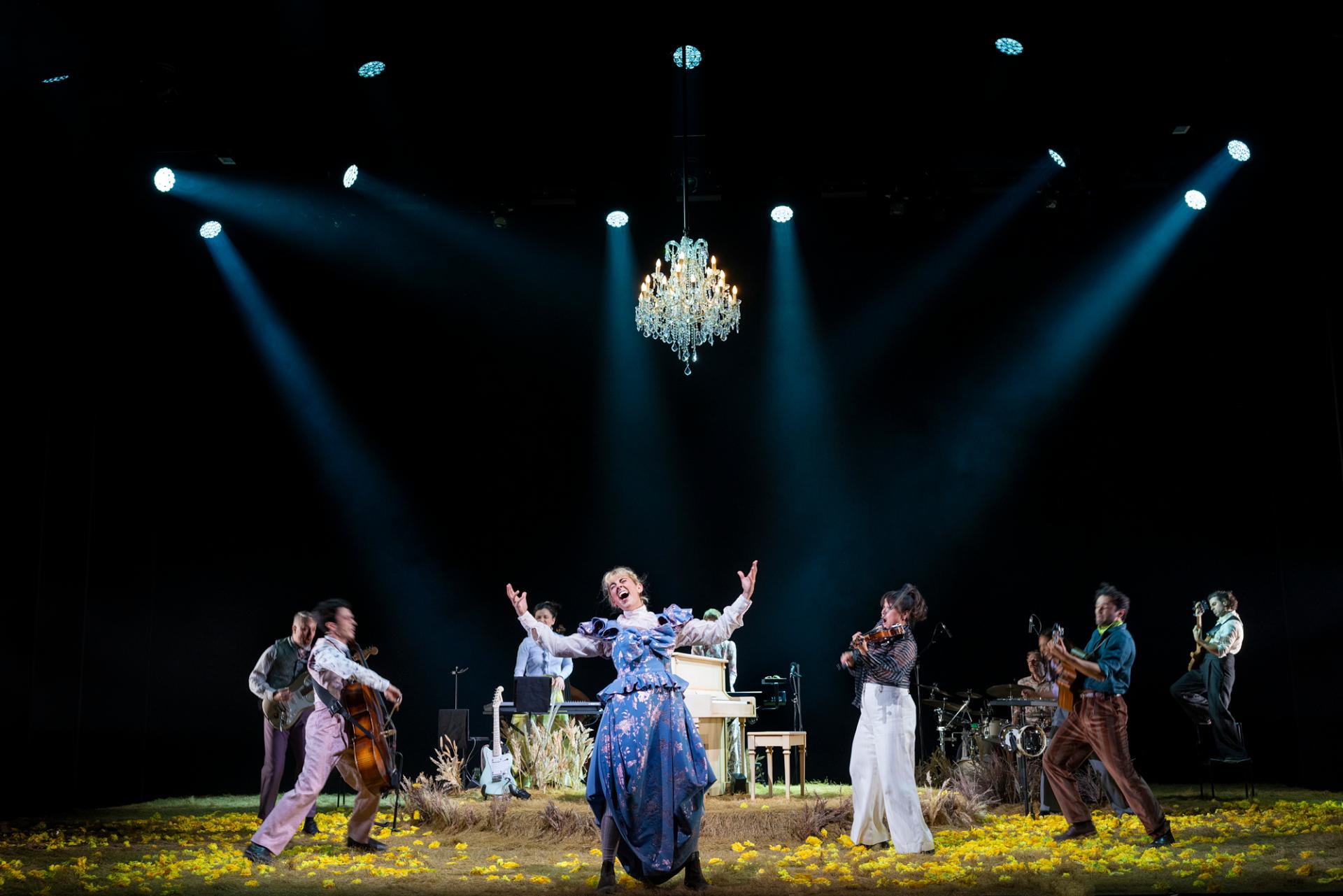
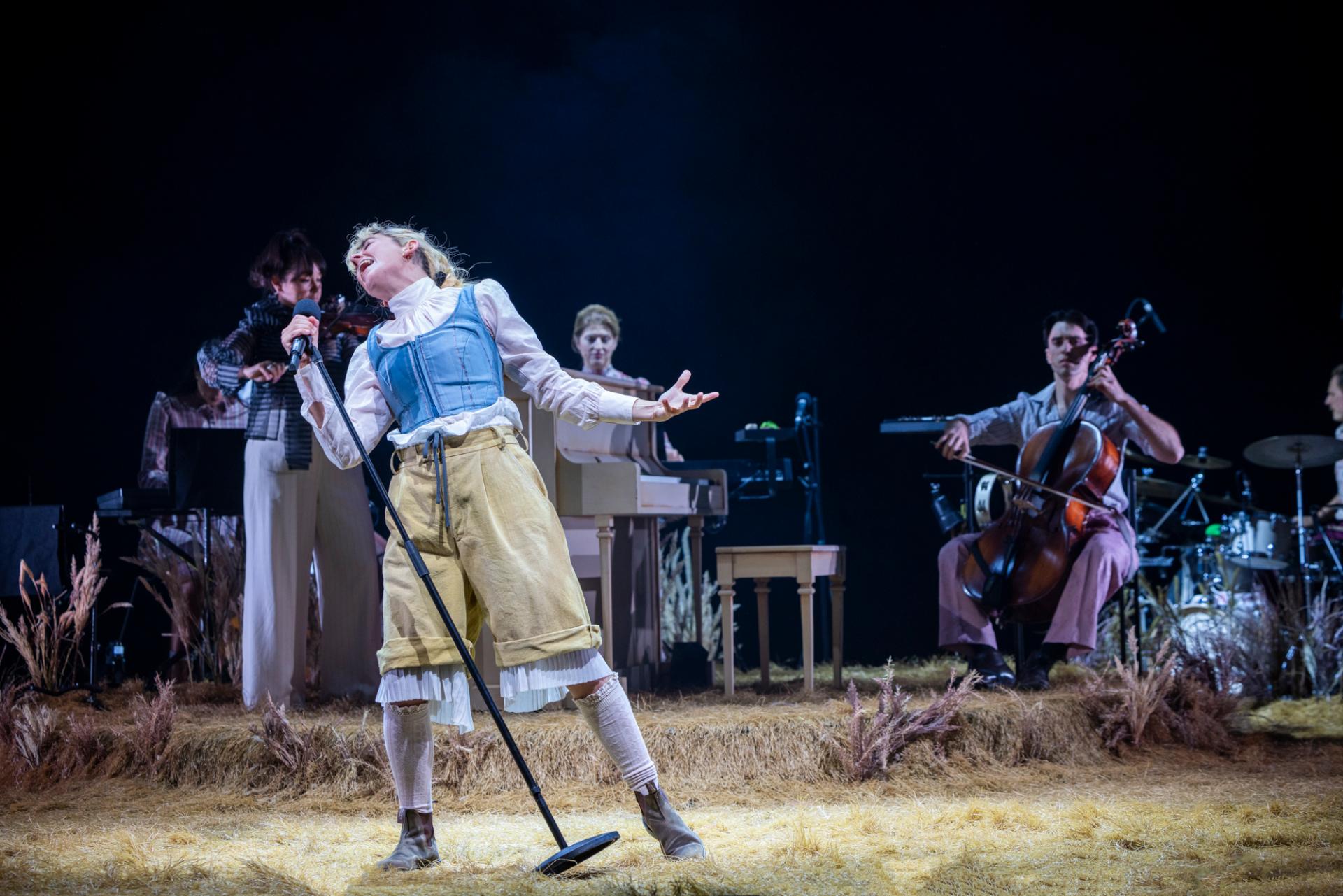
First published in 1901, when Miles Franklin was merely twenty-one, this seminal novel chronicles a teenage protagonist’s fierce determination to transcend restrictive gender conventions and forge an autonomous existence within the artistic sphere. Now, My Brilliant Career—that cornerstone of the Australian literary canon—has been reimagined as a stage musical by the formidable trio of Dean Bryant and Sheridan Harbridge, who craft the words, and composer Mathew Frank. Together, they amplify the original’s spirited verve to revelatory effect, delivering a production as profoundly moving as it is inspiring.

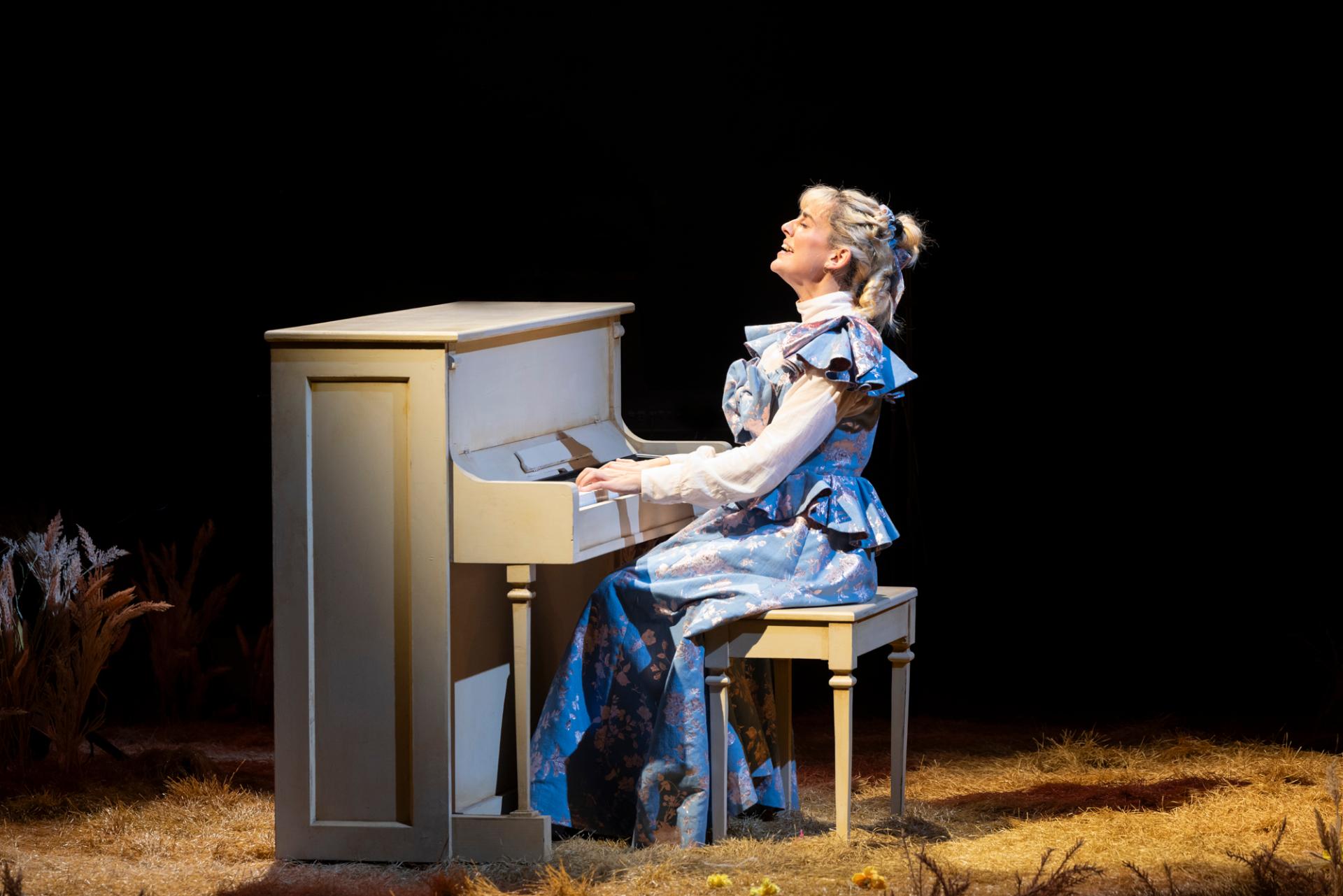
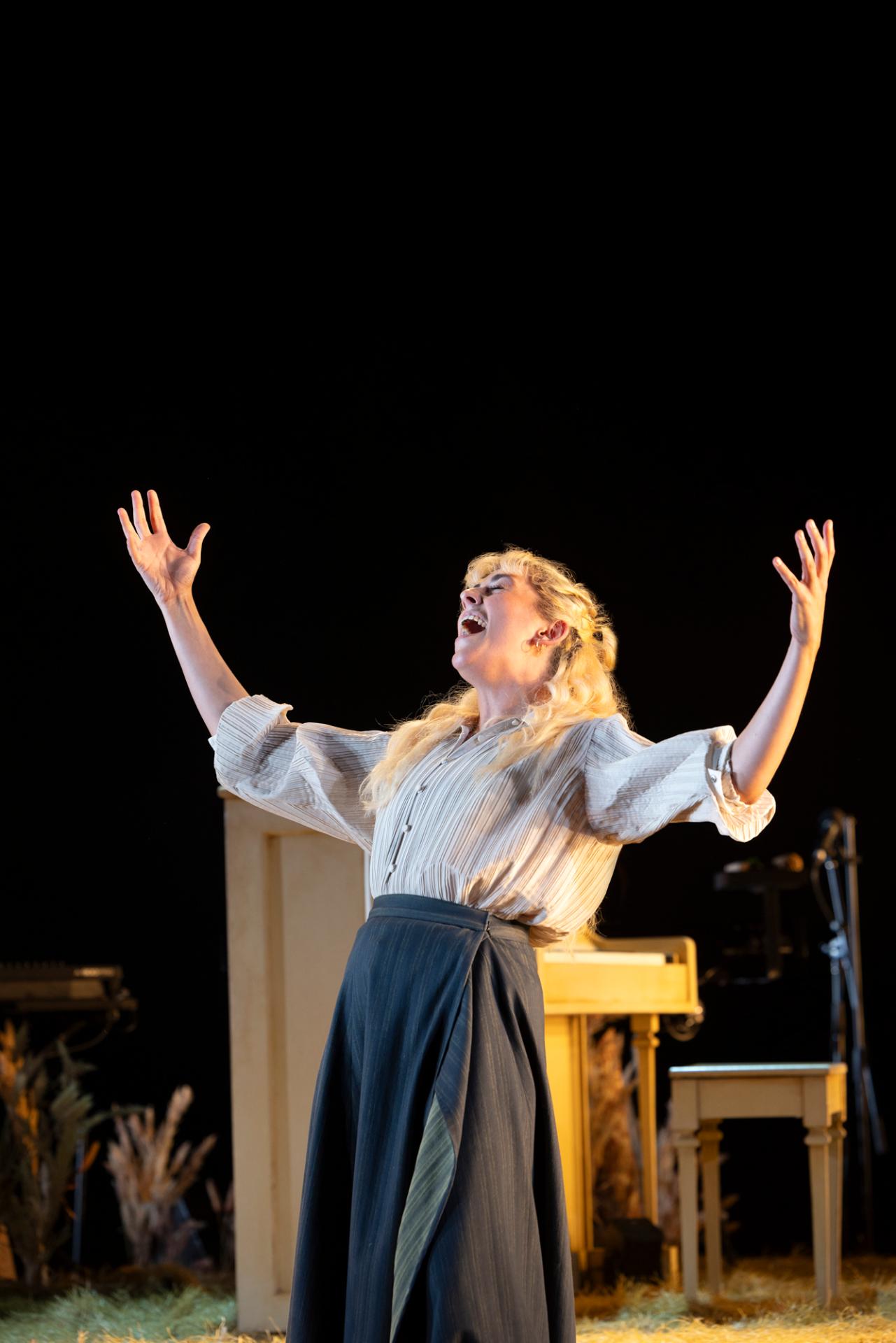
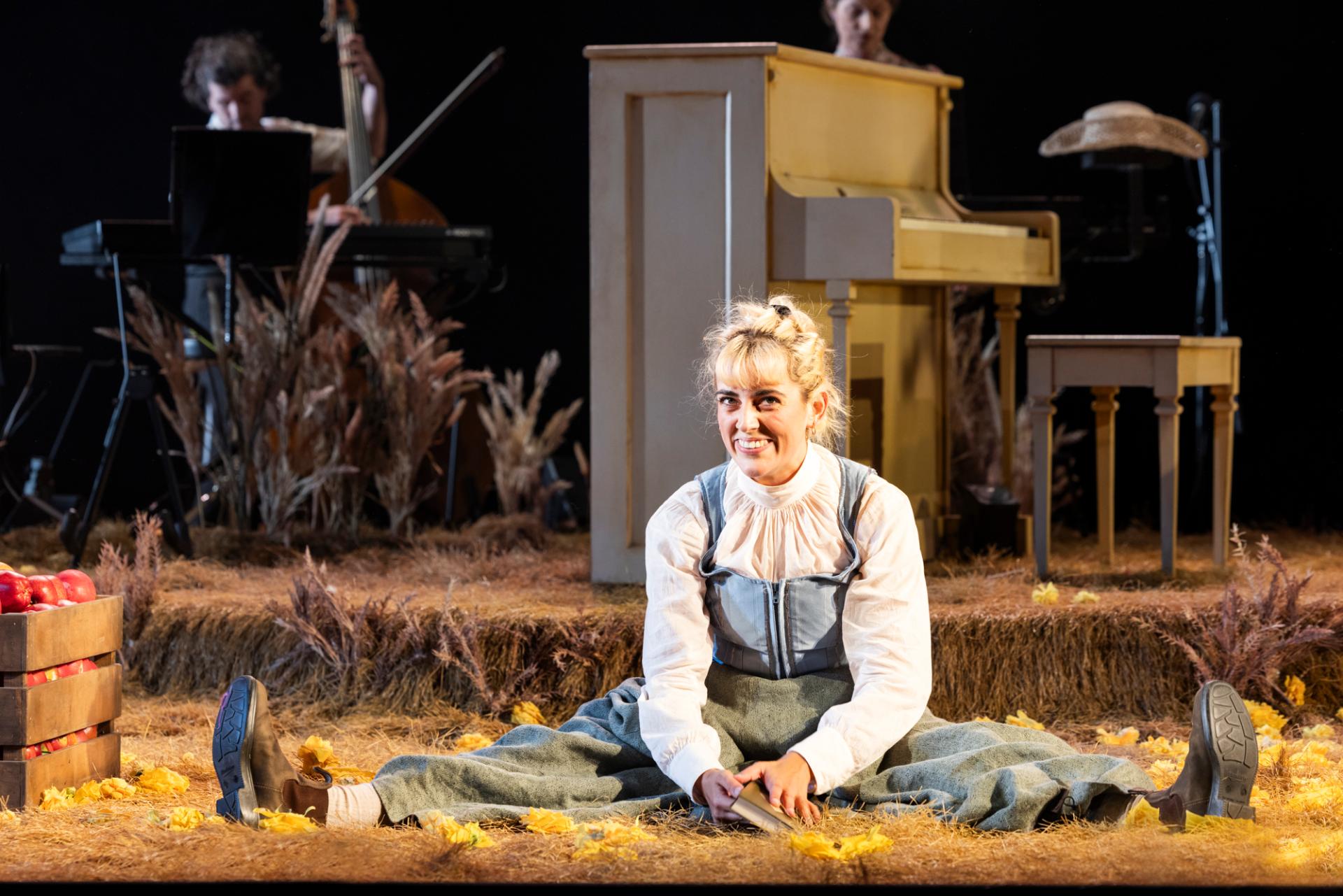
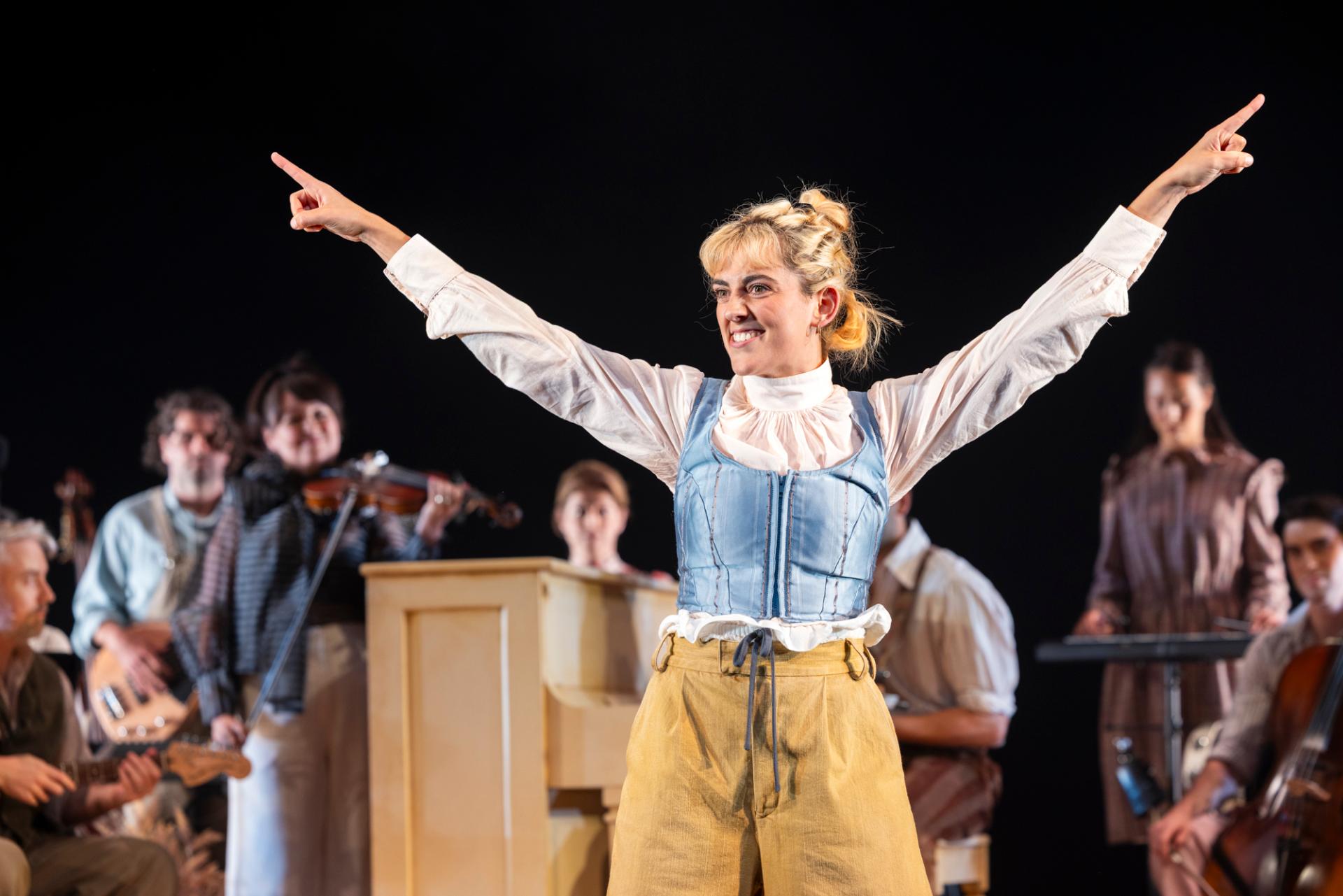
Under Anne-Louise Sarks’s astute direction and Amy Campbell’s sensitive choreography, the production arrives with startling immediacy, rendering its feminist discourse with the electrifying urgency of a revelation only just unveiled. Sybylla Melvyn, that indomitable protagonist, captivates utterly; every element of the staging conspires to forge an unbreakable empathic bond, compelling our complete investment in her trajectory.

Kala Gare delivers a thoroughly virtuosic performance in the central role, commanding the stage with breath-taking intensity to create an indelible theatrical experience. Remarkably, Gare and the supporting ensemble assume the dual responsibility of dramatic interpretation whilst simultaneously constituting the instrumental foundation of the entire musical landscape—a demonstration of extraordinary artistic versatility. Under Victoria Falconer’s expert musical direction, each composition emerges as a triumph of exuberance, sustaining a level of entertainment that never once falters.

Set and costumes by Marg Howell evoke the visual vernacular of the late nineteenth century, yet—like every other element of the production—deploy considerable artistic license to ensure the work feels distinctly contemporary. Eschewing any slavish fidelity to historical accuracy that might risk feeling dowdy or remote, preventing the work from collapsing into the fusty dreariness of period-bound exactitude that might otherwise alienate contemporary sensibilities. Matt Scott’s lighting makes sparing use of grand gestures, focusing instead on the nuanced cultivation of atmosphere, achieving its mood-crafting objectives with impeccable restraint and consummate efficacy.

Girls should be taught not only that they possess every right to shape their own lives, but also that the denial of independence precipitates inexorably a descent into despondency, corrosive resentment, and a misery that permeates the very marrow of being. Sybylla’s narrative stands as a testament to resistance—particularly arduous resistance, for she must steel herself not against hardship, but against pleasure itself; she must privilege the austere dictates of intellect over the intoxicating, ephemeral promises of romantic entanglement.

Every instinct of her adolescent being strains toward those deceptively beautiful, ultimately hollow comforts, yet it is precisely this opposition to that which appears most desirable that renders her struggle both agonizing and transcendent. In her defiance, we recognize the heart breaking truth that the most exquisite cages remain cages still, and that the price of genuine freedom is often the conscious, painful renunciation of that which sparkles most brightly.

www.sydneytheatre.com.au

Review: Stage Kiss (New Theatre)

Venue: New Theatre (Newtown NSW), Mar 18 – Apr 11, 2026
Playwright: Sarah Ruhl
Director: Alice Livingstone
Cast: Emma Delle-Vedove, Nicola Denton, Victoria Fowler, Lynden Jones, Nicholas Papademetriou, Frank Shanahan, Jason Spindlow
Images by Bob Seary

Theatre review
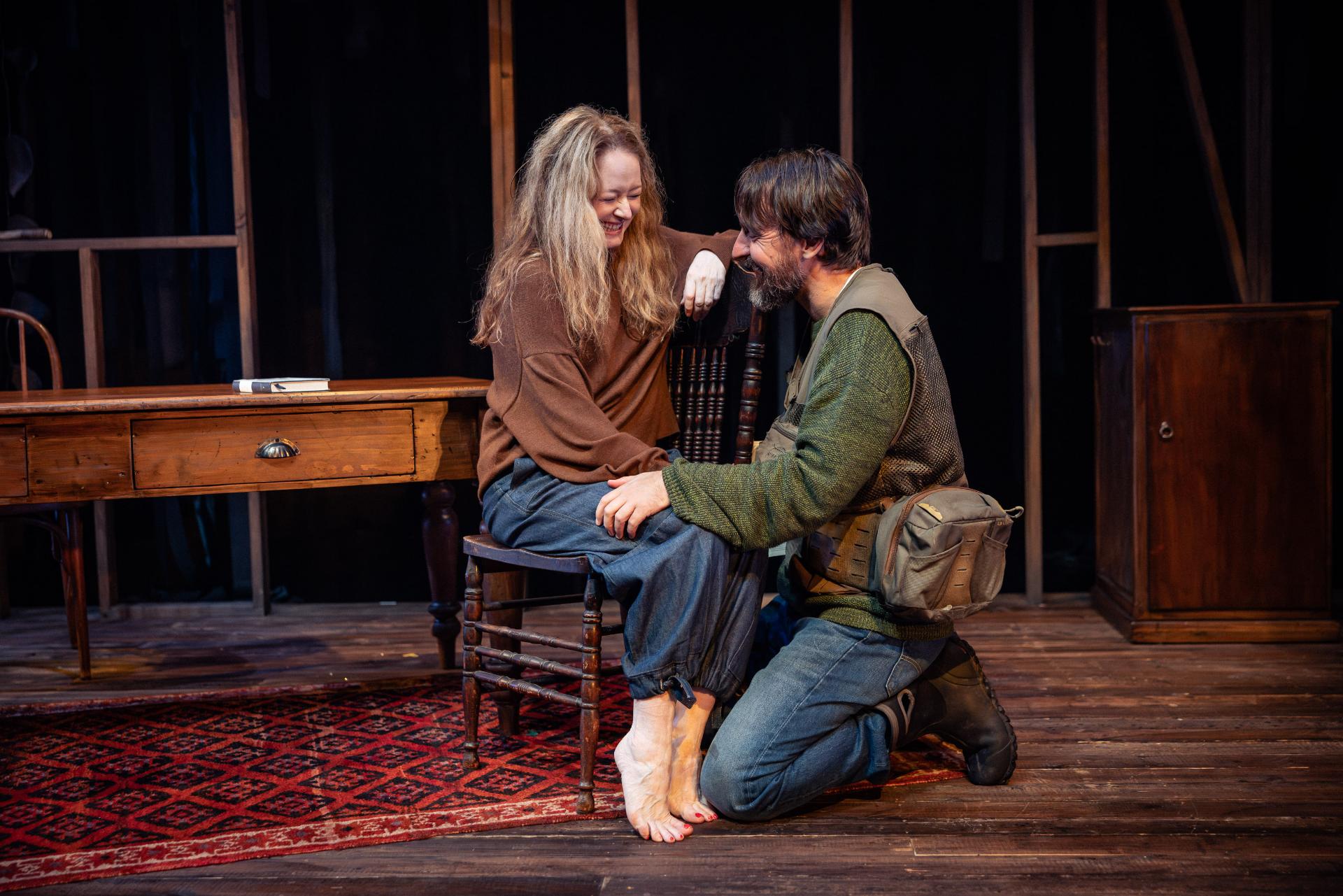
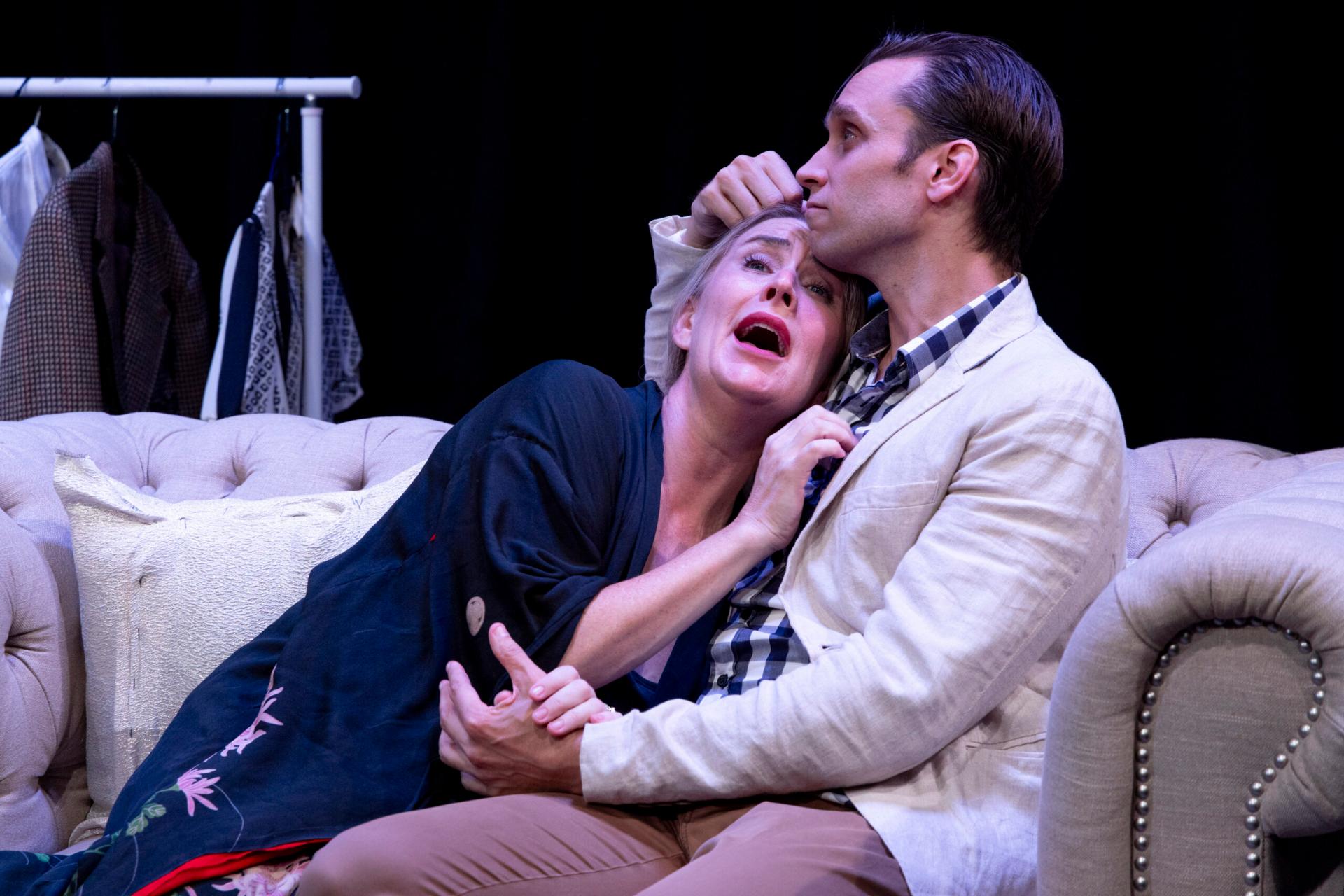
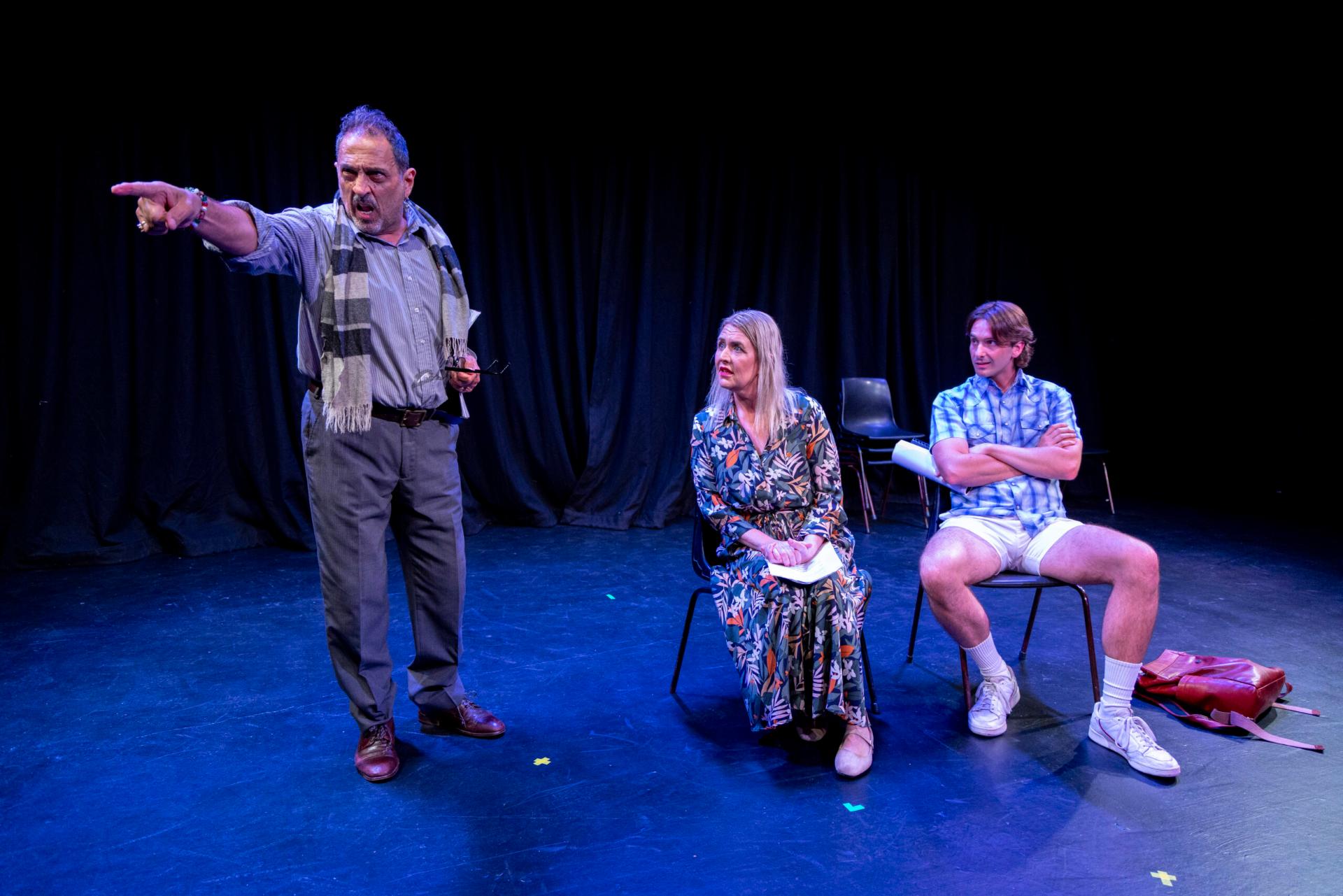
In Sarah Ruhl’s comedy Stage Kiss, an actress, cast opposite the very man with whom she once had a bitter falling out, finds herself helplessly ensnared in a backstage romance. Though her husband and daughter look on with dismay, she surrenders to the peculiar intimacy of the stage, where simulated passion gives way to genuine longing. The play’s central conceit—that the body cannot tell a feigned kiss from a real one—becomes a sly meditation on how art blurs the line between imagination and truth.

Alice Livingstone’s direction mines every vein of comedy in the text, yielding a production of genuine charm. As the central figure, Emma Delle-Vedove is wholly convincing, imbuing her performance with a satisfying depth that lends the storytelling real substance. Opposite her, Jason Spindlow matches her stride for stride, his timing and comic sensibility proving an ideal complement. The supporting ranks are enlivened by Nicholas Papademetriou and Frank Shanahan, both of whom generate uproarious laughs through their intrepid, delightfully unguarded performances.

The production’s visual language is shaped by Merle Leuschner’s set, which capably navigates the play’s spatial requirements, and Bianca De Nicola’s costumes, which neatly delineate character. Together, the two elements inadvertently echo the resourceful aesthetic of regional theatre, conferring a certain lived-in verisimilitude. Holly Nesbitt’s lighting contributes welcome nuance, its selective details lending the stage visual depth. The sound design, however, proves a notable shortcoming—its lack of energy frequently undermines the production’s momentum, leaving it feeling less dynamic than the material demands.

To observe that a woman possesses the right to shape her own life is perhaps to state the obvious, yet the sentiment bears repeating. In Stage Kiss, we encounter a woman who does precisely that—choosing to be artist, mother, wife, and lover, often in uneasy succession. Where conventional parlance would accuse her of trying to “have it all,” the play instead presents her simply sampling what is on offer, fumbling through each decision, and making mistakes with disarming regularity. In a culture saturated with glossy, unattainable ideals of achievement, watching her flawed navigation proves a far more honest—and surprisingly inspiring—spectacle.

www.newtheatre.org.au