Review: Truck Driver (Sydney Opera House)

Venue: Sydney Opera House (Sydney NSW), Jun 16 – 20, 2026
Playwright: Jonny Hawkins
Director: Nell Ranney
Cast: Jonny Hawkins
Images by Daniel Boud

Theatre review
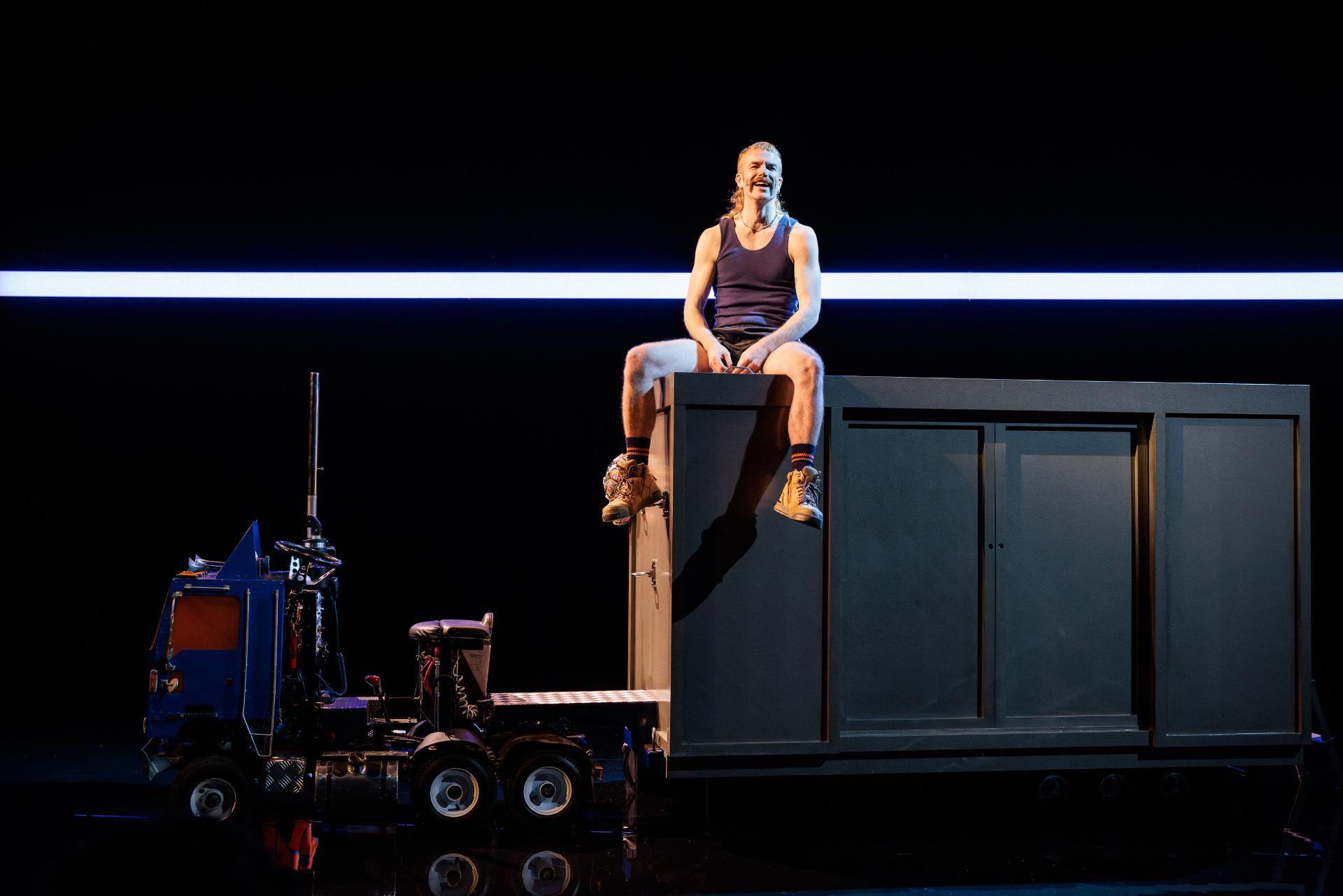
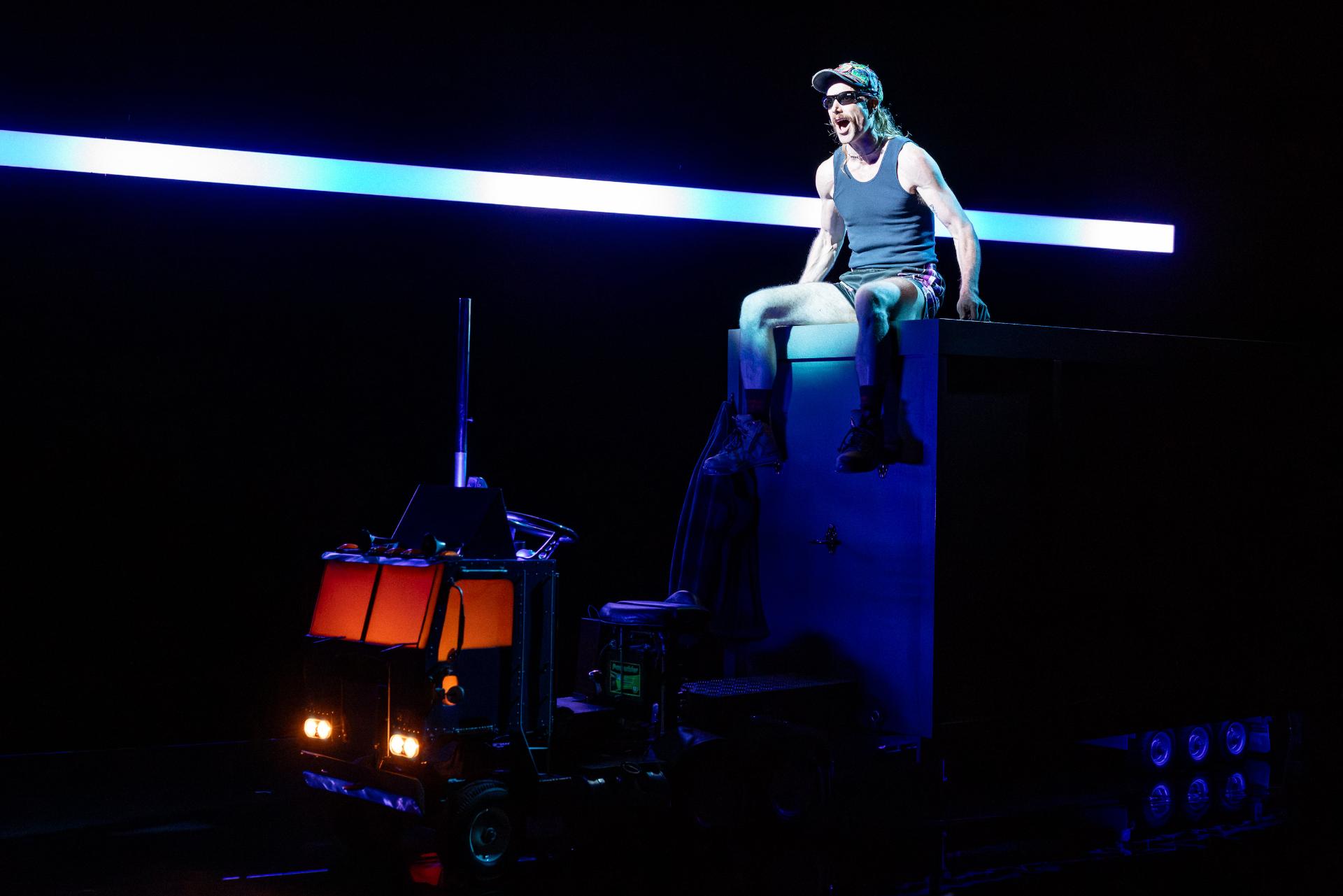
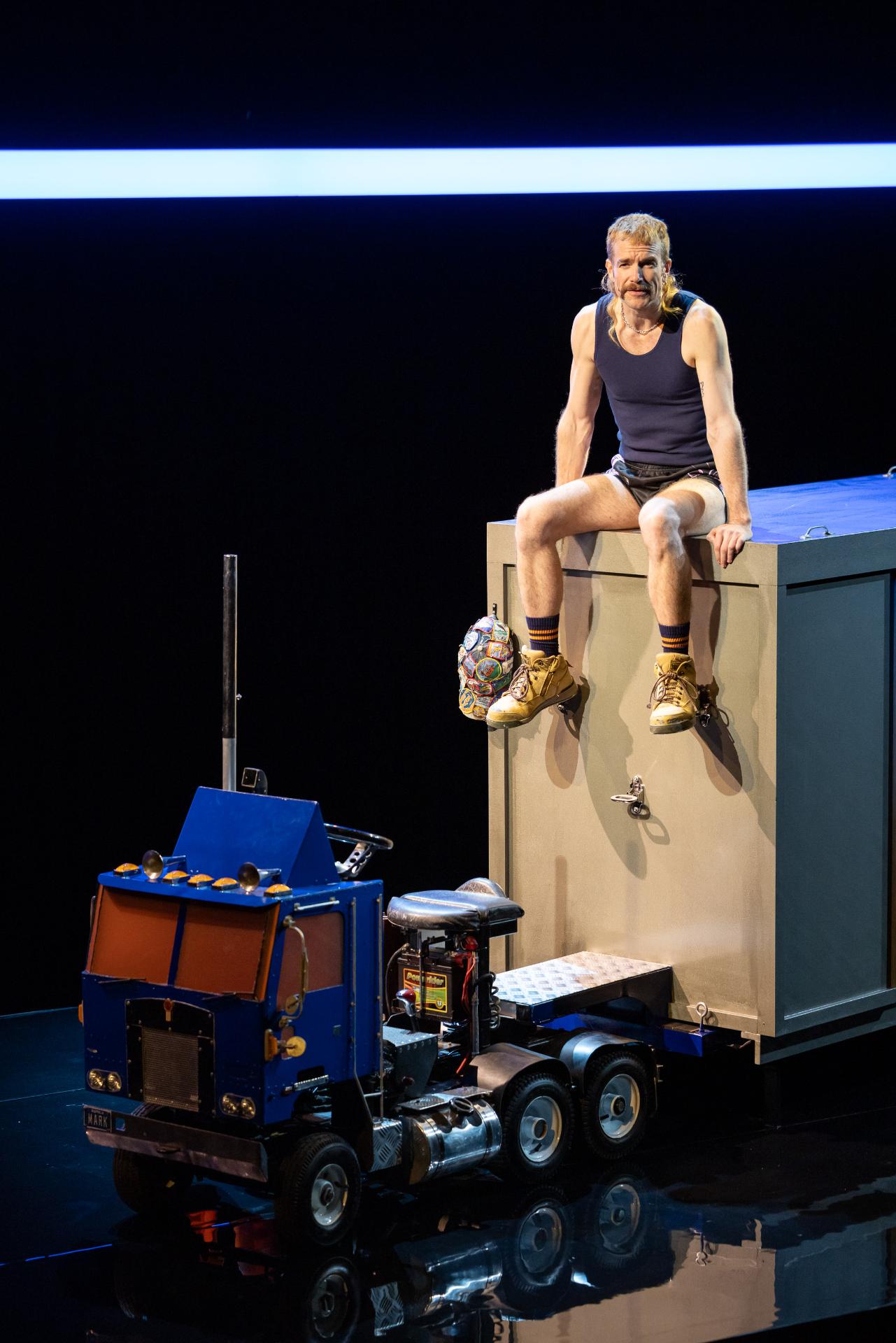
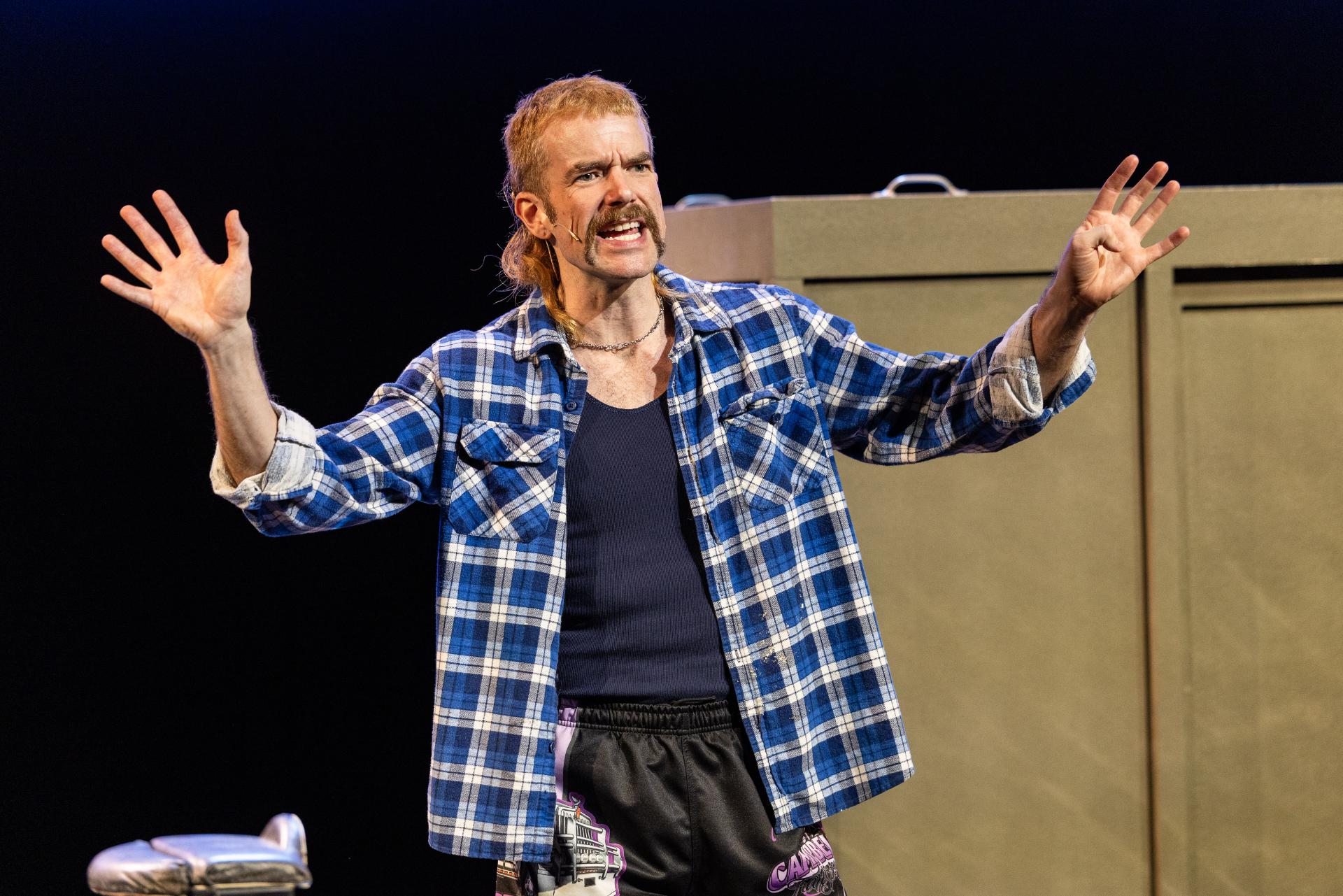
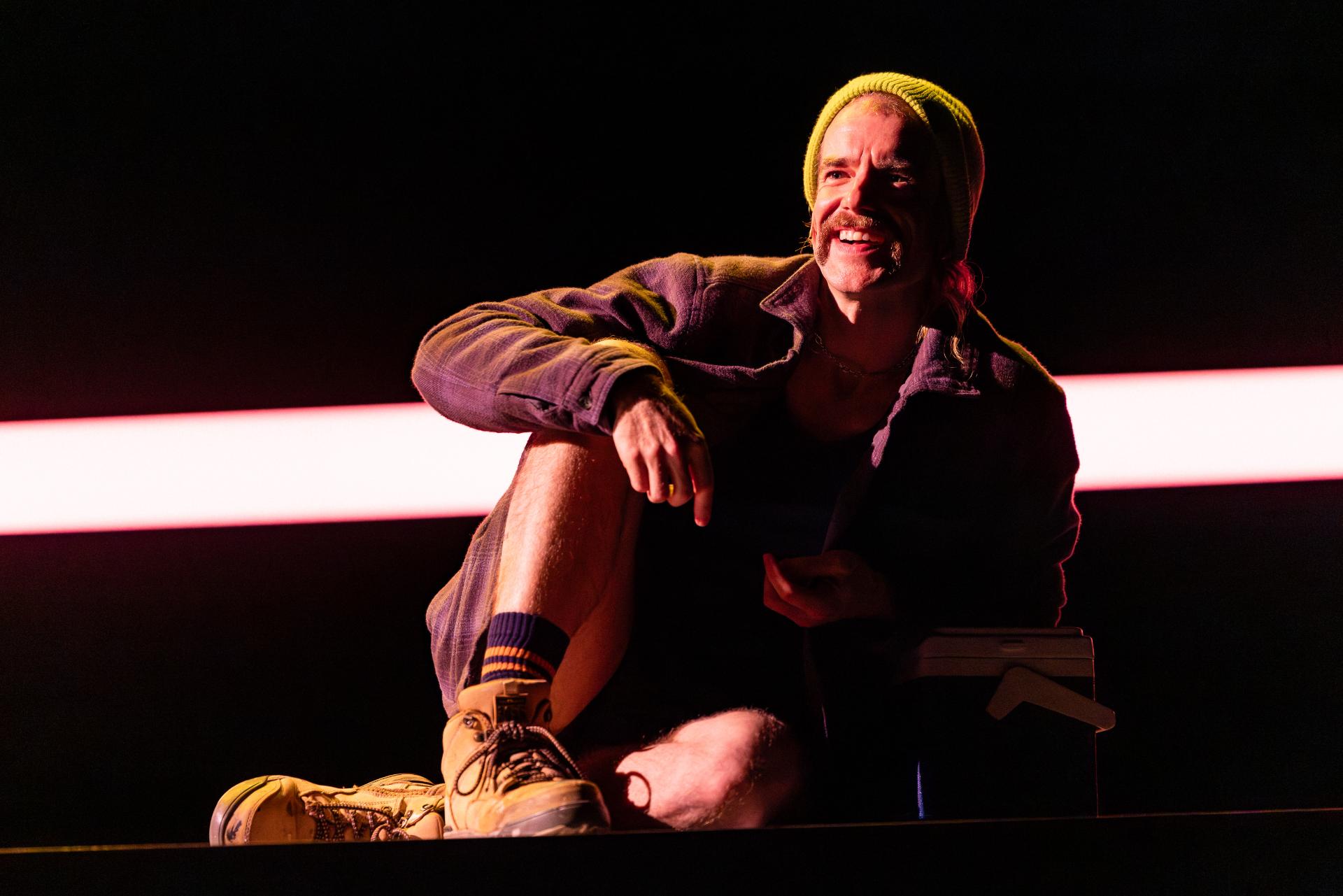
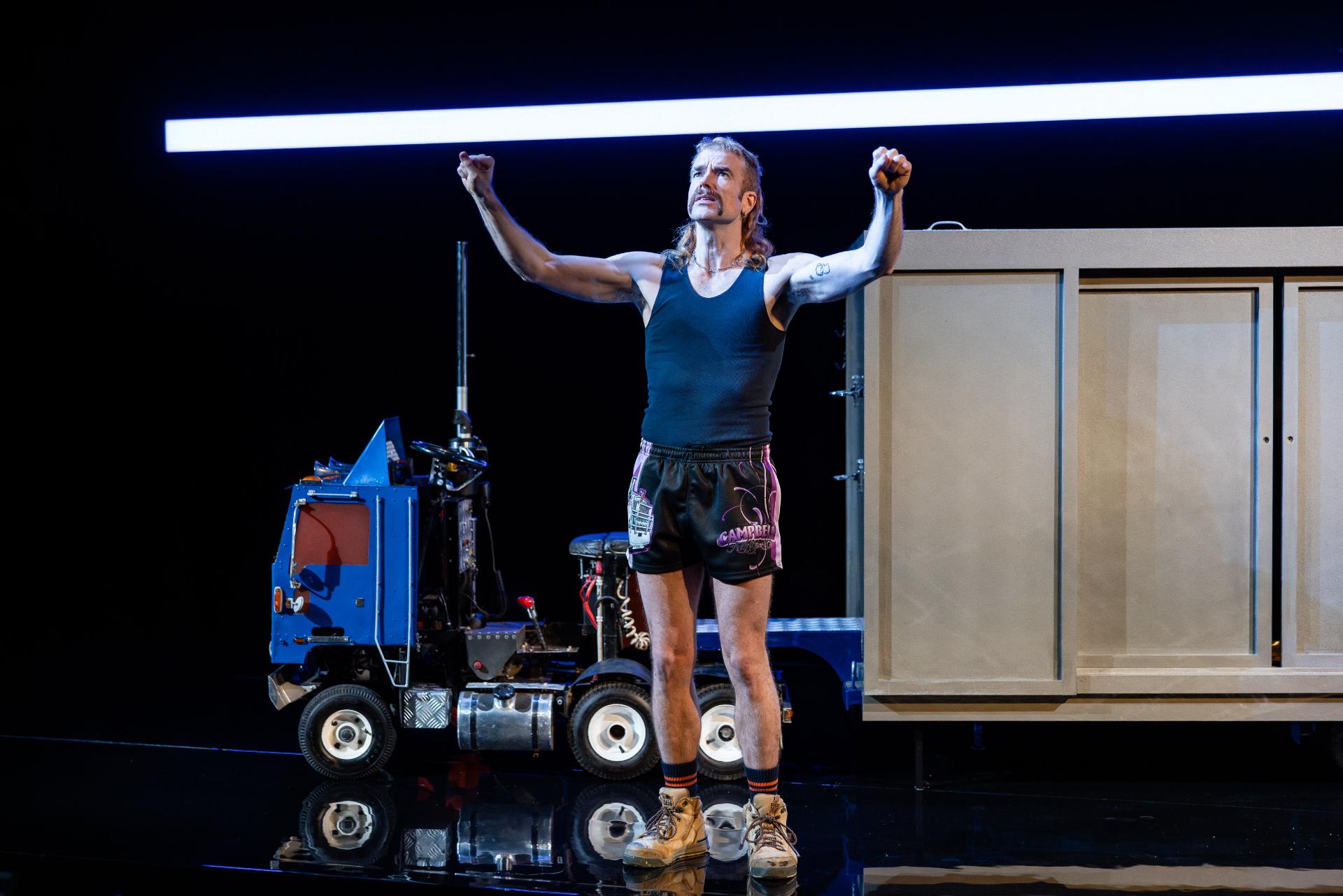
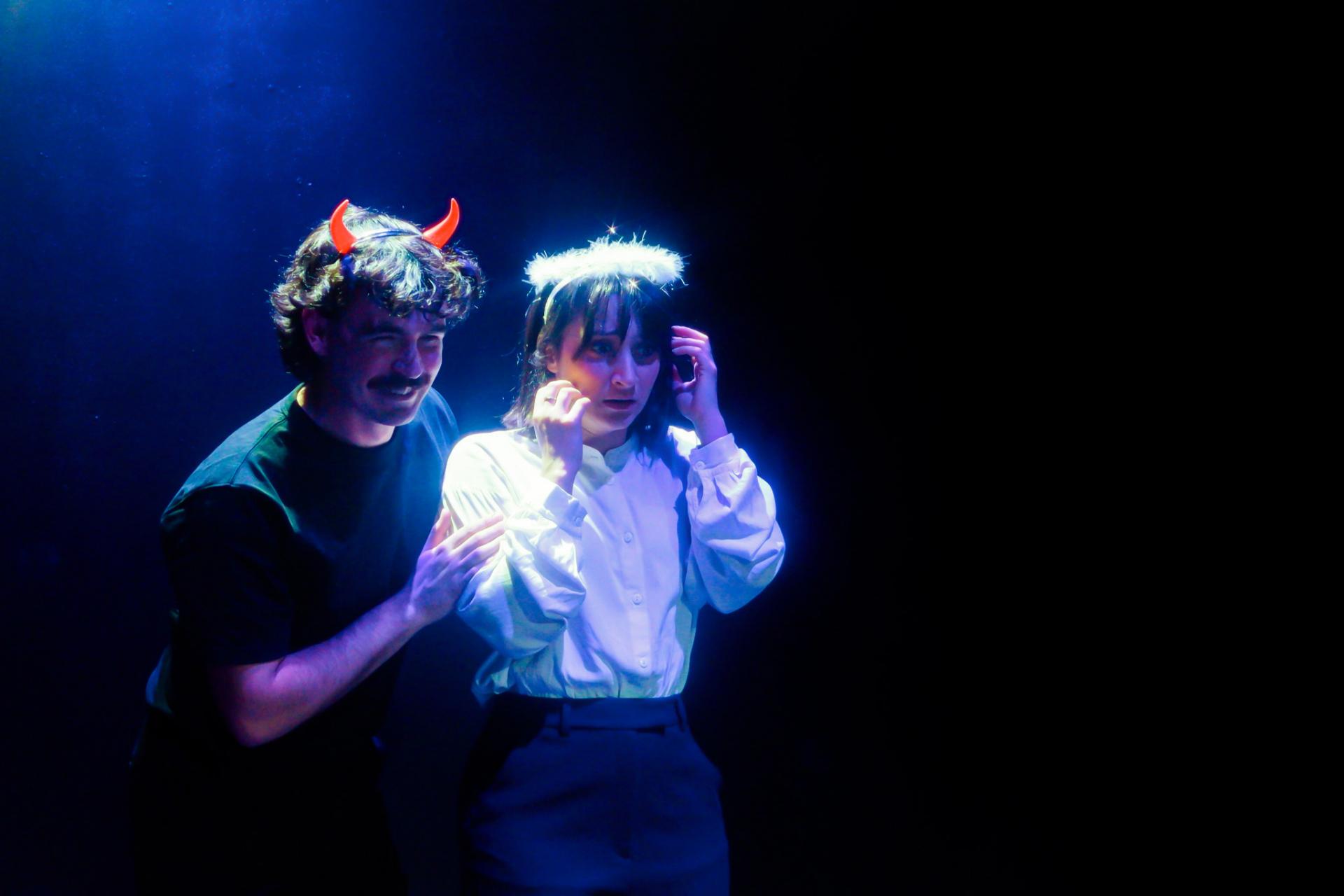
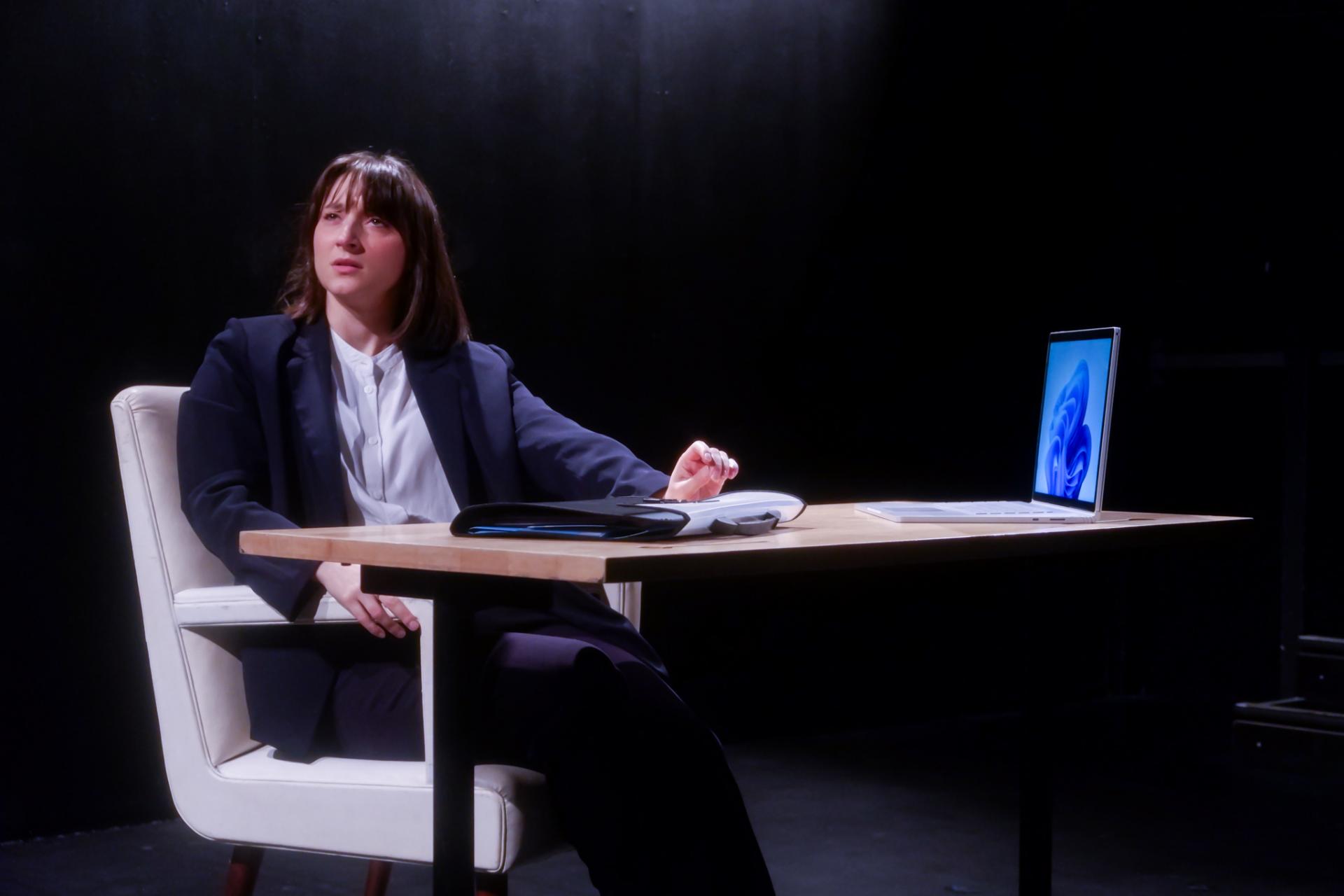
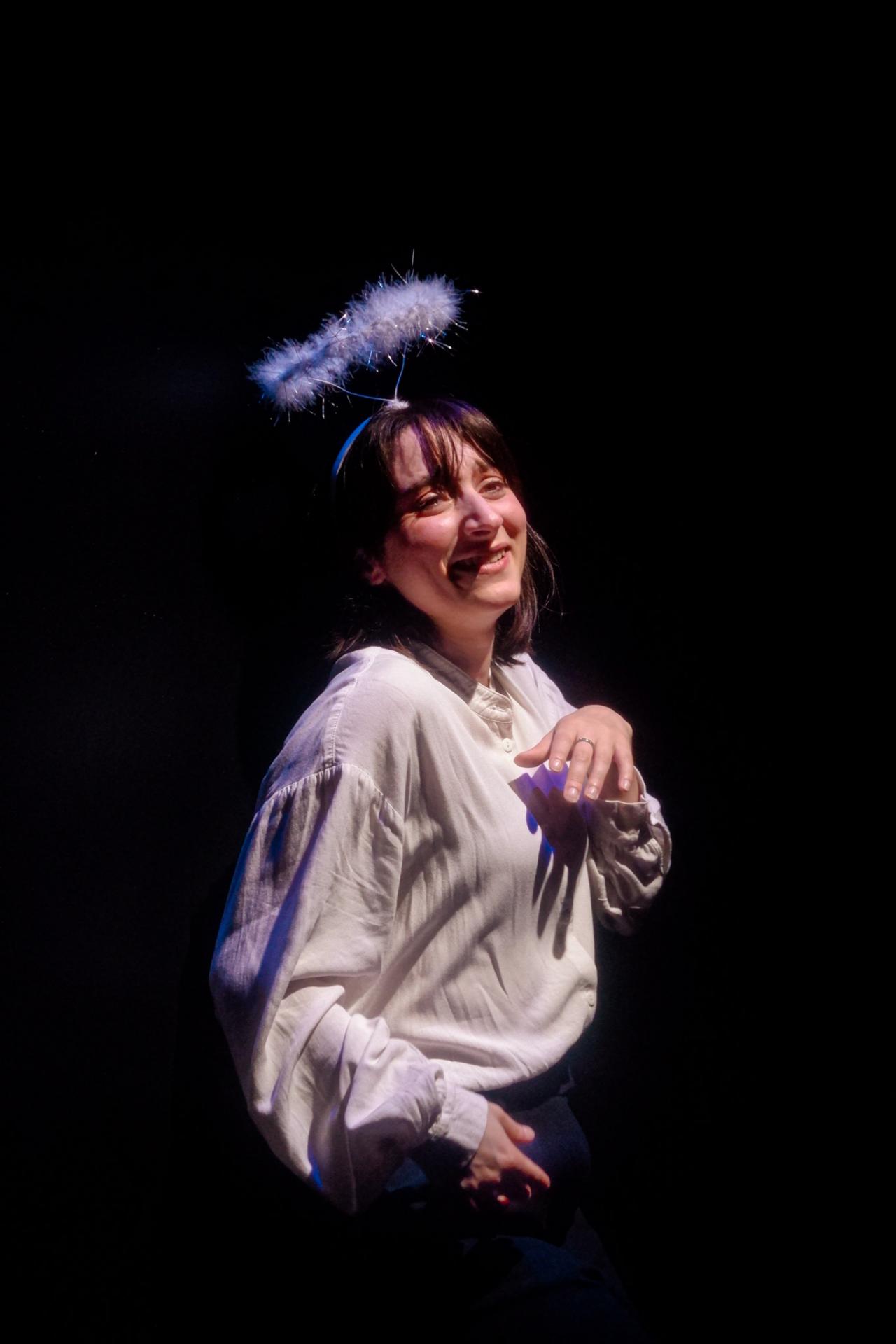
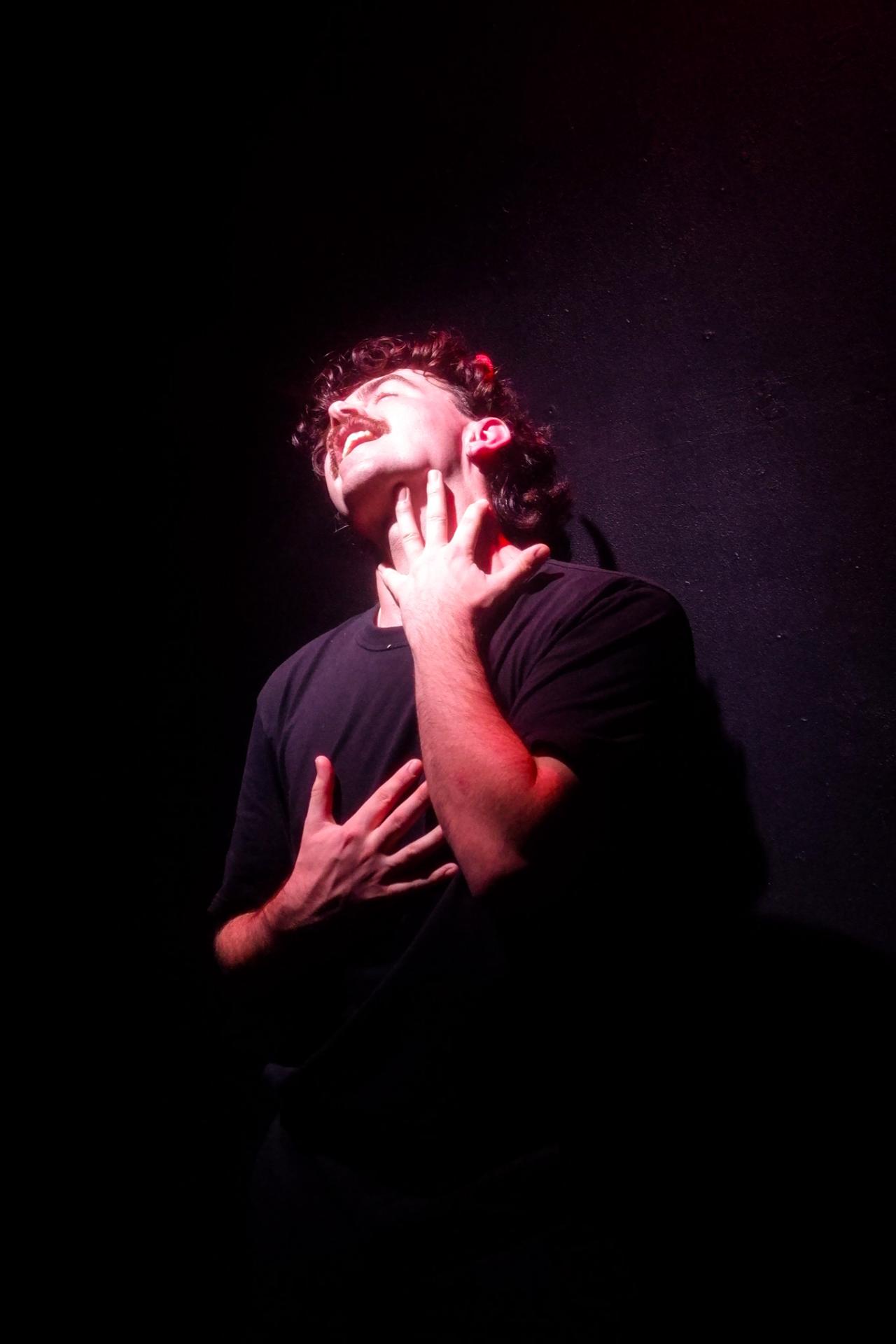
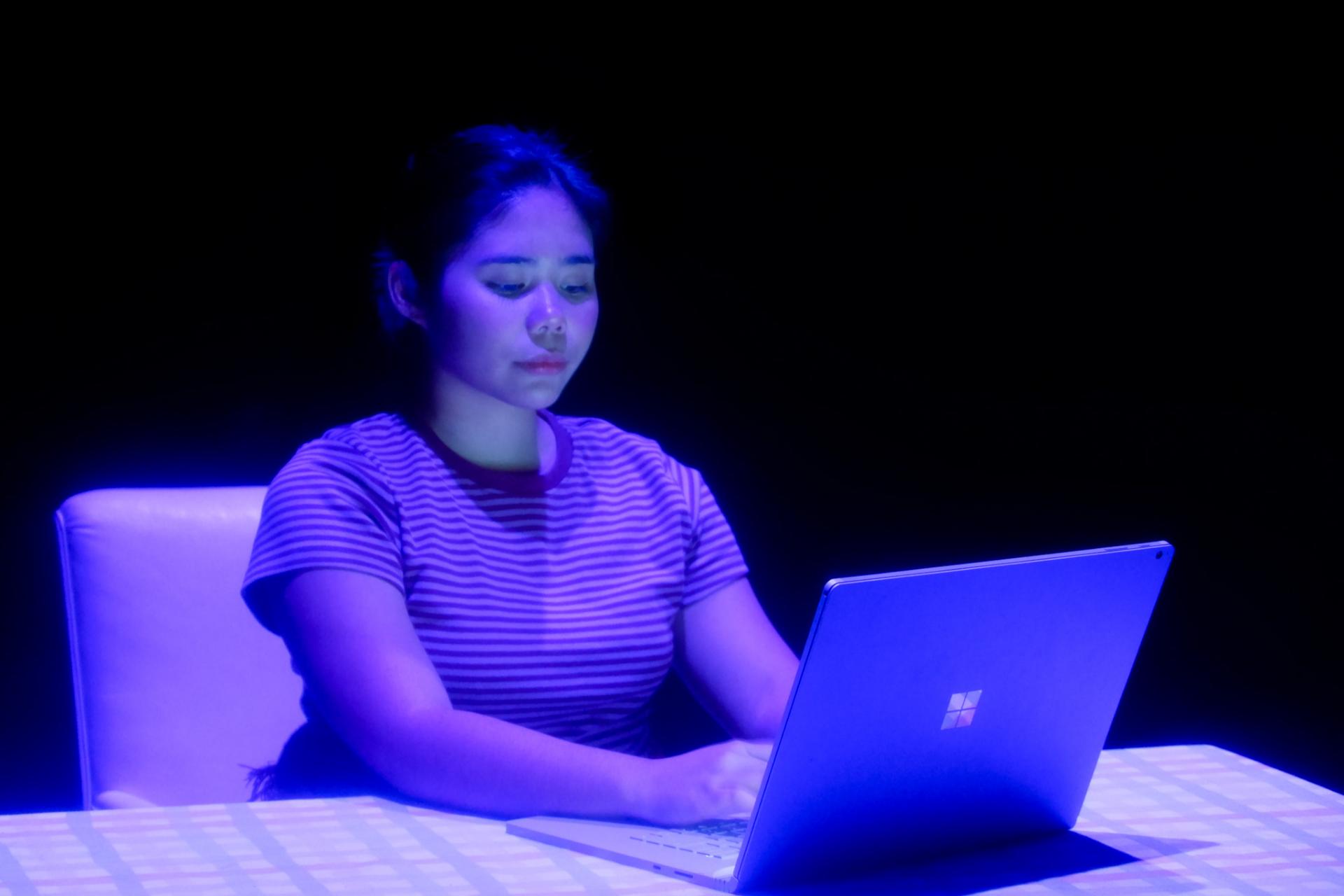
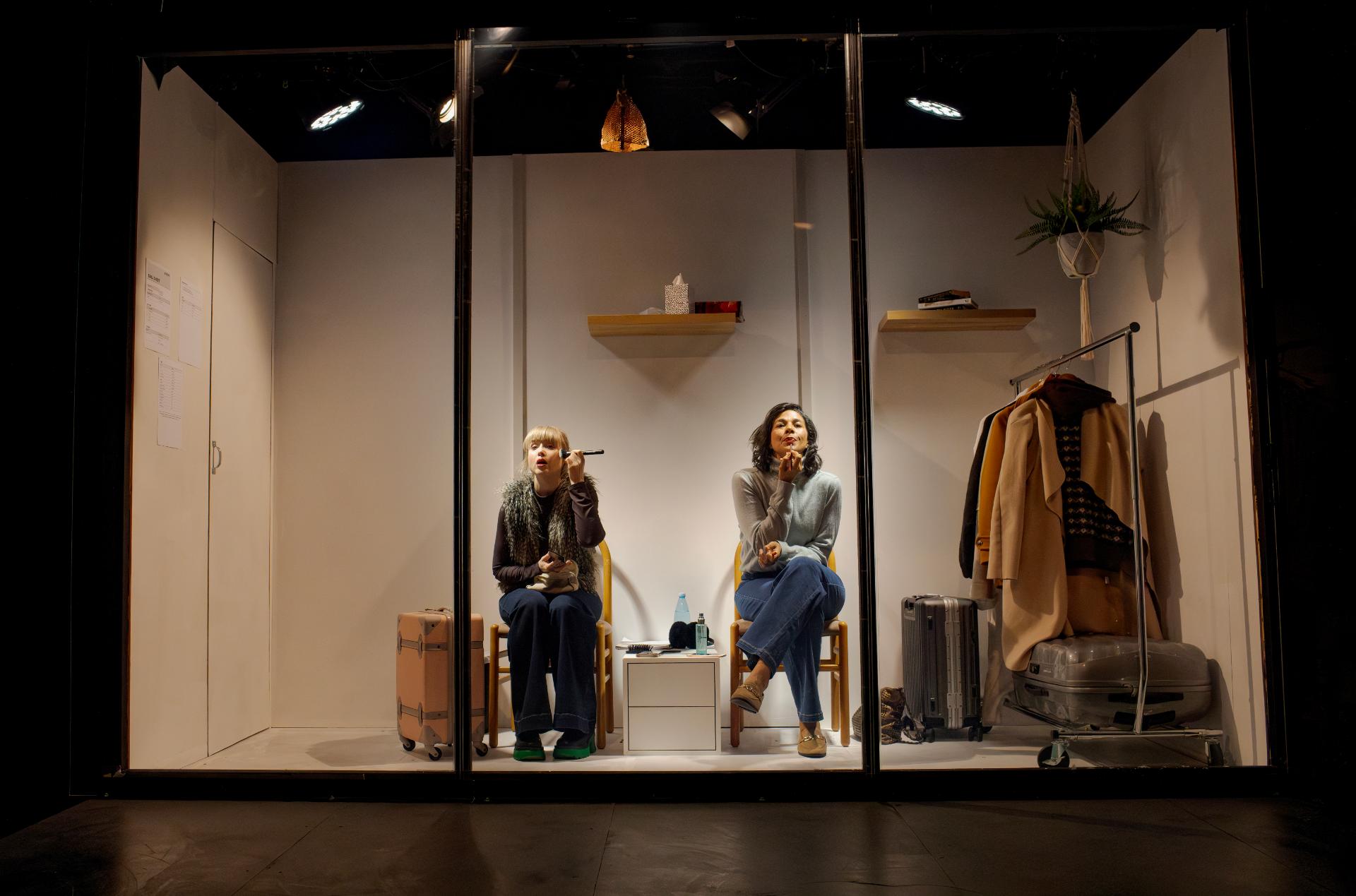
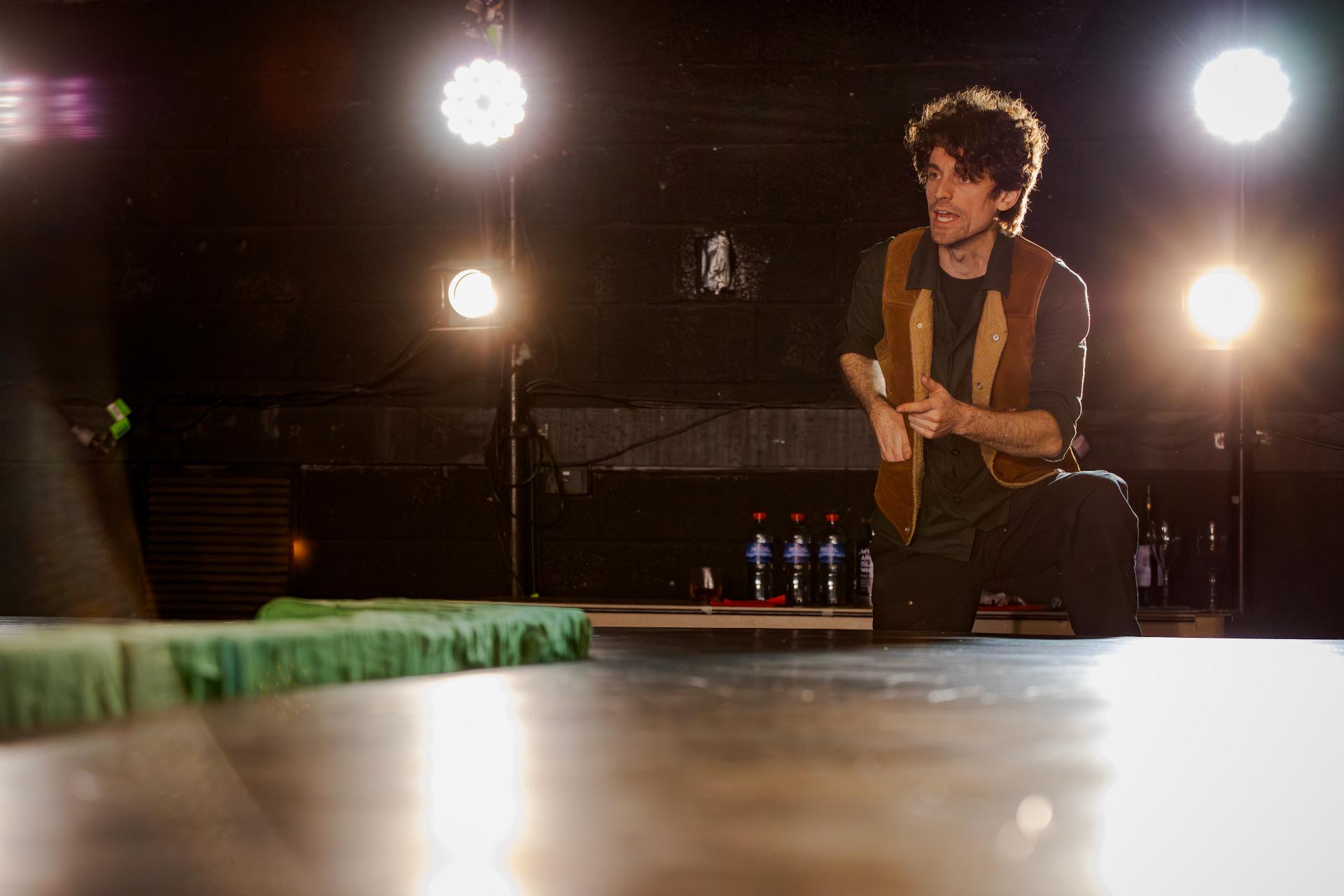
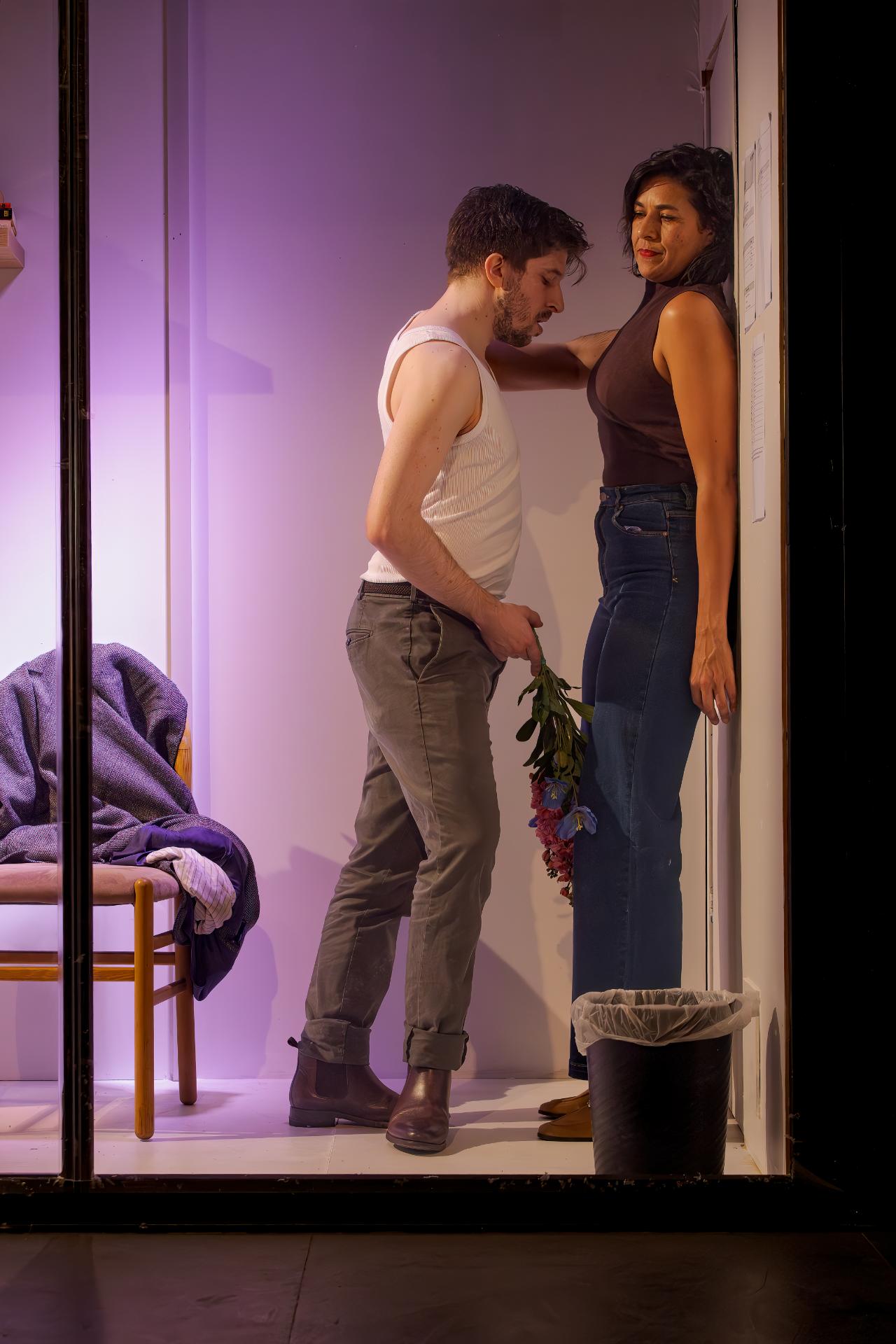
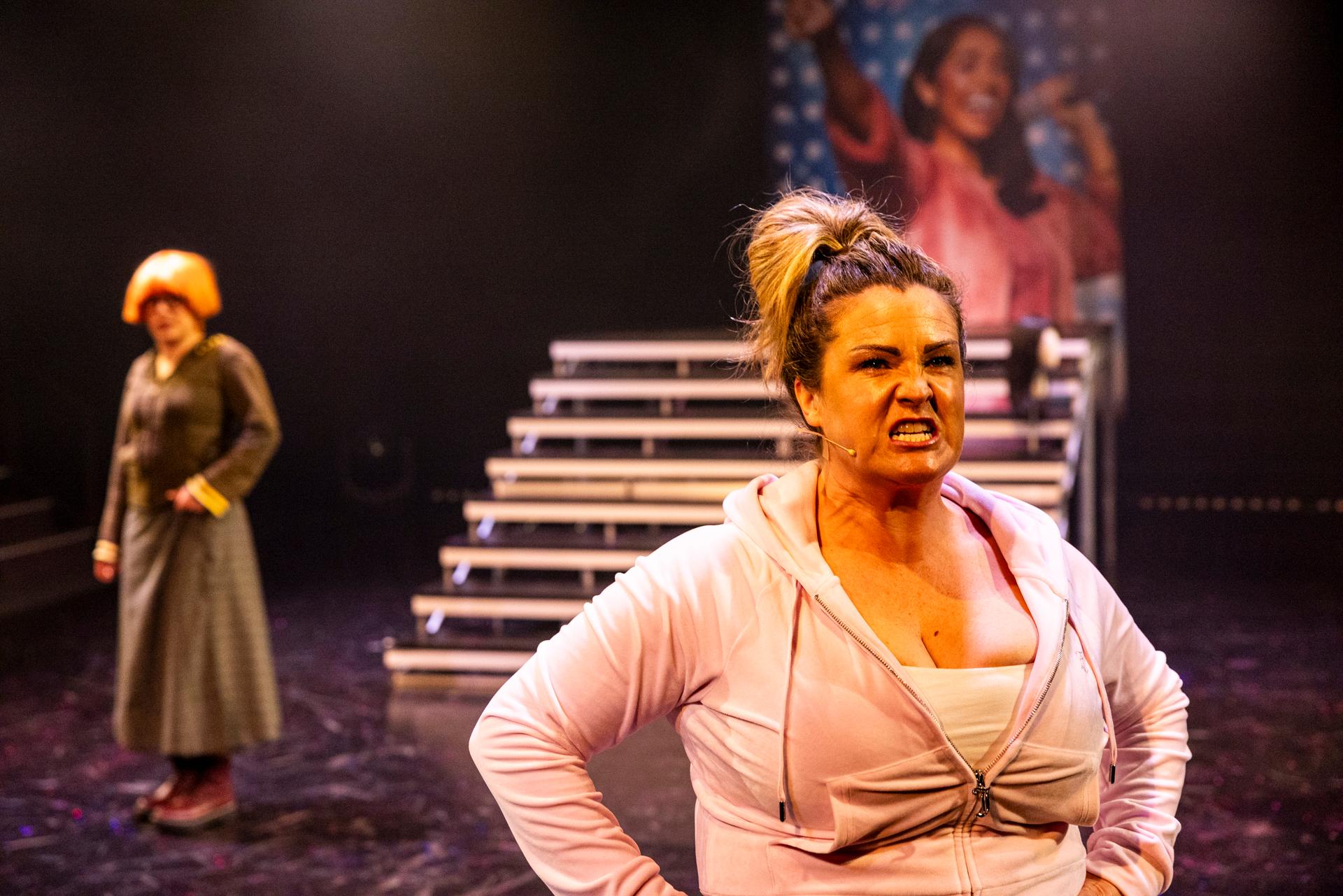
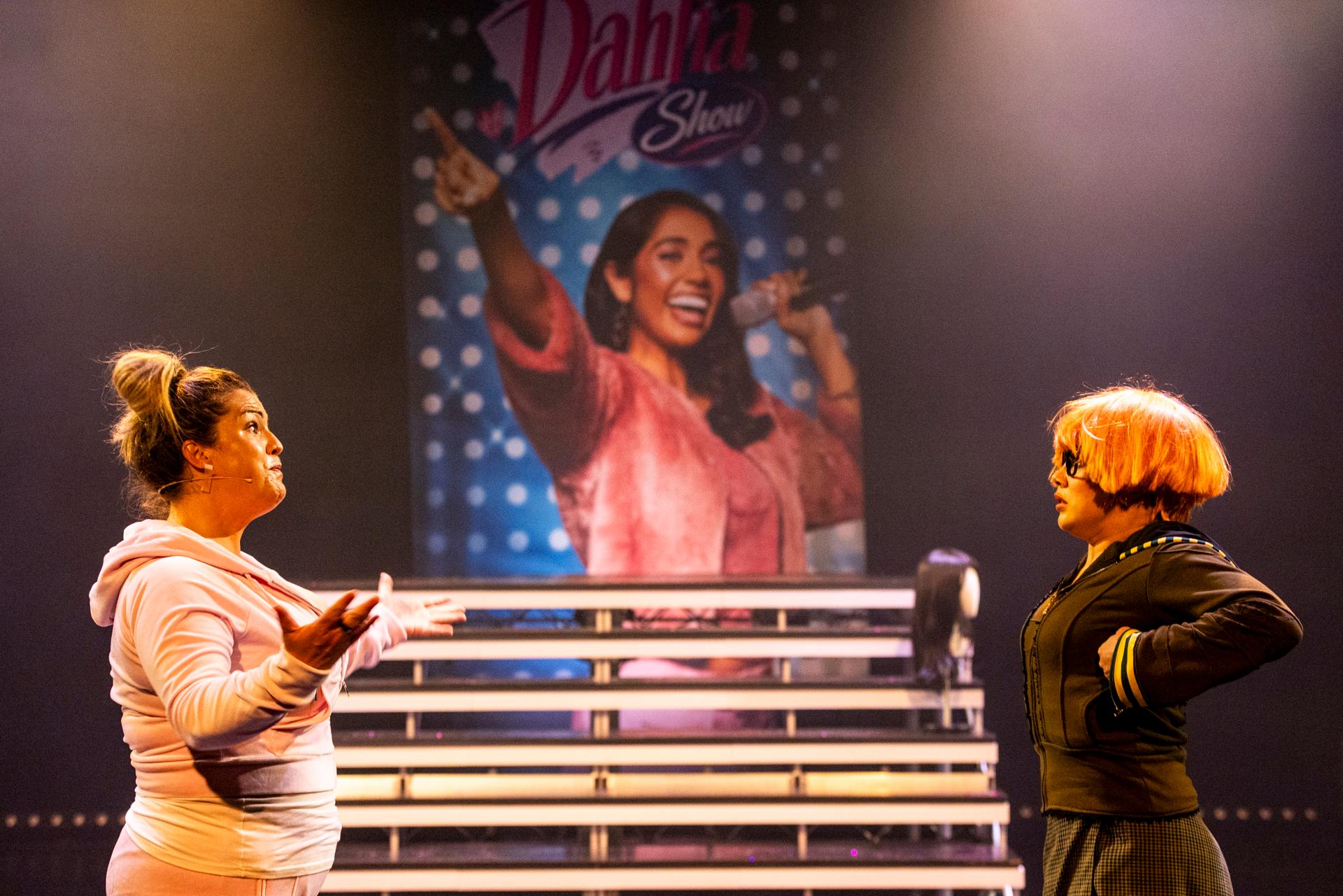
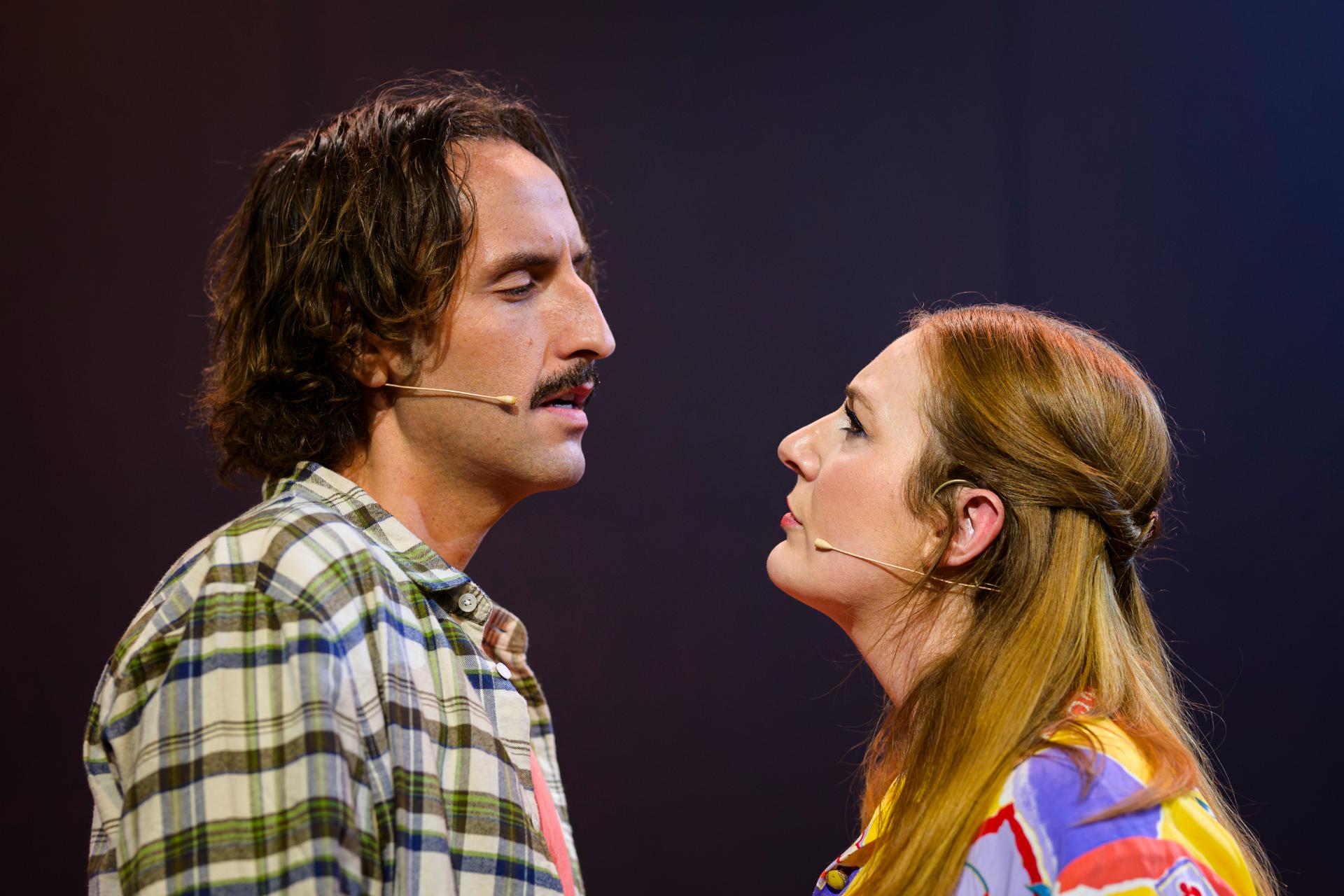
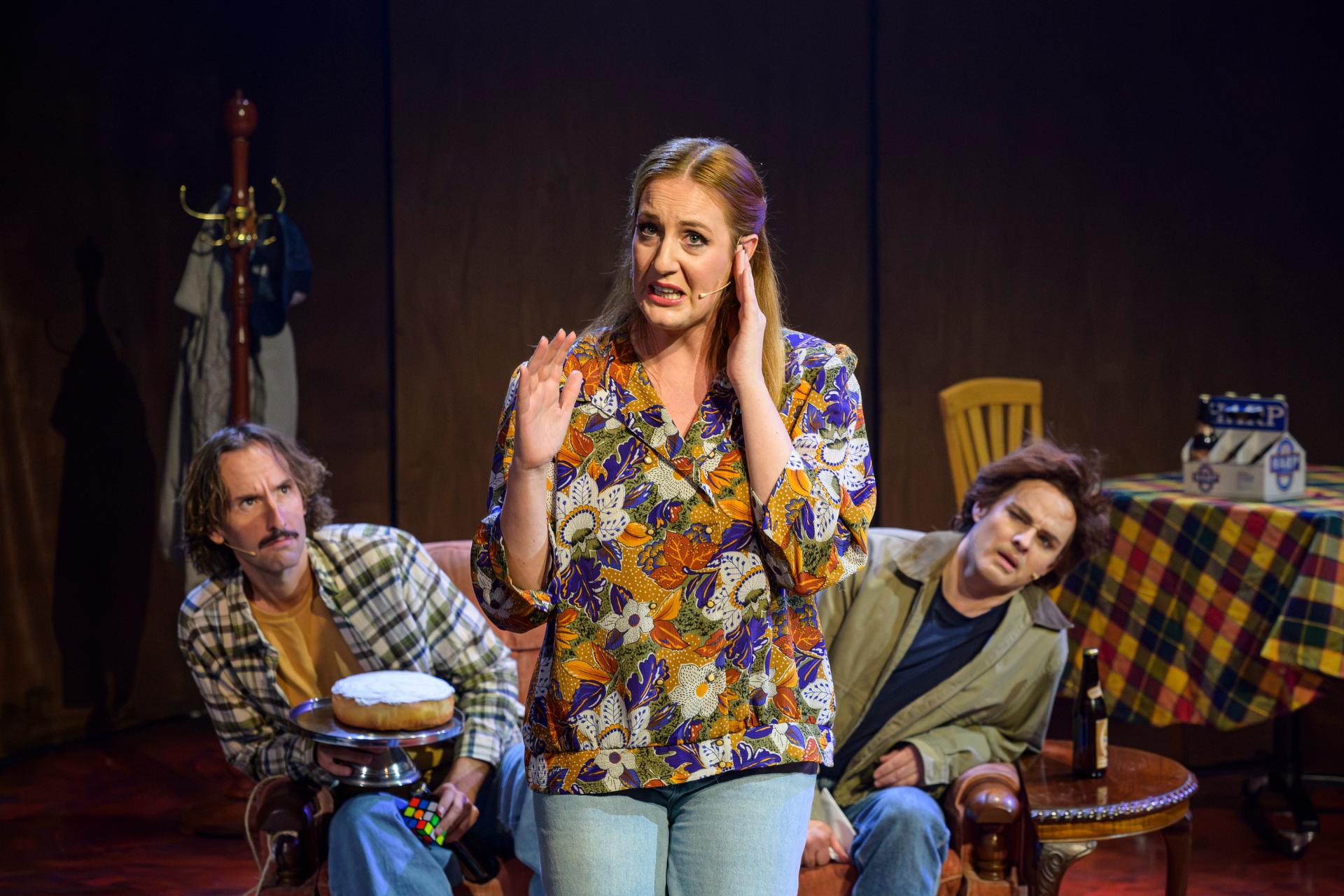
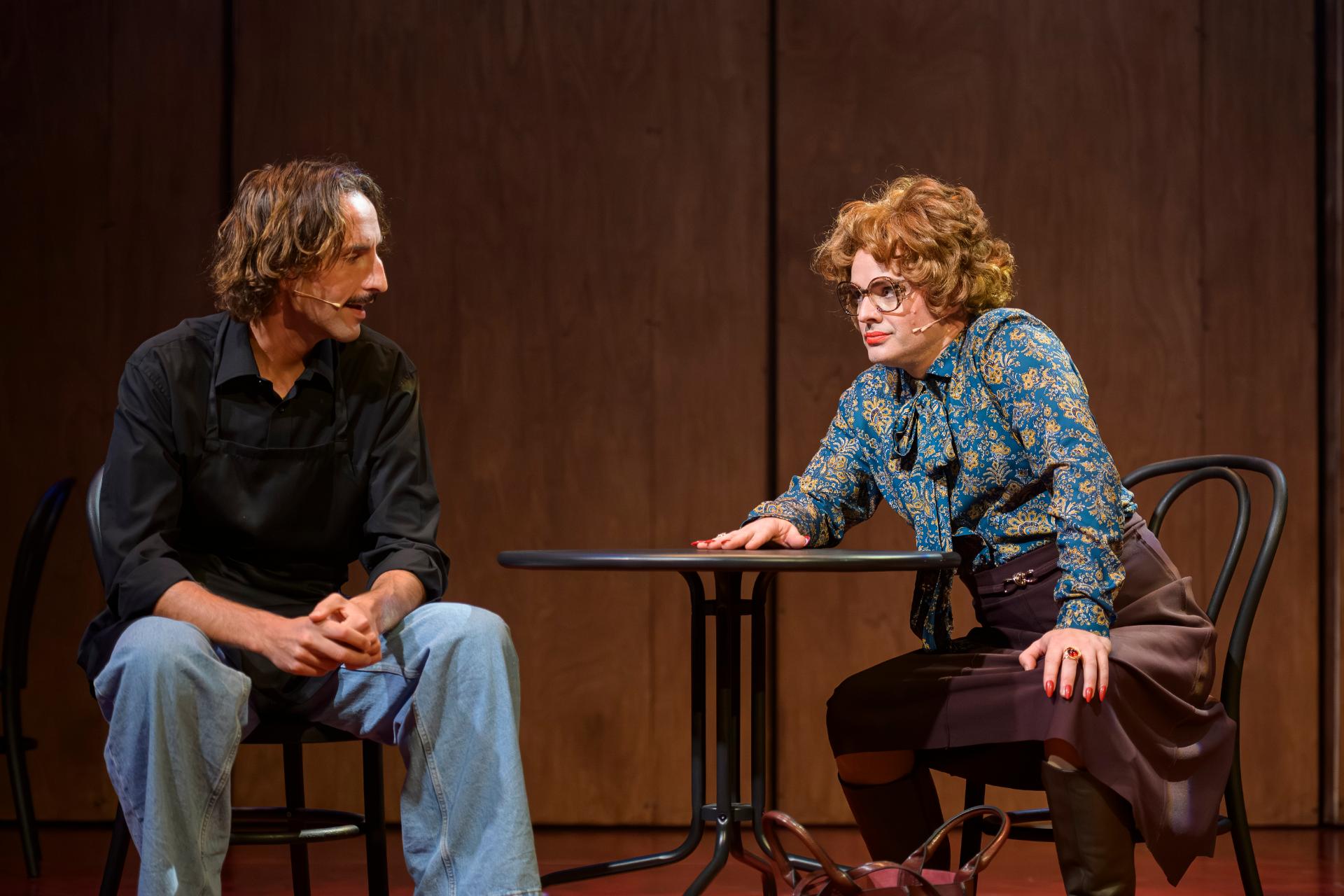
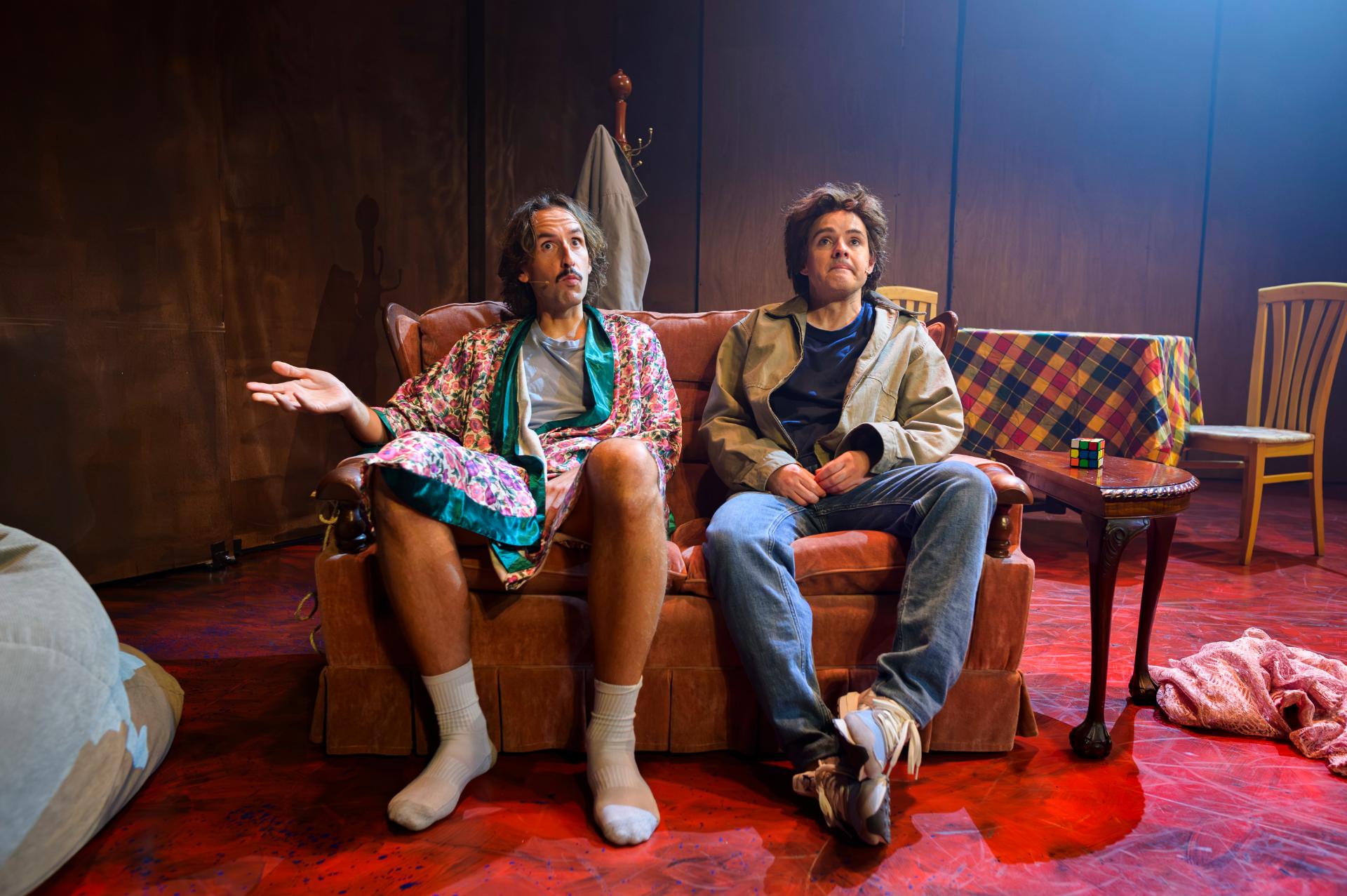
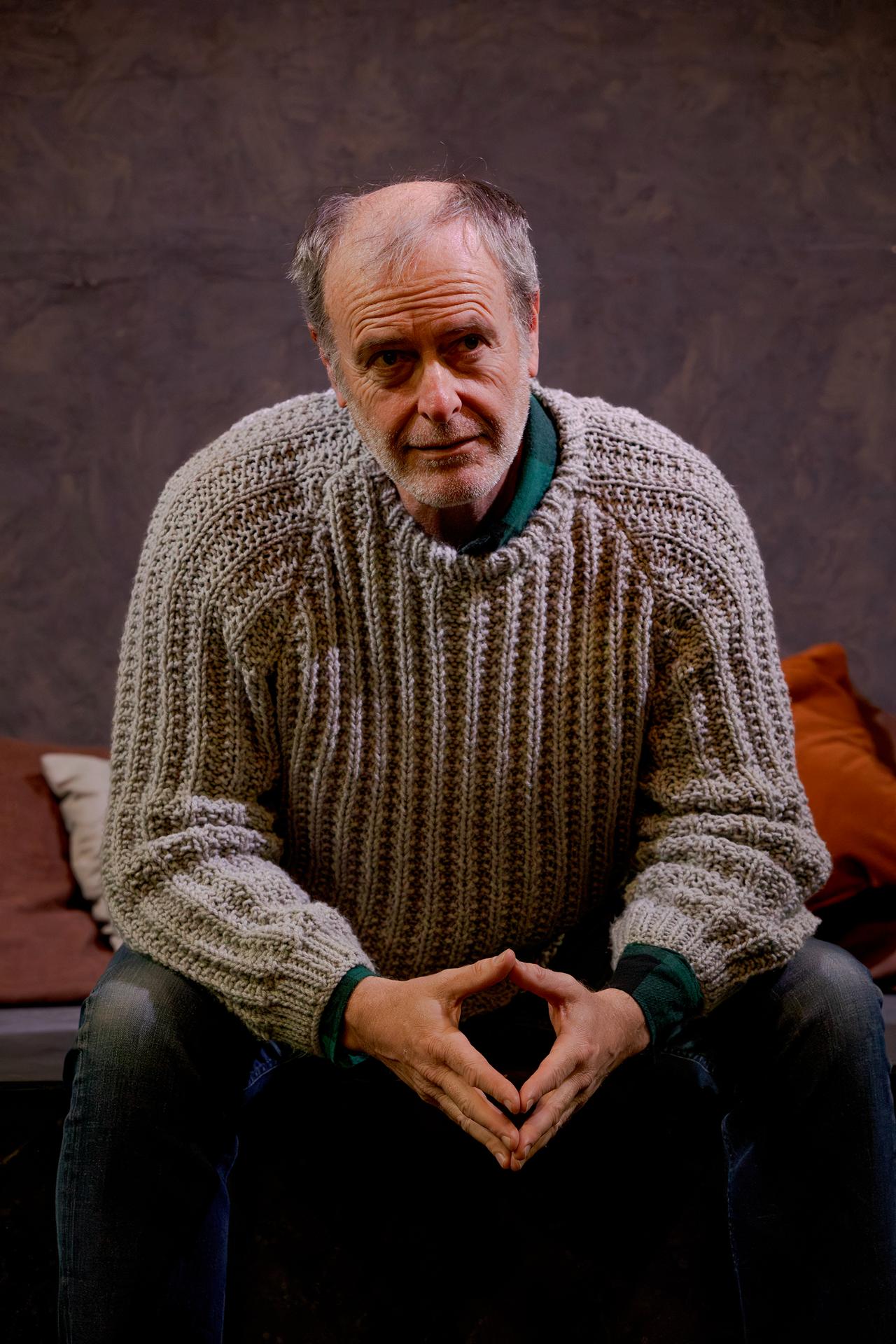
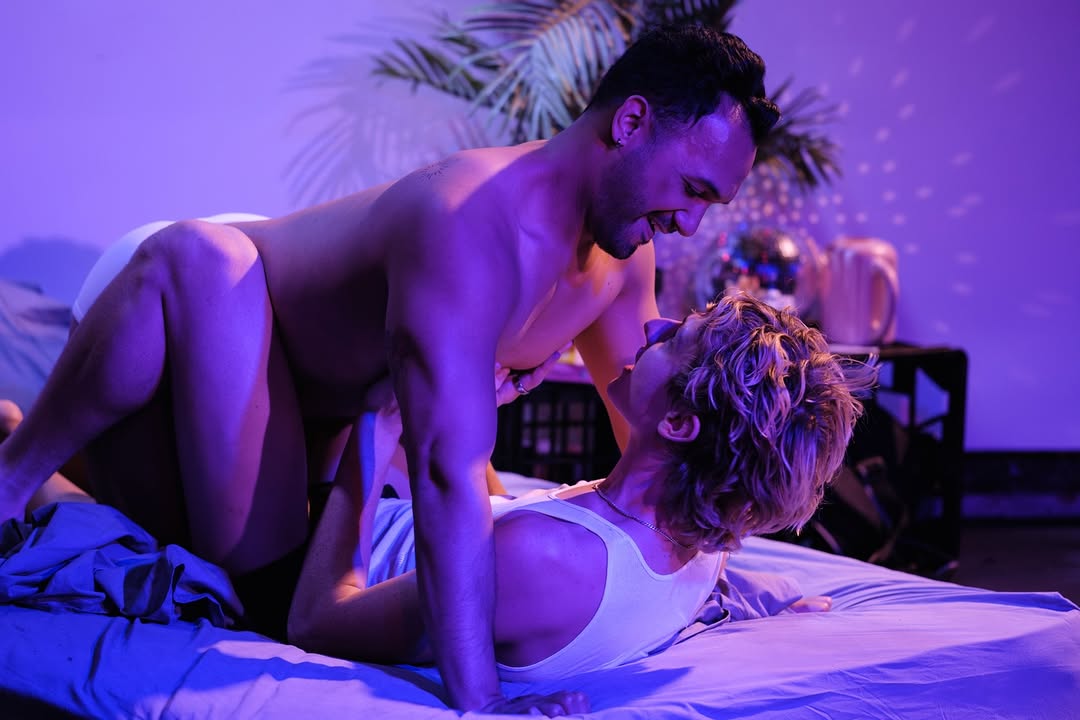
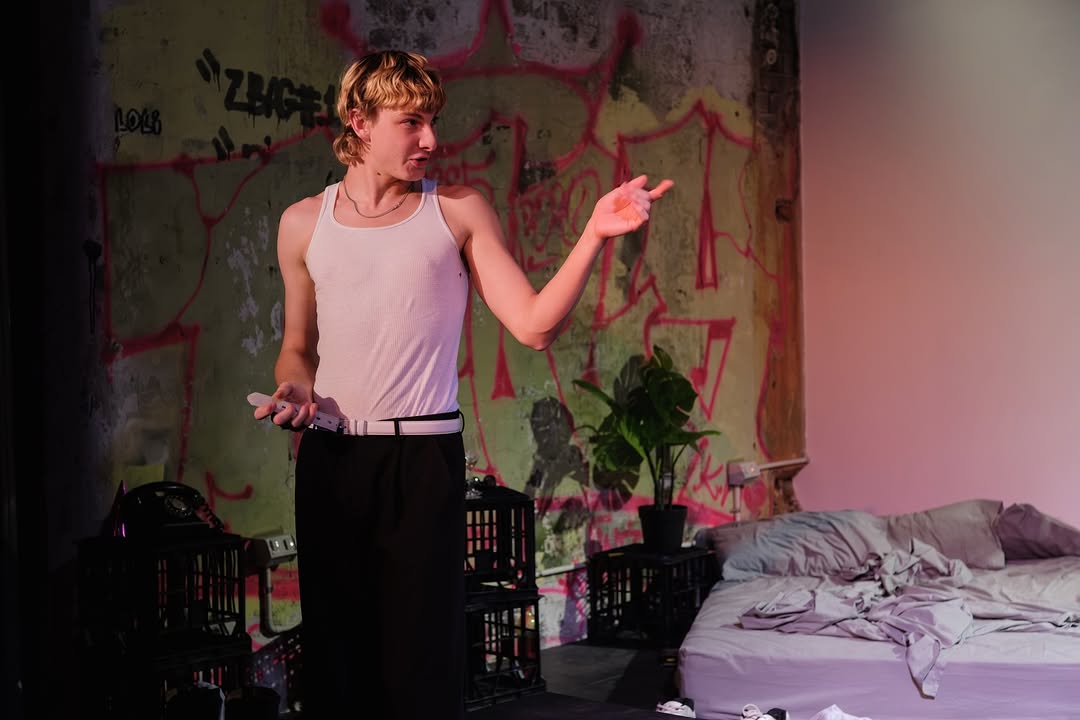
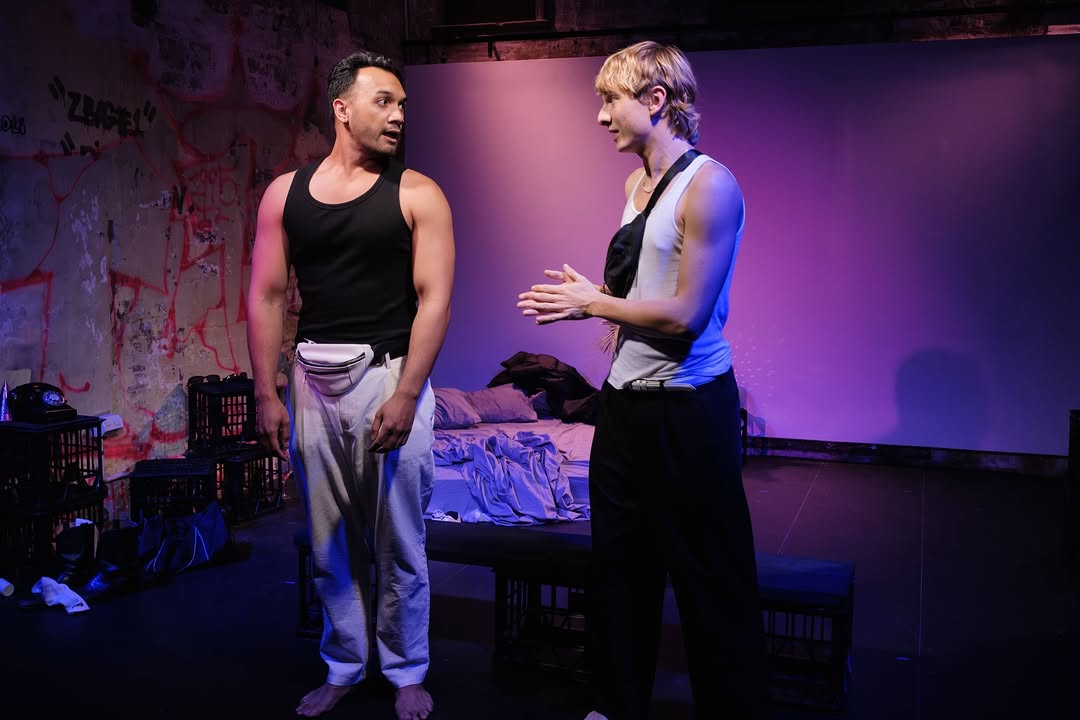
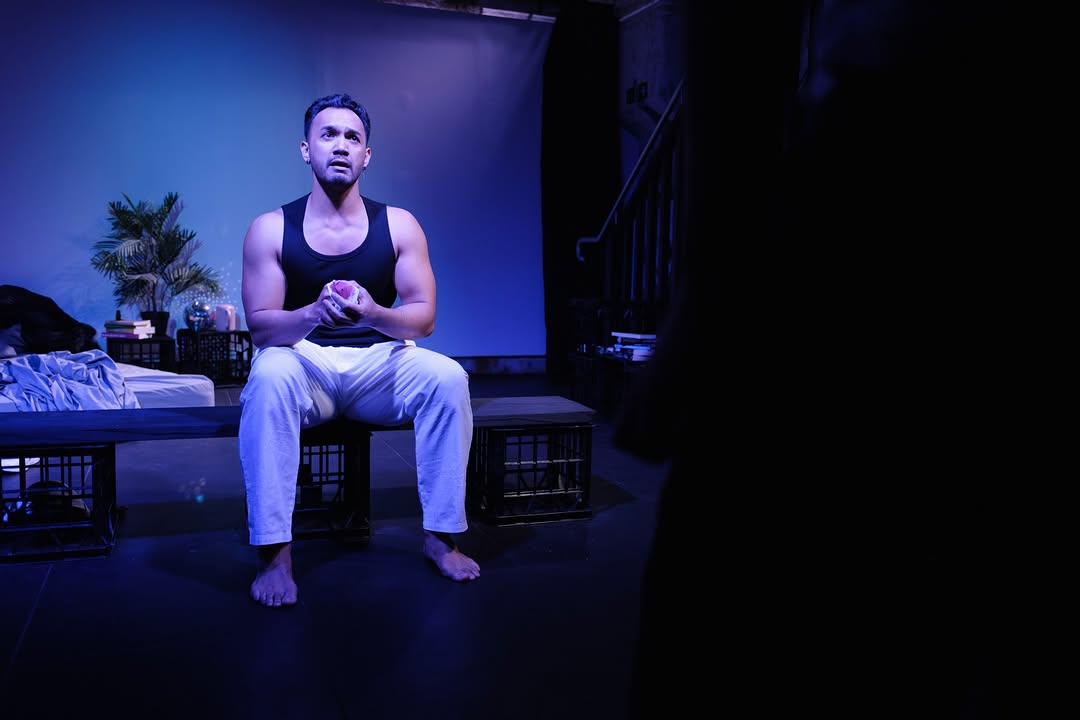
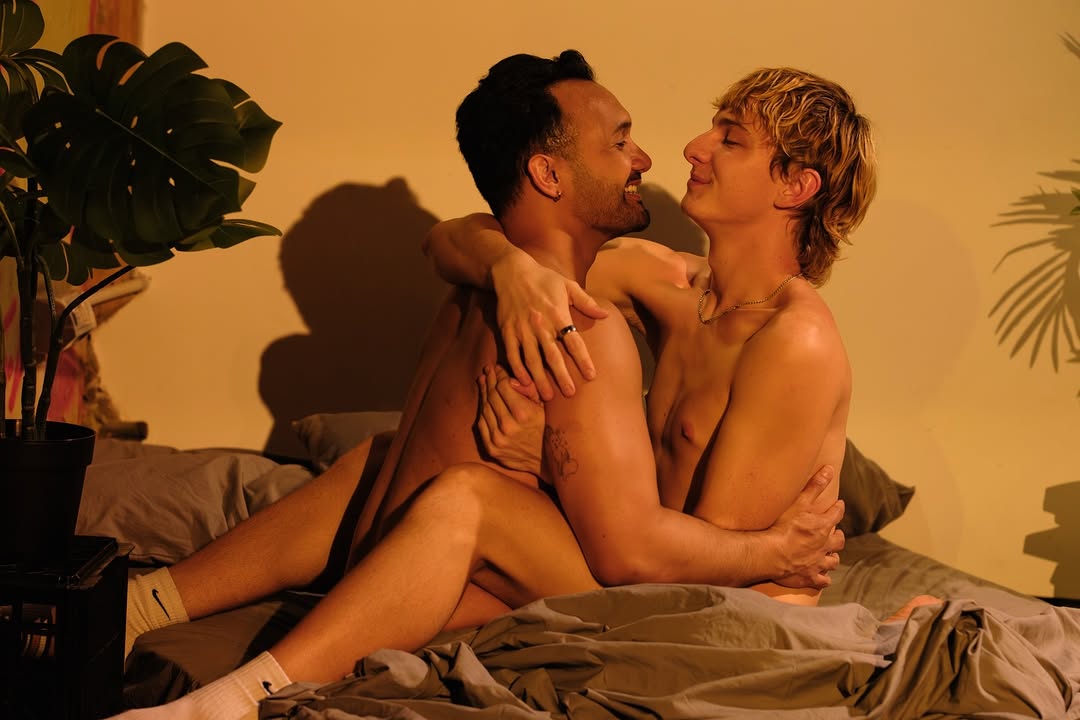
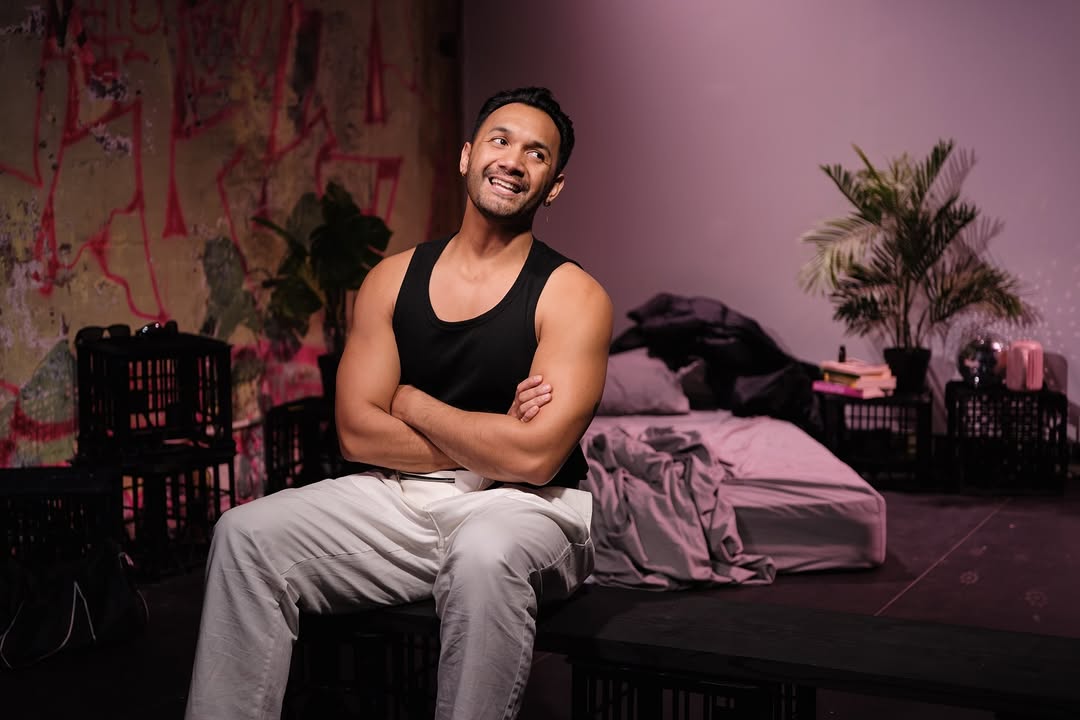
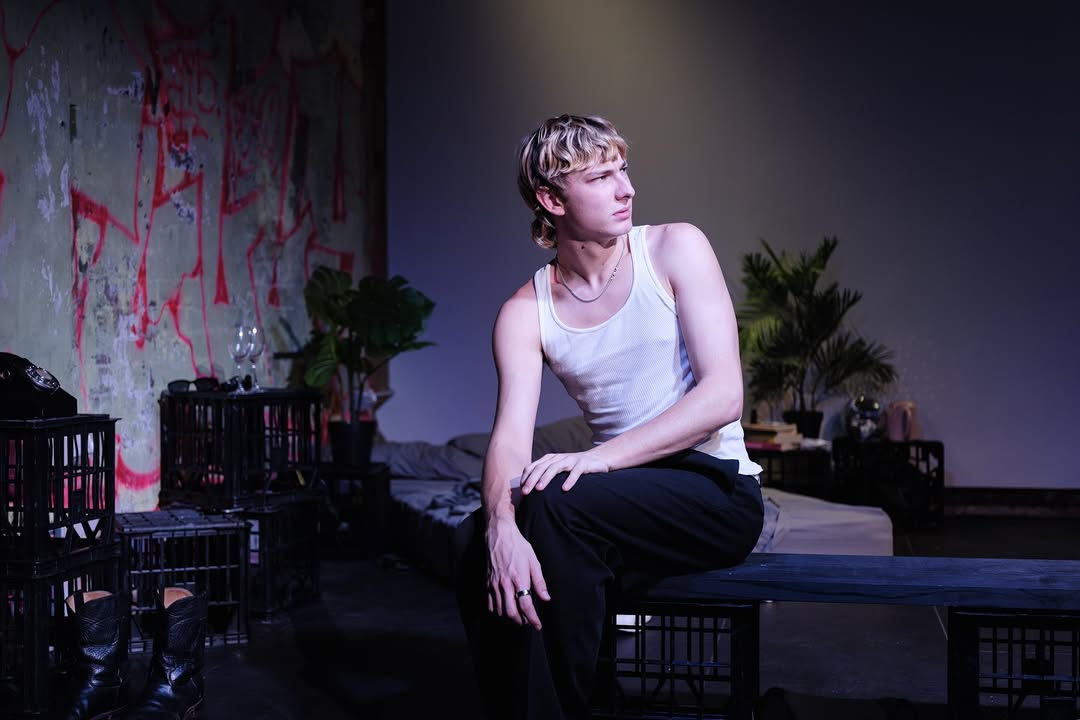
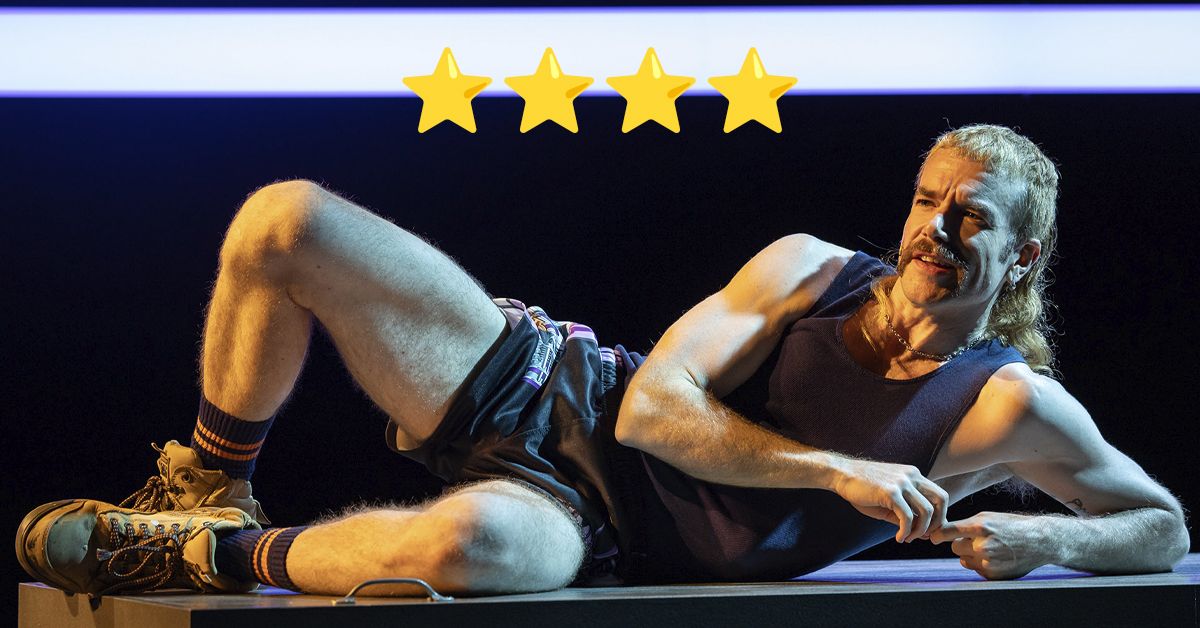
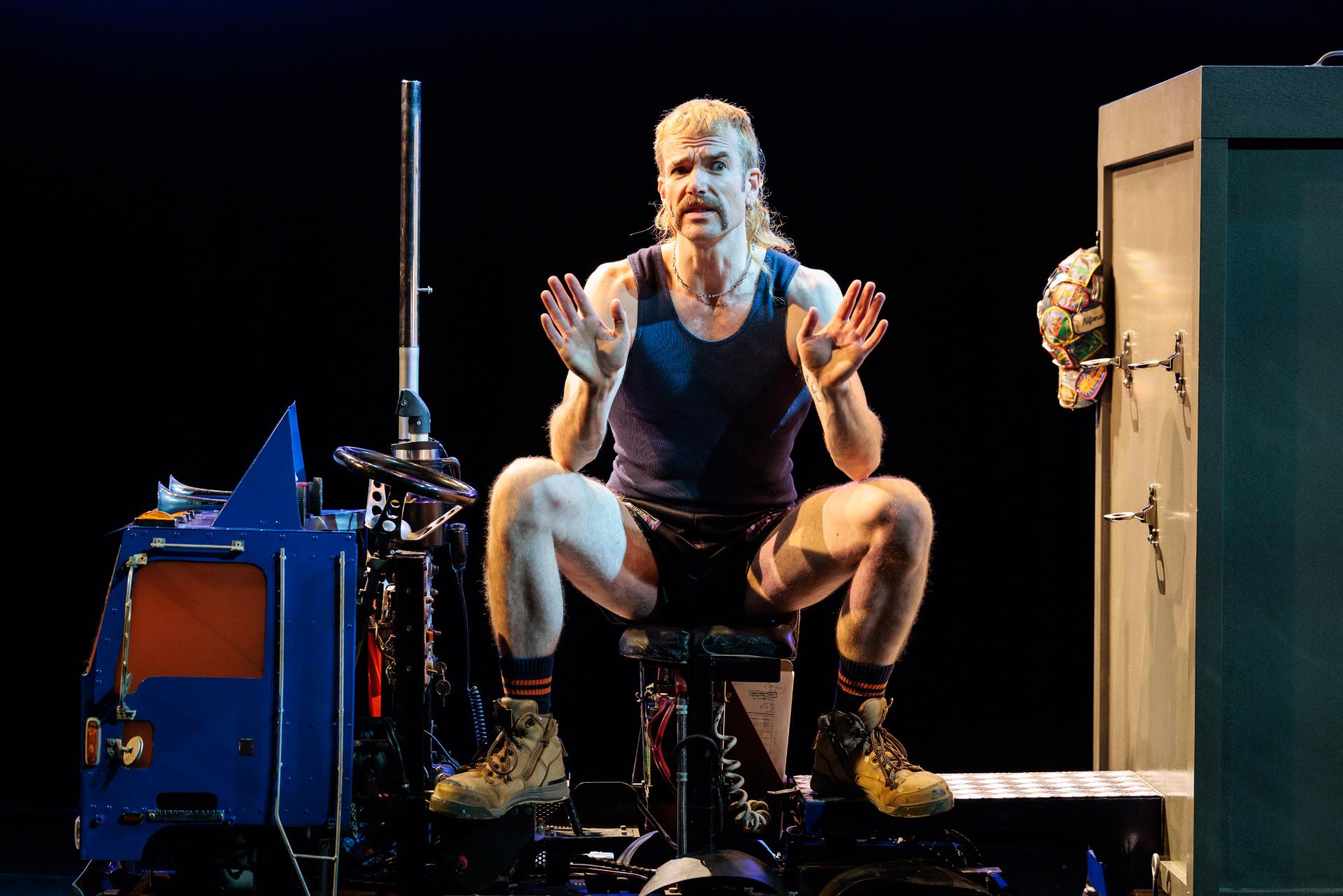
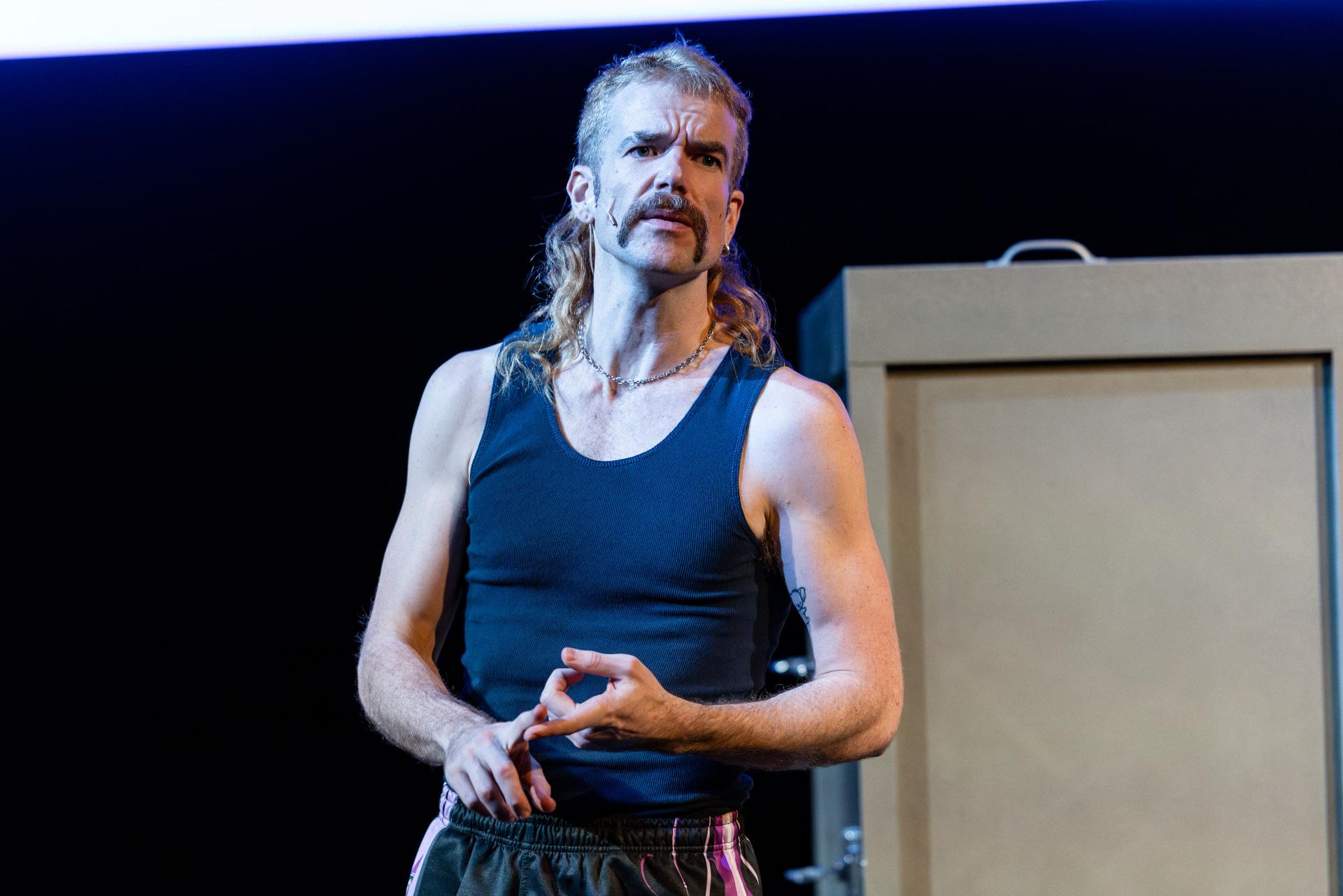
Jonny Hawkins’ solo performance Truck Driver traces the continental crossings of Chiko, a long-haul driver whose solitary labour—ferrying cargo and livestock across vast distances—sustains the invisible arteries of contemporary consumption. Yet Hawkins refuses the easy reduction of their protagonist to mere instrument; Chiko is, above all, a consciousness in motion, his interior life rich with unspoken rumination. Only the chance encounter with a hitchhiker occasions the rare transmutation of thought into speech, exposing the profound isolation that structures his existence. In this respect, Chiko belongs to that vast, uncelebrated multitude upon whose labour modern life silently depends, and Hawkins’ play offers an uncommon aperture into the psychological textures of working-class experience—its resentments and generosities alike—in what reads as a sustained act of narrative restitution.

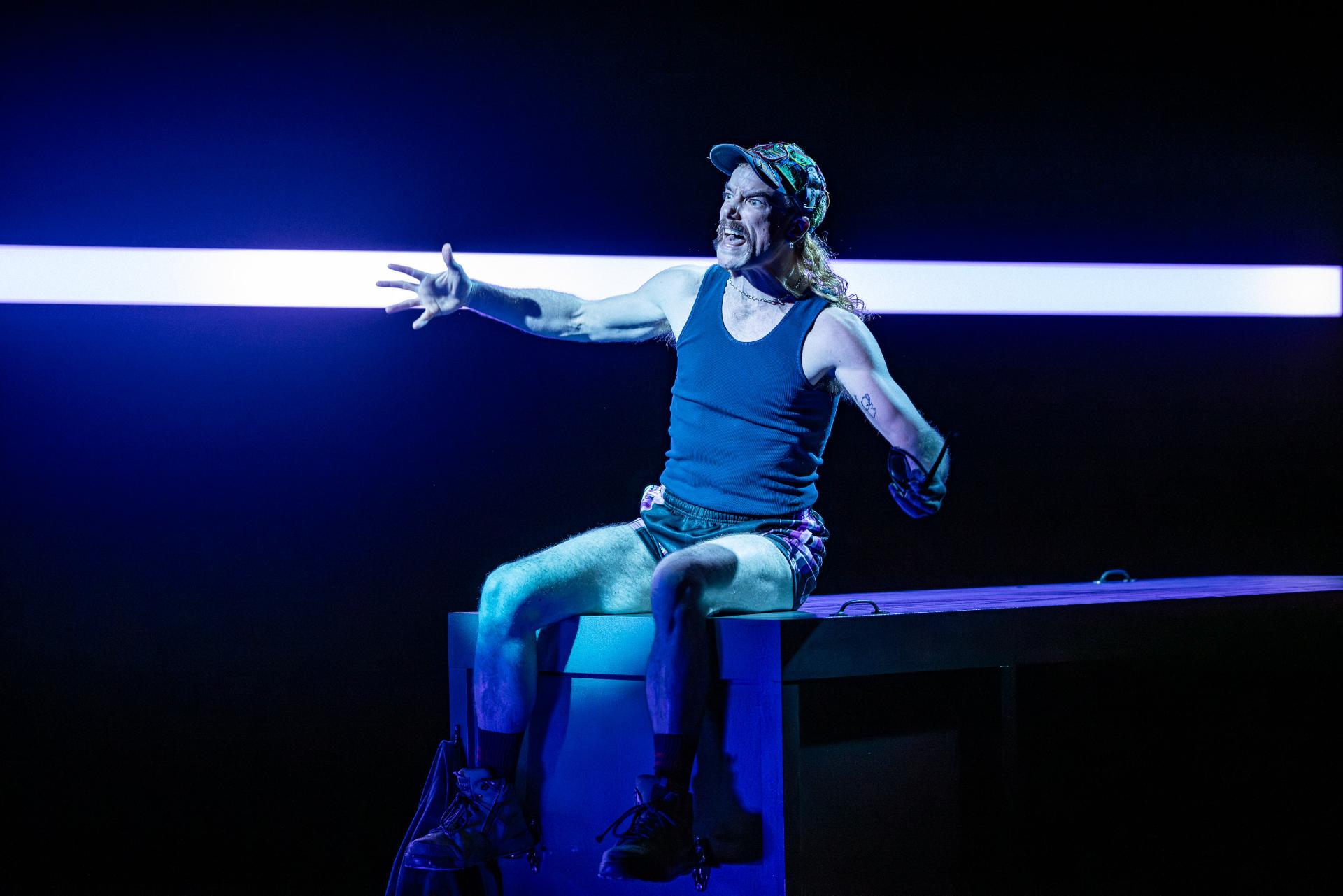
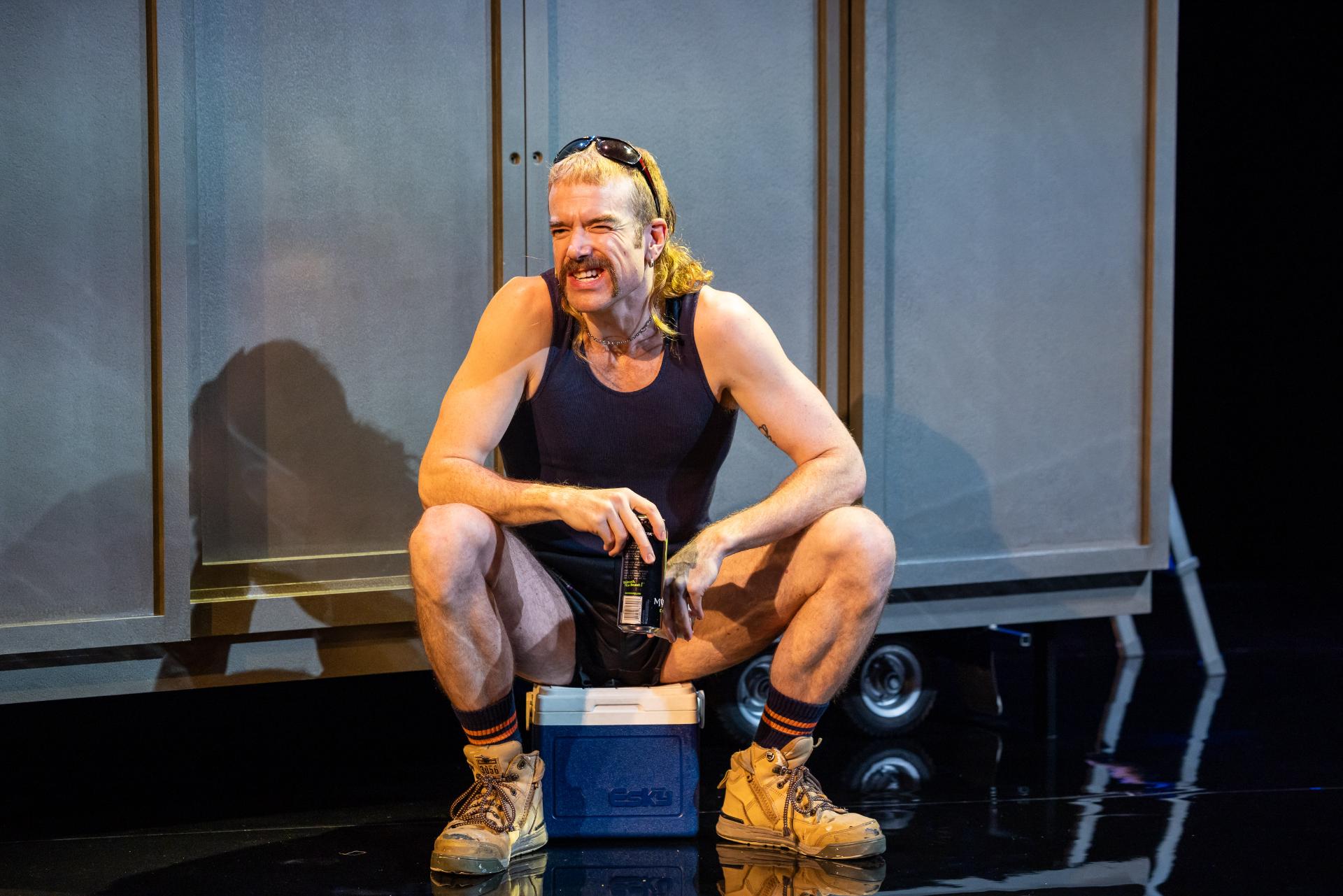
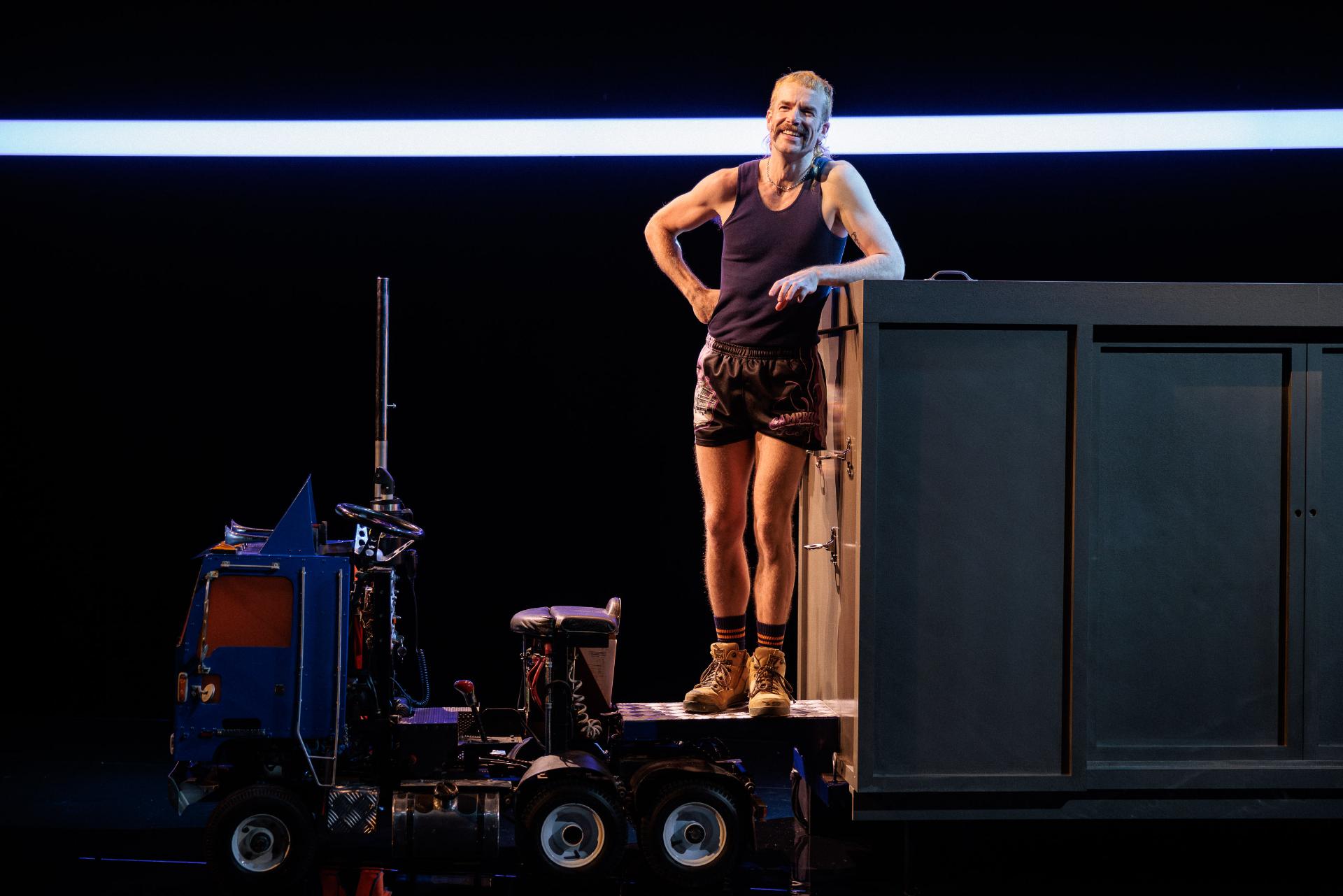
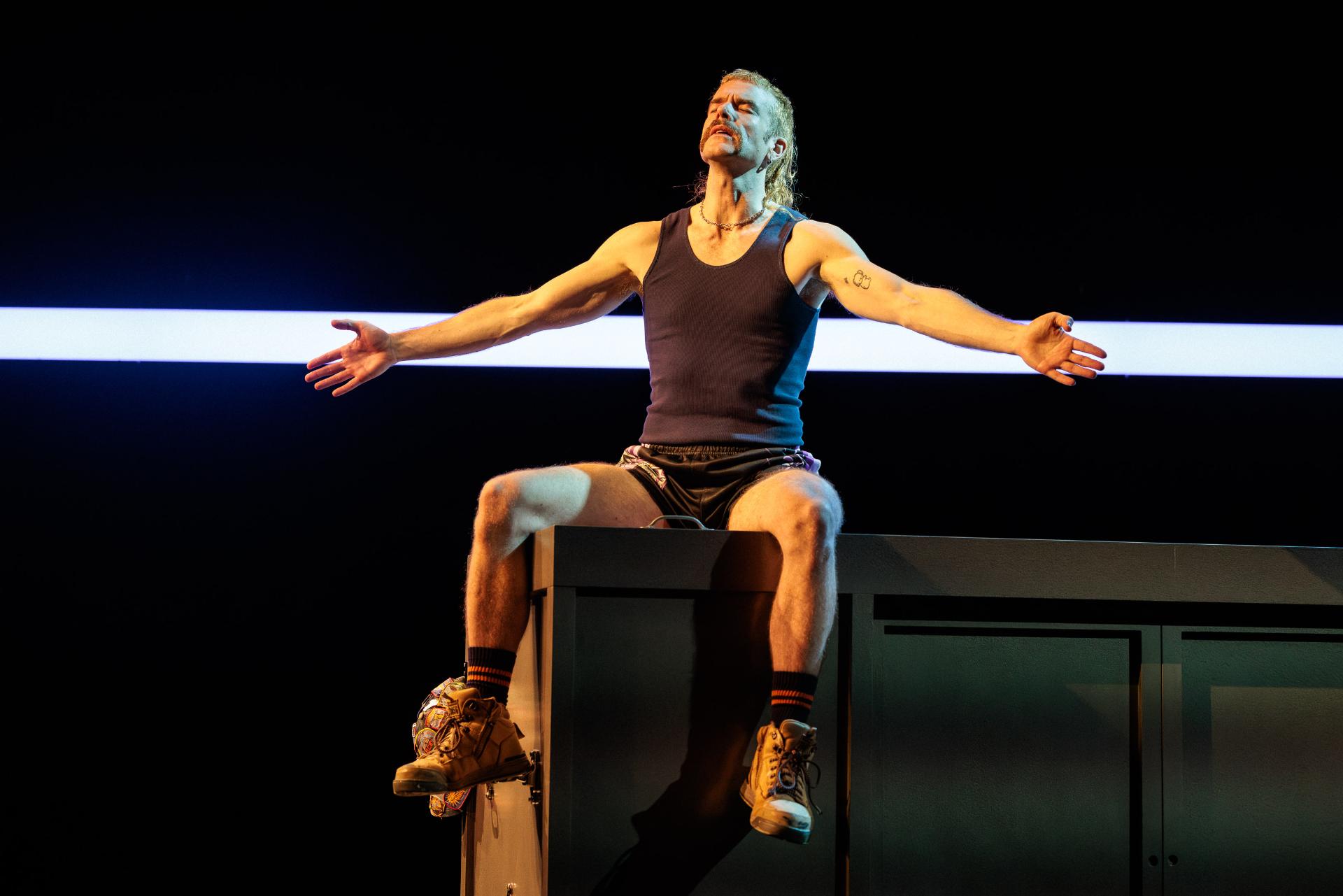
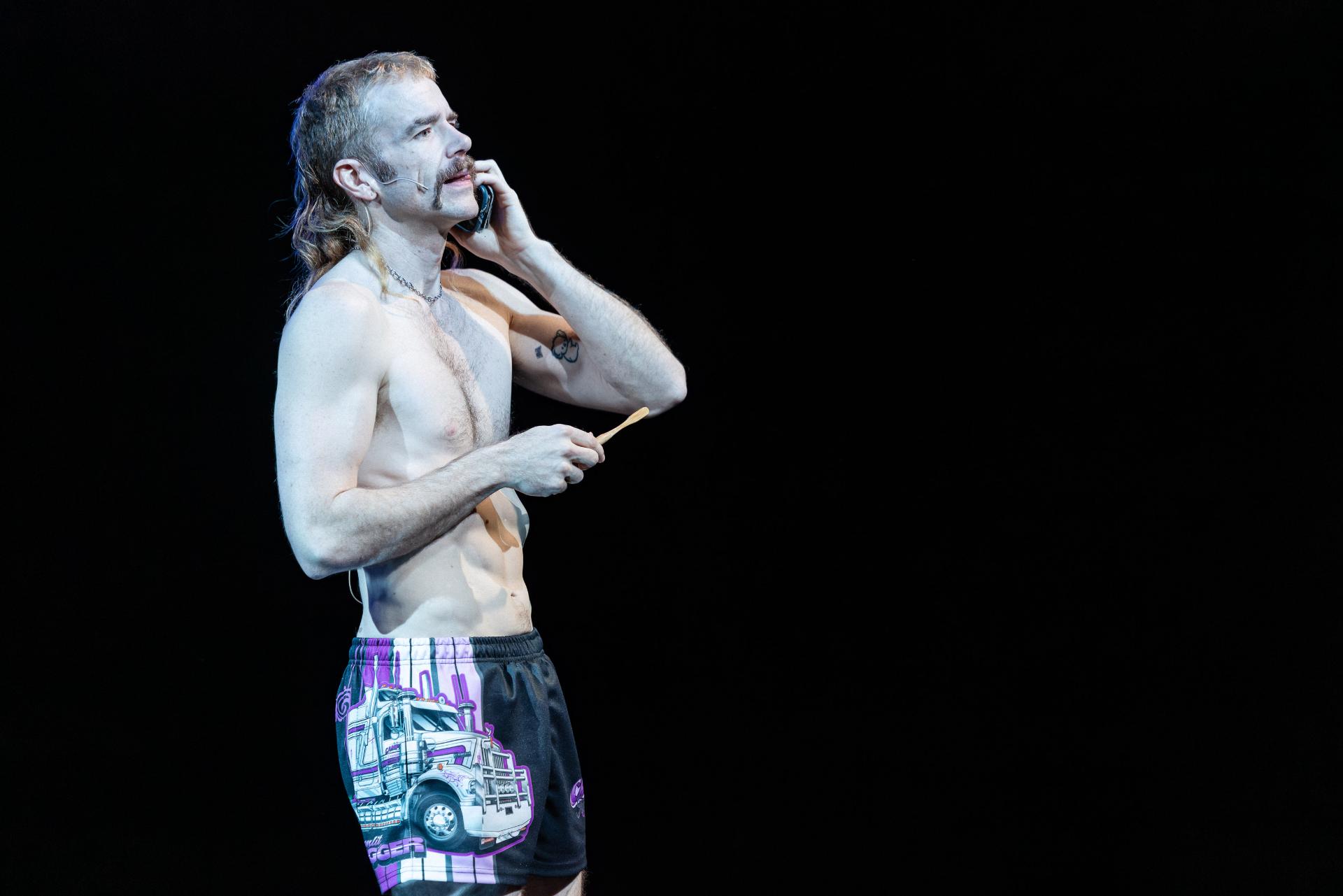
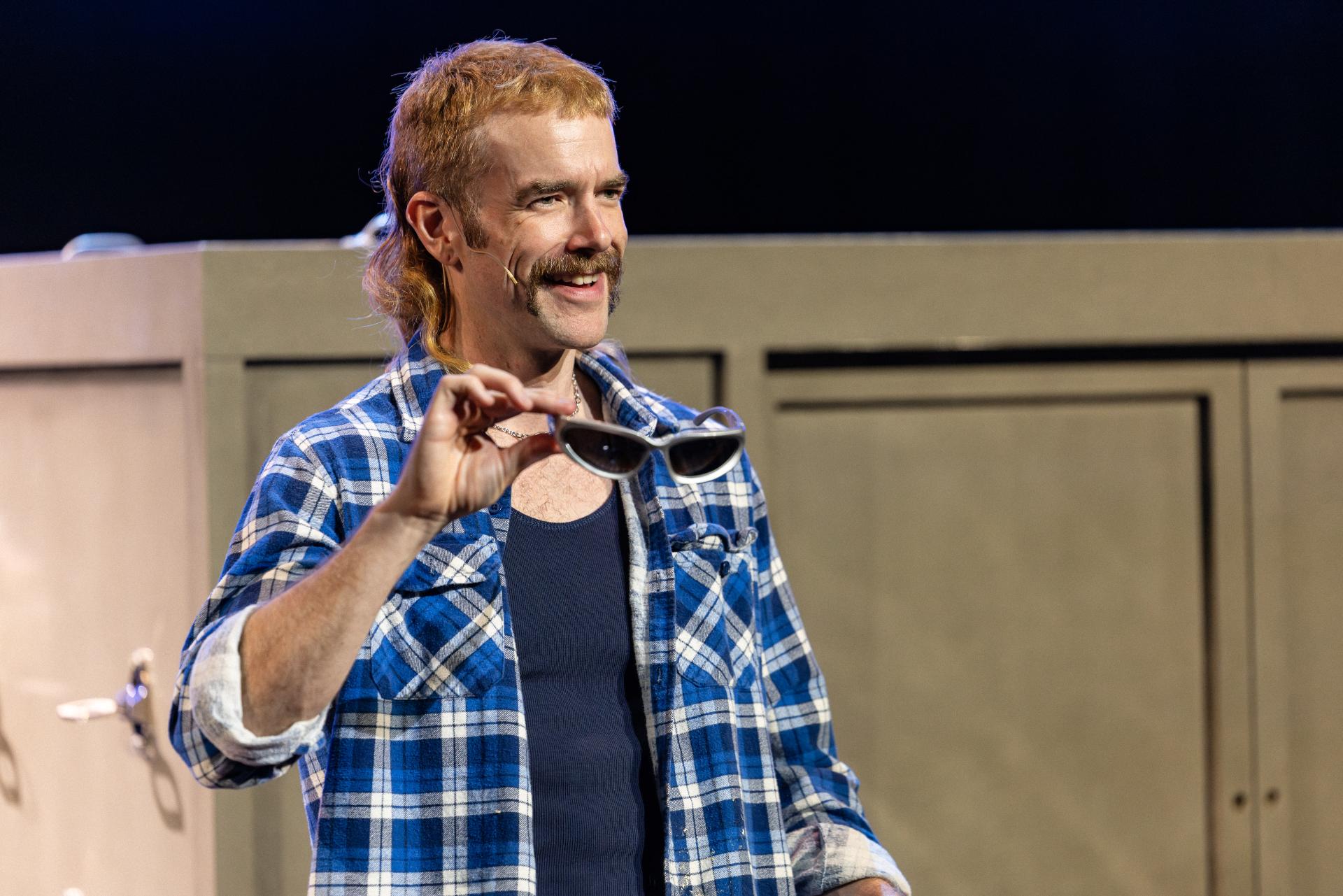
If the dramatic architecture occasionally strains under the weight of its own ambition, the work’s capacious humanism remains beyond question. As performer, Hawkins possesses an irrepressible charm that gracefully compensates for the text’s intermittent monotony. Their Chiko is at once vindictive and jovial, the archetypal larrikin rendered with sufficient vulnerability to forestall mere caricature. Even when the character ventures into objectionable territory, Hawkins maintains an empathic tether, eliciting from their audience not condemnation but the more complex gift of suspended judgment. There is, moreover, a palpable theatrical intelligence at play—highly entertaining in its artifice, yet grounded in an authenticity that never permits the performance to collapse into mere showmanship.

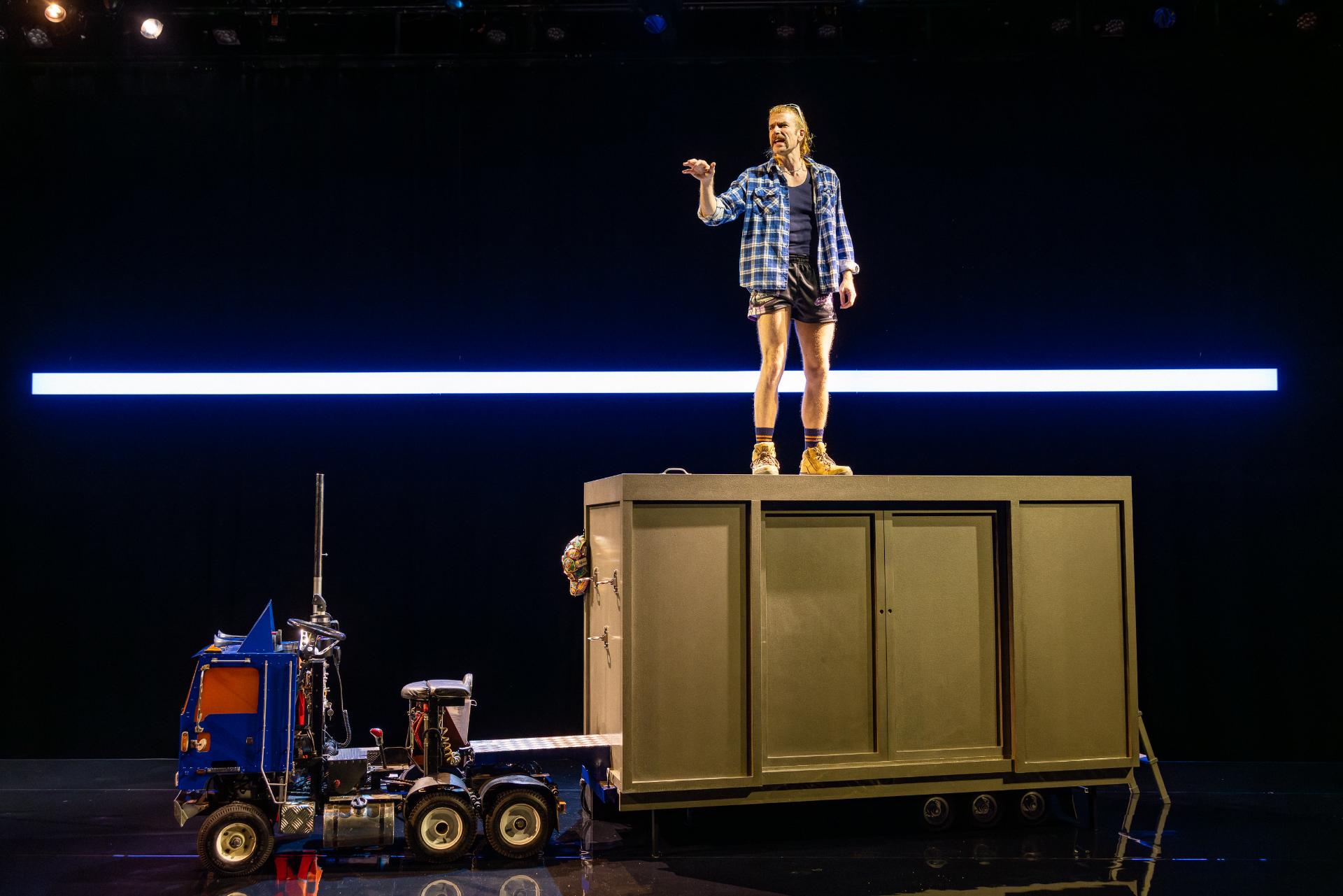
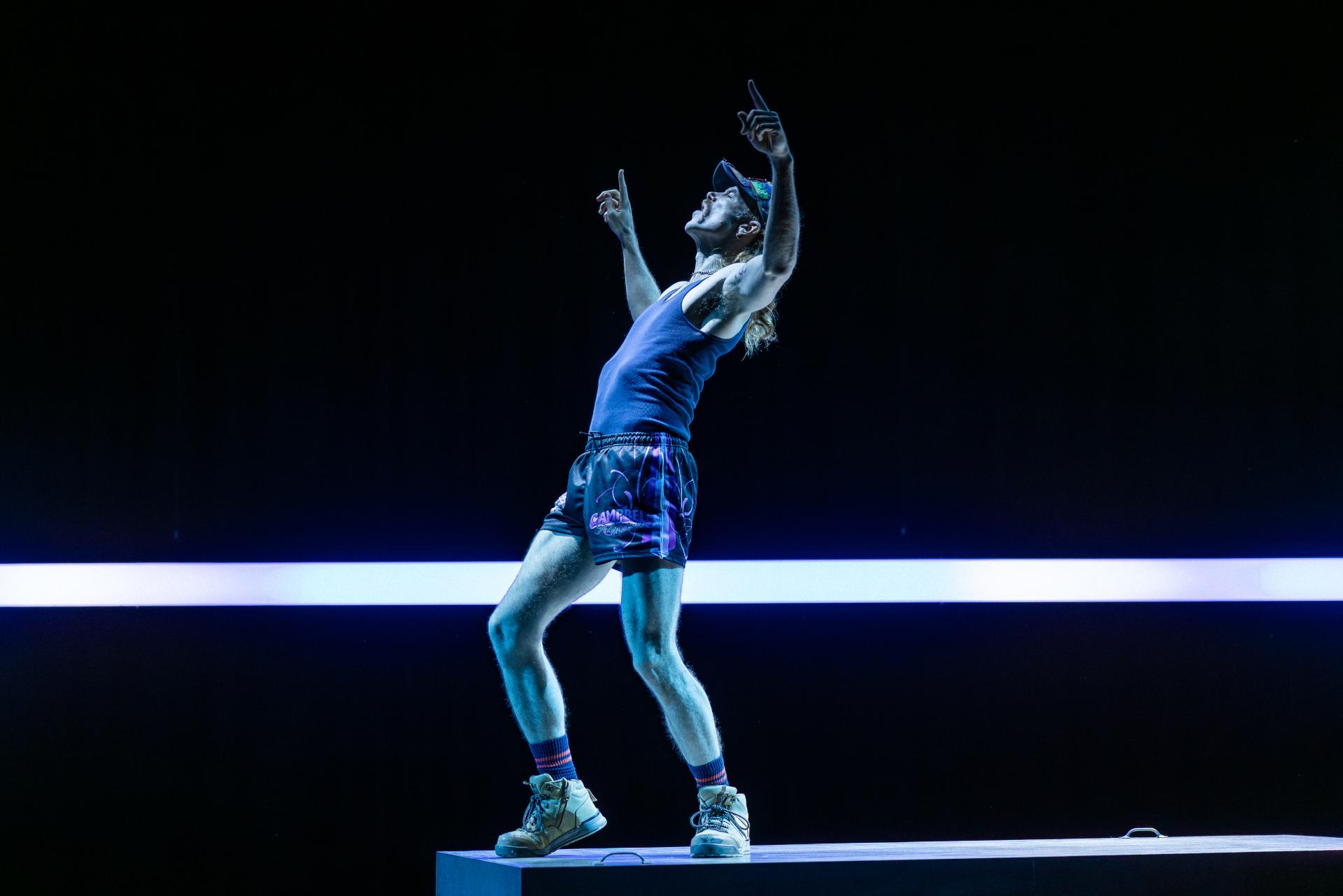
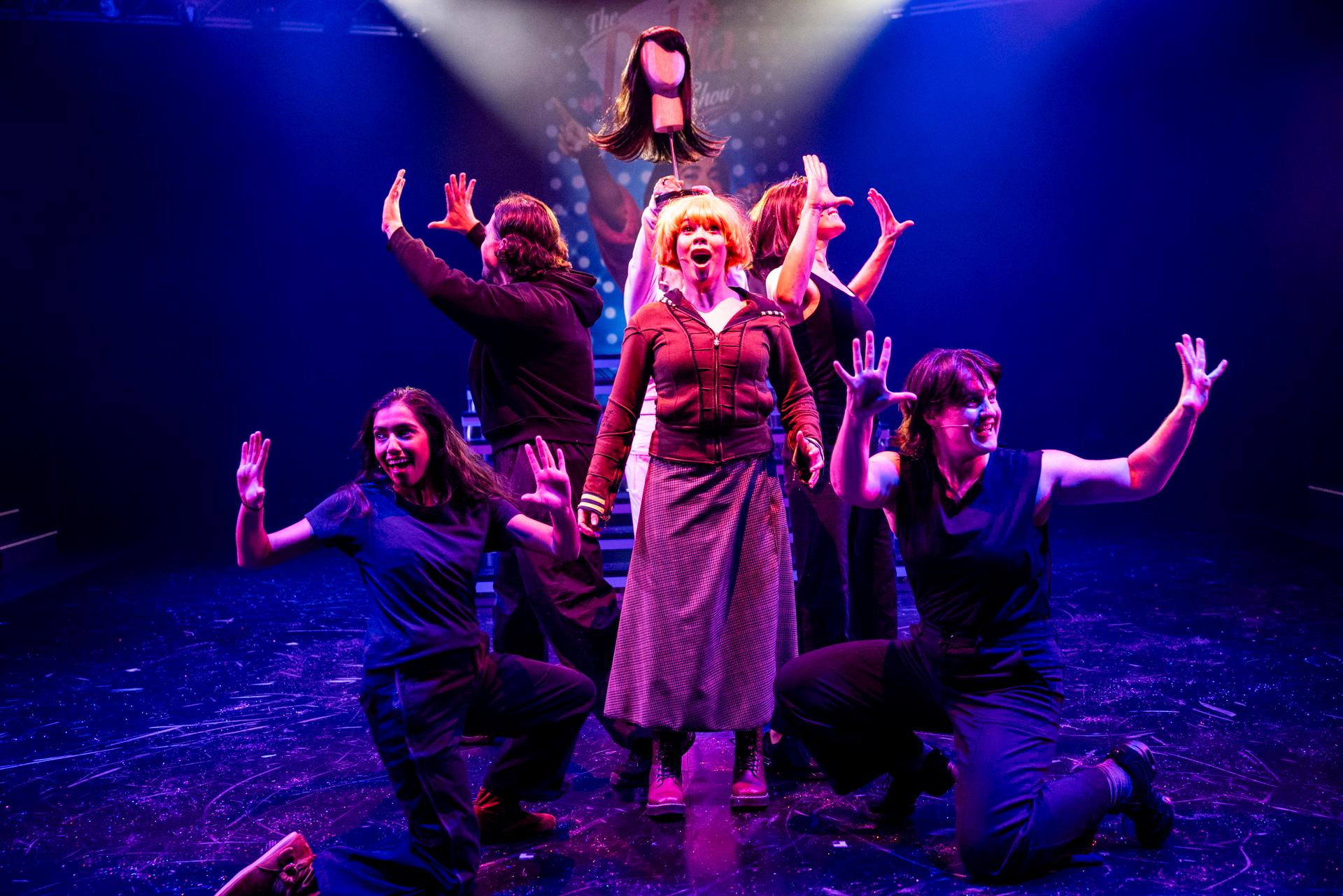
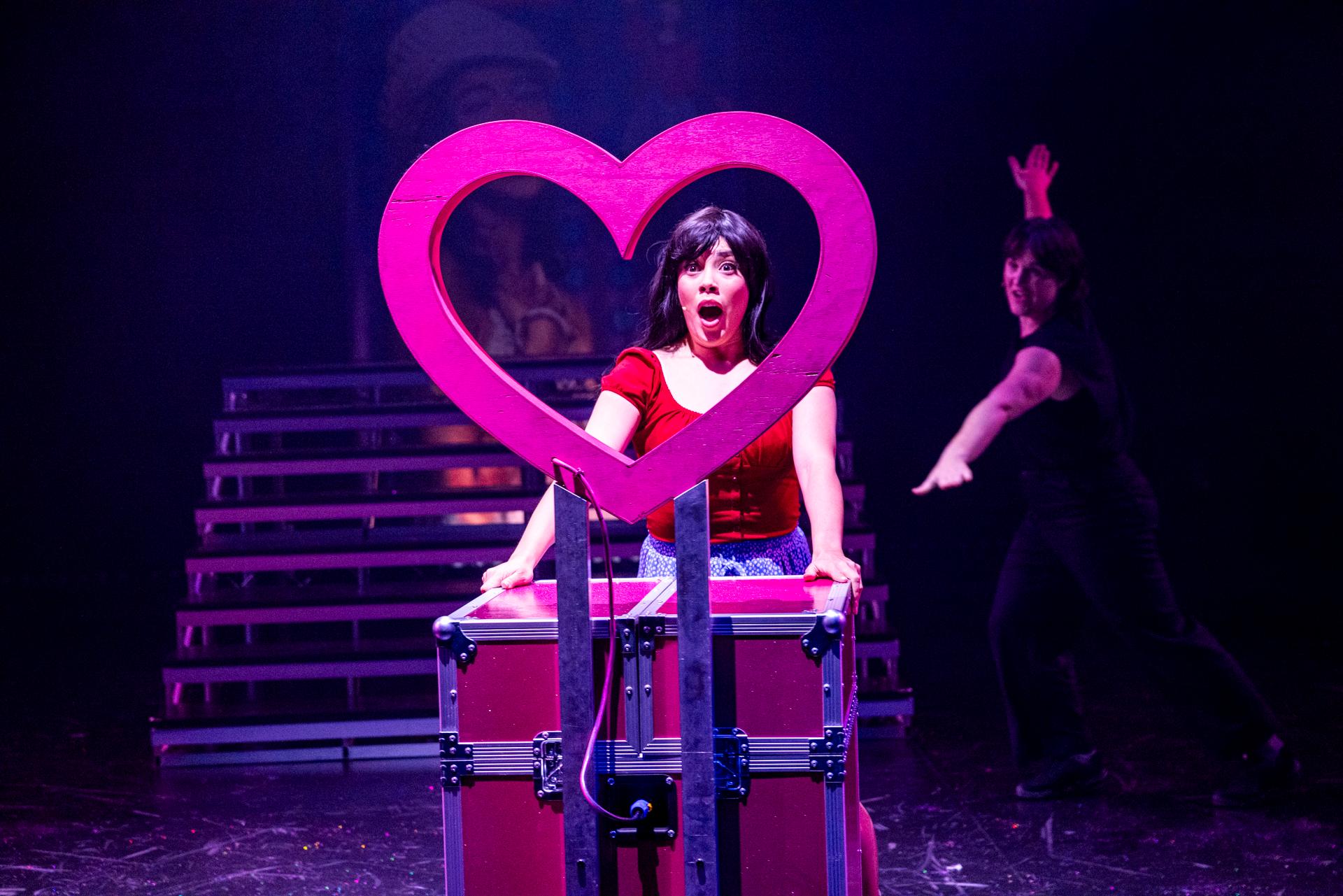
Nell Ranney’s direction demonstrates exceptional sensitivity, calibrating each line with interpretive nuance and liberating Hawkins’ physicality to move with fluid inventiveness, transfiguring what is, in literal terms, an essentially static predicament. Isabel Hudson’s set design—a miniature truck, perfectly proportioned to the stage’s dimensions—conjures both the monumental heft of these machines and, by implication, the outsized moral stature of the man who commands one. Nick Schlieper’s lighting and Steve Toulmin’s score make their most arresting impression in the highly dramatised prologue, where kinetic exhilaration establishes an almost visceral immediacy; yet for the bulk of the production, both designers exercise remarkable restraint, attuning the audience to the subtle frequencies of Chiko’s inner life.

The majority of our populace remains structurally invisible, even as we presume to understand the collective consciousness that shapes our political destinies. Chiko is, in certain respects, precisely the figure we might anticipate; yet he continually confounds expectation, revealing unexpected capacities for reflection and metamorphosis. He is, in the end, perpetually underestimated and perpetually taken for granted—a condition the play refuses to let us forget.
www.softtread.com.au

Review: Everyone Knows I’m A Pervert (KXT on Broadway)

Venue: KXT on Broadway (Ultimo NSW), Jun 10 – 20, 2026
Playwright: Taylor Fernandez
Director: Beatrice Blackwell
Cast: Jade Fuda, Jenny Guigayoma, Jake Walker
Images by Laura Elaine

Theatre review
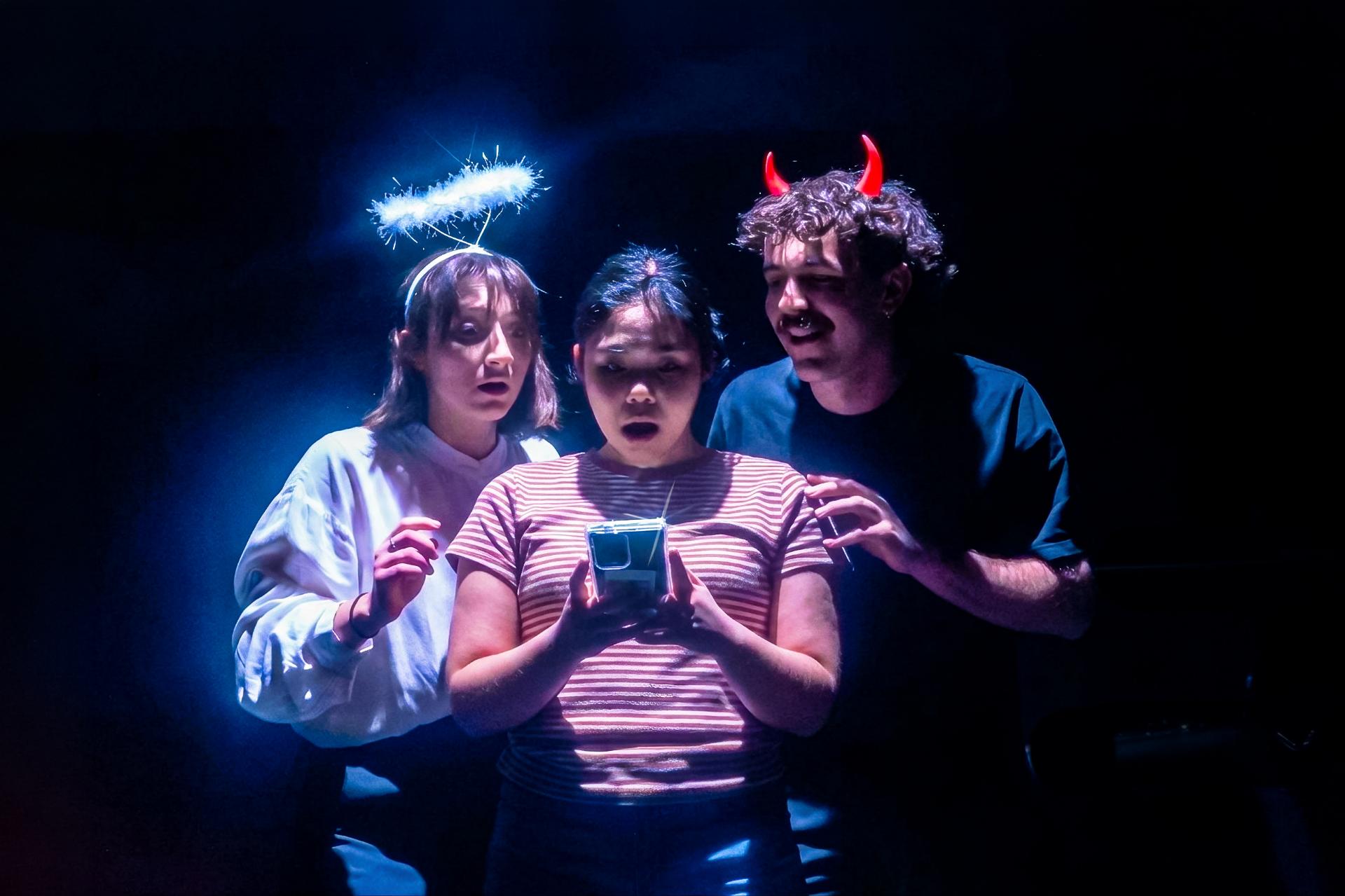
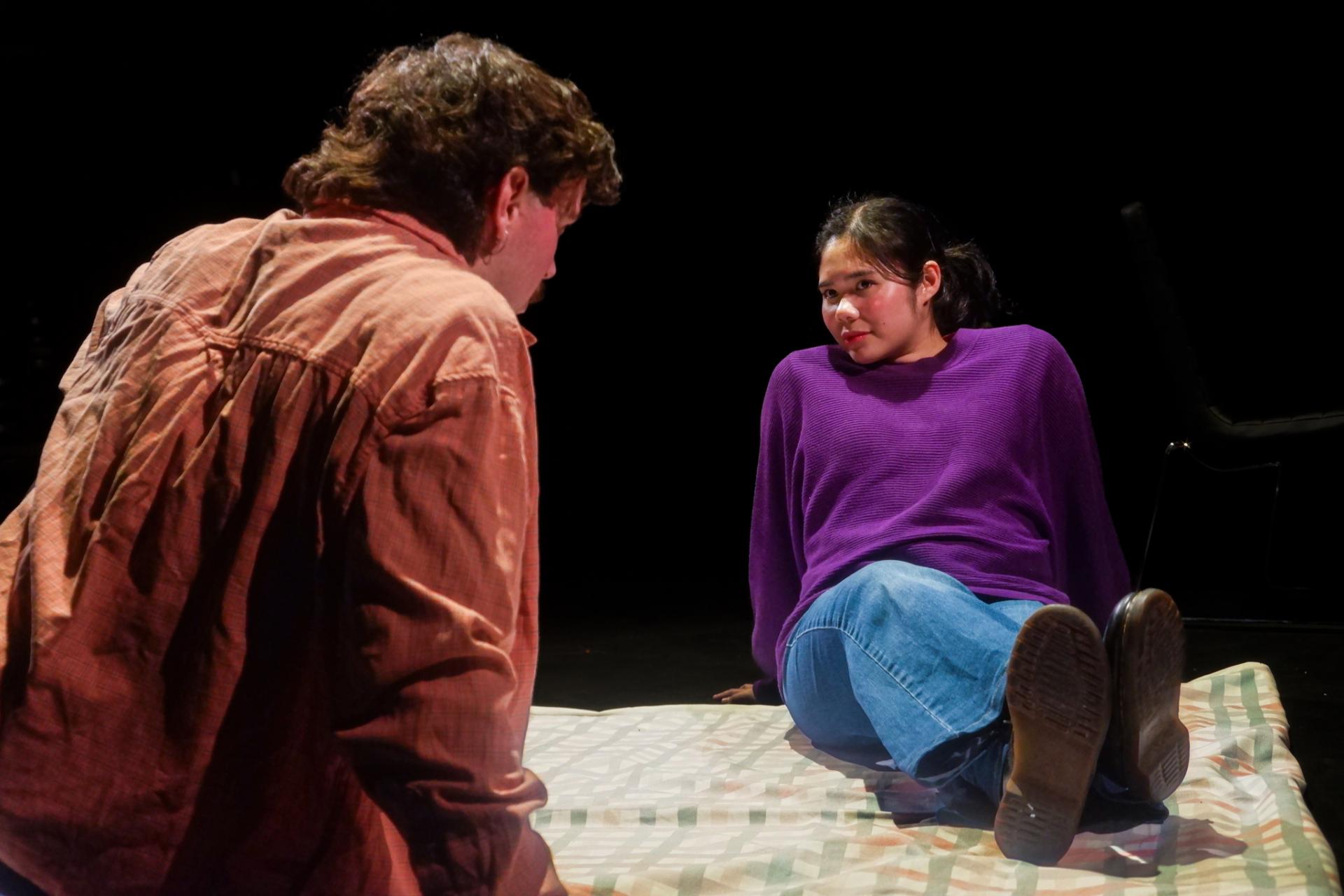
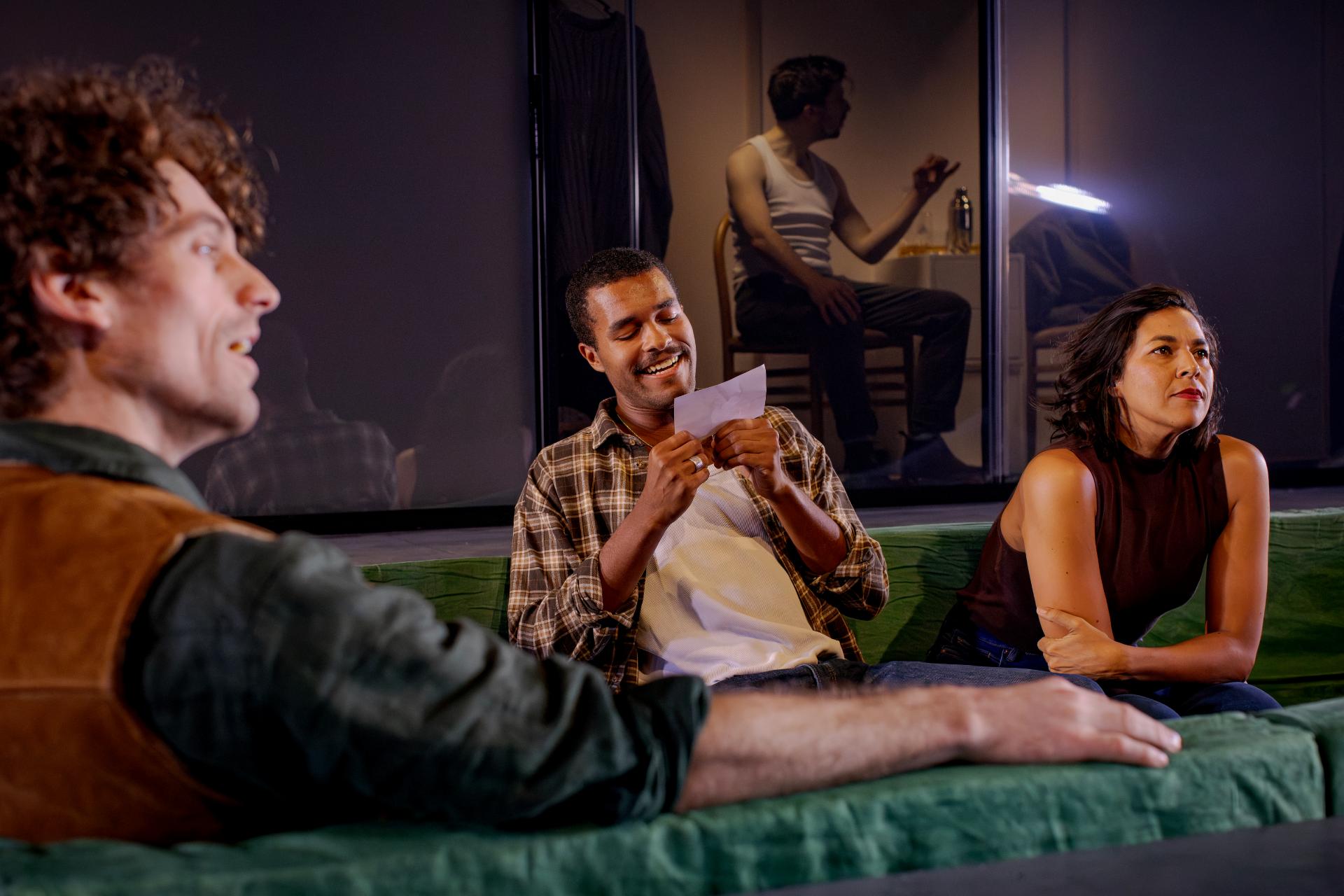
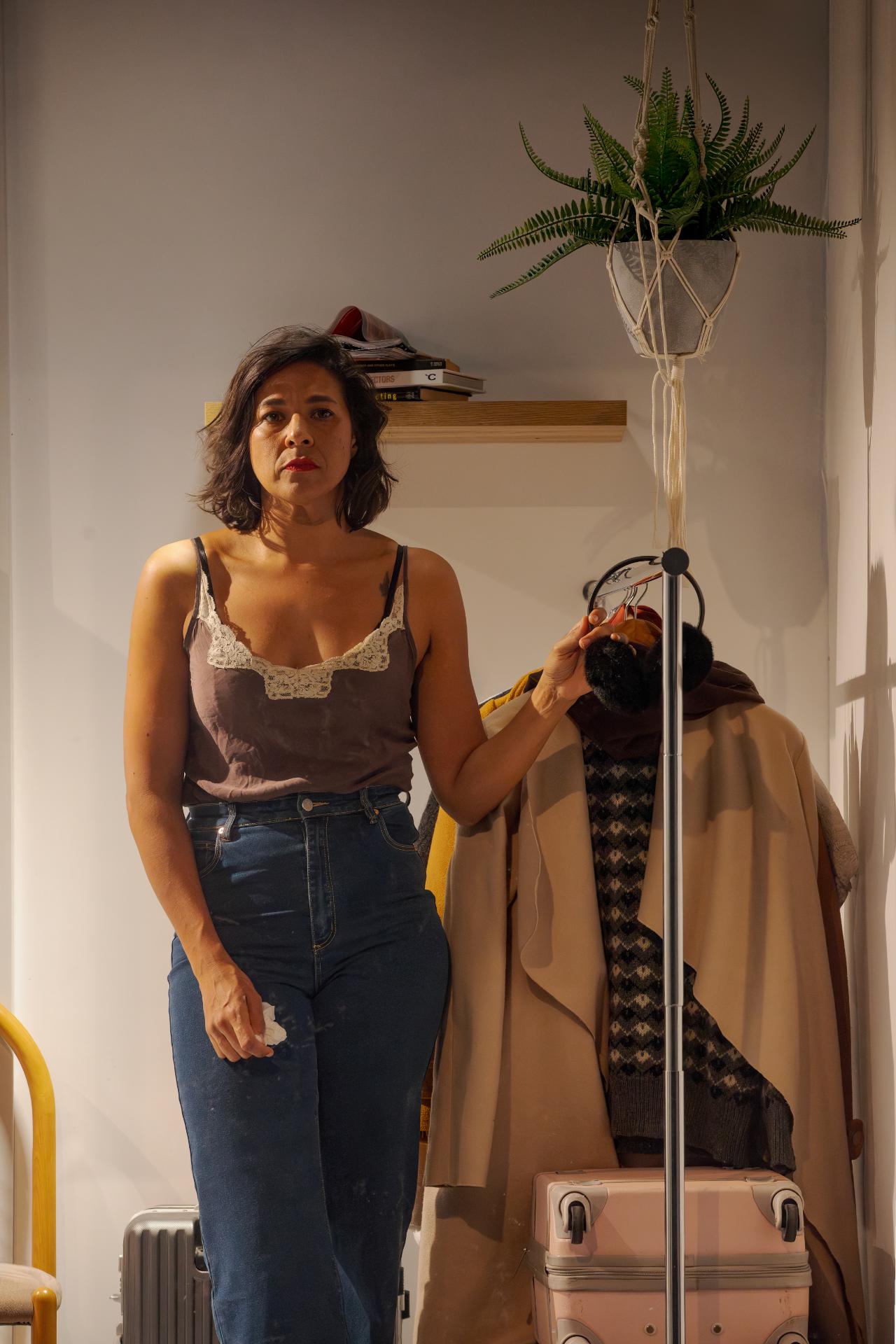
Chastity writes erotica online, openly disclosing a catalogue of unconventional sexual desires and proclivities. While she strives to resist feelings of shame surrounding these impulses, doing so proves far from straightforward. In Everyone Knows I’m A Pervert, Taylor Fernandez places considerable emphasis on the interior life of its protagonist, yet fails to construct a compelling dramatic framework around her. The result is a work whose central character never becomes sufficiently engaging, and without a robust narrative to sustain interest, the play struggles to establish a firm footing.

Beatrice Blackwell’s direction leans heavily into the script’s eccentric — and, it must be said, frequently laboured — humour, while doing little to compensate for its dramaturgical shortcomings. Consequently, the production often feels less like a coherent theatrical experience than an unrelenting barrage of noise and activity: at best energetic, at worst exhausting.

On an otherwise bare stage, Holly Nesbitt’s lighting design shoulders much of the responsibility for generating visual interest, lending the production a welcome sense of theatricality and atmosphere. Zaphnath-Penaea Messenger’s sound design efficiently establishes locations and situations, though rarely aspires to anything more evocative or imaginative.

As Chastity, Jenny Guigayoma excels in the play’s occasional moments of vulnerability and poignancy, though such opportunities are regrettably scarce. Jade Fuda and Jake Walker assume a multitude of supporting roles, often with impressive versatility and commitment. Whatever the production’s flaws, the dedication of its performers is never in doubt.

Sexuality manifests differently in every individual, yet our reluctance to discuss these intimate dimensions of ourselves allows restrictive notions of acceptable sexual expression to persist. Chastity is entitled to regard herself as a “pervert”, but the term itself is ultimately devoid of meaning if we accept that there is no singular norm against which human sexual experience can be measured.

www.kingsxtheatre.com

Review: Shooting Hedda Gabler (Seymour Centre)

Venue: Seymour Centre (Chippendale NSW), Jun 11 – 27, 2026
Playwright: Nina Segal
Director: Monica Sayers
Cast: Jane Angharad, Jennifer Rani, James Smithers, Alpha Sylla, Lib Campbell, Matthew Abotomey 
Images by Phil Erbacher

Theatre review
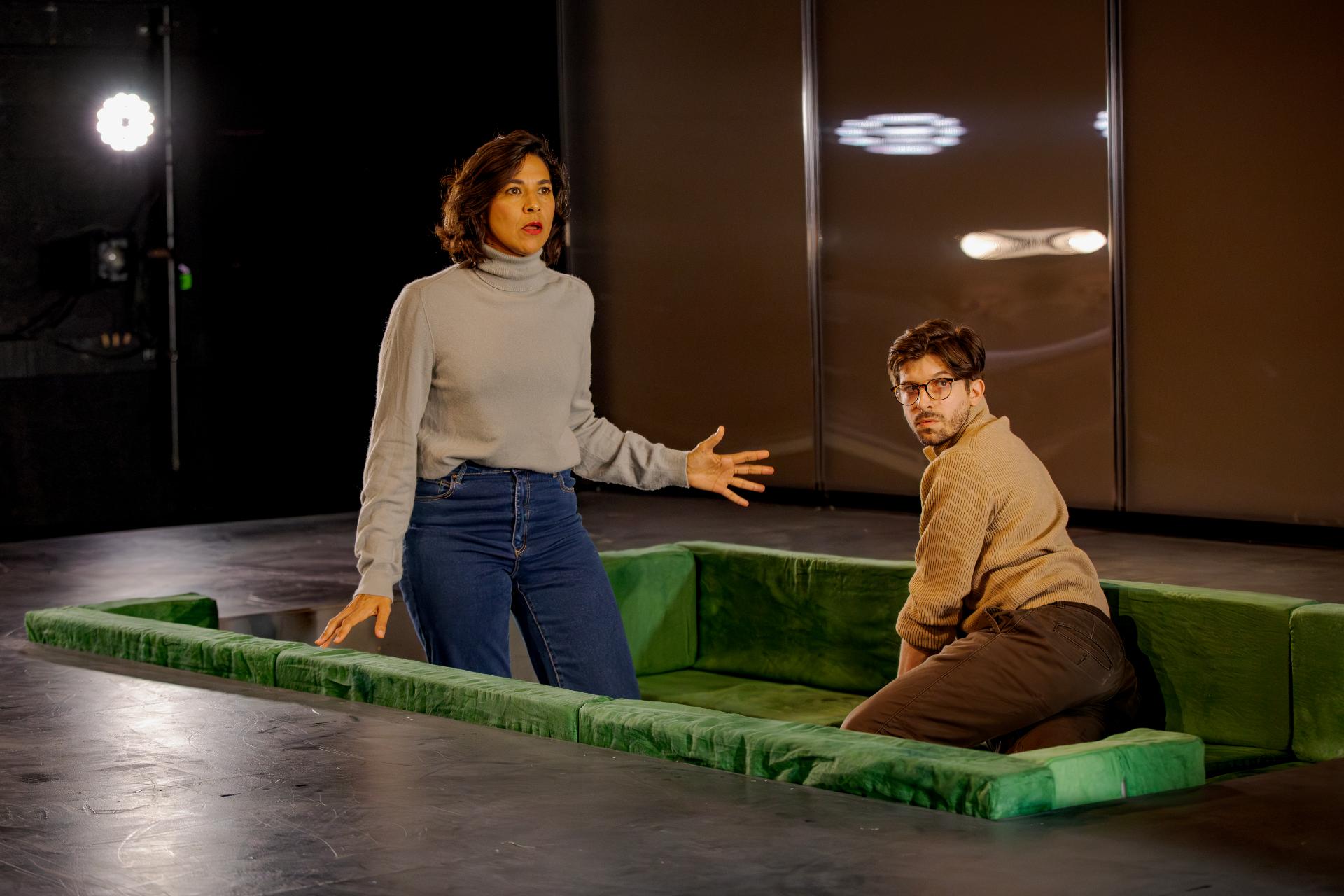
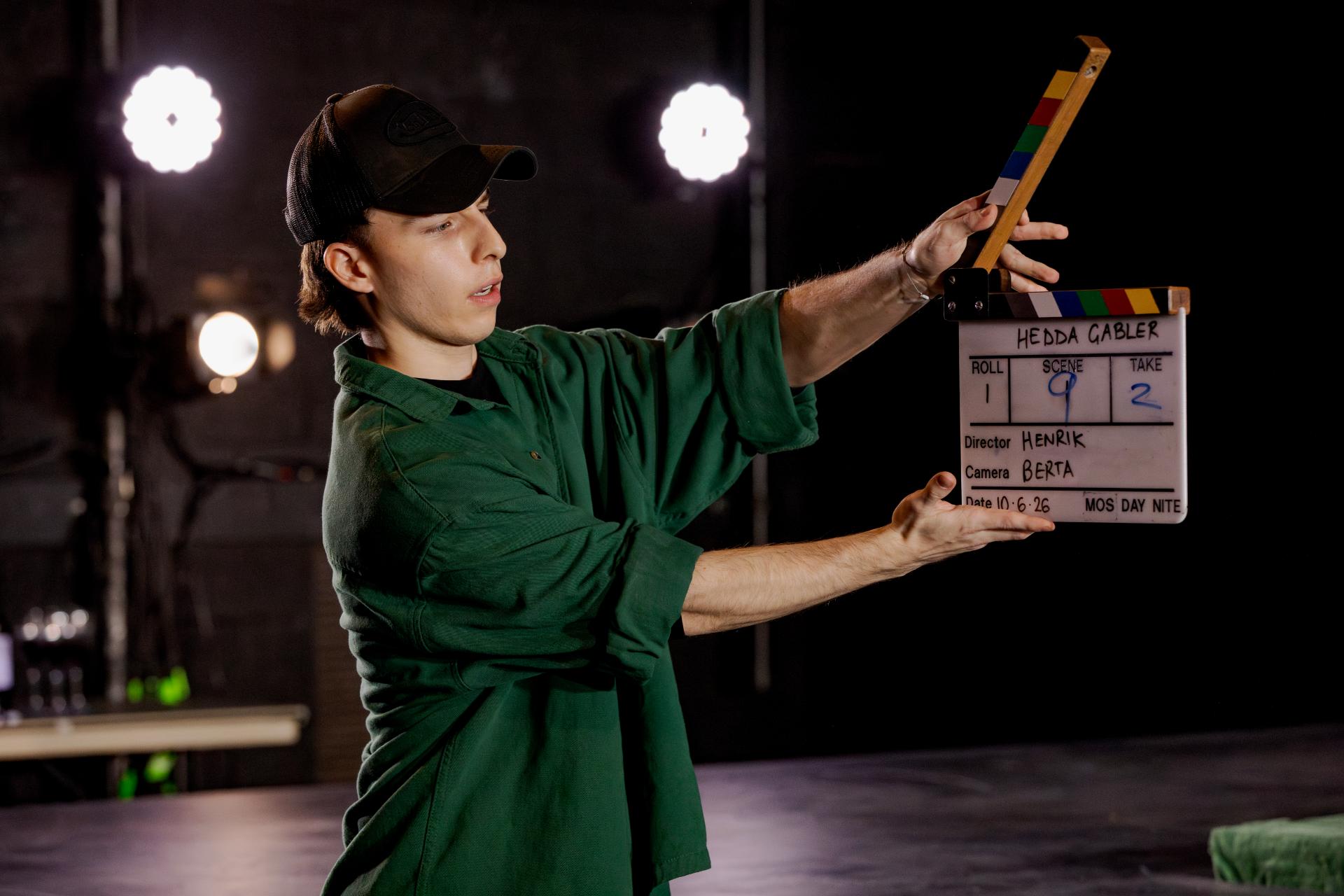
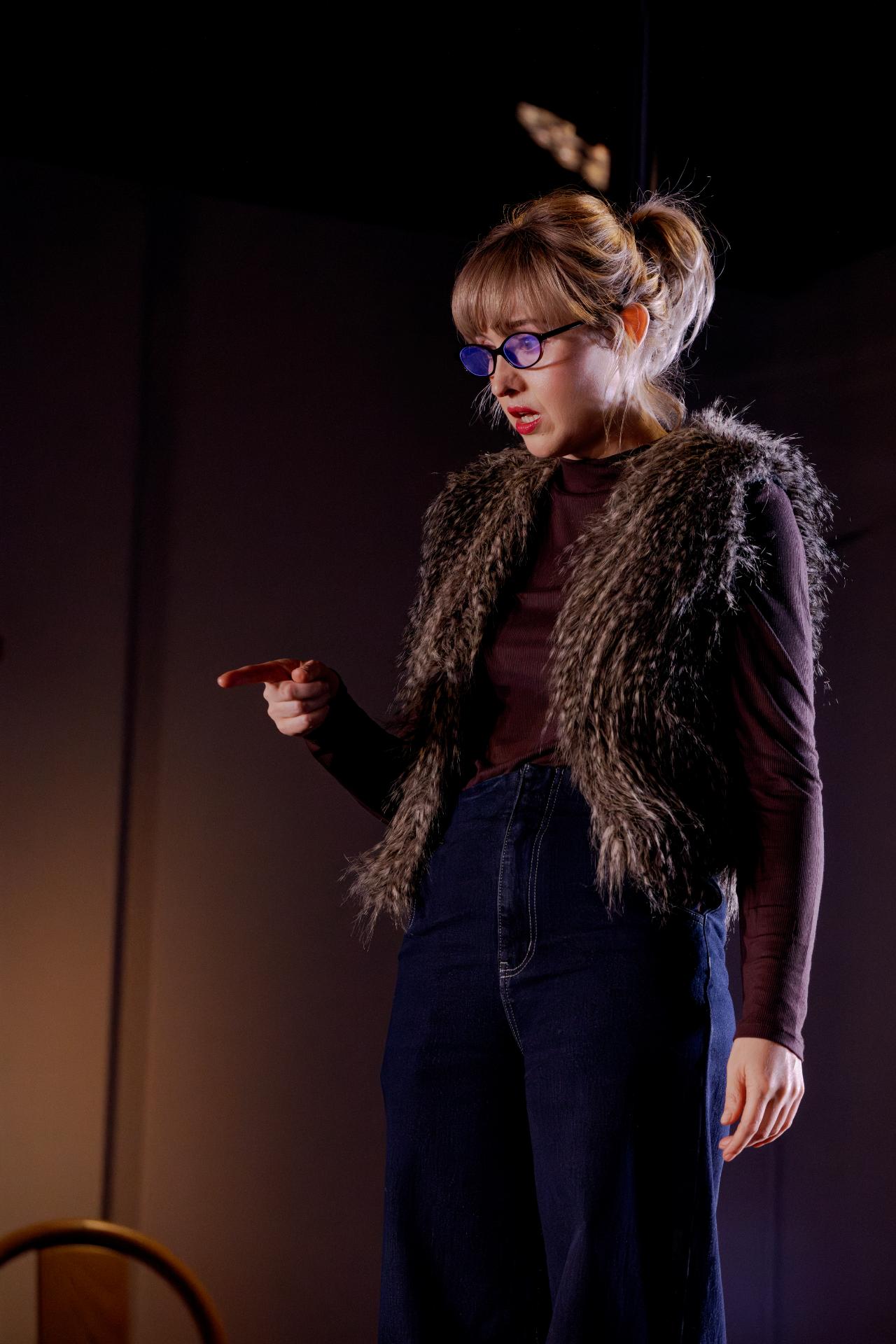
In Nina Segal’s Shooting Hedda Gabler, a Hollywood actor arrives in Norway to work beneath a film director celebrated as both visionary and enfant terrible. The parallel is deliberate: Segal subjects her protagonist to the same suffocating constraints that bind Ibsen’s heroine, collapsing the distance between the nineteenth century and our own to expose how tenaciously misogyny endures. Yet for all its darkness, the play is flecked with mordant wit, its sophistication rendering the medicine palatable without diluting its potency.

Under Monica Sayers’s direction, the production sustains a precarious equilibrium between entertainment and gravitas, ensuring its poignancy commands full attention. James Smithers’s set design achieves a marvellous synthesis of visual splendour and dramatic utility, while Charlotte Savva’s costumes evoke a distinctly Scandinavian restraint—elegant, immaculate, severe in their understatement. Travis Kecek’s lighting and Anthony MacDermott’s music operate with similar Nordic coolness, so subtly calibrated that one barely registers their presence until they tighten, scene by scene, an almost casual noose of foreboding.

Jennifer Rani, as the leading lady, navigates her character’s emotional trajectory with forensic precision, never permitting ambiguity about where she stands in her arc. James Smithers (doubling as the film director) imbues the despicable auteur with a nuanced malevolence that is all the more chilling for its theatrical relish—he leaves the audience no aperture through which to excuse his behaviour, yet remains magnetically watchable. Lib Campbell and Matthew Abotomey furnish the production with its most indelible comic textures, their performances audacious and outrageously inventive, offering necessary respite from the narrative’s unrelenting brutality.

The women of Shooting Hedda Gabler enjoy freedoms of expression unimaginable to the 1890s characters they portray, yet Segal suggests that such liberties are largely cosmetic. We may speak our minds and gesture at agency, but the architecture beneath— the structural mechanisms that shape female destiny—remains obstinately intact, fiercely committed to our subjugation. The play’s sharpest insight lies here: in the cruel illusion that progress has occurred when, in fact, the machinery has simply learned to disguise itself.

www.seymourcentre.com | www.secrethouse.com.au

Review: Mackenzie (Bell Shakespeare)

Venue: The Neilson Nutshell (Sydney NSW), Jun 6 – Jul 18, 2026
Playwright: Yve Blake
Director: Virginia Gay
Cast: Billie Palin, Nikki Britton, Ryan González, Kimberly Hodgson, Anusha Thomas, Jane Watt
Images by Brett Boardman

Theatre review
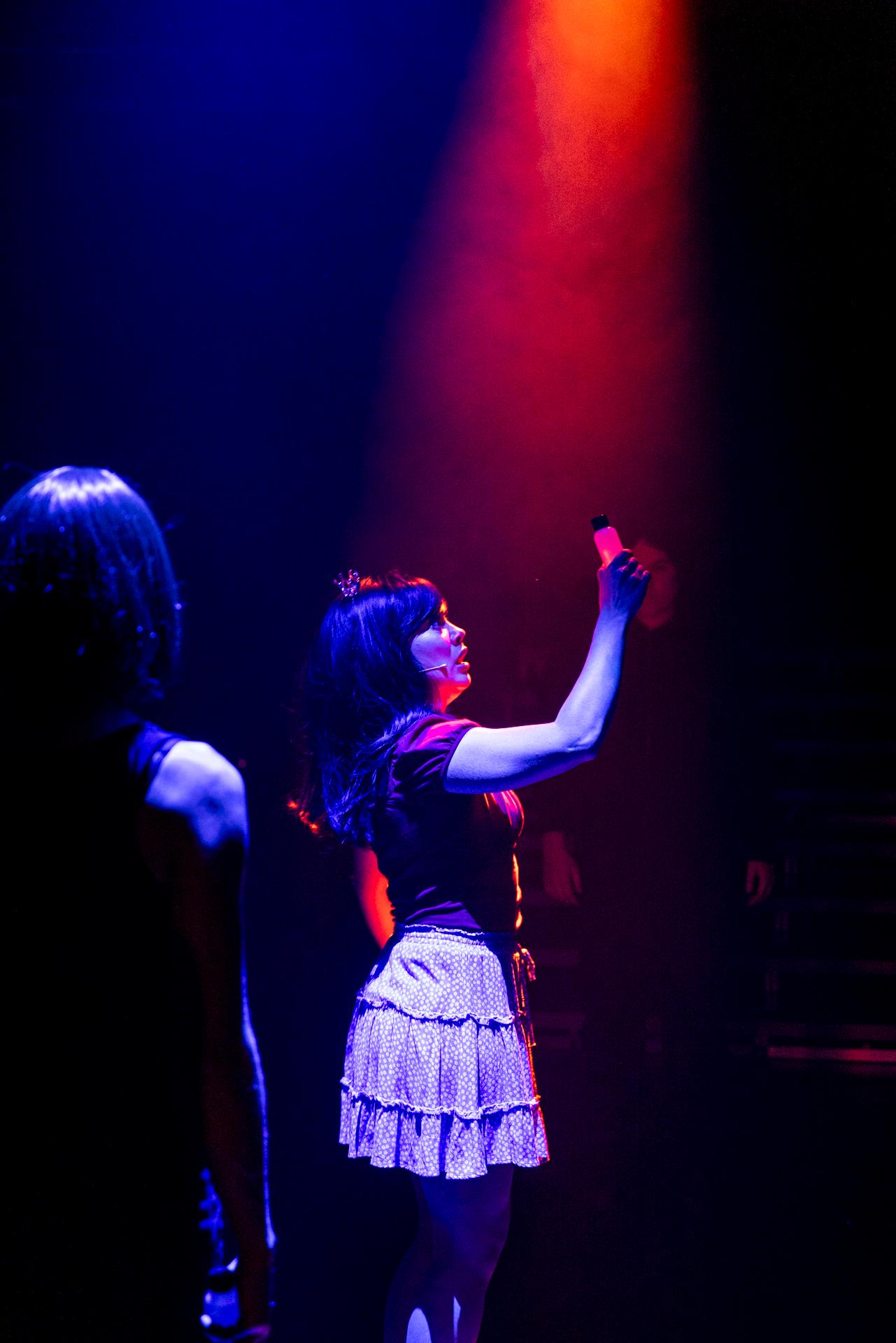
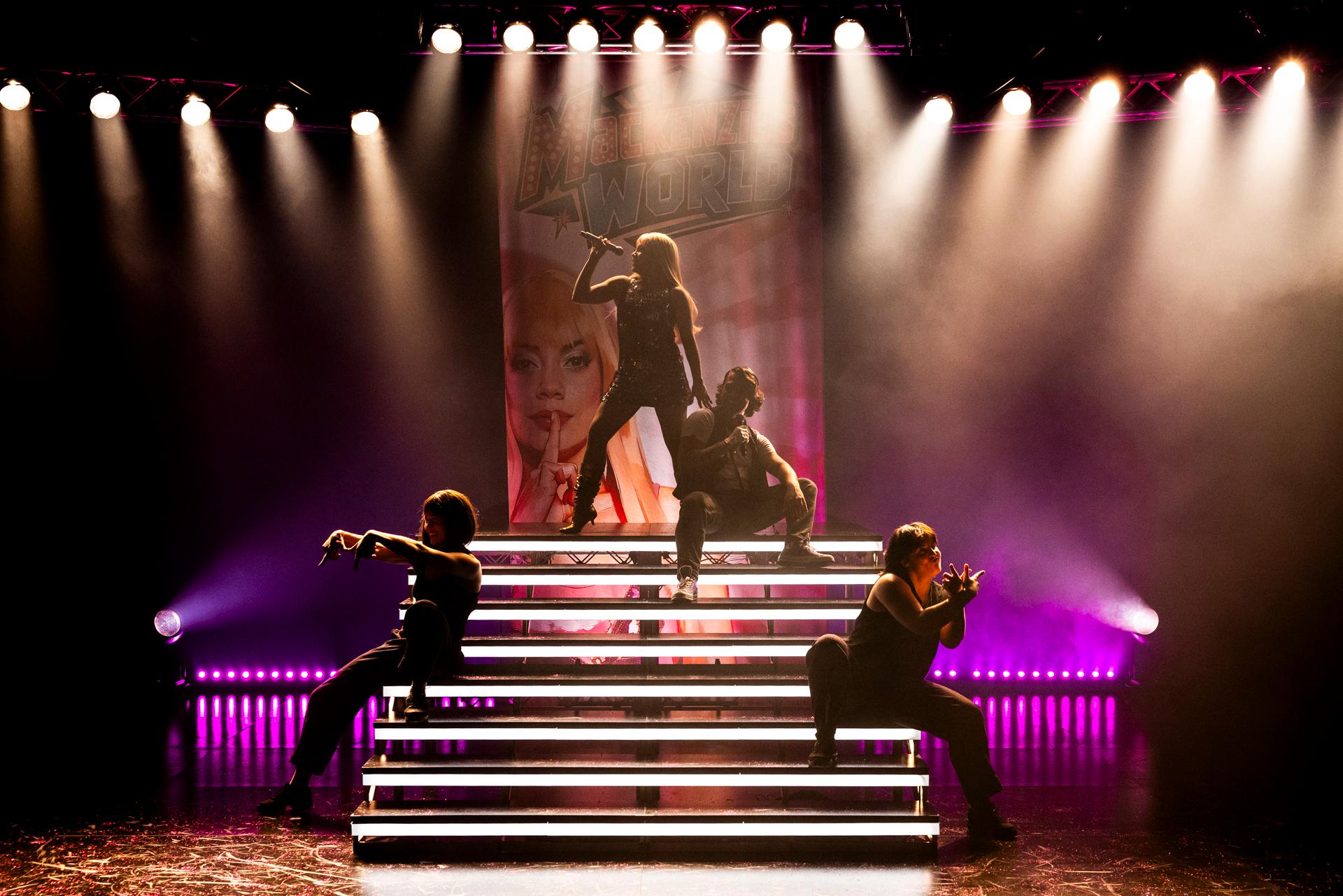
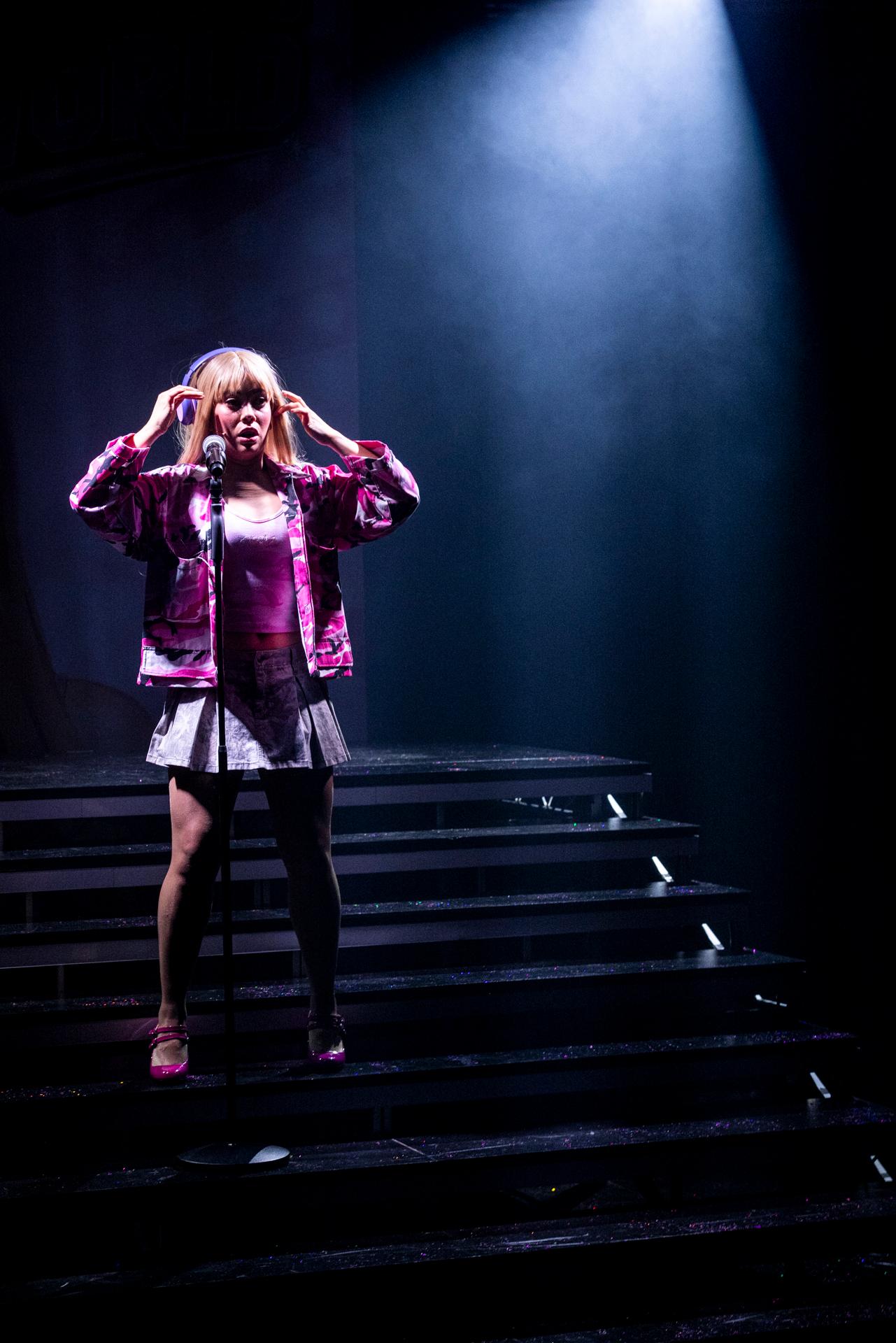
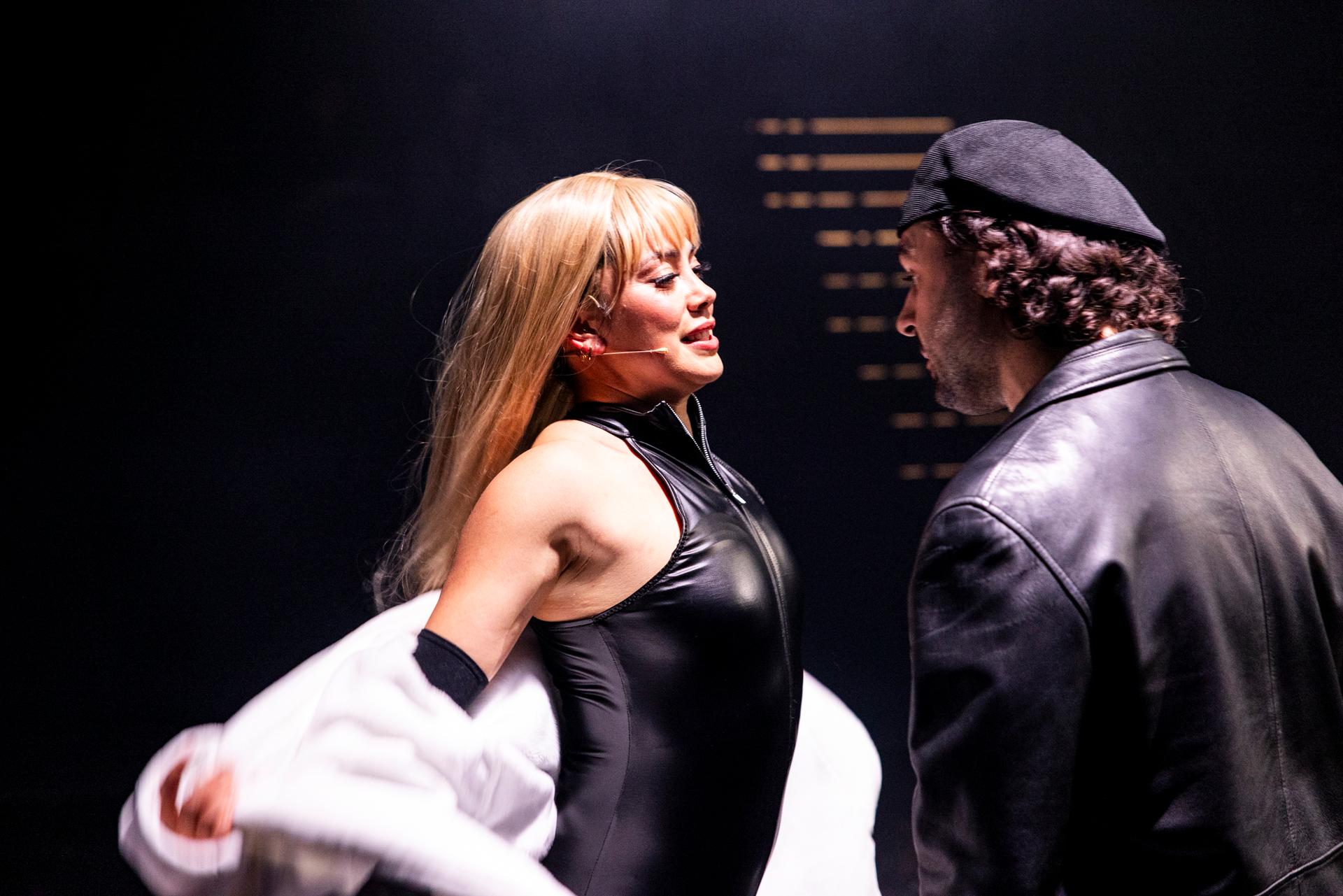
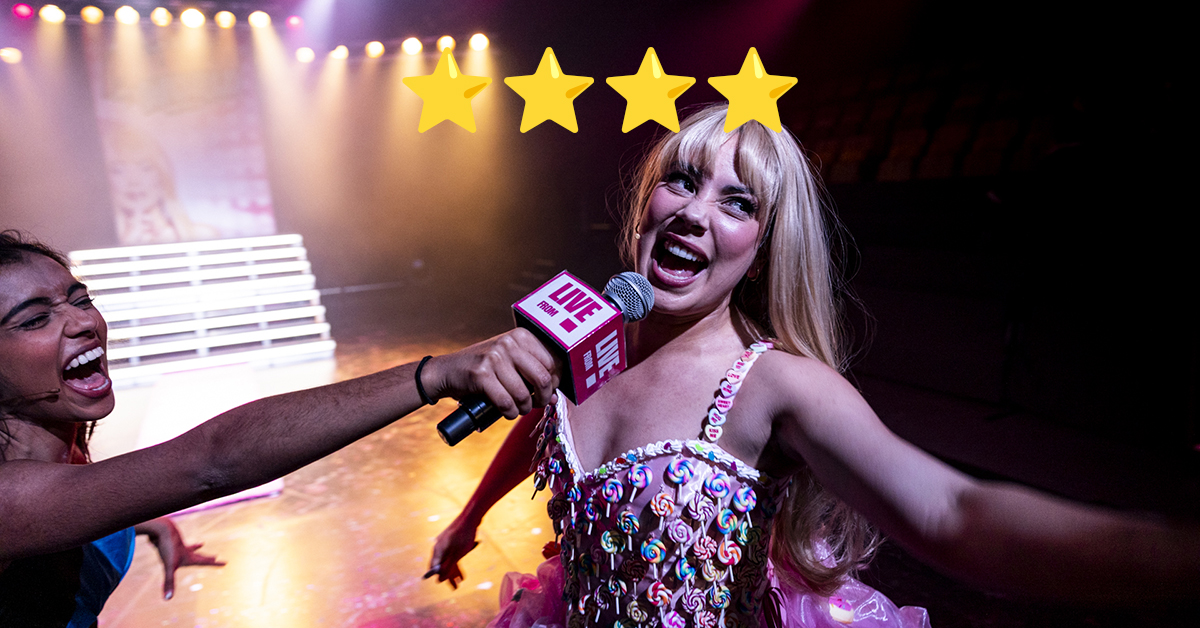
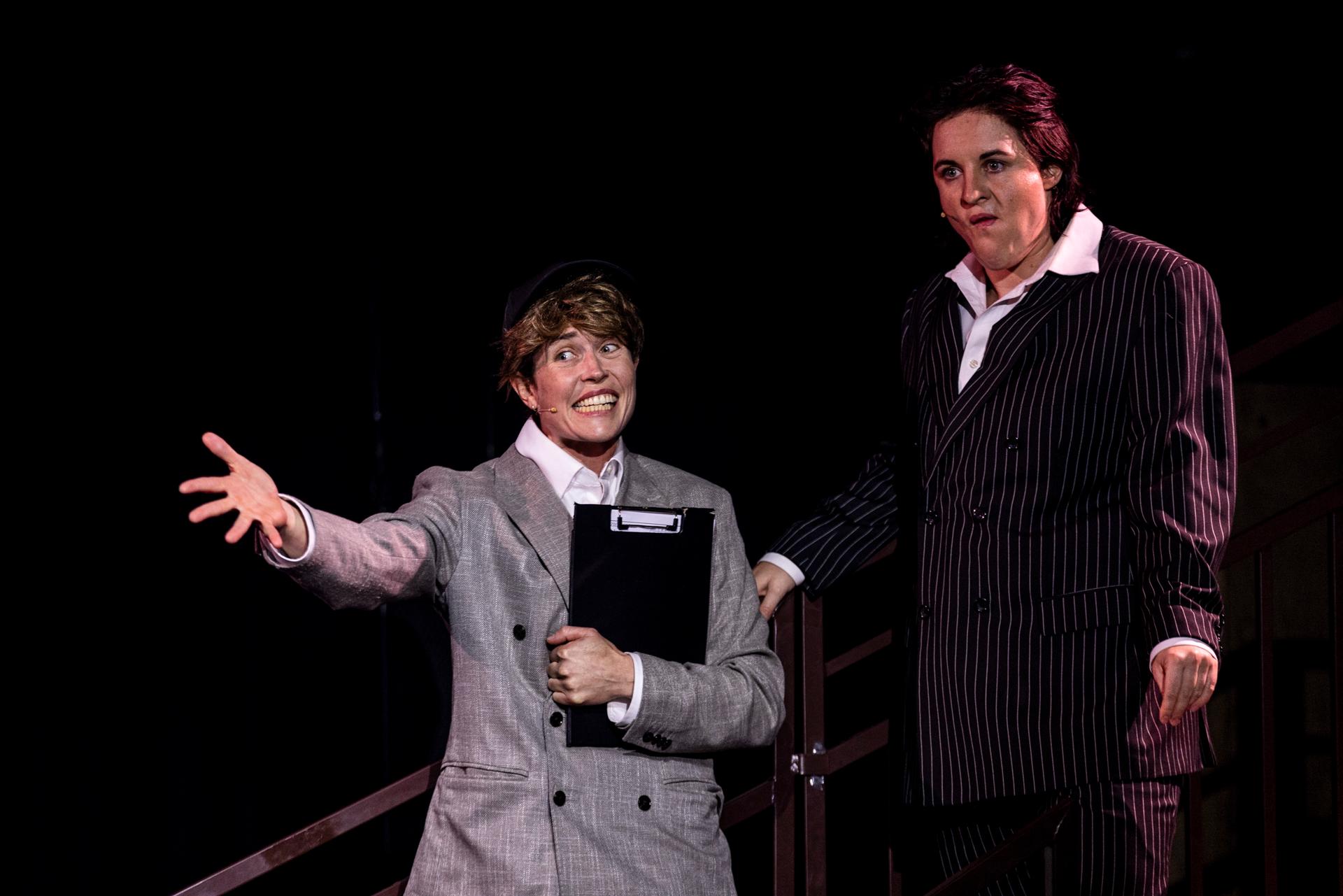
When a soothsayer prophesies that Mackenzie will ascend from bit-part player in a children’s television programme to the apotheosis of global pop stardom—the eponymous “number one pop girl”—her trajectory, mapped deliberately onto the skeleton of Macbeth, charts the corrosive geometry of ambition: a vertiginous rise that darkens into regret. Yve Blake’s play with songs is, to its credit, irreverent and acidly witty; yet, like so many adaptations of Shakespeare, it cannot ultimately escape the reductive compression that accompanies transposing Elizabethan tragedy into contemporary vernacular. Still, the production yields genuine delights, not least a score that crackles with infectious pleasure.
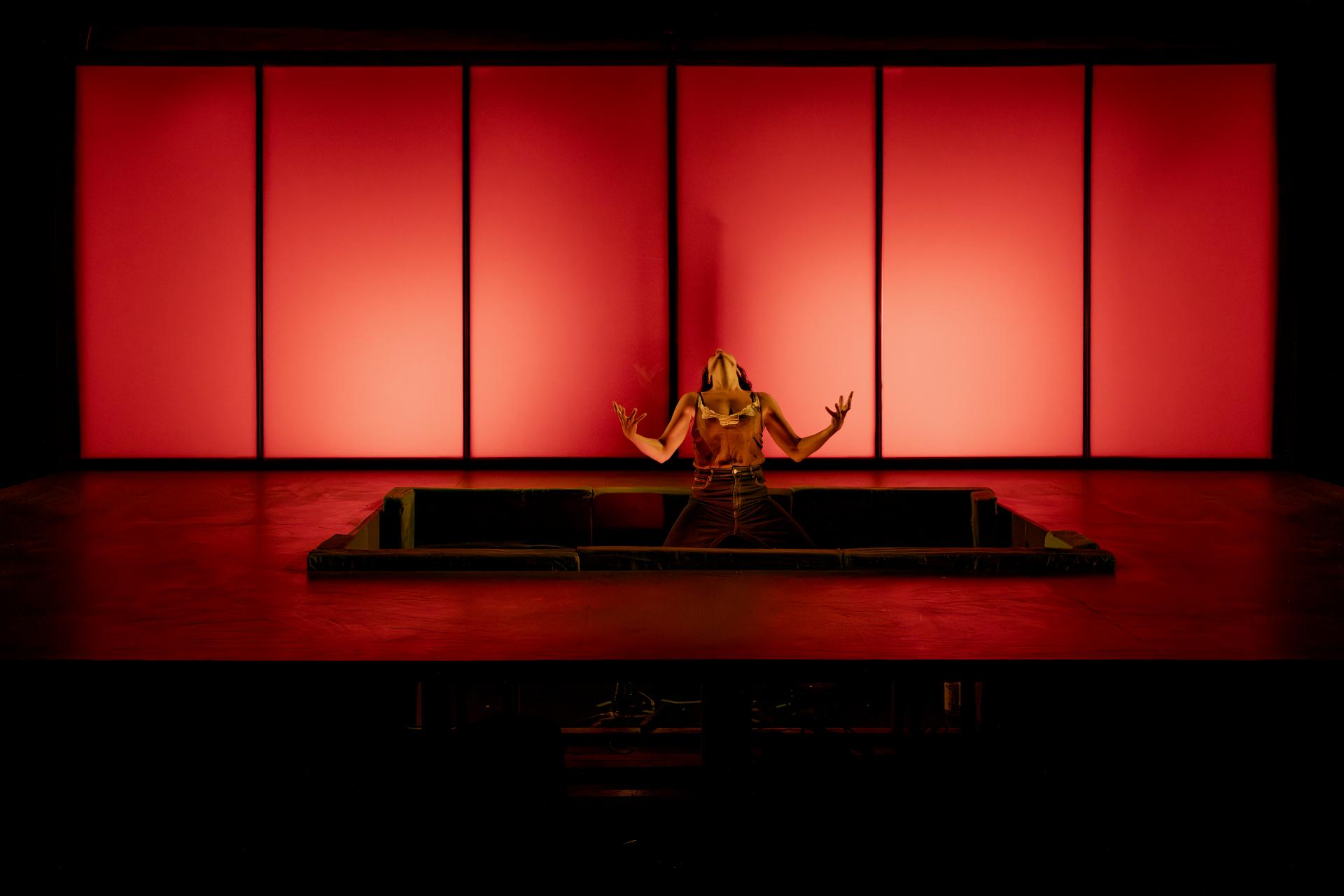
Virginia Gay’s direction ensures the evening never flags, sustaining a kinetic entertainment that is matched by scrupulous attention to the calibre of performance across the ensemble. Elle Evangelista’s choreography compounds this dynamism, rendering the staging so relentlessly animated that one’s attention is held with almost hydraulic force. The design elements, however, are less uniformly successful.

Keerthi Subramanyam’s set never fully metabolises the space into the requisite theatrical world, though her costume work is inspired, capturing both the gaudy exuberance of pop iconography and the unvarnished textures of everyday existence with equal acuity. Kelsey Lee’s lighting is intricately conceived, yet it intermittently falters, lacking the baroque flamboyance demanded by the production’s high-camp register and marred by moments of technical clumsiness. By contrast, Tom Lowndes’s sound design is masterfully achieved, modulating between registers of levity and catastrophe while conjuring the supernatural against a ground of naturalism, thereby supplying the production with its genuine dramatic voltage.

What ultimately indelibly impresses, however, is the superlative standard of performance from every member of the cast. Kimberley Hodgson, in the central role, is nothing short of flawless. She excavates the psychopathology of the ambitious ingénue with forensic precision, tracing the arc from naivety to corruption with a granularity that reveals every shading of moral complexity. Her work is suffused with subtlety yet remains magnetically, consistently potent
Pop stars, like monarchs, occupy a stratosphere of existence that can feel hermetically sealed from ordinary relatability; Shakespeare’s genius, of course, lay in making the remote resonantly human. Mackenzie may never fully transcend the somewhat prosaic narrative of a celebrity life unravelling, but in its final accounting it offers an unflinching meditation on the perils of unmoored ambition—a caution that, in our present moment of unbridled rapacity, reverberates with mournful immediacy.

www.bellshakespeare.com.au

Review: Tootsie (Teatro)

Venue: Teatro (Leichhardt NSW), May 26 – Jun 21, 2026
Book: Robert Horn
Music & Lyrics: David Yazbek
Directors: Cameron Mitchell
Cast: Andrew Bevis, Chris Huntly-Turner, Brendan Irving, Elena Kokubo, Donna Lee, Lachlan O’Brien, Tyran Stig, Alana Tranter.
Images by Robert Miniter

Theatre review
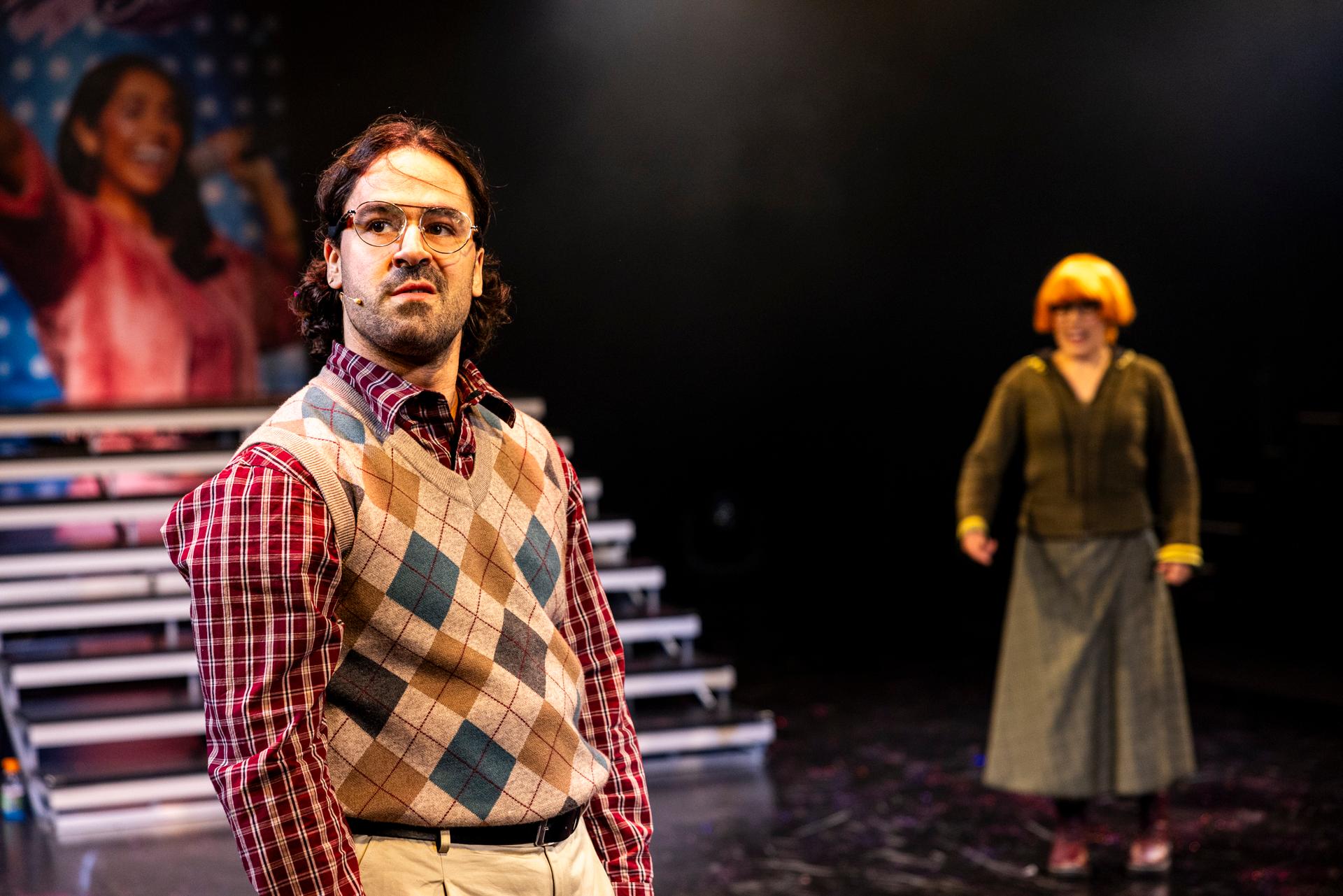
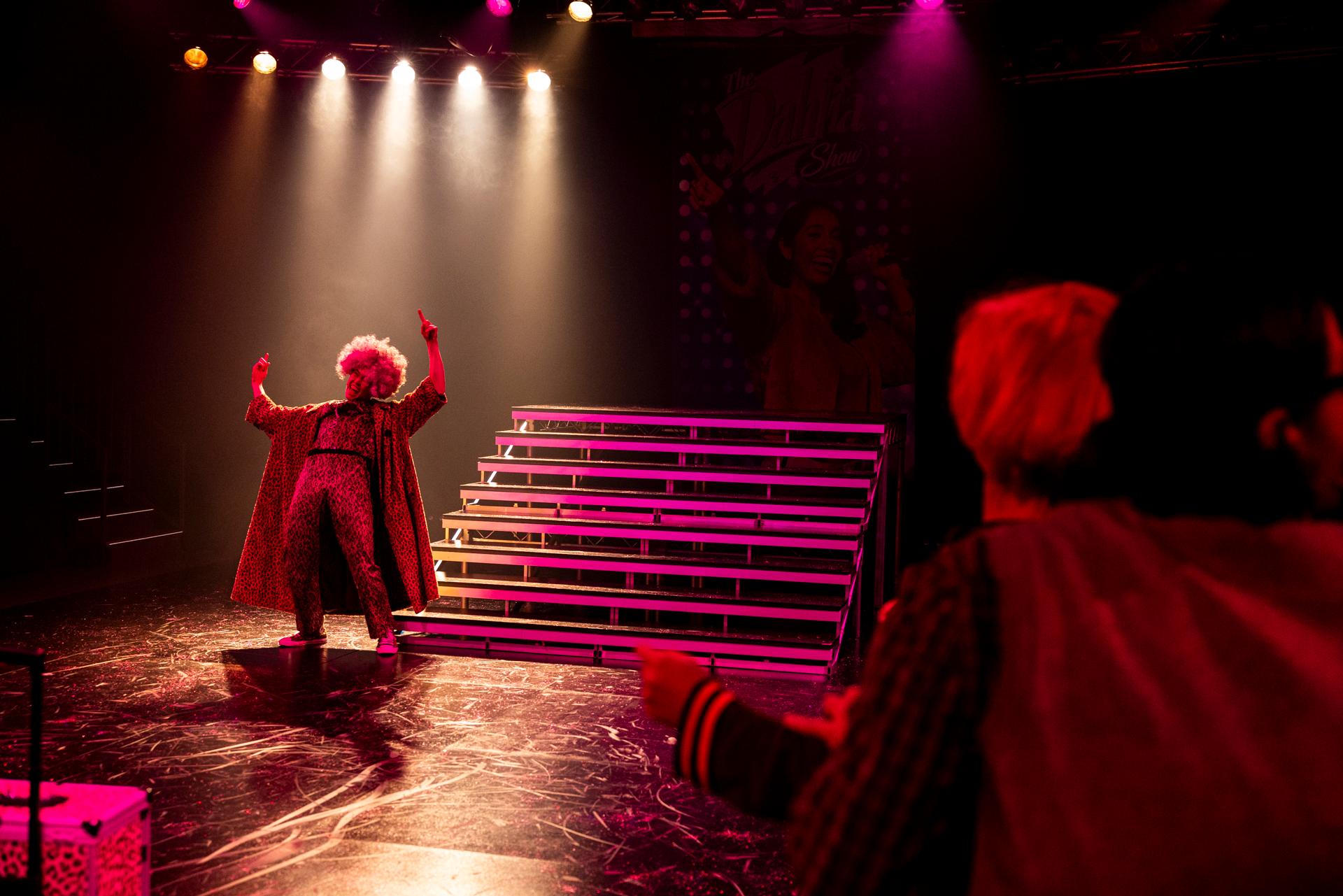
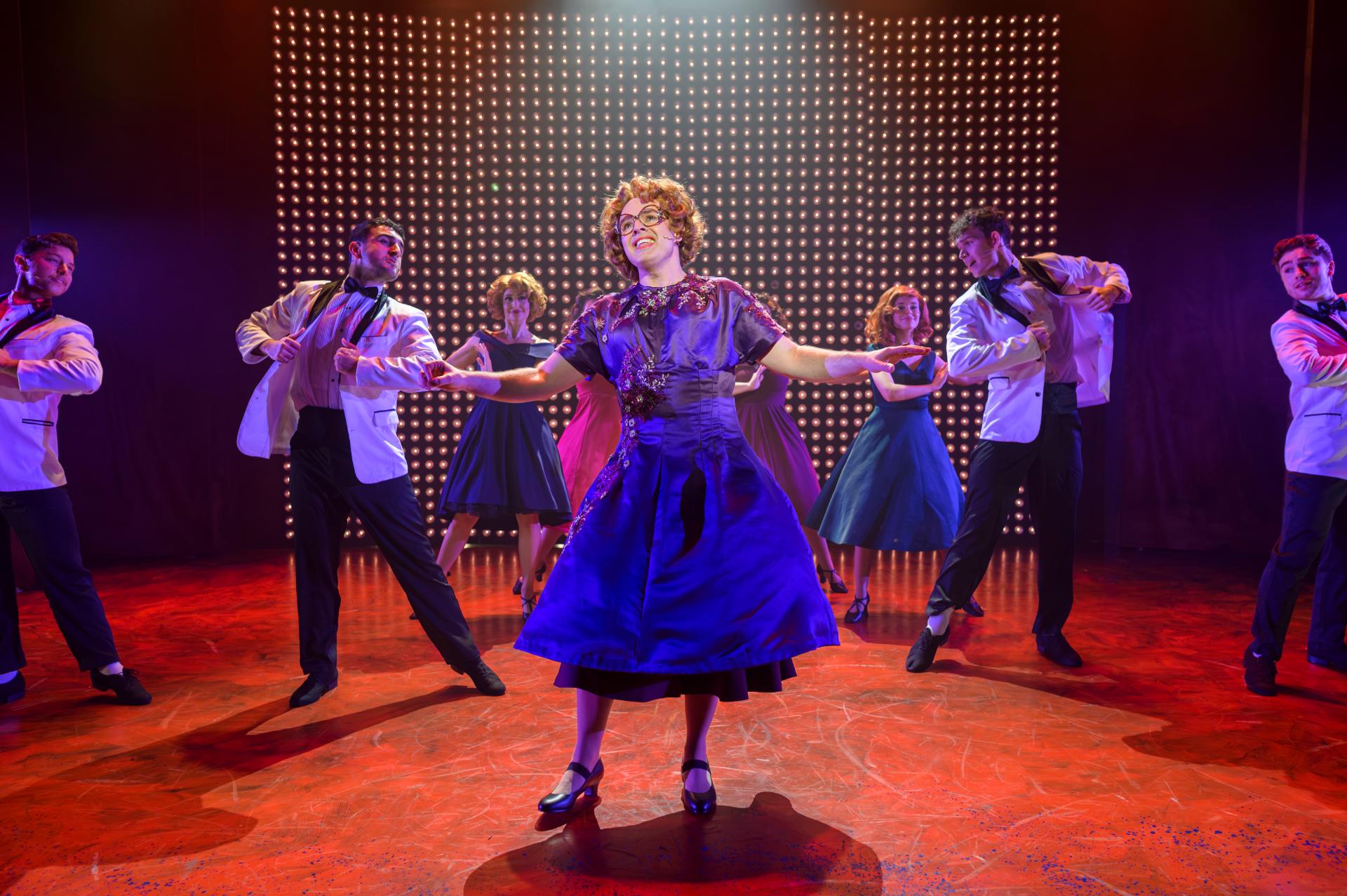
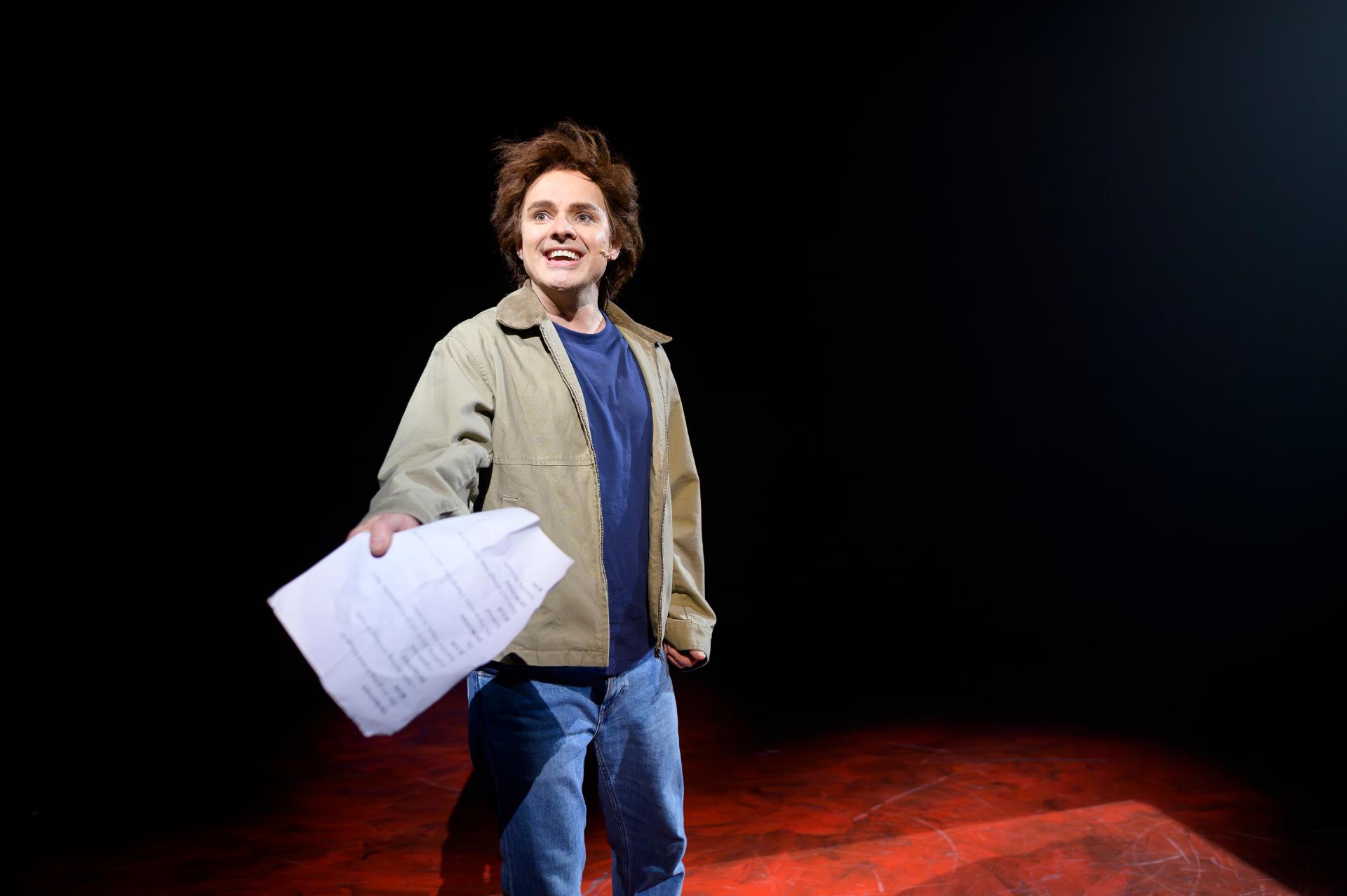
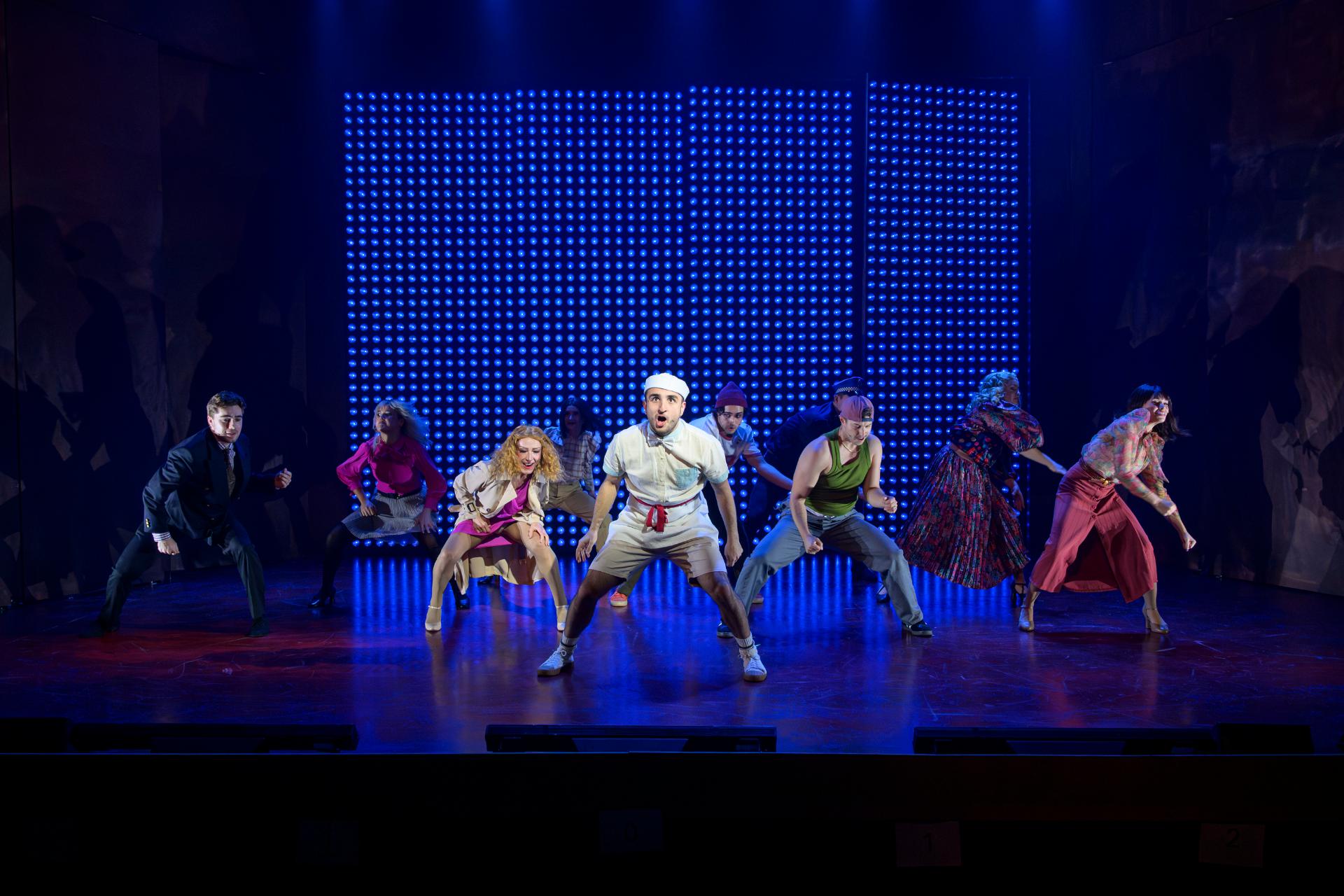
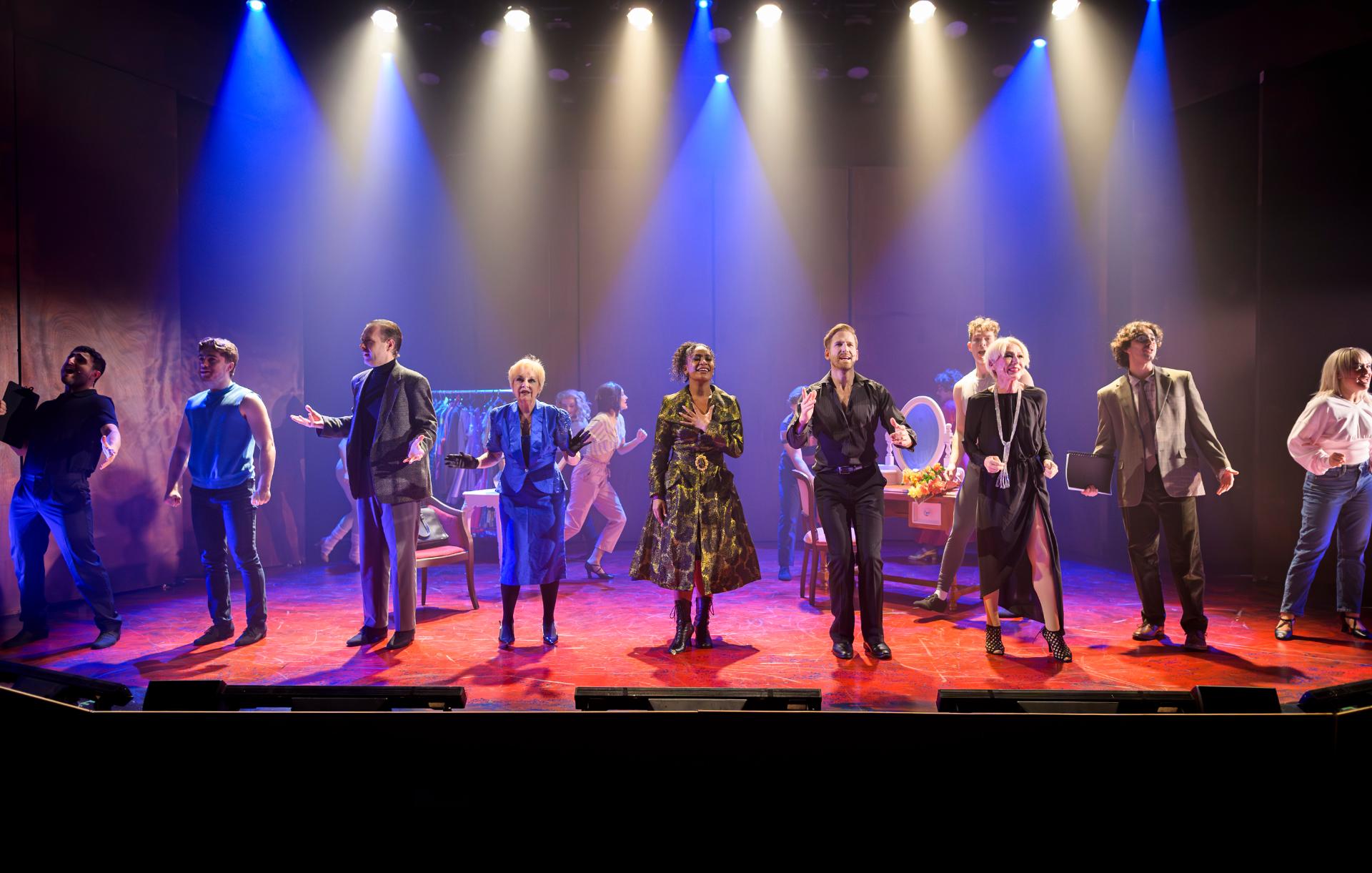
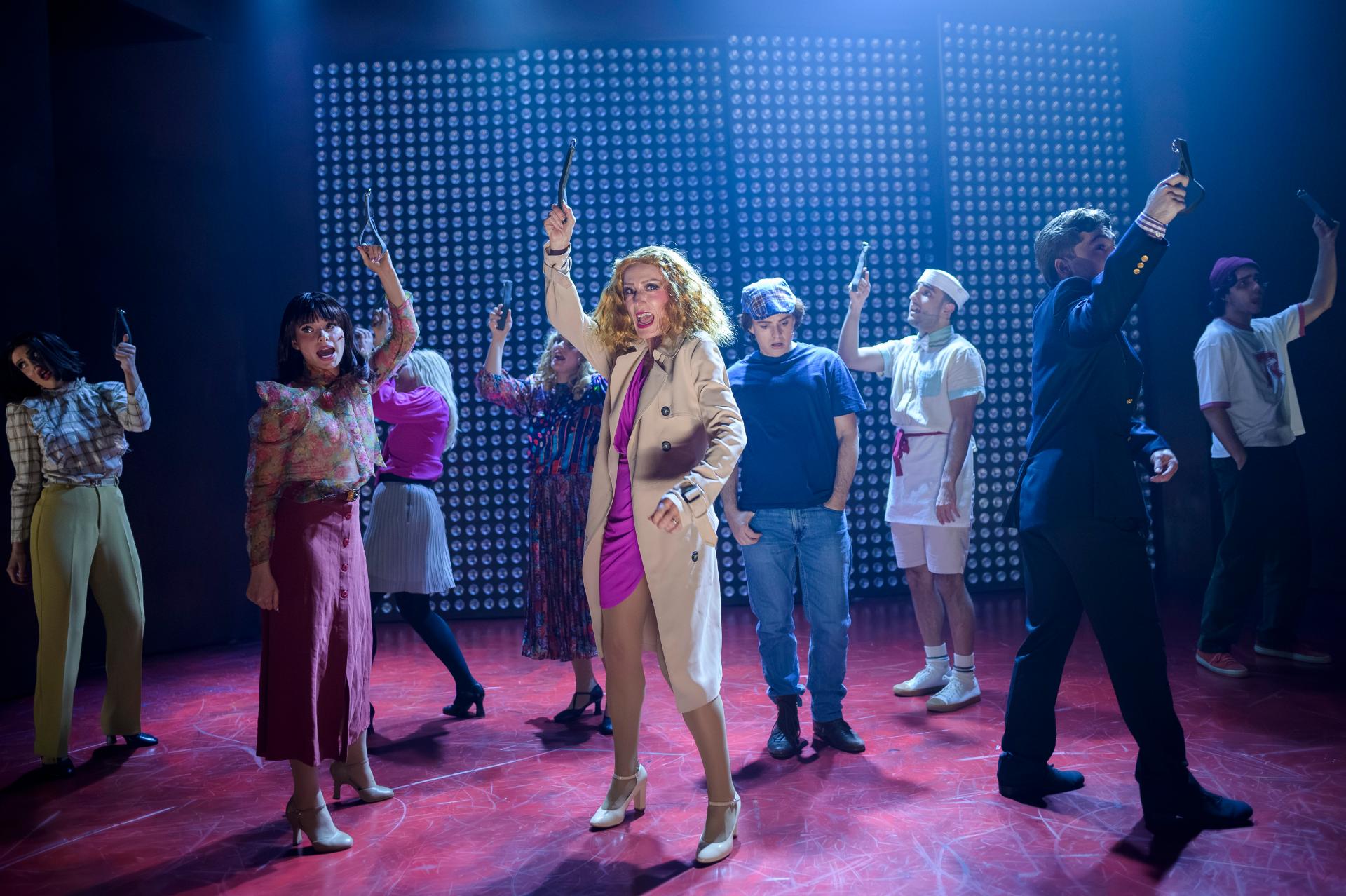
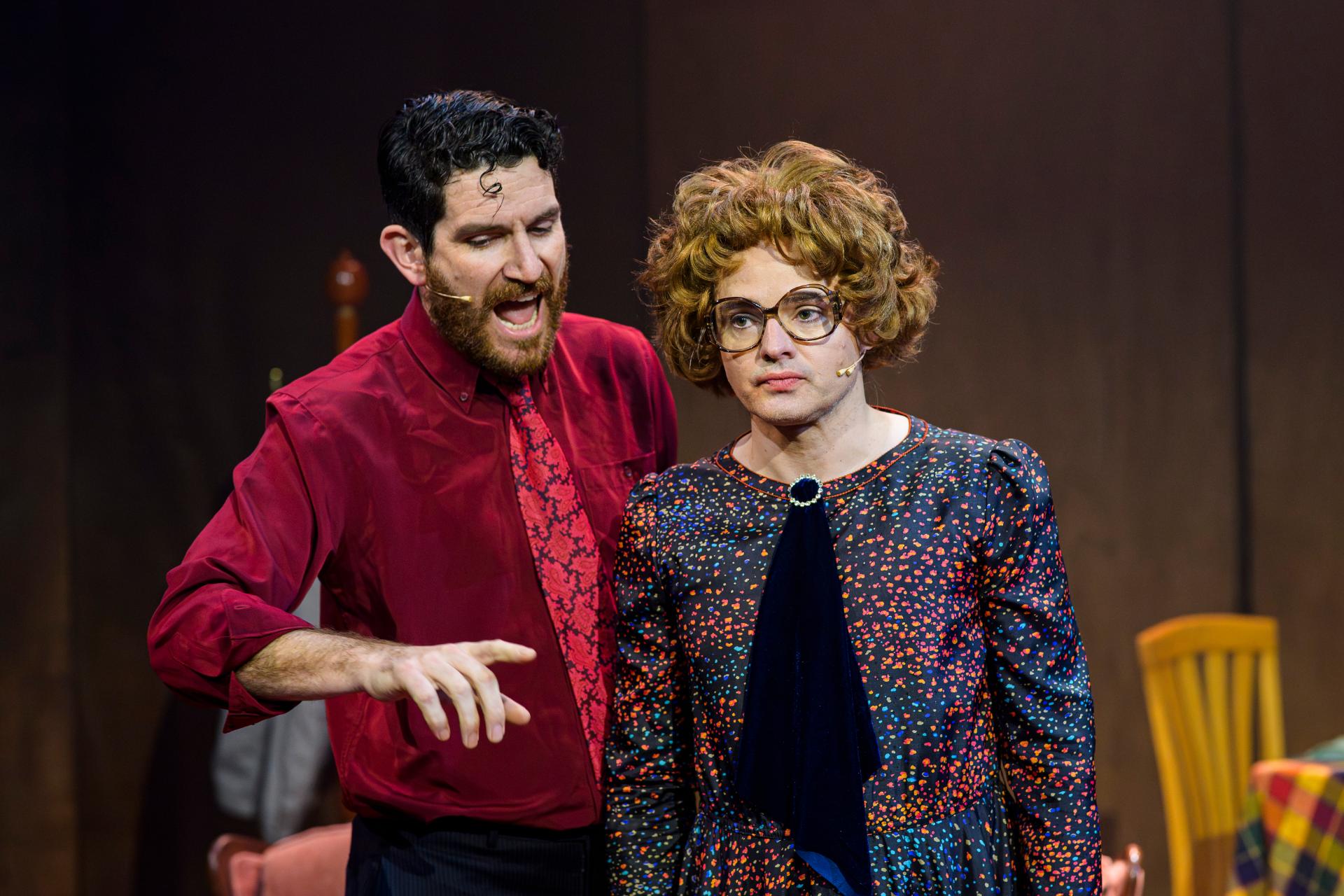
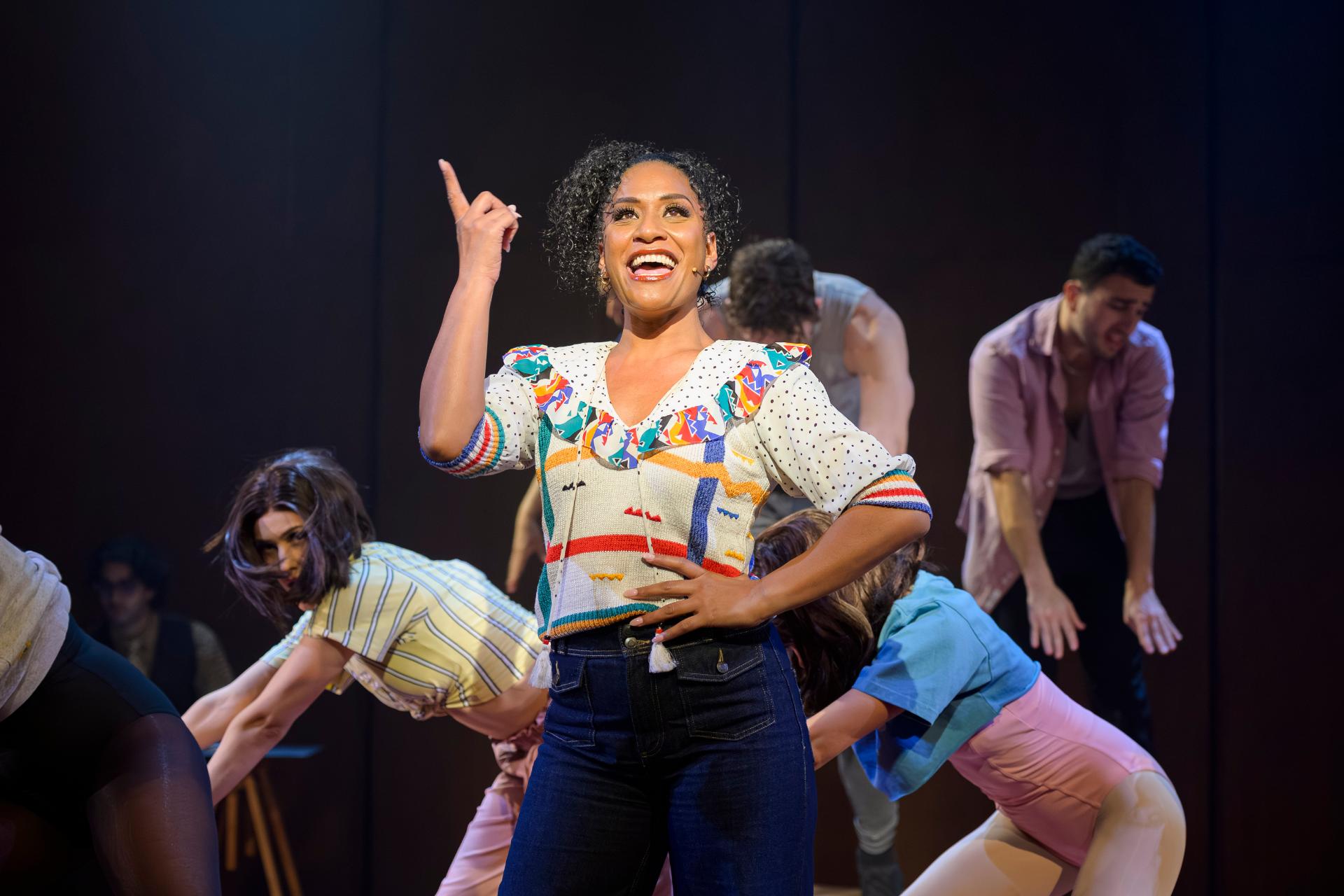
Michael Dorsey, an actor of considerable talent but negligible employability, seizes an unexpected opportunity when an audition calls specifically for a woman. His decision to adopt the persona of Dorothy Michaels sets in motion a cascade of consequences far more triumphant than he could have anticipated. This stage adaptation of the 1982 film Tootsie—sharing both its title and its essential premise—derives considerable vitality from David Yazbek’s effervescent, jaunty score and, perhaps more crucially, from Robert Horn’s exceptionally nimble book, which manages to render the narrative with a contemporary sensibility that largely obviates the mustiness one might expect from a four-decade-old property. That a story of this vintage could be resuscitated without appearing anachronistic or, worse, tone-deaf in the current cultural climate is no small feat; the production merits particular praise for its interrogation of gender inequity through a lens that feels immediate rather than merely dutiful.

Under Cameron Mitchell’s direction and choreography, the work sustains its entertainment value without sacrificing narrative coherence, navigating its inherently preposterous premise with such assurance that one scarcely questions the plausibility of the central deception. Mitchell possesses the rare capacity to suspend disbelief not through obfuscation but through the sheer force of theatrical conviction, rendering the absurd eminently digestible.

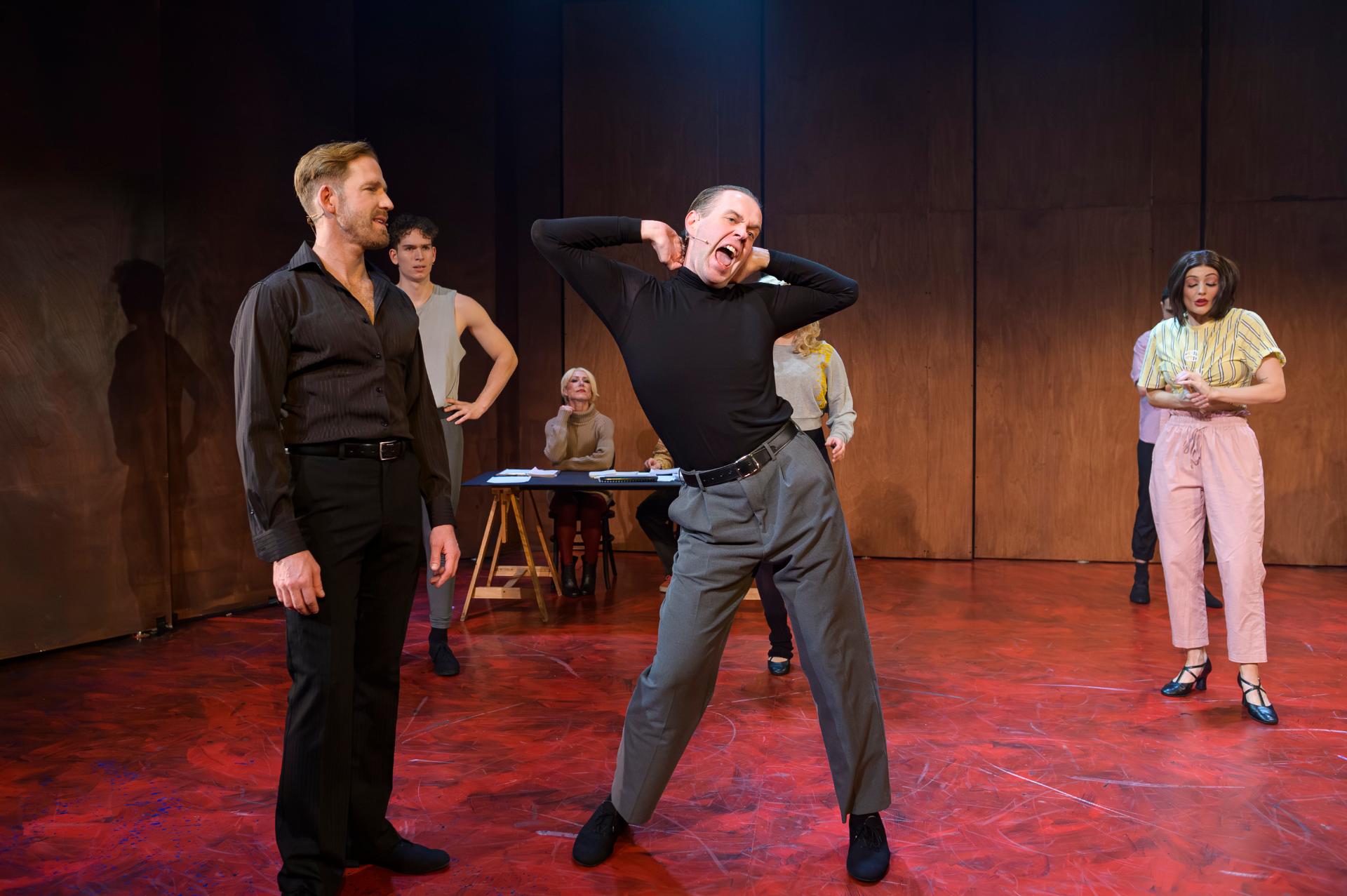
Where the production falter is in its visual execution. The design elements, regrettably, undermine rather than elevate the material. Angela White’s costumes and Helen Thatcher’s wigs suffer from a conspicuous parsimony, appearing neither flattering nor sufficiently polished to support the illusion upon which the drama depends. Dan Potra’s set, painted in a disconcerting and rather aggressive shade of red, has a rough-hewn, provisional quality that feels more workshop than finished production. Peter Rubie’s lighting design offers a measure of redemption, imparting occasional visual sophistication to the proceedings, though it ultimately stops short of genuine ingenuity or surprise.

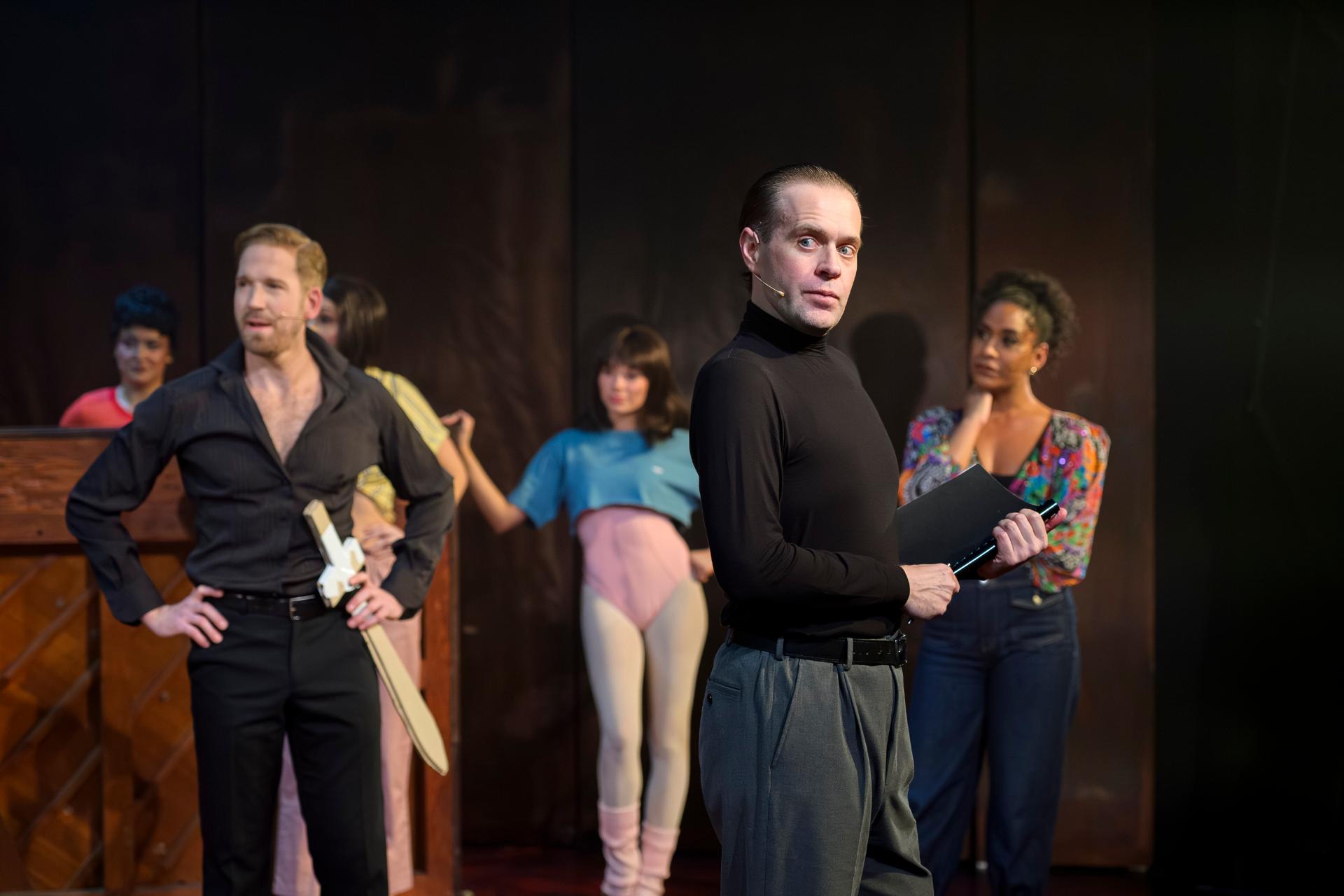
In the formidable role of Michael/Dorothy, Andrew Bevis shoulders an almost impossible burden and, unfortunately, delivers a performance that falls short of the role’s demands. His vocal work proves inconsistent, and more damagingly, he lacks the magnetism necessary to anchor so outsized a character. The romantic chemistry between his Michael and Julia, portrayed by Elenoa Rokobaro, is essentially nonexistent—a deficiency rendered all the more conspicuous by Rokobaro’s own transcendent vocal performance, which stands as one of the production’s undeniable glories. The supporting ensemble, by contrast, is uniformly superb. Tyran Stig and Alana Trantner emerge as particular treasures, creating indelible characterizations distinguished by vocal excellence and a comic timing that feels both spontaneous and impeccably wrought.
The art of drag, it must be acknowledged, has undergone a profound evolution since Tootsie first appeared, migrating from the margins of subcultural expression to occupy an unprecedented position in mainstream consciousness. Its potency resides in what it reveals about the constructed nature of gender—the fluidity of identity itself—and in its implicit argument for a radical, unconditional acceptance that transcends the arbitrary taxonomies by which we so often classify one another. In 2026, one might reasonably expect this narrative to plumb such themes with greater depth and daring, particularly given its determination to remain accessible to family audiences. Yet if this staging does not fully exploit the rich thematic territory now available to it, it nonetheless succeeds in being genuinely delightful, navigating its material with a lightness of touch that thankfully avoids the pitfalls of either creepiness or regression. That, in itself, is no inconsiderable achievement.
www.teatroitalianforum.com.au

Review: Cadaver Synod (KXT on Broadway)

Venue: KXT on Broadway (Ultimo NSW), May 27 – Jun 6, 2026
Playwright: Ruby Blinkhorn
Director: Mathew Lee
Cast: Yasna Delo, Luke Fewster, Nat Jobe, Mark Langham, Diego Retamales, Leon Walshe
Images by Robert Catto

Theatre review
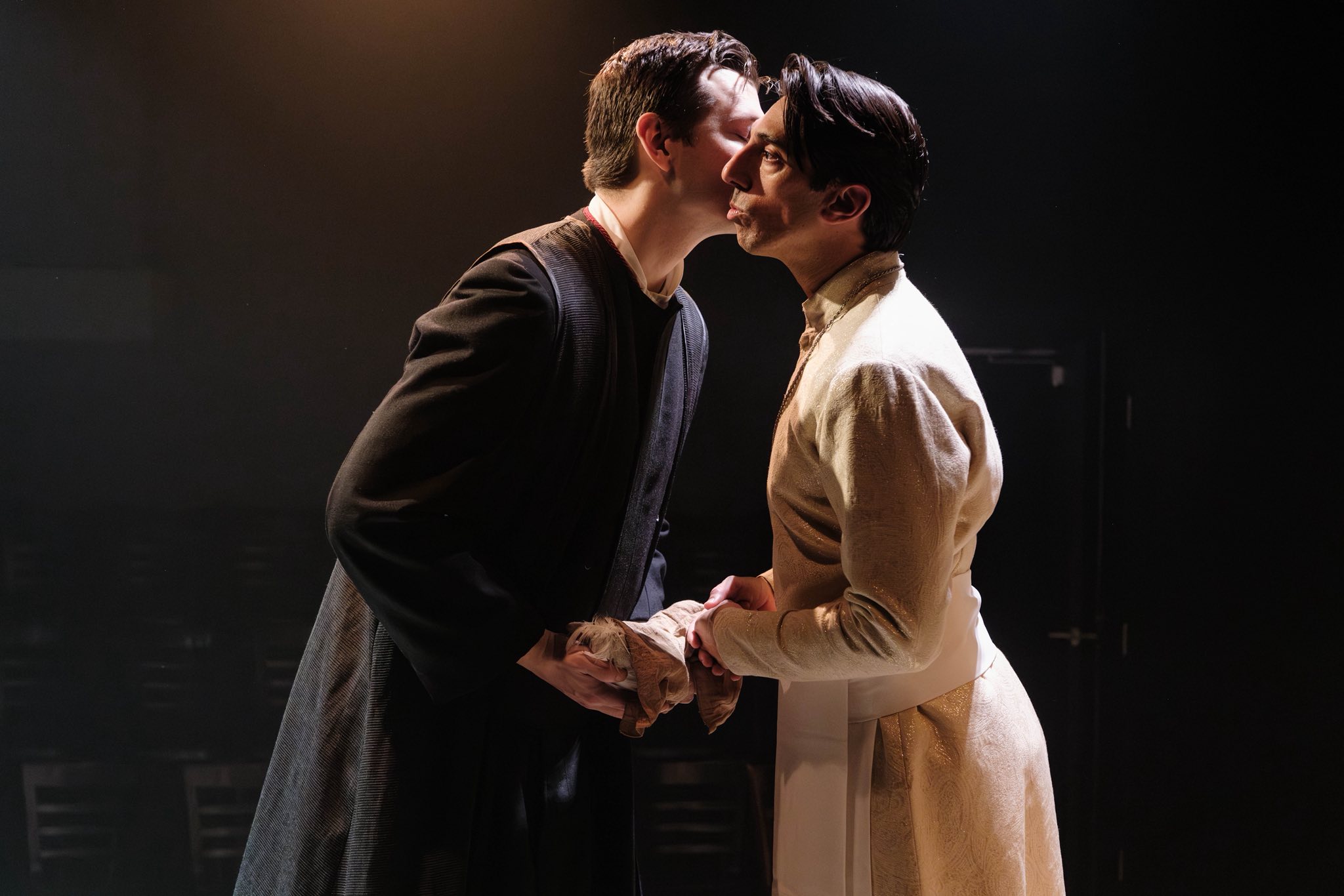
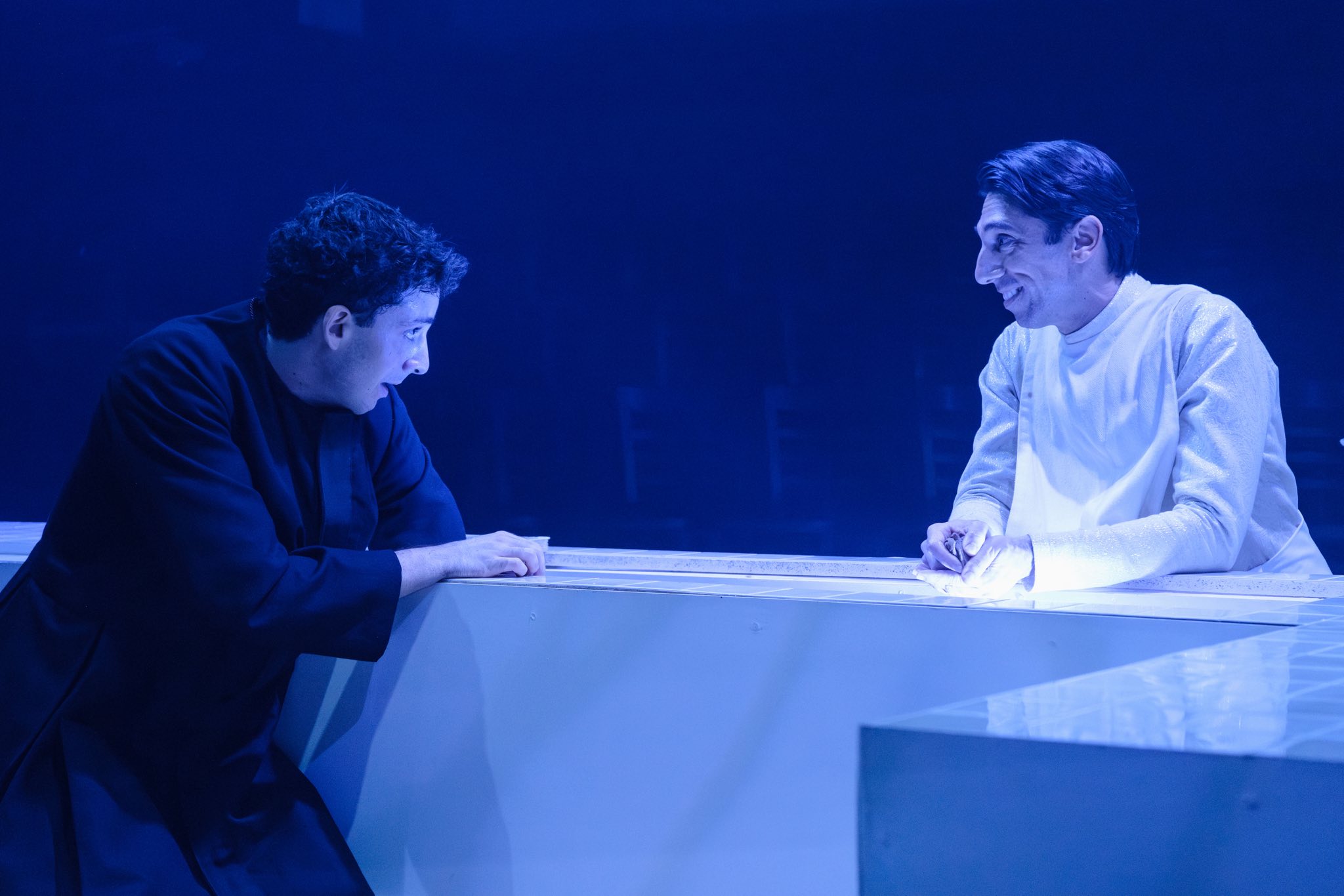
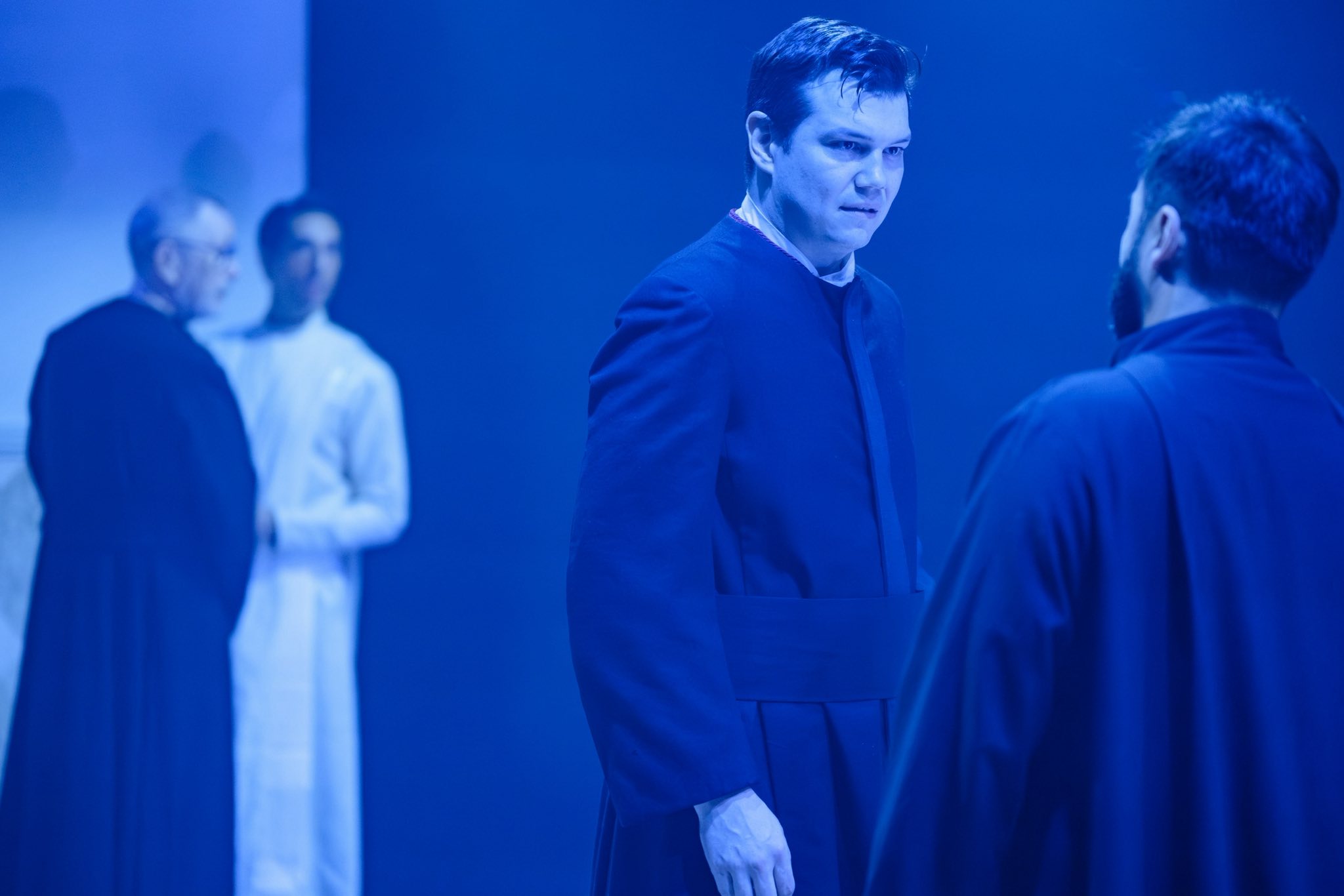
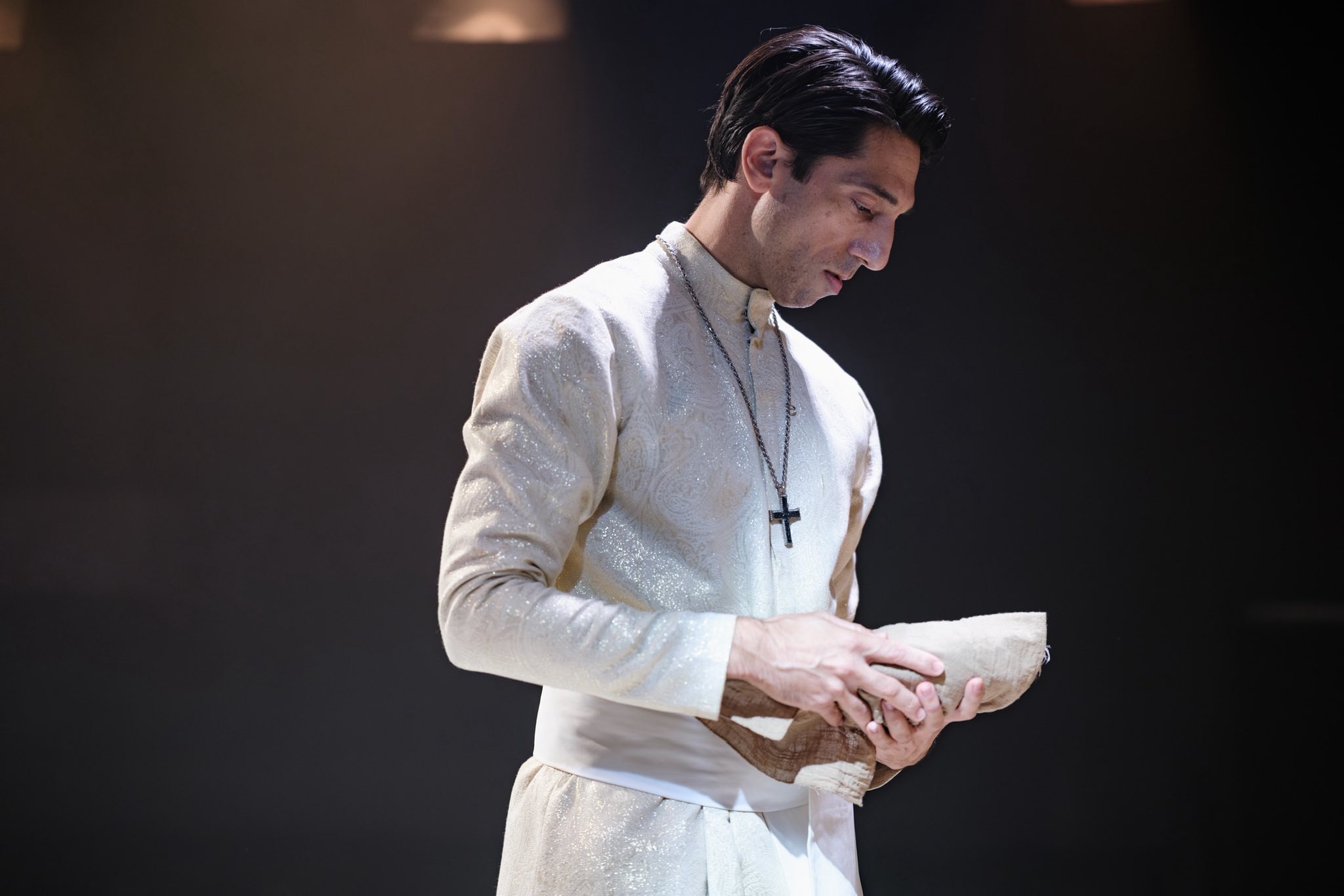
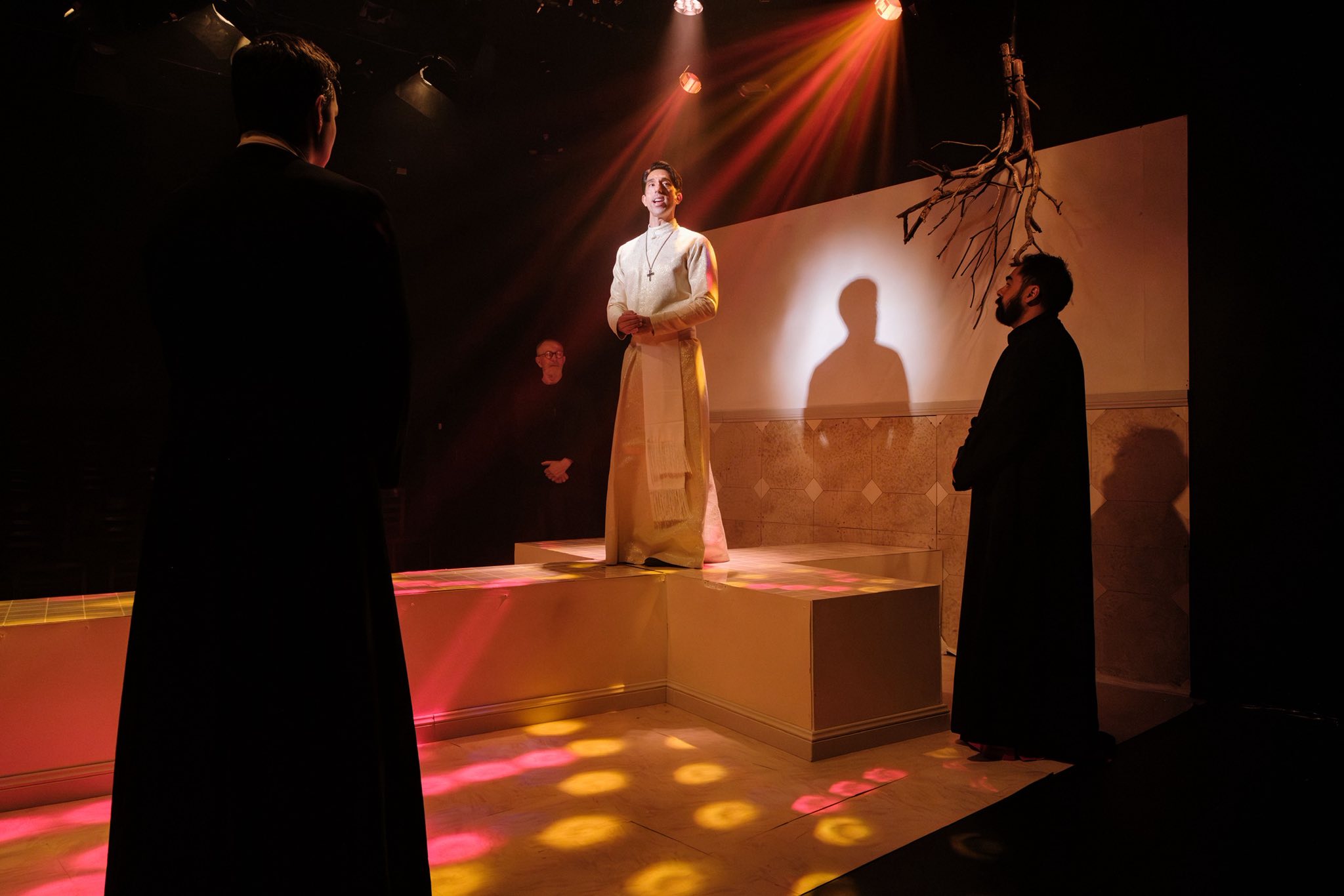
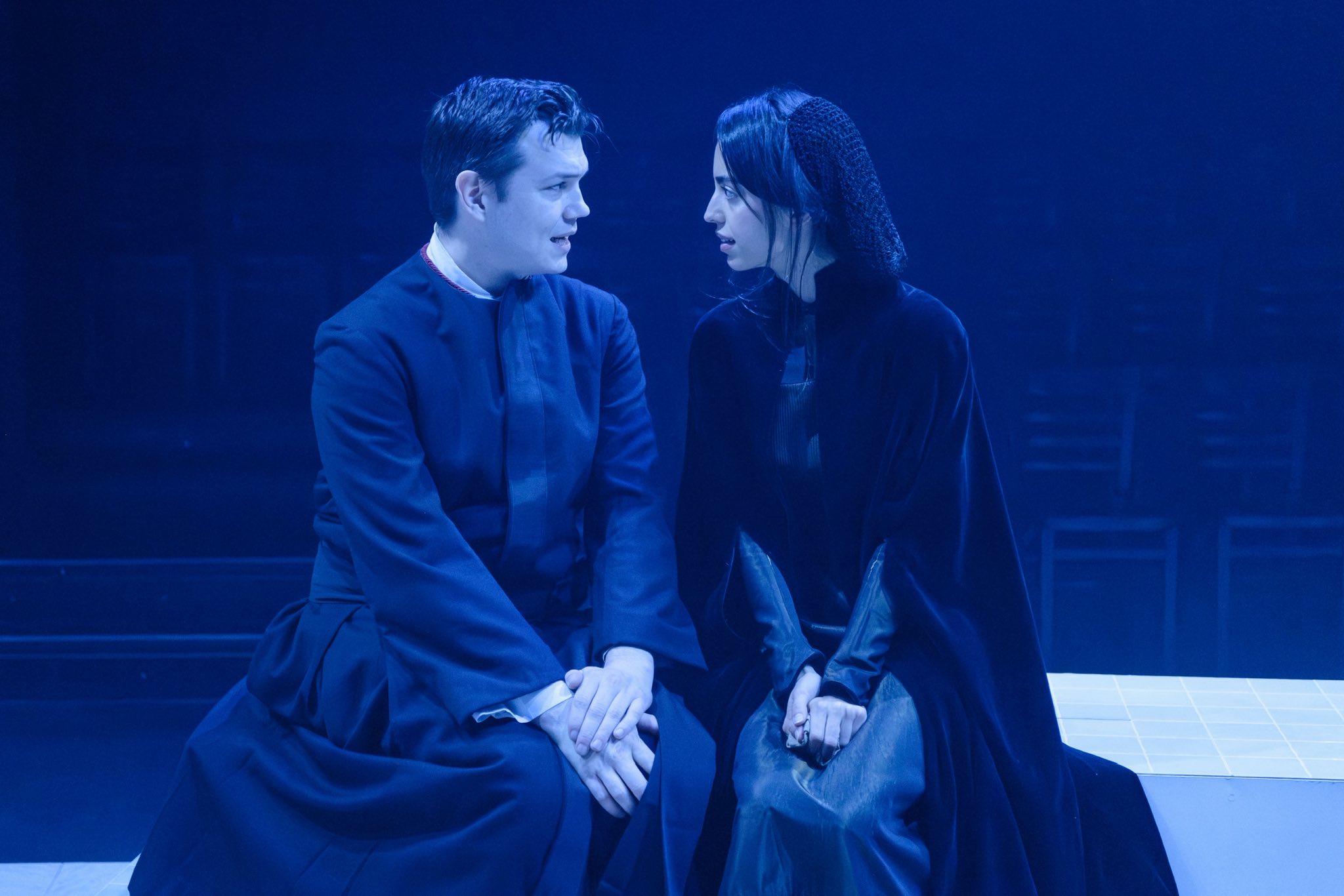
In 897 AD, the corpse of Pope Formosus was exhumed and put on trial for perjury and other crimes—a spectacle of posthumous justice that remains one of history’s most macabre episodes. Ruby Blinkhorn’s Cadaver Synod, named for this grisly affair, places us in the tumultuous aftermath as Formosus’s successor, Pope Stephen, attempts to impose order upon a world of chaos and deepening distrust. The historical premise is undeniably rich theatrical fodder, yet the play itself often struggles to find its centre. The narrative darts in so many disparate directions that it feels less like a cohesive drama than a long-form television series crammed into ninety minutes, with narrative gaps that leave the audience perplexed and ultimately unsatisfied.

What rescues the production is Mathew Lee’s direction, which sustains attention through sheer force of pacing. Each scene crackles with tension, even if that tension derives more from our curiosity about what might happen next than from genuine engagement with the play’s thematic concerns. Lee marshals his design team with impressive precision: Alice Vance’s set and costumes lend the production an elegant, faintly extravagant grandeur; Frankie Clarke’s lighting is sumptuously rendered, conjuring moments of genuine visual delight; and Cameron Smith’s sound design delivers the production’s most dramatic beats with visceral impact, though it could benefit from more intense atmospheric calibration.

In the central role, Nat Jobe brings an immense sincerity that keeps us firmly attentive, leavened by flashes of flamboyance that prevent the evening from turning oppressively dour. Equally compelling is Leon Walshe as Father Gabriel, who imbues one of the play’s more tragic figures with emotional authenticity and affecting vulnerability.

The world of Cadaver Synod may be archaic, but its concerns—corruption, the abuse of power—remain depressingly eternal. Given the relentless parade of such abuses, there is something absurd in our continued willingness to place men in these positions of authority, as though we cannot conceive of organising our existence without such hierarchies. We can, in our better moments, imagine systems more equitable and just; translating those visions into practice, however, appears to remain forever beyond our reach.

www.kingsxtheatre.com

Review: Romeo & Julie (KXT on Broadway)

Venue: KXT on Broadway (Ultimo NSW), May 8 – 23, 2026
Playwright: Gary Owen
Director: Claudia Barrie
Cast: Claudia Barrie, Estelle Davis, Alex Kirwan, Linda Nicholls-Gidley, Christopher Stollery
Images by Phil Erbacher

Theatre review
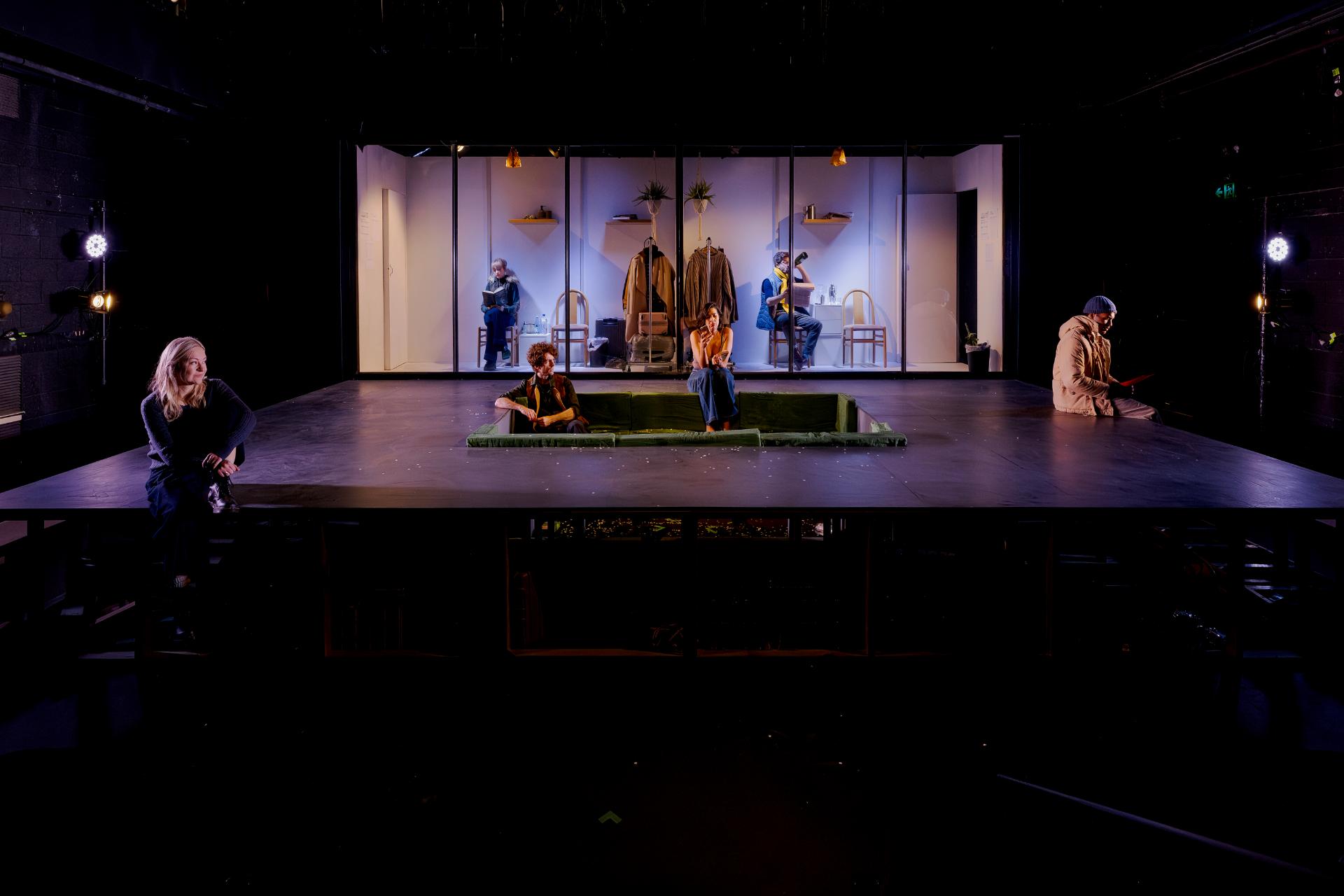
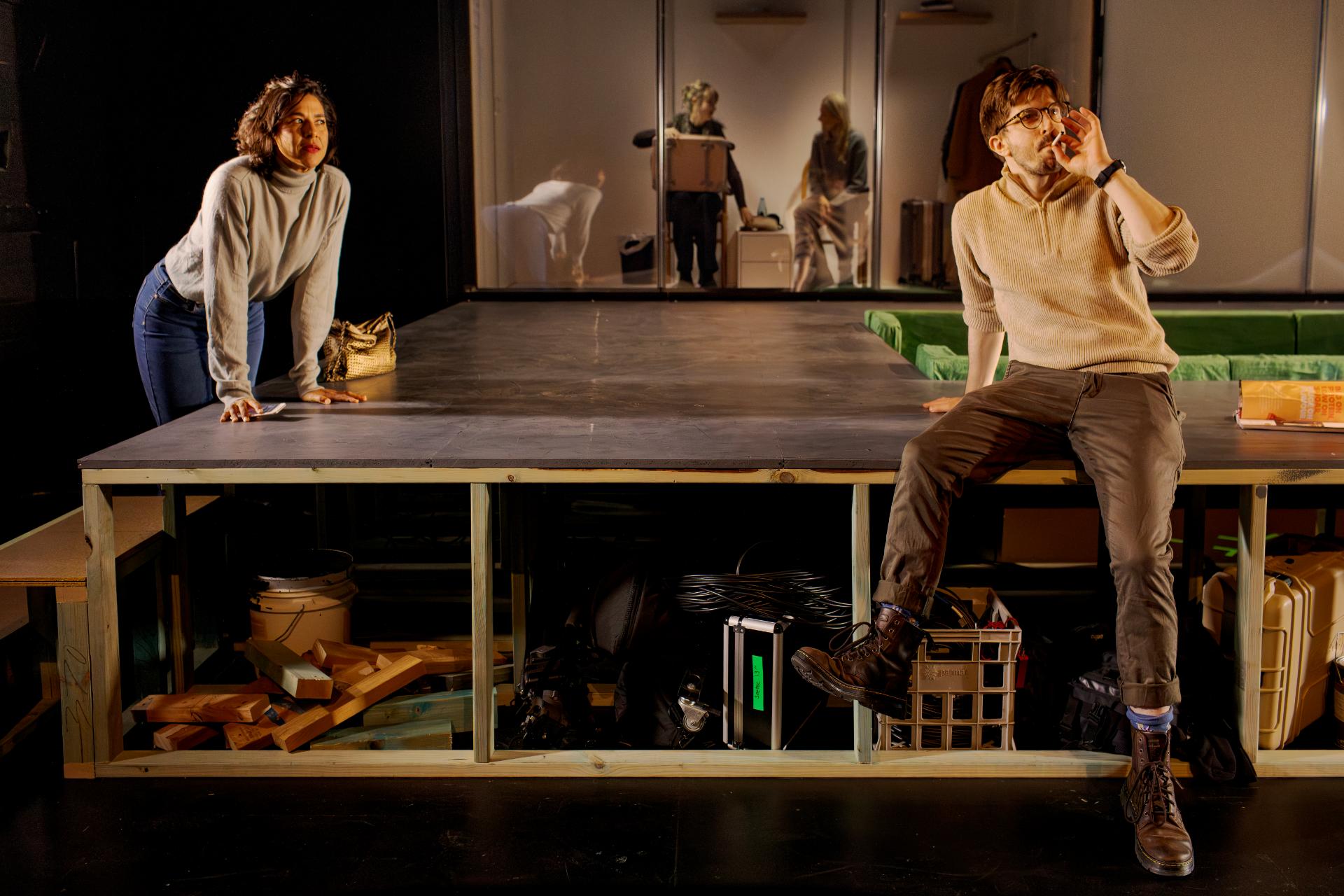
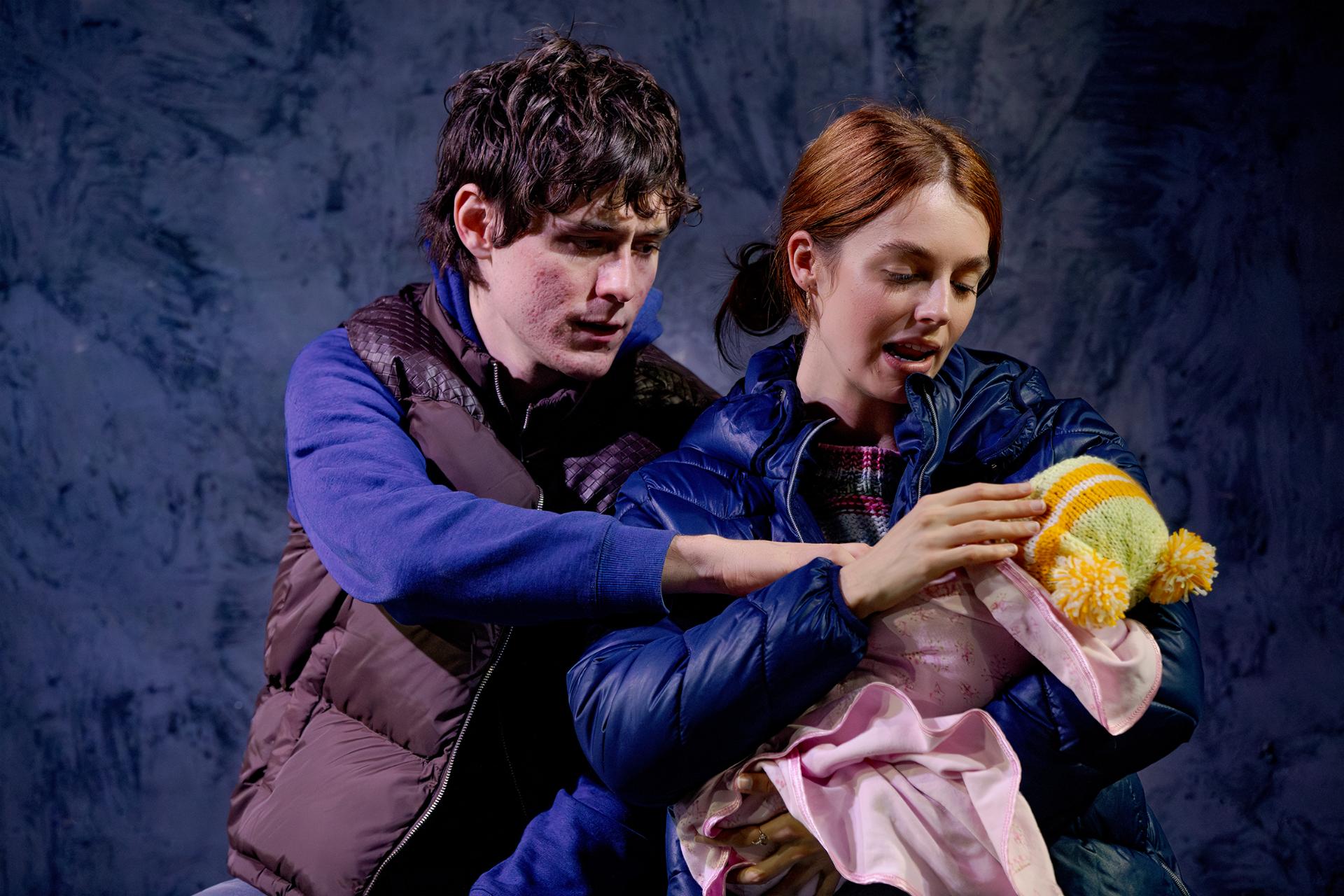
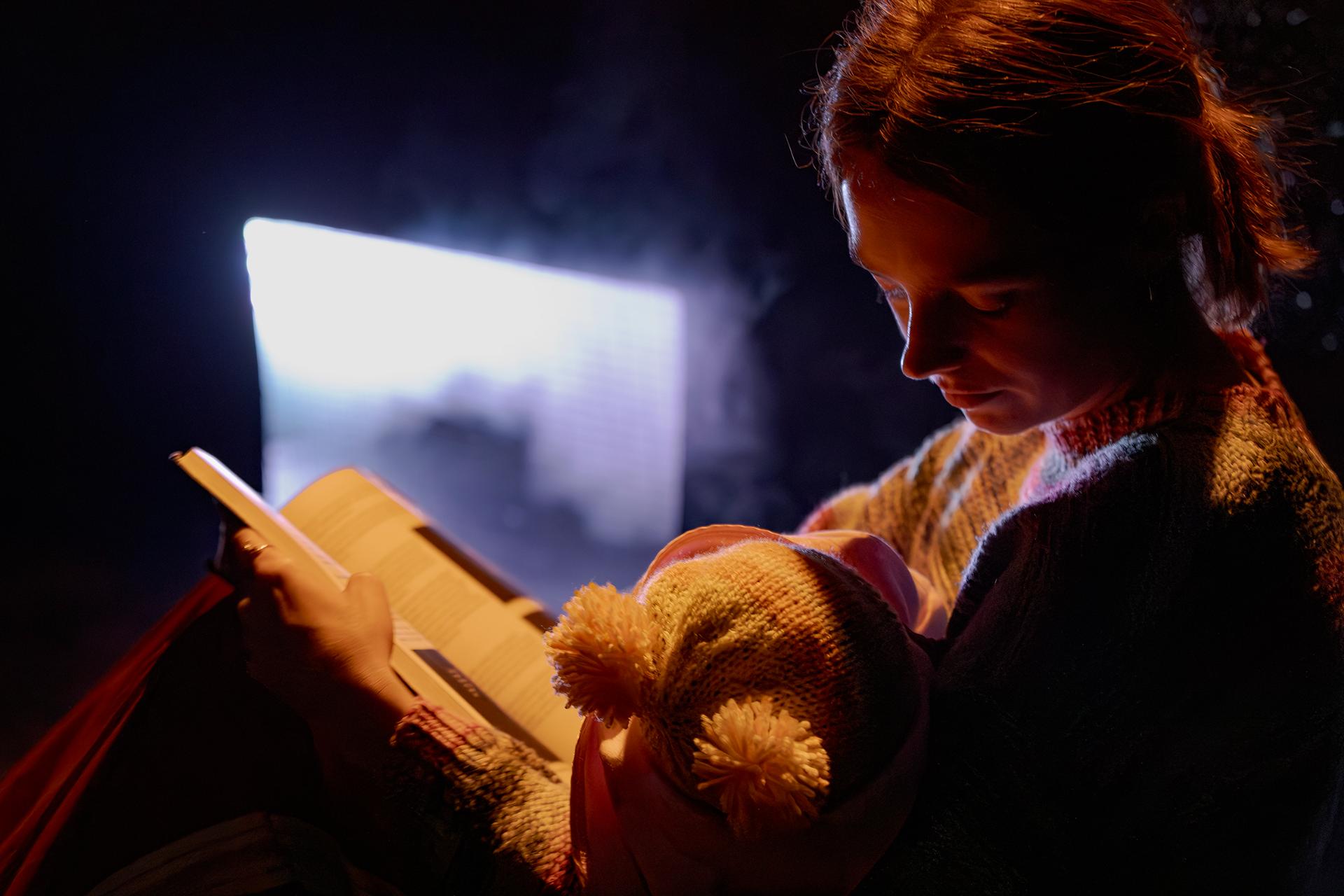
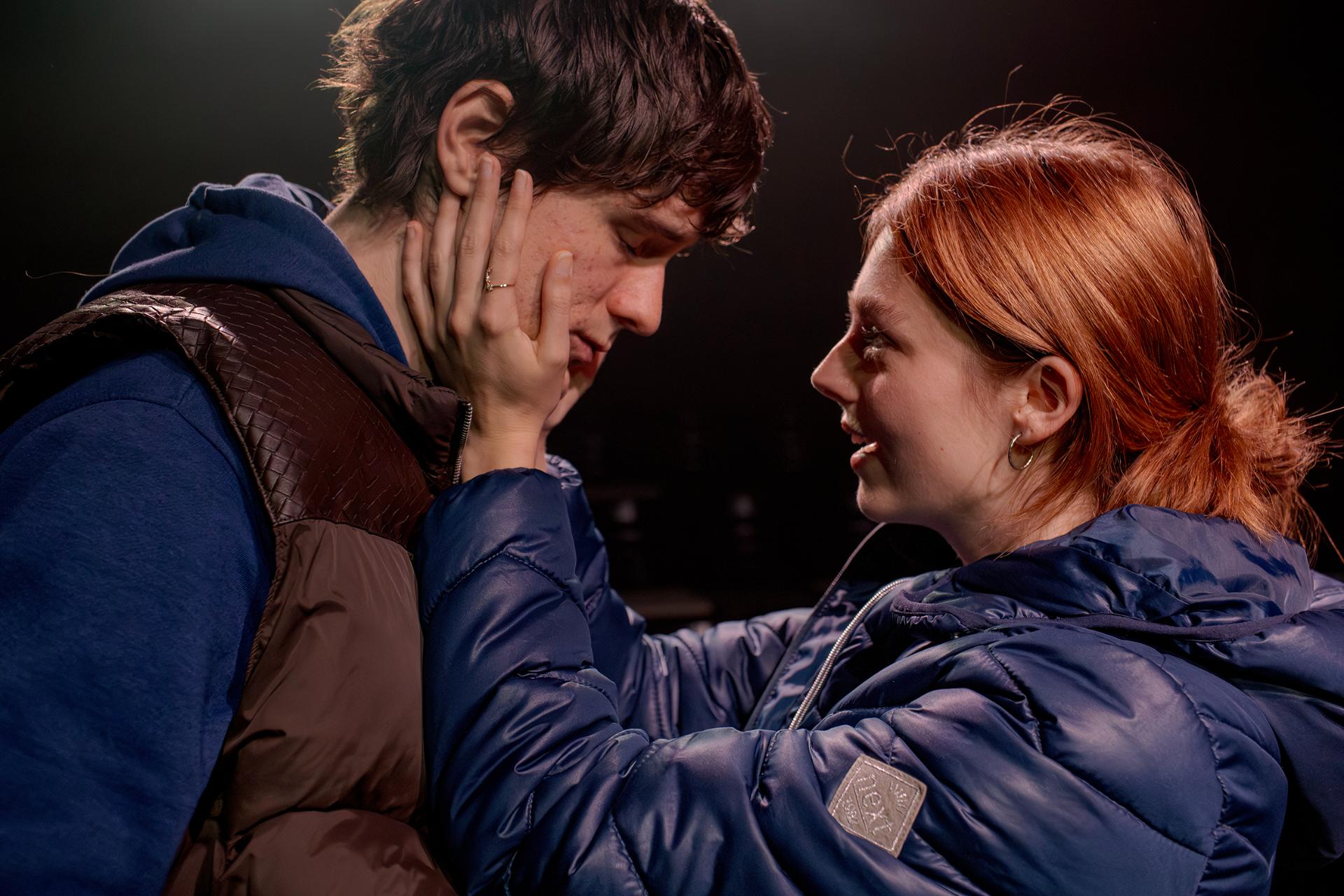
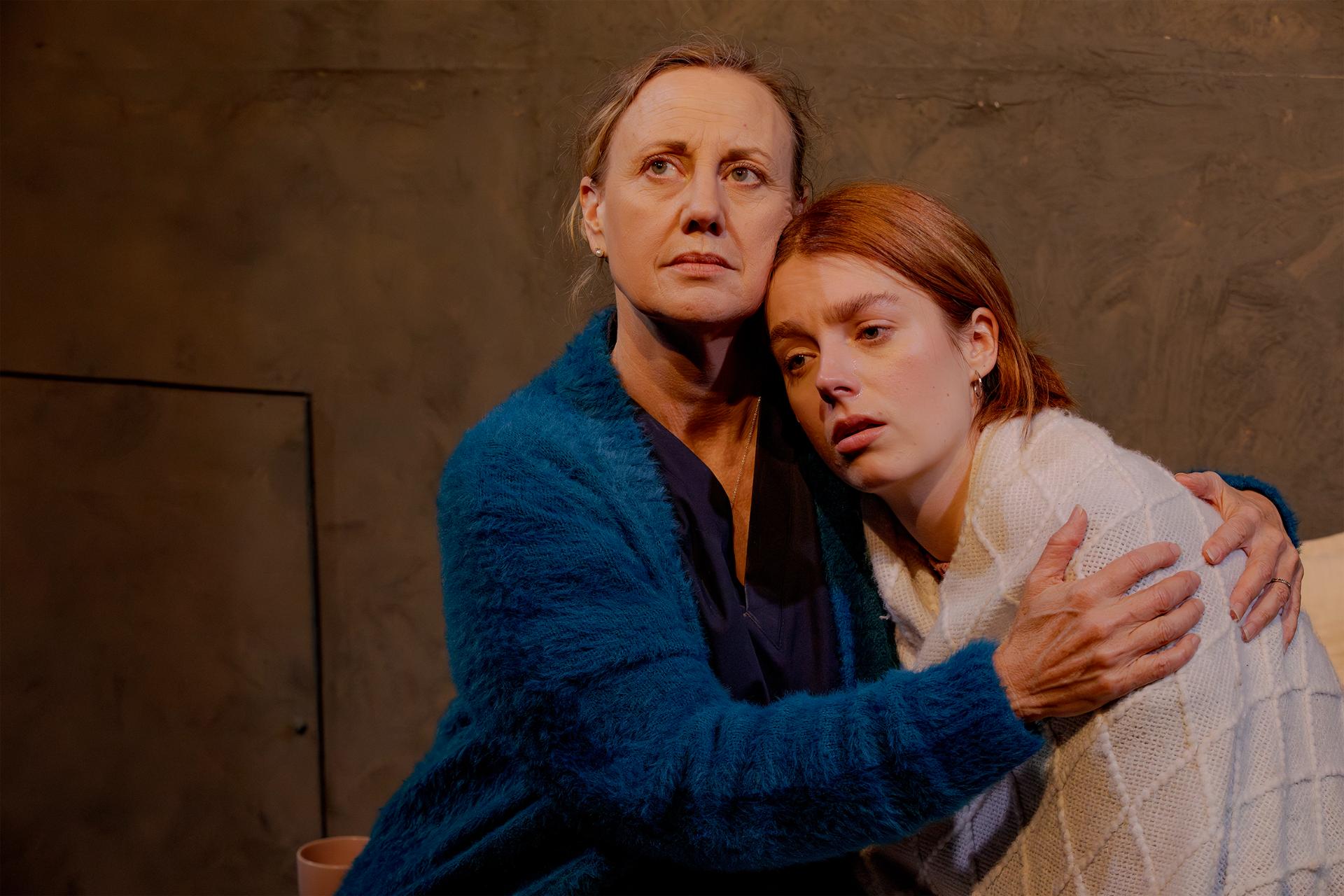
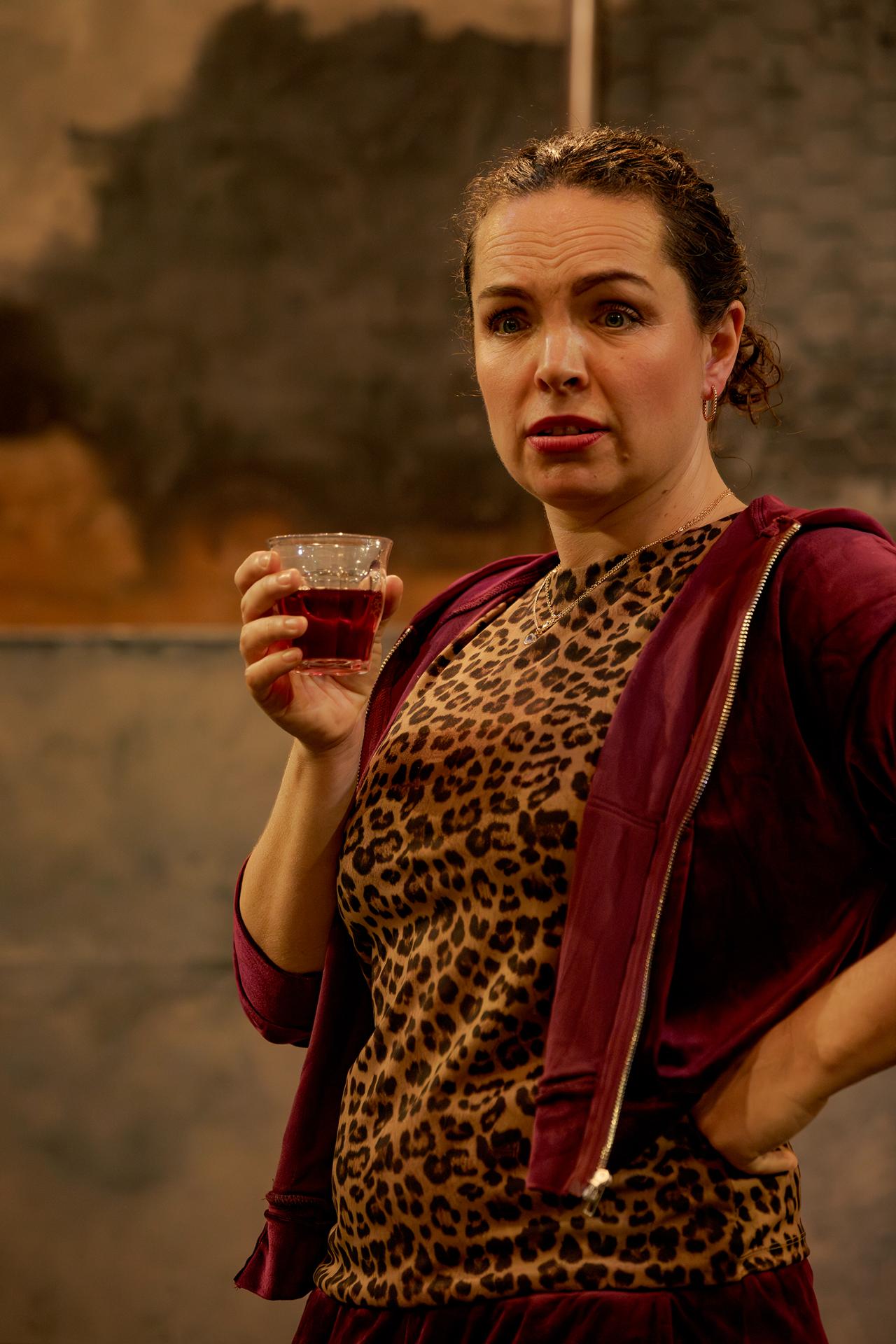
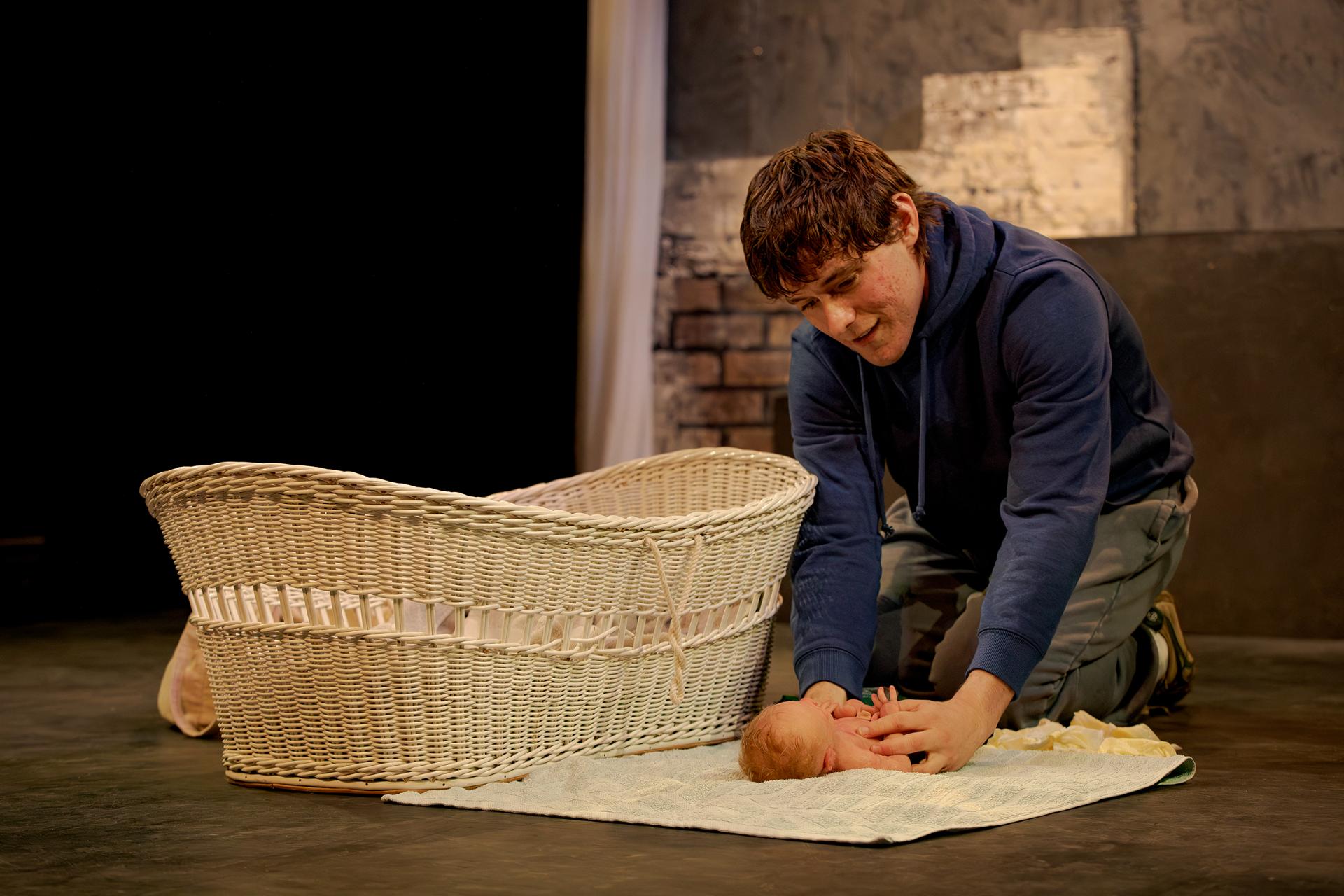
At the precipice of adulthood, Romeo and Julie ought to be standing before a horizon of possibility. Instead, their world has narrowed dramatically: Romeo is already a single father to a new born, and the weight of that responsibility has collapsed the future into something far more constricted. Gary Owen’s Romeo & Julie interrogates the unequal distribution of choice—how circumstance, class, and timing dictate who gets to dream and who must simply survive. The play immerses us in the agonizing decisions forced upon the young when desire and duty pull in opposite directions, and it situates these private struggles within a broader social context rich enough to provoke genuine debate about some of life’s most consequential questions.

Yet for all its thematic substance, the production does not always compel. Owen’s text can feel dramatically under-powered, lacking the tension or wit necessary to fully transfix an audience through its quieter passages. What rescues these lulls is Claudia Barrie’s direction, which invests every scene with a palpable gravity. Even when the narrative turns dreary, we never lose sight of the stakes; Barrie ensures that the pressure bearing down on these young lives remains visceral and real.

The design elements sustain this tension between hardship and hope. Geita Goarin’s set occupies a liminal space between realism and fantasy, yet it never abandons its grounding in working-class authenticity. Dr. Emily Brayshaw’s costumes achieve something similarly deft, using elegant simplicity to conjure ordinary Welsh lives without excessively romanticising them. Topaz Marlay-Cole’s lighting lends the production genuine theatricality, though the transitions between scenes occasionally falter in smoothness. Josh Anderson’s music is sensitively deployed, drawing us into the story’s sentimental undercurrents, even if the score’s handling of the closing scenes’ heightened emotion wants for greater refinement.

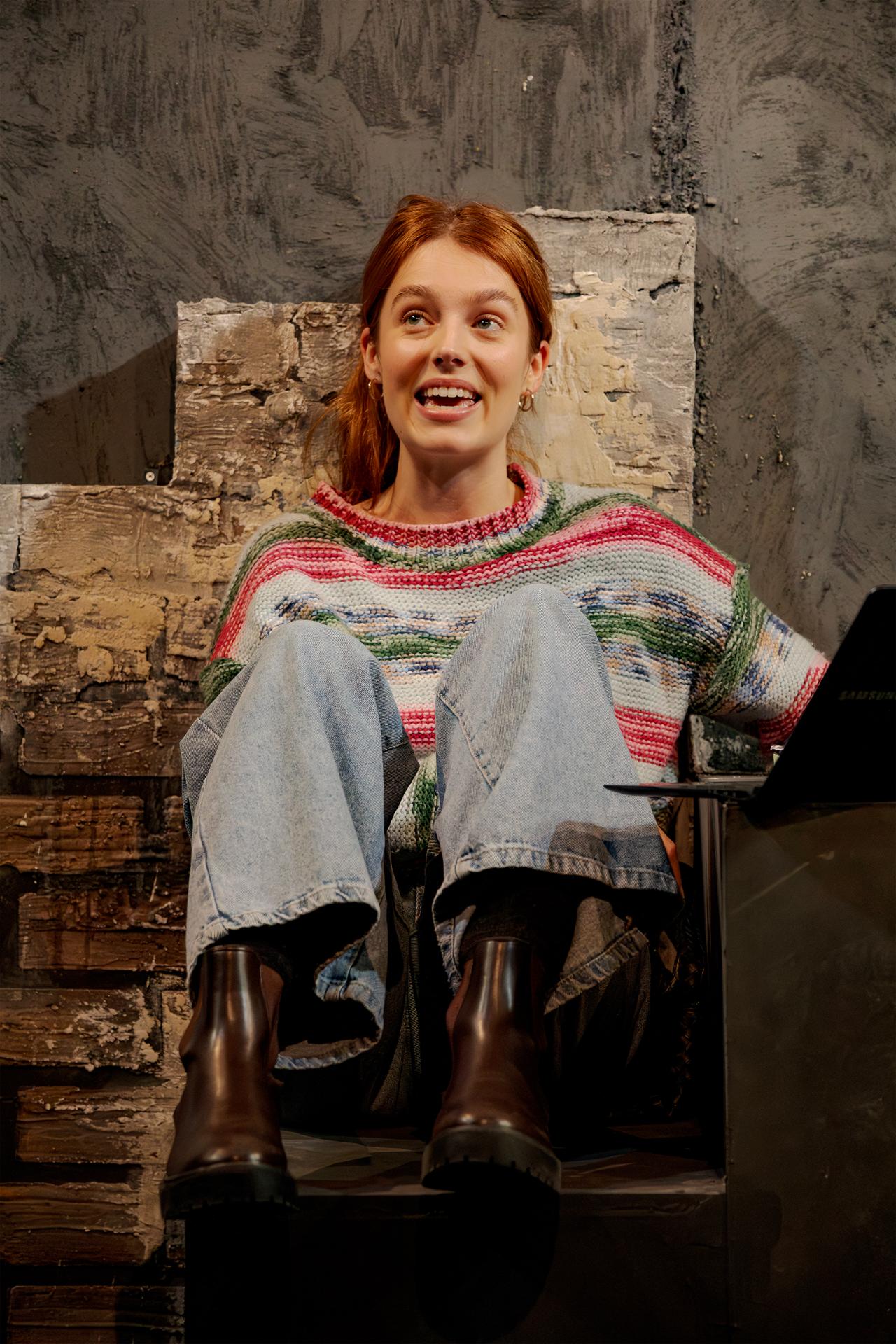
At the centre of it all, Estelle Davis and Alex Kirwan deliver performances that are as credible as they are captivating. Both actors possess an instinctive charisma that wins our empathy without begging for it, and they navigate their characters’ individual predicaments with laudable nuance. Together, they cultivate a chemistry that feels effortlessly lived-in; their conversational rhythms are genuine, lively, and utterly persuasive. Supporting them, Claudia Barrie, Christopher Stollery, and Linda Nicholls-Gidley render the milieu of contemporary Wales with vivid specificity, while allowing the production to resonate on a universal register. Their work ensures that the story’s emotional geography feels at once local and intimately familiar.

The politics of parenthood, of course, remains an inexhaustible minefield. Society will forever quarrel over the “right” age, the “right” conditions, the “right” reasons to bring a child into the world—or to refrain from doing so. These debates are as old as civilization and nearly as contentious. But if the production leaves us with one non-negotiable conviction, it is this: the authority over one’s own body and its reproductive capacities belongs, inalienably, to the individual. Everything else may be argued; that single prerogative should not.

www.kingsxtheatre.com | www.madmarchtheatreco.com

Review: 84 Charing Cross Road (Ensemble Theatre)

Venue: Ensemble Theatre (Kirribilli NSW), May 1 – Jun 13, 2026
Playwright: Helene Hanff (adapted by James Roose-Evans)
Director: Mark Kilmurry
Cast: Blazey Best, Katie Fitchett, Angela Mahlatjie, Brian Meegan, Erik Thomson
Images by Prudence Upton

Theatre review
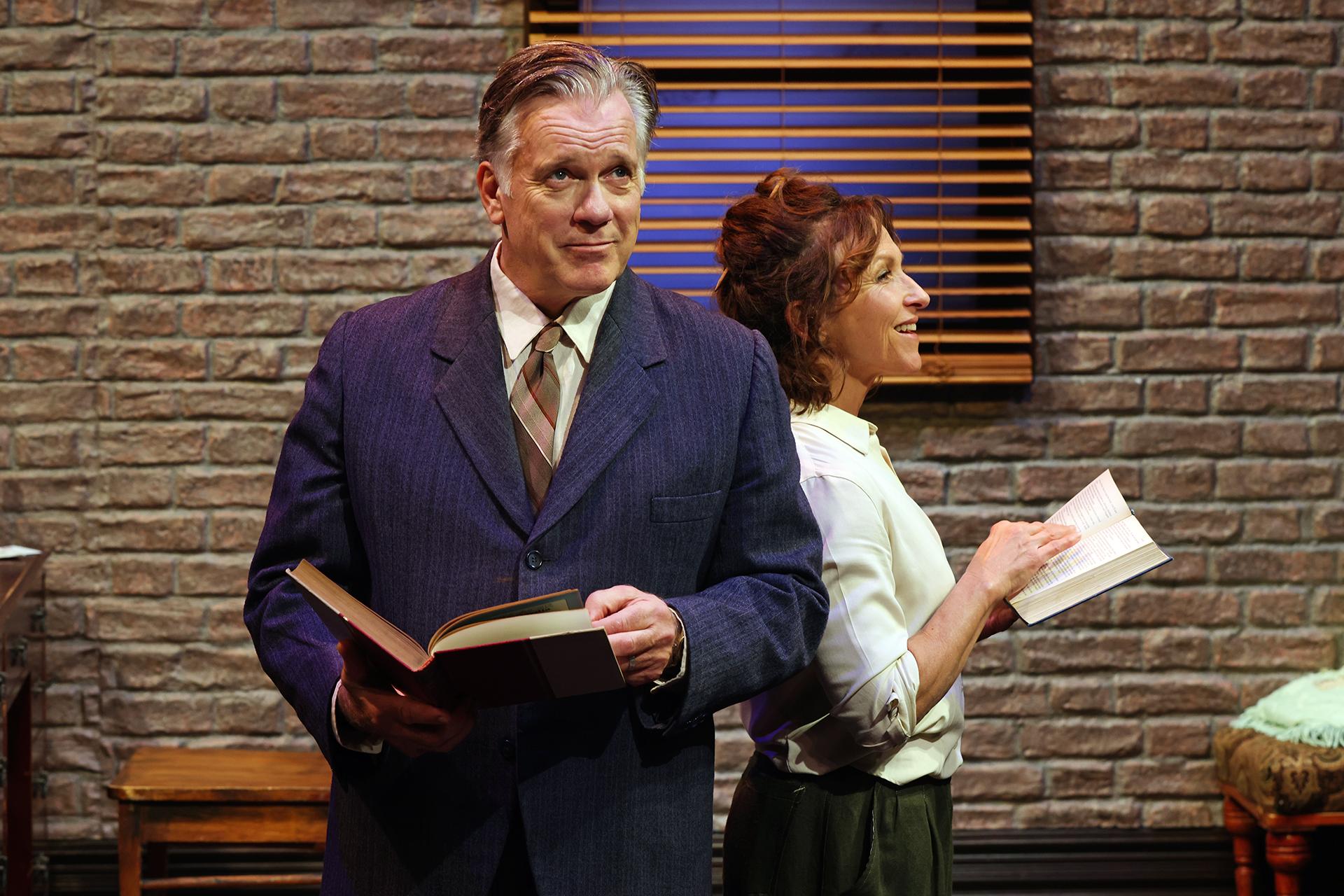
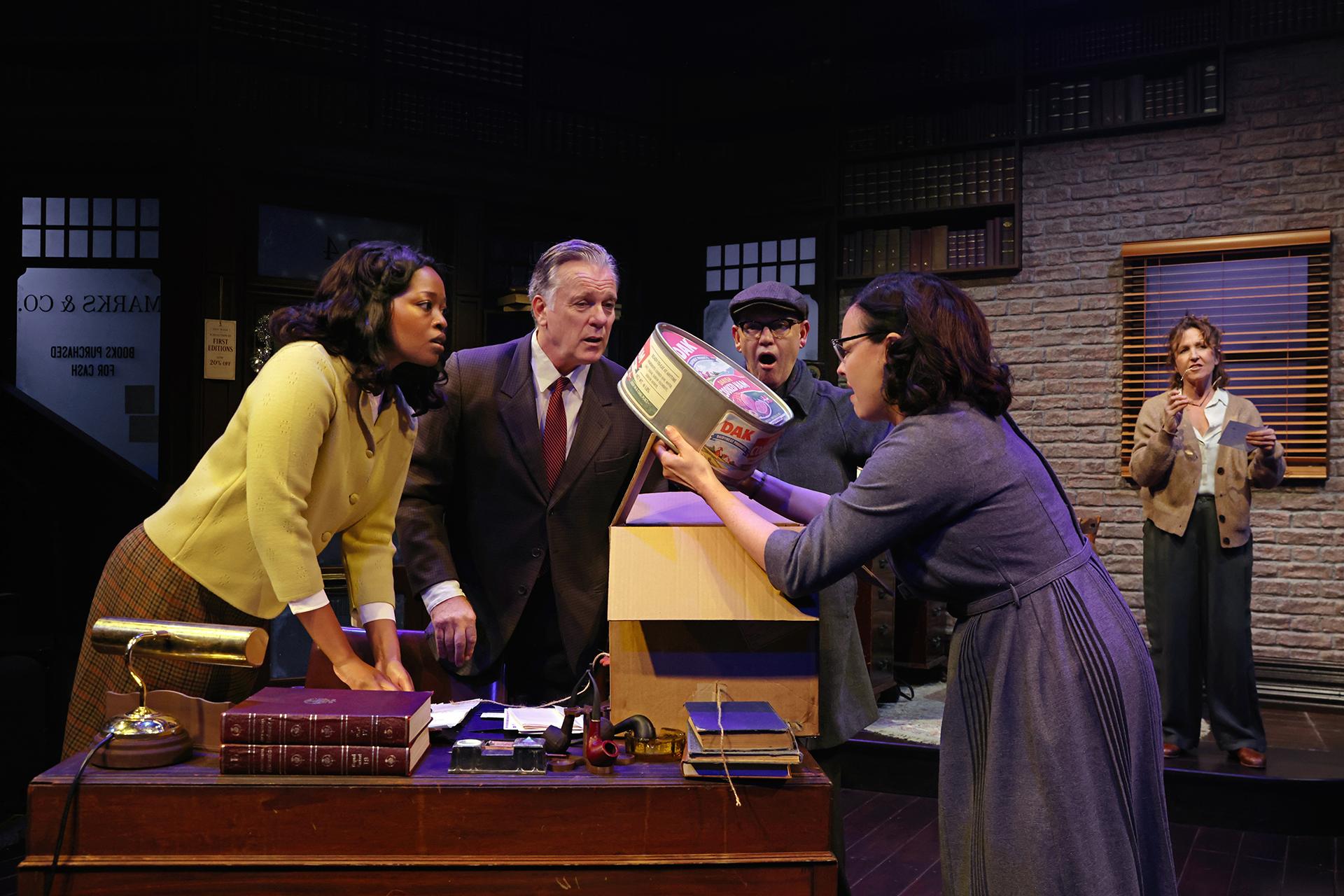
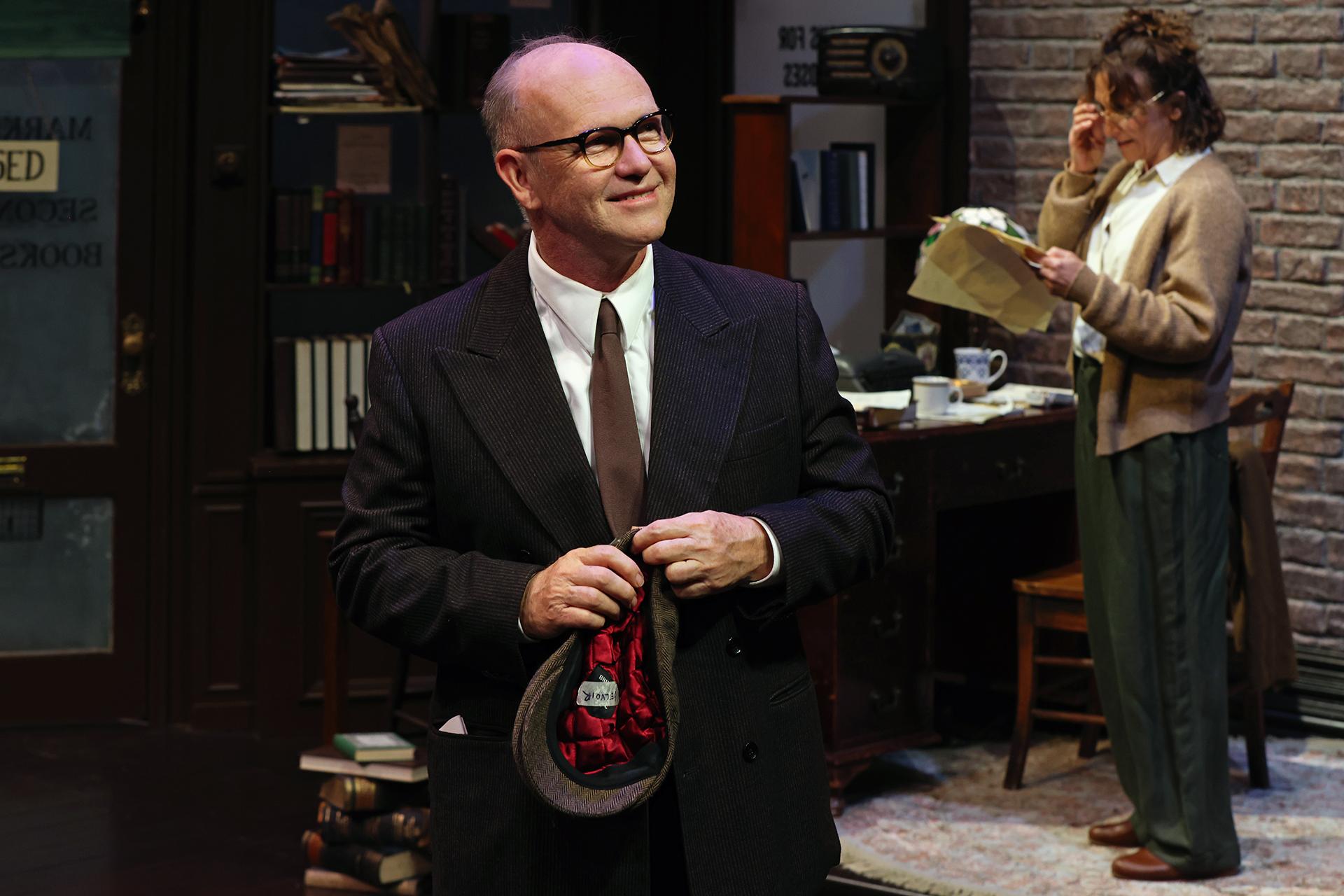
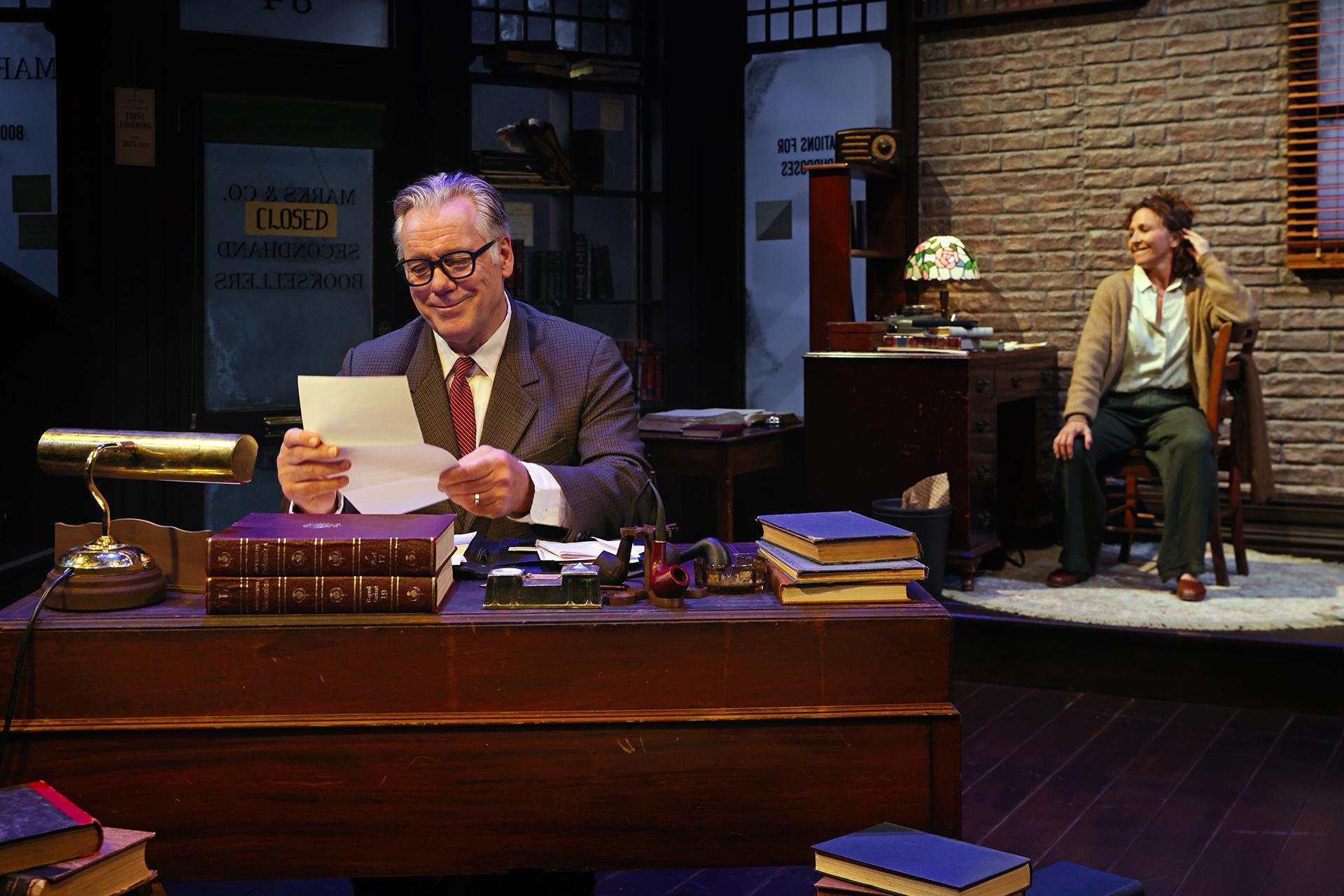
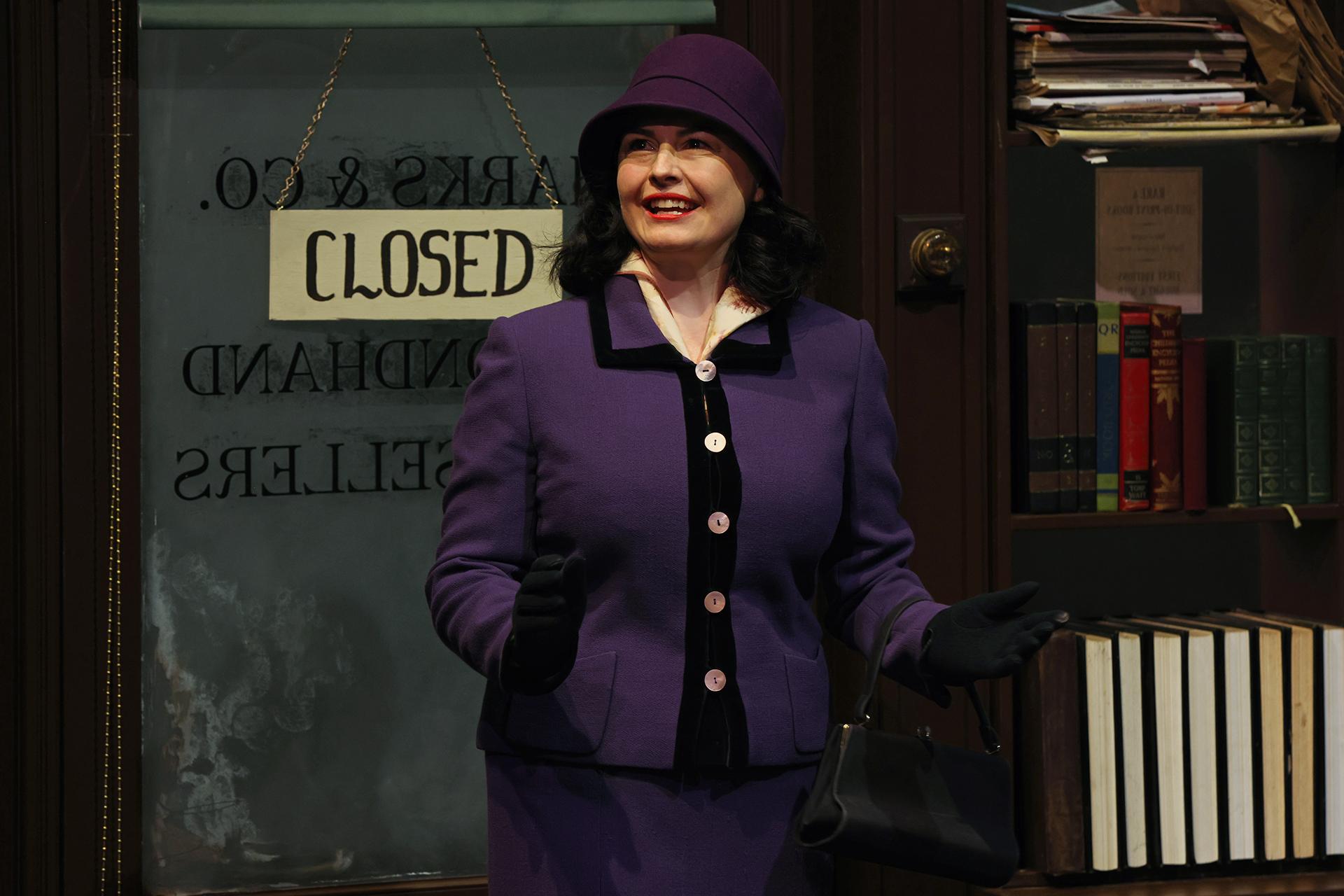
84 Charing Cross Road preserves the correspondence between the New York writer Helene Hanff and her London bookseller Frank Doel, an epistolary friendship sustained across the Atlantic from 1949 to 1968 without the two ever meeting. James Roose-Evans’s stage adaptation distills two decades of letters into a meditation on bibliophilia and human connection, evoking a vanished world in which anticipation was measured in weeks, and every transaction carried the imprint of a distinct, recognisable personality.

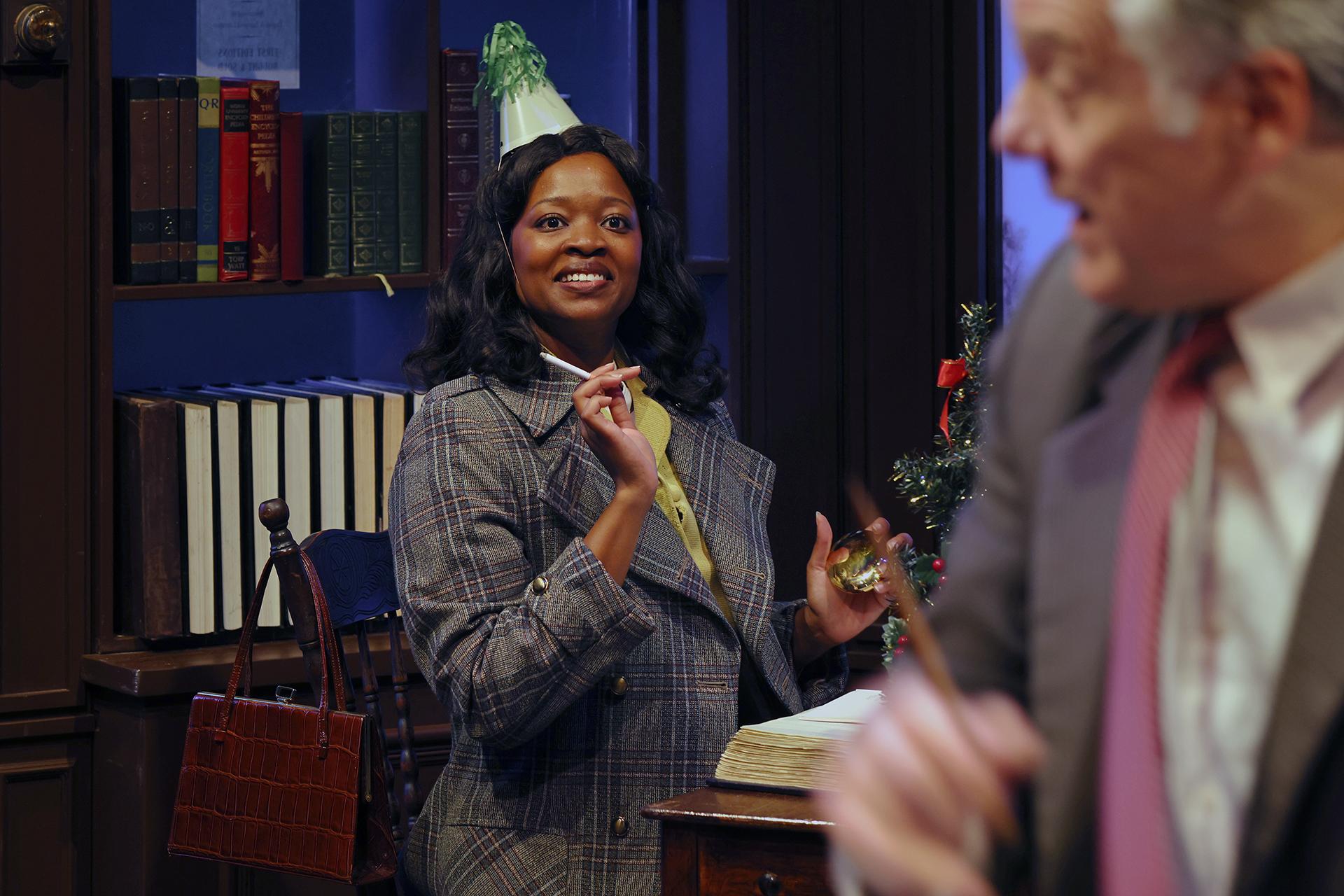
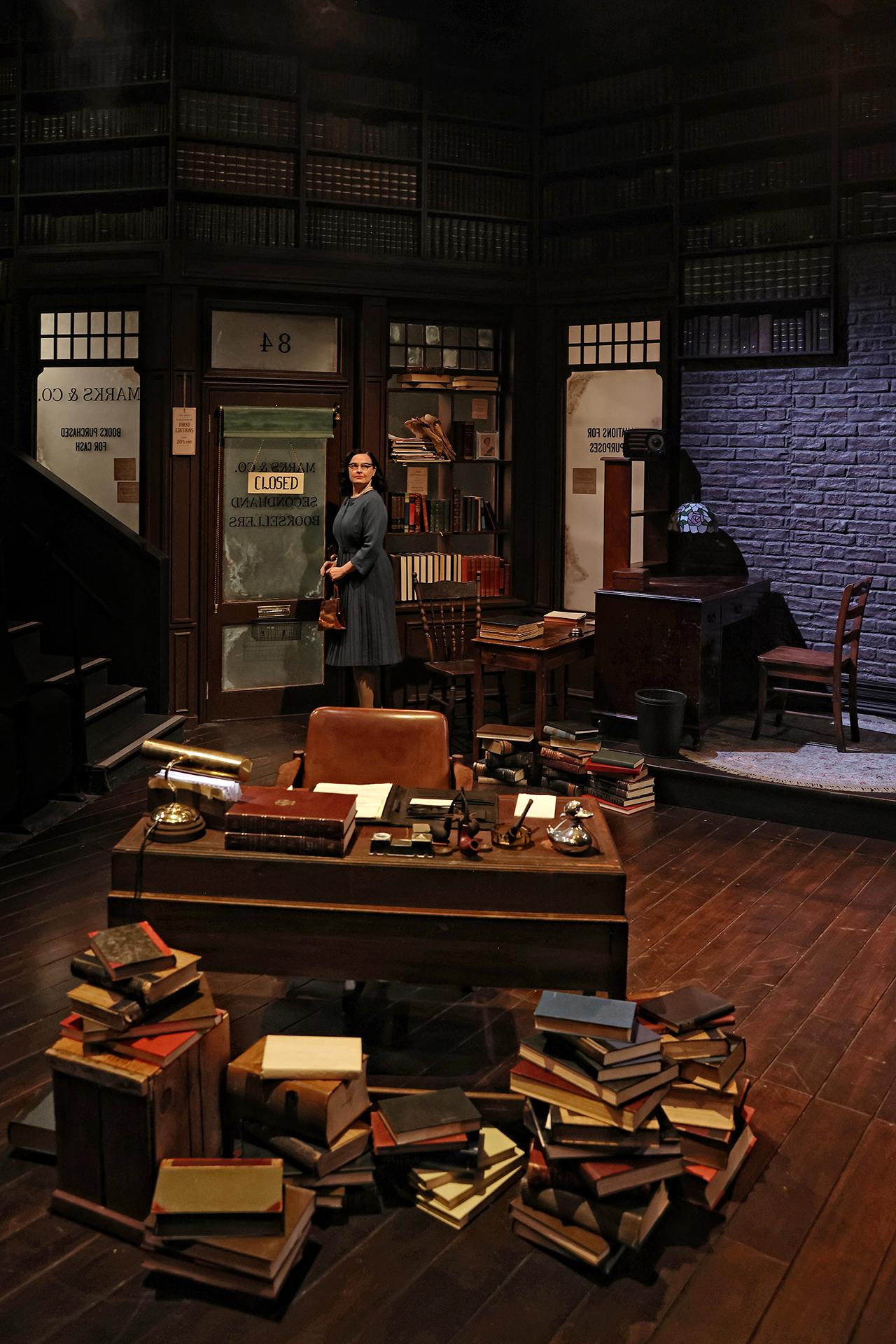
Under Mark Kilmurry’s direction, the production navigates the delicate terrain between sentiment and melancholy with considerable grace. The director elicits from Hanff and Doel’s words a wistful humour that never collapses into mere quaintness, allowing the ache of unfulfilled proximity to resonate beneath the comic surface. Nick Fry’s design conjures the post-war era with persuasive authenticity, though a more expansive delineation of the American quarter of the stage would liberate the action from its occasional spatial congestion. Matt Cox’s lighting bathes the proceedings in the amber glow of half-remembered afternoons, while Madeleine Picard’s score drifts through the narrative like a half-heard melody, lulling the audience into a bittersweet reverie.

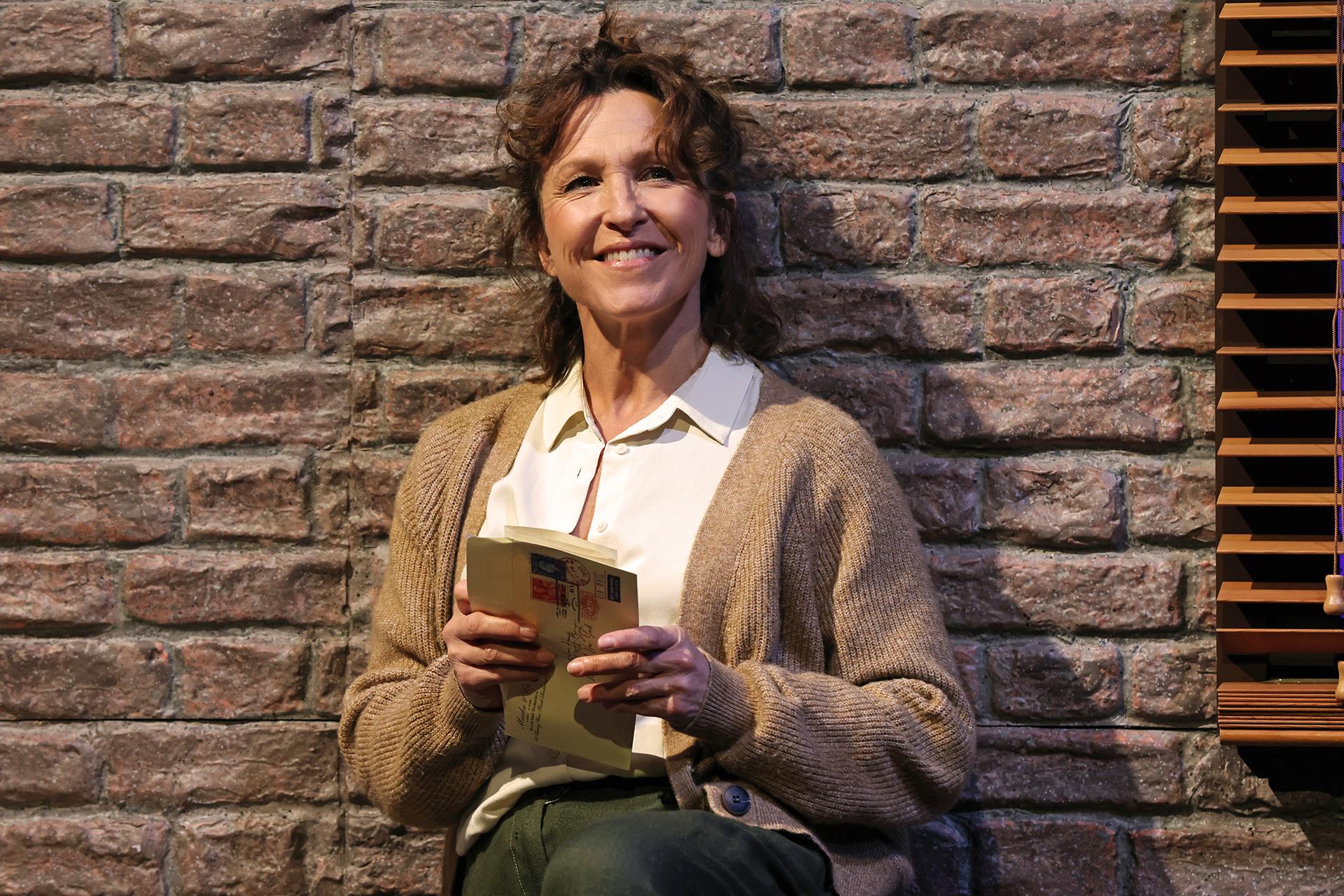
Blazey Best brings to Hanff a luminous, irascible charm; convincing as a woman for whom books are not merely objects but necessities of existence, and her yearning to traverse the ocean and stand in the shop at 84 Charing Cross Road is often palpable. Erik Thomson offers a grounded, gentlemanly Doel, though his restrained interpretation muffles a quirkiness that might have rendered the production more vigorously alive.

Yet the play’s true power lies beyond nostalgia. It is, finally, a quiet indictment of our own era. In watching Hanff and Doel forge an intimate community through the slow commerce of ink and paper, one cannot escape the chill of recognition: we surrendered that world with barely a murmur, trading the friction of human encounter for the frictionless efficiency of the algorithm. Amazon, which began at the end of the previous century by selling books, has since metastasised into an all-consuming leviathan, dissolving the very intermediaries—booksellers, correspondents, confidants—through which we once discovered one another. The letters crossing the Atlantic in Hanff’s time were acts of faith in the possibility of being known; what crosses our screens now are transactions optimised for solitude. To leave the theatre is to feel the weight of that exchange, and to realise that we have traded something essential for a convenience we never truly needed.

www.ensemble.com.au

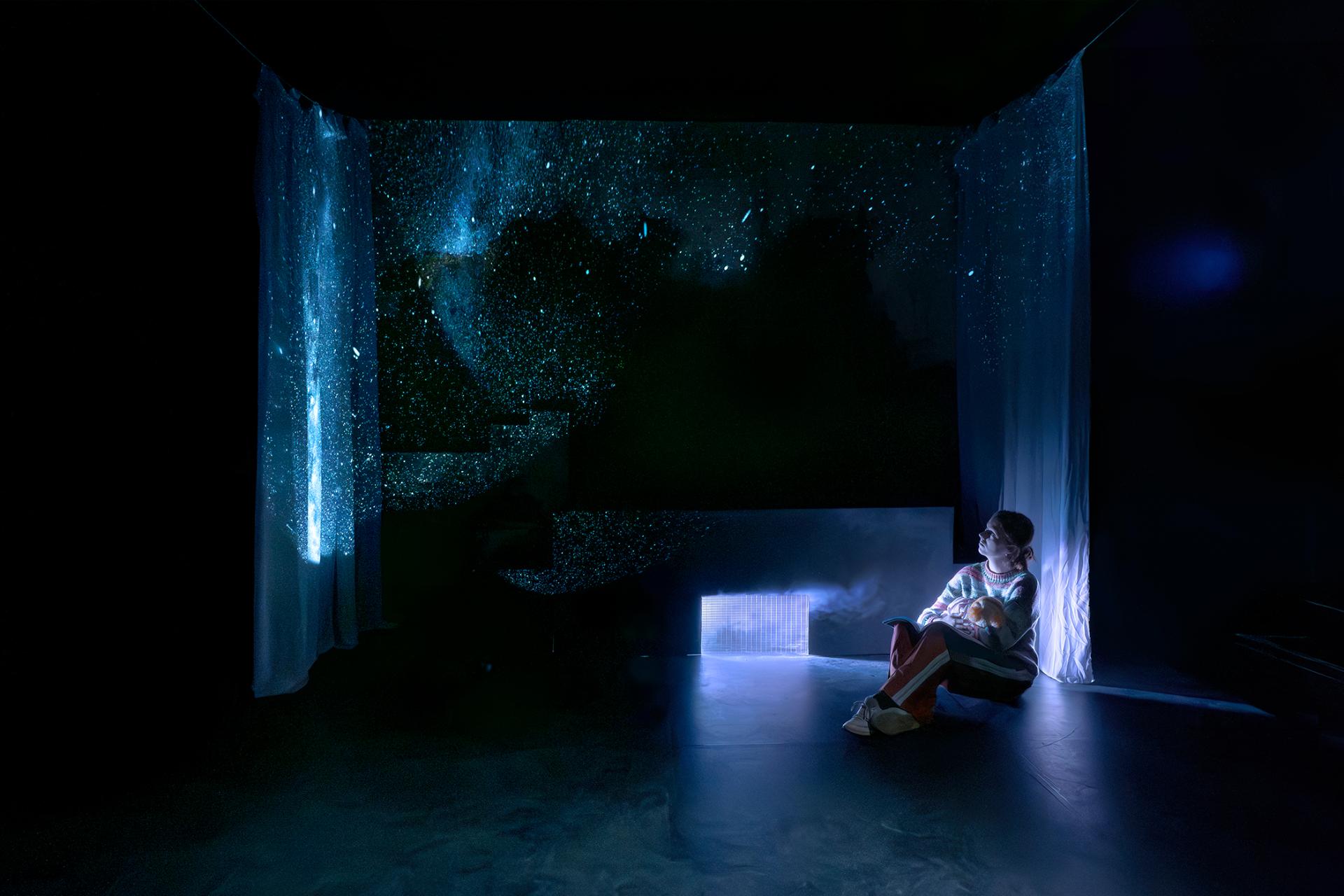
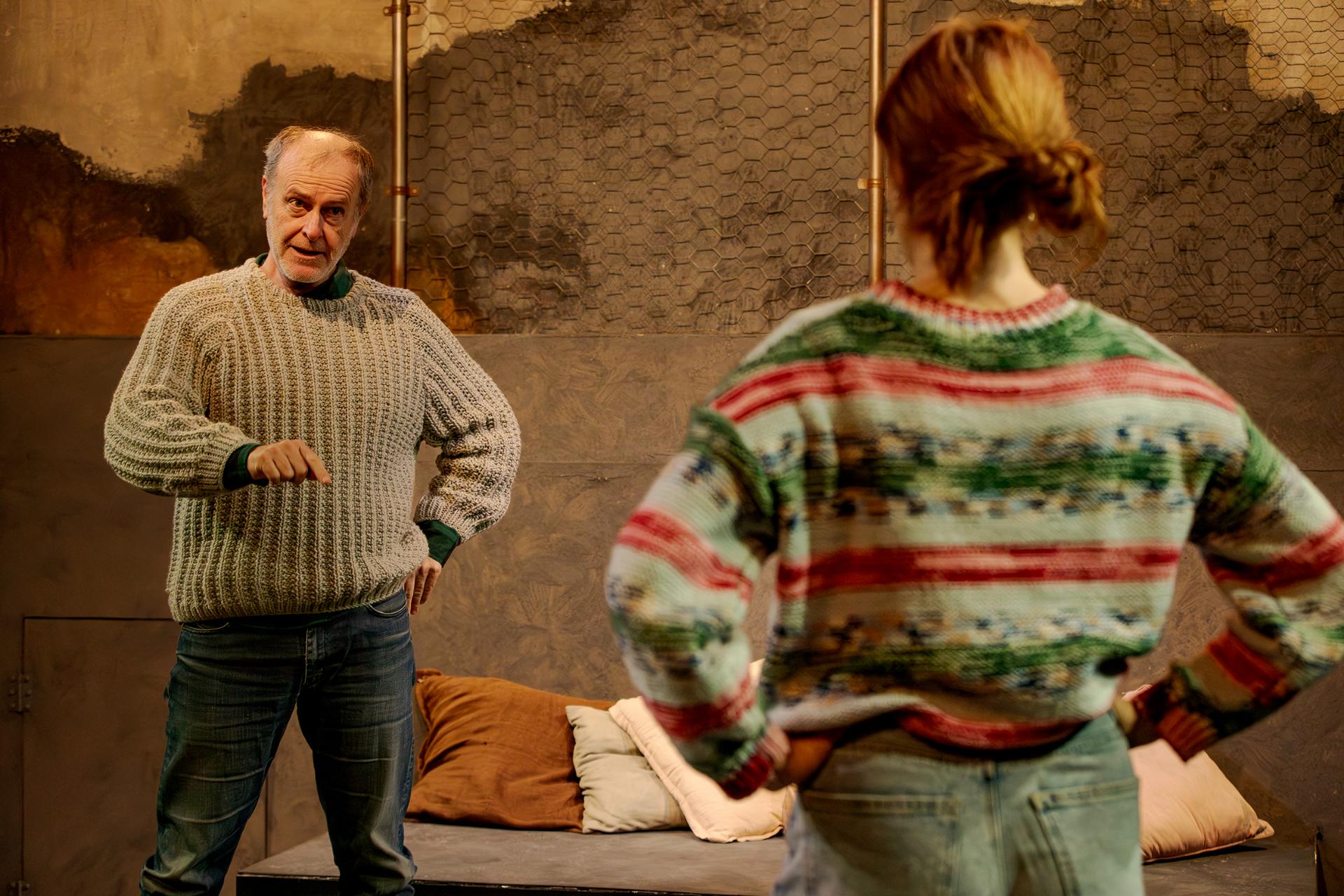
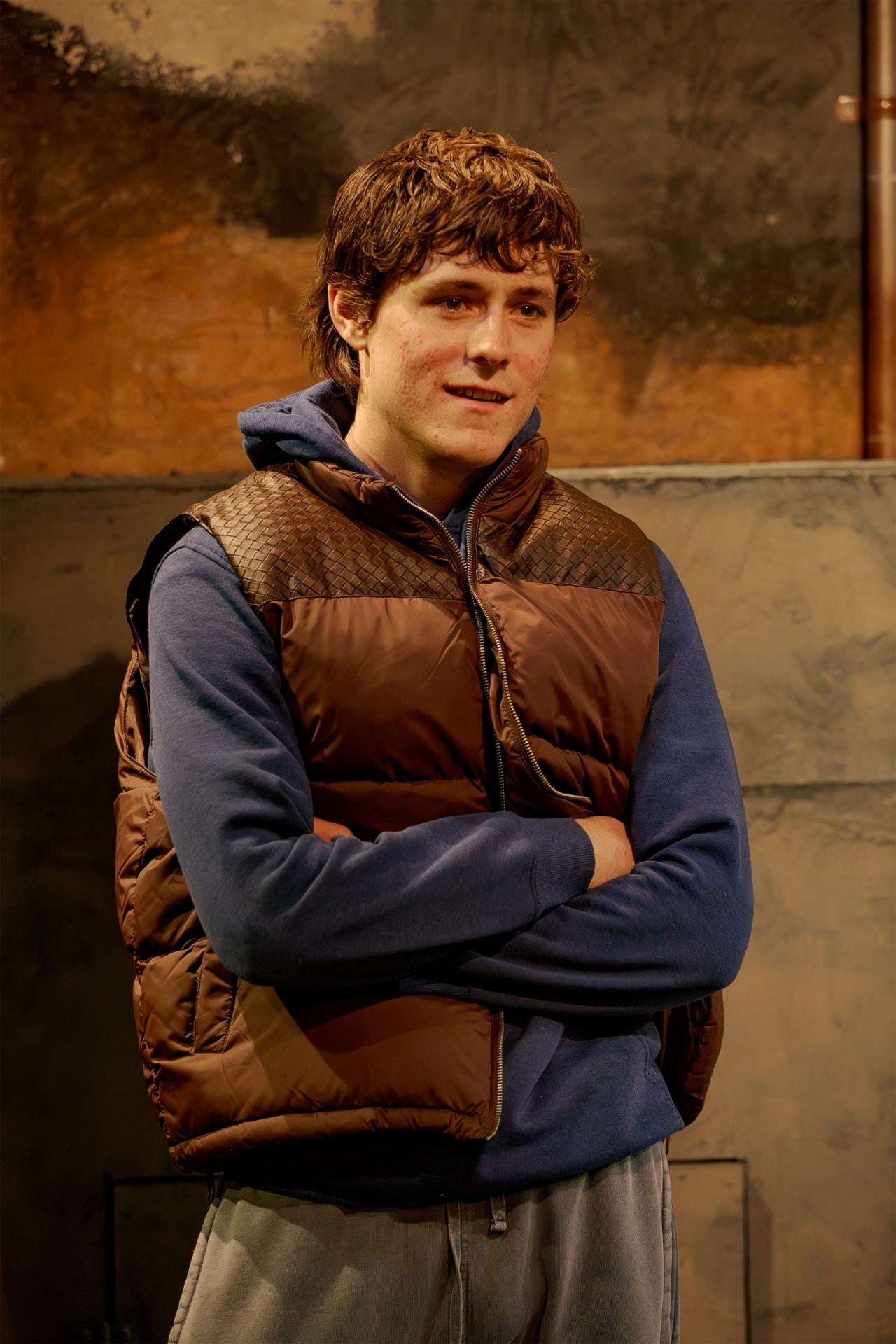
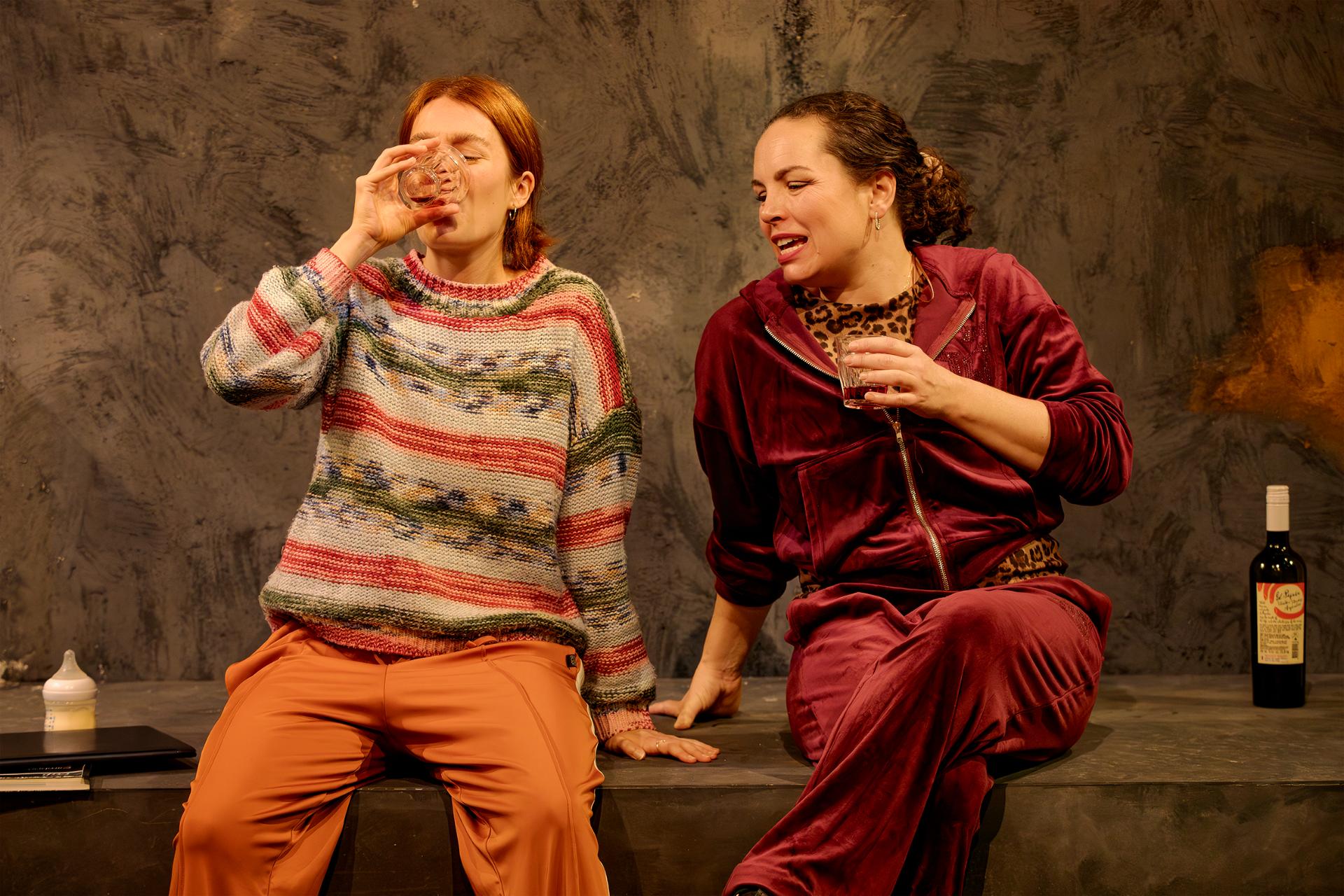
Review: Toxic (Qtopia)

Venue: Qtopia (Darlinghurst NSW), Apr 20 – May 9, 2026
Playwright: Nathaniel J Hall
Director: Gavin Roach
Cast: Bash Nelson, Patrick Phillips
Images by Robert Catto

Theatre review
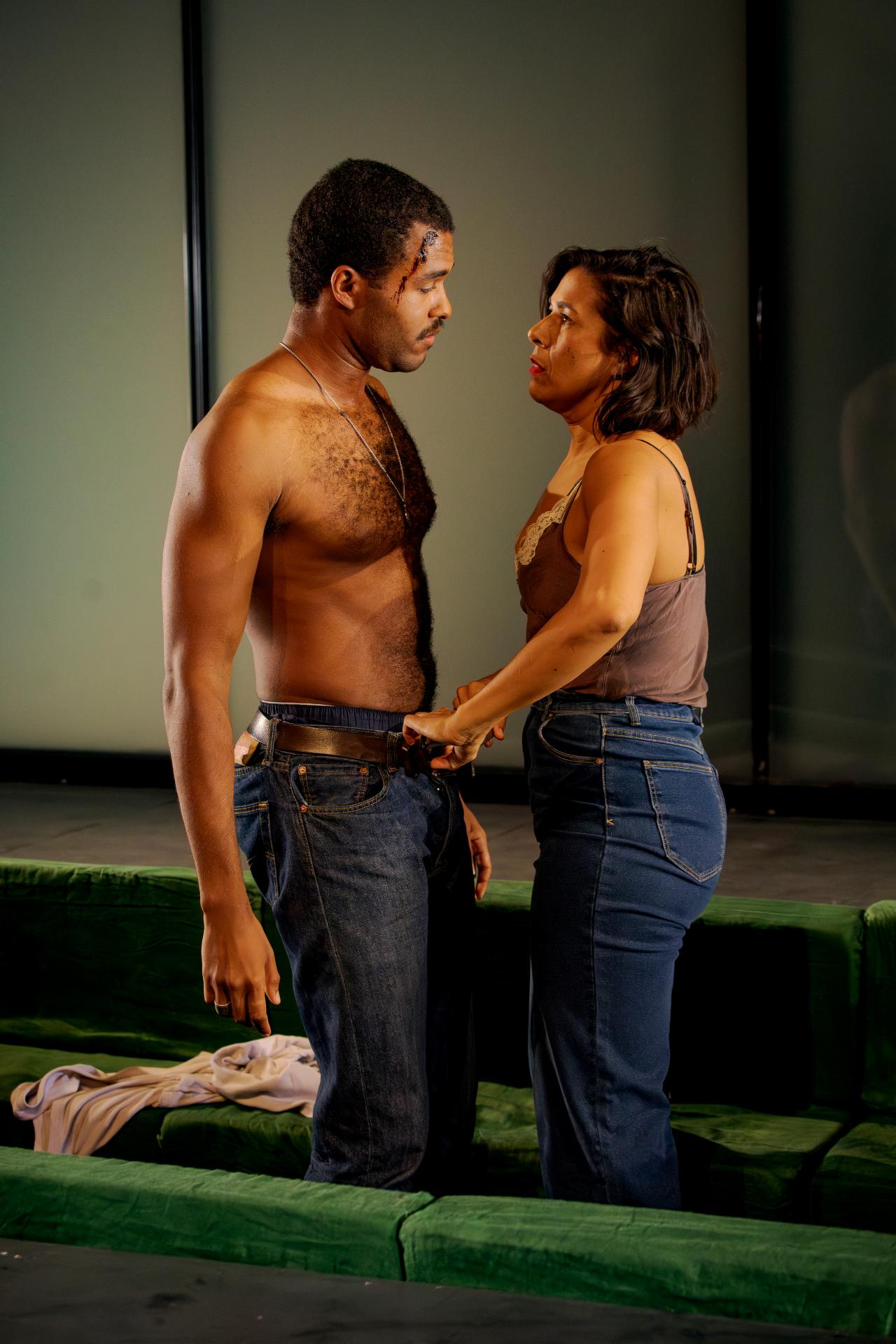
In Nathaniel J Hall’s Toxic, two young men in their twenties tumble into love with the heedless velocity of youth, cohabiting almost as swiftly as they collide. The play examines that familiar phenomenon wherein the young pledge themselves to profound domestic entanglement before they have sufficiently mapped the interior territories of their own selves. Yet Hall constructs his narrative with a necessary circularity: the fissures that eventually fracture the relationship become, paradoxically, the very instruments through which each man comes to know himself. The work suggests that heartache and anguish are not merely unfortunate by-products of intimacy but necessary instruments of maturation—painful, inexorable rites without which genuine adulthood remains elusive.

Hall’s writing possesses a confessionary candour, and its unbridled artistic honesty is to be admired. Yet for all its visceral authenticity, the revelations contained within Toxic seldom startle; the territory it maps feels familiar, even anticipated. One appreciates the vulnerability on display without ever quite being astonished by it.

Director Gavin Roach attempts to generate theatrical voltage through excess, foregrounding the sex and narcotics that lubricate the men’s bond. These elements are staged with reasonable explicitness, yet rather than elevating the material into the transgressive or the revelatory, the production ultimately feels pedestrian—a conventional narrative dressed in the costume of debauchery, unable to transcend its own sensationalism.

As the couple, Bash Nelson and Patrick Phillips bring a focussed, muscular energy to the stage, committing themselves to the physical and emotional demands of the roles with undeniable dedication. Where they falter is in the subtler intricacies of the psychology they are charged with interrogating. The subterranean currents of individual neurosis are insufficiently excavated, nor do they render the shifting power dynamics between them with satisfying complexity. Consequently, the production’s explorations of human behaviour—its contradictions, its compulsions, its myriad ambivalences—remain somewhat at arm’s length. We observe the characters’ turmoil without being wholly drawn into its labyrinth.

The play’s underlying philosophy is perhaps its most resonant thread. We spend our lives attempting to circumvent emotional devastation, yet it is precisely through lacerating experience that we are forged. Hall’s protagonists have committed no transgression that would warrant the anguish they endure; their suffering arrives not as punishment but as the arbitrary, brutal tuition of existence. And herein lies the work’s most sophisticated tension: the hedonism they pursue—those nights of chemical and carnal abandon—reads simultaneously as evasion, a frantic attempt to outrun what must eventually be processed, and as a strange species of emancipation. For these two fortunate souls, who never quite tumble past the point of no return, debauchery becomes not merely escape but liberation—a messy, imperfect key to self-discovery. They emerge scathed but transformed, having learned that growth and agony are not opposites but conjoined twins, inseparable in the nature of a life fully lived.

www.qtopiasydney.com.au | www.instagram.com/a_hello_darling_production

Review: The Lion King (Capitol Theatre)

Venue: Capitol Theatre (Sydney NSW), from Apr 18, 2026
Book: Roger Allers, Irene Mecchi
Music & Lyrics: Elton John, Tim Rice
Director: Julie Taymor
Cast: Nick Afoa, Daniel Frederiksen, Winston Hillyer, Jamie McGregor, Emily Nkomo, Aphiiwe Nyezi, Dev Raval, Rutene Spooner, Wilhemina Umeh-Nicholas, Mat Verevis, Benn Welford, Ezra Williams, Buyi Zama
Images by Daniel Boud, Cylla von Tiedemann

Theatre review
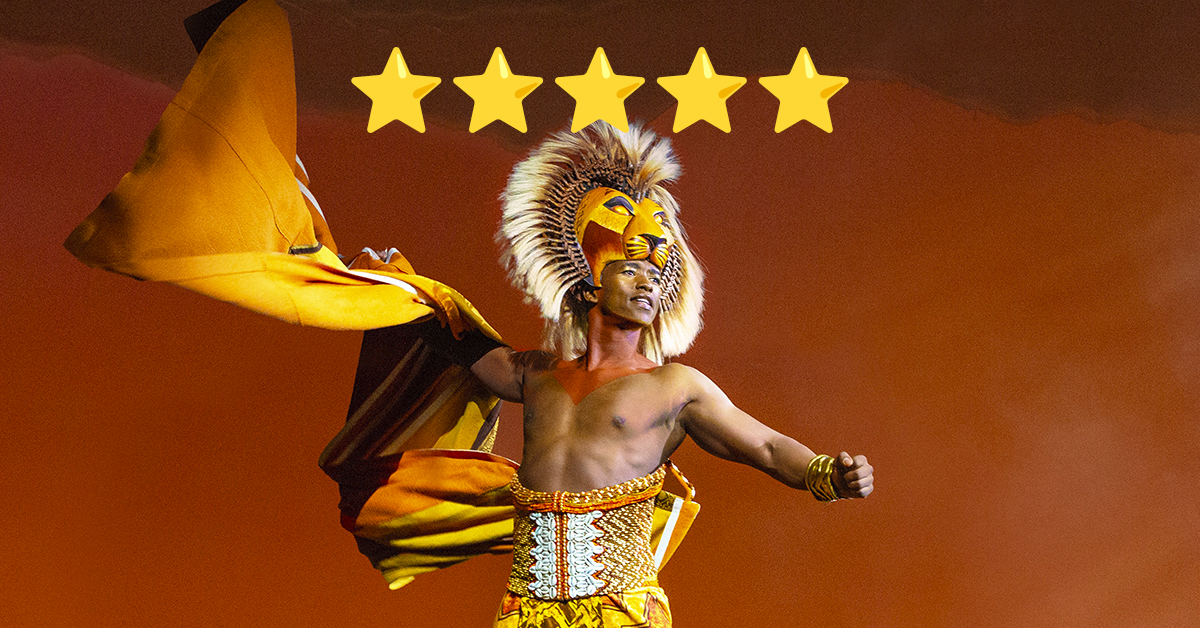
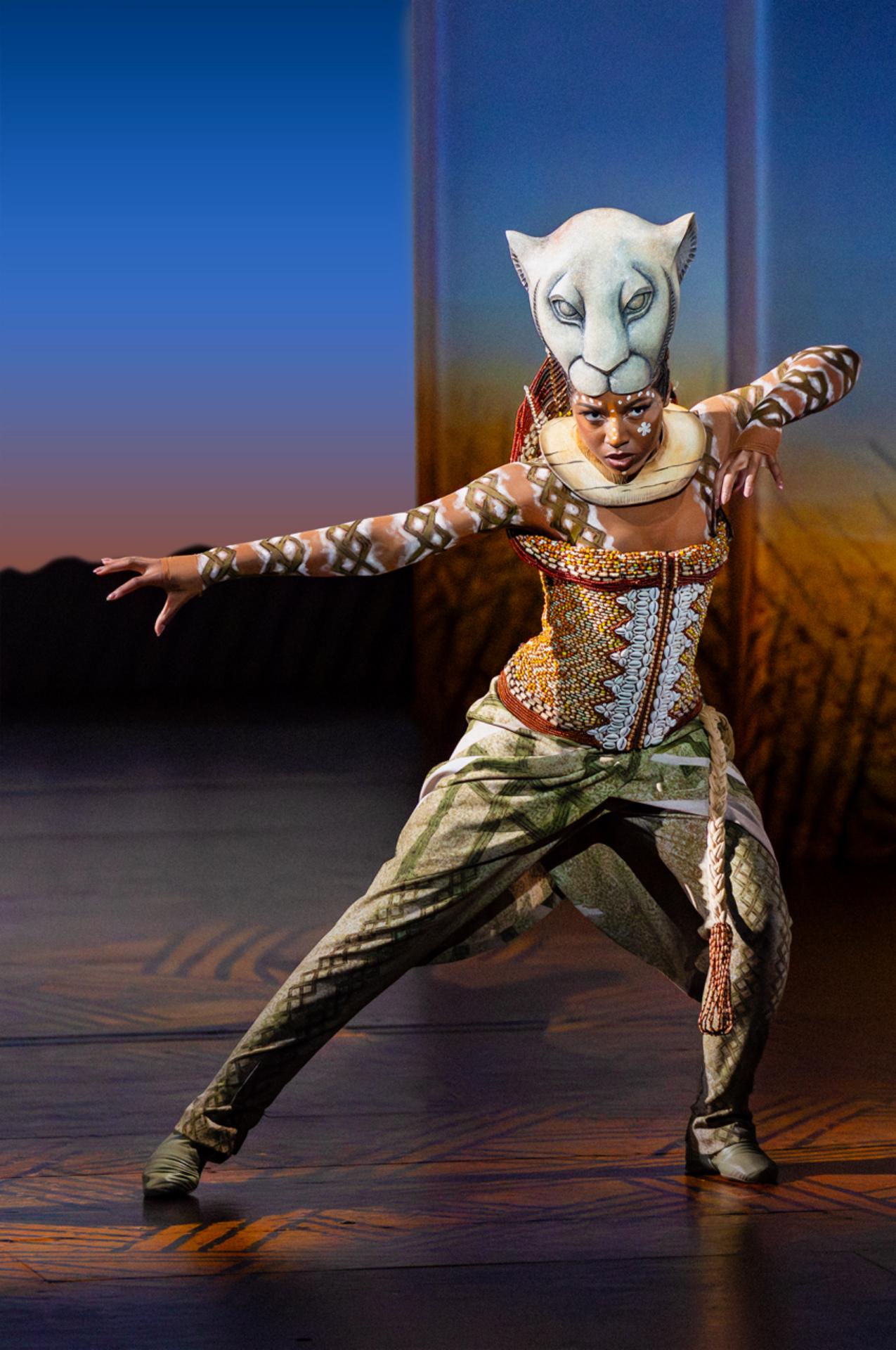
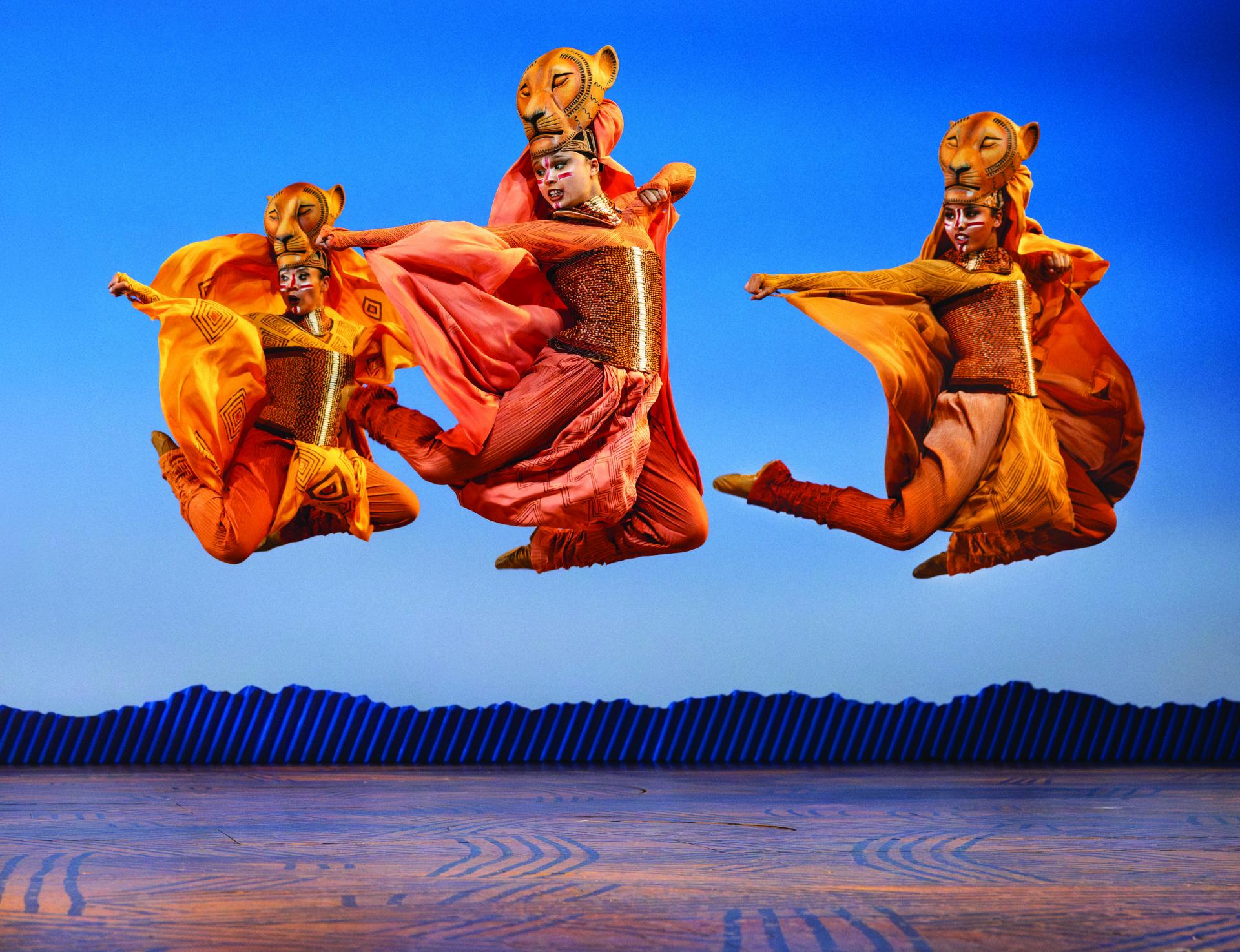
While The Lion King’s meditations on destiny and legacy possess a timeless resonance, it is the contemporary allegory of a narcissistic, inept ruler yielding to a leader of integrity and benevolence that strikes its most urgent chord today. We watch Scar lay waste to the kingdom, yet our spirits soar when Simba returns to reclaim his birthright and restore harmony to the ravaged land. In our present climate, this is precisely the fairy tale we require.

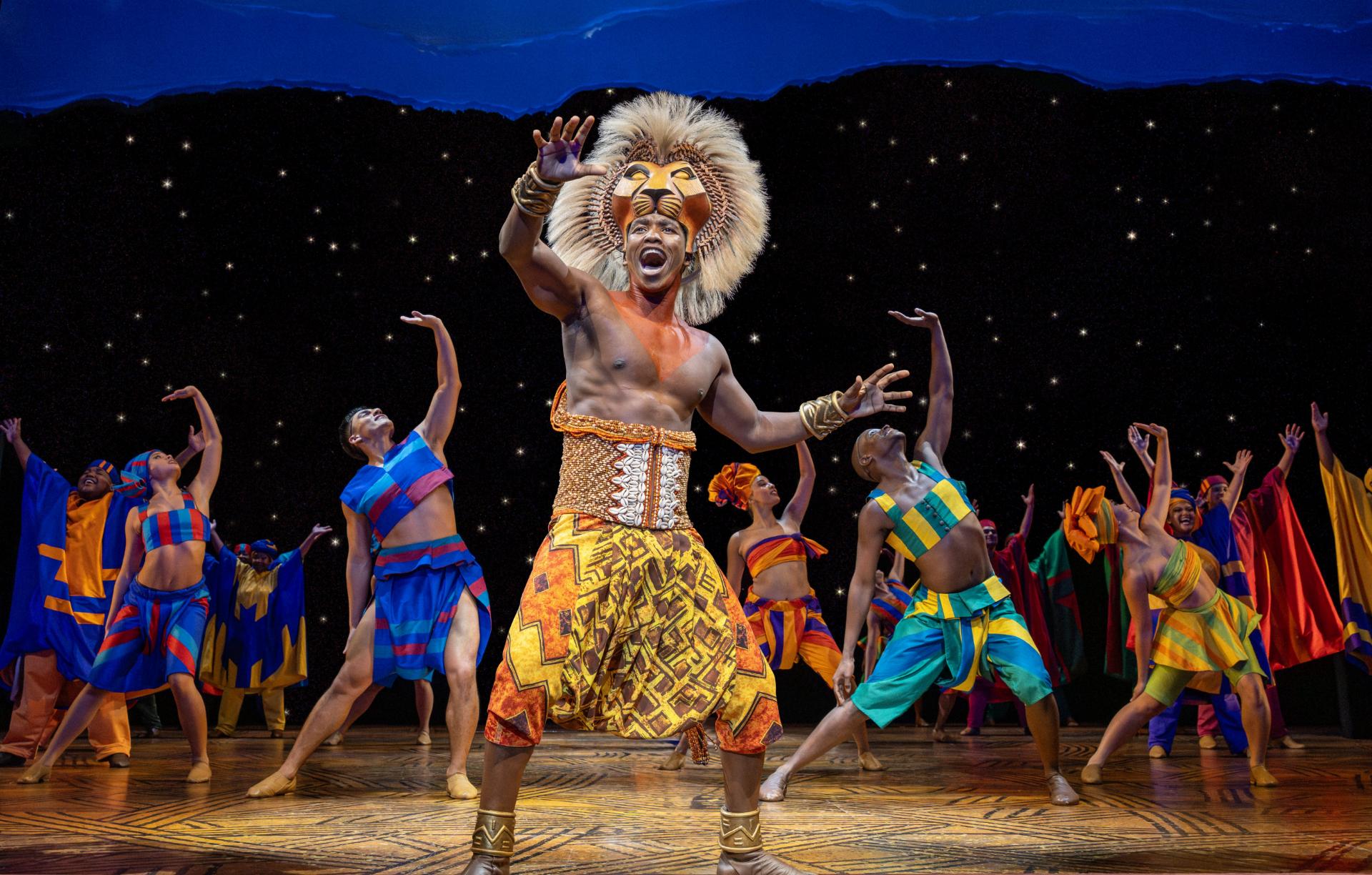
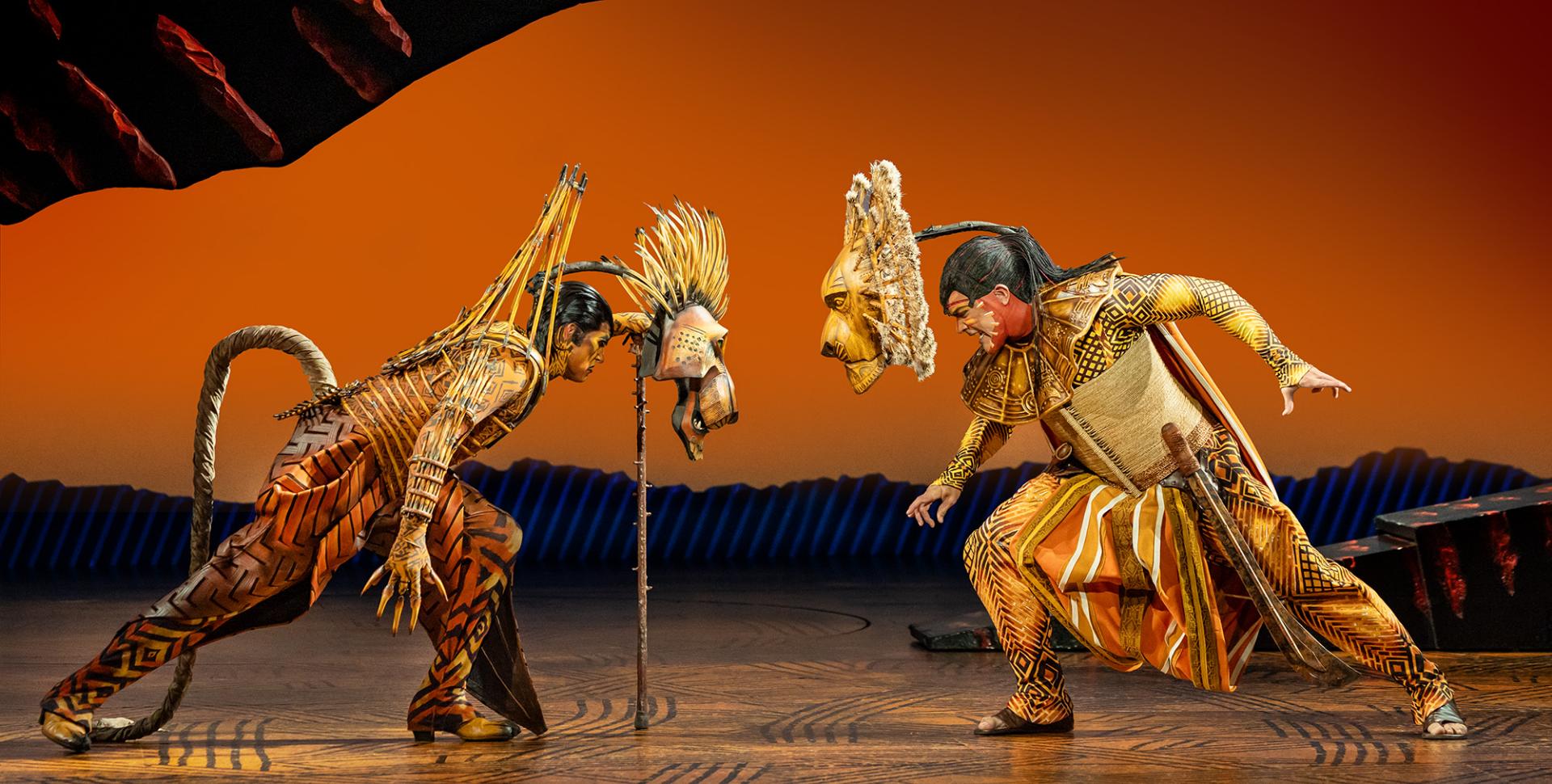
Nearly three decades since its debut, this stage adaptation not only reverberates with renewed significance; its peerless theatrical craftsmanship remains as spectacular as it is refined. The puppetry and mask work continue to stand unrivaled within the Broadway tradition, its sweeping vision no less breathtaking and hypnotic in an era where LED screens have become commonplace, often reducing live performance to a pseudo-virtual spectacle.

Under music director Laura Tipoki, the score surges with greater power than ever, stirring the soul and elevating the spirit. Aphiwe Nyezi and Dev Raval share the role of Simba, both commanding the stage with extraordinary physicality and magnetism. Buyi Zama proves unforgettable as Rafiki, her formidable presence and vocal brilliance captivating us from the moment the curtain rises. Jamie McGregor mines the comedy of Timon with expert precision, his puppetry skills not only conjuring a fully realized character but also delivering the evening’s most riotous laughter. Daniel Frederiksen’s Scar is appropriately inscrutable, deploying both vocal menace and physical stillness to forge a figure of genuine villainy.

We may no longer inhabit a world where sovereignty is conferred by bloodline alone, yet we remain acutely aware of the necessity for principled individuals to occupy positions of power and advance the common good. The selfish will always covet the crown; our enduring duty is to unite in keeping them from seizing it, and to cast them down should they ascend.

www.thelionkingmusical.com.au