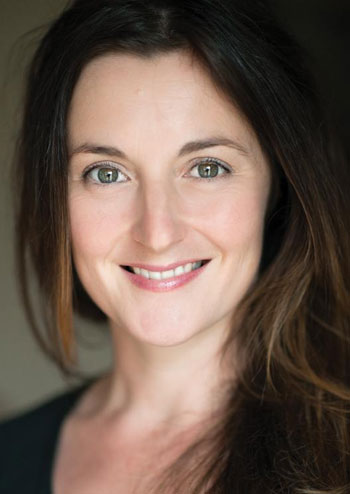
5 Questions with Janine Watson

janinewatsonWhat is your favourite swear word?
I don’t use swear words. I use swear sentences, so that would be “BLEEPS BLEEPING sake BLEEP BLURP my BLEEEPIING case BLEEPING BLEEEEEEPP of a BLEEPED up BLEEPING smelly BLEEP covered BLEEP RAG.”

What are you wearing?
A lovely biscuit coloured tan. That’s a lie – I’m as pale as death. I’m wearing navy trackies and a striped french-boulevard style t-shirt… so lock up your sons and daughters.

What is love?
A ride to or from the airport. From anyone. Anyone who offers that is the embodiment of love. Except taxi drivers because as we all know if you have to pay for it it ain’t love, now is it?!

What was the last show you saw, and how many stars do you give it?
Riverrun at STC. It was a torrent of gorgeousness. Olwen Fouéré – her very name speaks to the lyricism of this work. Words she was born to speak.

Is your new show going to be any good?
What show? Pretty sure I’m just meeting Kate at the pub every night for two weeks for a natter. So people are very welcome to come along and eavesdrop. Truthfully though, Dolores will be rad. It’s a rare joy to work on. I haven’t been this excited to perform a show since I cast myself as the Jodie Foster character in my self-penned stage adaptation of The Accused for the 1993 Deloraine Drama Festival Secondary School division in Tasmania garnering the Best Actress award.

PS We are also speaking in accents.

PPS Kate Box is the cat’s pyjamas!!!

Janine Watson is appearing in Dolores by Edward Allan Baker.
Show dates: 28 Apr – 9 May, 2015
Show venue: The Old Fitzroy Hotel

Review: Orphans (Old Fitz Theatre / Red Line Productions)

oldfitzVenue: Old Fitzroy Theatre (Woolloomooloo NSW), Apr 14 – May 9, 2015
Playwright: Lyle Kessler
Director: Anthony Gooley
Cast: Danny Adcock, Aaron Glenane, Andrew Henry
Image by Rupert Reid

Theatre review
Many have likened love to air, associating both with an absolute necessity for survival. Unlike air however, love can manifest in many unpredictable ways, and in Orphans, we see how the best of intentions can become cruel behaviour responsible for untold suffering. Phillip and Treat are brothers who have grown up without parents. They share a close mutual reliance, but without any guidance, their instincts have created young men who are dysfunctional together and apart. Beneath the boisterous tone of Lyle Kessler’s writing, is a tender depiction of relationships that has the potential to move and to connect with every person’s experiences of difficult family dynamics. We all have an understanding of the imperfections that exist in our homes, and the accuracy at which the brothers’ problematic and insular world is explored, allows for thorough identification and empathy.

The production is directed well by Anthony Gooley, who ensures that characters are complex and fascinating, with an amplified realism that provides a sense of familiarity even though the circumstances being staged are fairly extreme. It is an unusual and unpredictable story, relayed with vigour and heightened drama, but we do not perceive a great sense of purpose to the director’s work, other than to establish an atmosphere of enthrallment for the duration of the play. We are gripped for its entirety but leave without discovering great insight that matches the gravity of what is seen. The character of Harold is a father figure who destabilises the brothers’ cozy dwelling, performed by Danny Adcock with excellent conviction and strength, but the role is positioned neither enigmatic enough nor believable enough. Harold’s presence does not always make sense in the narrative, and our questioning of his authenticity is an unfortunate dissuasion.

Aaron Glenane turns in a magnificent performance as the younger brother, Phillip. The actor is marvelously nuanced in his intensity, expressing with great efficacy an exhaustive range of psychological possibilities and physical attributes, completely captivating in a beautifully embellished characterisation of damaged innocence. Glenane’s approach is adventurous and playful, but also sensitive and studied. He understands chemistry instinctively, and fosters a strong bond with colleagues and audience that keeps us invested in Phillip’s plight. Offering a macho and manic counterbalance is Treat, the older brother played by Andrew Henry with a threatening and exuberant energy that keeps us anxiously seduced. The largeness of his personality keeps us on the edge, tense in anticipation of his next outburst of trespass or feelings. It is a powerful performance, but Henry’s final scene requires further finessing. A transition of emotion occurs too suddenly and unexpectedly, taking lustre away from the Orphans‘ concluding moment of piquancy.

We encounter strangers every day, but letting new people into our lives is a rare occurrence. The desire for a sense of permanence and security means that we prevent new influences from infiltrating, whether positive or negative. Phillip and Treat had made a habit of their suffering, unaware that a better way of life was within their grasp. Inspiration resides everywhere, and we must be able to welcome it in when the right ones present themselves, so that life can be lived to the fullest, and with any luck, be survived by a legacy of something good.

www.oldfitztheatre.com

Review: Pvt. Wars (Dudley St Productions)

dudleystVenue: Old Fitz Theatre (Woolloomooloo NSW), Mar 17 – Apr 5, 2015
Writer: James McLure
Director: Mark Lee
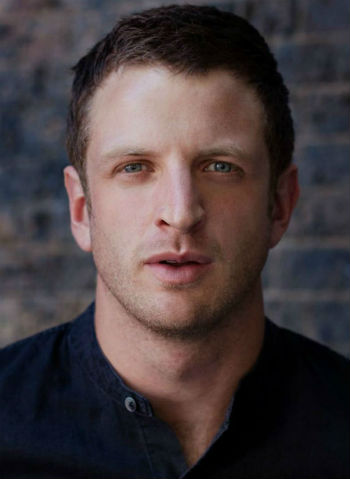
Cast: Michael Booth, Thomas Campbell, Tom Oakley
Image by Rupert Reid

Theatre review
In James McLure’s Pvt. Wars we visit three injured soldiers at a rehabilitation facility. The play was first staged in 1979, but there is no clear indication of the time at which the action takes place. It could be the aftermath of any war, because the ramifications of sending young people to battle never seem to change. Some return victorious, but many end up dead or damaged. It is not a fiercely anti-war piece, but McLure’s writing does place focus on these individuals’ physical and psychological afflictions. Comedy is created from the interplay of their mental dysfunctions, as well as from the tensions derived from their divergent social classes and from the points of dissent, and assent, as cohabitants of the hospital.

Direction of the work by Mark Lee is gentle and elegant. The resultant work is funny, but its laughter comes naturally from the honest exploration of characters, rather than it being a desperate priority. The show is about trauma, but it is kept light-hearted by an evasive masculine approach to pain. The three men come face to face with each other’s terror, but they skirt around the issues, rarely able to address them directly.

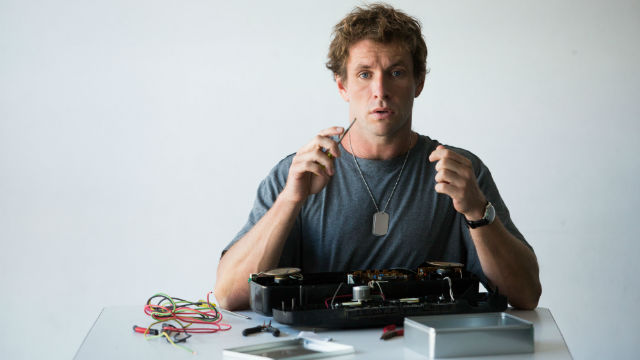
Michael Booth plays Silvio, the overcompensating alpha male who brings energy and a sense of danger to the stage. The actor appears to be distracted at several points, but his timing is effective nonetheless, and the sense of barely hidden distress and anxiety he introduces, is a significant contributor to the dynamic pace of the show. The more sophisticated Natwick is performed by Thomas Campbell, an actor with a disarmingly sensitive presence that provides an air of authenticity to proceedings. His very regular sequences of letter-writing to Natwick’s mother is let down by poor sound design, but his warmth is an inviting quality that we connect well with. Tom Oakley’s character Gately sits centre stage for virtually the entire duration, repairing an old radio. He is perennially hopeful, but struggles every day to find direction and meaning. Oakley’s portrayal resists theatrical gesticulation and embellishment, but conveys that confused determination beautifully, with a confident and touching simplicity.

The play comes to a conclusion that intends to be poignant, but a sudden loss of clarity interferes. The story surprises us at the end when it takes an abstract and abrupt turn, leaving us to our own beliefs about war, soldiers and manhood. It does not make any persuasive arguments to change our political affiliations, and its social commentary is subtle. Perhaps all it requires is for us to remember that individual lives are affected, often dramatically, while we become increasingly numbed by headlines that are no longer able to occupy more than a few moments each morning.

www.oldfitztheatre.com

5 Questions with Aaron Glenane

aaronglenaneWhat is your favourite swear word?
Recently I’ve been using “dodo” as in “Get it together ya bloody dodo!” “Ning nong” is up there also.

What are you wearing?
My man beard, basketball shorts, John Deer t shirt.

What is love?
Honesty.

What was the last show you saw, and how many stars do you give it?
Masterclass at The Old Fitz and I give it 10/10 as Charlie Garber and Gareth Davies are ridiculously hilarious. I also saw Foo Fighters playing to 57,000 people in Melbourne and Dave Grohl had us in the palm of his hand. 11/10 (Spinal Tap style)

Is your new show going to be any good?
Danny Adcock was in character 2 months ago so I think it’ll be sweet!

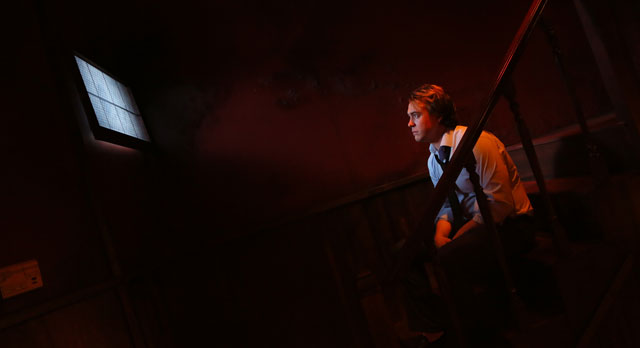
Aaron Glenane‏ is appearing in Orphans by Lyle Kessler.
Show dates: 1 Apr – 9 May, 2015
Show venue: The Old Fitzroy Hotel

Review: Freak Winds (Old Fitz Theatre / Red Line Productions)

redline3Venue: Old Fitzroy Theatre (Woolloomooloo NSW), Mar 10 – Apr 11, 2015
Playwright: Marshall Napier
Director: Marshall Napier
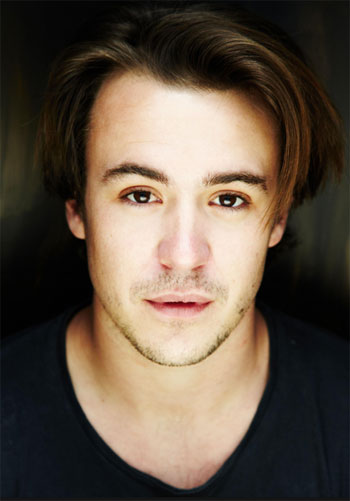
Cast: Anna Bamford, Marshall Napier, Ben O’Toole
Image by Tim Levy

Theatre review
Marshall Napier’s very Hitchcockian Freak Winds has all the suspenseful intrigue, perverse humour and subversive eroticism that keeps an audience simultaneously repelled and seduced by its story. Unlike Hitchock, Napier’s work is of the twenty-first century, with much less censorial restrictions, so what we get is an update for the genre and style. It does not resort to gore and constant bloodletting, but it delivers thrills and creates tension with a rather more explicit incorporation of sex, murder and terror. Napier’s lines are quirky and cheekily controversial, and the structure of his play is unpredictable, with an edgy sense of danger at every turn.

Direction of the piece is sharp and dramatic, with beguiling characters that feel enigmatic, but always able to reveal just enough for their plot to work its magic on the audience. Aside from a couple of unexplained touches like the mysterious appearance of a wheelchair at the start of Act 2, and a bizarre moment involving a red light at the conclusion, Napier shows himself to be a director with an untameable creative flair and a knack for conveying complex, multi-dimensional narratives that could be read in a variety of ways by different viewers. His style is elegant, but brave. There is no hesitation in exploring absurdist territory when appropriate, and a distinct eagerness to tantalize with taboo subjects that really satisfies (except for the unveiling of a disappointingly modest dildo after quite a substantial build up).

Ben O’Toole plays Henry, a young and ambitious insurance salesman in the middle of a living nightmare. The role is comparatively simple, but O’Toole works through it aggressively, with an energy that can only be described as exuberant. His entertaining performance is a necessary contrast to the mysterious and somber quality of the show’s other elements, and the actor leaves a strong impression characterised by excellent commitment and passion. In the role of the very creepy Ernest is Napier himself, who brings experience and an intelligence that keeps us on our toes. His work is efficient, often impactful without needing to push very hard at all, but the performer’s eyes seem to always evade our gaze, rejecting our appetite for the truth in Earnest’s world. The play’s third character is Myra, thoroughly weird and unquestionably mad. Anna Bamford is feisty enough for the part, but her interpretation feels repetitive where we expect extremes coming from all sides. Nevertheless, the unorthodox and precarious sexual atmosphere created by Bamford’s chemistry with her cohorts is an unexpected delight for any theatrical space.

Freak Winds is beautifully designed by a creative team that has addressed every aspect of sight and sound with good taste and sensitivity. Nate Edmondson’s sound design rumbles beneath our feet to taunt us into a space of horror, and along with Alexander Berlage’s lights, the small venue is dissected into a hundred different spots, adventurously explored in all their possibilities. The highly effective set and costumes by Lisa Mimmocchi provide a strong context with immediate visual signifiers that help tell the story almost on a subconscious level, from curtains up to the very bitter end.

Freak Winds‘ macabre comedy mixes with spine-tingling gothic influences and dark erotica to spawn an unusual piece of theatre, yet scary tales seem to have been with humanity since time immemorial, existing in different forms in all our cultures. They remind us of our mortality, and of the arbitrary membrane that keeps us separate from harm. We rely on rules and regulations, laws and legislation, but mostly, we count on the kindness of strangers so that we can live unhindered or protected, but all it takes is one person losing their mind for catastrophe to engulf another, such is the fragility of our existence.

www.oldfitztheatre.com

5 Questions with Ben O’Toole‏

benotooleWhat is your favourite swear word?
Favourite swear word is definitely cunt. Great word.

What are you wearing?
At the moment I’m wearing jeans and thongs with a t-shirt, but in the show my character wears a suit the whole time. Insurance salesman style.

What is love?
Love is a chemical imbalance in the brain, brought upon typically by another person. Pretty magic really.

What was the last show you saw, and how many stars do you give it?
The last show I saw was Cock at the Old Fitz, and I would give that show a 4 stars. Brilliant stuff.

Is your new show going to be any good?
I should hope so!

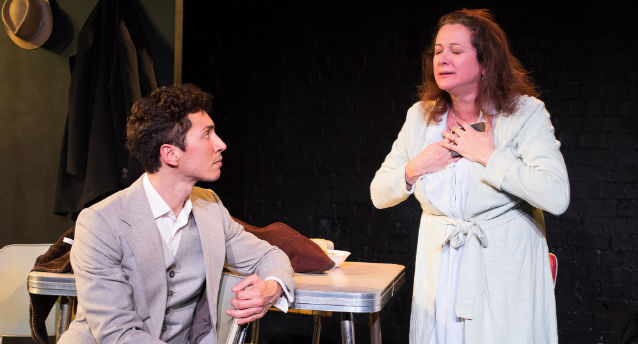
Ben O’Toole‏ is appearing in Freak Winds by Marshall Napier.
Show dates: 10 Mar – 11 Apr, 2015
Show venue: The Old Fitzroy Hotel

Review: Pope Head (Théâtre Excentrique)

r0_3_1200_678_w1200_h678_fmax[1]Venue: Old Fitzroy Theatre (Woolloomooloo NSW), Feb 24 – Mar 6, 2015
Playwright: Garry Roost
Director: Paul Garnault
Cast: Garry Roost

Theatre review
Francis Bacon’s art is among the most revered of the twentieth century. His paintings continue to travel the world’s museums, and his following grows with each year and generation.The power of his work is immediate and compelling, often arousing visceral responses in the viewer before their intellectual, political and historical dimensions can even begin to be explored. Garry Roost’s play is a biography on Bacon that takes cues from stage conventions, as well as from Bacon’s work with its sense of abstraction and energetic expressionism.

Roost’s writing is manic and intense, with a pace and structure that presents a serious challenge to any actor. The unconfined and free-wheeling thought and speech patterns that emerge from the text is frequently incoherent, but fascinating. The words have a definite rhythm that reflects an understanding of the personality it represents, one that is unrelenting, passionate and thoroughly original. An actor usually takes to the stage in order to share narratives and ideas, but Roost is not quite a storyteller on this occasion. His performance focuses on a re-creation of Bacon’s very being that delivers, his idiosyncratic presence and unique mannerisms. We are presented with something of an apparition, accurately imitated and fabulously convincing, but also alienating and at times, puzzling. There is a difference between knowing someone through facts and figures, and gaining insight from observing a creature as it goes about its business, as though from a detached and empirical position. We learn a little about the painter from Roost’s script, but it is from his intuitive portrayal that we acquire a greater appreciation of the man whose legacy has touched many.

We rely on artists to do things differently. It is a thankless task to discover rules and then dismantle them in the public sphere. Audiences need to be disoriented and provoked, even though we prefer to be fed the same formulaic nonsense at every outing. Bacon’s paintings are at their best, upsetting and offensive, and this theatrical manifestation of Pope Head does its best to pay tribute. It is not an easy show to digest, and it is not the most amusing hour of live entertainment, but it does reinforce the memory of a great career and provides the most valuable of all creative endeavours, divine inspiration.

www.theatrexcentrique.com

Review: Playing Rock Hudson (Old Fitz Theatre / Left Bauer Productions)

FEATURE5[1]Venue: Old Fitzroy Theatre (Woolloomooloo NSW), Feb 3 – 15, 2015
Playwright: Cameron Lukey
Directors: Jason Langley, Cameron Lukey
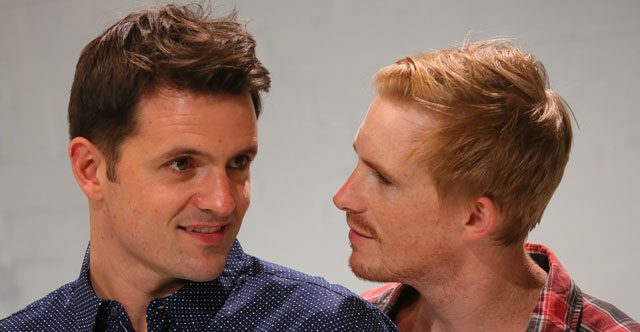
Cast: Paul Dowson, Kim Knuckey, Tyran Parke, Peter Talmacs, Mark Taylor, Grace Victoria, Benjamin Winckle

Theatre review
The act of “coming out” by public figures remains a contentious issue. Rock Hudson was a prominent American actor from the 1950s, who had kept his homosexuality a dark secret up to his AIDS-related death in 1985. Playing Rock Hudson offers a look into the star’s final years and his lover Marc Christian’s lawsuit against Hudson’s estate after his passing. Cameron Lukey’s script is detailed and ardent, with shades of tabloid style revelations accompanying passionately political interpretations of events and personalities. It satisfies our need to catch a glimpse of the gay man that had been hidden from view and promotes discussion about the way LGBT history is tainted by deceit, and how it can be amended.

Direction of the work by Lukey and Jason Langley, feels like a nostalgic homage to films of Hollywood’s Golden Age. Scenes are reminiscent of romantic and courtroom classics, achieved by thoughtful costuming (by Georgia Hopkins) and specific acting styles, but the show’s rhythm and energy are consequently slightly lethargic by today’s standards. Sequences are not sufficiently differentiated to prevent a sense of repetition, which also results in a plot momentum that is less than dynamic.

Performances are consistently strong, with a support cast that is especially noteworthy. Grace Victoria is a compelling Elizabeth Taylor, leaving a lasting impression by bringing complexity and humour to a legendary character that most are familiar with. Benjamin Winckle plays multiple smaller roles, but each is distinct, colourful and memorable. Leading men Paul Dowson and Mark Taylor are committed and alluring. Dowson plays Rock Hudson with an astonishing likeness and quiet confidence, and the mysterious love interest Marc Christian is played by Taylor with intriguing ambiguity and charm.

The importance of role models for oppressed minorities cannot be overstated. Those who choose to live in the closet will always have their own reasons, but their actions are an obstruction to efforts for the eradication of discrimination everywhere. Even though he continued denying his sexual orientation from the public, it is believed that Hudson’s announcement of his illness 3 months before death, had had a critically positive impact on funding in the USA for AIDS research. People in positions of power and influence owe a debt to the communities who reward them with privilege and prestige. When acting in self-serving hypocrisy, the debt they owe us all is immeasurable.

www.leftbauerproductions.com

Review: Cock (Old Fitz Theatre / Red Line Productions)

redline2Venue: Old Fitzroy Theatre (Woolloomooloo NSW), Feb 3 – Mar 6, 2015
Playwright: Mike Bartlett
Director: Shane Bosher
Cast: Brian Meegan, Matt Minto, Matilda Ridgway, Michael Whalley
Image by Tim Levy

Theatre review
John is caught between a man and a woman. These relationships cannot co-exist, because the three people believe that the nature of love is monogamous, and more than that, love requires resolute sexual identities. Mike Bartlett’s Cock is essentially a play for the post-gay era. It makes us look at the boundaries and definitions that have come to rule our lives, and to consider their arbitrariness despite their unadulterated and pervasive presence. John has to decide if he is gay or straight, and as the pressure escalates, we become increasingly aware of the absurdity of his circumstance. There are few things in the LGBT world more controversial and dangerous than saying that sexuality and gender are choices that can be made by conscious adults. Cock makes reference to the need for manufactured concepts that serve political purposes, which may not be legitimately applicable to all individuals that they try to protect, and would disintegrate when its purpose is served. Of course, we can understand that no one would choose to be gay in a world that discriminates and persecutes those who deviate from heteronormativity, but if society has progressed far enough, then maybe making a conscious choice to become the “other” is no longer a threatening proposition (if the “other” can still exist in that progressive civilisation). What is discussed in Cock suggests the redundancy of sexuality labels in how we live, even how we love.

Shane Bosher’s direction strips the production of all sets and props. The actors do not make any costume changes, so all they have are words and ideas, bodies and space. The theatre-in-the-round configuration encourages constant movement, and coupled with scenes of incessant fight and struggle, the atmosphere is often electric. Bartlett’s writing is energetic and bold, with humour and drama bulging at the seams, but it is clear that Bosher’s affinity with the play’s graver portions is stronger. Tension on this stage is omnipresent, but jokes are hit and miss. The leading men give exciting performances but lack the versatility to flow persuasively between the light and dark of the writing.

Michael Whalley is John, the young man stuck in a state of confusion. Whalley embodies the frustration and weakness of his character with great clarity, and the play’s difficult themes find a surprising resonance through his performance, but John needs to be more affable in order for the dramatics to have greater efficacy. John’s male lover is played by Matt Minto, who is delightfully flamboyant, but repetitively so. The character is a stubborn one, and we eventually grow tired of his unchanging voice and mannerisms. Conversely, the female lover shows a great range of intellectual and emotional states, and those transformations make Matilda Ridgway’s performance a gripping one. She finds authenticity in a script that is more conceptual than real, and creates the only character we are able to empathise with, even though we are baffled by her devotion to John, the non-hero. Brian Meegan is a last minute replacement for the male lover’s father, so it is entirely understandable that he is yet to have all his lines down, but he does a superb job in later scenes to consolidate the play’s plot and philosophy.

LGBT communities in the West have invested decades to create cultures and identities, in order that oppression may be resisted and subverted. Once those objectives are fulfilled, however, a new stage of evolution will commence. In Australia, that time has not yet come, so John will continue to be forced into conceding an invariable sexual preference, whether it rings true to his personal experiences, or not.

www.oldfitztheatre.com

Review: Bad (Old Fitz Theatre / Red Line Productions)

redline2Venue: Old Fitzroy Theatre (Woolloomooloo NSW), Jan 14 – 31, 2015
Director: Scott Witt
Cast: Penny Greenhalgh, Kate Walder
Image by Yael Stempler

Theatre review
Bad is a show performed by clowns about acting (amongst other things). Along with director Scott Witt, performers Penny Greenhalgh and Kate Walder have devised a work that uses clowning traditions and influences from Commedia dell’arte, to deliver a theatrical experience that is slightly left of centre. Their show is more amusing than it is funny, and their ideas are familiar rather than original, but there is an earnestness and purity to their approach that can be quite charming.

Walder is the “stunt woman” clown who speaks with a French accent, toddling around in a pair of tap shoes. Insisting that she is Cate Blanchett, the Hollywood and theatre star, she goes on to present a show entitled ‘Where’s My Bucket, Mom?’, enlisting the help of Greenhalgh, “philosopher” clown who gradually warms to the idea of being Geoffrey Rush (another star of stage and screen). The plot and story are chaotic and random, but we are always brought back to the theme of performance. Walder and Greenhalgh explore the nature of the theatrical space and the experience of acting using their unconventional methods, with mixed results. The pair is well rehearsed, but the play’s frenzied style and structure require more intense energy levels to provide a sense of abandonment and absurdity to match its concepts. Both actors seem fairly cautious, creating a space that feels safe, where we would prefer a sense of danger and unpredictability.

Not every actor is a clown, but all clowns act. They give us something unique, that can be found in their license to transgress. Clowns do not speak much, because they communicate in better ways. They reach out to us in realms that are beyond words, so that we understand the world from a different perspective. When done right, they impart a kind of wisdom that brings unexpected enlightenment. Bad is not always good, but what’s worse is doing things the same way over and over again. There is a courage at play here, and we need more of it.

www.oldfitztheatre.com