Review: The Aliens (Outhouse Theatre Co)

outhouseVenue: Old Fitzroy Theatre (Woolloomooloo NSW), Aug 25 – Sep 19, 2015

Playwright: Annie Baker
Director: Craig Baldwin
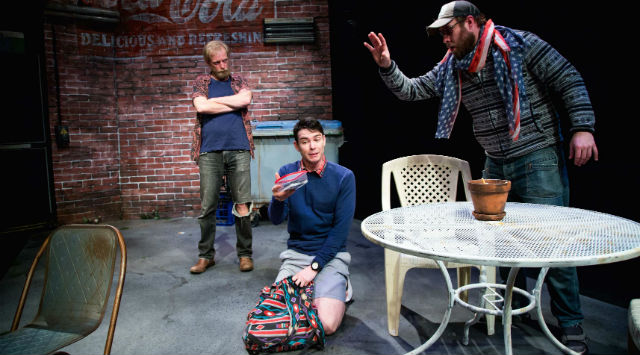
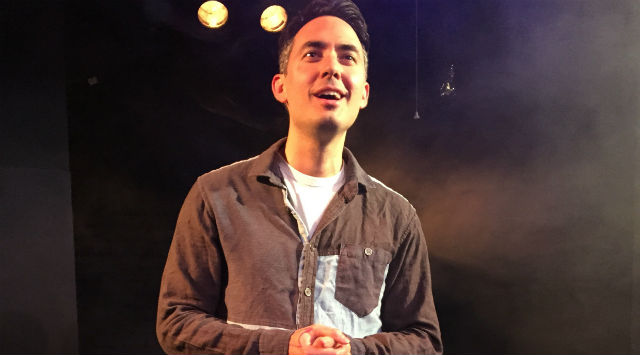
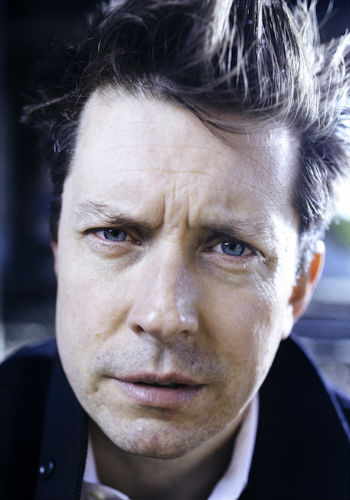
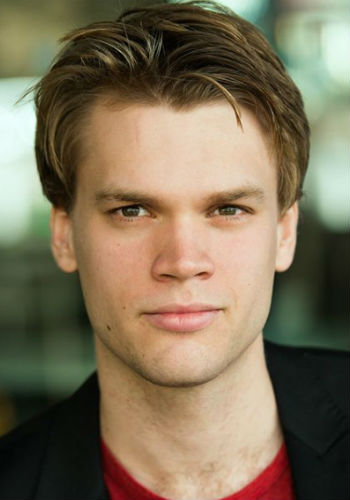
Cast: James Bell, Jeremy Waters, Ben Wood
Image by Rupert Reid

Theatre review
Social outcasts are a sad fact of life. Communities are built upon identities that will inevitably exclude “undesirables”, some of whom can form sub-cultures, and others are left to their own devices. Annie Baker’s extraordinary The Aliens features the invisible and ignored; people judged to be of no value to economies, and are indeed, a burden to our gross domestic product. We refuse to acknowledge their contributions to society, because they contradict our definitions of what is valuable, and are considered to be of no benefit to our selfish needs. Baker’s writing is the most sensitive and tender piece of theatre one can wish to encounter. It presents downtrodden lives with an effortless humanity, looking at its neglected personalities and all their open wounds that fail to heal, with a persuasive compassion. Baker turns her strangers into intimately familiar beings, by revealing their pains and desires in a way that we can immediately recognise, and by her deft transformations of peculiarities into charming eccentricities.

Direction by Craig Baldwin is idiosyncratic and powerful. Every line of dialogue is replete with poignancy, along with the many purposeful silent pauses that occur to disarm and entrance. The play is rich with subtexts and references that resonate with great effectiveness, to communicate its message of acceptance and social inclusion. The vulnerability of its characters is portrayed with an unexpected dignity, so that their foibles and weaknesses cease to be strange or reprehensible. There is little in terms of narrative in the piece, but the relationships between its three men are carefully harnessed and perfectly realised. The unusual and intense representation of platonic love between men may be rarely seen on stage, but we believe every second of their intimate friendship, and it moves us from beginning to end.

KJ masks his sorrows with substances and laughter. Played by Ben Wood, the role ranges from being very silly to deeply sorrowful, and the actor runs that entire gamut of emotive and technical demands with wonderful fluency. There is a playfulness in Wood’s approach that urges us to meet KJ’s stories with an open heart, and the results are marvellously affecting. Jeremy Waters as Jasper, is heartbroken and heartbreaking. Coupling a beautiful innocence with impressive presence, Waters’ performance is irresistible, and also completely arresting. His style is understated yet robust, and charismatic beyond belief. In the role of awkward teenager Evan is James Bell, who lifts our spirits with a simple but accurate depiction of purity, and whose gentle approach provides a dimension of aching sentimentality that gives the show its exquisite melancholia.

Also noteworthy are the production’s visual design. Hugh O’Connor’s work on set and costumes is restrained but transportative. Its Americaness is convincing without being deafening, and his vibrant use of colour is a necessary and welcome counterbalance to an otherwise depressive environment. Lighting designer Benjamin Brockman’s adventurous engagement with the incessant atmospheric shifts of the text, is a potent element that expertly guides us through the complex quandary of emotions that is The Aliens.

Anyone can fall, because nobody is invincible. In Annie Baker’s play, we see the kindness that people can have for each other, but also the care that is missing in much of our lives. It discloses the nature of how we do or do not look after each other, and evokes notions of unconditional love that many have forgotten. The outsiders of The Aliens connect in the most meaningful way possible, and watching their story unfold brings to mind our own interactions with the world; where we are successful, and where we flounder. As Australia’s attention to economic development becomes more obsessive than ever before, our interest in the ones who fall behind must grow accordingly. Instead, our political votes go to those who claim to protect our financial well being, and those who demonstrate consciousness beyond money, are struggling more and more with each passing election.

www.oldfitztheatre.com | www.outhousetheatre.org

5 Questions with Nicole Shostak and Philippe Klaus

Nicole Shostak

Nicole Shostak

Philippe Klaus: Nicole, you do a lot of character voices for cartoons. How does that compare to being a 3D live ‘human’ in the play Flame Peas?
Nicole Shostak: Griffin, our director, describes the play Flame Peas like a live action Simpsons episode and it definitely has that energy to it! Studio recording for animation is super physical so it’s not all that different in that domain. Valencia (my character) has a lot of hilarious punchlines in the play sound like they are straight out of an animation geared for adults. What’s more exciting in the show, is that we have each other and the audience to play off. The audience changes from night to night and playing with their energy is very fun. You don’t get that audience buzz in animation recordings. You can make the sound engineer laugh, and then you know you’re on the money.

Flame Peas sounds more like a recipe than a show. If you had to make a recipe by that name, what would you put in?
Peas, garlic, onion, pesto. Sautee peas for 2 mins in saucepan, then slide peas and onion individually onto a baby wooden skewer. Slowly toast skewer over an open fire (like a marshmallow) until lightly browned. Conveniently there is an open fireplace of sorts at the Old Fitz in the front bar.

Any favourite moments in the show?
The epic Flame Peas (Flame Trees) extravaganza song is a highlight because its so highly improvised and feels fresh every night. I love counting real money on stage; there is such gravity to that action, and I can feel the audience watching me meticulously.

How much does the show change from night to night?
The show really is like a 4 hander! The audience’s presence and responsiveness changes the pace and energy of the show. With a responsive audience, it is like a stand up comedy act with the audience laughing every three or four lines. With a pensive audience, it plays energy can become darker, more absurd, and therefore for us, it has a Pinteresque feel. It is also interesting to see the varying responses from younger and older demographics.

You did some training in Russia. Do we see that influence here in Flame Peas?
Griffin and I both spent time in Russia during WAAPA, so there is definitely a Russian influence in our theatre making. The show is like a series of etudes (studies) in various combinations of the three characters. We talked a lot about keeping the energy light, like bubbly champagne, regardless of the darker reality of these characters. There is a lightness and plasticity in performance we witnessed from Russian actors, so in our shows development, starting with lightness lead us into playfulness and then we could explore a wider range of sensibilities for our characters. We also discussed some secret quotes from Stanislavski’s diary. Finally, there many Chekhovian references in our play, especially from The Seagull.

Philippe Klaus

Philippe Klaus

Nicole Shostak: Philippe, what is a Flame Pea?
Philippe Klaus: It’s a Western Australian flower, and in its plural form, flame peas, it’s also a pun on Flame Trees by Cold Chisel. It’s a very apt title for the show. If you see it you’ll think “that’s so dumb AND smart.”

You’ve worked with some Australian icons like Toni Collette and John Jarratt ; what’s it like reuniting with your WAAPA classmates?
A lot less intimidating. But they were both very nice to me and people are just people no matter how iconic they are. As for going back to WAAPA classmates, it was great because we have a shorthand and don’t offend each other easily.

How has being a writer on Flame Peas changed your perspective on playwrights?
It made me think about how hard writing for other people must be. It’s one thing to write for yourself or for actors you know well but handing it over to a group of strangers who can interpret it any way they like…that’s brave. Playwrights must feel like they’re always putting their babies up for adoption.

What is your character’s dream job? What is your dream job? Are they similar?
My character aspires to being a highbrow composer and he’s deeply narcissistic. I can say that without judgment because I relate to that kind of vanity. My own dreams aren’t very concrete. I want to tell good stories, but I don’t mind what they’re about or what medium it is. I’m not much of a planner.

You play the piano upside down in the show. How does that differ to playing the piano the right side up?
Playing upside down is just like playing the right way up except you can’t see the keys and your range is a little limited. And all the blood rushes to your head. It’s more of a ‘sometime’ activity.

Nicole Shostak and Philippe Klaus are writers and performers for Flame Peas .
Dates: 4 – 15 August, 2015
Venue: The Old Fitz Theatre

Review: Blonde Poison (Strange Duck Productions / Red Line Productions)

BP2 CREDIT MARNYA ROTHEVenue: Old Fitzroy Theatre (Woolloomooloo NSW), Jul 28 – Aug 15, 2015
Playwright: Gail Louw
Director: Jennifer Hagan
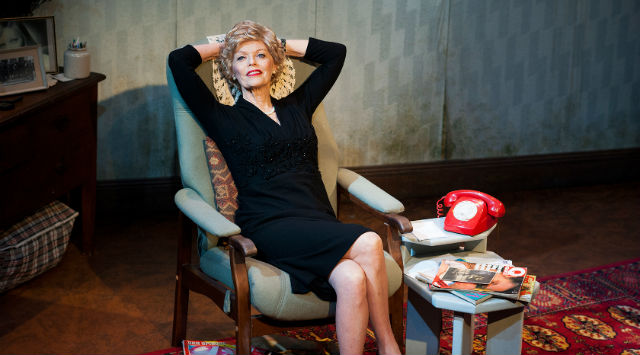
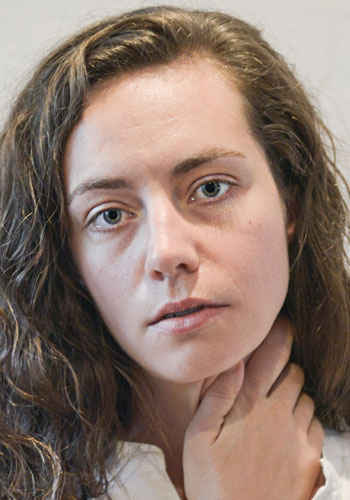
Cast: Belinda Giblin
Image by Marnya Rothe

Theatre review
Stories of Jewish experiences during World War II continue to appear on our stages and screens with an urgency that refuses to be eradicated. The sheer volume of narratives means that there is a tendency for characters, emotions and perceptions to be conflated into a certain uniformity, providing impressions and understandings of a time that seem to vary little. Gail Louw’s Blonde Poison is a true story based on the life of Stella Goldschlag, a provocative character with incredible complexity, and whose involvement with Nazi Germany offers a powerful and controversial extension to our increasingly superficial memories of those horrific times. Louw’s writing however, fails to live up to the scintillating potentialities of the protagonist’s tales. The use of a realistic monologue format seems to restrict the amount of tension and drama that lies dormant in Goldschlag’s recollections. The shocking and duplicitous nature of her history holds the promise of a much more explosive presentation than Louw’s plot structure allows.

Direction of the work is a conservative one that dares not to depart from the script and its flaws. Jennifer Hagan’s faithfulness to the text leads to a thorough illustration of the author’s ideas, but greater gumption is required to fill in the blanks, and to elevate a play that needs more flair. Performance of the piece however, is marvellously captivating. Goldschlag is played by Belinda Giblin who is completely masterful on this stage. Her clarity of intent, along with her intelligence and agility (both mental and physical), deliver an impressive portrayal that is equal parts dynamic and intimate. Her emotions are expansive, immediate, and highly legible, but the decision to refrain from eye contact with the audience, along with the staidness of the script, prevents the work from making a connection that matches the poignancies of the actual events in discussion.

Humanity is at its most striking when revealed with its contradictions and imperfections. There is much ugliness in Blonde Poison that expose us to our own fallibilities, but it is too quick to forgive. We need to feel the gravity and realise the repugnance of the dark sides of our selves, before the light can resonate. Villains are indispensable, for they show us the truths within that we fail to acknowledge. Stella Goldschlag ultimately did arrive at confrontations with her own demons, and in those moments of malevolence on stage, poison tastes sweet, and we want more.

www.oldfitztheatre.com | www.facebook.com/strangeduckproductions

5 Questions with Nicola James and Natalie Freeman

Nicola James

Nicola James

Natalie Freeman: Tell me about Golden Jam Productions, how did that start?
Nicola James: Golden Jam started as a catalyst for me to put on a short play that I wrote last year. So I decided to start an independent theatre company so that I could produce it and get it up. And also going into the future it is something that I want to use to produce new work and great work that hasn’t be done for a while and deserves to be put on. It is also place for me to showcase myself and other emerging actors, to give them an amazing platform to do their work because it is quite hard to get a break in this crazy industry.

Why the Old Fitz?
I’ve seen quite a few shows at the Old Fitz over the years and I think it is an amazing space. And it is a great space for weird and wonderful work because it is attached to a pub and so it has that kind of playful drinking atmosphere which means you can really let loose and play to an appreciative if somewhat boozed crowd.

If you weren’t an actor/producer/director/writer what would you be?
I’ve actually been asked this question a couple of times recently, and it may sound lame, but this is what I would be doing. This is the thing that if you asked me 5 years ago ‘if I could do anything what would I do?’ – this is it. So I’ve already done the things I wouldn’t be doing, and now I’m finally doing that thing that I’ve always wanted to.

What motivates you to act?
The reason I act and the reason I make theatre is because being a human is a challenging and wonderful and hilarious thing and I think that if we don’t take time to look back on that and to share that experience with other people then we are missing the point of life.

For a long time you worked in bars, including managing a bar. So what is your drink of choice? If there is one drink that you could have for the rest of your life what would it be?
One drink to end all drinks? I’m a beer girl, through and through and I’m a beer nerd so I love my craft beer. But in saying that, now that it’s colder I’m drinking a tonne of red wine and I’m back on the whiskey (how apt) but there is nothing better than a straight up, peaty, smokey whiskey – Yum!

Natalie Freeman

Natalie Freeman

Nicola James: So how did you get involved with Golden Jam Productions?
Natalie Freeman: Well, I went to college with Nicola who is the head honcho at Golden Jam. We always wanted to work together but we didn’t get to do that much together while we were studying. We have a lot of things in common, we’re the same age, we’re both really motivated to put on some really interesting work and just get out there post college. We both definitely did not want to be sitting out there waiting for and agent or a casting director to call.

Why these two plays?
We’ll they are certainly challenging and I wanted a challenge. They are both about the extremes, they go to a depth of human desire that I really wanted to explore. There is a lost of lust, and of wanting something more out of life. That feeling of “Is this it?” They’re both beautiful pieces in their own different ways. They are difficult texts that you really have to work at and the there is a real emotional necessity that you need to grab onto as well. So getting into these works is quite visceral, you need to invest your whole body and mind into it. And that’s the kind of theatre I like to do!

What’s your guilty pleasure?
Dark chocolate, chips and Game Of Thrones. There is always some period drama or fantasy that I’ll get into. I like escaping into other worlds.

What would be your dream role?
I think it would probably be Shakespeare, I don’t want to choose one, but it would be one of the female leads. It’s similar to these pieces that we’re doing. It would be a woman that has a lot of power, a lot of lust. I want to be on stage baring that. Also Lady Bracknell would be a lot of fun, I‘m not old enough but I think I could do her voice!

What’s your favourite lunch food?
I don’t know, I love food! Fish and chips? Or getting a BBQ chicken and salad. I think that’s what I’d choose?

Nicola James and Natalie Freeman will be appearing in Like Whiskey On The Breath Of A Drunk You Love / Lunch by Andrew Bovell and Steven Berkoff.
Dates: 21 – 25 July, 2015
Venue: The Old Fitz Theatre

Review: Men (Red Line Productions)

redline1Venue: Old Fitzroy Theatre (Woolloomooloo NSW), Jun 30 – Jul 25, 2015
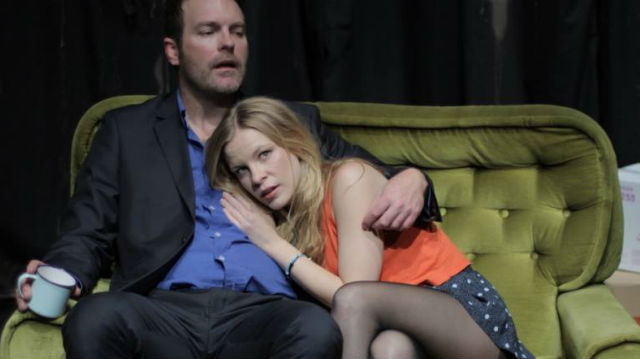
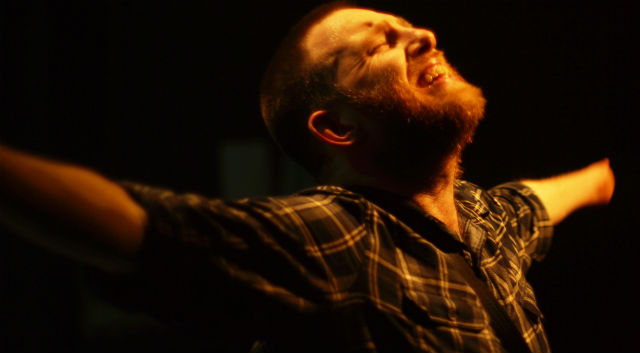
Playwright: Brendan Cowell
Director: Jessica Tuckwell
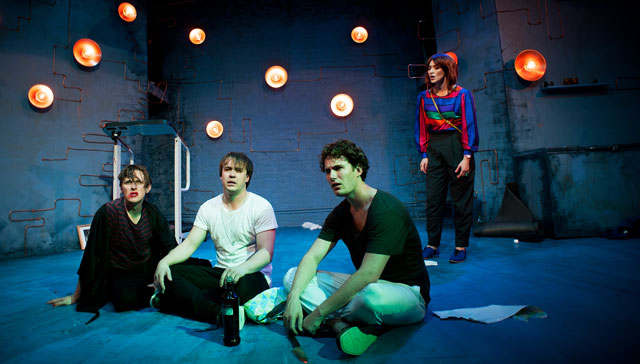
Cast: Cheree Cassidy, Sean Hawkins, Ben O’Toole, Jamie Timony
Image by Marnya Rothe

Theatre review
There are three men in the play, each representing a negative aspect of machismo. One is the narcissist, another is the brute, and the weakling makes the trio. Brendan Cowell’s script is filled with insecurity and angst about modern maleness. Set within an indeterminate but claustrophobic context, Jules, Bob and Guy are aggressive expressions of all that we think is wrong with boys and men in Western societies today. It is a real challenge creating a story with no likable characters, but the author’s own presence is strong in the piece, and his self-effacing approach is an appealing one. Cowell achieves a fine balance between manufacturing objectionable scenarios and dialogue, with a critical undercurrent that gives us the freedom to indulge in the often politically incorrect humour. Despite its coarse demeanour and brash tonalities, Men is deeply poetic, with a strange and tragic beauty accentuated by the hopelessness that it depicts.

Jessica Tuckwell’s direction of the work brings a showy brazenness that entertains for the entirety. Energy levels are pitched very high, but we are always conscious of substance and subtexts lying beneath. There certainly is a good amount of depth to the play, but much as we are invited to analyse these young men’s thoughts and behaviours, there seems an unwillingness to delve into the causes of their plight. Comedy is handled with an impressive restraint that shows sophistication, as well as a well-placed confidence in the script. Haizel, the sole female personality on stage is a predictably enigmatic figure, but Tuckwell resists ascribing her with an archetype and her resultant ambiguity adds interest, if slightly unsettling.

All performances are accomplished for the piece, especially that of Sean Hawkins, who impresses as the boundlessly vain Jules. The writing demands of its players loud and fast delivery, which means that characters can appear mono-dimensional, but Hawkins’ portrayal reveals fragility and bewilderment where least expected, and his ability to inject subtle flashes of irony into a world of conceit, is thoroughly delightful. The level of concentration and clarity that each actor displays for their own part, gives the production its electricity, and despite their despicability, we hang on to their every word and action, always eager for more.

There are some spiritual schools of thought that believe in the importance of knowing what it is that one desires, rather than knowing only what is undesired. The production only shows us the troubling parts of being human, but is hesitant at discussing the alternatives. Regardless, Men is hugely satisfying. Deeply interesting questions are brought up that refuse to be ignored, and the sheer visceral excitement derived from its excellent performances is quite exceptional. Men, can’t live with them, can’t live without them.

www.oldfitztheatre.com

Review: Being Norwegian (Brevity Theatre)

brevityVenue: Old Fitzroy Theatre (Woolloomooloo NSW), Jun 9 – 21, 2015
Playwright: David Greig
Director: Alexander Butt
Cast: Katy Curtain, David Woodland
Image by Pollyanna Nowicki

Theatre review
Relationships are “challenging”, to say the least. Lisa and Sean are in Sean’s apartment, after having met in a pub not long before. Both are hopeful for something exciting, and greater than everyday life to happen. The strangers quickly reveal parts of their hidden selves to try to make the night a meaningful one, but they clash. Lisa is assertive, and Sean is disarmed. The awkwardness of creating new relationships is familiar to us all. We crave deep connections, but finding it can be difficult for most. David Greig’s Being Norwegian is a half-hour sojourn investigating that peculiar dynamic when two meet for the first time, both in search of the same but struggling to find commonality.

The natural discomfort of strange encounters is expressed well, under Alexander Butt’s direction. The eagerness for affirmation and the urgent need to gratify primal urges, libidinal and otherwise, are presented with accuracy and good humour. Butt finds pleasure in the cheekiness of the writing, and works at creating laughs through a varied range of methods, which prevents the show from the threat of becoming a one trick pony.

The characters are colourful and amusing, but they require greater complexity and texture for us to find identification, in order that their narratives and jokes may cut deeper. Katy Curtain and David Woodland are polished performers with strong presences that captivate with ease. Their comedic chemistry is confident, although the sexual energy they manufacture can feel hesitant. The work is often exaggerative in tone, but the players manage to portray a surprising authenticity in a way that only dedicated show folk can. Curtain and Woodland are at home on the stage, and we are delighted to be in their company.

www.oldfitztheatre.com | brevitytheatre.com.au

Review: Misterman (Siren Theatre Co / Red Line Productions)

sirenVenue: Old Fitzroy Theatre (Woolloomooloo NSW), Jun 9 – 27, 2015
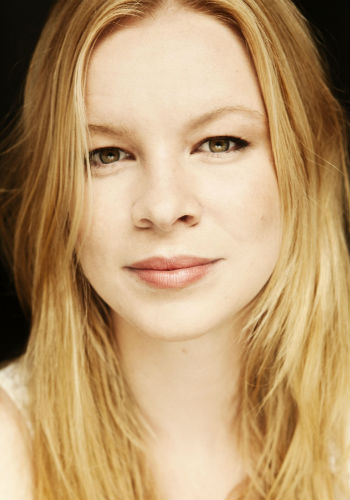
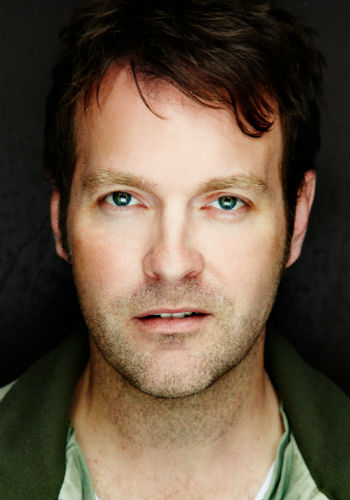
Playwright: Enda Walsh
Director: Kate Gaul
Cast: Thomas Campbell
Image by Diana Popovska

Theatre review
Enda Walsh’s Misterman addresses the very contemporary concern of fundamentalist religiosity and its place within secular societies. The tension between the private and the public seems to be approaching its breaking point with our obsessive attention on terrorist activity around the globe. The principle of individuals keeping religious beliefs to themselves has always been precarious, and now we see every day, the violent trespass of those beliefs upon the lives of others. Thomas lives in a small Irish town, and like Travis in Martin Scorsese’s Taxi Driver, he becomes increasingly frustrated by the sins he perceives to be thriving around him. Further parallels can be drawn with other “outsiders” like Norman Bates and Carrie, and accordingly, Misterman appeals to our sentimental feelings for the underdog, as well as that undeniable dread arising from seeing the oppressed struggling at the end of their tether.

Beautifully imagined and directed by Kate Gaul, the intimacy of the venue is utilised to enhance the confrontational quality of the text. Her show is a bold one, with an abundance of creative devices invented to provide intrigue, interest and dimension to the monologue format. Subtleties of Walsh’s writing can sometimes be drowned out, but the intensity of what is being presented proves to be arresting, and we engage with the work thoroughly for its entirety. The holistic incorporation of design faculties demonstrates a sophistication that reflects a deep understanding of the nature and capacities of theatre. Set by Gaul, lights by Harley T A Kemp, music and sound by Nate Edmondson contribute much more than atmosphere. The way we understand the protagonist’s environment and his psychology happens through the accomplishments of this formidable design crew, and their exhaustive exploration of space and fantasy.

Thomas Campbell gives the performance of a lifetime in Misterman. His affinity with the material at hand, and the vast amount of depth he has discovered in the text and within himself, have conjured up a tremendous character, rich with life and poignancy. Campbell pushes hard and what he attains is glorious. The focus, energy, sensitivity and intuition he displays, is a rare gift to audiences that we must accept with a gratitude as sincere as what he puts on stage.

The play is about the way we break, and because we are all, to some extent, broken people, the work is accessible in spite of Thomas’ oddness and idiosyncrasies. The isolation and cruelty he experiences is exceptional but also familiar, and through his story, we can perhaps learn about understanding and compassion, which are necessary but often lacking. We don’t need much to survive, but the basic things don’t come easy.

www.oldfitztheatre.com | www.sirentheatreco.com

5 Questions with Katy Curtain and David Woodland

Katy Curtain

Katy Curtain

David Woodland: If you were to kill someone, how would you do it?
Katy Curtain: I’m not sure, but I know how I’d get rid of the body? If you’ve seen Breaking Bad, you can probably guess where my head’s at…

What was the last show you wished you were in?
I remember having really strong performance envy when I saw La Soiree a while back. It just looked like constant joy. But if I were in it, I wouldn’t be able to watch it, so win win.

If you had to make everyone read one book, what would it be?
Lying by Sam Harris, because it’s a life changer that could improve human behaviour en masse, and it’s conveniently teeny tiny! It fully fleshes out how white lies are most destructive to the person telling them. The way it explores thoughts and behaviour is fascinating.

What fictional television world would you like to spend a week in?
The Sopranos! That part of the world has always captivated me! And a week would be the perfect amount of time to eat my weight in Italian-American food, revel in the accent and indulge in the novelty of gang life before actually having to prove my loyalty.

When you were a child, what did you want to be?
Pat Rafter’s pregnant wife. I saw her on TV all the time when he was playing. She was filmed crying in the crowd one of the times he won the US Open, and I can’t remember if she was pregnant or if I just thought it would be a cooler story if she was. Anyway, I shoved a basketball up my top, made myself cry and walked around like her for a day. I was 7, so I can probably count it as my first acting credit.

David Woodland

David Woodland

Katy Curtain: What’s the best theatre experience you’ve had in Sydney?
David Woodland: As a performer or audience member? Working with Brevity as a performer is definitely up there with the best. The experience of Wittenberg was something that I was extremely proud to be a part of. It challenged me as a performer, and was just a killer script. As an audience member…this is a hard question…I see more indie theatre over main stage, and many experiences stick out in both. But I will say that at the moment there has been a lot of great independent works going on all over Sydney. I can’t pick an overall best, but Phaedra (Lies, Lies and Propaganda) blew my mind.

What would you do with 8 million dollars?
Probably put it with the other eight and not tell anyone… oh shit!

Who is your hero?
I have many influences. In every part of my life, I am influenced by certain people to a degree but ultimately, we are in this alone. So at the risk of sounding conceited, I think that you have to be your own hero. I think that you have to believe and trust that you can be whatever you want to be. That you do not need to rely on anyone to bring you success and happiness but yourself. This is not to say that you don’t need help along the way, but the buck stops with you. This is your game.

Or I could just say Han Solo.

What was your most unrealistic childhood expectation?
That if I held the LP of The Best Of ABBA on a certain angle, I might be able to see up Agnetha’s dress.

What is the most visited website in your browser history (excluding day to day Google, Facebook, email and banking)?
Probably dictionary.com. I didn’t do very well at school. The answer to the previous question and the fact that I asked my year eleven English teacher if there was a country called Latin (not my finest hour) may possibly be a reason for this?

Katy Curtain and David Woodland will be appearing in Being Norwegian by David Greig.
Dates: 9 – 21 June, 2015
Venue: The Old Fitz Theatre

Review: This Boy’s In Love (Red Line Productions)

TBIL 1Venue: Old Fitzroy Theatre (Woolloomooloo NSW), May 26 – 31, 2015
Playwright: Adriano Cappelletta
Director: Johann Walraven
Cast: Adriano Cappelletta
Musical Director: Daryl Wallis

Theatre review
With any luck, Adriano Cappelletta’s This Boy’s In Love is going to be the last great play about gay life in Australia before same-sex marriage is made legal. Ado’s experiences and perspective as a gay man in Sydney are beautifully, and extremely honestly, documented in this one-man show reflecting life for thousands of individuals from a city in its final throes of inequality and bigotry. Ado is hungry for love like everyone else, but his desires face obstacles unique to metropolitan gay lives. Emerging from periods of oppression and persecution, Ado’s community suffers from dysfunctions, tragic and funny, many of which are fluently articulated in the work.

The piece breaks from conventional monologue formats to provide a theatre that is full of variety, in order to engage, entertain and indeed, educate. It takes frequent detours into sub-genres like cabaret, stand up and dance, and adopts hints of the absurd, so that its ninety minute duration never loses a moment of vibrancy. Director Johann Walraven identifies brilliantly, the many nuances in the text to create moments of surprising poignancy, and to make us fall for the protagonist more and more as the show progresses. As its performer, Cappelletta is generous in spirit, and unbelievably warm, striking a rapport with his crowd so solid, that we cannot help but be enthralled. The level of dynamism in his work is astounding at points, and we get completely absorbed into all his stories, silly or serious.

This Boy’s In Love is as perfect as a monologue can get for small theatre. The only way one can envision this production improved, is with greater investment and imagination into its design elements. Technical enhancements can make the show even stronger, but with what this team is able to assemble, it conveys its intentions perfectly. Love is hard to define. It can mean many different things, but starving anyone of it is cruel and certainly evil. For centuries, love has been defined in narrow heteronormative and religious forms, and in that process, many of us have suffered senselessly. Times have changed, and everyday, more are able to find emancipation. May the day come when sexual bigotry of all kinds in all places be eradicated.

www.oldfitztheatre.com

Review: The House Of Ramon Iglesia (Mophead Productions / Red Line Productions)

mopheadVenue: Old Fitzroy Theatre (Woolloomooloo NSW), May 12 – Jun 6, 2015
Playwright: José Rivera
Director: Anthony Skuse
Cast: Christian Charisiou, Deborah Galanos, Nicholas Papademetriou, Ronny Jon Paul Mouawad, Stephen Multari, Eloise Snape, David Soncin
Image by Clare Hawley

Theatre review
No man is an island. We need to feel a sense of belonging, not only with other people, but also with places. José Rivera’s The House Of Ramon Iglesia investigates the significance of ancestry and roots, through the experience of Puerto Rican migrants in 1980 New York. The Iglesia family is dislocated in a space between San Juan and Holbrook, and its two generations illustrate the complexity of human attachment to a sense of country and home. In our modern times, populations are in constant flux, and the arbitrariness of borders is negotiated to allow for opportunities and interested parties to collide. The matter of nationalities is no longer a straightforward concept for many, and Rivera’s work questions its importance and indeed, its relevance to individual lives.

Anthony Skuse’s direction of the piece is a passionate rendering that delivers an engaging and energetic theatre, but our empathy for its characters only arrives several scenes after it begins. Early sequences feel distant, perhaps a result of their estranged temporal and geographic contexts. Its themes take time to connect, and even though many of its ideas can be universal, we only recognise them after some investment of imagination and patience, but when the show shifts into a gear of high drama, the play becomes a dynamic one, with performances that impress with emotional depth, and a compelling cast chemistry that creates an extraordinarily believable family unit.

When actors are focused and psychologically accurate, we surrender our trust and follow their journeys without hesitation. Deborah Galanos’ intensity gives her Dolores an admirable strength and although quite flamboyant in her approach, we do not question the authenticity of what is being presented. The melodrama Galanos introduces is delightfully entertaining, and allows the actor to expand her characterisation beyond the scripted lines, so that who we meet is greater than an archetypal maternal figure. In the smaller role of Charlie is David Soncin, whose memorable performance is coloured with a natural exuberance and an effortless magnetism. He plays his role with clear and simple intentions, but always discovers powerful subtleties that add surprising dimension to his work. Stephen Multari’s conviction and emotional sonority is a highlight in many scenes of confrontation and feuding. Javier’s inner world is central to the effectiveness of the play, and Multari’s depiction of it is beautifully resonant. The actor’s vigour and earnestness however, can seem out of place in the show’s more tranquil moments, and opportunities are missed that could allow the character to be more endearing, so that we care more about the lead and all the people surrounding him.

When we think of identity, we inevitably go to beliefs about bloodlines and origin. Place is important, but how we manufacture meaning between lived experience and geography is idiosyncratic and personal, yet collectivism is always a part of the discussion. We talk of nations of peoples, and we talk of partners and kins. Rivera’s story is about that conundrum, not just of how we use identity labels, but also how these labels intersect between friends and family. Each person can have an intimate and private understanding of their own space in the big scheme of things, but arbitration will always exist, even for the strongest.

www.oldfitztheatre.com | www.mophead.com.au