Suzy Goes See’s Best Of 2014

sgs-best2014

2014 has been a busy year. Choosing memorable moments from the 194 shows I had reviewed in these 12 months is a mind-bending exercise, but a wonderful opportunity that shows just how amazing and vibrant, theatre people are in Sydney. Thank you to artists, companies, publicists and punters who continue to support Suzy Goes See. Have a lovely holiday season and a happy new year! Now on to the Best Of 2014 list (all in random order)…

Suzy x

♥ Avant Garde Angels
The bravest and most creatively experimental works in 2014.

♥ Quirky Questers
The most unusual and colourful characters to appear on our stages in 2014.

♥ Design Doyennes
Outstanding visual design in 2014. Fabulous lights, sets and costumes.

♥ Darlings Of Dance
Breathtaking brilliance in the dance space of 2014.

♥ Musical Marvels
Outstanding performers in cabaret and musicals in 2014.

♥ Second Fiddle Superstars
Scene-stealers of 2014 in supporting roles.

♥ Ensemble Excellence
Casts in 2014 rich with chemistry and talent.

♥ Champs Of Comedy
Best comedic performances of 2014.

♥ Daredevils Of Drama
Best actors in dramatic roles in 2014.

♥ Wise With Words
Best new scripts of 2014.

♥ Directorial Dominance
Best direction in 2014.

♥ Shows Of The Year
The mighty Top 10.

♥ Suzy’s Special Soft Spot
A special mention for the diversity of cultures that have featured in its programming this year.

  • ATYP

End

sgs-best2014a

Photography by Roderick Ng, Dec 2014

End

Best of 2018 | Best of 2017 | Best of 2016 | Best of 2015 | Best Of 2013
Review: Platonov (Mophead / Catnip Productions )

mophead1Venue: ATYP (Walsh Bay NSW), Nov 5 – 22, 2014

Playwright: Anton Chekhov (adapted by Anthony Skuse)
Director: Anthony Skuse
Cast: Gary Clementson, Charlie Garber, Suzanne Pereira, Amy Hack, Geraldine Hakewill, Graeme McRae, Sam O’Sullivan, Jason Perini, Matilda Ridgway, Eloise Snape, Dorje Swallow, Sam Trotman, Terry Karabelas, Edward McKenna
Image by Matthew Neville

Theatre review
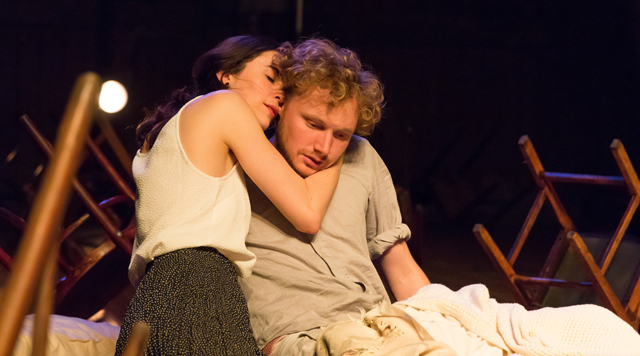
“Impoverished nobility, bored gentry, long afternoons, and a gun” is Anthony Skuse’s characterisation of Chekhov’s legacy, and in this new adaptation of Platonov, Skuse constructs a languid late nineteenth century Russian town, focusing on the title character’s love affairs, and the acquisition of an estate by the underclass. Skuse’s script contains several strong narratives with complex psychological and emotional dimensions, but the work is surprisingly comical, buoyed by a young cast who seems determined to keep proceedings light and frothy.

Skuse’s use of space is aesthetically outstanding. His stage design is minimal, but through the sensitive positioning of a generous number of chairs and actors, scenes come to life and we experience a sublime transformation of time and space. Lighting design by Chris Page and sound by Alistair Wallace are subtle but powerful in effecting atmosphere with a dramatic elegance. The innovative use of chorus and Russian folk songs further enhances the theatrical experience, and this is where most of the performers excel. Direction of performance timing and energy is executed well, but motivations tend to be surface, and it is this lack of gravity that tarnishes the production. Costume is not credited, and the cast often looks as though they are still in rehearsal garb, which detracts from the social and class structures that inform much of the play’s content.

Leading man Charlie Garber is charismatic, with an impressive presence, but his approach is persistently farcical, and he anchors the production in a frivolity that sits uncomfortably with Chekhov’s weighty themes. Platonov’s spinelessness can be humorous, but it is also a serious element that ultimately represents the core reason for the destruction of lives in the story. We may perceive the responsibility associated with the lack of courage and virtue in key personalities, but the show needs to deliver something more poignant in order for its audience to connect on a personal and emotional level. Sam Trotman as Sergei demonstrates a much stronger commitment to the role’s authenticity. His ascension from puerility to anguish over the course of the play is thoroughly compelling, and his fierce vitality adds a much needed edge to a production that tends to be too understated in its storytelling.

The show successfully removes conventional stylistic touches that could be thought of as clichéd in standard representations of Chekhov’s scripts, but the vacuity left behind in their absence is not sufficiently compensated by the show’s moderate sense of originality. Skuse wishes to expose the essence of these character’s very beings, to achieve an understanding of how we function as individuals and as societies, but the language required to communicate those concepts seem to ask for something more elaborate and substantial. It turns out that stripping something bare does not necessarily give easy access to the truth, and what we think of as cosmetic could actually hold significance and meaning.

www.mophead.com.au | www.catnipproductions.com

5 Questions with Narek Arman

narekarmanWhat is your favourite swear word?
I use the phrase “fuck that shit” quite a bit…

What are you wearing?
Underwear. Too cool for school, I know.

What is love?
Shrek is love, Shrek is life.

What was the last show you saw, and how many stars do you give it?
To be completely honest, I don’t recall the name of the last show I saw but I thought it was worth 3 and a half stars.

Is your new show going to be any good?
Oh you bet it’s going to be good!


Narek Arman plays the role of Aaron in Sugarland. Read Suzy’s review here.
Show dates: 27 Aug – 13 Sep, 2014
Show venue: ATYP

Review: Sugarland (ATYP)

atypVenue: ATYP (Walsh Bay NSW), Aug 27 – Sep 13, 2014
Playwright: Rachael Coopes, Wayne Blair
Director: Fraser Corfield, David Page
Cast: Narek Arman, Michael Cameron, Rachael Coopes, Elena Foreman, Hunter Page-Lochard, Dubs Yunupingu
Image by Tracey Schramm

Theatre review
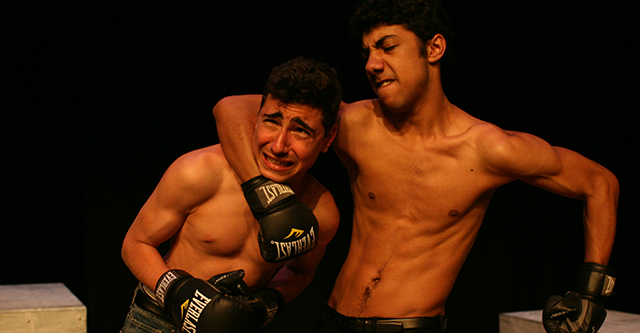
Sugarland is a work about teenagers in Katherine, a remote town in the Northern Territory. The play is performed by young actors, aged 17 to 21, but written by adult artists who have studied the youth of the region over a two-year period. Rachael Coopes and Wayne Blair’s script is powerful in its authenticity, with controversial elements that resonate with a disarming honesty. The truths it reveals, both beautiful and ugly, would be challenging for any audience. Like most memorable work about teenagers, from Puberty Blues (Gabrielle Carey and Kathy Lette) to Kids (Larry Clark), it is the shocking transgressions they depict that leave an impression, and it is precisely the taboo nature of what is being discussed that makes these texts significant and valuable.

Directed by Fraser Corfield and David Page, the production is unexpectedly elegant and subdued. The confronting issues it tackles are not sensationalised. Instead, they are presented in a quietly pragmatic way so that we are prevented from feeling any sense of alienation from its characters. We are seduced into a deceptively cosy world, which in fact contains many aspects that disturb our middle class notions of conventions and acceptability. Corfield and Page’s achievement is in their creation of a political theatre that chooses to speak rationally, rather than to appeal with overblown emotion and hysterical expression. Their gentle approach allows the play’s message to seep through, and to strike a chord where dismissive delusions usually reside.

Performances are not always accomplished, but every actor’s creation on this stage is thoroughly fascinating. The teenage characters seem familiar, but we are provided rare insight into a depth that habitually evades public scrutiny. Dubs Yunupingu plays Nina, a disenfranchised high school girl of indigenous background. Yunupingu has a sensitive quality that we connect with, and a fragility that secures our empathy. The lack of pretension in her craft is refreshing and often very moving. The unhinged Jimmy is portrayed by Hunter Page-Lochard whose impressive presence gives the show a dangerous edge. Page-Lochard is an exuberant performer who brings an exciting unpredictability to his every appearance. Narek Arman is a jovial and charming actor, and his interpretation of the recent Iraqi migrant Aaron is a delightful contrast to the other moodier personalities.

The beginning of political action is awareness, and awareness begins at giving a voice to the disadvantaged. The isolated inhabitants of Sugarland cannot see the privileged lives of its Sydney audience, but their stories and adversities are told to us without ambiguity. They do not seem angry or claim to be desperate, but we know that every young Australian deserves more. The distinction between the haves and the have nots in this lucky country is an unequivocal disgrace, and the journey towards greater equity must be accelerated.

www.atyp.com.au

In Rehearsal: Sugarland

Rehearsal images above by Gez Xavier Mansfield and Kar Publicity from Sugarland,
by Rachael Coopes and Wayne Blair.
At ATYP, from Aug 27 – Sep 13, 2014.
More info at www.atyp.com.au

Review: Mr Kolpert (Pantsguys)

pantsguysVenue: ATYP (Walsh Bay NSW), Jul 30 – Aug 16, 2014
Playwright: David Gieselmann (translated by David Tushingham)
Director: James Dalton
Cast: Paige Gardiner, Garth Holcombe, Claire Lovering, Tim Reuden, Edan Lacey, Tom Christophersen
Image by Gez Xavier Mansfield

Theatre review
The theatre is a gift that takes many forms. Audiences sit in darkness full of anticipation, waiting for a revelation, never really knowing what is to be unraveled. Mr Kolpert quickly assures us that it is intent on providing entertainment and laughter, but we discover very soon, that the comedy is black, and the true depth of its morbidity is not known until we arrive at the very end. Although tremendously funny, the comical work is first and foremost an absurdist one. We might be laughing from start to finish, but it is only the loudness of that reaction that disguises a greater response that occurs, in which our minds and emotions are constantly being confronted and agitated, and we struggle to grapple with our own morals and etiquette.

The play presents an omnibus of transgressions through a series of unrealistic and improbable events, and every taboo that the narrative comes into contact with, it aggressively explores, keeping us unnerved and outraged. The comedy that comes along with these controversies is the additional challenge it issues, and we are constantly questioning the appropriateness of our laughter. It makes us wonder if we are keeping polite company in this quite classy venue. Theatre is a communal event, and the meaning of laughter in this social setting can be contentious, but the extremity of what transpires on stage protects our civility. It is simply silly to assume that any of the crowd’s giggles or guffaws can ever be taken as a sign of condonation of the horrific behaviour we see. Still, we are never allowed to feel too at ease. The show is at its core, a disturbing one.

James Dalton’s marvelous direction is sensitive not only to our senses, but also to our hearts and minds. He keeps us fascinated by everything we see and hear, and always keeps our intellect and emotions engaged. His is a theatre that feels all encompassing, intensely engaging and completely stimulating. Dalton does not allow the audience to sit back and observe. This is art without passivity, and he wants us to be on tenterhooks.

Assisting with Dalton’s vision is an excellent team of designers, including composer Marty Jamieson, who also partners up with Alistair Wallace for sound design. Their work provides rich textural variation between scenes, and is often crucial in heightening the quality of irony in the work. Lighting by Benjamin Brockman establishes the production’s aesthetic sophistication, and is memorable for his adventurous sensibility. The extent to which Brockman pushes his creativity is impressive, especially with fairly limited facilities, but two moments of bloodshed are too darkly shadowed, causing momentary, and unintended ambiguity.

The team of actors is exuberant, animated and bold. The playfulness they inject is hugely important to the enjoyment of the piece, with Paige Gardiner’s performance as Edith Mole standing out as a delightful highlight. Gardiner’s remarkable and confident comic ability is showcased perfectly by a creation that is at once, wild yet nuanced. There is a fierce determination to connect, with both cast and viewers, that makes her work irresistible, and thoroughly hilarious. Equally compelling is Claire Lovering, who consistently surprises with a gentle presence that readily transforms into convincing madness. Lovering demonstrates greater subtlety than other cast members but never fails to attack with savagery at every appropriate opportunity. This production of Mr Kolpert features thoughtful and skilled entertainers who must all be commended for a brilliantly vibrant show.

David Gieselmann’s writing exposes the chaos of this thing we call life, and our ravenous need for making logic out of randomness. He talks about the abnormal that resides within everything that seems normal, thereby tempting us to dismantle our standards of morality and ethics, in order to realise their artifice, frailty and inconstancy. The show is about society’s hypocrisies as well as its requirement for order. It does not say that our lives are lies, but it does encourage us to think about the rules we live by, how they are manufactured and the svengalis who might be behind them all.

www.pantsguys.com

5 Questions with Tim Reuben

timreubenWhat is your favourite swear word?
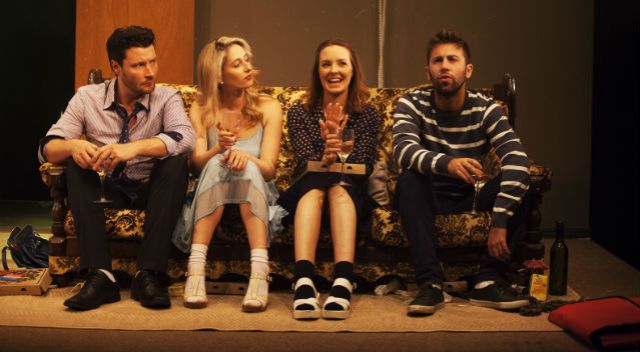
Fuck. It’s so versatile. Take it anywhere. It’s the swiss army knife of swear words.

What are you wearing?
A red thermal top and trackie pants. I’m a fashionista. Also I’m about to go and help paint the set at ATYP.

What is love?
Love is a surprise party on your birthday.

What was the last show you saw, and how many stars do you give it?
I saw A Good Person Of Szechuan at the Malthouse in Melbourne. 5 stars. It was gripping, comical and poignant.

Is your new show going to be any good?
Yep. I love the play, and we have an amazing director in James Dalton. He’s in his element. I think the show is gonna be a real ride for the audience.

Tim Reuben is starring in Mr Kolpert.
Show dates: 30 Jul – 16 Aug, 2014
Show venue: ATYP

Review: His Mother’s Voice (Bakehouse Theatre Company)

rsz_attachmentVenue: ATYP (Walsh Bay NSW), Apr 30 – May 17, 2014
Director: Suzanne Millar
Playwright: Justin Fleming
Actors: Alice Keohavong, Angela Tran, Arisa Yura, Dannielle Jackson, Harry Tseng, John Gomez Goodway, Jonathan Lourdes, Michael Gooley, Monica Sayers, Renee Lim, Isaiah Powell
Image by Tessa Tran, Breathing Light Photography

Theatre review
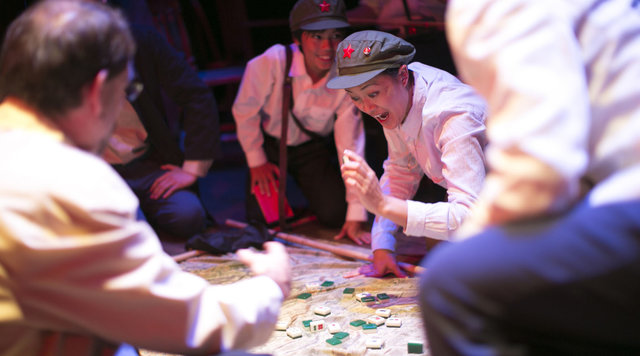
China’s Cultural Revolution ended officially in October 1976, but its after-effects are felt everyday the world over. Today, China’s influence on the global economy develops rapidly, and the country is now widely known to be Australia’s largest trading partner. According to the 2011 census, 4 percent of Australians identify themselves as having Chinese ancestry, and that number continues to grow. Justin Fleming’s His Mother’s Voice is a story about the Cultural Revolution, and the defection of a Chinese pianist to Australia.

Fleming’s script is colourfully structured. With the story of Qian Liu as a young boy, it sets out to provide a dramatic background of the Cultural Revolution that would assist audiences who might be unfamiliar with that slice of history. When Qian matures and becomes a successful pianist, he takes an opportunity to defect to Australia, and the story takes a turn that allows a more direct connection with its intended audience. Fleming’s focus however resides with the relationship between Qian and his mother Yang Jia, who struggles against all odds to teach her son the piano, in the firm belief that music is integral to their family identity and survival. The universal ties between parent and child is rightly central to the story, as it is a theme that we all have an affinity for.

Director Suzanne Millar’s sensitive creation of scenes from the revolution are dynamic and fascinating. Her talent in the use of space and sounds crafts a show that is relentlessly engrossing (lighting designer Christopher Page and sound designer James Colla execute Millar’s vision with great elegance). She has a deep understanding of the audience’s senses, and we are kept entirely under her spell. The stage is kept very busy, but our minds are always carefully guided through all the action with clarity. The show she has built is an entertaining one, but casting issues prevent it from being the moving experience it wishes to be.

Henry Tseng is a perfect visual fit for the lead role, but a lack of authenticity in his characterisation disrupts the crucial relationships Qian has with his mother, and his wife. Without a believable emotional centre, the story is one we hear, but do not feel. Qian’s Australian wife is Emma Fielden, played by Dannielle Jackson. Jackson has a delightful effervescence that brings a necessary lightness to the often heavy going narrative, but can be slightly distracting when scenes require more gravity.

Renee Lim as Qian’s mother Yang Jia, is star of the show. Her performance is powerful yet varied, and her strong presence is consistently engaging. The level of commitment she exhibits is impressive, and it is noteworthy that she exercises restraint effectively on many occasions, although her emotional scenes are unmistakably remarkable. John Gomez Goodway and Michael Gooley both play their paternal roles with excellence, and Alice Keohavong and Monical Sayers are memorable in a humorous scene as bumbling officials negotiating Qian’s farcical reconciliation.

His Mother’s Voice is earnest, and beautiful. It does not always resonate, but it is fiercely captivating. The exoticism involved in dealing with foreign cultures is often tricky, but this production handles matters with respect and dignity. Fleming and Millar are to be commended for looking abroad in their search for artistic inspiration, and for a show that tells us who we are by finding the similarities that lie in the seemingly drastic differences between us and them.

www.bakehousetheatrecompany.com.au

5 Questions with Monica Sayers

rsz_1386076465What is your favourite swear word?
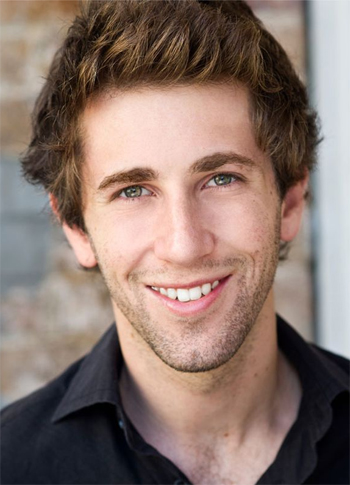
F#$%ING…. that’s fishing right? 😉

What are you wearing?
Yoga gear; lime green Lululemon singlet top and 3/4 length black leggings.

What is love?
Sing it, “baby don’t hurt me, don’t hurt me, no more!” Ah, good old Haddaway said it best in 1993 with this dance track. I believe love is multi-faceted. It can take on different forms of love like friendship, family, or a committed relationship, but ultimately it involves listening from your heart and acting out of loving kindness to the other or even to yourself.

What was the last show you saw, and how many stars do you give it?
Just saw a comedy on Friday night last week, Heaven Help Us at the Bordello. It was fantastic! Clever witty writing with a solid cast. 4 out of 5 stars.

Is your new show going to be any good?
Is it? Well… you’ll just have to come check it out for yourself and see! You’ll never never know unless you do. Personally, I think it’s going to be FAB!

Monica Sayers is appearing in His Mother’s Voice, from Bakehouse Theatre Company.
Show dates: 30 Apr – 17 May, 2014
Show venue: ATYP