5 Questions with Haiha Le

haihaleWhat is your favourite swear word?
I’m not discerning. I love them all, swearing is shitfuckincuntty rad! I started timidly, a late bloomer at 16, but once the floodgates opened I became a veritable gutter mouth.

What are you wearing?
Nothing but the blood of a virgin coconut (organic & cold pressed).

What is love?
A four letter English word worth seven points in scrabble. In Vietnamese it’s Yêu, which sounds like ‘Ewww’ when pronounced in English.

What was the last show you saw, and how many stars do you give it?
Cyrano de Bergerac at Sydney Theatre Company. I give it 3 gold stickers. Props to the actors though, they get 5 gold stickers.

Is your new show going to be any good?
Hells yeh, hi five!

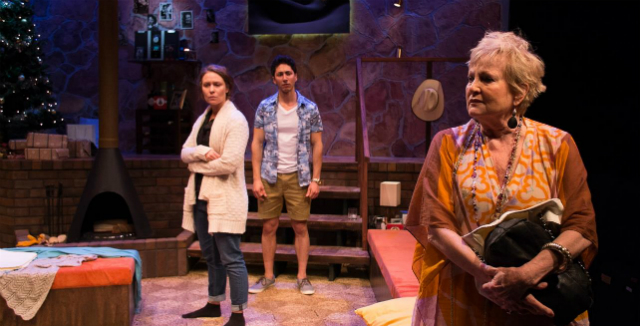
Haiha Le is starring in Dream Home by David Williamson.
Show dates: 31 Jan – 28 Mar, 2015
Show venue: Ensemble Theatre

Suzy Goes See’s Best Of 2014

sgs-best2014

2014 has been a busy year. Choosing memorable moments from the 194 shows I had reviewed in these 12 months is a mind-bending exercise, but a wonderful opportunity that shows just how amazing and vibrant, theatre people are in Sydney. Thank you to artists, companies, publicists and punters who continue to support Suzy Goes See. Have a lovely holiday season and a happy new year! Now on to the Best Of 2014 list (all in random order)…

Suzy x

 Avant Garde Angels
The bravest and most creatively experimental works in 2014.

 Quirky Questers
The most unusual and colourful characters to appear on our stages in 2014.

♥ Design Doyennes
Outstanding visual design in 2014. Fabulous lights, sets and costumes.

♥ Darlings Of Dance
Breathtaking brilliance in the dance space of 2014.

♥ Musical Marvels
Outstanding performers in cabaret and musicals in 2014.

♥ Second Fiddle Superstars
Scene-stealers of 2014 in supporting roles.

♥ Ensemble Excellence
Casts in 2014 rich with chemistry and talent.

♥ Champs Of Comedy
Best comedic performances of 2014.

♥ Daredevils Of Drama
Best actors in dramatic roles in 2014.

♥ Wise With Words
Best new scripts of 2014.

 Directorial Dominance
Best direction in 2014.

♥ Shows Of The Year
The mighty Top 10.

♥ Suzy’s Special Soft Spot
A special mention for the diversity of cultures that have featured in its programming this year.

  • ATYP

End

sgs-best2014a

Photography by Roderick Ng, Dec 2014

End

Best of 2018 | Best of 2017 | Best of 2016Best of 2015Best Of 2013

Review: Absent Friends (Ensemble Theatre)

Venue: Ensemble Theatre (Kirribilli NSW), Dec 4, 2014 – Jan 24, 2015.
Playwright: Alan Ayckbourn
Director: Mark Kilmurry
Cast: Michelle Doake, Darren Gilshenan, Brian Meegan, Jessica Sullivan, Richard Sydenham, Queenie Van De Zandt
Images by Katy Green Loughrey

Theatre review
Theatre is much more than storytelling, but the allure of a captivating narrative is hard to resist. In Alan Ayckbourn’s 1974 play Absent Friends, a vague context is set up as a springboard for innovative use of time and space, and in the case of director Mark Kilmurry’s efforts, to deliver an unusual and unexpected form of comedy that challenges our notions of performance and entertainment. Diana is throwing a tea party for an old friend who is mourning the death of his fiancée. The group comprises six distinct and diverse personalities, each independently fascinating but unified by a mode of presentation clearly established by Kilmurry.

The show is often absurd and slapstick in tone, and we find ourselves laughing at inane moments that have little to do with the story, but it strives for something that is ultimately quite precise and polished. The enjoyment of the work lies in the way human traits and behaviour are exaggerated so that we recognise parts of life that are usually too subtle to grip our attention. Small things matter, and the production moves focus away from key plot points to emphasise minute interchanges that occur between friends. It encourages us to appreciate friendship not for the impact they may have on major life events, but for the unadulterated bliss derived from physical company and emotional closeness. Kilmurry’s direction is brave, but not always effective. The work depends heavily on the cast’s chemistry with its audience and achieving that familiarity was hit and miss on opening night.

Darren Gilshenan plays Colin, the recently bereaved, with effervescent irony and a mischievous presence. The actor’s sense of humour is a perfect match for the farce that unfolds. We believe the tragedy that Colin experiences, but are also persuaded by Gilshenan’s comic charms and impeccable timing. In the role of Marge is Queenie Van De Zandt, whose considered and dynamic approach provides some of the show’s biggest laughs. Her work is enchanting, exacting and hilarious, with an edginess that provides a vibrant energy whenever she takes centre stage. Michelle Doake and Richard Sydenham both perform outrageously memorable scenes, but are less consistent with their level of engagement with viewers.

We all need to laugh, but what people consider funny is a mystery, and attempts at locating keys to that mystery requires constant reinvention. Absent Friends has an experimental spirit that lights up the theatre. It takes many risks, and while they may not all pay off, the work impresses with its exhilarating and original take on live performance. The play may be forty years-old, but the jokes it presents are fresh as a daisy.

www.ensemble.com.au

Review: Blue/Orange (Ensemble Theatre)

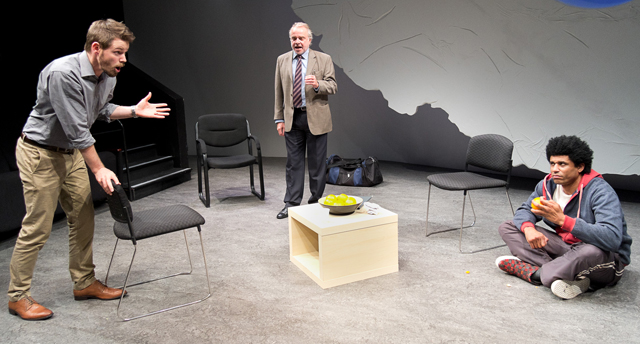
ensembletheatreVenue: Ensemble Theatre (Kirribilli NSW), Oct 23 – Nov 29, 2014.
Playwright: Joe Penhall
Director: Anna Crawford
Cast: Ian Meadows, Dorian Nkono, Sean Taylor
Image by Clare Hawley

Theatre review (originally published at Auditorium Magazine)
Health services are a crucial part of all civilisations, where access to medical professionals is a basic human right, regardless of class and creed. The subject of mental health is a growing area of concern in the West, with awareness and understanding of relevant issues fast improving through our communities. Joe Penhall’s script centres around Christopher, a mental health patient with the UK’s National Health Service. Surrounding him are two doctors, Bruce is the younger of the pair, idealistic but naive, and Robert is the authority figure of the hospital, seasoned and carnivorously ambitious. A fight ensues with Christopher caught in the middle, and as the plot unfolds, the play’s themes expand simultaneously. Christopher’s African ethnicity and low social status are the linchpin that brings into discussion, not just the intriguing process of psychiatric diagnosis and the health industry in general, but also race relations in contemporary settings and the machinations of authority (and its betrayal) in our daily social structures.

The ideas are big, but Penhall’s story is precise and simple. His captivating dialogue is rich with humour, controversy and intellect, consistently entertaining our senses and challenging our ethics. Some portions could be more succinct, but Penhall’s words and their rhythms are brilliantly crafted, as evidenced by the thrilling and energetic narratives that the show’s cast and director are able to create from the text. Anna Crawford’s direction is decidedly wonderful. The comedy of the piece is powerfully delivered, and the immense joy of being in an auditorium with laughter erupting at every turn is simply theatrical magic. Crawford introduces a daring freedom that encourages her actors to make risky choices, and much to our delight, they all seem to work. Likewise, the many scenes of altercation are loaded with explosive drama, always with a threatening tension and dangerous intrigue. Philosophical and ethical arguments in the work are the ingredients that make it feel substantial, and they are perfectly tuned, disallowed from disrupting dramatic flow, but often given an ambiguity that makes the ideas seductively confronting.

The use of space is however, not always elegant. Actors are frequently positioned so that their facial expressions are not available to big sections of the audience, which can be frustrating as well as distracting. Set pieces are composed of generic furniture elements from public sector offices, all terribly unattractive. The space has not been designed to be a realistic one, yet the several chairs and tables seem to use the notion of realism or accuracy as a convenient justification. A work of this calibre requires greater imagination and creativity in its visual design, and not be allowed to pale in comparison.

In the role of Robert is Sean Taylor, whose virtuoso performance bears the kind of astonishing glory that leaves a lasting impression. The most dangerous villain is the one who combines truths with lies, so that you are kept on his side, giving him benefit of the doubt until too late. Taylor makes it hard for us to know if his character is an evil racist doctor, or a progressive thinker, and our struggle in trying to figure him out is a masochistic pleasure. The actor is full of confidence and his presence is all-consuming; we cannot keep our eyes off of him. Taylor’s marvellous voice provides all that we need to know, and his face expresses everything his character wishes, but also contradicts the doctor’s intentions.

The show is thoroughly rehearsed, with every actor appearing to know exactly what they wish to achieve, yet the stage feels to be a spontaneous one. Dorian Nkono is extremely lively and likeable as Christopher, the patient who may or may not be schizophrenic. Nkono’s control over his physicality and the way he uses movement enrich the role and provide a vibrant energy that elevates the play to a level of theatre that is more than words. His sense for comedy is outstanding. Nkono is a truly funny actor whose approach ranges from subtle to slapstick, but an emphasis on storytelling makes his work authentic and compelling.

The young Dr Bruce is played by Ian Meadows who has the arduous task of maintaining composure as the only unassertive personality in the show. He often gets overwhelmed by his gargantuan counterparts, but he resists irrelevant exaggeration, and delivers a performance that is ultimately a truthful one. Meadow’s work is less flamboyant, which means that the ideological arguments he represents can get subsumed at certain points, but he manages to find a climax at the concluding moments to match in energy and produce an impressive ending to the piece.

Racism and mental illness are contentious issues that elude easy definition. We understand them in abstraction, but how they are discussed and dealt with in reality involves constant negotiation between vacillations of subjectivities. In Blue/Orange,  the powerful and the powerless collide in a system that attempts to be fair, just and democratic. We might all want the best for the world that we share, but our perspectives are different, and finding agreement on a unified destination becomes problematic. The doctor should know what is best for the patient, but the patient is not without rights and opinions. In assigning authority to some, society risks the removal of rights from others, but the ironic creation of power structures seems to be the only mechanism we have for finding harmony.

www.ensemble.com.au

5 Questions with Dorian Nkono

doriannkonoWhat is your favourite swear word?
Merde… I like to practice my French.

What are you wearing?
Trackies.

What is love?
Happiness/growth/anger/security/insecurity… basically a roller coaster ride, a very long ride.

What was the last show you saw, and how many stars do you give it?
The last show I saw was Death Of A Salesman. I thought the team did a great effort.

Is your new show going to be any good?
First of all the writing is very good so, without sounding too up myself, I think the show will be great if we all hit our goals.
 

Dorian Nkono is starring in Blue/Orange, part of Ensemble Theatre’s 2014 season.
Show dates: 23 Oct – 29 Nov, 2014
Show venue: Ensemble Theatre

Review: Other Desert Cities (Ensemble Theatre)

ensembletheatreVenue: Ensemble Theatre (Kirribilli NSW), Sep 4 – Oct 18, 2014.
Playwright: Jon Robin Baitz
Director: Mark Kilmurry
Cast: Lisa Gormley, Deborah Kennedy, Diana McLean, Stephen Multari, Ken Shorter

Theatre review
It is Christmas time and we visit the home of an older Californian couple, both prominent figures from the right wing of politics. Polly and Lyman Wyeth are not always politically correct, but their self awareness gives them an air of relaxed charm. Their children Brook and Trip have arrived for the festivities, but we soon discover that all is not well. Brook is set to publish a tell-all memoir and takes the opportunity to reveal the book to her family. Jon Robin Baitz’s Other Desert Cities, is a tale about the damage our closest ones inflict upon us, family secrets, and the stories we dream up in place of missing pieces. We keep the truth from one another because we think that people need to be protected, and also because of shame. We can choose our friends, and run away from them when intimate revelations become problematic, but family ties are hard to break, so we keep the peace, by perpetuating lies.

Baitz’s script is classically structured. It is amusing, gripping and surprising, with the potential to be incredibly moving. Its themes of family disintegration, mental illness, regret and guilt are all loaded with sentimentality, and when handled well, could be heartbreaking. Mark Kilmurry’s direction brings out the dramatic conflicts of the story with some success, but tension does not build up sufficiently. It is an energetic show, with good amounts of shouting and crying, but the plot does not always engage. The cast seems to be discordant, each finding separate emphases, and their chemistry does not quite convince.

Lisa Gormley invests heavily into her character’s depression and her torment is clear to see. Her early scenes before confrontations begin, feel forced and inauthentic, but her work in the second act is the show’s saving grace. Ken Shorter’s naturalism is a joy to watch. His presence is genuine and strong, but he brings a warmth to the role that does not always serve the narrative well.

Ailsa Paterson’s set design confines the Wyeths in the 1970s. Their home is dated, and we see that they have not moved on for over twenty years. We live the consequences of our decisions, good or bad. There is no assurance that doing the right thing would lead to brighter days, but the Wyeths’ story gives hope that resolutions can be found if you try hard enough.

www.ensemble.com.au

Review: Dark Voyager (Ensemble Theatre)

ensembleVenue: Ensemble Theatre (Kirribilli NSW), Jul 24 – Aug 30, 2014.
Playwright: John Misto
Director: Anna Crawford
Cast: Eric Beecroft, Jeanette Cronin, Belinda Giblin, Lizzie Mitchell, Kate Raison

Theatre review
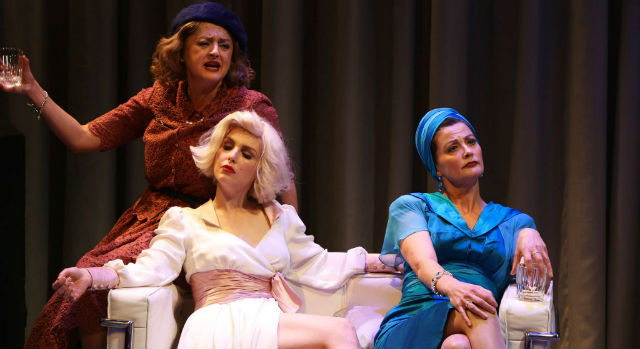
More than a geographical location, Hollywood is a mystical place. It exists in the minds of many in different forms, whether glorified or castigated, and it refuses to be ignored. Its movies have touched people the world over, and its legends are at least as well known as the stories they tell. John Misto’s Dark Voyager is about screen sirens of the previous century. Their legacies may not appeal as widely as the personalities on today’s tabloids, but for those who share Misto’s fascination, the intensity of their resonances have not faded with time.

Dark Voyager is partly historical biography, and partly fiction. Through the famed rivalry between Bette Davis and Joan Crawford, Misto has created a new narrative that brings together figures from Hollywood, the U.S. government, the press and the mafia, culminating in the demise of the era’s biggest star, Marilyn Monroe. Misto’s script is funny, lively and bitchy, fashioned after the way Davis and Crawford had wished to be seen. There is a lot of glitz, glamour and joking frivolity, but the writing does surprise with moments of poignancy that emerge to offer some balance and gravitas. Monroe’s presence is artfully crafted so that the show’s comedy remains even while we witness her tragic destruction. It might be an exaggeration to label the work feminist, but it does offer its heroines strong multidimensional voices, and brings to the fore some of society’s appalling mistreatment of these women (and women in general). Ultimately, the greatest achievement of Misto’s writing is the profusion of one-liners that tickle, sting and amuse.

Anna Crawford’s intelligent direction brings out all that is joyous and dramatic in the script. Her acute awareness of character chemistry and hierarchy, as well as her flair for spacial usage, has created an enthralling production that addresses our appetite for laughter, nostalgia and flamboyant theatrics. Crawford’s efforts in creating characters that are larger than life, yet psychologically believable gives the play a seductive quality that combines a sense of idolatry with a less lofty verisimilitude. These women are both feared and revered.

The production is designed beautifully, with Anna Gardiner’s dazzling set converting the venue into a luxurious Californian home, with furniture and fixtures that are appropriate to the period and social status being explored. Everything looks exquisite, extravagant and fabulously expensive, and the greed of its inhabitants become palpable. Lighting by Matthew Marshall is suitably colourful and dynamic. Marshall’s work is sometimes sensitive and sometimes daring, but it is always just right. The tone of the show varies frequently, and the lights are crucial to these emotive and atmospheric transformations. It must also be noted that the show’s stage manager Erin Harvey does a beautiful job of keeping technical aspects flowing invisibly and without a hitch.

An undeniable strength of this production is the accuracy at which the movie stars are physically presented. Hair and makeup by Peggy Carter is not at all heavy handed, yet all three women are materialised before our eyes with astonishing results. It may be convenient to imagine that the actors are cast for their appearance, but their work dispels that notion comprehensively. Jeanette Cronin as Bette Davis is formidable. Her performance is spirited, hilarious and frightening. She is relied upon to move the plot in its various trajectories, and the clarity and precision at which she achieves this, shows impressive skill and intuition. The liveliness Cronin brings to this stage is combustible, and her light is blinding for the entire duration.

Joan Crawford is played by Kate Raison who leaves us dumbfounded by the incredible resemblance she manufactures. In fact, one is often caught gawking at Raison’s face, but her efforts are much more than surface. The Crawford we have here is complex and unexpectedly human. We catch intriguing glimpses into her private world that reveals interesting aspects to her sexuality, ambition, and cruelty that Raison portrays with delicious cunning. Marilyn Monroe is most remembered for her beauty and glamour, both qualities that Lizzie Mitchell replicates effortlessly, and her splendid comic timing wins over many of the audience’s biggest laughs. Imitations of Monroe’s idiosyncratic voice and gestures are commonplace, but Mitchell’s depiction of her hidden and inherent sadness is unexpected and completely heartbreaking. This is where the show finds its soul, and although fleeting and subtle, it adds a much needed dimension of gravity.

Also wonderful is Belinda Giblin who plays a despicable entertainment columnist. Giblin has the power required to represent a woman of great wealth and stature, as well as delightful comedy chops that keeps her endeared to her crowd. Eric Beecroft is visibly young, in appearance and experience, but has great conviction and exhibits a good understanding of the play’s humour. This is a captivating ensemble with polish and energy that has identified in a new script, all the opportunities for engaging storytelling and a whole lot of fun.

Misto’s writing has many references to homosexuality. In fact, it attributes the success of the film What Ever Happened To Baby Jane? (and therefore, ongoing stardom of Crawford and Davis) to its gay audience. Indeed, this is a production with distinct queer sensibilities. Its comedy and pathos comes out of the realm of gay culture, and its longstanding adoration for strong and independent women, but it is not only for gay audiences. Dark Voyager is simply a play that will speak to bold and liberated women everywhere, and of course, to the people who love them.

www.ensemble.com.au

5 Questions with Jeanette Cronin

3767958-3x4-340x453[1]What is your favourite swear word?
Ah! There are so many… “Cunt” when I really hate someone’s guts (Don’t panic Penis put-downs are plentiful.). “Deadshit” when describing the most banal of human beings and “Arseclown” for the superior, but gentle dig.

What are you wearing?
A pale hint of despair and a muted hatred of humanity.

What is love?
Anyway? Sorry, couldn’t resist. I think Rumi says it best: “Out beyond ideas of wrong-doing and right-doing, there is a field. I will meet you there…”

What was the last show you saw, and how many stars do you give it?
Richard III. A galaxy.

Is your new show going to be any good?
I hope so, my super isn’t looking too healthy… and what’s not to like about cocktails with Bette Davis, Joan Crawford, Hedda Hopper and Marilyn Monroe?

Jeanette Cronin is starring in Dark Voyager, part of Ensemble Theatre’s 2014 season.
Show dates: 24 Jul – 30 Aug, 2014
Show venue: Ensemble Theatre

Review: Richard III (Ensemble Theatre)

ensembletheatreVenue: Ensemble Theatre (Kirribilli NSW), Jun 24 – Jul 19, 2014.
Also playing at Riverside Theatres (Parramatta NSW). 22 July – 26 July.
Playwright: William Shakespeare
Director: Mark Kilmurry
Actors: Danielle Carter, Patrick Dickson, Matt Edgerton, Mark Kilmurry, Amy Mathews, Toni Scanlan

Theatre review
Tales about Machiavellian ambition are timeless. The darkest parts of human nature often relate to our ability to compromise morality in order to satisfy the urges of greed and vanity. Political climates seem to evolve, but shades of betrayal and deceit are persistent. As long as the need for kings and leaders remain, the threat of malice at the highest rungs will always be present.

Mark Kilmurry’s direction of Richard III is colourfully creative, but faithful. His playful style ensures that we are consistently involved with his stage (even when the Shakespearean language becomes challenging) but his artistic liberties are careful to keep original intentions intact. Kilmurry’s creation is a rich theatrical experience that explores the collaborative nature of the art form thoroughly. Cast and creatives are allowed freedom of expression, which in turn encourages a level of audience engagement that is sophisticated, intelligent and surprisingly enjoyable. As leading man, Kilmurry is mesmerising, delightful and appropriately repulsive. He invites us to share his love of the text, and everything within it that is genius and delicious. It is a supremely confident performance by a skilled showman who knows how to steer a vehicle, and we are his trusting happy passengers.

Danielle Carter’s portrayal of Queen Elizabeth is enigmatic and very strong. Her impressive presence is utilised effectively, and the solid stillness in her performance contrasts and stands out from a busy production. Carter’s scenes of confrontation with Kilmurry are especially dynamic. The chemistry and timing between both actors are phenomenal, forging moments of gold for fans of high drama. Matt Edgerton plays a total of five characters. This is a tall order, and one of the show’s few misjudged decisions, but Edgerton’s energy and focus are entrancing. This is an adventurous cast with a passion for their work that has elevated a classic play into an event brimming with charm, wit and poignancy. Amy Mathews closes the show with a soliloquy that is heartfelt and starkly genuine, reminding us of the gravity in Richard III‘s story and evils that prevail in our world.

The production’s design and technical aspects are equally accomplished. Set, props and costumes are subtle but evocative, all contributing to the small space an aesthetic that is beautifully au courant. Nicholas Higgins’ lighting and Daryl Wallis’ sound design are sensitively considered, never drawing undue attention to themselves, but consistently adding to the action on stage. Stage manager Rebecca Poulter should also take a bow for the incredibly smooth running of what must be a complicated backstage and control booth, to which we are completely impervious.

Kilmurry is a leader of fabulous talent. His show is brilliantly put together, and everyone he enlists is showcased marvelously. Shakespeare’s work is probably not very much about democracy, but drawing parallels with our own governmental structures is irresistible. It provokes questions about secrecy in high offices, and the trust we lay upon the people we elect. It prompts us to remember the value of irreverence that is so much a part of our national identity, and to cherish our ability in this country to question authority. We must not forget that the bastards do need to be kept honest.

www.ensemble.com.au