Hay Fever (New Theatre)

hayfever1Venue: New Theatre (Newtown NSW), Oct 8 – Nov 2, 2013
Playwright: Noël Coward
Director: Rosane McNamara
Actors: Alice Livingstone, Jorja Brain, James Bean, David Halgren
Image by Bob Seary

Theatre review
Noël Coward’s work has an irreverent and subversive sensibility that stands the test of time. Hay Fever is about a family that is characterised by early 20th century notions of decadence and the bohemian, and Rosane McNamara’s vision has created an interpretation that speaks to modern audiences, while retaining all the robust and wicked humour that Coward is best known for.

Judith Bliss is the matriarch of the household, and a middle-aged star of the theatre who seems unable to live life without manufactured drama and exaggerated affectations. Played with flair and excellent humour by Alice Livingstone, the role is front and centre of the show, and absolutely crucial to the success of this production. Livingstone’s firm Cowardian grasp of flamboyance and wit is marvellous. Her skills in high camp delivers barrels of laughter, and she carves out a character that is perversely alluring despite her hideous indulgences. Livingstone’s counterparts do not quite match up to her comedic excellence, but all have created distinct and memorable personalities that move the plot along with clarity and sharpness.

Another star of the show is production design; all visual elements are impressive. Set and lighting design are effective, and their take on 1920s Art Deco is graceful and charming. Costumes are superb and detailed, and in the case of the character Myra especially, hair and makeup are simply stunning.

New Theatre’s Hay Fever is a bold and wonderful achievement. Noël Coward’s characters and wittiness are not the simplest to portray, and even though this production does not hit every punchline perfectly (most notably when the leading lady is off-stage), it is remarkable that his story is brought to life so vividly. With the passage of time, its century-old aesthetics might look to be outmoded, but Rosane McNamara’s direction fleshes out everything that is exceptional and unconventional in Coward’s writing that is rarely, if ever, replicated.

www.newtheatre.org.au

Roberto Zucco (Sydney Independent Theatre Company / Le Théâtre des Assassins)

robertozuccoVenue: Old Fitzroy Theatre (Woolloomooloo NSW), Oct 1 – 19, 2013
Playwright: Bernard-Marie Koltès (translated by Martin Crimp)
Director: Anna Jahjah
Actors: Tim Cole, Lyn Pierse, Gemma Scoble, Sam Dugmore, Adrian Barnes, Neil Modra
Image by Katy Green Loughrey

Theatre review
Subtitled “the journey of a beautiful murderer”, Roberto Zucco is based on events and crimes committed by Roberto Succo in Italy and France in the 1980s. Bernard-Marie Koltès’ script (his final one, written in 1988) has shades of absurdism, but it is thankfully a coherent one that director Anna Jahjah is able to materialise on stage with humour and logic. This is a funny show with solid performances from some of the cast, and it is indeed the comic actors who leave the greatest impression.

Lyn Pierse plays 3 whimsical roles, and she is the consummate scene stealer. The younger players try hard to match up to her abilities, but Pierse owns the stage, and the audience hungers for her every gag and punch line. Neil Modra and Sam Dugmore are a delightful duo, with brilliant comic timing and chemistry. The personalities they create together, and individually, are whacky and wonderful, and both show a level of confidence and pizzazz that works perfectly for the tone of this production. Adrian Barnes takes on the older male characters, and applies wildly different approaches to each of them. He is a delightful presence but it is his performance as the tender, playful and charming “Old Gentleman” that is most interesting.

Design aspects though not particularly appealing, are effective. The construction of two levels on the Old Fitzroy stage adds a visual complexity to the play, and helps the actors emphasise the physicality of their performances. Jahjah’s work demands that her performers are agile and expressive with their bodies and faces, keeping her show consistently fast-paced and fun. Roberto Zucco fascinates with interesting characters and talented players, but ends up being overly light even though murder and rape are central themes. Nevertheless, this is a show that will entertain and amuse, even if the bigger questions are not thoroughly explored.

www.sitco.net.au
www.letheatredesassassins.com

King Lear (Harlos Productions)

rsz_lear0622Venue: Old 505 Theatre (Surry Hills NSW), Oct 2 – 13, 2013
Playwright: William Shakespeare
Director: Scarlett Ritchie
Actors: Gertraud Ingeborg, David Ritchie
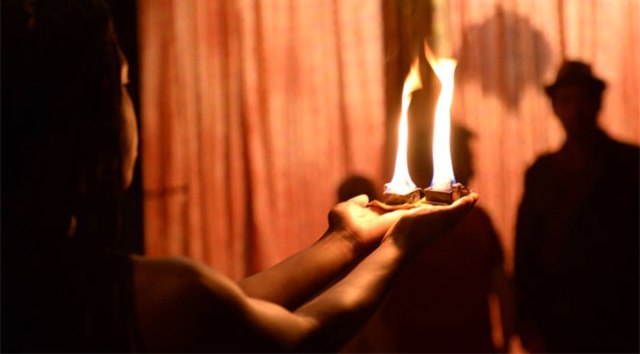
Image above from 2006 production

Theatre review
Harlos Productions’ abridged 60-minute version of King Lear comprises key scenes from the play, joined by a narrator’s summary of events in between. The abbreviation of the plot obviously removes a lot of its development of tension and emotional involvement from the original experience, but what is created with just two players, is a theatrical entity that focuses squarely on the art of performance and storytelling. In the hands of Gertraud Ingeborg and David Ritchie, it is clear that the art form in question is a noble one.

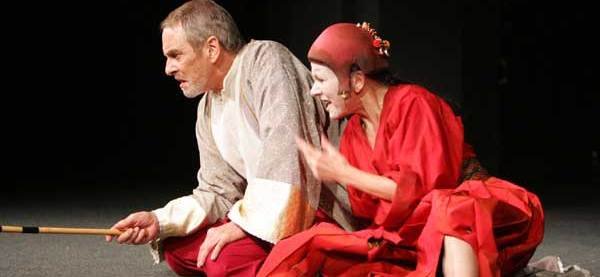
Borrowing from Japanese and Chinese performance styles, both actors articulate their parts distinctly, almost operatically. Their stylistic gestures connect them to the audience, as they guide our eyes into the trajectories of the story. They often speak their lines directly into the fourth wall as though in the form of a narrator, inviting us to admire the beauty in their every movement and enunciation. Indeed, Ingeborg and Ritchie present to us, a craft that is effortless, confident, and thoroughly accomplished. Ingeborg in particular is manifestly comfortable and lively in all her roles, taking on each part with enthusiastic ease, and delighting us with a presence that can only be described as riveting.

Scarlett Ritchie’s direction brings out the best in both actors. We are shown the full range of their impressive skill, which gives the show an exciting feel of constant variation, and that variation is elemental in engaging the audience’s emotions. Props and costumes are minimal, but all items are utilised effectively. The director makes us read those inanimate objects in a specific way, and uses them to accurately shape our perspectives.

Even though the end of the piece is emotionally powerful, and Shakespeare’s epic story is ultimately told successfully, it is the art of theatre creation that triumphs in this production. In one hour, we see clearly the meaning of art, and realise the reverence that we must have for serious art makers.

www.venue505.com/theatre

Family Voices (The Cannoli Mob)

familyvoices1Venue: University of Notre Dame (Sydney NSW), Oct 2 – 6, 2013
Playwright: Harold Pinter (adapted by Vivian Tselios)
Director: Vivian Tselios
Actors: Adriano Cianfarani, Frances Attard, Nicola Said, Simon Boileau, Susan M Kennedy

Theatre review
In The Cannoli Mob’s Family Voices, production design plays a big part in conveying a sense of stifling and oppressive gloom. These are characters that exemplify English restraint, and the set, while good-looking, effectively communicates that sense of formality and austerity. It is also provides versatility, giving the play a surprising multi-dimensionality in spite of the small stage.

Vivian Tselios’ direction retains the abstraction in Pinter’s words, which gives the show a slightly surreal quality that is alluring and strangely enjoyable. The actors successfully depict an intriguing universe, even though their individual abilities do vary. Adriano Cianfarani plays the lead role, and brings an interesting “narrator” sensibility as though he is never quite present in his own world, which adds to the surreal feel of the show. Although the play does not seem to explicitly discuss locality, Cianfarani’s accent is distracting, and contradicts with the Englishness of Pinter’s writing. Simon Boileau’s appearance is a gift to the aesthetics of the production. On a visual level, he adds a lot to the sophistication of the work, and his acting is also most accomplished of the group. He has a daring and mischievousness that connects well with the audience.

This is a sensitive work that is quiet and thoughtful. The theme of miscommunication in the play is challenging at times, but it has an unusual visceral kind of beauty that envelopes the theatre while its audience listens in and ponders the nature of relationships and parenthood.

www.facebook.com/thecannolimob

Penelope (Siren Theatre Co)

penelope1Venue: TAP Gallery (Darlinghurst NSW), Sep 12 – Oct 6, 2013
Playwright: Enda Walsh
Director: Kate Gaul
Actors: Nicholas Hope, Thomas Campbell, Arky Michael, Philip Dodd, Branden Christine

Theatre review
Attending a work by independent theatre companies in Australia is unpredictable. We hope for the best, and expect the worst. Resources are limited, and it is a challenge for semi-professional groups catering to audiences who are accustom to productions by dominant, well-funded companies. Siren Theatre Co rises to that challenge with a formidable cast and crew that have come together successfully and exceed expectations. Penelope showcases excellent work by all its actors, designers and technicians, with Kate Gaul at the helm, directing, producing, and proving herself to be a woman of exceptional ability and a brilliant visionary.

The show is at once intelligent, funny, emotional, audacious and confounding. Artistic licences are de rigueur, and no moment is spared of theatricality. The actors, all equally impressive, constantly negotiate the spaces between narrative and extravagance in their performances. There is a strong element of vaudeville in their work, and it is their commitment to the creation of a distinct style that gives the production a specific and memorable voice. Nicholas Hope shows himself to be quite the force of nature, playing the role of Quinn with extraordinary focus and strength. His no-holds-barred mode of performance is disarming and wonderfully mesmerising. Arky Michael’s Dunne is an amalgamation of rock star and Norma Desmond, an outlandish and madcap portrayal that is absolutely joyful.

Production design features prominently. It services the plot perfectly, transforming the relatively small space into one that is full of possibilities for the actors, while carving out an aesthetic for the production that is vibrant and innovative. Indeed, this is a show characterised by its vibrancy and innovation. This company has created something that overflows with ideas and enthralment, and because Enda Walsh’s script is not a simple one, one is compelled to revisit Penelope to experience her more deeply. The femme fatale beckons.

www.sirentheatreco.com

Small And Tired (Belvoir St Theatre)

lat30-20small-20m-20130930132111302264-620x349[1]Venue: Belvoir St Theatre (Surry Hills NSW), Sep 26 – Oct 27, 2013
Playwright: Kit Brookman
Director: Kit Brookman
Actors: Luke Mullins, Susan Prior, Tom Conroy, Paul Gleeson, Sandy Gore

Theatre review
Every family has a skeleton in the closet, and in Orestes’ case, the troubles that plague his family are all-consuming, but also mysterious. Kit Brookman’s script is sensitive and perceptive, with a depiction of emotional torment that cuts to the bone. The strongest element to his storytelling is the way his characters are seen to suffer from psychological afflictions, which none of them are able to articulate or to truly understand. There are misunderstandings and miscommunication, along with blurred and contradictory recollections of shared histories.

Orestes is played by Luke Mullins, who impresses with the portrayal of a damaged man without performing a lot of emotional upheaval. This is a confused man who escapes life at every turn, and while he tries to get on with things, it is evident to us that his inner demons are alive and festering. Mullins’ truthful approach is realistic and relatable. His character works hard to maintain a calm exterior but the actor keeps us engaged with a highly nuanced and thoroughly studied performance. Other players shine with different strengths, including Susan Prior giving the family a dimension of emotional volatility, and Sandy Gore’s sense of austere resolve brings a beautiful gravitas to the play.

Mel Page’s set design is simple but perfectly executed. Turning the small stage into a living garden situates the story in a place of familiarity and intimacy, making Small And Tired an everyday Australian tale. Brookman’s direction consciously adds small details to always bring the action back to mundane life, preventing his ideas from turning into abstract concepts. The play has a message, but it is conveyed tenderly, and it is that message that transforms an entertaining night at the theatre into an experience of enlightenment and catharsis.

www.belvoir.com.au

The Sexual Awakening Of Virginia Poppycock (Seymour Centre)

virginiapoppycock1Venue: Reginald Theatre, Seymour Centre (Sydney NSW), Sep 25 – 28, 2013
Playwright: Elena Gabrielle
Director: Carl Whiteside
Performers: Elena Gabrielle, Marco Fusco
Image by 3 Fates Media

Theatre review
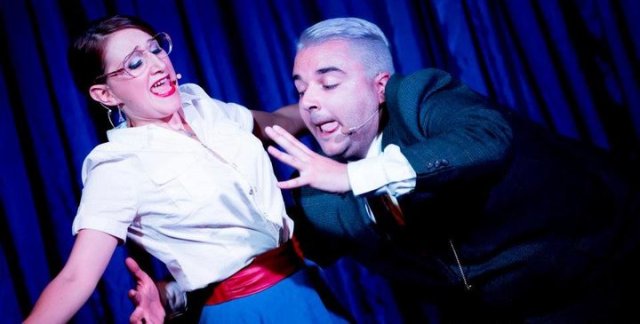
Virginia Poppycock is very keen to lose her virginity. Describing her as frustrated would be a gross understatement, but fortunately for us, that frustration manifests itself in a series of uproariously funny songs that come together wonderfully in a cabaret style comedy musical.

Elena Gabrielle is the star of the show, and her performance is a real joy to behold. Her supreme confidence and passion for the stage is met with a stunning singing voice and a keen sense of comic timing, giving rise to a giddily funny show full of entertainment. This is a brave performance that requires the performer to be in contact with the audience constantly, and it is that rapport she is able to maintain that keeps us amused and fascinated. Her counterpart Marco Fusco plays Richard “Dick” Scrotumsberry III, with less effectiveness, but he brings a thoroughly enjoyable campness and has great chemistry with his leading lady. They are a convincing couple but Gabrielle’ energy is difficult to match and there is a sense of unbalance at certain points.

Carl Whiteside directs every number with flair and brilliant humour. Each song is thoroughly choreographed so that no comic opportunities are missed. The overall structure of the show, however, has some imperfections. It starts with a bang, but slightly weakens halfway through, and the conclusion appears somewhat suddenly. Keeping in spirit with the theme of the musical, one would hope instead for a slower build, leading to a grand explosion at the end. Nevertheless, Virginia Poppycock is a delightful character who will speak to audiences everywhere, and Elena Gabrielle’s performance in that role is truly outstanding and should not be missed.

www.facebook.com/VirginiaPoppycock

Sure Thing (Walking Moose Theatre Co)

surething1Venue: TAP Gallery (Darlinghurst NSW), Sep 11 – 29, 2013
Playwright: David Ives
Director: Raf Nazario
Actors: Steven Corner, Lisa Fletcher

Theatre review
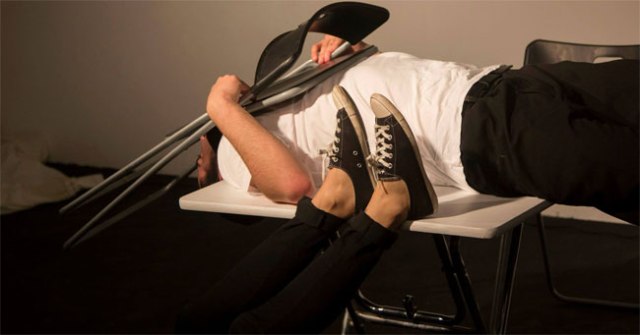
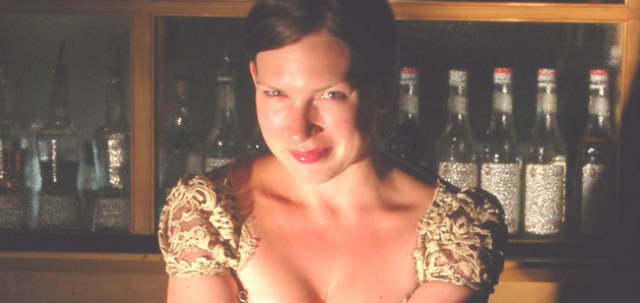
Sure Thing is a very short play, running approximately 15 minutes, but it is marvellous. Certainly, “a quick game is a good game”, but this production also demonstrates that great writing and great performances can provide as much satisfaction as any two hour piece. David Ives’ writing is superb, and the condensation of time in the play creates a structure which ensures that every moment packs punches.

Raf Nazario’s direction shows a thorough engagement with the text. His insistence in working with the most minute of nuances creates a sense of multi-dimensionality that quickly draws the audience in and keeps us involved to the end. Things move quickly, but nothing feels rushed. Humour and cultural references are allowed their flashes of brilliance, and we relish them all.

Lisa Fletcher plays Betty, the straight man in this comedic two-hander. The audience identifies with her authenticity and she provides an anchor to the script’s frenzy. Steve Corner’s performance as Bill is magnificent. He plays a character that manifests in many different forms, with what seems like a hundred faces and voices, all compelling and charming. There is always a sense of joyous play in his work, and also a focus that is intense but never laboured. He plays his jokes on many levels, but whether subtle, obscure or hammy, Corner shows himself to be a rivetingly funny actor… and this little quickie leaves us pleasantly surprised and delightfully sated.

http://2013.sydneyfringe.com/…

Colony (TAP Gallery)

colony1Venue: TAP Gallery (Darlinghurst NSW), Sep 24 – 29, 2013
Playwrights: Kate Dunn, Oliver Featherston
Director: Lucinda Vitek
Actors: Linda Ngo, Davey Friedman, Ian Ferrington

Theatre review
Three people take a voluntary one-way journey from Earth to Mars. This simple premise opens up countless questions, themes, ideas, and scenarios, and Colony does well in exploring a wide range of these concepts. It is a script that does not shy away from complexities, but also prevents itself from over-thinking and becoming too abstract. It is a strong script with interesting characters that consistently fascinate, and succeeds in bringing the science fiction genre to a minimal stage.

This is a production that relies heavily on its actors. Atmospherics are crucial in this genre piece, and in the absence of more substantial sound design, the players are required to create a sense of mystery, foreboding and tension but they only succeed occasionally. Linda Ngo is slight in stature but her presence is strongest in the cast. There is an element of daring to her performance that is alluring, and she provides a necessary dimension of levity to the earlier scenes. Davey Friedman brings the drama, and gives the most polished performance to the play. His character development is distinct and we are captivated by the way his role transforms through the course of the show.

The production begins well, and ends impressively. Director Lucinda Vitek does a wonderful job in handling the surreal turn later in the story, and all the explosive action as the end approaches. It is unfortunate that the tightness and urgency does not appear earlier. There are scenes in the middle that could benefit from being more lively; perhaps some editing would help in achieving greater tension. Nevertheless, this is an interesting work with intriguing concepts and an entertaining story that would appeal to theatre-goers everywhere.

www.colonysydneyfringe.com

Jane Austen Is Dead (Brave Theatre)

janeaustenVenue: New Theatre (Newtown NSW), Sep 16 – 23, 2013
Playwright: Mel Dodge
Director: Patrick Davies
Actor: Mel Dodge

Theatre review
Romantic love for the modern woman is a tricky thing. While Jane Austen’s books are still adored, the meaning of marriage has changed drastically over the last two centuries and we now negotiate relationships afresh without religious or traditional constraints. This opens up a liberated new world, but it also presents a kind of quagmire where some of us are left baffled and defeated.

Mel Dodge’s work expresses this experience perfectly. It is a thorough exploration into the world of a single woman in her 30s who is looking for love, but who in the process, also questions her own motivations and decisions. The script is an honest one. It gets to many ugly truths that audiences will identify with, but wraps it up in humour and wit so that the predicaments portrayed are never allowed to painfully wallow or to turn into misery.

Dodge’s performance of her own script is stellar. She has crafted a protagonist Sophie, who is endearing from the very start, and we develop a warm affiliation that keeps us engaged through every second of the show. The plot freely jumps across time and space, with Dodge playing a whole raft of characters, all believable, familiar and funny, making this one-woman show hugely entertaining and impressive.

Patrick Davies’ direction fleshes out all the cleverness and all that is amusing in the script. The transitions between characters, and the different levels of engagement with the audience are skilfully constructed so that our attention is kept tightly under control and no moment is wasted.

A single flaw would be the play’s abrupt ending. Sophie comes to a conclusion that is at once meaningful and interesting, but it all winds up too swiftly. Although perhaps, it could just be the audience enjoying her company too much and are unwilling to say goodbye.

www.facebook.com/BRAVETheatre