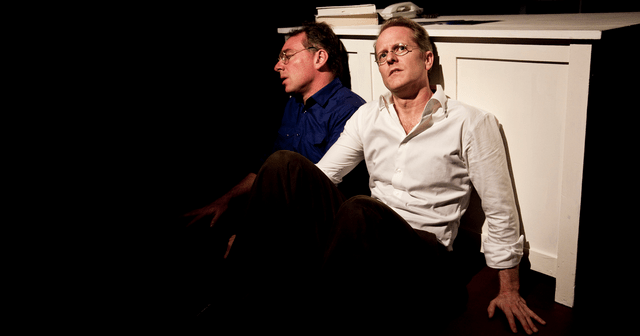
Review: The Mercy Seat (Gentle Banana People / Sydney Independent Theatre Company)

gentlebananaVenue: Old Fitzroy Theatre (Woolloomooloo NSW), Jun 24 – Jul 5, 2014
Playwright: Neil LaBute
Collaborating directors: Samantha Young, Andrew Wilson, Peter Mountlord, Alistair Wallace
Cast: Rebecca Martin, Patrick Magee
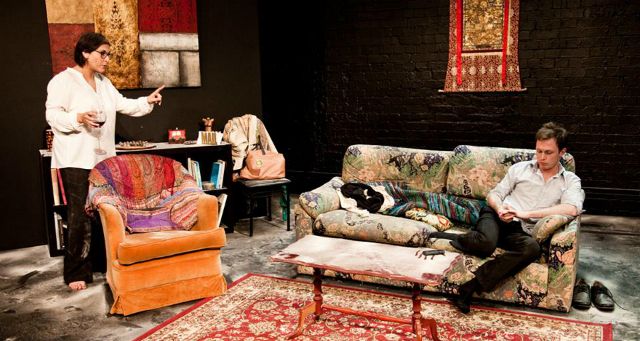
Image by Katy Green Loughrey

Theatre review
This is a love story that is not particularly romantic. It is however, written with a great sense of truth, and is reflective of real experiences in our love lives. Yes, there is some sweetness, but, like in life, the relationship being explored is fraught with issues. We are refused the clichéd and comforting notion of a love that fixes everything. Instead, what Neil LaBute discusses is the inherent difficulties, and there are many of them, when two people get together. The themes in The Mercy Seat are innumerable. Through Abby and Ben, we observe the often ugly complexities of love, relationships and human nature. Theatre does something noble, when it provides difficult revelations.

The production is directed well. Emphasis is placed on the narrative, and it is clear that work has been put into bringing nuances to light. The writing’s intrigue and its structural quirks are materialised beautifully. The unorthodox characters are allowed to be challenging, always fluctuating between  likeable and objectionable. The story is told without convenient heroes and villains, but it communicates successfully, probably because of the way its honesty speaks closely to our deepest feelings. We understand Abby and Ben because their fears are so fundamental and intimate, they leave us nowhere to hide.

Rebecca Martin as Abby is spirited and flashy. The actor is a determined entertainer, and never fails to grab our attention. There is considerable bravery in her work. We feel Martin’s heart on her sleeve, and she portrays a character with very clear intentions and emotions, conveying an internal journey that is complicated, yet coherent and recognisable. The role of Ben is played by Patrick Magee, whose comic timing is impeccable. He delivers the subtle and dark comedy with a gentle assuredness, careful to prevent funny moments from obfuscating his impressively earnest characterisation. Magee is a dynamic performer, and the enthusiasm at which he oscillates light and shade is thoroughly enjoyable. Both actors are able to deliver a wide range of tone and emotion, but both share a common lack in authenticity when playing sadness.  A reason could be the speed and energy at which their performance is pitched. The characters go through very drastic alterations in mood, which is terribly exciting to watch, but evidently difficult to embody. Even though the actors have excellent chemistry throughout the piece, they do not muster up a convincing sexual energy which is important to their tale.

We sometimes cry at the theatre, but those tears are usually shed for the people on stage or for the scenarios that we witness. Seldom do we react emotionally for our own circumstances that a work recalls. The Mercy Seat strikes a chord when you least expect it. The show ends with a little pessimism, along with some idealism. How we choose to proceed is incumbent upon ourselves.

www.sitco.net.au | www.pantsguys.com

In Rehearsal: The Mercy Seat

Rehearsal images above from The Mercy Seat by Gentle Banana People, part of SITCO’s 2014 season.
At The Old Fitzroy Theatre, from Jun 24 – Jul 5, 2014.
More info at www.sitco.net.au

5 Questions with Rebecca Martin

rebeccamartinWhat is your favourite swear word?
Balls. Or bollocks. Anything testicular.

What are you wearing?
Skirt, top, stockings, cardigan. And a swimsuit top as a bra because I haven’t done washing.

What is love?
The worst.

What was the last show you saw, and how many stars do you give it?
Bell Shakespeare’s Henry V. Performances – 4.5; show – 3.

Is your new show going to be any good?
It’s going to be an event, one way or another. I mean, of course it is.


Rebecca Martin is appearing in The Mercy Seat, with Gentle Banana People and Pantsguys.
Show dates: 24 Jun – 5 Jul, 2014
Show venue: The Old Fitzroy Hotel

5 Questions with Yannick Lawry

yannicklawryWhat is your favourite swear word?
I don’t swear a huge amount but I’m a fan of using ‘dickhead’ as a term of endearment.

What are you wearing?
An old, familiar purple hoodie and a pair of stonewashed jeans. Today is a comfort day!

What is love?
Total equality in terms of support and responsibility.

What was the last show you saw, and how many stars do you give it?
Belvoir’s adaptation of The Government Inspector. It was the most passionate, involved and committed set of performances I’d ever seen in Sydney. 5 stars.

Is your new show going to be any good?
You know what? I reckon it’s going to be a blast.


Yannick Lawry is appearing in Brad Checked In, with Citizen Content.
Show dates: 3 – 21 Jun, 2014
Show venue: The Old Fitzroy Hotel

Review: Scenes From An Execution (Tooth And Sinew Theatre)

toothsinewVenue: Old Fitzroy Theatre (Woolloomooloo NSW), May 13 – 31, 2014
Playwright: Howard Barker
Director: Richard Hilliar
Actors: Lucy Miller, Jeremy Waters, Mark Lee, Katherine Shearer, Nicole Wineberg, Peter Maple, Brendan Miles, Lynden Jones
Image by Katy Green Loughrey

Theatre review
There are many pleasures to be found at the theatre but what we seek essentially, is to be fascinated by the unusual talents of live performers, and to satisfy the craving we have for stories that are engaging and meaningful. Howard Barker’s Scenes From An Execution is strangely hypnotic. His tale unfolds slowly, taking unconventional and sometimes uncomfortable diversions, but the promise of a substantial imminence is always palpable, and the conclusion is certainly gratifying. Barker’s writing is poetically beautiful, and his ideas are inspiringly radical. His varied themes include love, war, art, religion, politics and propaganda, covering with depth, many of the big questions that are as relevant today as they had been in Venice 1571, where the play is situated.

A remarkable feature of the work is its extraordinary protagonist Galactia, a painter of note, and a woman with a liberated and unorthodox lifestyle. Our own values are examined through her resolute belief in an artist’s responsibility to uphold truths, even in the face of great adversity and sacrifice. Barker’s heroine is powerful and awe-inspiring. She is a feminist ideal, and sadly, a manifestation that rarely figures in the narratives of our cultures. Galactia’s fearless determination and assertive wisdom is realised on the Sydney stage magnificently by actor Lucy Miller. Miller is convincing, compelling and electrifying. She approaches the character with raging imagination and delivers a performance completely arresting in its meticulousness and unpredictability. Even in scenes lit so dim we can barely see, Miller is riveting, and her creation is a woman on a pedestal that we all must aspire to.

Supporting Miller is an exceptional cast. It is a rare gathering (especially in independent theatre) with all actors displaying astounding talent and impressive experience. It is truly a joy to watch these artists work their magic, all performing with gusto as well as nuance, each carving out many memorable moments for themselves. Mark Lee as Urgentino is energetic and full of passion. Sharply ironic, and fabulously witty, Lee’s command of the script ensures that his scenes are consistently entertaining, and politically cutting. Jeremy Waters brings a complexity to his role of Carpeta that keeps us intrigued and enthralled. His love affair with Galactia is surprisingly dimensioned, and his depiction of an artist under the control of money and power is simultaneously funny and heartbreaking. Waters is an intense and intelligent actor, whose unmissable performance in the closing moments of Act 1 leaves us breathless.

Director Richard Hillier’s obvious talent is his thorough understanding of the craft of acting. He has created all the circumstances required for the cast to unleash their best upon us. Hillier’s sensitivity for spaces, whether mental, emotional or physical, allows him to facilitate all the action that happens between actors, and the connection between stage and audience. Hillier indulges in abstractions, but is careful to provide points of focus to always keep us reeled in. His affinity with the the play’s core message is a strong one, and the authentic clarity at which he voices it is full of flair, and indeed, admirable.

Death and taxes are said to be the only certainties in life. In Scenes From An Execution, a deconstruction of war and of our political leaders gives us an opportunity to gain insight into our part as mere mortals and pawns in a world of deceit and manipulation, rife with the glorification of needless deaths. Hogwash is ubiquitous but where great art exists, we find the eternal and the truth, and we rediscover the divine within.

www.facebook.com/toothandsinew

5 Questions with Mark Lee

rsz_mark_leeWhat is your favourite swear word?
‘Satansincontinentnephew!’ if you say it really fast, you sound rather mad actually.

What are you wearing?
Flannelette shirt over t-shirt and jeans and socks and slippers, I hate winter!

What is love?
If you have to ask I can’t help you.

What was the last show you saw, and how many stars do you give it?
All’s Well That Ends Well – Sport for Jove. I give it an entire constellation.

Is your new show going to be any good?
Why do you ask? Come and see, we’re having a ball. Don’t be afraid of the unknown. Yeah it’s good.


Mark Lee is appearing in Scenes From An Execution, with Tooth And Sinew Theatre.
Show dates: 13 – 31 May, 2014
Show venue: The Old Fitzroy Hotel

Review: Thom Pain – Based On Nothing (Sydney Independent Theatre Company)

Auditorium_American-issue_TVenue: Old Fitzroy Theatre (Woolloomooloo NSW), May 5 – 10, 2014
Playwright: Will Eno
Director: Julie Baz
Actor: David Jeffrey

Theatre review (originally published at auditoriummag.com)
Thom Pain (Based On Nothing) is about fear, loss and loneliness. Will Eno depicts a state of sadness that is genuine in its erratic complexity, but also joyful and humorous in its profound observations. Thom Pain is a man who has experienced disappointments, and he knows what betrayal and injustice feels like. Eno’s script expresses the process that one needs to go through in order to emerge renewed and strengthened, but Pain has not yet found that enlightenment.

His struggle is the flesh and blood of this work, and a representation of a condition of being that is too easily forgotten. The human capacity to leave pain behind after it subsides, makes this a valuable piece of rumination. We get over things and move on, but Pain’s very presence demonstrates some of the intricacies of our coping mechanisms, and watching them in action is fascinating. The writing has a rambling incoherence that seems theatrical, but also poignantly realistic. We are rarely clear of mind at troubled times, and Eno utilises that natural inability to make sense of things, to great dramatic effect. Everything is strange yet familiar. The audience observes the peculiarity of Pain’s behaviour, while feeling a close affinity to the character.

Thom Pain (Based On Nothing) is a work of art that cuts deeply and meaningfully, revealing an image of our own humanity through a mirror that is rarely uncovered. It is also a work of excellent entertainment, with performer David Jeffrey providing the one-man show considerable pathos and a very charming whimsy. In spite of his considerable actorly talents, Jeffrey brings a quality of diffidence to the stage that gives his character an authenticity that we not only warm to, but almost feel protective towards. The text’s unconventional structure risks alienating its audience, but we care for the man Jeffrey creates, and he makes us sit and listen intently.

He is very funny, and very wry. He wallows, but he is also self-effacing. He plays with our emotions, taking them on an unpredictable and haphazard journey, to all the spaces we messily label “mixed emotions”. Jeffrey’s achievement however, goes further than succeeding in making us laugh and cry. The actor’s portrayal of melancholy is so charged with vulnerability, it reminds us of feelings we bury deep within. The same ones we can sense in our bodies almost everyday but are rarely allowed to surface. Jeffrey makes that pain emerge with a quiet wonder, and in the safety of the theatre, we encounter the closest friend of all, our own broken hearts.

Melancholia is the overriding tone, and perhaps theme, of the show. Director Julie Baz creates an atmosphere thick with moody pensiveness, and it is seductive. The evocative and beautiful underscoring music is a selection of pieces from Sergey Akhunov’s Big Elegy To John Cage, which contribute greatly to the production’s introspective texture. Melancholy visits us all and people relate to it in different ways, ranging from repulsion to pleasure. Accordingly, the production’s appeal would vary according to tastes, but the liberal amount of comedy intelligently added to Baz’s weighty microcosm, ensures that the work speaks to many.

It is often too easy to overindulge in lengthy well-written passages, putting too much trust on the words to work their own magic. Baz is conscious of the pitfalls of extended monologues and wisely encourages the actor to embellish with movement, both exaggerated and subtle, resulting in a performance that is energetic and optically dynamic. The use of space is similarly active, but stage design is overly minimal due to Eno’s specifications. He believes that “there is a humility about theatre and life in the script; it should be there in the production, too.” This is a persuasive argument, but it is also true that the script could benefit from greater visual flourish and imagination. Pain talks about magic, and there are moments where our eyes wish for something slightly fantastical to materialise.

The view inside Pain’s mind is bittersweet, truthful, and scarred, and therefore beautiful. His story is hopeful, yet he seems oblivious to the good around him, and inside of himself. Blinded by fear and dejection, he is a whirling dervish in search of salvation. For us, his magnificent dance is a spiritual lift, and we desire only the best for him, in the trust that a new dawn is always on the approach.

www.sitco.net.au
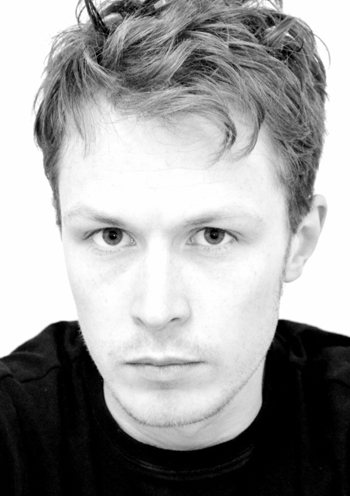
Review: Lies, Love And Hitler (CADA Studio Productions / Sydney Independent Theatre Company)

rsz_photo_by_katy_green_loughrey___llh8___james_scott__langley___doug_chapman__bonhoeffer____flickr___photo_sharing_Venue: Old Fitzroy Theatre (Woolloomooloo NSW), Apr 15 – May 3, 2014
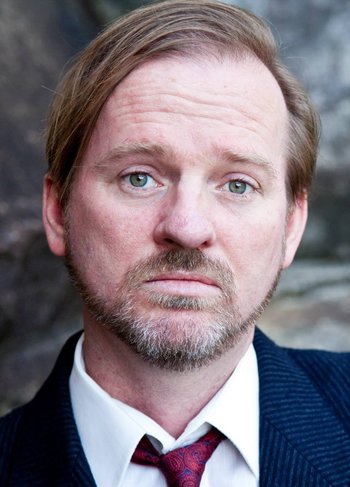
Playwright: Elizabeth Avery Scott
Director: Rochelle Whyte
Actors: James Scott, Doug Chapman, Ylaria Rogers
Image by Katy Green Loughrey

Theatre review
Romance and art are not usually complementary; theirs is a fraught relationship. Art conventions are concerned with all that is deep in the human experience, and romance pursues something that is often inane and fleeting. Elizabeth Avery Scott’s script however, manages to place romance in its centre, and through themes of ethics, politics, history and religion, tells a story that is engaging and intelligent.

Scott’s structure for Love, Lies And Hitler discusses the nature of ethics, and unpacks perennial questions that we face in every ethical dilemma. A parallel is drawn across time and space, between a university lecturer’s love affair with a student, and a German theologian’s involvement in the plot to assassinate Adolf Hitler. The stakes are different, but our thought processes are intriguingly similar when determining right from wrong.

With topics like capital punishment, sexual harassment and Nazism put in focus, the play’s solemnity is inescapable. Director Rochelle Whyte handles the play’s dark sides with sensitivity and reverence, and her skill in introducing seamlessly, the apparition of Dietrich Bonhoeffer from 1945, into scenes at a university in modern day Australia is commendable. Less effective are her interpretation of the script’s moments of levity. These are frequently hurried through, and jokes are neglected, resulting in a show that feels heavier than necessary.

Ylaria Rogers plays Hannah and Hermione, displaying great efficiency and simplicity with both characters. Rogers places emphasis on moving the plot along swiftly, and telling her parts of the story clearly, but her portrayals would benefit from greater complexity and presence. James Scott is a very dynamic Paul Langley. His charisma quickly connects him with the audience, and we enjoy the tenacity in his performance, which is confident and thoroughly considered. There is however, a deliberateness to his style that can at times make his character seem less than authentic. Bonhoeffer is played by Doug Chapman, who has a subtle and naturalist approach that contrasts strongly with the other actors, and consequently, and ironically, helps him leave the greatest impression. Chapman provides a healthy counterbalance to the production with his restraint, which is also a quality that keeps us engrossed.

Stories about genocidal persecution and Hitler never dry up. They also never fail to fascinate. Love, Lies And Hitler is a show that entertains and enlightens. We think about our individual ethical boundaries and moral structures, while it seduces us with love stories past and present, and a surprising brand of romance that does not patronise.

www.cada.net.au

5 Questions with David Jeffrey

rsz_1025511_636851856363720_536653313_oWhat is your favourite swear word?
“Big Poos”, it always makes my boy laugh.

What are you wearing?
Shorts, shoes, no socks, no cowboy boots.

What is love?
Let me begin. “L, is for the way you look at me. O, for the only one I see. V, is for very, very, extraordinary. E, is for even more than the one that you adore”. Thank you and goodnight.

What was the last show you saw, and how many stars do you give it?
When Irish Eyes… by the Year 9 drama company at Newtown High School of the Performing Arts. One out of one stars.

Is your new show going to be any good?
Have your autograph books ready! No seriously, no, seriously, yes. Oh the pain.

David Jeffrey is appearing in Thom Pain (Based On Nothing), part of SITCO’s 2014 season.
Show dates: 5 – 10 May, 2014
Show venue: The Old Fitzroy Hotel

5 Questions with James Scott

rsz_26522282_origWhat is your favourite swear word?
I’m rather partial to ‘bugger’. It’s plosive enough to vent, but doesn’t upset my mother too much.

What are you wearing?
Two dollar jeans from the Salvos. And socks.

What is love?
I think Love is about you, not about me. It is often confused with passion. Love can’t be neatly summarised in a short answer, so for a full definition I recommend you come and see Lies, Love and Hitler.

What was the last show you saw, and how many stars do you give it?
I am totally opposed to the notion of giving stars. It implies that I sit in judgement and that I think you should listen to my opinion. I don’t want that kind of responsibility.

Is your new show going to be any good?
Absolutely. Five stars. What are you waiting for?

James Scott is appearing in Lies, Love and Hitler, with Canberra Academy of Dramatic Art.
Show dates: 15 Apr – 3 May, 2014
Show venue: The Old Fitzroy Hotel