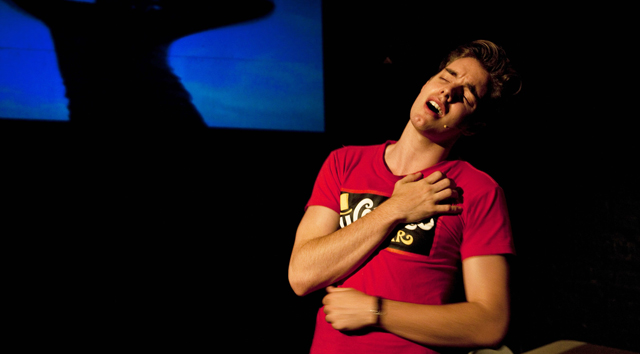
5 Questions with James Wright

jameswrightWhat is your favourite swear word?
Fuckery.

What are you wearing?
A jacket over a hoodie over a shirt because I’m in Melbourne.

What is love?
An addictive but glorious mixture of total comfort and mild paranoia which turns you into a happy idiot.

What was the last show you saw, and how many stars do you give it?
The Last Confession.

Is your new show going to be any good?
Yes, as long as I remember all those bloody lines/lyrics/directions.


James Wright is appearing in November Spawned A Monster, with Fly-on-the-Wall Theatre.
Show dates: 28 Oct – 15 Nov, 2014
Show venue: The Old Fitzroy Hotel

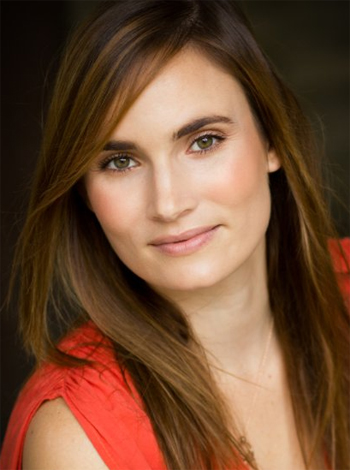
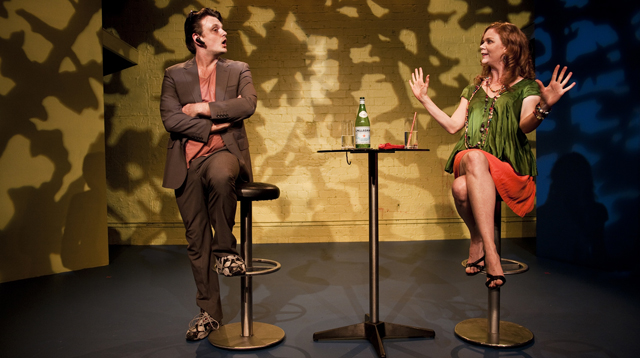
5 Questions with Eliza St John

elizastjohnWhat is your favourite swear word?
Fuck.

What are you wearing?
Shortie pyjamas.

What is love?
A belly full of laughter.

What was the last show you saw, and how many stars do you give it?
Wicked the musical. Ten thousand green stars!

Is your new show going to be any good?
100% guarantee or your money back babay!


Eliza St John is appearing in V.D., with Copanirvana Theatre Co.
Show dates: 28 Oct – 15 Nov, 2014
Show venue: The Old Fitzroy Hotel

Review: Howie The Rookie (Red Line Productions / Strange Duck Productions / Sydney Independent Theatre Company)

redlineVenue: Old Fitzroy Theatre (Woolloomooloo NSW), Sep 30 – Oct 25, 2014
Playwright: Mark O’Rowe
Director: Toby Schmitz
Cast: Sean Hawkins, Andrew Henry
Image by Kathy Luu

Theatre review
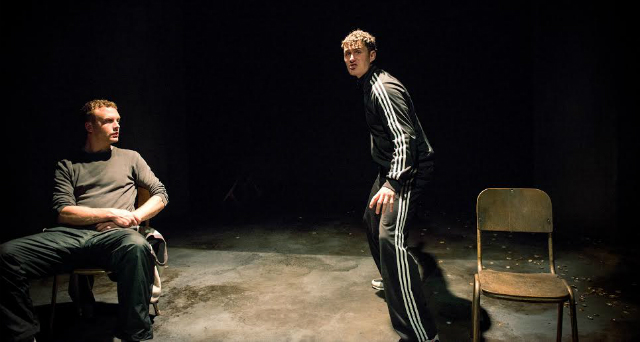
Howie and Rookie are two young Irish men who live epic nights and emerge to relay their experiences to anyone who would listen. They are base and depraved, with values a world away from the middle classes of theatre-land, yet their lack of pretension and extraordinary candour allow us to find identification with a shared essence of humanity. Their stories are terrifying and sickening, but they are never alien, for our instincts understand what it is to be like them, much as we spend our days fighting tooth and nail to create distance from their godforsaken universe. Mark O’Rowe’s script is a detailed look into a life driven by impulse and unaffected appetite, formed by two monologues written with a brand of poetry that is gritty and coarse, although irresistibly beautiful at many points. It is geezers doing lyricism, and art in its enemy’s territory.

Direction by Toby Schmitz delves into the psychology of his actors, to create characters that feel palpable and real, although both are highly theatrical in expression. A thorough authenticity is manufactured by instituting clarity in thought and intensity of emotion in the performers, which translates into wonderfully vivid storytelling and stunning performances. Schmitz reduces the stage into an exaggerated intimacy so that the only thing that matters is the cast.

Design aspects are extremely subtle, for they aim to disappear, but all elements contribute effectively to the power of the men’s dynamic presence. Lights by Alexander Berlage and sound by Jeremy Silver are sensitive and elegant, with many manoeuvres that are practically undetectable but crucial to atmosphere transformations. Stage manager Nicholas Foustellis executes these changes perfectly. Lisa Mimmocchi’s set and costume design takes a minimal approach but the vision she creates resonates with accuracy, even in its spacial abstraction.

Andrew Henry performs the first half of the piece in the role of Howie. He first addresses the audience out of character, with mundane information about mobile phones and emergency exits, using the opportunity to establish humour and a camaraderie that he brings into the play. Henry maintains eye contact with us throughout, insisting that we hear every word, and we do. The actor’s delivery in both physical and vocal terms is almost acrobatic in its agility. He is funny, outrageous and disturbing, always keeping us firmly in the palm of his hand, and the range of emotion he portrays can only be described as impressive. A major mood transition occurs at the end of his soliloquy that is absolutely breathtaking, and a must-see for any fan of the dramatic arts.

Also remarkable is Sean Hawkins, who takes on the latter half of the production as Rookie. Hawkins’ energy is vibrant and sprightly, providing a clever contrast to the darker Howie. Hawkins is a passionate raconteur who brings brilliant animation to his tales, and the stripes shaven into his temples to match his Adidas tracksuit, indicate the depth at which the actor has absorbed the text. Revealing all that the character believes and feels, Hawkins’ face is mesmerising. It tells us all that Rookie wishes to divulge, and then some. The performer lays bare an honesty that lets us read into a complex portrayal of what seems to be a simple existence.

Small theatre can refer to budgets, venue sizes, or the actual scope of content being produced. In the case of Howie The Rookie, it is the serendipitous meeting of all three that has created something sublime. More extravagant expenditure or auditorium capacity will not improve the colossal genius presented on this very special occasion.

www.sitco.net.au

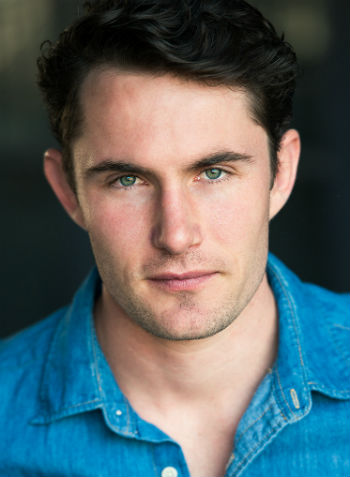
5 Questions with Sean Hawkins

seanhawkinsWhat is your favourite swear word?
It’s cunt. The Rookie gets to say it quite a bit, so I’m enjoying that.

What are you wearing?
Jeans and a tee shirt.

What is love?
Back scratches from your partner.

What was the last show you saw, and how many stars do you give it?
Out Of Gas On Lover’s Leap by The Kings Collective. 4/5 stars.

Is your new show going to be any good?
It’s going to be corker.


Sean Hawkins is appearing in Howie The Rookie, with Strange Duck Productions.
Show dates: 30 Sep – 25 Oct, 2014
Show venue: The Old Fitzroy Hotel

Review: Four Dogs And A Bone (Brief Candle Productions / Sydney Independent Theatre Company)

briefcandleVenue: Old Fitzroy Theatre (Woolloomooloo NSW), Sep 16 – 27, 2014
Playwright: John Patrick Shanley
Director: Kate Gaul
Cast: Amanda Collins, Melinda Dransfield, Paul Gerrard, Sonny Vrebac
Image by Katy Green-Loughrey

Theatre review
There are four actors and only four scenes in John Patrick Shanley’s Four Dogs And A Bone. It is a work about horrible people trying to make a film, and their self-serving manipulations to change the film to their advantage. The personalities are thoroughly caricatured, and the script derives its humour from their absurd behaviour.

Performances are uneven in the production. The first scene features the stronger players Melinda Dransfield and Sonny Vrebac kicking off with some promise. Brenda is a starlet who lies and sleeps her way up the career ladder. Dransfield has moments of brilliance in the role and delivers laughter with a more subtle approach than her cohorts. Sonny Vrebac plays the film’s penny-pinching producer Bradley, who is so highly strung that he develops a canker sore the size of a jumbo shrimp in his rectum. Vrebac’s comedy is the most consistent in the piece, and the personal narrative he is able to communicate for his character is clearest in the group. Vrebacg’s vibrancy is an asset to the production, and the slump in energy levels is noticeable in scenes without him.

Chemistry between actors is an issue that seems to arise from their focus on individual styles. We do not see a sense of cohesion, which results in missed opportunities for laughter and amusement. Amanda Collins focuses her efforts on creating a snake-like persona for Collette but does not manufacture enough substance for her story to resonate. It is noteworthy however, that she displays good commitment and focus, and leaves a memorable impression with a flamboyant display of devastation from being described as a “character actor”. Paul Gerrard as Victor, the screenwriter for the film, tends to underplay his role, allowing his more extravagant colleagues to overwhelm his work, but he does have a solid presence that gives the show a firm grounding.

This is a staging that does not quite take off until its final scene. Economic realities mean that much of what we see in the theatre can be revealed too early in the creative process, and opening night of Four Dogs And A Bone feels prematurely presented. Art strives for an imagined notion of perfection, but no art of great merit is created in an idealistic environment without challenges that need to be overcome. The factor of time and the practicalities of money can be cruel to artists, but they are also what compels us to hold their work in great esteem.

www.sitco.net.au | www.briefcandleproductions.com

5 Questions with Amanda Collins

amandacollinsWhat is your favourite swear word?
There’s such a wealth, it’s hard to pick. Plus most depend on the situation. But I guess if I have to choose, I’d go with the tried and true Fuck! It’s just so versatile.

What are you wearing?
Currently I’m sporting a rather enviable crusty old track-suit pant and jumper combo. Stylish.

What is love?
Big question. Love is many things and comes in many forms. It is the very best humans are capable of and from its roots spring beautiful things such as hope, joy, kindness, happiness, empathy, wonder, understanding, acceptance, comfort, forgiveness, support, courage, empowerment, and strength.

What was the last show you saw, and how many stars do you give it?
Macbeth. Loved it. 5 stars!

Is your new show going to be any good?
Absolutely!

Amanda Collins is appearing in Four Dogs And A Bone, with Brief Candle Productions.
Show dates: 16 – 27 Sep, 2014
Show venue: The Old Fitzroy Hotel

Review: The God Of Hell (Mophead Productions / Sydney Independent Theatre Company)

mopheadVenue: Old Fitzroy Theatre (Woolloomooloo NSW), Aug 26 – Sep 13, 2014
Playwright: Sam Shepard
Director: Rodney Fisher
Cast: Vanessa Downing, Jake Lyall, Ben McIvor, Tony Poli
Image by Gareth Davies

Theatre review
Sam Shepard’s The God Of Hell portrays patriotism as a dangerous concept. In the name of national pride, morality is distorted and human rights are nullified for the benefit of an abstract higher power. The meaning of citizenry is subversively explored, against the backdrop of a traditional and idyllic farm, where residents live honest existences without the need for labels of jingoistic identification. Emma and Frank live quietly in Missouri, with cows and plants occupying their attention, and they want for nothing. Their lives are simple but complete, and we admire their wholesome day-to-day routine, which the play presents at some level of glorification. Complications emerge when characters appear to disrupt their peace, and we observe scenes of destruction transpiring as a result of narcissism, greed and ignorance.

Helmed by Rodney Fisher who serves as director and designer, the production is inventive, exuberant and sophisticated. It is a very good looking show, with an ambitious set that is perfectly proportioned and elegantly executed, communicating a sense of rustic purity that is immediately endearing. Together with Ryan Shuker’s lighting, Fisher has materialised a blissful vision that represents an ideal we cannot bear to see tainted. Also successful is sound designer Max Lyandvert’s work, which provides a beautiful dimension of rural domesticity that eventually develops into something much more sinister.

Fisher’s direction is lively and precise, with a surprising clarity that always places emphasis on the narrative. It is very accomplished storytelling that constantly introduces fresh elements of interest to maintain a connection with the audience. Even when Shepard’s script becomes alienating or abstruse, the plot continues to be excitingly coherent. Fisher achieves a balance between naturalism and theatricality that makes The God Of Hell fascinating and enjoyable. The smell of bacon cooking on a stove top is both an ordinary occurrence and a flamboyant stage flourish. The four actors too, are impressively believable, while being quite dazzlingly entertaining.

Emma is played by Vanessa Downing who keeps us anchored in a place of reality while the play escalates to dramatic heights. Downing is charming, funny and entirely likable, so we identify with Emma readily, even if her life is probably quite unlike anybody’s in Sydney. She provides an authenticity that allows an understating and affiliation, and we form an important emotional bond with that character. Her husband Frank is equally charismatic, thanks to Tony Poli’s vibrant stage energy and immense presence. Jake Lyall as Haynes has extraordinary focus, giving valuable gravity to a mysterious role, and Ben McIvor’s playful interpretation of the villainous Welch is critical to the dynamic and buoyant quality of the production.

It is easy to be fatigued by arguments about politics, terrorism, torture and military power. Thirteen years have past since the September 11 attacks, and no one is any closer to winning either the real or metaphysical wars against terror. Governments are unable to provide effective solutions, and every form of media bombards with incessant information that we can only, at best, struggle with. These themes have become bewildering, and like Emma, we can only attempt to not be lured into convenient modes of ideology and behaviour. It is a challenge to preserve a clear conscience and a pure heart, but it is the human spirit that will always hope for Emma to stay uncontaminated, regardless of the insurmountable odds she faces at the play’s end.

www.sitco.net.au | www.mophead.com.au

Review: Joan, Again (Subtlenuance / Sydney Independent Theatre Company)

Venue: Old Fitzroy Theatre (Woolloomooloo NSW), Aug 5 – 23, 2014
Playwright: Paul Gilchrist
Director: Paul Gilchrist
Cast: Kit Bennett, Jamie Collette, Ted Crosby, Kitty Hopwood, Lynden Jones, Sylvia Keays, Bonnie Kellett, David Kirkham, Helen Tonkin
Images by Katy Green Loughrey, Liam O’Keefe, Daniela Giorgi

Theatre review (originally published at Auditorium Magazine)
Paul Gilchrist’s new script is deeply philosophical. It asks many big questions, all of which affects our lives, but most do not come easily into daily discourse. These are themes that can be difficult to communicate, for despite their universality, the diversity in beliefs often means that unexpected conflict may result. Also, these concepts of truth, religion, spirituality, death, identity, gender, kinship, time, and so forth, are constantly shifting and elusive, and therefore impossible to resolve. Conversation without resolution or agreement is always a challenge in polite society, which means that many of these piquant parts of life are left to the likes of academics and artists to explore at depth. Indeed, it is a responsibility of art to think about these matters, and to present to us, perspectives that may challenge our own.

Through the landscape of war, and the appearance of a woman claiming to be Joan of Arc ten years after her famed execution, Gilchrist’s play asks political, social and personal questions and unpacks modern day attitudes about, well, everything. The script is always loaded with meaning, and while it might be difficult to discover the author’s own beliefs in every line, we are consistently provoked to react with our own judgment and ideology. Not much happens in the story, but our intellect is exhausted by its end. The strength of the writing is in its ability to expose the incoherence and injustices of our world, without obvious agenda or tiresome pontification. Gilchrist’s work has many delightfully sharp lines that need to be revisited if only to commit to memory, but more significantly, it is concentrated with analysis and poignancy that speak volumes of truth that its characters struggle to navigate.

Gilchrist’s direction creates a dynamic theatre with distinct and colourful personalities that keep us fascinated. Moments of comedy and drama are executed with precision, so that the show varies regularly in tone, and is kept at a comfortable pace. Acting as both playwright and director allows a very specific interpretation of the text, but it also raises issues for performance. There is a lack of organic energy in the piece, and chemistry between players is laboured. The cast does not always find a mode of articulation that feels genuine. When interpretations are reproduced from preconceived ideas instead of more fundamental and experiential processes, characters are less unconvincing and their stories can become difficult to decipher. Gilchrist’s direction also needs to have greater confidence and commitment in his comedy that is too often underplayed, which is a shame as there is potential for much bigger laughs in his writing. By the same token, the profundity of his script needs greater emphasis as they can be quite elaborate. A writer mulls over their work over long periods, and to condense that vision into two or three hours for an audience that arrives with only a blank slate, requires a very fresh pair of eyes. Gilchrist expresses himself marvelously but one wonders if an intermediary would provide more effective elucidation.

Kit Bennett plays Therese, a young woman of very few words who suffers from the indignity of being tagged the “village idiot”. Her performance is remembered for a level of authenticity that her colleagues do not manage. Bennett encourages intrigue and empathy, forming a connection with the audience that is strangely persistent. She speaks little but her presence is always strong and her reactions meticulous. One wonders if it is the lack of lines that provides her the freedom to create something that is more personal and with more truth as an actor. Gilchrist has crafted a brilliantly complex role with Therese. She is surprising, almost disarmingly so, but her contradictions actually feel very realistic.

Joan is central to much of the narrative, and Sylvia Keays brings to it an ambiguous zen-like quality that works interestingly on levels of narrative and philosophy but we are left craving for a deeper understanding of her character’s psychology and motivations. Keays is at her most compelling when soliloquising, showing an excellent affiliation with the writing and themes. There is a defiance that seems slightly mild but her lack of aggression makes for a more textured and unanticipated experience of the character. Also charming is Lynden Jones whose subtle yet biting portrayal of Cardinal Theobald grabs our attention at every appearance. The irony in his lines could be performed more extravagantly but the creepy hypocrisy that seeps through Jones’ every pore is sickeningly irresistible.

Helen Tonkin as Isabelle, delivers a memorable and moving speech about lives lost at war. The play’s antiwar sentiment is strong. It discusses the damage worn by societies as a result of combat, and the meanings we derive from manufacturing war heroes. In honouring the dead and those who return victorious, we face the inevitably of assigning glory to destruction, but responding with an antithetical passivity and apathy is unwise. The pursuit of peace may be the greatest vocation of humankind, and the quest for it may never appear within easy reach, but there simply is no responsibility more noble, and no undertaking more necessary than the attainment of justice and fairness for all.

www.sitco.net.au | www.subtlenuance.com

5 Questions with Bonnie Kellett

bonniekellettWhat is your favourite swear word?
I say ‘fuck’ a lot and ‘sugar honey iced tea’ (which is a nicer way of saying shit) – oh and I know it’s not really a swear word, but I really like ‘sod off.’

What are you wearing?
It was really cold this morning, so black boots, jeans, a pink fluffy jumper with diamantes and a beanie… with a diamante.

What is love?
Marrying my soul mate in November, not long now!

What was the last show you saw, and how many stars do you give it?
Opera Australia’s Don Giovanni. I loved it – I studied it a couple of times at uni, so it was really great to see it live, 4 Stars out of 5!

Is your new show going to be any good?
I love it! Paul Gilchrist is such a talented writer – it’s very funny and very moving.

Bonnie Kellett is appearing in Joan, Again, with Subtlenuance.
Show dates: 5 – 23 Aug, 2014
Show venue: The Old Fitzroy Hotel

5 Questions with Patrick Magee

patrickmageeWhat is your favourite swear word?
Gobshite. It’s a proper Belfast swear word; saying it is like rolling a pebble around your mouth and spitting it out.

What are you wearing?
I’m wearing some $24 jeans from K-Mart and my favourite brown jacket that looks like it’s been through a hundred years of rainfall.

What is love?
I don’t know, I haven’t known for two years and two months.

What was the last show you saw, and how many stars do you give it?
I just saw Brothers Wreck at Belvoir. Four stars, Hunter Page-Lochard is *incredible*.

Is your new show going to be any good?
Course it is, you gobshites.

Patrick Magee is appearing in The Mercy Seat, with Gentle Banana People and Pantsguys.
Show dates: 24 Jun – 5 Jul, 2014
Show venue: The Old Fitzroy Hotel