Review: Seed Bomb (Subtlenuance / The Old 505 Theatre)

Venue: The Old 505 Theatre (Newtown NSW), Mar 5 – 9, 2019
Playwright: Daniela Giorgi
Director: Paul Gilchrist
Cast: Matthew Abotomey, Kate Bookallil, Lindsey Chapman, Sonya Kerr, Julian Ramundi
Image by Matthew Abotomey

Theatre review
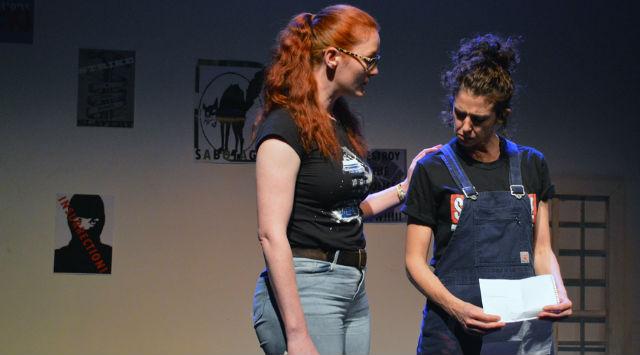
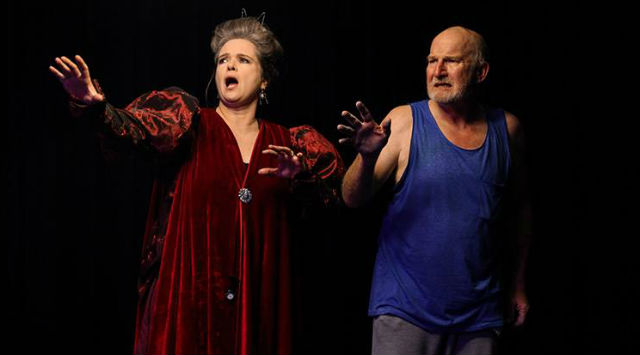
Kat dreams of moving out to the country, so that she can escape the ugly rat race of city life. Upon meeting guerrilla gardeners Gridlock and Pax however, her mind changes, as she begins involvement in a political movement that helps her feel an integral part of community. Daniela Giorgi’s Seed Bomb talks about the responsibility of individuals, in an environment where the power to influence our own destinies, is routinely made to feel diminished. Kat discovers that she is not helpless in her home, and to leave it for greener pastures is in some ways a selfish act.

Giorgi’s benevolent writing is idealistic but not naive. Although its didacticism has a tendency to turn obvious, the immediacy of its concerns bear a pertinence that keeps us engaged, with Kat’s awakening bringing a sense of hope to our humdrum passivity. Directed by Paul Gilchrist, the show is tender and earnest, insufficiently dynamic but certainly authentic with its representations. Actor Sonya Kerr is particularly genuine in her convincing portrayal of Kat, our mild-mannered protagonist who learns to carve her own niche in micro activism.

Other cast members are similarly accomplished. Matthew Abotomey and Kate Bookallil bring conviction to their roles as provocateurs of the piece, both distinct and specific with their respective interpretations of the modern social justice warrior. Excellent comedy by a very cheeky Lindsey Chapman, who plays an ignorant financial adviser, leaves a lasting impression. The frustrations of Kat’s partner Toby are conveyed persuasively by Julian Ramundi, whose depiction of the one left behind, serves as caution against political apathy.

Whether we like it or not, to exist is to be political. We can choose either to participate or withdraw, but there is never neutrality in any of our decisions. Everything we say and do, causes reverberations, like dominoes toppling in all directions. Kat does not become radical, but her new awareness of things beneath the surface, has sparked a fundamental shift in how she behaves. We can never be sure if knowledge will necessarily improve lives; after all, ignorance is bliss. There is however, no possibility for reversal, once the truth is out. This is only the beginning of Kat’s story, what is to follow is a test of our optimism and faith.

www.subtlenuance.com

Review: Exit The King (Théâtre Excentrique)

Venue: Chippen Street Theatre (Chippendale NSW), Mar 7 – 16, 2019
Playwright: Eugène Ionesco (translated by Anna Jahjah, Kris Shalvey)
Director: Anna Jahjah
Cast: Clay Cruighton, Kirsty Jordan, Leof Kingsford-Smith, Josef Schneider, Gerry Sont, Alison Windsor
Images by Mansoor Noor

Theatre review
The king is informed that he is to die by the time the play ends. It is absurd that we are shocked by this notion, as death remains one of our only certainties. In Eugène Ionesco’s Exit The King, the protagonist is given 90 minutes to reflect on what he leaves behind, and what he is about to encounter. An exploration of existential angst, it attempts to anatomise the meaning of life, by looking closely at impending death.

Apart from Ionesco’s intentions, an alternate reading could be applied to Exit The King, whereby the monarchy is being taken down by those determined to have him vanquished. We see him being told repeatedly that his death is inevitable, and that he is no longer needed. The play has a new pertinence in our Time’s Up era, able to resonate with our thirst for stories featuring the demolition of traditional hierarchies.

Actor Kirsty Jordan plays Queen Marguerite, a strong almost ruthless personality who leads the charge in guiding the king to his demise. It is a robust performance, of great conviction, that provokes us into the formulation of hidden narratives that would make her story a more politically enticing one. Leof Kingsford-Smith is an excellent King Berenger, powerful with the vulnerability he introduces, an energetic presence capable of sustaining our interest through the production’s thick and thin. Ionesco’s densely surreal dialogue requires more detailed attention for the show to speak incisively, but director Anna Jahjah does good work with atmosphere and tone, allowing us access to poetic dimensions that appeal to parts of ourselves that are perhaps more visceral than logical.

None is immortal, yet we often carry on as though life is forever. We leave loose ends unattended at the end of every day, and we postpone pleasures to the future, believing that there will always be tomorrow. The old saying, “never go to bed angry” seems to imply that resolutions, permanent or temporary, must be reached, because there is every chance that slumber can turn eternal. If we understand that life is short, it would mean making the most of our days, and also to make the best of all our potentials, right here and right now.

www.theatrexcentrique.com

Review: The Miser (Bell Shakespeare)

Venue: Sydney Opera House (Sydney NSW), Mar 2 – Apr 6, 2019
Playwright: Molière (a new version by Justin Fleming)
Director: Peter Evans
Cast: John Bell, Michelle Doake, Harriet Gordon-Anderson, Elizabeth Nabben, Sean O’Shea, Jamie Oxenbould, Russell Smith, Damien Strouthos, Jessica Tovey
Images by Prudence Upton

Theatre review
Harpagon is the most miserly man you can imagine. He wants to marry off his daughter to a rich noble who has offered to waive the customary dowry, and is himself eager to marry a young woman who seems likely to be a frugal wife. Justin Fleming’s new version of Molière’s The Miser is a faithful adaptation that inflicts little disruption on the 350 year-old work, but the application of contemporary Australian lexicon refreshes it for a newly immediate experience. That we remain accustom to patriarchal structures, with mediocre men still ruling the roost in much of our daily lives, means that the very old play retains resonance. We relate to Molière’s iconoclastic spirit, but a sense of resignation pervades the play, for which our modern sensibilities should not be content with.

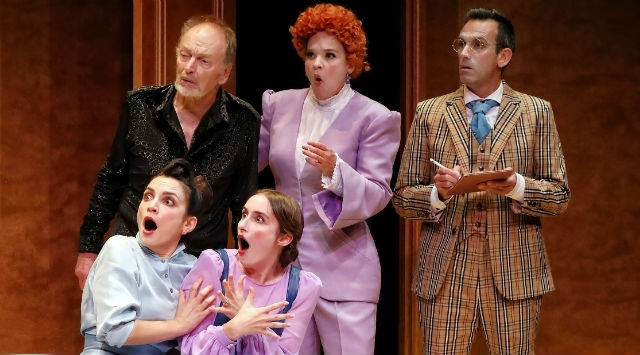
Designer Anna Tregloan offers a simple setting that conveys both Harpagon’s wealth and meanness, but it is her costumes that really impress. Flamboyant, colourful and unexpectedly trendy, every character is attired with an admirable level of taste and irony, perfectly coordinated to create a memorable visual vibrancy. Music by Max Lyandvert is charming, able to lure us into the story with a seductive power not unlike the irresistible magnetism of money. Peter Evans’ direction of the piece is less fanciful, with a straightforward approach that relies heavily on what each performer brings to the table.

John Bell is a convincing Harpagon, effortless in his portrayal of a very unlikable personality. More energetic members of cast leave a stronger impression, with Michelle Doake delivering the biggest laughs as Frosine, a matchmaker of sorts, demonstrating extraordinary aptitude for the classic farce genre. Damien Strouthos plays the son Cléante, deftly transforming the powerless offspring into a force of comedy, through bold physical explorations that delight, by virtue of their inventive quirkiness.

The problem with misers is that nobody seems to benefit from their obsession with hoarding. Those guilty are themselves constantly miserable, overwhelmed with an anxiety that accompanies the belief that nothing is ever enough. Everybody else is subsequently deprived of resources that are withdrawn from productivity, unable to gain necessary access for the general advancement of society. Harpagon puts his money in a cash box, allowing no one to do anything with it. What was once highly valued, is converted into dead objects. To have money means being able to do what the heart desires and what the brain can conceive. It can buy meaningless things, but it can also facilitate the betterment of countless lives. Misunderstanding the nature of money and the mismanagement of it, is responsible for so much of our ills and those who have lots of it have so much to answer for.

www.bellshakespeare.com.au

Review: Art V Garbage (Dumpster Divas / Jackrabbit Theatre)

Venue: Kings Cross Theatre (Kings Cross NSW), Feb 26 – Mar 1, 2019
Creators and Cast: Salem Barrett-Brown, Danni Paradiso, Rory Nolan
Images by Clare Hawley

Theatre review
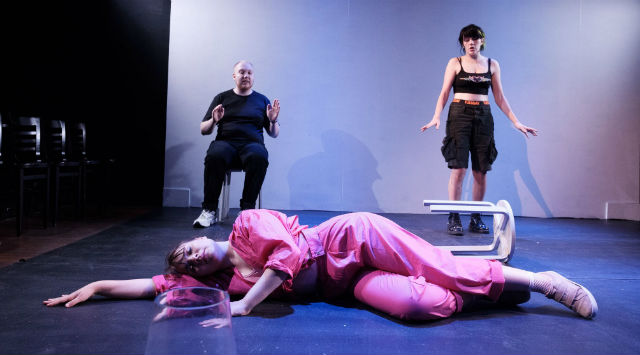
The Dumpster Divas have a very passionate social conscience. Like many of their generation, these young Australians have a certitude about what is right, the people we need to become, and how things should be run. They are idealistic, and in their 45-minute production, convincing with their perspective of the world that we share. Comprised of short sketches, Art V Garbage is variously themed, but each segment is united by a distinct queer sensibility, all flamboyantly conceptualised and slightly anarchic in approach.

The exuberant humour of Art V Garbage is thoroughly enjoyable, with the trio proving themselves to be as adept in the art of comedic performance, as they are in writing and directing their own material. Creative and clever, the work encompasses virtually all that is resonating within our immediate zeitgeist, effectively shaping itself into a condensed representation of our life and times, as things stand at the moment. Its absurdist style allows us to take its meanings beyond the obvious. We are able to look at art, politics, society and economics from new angles, maybe not to reach completely unexpected conclusions, but its refreshing take on important issues are definitely provocative.

From sanctimonious single mothers to the Prime Minister, the iconoclastic trio cuts them down to size, in a spirited exercise that re-focuses our mores through an improved, more equitable lens. The gay rights movement feels to have past its prime in Australia, but the queer principles and values we have engendered through the last forty or so years, continue to serve in the unending expansion of democracy in our ways of life. Queer refuses hierarchies, and is always quick to disseminate power. It protects the weak, and insists on challenging every convention. Salem Barrett-Brown, Danni Paradiso and Rory Nolan demonstrate in their sketches, the virtues of the new Australian; more egalitarian than before, more intelligent, more caring. They work for the good of everyone, even when we think of them as outsiders.

www.jackrabbittheatre.com

Review: Dead Cat Bounce (Griffin Theatre Company)

Venue: SBW Stables Theatre (Kings Cross NSW), Feb 22 – Apr 6, 2019
Playwright: Mary Rachel Brown
Director: Mitchell Butel
Cast: Kate Cheel, Lucia Mastrantone, Johnny Nasser, Josh Quong Tart
Images by Brett Boardman

Theatre review
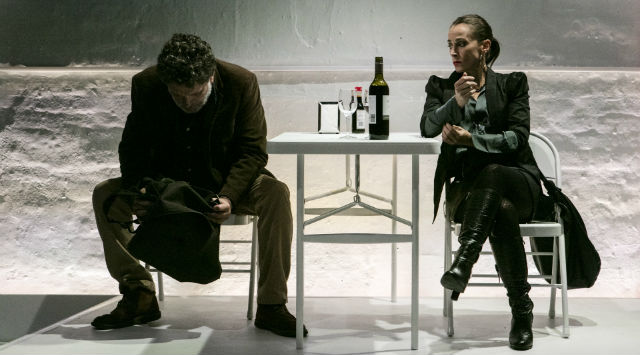
In Mary Rachel Brown’s Dead Cat Bounce, Gabriel is a moderately successful novelist, a middle aged alcoholic, and also it seems, quite the ladykiller. Two women are madly in love with him, in this story of addiction and redemption, but we spend most of the duration trying instead to figure out his appeal, wondering what it is that his current and ex beaus are actually drawn to. This of course, is not a wholly uncommon experience, for those of us who have watched our friends (and ourselves) fall for the wrong people, bewildered by the things a human heart is capable of making us do. In this play however, those dynamics are unconvincing, and worse, neither its narrative nor characters are capable of keeping us meaningfully engaged.

Little of the comedy manages to be truly amusing, and where we hope for poignancy, or at least some valuable depth to its observations of quite serious themes, we find only cliché and banality. People are often stupid, that is unassailable, but our storytelling must bring insightful illumination to our nature, even if it is idiocy that is placed under scrutiny. The production is fortunately, a fairly polished one, with Alexander Berlage’s lights and Nate Edmondson’s music providing a great deal of elevation, even if only on a cosmetic level.

Although lacking in substance, the show is undoubtedly energetic, with director Mitchell Butel maintaining a bold pitch in performances, insisting that we pay attention. Josh Quong Tart is accurate in his portrayal of the unremarkable Gabriel, intentionally unlikable but clearly committed to the part. His young lover Matilda is played by Kate Cheel, who demonstrates great inventiveness in her efforts to find creative dimensions within this unenviable task. Lucia Mastrantone takes every opportunity to bring the drama, for which we are grateful, even if her character Angela’s choices prove to be relentlessly frustrating. Equally intense is Johnny Nasser, whose personal charisma almost compensates for the flimsiness of Tony, a ridiculously whiny and small man, rendered with too much unnecessary kindness.

The women in Dead Cat Bounce are suckers for punishment, but it is not hard to figure out why they stand firm on playing the fool. Girls are taught that they are worthless without children and a husband. Society seems obsessed with instilling a sense of inadequacy in us, always finding ways to say that we are not good enough, and we seem never to be able to entirely escape from these systems of control. Matilda is smart enough to read Tolstoy and Dostoevsky, but somehow finds herself happily planning to raise a family with a drunk twice her age. Angela is a powerful woman in the publishing business, but is addicted to toxic men and all their unreasonable demands. From our vantage point, we can only conclude that they should simply have walked away, and learned to be unafraid of independence. If one should think that this is easier said than done, then that is indication of where much of the problem lies.

www.griffintheatre.com.au

Review: Cake Daddy (Seymour Centre)

Venue: Seymour Centre (Chippendale NSW), Feb 16 – 22, 2019
Playwrights: Ross Anderson-Doherty, Lachlan Philpott
Director: Alyson Campbell
Cast: Ross Anderson-Doherty

Theatre review
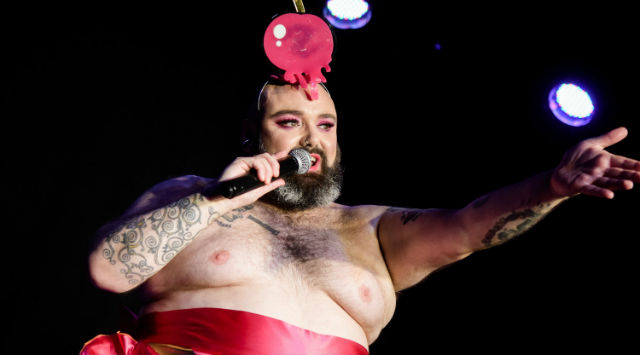
When we first meet Ross Anderson-Doherty in his one man show, he plays a success story at Cakewatchers, an internationally renowned weight-loss programme. The performer’s large body is the location on which the farce takes place, as he takes us through a series of absurd guidelines, that claim to help individuals achieve some semblance of satisfaction for one’s own physicality, by becoming thin. Cake Daddy by Anderson-Doherty and Lachlan Philpott is an incisive summation of what is termed “diet culture”, the horrendous relationship many of us have with food and body image; that bottomless pit of cruelty, dealt by the self and by society, determined to infect each of us with an overwhelming sense of inadequacy.

As the jokes and songs pass us by, we see Anderson-Doherty shedding the spokesperson’s plastic facade, to reveal real experiences of a fat person who struggles to find self-acceptance. The disclosures are by no means original or new, but the honesty of the performer’s display of emotion, is channelled by director Alyson Campbell to communicate a remarkable poignancy that turns the show subtly, into a discussion about compassion, both for the self and for others. As Anderson-Doherty oscillates between hating his reflection, and loving the freedom of an emancipated mind, we witness the most authentic portrayal of humanity. Even when we have the answers to life’s big mysteries, there will always be hard work waiting to be done, in order to get through some of the days.

Musical numbers in the piece can sometimes feel extraneous, as we tend to lose a powerful sense of immediacy when Anderson-Doherty drifts into song, but to encounter his exceptional singing voice is an unequivocal pleasure. As comedian, his ability to read the audience is uncanny, and we find ourselves always kept on our toes by his vigilant stage awareness, although some of his pacing can be needlessly languid, in a production that is most effective when manic in tone. Cake Daddy skates close to self-deprecation, but its subject is never humiliated. In fact, we watch him in all his glory, and wonder if he actually shares in our vision of his greatness. However each person comes to dislike parts of themselves, it is crucial that one is committed to finding peace within, even if it proves an endless task.

www.wreckedallprods.com

Review: The Things I Could Never Tell Steven (Whimsical Productions)

Venue: Limelight on Oxford (Darlinghurst NSW), Feb 20 – Mar 2, 2019
Music & Lyrics: Jye Bryant
Directors: Ghassan Kassisieh, Katherine Nheu
Cast: Julia Hyde, Joey Sheehan, Suzanne Chin, Tim Martin
Images by Zaina Ahmed

Theatre review
Steven is constantly evasive, nowhere to be seen, because he had done the wrong thing. After their recent nuptials, Steven’s wife finds that he often disappears, and we discover that he chooses to spend time instead with an ex, a male lover happy to rekindle the relationship, unaware of Steven’s change in marital status. Steven however would only stay for the sex, and vanish in between coitus, unable to extend intimacy beyond the flesh. Jye Bryant’s The Things I Could Never Tell Steven tells an intriguing story about sexual orientation for our times, to provoke questions about identity, and to discuss the quickly evolving meanings of marriage under our newly egalitarian legislation.

Bryant’s musical features songs that are beautifully melodic, with witty lyrics that offer plentiful amusement. Musical direction by Ghassan Kassisieh, who provides accompaniment on keyboard, is precise and pleasant. The production is minimally designed, but directors Kassisieh and Katherine Nheu offer elegant staging solutions that keep meaningful emphasis on the songs. Performer Julia Hyde is very impressive as Steven’s unnamed wife, with a wonderful voice that delivers considerable dynamism to the show. Her mother-in-law is played by Suzanne Chin who brings an excellent measure of comedic energy to proceedings. Joey Sheehan is less effective with the humour, but as Steven’s ex his falsetto is a real auditory joy, and Tim Martin who, although not sufficiently dramatic in approach, is nonetheless convincing in his portrayal of the reliably stoic father.

Steven is not present to plead his case, but he is clearly not the marrying type. In times past, we would have conveniently attributed his misbehaviour to him being a closet case, but now we are free to examine his tale as one about the relevance and purpose of marriage. It is possible that Steven’s regret is simply about attachment, of having to sacrifice his selfhood for no good reason, regardless of the genders at play in the musical. He should have known to interrogate rules around monogamy and fidelity before taking that solemn vow, and more importantly, he should have challenged notions of conformity and conventions, that have brought him to this point of dilemma.

www.whimsicalproductions.com.au

Review: Wyngarde! A Celebration (G.bod Theatre)

Venue: Old 505 Theatre (Newtown NSW), Feb 19 – Mar 2, 2019
Devised by: Garth Holcombe, Peter Mountford
Director: Peter Mountford
Cast: Garth Holcombe
Images by Richard Hedger

Theatre review
Peter Wyngarde gained mainstream popularity in 1969 as Jason King, a novelist turned sleuth, in the UK television series Department S. A flamboyant actor, known for his horseshoe moustache and bronzed skin, he is one of innumerable twentieth century celebrities who had never come out of the closet, yet remains an integral part of British gay culture. His 1975 arrest for gross indecency in a public toilet forms part of his mystique, but as was typical of the times, his queerness was kept obscured, refused acknowledgement by wider society. The public would only allow a sex symbol who could not threaten their heteronormativity, and Wyngarde acquiesced.

Garth Holcombe and Peter Mountford’s Wyngarde! A Celebration is a re-framing of the personality, an insistence that we look at old narratives with new eyes, to form a history that makes sense in terms of how we experience the world today. As though a private audience with Wyngarde himself, in which his inhibitions are shed, and we witness him able to be his true self at last. Holcombe has the right charisma for the role, but is occasionally hesitant. The cocky debonair masculinity of a bygone era is portrayed alongside a camp sensibility, to make a statement about the evolution of gay identities, and to form a reminder of a community’s legacy of struggle.

For all the bravado that Wyngarde enjoys putting on display, there is a loneliness that pervades. There is an unmistakable pride in his long career in stage and film, but we sense something unfulfilled. Wyngarde! A Celebration can feel too gentle in its approach. We want a bawdy tell-all, but it gives us instead, something with more integrity than we are perhaps accustom to, in this age of ubiquitous intrusion and humiliation. It is our nature to seek authenticity, but it appears that revealing everything often serves to distract from the truth. Many things are left unsaid in Wyngarde’s story, and that is perhaps his very essence, and the most accurate representation of the man we have come looking for.

www.gbodtheatre.com

Review: The Bed Party (The Old 505 Theatre)

Venue: Old 505 Theatre (Newtown NSW), Feb 12 – 16, 2019
Playwright: Sophia Davidson Gluyas
Director: Sophia Davidson Gluyas
Cast: Mathilde Anglade, Julia Billington, Brigitta Brown, Margarita Gershkovich, Suz Mawer, Alex Moulis

Theatre review
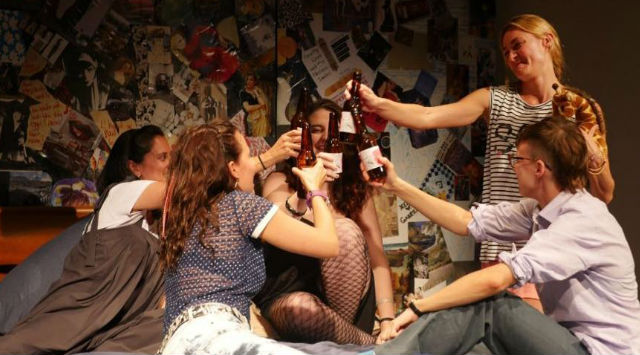
Six queer women share their “ideas, jokes and intimacies” in a display of community and solidarity in Sophia Davidson Gluyas’ The Bed Party. They congregate in a bedroom, discussing life and love, bringing each of her own perspectives and challenges, to find consensus or simply to receive validations, within the circle of their trusting group. The conventional plot plays second fiddle in this feminist approach to storytelling. The sparkling dialogue has its own distinctive rhythms. Lines are not in service of a bigger project of narrative construction, but are themselves the emphasis of the play. We listen to what the women are saying, how they say it, and distil all the meanings in between. It peaks in waves, in acknowledgement of our capacity for more than a singular momentary apex.

The show begins abruptly, unable to find a mode of naturalism that would guide us comfortably into its microcosm, but its chemistry gradually develops and we are soon completely, and wonderfully, immersed. It is a warm cast, not entirely believable as close friends, but certainly a welcoming bunch of personalities that wins us over easily. Mathilde Anglade’s cheeky charm in the role of George is a delight, as she works every comedic opportunity in the script to her advantage, and for our thorough amusement. Julia Billington delivers dramatic intensity along with ideological power, as Bri the sensible half of a partnership determined not to procreate.

As independent women, we learn to make our own rules, and we take the liberty to choose our own families. We are fearless, but we are thoughtful, always careful to design a way of living that is ethically sound, as well as being genuinely fulfilling. We question everything in front of us, and view all that had come before us with great suspicion. That which is prescribed, is rejected until proven worthy, and saying no to anyone is a breeze. Above all however, a powerful woman honours the sisterhood, and leaves no other behind.

www.old505theatre.com

Review: How To Rule The World (Sydney Theatre Company)

Venue: Sydney Opera House (Sydney NSW), Feb 11 – Mar 30, 2019
Playwright: Nakkiah Lui
Director: Paige Rattray
Cast: Gareth Davies, Vanessa Downing, Michelle Lim Davidson, Nakkiah Lui, Hamish Michael, Rhys Muldoon, Anthony Taufa
Images by Prudence Upton

Theatre review
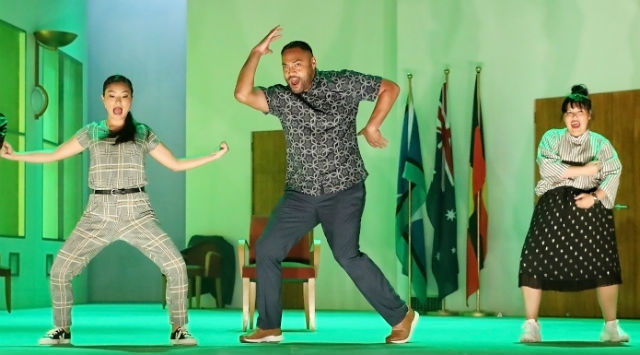
In Nakkiah Lui’s How To Rule The World, the government is trying to pass the Sovereign Territory Bill, a thinly-disguised piece of legislation that further advances the white supremacy cause that is already too much a part of our social fabric. Canberra insiders Vic, Zaza and Chris, are people of colour, all absolutely fed up with the state of affairs. They join forces to install a political puppet, by hiring a white male actor as a shoo-in for the senate, who will subsequently hold the balance of power required to kill off the offending bill.

It is a passionate work, piercingly funny, with an ambitious scope that even at over two-and-a-half hours, can at times feel hurried with its plot. As a result, we may not always understand with great detail, why the people do the things they do, but we nonetheless have an excellent time watching them being unequivocally hilarious. Directed by Paige Rattray, the show is exuberant, but laden with irony, and thoroughly modern in its dissection of power distribution in Australia, making no bones about the white patriarchy that corrupts our country from the inside out.

Lui herself plays Vic, a character central to the play’s advocating of a national treaty that will recognise and institute Indigenous rights, for the past and future. It is a performance memorable for its vulnerable authenticity, effortless at delivering a poignancy that stays with us, long after the laughter has subsided. Michelle Lim Davidson and Anthony Taufa are Zaza and Chris respectively, both endearing and vibrant personalities who ensure that we are always rooting for the right people. The three make a cohesive team, independently effective, but powerful as a singular entity.

The stooge is played by Hamish Michael, who breathes exciting life into an otherwise rudimentary character. His Tommy Ryan is a painfully accurate portrayal of the suits we see everyday on TV; vacuous, desperate and bizarrely comedic. The Prime Minister is a suitably deplorable man, as interpreted by Rhys Muldoon, who shines especially when his true colours are revealed in the latter half, as the going gets tough for the man on top. Gareth Davies appears in a very large assortment of roles, each of them wonderfully imagined and executed with stunning perfection, to earn the biggest laughs of the night. Also in multiple parts is Vanessa Downing, who although creates less of an impact, proves herself a dependable and unwavering source of support for the show’s louder types.

Set design is functional, and appropriately dreary in Marg Horwell’s depiction of our halls of parliament. The decision to do without set changes is a contentious one, considering the play’s frequent location changes, but to keep the action economically contained, encourages its scenes to flow quickly for the audience to remain exhilarated. Lights by Emma Valente are cleverly and efficiently rendered to shift time and space, with little noticeable fuss. Valente’s video projections include an instance of encircling sharks in the PM’s office that is particularly delightful. Paul Mac and Steve Francis provide sound and music, further perking up the proceedings, consistently reliable in their addition to the production’s humour.

We like thinking that the Western societies in which we dwell are democratic, but we also accept that there are people who want to rule the world, and we habitually acquiesce to those desires. At all our election days, each of us casts a vote, feeling as though we are an indispensable part of the most integral of processes, then we walk away letting the powerful carry on with business as usual. They climb their way up, as though determined to leave us behind. When we notice that the interests of those who have made it to the upper echelons are no longer in accordance with our concerns, we become exasperated. Injustices are felt only at the bottom, yet we wait for those on top to lead the change.

www.sydneytheatre.com.au