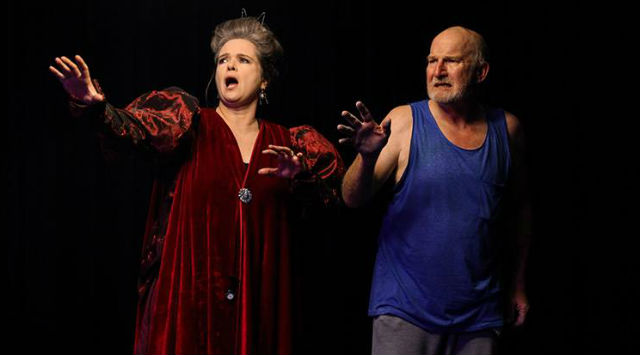
Review: Counting & Cracking (Belvoir St Theatre)

Venue: Sydney Town Hall (Sydney NSW), Jan 11 – Feb 2, 2019 | Ridley Centre (Adelaide Showgrounds, South Australia) Mar 2 – 9, 2019
Playwright: S. Shakthidharan
Director: Eamon Flack
Cast: Prakash Belawadi, Nicholas Brown, Jay Emmanuel, Rarriwuy Hick, Antonythasan Jesuthasan, Nadie Kammallaweera, Ahi Karunaharan, Monica Kumar, Gandhi MacIntyre, Shiv Palekar, Monroe Reimers, Hazem Shammas, Nipuni Sharada, Vaishnavi Suryaprakash, Rajan Velu, Sukania Venugopal
Images by Brett Boardman

Theatre review ⭐️⭐️⭐️⭐️⭐️
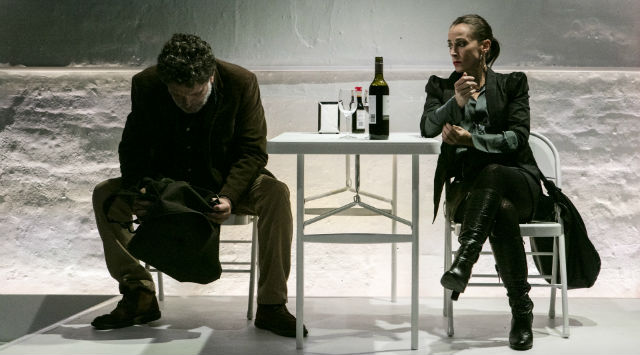
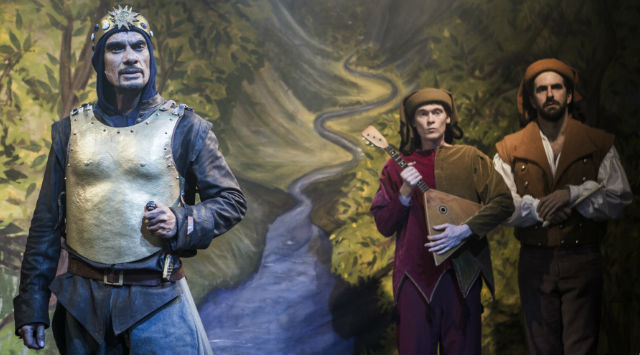
It was 1983 when Radha first came to Australia, escaping persecution in Sri Lanka during the racial riots of Black July. With her husband killed in the midst of unrest, Radha was left with no choice but to flee alone and pregnant, arriving in Sydney to put down new roots in a foreign land. S. Shakthidharan’s Counting & Cracking is a very big play, ambitious and benevolent, rhapsodic in its attempts to uncover the whole truth about a woman, observed as a maternal figure from the playwright’s vantage point. Shakthidharan’s work is warm and witty, generous in its seismic attempts to explain everything, taking us through half a century of untold stories to reach an understanding about the people we are today.

It is often a gripping production, directed by Eamon Flack who renders marvellously the play’s more domestic and romantic scenes. Relationships are beautifully cultivated, between powerful characters, with a convincing sentimentality that encourages the audience to invest deeply, our attention and our emotions, right from the very beginning. Political dimensions are communicated less lucidly, but we are able to gather sufficient information for the narrative drive to maintain interest.

Designer Dale Ferguson’s transformation of Sydney Town Hall’s colonial interior, into a festively radiant Sri Lankan space of congregation and celebration, is a sight to behold. Majestic and monumental, it embraces our bodies and psyches, holding us firmly inside its milieu, to have us luxuriate in all its extravagant expressions. Contrastingly, acoustics are a sore point for the production, with sound engineering unable to overcome the echoey vastness of the old building, thus resulting in occasional dissipation of dialogue. There are however auditory delights to be had, in the form of Stefan Gregory’s score, performed live by a trio of musicians (Kranthi Kiran Mudigonda, Janakan Raj and Venkhatesh Sritharan) whose expert accompaniment provides us with unparalleled sensuality and soulfulness.

Actors Nadie Kammallaweera and Vaishnavi Suryaprakash share the lead role, both captivating and extremely likeable, allowing us to fall under Radha’s spell for the show’s entire duration. Their combined dynamism gives Counting & Cracking complexity and authenticity, and we find ourselves moved by a tale that is at once unique, yet spiritually universal. Sukania Venugopal is memorable as Aacha, the vivacious matriarch who brings colour and effervescence to the stage with every exhilarating entrance. Radha’s son Siddhartha provides the cultural anchor for this Australian story, performed by a very compelling Shiv Palekar, whose luminous confidence proves to be as impressive as it is alluring.

It is always demanded of migrants that we prove our worth. Counting & Cracking is in some ways an exercise in showing the establishment that we contribute at least as much as the others; it makes a statement about our Australianness, arguing against incessant lies about immigration being nothing but a burden on this society. More valuable is the play’s reclamation of identity, in its insistence that the portrayal of Australian lives must include histories and origins that are routinely excluded and denied. As humans, we must always strive for unity, but cohesion must bear the unequivocal acceptance of difference, hard as it may be.

www.belvoir.com.au | www.co-curious.com

Review: Since Ali Died (Griffin Theatre Company)

Venue: SBW Stables Theatre (Kings Cross NSW), Jan 8 – 19, 2019
Playwright: Omar Musa
Director: Anthea Williams
Cast: Omar Musa (with guest vocalist Sarah Corry)
Images by Robert Catto
Theatre review
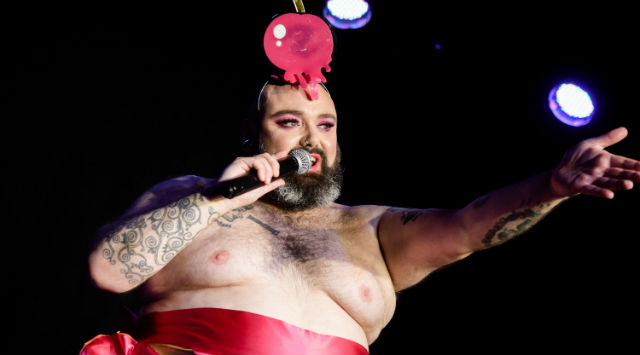
Omar Musa imagines himself travelling down a river with Muhammad Ali, both men outsiders, connected by experiences of ostracism. Musa’s Since Ali Died provides insight into how people of colour survive the dogged exclusions of white society. Through poetry, prose and hip hop phraseology, Musa’s extraordinary writing provides access to intense and complex emotions, that relate to a sense of displacement, in an Australia struggling to think of itself as anything other than an illegitimate monolith. It is a work about home, but on how it can disown you, presented in a theatrical context that sees a remarkable talent confront an audience comprising adversaries and allies, all of us relevant and implicated.

As performer, Musa is charisma personified. We are won over effortlessly, by a stage presence naturally confident yet vulnerable, one that showcases an honesty that many will find utterly disarming. Masculinity is portrayed in a delicate light, with director Anthea Williams carefully preventing any sense of alienation that could arise from the motivating fury of Musa’s expressions. It is an exercise in compassion that results, an occasion that welcomes all, one that encourages us to think about the parts we play, as individuals and as collectives, in Musa’s personal stories.

Melancholic and incredibly moving, Since Ali Died is a timely meditation on contemporary Australian life, an undeniable summation of all our unique challenges, whether spiritual, social or political. Black and brown people endure discrimination by white structures that lay fake claim to this land, just as Muslims are relegated impudently, to a status of religious inferiority. Omar Musa’s very body and soul, right before our eyes, is evidence of those injustices that insidiously constitute our harmful way of life. He is thriving, but he suffers. In his music, simultaneously celebratory and indignant, we are able to understand the strength that is required of people like Musa. It is dark but uplifting, refusing to give in to destruction. His energy is ample and indomitable, and although painful to see it expended on coping mechanism, there is plenty left for orchestrating a change.

www.griffintheatre.com.au | www.riversideparramatta.com.au

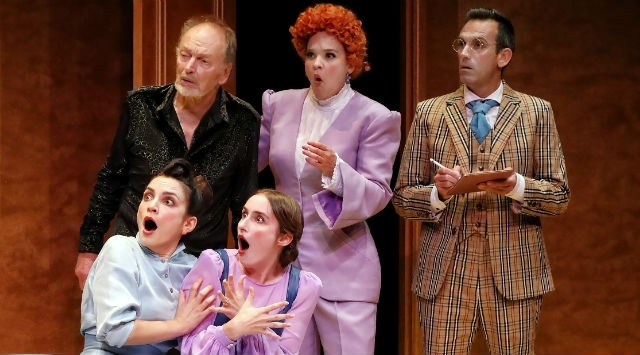
Review: Don’s Party (Chippen Street Theatre)

Venue: Chippen Street Theatre (Chippendale NSW), Dec 6 – 15, 2018
Playwright: David Williamson
Director: Travis McMahon
Cast: Dominic Di Paolo, Lachlan Donnelly, Amber Dyball, Ben Hunter, Ramy Moussa. Andrew Murdoch, Katerina Papasoulis, Evan Piefke, Helen Shoobert, Rachel Slee, Kristen Zinghini
Images by Ethan Hatton-Warham

Theatre review
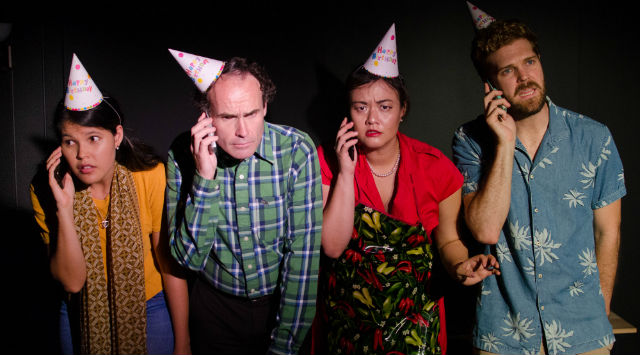
The setting is a house party in 1969 suburbia, where men are arse holes, and women are bewilderingly whiny. David Williamson’s Don’s Party, now approaching half a century old, offers a bleak look at how a modern Australia might have been imagined. The play wrestles with ideas of a progressive future, as characterised by a new social permissiveness; Don asks all his guests to bring along a pornographic object, as icebreaker or more truthfully, to disrupt the banality of his home life with Kath and their children.

The sexual revolution had begun, and down under, it appears we were deeply confused. All the women had apparently become bitches, and they are referred to in the play as such, on more than ten occasions. Wives and girlfriends were starting to have minds of their own, no doubt as a result of advancements in birth control, and according to Williamson, all of civilisation were basically going to hell in a handbasket.

As the old world disappears, what happens in Don’s Party reveals a paralysing fear of what is to come. There is little question that this attitude still prevails. It was feminism’s second wave then, and we are now in the throes of its fourth. The disquiet that accompanies the promise of equality is palpable, and Williamson’s pessimistic vision, borne out of the anxiety of a patriarchy under threat, can now be seen as pitifully limp.

Travis McMahon’s direction presents a straightforward rendition, allowing us to detect that sense of panic inherent in mid-century masculinity. The ensemble consists of actors with varying abilities, and although not particularly inventive with what they bring, each manages to locate moments of theatricality in the writing, that insist on our attention. The production lacks intellectual rigour, but it is clear that much effort has been put into manufacturing a satisfactory naturalism for their performance.

When women grow strong, our relationships have to be put through a process of reshape. Friends and family, love and sex, all face interrogation, as we learn to shift away from traditions that plainly no longer work. In Don’s Party, men are fearful and women are frustrated. They cling on to the past, unable to come to terms with the tides that push for a brighter future, a mighty force that will not tolerate the status quo.

www.chippenstreet.com

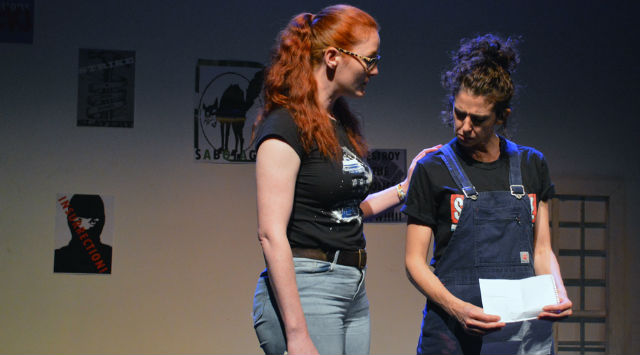
Review: The Club (Belvoir St Theatre)

Venue: Belvoir St Theatre (Surry Hills NSW), Dec 7 – 22, 2018
Playwright: David Williamson
Director: Tessa Leong
Cast: Jude Henshall, Louisa Mignone, Ellen Steele
Images by Marnya Rothe

Theatre review
Hundreds of millions of dollars go through Australia’s sporting organisations, and to view the industry as wholesome and virtuous is, to put it mildly, naive. Yet, we routinely attribute our sports stars and their colleagues, with a glow of reverence, and they in turn, present an image of habitual sanctimony. The men in David Williamson’s The Club are exposed of these hypocrisies. It is a story about white boys spoilt by their talent with an olive-shaped ball, who grow into stunted adulthood, and we watch their clumsy attempts at extending the glory days beyond bygone moments on the football field.

The corrupt and inane behaviour of these self-aggrandising men provide a platform for director Tessa Leong’s discussion of sexism and toxic masculinity, within an archetypal setting of a sporting arena, that conveniently encapsulates our nation’s sense of self-image. Three female performers take on all the roles, playing exaggerated versions of maleness, for a subversive exercise that makes statements about gender, and especially about the misguided adoration of what might be termed traditional masculinity. First half of the production is surprisingly conventional, a one-trick pony with a simple concept that quickly loses steam, but the show picks up furiously after interval, and what had felt gimmicky, turns into something far more complex and provocative.

The production is full of grandiose gesturing, not always powerful, but certainly delivered with extraordinary conviction. Actor Ellen Steele is particularly robust with her comedy, extremely cheeky and acerbic, a consistent delight in this portrait of ugliness. Jude Henshall and Louisa Mignone too, are exuberant performers who bring admirable rigour into their farce, for a rewarding study on the machinations of privilege and ignorance, frequently found in some segments of Australian society.

In sport, we celebrate high achievers not only for their accomplishments, but also for the whole of their persons. We want our heroes to be godlike, and imagine them to be infallible, consequently giving them powers, in the form of money and status, that they often exploit to the detriment of our collective good. It is no coincidence that these powerful are predominantly straight white men. Our institutions are structured to benefit a certain idea of supremacy, one that repeatedly exerts its imperialism over all others, and any action designed to take them down is met with disdain and even violence. Oppression requires concession, with the oppressed made to concede to notions of objectivity and meritocracy, that are demonstrably unjust. It is a survival strategy, to play to these rules, but only those willing to sacrifice can hope to foster a change.

www.belvoir.com.au | www.isthisyours.com.au

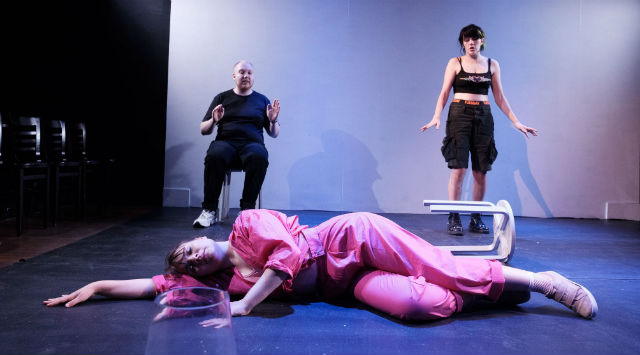
Review: The Smallest Hour (Griffin Theatre Company)

Venue: SBW Stables Theatre (Kings Cross NSW), Dec 5 – 15, 2018
Playwrights: Phil Spencer, Susie Youssef
Director: Scarlet McGlynn
Cast: Phil Spencer, Susie Youssef
Images by Brett Boardman

Theatre review
In a city just like Sydney, Chris and Shelley cross paths on several occasions. Each is having an eventful, if not entirely enjoyable night, in this immense love story about the metropolis. Phil Spencer and Susie Youssef’s The Smallest Hour may not be grand in scale or indeed vision, but it captures the essence of that relationship between busy cities and its inhabitants, in a deeply beautiful way, for an expression of an intimacy that frequently borders on the obsessive. We are individuals who think of ourselves as distinct entities, separate from other humans and segregated from place; the observation here is that most of us are nothing without our towns, and Spencer and Youssef’s play is a splendid tribute to that sense of belonging.

The Smallest Hour is also a romantic comedy, and director Scarlet McGlynn’s ability to infuse humour into all of its romance, with place and with persons, ensures a production that will thoroughly delight every typical urbanite. Our imagination is cleverly manipulated, as the action moves from one location to the next, by Veronique Benett’s lights and Steve Francis’ music, guiding us surreptitiously through a series of familiar situations. There are no props and no costume changes to be seen on Tyler Hawkins’ simple stage design, but all the imagery that we receive, in our mind’s eye, is consistently vivid. The playwrights perform the work, mainly as narrators, but also as impeccable stand-ins for our protagonists. Both are remarkably endearing, and although not yet word perfect on opening night, they prove themselves consummate raconteurs, utterly and completely mesmerising with the tale they so adroitly weave.

The Smallest Hour reveals a love greater than Chris meets Shelley. It documents the way we navigate this environment, showing us how we have absorbed the physicality of this city, to live out existences so dynamic and spirited. Unlike boyfriends and girlfriends, we never ask that places give us their perfection; we understand better, our responsibilities as components of communities big and small, of collective identities that hold so much more promise than the insularity of our private selves. The lovers fixate on each other at conclusion, forgetting all the roads that lead them to one another. Their audience however, is left with evocations much more inspiring than petty concerns. We are asked to deal with matters of our heart, that relate not to any one, but to the entirety of this region; a very lucky love that must be cherished.

www.griffintheatre.com.au

Review: The Laramie Project & The Laramie Project: 10 Years Later (Seymour Centre)

Venue: Seymour Centre (Chippendale NSW), Nov 28 – Dec 8, 2018
Playwrights: Moises Kaufman and members of Tectonic Theater Project
Directors: Carly Fisher, Rosie Niven
Cast: John Michael Burdon, Laura Djanegara, Andrew Hofman, Francisco Lopez, Linda Nicholls-Gidley, Matthew Pritchard, Dominique Purdue, Emily Richardson, Charlotte Tilelli
Images by David Hooley

Theatre review
The brutal murder of 21 year-old gay man Matthew Shepard in 1998, endures in our collective memory, partly because of Tectonic Theater Project’s seminal work The Laramie Project. Utilising techniques of verbatim theatre, the group’s exhaustive research and interview processes have resulted in an exceptionally powerful work that confronts homophobia, in a manner that is much more far reaching than its very localised context might suggest. Along with its follow-up The Laramie Project: 10 Years Later, both pieces combine to offer a truthful and complex study of hate in communities, examining the way it operates, and reflecting on its disheartening tenacity.

Directed in tandem by Carly Fisher and Rosie Niven, it is a dynamic and stirring staging of the pair of plays, with innovative use of space ensuring optimum poignancy for every pertinent message in this Laramie cycle. Lighting design by Martin Kinnane is particularly effective in regulating dramatic intensity, and proves invaluable in the smooth execution of countless scene transitions.

Performing a very extensive range of roles, is a remarkably cohesive ensemble, including John Michael Burdon and Charlotte Tilelli who leave strong impressions with their varied and often flamboyant approaches to their respective catalogues of personalities. Also memorable are Andrew Hofman and Dominique Purdue who dial up the emotions, in several affecting sequences delivered with complete and unequivocal vulnerability.

It is now twenty years since Matthew Shepard was killed on that fence, in Small Town USA. The imagery is vivid, a sacrificial lamb hanging off a divide, with residents on either side, split by opinion and perspective. In many ways, we have since advanced as peoples, especially in relation to the legislation of LGBTQI protections and marriage equality, but it is clear that our current climate of disunity in the Twitter and Trump era, is quite unprecedented.

In this digital age, we seem to have lost the capacity to think outside of zeros and ones; everything is torn asunder into left and right, love and hate, good and bad. We make enemies much more quickly than ever before, each of us moving around in hunting mode, with voracious appetites, judging people into categories that do nothing other than to amplify our disdain for a perceived adversary. We need to find ways instead, to embrace the other side, if that is what it takes to take us to the realisation, that the other side does not exist at all.

www.theatretravels.org

Review: All My Sleep And Waking (Apocalypse Theatre Company)

Venue: Old 505 Theatre (Newtown NSW), Nov 28 – Dec 22, 2018
Playwright: Mary Rachel Brown
Director: Dino Dimitriadis
Cast: Di Adams, Angela Bauer, Alex Beauman, Richard Sydenham
Images by Robert Catto

Theatre review
Anne has to confront very complicated feelings about her father. As his death approaches, all that had resulted from a troubled family life must finally be attended to. Together with Maria and Peter, the three siblings must get each other through this difficult time, and perhaps work towards a resolution for decades of psychological damage. All My Sleep And Walking by Mary Rachel Brown is a study of broken homes, staggeringly authentic in its observations, and admirably honest with its intentions. Although not a pessimistic work, the play’s realistic rendering of a daughter’s struggle, and of delicate family dynamics, is a refreshing alternative to stories of this nature that always seem determined to be improbably uplifting. Here, just to be able to encounter the unvarnished truth, proves powerful enough to satisfy.

Directed by Dino Dimitriadis, the production is deliciously taut, with meticulous attention on interactions between characters that delivers some very gripping drama. Anne is played by Di Adams, whose work is imbued with integrity, for a very believable, albeit overly serious, portrait of fortification and incredible stoicism. As Maria, Angela Bauer offers an emotional counterbalance, fabulously intense yet astutely humorous, for an outstanding performance that has us mesmerised. Richard Sydenham is delightful as Peter, with quirky mannerisms that prove endearing, and impressive nuance for every line that he dispenses. Anne’s son Josh, is played by a persuasive Alex Beauman whose relaxed naturalism adds valuable dimension to our experience of the show.

Maybe one’s father never did his best, or maybe his best was simply not good enough. Either way, regardless of his intentions, one has to suffer the consequences of an unsatisfactory parenthood, whilst imagining perfect fathers abound in every other household. Self preservation requires that Anne takes on merciless strategies; she vilifies him brutally and spares no thought for his feelings, even as he is ravaged by cancer. The degree of hurt that she suffers is palpable, and from our vantage point, forgiveness would do her a great deal of good, but that is of course, easier said that done. Anne can only access what is available to her, and when we want more for her, we reveal our inability to understand the devastation she has to bear. The miracle lies instead, in her own abilities as a mother. We watch her son grow into a stable and secure adult, and are awestruck by the incredible breaking of a curse.

www.apocalypsetheatrecompany.com

Review: Charlie Pilgrim (ATYP)

Venue: SBW Stables Theatre (Kings Cross NSW), Nov 21 – Dec 1, 2018
Playwright: Sam O’Sullivan
Director: Jena Prince
Cast: Rose Baird, Maliyan Blair, Stephanie Calia, Aria Ferris, Adelaide Kennedy, Sophie Lewis, Astra Milne, Daisy Millpark, Tobias Purcell, Carmen Rolfe, Callum Macgown, Lucinda Slattery, Noah Sturzaker, Eva Sutherland, Annabelle Szewcow, Mia Williams, Stanley Wills
Image by Tracey Schramm

Theatre review
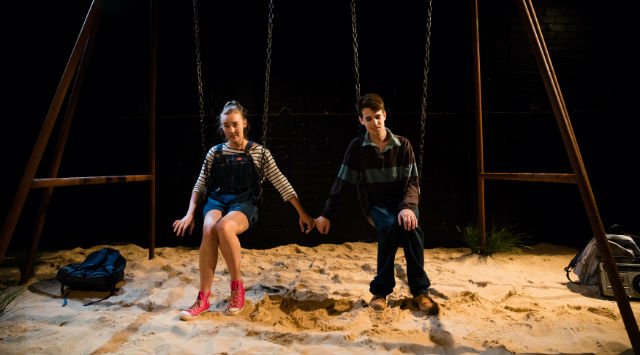
Tired of feeling like an outcast at school, Charlie Pilgrim retreats into her bubble, indulging in a love of science. She invents a time travel machine, only to find that it traps her in a time loop, with a new Charlie Pilgrim materialising every 24 hours. A solitary activity quickly becomes a social one, and our protagonists have to find a way to resolve the quickly escalating situation. Sam O’Sullivan’s Charlie Pilgrim (Or A Beginner’s Guide To Time Travel) is an ambitious piece of writing that packs a lot of ideas into its 80 minutes. It is an enjoyable narrative in a familiar sci-fi format, extremely detailed in its rendering, with explorations into a wide variety of themes. There is a density to O’Sullivan’s work that can prove challenging, but the richness of what he offers is quite tantalising.

Wonderfully imagined by director Jena Prince, the production cleverly utilises a large cast of young actors, to create a hive of activity that is irresistibly engaging. Emma Lockhart-Wilson’s lights and Maddie Hughes’ sounds are robustly manufactured to provide clearly indicate every plot point, ensuring that we never get confused by all the relentless hustle and bustle. The ensemble is extraordinarily disciplined, yet consistently effervescent with what they bring to the stage. 17 precocious actors delight us with their creativity and charm, keeping us entertained and enthralled by the story that they so enthusiastically tell.

If we understand that the only constant in life is change, then it should follow that time is never as orderly as we assume it to be. Regrets are evidence of a life well lived, and much as we wish to revisit the past to make things right, there is a human capacity that allows us to see that it is never too late for amends to be made, even if oblique approaches are required. Yesterday’s lessons are for today, and learning to live with poor decisions, is crucial in how we can evolve into better people. The meaning of life, lies in the need to make every day an improvement. We are informed only by the past, but to dwell in it is meaningless.

www.atyp.com.au

Review: Marbles (Crying Chair Theatre)

Venue: The Actors Pulse (Redfern NSW), Nov 21 – Dec 1, 2018
Playwright: Kate Wyvill
Director: Christine Greenough
Cast: Richard Cotter, Emma Dalton, Melissa Day, Sarah Plummer, Tricia Youlden
Images by Ben Prats

Theatre review
Stanley’s Alzheimer’s disease has advanced to a stage where he is completely incoherent and no longer able to communicate. His original intentions, made in no uncertain terms, of wishing to undergo euthanasia, is of course highly contentious in a country where assisted dying remains illegal. In Kate Wyvill’s Marbles, Stanley’s three daughters wrestle with the prospect of having to fulfil an agreement that now seems too hard to contemplate. Unlike issues around birth, topics dealing with death are rarely spoken of. Australians gladly own up to being less than delicate, and although not generally a prudish culture, bereavement is certainly not a subject we are comfortable with.

Wyvill’s play offers a point of discussion that our society needs. Some of the writing requires a little refining, but the questions that it prompts are urgent ones that affect us all deeply. Directed by Christine Greenough, it is an appropriately thought-provoking production, even if its rendering of humour often feels underwhelming. Actor Richard Cotter brings dignity to the ailing Stanley, along with a quirky vibrancy that proves appealing. Caregiver Natasha is played by Sarah Plummer, who offers a valuable accuracy to the complicated emotions that are at stake. Her convincing portrayal of the long suffering daughter injects heart and soul, to a story that benefits from its sentimentality.

Marble‘s explorations into end of life decisions are made even more complex by Stanley’s energetic disposition. We are confronted with the vision of a very sick man unaware of his own suffering, and as he goes about blissfully ignorant of his own dementia, we have to think about the right thing to do on his behalf. It is evident that achieving consensus on the matter right now is unlikely, but to talk about death, and to build structures as a community that will support that inevitability, is absolutely necessary.

www.cryingchairtheatreco.com

Review: Broadway Bound (New Theatre)

Venue: New Theatre (Newtown NSW), Nov 13 – Dec 15, 2018
Playwright: Neil Simon
Director: Rosane McNamara
Cast: Les Asmussen, Patrick Holman, Brett Heath, Suzann James, Susan Jordan, Simon Lee
Images by Chris Lundie

Theatre review
Brothers Eugene and Stanley are comedy writers on the brink of commercial success, close to leaving home for the bright lights of New York City. Their parents’ marriage however, is disintegrating, and in Neil Simon’s Broadway Bound we see members of the Jerome family growing up, including Kate and Jack, who have to come to terms with major transformations taking place in their mature years. The semi-autobiographical play provides a glimpse of America in the middle of last century, with all its post-war optimism and nostalgic charm, but the work has not aged well. Although written only in 1986, its humour already proves tired, and where its themes can seem timeless, the drama is unfortunately lacklustre.

Rosane McNamara’s direction does however, provide us with a prudent amount of theatrical vitality. There is little to be excited about in the writing, but onstage activity is determined to keep us engaged. Actor Simon Lee is especially animated with his performance as Stanley, providing a necessary vigour that wills us into sharing in his character’s idealism. The innocence of younger sibling Eugene is made convincing by wide-eyed Patrick Holman, who demonstrates himself a reliable anchor for the family’s increasingly unstable dynamics. Their long-suffering mother Kate, is elevated by Suzann James’ impressive capacity for nuance, in a rich portrayal that is remarkably well-observed and accurate.

We meet the Jeromes at a moment of chaos, when big changes are underway for each individual. The turmoil signals that life is in motion, that although stability is required for us to thrive, occasional upheaval is necessary, to prevent us from complacent stagnation. Age is only a number, but our mortality is inference that growth and progress are essential to the human experience. If everything stays the same, time bears little meaning. Whether one thinks of time as limited or abundant, there is no denying that to waste it, is an irrevocable blunder.

www.newtheatre.org.au