Venue: Wharf 1 Sydney Theatre Company (Walsh Bay NSW), Jul 18 – Aug 16, 2026
Playwright: Jane Harrison
Director: Ian Michael
Cast: Googoorewon Knox, Guy Simon
Images by Daniel Boud
Theatre review
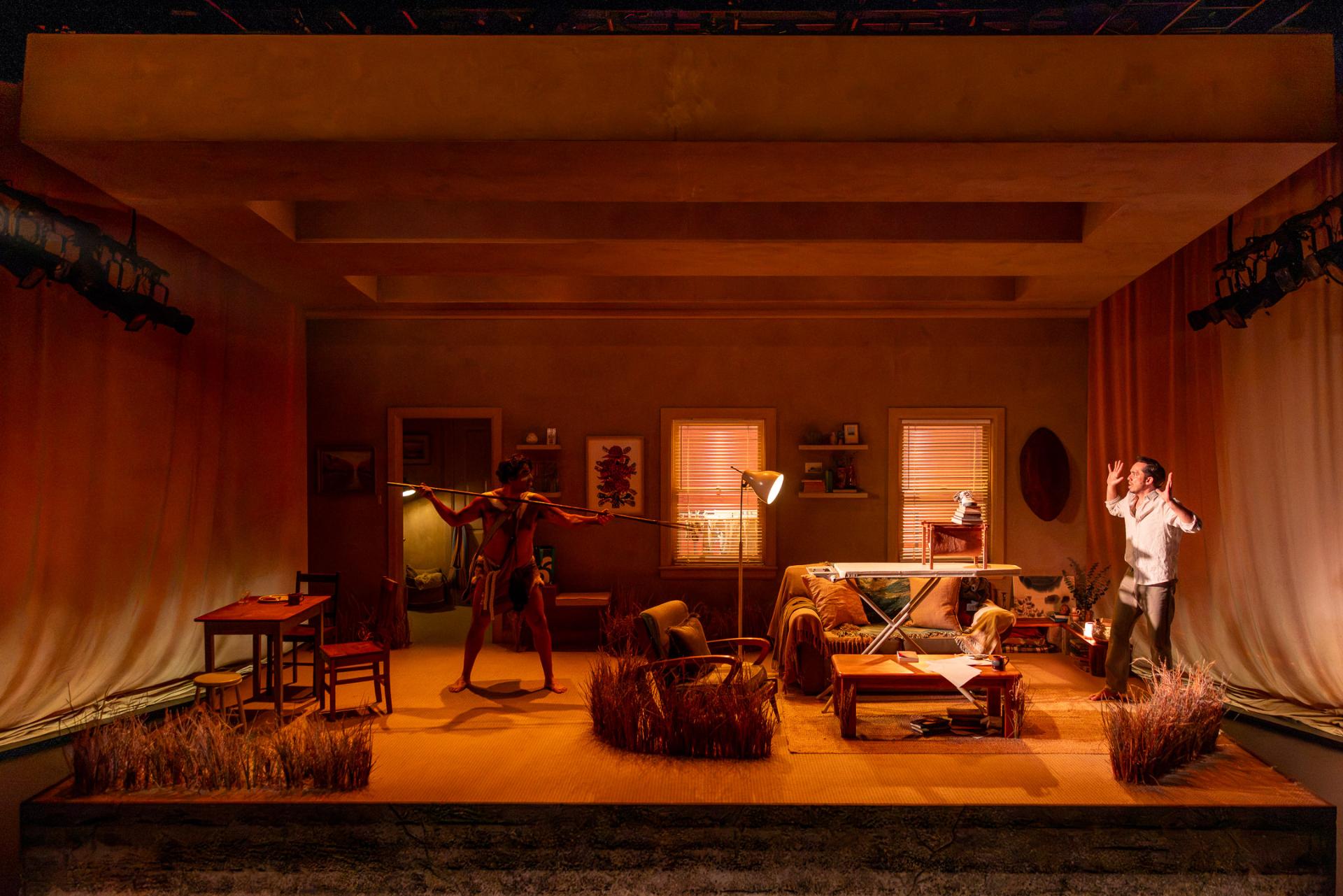
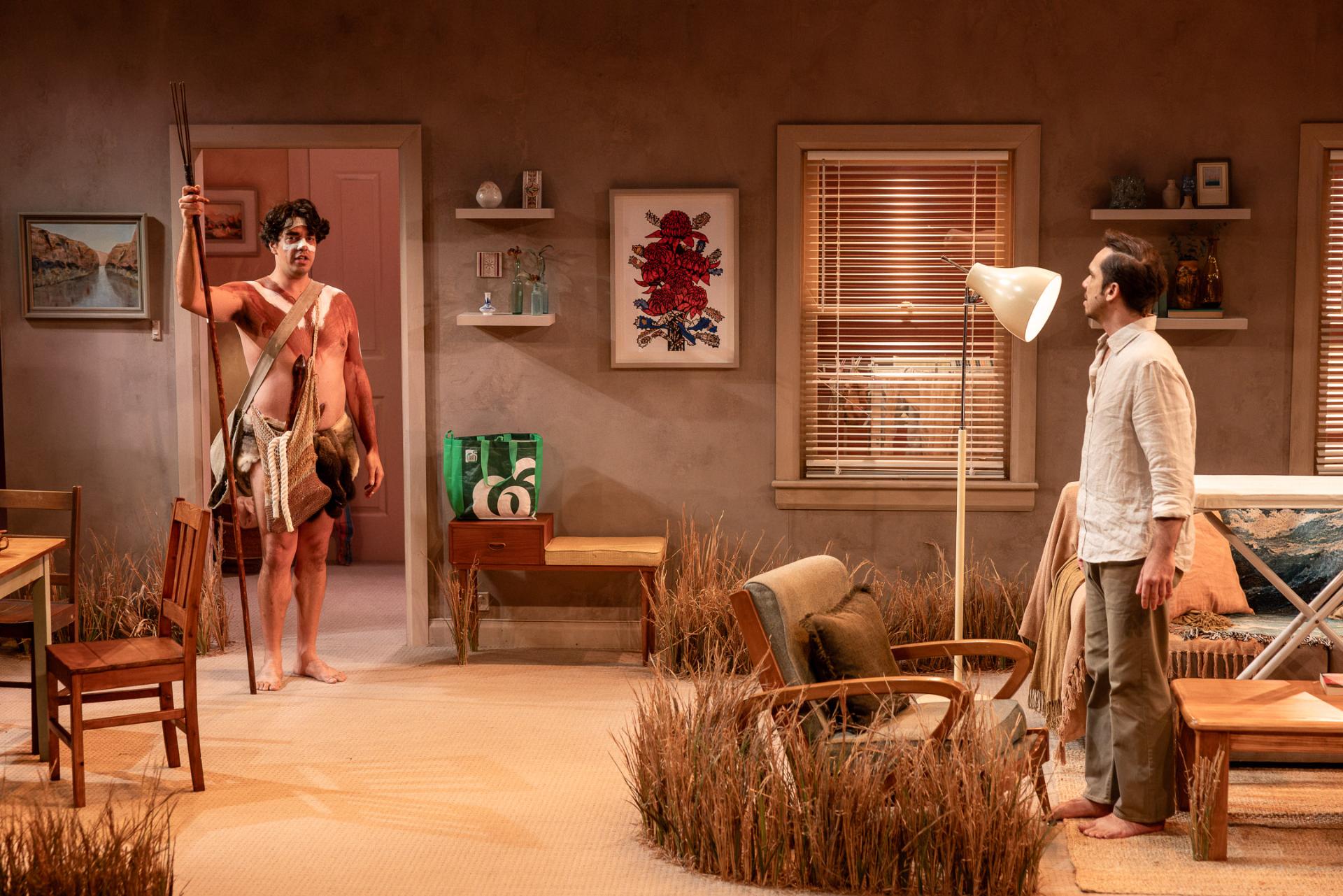
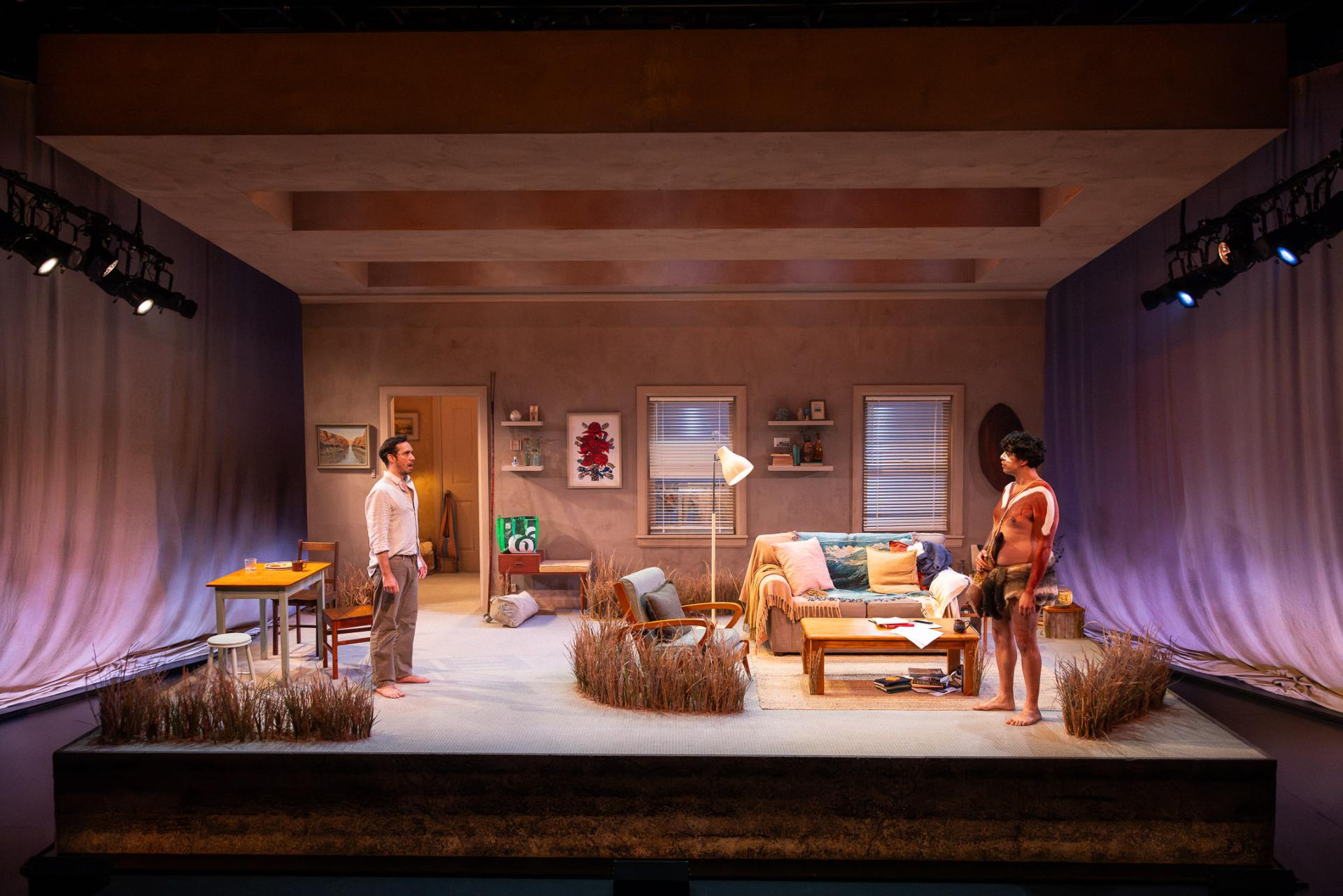
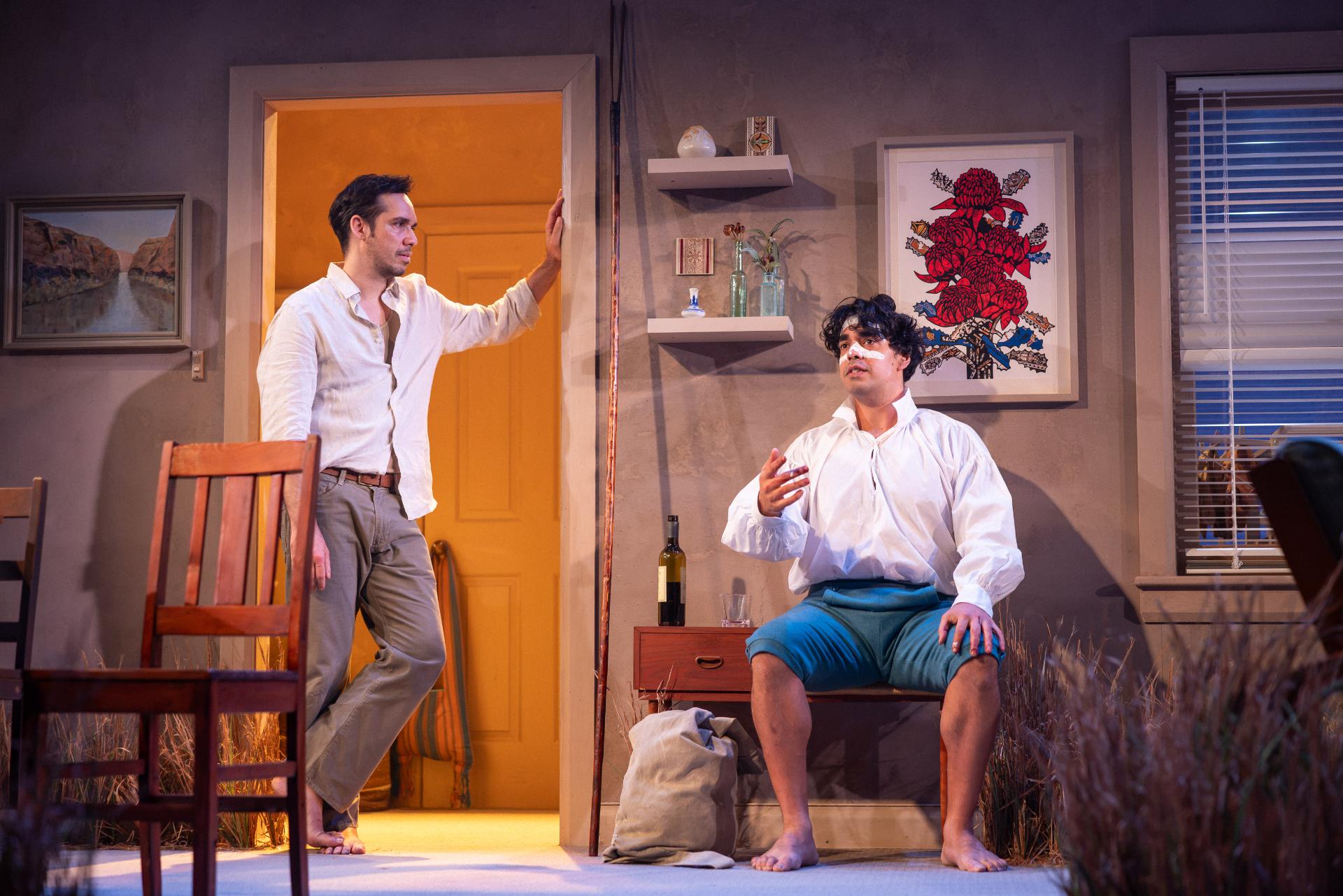
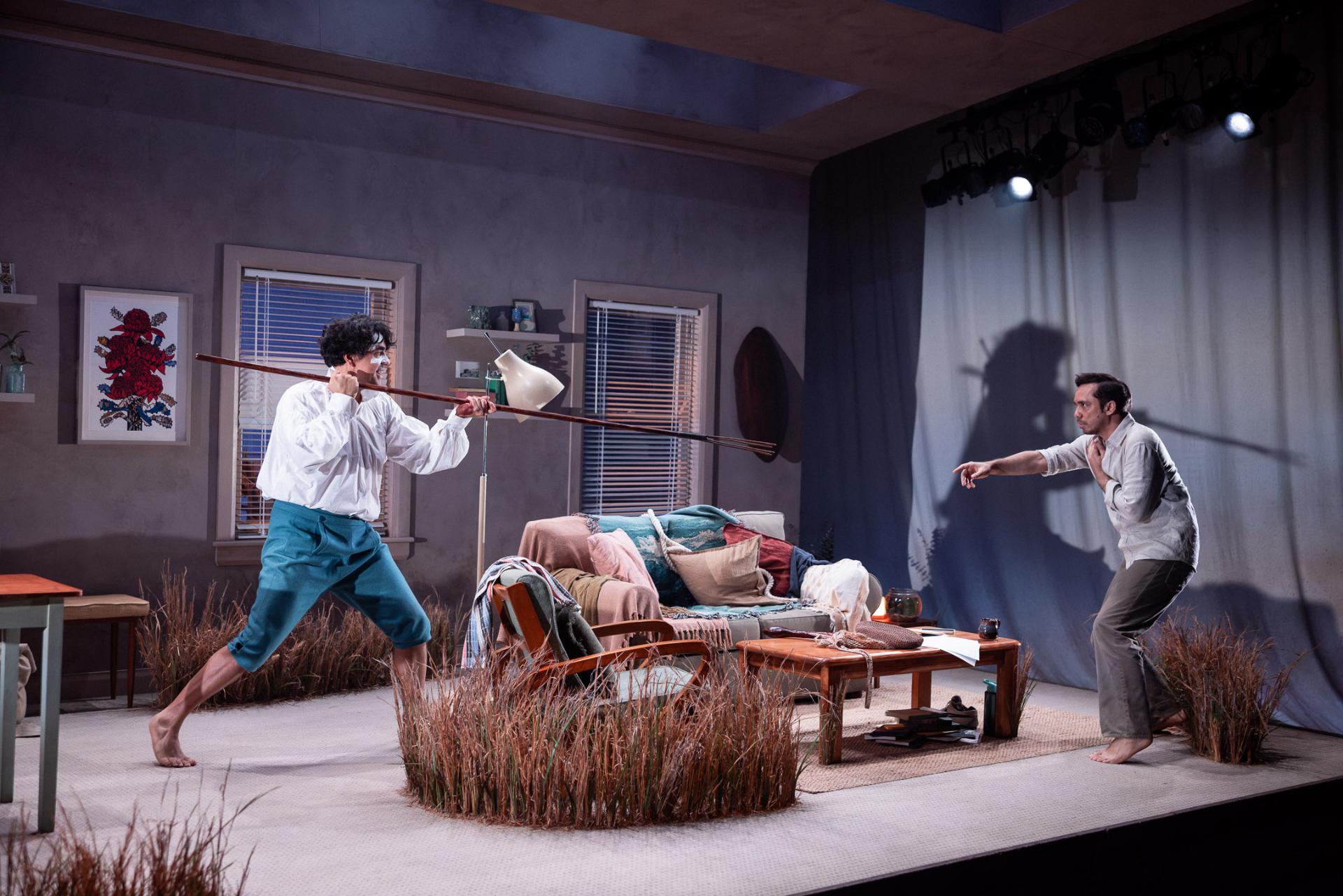
An actor preparing to audition for the role of Bennelong—that celebrated Aboriginal diplomat from the turbulent dawn of colonisation—finds himself doing more than rehearsing lines. In the quiet of his living room, he summons the historical figure into startling, flesh-and-blood existence. What follows is a conversation across centuries: the ancestor clarifying his legacy, the actor grappling to comprehend it from a vantage point more than two hundred years removed.
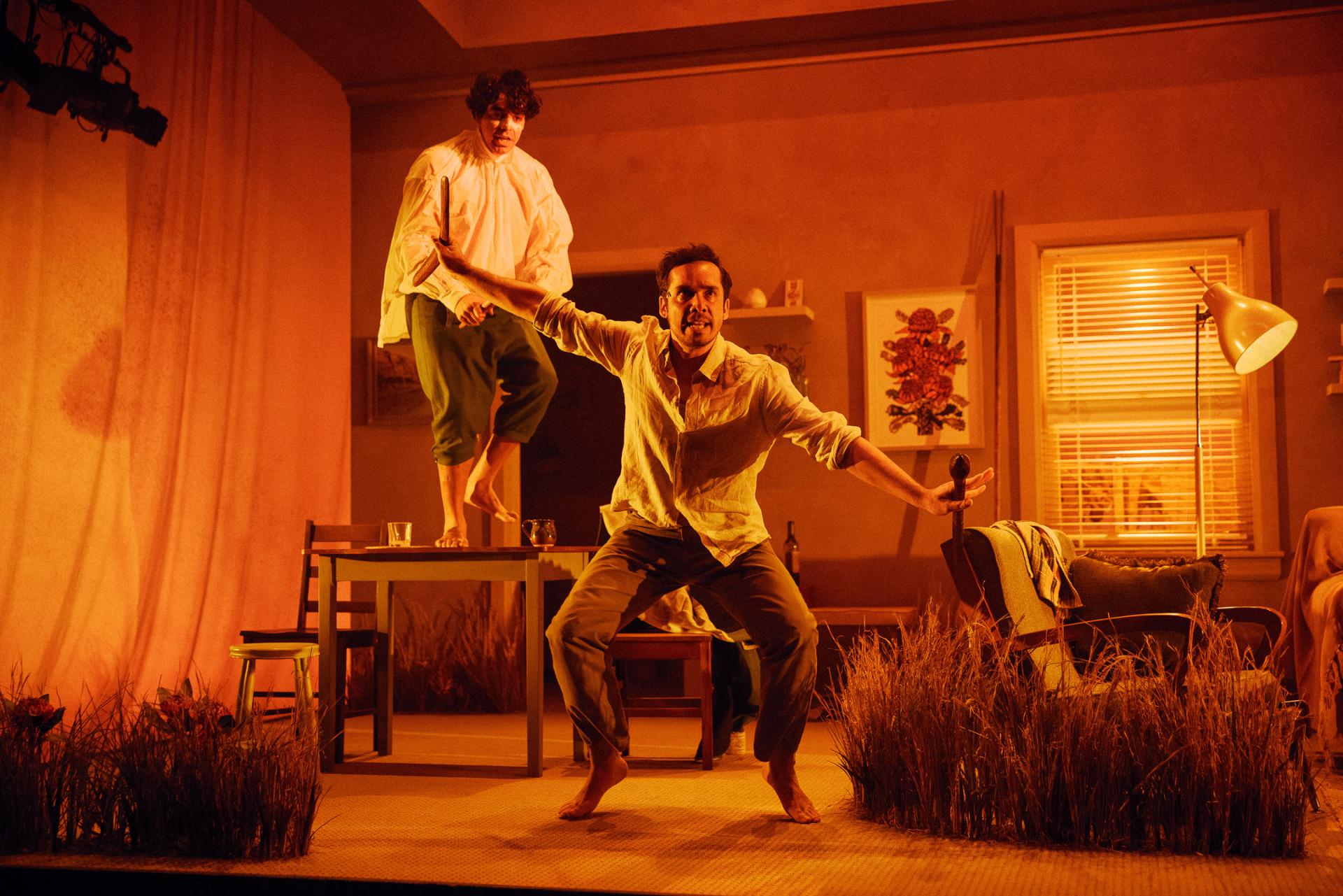
Jane Harrison’s Bennelong in London is a work of remarkable intellectual architecture—thoroughly researched, astutely considered—yet it never sacrifices emotional immediacy for scholarly rigour. From a contemporary Aboriginal perspective, it interrogates Aboriginality and colonialism with clear-eyed acknowledgment of the endlessly complex entanglements that define life on colonised Indigenous lands. The play holds space for contradiction: the difficulty of honouring the past while pressing forward into the present, all the while remaining unflinching about the injustices visited upon this country’s rightful custodians. Though its themes run deep and serious, the work brims with humour, much of it arising from the friction between two men separated by epochs yet thrown together in intimate proximity.
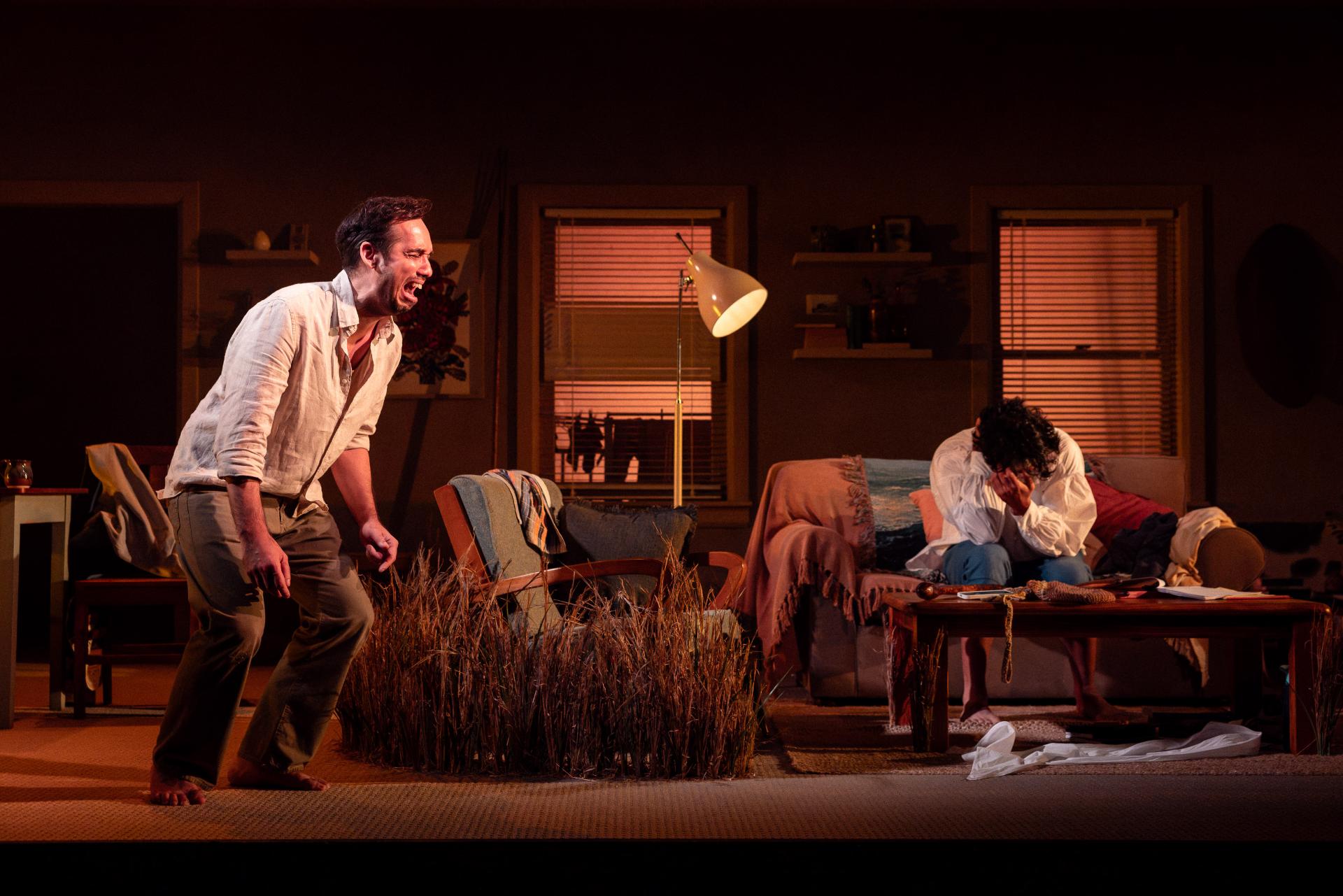
Director Ian Michael handles this tonal balancing with supreme deftness, blending levity and sorrow in an exploration of identity and legacy that speaks as urgently to First Nations peoples today as it does to settlers. The emotional texture of the storytelling finds especially potent expression in James Peter Brown’s music, whether threading subtly beneath the action or rising to prominence as a centrepiece of the staging. Brown’s compositions pull the audience deep into the work’s intense sentimentality, rendering abstract historical grief into something viscerally moving.
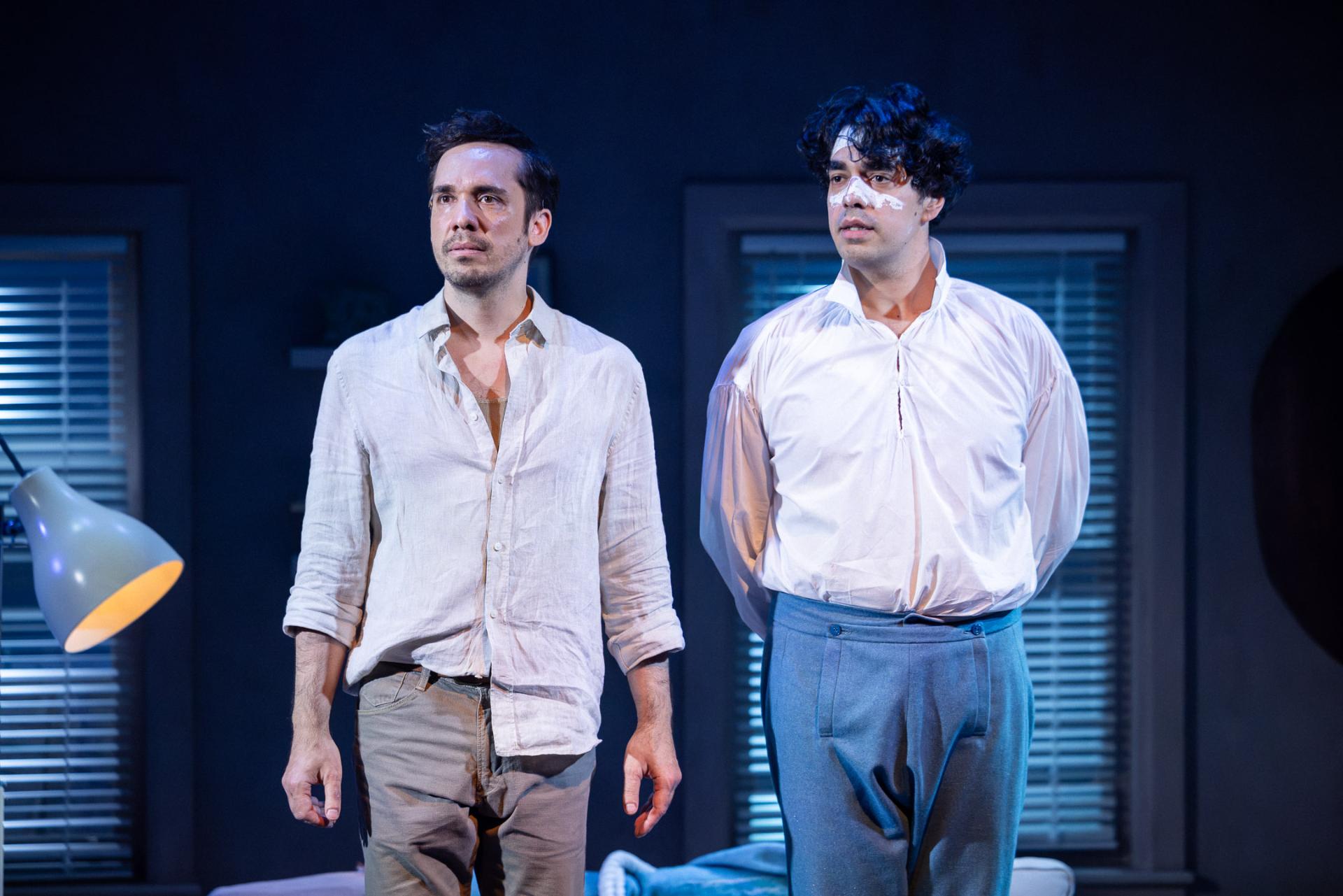
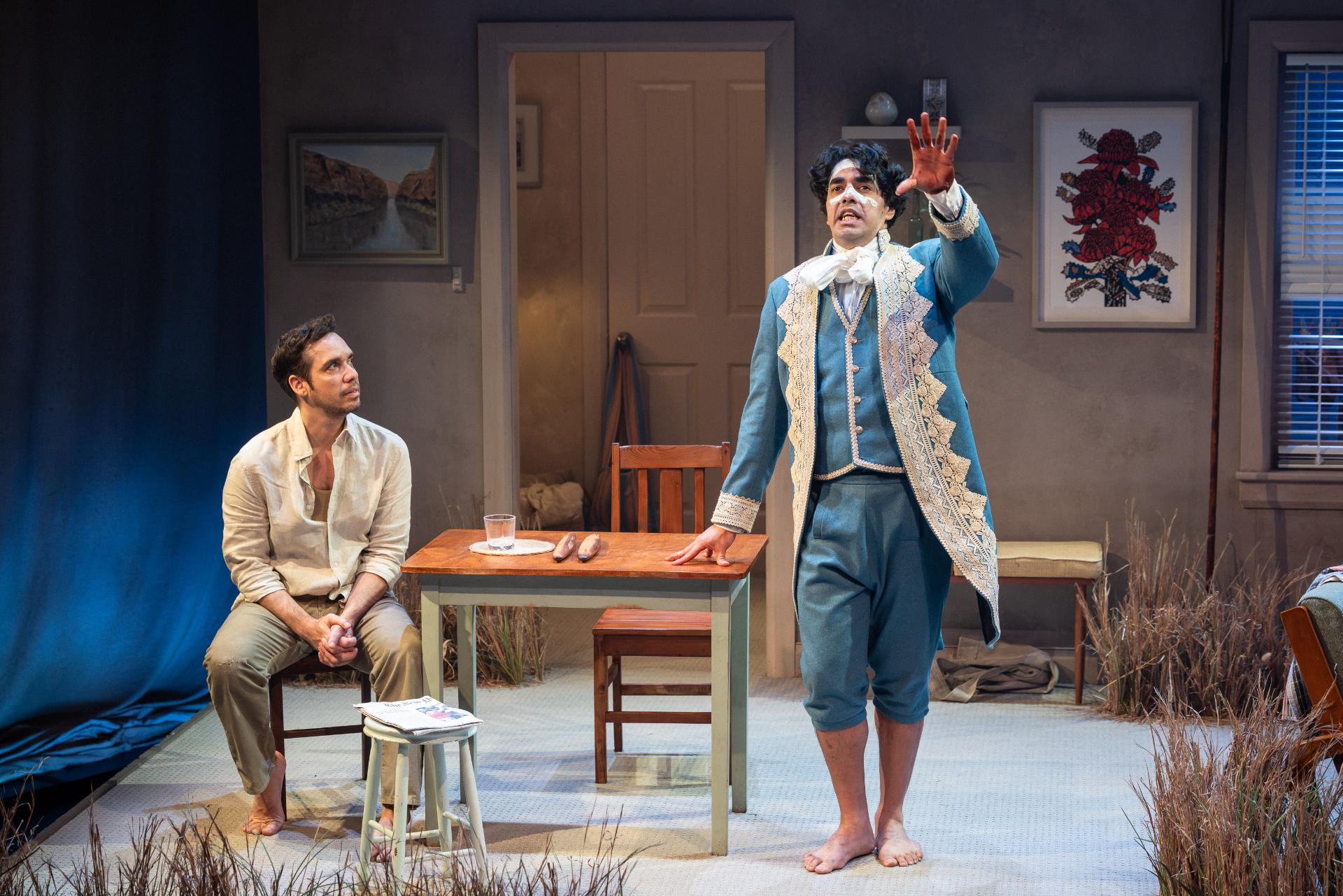
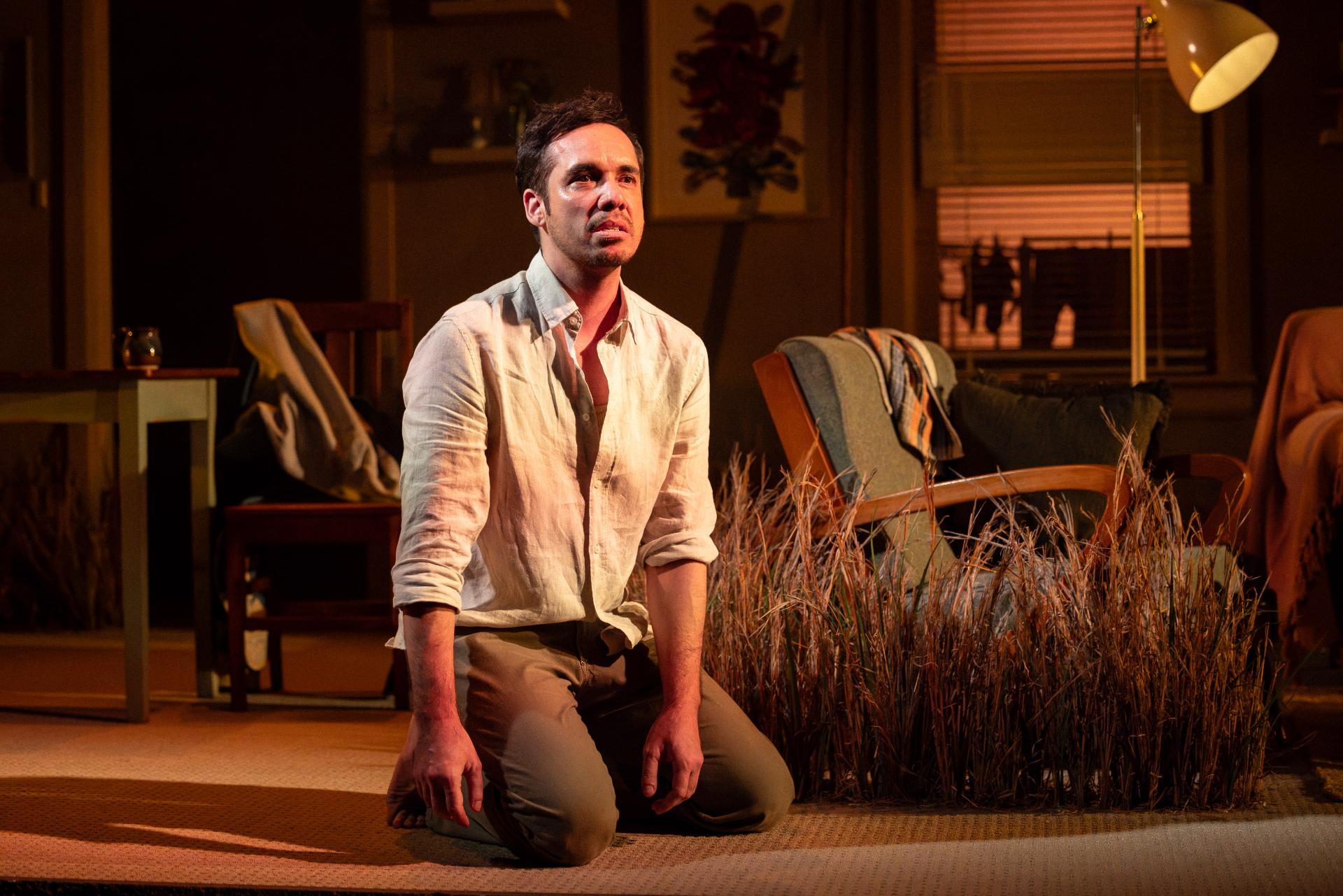
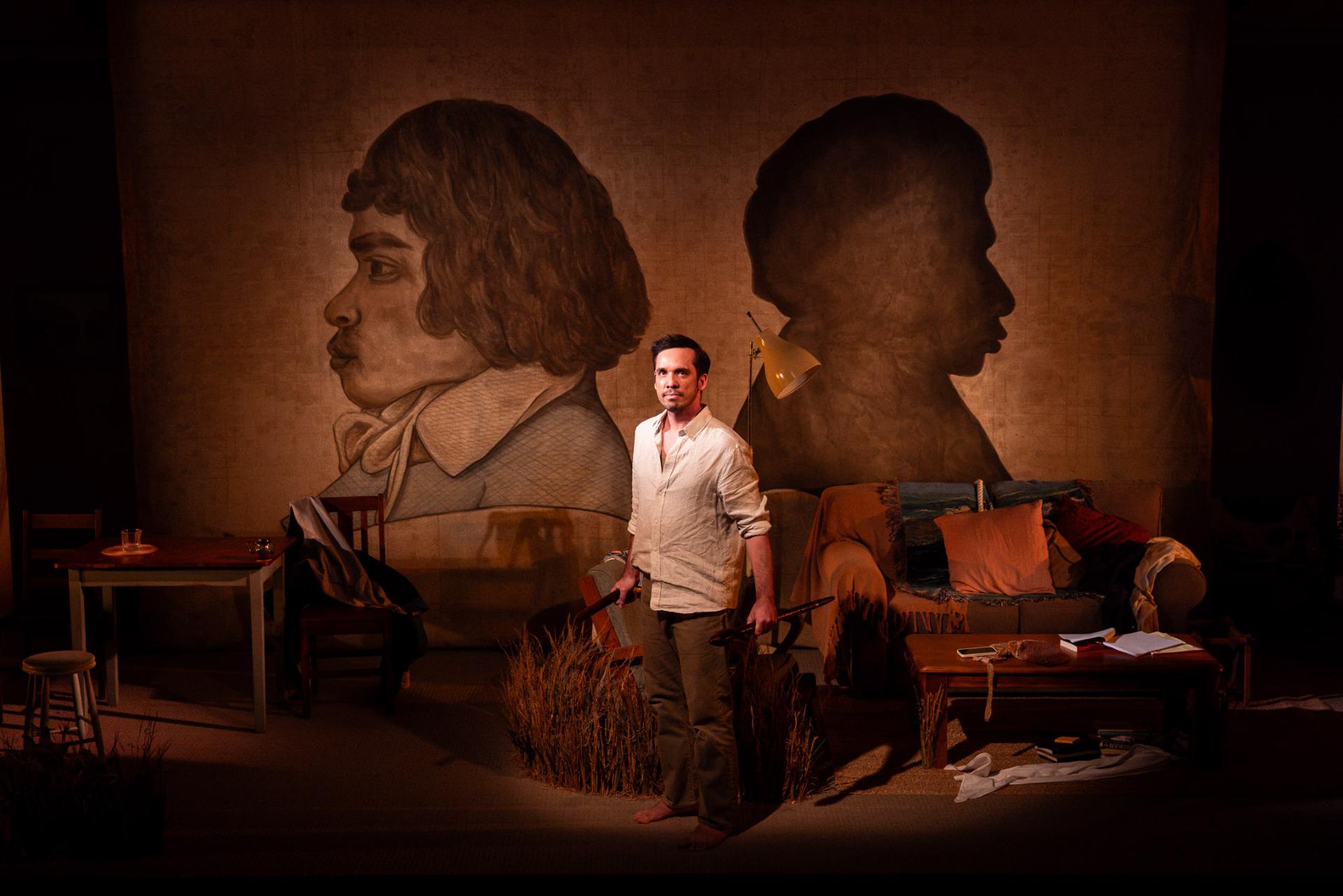
Trent Suidgeest’s lighting design carries us fluidly between realism and the fantastical, lending credibility to whichever psychological territory the play chooses to inhabit, while discovering unexpected beauty in the theatrical transformation of an otherwise ordinary domestic space. Emma White’s set ingeniously weaves native flora into a contemporary living room, quietly signalling the duality embedded in everyday life for those negotiating Indigeneity amid persistent colonising forces. Her costumes, by contrast, adopt a more straightforward approach—two men from different centuries, simply dressed, simply meeting.
Googoorewon Knox is endlessly likeable as Bennelong, his charisma matched by a musicality that proves invaluable whenever the performance shifts into more traditional registers. Some of his storytelling occasionally lacks vividness—certain historical details risk being lost in the telling—yet the power of his ancestral invocation remains beyond question. Equally spirited is Guy Simon as the modern-day Aboriginal man seeking a history that is at once intimately personal and consequentially vast. The grace with which Simon pivots between lightness and gravity throughout the piece is genuinely astonishing, and his ability to bring such unguarded earnestness to this vital story feels especially precious in these cynical times.
Like every colonised being, Bennelong could only do his best within circumstances engineered for destruction. We might hope to resist with heroism, or at least to survive with grace, but the truth is more humbling: the everyday negotiations with pervasive, malicious systems of exploitation mean we will often fall short. Bennelong was far from perfect, yet we can see precisely why—and we can carry that understanding forward as inspiration, strengthening how we regard ourselves and one another in the ongoing, unfinished work of decolonisation.