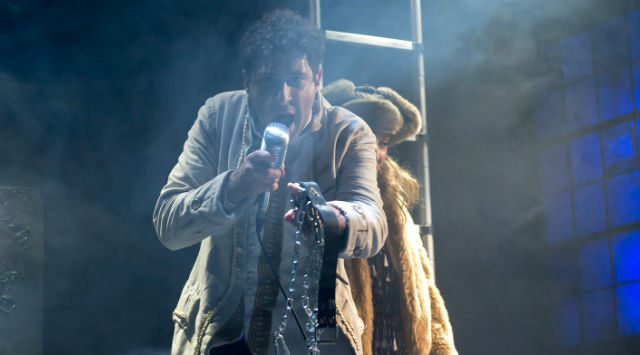
Review: Inner Voices (Don’t Look Away Theatre Company)

dontlookawayVenue: Old Fitzroy Theatre (Woolloomooloo NSW), Jun 15 – Jul 9, 2016
Playwright: Louis Nowra
Director: Phil Rouse
Cast: Annie Byron, Julian Garner, Emily Goddard, Nicholas Papademetriou, Anthony Gooley, Francesa Savige, and Damien Strouthos
Image by Ross Waldron

Theatre review
Ivan VI lived 23 short years in Russia, but in Louis Nowra’s Inner Voices, his destiny is transformed dramatically to tell a story about how kings are made, and how countries are ruled. Originally published in 1977, Nowra’s words in the play remain fresh and humorous, and although its political edge seems to have worn with time, Inner Voices‘ punk sensibility is still evident today in its iconoclastic characterisations and anti-authoritarian outlook.

It is a very exuberant production that Phil Rouse has directed. Notwithstanding our unfamiliarity with its context, the unrelenting and spirited acerbity of his style keeps us engrossed. The thoroughness at which the text’s comedy is explored, is not only endlessly amusing, it also helps provide depth of meaning to an outlandish narrative. Thoughtfully designed, the production’s aesthetic values are textured and powerful. Anna Gardiner’s set and Katelyn Shaw’s sound design are especially remarkable in the degree to which they are able to consistently add surprising dimension to the play.

Inner Voices‘ cast of seven is an exceptionally dynamic bunch. Ivan is played by Damien Strouthos, whose uncanny ability to portray eccentricity is a perfect fit for the quirky role. The actor takes the opportunity to showcase excellent range in a part that goes through several significant transformations, and we see various facets to Strouthos’ talents, all equally accomplished. Anthony Gooley is absolutely memorable as Mirovich, with razor sharp wit and a flamboyant theatricality that knows no bounds. Enthralling and hilarious, Gooley is outstanding on this stage and we are kept amazed by the genius inventiveness he injects into every line of dialogue.

It is the eve of another federal election in Australia, and we think about the likely candidates who will rule us for another three years. Inner Voices reflects our prevailing cynicism, and exposes the falsities associated with the state of our politics and governments. We want truth and honesty from those who represent us, but we have become all too aware of the hypocrisies and cunning that are required for people to attain positions of power. If good people cannot win in a broken system, all we have are at best, compromised and substandard. Nowra’s play does not offer us any solutions, but it certainly is a reminder that we should want to do better.
www.facebook.com/dontlookawaytc

Review: The Block Universe (Or So It Goes) (The Old 505 Theatre / Cross Pollinate Productions)

crosspollinateVenue: Old 505 Theatre @ 5 Eliza St (Newtown NSW), Jun 6 – 25, 2016
Playwright: Sam O’Sullivan
Director: Dominic Mercer
Cast: Briallen Clarke, Jacob Warner
Image by Kate Williams

Theatre review
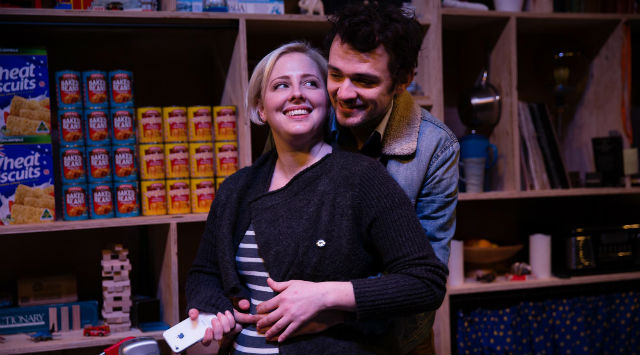
Andrew the philosopher tells his love story the only way he knows how. He believes that our time in the world is predetermined, and that our past does not simply disappear but exists in a different realm. He tries to access history to relive happier times, but finds his intellectual idealism unable to provide the comfort he requires. Sam O’Sullivan’s The Block Universe is about a man’s heartache, and his fascination with time. The play takes the thematic opportunity to build upon itself a thoroughly interesting structure, based on Andrew’s theories of determinism, for an unusual plot trajectory that depicts time in an unconventional manner. The boy-meets-girl story that it contains is however, nothing out of the ordinary, and although charming in its mundanity, is insufficiently dramatic for us to engage more deeply with Andrew’s anguish.

The play is directed with an understated elegance by Dominic Mercer, who brings surprising clarity to the text’s philosophical interests. Isabel Hudson’s work on set design is thoughtful and artistic, providing ease of functionality to actors and evocative symbolism to the audience. Further visual sophistication comes from lighting designer Alex Berlage, who creates a large number of scene transitions and a wide range of atmospheric manipulations with little resource other than sheer ingenuity. Equally accomplished is Alistair Wallace’s work on sound that guides us through the play’s complicated timeline with a penetrating sensitivity that accompanies its auditory dynamism.

The stars of the show are its captivating actors, both charismatic, and thoroughly authentic with what they present. Playing Andrew is Jacob Warner, vulnerable and truthful in every moment, with a subtlety that draws us in but delightfully energetic in his stage presence. Briallen Clarke impresses with a performance full of nuance and intensity, while maintaining excellent humour in her very vibrant interpretation of Kristiina. The duo’s chemistry, and the timing that results, is flawless and the relationship they portray is utterly believable.

Our emotions are shielded from Andrew’s heartache in The Block Universe. We see him crumbling before our eyes, but the play prevents us from responding with feelings, choosing instead to elicit an analytical acknowledgement of his pain. Indeed, philosophy and analysis can often ease our suffering, and the transference from heart to brain, can be an effective means to dealing with loss and mourning, but as demonstrated by Andrew’s experience, the solution is only temporary. There is no escaping the fact that matters of the heart need to be treated at the origin of their hurt, and Andrew will not be able to think himself out of his troubles. If we refuse to address the real issues that eat at us, we will be trapped in a perpetual cycle of agony, obstructed from resolution and emancipation, blocked from salvation and peace.

www.crosspollinate.com.au | www.venue505.com/theatre

Review: The Heidi Chronicles (New Theatre)

newtheatreVenue: New Theatre (Newtown NSW), Jun 7 – Jul 9, 2016
Playwright: Wendy Wasserstein
Director: Alice Livingstone
Cast: Sarah Aubrey, Matt Charleston, Lauren Dillon, Caroline Levien, Olivia O’Flynn, Amelia Robertson-Cuninghame, Darren Sabadina, Benjamin Winckle
Photography © Bob Seary

Theatre review
Wendy Wasserstein’s The Heidi Chronicles first appeared at the end of the 1980’s when American women were beginning to crack the glass ceiling, and when second-wave feminism was approaching its last days. The play examines the life of Heidi Holland from high school to middle age, beginning in 1964 through to 1989, charting the progress of white middle-class women through those three decades of the second-wave. Another thirty years (almost) have past, and we wonder how much has progressed since. “Can we have it all?” remains a question that only one of the genders asks herself, and the ambiguous conclusion to Heidi’s story confronts our contemporary sensibilities, leaving us to meditate on our place in society today.

Director Alice Livingstone presents a vibrant production that wears its heart on its sleeve, with an unmistakeable affection for the play’s nostalgia guiding us through Heidi’s years of development. It is a work painted with broad strokes, and although nuance is not always delivered, the staging of each scene is crisp and impactful. Refreshing and inventive use of space, along with Livingstone’s choice of projections help elevate the visual content of its otherwise basic design aspects.

Performers demonstrate an earnest conviction that encourages us to get involved with their stories. Leading lady Lauren Dillon does not seem to possess sufficient maturity for the portrayal of Heidi’s life in later sequences, but her confident presence stands her in good stead with the audience, and her passionate interpretation of a crucial monologue gives the poignant work its heart and soul. Darren Sabadina and Sarah Aubrey leave remarkable impressions with their exuberant and adventurous approach to their respective roles, both detailed with their characterisations and humorous at every appropriate opportunity. There are moments in the show of great chemistry between actors, but also scenes in which people do not seem to connect. Nevertheless, this production of The Heidi Chronicles is consistently enjoyable, and many will find its explorations meaningful.

Heidi lives a feminist life because she is in charge of her own destiny. The rules are her own, and she does not seek approval for her decisions. No one lives in a bubble, and we all find inspiration from other lives, but self-determination for every individual should be afforded and supported by our civilisations. A feminist does not have to look a certain way or prescribe to any particular doctrine, but she needs to be aware of her power, where it comes from and the battles that were fought for it to exist.

www.newtheatre.org.au

Review: Tribes (Ensemble Theatre)

ensembleVenue: Ensemble Theatre (Kirribilli NSW), May 26 – Jul 2, 2016
Playwright: Nina Raine
Director: Susanna Dowling
Cast: Ana Maria Belo, Garth Holcombe, Genevieve Lemon, Stephen James King, Amber McMahon, Sean O’Shea
Image by Clare Hawley

Theatre review
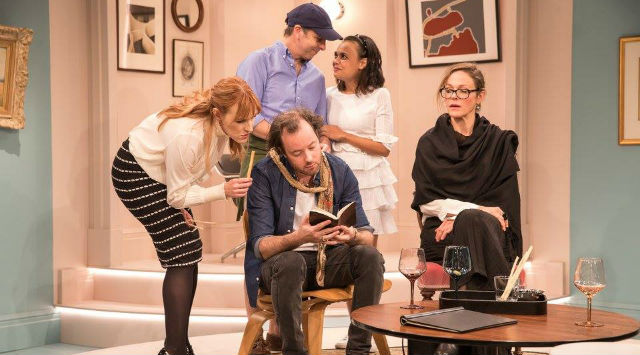
Billy is the only deaf person in the family. His parents have gone to great lengths to make him feel part of the roost, no different from his siblings, and have brought him up to communicate by lip reading and speaking, both of which he does inordinately well, without ever having to learn sign language. Billy’s father, Christopher is determined to prevent his son from facing undue limitations in life, and has restricted Billy’s access to communities of the hearing impaired, which he considers to be restrictive and confining.

Nina Raine’s Tribes is a study of how people form attachments and associations, and the human need for a sense of belonging. It offers marvellous insight into lives of people who do not have the same hearing abilities as the majority, and through Billy’s story, we come to an understanding of the tensions between mainstream privileged existences and people on the fringes who experience the periphery of society. The script is comprised of exceptionally vibrant dialogue, with intriguing issues that deliver an enlightening and contemplative theatrical experience.

The production identifies the main concerns of Tribes and handles them well, but the family’s subtle dynamics require sharper elucidation. It is a complex play with complicated personalities, and although the main messages are relayed beautifully, its many smaller details if better defined, would produce a richer result. The strong cast keeps us deeply engrossed, with Genevieve Lemon and Sean O’Shea leaving remarkable impressions in the parental roles, both exuberant and mesmerising with their stage presences. Ana Maria Belo’s depth of emotion is powerfully affecting in scenes of melancholy, while Stephen James King has us endeared to the purity of his character’s demeanour and intentions. Completing the team of five are Garth Holcombe and Amber McMahon, with charmingly idiosyncratic and amusing interpretations of Billy’s problematic siblings.

When we find places that offer acceptance, they inevitably impose limitations upon how we perceive our own identities and potentials. Therein lies the conundrum of society. People are bonded by commonalities, but these same valuable qualities that are shared, can also be the linchpins that keep individuals from greater development. Groups have rules, and those rules will suppress uniqueness and originality. Geniuses are often lonely, but those who know to be dichotomous can have the best of both worlds, and if Billy plays his cards right, he can learn to have his cake and eat it too.

www.ensemble.com.au

Review: The Literati (Bell Shakespeare / Griffin Theatre Company)

griffinVenue: SBW Stables Theatre (Kings Cross NSW), May 27 – Jul 16, 2016
Playwright: Justin Fleming (after Molière)
Director: Lee Lewis
Cast: Caroline Brazier, Gareth Davies, Jamie Oxenbould, Kate Mulvany, Miranda Tapsell
Image by Daniel Boud

Theatre review
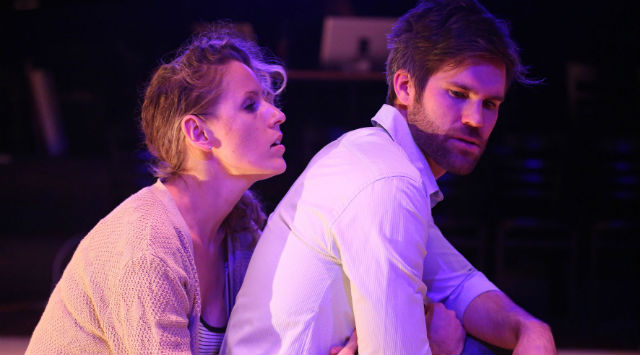
There are two halves to the family in Justin Fleming’s The Literati. Philomena and her elder daughter Amanda have aspirations for a sophisticated existence, both enamoured with books and language, while Christopher and younger daughter Juliet are of a simpler ilk, down-to-earth like true blue Aussies never to be caught dead with tickets on themselves. The play is about pretension, and the meaning of knowledge. We explore what it is to be good people, in a world where values are easily misplaced and ideas about virtue are unstable and skewed. Its message is uncomplicated, with a plot that proves to be entirely predictable, but The Literati is gorgeously written, with inexhaustible wit permeating every rhyming couplet in this thoughtful adaptation of Les Femmes Savantes by Molière. The jokes come fast and furious, along with inspired ruminations about diverse subjects including romance, intellectualism, purity and class.

Characters in The Literati are archetypal, but convenient moralistic jabs at “the bad guys” are thankfully few. The play wrestles with the problematic duo of Philomena and Amanda, shallow on one hand, but admirably ambitious on the other. Their desires are noble, but their mode of pursuance is misguided. The play sets up an old-fashioned dichotomy of pure and impure, but allows itself to negotiate between the two, so that we achieve a more textured understanding of good and bad within the story. Director Lee Lewis makes the appropriate decision of placing effect before depth, for a work that has nothing unusual to say but has very impressive ways of expressing its beliefs. The comedy is often flamboyant, but Fleming’s exquisite words are always in the spotlight, full of evocative power and mischievous vigour. The production is buoyant from start to finish, and although occasionally repetitious with its methods of eliciting laughter, we are kept engrossed in its electrifying showmanship.

Playing Christopher and Clinton is the one endearing Jamie Oxenbould, convincing and dynamic in his diverse roles. A memorable sequence features the actor alone on a revolving stage performing with meticulous clarity, and an exuberant sense of absurdity, both his characters in passionate dialogue with each other, completely absorbent of our attention, astonishment and adoration. Gareth Davies and Kate Mulvany offer up very broad humour with outlandish interpretations of their caricatures, finding every opportunity to perform their unrestrained comedy to a very appreciative and delighted crowd.

People in The Literati fight over the redundancy of words and culture, when notions of style are not validated by substance. The moral of Molière’s story is neither controversial nor surprising, but we are captivated by the production’s theatricality and the resonance of its language. In some ways, the show defeats its own argument, for what keeps us enthralled is not its idealistic core, but the talent that emanates from it. We fall in love with its gestures and articulations, but pay little heed to its very point of contention. We can look at art without the need for a presumed frame of reference or an indication of something behind, something deeper. Art is not a means to an end, but a sacred entity meaningful on its own terms. “If you want to know all about Andy Warhol, just look at the surface of my paintings and films and me, and there I am. There’s nothing behind it.”

www.bellshakespeare.com.au | www.griffintheatre.com.au

Review: Smudge (The Kings Fools)

thekingsfoolsVenue: Kings Cross Theatre (Kings Cross NSW), May 27 – Jun 11, 2016
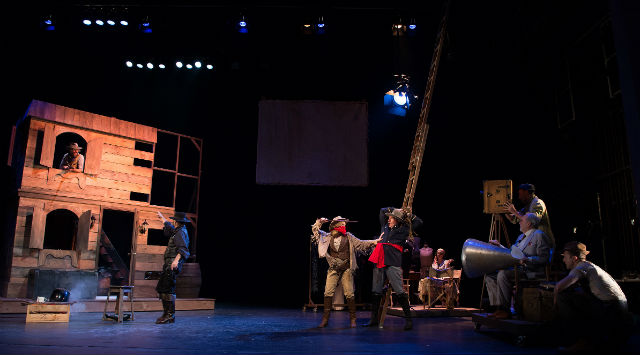
Playwright: Rachel Axler
Director: Stephen Lloyd-Coombs
Cast: Danielle Connor, Kieran Foster, Nick Hunter
Image by Liam O’Keefe

Theatre review
The curve balls that we encounter make life frustrating, and sometimes unbearable. We cannot exist without envisioning the future, but nature insists on disrupting our plans to make destiny something that we can never truly be masters of. In Rachel Axler’s Smudge, Colby and Nick give birth to a severely disabled baby. As the young couple tries to come to terms with the unexpected turn of events, we witness their struggles and disappointment, and measure them against a new life that we have little understanding of but whose rights are unequivocal. It is a brutal set of circumstances, but the play takes a less than obvious approach, avoiding melodrama at all costs in its exploration of relevant issues and of human behaviour.

The play is quirky and often comedic, with director Stephen Lloyd-Coombs maintaining a sensitive, delicate tone over proceedings, but the show is most effective at its darkest moments when characters are intense and irrational. Danielle Connor and Kieran Foster work well at creating believable presences and convincing emotion, but the production’s mildness of demeanour restricts how much it is able to convey on a visceral level. It is a story of considerable gravity, and although powerful in parts, Smudge can seem slightly detached from its own sorrow.

Accomplished work by Liam O’Keefe on lights and sound by Michael Toisuta give tension to the piece, and both conspire to add a dimension of supernaturality and of horror when appropriate. Theatrical pleasure is derived from a quality of surrealness created by O’Keefe and Toisuta’s atmospheric manipulations, and along with Elia Bosshard’s set, leave a strong impression with the show’s aesthetic and technical proficiencies.

We do not talk enough about disability. There is little understanding in mainstream communities about what people’s needs may be, when living with unique challenges. Colby and Nick are isolated, left to nurture a baby that is of them but also radically different from their realm of reality. Their story is an allegory about every person’s conflict with the unpredictability of life, but the specific experience of disabilities, physical and otherwise, must not be overlooked. Conversations needs to be had in order that societies can work towards becoming more inclusive, and we must learn about disadvantages that exist in our communities to bring about equity for all. The new family in Smudge are unable to cope on their own, but with our support, things can only get better.

www.facebook.com/…

Review: The Taming Of The Shrew (Sport For Jove Theatre)

sportforjoveVenue: Seymour Centre (Chippendale NSW), Mar 19 – 28, 2016
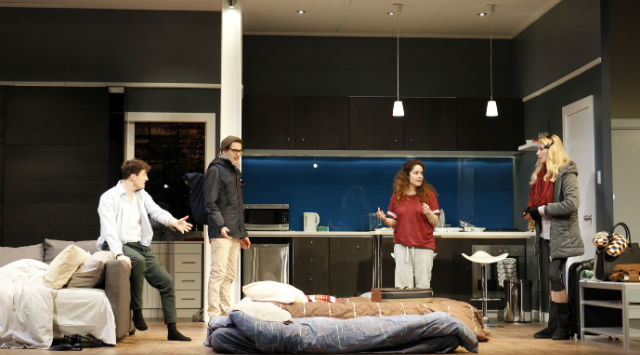
Playwright: William Shakespeare
Director: Damien Ryan
Cast: Robert Alexander, George Banders, Angela Bauer, Michael Cullen, Barry French, Terry Karabelas, George Kemp, Danielle King, James Lugton, Lizzie Schebesta, Christopher Stalley, Christopher Tomkinson, Amy Usherwood, Eloise Winestock
Image by Marnya Rothe

Theatre review
The Minola sisters are the very antithesis to each other’s being. Bianca is sugar, spice and everything nice, while Katharina is outspoken and rebellious. In Shakespeare’s The Taming Of The Shrew, we witness patriarchy at its worst, exposed through the way women are idealised and diminished, made to conform to rules that apply only to their gender. Bianca is perfect, but Katharina is flawed, never mind that Katharina’s behaviour, although vilified, is much closer in essence to the menfolk’s than the anomalously agreeable personality of Bianca. Women are not allowed the same liberties. Like the men in the story, Katharina is too loud, she complains too much, and is uninterested in marriage, but she alone is a figure of contention, and the world resolutely inflicts upon her, that same subjugation and suppression virtually all women have had to endure.

Damien Ryan’s direction does not provide the answer to how we can subvert Shakespeare’s writing for a feminist interpretation, but it is a thought-provoking work nonetheless, sensitive to modern sensibilities regarding representation and politics of gender. The highly controversial speech by Katharina that concludes the play, and that demonstrates the successful vanquishment of her spirit, is orchestrated not with a celebratory tone as originally intended, but with an aura of tribulation. The words are offensive but they are not censored. Ryan does his best to convey the problematic nature of ideologies that underpin the play, but it is ultimately a reverential work that asks many right questions without actually hitting back at its master’s sins. Politics aside, the production is highly entertaining and wildly inventive, leaving no stone unturned for a theatrical experience rich with spectacle and wonder.

If the most significant trait of live performance is the very liveness of its reality, then The Taming Of The Shrew is a triumph of energy and impulse. Although tightly rehearsed, the ensemble is doggedly present and full of vitality. Danielle King is the shrew in question, unapologetically feisty in her portrayal of delicious recalcitrance. Playing the softer sister, but no less powerful, is Lizzie Schebesta, impressive with her physical agility and humour. Both actors bring to the stage passion and strength, creating characters independently admirable, shifting slightly the text’s repugnant power imbalance of genders. Also memorable is Terry Karabelas as Hortensio, full of dramatic exuberance, enthralling in all his scenes and irresistibly funny with every deliberate gesture.

The production begins with an announcement of thanks to supporters of independent theatre, but we soon discover that our associations of independence with smallness has no bearing at all on the scale of talent displayed here. Design aspects of the show are uniformly superb. Anna Gardiner’s set design is charming, surprising and gloriously innovative. Lights by Sian James-Holland are boundlessly dynamic and sophisticated, and sound by Tom Allum is replete with instinctual accuracy. We are treated to a thing of great beauty, marvellously polished and thoroughly delightful with its aesthetic explorations.

With patriarchy reinforced by Katharina’s transformation and her eventual discovery of love and happiness, the audience is left in two minds. If we believe in happily ever after, then our protagonist’s debasement is to a certain degree, justified. We can acknowledge that playing by the rules of the boys’ club has its rewards, but it does not take extraordinary incisiveness to perceive the immorality that is at play. Authenticity is compromised, and the cards are stacked against half of us, in a game that we all have trouble avoiding. Shakespeare’s persistence in our cultural landscape is a reflection of the maleness that flaunts its dominance. Unable to help ourselves, we keep going back to the Bard and all his archaic ideas, that we insist on perpetuating for all time.

www.sportforjove.com.au

Review: Bad Jews (Vass Theatre Group)

badjewsVenue: Seymour Centre (Chippendale NSW), May 18 – Jun 4, 2016
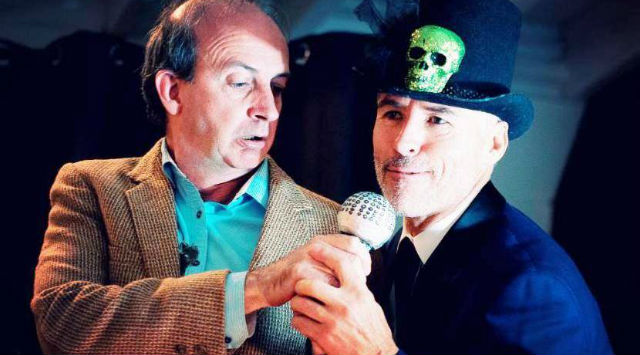
Playwright: Joshua Harmon
Director: Gary Abrahams
Cast: Maria Angelico, Simon Corfield, Anna Burgess, Matt Whitty

Theatre review
Joshua Harmon’s Bad Jews explores authenticity of the self in relation to religion, ethnicity and history. At opposite ends of a spectrum are the religiously observant Daphna and her atheist cousin Liam, both Jewish by genealogy but each relating to their backgrounds in vastly different ways. They fight over what constitutes right and wrong, constantly and fervently berating each other for their conflicting life choices. At its best, Harmon’s writing is deliciously cutting, with characters verbally attacking each other at the most vicious degrees imaginable. The words are brutal, but they ring true, even as they emerge in contradiction from opposing sides of the argument.

The play’s comedy is not always refined but director Gary Abrahams injects a confident energy into the production to ensure that chutzpah makes up for the occasional shortcomings of the text. Abrahams’ eye for detail delivers a very tight production that insists on being compelling at every moment, and rich with thrilling resonance whenever it delves into more meaningful proclamations.

Excellent performances by the cast of four make Bad Jews a memorable night at the theatre. Daphna is played by Maria Angelico with extraordinary gusto. Dangerous, funny and vulnerable, she goes through the gamut of human emotions for a portrayal of what seems an oddity but in fact translates with intimate accuracy. We may not be able to identify with her world of religious righteousness but her very human expressions of desperation are universally accessible. In the role of Liam is Simon Corfied, animated and passionate with great conviction, giving life to an uptight scholarly type who although represents the voice of reason, is comically unable to quell his shortness of temper for his adversary. Supporting actors Anna Burgess and Matt Whitty are both accomplished and precise with their depictions. Burgess in particular, impresses with her capacity to turn every brief opportunity in the limelight into a delightful showcase for her comedic genius.

For all its talk about religion, and the varying extents to which its individuals practise the beliefs that they inherit, Bad Jews makes a convincing point about love being the overriding factor that helps determine how we live. We cannot decide who we truly fall in love with, much like we do not choose who we are born to. Liam is accused of sacrilegious desecration by the pious Daphna, but the play makes us understand that anything that would come between real love to be erroneous. Liam revels in the purity of his romantic relationship, while Daphna experiences purity in her religious orthodoxy. They are concurrently right, even if in a state of war.

www.badjewstheplay.com

Review: 7 Days In The Life Of Simon Labrosse (Théâtre Excentrique)

theatrerexcentriqueVenue: Creative Space 99 (Darlinghurst NSW), May 18 – 29, 2016
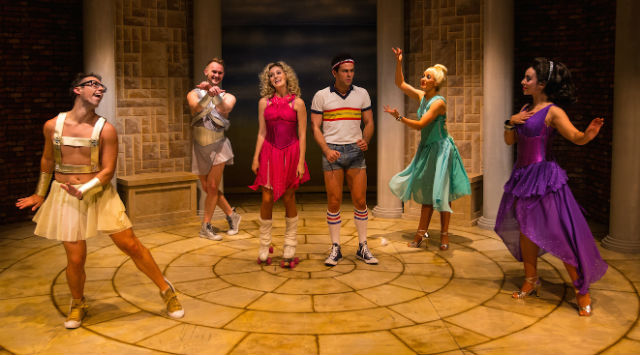
Playwright: Carole Fréchette (translated by Kris Shalvey)
Director: Anna Jahjah
Cast: Cassady Maddox, Steve McGrath, Gerry Sont
Image by Emma Lois

Theatre review
Simon Labrosse is a talented man, but he has trouble making a living out of his many skills. He tries hard to market himself, giving out samples of the services he can provide, and although he convinces everyone of his abilities, none are willing to pay for his expertise. Labrosse is an artist of sorts; what he does is not strictly scientific, mathematical or easily commodifiable, but he has much to contribute to society. The economy, however, does not recognise his unquantifiable efforts and rejects him, judging him worthless and a burden. Carole Fréchette’s play is about the problems we face as communities of modern capitalism, unable to embrace parts of our humanity that cannot be monetised.

The production is beautifully designed, with the audience situated inside Labrosse’s home. His bed is in the middle of the space, and action takes place all around us. Our view can get obstructed at times, but the constant relocation of activity is exciting and an effective mechanism for maintaining high energy levels. Anna Jahjah’s direction is free and humorous, delivering a work that feels unrestrained and exhilarating. The short scenes are punchy and surprising, full of whimsy with lively characters each appealing in their own way. It is a tightly rehearsed cast, cohesive in style and delightfully engaging. Gerry Sont plays Labrosse, wistful but optimistic, with a pleasing vibrancy that elicits our curiosity and empathy. A greater dose of melancholy would probably give the show a little necessary gravity to have its themes resonate stronger, and for its ideas to stay in our minds longer. Supporting players Cassady Maddox and Steve McGrath create a range of eccentric personalities that make the show unpredictable and give it a consistent buoyancy, while in the process leaving excellent impressions for their versatility and comic timing.

7 Days In The Life Of Simon Labrosse is a light-hearted take of a sad situation. The privatisation of everything in Australia seems boundless, with every annual budget revealing less and less support for those of us whose talents are incongruous with the reductive demands of capitalism. Simon Labrosse shows us all that he is capable of, but he is situated inside an economy that wants him to be simpler and more ordinary so that they can provide a place for him just like everybody else’s. It is the job of capitalism to turn everything and every person into a measurable and sellable unit, and in the process, risk the removal of everything that we know to be the best of human nature. In the seven days that we meet our protagonist, he keeps on trying but does not give up his true essence; we see him fail repeatedly and wonder how he can make things work. We have a collective part to play in allowing his potentials to blossom, but we wonder if what he can give in return will cost too much.

www.theatrexcentrique.com

Review: Xanadu (Matthew Management / Hayes Theatre)

xanaduVenue: Hayes Theatre Co (Potts Point NSW), May 12 – Jun 12, 2016
Book: Douglas Carter Beane
Music & Lyrics: John Farrar, Jeff Lynne
Director: Nathan M. Wright
Choreography: Leah Howard, Nathan M. Wright
Musical Direction: Andrew Bevis
Cast: Dion Bilios, Francine Cain, Catty Hamilton, Kat Hoyos, Jaime Hadwen, James Maxfield, Ainsley Melham, Josh Quong Tart, Jayde Westaby
Image by Frank Farrugia

Theatre review
1980 is not exactly a great many lifetimes ago, but we have certainly lost a considerable measure of innocence since then. The Xanadu stage musical is a recent incarnation of the now cult classic film that materialised at the very dawn of the 80’s, and judging by the thoroughly farcical approach now taken, twenty-first century life seems to be very cynical indeed. Gone are all the naive idealism and whimsical romance that had accompanied Electric Light Orchestra’s bubblegum pop for the original, replaced by post-modern campery so sardonic, Liberace and Mae West are blushing in their respective graves (maybe with jealousy, but hard to know for sure).

The Xanadu film was never well regarded by critics, and its box office takings were disappointing, but it retains a significant place in pop culture history chiefly for the hugely successful music that it features. It makes sense that Douglas Carter Beane would re-write the piece exposing all the silliness of the story so that we can laugh with his version, instead of laughing at it as was often the case with its predecessor, but there is a compromise to the substantial presence of the original songs that does not always find harmony. Beane can subvert everything in the book, but shoehorning his comedy into the perfectly constructed pop masterpieces often feels antipodal and frankly, a waste of opportunity. Instead of improving the storytelling around the euphoric compositions of passion, he tries to re-engineer them for his comedic purposes with mixed results. Nonetheless, the show is by and large, a very funny one, in the style of a “children’s show for 40 year-old gay people” as one of its character states.

Director Nathan M. Wright rises to the challenge of bringing a tenacious and flamboyant vibrancy to the work, never missing a beat with his show’s unrelenting hammy humour. Always engaging and always in jest, every weakness of the 1980 film is turned into a knowing joke, as are the few effective poignancies from the original. The love story takes a back seat, making way for amusing and frivolous characterisations taking centre stage, performed almost vaudevillian in style, by an impressive cast that seems to have no limits to their abilities. It is not every day that we see people singing, dancing, acting and making us laugh, all at once, and on roller-skates no less. Jaime Hadwen is perfect for the role of Kira, sent from the heavens to raise Xanadu from its ashes. Hadwen’s comedic skills win us over from her first appearance, and while the tender warmth that she is able to inject surreptitiously, is easily overlooked in a mélange of frenzy, it is that quality of sweetness that keeps us endeared and quite miraculously, invested in. Her singing is exuberant and accomplished, but more creative sound design is required to live up to Olivia Newton-John’s legendary recordings. Xanadu may not be perfectly conceived, but its execution is top-notch, especially by the performers who give it their all on stage.

Kira discovers that the reason for humans striving hard for art, is linked inextricably to our mortality. As daughter of Zeus, her life is eternal, but the only way for us to live beyond the last breath is to establish legacy. The fact that Xanadu has endured against all odds through the decades, serves as inspiration to all of us who suffer from lapses of confidence in our work and indeed, other parts of life. We may not always receive affirmation and recognition for the things we do, but it is important to realise the ripple effect of even the smallest of our efforts. We cannot see every tomorrow, but the ones we touch will carry something of us into the days ahead, like “where Alph, the sacred river, ran / Through caverns measureless to man /
Down to a sunless sea.” (Kubla Khan by Samuel Taylor Coleridge)

www.hayestheatre.com.au