Review: The Time Machine (Strange Duck Productions)

Venue: NIDA Parade Theatres (Kensington NSW), Apr 11 – May 2, 2018
Playwright: Frank Gauntlett (based on the novella by HG Wells)
Director: Gareth Boylan
Cast: Mark Lee
Images by Robert Catto

Theatre review
In the space of science fiction, our imagination of what is yet come, reveals less about the truths of the future, and more about the values and beliefs that we hold today. In Frank Gauntlett’s adaptation of HG Wells’ The Time Machine, an Englishman travels from Victorian times to the year 802,701 AD, where he encounters an evolutionary state of humankind, split into clear distinctions of species, good and bad.

Instead of luxuriating in the welcoming utopia that he stumbles upon, our protagonist pursues the evil creatures who had stolen his machine, and in the process interferes with the ecosystem that he discovers. There is also a romantic encounter, with the hero claiming a female character from the new world, as he tries to bring themselves back to the 19th century. The Time Machine is an action-packed one-man show that puts on display, the narcissistic self-aggrandising tendencies of men, who are persistent in figuring themselves as braver, more righteous, more long-suffering and under attack than anyone else in their fictional narratives.

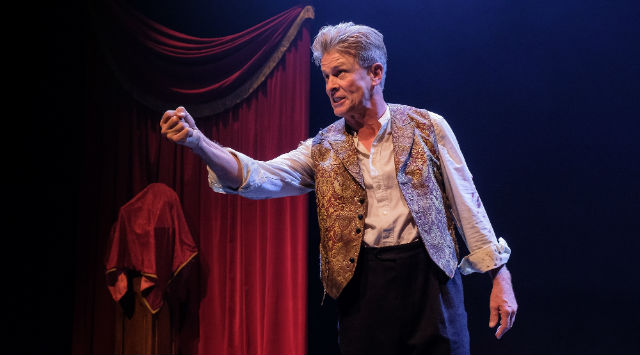
The true hero is actor Mark Lee, whose energetic precision provides all the theatrical entertainment we require. He is a captivating presence, interminably persuasive with all that he serves up. A highly skilled performer, with an astonishing familiarity with the text, Lee is intense, inventive and tenacious in approach, leaving his audience impressed, even if the material he presents is less than inspiring. Director Gareth Boylan introduces a healthy quantity of visual variation to the show that helps draw our attention back, when we begin to lose interest in the monotonous narration of unwavering gallantry. Lights by Martin Kinnane are particularly useful in this regard. Michael Waters’ sound design too, works hard to facilitate our concentration.

It is a recurring theme in our stories, where we find ourselves in places belonging to others, then quickly and convincingly asserting our victimhood, before successfully overcoming the enemy. There is truth in saying that life requires us to move outside of ourselves, that the spirit of curiosity and discovery is essential to a meaningful existence, but the belief that “the world is your oyster” must be examined with greater sensitivity. Spaces are defined long before we enter them. Wherever we choose to venture, we must be mindful of how it is configured. If we decide to cause disruption, we must tread with utmost care and caution.

www.nida.edu.au

Review: Alison’s House (The Depot Theatre)

Venue: The Depot Theatre (Marrickville NSW), Apr 4 – 21, 2018
Playwright: Susan Glaspell
Director: Julie Baz
Cast: Matthew Bartlett, Veronica Clavijo, Penny Day, Dominique De Marco, Elliott Falzon, Nyssa Hamilton, David Jeffrey, Brendan Lorenzo, James Martin, Tasha O’Brien, Sarah Plummer
Images by Katy Green Loughrey

Theatre review
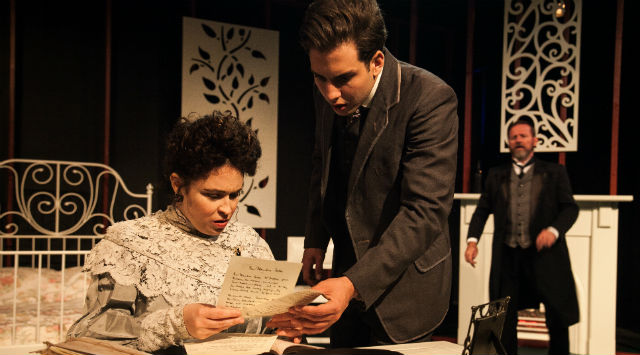
Fewer than a dozen of Emily Dickinson’s poems were published during her lifetime. Her body of work, comprising approximately 1,800 pieces, only saw the light of the day after her passing; she was female after all. In Susan Glaspell’s Alison’s House, Alison Stanhope is a surrogate for Dickinson, and we meet her family on the eve of the year 1900, 18 years after her death. The Stanhopes are moving house, but Alison’s presence is strong and a mystery around her posthumous success emerges. Although a Pulitzer Prize winner, the play feels every bit her 88 years of age. Central concerns about authorship and artistic legacy remain valid, but its dramatic structure is now gauche, with stodgy dialogue that many will find alienating.

Its first two acts are particularly inaccessible, and the cast’s divergent approaches make the show a difficult one to engage with. The third act however, is a fortunate change of pace, with the plot suddenly turning lively, when the crux of the matter is finally revealed and addressed. Actor Brendan Lorenzo is a delight in the role of Eben, with intense conviction and a buoyant energy that helps introduce a quotient of enthralment. The production is a faithful rendition of a dated script, with everything kept coloured inside the lines. It is an adventurous spirit that dares take on this forgotten play, but this execution of Alison’s House requires greater imagination to resurrect it from obscurity.

Our great writers write from personal perspectives, but what is put on paper may not always be intended for public consumption. Time however, has the capacity to change anything. What was once private, objectionable or simply unfinished, could transform, over the years, into something that serves a greater purpose. We must then consider what it is that we want to hold sacred, when tossing up between the private and the public, or the dead and the living. When ambiguities abound, coming to decisions is difficult, but it is the very quality of ambiguity that interrogates the deepest of our beliefs, and that shows us who we truly are.

www.thedepottheatre.com

Review: A Girl Is A Half-formed Thing (Brevity Theatre)

Venue: Kings Cross Theatre (Kings Cross NSW), Apr 6 – 21, 2018
Playwright: Eimear McBride (adapted for the stage by Annie Ryan)
Director: Erin Taylor
Cast: Ella Prince
Images by Clare Hawley

Theatre review
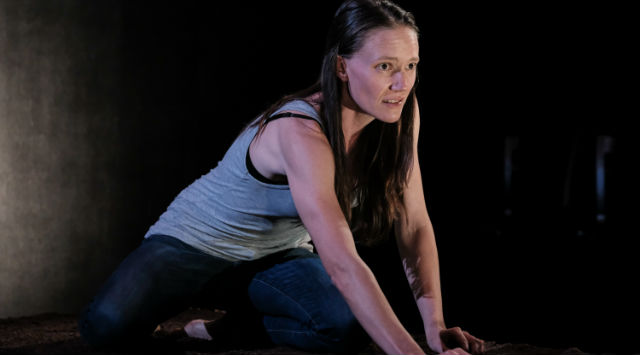
Our destinies are written long before our flesh is are conceived. The unnamed girl in the story was born into an underprivileged Irish family, of a conservative Catholic town where ancient rules are upheld without question or suspicion. Women are allocated their place, but men occupy everything, including the female body. In Eimear McBride’s novel A Girl Is A Half-Formed Thing, violations take the form of rape, physical but also mental, emotional and spiritual. The entirety of the girl’s adolescence is characterised by the abusive imposition of all surrounding characters, determined to prevent any sense of individual agency from developing. She is deemed an object, an empty vessel with which society can do whatever it wishes.

It is a problematic adaptation by Annie Ryan who retains the “stream of consciousness” form of McBride’s book. One actor is designated to play not only the girl, but also every significant personality of her microcosm. Conversations are brief and unanticipated, often leaving us confused about the identities of people being portrayed, although we might as well think of them all as one uniform perpetrator, considering the analogous way in which our protagonist is being defiled. Actor Ella Prince is unable to provide clarity in terms of detail from the difficult text, but her capacity for authenticity and focus are certainly impressive. It is an extremely powerful presence that she brings to the show, and the gravity of the play’s concerns are never compromised under Prince’s depictions. The traverse stage proves challenging, requiring half of the show to be performed with her back to the audience, which proves unsatisfactory for a production that relies so heavily on its star’s facial expressions.

There is however, very fine design work being accomplished here. Isabel Hudson’s sophisticated set makes for a morbid but dramatic evocation of ideas around burial and death. Lights by Veronique Bennett are surprisingly dynamic, whilst administering a relentless austerity that is crucial to the play’s very specific tone. Chilling sounds created by Clemmie Williams ensure that we never deviate from the mournful devastation being analysed.

The girl is defiant, aggressively so, but she holds no power. We watch as she is put through a progression of torment, wondering if a person like this could ever grow into something whole. In places where freedom exists, we can imagine individuals flourishing, beyond the bounds of inevitable social restrictions. We want to believe that each human bears potential that is unique and good, and opportunities are available where against all odds, people can create the best out of their embryonic selves. This may or may not be true, but where there is no freedom, the only certainty is the unremitted spawning of deformed lives.

www.brevitytheatre.com.au

Review: Greater Sunrise (Belvoir St Theatre)

Venue: Belvoir St Theatre (Surry Hills NSW), Apr 5 – 21, 2018
Playwright: Zoe Hogan
Director: Julia Patey
Cast: Laurence Coy, Jose Da Costa, Cassandra Sorrell, Alexander Stylianou
Images by Hon Boey

Theatre review
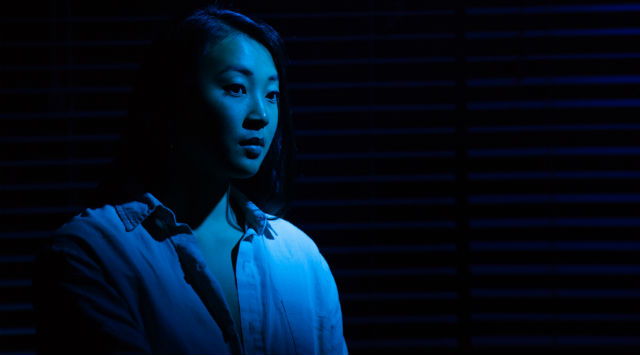
Australia’s history with Timor-Leste is chequered, to say the least. In Zoe Hogan’s Greater Sunrise, we see an account of the evil that we are capable of, when dealing with a neighbouring nation rich with oil, but poor in influence. Australian aid worker Joana discovers the ugly operations that her government undertakes in the country she is assigned to help, and tries to find a way for justice to prevail.

It is admirable that Hogan brings attention to the important but under-reported issues surrounding our relationship with Timor-Leste, but the play struggles to speak powerfully, with a plot structure that is perhaps too filmic in its approach to work on the stage. The erratic timeline and its excessively frequent scene changes, prevent us from becoming invested sufficiently in Joana’s story.

Cassandra Sorrell shows good conviction in the lead role, but performances in Greater Sunrise are rarely more than adequate. The production feels distant and vague, preventing us from finding any meaningful resonance that could correspond with its grand message. Lights by Benjamin Brockman and sound by Clare Hennessy, however, provide a level of polish that helps sustain our attention. The emotional cues provided by design elements give the narrative some tenacity when other aspects falter.

Greater Sunrise provides valuable elucidation about the ongoing project of colonisation in our region. It tells us that we need to find satisfactory methods of reparation for the way Indigenous communities have been unjustly exploited, and also to take responsibility for the immoral and unethical dimensions of our insatiable capitalistic drives. The planet provides immense wonder, but its allure seems determined to elicit human behaviour that is cruel and deplorable.

www.belvoir.com.au

Review: The Flick (Outhouse Theatre)

Venue: Seymour Centre (Chippendale NSW), Apr 5 – 21, 2018
Playwright: Annie Baker
Director: Craig Baldwin
Cast: Justin Amankwah, Matthew Cheetham, Mia Lethbridge, Jeremy Waters
Images by Marnya Rothe

Theatre review
Almost every cinema in the world has completed the transition from analogue to digital, and with it comes aficionados bemoaning the loss of authenticity and tradition, in an art form that touches the lives of all. In Annie Baker’s The Flick, not only is celluloid under threat of annexation by blu-ray, the employees at a small picture house have friendships that are challenged by what they think to be real or illusory. They spend days together, becoming increasingly intimate, but always conscious of the distances between. They experience comfort in each others’ presence, but trust is never a certainty. When push comes to shove, the surprise of betrayal rears its ugly head, and like the technology in their projection room, convenience and cost takes precedence.

The play is beautiful in its sensitivity, and wonderfully humorous. Development of its characters and relationships, are cleverly written, replete with nuance and acuity. Dialogue is amusing and brilliantly observed, with contemporary colloquialisms thoughtfully utilised, for an accurate reflection of Western society at this very point in time. These people may or may not be familiar, but we always know exactly how they feel. For cinephiles, The Flick‘s obsessive enthusiasm with film culture, is a very big added bonus.

It is a glorious set, designed by Hugh O’Connor and constructed by Rodger Wishart, thrillingly realistic in its replication of the typical interiors of a movie theatre. Music paying tribute to genres of film, are meticulously crafted by Nate Edmondson, who also creates a variety of unmistakably unique sounds, in the form of whirrs and purrs to be heard emanating through the walls whenever we congregate for a movie. Martin Kinnane achieves a surprising range of atmospheric modifications with his lights, and has us transfixed with the unusual perspective offered by having us looking, wrong way round, into the projector lens, watching rays instead of images that have accompanied us hundreds, if not thousands, of times before. Led by stage manager Steph Kelly, technical aspects are remarkably well managed for this production of The Flick.

Directed by Craig Baldwin, the show is full of resonance; comical, whimsical and emotional. Chemistry between actors is masterfully harnessed, for a thoroughly honest and genuine depiction of social dynamics in The Flick. Actor Justin Amankwah is convincing, and very charming, in the role of Avery, the withdrawn youngster who loves movies more than he does any human being. His minimal, but precise approach gives depth and intrigue to the story, with a portrayal of mysterious qualities that has us captivated. Also very entertaining is Jeremy Waters as Sam, the Gen X slacker who finds himself suddenly older but not much wiser. It is an endearingly animated performance by Waters whose nuances are a joy to watch, and whose confidence with punchlines delivers some excellent laughs. Mia Lethbridge plays Rose the projectionist, with a delightful playfulness that prevents the less than agreeable character from becoming too alienating. The three form a tight partnership, and even though the show does extend to the three-hour mark, we never tire of their company.

The Flick is completely satisfying, but there is no question that in it, people are disappointing. Avery’s adoration of Hollywood is a reflection of his idealism, and his struggles in engaging with real life can be considered in terms of society’s deficiencies, or we can think of it as Avery having problems understanding the world as it actually is. Accompanying the cynicism in Annie Baker’s play, is our unambiguous desire for virtue. The stories we tell may not always be happy and uplifting, but they invariably contain our eternal faith in things that are good. Although new films no longer come to us on film, nothing will stop us from imagining better lives and better worlds, in all our arts and sciences. Of humanity’s many flaws, our naive belief in progress seems forever invincible.

www.outhousetheatre.org

Review: Sami In Paradise (Belvoir St Theatre)

Venue: Belvoir St Theatre (Surry Hills NSW), Apr 1 – 29, 2018
Playwright: Nikolai Erdman (adapted by Eamon Flack and the company)
Director: Eamon Flack
Cast: Paula Arundell, Fayssal Bazzi, Nancy Denis, Charlie Gerber, Victoria Haralabidou, Marta Kaczmarek, Mandela Mathia, Arky Michael, Yalin Ozucelik, Hazem Shammas, Vaishnavi Suryaprakash
Images by Clare Hawley

Theatre review
In a refugee camp, life is cheap. Its inhabitants are essentially stateless, treated like human waste; unwanted and despised by the world. When word goes out that Sami is contemplating suicide, a throng materialises, of groups suddenly taking interest in his existence, not to offer dissuasion or rescue, but to leverage his impending death for their own purposes. Nikolai Erdman’s deeply cynical The Suicide undergoes a wild adaptation by director Eamon Flack and the company of Sami In Paradise, updating the 90 year-old play so that it converges with concerns of the day. The ubiquitous but blasé digital activism being disseminated in developed nations, is juxtaposed against the dire plight of asylum seekers, to deliver a work that interrogates our social consciousness through some very acerbic humour.

A thoroughly entertaining production, Sami In Paradise engages cleverly with its audience, discussing the most serious of issues with a deceptively light touch. The many laughs that it provides requires that we pay attention to matters that many usually choose to turn a blind eye to; the only way to indulge in its comedy is to be engrossed in the dark tale that lies at the centre of all the jolly action. An effervescent carnival atmosphere is manufactured by Flack, who demonstrates extraordinary inventiveness in his use of space and talent. Jethro Woodward’s music plays an integral part in calibrating energy and mood for the piece, with musicians Mahan Ghobadi and Hamed Sadeghi proving invaluable to the show’s resounding success.

A motley crew of sprightly characters, inexhaustibly mischievous, take to the stage for an exceptionally well-rehearsed and creative theatrical experience. Their confident chemistry ensures that we enjoy every minute of their presentation; delightful and provocative in equal measure. Leading man Yalin Ozucelik’s glorious portrayal of the despondent and confused Sami, is a work of comic genius. Technically brilliant, but also undeniably soulful, his storytelling captivates and inspires, while keeping us endlessly amused. The cast’s ability to convey a sense of depth within each of its jokey manoeuvres, makes their show revelatory and meaningful.

Humans are capable of great atrocities, and it is important that art helps us understand the parts of ourselves that are reprehensible. It is easy to ignore the ugly ways in which we operate, and let comforting delusions lead us to believe that humanity is only benevolent. Art has to embody and reflect the truth, and the more that it is able to let us see who we actually are, the more it needs to be championed, even if the results are difficult. Sami acknowledges that we hold power over his destiny, and asks us point blank, if we wish to have him killed. Our answer should be simple, but all the evidence suggests that we are not capable of doing the right thing.

www.belvoir.com.au

Review: The Sound Of Waiting (Darlinghurst Theatre Company)

Venue: Eternity Playhouse (Darlinghurst NSW), Mar 31 – Apr 22, 2018
Playwright: Mary Anne Butler
Director: Suzanne Pereira
Cast: Reza Momenzada, Gabrielle Scawthorn
Images by Phil Erbacher

Theatre review
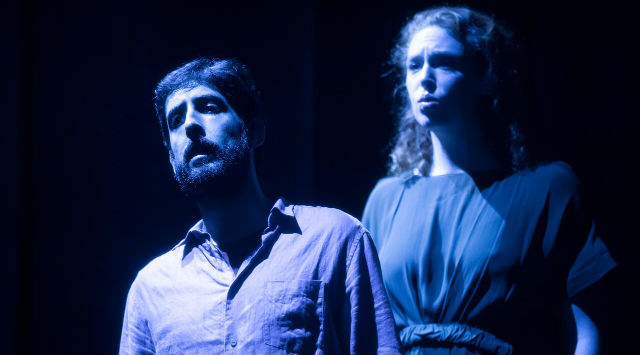
Hamed is stranded at sea with his small daughter, after having lost the rest of their family to explosives in their war-torn home. Escape is the only option, but with no apparent destination, their scurry can only be treacherous and agonising. Mary Anne Butler’s The Sound Of Waiting gives voice to those we term asylum seekers, whose stories are routinely exploited by politicians and media outlets for selfish gain. Here, however, we attempt to hear from the source, a first-person narrator untarnished by intrusions of our prejudice.

Also present is the Angel of Death, a mystical creature and a force of nature, but at times also a human enemy, who pursues Hamed, determined to annihilate. Both are in fierce opposition, but they speak almost in tandem, sharing a rhythm that drives the plot and action. Although in sync, the two characters develop in divergent trajectories, with Death always pulling attention away from our concern for Hamed. It is appropriate that they are not telling a cohesive story, and perhaps revealing, in the way director Suzanne Pereira allows a degree of distraction from the real tragedy.

Pereira’s work is powerful in its treatment of atmospherics. Together with Samuel James’ video projections and Tegan Nicholls’ sound and music, it is a spectacular collaboration that enchants the senses. Also very strong are both performers, Reza Momenzada and Gabrielle Scawthorn, who bring depth and intensity to the production. Momenzada’s ability in conveying authenticity is particularly valuable in this very contemporary tale of loss and hope.

Australia’s reaction to Hamed’s adversity is not explicitly written into The Sound Of Waiting. The audience is given a plain version of facts, so that our mettle is tested. It wants us to rise to the challenge of a compassionate response, which it accomplishes successfully. The consequences of war, as we see here, are undoubtedly bleak, but more significant is the play’s implication that compassion has become a challenge of our times, and although pervasive and banal, our cruelty is deplorable and deeply shameful.

www.darlinghursttheatre.com

Review: The Children (Sydney Theatre Company)

Venue: Sydney Opera House (Sydney NSW), Mar 29 – May 19, 2018
Playwright: Lucy Kirkwood
Director: Sarah Goodes
Cast: Sarah Peirse, Pamela Rabe, William Zappa
Image by Jeff Busby

Theatre review
Lucy Kirkwood’s The Children imagines what it would be like, if an all-consuming ecological disaster were to strike today. Instead of the pandemonium surrounding earthquakes and tsunamis, we see an aftermath involving three scientists who are partly responsible for the catastrophe. It is a story about technology, concerned with the way inhabitants of the developed world are failing to find harmony with our greater environment. Hazel, Robin and Rose are retirees approaching seventy years of age, but their work in nuclear power is an enduring legacy that has wreaked havoc to all of humankind.

The play takes on some of the most important themes of our times, not only in its bold discussions of climate change, but also with its ultramodern perspectives on ageing and death. Explored with remarkable sophistication, Kirkwood’s ideas are edgy but truthful, often confrontational in their dissection of responsibility and attribution of blame, as they pertain to the current state of our planet. Diligently crafted to provoke thought and to elicit benevolent responses, The Children tackles pressing issues with intelligence and splendid inventiveness. It is a gripping work, surprisingly entertaining, but is ultimately most valuable for its political statements.

Set inside a humble cottage (designed with minimal fuss by Elizabeth Gadsby), the action begins deceptively mundane as its three characters skirt the issue, trying to be cordial company, before a sense of security arrives that will allow floodgates to open. Everything feels precarious, even before the audience is let in on the severity of their situation. Director Sarah Goodes teases with an exquisite balance of the austere, banal and lighthearted aspects of the story. Tensions ebb and flow, but we are mesmerised, captivated by the extraordinary stakes of the fictional tale, and how they feel so immediately, and terrifyingly, applicable to our real lives.

Actor Pamela Rabe plays Hazel, a woman straining under delusions, surviving on a despairing combination of determination and feeble crutches. It is a wonderfully humorous performance, dark and sensitive, cleverly conveying the fragility of existence under the mercy of indomitable forces. Rose, performed by Sarah Peirse, appears out of the blue, complete with bleeding nose, to shake us into reality. A charismatic and powerful mouthpiece for the play’s central ideology, Peirse is eminently compelling and deeply persuasive. Robin is the thorn among the roses, entrusted with the plot’s more sentimental sections. William Zappa brings authenticity and warmth, and occasional levity, to what is essentially a caustic evaluation of our nature.

Our experts work ceaselessly to extend our lives, to have us live longer and more voraciously than ever before. We keep finding greater ways to devour the world, to satisfy an insatiable and ever-escalating list of wants, in a narcissistic experience that forever thinks of human as supreme. We plunder remorseless, even when faced with irrefutable evidence of our self-destruction, as though carnage can only be accepted as inevitable, and we persist in a race that feels too far gone to accommodate any idea of reversion. In The Children, characters figure out the best way to live by weighing between options of death. We can only bear witness to their calamity and hope to do better.

www.sydneytheatre.com.au | www.mtc.com.au

Review: Diplomacy (Ensemble Theatre)

Venue: Ensemble Theatre (Kirribilli NSW), Mar 23 – Apr 28, 2018
Playwright: Cyril Gély (translated and adapted by Julie Rose)
Director: John Bell
Cast: John Bell, John Gaden, Genevieve Lemon, James Lugton, Joseph Raggatt
Image by Prudence Upton

Theatre review
On the eve of Paris’ impending decimation by the Nazis, Raoul Nordling a Swedish diplomat, pays a surprise visit to the hotel suite of German military governor Dietrich von Choltitz. In Cyril Gély’s Diplomacy, we witness the intense negotiations that lead to Choltitz’s eventual surrender. We always knew how the play was going to conclude, so it is the dynamics between the two men that are crucial to the drama that ensues.

These historical facts, albeit amplified, are fascinating. The idea that one man could thwart an operation of such scale, should prove to be quite astonishing, but the production is tepid, unable to convey the tension of war, and the very serious stakes never become sufficiently persuasive.

It is a good looking show; Michael Scott-Mitchell’s set design is sophisticated and inventively functional, while Genevieve Graham’s costumes are detailed and impeccably tailored. Lights by Matt Cox and sound by Nate Edmondson, are elegant, both suitably restrained and minimal in approach.

As Choltitz, John Bell is appropriately imposing, but it is a portrayal that can feel surface and impenetrable. John Gaden plays up the charm of Nordling, and makes good use of comic opportunities, but chemistry between the two leads struggles for authenticity, and their story ends up being told with only grandiosity and no discernible nuance.

Stories of war will always be worth recounting, as long as we continue to undertake them. Histories repeat, as though human nature will forever be doomed to replicate all its mistakes. Some will consult the annals to try for improvements to our behaviour, but others it seems, will look to the past only to learn how to win at meaningless battles of our future.

www.ensemble.com.au

Review: Going Down (Sydney Theatre Company)

Venue: Wharf 2 Sydney Theatre Company (Walsh Bay NSW), Mar 23 – May 5, 2018
Playwright: Michele Lee
Director: Leticia Cáceres
Cast: Paul Blenheim, Catherine Davies, Josh Price, Naomi Rukavina, Jenny Wu
Images by Brett Boardman

Theatre review
After the publication of her first book, young author Natalie finds herself at a crisis of authenticity. What she had thought to be a good representation of her life and times, has turned out a commercial disappointment. In the search for success, she embarks on a process of self-redefinition. Michele Lee’s Going Down is a tricky story to tell. The play begins at a point where we have to watch our protagonist cave in, to societal pressures that are determined to tell her that she is inadequate. Early scenes feature a confident woman being attacked for not producing a commercially viable product in her autobiography, and although she does offer some resistance, the premise of Going Down is that society wears Natalie down, transforming her from self-assured to self-doubting. Although we discover that society is ultimately right in its estimation of Natalie, as her story does lead to a conclusion of greater fulfilment, it remains a matter of contention that a young woman’s self belief should be defeated by market forces and community.

The spirit of the writing however, is undeniably vibrant, and the production is accordingly energetic and colourful. Set and costumes by The Sisters Hayes, along with lights by Sian James-Holland, are humorous and playful, completely delightful in their interpretation of the world inhabited by a youthful Melbournite. Much of the show’s comedy is reliant on visual cues, and the creatives are certainly excellent in this regard. Music too, is incisively formulated to reflect the culture being represented. Composer and sound designer The Sweats does marvellously to tell us precisely who these characters are, and in the process keeps us invigorated and entertained.

The extraordinary Catherine Davies plays Natalie, feisty yet vulnerable, for a character memorable for her passionate full throttle approach to living life. We are convinced by all that the actor offers, whether portraying juvenile antics or deep awakenings, her performance of the role is utterly perfect. The supporting cast is also effective and very funny. They play a big range of personalities, many of whom are weird and whacky, and thoroughly amusing. Director Leticia Cáceres has put together an inventive show, charming in its quirkiness. Her ability to infuse each moment of Going Down with layers of meaning, keeps us engaged, with both our instinctual and intellectual capacities.

It is difficult however, to find Natalie’s story entirely satisfying. Maybe being an ethnic minority does prevent one from being unfettered and wholly buoyant. Natalie is not a white woman, and the play questions if she can ever write a book that is blind to race. We wonder if she can ever put race aside, or if she will forever be talking about her Asian heritage. This is an honest conundrum, one that is worthy of considerable analysis. Natalie must be regarded as autonomous, for she is a grown woman, but our relentless expectations of her as one of the tribe must influence her conceptions of autonomy. The matter is a troubling one, and it awaits further exploration.

www.sydneytheatre.com.au