In Rehearsal: Sugarland

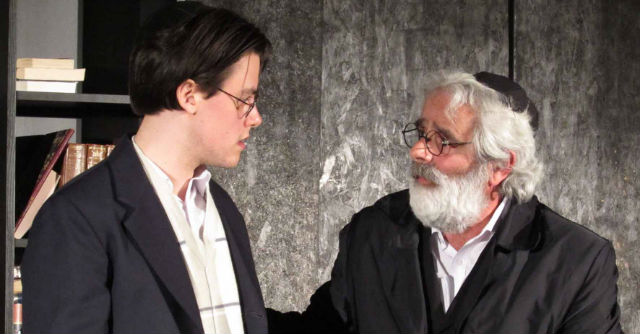
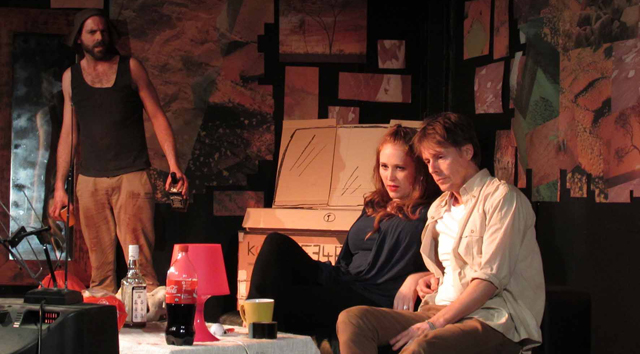
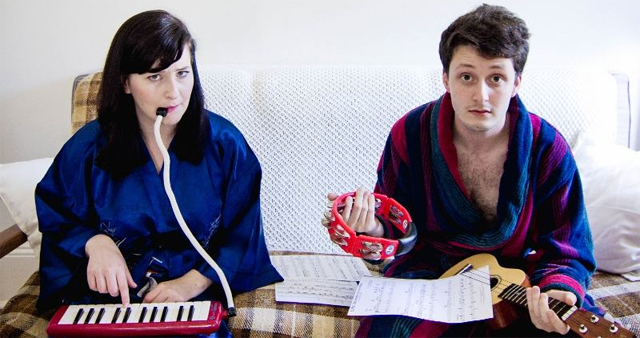
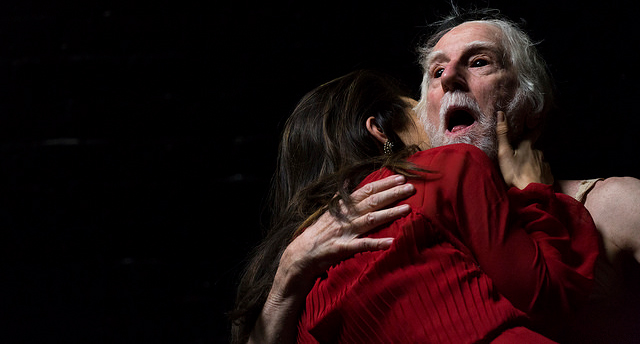
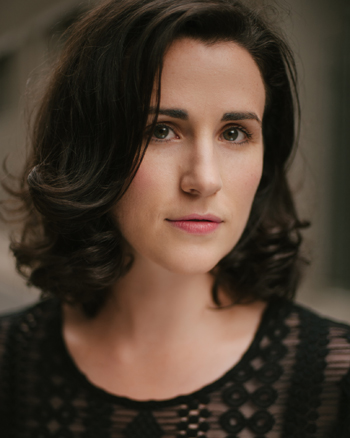
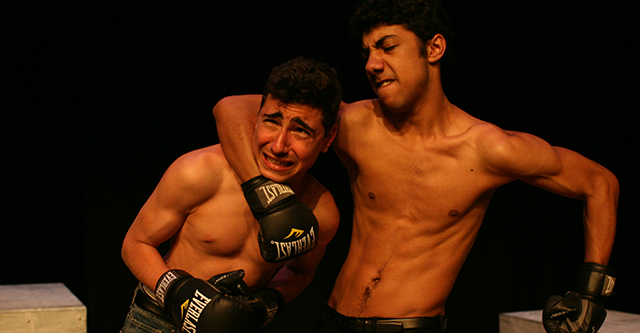
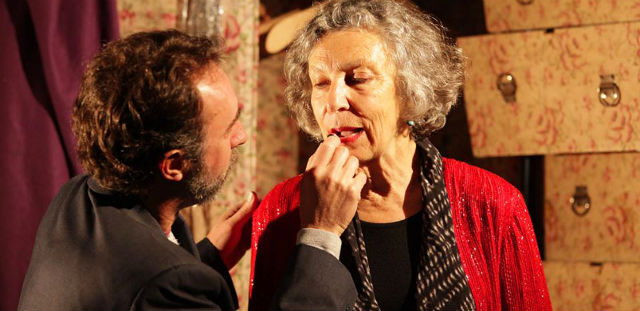
Rehearsal images above by Gez Xavier Mansfield and Kar Publicity from Sugarland,
by Rachael Coopes and Wayne Blair.
At ATYP, from Aug 27 – Sep 13, 2014.
More info at www.atyp.com.au

5 Questions with Megan McGlinchey

meganmcglincheyWhat is your favourite swear word?
Bullshit.

What are you wearing?
Jeans.

What is love?
Zero zero in tennis.

What was the last show you saw, and how many stars do you give it?
Constellations and I would give it 5 stars.

Is your new show going to be any good?
Yes, sir.


Megan McGlinchey stars in Gruesome Playground Injuries, part of Sydney Fringe 2014.
Show dates: 24 – 28 Sep, 2014
Show venue: TAP Gallery

Review: Danny And The Deep Blue Sea (Little Spoon Theatre Co)

littlespoonVenue: Roxbury Hotel (Glebe NSW), Aug 22 – 30, 2014
Playwright: John Patrick Shanley
Director: Fiona Hallenan-Barker
Music: Ed Gain
Cast: Wade Doolan, Karli Evans

Theatre review
Love and human connection are sacred. They come easily to some, but remain elusive to others. John Patrick Shanley’s Danny And The Deep Blue Sea shows us two downtrodden souls Roberta and Danny, both desperate and lonely. We witness their efforts at discovering a life beyond their personal darkness, commencing with a chance meeting at a depressed bar in the middle of a poor Bronx neighbourhood. They find hints of contact, but each meaningful moment perishes, and every brief instant of radiance dissolves back into gloom.

The production is staged in a makeshift theatre at the Roxbury Hotel, located just outside of Sydney city. The space is quartered, so that performances take place along two channels that intersect in the room’s centre. It is an unusual location, so it makes good sense to resist creating a conventional proscenium aspect, but the actors’ faces are often obscured and losing that precious perspective is disappointing. Fortunately, both actors Karli Evans and Wade Doolan, are intense and focused, and they conspire with the venue’s intimacy to manufacture a beautifully transportative experience that takes us to spheres of secrecy and revelation.

Evans and Doolan are individually captivating, and their chemistry is excellent. Scenes of conflict later in the piece are dynamic and daunting at close range, but less effective are earlier sections that require a lighter, more humorous touch to allow greater identification from the audience. Their stories are dark, and we need to be invited into their worlds with a little more warmth. There probably will always be a sense of alienation to this story, but it needs to capture our emotions more firmly at the start before it unleashes its tumultuous dramatics.

Tales of hope and salvation are important for art and the society to which it belongs. Artists find inspiration, so that they can themselves provide inspiration to their public. Roberta and Danny represent the sadness and regret that persist in our lives, but more significant is the unexpected bravery that surfaces from their interaction. Who knows what it truly means to love, but when two people collide and engender a wonderful joy that had been hitherto impossible, that phenomenon feels quite a bit like magic.

www.littlespoontheatre.com

Review: Wolf Lullaby (New Theatre)

newtheatreVenue: New Theatre (Newtown NSW), Aug 19 – Sep 13, 2014
Playwright: Hilary Bell
Director: Emma Louise
Cast: Maryellen George, Peter McAllum, Lucy Miller, David Woodland
Photograph © Bob Seary

Theatre review
We walk around with rose-tinted glasses everyday. The world can be a very ugly place if one chooses to see it only for its flaws, so we hold on to convenient lies in order that we may arrive at bedtime relatively unscathed. In Hilary Bell’s Wolf Lullaby, a veil is lifted off some hard truths and we are confronted with concepts of childhood innocence and familial sanctity that contradict the comforting notions we hold dear. Bell’s play is dark, disturbing and challenging. It is also full of mystery and dramatic tension, with interesting characters that tell an unusual, and sometimes horrific, story.

Director Emma Louise’s interpretation of Bell’s text is subtle and unpretentious, but the resulting production is a powerful one. Much of the abomination that happens, can only be seen through our own imagination. Heidi Brosnan’s lighting, and sound by Chelsea Reed and Alexander Tweedale, contribute immensely to an atmosphere of foreboding, and Allan Walpole’s set, while being a little too literal, contains elements that heighten the play’s supernatural qualities. A highlight of Louise’s work is the handling of ambiguities in the narrative. She does not force upon us a strong point of view about unfolding events, but leaves morsels of intrigue resonating for our own discovery and comprehension.

Half of the show’s four characters however, feel a little too indistinct. The portrayals of Warren and Sergeant Armstrong are realistic, but their personality transformations seem too sudden and we are left with a less than thorough understanding of their behaviour and motivations. Fortunately, the more dominant roles are delivered with greater detail. Lucy Miller plays Angela, the mother character in the piece. Her work is beautifully complex, and she creates a multiplicity that is responsible for the work’s depth and intellectual impact. Angela is unexpectedly fascinating, and Miller’s measured approach makes her the most disarming and enigmatic character on stage. Nine year-old Lizzie anchors the play in a realm of nightmares. Maryellen George is an adult but her performance as Lizzie is accurate, touching and eerie. Her mimicry of childlike gesturing is impressive, but it is the way she balances conflicting truths within her personal narrative that thrills and perplexes us with a perverse delight.

Stories about children are often predictable and unoriginal, but Wolf Lullaby is a rare beast. It is not light entertainment, but it is certainly an enthralling and eye-opening night at the theatre. It locates sacred beliefs and punctures them with an honesty that cannot be doubted. Our world is not a perfect place, but its dangers are amplified when we endow them with delusions. Art is often about fantasy, but its real worth is found in its depiction of the human condition. This is now a production that will lull us into sweet slumber, but its messages will keep our minds occupied for a few nights thereafter.

www.newtheatre.org.au

Review: Nora (Belvoir St Theatre)

belvoir1

Venue: Belvoir St Theatre (Surry Hills NSW), Aug 9 – Sep 14, 2014
Playwrights: Kit Brookman, Anne-Louise Sarks (after A Doll’s House by Henrik Ibsen)
Director: Anne-Louise Sarks
Actors: Blazey Best, Linda Cropper, Finn Dauphinee, Damien Ryan, Ava Strybosch
Image by Brett Boardman

Theatre review
It is no surprise that artists are drawn to the idea of reconstructing Henrik Ibsen’s A Doll’s House. The power of the original text and the stunning questions it poses have kept audiences debating for centuries. Kit Brookman and Anne-Louise Sarks’ updated version brings key characters to contemporary times, with the first act presenting a condensed re-telling of Ibsen’s story, and the second act continuing on from the legendary cliffhanger.

Act one is an elegant revisit that places focus on Nora, her husband Torvald and their children. It effectively communicates the anguish that could result from a life that includes only homemaking duties, and shifts Ibsen’s burden of blame away from Torvald, so that Nora’s own decisions and actions are implicated. This is an important new perspective that amplifies the play’s central theme of personal empowerment. We see Nora’s struggle and understand it to be a consequence of an individual’s poor decisions. The protagonist is no longer seen only as a victim of circumstances beyond her control, so her determination to find liberation resonates with greater complexity. Also successful is visual design of the production’s initial half. Marg Horwell’s set and Paul Jackson’s lights magically transform the stage into a middle class home with a deceptive foreboding warmth and see-through walls that indicate a sense of deficiency. The space is intimate and claustrophobic, giving us insight into a life that is visibly cosy, but oppressive under the surface.

Act two comprises mainly of a single scene, taking place only hours after Nora leaves her home. There are parallels with Ibsen’s original where Nora’s friend comes to her for help with seeking employment, but the show’s second half is largely a new invention that examines her future more closely. Unfortunately, Brookman and Sarks’ vision seems to dwell too heavily on Nora’s shock and confusion, which prevent character development and do not add enough interest to the unfolding aftermath. Also too obvious is the revelation that her responsibilities over her children must be met, regardless of the divorce. This commonplace discovery feels awkwardly trite, and it prevents drama and tension from taking hold. In 2014, we all know that there simply is no rationale for any woman to abandon everything she knows in order to cultivate a better life for herself in the Western world.

Damien Ryan’s performance as the updated Torvald is intelligently crafted. We see a man who has not been attentive to his spouse’s emotional world, but unlike his predecessor, his behaviour is not particularly undignified. He plays the familiar role of a regular modern day husband, and makes us wonder if our social conventions and expectations are enough for making a happy home life. This Torvald does not display glaring misjudgments, so we attribute guilt to him in a much more nuanced way. The dark and problematic role of Nora is played by Blazey Best who invests heavily into portraying her character’s torment. Her commitment is evident, but concluding moments reveal a less than convincing sequel to Nora’s story. Best plays her disorientation well, but that prolonged state of bewilderment seems to prevent the narrative from going somewhere more compelling and theatrical. The ultimate resolution or perhaps lack thereof, gives a feeling that the show is undercooked and prematurely unveiled.

The idea of Nora is experimental, but its spirit is less brave. It is radical in concept but not in execution. Nora’s story is about being stuck, and about the courage that is necessary for a breakthrough to occur, but the production appears to be confined by a shortage in risk and adventure. The original work ends at a point that fires up imagination. Thinking about the characters’ fates become irresistible, and their stories are brought to completion in private fantasies. Masterpieces are intimidating, and overhauling the great Ibsen’s writing looks to be as hard as building a new house that aims to improve upon a perfection that resides only in our minds.

www.belvoir.com.au

5 Questions with Dominic McDonald

dominicmcdonaldWhat is your favourite swear word?
I prefer swear phrases: God’s fuck! Jessica Christ! Christ on a stick! Christ’s cunt! (Can anyone say, Catholic School boy?)

What are you wearing?
A knowing smile.

What is love?
Baby don’t hurt me, don’t hurt me, no more.

What was the last show you saw, and how many stars do you give it?
Theatre is like golf, fun to play but no fun to watch.

Is your new show going to be any good?
You do know that I’m in it?


Dominic McDonald is playing the role of Man in Jennifer Forever by Tara Clark, for Sydney Fringe 2014.
Show dates: 17 – 28 Sep, 2014
Show venue: The Old 505 Theatre

5 Questions with Andrew McGregor

andrewmcgregorWhat is your favourite swear word?
“Fuck it” Cause when I’m afraid of doing something or questioning whether I should do it. “Fuck it” is what makes me carry on.

What are you wearing?
Pink Floyd t-shirt with a Hawaiian shirt over it, and my Batman necklace engraved with WWBD (What would Batman do).

What is love?
Batman.

What was the last show you saw, and how many stars do you give it?
The Book Of Mormon at Eugene O’Neill Theatre in New York City. There is not enough stars in the world to give to such an amazing performance.

Is your new show going to be any good?
I hope so, I have alot of faith in my fellow performer and friends. We’ve had alot of fun over the past couple months, juggling rehearsals along with uni and work.

Andrew McGregor is performing in Boys’ Life by Howard Korder.
Show dates: 19 – 22 Aug, 2014
Show venue: King Street Theatre

Review: The Bitterness Of Pomegranates (Sydney University Dramatic Society)

sudsVenue: University of Sydney Studio B (Camperdown NSW), Aug 13 – 23, 2014
Director: Julia Clark
Playwright: Julia Clark
Cast: Brendan Colnan, India Cordony, Gabby Florek, Sarah Graham, Max Melzer, Diana Reid, Dominic Scarf

Theatre review
Relationships at home are invariably complex. We tell stories from personal experience, not only because we know them well, but also because of the need for a process of articulation that assists with making sense of the people and issues surrounding us. The Bitterness Of Pomegranates by Julia Clark feels like a disclosure of personal confidences involving characters from the writer’s inner sanctum. Their foibles and circumstances might not be familiar to all, but what connects is the intimacy of family dynamics that most audiences would easily understand.

The highlight of Clark’s script is its element of intrigue, but the play does not manage to keep a sharp focus. It contains several themes and concerns that are not explored at much depth, leaving an impression that mundanity is its greatest interest. The work is structured well, but most scenes feel too delicate, resulting in a show that looks a lot like daily life, without enough theatricality on offer. Fortunately the show manages to keep us engaged, with interesting characters and entertaining relationships that we want to learn more about.

Gabby Florek’s performance as Margaret is surprisingly polished. She brings an authentic presence to the character that helps us believe the world being depicted on stage. Florek is a compelling actor, with a gentle tenacity that helps give the production some gravity. The women in the play lack fire. They all seem dejected, but none display passion or anger. Their lives are not wonderful and they should be louder in their displeasure with the cards they are dealt. We understand that society has the potential to suppress its individuals, but we long to see examples of great women, in life and in theatre, break free of their shackles, preferably with deafening drama.

www.sudsusyd.com

Review: Constellations (Darlinghurst Theatre Company)

darlinghursttheatreVenue: Eternity Playhouse (Darlinghurst NSW), Aug 8 – Sep 7, 2014
Playwright: Nick Payne
Director: Anthony Skuse
Cast: Emma Palmer, Sam O’Sullivan
Image by Gez Xavier Mansfield

Theatre review (originally published in Auditorium Magazine)
The only constant in life is change, and its only certainty is death. Nick Payne’s Constellations is an exploration into the ways we create and tell stories. Through its inventive format of repetition and shifting perspectives, it relays a tale that is remarkably simple, but because of its adventurous format, the work that results is profound and thought-provoking. The play discusses the nature of time, in relation to the way its plot unfolds and also to astrophysics. Its interest in non-linear temporal expressions is derived from academia, but it raises questions of life choices by actualising on the stage, abstract notions of parallel universes. We see two characters acting out unpredictable duplications of scenes, each time with different motivations and nuances. They prompt us to look at the ways we choose to react to things, at how we make decisions in daily life, and whether or not we are in control of the consequences that befall us.

The work is in part about mortality and its inevitability, but it is also about the elasticity of concepts like fate and destiny. In some ways, the message is an optimistic one, where existence can take a myriad of forms, and circumstances can be altered at some degree by volition. The idea of regret and redress also figures into its themes when we observe its characters, Marianne and Roland, moving through time in all directions, to revisit sequences and reinterpret them with fresh approaches. Payne’s script is as complex as the direction wishes for it to be, and Anthony Skuse is certainly unafraid to extricate depth while he builds a coherent piece that looks on its surface to be a love story. The conceptual aspects of Constellations are realised with exciting clarity, and it surprises with emotional textures that are beautifully rendered. The play moves us on levels of instinct, intellect and sentimentality; a rare experience at the theatre, and seriously rewarding.

Skuse and his cast have brought to the writing, thoughtful range and a vibrant energy that keeps us fascinated and engaged. The experimental style of Payne’s script is successfully restrained so that it is a presence that does not overwhelm. There is sufficient room for a cerebral connection, but we are also encouraged to feel the joy, pleasure, anger, fear and sadness that flows through the rich landscape of human experience being portrayed before us. Skuse’s brilliance lies in his ability to discover layers in the play that appear contradictory, and make them all seem simultaneously truthful. His work has a humorous charm that readily finds its way into lighter sections, and comedy often appears quite out of the blue, without ever feeling clumsy or contrived.

Acting in Constellations is demanding to say the least. The production has us fixated on the couple and gives them nowhere to hide. They have to perform countless transitions that are entirely unnatural, yet must create characters that always feel accurate and believable. Both players succeed wonderfully on these fronts, and furthermore, they are immediately endearing and we hang on to their every word. Emma Palmer is simply glorious. The actor feels so completely alive and truthful on this stage, we cannot help but be mesmerised by the way she develops her character from moment to moment. The production relies heavily on Palmer’s performance and she makes it a breathtaking one. The thorough commitment she gives to every quirky flourish and creative decision is evidence of an artist’s single-minded passion for her art form. Palmer elevates the show from abstract philosophy, and provides a palpable authenticity that is responsible for keeping our attention and emotions invested.

Roland is the supportive boyfriend, the selfish bastard, the saint, and the liar. Sam O’Sullivan is compelling at every stage of his portrayal, and even though his work can be at times a little quiet, he never fails to keep us engrossed as the regular guy who is not always Prince Charming. O’Sullivan has a comic flair that he utilises with refreshing competence whenever possible. The actors are individually strong and they work well together, but the chemistry between the two is sometimes unpersuasive, which means that sparks do not always fly when they need to. On the other hand, we feel a sense of weakness in the characters’ bond, which creates an ominous tension that points to the ever-present threat of their relationship’s possible demise.

Production design is understandably simple. There is something bare bones about the script, which the visuals reflect. The rawness of two people unveiling humanity with intensive honesty is matched by the minimalism of a stage that does not intrude. However, it is worth noting that the venue is fairly large, and allowing the full stage space to be exposed for most of the duration tends to take away from the intimacy that the acting strives for. Set and lighting could have helped reduce the vastness so that the characters are put in greater focus, and be in a position to achieve a stronger connection with the audience. Composer and sound designer Marty Jamieson also creates minimal work but its effect is deceptively powerful. Jamieson never draws attention to himself, but uses simple musical notes to indicate occasional shifts in dramatic tone. His work is sensitive, intuitive and tacitly sublime.

There is no subject more universal than death and illness. Constellations causes an interruption to our lives by making us look at the inevitable end. More than that, it encourages reflection on that journey to death, or to put it less morbidly, the play shines light on what we choose to make out of our every day on earth. Some of us look to the stars to find meaning and to prophesy, but the only predetermined thing that no one is able to escape, is the fact that nothing lasts forever. Each second is full of possibility, and fortunate are those who can uncover the magic that awaits in every twinkling breath.

www.darlinghursttheatre.com

Review: Bad Day Insurance (Old 505 Theatre)

old505theatreVenue: Old 505 Theatre (Surry Hills NSW), Aug 6 – 24, 2014
Playwright: Lisa Chappell
Director: Drew Fairley
Cast: Lisa Chappell, Sarah Hynter

Theatre review
The quote, “resentment is like drinking poison and waiting for the other person to die,” has been attributed to different sources, including Nelson Mandela. In Bad Day Insurance, two elderly women spend their days in each other’s company, secluded from the world except for people on telephones who ask for insurance payouts due to having a bad day for all kinds of reasons. Esther and Mavis have to listen to these first world complaints every waking moment, and we soon get the impression that their state of torture would have been for a lot more than a few years. They are watched over by an invisible non-human entity named Boob, who exercises absolute control over these women, although we wonder if, like many of our gods, its existence is entirely in their minds. Esther and Mavis are grey haired and grey skinned, having waited an inordinately long time in their “call centre” (they sleep and work there) for an inscrutable something, or perhaps simply for their days at Bad Day Insurance to come to an end. They are trapped, and we wonder why. We wonder if they have imprisoned themselves and are punishing each other for something that had happened. We never hear the other end of the phone lines, and they do not ring on their own accord. The women verbalise a “ring ring” if a call arrives to taunt the other.

Lisa Chappell’s script is humorous, but its more striking feature is its strange darkness. The mystery and intrigue that Chappell creates is riveting, and her brand of empathetic absurdity brings out an unexpected compassion in the viewing experience. There are many loose ends to the piece, but meaningful details are peppered throughout so that our imagination is kept busy. We are entertained by a lot of silliness, but at the same time, we are completely engrossed on a cerebral level, seduced by all its somber resonances that point to something deeper that wants to be unearthed.

Performances by Chappell and Sarah Hynter are flawless. The actors are energetic, mischievous and magnetic, with a consummate professionalism that easily convinces us that all bases are covered. We are taken on a ride that involves laughter, surprise, curiosity, terror and poignancy. Under the directorship of Drew Fairley who provides a sensitive, nuanced third eye, the production they have created is a prime example of how showbusiness and art can collude to communicate something enjoyable, disarming and very clever. Talent of this calibre is a rare and beautiful thing, and to see Chappell and Hynter invent something that moves us on so many levels, is awe-inspiring.

Freedom is prized by everyone. It is not available to all, but in places like Australia, it is certainly within reach. Understanding how to attain that emancipation depends largely on an understanding of one’s own circumstances. Bad Day Insurance shows us that we almost never see the completeness of our lives. There are always annoyances, disappointments and pains that hold our attention, and we are always waiting for something to facilitate a release. Esther and Mavis have suffered an eternity. Prisoners of fear, despair and defeat, they have formed a hellish life, unaware of their power for creating better days for themselves. They fail to see that the locks enslaving them require keys that only they can manufacture. This is a show about our freedom, and it challenges us to seize it.

www.lisachappell.net