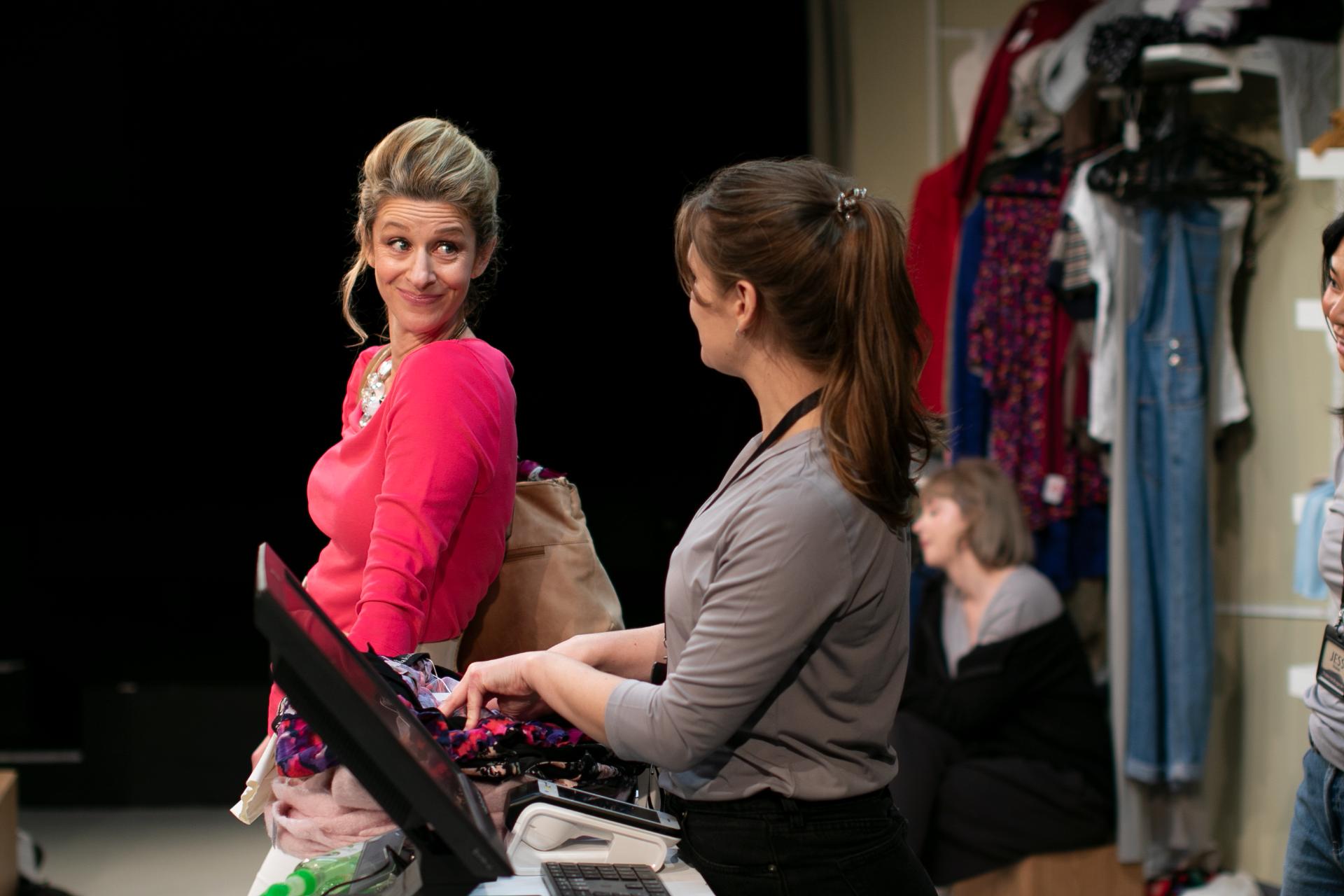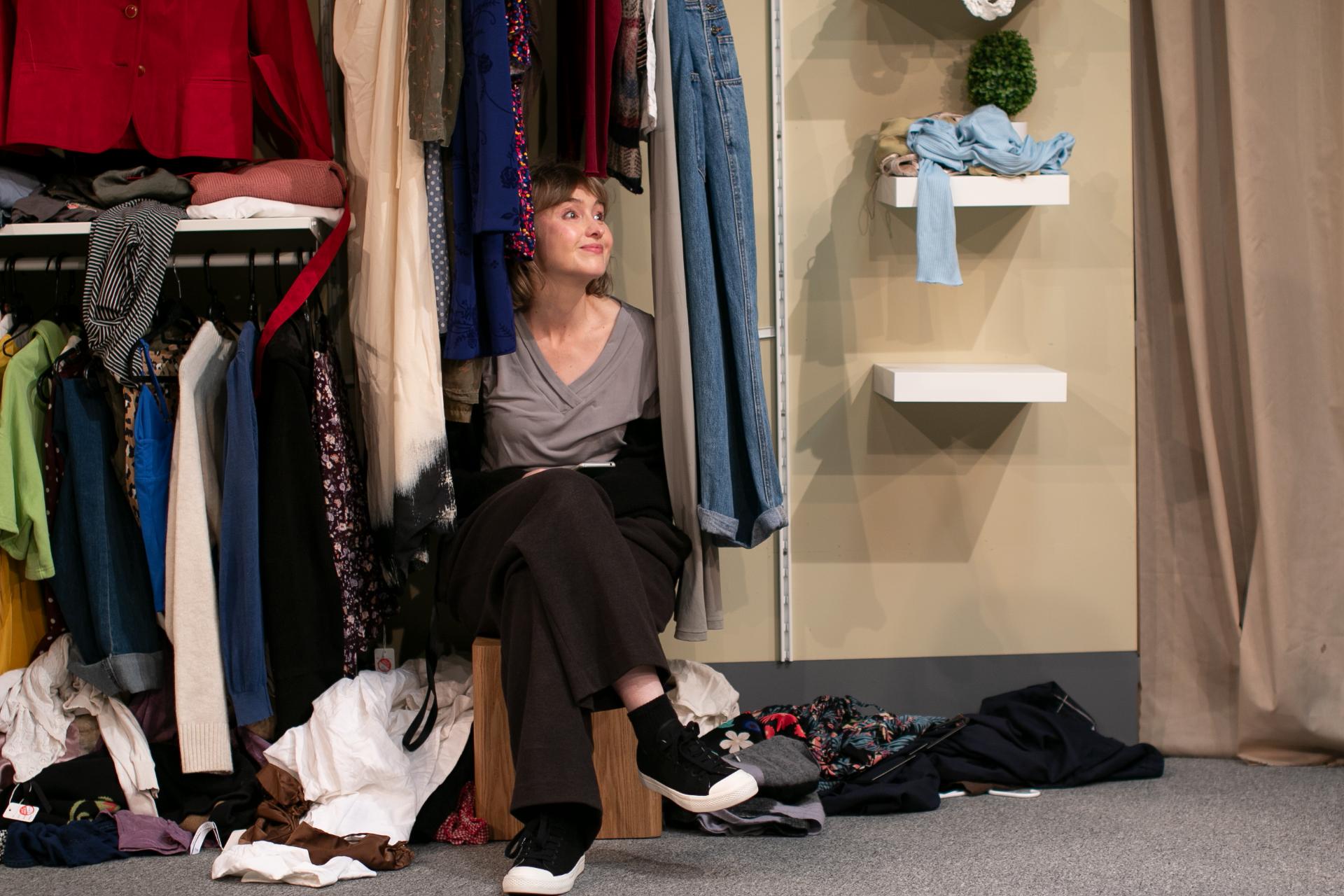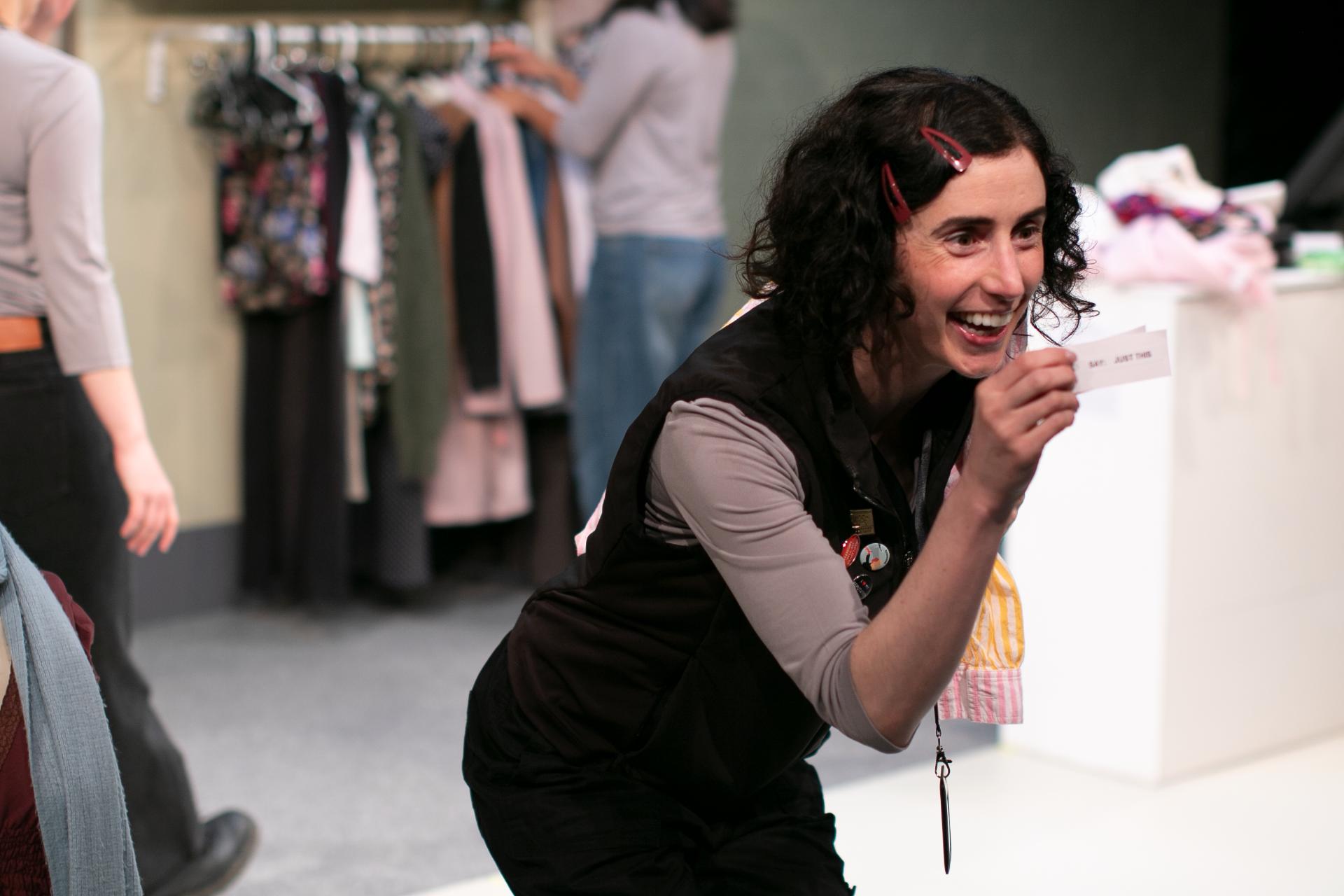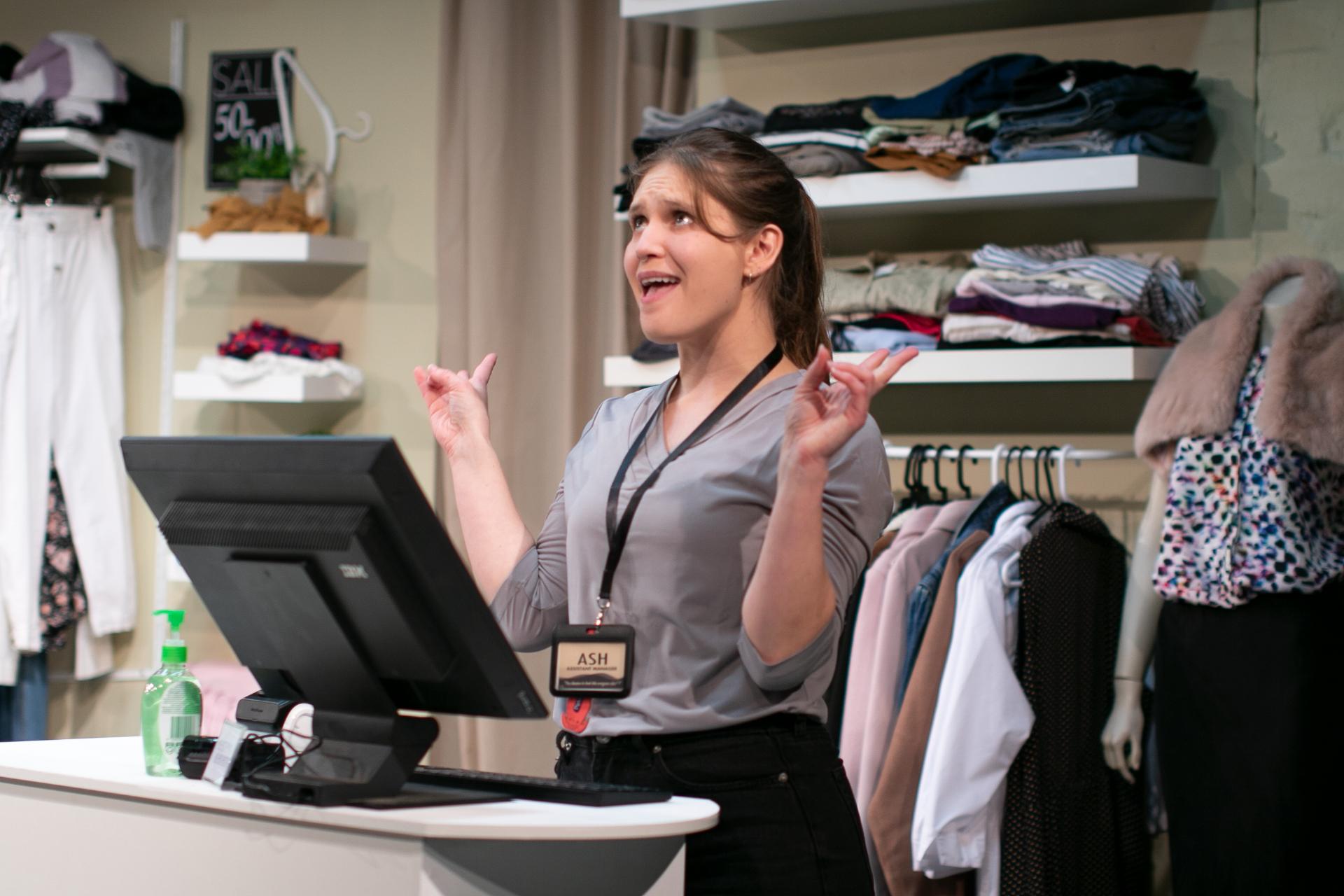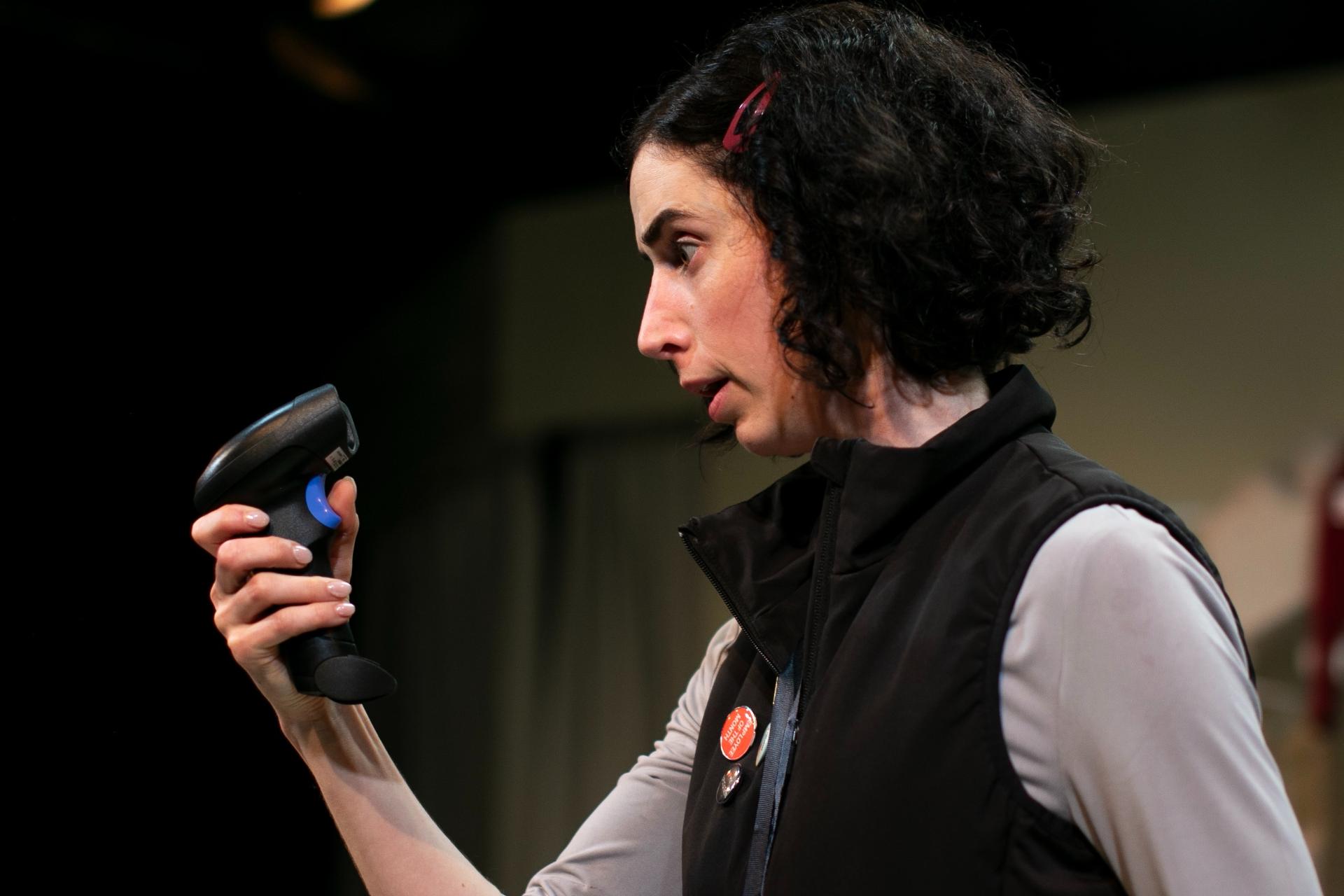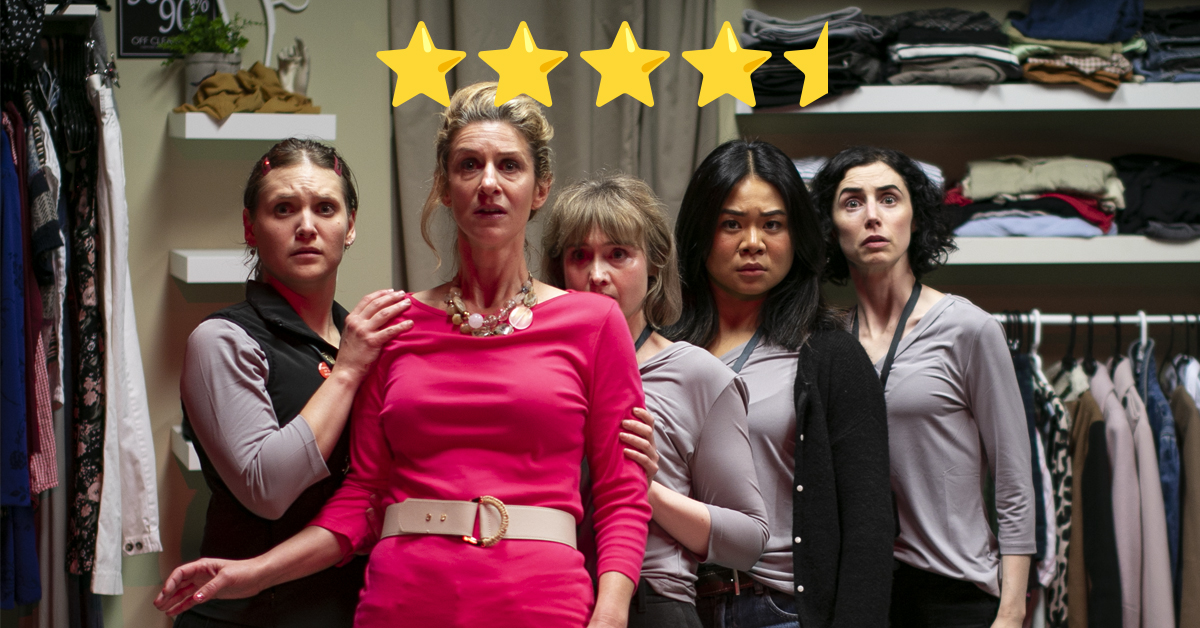
Venue: Belvoir St Theatre (Surry Hills NSW), Oct 4 – 25, 2026
Playwright: Jess Zlotnick
Director: Tasha O’Brien
Cast: Lib Campbell, Lucy X Dunning, Bridget Haberecht, Megan Kennedy, Kate Skinner
Images by Jane Coates
Theatre review
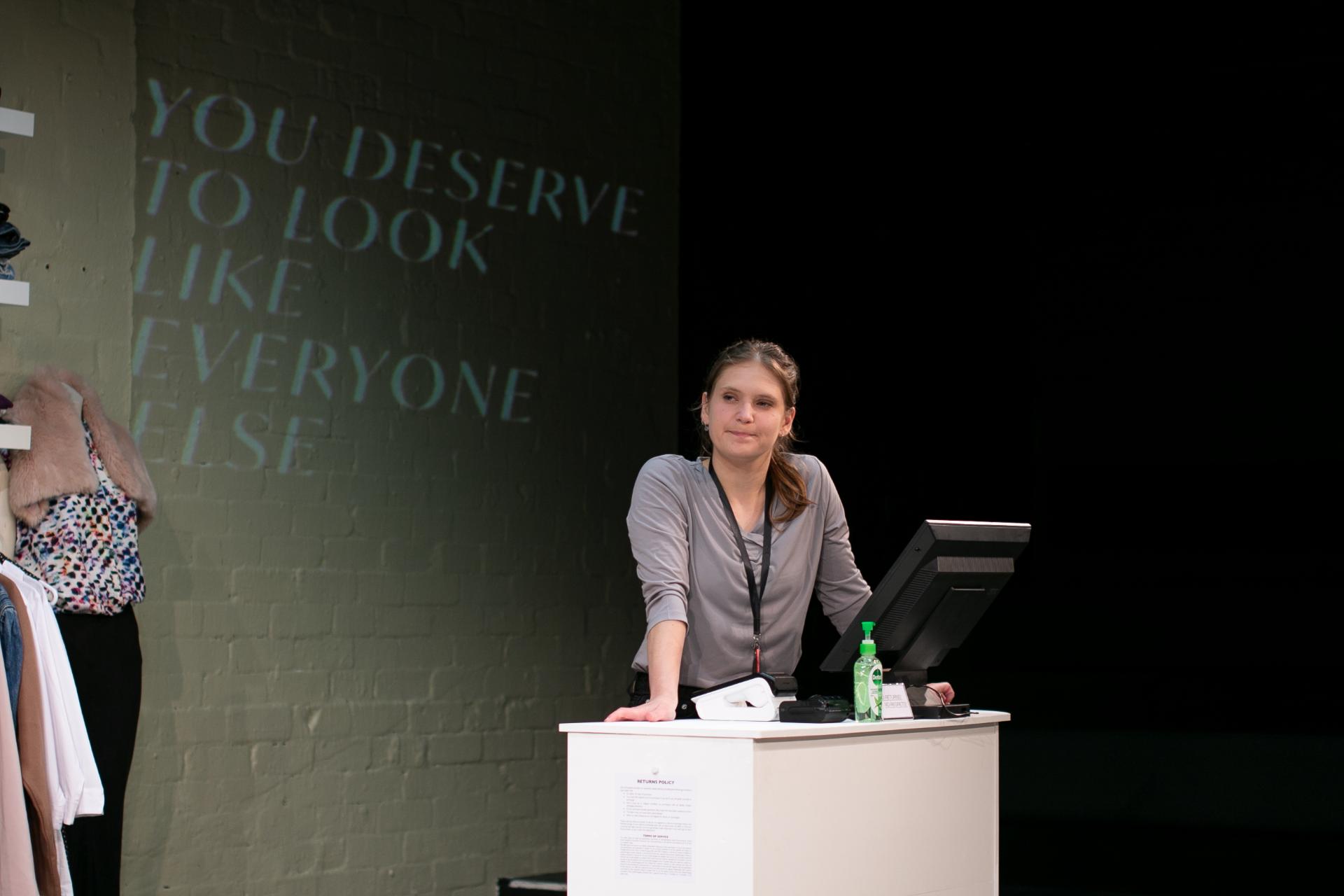
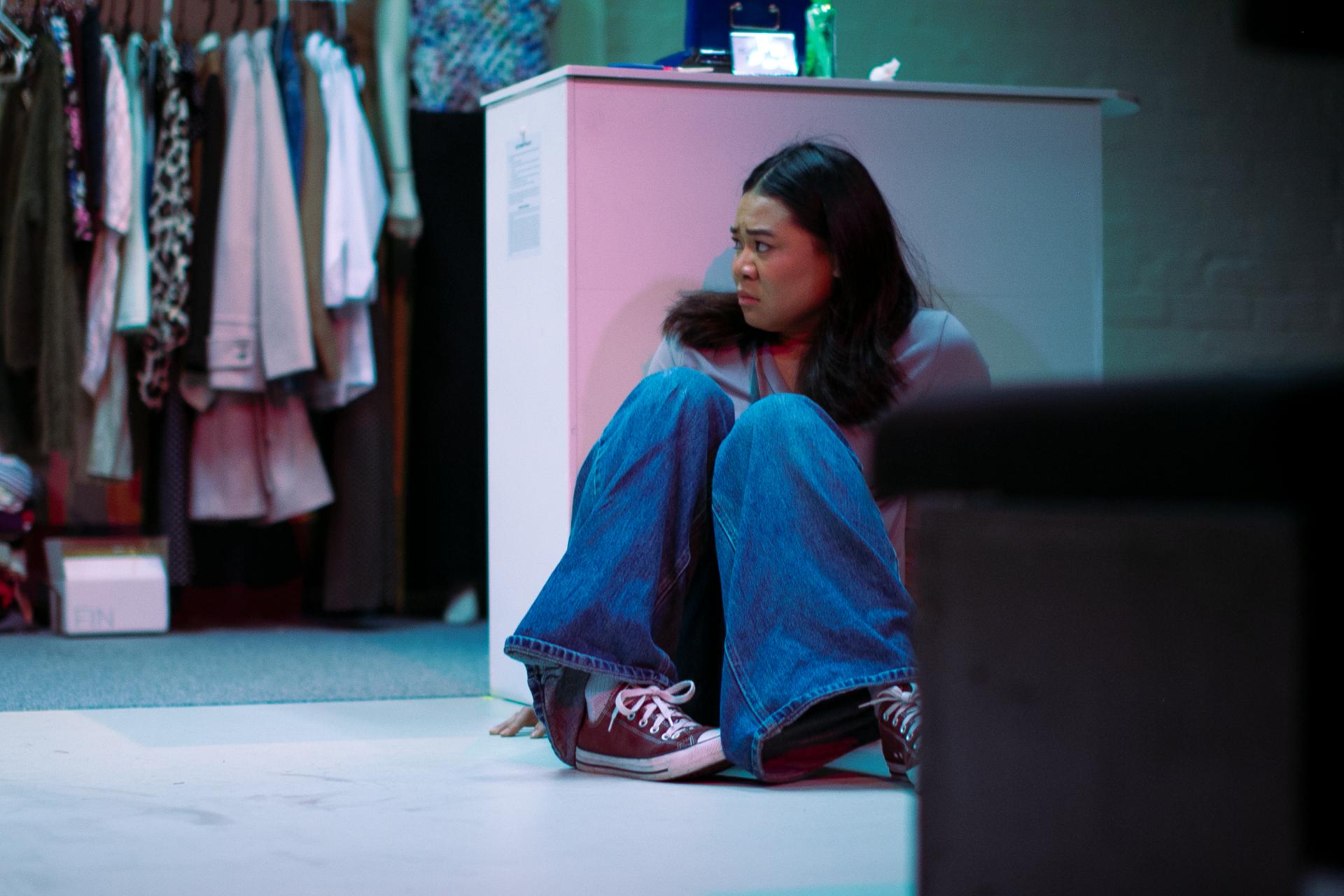
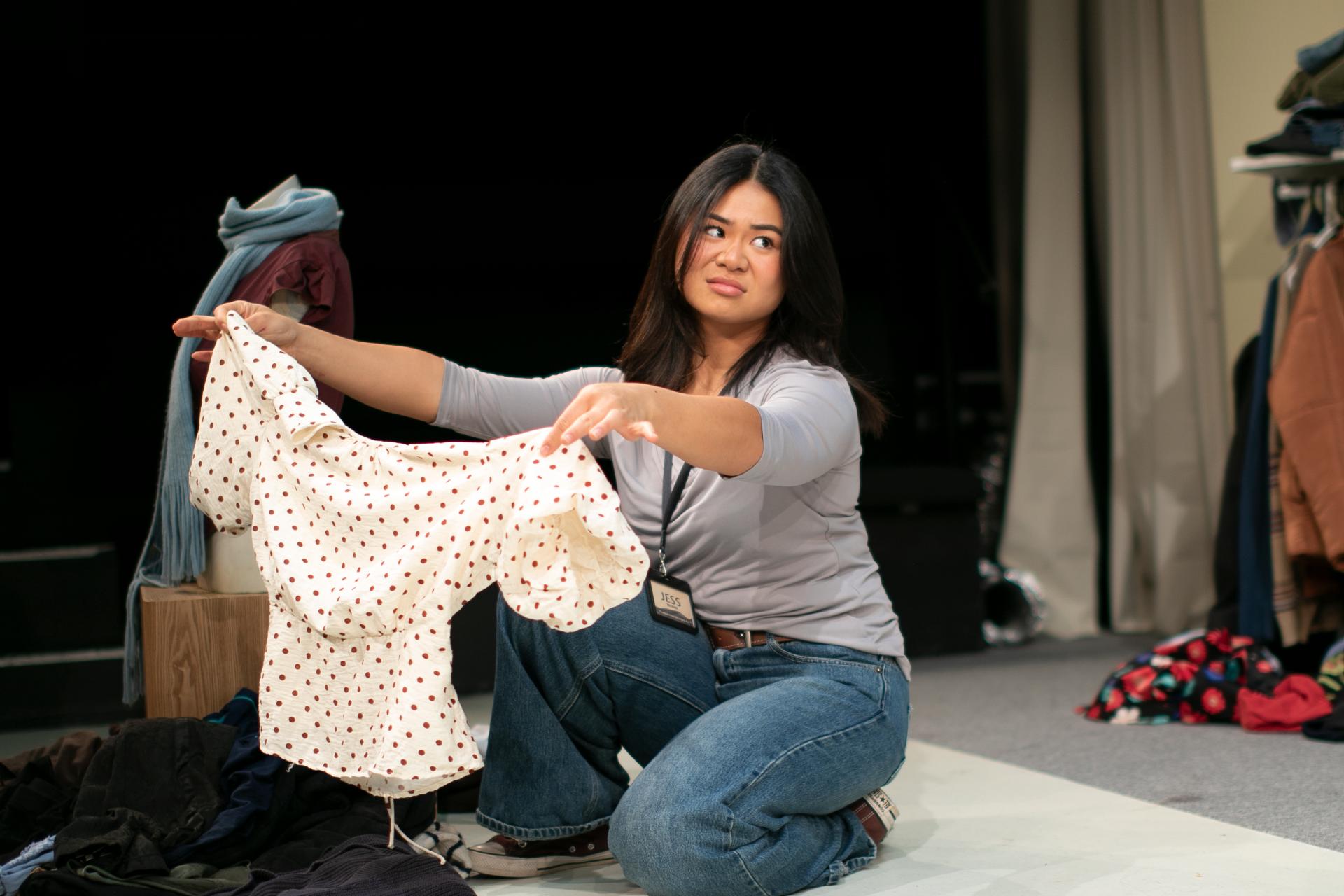
In one of the thousands of women’s clothing stores scattered throughout Australia’s shopping malls, a group of employees is required to conduct a stocktake after hours. Nobody particularly wants to be there, but the realities of economic survival demand that people suppress their own inclinations, grit their teeth and endure, if only to ensure that there is food on the table.
Jess Zlotnick’s Stocktake is a searing indictment of the plight of the working class under contemporary late-stage capitalism, although it is equally likely to be remembered for its riotous comedy. Clearly informed by lived experience at the lower rungs of the retail hierarchy, Zlotnick’s writing is as keenly observed as it is wildly imaginative. The play marries an acute understanding of low-wage precarity with surreal manifestations of systemic oppression, exposing the increasingly grotesque consequences of oligarchic power in a world where economic inequality continues to deepen.
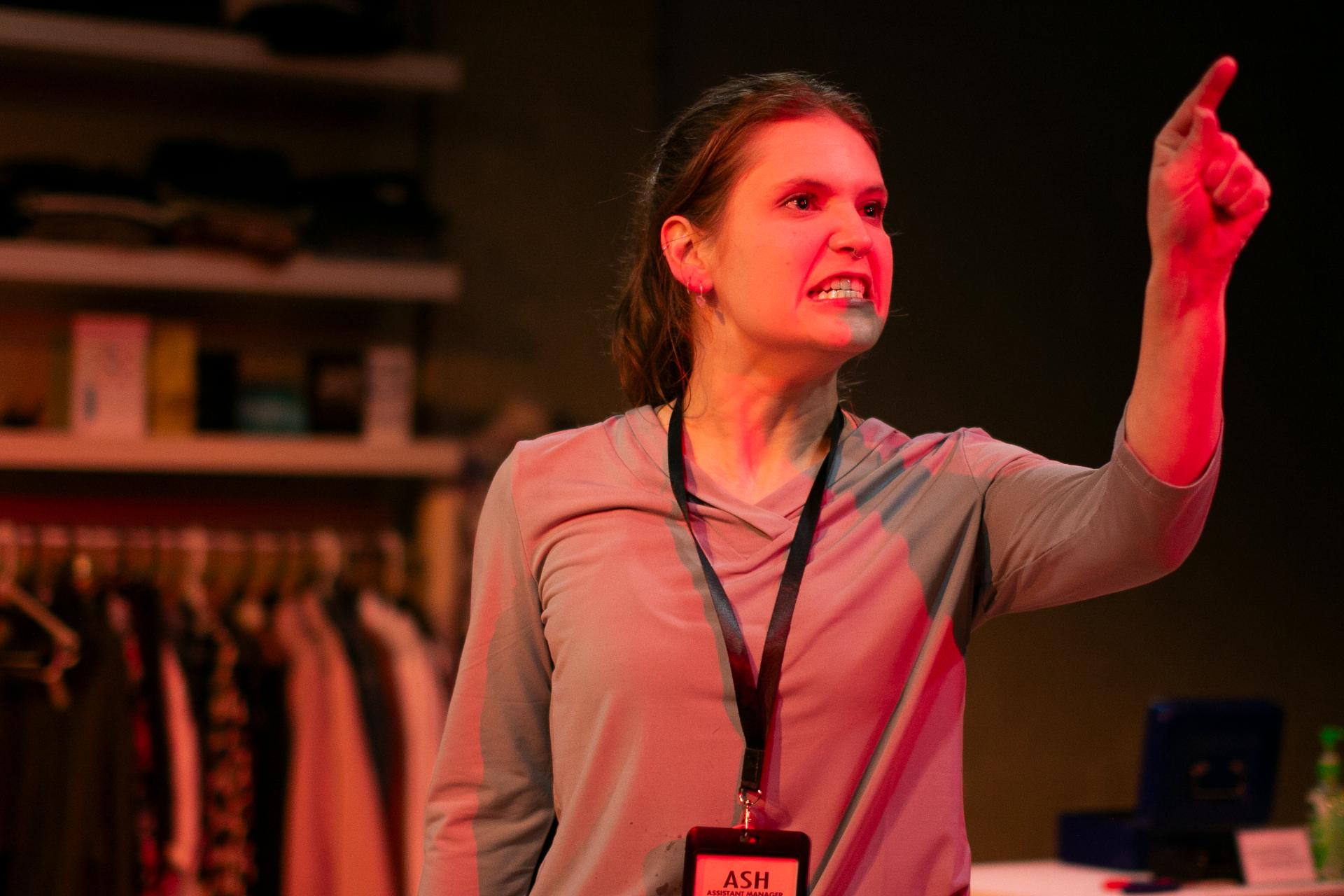
Director Tasha O’Brien brings an uncompromising sense of gravity to a production that makes no attempt to disguise its solidarity with the working class. At the same time, she finds inventive ways to exploit the increasingly absurd circumstances, ensuring that the material remains as theatrically engaging as it is politically charged. The result is a work that insists we laugh even as the full indignity of our circumstances unfolds before us. O’Brien renders the injustices experienced by wage earners with admirable clarity, while layering each indignity with such irreverent humour that the production becomes both comedically irresistible and politically inescapable.
The visual elements of the staging are somewhat less assured. Hampered by obvious budgetary constraints, production design by Alice Vance and lighting by Caity Cowan do not always achieve the sophistication the material might warrant, although these limitations do little to diminish the overall effectiveness of the production. Harry Reid’s sound design is a particular strength, establishing an unsettling sense of metaphysical distortion that helps persuade us of the increasingly outlandish phenomena unfolding within an otherwise unremarkable clothing store.
The five-woman ensemble impresses through its collective commitment to this proletarian indictment. There are discernible disparities in performance experience and technical proficiency, but the cast’s collective achievement is consistently compelling. Together, the performers create a theatrical experience whose force derives less from individual virtuosity than from the cumulative power of their shared endeavour, lending the work a resonance that extends beyond the circumstances of its characters.
In an era of unprecedented billionaire wealth and the prospect of the world’s first trillionaire, it is tempting to succumb to political despondency, to assume that the battle has already been lost and that the 99 per cent is powerless to alter a trajectory seemingly destined for catastrophe. Stocktake, however, repeatedly reminds us that its women retain a measure of agency, even when the choices available to them are profoundly constrained. They must continually make decisions, often between alternatives that offer little more than different forms of deprivation. Such choices can appear futile, their outcomes dictated by a system that makes survival itself contingent upon submission.
Yet it is precisely through this recurring insistence on the necessity of choice that the play offers glimpses of what courage might mean under such conditions. Courage emerges as the fragile determination to act when every available option appears inadequate, and when the prospect of meaningful change seems increasingly remote. In a world determined to diminish us, surrendering the possibility of resistance would amount to accepting the very conditions from which we long to escape. Perhaps it is useful to imagine courage as something almost supernatural, a miraculous instrument capable of delivering us from circumstances that otherwise seem insurmountable.