Venue: Belvoir St Theatre (Surry Hills NSW), Oct 3 – Nov 1, 2026
Playwright: Grace Chapple (from the novel by E.M. Forster)
Director: Hannah Goodwin
Cast: Kate Atkinson, Tom Conroy, Tomáš Kantor, Hayley McElhinney, Nathalie Morris, Patrick Williams, Luke Wiltshire, Charles Wu
Images by Brett Boardman
Theatre review
There is little doubt about the enduring significance of E.M. Forster’s A Room with a View. Its examination of class and its suppressive force, particularly in relation to women, alongside its critique of women’s complicity in upholding patriarchal values, allows the novel to retain considerable contemporary resonance more than a century after its publication. In this stage adaptation, Grace Chapple wisely foregrounds the novel’s quietly radical feminist undercurrent, and much of the dialogue glitters with a welcome modern wit. Yet for all the charm of Forster’s prose, one suspects the source material was never entirely suited to the stage: a slender plot, more texture than event, strains to sustain a full evening of theatre.
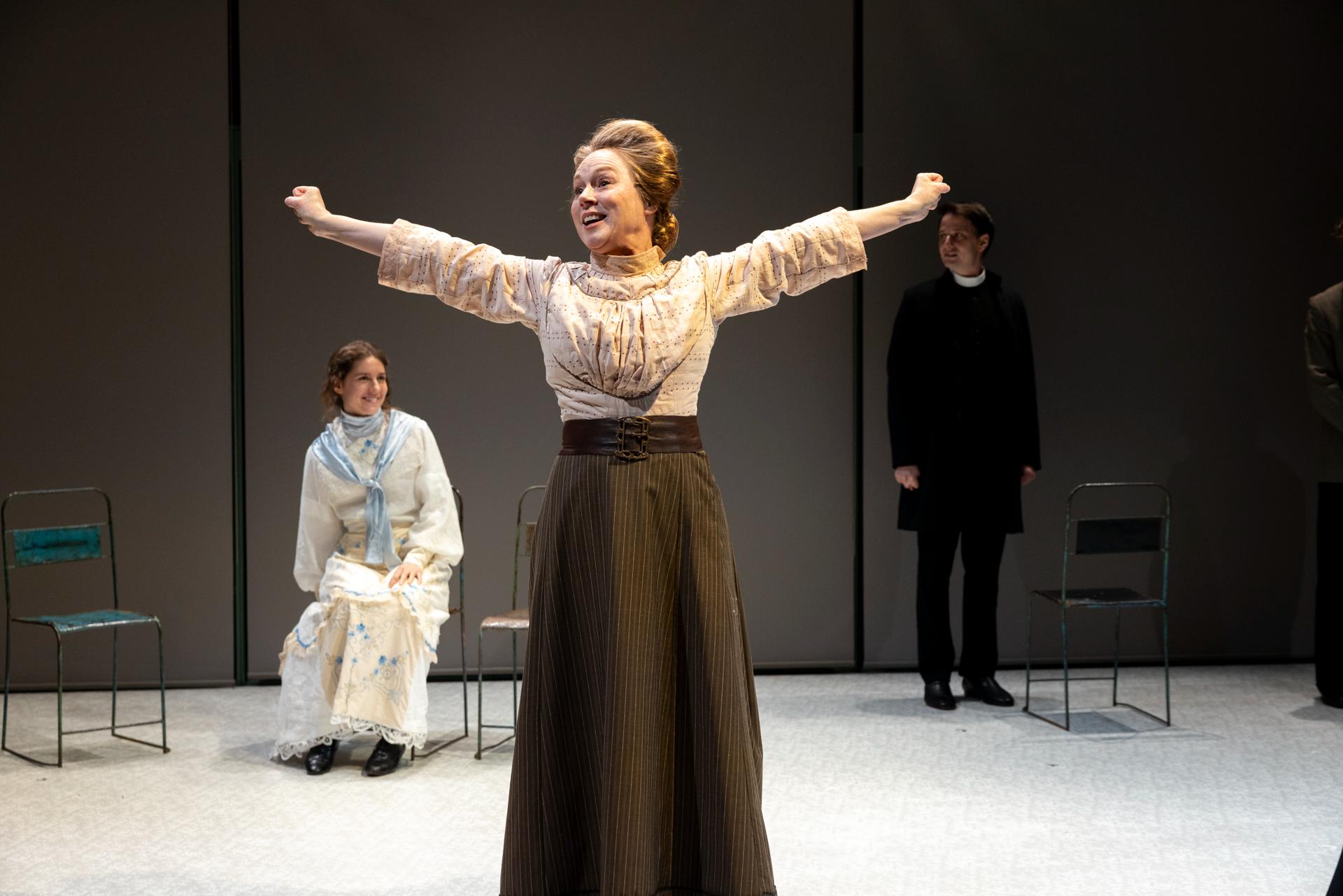
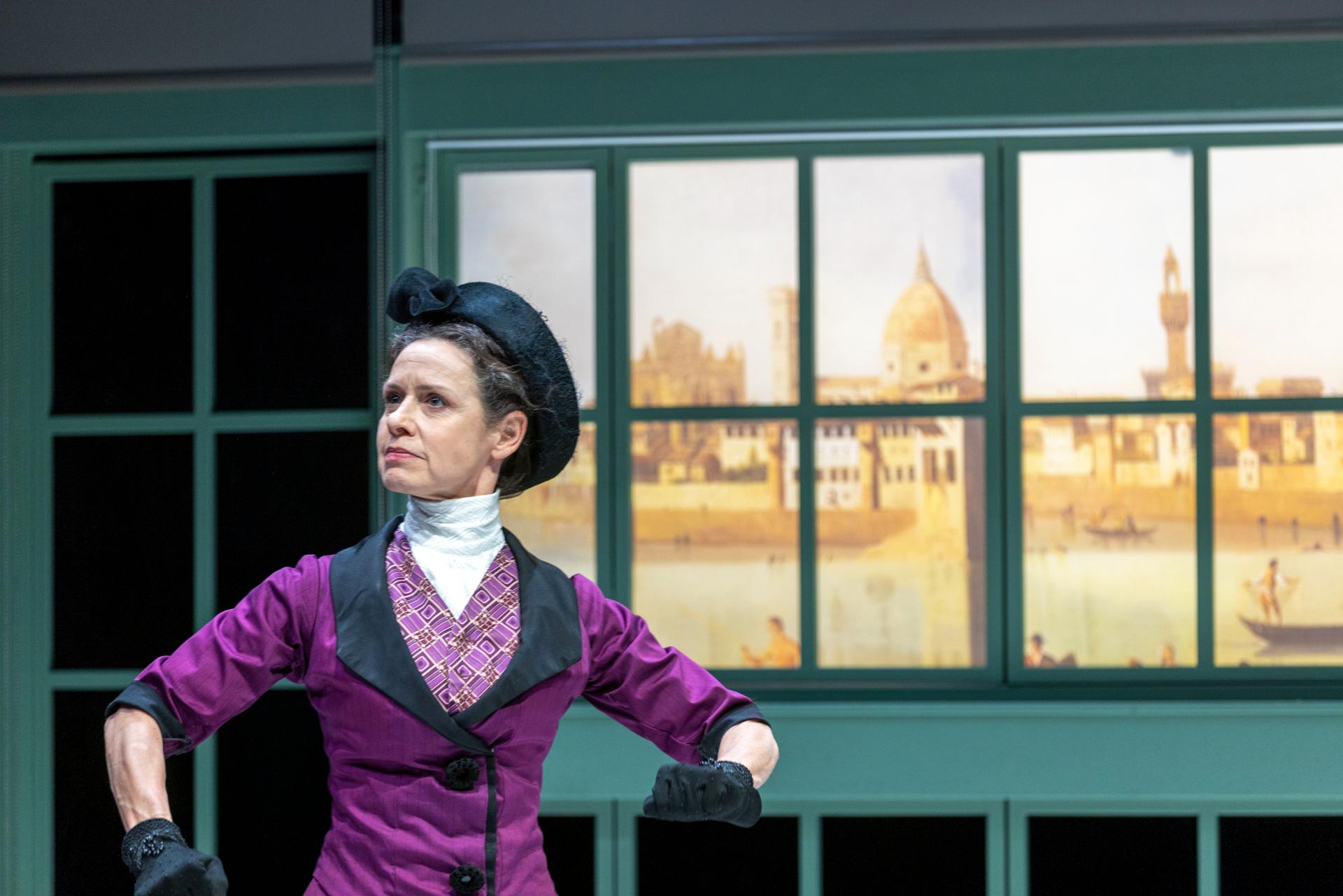
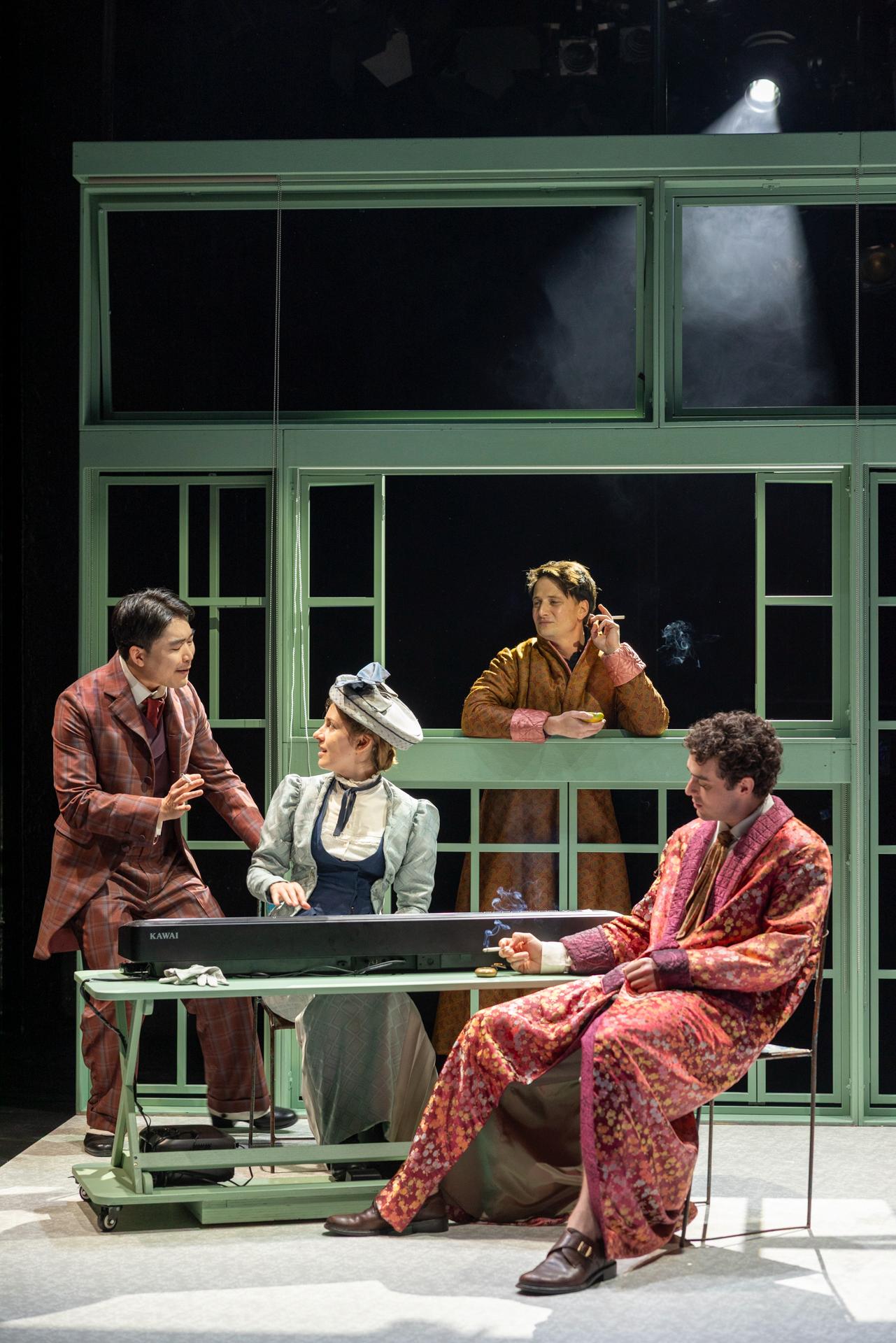
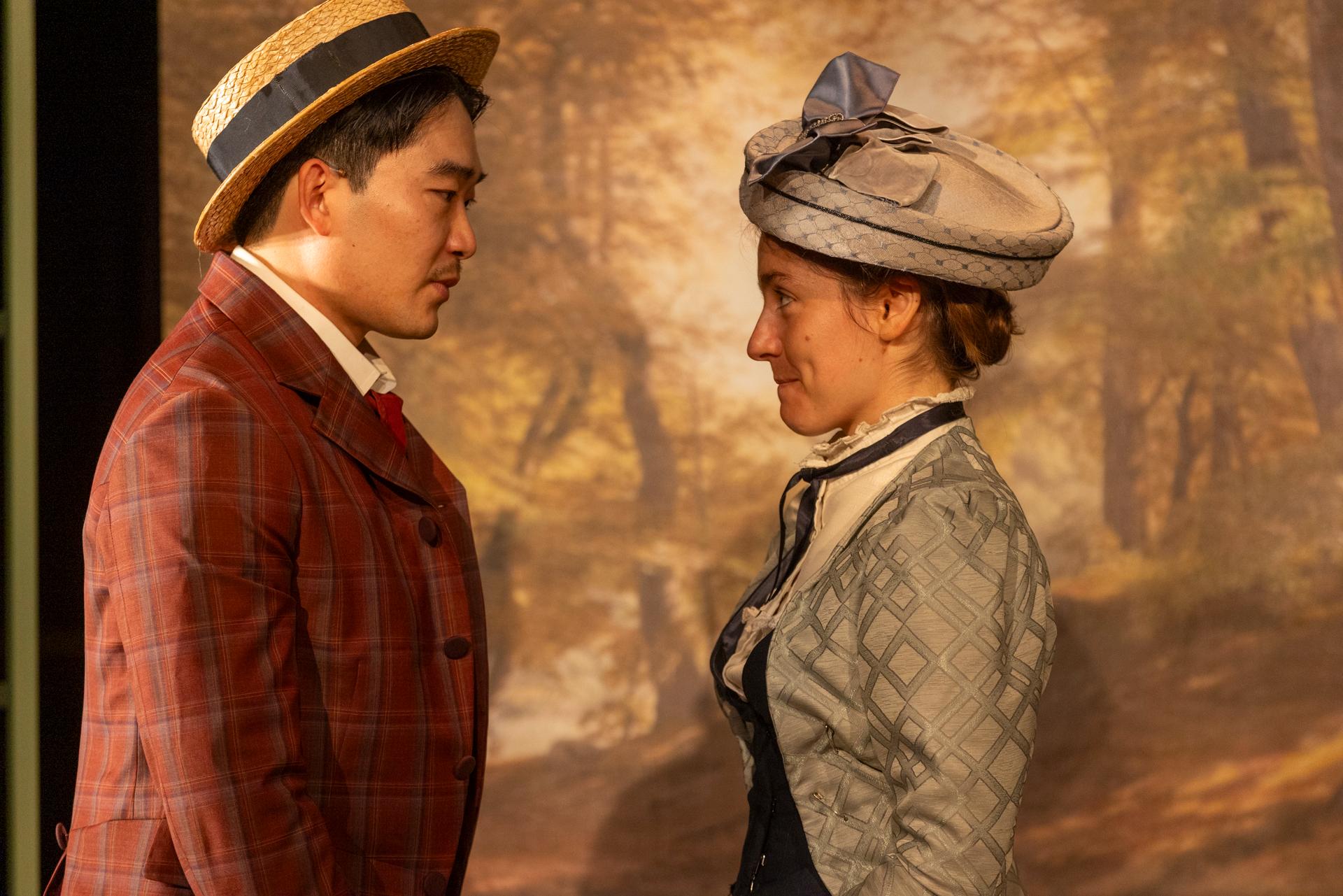
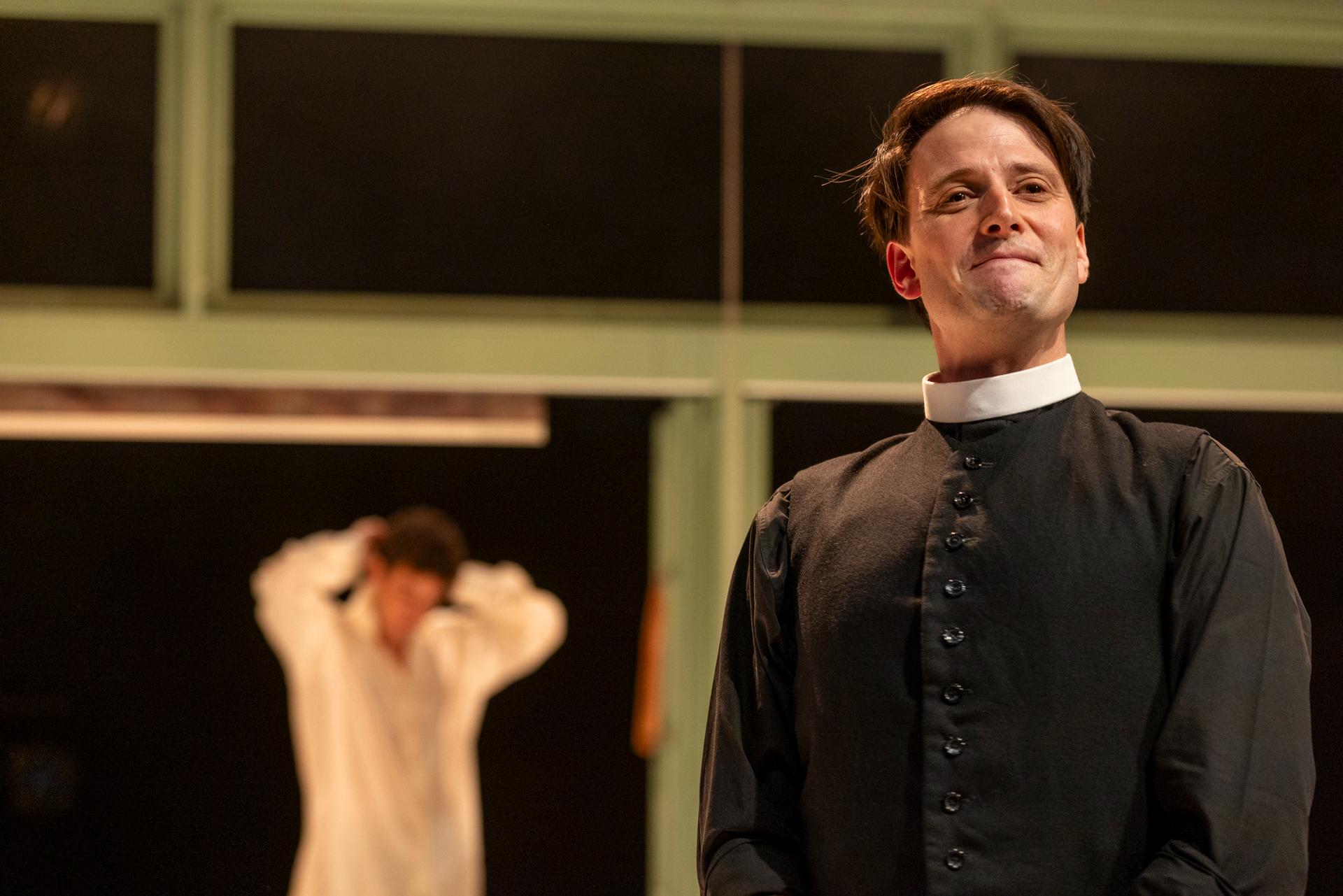
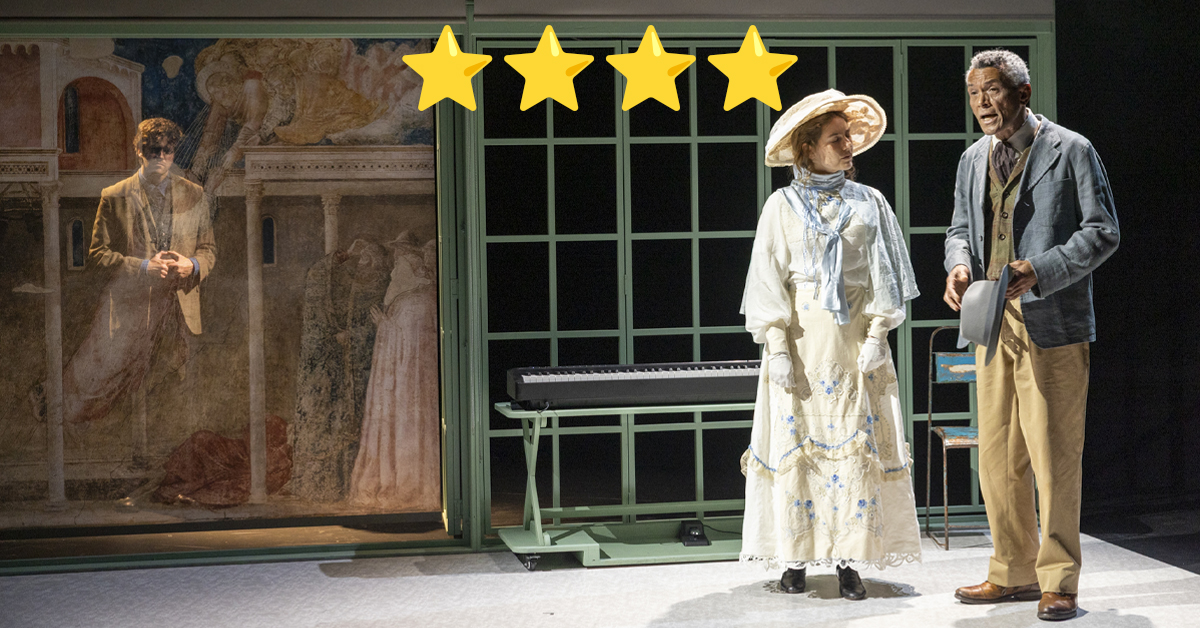
Chapple endows each character with endearing particularity, and the cast is easy to follow; even so, the narrative grows rather lacking in its later stretches, precisely when one expects tensions to crest. Director Hannah Goodwin’s instinct, then, to compensate with sheer theatricality, is well founded. It is her mischievous reimagining of key scenarios, in tandem with choreographer Elle Evangelista, that supplies this production’s visceral pleasures. A tennis match, a lakeside swim, an impromptu road trip — these sequences abandon dialogue altogether and surrender instead to the irreducible magic of live performance, to wonderful effect. Madeleine Picard’s sound design and Grace Ferguson’s music amplify these moments of heightened theatricality beautifully, while Amelia Lever-Davidson’s lighting conjures unexpected textures against a disappointingly drab set by Zoë Atkinson, who fares far better with costumes that evoke the period elegantly without ever encumbering the performers.
As Lucy, Nathalie Morris is immediately likeable and impressively attuned to both the comedy and pathos of the role. Yet the abrupt psychological transformations her character undergoes remain difficult to fully comprehend. Her love interest, George, is played by Luke Wiltshire with an appealing vulnerability. More immediately memorable, however, are the production’s comic crowd-pleasers, with Kate Atkinson, Tomáš Kantor and Hayley McElhinney displaying exquisite timing and an instinctive understanding of the humorous possibilities of their characters. It is ultimately the production’s entertainment value, rather than the dramatic force of its source material, that makes the strongest impression.
At the story’s conclusion, we witness a woman breaking free from the shackles that have entrapped so many women for centuries. Lucy’s experience, however, is presented as an exception: her freedom appears to be the consequence of her individual courage to love, a courage that enables her to escape the constraints imposed upon her. But there is something troubling about this formulation. It is not that women have historically lacked courage. The more difficult truth is that courage alone is rarely sufficient to overcome the deeply entrenched forces that constrain women’s possibilities for genuine fulfilment.
Lucy changes the circumstances of her own life, largely through an act of individual defiance. But this is where the story feels less convincing from a contemporary feminist perspective. Emancipation cannot depend solely upon the exceptional courage of an individual woman to resist the structures around her. It is far more often through solidarity, collective action and the dismantling of those structures themselves that meaningful liberation becomes possible. Lucy may find her way out, but the question that lingers is what happens to all the women who she leaves behind.