Review: Tartuffe (Bell Shakespeare)

bellshakespeareVenue: Sydney Opera House (Sydney NSW), Jul 26 – Aug 23, 2014
Playwright: Justin Fleming (after Molière)
Director: Peter Evans
Cast: Leon Ford, Sean O’Shea, Helen Dallimore, Geraldine Hakewill, Kate Mulvany, Charlie Garber, Tom Hobbs, Jennifer Hagan, Robert Jago, Russell Smith, Scott Witt
Images by Lisa Tomasetti

Theatre review (originally published at Auditorium Magazine)

Stories that stand the test of time contain truths that resonate across generations. They bear a universality that seems to derive from the very essence of being human, and a good retelling of those tales will always reveal to us, the nature of our being, and perhaps more importantly, the morals we should live by, however we choose to respond. Tartuffe has a central theme that does not age. Our relationship with religion as individuals and as collectives come into scathing scrutiny, and the way this resonance persists is a potent indication of the concerns we live with, and sadly, how little some things evolve. Molière’s play is now 350 years old, and what was controversial then, can still be used for contentious discussion today.

Justin Fleming’s exciting new script shows great talent and flair. It is an adaptation that feels updated and immediate, yet it preserves a classic sensibility, most notably through his use of rhymes. The original featured rhyming couplets, and Fleming’s decision not to deviate too far from it is felicitous, especially with new rhyme structures that are more varied and surprising. The play’s religious complexion is faithfully retained, but Fleming’s writing reconditions its gender dynamics to reflect modern day conventions. From this perspective, it is pleasing to observe the diminishment of sexism, even if religion’s place in the world seems to have obstinately endured over these centuries. By far the most drastic flourish is found in the overhauled ending of the piece. The change is a brave one, but its effectiveness is debatable. While it displays a quirky humour that can fit quite well with the style of Molière, the production falters at this point of “supernaturality”, not quite able to execute a vision with sufficient aplomb.

The venue is a large one, with a stage size that is challenging for any play featuring only a handful of performers in each scene. Director Peter Evans’ emphasis on authenticity in dialogue delivery is admirable, but memorable moments of the production come from performances that are more about flamboyance than nuance, and the frequently realistic level of interpretation seems to waste not just the vastness of the auditorium, but also the wildness of Molière’s concepts. As a result, performers like Scott Witt who have a greater command of physical capacities capture more of our attention (Witt also serves as Movement Director). Theatre is as much about space as it is about words. There are texts difficult to master, and likewise, there are stages that are harder to conquer. Not all characters are externalised enough, whether due to ability or creative choices, and the comedy is consequently uneven. Leon Ford as Tartuffe is neither majestic nor repulsive. The actor does have a captivating presence, but the role calls for more extravagant malevolence and a certain enigma that is never achieved. The play provides for his entrance tremendous build-up, but when he finally materialises, the Tartuffe we see does not live up to our imagined personality who is more evil and animated, and definitely less attractive.

The script is outlandish and titillating, always with an air of controversy, but what Evans puts on stage is safe by comparison. There is irreverence in content but not in its form. Bell Shakespeare is a professional theatre company doing theatre properly, and their Tartuffe is charming and polished. Expectations of a more anarchic rendering may be unrealistic, but Molière’s themes evoke heresy and inspire mischief, and without some quality of impoliteness, the play is reduced to something quite frivolous. There is social significance to this story, and due attention needs to be placed on its relevance to the community it plays for. We are after all, in the age of the Mad Monk (one of our Prime Minister’s nicknames), and we have political leaders who advocate the replacement of secular social workers in schools with chaplains. There is clearly fertile ground that can be penetrated, in order that a stronger social criticism can be made from taking on this platform.

The character of Orgon is played by Sean O’Shea, who becomes increasingly delightful as the hysteria escalates. Like many of the cast, his early scenes seem oddly subdued, but greater exuberance appears further into the piece. O’Shea has a playfulness that connects well with his audience, and establishes a good level of believability as both the master of the house and the fool. However, the mockery out of Orgon is not made strongly enough. It can be argued that the gravity of the play lies in Orgon and his mother’s irrational trust in Tartuffe, and the devastating effects that follow. The pertinence of their blind faith cannot be understated, and not giving it greater prominence seems to be missing the point altogether.

Stand out performances include Kate Mulvany’s Dorine, who is easily the most colourful and confident on stage. Mulvany’s remarkable wit is clearly a highlight, and her enthusiasm for creating theatrical magic out of every sentence is a marvel to watch. Charlier Garber’s comedy style is an excellent match for the frenetic energy of Molière’s crazed world. Garber capitalises on his extraordinary lankiness and idiosyncratic hairstyle, manufacturing an almost cartoonish character that never fails to amuse.

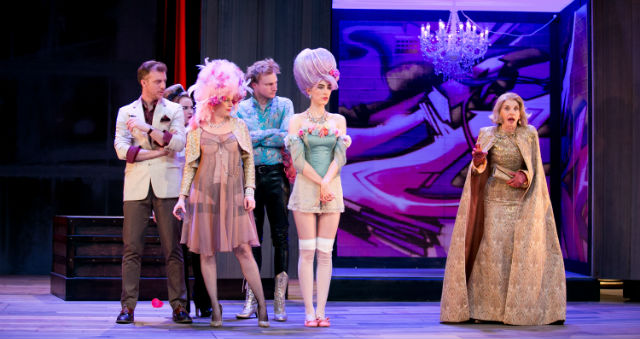
Also commendable are the production’s visual design aspects, especially Anna Cordingley’s work on costumes and sets. The script self-consciously mentions “Dolce, Galliano and McQueen”, indicating the family’s affluence and interest in style, and Cordingley certainly manages to impress upon us, a world of some extravagance and luxury, including an unforgettably exquisite costume for Madame Pernelle. Over-sized set pieces add a sense of wonder, and help with segmenting and shrinking stage spaces, but the unruly wheels on a very dominant chesterfield sofa need to be tamed to prevent its repeated, unintended and distracting slipping and sliding.

Bell Shakespeare’s Tartuffe is an entertaining work with committed performances and slick production values. Its level of professionalism is exceptional in an artistic landscape that tends to reserve our biggest talents for commercial musical theatre, and for productions overseas. Great stories however, are not only about entertainment and refinement. They are defined by the depth at which they move us, and as Molière’s immortality has shown, it is always the moral of the story that truly counts.

www.bellshakespeare.com.au

Review: A View Of Concrete (G.bod Theatre)

gbodtheatreVenue: King Street Theatre (Newtown NSW), Jul 22 – Aug 2, 2014
Playwright: Gareth Ellis
Director: Peter Mountford
Cast: Taryn Brine, Tim Dashwood, Matt Longman, Rebecca Martin

Theatre review
There is a side to life and human nature that is dangerous and destructive. Many of us are fortunate enough not to have to dwell too deeply, physically and mentally, inside those spaces of terror. They are on the periphery and we battle constantly and unconsciously to keep them at bay, to protect ourselves from those dark sides, believing the unthinkable to be too unbearable for our fragile and feeble existences. In A View Of Concrete, Gareth Ellis writes about that darkness, featuring four characters each with quirks so offbeat and intense, that one might prefer to term them obsessions. Their shared experiences through illicit drug use proffer a view into their compulsive indulgences, and into our own fears about impulses we might secretly harbour and repress. Ellis’ script is an energetic one, with interesting personalities that are outrageous yet realistic.

Peter Mountford’s direction of the piece introduces considerable dynamism to the stage. There is a prominent choreographic aspect to his work that aims to engage us visually, which also demands of his cast, a level of exertion to keep energies high and sustained. Actor Tim Dashwood’s proficiency with the work’s physical requirements sets him apart, delivering a performance that combines seamlessly, speech with movement, for a theatrical form that is delightfully poetic. The fluency Dashwood displays with his actorly capacities is richly entertaining and impressive.

Also captivating is Taryn Brine, brimming with sensitivity in the role of Billie. Brine’s presence is raw and palpable like an open wound, contributing effectively to the production’s aura of decrepitude. Rebecca Martin plays the treble notes in the group, using her naturally vibrant demeanour to provide volume and power to the show. Matt Longman is subdued by comparison, but like others in the cast, he is genuine on stage and the focus and commitment to his part is clear to see.

This is a team keen on experimentation, and their creative approach to performance has conceived a show that is surprising and fresh. It does not make strong emotional connections, but it is thought-provoking nonetheless. The play is rigorous in its efforts at originality, but it feels distant, even clinical at times. A View Of Concrete reveals some of modern life’s difficulties, and shows us the insidious pain that exists. Its concepts are seductive, but the form it takes is slightly alienating. We want to feel the tragedy that we see before our eyes, but that indulgence is kept elusive.

www.facebook.com/Gbodtheatre

Review: Sherlock Holmes: The Final Adventure (The Genesian Theatre)

genesianVenue: The Genesian Theatre (Sydney NSW), Jul 5 – Aug 9, 2014
Playwright: Steven Dietz (based on the original by William Gillette and Arthur Conan Doyle)
Director: Michael Heming
Cast: John Willis-Richards, John Grinston, Emma Medbury, Mark Nagle, Marty O’Neill, Tom Atkins, Rebecca Piplica, Marley Erueti

Theatre review
Steven Dietz’s 2006 adaptation has elements of intrigue, suspense, comedy, and like many retellings of iconic literary figures, ample amounts of self-references. It obviously holds greater appeal for fans of Sherlock Holmes, but it is by no means a prerequisite for its enjoyment. The plot is classically structured, with characters that are distinctly conceived, and vibrant dialogue designed to entertain and amuse.

John Willis-Richards plays Holmes with delightful campness. He brings an effervescence that keeps the show lively, but needs to take time with wordier speeches so that nuances are uncovered more clearly. Mark Nagle’s very animated King of Bohemia is completely farcical. He delivers many laughs with his confident physicality and ridiculous German accent. Marley Erueti plays several supporting roles, but has an excellent stage presence that consistently draws our attention. He performs his parts with excellent conviction and wins us over with his charisma.

The production features a great deal of hammy acting, which can be a problem when it gets in the way of the narrative. There are moments when posturing and vocal embellishment obfuscate the story, leading to some degree of confusion. Design elements help immensely, especially Martin Searles’ work for costumes. His pieces contribute efficiently to the portrayals of personalities, time and space, and his attention to detail gives the production a very polished look. Searles’ talent with colour, shape and texture is a star of the show.

This might be touted as Holmes’ “final adventure”, but his popularity will no doubt see him reincarnated, revived and re-adapted for all manner of media. The mystery and wit that characterises his stories can be found in some of this production, and enthusiasts in particular would find it a charming effort.

www.genesiantheatre.com.au

Review: An Ideal Husband (Epicentre Theatre Company)

epicentreVenue: Zenith Theatre (Chatswood NSW), Jul 18 – 26, 2014
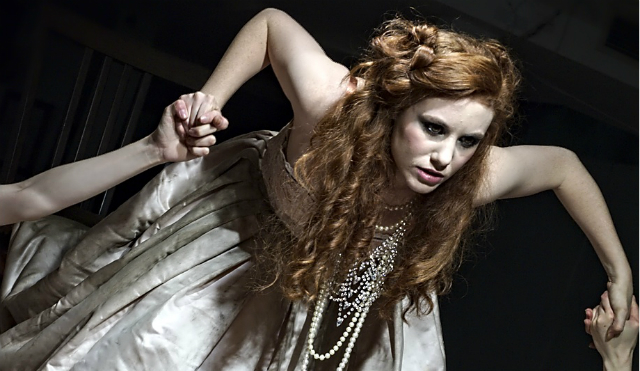
Playwright: Oscar Wilde
Director: Christine Firkin
Cast: Jessica-Belle Keogh, Emily Pollard, Hannah Pembroke, Sandy Velini, Emily McGowan, Kelly Rae Olander, James Belfrage, Benjamin Vickers, Pam Ennor, Andre Cougle

Theatre review
Politics and corruption propel the plot in An Ideal Husband. The concept of a person facing consequences from misdeeds, and the possibility of turning over a new leaf, are also discussed. The analysis of these subjects however, are not the most appealing feature of Oscar Wilde’s work. What we want is his wit. The strength of his work lies in the characters he creates, and more importantly, the way in which they communicate. Director Christine Firkin seeks to enliven much of the humour in Wilde’s text. There is a clear commitment to comedy in this production, and when scenes are effective, they are quite magical. Interpretations of Wilde’s writing rely heavily on performance. A director is not an acting coach, and it is obvious here that Firkin too, banks on the aptitude and intellectual maturity of her cast, to deliver the play’s sophisticated and challenging farce.

Benjamin Vickers’ star sparkles in the production. The role of Viscount Goring demands a balance of frivolity and acumen, which Vickers executes beautifully. He has an assured focus that reveals itself through a performance that is precise and considered, while also feeling unrestrained and alive. The playfulness he brings to the stage is thoroughly charming, and adds a crucial element of dynamism to community theatre that can often be overly serious and staid.

Lady Chiltern is played by Jessica-Belle Keogh, whose interpretations of Wilde’s words are consistently rich and vivid. Keogh is at first sight an excessively youthful Gertrude, but she proves herself to be believable and compelling. The actor does however, have a tendency to use her laughter as a device to improve comic timing when lines are sparse, which can detract from the authenticity of her characterisation. Emily Pollard is a suitably devious Mrs Cheveley. She has a keen sense for comedy, and is skillful at creating stage chemistry. Pollard has the vivacity that her role requires, but her body language can be fidgety at times, which comes across as being slightly lacking in confidence.

Firkin’s direction ensures that the show is tight, and its story is told with clarity. She keeps the performance at an energetic level by creating movement, especially during long passages of conversations. It is not a lavish production of great polish, but it is accomplished on many fronts. Idealism is a value we can all appreciate, but perfection is always elusive. It is the journey that moves us closer to it that counts, especially in making art.

www.epicentretheatre.org.au

Review: Phaedra (Lies, Lies And Propaganda)

liesliesVenue: TAP Gallery (Surry Hills NSW), Jul 17 – 26, 2014
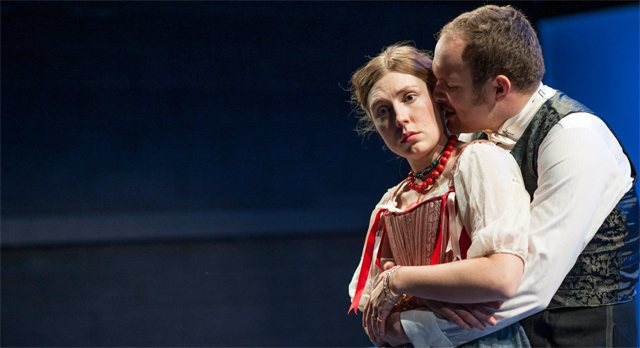
Playwright: Euripides (based on Hippolytus)
Director: Michael Dean
Cast: Danielle Baynes, Melissa Brownlow, Sinead Curry, Cheyne Fynn, Richard Hilliar, Katrina Rautenberg, Nathaniel Scotcher, Jennifer White
Image by Sasha Cohen

Theatre review
The art of making theatre requires the consideration of space and time. It needs to set itself apart from literature and recorded media like film and music. The audience’s immersive experience is not parenthetical or supplementary, it is central to the appreciation of a work. Michael Dean’s Phaedra uses space and bodies not only to tell stories, but also to enthrall, delight and fascinate our senses. By extensively exploring the possibilities of holding a captive audience, it does what no other art form can. Along with Catherine Steele’s design and Christopher Page’s lighting, we find ourselves inside a blood-soaked painting that is at once romantic and abhorrent. The four fabulous actors who make up the chorus are relentless in acknowledging our gaze, and the seductive power they wield, pulls us further into a world where tears are shed, blood is let and everyone loses their mind.

Phaedra’s story is about desire, its origins, its moralities, and its effects. She falls in love with her stepson, and all hell breaks loose. Phaedra struggles with her thoughts and emotions, and we examine the meanings of our own relationships with love and sex. The production’s director is part of the action, positioned behind two turntables, underscoring performances with old vinyl records that he distorts and scratches. The soundtrack is often discordant, attempting to place distance between us and the characters. We see Euripides’ universe, but we are also reminded of our realities; the two are pitched playfully against each other.

Danielle Baynes as Phaedra, exemplifies sensuality and beauty. She portrays longing and pain with a quiet authenticity, and executes stage directions elegantly. Baynes’ voice and physicality are disciplined and the actor is eminently watchable, but the show wants more intensity from her. Drama is the order of the day, and there is no limit to how much ostentation an actor can bring to the role. Hipploytus is played by the equally beautiful Richard Hilliar, whose presence almost overwhelms the tiny venue. The feminist subversion of his role gives him much to play with, and his choices are shrewd. His lines are flamboyant and powerful, but also primitive and offensive by today’s conventions. The need to be restrained in delivery is appropriate, and Hilliar finds a good balance, constantly shifting between subtlety and theatricality. Theseus is performed with strong emotional commitment by Katrina Rautenberg. It is interesting that her interpretation of the role does not obviously deviate from its inherent masculinity. There seems a missed opportunity for greater commentary on gender, but Rautenberg playing things straight displays effectively, her impressive focus and precision.

The queer aesthetic extends beyond the casting of Theseus. It informs many of the production’s creative decisions and the result is something that feels original and daring. Dean’s show is memorable and exciting, and adds to our cultural landscape, a voice that is not sufficiently represented. It espouses a different way of doing things, one that is thoughtful, spirited, and full of flair. It is irreverent and mischievous, but also dark and heavy. It is why we need the theatre.

www.liesliesandpropaganda.com

Review: A Doll’s House (Sport For Jove Theatre)

sportforjoveVenue: Seymour Centre (Chippendale NSW), Jul 17 – Aug 2, 2014
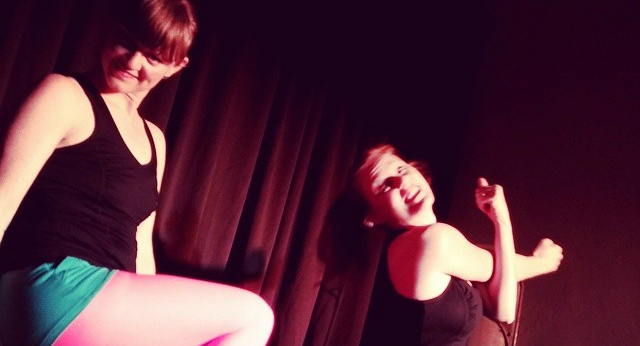
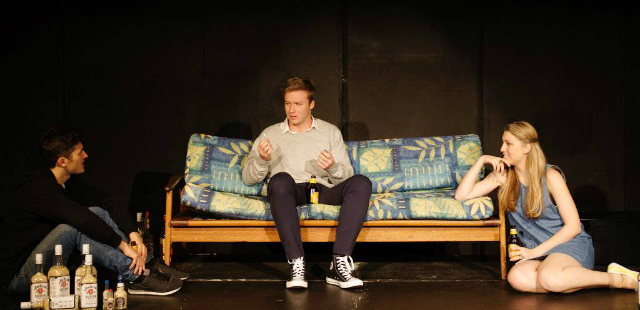
Playwright: Henrik Ibsen (adapted by Adam Cook)
Director: Adam Cook
Cast: Annie Byron, Barry French, Anthony Gooley, Douglas Hansell, Matilda Ridgway, Francesca Savige
Image by Seiya Taguchi

Theatre review
It has been well over a century since Henrik Ibsen’s A Doll’s House first appeared on a Copenhagen stage in 1879, but the play is still a popular choice in Australia today. Its story and characters continue to resonate, and its social commentary remains relevant to many of our lives. The themes of gender politics, marriage and self-actualisation are no less significant than they were in Ibsen’s day. The sexual revolution might have come and gone, but judging by the power of Sport For Jove’s current production, the societal dysfunctions illustrated in A Doll’s House are not yet a relic of the past. Indeed, we face the question of whether these injustices can ever be eradicated, or if it is human nature that insists on power structures that subjugate and oppress.

Adam Cook’s adaptation gives the language a vernacular update, which allows Nora’s world to be accessible by contemporary Australian audiences. There is a familiarity to their speech that positions them as our peers rather than historical literary figures, and we are encouraged to relate to the unfolding events on a personal level. Cook’s flair as a director makes the issues at hand feel immediate and palpable. The realism he creates on stage is a nod to Ibsen’s legacy, and an effective avenue to communicate a sense of the everyday realities that we share with the personalities on stage. Cook is especially thoughtful in his handling of the more politically biting portions of the script. He makes sure that meanings are highlighted, and we are never allowed to ignore the elements that make this a landmark work.

Set and costumes are designed by Hugh O’Connor, who turns in excellent work on both fronts. Set pieces are elegantly selected and coordinated, and the space created is appropriately quaint. The sense of a nouveau riche class is gently evoked in its purposefully elegant blend of blues, greys and wood. The doors in Ibsen’s script are frequently cited, and they do come into focus often but unfortunately, the ones chosen are too modern for the context and can appear disharmonious with the established aesthetic. Costumes are beautiful and flattering, and every ensemble helps with character portrayals. They inspire postures and mannerisms for the actors, and also ignite our imagination with notions of time, space and personalities. It must be noted though, that Torvald’s tuxedo in the final scenes is severely ill-fitted and a disruption to the otherwise charming visuals that O’Connor has created.

Nora is played by Matilda Ridgway with outstanding dynamism and depth. Her delivery is a thorough study of one of Western theatre’s most celebrated characters. Ridgway’s deep understanding of the work’s nuances as well as her intelligent awareness of the audience’s expectations, contribute to a compelling and impressive performance. Her decision to play up Nora’s twee qualities is an interesting one. It pulls into sharp focus the falsity of her marriage, but loses somewhat, the dimension of someone of great fortitude, and someone who is capable of cunning when necessary. Nevertheless, Ridgway’s work in the penultimate scene of upheaval will be fondly remembered for its sheer dramatic force and emotional impact.

Douglas Hansell is an entertaining actor who creates a Torvald that is lively and intriguing. Humour always bubbles under his surface, which makes Torvald’s objectionable features amusing to observe, but by the same token, the presence Hansell provides tends to feel slightly flippant. Anthony Gooley is magnetic when he exhibits Krogstad’s menacing side. The danger he unleashes is thrilling and seductive, but his depiction of desperation is uneven. His love scene with Kristine (played with an alluring stoicism by Francesca Savige) is a little lacking in polish, but it ends on a high note with ardently moving results.

The audacity of the play’s conclusion will never fade. Nora’s eventual decisions are simultaneously controversial and heroic. She justifies her actions with great conviction, and even though Ibsen leaves us little room for doubt, the play ends with a stinging hint of discomfort. Adam Cook and Matilda Ridgway have achieved something quite remarkable. We rejoice in their Nora’s exaltation, but we do not forget the dangers that lie ahead. Like their Nora, we too choose to risk everything, for everything counts for nothing, if all that is lived is a lie.

www.sportforjove.com.au

Review: This Is My Box (Rue de la Rocket)

ruedelarocketVenue: Bondi Pavilion Theatre (Bondi NSW), Jul 16 – 19
Playwrights: Karli Evans, Erin Taylor, Karena Thomas
Director: Erin Taylor
Cast: Karli Evans, Karena Thomas

Theatre review
This Is My Box features two women in very colourful exercise gear exorcising demons. Their costumes do not change, but the actors go through many different characters in this hour long piece. They portray familiar everyday personalities from different walks of life, but they are all unified by their inanities. This is a work about the people we are afraid of becoming. They come from every social class, but are all less than intelligent. Their lives are filled with mundanity and they do not seem to have any mental capacity to escape their respective hells. This is probably a work about all of us, even though it may initially seem to be about “those people”.

The script is superb. It has all the hallmarks of a thoroughly devised work, relying on much more than words, where every moment is made absurd, and with a plot trajectory that is never predictable, yet everything seems to make sense. The narrative is about instincts and emotional reactions, rather than logic and story. Characters and scene changes are distinct, which gives the production a formal grounding, and its theatrical structure. There is a lot of fooling around, but the disciplines that conspire to create this coherent whole are clear to see.

Both performers are compelling, and all their roles are hilarious. Their use of voice, movement and face are exaggerated but appropriately so. It is almost like clown work, except with social commentary. Karli Evans is slightly more proficient with her physicality, while Karena Thomas tickles our funny bone with some very dynamic facial expressions. It is a high energy performance, by women with impressive and confident presences.

Erin Taylor’s direction is sensitive to the strengths of the players. She appears to have a deep understanding of the women’s abilities, and strives to expose all of their best features in these manic 60 minutes. Taylor commits to a specific sense of humour that is probably not of the widest appeal, but the conviction harnessed on stage is absolutely euphoric. The work is critical of many Australian women, but it is never mean spirited. It embodies a kind of sisterhood that is self conscious but generous. It is about girls who do not want to turn into their mothers but are wise enough to realise some inevitabilities.

www.ruedelarocket.com

Review: It’s Been A While (Smoking Gum Theatre)

smokinggumVenue: King Street Theatre (Newtown NSW), Jul 16 – 19, 2014
Playwright: Jordy Shea
Director: Lucinda Vitek
Cast: Stephen Bracken, Chris Circosta, Luke Holmes, Zara Stanton, Kathryn Wenborn

Theatre review
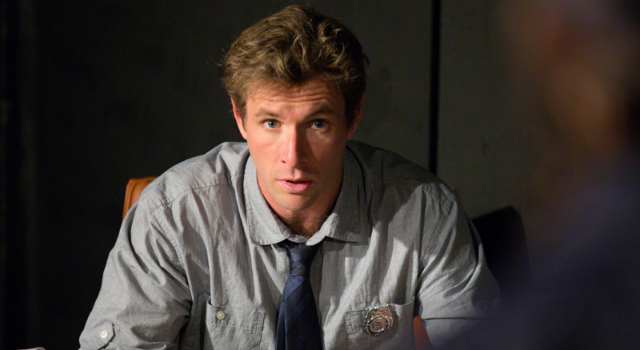
It’s Been A While is a story about youth, friendship and sexual awakenings. It centres around the suicide of an 18 year-old, and a group of five friends who come to terms with adulthood and death. Jordy Shea’s script is structurally ambitious, with separate timelines interweaving in a constant state of flashing backwards and forwards. Its frank portrayal of our youth’s interests and concerns is refreshing, and the work provides an important voice to the diversity of our artistic landscape. The production is just over an hour long and although everyone enjoys a succinct piece, Shea’s script needs deeper exploration of its themes and personalities. He sets up interesting premises but they require more thorough excavation for scenes to sizzle. The writing could also benefit with more varied speaking patterns. There is some effort put into individualising characters, but they need to have more distinct voices to create greater colour for the stage.

Performances are earnest and energetic. The cast is green, but it is clear that they put their all into the show. Luke Holmes is a lively Tom. He is a slightly grown up class clown, who is always keen to contribute a sense of lightheartedness. Kathryn Wenborn is effective when her character Maddy becomes introspective, and memorable for her heartfelt delivery of an emotional sequence at the play’s conclusion. Dean is played by Stephen Bracken who has a strong presence and good focus, but as with the entire group, more training and stage experience would be helpful.

The plot’s complexity present a challenge. It is frequently unclear which of the two chronologies is being depicted, and the confusion that transpires is distracting. Scene transitions require further finessing, and design elements while adequate, could be more adventurous. Lucinda Vitek’s direction is tightly paced, but an extended rehearsal period would make the friendships more believable and cast chemistry more exhilarating. The subject of teen suicide is interesting, and probably one that many can relate to. We feel like we know what the characters are going through, which also means that our imaginations are vivid, and our expectations need to be met. It’s Been A While does not hit every note right, but it is a gallant effort that tells a meaningful story.

www.smokinggumtheatre.com

Review: Ruthless! (The Theatre Division)

theatredivisionVenue: Seymour Centre (Sydney NSW), Jun 19 – Jul 12, 2014
Book & Lyrics: Joel Paley
Music: Marvin Laird
Director: Lisa Freshwater
Cast: Katrina Retallick, Meredith O’Reilly, Margi de Ferranti, Caitlin Berry, Madison Russo, Geraldine Turner

Theatre review
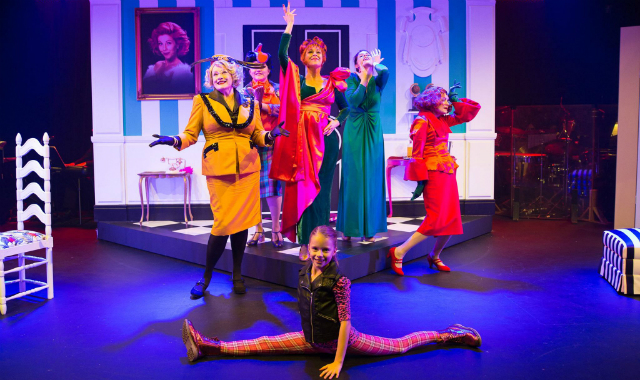
The value of camp is found in its affiliation with irony and black comedy, but its inherent darkness is masked by insolent loudness, and often, political meanings are so extensively subverted that they become near invisible. Camp heroes like Carmen Miranda, Liza Minnelli, Bob Downe and seventies pop star Sylvester (to name just a few), are all iconic figures remembered for a certain frivolity, but they each represent something far more serious, which we can choose either to acknowledge, or ignore. Joel Paley and Marvin Laird’ Ruthless! is utterly and irrevocably camp, but it is also highly intelligent and sophisticated in its approach. Its themes of feminism, family and the American dream are key impetuses for its jokes and plot development, even if they are not explicitly dissertated. Instead, front and centre are the wittiest of lines, the most charming of show tunes, and the savagest of stories. This is a musical that has all the constituents of a cult hit, which is to say that it is not for everyone, but for those with whom it resonates, Ruthless! is a very special show indeed.

Lisa Freshwater’s direction is suitably bold. The material needs a brazen and fearless attitude, and Freshwater is certainly no shrinking violet. Wickedness lurks in every corner, and the director is never afraid to take full advantage of it for our benefit. The writing is a minefield of laughter, and she detonates at every opportunity. The characters have few redeeming features, but Freshwater manages to make each one bewitching. By ensuring that these women never seem realistic, their misdeeds are prevented from descending into too dark and threatening a space. Instead, they are always beguiling and glamorous, like the women in Disney films, only more animated.

Choreography by Christopher Horsey is dynamic and astute. He is always in on the joke, and provides a rich suite of tools for the performers to articulate in movement. The stage is always vibrant, and the women are always confident. Each gesture and posture is full of flair and calculated, forming part of the rich visual language that establishes the production’s brilliant effervescence. Also noteworthy is Mason Browne’s work as set and costume designer. His use of colour is exemplary, and the vividness he achieves with quite minimal elements is truly inspired.

The lead role Judy Denmark is played by Katrina Retallick with inconceivable talent and flair. It is sublime to witness an elite performer at the top of her game, and this is such an occasion. The performer glows throughout the show, with supreme grace, a flawless voice and a surprising mastery over the dark humour at hand. The role is a tricky one. It is challenging, technical, unconventional and confronting, and Retallick achieves it all with flying colours and devastating splendour.

Young performer Madison Russo is a revelation as the scene stealing Tina Denmark. Her vocal and dance abilities are impressive, and crucial to the effectiveness of the narrative. Caitlin Berry’s versatility is showcased perfectly, along with a stunning singing voice and a keen sense of acerbic humour. Margi de Ferranti plays both Miss Block and Myrna Thorn with exuberance, and claims the biggest laugh of the show with a gag about Miss Block’s sexuality and dress sense. Geraldine Turner is positively terrifying as the theatre critic who “hates anything to do with the theatre, that’s my job”, Lita Encore. Her performance of “I Hate Musicals” is reason enough to buy a second ticket for another viewing. Meredith O’Reilly as Sylvia St Croix displays professional savvy and a stage presence that are impossible to ignore.

As Les Misérables celebrates its umpteenth opening in Melbourne this month, it is important to remember that popularity in the arts might mean fame and fortune, but excelling in smaller theatres under ridiculous constraints of all kinds is a greater glory. Ruthless! will never see the financial success of Phantom and Saigon (“if I want helicopters, I’d go to the airport!” says Lita Encore), but for those of us who yearn for something with bite, and that provides its cast with nowhere to hide but to rely only on sheer talent, this is a show to ruthlessly champion for.

www.thetheatredivision.com

Review: Lobby Hero (Dudley St Productions)

lobbyheroVenue: TAP Gallery (Darlinghurst NSW), Jul 8 – 26, 2014
Writer: Kenneth Lonergan
Director: Kevin Jackson
Cast: Tom Oakley, Dorian Nkono, Shari Sebbens, Jeremy Waters
Image by Rupert Reid

Theatre review
Kenneth Lonergan’s Lobby Hero is about morals, honour and lies. The play features two security guards and two police officers, and through the instability of their friend-foe relationships, it deals with human mistakes, telling the truth, and facing consequences. Kevin Jackson’s direction reveals a thorough enjoyment of words and their nuances. His work is almost entirely focused on the cast, ensuring that Lonergan’s writing is explored exhaustively in voice and movement, which results in a story told with precision and impressive detail.

The actors are strong, but in divergent ways. Jackson ensures that their performances are authentic, and gives them the freedom to portray each character to their best abilities. Jeremy Waters as Bill defines the term “show stealing”. His presence is commanding, and his work is wild and completely rambunctious. Waters is incredibly impressive and possibly faultless as the ignorantly immoral cop, and the vibrance he brings to the stage is irresistible. Dorian Nkono is an excellent comic. He plays William with hilarious irony, and delivers many moments of laughter. His timing is flawless, and his creative embellishments with speech and physicality are quite entrancing.

The two Bills are big characters played by flamboyant actors, and they are magnificent. The play however, relies on two other characters to drive home its central message. Jeff and Dawn are key to providing gravity to the work but are unfortunately often eclipsed on this stage. Tom Oakley accurately embodies the aimlessness and innocence of Jeff, but his performance is often thrown off balance by his colleagues. There is a great deal of emotional authenticity to his work, but he sometimes pitches at too subtle a level. Dawn is played by Shari Sebbens whose strengths as a dramatic actor are unquestionably alluring, but they outweigh her comedic talents. Sebben’s interpretation of her character is a truthful one, but she misses opportunities of levity that would endear her further with her audience. More light would create more contrast, so that the weightier portions of her narrative would resonate stronger.

Visual design is kept at a minimum. Costumes add to characterisations, but set and lights are merely functional. Sound design provides some effective cues to entrances, but it is also distracting at times. Some of the music choices are unsuitable, creating unnecessary discord with the action on stage. We hear the story clearly in Lobby Hero, but its moral is not articulated loud enough. More memorable are its actors and their craft. Shows are often about stars, and on this occasion, the show stealers are victorious and they have escaped scot free.

www.tapgallery.org.au