Review: Straight (Brilliant Adventures)

brilliantadventuresVenue: Kings Cross Theatre (Kings Cross NSW), Jun 16 – Jul 2, 2016
Playwright: D.C. Moore
Director: Shane Bosher
Cast: Danielle Cormack, Sean Hawkins, Simon London, Madeleine Jones

Theatre review
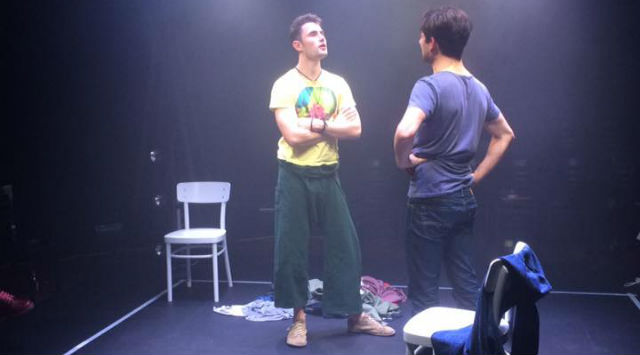
Lewis and Waldorf are old friends from university days, reunited several years after their lives have taken different turns. While intoxicated, they decide to make an amateur porn film with each other. Lewis is married, with a history of just 2 sexual partners, and the happily single Waldorf is more experienced with 71, but neither have had encounters with men. Based on the 2009 film Humpday by Lynn Shelton, D.C. Moore’s Straight is about transgression. It explores issues around the constraints of sexual identity, along with an investigation into boundaries of friendship, and takes a look at the rules of monogamy in modern marriages.

Taboos are confronted with a vehement directness in Straight, which locates our cosy assumptions of human sexuality and puts them through a series of thorough and provocative interrogations. The script is a gripping one, made even more enthralling by director Shane Bosher’s very effective delivery of plot tension and believability for what is actually an absurd context. A brilliantly awkward sense of humour permeates Moore’s consistently nuanced writing, but the production has an air of unrelenting seriousness that compromises its potential for comedy. The mischievous Danielle Cormack delivers the biggest number of laughs as Steph, and leaves an excellent impression even though the actor only appears once in an early scene. Also noteworthy is Madeleine Jones who performs the role of Morgan with excellent psychological accuracy and a sharp intuition.

Lead role Lewis is played by Simon London whose thoughtful and intelligent approach creates a character that we are able to connect with, in spite of his quite incredible decisions. Sean Hawkins is the charming Waldorf, who keeps proceedings buoyant with an unpredictable and aggressive energy. The two turn up the sexual heat in the show’s crucial moments, creating an exceptionally libidinous stage that many will find titillating, while some others will be left embarrassed. Their work demonstrates pure conviction, but it is the ambiguity of their characterisations that inspire the biggest questions.

Art is eternally preoccupied with sex as a topic because it is universal, and one that can be examined extensively, and ceaselessly. The diversity of individual experiences and the plurality of our beliefs mean that new perspectives can always be added to the ever-expanding discussion and hence, comprehension of the nature of sex. We however, live in societies that suppress these interchanges, so we become accustom to presuming an uniformity in our hidden sexualities. We fool ourselves into thinking that we know how other people do sex, and furthermore we often place those same limitations on our own individual sex lives. Straight is about people who give themselves a chance, and who dare to go into the unknown, in the voyage of self-discovery that we call life. It is about defining identities by first experiencing what one is not, before settling on what one is.
www.facebook.com/…

Review: The Olympians (NIDA)

nidaVenue: NIDA Parade Theatres (Kensington NSW), June 11 – 18, 2016
Playwright: Stephen Sewell
Director: Jeff Janisheski
Cast: Saxon Blackett, Callan Colley, Laura Djanegara, Megan Hind, Imogen Morgan, Wil Ridley, Louis Seguier, Emele Ugavule, Ross Walker

Theatre review
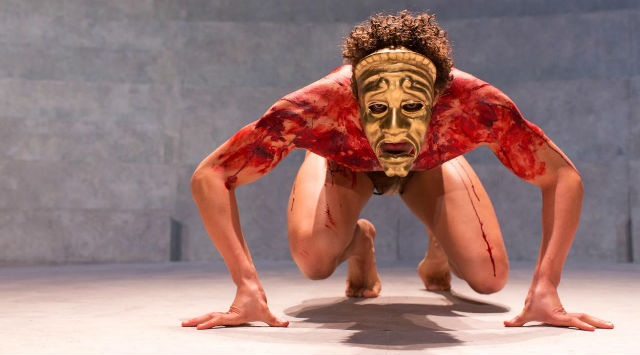
We take sport very seriously in Australia. Billions of dollars have been generated from the industry, and countless personalities have attained national iconic status over the years. Stephen Sewell’s The Olympians attempts to deconstruct the sporting hero, with a story set in the Olympic village of the 2016 Rio games. It is a piece of writing highly critical of sporting and popular culture, using a narrative about a fallen star lost in sex and drugs, appealing to the same need in our audienceship that keeps tabloid journalism in business. Its characters are familiar but caricatured, and although hugely ambitious in scope, the play would probably be more effective if scaled down to its simple essence. Greek tragedy meets television realism in The Olympians for a curious exploration of dramatic form, but the play would make a stronger point if its many subtexts are trimmed down to a more succinct articulation of its thoughtful message.

Direction by Jeff Janiesheski is equally adventurous and imaginative with its approach. The very generously sized stage poses a challenge that Janiesheski responds by delivering amplified theatrical expressions for every scene, resulting in a work that can often feel too obvious with how it chooses to communicate, leaving little room for nuance or irony. The production’s humour is rarely effective but energy from a tireless cast and vigorous lighting effects by Ross Graham help retain our attention. Lead actor Wil Ridley shows good precision and discipline as the dishonoured Porter, especially proficient in some of the play’s more heightened sequences of sentimentality. Imogen Morgan is memorable as Jess, a bimbo type who encounters the goddess Aphrodite. Morgan’s ability to convey consistent authenticity in her role sets her apart in a group that seems to work more intently on exterior presentations than on emotional efficacy and psychological believability.

In an arena where individuals are ruthlessly pitted against each other, the sporting field allows only one winner at a time. Perhaps it is the idea of making concrete the abstract concept of “the best” that gives sport an allure that art has been unable to compete with. Awards are given out in artistic communities the world over, but there is nothing definitive about the good and bad in art, and certainly, the judgements we may bestow upon them are almost never more than irrelevant privileged perspective. People are drawn to the certainties of sport, and the creation of winners and losers in its equations. The nature of art resists that singular objectivity. Great art dismantles systems of segregation and exclusion to speak with universality as though at the Olympics, except all are to emerge victorious.

www.nida.edu.au

Review: Inner Voices (Don’t Look Away Theatre Company)

dontlookawayVenue: Old Fitzroy Theatre (Woolloomooloo NSW), Jun 15 – Jul 9, 2016
Playwright: Louis Nowra
Director: Phil Rouse
Cast: Annie Byron, Julian Garner, Emily Goddard, Nicholas Papademetriou, Anthony Gooley, Francesa Savige, and Damien Strouthos
Image by Ross Waldron

Theatre review
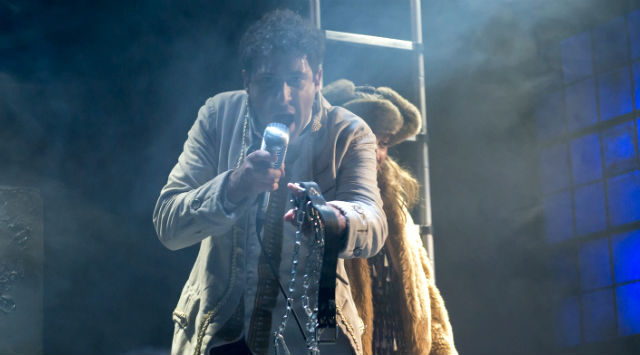
Ivan VI lived 23 short years in Russia, but in Louis Nowra’s Inner Voices, his destiny is transformed dramatically to tell a story about how kings are made, and how countries are ruled. Originally published in 1977, Nowra’s words in the play remain fresh and humorous, and although its political edge seems to have worn with time, Inner Voices‘ punk sensibility is still evident today in its iconoclastic characterisations and anti-authoritarian outlook.

It is a very exuberant production that Phil Rouse has directed. Notwithstanding our unfamiliarity with its context, the unrelenting and spirited acerbity of his style keeps us engrossed. The thoroughness at which the text’s comedy is explored, is not only endlessly amusing, it also helps provide depth of meaning to an outlandish narrative. Thoughtfully designed, the production’s aesthetic values are textured and powerful. Anna Gardiner’s set and Katelyn Shaw’s sound design are especially remarkable in the degree to which they are able to consistently add surprising dimension to the play.

Inner Voices‘ cast of seven is an exceptionally dynamic bunch. Ivan is played by Damien Strouthos, whose uncanny ability to portray eccentricity is a perfect fit for the quirky role. The actor takes the opportunity to showcase excellent range in a part that goes through several significant transformations, and we see various facets to Strouthos’ talents, all equally accomplished. Anthony Gooley is absolutely memorable as Mirovich, with razor sharp wit and a flamboyant theatricality that knows no bounds. Enthralling and hilarious, Gooley is outstanding on this stage and we are kept amazed by the genius inventiveness he injects into every line of dialogue.

It is the eve of another federal election in Australia, and we think about the likely candidates who will rule us for another three years. Inner Voices reflects our prevailing cynicism, and exposes the falsities associated with the state of our politics and governments. We want truth and honesty from those who represent us, but we have become all too aware of the hypocrisies and cunning that are required for people to attain positions of power. If good people cannot win in a broken system, all we have are at best, compromised and substandard. Nowra’s play does not offer us any solutions, but it certainly is a reminder that we should want to do better.

www.facebook.com/dontlookawaytc

Review: Flame Trees (Tunks Productions)

tunksVenue: The Depot Theatre (Marrickville NSW), Jun 15 – Jul 2, 2016
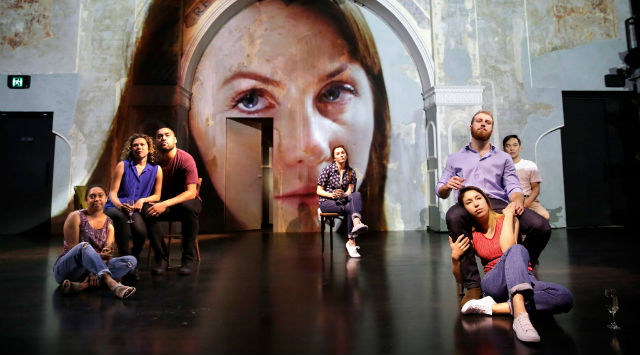
Playwright: Wayne Tunks
Director: Simeon Yialeloglou
Cast: Ryan Bown, Karina Bracken, Rebecca Clay, Isabel Dickson, Jace Pickard, Wayne Tunks
Image by Isobel Markus-Dunworth

Theatre review (of a preview performance)
Wayne Tunks’ Flame Trees is a lot like soap opera. Its characters are highly emotional, and all their families get entangled in the melodrama, which involve moral conflict, infidelity and bushfires. Unlike the most popular tv shows of the genre however, we do not have years of history with the personalities of Flame Trees, and consequently, their grievances are of little concern to us. Causing further alienation is the lack of authenticity that comes from the play’s desperation to arrive at heightened emotion without first engaging us appropriately with the high stakes that it sets up for itself. The script is unoriginal, and hollow where it attempts to induce passion, but is thankfully fast-paced in getting to its conclusion.

Staging of the work is appropriately cheesy, with every creative decision going with the conventional and obvious. Actors put on unnatural voices and indulge in extravagant eruptions of passion and anger, in service of a narrative that is devoid of depth and often unbearably silly. The cast shows conviction nevertheless, and is fairly well-rehearsed, with Rebecca Clay leaving a good impression by finding nuance in her role despite its inherent incoherences.

Emotion must emerge from meaning, and it is a storyteller’s responsibility to locate resonance with the audience. A work can achieve a lot with its surfaces, but without truth at its foundation, big gestures on the exterior will only appear pretentious and absurd. Going to the theatre is a sacred event for communities to share and connect. Commerce will no doubt be a part of its equation, but it must never be the overriding factor, or our participation will only leave us empty and resentful. Theatre is not the idiot box, and the audience deserves much better.

www.tunks.com.au

Review: A Man With Five Children (Darlinghurst Theatre Company)

darloVenue: Eternity Playhouse (Darlinghurst NSW), Jun 3 – 26, 2016
Playwright: Nick Enright
Director: Anthony Skuse
Cast: Jemwel Danao, Chenoa Deemal, Charlotte Hazzard, Jody Kennedy, Ildiko Susany, Anthony Taufa, Aaron Tsindos, Jeremy Waters, Taylor Wiese
Image by Helen White

Theatre review
Like the “Up Series” from British television, Gerry in Nick Enright’s A Man With Five Children begins documenting the lives of five Australian seven year-olds in 1964 with his camera. Initially revisiting the group once a year, he becomes increasingly embroiled with his subjects, and the films he produces begin to lose their objectivity. The nature of Gerry’s art and his relationships are constantly transforming. We think about his responsibilities as film-maker, the validity of his work, and consequently, our collusion as a public that encourages intrusions of this nature. Enright’s play is highly sophisticated, with a big number of themes running through its stories, all thoughtful and sensitive, but its admirable complexity comes at a sacrifice of dramatic tension and focus. Several plot twists are revealed too abruptly, and its ambition to feature all five children with equal weight creates a narrative structure that our emotions struggle to find suitable empathy for.

The work is directed with excellent ingenuity by Anthony Skuse whose combination of live action and film expresses beautifully the way time and space is intertwined in the text (Christopher Page’s lights and Tim Hope’s AV design work together in perfect harmony for a presentation that will be remembered for its precise and elegant aesthetic iterations). Humanity is at the foreground, and Skuse’s remarkable compassion for every character is clear to see, but the ambiguous interpretation of Gerry’s traits and motives is ultimately too mild for its audience to respond with greater passion. Actor Jeremy Waters’ solid stage presence anchors the show appropriately with Gerry’s experiences, regardless of the character’s dubious attributes. It is a performance with power and sincerity, and although not a likeable role, we cannot help but be impressed by Waters’ professionalism and the obvious refinement of his craft.

The cast of nine forms a cohesive and engrossing ensemble. Every scene is lively and authentic, and every line of dialogue is delivered with wonderful conviction. Jemwel Danao plays the innocence and tragedy of Roger to great effect, creating the most poignant moments on stage with an approach that is unique in its subtlety, but also emotionally rich. He speaks directly to our sentimental sides, bringing us back to the play’s tender heart amidst its complications of ideas and incidents. Similarly heartbreaking is Jody Kennedy as Zoe, the girl who believes herself to be “ordinary”. The actor takes her character through many distinct transformations, each one striking in their accuracy, and is consistently charming with every portrayal. The “five children” perform to us not only in the flesh but also through the camera lens, and it is noteworthy that their work on screen is equally accomplished.

The media has played a major part of our lives for decades, but its increasing ubiquity from year to year cannot be understated. A Man With Five Children first appeared before the era of social media, so its major concerns are dealt with in ways that are perhaps slightly outmoded. Gerry is in a position of power that influences lives, in a way not dissimilar to how our own lives are being manipulated by corporations that seduce and insist on our reliance. On the surface, it is a love-hate relationship, but the play leaves little doubt as to the damage that any media can cause when we invite it into personal realms. Gerry’s children would have escaped his domination if their parents had not volunteered their participation but we can scarcely withdraw from the gaze of the modern world through the prevalence of smartphones and their infinite applications. There was a time before screens, and we all fall into the trap of yearning for those simpler days, but the truth is that humans have never been pure and life has never been easy. We have to identify the challenges of our times and their prevailing evils, and do our best to turn things for the better, even in the knowledge that the next malice is just around the corner.

www.darlinghursttheatre.com

Review: The Heidi Chronicles (New Theatre)

newtheatreVenue: New Theatre (Newtown NSW), Jun 7 – Jul 9, 2016
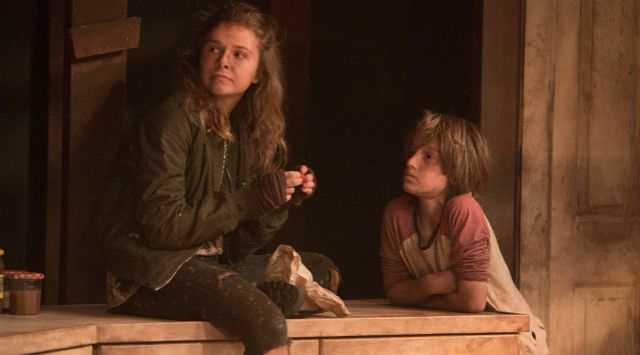
Playwright: Wendy Wasserstein
Director: Alice Livingstone
Cast: Sarah Aubrey, Matt Charleston, Lauren Dillon, Caroline Levien, Olivia O’Flynn, Amelia Robertson-Cuninghame, Darren Sabadina, Benjamin Winckle
Photography © Bob Seary

Theatre review
Wendy Wasserstein’s The Heidi Chronicles first appeared at the end of the 1980’s when American women were beginning to crack the glass ceiling, and when second-wave feminism was approaching its last days. The play examines the life of Heidi Holland from high school to middle age, beginning in 1964 through to 1989, charting the progress of white middle-class women through those three decades of the second-wave. Another thirty years (almost) have past, and we wonder how much has progressed since. “Can we have it all?” remains a question that only one of the genders asks herself, and the ambiguous conclusion to Heidi’s story confronts our contemporary sensibilities, leaving us to meditate on our place in society today.

Director Alice Livingstone presents a vibrant production that wears its heart on its sleeve, with an unmistakeable affection for the play’s nostalgia guiding us through Heidi’s years of development. It is a work painted with broad strokes, and although nuance is not always delivered, the staging of each scene is crisp and impactful. Refreshing and inventive use of space, along with Livingstone’s choice of projections help elevate the visual content of its otherwise basic design aspects.

Performers demonstrate an earnest conviction that encourages us to get involved with their stories. Leading lady Lauren Dillon does not seem to possess sufficient maturity for the portrayal of Heidi’s life in later sequences, but her confident presence stands her in good stead with the audience, and her passionate interpretation of a crucial monologue gives the poignant work its heart and soul. Darren Sabadina and Sarah Aubrey leave remarkable impressions with their exuberant and adventurous approach to their respective roles, both detailed with their characterisations and humorous at every appropriate opportunity. There are moments in the show of great chemistry between actors, but also scenes in which people do not seem to connect. Nevertheless, this production of The Heidi Chronicles is consistently enjoyable, and many will find its explorations meaningful.

Heidi lives a feminist life because she is in charge of her own destiny. The rules are her own, and she does not seek approval for her decisions. No one lives in a bubble, and we all find inspiration from other lives, but self-determination for every individual should be afforded and supported by our civilisations. A feminist does not have to look a certain way or prescribe to any particular doctrine, but she needs to be aware of her power, where it comes from and the battles that were fought for it to exist.

www.newtheatre.org.au

Review: The Big Dry (Ensemble Theatre / ATYP)

ensembleVenue: Ensemble Theatre (Kirribilli NSW), Jun 4 – Jul 2, 2016
Playwright: Mark Kilmurry (from the novel by Tony Davis)
Director: Fraser Corfield
Cast: Sofia Nolan, Rory Potter, Noah Sturzaker, Richard Sydenham
Image by Clare Hawley

Theatre review
Three children are stranded and left to their own devices in a dystopian future. An endless drought has hit Australia, and civilisation as we know it has collapsed. The Big Dry is about our abuse of the environment and the consequences that our children have to bear when the struggle for survival becomes abject and savage. They rely on each other to stay alive, and their bond becomes the centre of their universe. Tony Davis’ story is dark, but we respond with a natural thirst for hope, even though it gives us no indication of salvation. Mark Kilmurry’s adaptation gives mother nature a tremendous dominance, but its humans are insufficiently captivating, with dialogue and personalities that pale by comparison.

Stars of the show are lighting designer Benjamin Brockman and sound designer Daryl Wallis, both of whom use their considerable technical skills to tell a story of cruel and imminent tragedy. Brockman introduces a boundless variety of moods and spatial transformations with inventive hues that impose upon the stage, a brutal power evocative of harsh climates and their impact on our planet’s living creatures. Wallis is responsible for the show’s tensions, offering the audience a glimpse into the apocalypse with a series of clamouring and sinister rumbles that send our nerves shivering with foreboding. Young actor Sofia Nolan puts on an accomplished performance as Emily, demonstrating good focus and intensity. Her work is energetic, with a healthy dose of sincerity that helps endear herself to the audience.

The production depicts calamitous events but is itself moderate in temperament. We never quite connect with the characters, and even though we understand the high stakes involved, its scenes are unable to lead us convincingly to a suspension of disbelief. Its concepts are strong and universal, but its drama feels distant and elusive. To convey the pressing need for societies to escalate individual and political action on climate change is not an easy task, with habits of modernity firmly entrenched in all our lives and necessary sacrifices proving too difficult even to contemplate. Ecological messages are hard to take, especially it seems, when the ugly truth is revealed. The Big Dry is not a walk in the park, but to expect an easy ride from its subject matter is probably more than a little unwise.

www.ensemble.com.au

Review: All My Sons (Sydney Theatre Company)

Venue: Roslyn Packer Theatre at Walsh Bay (Sydney NSW), Jun 4 – Jul 9, 2016
Playwright: Arthur Miller
Director: Kip Williams
Cast: Anita Hegh, John Howard, Bert LaBonte, John Leary, Josh McConville, Robyn Nevin, Eryn Jean Norvill, Jack Ruwald, Chris Ryan, Contessa Treffone
Images by Zan Wimberley

Theatre review
Joe Keller’s wealth is a result of monumental sacrifice. Arthur Miller’s All My Sons is about the cost of money, and the naivety that can come with human greed. Joe makes the decision to choose financial success over a clear conscience, thinking that his riches will be able to shield him from the damage that he causes. There is a willing ignorance at play in Joe’s story that many of us understand. We think that the pluses that come with money are powerful enough to contain the inevitable minuses, and it is that misguided optimism that brings about a series of calamitous consequences to Joe’s family and his neighbours.

It is intoxicating drama and a powerful moral that allows the play to maintain its resonance through the decades. Miller’s interrogation of the American dream (now international), along with themes of money, family and war, have not faded with time in their impact, in fact, our engagement with the ideas in All My Sons seem to be more intimate than ever. Soldiers once sent off to war in blazes of glory, are now seen as individuals we need to protect at all costs. Ideologies once used to justify deaths in battle, are now tainted with commerce, corruption and oil. Great riches from hard work have now exposed themselves to be hollow corporations trading in fraud. These very contemporary concerns are paired with classic melodramatic storytelling, for a masterpiece that still packs a wallop in 2016.

Kip Williams’ direction keeps focus on the play’s essence. Almost minimal in style, our attention is not to stray from its characters and dialogue. There are no bells and whistles to fill the vast auditorium, just a family drama that gets increasingly turbulent. Personalities are clearly defined, and relationships are dynamically formed. Williams sets the pace of the production at lightning speed to help ensure that tension is sustained, and that the audience remain engrossed. The intriguing qualities of Miller’s plot are perfectly engineered to keep us hooked on the story, but the venue’s size makes it a challenge communicating emotional intensity without performers having to perform at the extremes of their sentimental capacities. We follow every interchange that happens on stage, but our feelings become involved only when scenes become passionate.

The more energetic of the cast leave a greater impression. Chris Ryan’s ability to portray heightened agony gives the production its gravity, and the actor’s remarkably lucid depiction of his character Chris Keller’s loss of innocence, provides a soulfulness to the production, especially effective at its moving conclusion. Eryn Jean Norvill plays Ann Deever with great charm and an authentic complexity that adds surprising texture to the show. Norvill’s vocal and physical emulation of 1940’s American style is a delight, as is the vibrancy of her stage presence. In the role of Joe Keller is John Howard, imposing and confident, every bit the patriarch of the tale, but seems to fluctuate with concentration levels. Although powerful and nuanced, the actor has a tendency to be subsumed when action becomes frantic on stage. Young actor Jack Ruwald is memorable as Bert, lively and with a genuine sense of impulsiveness that is deeply endearing.

We cannot expect friends and family to be perfect, because every human is flawed. People will make mistakes, but how we forge ahead with them is the basis of how we live each day. The Kellers survive on love and lies, but the two prove to be ultimately incompatible. Where there is love, truth must triumph, but the ugliness that surfaces stands every chance of dissolving what we hold precious. All My Sons might be about family, marriage, betrayal and deception, but it is fundamentally a cautionary tale of greed’s destructive nature. Forgiveness and understanding can mend many wounds in our relationships, but the scars that are left behind are permanent and inescapable. Joe’s abominable sin cannot be undone, and its repercussions are tragic and endless.

www.sydneytheatre.com.au

Review: Tribes (Ensemble Theatre)

ensembleVenue: Ensemble Theatre (Kirribilli NSW), May 26 – Jul 2, 2016
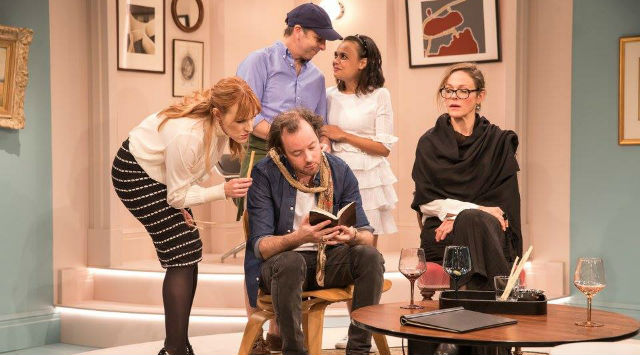
Playwright: Nina Raine
Director: Susanna Dowling
Cast: Ana Maria Belo, Garth Holcombe, Genevieve Lemon, Stephen James King, Amber McMahon, Sean O’Shea
Image by Clare Hawley

Theatre review
Billy is the only deaf person in the family. His parents have gone to great lengths to make him feel part of the roost, no different from his siblings, and have brought him up to communicate by lip reading and speaking, both of which he does inordinately well, without ever having to learn sign language. Billy’s father, Christopher is determined to prevent his son from facing undue limitations in life, and has restricted Billy’s access to communities of the hearing impaired, which he considers to be restrictive and confining.

Nina Raine’s Tribes is a study of how people form attachments and associations, and the human need for a sense of belonging. It offers marvellous insight into lives of people who do not have the same hearing abilities as the majority, and through Billy’s story, we come to an understanding of the tensions between mainstream privileged existences and people on the fringes who experience the periphery of society. The script is comprised of exceptionally vibrant dialogue, with intriguing issues that deliver an enlightening and contemplative theatrical experience.

The production identifies the main concerns of Tribes and handles them well, but the family’s subtle dynamics require sharper elucidation. It is a complex play with complicated personalities, and although the main messages are relayed beautifully, its many smaller details if better defined, would produce a richer result. The strong cast keeps us deeply engrossed, with Genevieve Lemon and Sean O’Shea leaving remarkable impressions in the parental roles, both exuberant and mesmerising with their stage presences. Ana Maria Belo’s depth of emotion is powerfully affecting in scenes of melancholy, while Stephen James King has us endeared to the purity of his character’s demeanour and intentions. Completing the team of five are Garth Holcombe and Amber McMahon, with charmingly idiosyncratic and amusing interpretations of Billy’s problematic siblings.

When we find places that offer acceptance, they inevitably impose limitations upon how we perceive our own identities and potentials. Therein lies the conundrum of society. People are bonded by commonalities, but these same valuable qualities that are shared, can also be the linchpins that keep individuals from greater development. Groups have rules, and those rules will suppress uniqueness and originality. Geniuses are often lonely, but those who know to be dichotomous can have the best of both worlds, and if Billy plays his cards right, he can learn to have his cake and eat it too.

www.ensemble.com.au

Review: The Literati (Bell Shakespeare / Griffin Theatre Company)

griffinVenue: SBW Stables Theatre (Kings Cross NSW), May 27 – Jul 16, 2016
Playwright: Justin Fleming (after Molière)
Director: Lee Lewis
Cast: Caroline Brazier, Gareth Davies, Jamie Oxenbould, Kate Mulvany, Miranda Tapsell
Image by Daniel Boud

Theatre review
There are two halves to the family in Justin Fleming’s The Literati. Philomena and her elder daughter Amanda have aspirations for a sophisticated existence, both enamoured with books and language, while Christopher and younger daughter Juliet are of a simpler ilk, down-to-earth like true blue Aussies never to be caught dead with tickets on themselves. The play is about pretension, and the meaning of knowledge. We explore what it is to be good people, in a world where values are easily misplaced and ideas about virtue are unstable and skewed. Its message is uncomplicated, with a plot that proves to be entirely predictable, but The Literati is gorgeously written, with inexhaustible wit permeating every rhyming couplet in this thoughtful adaptation of Les Femmes Savantes by Molière. The jokes come fast and furious, along with inspired ruminations about diverse subjects including romance, intellectualism, purity and class.

Characters in The Literati are archetypal, but convenient moralistic jabs at “the bad guys” are thankfully few. The play wrestles with the problematic duo of Philomena and Amanda, shallow on one hand, but admirably ambitious on the other. Their desires are noble, but their mode of pursuance is misguided. The play sets up an old-fashioned dichotomy of pure and impure, but allows itself to negotiate between the two, so that we achieve a more textured understanding of good and bad within the story. Director Lee Lewis makes the appropriate decision of placing effect before depth, for a work that has nothing unusual to say but has very impressive ways of expressing its beliefs. The comedy is often flamboyant, but Fleming’s exquisite words are always in the spotlight, full of evocative power and mischievous vigour. The production is buoyant from start to finish, and although occasionally repetitious with its methods of eliciting laughter, we are kept engrossed in its electrifying showmanship.

Playing Christopher and Clinton is the one endearing Jamie Oxenbould, convincing and dynamic in his diverse roles. A memorable sequence features the actor alone on a revolving stage performing with meticulous clarity, and an exuberant sense of absurdity, both his characters in passionate dialogue with each other, completely absorbent of our attention, astonishment and adoration. Gareth Davies and Kate Mulvany offer up very broad humour with outlandish interpretations of their caricatures, finding every opportunity to perform their unrestrained comedy to a very appreciative and delighted crowd.

People in The Literati fight over the redundancy of words and culture, when notions of style are not validated by substance. The moral of Molière’s story is neither controversial nor surprising, but we are captivated by the production’s theatricality and the resonance of its language. In some ways, the show defeats its own argument, for what keeps us enthralled is not its idealistic core, but the talent that emanates from it. We fall in love with its gestures and articulations, but pay little heed to its very point of contention. We can look at art without the need for a presumed frame of reference or an indication of something behind, something deeper. Art is not a means to an end, but a sacred entity meaningful on its own terms. “If you want to know all about Andy Warhol, just look at the surface of my paintings and films and me, and there I am. There’s nothing behind it.”

www.bellshakespeare.com.auwww.griffintheatre.com.au