Venue: Ensemble Theatre (Kirribilli NSW), Sep 18 – Oct 18, 2026
Playwright: Eloise Snape
Director: Anthea Williams
Cast: Di Adams, Leeanna Walsman, Shirong Wu
Images by Prudence Upton
Theatre review
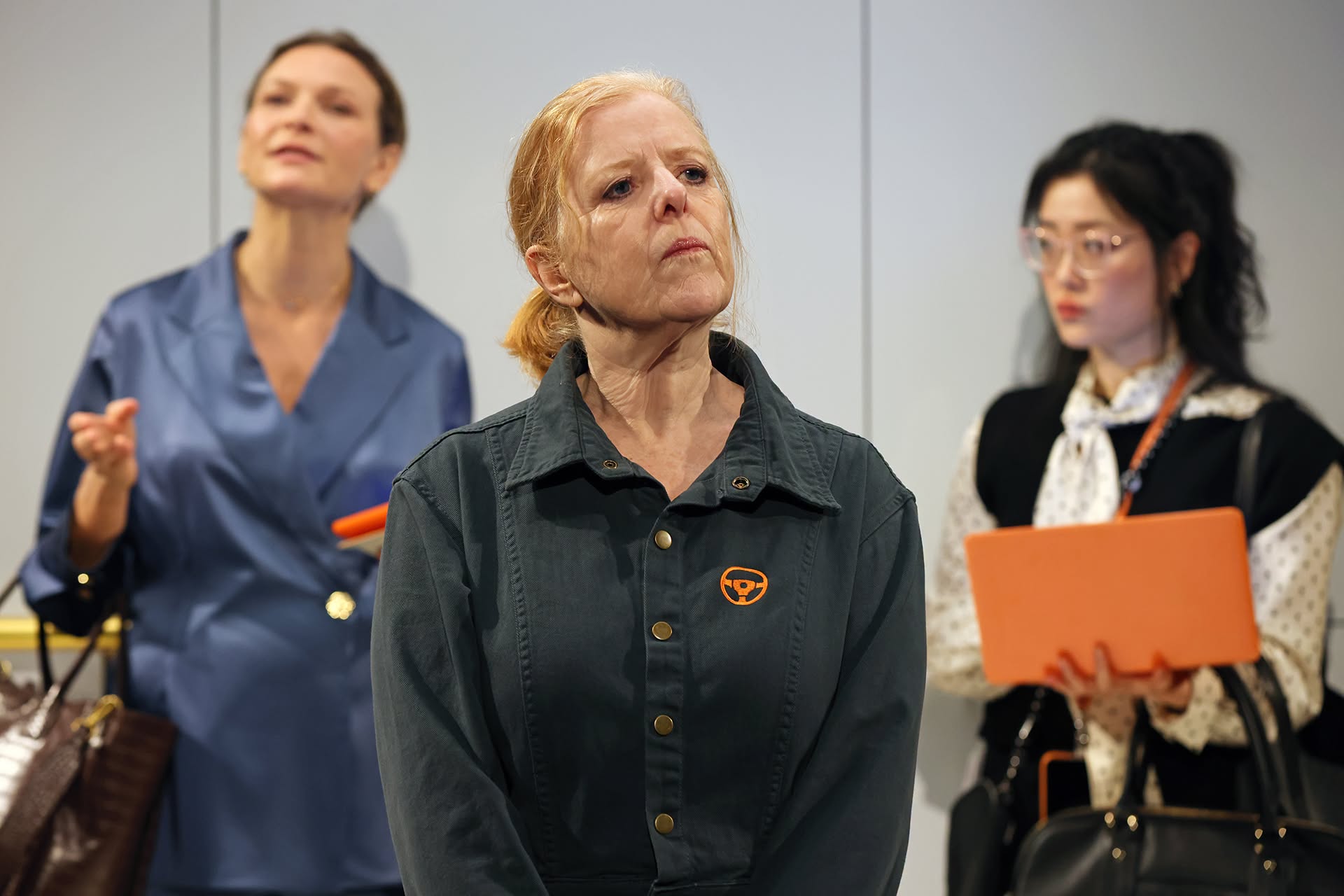
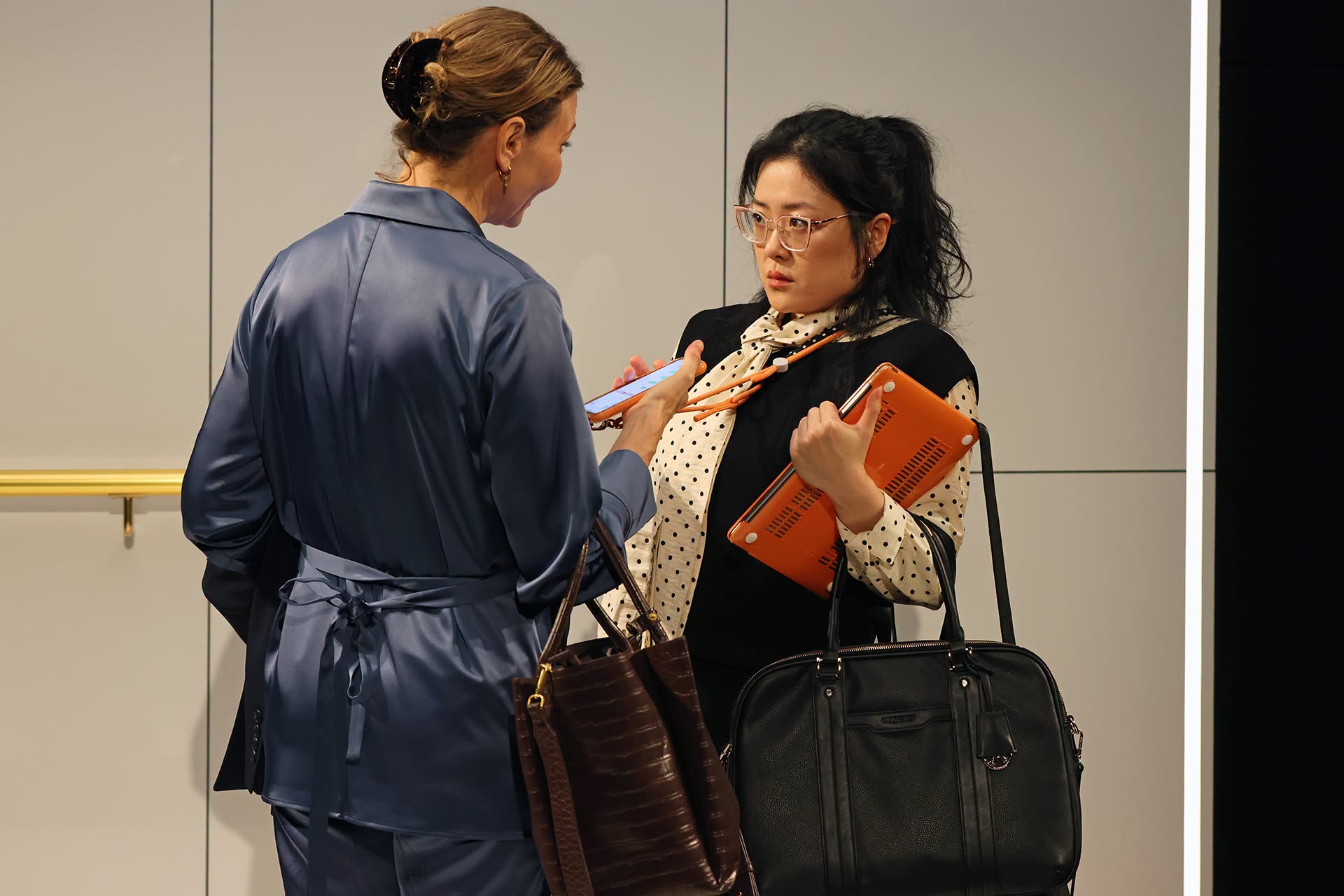
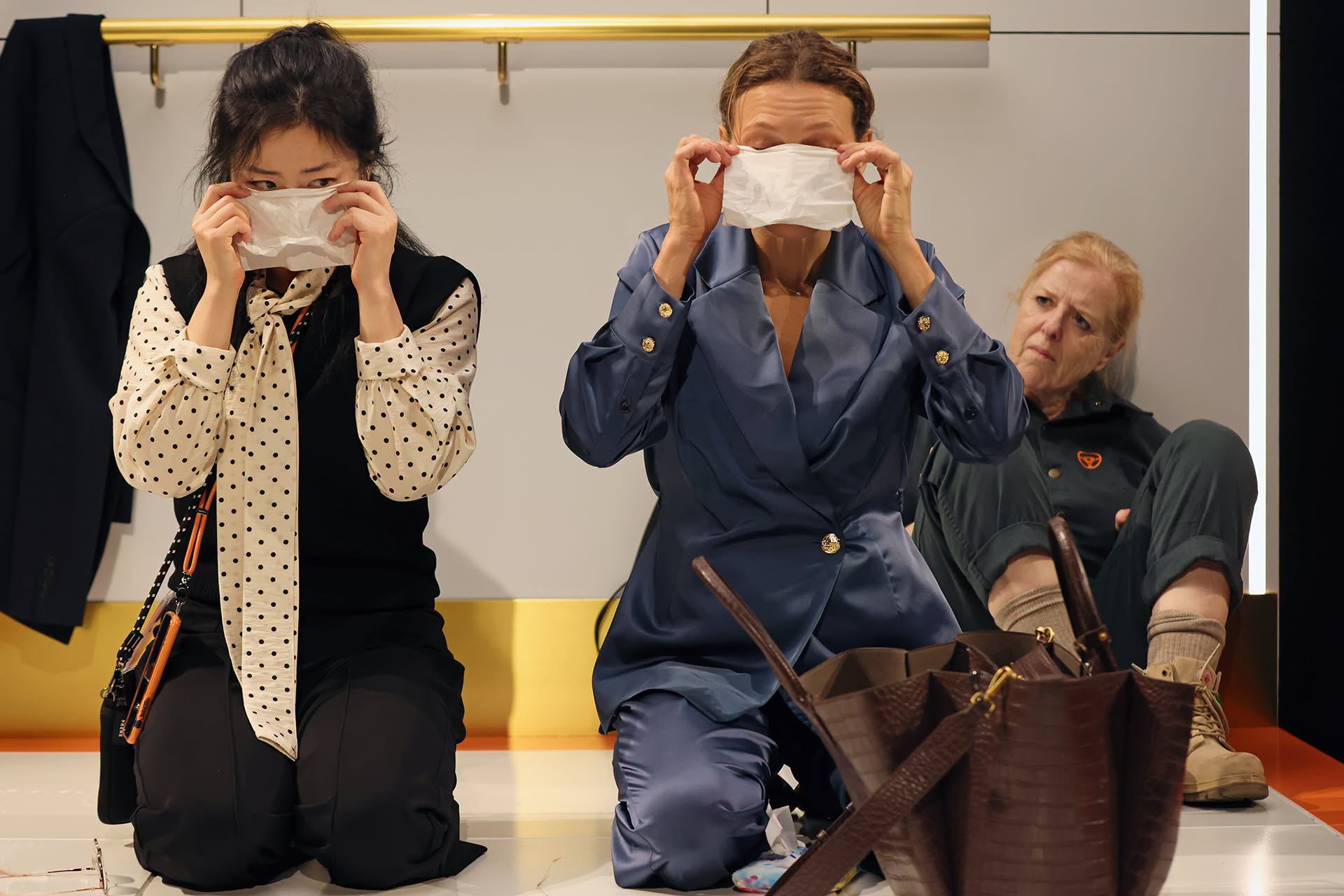
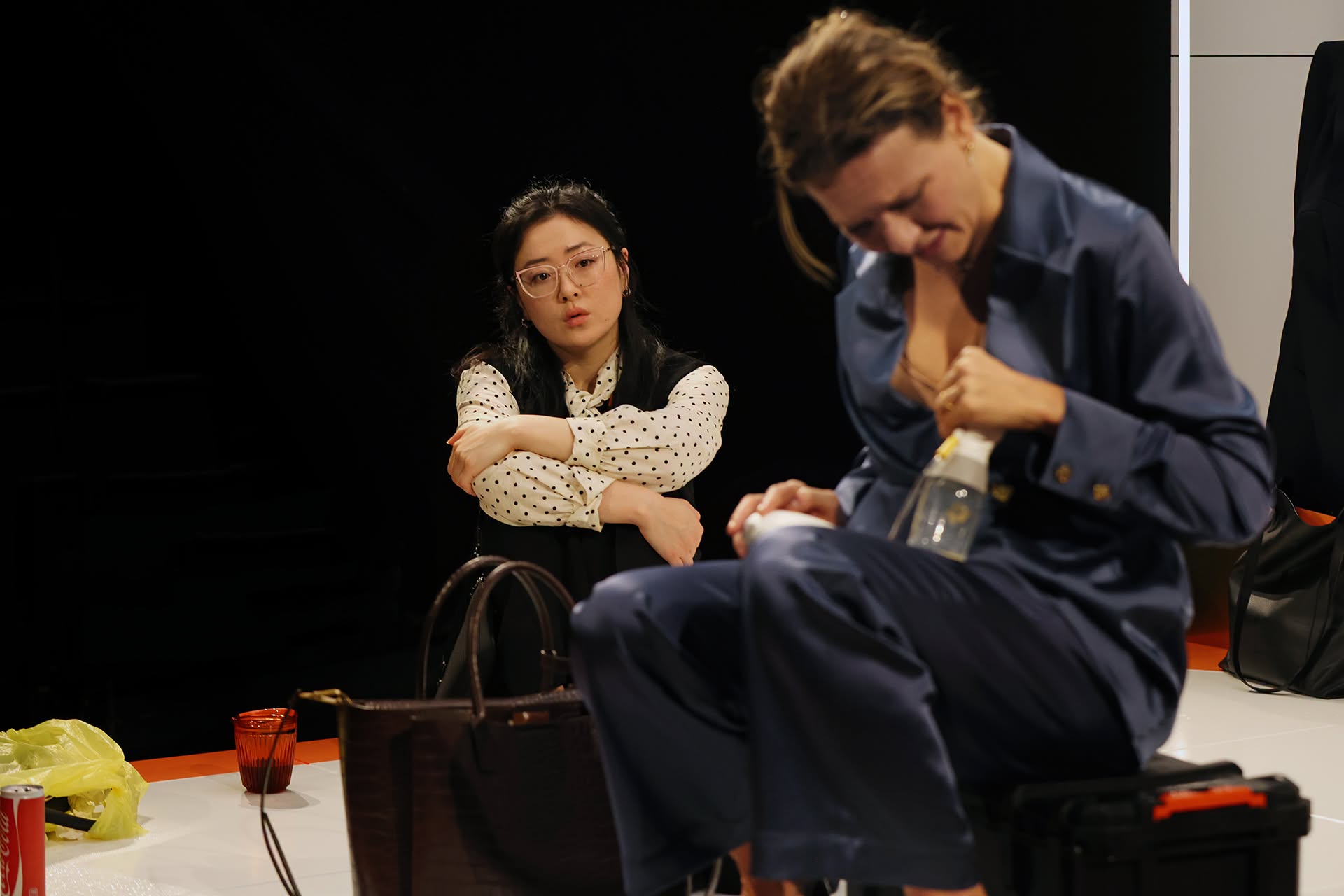
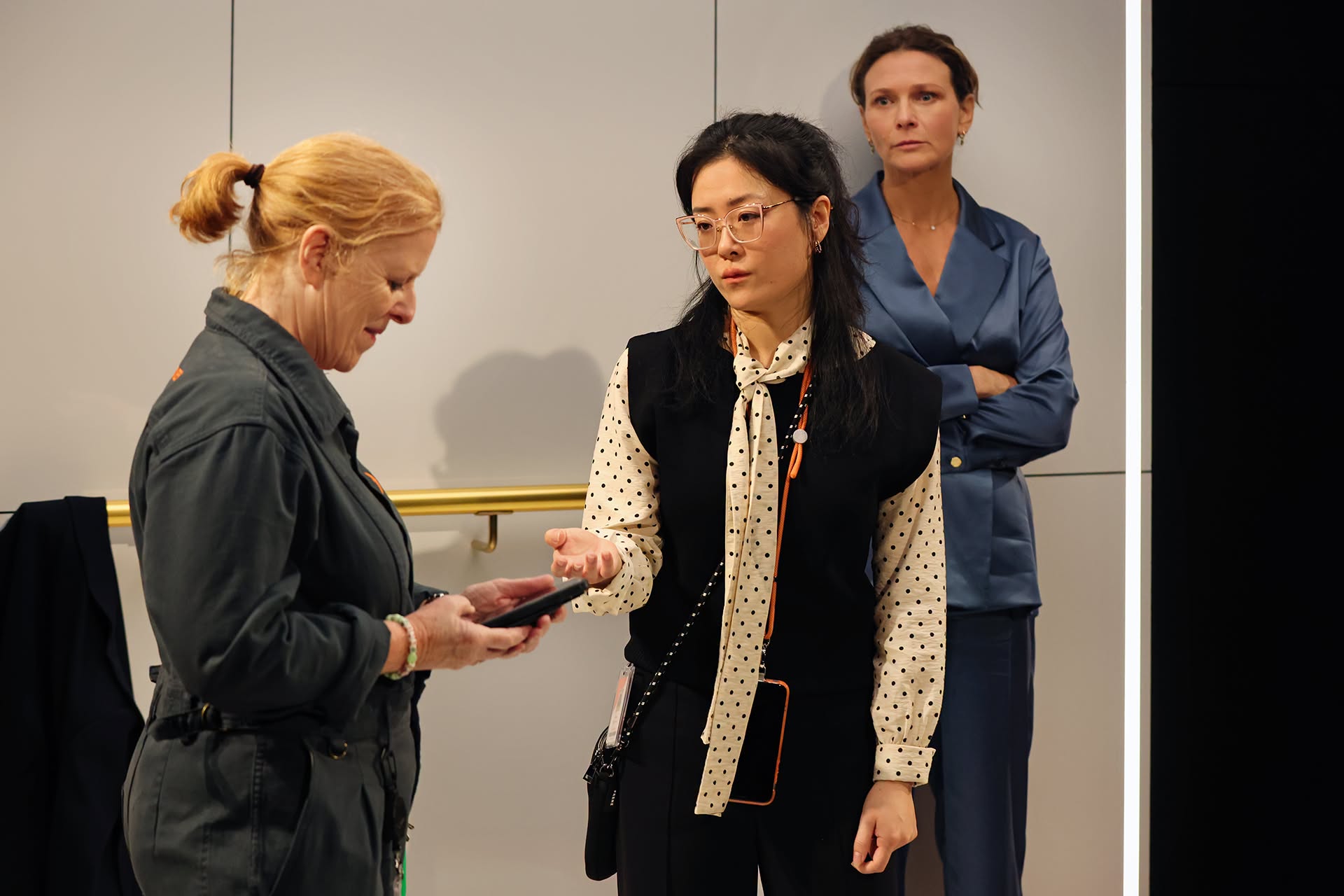
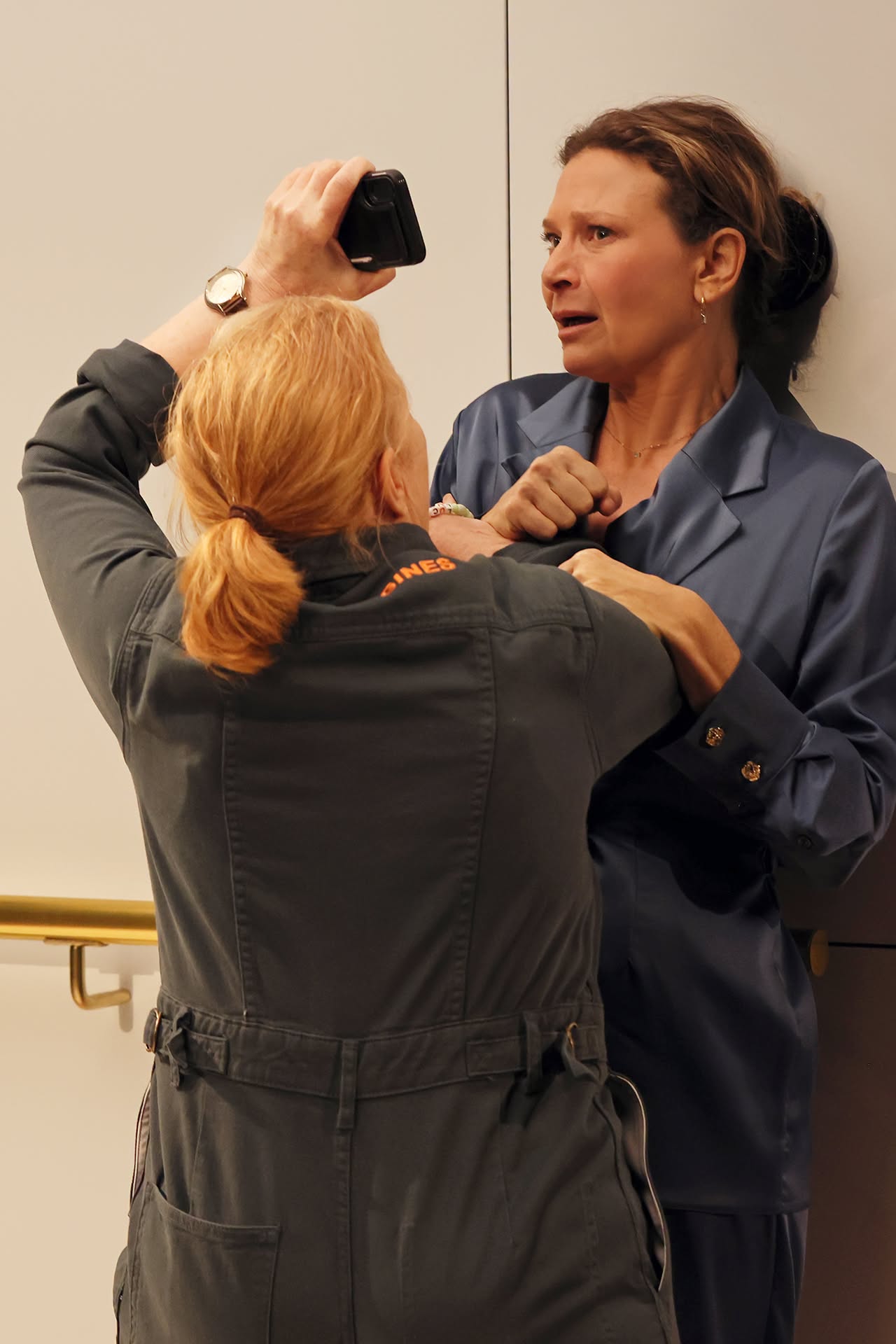
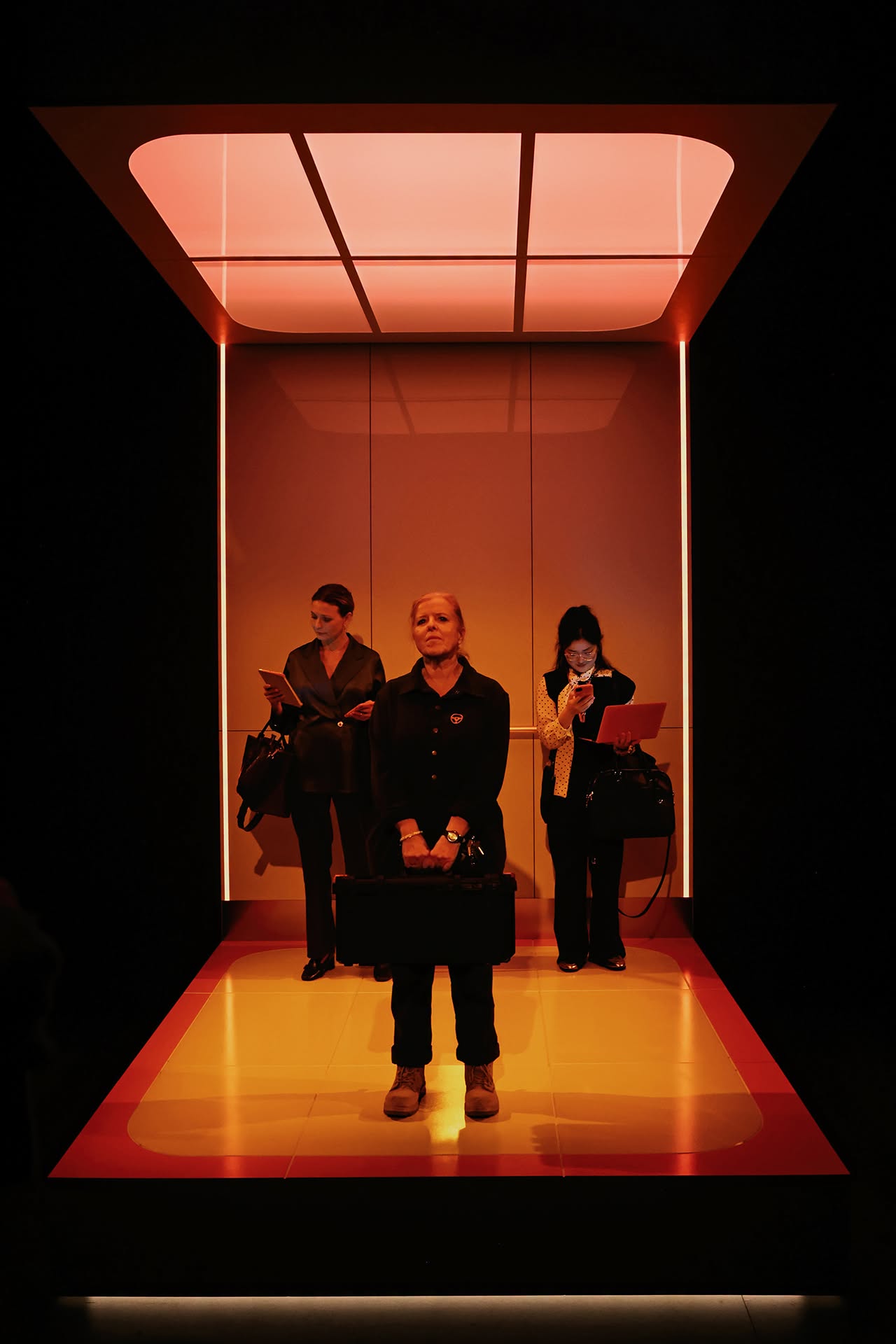
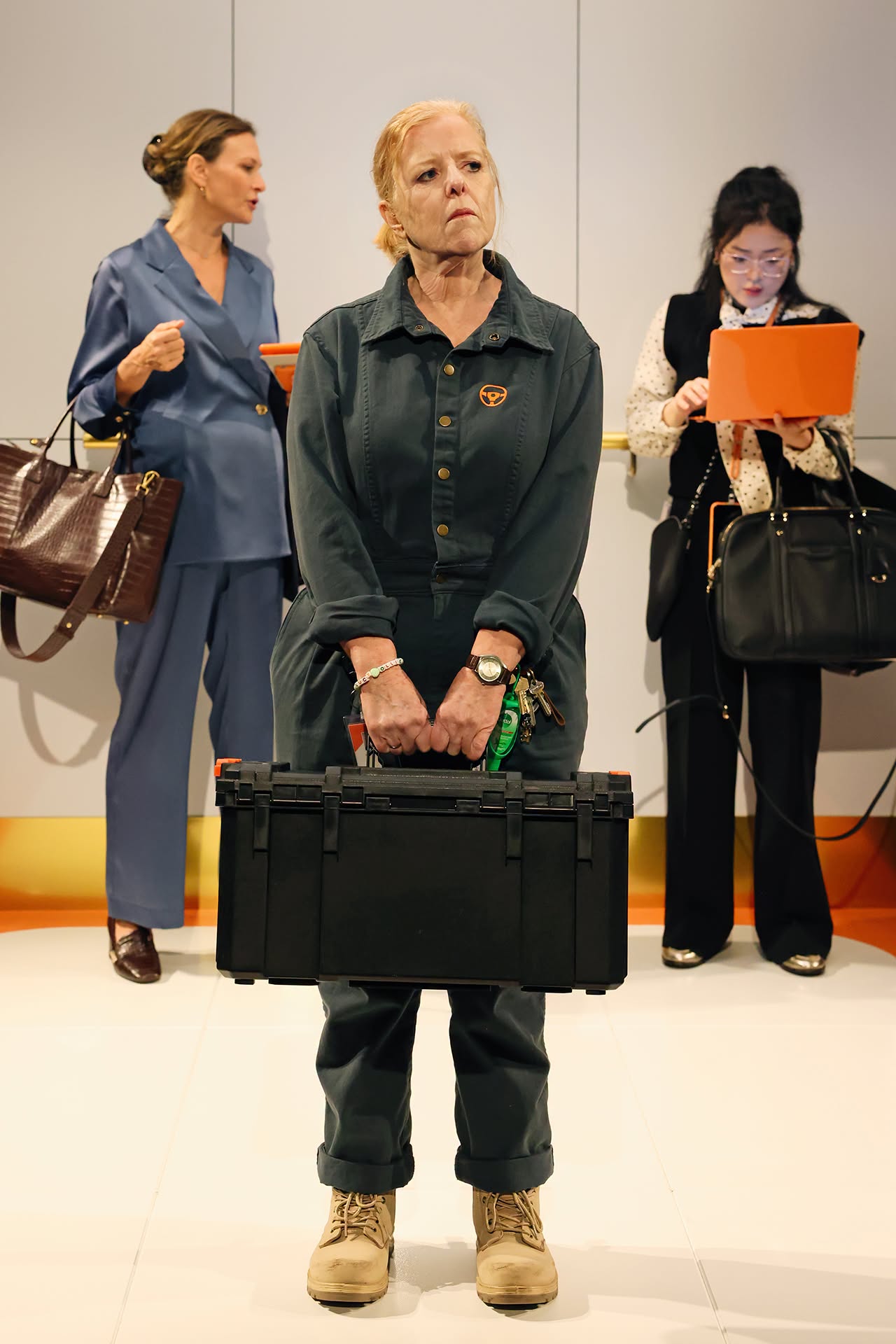
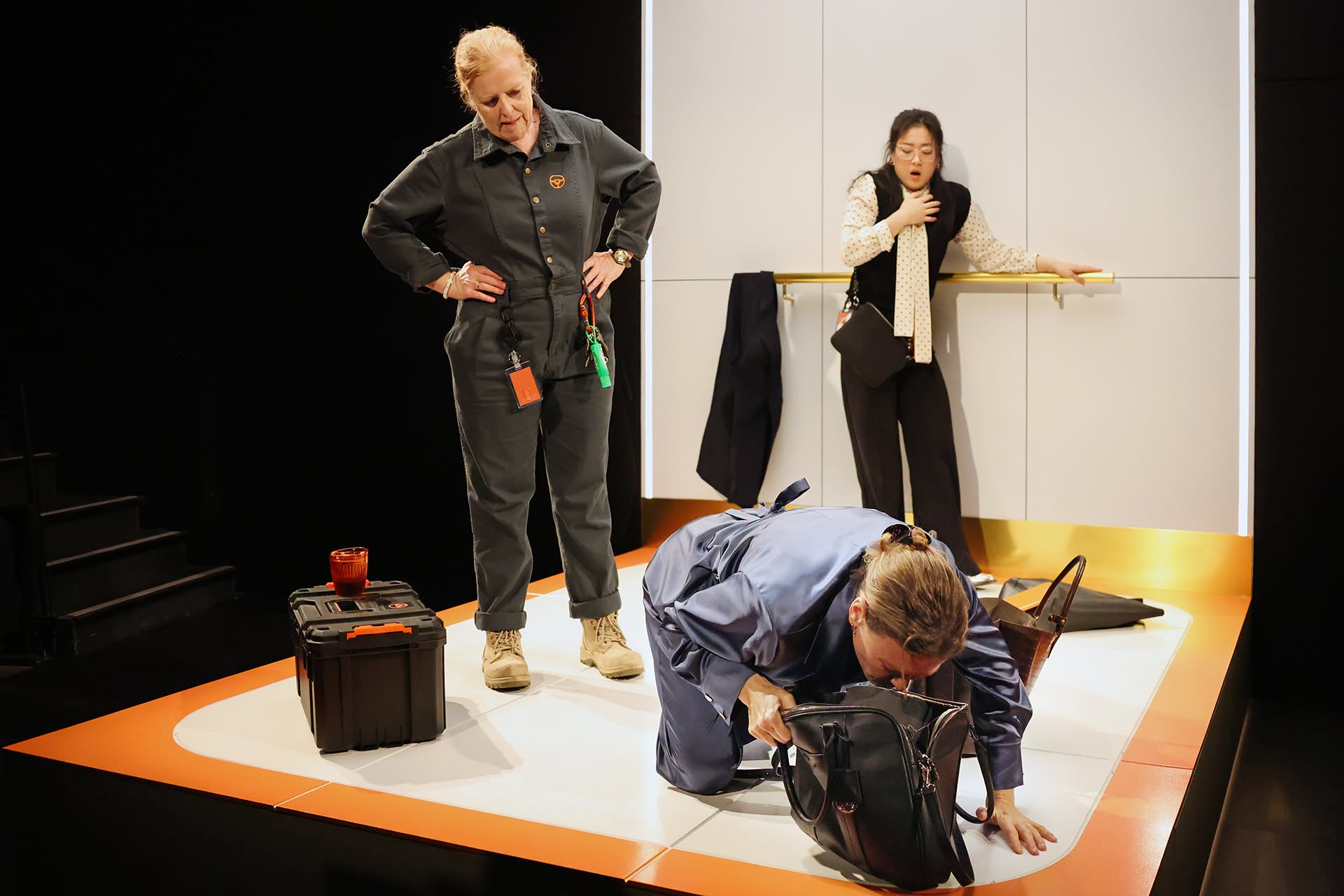
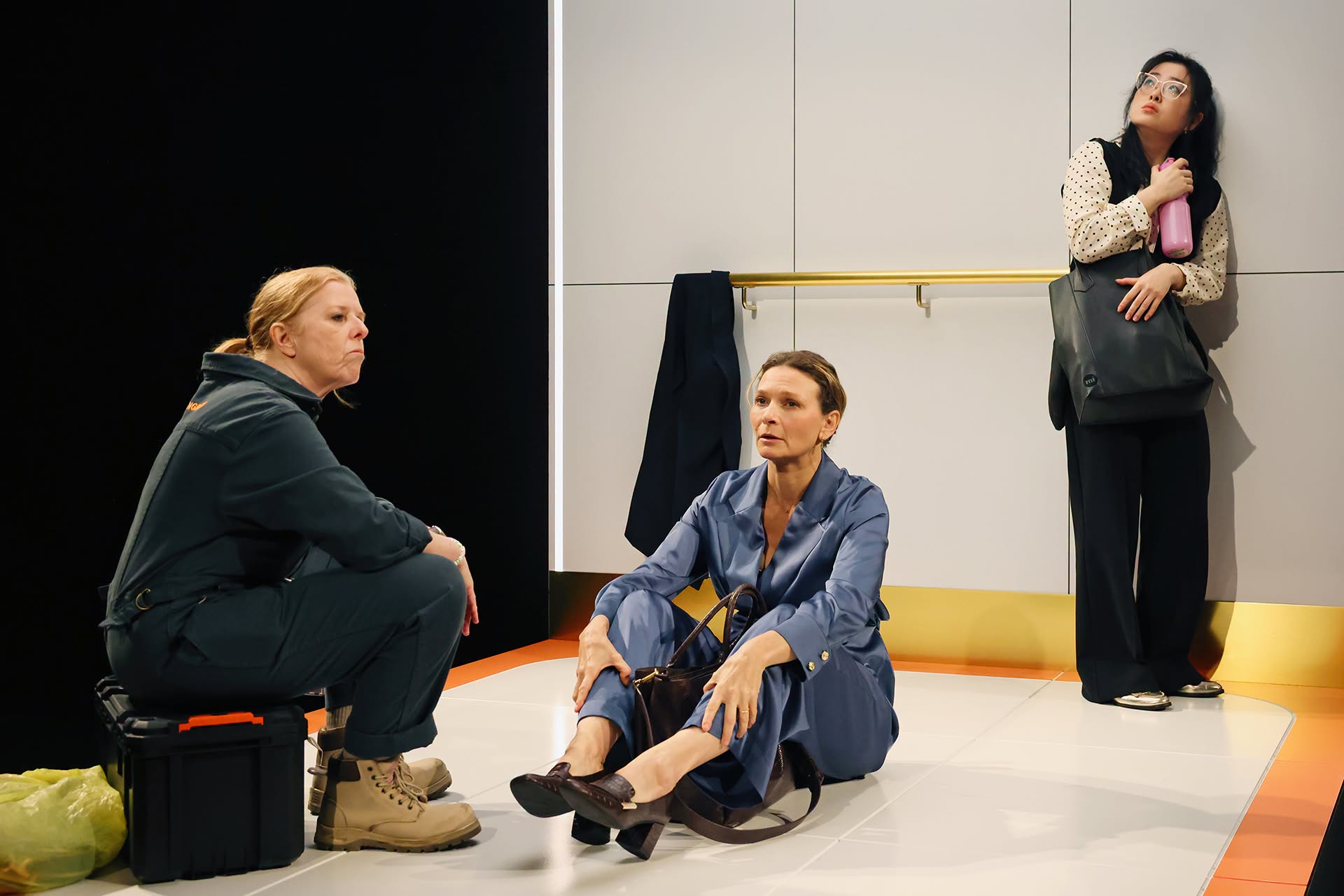
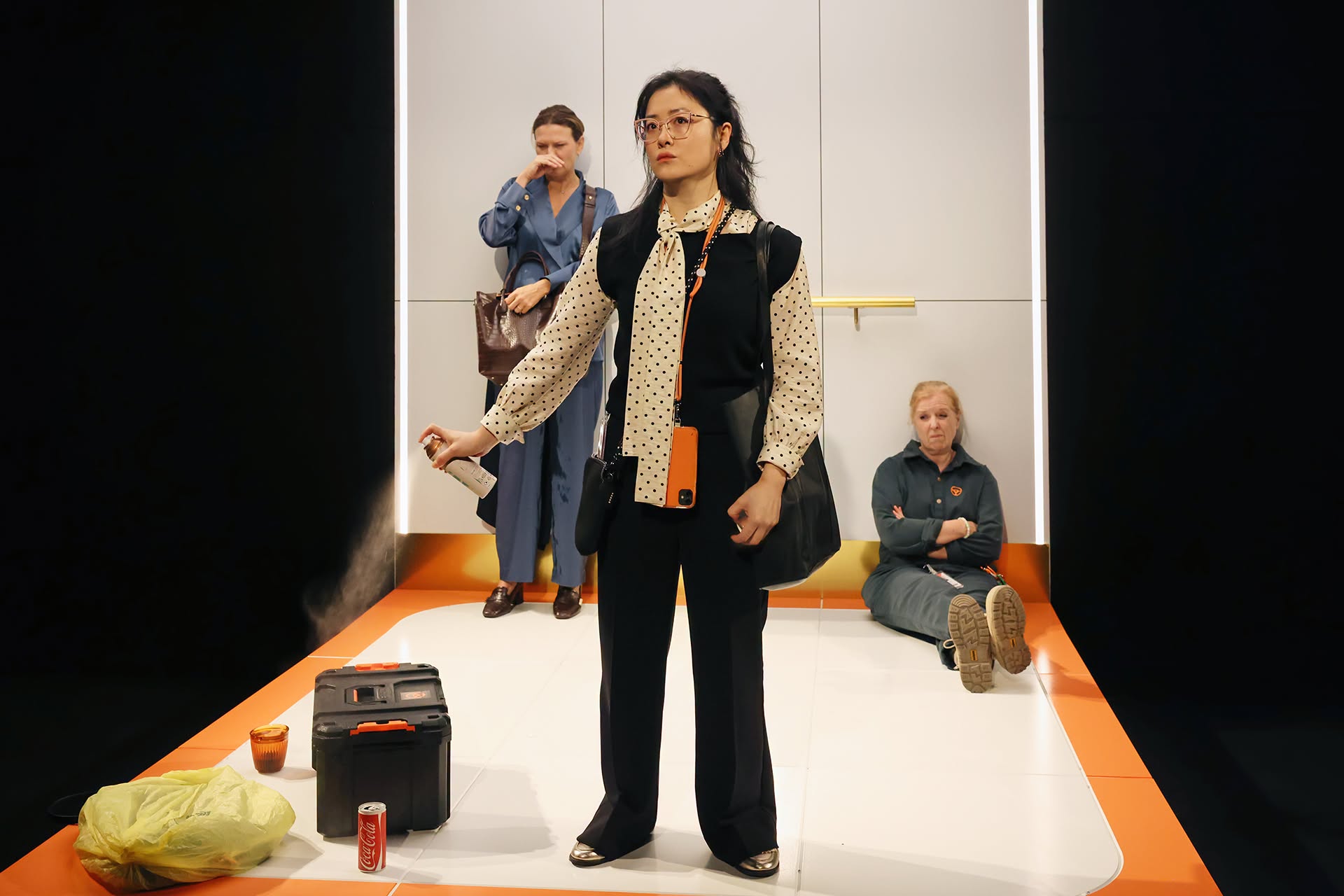
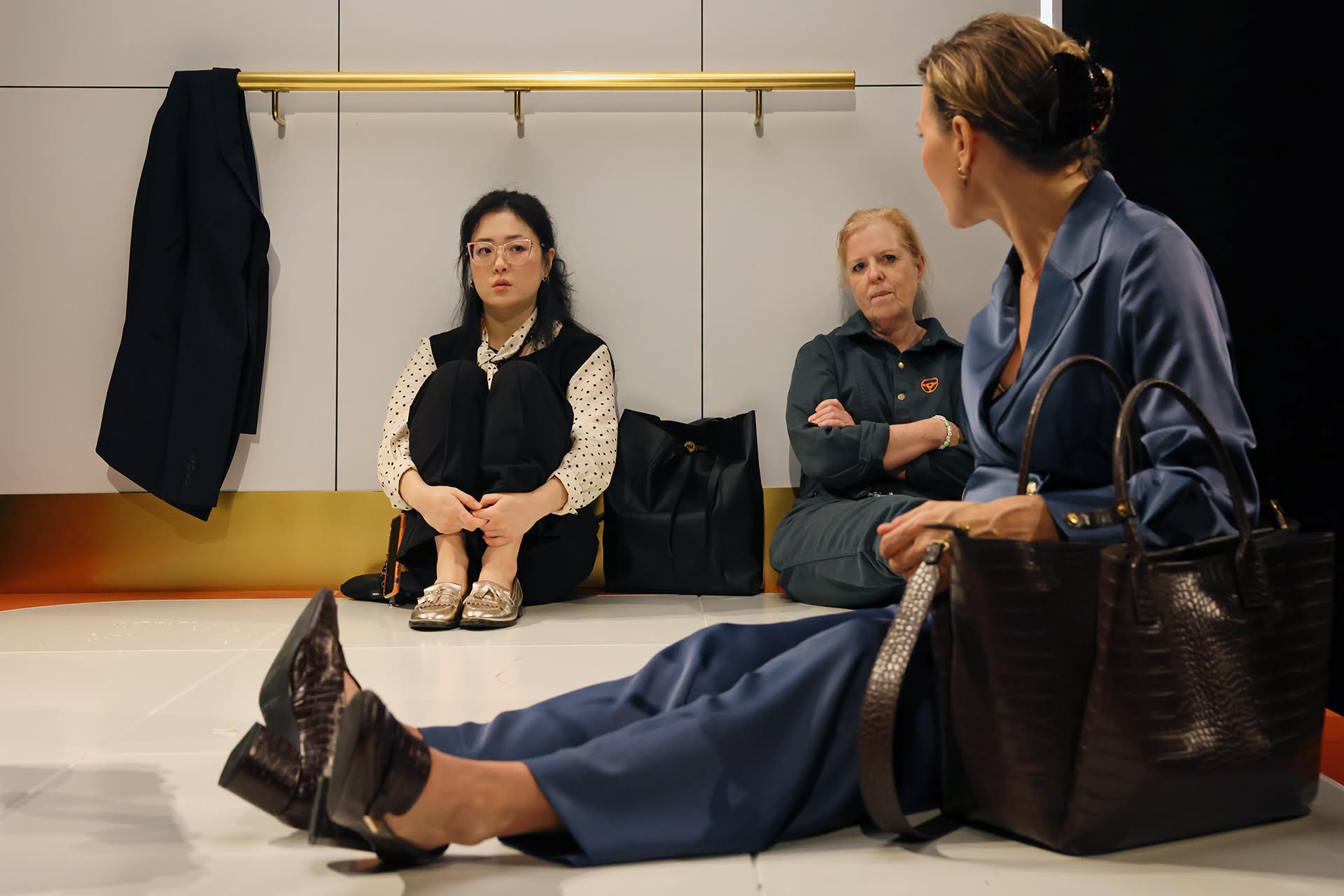
The CEO of Eco Engines finds herself trapped inside her company’s AI-operated lift alongside two employees. The claustrophobic setting is tense enough, but it is the recent fatal accident involving one of Eco Engines’ autonomous vehicles that truly exposes the fault lines between them. Eloise Snape’s The Elevator is set in the near future, at a moment when the proliferation of robotics is accelerating and corporations seize every opportunity to automate in pursuit of profit, with scant regard for the ethical consequences left in their wake.
Snape’s decision to confine three women with radically different perspectives inside a malfunctioning lift creates fertile ground for an interrogation of some of today’s most pressing technological and moral dilemmas. The play is astute in its examination of accountability, corporate power and artificial intelligence, but much of its comedy fails to land. Anthea Williams’ direction is similarly unable to unlock the script’s humour, leaving the first half feeling laboured and occasionally awkward. Once the production relinquishes its obligation to be funny and allows its darker instincts to take over, it becomes something considerably more compelling.
Leeanna Walsman’s Margot, the CEO, is perhaps a touch too naturalistic, never quite locating the heightened absurdity of a ruthless executive in crisis mode. Yet her final monologue is extraordinary, delivering the production’s emotional and intellectual climax with breathtaking force. Shirong Wu brings irresistible effervescence to Alison, the company’s PR specialist, injecting buoyancy into scenes that might otherwise collapse under the weight of exposition. As maintenance worker Ollie, Di Adams is somewhat restrained emotionally, but her grounded presence lends the play an essential moral gravity.
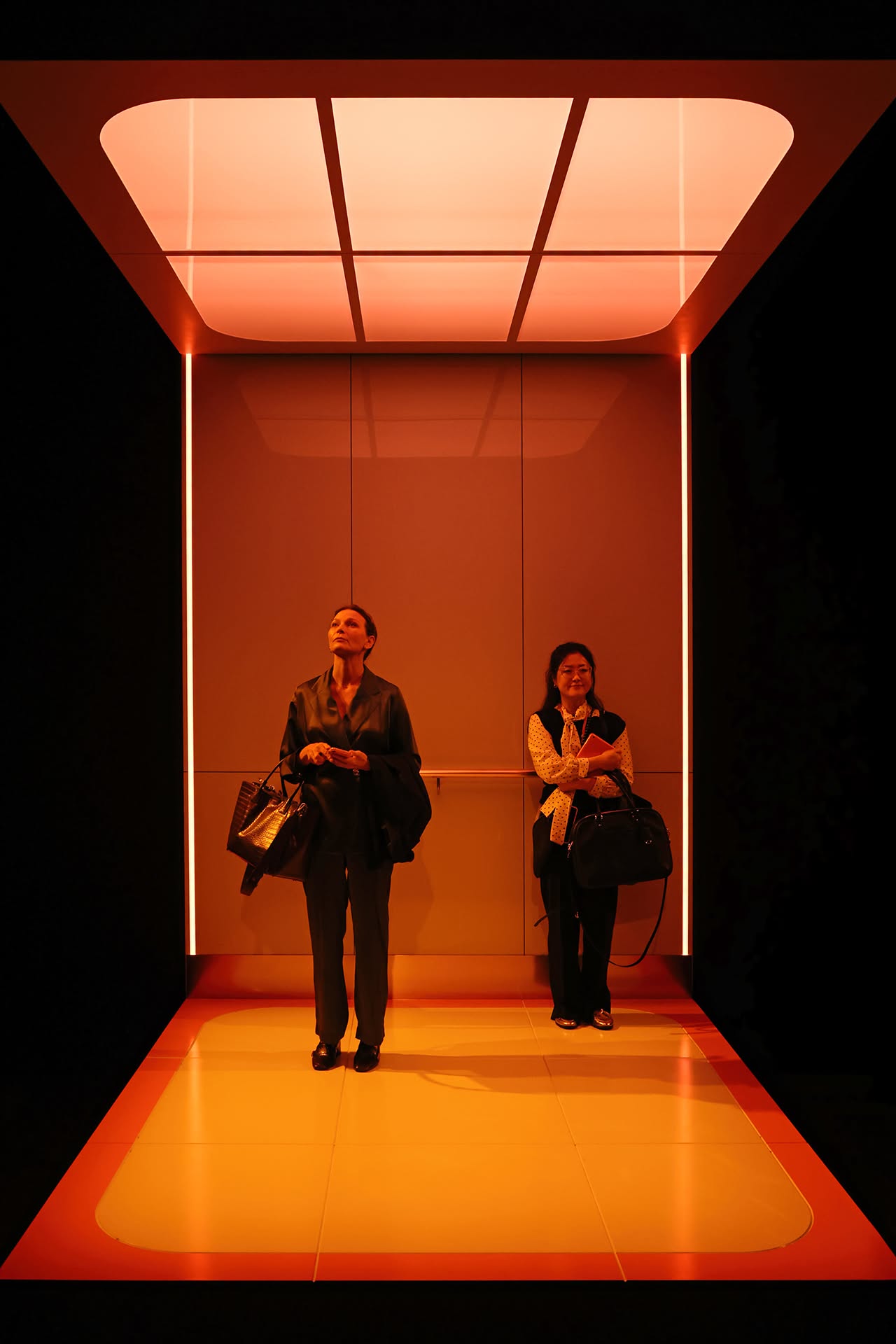
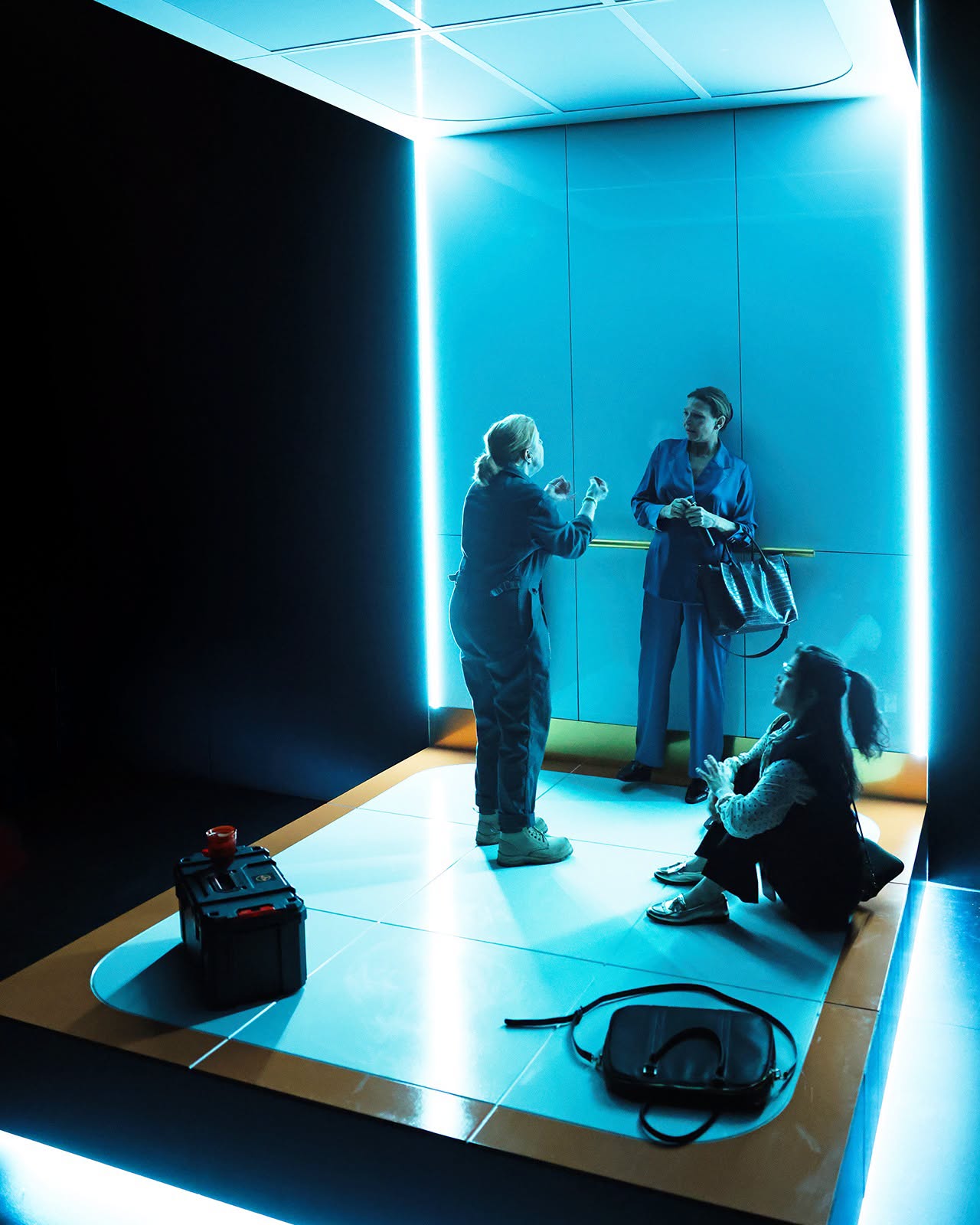
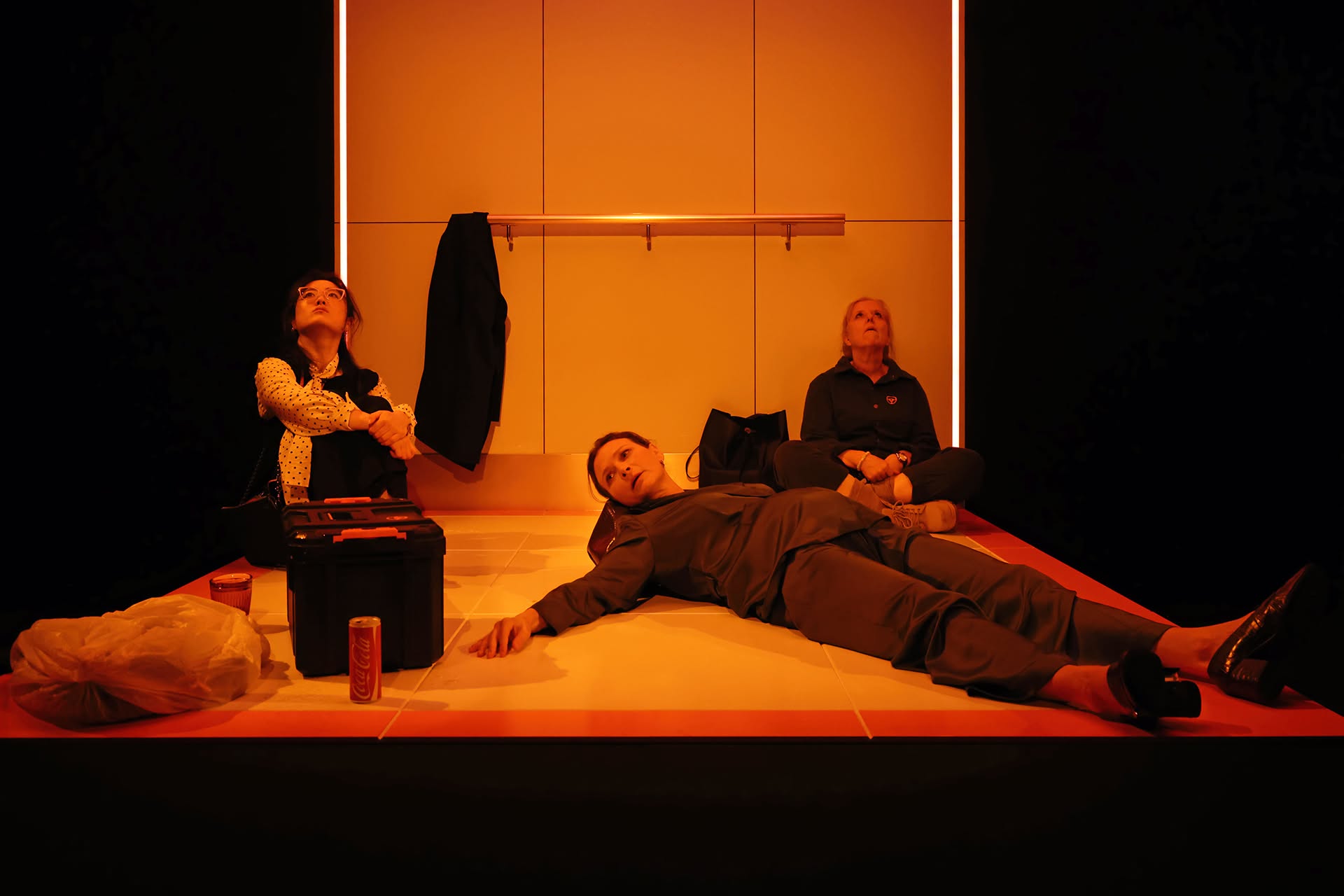
Kelsey Lee’s set and lighting design cleverly overcome the visual limitations of a story confined entirely to a lift. Through meticulously calibrated shifts in colour, intensity and atmosphere, she creates imagery of surprising richness and variety within an inherently static environment. Daniel Herten’s sound design is equally effective, its ominous undertones gradually intensifying until they become an almost subliminal expression of the characters’ mounting dread.
From the outside, it is easy to imagine that Margot could simply refuse the responsibilities that violate her conscience. Yet the play’s more unsettling insight is that she no longer believes refusal is available to her. She has travelled too far down a path that now feels irreversible, where technological progress and commercial expansion have become moral absolutes rather than choices.
The Elevator ultimately suggests that it may already be too late to appeal to the conscience of tech oligarchs, many of whom appear consumed by self-aggrandising visions of inevitable technological and economic advancement. If there is hope of averting the nightmare scenarios that accompany our most prominent innovations, it lies not with those building the machines, but with governments willing to regulate them and with a public prepared to insist on accountability before progress becomes truly irreversible.