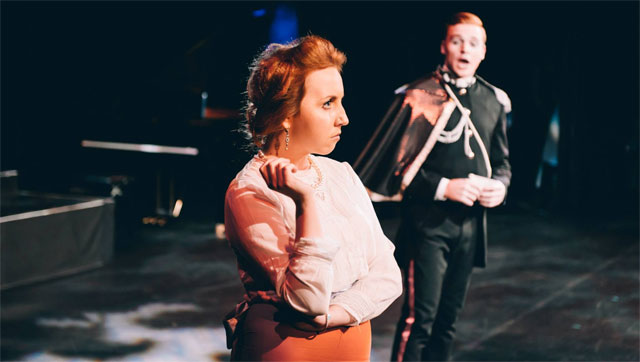
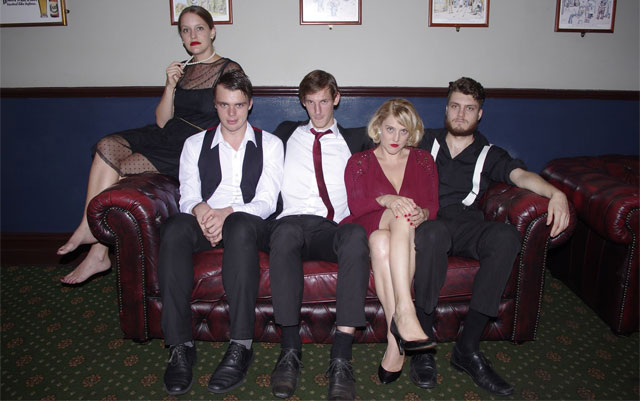
Review: Bad (Old Fitz Theatre / Red Line Productions)

redline2Venue: Old Fitzroy Theatre (Woolloomooloo NSW), Jan 14 – 31, 2015
Director: Scott Witt
Cast: Penny Greenhalgh, Kate Walder
Image by Yael Stempler

Theatre review
Bad is a show performed by clowns about acting (amongst other things). Along with director Scott Witt, performers Penny Greenhalgh and Kate Walder have devised a work that uses clowning traditions and influences from Commedia dell’arte, to deliver a theatrical experience that is slightly left of centre. Their show is more amusing than it is funny, and their ideas are familiar rather than original, but there is an earnestness and purity to their approach that can be quite charming.

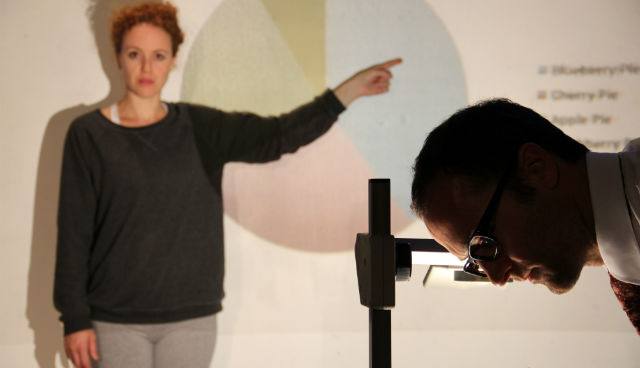
Walder is the “stunt woman” clown who speaks with a French accent, toddling around in a pair of tap shoes. Insisting that she is Cate Blanchett, the Hollywood and theatre star, she goes on to present a show entitled ‘Where’s My Bucket, Mom?’, enlisting the help of Greenhalgh, “philosopher” clown who gradually warms to the idea of being Geoffrey Rush (another star of stage and screen). The plot and story are chaotic and random, but we are always brought back to the theme of performance. Walder and Greenhalgh explore the nature of the theatrical space and the experience of acting using their unconventional methods, with mixed results. The pair is well rehearsed, but the play’s frenzied style and structure require more intense energy levels to provide a sense of abandonment and absurdity to match its concepts. Both actors seem fairly cautious, creating a space that feels safe, where we would prefer a sense of danger and unpredictability.

Not every actor is a clown, but all clowns act. They give us something unique, that can be found in their license to transgress. Clowns do not speak much, because they communicate in better ways. They reach out to us in realms that are beyond words, so that we understand the world from a different perspective. When done right, they impart a kind of wisdom that brings unexpected enlightenment. Bad is not always good, but what’s worse is doing things the same way over and over again. There is a courage at play here, and we need more of it.

www.oldfitztheatre.com

Review: Masterclass (Old Fitz Theatre / Red Line Productions)

redlineVenue: Old Fitzroy Theatre (Woolloomooloo NSW), Jan 14 – 31, 2015
Playwrights: Gareth Davies, Charlie Garber
Directors: Gareth Davies, Charlie Garber
Cast: Gareth Davies, Charlie Garber
Image by Marnya Rothe

Theatre review
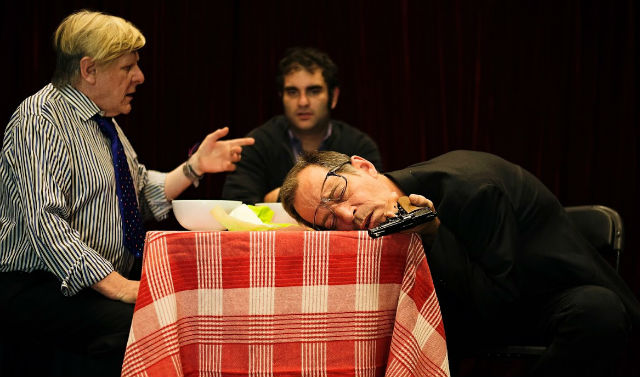
Two actors collaborate on a work for the stage, talking about what they know best. Gareth Davies and Charlie Garber’s Masterclass is about the craft and experience of acting, and all the anxieties associated with it. They take the art of self-mockery to great heights by depicting versions of themselves that are flamboyantly theatrical and deeply cynical, to interrogate the nature of their creative beast. An extreme self-consciousness manifests itself in a persistent need to make light of their art form, which delivers gales of laughter effectively, but its attempts to demystify and deconstruct the psychology and process of the actor takes irreverence to a sometimes uncomfortable place, and one begins to question the exasperating disquiet that Davies and Garber seem to feel about their profession. We see their resistance against taking any of their craft seriously, but we see them exploring this iconoclasm, with impressive commitment and skill.

There is a distinct, almost stubborn sense of humour at play, but the pair manipulates pace, rhythm, and plot dynamics to give the work variations in tone that keep us engaged, despite its very simple premise. Garber has a quiet confidence that allows him to portray the wild comedy of Masterclass with relative restraint. His style is often deadpan, but the clarity of intent he brings to every moment gives a surprising coherence to his unorthodox part, and a convincing strength to his punchlines. Davies’ approach is wider in range, and his comedic choices are decidedly riskier. The man’s energy is the foundation of the piece, and his control over spatial atmosphere and his audience’s responses is quite marvellous. We do not necessarily empathise with every idea Davies expresses, but there is certainly a lot to be admired of his ability to entertain, while conveying concepts that can be quite obscure.

Technical design is a crucial element to the structure and timing of this comedy production. Uncredited work on sound and Benjamin Brockman’s lights add much needed sophistication to an otherwise aesthetically challenged show. The play’s context allows for imaginative use of sets, props and costumes, but no investment is placed on those areas, and Brockman is called upon to provide all visual embellishment in the black box to admittedly satisfying results. Also noteworthy is stage manager Nick Foustellis’ precise and elegant execution of cues and changes.

The play concludes with a hint of poignancy that arrives after a long wait. The two young men prove themselves to be brilliant at light entertainment, but they seem to shy away from the inevitable gravitas that any theatrical piece requires. Not every story needs to give you something to think about, but when careless, jokes can leave you feeling empty. The sweet taste of success is for delighting in, and young talent should learn to embrace their gifts, even in the land of tall poppies.

www.oldfitztheatre.com

Review: Radiance (Belvoir St Theatre)

belvoirVenue: Belvoir St Theatre (Surry Hills NSW), Jan 3 – Feb 8, 2015
Playwright: Louis Nowra
Director: Leah Purcell
Cast: Leah Purcell, Shari Sebbens, Miranda Tapsell
Image by Brett Boardman

Theatre review
Our relationships with parents may not all be bad, but they are certainly complex. Louis Nowra’s Radiance offers a look at the way one woman’s human errors reverberate for generations after, and accordingly, we observe the inevitable karmic inheritance from predecessors. Cressy, Mae and Nona are three sisters who have reunited in North Queensland for their mother’s funeral. Their personalities are vastly different, and there is no shortage of friction as they navigate their rare time together in the old house where they had grown up. Nowra’s script is dramatic and sensual, with an aggressive but beautiful energy that surprises in a milieu that is frequently dark and plagued with anxiety.

Leah Purcell’s direction suffers from her additional responsibilities as actor in the role of Cressy. The play is uneven, with group dynamics feeling lacklustre even though the portrayal of closeness between the women is successful. Their interchanges are believable but come across oddly tame, notwithstanding some quite sensational themes. There is an understated elegance to the piece, but it is needlessly subdued, with many missed opportunities for bigger laughs and more heightened drama. It is noteworthy however, that Purcell is able to find authenticity in the writing, and the emotions of the text are adequately played out so that we feel in touch with the essence of the narrative, despite the scarcity of a sense of theatricality.

As actor, Purcell is never convincing as an opera diva who has found success overseas, and her overly restrained interpretation not only does little to embody class, it also detracts from some of the more flamboyant sections of the play. Fortunately, Purcell’s ability to deliver gravity in key revelatory moments holds our attention, and she gives the plot an enjoyable coherence. Middle child Mae is played by Shari Sebbens whose presence is noticeably weaker than her counterparts’. Her work is focused and strong, but her depiction of seriousness can read a little dreary, and consequently, her character becomes too distant. On the other hand, the youngest role of Nona is engagingly and empathetically performed by Miranda Tapsell, who connects with us from her very first entrance. The vibrancy she introduces to her scenes is remarkable, if only that energy is sustained by the other players. Tapsell has an easy confidence that keeps us on her side, and the compassion she brings to her character allows us to believe the extraordinary circumstances we witness unfolding.

Sound design by Brendan O’Brien is thorough and thoughtful, adding a dimension to the show that facilitates the articulation of a complicated and deep emotional universe. Dale Ferguson’s set is sophisticatedly beautiful, but his design forces a substantial portion of the play to be performed quite far upstage, prohibiting us from getting more involved.

Louis Nowra’s script is undeniably rich and seductive. It deals with familiar difficulties of real life, but the world it inhabits is almost exotic. Radiance uncovers a wildness that exists in our own homes, one that hides in plain sight yet begs to be examined. Secrets are associated with shame, but it is the abandonment of shame that will ultimately set us free.

www.belvoir.com.au

Review: Short+Sweet Theatre 2015 Top 80 Week 1 (Short+Sweet)

shortsweetVenue: New Theatre (Newtown NSW), Jan 7 – 11, 2015
Festival Director: Pete Malicki
Image by Sylvi Soe

Theatre review
Sydney’s Short+Sweet Theatre festival features around 160 different 10-minute plays over 8 weeks. It is an excellent opportunity for talents of all experience levels to experiment, and a way for a myriad Australian stories to be told. The festival takes the form of a competition, with winners selected by judges and audiences, to be announced in March. The contest environment might encourage participants to only create crowd-pleasing works, but the event is actually quite varied in style and substance. On each night, ten plays are presented by a wildly diverse group of artists with no discernible unifying theme, which means that the likelihood of any audience member enjoying every piece in the program is slim, but discovering a couple of works that would appeal is certainly not difficult.

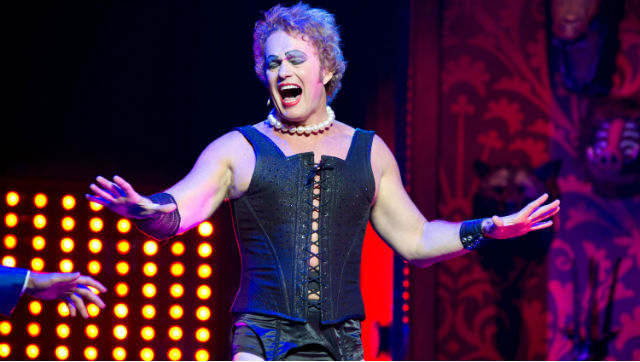
Short plays are challenging to performers who need to provide depth to characters who appear only fleetingly. They have less scripted pages to rely on, so ingenuity becomes central to their process. Ally Morgan plays Stephanie Tamara Anderson, a terminally ill teenager in Bokkie Robertson’s Wish (pictured above). Morgan’s confidence and conviction is a joy to watch, and the playful enthusiasm she brings to the stage is thoroughly captivating. In Jeffrey Hampson’s Wherefore Art Thou Oh Writing Inspiration, Hampson plays the role of William Shakespeare in an imagined struggle to create a new play, tentatively titled ‘Juliet and Romeo’. His performance finds focus after a shaky start, and endears to the crowd with a humorous take on the creative process.

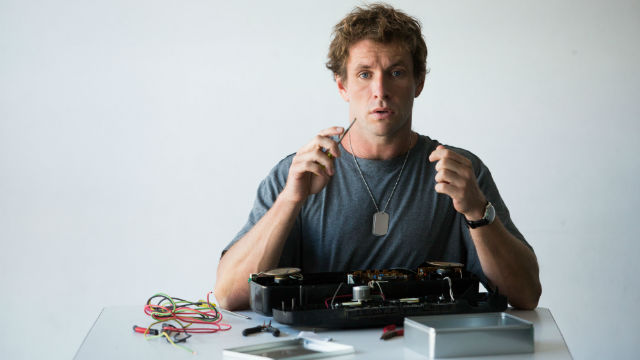
Choose by Sam Jenkins is an intelligent work that entertains and amuses its audience, with a daring and fresh approach to theatre-making. Jenkins’ creation seems to be partly improvisational and partly scripted, but there is no way to tell for sure. The only person we see is a volunteer who reacts to Jenkins’ voice which provides prompts and narration. There is an element of Choose Your Own Adventure to its structure, and it relies heavily on Jenkins’ brilliant sense of humour and lightning fast responses to keep us excitedly engaged. A great strength of the piece is its unpredictability, and its success is evident in how much we wish to see it again, with a different unsuspecting subject steering Jenkins in different directions.

The Short+Sweet brand has expanded across the globe, and is now “the biggest little play festival in the world”. It provides excellent context for community involvement and unparalleled exposure, and is a crucial part of the Australian theatrical landscape that unearths impressive talent and inventive ideas. An event of this scale will have moments of disappointment, and patience will be tested, but with the bad, comes the good, and when the good shines through, all else is forgotten.

www.shortandsweet.org

Suzy Goes See’s Best Of 2014

sgs-best2014

2014 has been a busy year. Choosing memorable moments from the 194 shows I had reviewed in these 12 months is a mind-bending exercise, but a wonderful opportunity that shows just how amazing and vibrant, theatre people are in Sydney. Thank you to artists, companies, publicists and punters who continue to support Suzy Goes See. Have a lovely holiday season and a happy new year! Now on to the Best Of 2014 list (all in random order)…

Suzy x

 Avant Garde Angels
The bravest and most creatively experimental works in 2014.

 Quirky Questers
The most unusual and colourful characters to appear on our stages in 2014.

♥ Design Doyennes
Outstanding visual design in 2014. Fabulous lights, sets and costumes.

♥ Darlings Of Dance
Breathtaking brilliance in the dance space of 2014.

♥ Musical Marvels
Outstanding performers in cabaret and musicals in 2014.

♥ Second Fiddle Superstars
Scene-stealers of 2014 in supporting roles.

♥ Ensemble Excellence
Casts in 2014 rich with chemistry and talent.

♥ Champs Of Comedy
Best comedic performances of 2014.

♥ Daredevils Of Drama
Best actors in dramatic roles in 2014.

♥ Wise With Words
Best new scripts of 2014.

 Directorial Dominance
Best direction in 2014.

♥ Shows Of The Year
The mighty Top 10.

♥ Suzy’s Special Soft Spot
A special mention for the diversity of cultures that have featured in its programming this year.

  • ATYP

End

sgs-best2014a

Photography by Roderick Ng, Dec 2014

End

Best of 2018 | Best of 2017 | Best of 2016Best of 2015Best Of 2013

Review: The Age Of Entitlement (Mongrel Mouth)

mongrelmouthVenue: Merchants House (Sydney NSW), Dec 3 – 20, 2014
Playwright: Saman Shad
Director: Duncan Maurice
Cast: Adam Connelly, Ali Crew, Amelia Tranter, Aston Campbell, Charlie Upton, Christina Sankari, Danny Gubbay, Eli King, Ezequiel Martinez, Guilia Clemente, Julia Landrey, Latisha Owens, Mark Williamson, Moreblessing Maturure, Paloma Alma, Rowan McDonald, Sage Godrei, Sharon Zeeman, Tess Marshall

Theatre review
Nineteen actors in a beautifully preserved old building present a simple story about politics. We navigate our way through rooms and characters, observing and speaking with these mysterious people, trying to piece together narratives, and to find an understanding of each personality’s agenda, and also what the artists are attempting to convey. The action centres around Lara, who is presented on the ground floor as a student leader of the left, and in a different room upstairs, she is an older politician raising funds to become the head of her right-wing party.

There is a certain amount of chaos from the immersive experiment that keeps us on our toes. It is challenging work that does not let its audience feel comfortable at any point, and director Duncan Maurice is determined for his work to be intriguing and thought-provoking. Placing his actors at such close proximity, we are forced to engage and interpret. Maurice leaves us no room to hide, and we are pressured into taking a stand. The performance feels slightly longer than its eighty minutes. The unusual format leaves us to compose a cohesive tale from many disparate fragments, but unravelling the riddles does not take much time. We are then left to loiter around the hallways waiting for a conclusion of some description to occur, which fortunately, does eventuate, and in quite spectacular style.

Julia Landrey plays X, a member of the student union who proves to be more radical than her peers. X is often positioned alone, so that when we encounter her, she is free to express hidden beliefs that might be too controversial for her comrades. The nature of the work requires a good amount of thick-skinned daring from its cast, and Landrey’s strength ensures that she connects well, even though the role’s presence is an intimidating one. Her impressive improvisational skills allow for brilliant conversations to unfold, and we find ourselves becoming more involved than ever anticipated.

Some of the group is less effective, but they all contribute to the unusual carnival flavour that the production will be remembered for. There are instances where characters seem narrow in scope, which often lead to a shallow sense of plot and oversimplification of ideas. A substantial part of the discussion The Age Of Entitlement aims to inspire, is the tension between the left and right of politics, and the way Australian society shapes its attitudes according to convenient alliances.

The production is well designed. Alex PF Jackson’s work for makeup, hair and costumes especially, are noteworthy. Set and lights are slightly less polished, but spaces are adequately dressed to evoke a sense of fantasy and transportative theatricality.

Political theatre gives voice to causes and groups, and on occasion, it changes minds. This show does not tell us what to think, but it espouses the importance of holding beliefs and standing up for them. Almost contradictory is the way it interrogates our practice of identifying with political sides, but that conflict gives the work a meaningful complexity that feels resonant with our lived experiences. Maybe a few people will begin to think differently of their political attitudes from attending Entitlement, but more likely is its effect on how we think of theatre’s relationship with the public and its modes of expression. There is so much to be explored when artists and audience meet, especially when all the old rules are broken.

www.mongrelmouth.com

Review: Guilty Pleasures (Blue Saint Productions)

bluesaintVenue: Hayes Theatre Co (Potts Point NSW), Dec 17 – 21, 2014
Book: Joshua Robson
Lyrics: Hugo Chiarella
Director: Joshua Robson
Music Director and Composer: Robert Tripolino
Cast: Angelique Cassimatis
Image by Mike Snow

Theatre review
Joshua Robson, Hugo Chiarella and Robert Tripolino’s Guilty Pleasures is a 45 minute musical with murderous women and their bad men. It is Chicago‘s “Cell Block H” expanded, and they’ve all had it coming. Comprising a series of independent stories about fatal romances, the short narratives are amusing, with compelling songs that add drama and a colourful sense of theatricality.

Performed by just one woman, the work demands that Angelique Cassimatis provides range and variety to each character, but the show does not have enough tonal shifts in performance or design, to create textural complexity from its string of tales. Robson’s direction blends each segment to form a cohesive whole, leaving behind the lively and fluctuating nature of the text. Cassimatis’s training and experience is evident, especially with her physical discipline and dance abilities, but her approach tends to be a technical one. Her talents in singing and acting seem to come less naturally, but the actor’s conviction is clear to see, and her energetic presence helps endear her to the crowd.

Burlesque touches in the production provide a sexy edge to the already risqué themes it covers. The writing has a dark humour that would appeal to those who seek a musical theatre experience that is less than “family-friendly”, but its execution might be a little subdued for some. Written and directed by three men, Guilty Pleasures is a feminine work with a queer sensibility and a charming cynicism about romantic relationships. The women in the show are determined to define themselves against the men in their lives, and all pay a hefty price at the end.

www.bluesaint.com.au

Review: Your Skin My Skin (NAISDA Dance College)

naisdaVenue: Carriageworks (Eveleigh NSW), Dec 10 – 13, 2014
Director: Frances Rings
Image from Twitter @theNCIE

Theatre review
Identity is a subject that features in any art education, but for students at NAISDA Dance College, Aboriginality is a central tenet that guides their learning experience in dance and performance. Also known as the National Aboriginal and Islander Skills Association (40 years old this year), NAISDA’s end of year showcase for 2014 is entitled Your Skin My Skin. The program represents a gamut of dance styles, but the topic of race is never far behind. A series of sensitively curated items are linked by cultural dance and music under the leadership of tutors Heather Mitijangba and Tony Mudalyun, and musicians Shane Dhawa and Timothy Djirrmurmur. Regardless of how individual dance pieces come about, we are reminded that heritage is part of their creation, and the land that our feet rest upon is crucial to the expressions on stage.

The event commences with Rika’s Story, choreographed by the nine performers of the piece with Shaun Parker at the helm. The piece provides the perfect introduction to the college and the evening, with graduating student Rika Hamaguchi’s confident verbal narration giving insight into the group’s thoughts about study experiences and her feelings at this significant time as she embarks on a new chapter in life. Through Hamaguchi’s words, we gain an understanding of the meaning and origins of the movements being displayed, as well as the psychology behind them. Also graduating are Hans Ahwang, Czack Ses Bero, Casey Natty, Kyle Shilling and Philip Walford, who have all completed NAISDA’s four-year Diploma of Professional Dance Performance.

Shilling presents the only solo piece of the schedule. Justice? is a meditation on Aboriginal deaths in custody, with impressive choreography and music created by the student. His work is intensely emotional and energetic, and he demonstrates surprising maturity and gravity. Also memorable is Natty, who shows excellent focus and a solid presence in his various appearances. The athletic dancer executes choreography with precision and flair, and like all of the graduating class, rich with potential and promise. The young men’s performance in Grinding Stone by Frances Rings (an excerpt from Bangarra Dance Theatre’s artefact) is a highlight, bringing poignancy and depth to their mysterious dance.

Aside from the passionate achievements of NAISDA’s students, Your Skin My Skin is successful also for its excellent aesthetic values and accomplished technical capacities. The show runs smoothly with beautiful transitions, and atmosphere is always gauged just right. Music and sound might be second fiddle, but they are as delightful as the dance imagery occupying centre stage. NAISDA’s night of nights is a celebration of the year’s work by its fabulous staff and students, and an annual performance with heart and soul that dance enthusiasts will certainly enjoy.

www.naisda.com.au

Review: Tell Me Again (Eye Of The Storm / The Old 505 Theatre)

old505Venue: Old 505 Theatre (Surry Hills NSW), Dec 3 – 21, 2014
Playwright: Jeanette Cronin
Director: Michael Pigott
Cast: Jeanette Cronin, James Lugton

Theatre review
The stage is a sacred space. It has endless possibilities, and many have occupied and used it for different purposes, to achieve every imaginable effect and result. Jeanette Cronin’s Tell Me Again shows a love and respect for the theatrical form and its audience, aiming to provide a moment in time with something deeply emotional, perhaps making us feel things in a way that our real daily lives are too fragile or restless to permit. Cronin’s play invites us to encounter what is truest of the human experience, by instigating a series of raw and naked visceral responses by removing the protection of narrative and logic. It is poetry in motion that encourages us to get in touch with the the spirit within that compels us toward every action, yet that internal essence seldom seeks to be the centre of attention. For these 80 minutes, we come face to face with it, and it is sublime.

Direction and design of the work by Michael Pigott creates an inviting beauty that lets us connect with the work in a place that story usually resides. He engages our curiosity and we begin to apply our own stories to what he lets us experience. Where there is emotion, there is a human need to explain and understand its origin, and it is the spectator’s own creativity that is summoned in Tell Me Again. Pigott’s work is extremely tender and sensitive, but there is also an uninhibitedness that prevents things from becoming predictable. There are instances however, where the show seems to drift away from our consciousness, as we indulge in the ideas it inspires, but it invariably pulls us back with touches of drama and passion.

Flawless performances by Cronin and James Lugton produce a couple of characters palpable in their authenticity, and stunning with chemistry. Lugton’s minimal approach strips away layers of affectation so that only the very essential is left, and exposed like fresh wounds. It is a physical manifestation of the concept of love, not always immediate and recognisable, but incredibly moving and profound at the end. Cronin is intense but quiet, with a wild and devastating power barely hidden, explosive secrets brimming under the surface. The role she plays is strange but not a stranger. In fact, the complexities Cronin displays are familiar, feeling like private flashbacks unfolding before our eyes despite the peculiarity of the play’s eccentric plot.

We cannot live in a constant state of elevated sentimentality, but leaving emotions concealed is on one hand damaging and on the other, an unfortunate deprivation. Feelings are scary things, but Tell Me Again turns them seductive and irresistible. The indulgence in sadness and melancholy is an occasional necessity, and art is its friendly abettor, but in this production, escapism is not to be found, and the pain that remains, is naked.

www.venue505.com/theatre

Review: Rupert (Stage Mogul / Theatre Royal)

rupertVenue: Theatre Royal (Sydney NSW), Nov 25 – Dec 20, 2014
Playwright: David Williamson
Director: Lee Lewis
Actors: James Cromwell, Jane Turner, Guy Edmonds, Scott Sheridan, Hai Ha Le, Bert LaBonte, John Leary, Jane Phegan, Ben Wood, Glenn Hazeldine, Danielle Cormack

Theatre review
Biographies of fascinating people appeal to our inquisitive nature. We want to know how people tick, to discover reason behind behaviour, and to uncover secrets of the rich and famous. Rupert Murdoch is one of the world’s most well-known business people, with a personal and professional history that is documented ubiquitously in the public domain. David Williamson’s script is a chronological rehash of Murdoch’s many milestones, but does not provide analysis or insight that might offer a fresh perspective of the prominent figure. The plot reads like a Wikipedia entry, with one key event after another, none of which is surprising and everything is predictable.

Director Lee Lewis does an admirable job of creating a dynamic and colourful show from the plain script. The show feels like a Broadway musical with bells and whistles in every scene taking focus away from the lack of story and drama. Lewis does her best to add excitement with well paced and energetic sequences, but at over two hours, our attention struggles to stay interested in the deficient narrative. The production is designed successfully, with composer Kelly Ryall and lighting designer Niklas Pajanti both adding flair and inventiveness to the proceedings, and Stephen Curtis’ set and audio-visual elements giving the large performance space focus, shape and texture. Murdoch’s tabloid format takes to the stage, giving us cosmetic lavishness, and distraction from the real issues.

There are two Ruperts in the show. James Cromwell is presented as Murdoch as he is today (complete with Twitter account) telling us his side of the story like a narrator to the piece. Cromwell’s energy is oddly placid, but the actor’s sturdy presence helps him portray the allure of power and wealth convincingly. Guy Edmonds is outstanding as Murdoch in the flashbacks. He is astute, charming and sprightly, with a clarity that engages his audience, and a vibrancy that entertains. Edmonds does all the heavy lifting in the show, and his talent is a real highlight. Jane Turner’s comic abilities deliver a memorable, absurdist version of Margaret Thatcher, and Glenn Hazeldine impresses with a range of characters showcasing his amazing skills at mimicry and farcical exuberance.

So much of Rupert is strong and accomplished, but all the accoutrements in the world will not create a great story with a script as dry as this. All the interesting questions one might ask Murdoch in a personal encounter are not addressed. We leave not learning anything new, not understanding the man behind the madness, and completely unsatisfied.

www.rupertonstage.com