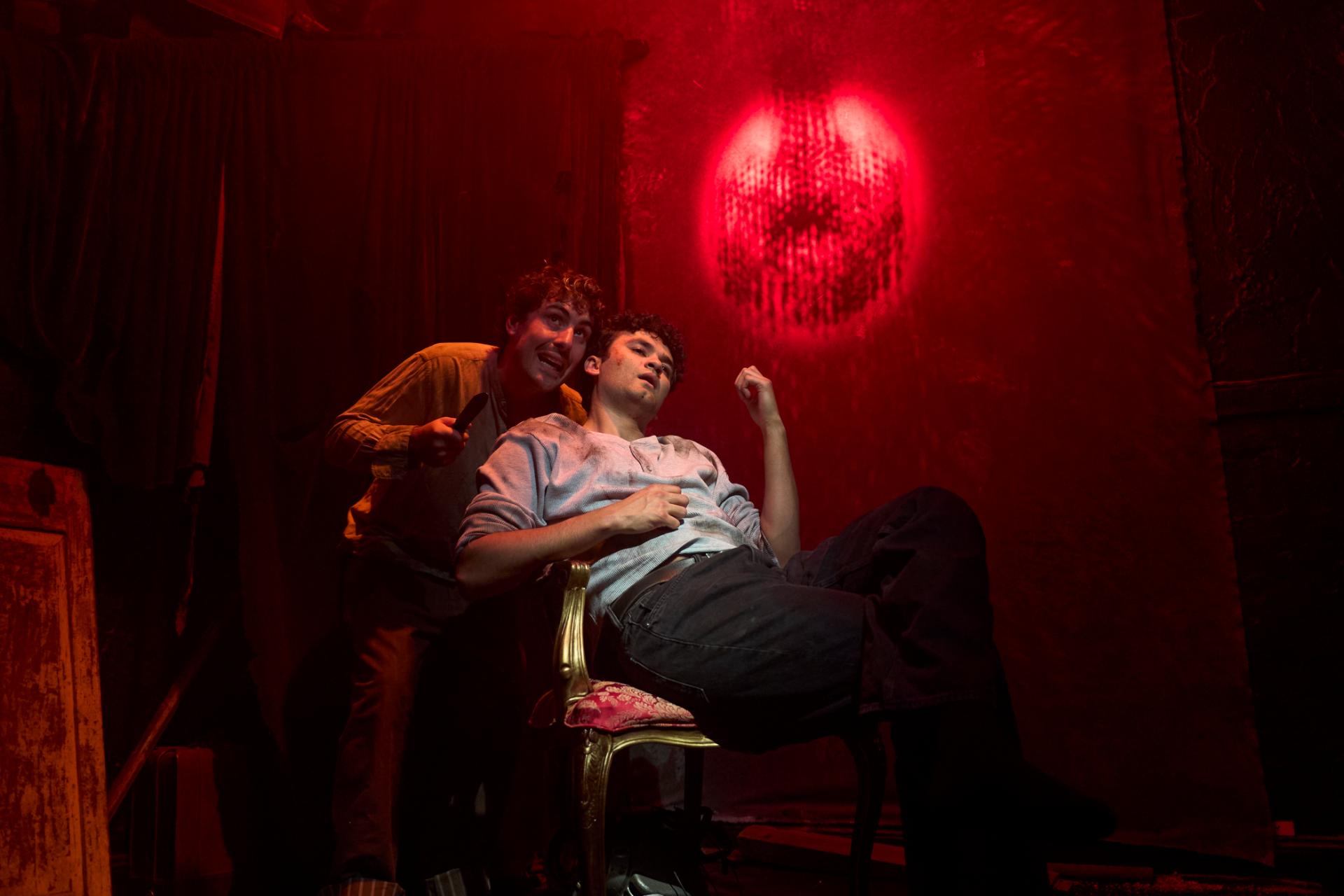
Venue: Old Fitzroy Theatre (Woolloomooloo NSW), Jul 31 – Aug 15, 2026
Playwright: William Shakespeare (an adaption of Hamlet by Liesel Badorrek, Raj Labade, Jack Twelvetree)
Director: Liesel Badorrek
Cast: Raj Labade, Jack Twelvetree
Images by Campbell Parsons
Theatre review
Goodnight Sweet Prince offers a seventy-minute distillation of Hamlet, gathering the play’s most searing moments of introspection into a concentrated portrait of psychological unravelling. Yet in privileging the prince’s interiority, the adaptation strips away Shakespeare’s chiaroscuro—the interplay of levity and darkness, of courtly intrigue and metaphysical dread—leaving behind something closer to a single-note meditation on grief.
Liesel Badorrek’s direction sustains a formidable emotional pitch, executed with considerable polish. The result, however, is a production that feels curiously remote: relentlessly intense yet strangely unaffecting, as though the audience were observing anguish through reinforced glass.
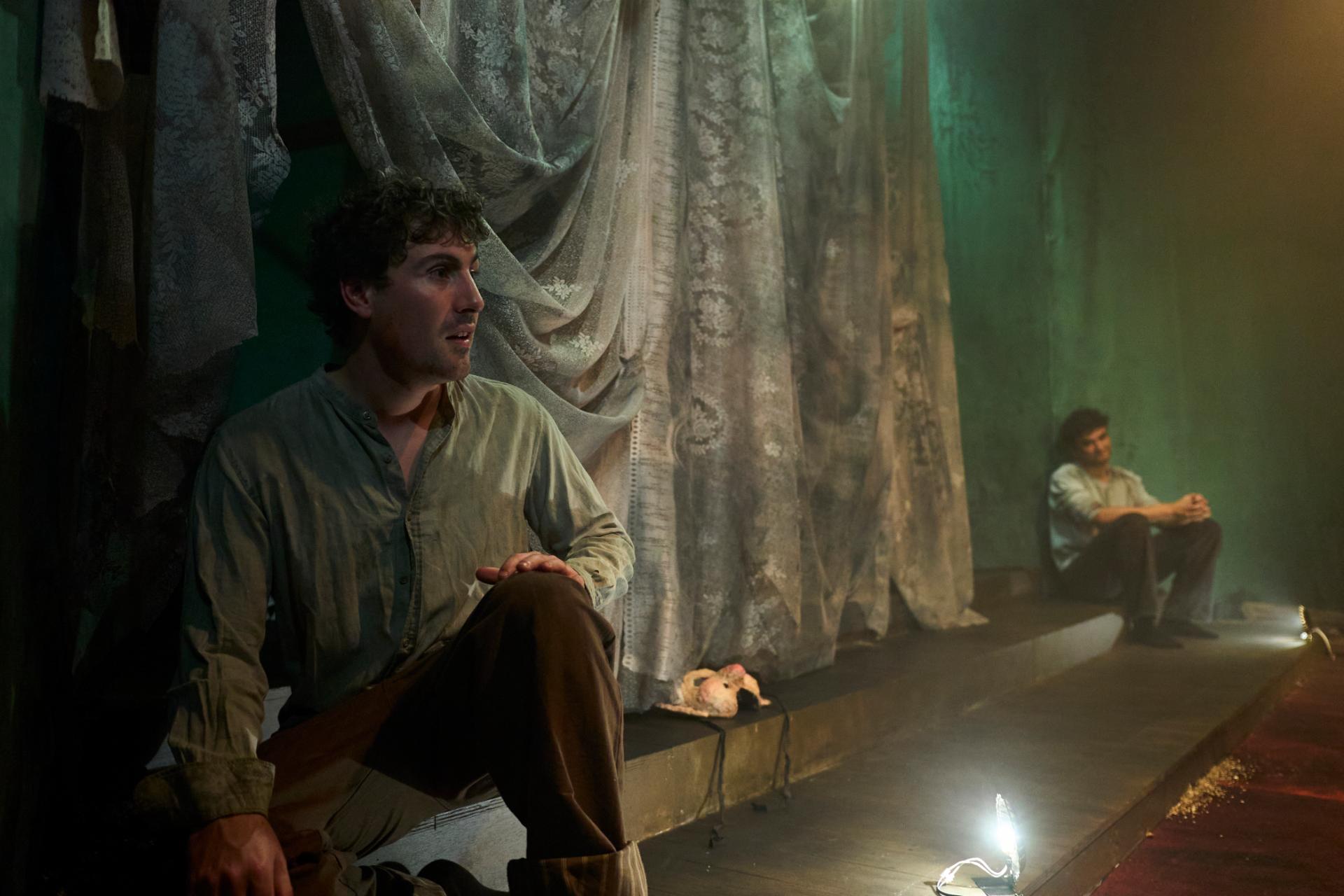
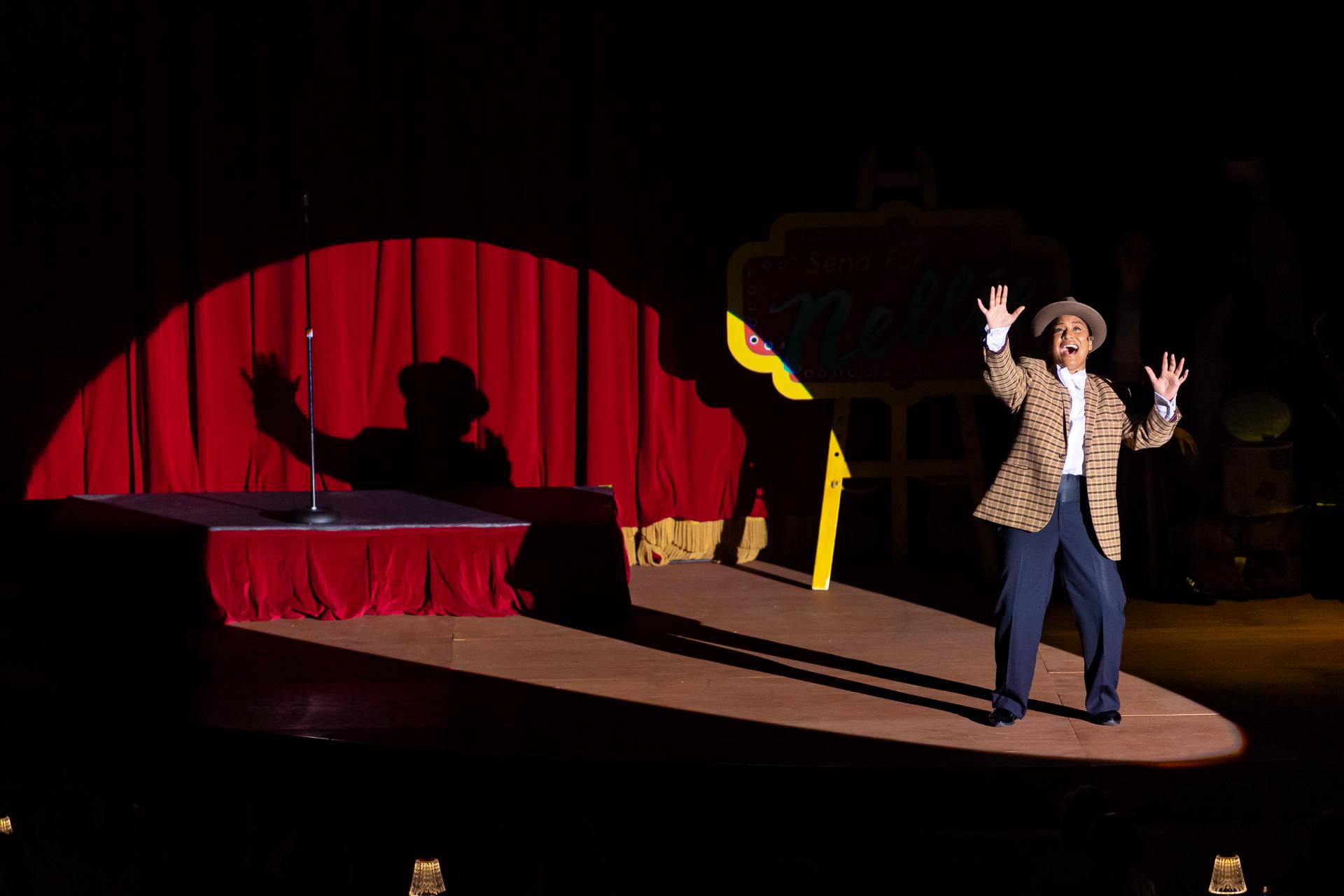
Keerthi Subramanyam’s set design finds poetry in ruin. Drawing on the internal dilapidation of Shakespeare’s characters, the staging evokes decay with arresting beauty—flickers of faded grandeur and decadent ornamentation lending the production a visual richness that partially compensates for its emotional austerity.
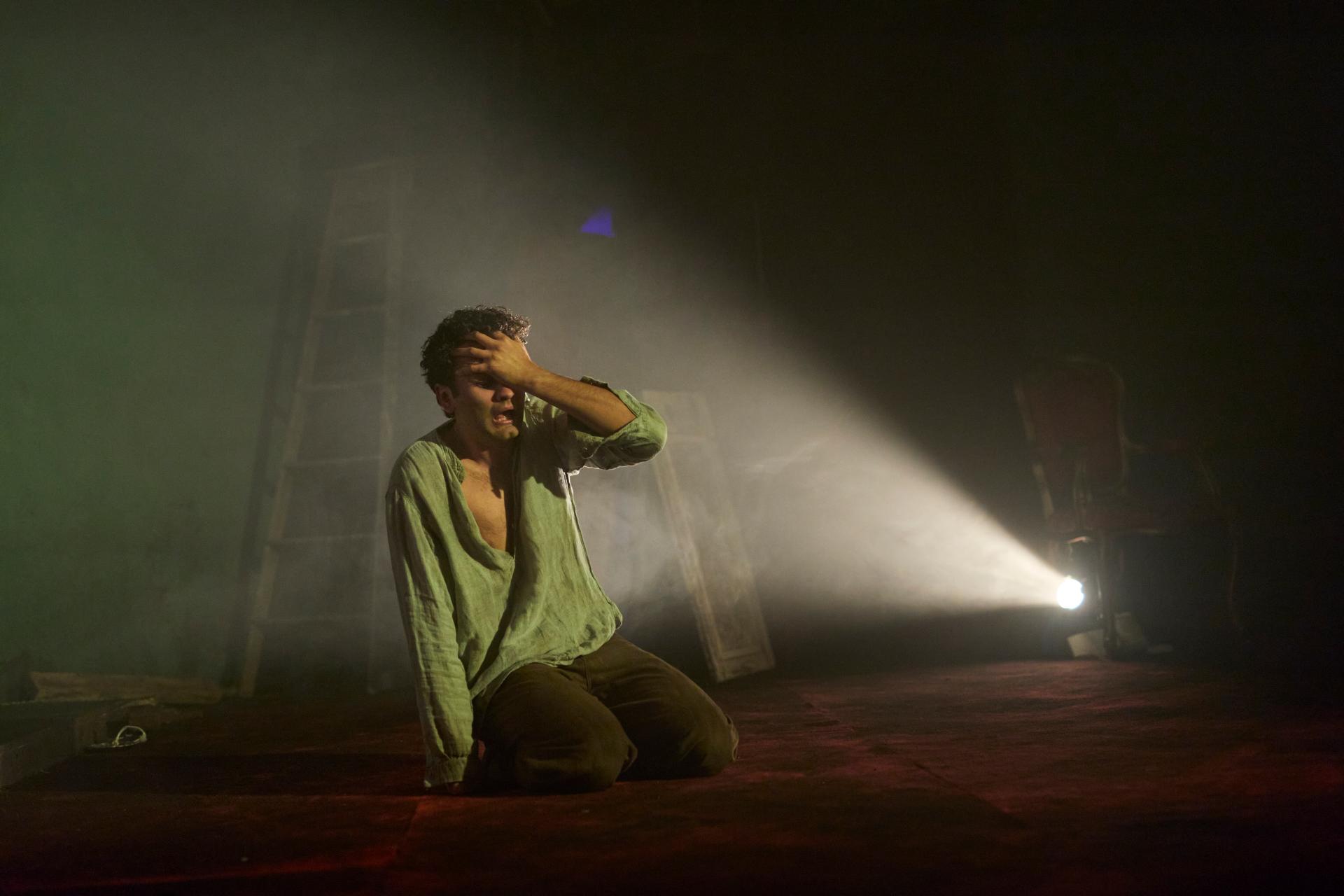
Verity Hampson’s lighting is exuberantly theatrical, responding to the text’s most dramatic registers with bold, heightened imagery. Ross Johnston’s sound design is similarly ambitious, tracking every cadence of the abridged script with almost forensic attention. The score works so diligently to underscore each emotional beat that it threatens to become a co-narrator, at times articulating as much of the story as the words themselves.
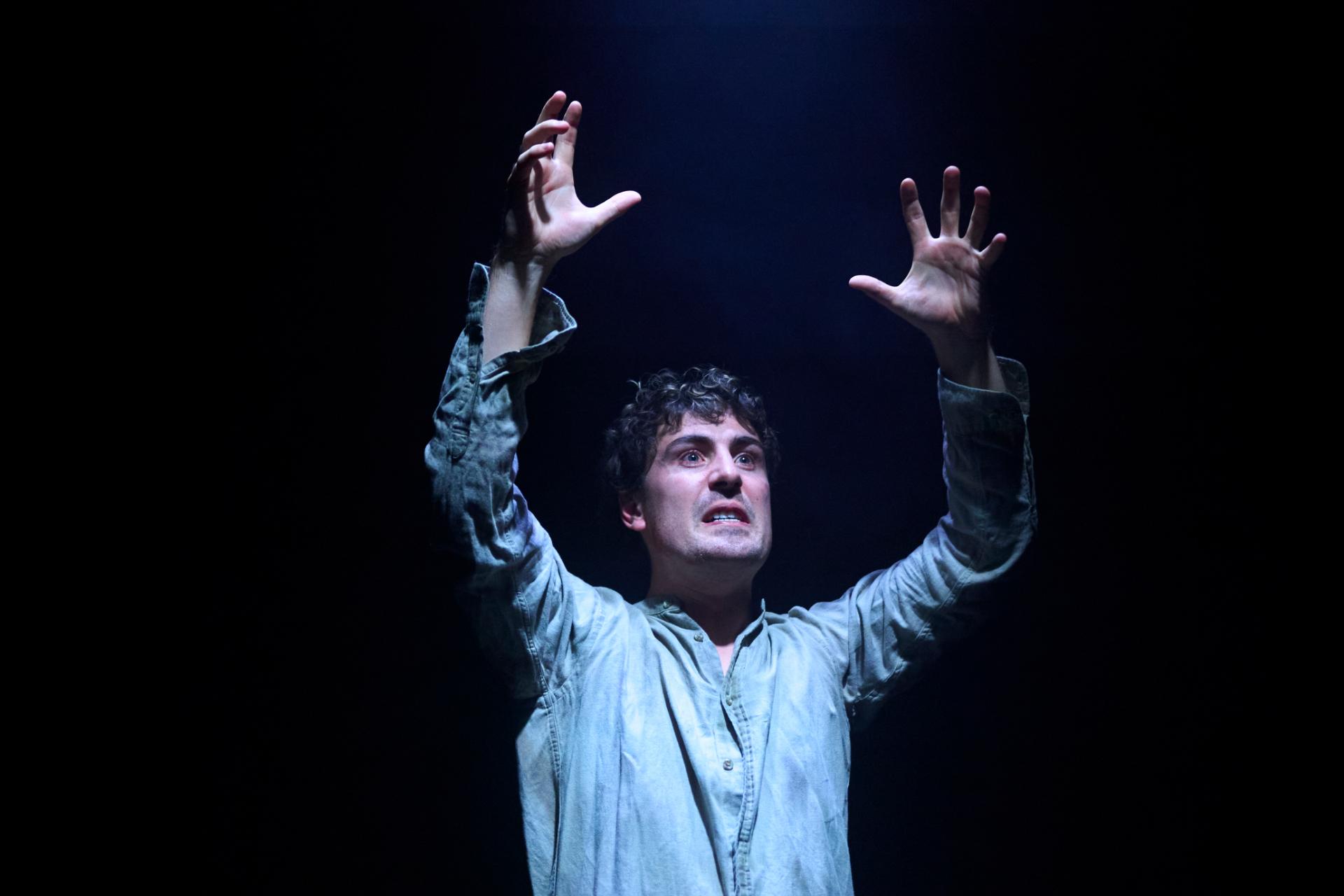
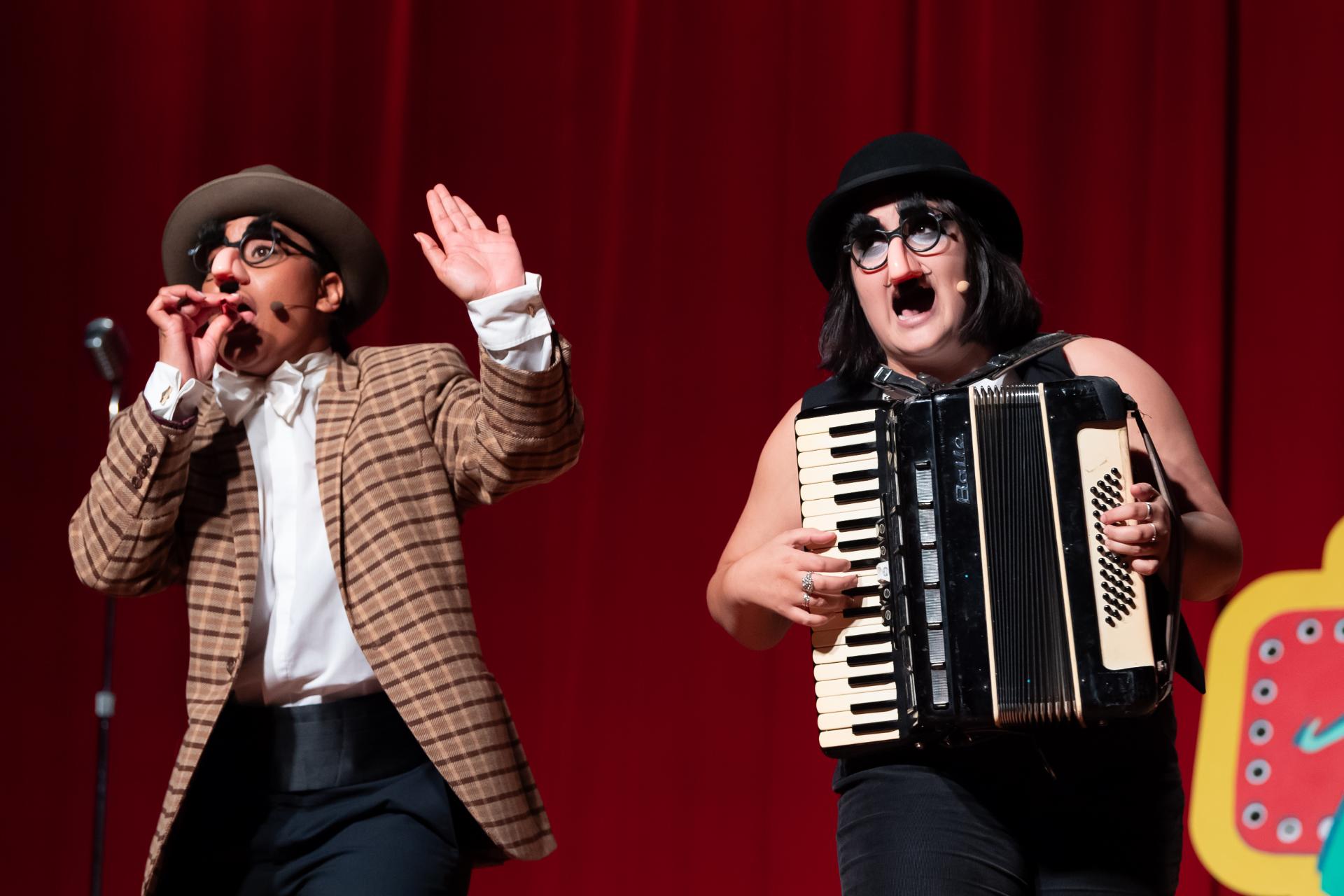
Raj Labade brings formidable concentration and raw feeling to the title role; his Hamlet is never less than utterly committed. Yet the compression of the text ultimately estranges us from the very suffering it seeks to dramatise. We recognise the authenticity of the anguish without being invited to share it. Jack Twelvetree moves with remarkable ease between Horatio and an array of supporting characters, his versatility shining through in sharply differentiated performances that lend the production welcome breadth and texture.
There is, finally, the question of relevance. It grows increasingly difficult to locate our sympathies within the precincts of royalty; the historical convention of identifying with kings and queens now feels almost exotic. Suffering may be universal, but our compassion need not be indiscriminate. Perhaps there is a quiet liberation in withholding our empathy from those whose privilege has been maintained, across generations, at the cost of so many others’ disadvantage.
www.oldfitztheatre.com.au | www.instagram.com/goodnightsweetprinceplay




 Suzy Goes See