Review: Shifting > Shapes / Fem Menace (PACT)


Venue: PACT Centre for Emerging Artists (Erskineville NSW), Nov 22 – 25, 2017

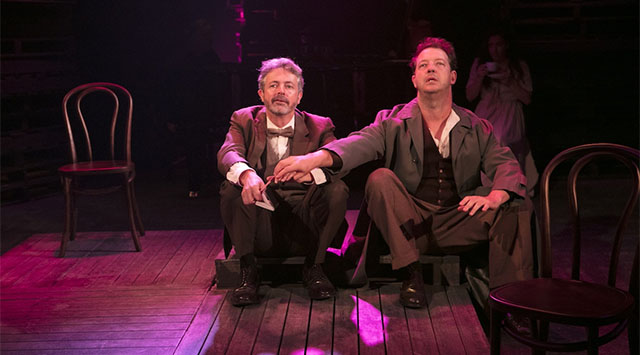
Shifting > Shapes
Choreographer and composer: Thomas E.S. Kelly
Collaborator and performer: Taree Sansbury

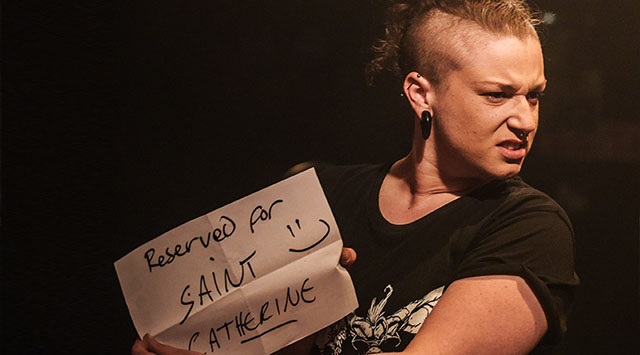
Fem Menace
Creator and performer: Cheryn Frost
Co-creators and performers: Cath McNamara, Tahlee Kianda Leeson

Theatre review
Presented as part of PACT’s “Afterglow” season, two works Shifting > Shapes and Fem Menace, feature young women dancing to the beat of their own drums. We watch them finding physical languages that could reveal their identities, that help express feelings and thoughts, to make their mark maybe, to be seen and heard, in a world that is determined to subdue creativity and art.

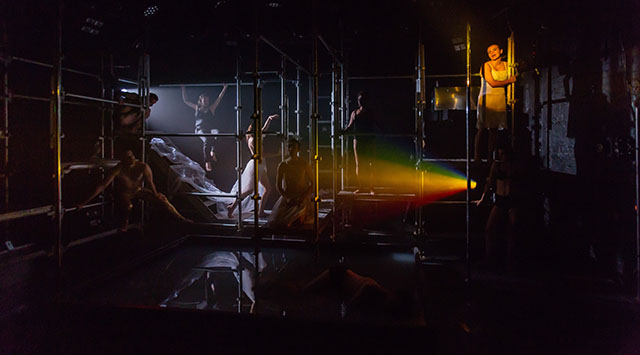
Shifting > Shapes explores humanity through the idea of shape-shifting, in which a person adopts the consciousness of animals, and begins to think and move like them. When performer Taree Sansbury becomes a goanna (or Dirawong) and a rainbow serpent, she sinks close to the ground. The relationship between body and earth looks never to be more intimate, than when Sansbury takes on the physical specificity of a different species. In the moments that she reverts to human, we observe the discord between being and space, as though we are the only ones alien to our own planet.

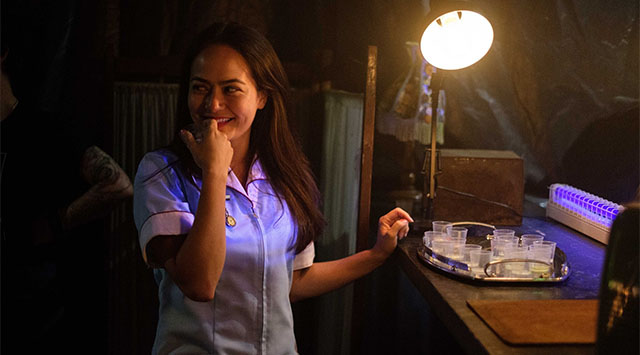
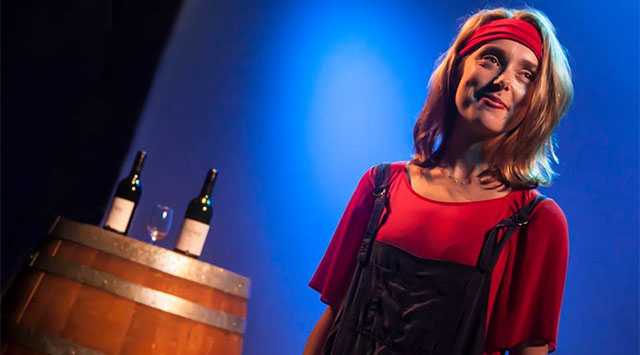
Fem Menace is concerned with the anxieties about being contemporary women, in this latest wave of feminism. A key point of its discussion is sexuality, as an essentially social undertaking, private but always in relation with the world outside of the self. In the honest representation of woman as sexual being, the conundrum of objectification seems to be omnipresent. Cheryn Frost, Cath McNamara and Tahlee Kianda Leeson present an uncompromising wildness that dares us to regard their presence as anything other than as intended.

Both pieces are conceived and executed with a sense of purity; faithful and authentic in their transition from inspiration to stage. For Shifting > Shapes, the unapologetically minimalist approach of choreographer and composer Thomas E.S. Kelly, maintains a razor sharp focus on its theme, whilst asserting his Aboriginality as legitimate and authoritative. The women in Fem Menace are experimental, putting their minds and bodies through exhaustive interrogation. The results of which are deeply fascinating, and often very beautiful. There is perhaps no way to look at ourselves with absolute objectivity, but it is in our art, that we can best know each other.

www.pact.net.au

Review: Night Slows Down (Don’t Look Away Theatre Company)

Venue: Kings Cross Theatre (Kings Cross NSW), Nov 17 – Dec 9, 2017
Playwright: Phillip James Rouse
Director: Phillip James Rouse
Cast: Andre de Vanny, Danielle King, Johnny Nasser
Image by Ross Waldron

Theatre review
It is no secret that something very sinister is happening to our politics. For a variety of reasons, Australians have gradually become more extreme in our views, increasingly unable to tolerate differences, of opinions, lifestyles and backgrounds. In Phillip James Rouse’s Night Slows Down, a disastrous scenario presents itself, and the dark fantasy of those we call the alt-right or neo-Nazis, becomes reality.

The fascists have taken over, and they run the country by unleashing all the menacing impulses that have hitherto been forbidden. It is a regime based purely on unexamined emotion, where logic and level heads mean little. This is not the first time that we see a Nazi government, but unlike stories from the previous century, Night Slows Down is immediate, urgent and real. We recognise the people and places, and are unable to relegate these atrocities to a hazy past, a distant history that we tell ourselves is all but vanquished. Rouse’s stunning play is about a very near future, when we have taken one too many missteps, and the last straw finally breaks the camel’s back.

It is a fierce indictment of whiteness in cultures like ours; an ethnic majority that continually feels the need to exert its dominance. Even as it retains power, it never stops imagining a demise, and its imperialistic drive seems unable to be tamed. Their war cry in the play is “For The Future” through which enemies are constantly identified, for the now is never enough.

Fascism is not an idealistic state of being, but a never-ending project that discriminates and destroys. It has no meaning unto itself, except as an apparatus of ceaseless segregation and eradication. It pretends to be protecting something pure, but in fact its only true objective is to annihilate. The meaning of white is never stable, and those who seek preservation through its identification, are wholly responsible for their own anxiety.

Actor Andre de Vanny is outstanding as Seth, the racist bigot with no talent except for divisive politics. Like all the idiots in government we know who operate in the same way, it is a pointless exercise trying to reach a satisfactory understanding of their psychology, yet de Vanny has us entirely convinced of the villain’s whys and wherefores. His powerful portrayal of a simpleton overcome with hate, is as thrilling as it is distressing.

Also remarkable is leading lady Danielle King, who has us entranced with a profound capacity for depth and nuance. The emotional and intellectual scope she brings to the role of Sharon, allows us to interpret the story beyond the surfaces of good and bad. We are inspired to investigate the resonance she delivers, to discover for ourselves, what it is that consumes us as a society today, and whether we are able to offer effective resistance to corrupting forces. Johnny Nasser is a quieter presence, but no less affecting a performer, leaving an excellent impression, with a dignified emphasis on delivering authenticity to the role of Martin and his shocking persecution.

Lighting design by Sian James-Holland adds dynamism to proceedings, with a creative intricacy that sets a precise tone for each scene. The set is imagined with appropriate restraint, and cleverly executed by production designers Anna Gardiner and Martelle Hunt, to facilitate optimum showmanship by the very compelling cast. Night Slows Down is a tightly orchestrated work, brilliantly helmed by Phillip James Rouse as writer and director, to tell us something irrefutable and pertinent.

It is a discussion shaped by the most pressing issues of today. So much that is conceptual, buzzing in the ether, is consolidated here, for a catastrophic manifestation of our worst nightmares. It functions as warning and premonition. The drama captivates because it speaks our truth so loudly, even though the circumstances it describes, are grandiose in its fictiveness. We are terrified, because we know that the worst is only a hair away.

http://www.kingsxtheatre.com | www.facebook.com/DLATheatre

Review: High Fidelity (Hayes Theatre)

Venue: Hayes Theatre Co (Potts Point NSW), Nov 18 – Dec 17, 2017
Book: David Lindsay-Abaire (based on the novel and film by Nick Hornby)
Lyrics: Amanda Green
Music: Tom Kitt
Director: Neil Gooding
Cast: Nicholas Christo, Erin Clare, Denise Devlin, Bronte Florian, Toby Francis, Zoe Gertz, Madison Hegarty, Alex Jeans, Joe Kosky, Dash Kruck, Jenni Little, Matthew Predny, Teagan Wouters
Image by Robert Catto

Theatre review
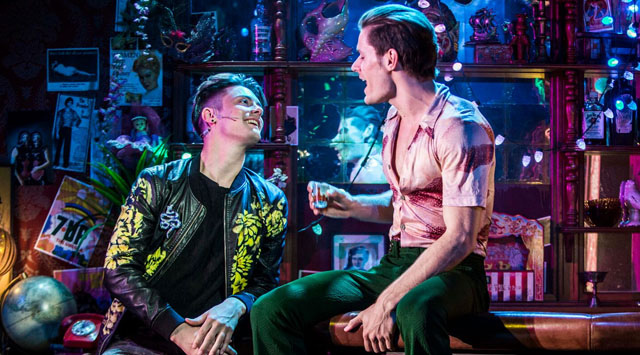
It is a break up story, with Rob in a state of devastation, trying to figure out why he had been abandoned and how he is going to win Laura back. In High Fidelity, the musical based on Nick Hornby’s novel (1995) and film (2000), we observe the nature of narcissism and its subsequent relinquishment, as our thirty-something boy protagonist, is driven to confront his own arrested development.

Rob owns a record store, in an age where the CD had all but decimated the market for vinyl. He organises stock not according to a logic that customers would find useful, but according to different periods of his personal life that the music had been prominent. The mixtapes he had gifted Laura, are of songs that only he loves.

This version of High Fidelity has trouble locating our empathy. The characters bear a trite American blandness. Both its humour and drama are ridden with cliché and a staggering predictability. None of the stakes that it attempts to set up, are able to convince us of any meaningful investment. Dialogue and lyrics are perfunctory, and only occasionally amusing, and the music is thoroughly, quite embarrassingly, run-of-the-mill.

The strong leads almost save the day, with Toby Francis and Teagan Wouters bringing an admirable sense of vulnerability and authenticity to their roles. Both are enthralling with the sheer beauty of their voices and passionate interpretations of songs, but much as they are effective in portraying the people-next-door, our enthusiasm for their story never quite takes hold. It is an accomplished cast, but there is something too straightlaced in their approach for a show that requires something more playful, more risky perhaps, to elevate it from its disappointingly pedestrian writing.

From a technical perspective, the production is assembled well. Lauren Peters’ set design is versatile and charming, and Andrew Worboys delivers exuberant dynamism as musical director. There is great conviction on stage, everyone gives their all, but we want an artistry that is more than elbow grease. The show people are clearly inspired, but the audience too, needs to be moved.

www.hayestheatre.com.au | www.highwayrunproductions.com

Review: Asylum (Brave New Word Theatre Company)

Venue: Comber Street Studios (Paddington NSW), Nov 15 – 25, 2017
Playwright: Ruth Fingret
Director: Richard Hilliar
Cast: Joshua McElroy, Katherine Shearer, David Woodland, Eli Saad, Hannah Raven
Image by David Hooley

Theatre review
Craig is a draconian protector of Australia’s borders, spending his work days assessing the legitimacy of asylum seekers from war torn countries. At home however, he is incapable of caring for those he calls family. Ruth Fingret’s Asylum talks about our national obsession with blaming external factors as the cause of our problems, whilst neglecting obvious and urgent dysfunctions that have nothing to do with the world outside.

It is a simple story, presented in a straightforward manner. Director Richard Hilliar’s refusal of ornamentation in this bare bones staging, creates a clinical atmosphere appropriate for Craig’s coldness, and is indicative of the increasingly brutal approach in how our government operates. Dialogue is dry, often sacrificing nuance for dramatic effect, but strong performances keep the show buoyant.

David Woodland plays Craig as an everyday guy, letting the villainous qualities of his character stay an undercurrent in his portrayal. Joshua McElroy is particularly memorable as Jason, a young offender starved of love, unable to connect without having to resort to drastic measures. Simultaneously intense and vulnerable, the actor’s confidence is unflappable even in the venue’s extremely close quarters.

The Australians we see in Asylum have forgotten kindness. The insecurity of inhabiting a land that was never ceded by rightful owners, makes us paranoid and shameful. Instead of addressing our illicit presence, we channel our disgrace onto those who have a more rightful claim to being here. Guilt is a powerful emotion, that unless managed veraciously, would only exert itself in harmful ways.

www.bnwtheatre.com.au

Review: Silent Night (Darlinghurst Theatre Company)

Venue: Eternity Playhouse (Darlinghurst NSW), Nov 10 – Dec 10, 2017
Playwright: Mary Rachel Brown
Director: Glynn Nicholas
Cast: Amanda Bishop, Richard Sydenham, Aaron Glenane, Michael Denkha
Image by Brett Boardman

Theatre review
It is Christmas in the suburbs of Sydney, and the Lickfolds are freaking out, because of course, there is just so much to be done. In Silent Night by Mary Rachel Brown, we take a look at our behaviour during what is meant to be the most sacred time of the year. We may not be a religiously homogeneous nation, but the silly season of December insists that we all act at a surprising degree of uniformity.

Australians take Christmas seriously, but rarely for the right reasons. In the Lickfold household, an occasion for charity and goodwill is turned into an opportunity for exacerbated narcissism and magnified paranoia. Anne wants at all costs, to win her neighbourhood’s annual competition for the best decorated house and yard. Her husband Bill’s doomsday preparations are at fever pitch, fuelled by the incessant talk of diversity, in politically correct representations of Jesus’ birth on rooftops, and other places. Their son Rodney is determined to get in the way of everything; even at Christmas time, he refuses to share his parents’ attention with anyone, God included.

It is a moralistic tale, predictable in its messaging although imaginatively conceived. Clever ideas abound in Brown’s play, but they are not presented well. Its comedy is relentlessly laboured in the first half, and when things get serious later on, its dialogue turns confusing. Director Glynn Nicholas makes sure that we know when punchlines are delivered, but moments of genuine laughter are few and far between. There is no doubting the grace and spirit that motivate the creation of Silent Night, but intentions on their own are rarely insufficient.

Production design is competently rendered, as are performances from the cast of four. Energy and conviction are delivered in spades; we see the actors work hard, and their determination to keep us engaged is, to some extent, effective. Richard Sydenham impresses as Bill, animated and precise in his approach, able to communicate a hint of complexity that is absent from other characters.

It is true that Christmas makes our ugly sides more pronounced. When we compare our lives to the best of the Bible’s stories, we can only see beings contemptible and profane. All the wasteful decadence and hollow frivolity that inevitably take over our celebrations of that sacred dawn, expose our values to be no more than utterly dismal. We are not bad people, but when we are careless, there is little than can differentiate us from the scum of the earth.

www.darlinghursttheatre.com

Review: Three Sisters (Sydney Theatre Company)

Venue: Sydney Opera House (Sydney NSW), Nov 6 – Dec 16, 2017
Playwright: Anton Chekhov (adapted by Andrew Upton)
Director: Kip Williams
Cast: Alison Bell, Peter Carroll, Callan Colley, Miranda Daughtry, Harry Greenwood, Melita Jurisic, Brandon McClelland, Eryn Jean Norvill, Rahel Romahn, Chris Ryan, Nikki Shiels, Mark Leonard Winter, Anthony Brandon Wong, Charles Wu
Images by Brett Boardman

Theatre review
The existential angst in Chekhov’s Three Sisters is timeless; the need to understand what we are here for, and how we can find happiness, are fundamentally human and eternal. Once again, we see Olga, Irina, Masha and all their friends babble on for three hours, about how hard it is to do life. Andrew Upton’s adaptation gives the play a slight refresh, but it is a predictably faithful rendering that takes on the burden of the original’s dreariness, as it ruminates on the tedium of the bourgeoisie.

As is characteristic of director Kip Williams’ style, the show is presented with remarkable polish and an impressive elegance. Alice Babidge’s set design establishes an inescapable air of glamour for the production’s minimalist aesthetic, while Nick Schlieper’s delicate lights bring sumptuous beauty to proceedings. Music by The Sweats and sound by Nate Edmondson help us locate the contemporary relevance in Chekhov’s story, whilst retaining its intrinsic sense of Russian austerity.

It comes as no surprise that this is yet another dry and dreary rendition of Three Sisters. For all the reverence associate with the play, it is at its core, a work about the lifelessness of the privileged. The point is its stasis, that nothing happens for years, and that these women are mysteriously incapable of taking meaningful action.

Williams is inventive in the first half, introducing energy wherever possible, but the depressive quality of the text proves insurmountable. Although some of the flourishes can be distracting and excessive, there is no denying our appreciation for the effort put into injecting animation and comedy, derived from the sheer desire to see some theatricality.

Actor Miranda Daughtry is memorable as Irina, with explosive emotions that are both captivating and genuine. The cast understandably adopts an extravagantly declarative approach to performance, but Daughtry’s way of connecting with her audience is particularly truthful. Alison Bell’s droll humour as Olga shines a light on the often neglected irony in Chekhov’s writing, and Eryn Jean Norvill’s exaggerated comedy as Masha is similarly delightful. We are glad to be spared too much bleakness, but it is arguable if these interpretations are effective, in helping us absorb the philosophies in Chekhov and Upton’s writing.

There always seems to be a Chekhov play on a stage in Australia somewhere. We are so much like the sisters, understanding the concept of progress but unable to extricate ourselves from the old and deficient. We may not be able to create anything without being informed by tradition, but this Three Sisters draws attention to the parts of us that refuse to move on, that are rigid in their worship of a conceptual “home”, undeviating from sacred points of origin. These parts of us that are backward and regressive must be interrogated, if not demolished.

www.sydneytheatre.com.au

Review: Plastic (The Old 505 Theatre)

Venue: Old 505 Theatre (Newtown NSW), Oct 31 – Nov 18, 2017
Playwright: Mark Rogers
Director: Sanja Simic
Cast: Nick Bartlett, Hannah Goodwin, Harry McGee, Douglas Niebling, Michelle Ny
Image by Carly Young

Theatre review
When we first meet Franz, he seems nice enough. A young scientist excited for the opportunity to discover wonderful things about the universe, he soon gets absorbed into the big machine of corporations, academia and the fourth estate, and idealism turns corrupt, as the golden boy attempts to carve out a name for himself in Mark Rogers’ Plastic.

Having little more than Franz’s personal reputation and career at stake, the context is admittedly dry, but although not a particularly moving story, Plastic is written with remarkable inventiveness and nuance. Its dialogue is consistently amusing, and the playwright’s theatrical flair concocts a range of characters that come readily to life on stage.

Sanja Simic’s exacting and energetic direction makes for a marvellously captivating show. We may not care very much for Franz’s predicament, but we find ourselves nonetheless fascinated, and thoroughly entertained by the production’s clever presentation of sequences that reveal its plot.

The spirited cast of five has a whale of a time, and we go along gleefully with their infectious exuberance. Their work is impressively well-rehearsed, and each actor demonstrates a thrilling sense of passionate conviction, along with an arresting fastidiousness required of the script. The charming Nick Bartlett keeps us attentive to Franz’s narrative even as the character proves himself to have few redeeming features. The roles are not particularly likeable, but there is no resisting the charm offensive from these players.

We often worry about our art being stifled by commercial forces, but in Plastic, we see that things are no different for those working in the field of science. Instead of discovering and cultivating the best that one has to offer the world, individuals pursue only things that promise reward and glory. With our eye on the prize, as it were, we lose sight of the bigger picture, and of greater possibilities. Innovation pertains to that which is yet unknown, but if we focus only on results already predetermined, progress will forever be suppressed.

www.bodysnatcherstheatre.com

Review: Paper Doll (Old Fitz Theatre)

Venue: Old Fitzroy Theatre (Woolloomooloo NSW), Nov 7 – 18, 2017
Playwright: Katy Warner
Director: Lucy Clements
Cast: Martin Ashley-Jones, Lucy Goleby
Image by Kate Williams

Theatre review
At its most fundamental, theatre is an instrument that wishes to get us together, and have us find consensus, or at least to gain valuable awareness on issues of relevance. We share space and come to an understanding of what each other thinks, when we laugh together, or when we hear people gasp in demonstration of their disapproval or outrage.

Katy Warner’s Paper Doll is a topical work about sexual predation and paedophilia, depicting a grown woman meeting her abuser, years after the fact. Dialogue is well crafted, but the work takes a safe approach, rarely controversial in how the subject is handled. The plot and its characters offer little that is new to how we regard the matter, although individuals who might be personally affected, would probably identify more palpable qualities.

Director Lucy Clements’ obvious attempts at manufacturing dramatic tension vary in effectiveness. The show has many captivating moments, but can at times feel laboured, in its efforts at creating something theatrical out of a quiet piece of writing. Both performers are strong personalities, with impressive stage presences. Lucy Goleby’s intensity dictates the tone of proceedings, while Martin Ashley-Jones brings a more organic interpretation that reads with a better sense of authenticity. We may not always be convinced of the action on stage, but the production makes all of its assertions crystal clear.

In representing the zeitgeist’s hot topics, a conundrum exists when our minds are already made up before entering the auditorium. There can only be one way of considering issues surrounding rape, and unless the production takes exceptional risks, the chances of it being less than predictable, are close to none. Paper Dolls is careful to say all the right things, but we have heard it all too many times before, and it is not fair to expect fabricated controversy where none is permitted. We want our art to be inventive, but it seems that not everything can be talked about in unexpected ways.

www.redlineproductions.com.au

Review: Time Stands Still (Eclipse Productions)

Venue: Tap Gallery (Surry Hills NSW), Nov 1 – 25, 2017
Playwright: Donald Margulies
Director: Claudia Barrie
Cast: Laura Dejanegara, Matt Minto, Terry Serio, Emily J Stewart
Image by Katie Barget

Theatre review
After sustaining serious injuries in Iraq, Sarah returns to Brooklyn, under the care of her partner James. For the first time, the independent woman turns reliant, and we watch the nature of their relationship go through a gradual but drastic change.

Donald Margulies’ Time Stands Still examines the meaning of modern living for some of the more fortunate people of our times. The action is situated in a New York apartment, where its inhabitants engage in degrees of introspection, never having to worry about money, food or shelter. The play oscillates between concerns that are admittedly frivolous, with international issues that are unquestionably serious. It discusses responsibilities of the world’s rich, as other parts of the globe engulf in flames and disaster, while simultaneously worrying about the dwindling relevance of marriage and monogamy.

The production places its audience quite literally inside Sarah and James’ home. The intimate setting exposes us to the frequently caustic energy that seethes between its characters, although a greater sense of polish for the set, would improve the story’s ability to focus on its concerns regarding class and privilege. Claudia Barrie’s direction is strong for the piece; we are constantly reminded of its deeper resonances even when people are squabbling over the pettier things in life.

Leading lady Emily J Stewart is full of conviction, and effective in providing a quality of heightened sentimentality to the show, although her Sarah seems too persistently vulnerable, with an overemphasis on her role’s fragility, that can interfere with the play’s celebration of female autonomy. Matt Minto is persuasive as James, the journalist determined to retreat from the rough business of war correspondence. The actor is beautifully nuanced in his portrayal of a man struggling to dominate his household. Supporting players Laura Dejanegara and Terry Serio are both delightful and dynamic, adding charming effervescence with every appearance.

Guilt means nothing if it is not an intermediary emotion that leads to proactive action. With the proliferation of information technology, big business sells us news stories about terrible things happening near and far, and we live in a state of constantly feeling bad as a result of this new capitalism. Disaster porn is lucrative, and we pay for it with money and with languishing in sadness, wondering who is left to go and solve the problems.

www.eclipseproductions.com.au

Review: Merciless Gods (Little Ones Theatre)

Venue: SBW Stables Theatre (Kings Cross NSW), Nov 1 – 25, 2017
Playwright: Dan Giovannoni (based on the book by Christos Tsiolkas)
Director: Stephen Nicolazzo
Cast: Paul Blenheim, Brigid Gallacher, Sapidah Kian, Peter Paltos, Charles Purcell, Jennifer Vuletic
Image by Sarah Walker

Theatre review
Art can reshape lives. It provides new perspectives and an accompanying freedom, so that we are able to imagine a way of being that is better, than what had been available before. Christos Tsiolkas’ books might have a penchant for all things gloomy, but their refusal to adhere to dominant myths of our culture, helps us define an Australia that is more authentic, and certainly more inclusive, than paradigms that persist in spite of their diminishing relevance. We all want to belong, it is only human to wish for acceptance.

In Merciless Gods, eight short plays, adapted by Don Giovannoni from Tsiolkas’ book of the same name, explore the bleaker recesses of our psyche, paying particular focus to universal concepts of family, violence and sex. The writing is lyrical, faithful to Tsiolkas’ own renowned style, though dialogue can sometimes sound stilted through its translation of forms.

Operatically evocative, the work involves huge emotions and flamboyantly devised contexts. Six powerful performers are called upon to manufacture a rhapsodic sense of theatricality, in the absence of more extravagant manoeuvres by director Stephen Nicolazzo, who approaches the show with a misplaced and redundant restraint. Merciless Gods contains a spirit that feels boundless, and very wild, yet the staging is adamant in its preference for abstinence, and presumably, good taste.

Actor Jennifer Vuletic is unforgettable in two of the stories, converting the literary into intimate moments thrilling and visceral, through her sensational portrayals of contrasting parental types. We meet Dan the benevolent father, just as his light dims into the unknown thereafter, and we meet the phenomenal Lisbeth, an evil mother whose destructive darkness, threatens to outlive us all.

There is no good, without the bad. In Merciless Gods, we encounter them both, with little judgement, only an acceptance of their inevitability. The exotic creatures resist our moralising, and reveal to us instead, with brutal honesty, the unrelenting imperfections of our humanity. Rendered immediately recognisable, our ugliness demands to be owned, but what happens after the curtains fall, is that eternal battle between hope and hopelessness, with neither emerging the decisive victor.

www.littleonestheatre.com.au