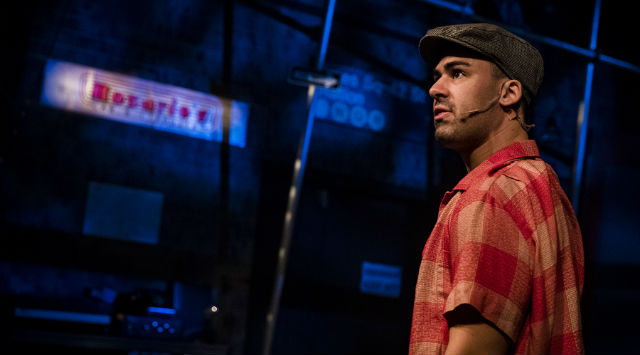
Review: Tonsils And Tweezers (Jackrabbit Theatre)

Venue: Kings Cross Theatre (Kings Cross NSW), Jan 12 – 27, 2018
Playwright: Will O’Mahony
Director: Michael Abercromby
Cast: Travis Jeffery, James Sweeny, Megan Wilding, Hoa Xuande
Image by Clare Hawley

Theatre review
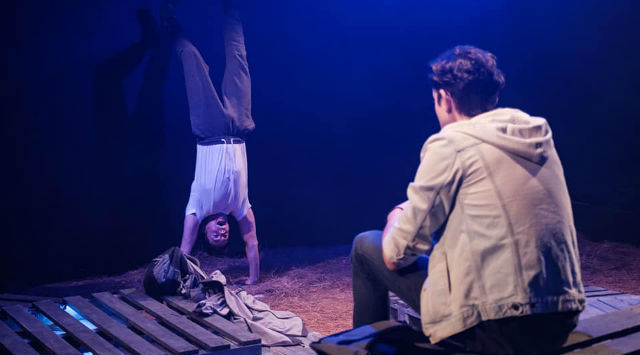
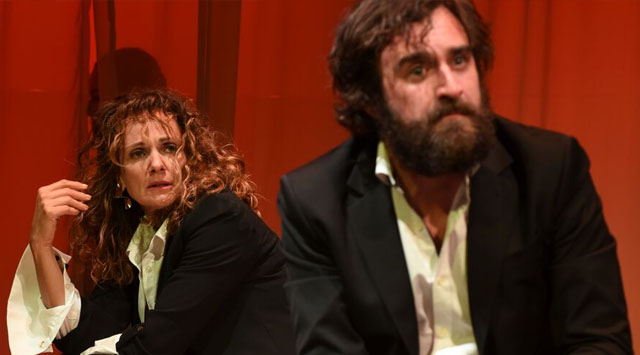
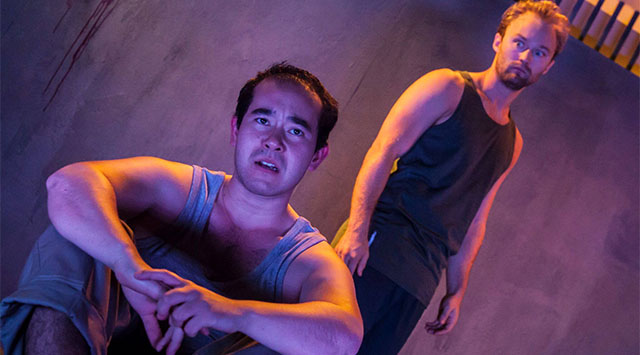
Will O’Mahony’s black comedy Tonsils And Tweezers centres itself on two young men, who share not only a very close relationship, but also the unyielding malaise of modern masculinity. We see them bond as outsiders in school, and witness how that relationship shapes the adults that they try to become.

The narrative might be fairly simple, but the plot is a deliberately beguiling one that ends up delivering more confusion than it intends. We sense an emotional crescendo being constructed thoughtfully as each scene progresses, but its inability to have us sufficiently identify with either Tonsils or Tweezers, takes us to a conclusion that never manages to be more than lukewarm.

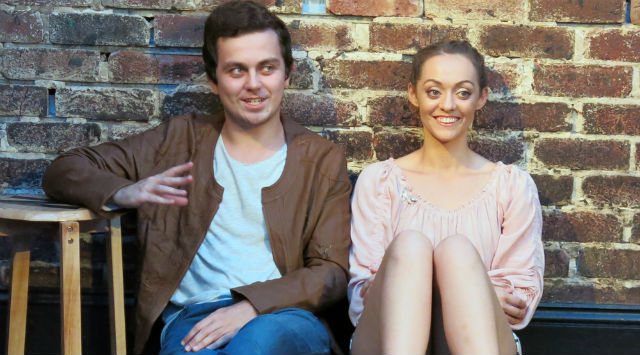
The actors however, are full of conviction and reliably entertaining. Travis Jeffery and Hoa Xuande are the leads, both authentically present and impressive with the gravity they bring to the stage at crucial junctures of drama. Even more appealing, are supporting players James Sweeny and Megan Wilding, memorable with the scintillating humour they are able to introduce throughout the piece. None of these characters are particularly likeable, but it is a cast that we are glad to have spent time with.

Director Michael Abercromby takes us through the play’s many blunt atmospheric shifts with admirable elegance and efficiency. Lights by Liam O’Keefe and sound by James Yeremeyev have a tendency to work slightly too literally, but are highly effective with the way time, place and mood are calibrated for our subliminal comprehension. Patrick Howe does remarkable well as set designer, creating a space beautifully sleek in its minimalism, whilst portraying a cold brutality that is consistent with emotions relevant to the text.

In Tonsils And Tweezers, the Australian man’s problem with self-expression is, characteristically, looked at, but not looked into. The inability of our boys and men, to articulate and to understand their own feelings is, as the play points out vigorously, clearly detrimental, but how all this transpires, is all but neglected. We know the effects of toxic masculinity, but are yet to examine it in a way that can bring us satisfactory solutions. The dismantlement of old structures that we continue to live within, is necessary but strenuous. Some have begun work on that process, but more will have to come on board, if we wish to truly progress.

www.jackrabbittheatre.com

Review: Green Day’s American Idiot (Sydney Opera House)

Venue: Sydney Opera House (Sydney NSW), Jan 11 – 14, 2018
Music: Green Day
Lyrics: Billie Joe Armstrong
Book: Billie Joe Armstrong, Michael Mayer
Director: Craig Ilot
Cast: Kaylah Attard, Kyla Bartholemeusz, Erin Clare, Connor Crawford, Linden Furnell, Phil Jamieson, Alex Jeans, Nicholas Kyriacou, Vidya Makan, Phoenix Mendoza, Phoebe Panaretos, Christopher Scalzo, Maxwell Simon, Ashleigh Taylor, Kuki Tipoki
Image by Ken Leanfore

Theatre review
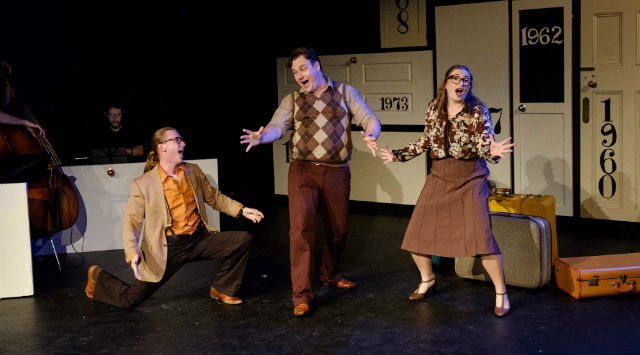
Comprising songs by American punk rock band Green Day, American Idiot is a musical, or a rock opera to be slightly more precise, that showcases the band’s unquestionably popular songwriting talents. Billie Joe Armstrong, Tré Cool and Mike Dirnt are Gen X’ers who have found an audience with their brash but commercial sound, and like many successful music artists today, exploring a jukebox musical with their pre-existing catalogue is now par for the course.

While it is somewhat refreshing to have the punk genre incorporated into this almost always contrived genre of show, a stronger book is required for American Idiot to speak to those who are less than fanatic about the band’s oeuvre. We see characters go through the semblance of a plot, but glean no detail from any of their stories. Cheesy choreography and unimaginative use of projections, cause the show to further alienate.

The adaptation of music is however, fairly effective, with dramatic arrangements helping to sustain interest. It is a committed cast of varying abilities, most memorable of whom is Linden Furnell in the central role of Johnny, exquisitely confident in his multidisciplinary approach to the production’s quite exacting requirements. His effortless blend of rock and broadway, along with a physical agility, provide us with a sense of impressive polish and professionalism. Much less comfortable on the musical stage is Phil Jamieson, who although exhibits good presence from his years as a rock musician, is visibly disoriented in this switch in performance style.

It is certainly one for the fans, but there is no reason for the bar not being raised higher. There is excellent energy and poignant intent in each of the songs being sung in American Idiot, and when presented appropriately, there is plentiful opportunity for a wider crowd to connect. The talent here is evident, but greater diligence is necessary for a show that could speak to more, with better clarity and at a more affecting depth.

www.americanidiotlive.com.au

Review: Brothers Karamazov (Arrive. Devise. Repeat)

Venue: PACT Centre for Emerging Artists (Erskineville NSW), Dec 6 – 16, 2017
Playwright: Richard Crane (based on Fyodor Dostoyevsky’s novel)
Director: Viktor Kalka
Cast: Alice Birbara, Ryan Devlin, Patrick Howard, and Lucia May
Image by Clare Hawley

Theatre review
There are only so many conclusions a person can come to, when contemplating the existence of God. In Richard Crane’s adaptation of Dostoyevsky’s Brothers Karamazov, an enormous novel is condensed, leaving only its big philosophical ideas feebly accompanied, by futile episodes of theatre that can only seem reductive in their attempts to make a point.

The depiction of religious struggle in Brothers Karamazov is timeworn, although clearly persistent in its relevance to millions, who continue to structure their lives around all things mystical and illusory. It is an attractive production, with ambitious work across all design faculties from Liam O’Keefe’s lavish lighting to Victor Kalka’s evocative set. Often beautiful and alluringly moody, our senses are kept attentive, even when our minds withdraw from engagement.

Four actors play a range of characters, with unfortunately confusing results. Unable to sufficiently identify the personalities we encounter, the show takes an inordinately long time to establish coherence. Nonetheless, it is a compelling cast, each one full of energetic conviction. Patrick Howard is particularly memorable, with an arresting presence, determined to entertain.

A world in which everything is permissible, is doubtlessly frightening. Self-preservation requires that we invest, in the name of safety and order, in social contracts that we think to be noble, but whether state or religion, the institutions we exalt, never fail to overreach with the powers they are accorded. The same instruments we need for protection, are used invariable to oppress. To keep them constantly monitored is paramount and to have them regularly dismantled and refreshed, is arduous but critical.

www.arrivedeviserepeat.com

Review: I Walk In Your Words (Blood Moon Theatre)

Venue: Blood Moon Theatre (Potts Point NSW), Dec 7 – 9, 2017
Director: Kristine Landon-Smith
Cast: Lily Black, Yerin Ha, Nicholas Hasemann, Elliot Mitchell, Mark Paguio, Jens Radda, Laila Rind, Nikita Waldron

Theatre review
The performers have headphones on, listening to the very recordings that they present to us. These are interviews with Australians from all walks of life, about culture, identity and belonging. Many of the stories are about the migrant experience, but Indigenous voices bring the show to an end with exceptional poignancy. I Walk In Your Words centres the discussion around those who matter equally, but who are systematically erased, in favour of the dominant colonialist ideology that white Australia tenaciously imposes.

The technique seems an inelegant proposition, but from the very instance the show begins, it becomes clear that the visually awkward headphones serve a unique and quite marvellous purpose, of unparalleled accuracy in the representation of real lives that rarely attract attention. It is not just the words that are spoken, but also the spaces surrounding those sentences, in breaths, chuckles and silence. Actors are prevented from interpretations that would change these personalities to fit standardised narratives. The headphones make it a requisite that we hear the tone, and sense the energy and aura, of the people being featured.

The interviews are compiled deliberately, to provide a picture of Australia’s minorities that is respectful and harmonious. The verbatim format proclaims objectivity, but the politics of I Walk In Your Words are unabashedly subjective. The moment we notice that only the admirable sides of these people are revealed, is when the show becomes less persuasive; the discord between its hyper naturalism and the overblown virtuousness that it poses, turns us sceptical.

The production is however, thoroughly engaging. The cast is uniformly impassioned and well-rehearsed; with every actor coming across convincing and endearing. Kristine Landon-Smith’s precise and minimal direction keeps focus appropriately on the all-important results of the interview process, although a more creative approach to lights and sound could bring valuable enhancement to the experience.

Our community is an unimaginably large one, but we all exist in little enclaves, forgetting or perhaps refusing to acknowledge, the many who are different. We may not see a pressing need to intermingle, but injustice clearly exists in the discrepancies between communities, and silence is misconstrued as consensus. The simple truth is that we cannot allow portions of Australia to suffer while others are prospering. The selfish denial of another person’s well-being, is simply oppression. To witness suffering and then choose to do nothing, is the lowest of sins.

www.bloodmoontheatre.com

Review: The Seagull (The Depot Theatre)

Venue: The Depot Theatre (Marrickville NSW), Dec 6 – 16, 2017
Playwright: Anton Chekhov (adapted by Anthony Skuse)
Director: Anthony Skuse
Cast: Jane Angharad, Paul Armstrong, Matthew Bartlett, Charmaine Bingwa, Alan Faulkner, Deborah Galanos, Tony Goh, Leilani Loau, Abe Mitchell, James Smithers, Shan-Ree Tan
Image by Bob Seary

Theatre review
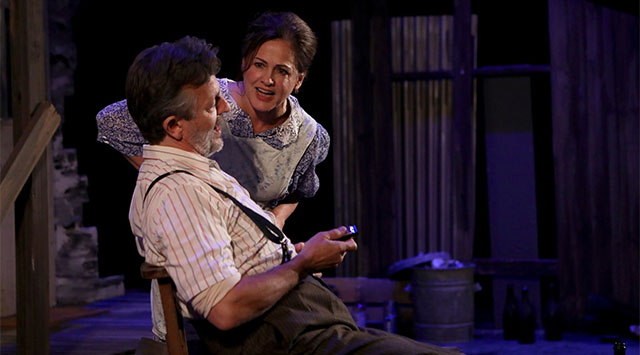
The characters in Chekhov’s The Seagull seem to become increasingly obscure as the years pass. Our hectic lives are now the antithesis of Konstantin’s circle. Where Chekhov had lamented the futility of Russian lives that sat around talking too much and not doing any work, we are today, a century later, in an age where being busy is glorified, and rarely does anyone take the time to congregate and shoot the breeze. That is not to say that the truths of The Seagull are no longer valid, only that their resonance has inevitably faded.

It is a relief then, that director Anthony Skuse places emphasis on the comedy of the piece. Like the Real Housewives and the Kardashian family of reality television, the high-intensity dramatics of the wealthy are certainly fodder for laughs. Our reality involves so much time worrying about making money, but all these people seem to do, is worry about having nothing to do with their undepletable resources. Chekhov’s love for the representation of angst is however, not trivialised in the production. There are innumerable scenes of depression and anxiety, sensitively formed, often robust in their manifestation.

Skuse’s dramedy is highly enjoyable, with scintillating dialogue and playful, vibrant characters. Konstantin is performed by James Smithers, a genuinely forlorn presence, who introduces a sense of gravity that prevents the show from ever turning frivolously farcical. Deborah Galanos is outstanding as his narcissistic mother Arkadina, flamboyant with exquisite timing and an admirable capacity for nuance. Her sex scene with Abe Mitchell’s Trigorin is the unequivocal highlight, palpably revealing in more ways than one. Mitchell is himself a captivating actor, passionate and convincing. Equally memorable is Charmaine Bingwa whose emotions are as dark as they are fiery, for a viscerally despondent Masha.

Music is cleverly incorporated into many scenes, with Matthew Bartlett’s considerable talents showcased over a variety of instruments. Also noteworthy is Kyle Jonsson’s marvellous set design, providing an unmistakable aura of luxury and crumbling decadence, ably supported by the delicate lighting design of Liam O’Keefe.

The production is a dynamic one, but for all that we are able to see portrayed in its impressive range of emotions, there is a conspicuous lack of poignancy in The Seagull. We find ourselves in a strange situation, engaged but unmoved. Its personalities prove to be fascinating, but we struggle to connect with them. From another time and place, their concerns are not readily identifiable, perhaps irrelevant to the people we have become. Nevertheless, there is an undeniable beauty in the classic, that on this occasion, is splendidly revived. Relics are so called, because they survive, even as their lustre wanes.

www.secrethouse.com.au

Review: Knots (The Old 505 Theatre)

Venue: Old 505 Theatre (Newtown NSW), Dec 5 – 17, 2017
Creators: Gareth Boylan, Kerri Glasscock, Michael Pigott
Director: Gareth Boylan
Cast: Giles Gartrell-Mills, Kerri Glasscock, Michael Pigott
Image by Clare Hawley

Theatre review
Jerry likes watching people, as if he has never seen people before. At the theatre, we have the opportunity to look at ourselves as though aliens have just landed. With fresh eyes, we might be able to gain new knowledge about humankind, and perhaps learn to do things better.

Knots prides itself on being obscure and random; keen to speak but not to explain. There is space travel in the mix, and certainly a lot of exploration into all things weird and wonderful. Just as the earth spins on its own accord, we have to go along for the ride, and figure things out the best we can.

The work is fabulously theatrical, and notwithstanding its minimal set design, very pleasing for the senses. Director Gareth Boylan’s manipulations of atmosphere is magical. He persuades our minds to attend to the poetry of Knots, and to make secondary our usual obsession with logic and narrative. Meaning happens, but not at our demand.

The conscious mind is only one part of our constitution. When we find ourselves wholly present and immersed in a work of art, interaction with it involves more than what can be thought through. Knots disrupts conventional reliance on the standardised language of our storytelling. It seeks to communicate in alternate ways, in order perhaps, that we may attain a level of awareness previously unavailable.

Giles Gartrell-Mills, Kerri Glasscock and Michael Pigott perform the piece with excellent focus and discipline. Occasional smatterings of humour provide a sense of dimension, and emotional volatility that seem to appear unexpectedly, helps us connect.

Most plays can be written down and re-staged, but Knots does not want to work that way. It is hard to imagine that the written word will satisfactorily capture its style and essence; its desire is to go boldly where no person has gone before. What we want from theatre, is vastly different from what a good book can deliver. At its most fundamental, theatre is about community and collaboration. It rejects distance and proxy, so you really had to be there.

www.old505theatre.com

Review: Barbara And The Camp Dogs (Belvoir St Theatre)

Venue: Belvoir St Theatre (Surry Hills NSW), Dec 2 – 23, 2017
Playwrights: Alana Valentine, Ursula Yovich
Director: Leticia Cáceres
Cast: Troy Brady, Elaine Crombie, Jessica Dunn, Michelle Vincent, Debbie Yap, Ursula Yovich
Image by Brett Boardman

Theatre review
Barbara has a lot of fun in the city, singing at bars and events, being independent and vivacious. She is a mischievous character, and together with her cousin René, they paint the town red on the regular, determined to devour all that life has to offer, and to escape the troubling roots of their outback origins. Barbara And The Camp Dogs by Alana Valentine and Ursula Yovich, falls into categories of the musical and the epic journey, but it is a consistently surprising ride that defies all manner of expectations.

Barbara does well in life, but as an Aboriginal woman, the scars that she carries are deep, agonising and easier left ignored. When she finds herself having to return home to fulfil her filial obligations, all that she tries to deny, come flooding back to taunt her. The play expresses the nature of that immense suffering, with extraordinary acuity. Barbara and René sing, because so much of Indigenous experience is beyond our usual capacities of speech. In Barbara And The Camp Dogs, we are able to connect with the injustice and pain that have become entrenched in Black Australia. It divulges with power and wit, through its songs and storytelling, the darkest, most hidden of many Indigenous women’s lives.

It is impossible to overstate Jessica Dunn’s achievements as musical director. Barbara’s secret inner world turns intimately palpable, via influences of rock and soul, for a mode of communication sublime in its startling veracity. The songs move us as though a spiritual entity has taken hold. We are guided from scene to scene, with emotional intensity, precise and lush at every juncture.

Director Leticia Cáceres imbues the show with a warm glow, enchanting and irresistibly alluring. Everything about Barbara And The Camp Dogs is designed to have us fall in love with its characters and their narratives, and we endear to it all, readily and completely. There are occasional instances of abruptness in the transition of scenes, that can be slightly disorienting, but the raw aesthetic of the production is a forgiving one. Moreover, any blemishes would be easily shielded by the show’s incredibly charismatic stars.

The sensational voices and effervescent personalities of Ursula Yovich and Elaine Crombie win us over effortlessly, from the very beginning. The harmony forged between the two is a delight to our ears and to our hearts; what they present is wonderfully tender and exceptionally real. Yovich in particular, moves us in the most profound but unexpected ways. Telling us Barbara’s story of intolerable suffering, is not for a moment of catharsis, but a lasting gift of inspiration. We observe and learn, and promise to do better, to do more.

Barbara is not a social justice warrior. She is not a conscious activist, but she has to fight every day of her life, to defend herself against structural forces determined to keep her down. Australia’s shameful history of genocide, originating from the illegitimate claim of terra nullius in 1788, has reverberations that remain cruel and potent in the twenty-first century. A semblance of equality is not sufficient to heal these dreadfully severe wounds. Meaningful reparations will cost, but they must be made.

www.belvoir.com.au

Review: Andrew Henry’s Vertical Dreaming (Old Fitz Theatre)

Venue: Old Fitzroy Theatre (Woolloomooloo NSW), Dec 5 – 15, 2017
Director: Andrew Henry
Cast: Andrew Henry
Image by John Marmaras

Theatre review
For Andrew Henry’s Vertical Dreaming, its eponym is for 50 minutes, onstage with songs and poems that have proved significant to his healing process, earlier in the year, at a mental health facility. Depression and bipolar disorder are discussed alongside addiction and lost loves, through a compilation of works by male poets, presented in the form of a monologue. Musical interludes by an accomplished band of four, add colour and breathing space to the production.

Henry reveals that the struggle of psychological disorders is an isolating one, with patients unable to extricate themselves from the constant torment of interminable introspection and self-flagellation. Unable to shift his attention away, meaningfully, to the outside world, that incessant examination of the self becomes perniciously despairing and narcissistic. The show attempts to engage our empathy, but it is our logical responses that are initiated, and we leave with a better understanding of our humanly dysfunctions.

It is a very strong performance by Henry, whose compelling presence and admirable skill as actor, has us spellbound to his adroit storytelling. The vulnerability he puts on display is immense, and it represents the most valuable element in this instance of live drama, but for all the anguish that we do witness, the message it ultimately imparts, is comparatively lacklustre.

Pain can only ever be subjective, but in art, it becomes communicable. To turn one’s suffering into a matter of relevance for another, is not often a straightforward exercise. Each can only perceive existence from their own vantage point, which the artist must negotiate with savvy and ingenuity. Everyone is susceptible to mental illness, but until we experience things firsthand, the chasm between sympathy and actuality, requires the greatest of sensitivity.

www.redlineproductions.com.au

Review: Wasted (The Kings Collective)

Venue: The Factory Theatre (Marrickville NSW), Dec 1 – 9, 2017
Playwright: Kate Tempest
Director: Elsie Edgerton-Till
Cast: Jack Crumlin, David Harrison, Eliza Scott
Image by Robert Catto

Theatre review
Charlotte, Danny and Ted live in England where, like in all developed nations, opportunities abound. It is never easy though, to get ahead, to carve out a life, even when all the fruit is ripe for one’s picking. We stand in our own way, with psychological barriers that exist mainly as a result of social conditioning, or maybe the competitive nature of our economies are determined to make losers out of some, in order that the rich can get richer.

Kate Tempest’s Wasted does not take a strong stance on the external factors that affect English youth, but makes a case for personal responsibility. These are able-bodied, heterosexual, white people after all. Tempest is frustrated with the way these twenty-somethings jeopardise their own lives, when they clearly know better. This generation is given all the information and resources they require, yet many are unable to create a meaningful existence, choosing instead to languish in drugs, alcohol, in a state of perpetual purgatory.

The play’s message is simple, but Tempest’s writing is extraordinary. The passion with which her ideas are articulated, and the emotive use of language, go for the jugular, and we are held captive by the sheer intensity that the playwright builds into every line of dialogue. Directed by Elsie Edgerton-Till, the production is correspondingly powerful. Choreography for several of its more theatrical moments could be improved, but there is no question that Tegan Nicholls’ music is a source of energy that adds a great deal of excitement to the show.

Most memorable of all, is the trio of actors that bring scintillating life to the piece. We are shaken by Eliza Scott’s compassion as Charlotte, whose purity of spirit shines through, amid the despondent confusion of her pessimistic narrative. Together with Jack Crumlin’s convincingly crestfallen Danny, the couple’s love story moves us, in spite of the carelessness with which they regard each other. Ted is played by the charming David Harrison, who entertains us with an inexorable ebullience. The three strike the perfect balance in providing amusement, along with a sincerity and a sense of urgency that keeps us heedful of the work’s pertinence.

For those who have the privilege of access, the only real definition of failure, is when they ignore the opportunities that have been made available. There is no need to subscribe to how the concept of success is generally construed, but one has to understand the destructiveness that can be self-inflicted. When we have the freedom to decide for ourselves, what is good and bad, values can be poorly judged, and individual lives can turn to waste. Not everyone should aspire to be a millionaire, but we must all try to give more than we take, and to leave the world a better place.

www.tkcaus.com

Review: The Caretaker (Throwing Shade Theatre Company)

Venue: The Actors Pulse (Redfern NSW), Nov 22 – Dec 2, 2017
Playwright: Harold Pinter
Director: Courtney Powell
Cast: Alex Bryant-Smith, Andrew Langcake, Nicholas Papademetriou

Theatre review
The house is dilapidated, but its three male inhabitants do nothing to improve conditions, choosing instead to involve themselves in mind games, finding ways to exert power over one another, as they while the days away, never achieving anything.

Harold Pinter’s The Caretaker themes are many. Talking about things social, political and psychological, the 1960 play does not make explicit any of its concerns, but creates scenarios and dialogue that may inspire us to find associations with the real world. Resonances have faded with time, as the issue of relevance comes into question, but it is doubtless that Pinter’s characters are fascinating, and their interactions, fabulously theatrical.

The production is often an intriguing one, with director Courtney Powell facilitating our questioning of all the activity that takes place. A naturalistic style, carefully orchestrated, prevents us from dismissing scenes as simply bizarre, and lures us in, to consider the dynamics and meanings in operation.

A strong cast keeps us involved in the many unlikely exchanges. Nicholas Papademetriou manipulates us in his interpretation of a central figure, a vagrant who finds himself in the middle of two brothers, becoming increasingly sinister, and surprising us quite delightfully, through subtle transformations of personality. Alex Bryan-Smith is a convincing ruffian, animated in his portrayal of a menacing type, bringing excellent energy to the show as Mick. In diametric opposition is Andrew Langcake who plays a quiet, possibly disturbed Aston, offering perfect balance to the noise of his counterparts.

The character of the house has changed, since the play’s inception 57 years ago. The meaning of property ownership informs the way we see The Caretaker, and in hyper-commercialised Sydney today, divorcing ourselves from the economics of the story is impossible. We observe the three men in hierarchical terms, the landlord, the tenant and the temporary resident, and we wonder how money, along with the disparity between rich and poor, affects the way we live with one another. The root of all evil is perhaps perennial, but its nature seems to morph with the passage of time.

www.throwingshade.com.au