Review: Ditch (Dream Plane Productions)

Venue: Limelight on Oxford (Darlinghurst NSW), Apr 3 – 13, 2019
Playwright: Beth Steel
Director: Kim Hardwick
Cast: Laurence Coy, Angus Evans, Giles Gartrell-Mills, Fiona Press, Martin Quinn, Jasmin Simmons
Images by Becky Matthews

Theatre review
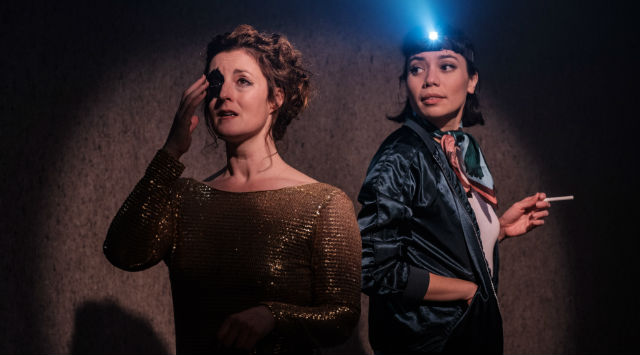
Beth Steel wrote about a very near future in her 2010 play Ditch, describing a nightmare scenario that seems to prophesy the currently ongoing Brexit ordeal, eventuating at the very worst possible place. We find ourselves in the middle of World War III, but this time, Great Britain is fighting as a fascist state, whilst its land is fast becoming submerged by rising sea levels. Steel’s work offers an alarming look at the world we are turning into. It shows us the horrors we are travelling towards, without dwelling on how we are getting ourselves there, leaving the audience to figure out the root of these problems, and making us go through a process of soul-searching, for an agonising reflective examination of the people that we are.

The play is heavy, but never alienating. A very strong cast turns what should be inconceivable, into an immediate and pressing tale full of frightening resonance. Fiona Press is a persuasive Mrs Peel, of an older generation (which makes her our contemporary) and has a lot to answer for. She keeps calm and carries on, trying to forge ahead as though blameless, or maybe more accurately, suppressing the guilty conscience that must plague her. The other elder of the group, Burns is played by a very nuanced Laurence Coy, able to distinctly represent both fragility and brutishness of the banal male archetype. Young Megan’s powerful presence is embodied by Jasmin Simmons, who impresses with her remarkably textured approach.

As the appropriately domineering and repulsive alpha soldier Turner, Giles Gartrel-Mills adds a subtle dimension of deception to the role, further enhancing the drama that he brings. Angus Evans is wonderfully authentic with the conviction, and precision, so discernible in his depiction of the traumatised Bug. New recruit James is effortlessly innocent, as performed by the incredibly earnest Martin Quinn.

Director Kim Hardwick’s insistence on her actors delivering accuracy and dynamism, proves to be very rewarding. The show’s crescendo grabs hold of us slowly and incrementally, as it builds to an explosive, and very satisfying, conclusion. The production is well designed on all fronts. Set and costumes by Victor Kalka, lights by Martin Kinnane, and sound by Stephanie Kelly, are all cleverly rendered for our easy suspension of disbelief, and for maximum tension. Ditch will not let us off the hook, in its tragedy about all our sins.

Completed pre-Brexit, about a post-Brexit world, Steel knew about the darkness that we were heading for, not because of some supernatural precognitive perception ability, but because our self-destruction is always written on the wall. Much as our catastrophes are unimaginable in scale, they were always foreseeable. Ditch does not wish expressly to be pessimistic, but the truth that it presents, would be challenging even for the most ardent of optimists. At this juncture of our evolution, or some might say devolution, the question seems to be moving away from “how do we survive this?” to something much more like “do we deserve to survive this?”

www.facebook.com/dreamplaneproductions

Review: The Rime Of The Ancient Mariner (Jackrabbit Theatre / Little Eggs Collective)

Venue: Kings Cross Theatre (Kings Cross NSW), Apr 2 – 13, 2019
Poet: Samuel Taylor Coleridge
Director: Julia Robertson
Cast: Lloyd Allison-Young, Mathew Lee, Nicholas Papademetriou, Nicole Pingon, Callan Purcell, Annie Stafford, Grace Stamnas, Mike Ugo, Laura Wilson
Images by Brett Boardman

Theatre review
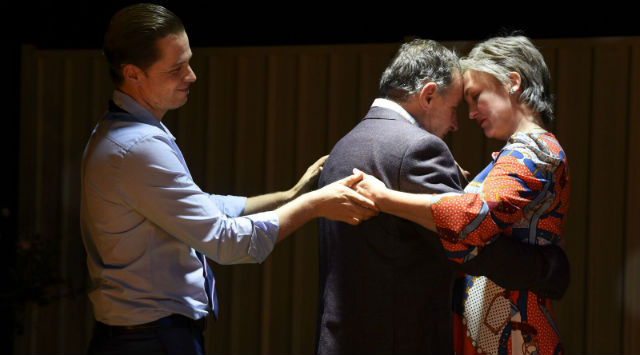
The theatrical action takes place in a rectangular sandpit, with nine people in disciplined formations, illustrating the 1798 poem by Samuel Taylor Coleridge. The Romanticist’s words are turned tangible, as we watch his ship’s adventures unfold, from an optimistic start, into a journey that becomes increasingly perilous. The Rime Of The Ancient Mariner is parsed through the bodies of performers, for a transformation that takes the storytelling from one artistic form to another, and in the process, bending time to create a channel in which the past can visit the palpable present.

Directed by Julia Robertson, the production is whimsical, resolutely so, but it is insufficiently engaging, due mainly to the traverse arrangement of seating, which disallows the visual dimensions of the show to truly fulfil their intentions. Without an adequate backdrop, and without a raised stage, our eyes become restricted in what they are able to absorb and discern. The ensemble is focused, exquisitely cohesive with their offering. It is a spirited effort, especially inventive with the music and sounds that they generate, and along with composer Oliver Shermacher, auditory pleasures are a principal accomplishment of this work.

The Rime Of The Ancient Mariner may not connect as potently as it should, but it bears an integrity that is reassuring. There is a purity to its approach that feels artistically uncompromising and, therefore, admirable. In what we term “independent theatre”, nobody pays your bills but yourself. The sacrifices involved in undertaking this often thankless work are mammoth, and artists should not placate or ingratiate, in the hope of some imaginary professional advancement that will result. Their only responsibility is to the truth, and that is what we are here for, wherever we find ourselves to be.

www.jackrabbittheatre.com | www.facebook.com/littleeggscollective

Review: The Last Five Years (Ensemble Theatre)

Venue: Ensemble Theatre (Kirribilli NSW), Mar 29 – Apr 27, 2019
Writer/Composer: Jason Robert Brown
Director: Elsie Edgerton-Till
Cast: Christian Charisiou, Elise McCann
Images by Phil Erbacher

Theatre review
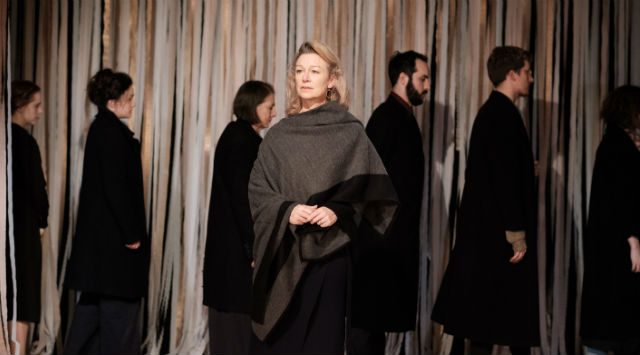
Jamie has no idea what he is getting himself into, when asking for Cathy’s hand in marriage. His writing career is going “gangbusters” and girls are throwing themselves at him, but he decides instead to get bogged down by the old ball-and-chain, who is herself a naggy talentless nobody, and who demands too much of her husband. The Last Five Years by Jason Robert Brown is an ill-advised musical about the disintegration of a relationship, in which misogyny is lavished right from the start, when Cathy is sobbing over her asshole husband moving out.

Things clearly can only get worse as the show progresses, as Jamie’s misplaced resentment becomes all-important, and he sings such charming lyrics as “I will not fail so you can be comfortable, Cathy, I will not lose because you can’t win,” and “I could never rescue you, all you ever wanted, but I could never rescue you, no matter how I tried.” The story ends with little resolution, but it does not take prodigious imagination to see Jamie turning to digital incel communities after the separation.

Director Elsie Edgerton-Till may not succeed at glossing over the many gendered affronts, but her production is undeniably polished, able to make the simple two-hander feel confident and dynamic. Daryl Wallis’ musical direction is satisfying in its sophistication, and as pianist, he is particularly memorable in “Climbing Uphill”, with a sense of humour to his accompaniment that almost makes the whining wife’s desperation tolerable. Playing Jamie and Cathy are a couple of incontrovertibly excellent performers; Christian Charisiou and Elise McCann are both charismatic and enormously talented. They explore the material with impressive zeal, bringing to the stage extraordinary vigour and skill, trying to keep us delightfully engaged.

The Last Five Years reminds us that, for all the heartache associated with it, divorce is always a wonderful relief. In the throes of passion, and romantic naivety, we make mistakes, because being human, we never fail to want to make promises to horrible people, or to people who will eventually turn horrible. Love is natural and necessary, but rarely eternal. When time comes to call it quits, the apparatus is available to leave them to rot in their own filth. Cathy does not see it yet, but it is clear to us that although five years were lost, she has dodged one very toxic bullet.

www.ensemble.com.au

Review: Saturday Night Fever (Sydney Lyric Theatre)

Venue: Sydney Lyric Theatre (Sydney NSW), Mar 27 – Jun 2, 2019
Book: Robert Stigwood, in collaboration with Bill Oakes (based on the film by Nik Cohn)
Director: Karen Johnson Mortimer
Cast: Angelique Cassimatis, Natalie Conway, Paulini Curuenavuli, Euan Doidge, Bobby Fox, Melanie Hawkins, Marcia Hines, Stephen Mahy, Nana Matapule, Ryan Morgan, Tim ‘Timomatic’ Omaji
Images by Heidi Victoria

Theatre review
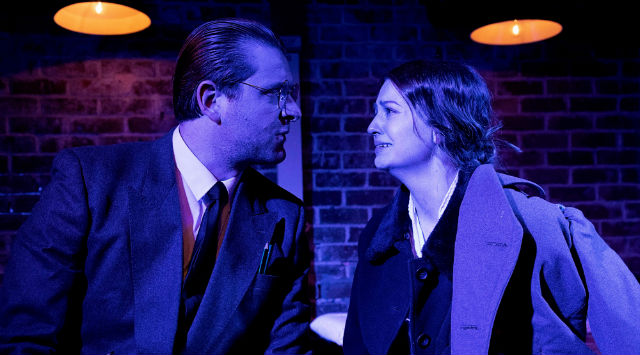
The plot was always flimsy in Saturday Night Fever, but all its music and dance sequences have made it an unequivocal icon of the disco era. With a soundtrack album that has sold over 45 million copies worldwide, its songs and their accompanying decadent style, proceeded to define entertainment in the immediate years after its 1977 release, and continue to retain significant cultural cache for generations thereafter. This live theatre version first appeared 1998 in the West End, predictably stirring with the deeply familiar and seductive song list, and this 2019 rendition is similarly appealing.

Accepting that the story is largely irrelevant to how one should enjoy the piece, song and dance is then allowed to become the focus. Choreography by Malik Le Nost is exhilarating, and faithfully nostalgic. Paul Herbert’s orchestrations amplify the pizzazz and schmaltz that the audience adores. We want the big productions to never end, but alas, several extended scenes that attempt to deliver drama, or at least some sense of narrative, only prove themselves to be unsought distractions that bring the energy down, along with our excitement, between the genuinely gratifying episodes of discotheque fabulosity.

Leading man Euan Doidge is a very average actor in the role of Tony Manero, but thankfully shows himself to be a sensational dancer, and doubtless for many an audience member, a real looker. Even with the completely disco-erroneous short haircut and tight trousers, Doidge is a breathtaking specimen who almost has us forgiving everything. His dance partner is the impossibly perfect Melanie Hawkins, who makes every one of Stephanie Mangano’s entrances look like an angel descending from above. Club DJ Monty is played by the thoroughly engaging Tim ‘Timomatic’ Omaji, who absolutely shines in the supporting role, with timing and moves that have us eating out of his palm. All the hits are sung marvellously, mainly by a fantastic group of four (Natalie Conway, Paulini Curuenavuli, Bobby Fox and Nana Matapule), but there is no denying the superstar power of Marcia Hines, who is called upon to inspire awe with each of her brief appearances.

Saturday Night Fever tries to give us more than what we bargain for, where it should know better its own strengths. Like legendary party animals of the late 70’s and their penchant for amphetamines and cocaine, we come to the show as hedonists with no time for emotion. Between bumps of pleasure, we have to endure moments of tedium, but we stay for the duration, because we know exactly what the next peak is going to bring.

wwww.saturdaynightfever.com.au

Review: Fierce (Old Fitz Theatre)

Venue: Old Fitzroy Theatre (Woolloomooloo NSW), Mar 20 – Apr 13, 2019
Playwright: Jane E.Thompson
Director: Janine Watson
Cast: Lauren Richardson, Zelman Cressey-Gladwin, Stacey Duckworth, Martin Jacobs, Chantelle Jamieson, Felix Johnson, Andrew Shaw
Images by Clare Hawley

Theatre review
Suzie Flack is the first woman to play Australian Rules football in a professional men’s team. This is of course, a fictional premise that Jane E. Thompson uses to construct her play, Fierce. Our trailblazing protagonist may have broken through the glass ceiling, but her challenges do not end at that point of disruption. The weight of having to single-handedly redefine an entire industry, sits on her shoulders. This is a story about women who have had to walk into men’s spaces all alone, against all odds, to overcome unjust systems of exclusion. Thompson’s writing is passionately feminist, and although ultimately a predictable narrative, its magnanimous spirit proves affecting.

Directed by Janine Watson, the production is often powerful, and memorable for creative risks that help elevate its overall sense of artistry. Music by Ben Pierpoint contributes vigour at key moments, crucial in helping us identify the high stakes that Suzie’s experiences represent. Kelsey Lee’s lighting design has a dynamism that works well at conveying a turbulent volatility for the storytelling, and Melanie Liertz’s set and costumes offer just enough visual stimulation, to keep us attentive to both surface and deeper implications of Fierce.

Actor Lauren Richardson’s scorching intensity ensures that the play’s social pertinence is never neglected. Her display of vulnerability can at times seem excessive for a personality who has to remain unyielding with her strength and resilience, but it is a captivating performance that puts the audience firmly on her side. The ensemble cast is uniformly wonderful, every actor full of sincere conviction. In the role of Melanie is Chantelle Jamieson, who offers a deeply fascinating portrayal of a football WAG struggling to find happiness, beyond the obvious perks of her unsubstantial job title. Never able to make explicit her desires, we observe her desperation in various states of physical manifestation, which Jamieson renders with impressive power and accuracy. Felix Johnson too is memorable as Nate, the escort who shares more than sexual intimacy with Suzie, in a performance that is as convincing as it is moving.

It is a daunting prospect for minorities, to have to infiltrate and operate from the inside of old structures, with little or no peer support, to change things one step at a time. Fierce is ahead of its time in daring to imagine a sportswoman competing neck to neck with elite men in the business, but it is timely in giving us much needed illumination to prohibitions that have been hiding in plain sight. We seem to be at a new breaking point in the evolution towards a more equitable society, especially in terms of gender and race. There are incredible leaders fighting everyday at what feels to be the final frontier, and we must all learn to back them, and lean in the right way.

www.redlineproductions.com.au

Review: Once In Royal David’s City (New Theatre)

Venue: New Theatre (Newtown NSW), Mar 19 – Apr 13, 2019
Playwright: Michael Gow
Director: Patrick Howard
Cast: Alana Birtles, Ben Brighton, Amy Victoria Brooks, Sandra Campbell, Nathalie Fenwick, Nicholas Foustellis, Angela Johnston, Alice Livingstone,
Aimee Lodge, Francisco Lopez, Martin Portus, Bryden White-Tuohey
Images by Bob Seary

Theatre review
Will is on the verge of beginning a new job, just as his mother coincidentally lays dying in hospital. It is a new life that beckons, and with all the emotions that should feel overwhelming, Will retreats into a lot of academia, as is typical of theatre directors and educationalists. He spends his time thinking about Marx and Brecht, dealing with ideas of resource ownership and distanciation; not quite preparing for the period of mourning that is sure to come. Michael Gow’s Once In Royal David’s City is a piece of writing perhaps not entirely interested in coherence, allowing itself to move in various directions, almost defying our need to condense its contents into a more conventional narrative form.

Patrick Howard’s direction reveals with honesty, the often contradictory states of being human. Will never quite behaves the way we expect him to, yet there is nothing unbelievable about how he goes about his business. There are some hallmarks of Brechtian theatre in the presentation, although those expressions can seem perfunctory. It is a handsome looking show, put together with excellent taste by production and lighting designer Victor Kalka, and costume associate Luciana Nguyen. Their minimalist style suits the bluntness of Gow’s writing, unpretentious but elegant.

Actor Francisco Lopez brings an unassuming geniality to the lead role, effective in monologues that allow him to directly address the audience, but too mellow in contrast with scene partners. More compelling performances come from the likes of Sandra Campbell, whose commanding presence in several small parts proves refreshing. Amy Victoria Brooks too, is memorable as Gail, an anguished soul roaming the hospital, in search of connection and consolation. Will’s mother Jeannie is played by Alice Livingstone, ironically lively, able to bring verve to a character that is otherwise written with little originality.

To love books is in some ways better than loving people. Books can be crafted to perfection, and we as readers can hold dear, words and ideas that we deem to be impeccably arranged. To love humans however, is quite another thing. Not only are we deeply flawed, we are transient, destined to break hearts wherever bonds are created. Death and impermanence, however are the ultimate provocation, intensifying all the sensations that define love. The heart wants what the heart wants. Mortal or immortal, it is hardly up to us to choose for whom we fall.

www.newtheatre.org.au

Review: Russian Transport (Darlinghurst Theatre Company)

Venue: Eternity Playhouse (Darlinghurst NSW), Mar 9 – 31, 2019
Playwright: Erika Sheffer
Director: Joseph Uchitel
Cast: Ryan Carter, Rebecca Rocheford Davies, Nathan Sapsford, Hayley Sullivan, Berynn Schwerdt
Images by Jeremy Ghali, Nino Tamburri

Theatre review
The lives of a Russian family in Brooklyn are turned upside down, when a relative comes to stay. Ex-crim Boris’ arrival leads us to question if turning a new leaf can ever be a simple proposition, for those who have spent all their lives exposed to immorality. Erika Sheffer’s Russian Transport is a slow burn, with drama that starts to engage late in the piece. Its themes are intriguing, but the promise of philosophical resonance is subsumed by a narrative that can feel somewhat hesitant, with perspectives that are inadequately critical. The characters we encounter are fiery, but the play is oddly short of passion.

Designed by Anna Gardiner, the production bears a striking appearance, with a robustness that keeps our eyes active and involved. Joseph Uchitel’s direction ensures an energetic, quite raucous stage, but struggles to achieve meaningful cohesion between his actors for their story to really captivate. Rebecca Rocheford Davies and Berynn Schwerdt play mother and father, both actors imposing and dynamic, but are ultimately insufficiently convincing with their portrayals of two very complex personalities. Troublemaker Boris is on the other hand, a more obvious role, given appropriate vigour by Nathan Sapsford. The show is stolen by Ryan Carter and Hayley Sullivan, who bring life to teenage parts in Russian Transport. Sullivan’s ability to inject nuance into her 14 year-old Mira is commendable, and Carter’s exceptional fastidiousness and intensity as Alex, is responsible for the show’s most powerful moments.

The loss of innocence is eternally fascinating. In migrant families, that process of a teenager having to emerge into adulthood is additionally complicated, with influences and expectations coming from disparate sources, all simultaneously insisting on adherence. Alex and Mira are American kids, but Russia is in their blood. The play allows us to see the extent to which cultural heritage can dominate the development of our young. Even when we have the privilege of choosing where to raise your children, it seems inevitable that the baggage we had intended to leave behind, can so easily return to materially affect future generations. We have ghosts that are both good and bad. The challenge is our own ability to discern, before having them unleashed on our nearest and dearest.

www.fishyproductions.com | www.darlinghursttheatre.com

Review: Seed Bomb (Subtlenuance / The Old 505 Theatre)

Venue: The Old 505 Theatre (Newtown NSW), Mar 5 – 9, 2019
Playwright: Daniela Giorgi
Director: Paul Gilchrist
Cast: Matthew Abotomey, Kate Bookallil, Lindsey Chapman, Sonya Kerr, Julian Ramundi
Image by Matthew Abotomey

Theatre review
Kat dreams of moving out to the country, so that she can escape the ugly rat race of city life. Upon meeting guerrilla gardeners Gridlock and Pax however, her mind changes, as she begins involvement in a political movement that helps her feel an integral part of community. Daniela Giorgi’s Seed Bomb talks about the responsibility of individuals, in an environment where the power to influence our own destinies, is routinely made to feel diminished. Kat discovers that she is not helpless in her home, and to leave it for greener pastures is in some ways a selfish act.

Giorgi’s benevolent writing is idealistic but not naive. Although its didacticism has a tendency to turn obvious, the immediacy of its concerns bear a pertinence that keeps us engaged, with Kat’s awakening bringing a sense of hope to our humdrum passivity. Directed by Paul Gilchrist, the show is tender and earnest, insufficiently dynamic but certainly authentic with its representations. Actor Sonya Kerr is particularly genuine in her convincing portrayal of Kat, our mild-mannered protagonist who learns to carve her own niche in micro activism.

Other cast members are similarly accomplished. Matthew Abotomey and Kate Bookallil bring conviction to their roles as provocateurs of the piece, both distinct and specific with their respective interpretations of the modern social justice warrior. Excellent comedy by a very cheeky Lindsey Chapman, who plays an ignorant financial adviser, leaves a lasting impression. The frustrations of Kat’s partner Toby are conveyed persuasively by Julian Ramundi, whose depiction of the one left behind, serves as caution against political apathy.

Whether we like it or not, to exist is to be political. We can choose either to participate or withdraw, but there is never neutrality in any of our decisions. Everything we say and do, causes reverberations, like dominoes toppling in all directions. Kat does not become radical, but her new awareness of things beneath the surface, has sparked a fundamental shift in how she behaves. We can never be sure if knowledge will necessarily improve lives; after all, ignorance is bliss. There is however, no possibility for reversal, once the truth is out. This is only the beginning of Kat’s story, what is to follow is a test of our optimism and faith.

www.subtlenuance.com

Review: Angels In America (Apocalypse Theatre Company)

Venue: Old Fitzroy Theatre (Woolloomooloo NSW), Feb 15 – Mar 16, 2019
Playwright: Tony Kushner
Director: Dino Dimitriadis
Cast: Joseph Althouse, Catherine Davies, Maggie Dence, Ben Gerrard, Jude Gibson, Ashley Lyons, Gus Murray, Timothy Wardell
Images by Robert Catto

Theatre review
At the centre of Tony Kushner’s Angels In America, are the breakdown of two relationships, from two different worlds. We might like to term those seemingly separate existences the left and the right, as we are want to do in so much of our political conversations. In the middle of catastrophe however, when the devastation of human frailty becomes palpable, categories dissipate as they prove increasingly impotent and therefore meaningless. Set in the middle of the 1980s AIDS crisis, Angels In America is an ode to desperation, that condition for which the face of humanity has to reveal its truest nature.

In their hopelessness, characters in the story are met with divine intervention. Ghosts, angels and other apparitions descend upon their consciousness, not always as a form of salvation or even reprieve, but as a refusal of the finitude to which we regard life, especially during sickness and disease. Kushner summons the vastness of our mental capacities; call it belief, imagination, or fantasy, to render a theatrical representation of being, that extends our conception of sentience to include metaphysical dimensions.

Not that our bodies are unimportant. In fact, in this deep interrogation of material versus immaterial, we are consumed more than ever, by our very corporeality. Flesh and blood are never far from the centre of our attention, functioning as literal concerns and as symbols, reiterating time and again, that we are immovably both vessel and soul. Heaven and earth are inextricably linked at the location where skin breathes, making us simultaneously, painfully so, sacred and profane.

This transcendental drama is communicated through director Dino Dimitriades’ pursuit of the sublime. The aesthetic world that he manufactures as vehicle for Kushner’s words, is heavy yet delicate, a sentimental embrace of past sacrifices, and a benediction that regards our future, as LGBTQI communities, with caution. At over seven hours long, it is probably inevitable that the journey would feel uneven, with certain portions coming across less powerful than others. It is a massive undertaking, and the considerable confidence with which the epic is approached, sets our expectations very high, and we struggle to overlook moments win which our awe is allowed to falter.

Jeremy Allen’s set design is carefully proportioned and elegantly conceived, but the minimalism of its style is unforgiving of construction imperfections. The colour palette of costumes is thoughtfully calibrated by Maya Keys, who perhaps exercises too much restraint in her visual representation of personalities and their physicality. Lights by Benjamin Brockman are memorable for their dark sensuality, moving us between spaces of despair with an artistic finesse reminiscent of Rembrandt and Caravaggio. Ben Pierpoint is tasked the impossible challenge of providing original music for the endurance piece, understandably deficient in its thoroughness, but sensational at each key juncture of the plot.

The show boasts some extraordinary acting by its indefatigable cast. Mormon wife Harper is played with luxuriant and interminable nuance by Catherine Davies, whose disarming authenticity brings invaluable poignancy to the entire operation. Her husband Joe is interpreted with unexpected tenderness by Gus Murray, tremendously convincing in the complex duplicity that he is charged to portray. The dynamic Ben Gerrard offers up a depiction of a dying man at all his extremes. As Prior, he is more provocative than he is moving, successful at engaging our minds for an intellectual understanding of the story. Ashley Lyons plays another AIDS patient Roy, admirable for the energy and colour that he brings to the stage.

As Belize and Mr. Lies, Joseph Althouse is a scintillating presence, with a marvellous, precise use of voice and gesture that gently steals all of his scenes. Timothy Wardell goes on an emotional roller coaster, able to convey Louis’ passions with aplomb but insufficiently lucid with the role’s philosophical attributes. The Angel is given the Maggie Dence treatment and proves quite the phenomenon, appropriately strong and otherworldly. Jude Gibson impresses in a variety of roles, particularly memorable as Mormon mother Hannah and as Dr. Henry, intricate and humorous with everything she presents.

When we reach for the esoteric, it is a greater truth that we seek, but being mortal, we can only understand its messages within our ultimately insurmountable limits. What we receive will always bear a reflection of ourselves, no matter how much bigger a version we can perceive. Angels In America suggests however, that we can move beyond good and bad, right and wrong, past and present. We are encouraged, through this spiritual fable, to think and act radically, to turn boundaries into starting points, for where we know things to end, is but the beginning of mystery. Much as we are essentially flawed and addicted to destruction, it is in our nature to imagine a higher power, and be able to conjure a notion of purity. The choice whether to follow that celestial magnificence, determines how we paint the destiny of each breath, in all our days.

www.apocalypsetheatrecompany.com

Review: The Things I Could Never Tell Steven (Whimsical Productions)

Venue: Limelight on Oxford (Darlinghurst NSW), Feb 20 – Mar 2, 2019
Music & Lyrics: Jye Bryant
Directors: Ghassan Kassisieh, Katherine Nheu
Cast: Julia Hyde, Joey Sheehan, Suzanne Chin, Tim Martin
Images by Zaina Ahmed

Theatre review
Steven is constantly evasive, nowhere to be seen, because he had done the wrong thing. After their recent nuptials, Steven’s wife finds that he often disappears, and we discover that he chooses to spend time instead with an ex, a male lover happy to rekindle the relationship, unaware of Steven’s change in marital status. Steven however would only stay for the sex, and vanish in between coitus, unable to extend intimacy beyond the flesh. Jye Bryant’s The Things I Could Never Tell Steven tells an intriguing story about sexual orientation for our times, to provoke questions about identity, and to discuss the quickly evolving meanings of marriage under our newly egalitarian legislation.

Bryant’s musical features songs that are beautifully melodic, with witty lyrics that offer plentiful amusement. Musical direction by Ghassan Kassisieh, who provides accompaniment on keyboard, is precise and pleasant. The production is minimally designed, but directors Kassisieh and Katherine Nheu offer elegant staging solutions that keep meaningful emphasis on the songs. Performer Julia Hyde is very impressive as Steven’s unnamed wife, with a wonderful voice that delivers considerable dynamism to the show. Her mother-in-law is played by Suzanne Chin who brings an excellent measure of comedic energy to proceedings. Joey Sheehan is less effective with the humour, but as Steven’s ex his falsetto is a real auditory joy, and Tim Martin who, although not sufficiently dramatic in approach, is nonetheless convincing in his portrayal of the reliably stoic father.

Steven is not present to plead his case, but he is clearly not the marrying type. In times past, we would have conveniently attributed his misbehaviour to him being a closet case, but now we are free to examine his tale as one about the relevance and purpose of marriage. It is possible that Steven’s regret is simply about attachment, of having to sacrifice his selfhood for no good reason, regardless of the genders at play in the musical. He should have known to interrogate rules around monogamy and fidelity before taking that solemn vow, and more importantly, he should have challenged notions of conformity and conventions, that have brought him to this point of dilemma.

www.whimsicalproductions.com.au