Review: Wyngarde! A Celebration (G.bod Theatre)

Venue: Old 505 Theatre (Newtown NSW), Feb 19 – Mar 2, 2019
Devised by: Garth Holcombe, Peter Mountford
Director: Peter Mountford
Cast: Garth Holcombe
Images by Richard Hedger

Theatre review
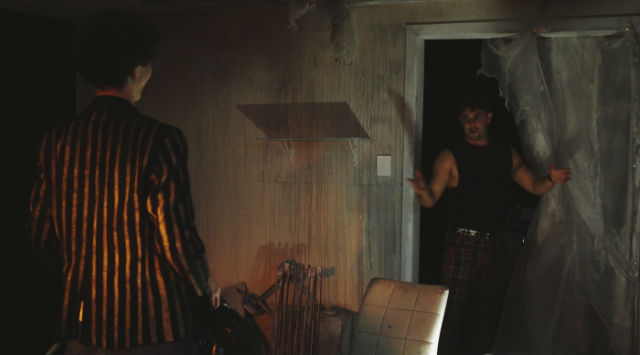
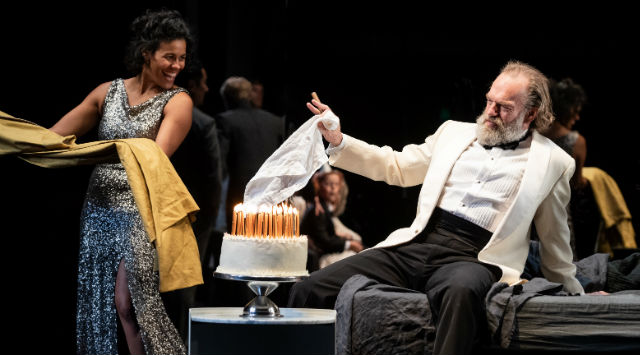
Peter Wyngarde gained mainstream popularity in 1969 as Jason King, a novelist turned sleuth, in the UK television series Department S. A flamboyant actor, known for his horseshoe moustache and bronzed skin, he is one of innumerable twentieth century celebrities who had never come out of the closet, yet remains an integral part of British gay culture. His 1975 arrest for gross indecency in a public toilet forms part of his mystique, but as was typical of the times, his queerness was kept obscured, refused acknowledgement by wider society. The public would only allow a sex symbol who could not threaten their heteronormativity, and Wyngarde acquiesced.

Garth Holcombe and Peter Mountford’s Wyngarde! A Celebration is a re-framing of the personality, an insistence that we look at old narratives with new eyes, to form a history that makes sense in terms of how we experience the world today. As though a private audience with Wyngarde himself, in which his inhibitions are shed, and we witness him able to be his true self at last. Holcombe has the right charisma for the role, but is occasionally hesitant. The cocky debonair masculinity of a bygone era is portrayed alongside a camp sensibility, to make a statement about the evolution of gay identities, and to form a reminder of a community’s legacy of struggle.

For all the bravado that Wyngarde enjoys putting on display, there is a loneliness that pervades. There is an unmistakable pride in his long career in stage and film, but we sense something unfulfilled. Wyngarde! A Celebration can feel too gentle in its approach. We want a bawdy tell-all, but it gives us instead, something with more integrity than we are perhaps accustom to, in this age of ubiquitous intrusion and humiliation. It is our nature to seek authenticity, but it appears that revealing everything often serves to distract from the truth. Many things are left unsaid in Wyngarde’s story, and that is perhaps his very essence, and the most accurate representation of the man we have come looking for.

www.gbodtheatre.com

Review: The Bed Party (The Old 505 Theatre)

Venue: Old 505 Theatre (Newtown NSW), Feb 12 – 16, 2019
Playwright: Sophia Davidson Gluyas
Director: Sophia Davidson Gluyas
Cast: Mathilde Anglade, Julia Billington, Brigitta Brown, Margarita Gershkovich, Suz Mawer, Alex Moulis

Theatre review
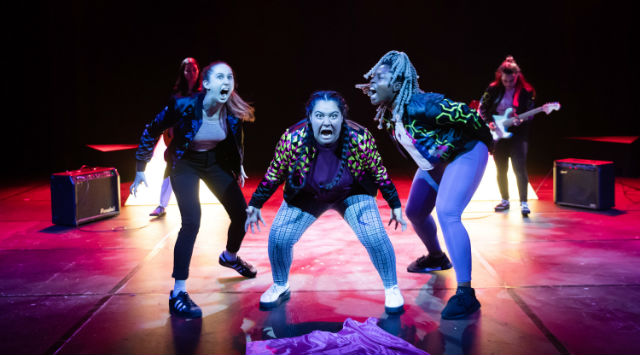
Six queer women share their “ideas, jokes and intimacies” in a display of community and solidarity in Sophia Davidson Gluyas’ The Bed Party. They congregate in a bedroom, discussing life and love, bringing each of her own perspectives and challenges, to find consensus or simply to receive validations, within the circle of their trusting group. The conventional plot plays second fiddle in this feminist approach to storytelling. The sparkling dialogue has its own distinctive rhythms. Lines are not in service of a bigger project of narrative construction, but are themselves the emphasis of the play. We listen to what the women are saying, how they say it, and distil all the meanings in between. It peaks in waves, in acknowledgement of our capacity for more than a singular momentary apex.

The show begins abruptly, unable to find a mode of naturalism that would guide us comfortably into its microcosm, but its chemistry gradually develops and we are soon completely, and wonderfully, immersed. It is a warm cast, not entirely believable as close friends, but certainly a welcoming bunch of personalities that wins us over easily. Mathilde Anglade’s cheeky charm in the role of George is a delight, as she works every comedic opportunity in the script to her advantage, and for our thorough amusement. Julia Billington delivers dramatic intensity along with ideological power, as Bri the sensible half of a partnership determined not to procreate.

As independent women, we learn to make our own rules, and we take the liberty to choose our own families. We are fearless, but we are thoughtful, always careful to design a way of living that is ethically sound, as well as being genuinely fulfilling. We question everything in front of us, and view all that had come before us with great suspicion. That which is prescribed, is rejected until proven worthy, and saying no to anyone is a breeze. Above all however, a powerful woman honours the sisterhood, and leaves no other behind.

www.old505theatre.com

Review: If We Got Some More Cocaine I Could Show You How I Love You (Green Door Theatre Company)

Venue: Kings Cross Theatre (Kings Cross NSW), Feb 8 – 23, 2019
Playwright: John O’Donovan
Director: Warwick Doddrell
Cast: Eddie Orton, Elijah Williams
Images by Jasmin Simmons

Theatre review
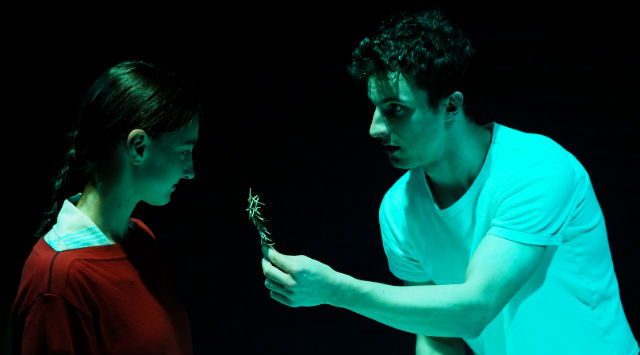
Contrary to popular belief, love is not for everyone. Sure, Casey and Mikey have found each other, and the mutual attraction is undeniable, but their small town in the west of Ireland is certainly not going to let nature take its course. John O’Donovan’s debut play If We Got Some More Cocaine I Could Show You How I Love You takes place one night on a rooftop, after the couple had gone on a burglary spree, now trying to lay low and evade persecution. They are of course, hiding not just for the drugs and money that they had stolen, but also for their homosexuality. Leo Varadkar may have been installed as their country’s first gay Prime Minister, but away from the capital, things are less rosy. Discrimination persists, and violence remains normalised for those who dare deviate.

The writing is passionate, exciting in its very contemporary depiction of queer identities, but its vernacular is specific and can prove challenging for those of us who might be culturally uninitiated. The language of politics however is universal, and the young men’s struggle to bring to a tangible actualisation their emotional and spiritual connection, in a climate of dread and fear, needs no translation. Director Warwick Doddrell’s rendering of that crucial quality of intimacy is sublime, for a stage that absolutely burns with desire. Additionally, the amount of tension and dynamism he is able to build onto the restrictive setting of a small roof, is quite remarkable.

Set design by Jeremy Allen is a thoroughly convincing transformation of space that works perfectly in the auditorium’s traverse format. Lights by Kelsey Lee are similarly evocative, and admirable for its sense of accuracy, but the glare of misplaced lamps is unfortunate. Costumes may not be technically demanding for the show, but Stephanie Howe’s keen aesthetic eye for her characters’ looks proves to be very discerning indeed. Melanie Herbert does marvellous work with sound design, painstakingly calibrated to have us submerged in a poetic atmosphere, whilst delivering hints of realism when required.

The production is made memorable by a pair of brilliant performances, both actors wonderfully animated yet soulful, a match made in theatre heaven, for the benefit of our dramatic enjoyment. Eddie Orton is an enthralling presence, tremendously likeable in his portrayal of boyish innocence grappling with toxicity, as we watch his Mikey grow into the kind of masculinity dictated by his parochial environment. Elijah Williams is powerful as Casey, impressive with the depth he is able to convey, for a personality that keeps becoming richer as the show goes on. Chemistry between the two is excellent, and the rigour that they bring to the stage is simply riveting.

The irony of machismo, is the enormous fear that underlies it. Fear of being soft, fear of breaking from convention, fear of ostracism, can lead people to behaviour that betrays their true nature. We make our boys become less human, when we insist that they grow into models of patriarchy. This is immediately observable in our inter-racial gay lovers Casey and Mikey, who are suddenly aware of the threat to their social currency, should they decide to progress meaningfully with their relationship. Choices are inordinately scarce for those young and poor. They can only live according to preexisting structures, ones that are intolerant of difference, disdainful of the new, and it is this inhibition of people’s freedoms that turns us into monsters. As our protagonists wait for the sun to rise, we wonder if this moment constitutes a final glimpse of beauty, before they are robbed of their very essence.

www.greendoortheatreco.com

Review: Mary Stuart (Sydney Theatre Company)

Venue: Roslyn Packer Theatre at Walsh Bay (Sydney NSW), Feb 5 – Mar 2, 2019
Playwright: Kate Mulvany (after Friedrich Schiller)
Director: Lee Lewis
Cast: Fayssal Bazzi, Caroline Brazier, Simon Burke, Peter Carroll, Tony Cogin, Andrew McFarlane, Rahel Romahn, Helen Thomson, Matthew Whittet, Darcey Wilson
Images by Brett Boardman

Theatre review
Queen Elizabeth I of England must finally decide whether to sign the death warrant of her cousin Mary, Queen of Scots, after 19 years’ imprisonment. In Kate Mulvany’s adaptation of Friedrich Schiller’s 1800 play Mary Stuart, we look at the final days of this historical feud, paying attention to political machinations, as well as the fascinating psychological processes that the two women would have had to go through, in what is clearly the most difficult and traumatising of human experiences. A highly intelligent work, Mulvany transposes the ancient story into a contemporary tale foregrounding themes that matter today, with renewed focus on the feminist implications of this conflict between powerful women.

Surprisingly funny, featuring witty dialogue that transcends the ages to connect with our everyday ears, Mulvany transforms the royals into flesh and blood individuals that we can easily relate to. With none of the pretension often associated with period pieces about European queens and kings, we are free to examine all the sublimated dynamics between Elizabeth and Mary, to come to our own conclusions about power structures, whether or not one chooses to share the playwright’s feminist lens. Mary Stuart is also effective in delivering drama, powerful in the way it conveys the palpable emotions of a woman compelled to put a loved one to death, and another who faces her own demise.

The vast auditorium is put to good use by Elizabeth Gadsby who situates the action in a suitably grand setting, palatial but austere. Lights by Paul Jackson are especially effective in the graver sections, to facilitate the sensation of mounting pressure as we move toward the inevitable. Music and sound can sometimes be too subdued, especially in the earlier more comedic scenes, but when things turn serious, Max Lyandvert is certainly on hand to heap on the tension. Costumes are a highlight, perhaps predictably, with Elizabeth’s opulent gowns really making an impact. Mel Page’s work on all the women’s looks are unequivocally remarkable.

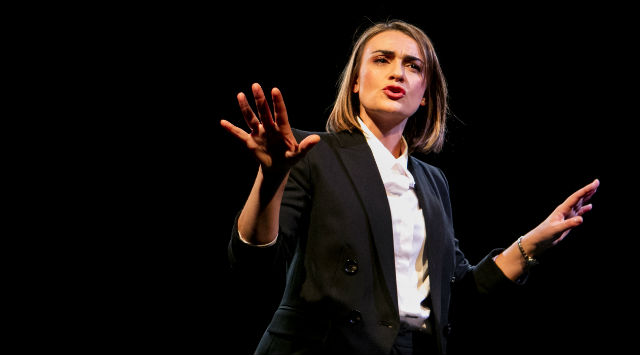
Director Lee Lewis exercises a stylistic restraint over her stately presentation, determined not to let pomp and ceremony distract from its central concerns. Visuals can sometimes feel sparse and incommensurate with our imagination of both the queens’ worlds, but Lewis’ strength in elucidating rationale behind all manner of human behaviour, is sublime. Actor Helen Thomson is electrifying as Elizabeth, appropriately majestic and piercingly humorous, insisting that entertainment value accompanies all the intellectual stimulation that the play so doggedly provides. Thomson continually reveals layers to the queen throughout the two-hour duration, consistently unpredictable with her depictions, including moments of poignancy that are quite unexpected. Her rendering of Elizabeth as a real and authentic person, is an astounding achievement. Mary is played by Caroline Brazier, whose very deliberate portrayal of grace under pressure is as beguiling as it is intriguing. Her penultimate scene of exposure is truly arresting, as she performs an outpouring of intense and contradictory emotions that gives us a glimpse of the woman under the crown.

Women compete because our power is scarce. We are pit against one another, and we participate in these battles, rarely challenging these absurdly unjust systems and the beliefs that they perpetuate. American Professor Emerita of Sociology and Women’s Studies, Gail Dines suggests that empowerment is a false hope, for to place ourselves within patriarchal hierarchies necessitates the exploitation of many women. Liberation on the other hand, evokes a collectivism that prohibits oppression of any kind. The two queens in Mary Stuart were able to wield power of all kinds, but it is clear that their lives were never their own. Enslaved by their fathers, their states and their religions, we watch them at war, inside a living hell not of their own making, and wonder how much of our own lives are just the same.

www.sydneytheatre.com.au

Review: Tuesday (Sign Of The Acorn / 25A Belvoir)

Venue: Belvoir St Theatre (Surry Hills NSW), Feb 6 – 23, 2019
Playwright: Louris van de Geer
Director: Nell Ranney
Cast: Frances Duca, Duncan Fellows, Tom Anson Mesker, Bridie McKim
Images by Clare Hawley

Theatre review
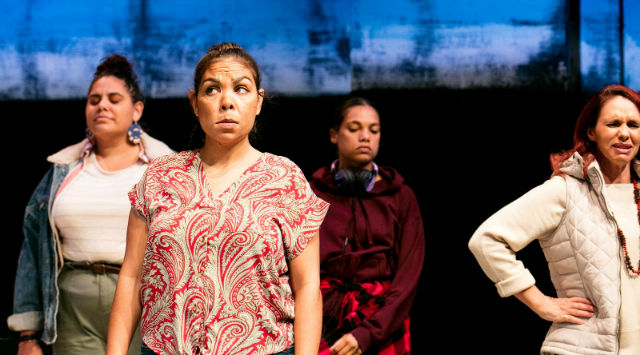
Four people in a supermarket, isolated in their own lanes, doing what are probably the most banal of activities, in the most mundane of places. In Louris van de Gerr’s Tuesday, we see ourselves on the most prosaic day of the week, caught up in private thoughts that reveal our truest, most unflattering selves. Structured as four interwoven monologues, these Australians do not interact with each other, but they exhibit common characteristics that serve to represent our identity. They may be of different genders and generations, but what we see in Tuesday are scared white people, filled with anxiety and aggression, completely self-obsessed even at a moment of catastrophe.

Van de Gerr’s writing is astonishingly detailed in its observations, thus able to connect in a way that feels intimate and authentic. Its disarming sarcasm makes for scintillating humour, and along with a subtle but cleverly structured narrative drive, Tuesday proves to be terrifically satisfying. Director Nell Ranney’s emphasis on tension and gravity from the get go, creates a powerful work of theatre that delivers incessant ironic laughter, as well as an undeniable sense of poignancy in its microscopic scrutiny into the everyday.

The production is designed exceedingly well. Isabel Hudson’s precarious placement of full uncapped bottles of milk, in perfect straight rows, insists that our bodies seize up in their presence, in fear of any accidents that might happen. Martin Kinnane’s quiet rendering of lights gives support to that mood of ubiquitous and impending horror, without ever drawing attention to itself. Sound design by Clare Hennessy is a marvellous achievement, heavily relied upon to convey every fluctuating degree of funny and frightening, for a highly sophisticated blend of comedy, drama and thriller.

A splendid ensemble comprising impressive measures of intelligence and creativity, takes us on an exercise in intuitive storytelling, riveting from beginning to end. Frances Duca fascinates us by combining poetic gestures with incisive speech, to emulate and comment on the sad housewife archetype. Equally memorable is Duncan Fellows’ interpretation of the pathetic but still respectable low-rung shop manager, hilarious in his naive perception of the world. Bridie McKim plays a mischievous schoolgirl, painfully accurate and unfettered in her spirited depiction of mindless rebelliousness. Tom Anson Mesker’s controlled and complex portrayal of masculinity at its puerile best and toxic worst, encourages us to examine the little irritations and provocations that can pervade our lives, pretending to be normalised, only to explode spectacularly when you least expect it.

The characters in Tuesday are consumed by annoyance, yet there is no evidence of anything serious actually happening within their personal realms. They are people who have no concerns about food and shelter, but are far away from any semblance of peace or contentment. In Australia, we have everything, in fact we have a great deal more than we need, yet we are endlessly restless, and increasingly selfish, always obsessing over issues like border defence and protectionism, without ever intending to be properly informed about the world beyond our shores. It is easy to see the crazy in others, but to understand one’s own madness is quite another thing.

www.facebook.com/SignoftheAcorn | www.belvoir.com.au

Review: My Night With Reg (New Theatre)

Venue: New Theatre (Newtown NSW), Feb 5 – Mar 9, 2019
Playwright: Kevin Elyot
Director: Alice Livingstone
Cast: Michael Brindley, Steve Corner, Nick Curnow, James Gordon, Steven Ljubovic, John-Paul Santucci
Images by Bob Seary

Theatre review
In Kevin Elyot’s My Night With Reg, we meet a group of London gays, in the throes of the 1980s AIDS crisis. Just as a new post-Stonewall liberation had begun to inform the way these men were able to live, a dark period of oppression again descends upon them, threatening to quash any promise of a bright future for the community. The play portrays the intimate world of traumatised individuals, all suffering from the reverberations of a then mysterious killer disease, whilst demonstrating the undying vibrancy of an irrepressibly spirited band of brothers.

It is a sentimental piece, oddly apolitical, with an authenticity that today represents not just an enjoyable sense of nostalgia, but also provides opportunity for a valuable historical study of a society not long past. Elyot’s jokes are as funny as they would have been at their 1994 premiere, but his sorrowful expressions are less resonant, with the advent of significant medical advancement, so many years after the fact.

An endearing cast presents a heartfelt production, directed by Alice Livingstone who orchestrates an entertaining 95-minute exploration into queer identities, from the perspective of middle-class white gay communities of the time. Some of the acting is lacking in precision, and sensitive moments deflate as a result, but the show delivers sufficient poignancy for it to be an ultimately satisfying experience. Comedic roles in My Night With Reg leave the strongest impressions, with Steve Corner’s outrageously lascivious turn as Benny particularly delightful, diligently balanced with some very surprising vulnerability that proves affecting. Also memorable is Steven Ljubovic, whose quintessential rendering of cabin crew Daniel, is unapologetically camp, complete with one-liners that are simply irresistible.

There certainly are more relevant queer stories to tell for 2019, but to forget those who had fought hard for today’s freedoms, would be unconscionable. From living underground to nuptial vows, the journey for LGBTQI rights was (and in many other places, remains to be) long and arduous. My Night With Reg does not explicitly show external forces of subjugation, but the limitations and compromises to how we had lived, are clear. Having emerged triumphant, it is important that we know to value and to take advantage of these new liberties, and to revisit tales of our past, for a reminder of today’s privilege, is key.

www.newtheatre.org.au

Review: Dorian Gray Naked (Popinjay Productions)

Venue: Limelight on Oxford (Darlinghurst NSW), Jan 30 – Feb 16, 2019
Libretto: Melvyn Morrow
Music: Dion Condack
Director: Melvyn Morrow
Cast: Blake Appelqvist

Theatre review
A fictional character provides the inside scoop on his author Oscar Wilde, in Melvyn Morrow’s Dorian Gray Naked. Resurrected to speculate on the inner workings of a novel, from a time when homosexuality was an abomination that would render entire existences underground and secret, Dorian the Adonis/Narcissus of queer literature offers a revised perspective for our comparatively liberated times.

Imaginative and appropriately flamboyant, Morrow waxes lyrical about what might have been. Together with Dion Condack’s music, Dorian Gray Naked paints a melancholic and often abstract picture, about artistic creation, highly sentimental but insufficiently witty. Performer Blake Appelqvist’s affected approach, punctuated by incessant sharp inhales, executed like DIY sound effects, can be alienating, but his presence is a strong one that fills the room effortlessly. It is basically a one-man show, but with Condack positioned onstage, passionate on the piano, interplay between the two men are inevitable in this exploration of gay culture and history.

Choreographer Nathan Mark Wright uses exaggerated body shapes to make a statement about camp, and to disrupt the meanings of masculinity in Wilde’s suspicious narrative of heterosexual love. The effect is skin deep, but it reveals an aspect of gayness that is obsessive about surface. Although Dorian Gray Naked is thorough with its reinventions and fabrications, it seems incapable of reaching greater emotional or psychological depths that will achieve meaningful resonance. It remains mainly a cerebral experience, and for some, that could be enough.

www.limelightonoxford.com.au

Review: Intersection 2019: Arrival (ATYP)

Venue: SBW Stables Theatre (Darlinghurst NSW), Jan 30 – Feb 16, 2019
Playwrights: Georgie Adamson, Joshua Allen, Grace Chapple, Hannah Cockroft, Sasha Dyer, Meg Goodfellow, Flynn Hall, Jasper Lee—Lindsay, Brooke Murray, Emma Skalicky
Director: Sophie Kelly
Cast: Marvin Adler, Teodora Avramovic, Salem Barrett-Brown, Bebe Bettencourt, Toby Blume, Apsara Lindeman, Ryan Hodson, Kelly Nguyen, Grace Stamnas, Sophie Strykowski, Harry Winsome, Emma Wright
Images by Tracey Schramm

Theatre review
To arrive, implies a destination, an end to travels, but at the conclusion of every journey, if conclusions exist at all, are inevitable new beginnings. In Arrival, we witness young people undertaking an act of emergence, one that is propulsive rather than stagnant. Ten short plays present them as a force to be reckoned with, full of hope and exhilaration, in an event that will no doubt provide inspiration to the young and young-at-heart.

The material is light, almost blithe in attitude, that director Sophie Kelly uses to her advantage in cultivating an irresistible vivacity for a show that keeps us wanting more. Set design by Tyler Ray Hawkins is attractive and sophisticated, cleverly utilising abstract patterns to stoke our imagination. Martin Kinnane’s lights are called upon to inject drama, highly effective in enhancing all that the cast aim to unfurls on stage.

Performers Teodora Avramovic and Sophie Stykowski are especially memorable in Flynn Hall’s Fish Fingers, a cheeky piece about teenage masturbation and self-discovery in a carnal sense. The pair’s extraordinary chemistry, along with their confident timing, deliver some very big laughs, in a joyful display of promising new talent. Georgie Adamson’s Real Dry is a refreshing take on a classic lesbian story, featuring BeBe Bettencourt and Kelly Nguyen, who offer a sensitive and intelligent interpretation of girls experiencing crushes. It is noteworthy that queerness is represented beautifully in the production, to reflect a new evolution in the understanding of human sexuality that Sydney youth has so readily embraced.

We may not be able to find anything radical in these works, but the energy derived from each of these artists’ optimism is palpable. There is a quality of bravery that shines through, even if things can feel somewhat contained and safe. It is clear that our affluence in this lucky country compels an overprotection of ourselves, especially our young. Art, like most things of significance, can only be accomplished with risk, which is perhaps the hardest of all to teach.

www.atyp.com.au

Review: Are You Listening Now? (Fixed Foot Productions)

Venue: Old 505 Theatre (Newtown NSW), Jan 29 – Feb 2, 2019
Playwright: Xavier Coy
Director: Ed Wightman
Cast: Martin Bell, Xavier Coy, Fiona Mahl, Emily J Stewart
Images by Becky Matthews

Theatre review
Mez and Gaz are intruders in a 6-million-dollar house, with intentions not only to burgle but also to teach the affluent homeowners a lesson. Even though Xavier Coy’s Are You Listening Now? makes its point about wealth distribution with no concern for subtlety, the message is nonetheless an important one. By embedding plenty of comedy and drama, the writer ensures his play to be an amusing one, and laughing about class is certainly a worthwhile activity, at these times of unprecedented prosperity for the top end of town.

Directed by Ed Wightman, the staging is energetic, with a high level of intensity fortifying the hour-long piece. Coy himself performs the role of Gaz, adept at delivering laughs in his portrayal of a surprising innocent. His criminal mentor Mez is played by Fiona Mahl, who in her strongest moments, can prove impressively convincing. Emily J Stewart is riveting as Claudia, one-half of the rich couple under siege, a persuasive presence who brings much needed nuance to the production. Multimillionaire Charles is a predictable personality that Martin Bell is able to make believable, for a familiar portrayal of Sydney-style privilege.

It is sometimes surprising to observe the degree to which Australia has embraced neo-liberalism. For generations we have prided ourselves on our egalitarianism, but it appears that greed is truly indomitable. The moral at the centre of Are You Listening Now? is timeless and pertinent; money is a complex beast that if left unchallenged, will inflict harm and turn us inhumane. Mez’s refusal to obey rules that are designed to subjugate her, is admirable, but without compatriots joining her rebellion, we see that a one-woman movement can amount to nothing more than empty gestures.

www.facebook.com/fixedfootproductions

Review: The Iliad Out Loud (Sport For Jove Theatre)

Venue: Belvoir St Theatre (Surry Hills NSW), Jan 23 – 27, 2019
Playwright: William Zappa
Director: William Zappa
Cast: Blazey Best, Heather Mitchell, Socratis Otto, William Zappa
Images by Lisa Tomasetti, Jamie Williams

Theatre review
Homer’s ancient poem is adapted and abridged in William Zappa’s The Iliad Out Loud, first for radio, and now for the stage. This iteration of the epic stretches across three parts, each three hours long, presented by four actors and two musicians, in the form of a staged reading. It takes after what is believed to have happened in 8th century BC, when the original was performed, to be heard and not read. Zappa’s text can easily be repackaged as a novel, and often we wonder if that would have been a better format, especially during the very many drawn out battling sequences, which require only visualisation and no analysis on our part.

This condensation of events would likely be more rewarding for those who are already fans of the story. A thrilling ride for some can prove an ordeal for others, as the production routinely rushes past character development to cover significant occurrences. Without sufficient background understanding of personalities, we struggle to resonate with their trials and tribulations in all the warfare, that Zappa so exhaustively conveys.

Michael Askill and Hamed Sadehi are musicians and stars of the show, a two-man band that makes a real art form of their accompaniment. In the absence of more conventional theatrical imagery, Askill and Sadehi pull out all the stops to stoke our imagination, adding infinite colour to the pages of words being dispensed. Lighting by Matt Cox too, is inspired, with a series of elegant transformations to illumination, helping guide us through states of emotion.

Zappa is an outstanding reader, full of dynamism on his stage, holding our attention with extraordinary ease, effortless in sharing his immense enthusiasm for a seminal work of his heritage. It is a confident cast that travels with us on this journey, impressive in their detailed familiarity with every twist and turn of the 9 hours.

The warring men blame their behaviour alternately, on one woman Helen, or on the gods Zeus and his ilk. Their inability to face their own culpability in all the conflict, feels an accurate reflection of every war in every era. It may not be true that women are never in favour of such brutality, but it is certain that none of these atrocities can ever be perpetrated without men. All the war heroes in Iliad can be thought of as good guys, and our continual inclination to excuse them of the horrors that they choose to enact, reveals, at least in part, why we remain in a perpetual cycle of bloodshed.

www.sportforjove.com.au