Review: The Big Dry (Ensemble Theatre / ATYP)

ensembleVenue: Ensemble Theatre (Kirribilli NSW), Jun 4 – Jul 2, 2016
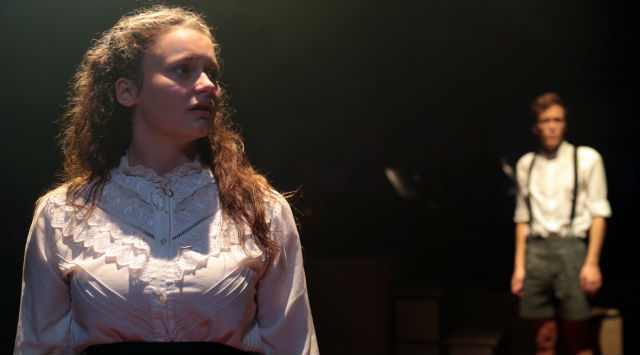
Playwright: Mark Kilmurry (from the novel by Tony Davis)
Director: Fraser Corfield
Cast: Sofia Nolan, Rory Potter, Noah Sturzaker, Richard Sydenham
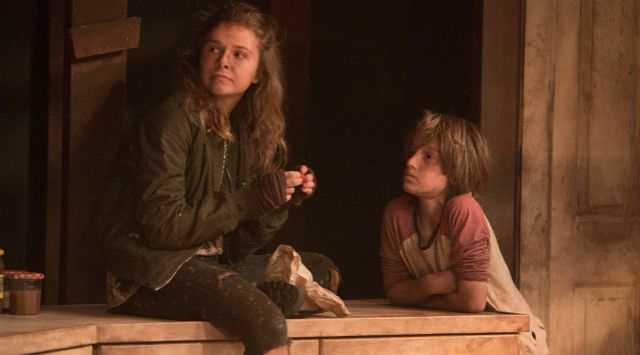
Image by Clare Hawley

Theatre review
Three children are stranded and left to their own devices in a dystopian future. An endless drought has hit Australia, and civilisation as we know it has collapsed. The Big Dry is about our abuse of the environment and the consequences that our children have to bear when the struggle for survival becomes abject and savage. They rely on each other to stay alive, and their bond becomes the centre of their universe. Tony Davis’ story is dark, but we respond with a natural thirst for hope, even though it gives us no indication of salvation. Mark Kilmurry’s adaptation gives mother nature a tremendous dominance, but its humans are insufficiently captivating, with dialogue and personalities that pale by comparison.

Stars of the show are lighting designer Benjamin Brockman and sound designer Daryl Wallis, both of whom use their considerable technical skills to tell a story of cruel and imminent tragedy. Brockman introduces a boundless variety of moods and spatial transformations with inventive hues that impose upon the stage, a brutal power evocative of harsh climates and their impact on our planet’s living creatures. Wallis is responsible for the show’s tensions, offering the audience a glimpse into the apocalypse with a series of clamouring and sinister rumbles that send our nerves shivering with foreboding. Young actor Sofia Nolan puts on an accomplished performance as Emily, demonstrating good focus and intensity. Her work is energetic, with a healthy dose of sincerity that helps endear herself to the audience.

The production depicts calamitous events but is itself moderate in temperament. We never quite connect with the characters, and even though we understand the high stakes involved, its scenes are unable to lead us convincingly to a suspension of disbelief. Its concepts are strong and universal, but its drama feels distant and elusive. To convey the pressing need for societies to escalate individual and political action on climate change is not an easy task, with habits of modernity firmly entrenched in all our lives and necessary sacrifices proving too difficult even to contemplate. Ecological messages are hard to take, especially it seems, when the ugly truth is revealed. The Big Dry is not a walk in the park, but to expect an easy ride from its subject matter is probably more than a little unwise.

www.ensemble.com.au

Review: Spring Awakening (ATYP)

atypVenue: ATYP (Walsh Bay NSW), Apr 27 – May 14, 2016
Book and Lyrics: Steven Sater (based on the original by Frank Wedekind)
Music: Duncan Sheik
Director: Mitchell Butel
Cast: James Raggatt, Jessica Rookeward, Josh McElroy, Alex Malone, Patrick Diggins, Kate Cheel, Joe Howe, Bardiya McKinnon, Henry Moss, Caitlin Rose Harris, Taylor Howard Anthony, Alexandra Fricot, Julia Dray, Lochie Kent, Julian Kuo, Thomasin Litchfield, Richard Sydenham
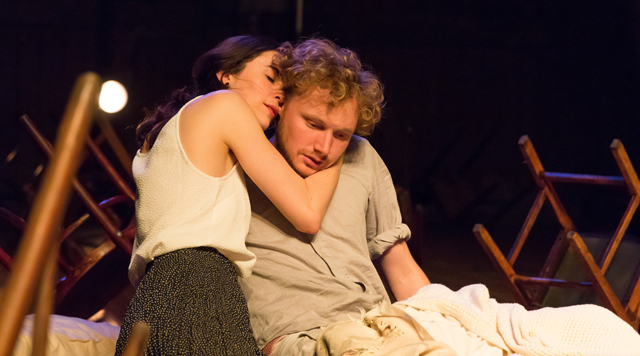
Image by Tracey Schramm

Theatre review
Teenagers discovering sex is among the most intense experiences that a person can go through. It is simultaneously delightful, frustrating, embarrassing and intractable, full of complexity and obsessive power in the way it dominates one’s body and mind. Adolescence is difficult and the consequences of sexual miseducation can be catastrophic, yet offering appropriate guidance and accurate information remains a challenge. Recent debates over the “Safe Schools” initiative to broaden the consciousness of high school students beyond a heteronormative scope and traditional religious values, have revealed conservative and harmful beliefs about sex that persist in Australia today. The story of Spring Awakening is over a century old but is based on those same tensions that still exist in our inability to be honest with the young about the pleasures and responsibilities associated with their sexualities. This 2006 musical incarnation is an edgy expression of the subject that exposes how we fail the young and the dire consequences that follow.

It is a spirited production, helmed by promising young performers. Watching them explore ideas around sex with exuberant openness, without a modicum of coyness or shame, is a truly remarkable experience. Each individual brings a confident presence and as a group, the ensemble delivers a passionate and bold staging that demonstrates their enthusiastic appreciation for the themes of discussion. Jessica Rookeward impresses as the naive Wendla, with a convincing and tender performance made prominent by a strong singing voice. The cast is emotionally compelling, but the overall standard of singing is adequate at best, which tarnishes their otherwise strong work. Choreography is effective in its ability to bring energy and excitement, but can sometimes be overbearing for the intimate space. Set design is kept minimal, with lights employed to do all the heavy lifting of conveying time and place. Damien Cooper and Ross Graham, co-lighting designers, contribute greatly to the vibrancy and variety of visuals. Direction by Mitchell Butel highlights all that is appealing about his zealously youthful actors, and creates a show with great optimism in spite of its dark narrative. There is a tendency to favour pathos over humour, which makes the production feel excessively heavy, but it achieves a beautiful authenticity that helps with the story’s poignancy.

The talents in Spring Awakening are in control. They surprise us with their maturity and their strength of resolve in taking over a stage to communicate what they believe to be real and valuable. We must never underestimate the capacities of our youth, and we must certainly never forget that much of our weaknesses have not yet befallen them. They need our protection but they deserve the truth. Our social problems, especially those pertaining to discrimination, are a product of ignorance that we continue to harness through false information and archaic belief systems. Spring Awakening represents the struggle against oppressive orthodoxies, and for the truth that sets us free.

www.atyp.com.au

5 Questions with Julian Kuo and Alex Malone

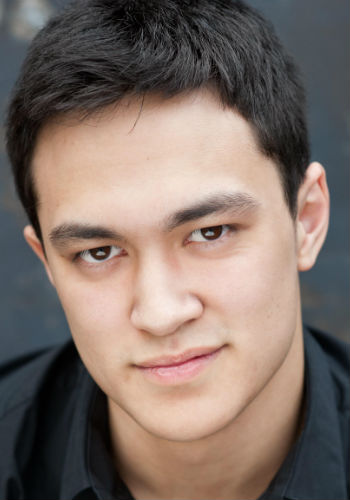
Julian Kuo

Julian Kuo

Alex Malone: What’s your favourite song in Spring Awakening?
Julian Kuo: It would have to be ‘Touch Me’, it has everything!

Who would play you in a biopic about your life?
Joseph Gordon-Levitt.

You’re understudying quite a few roles in Spring Awakening. What do you find is the most difficult thing about understudying?
This Is the first time I’ve ever been a cover. You need to know every little difference in choreography and in harmony, on top of obviously knowing those roles’ dialogue, blocking and lyrics. In other words, I guess the hardest part is just learning it all and making sure you’re ready to go on if you’re called on!

How many instruments do you play and how long have you been a super wizard music man?
I love that description, I’m going to put it at the top of my CV from now on. I play piano and I used to play clarinet a LONG time ago. My real instrument has always been my voice though. I began studying music while I was in the opera as a boy soprano and I never really stopped. So I guess I could say I’ve been that super wizard music man since 13-ish!

If you could play any role in a musical or play what would it be?
It’s too difficult to pick one so I’m going to say two; Burrs in Andrew Lippa’s The Wild Party and Jamie in Jason Robert Brown’s The Last Five Years.

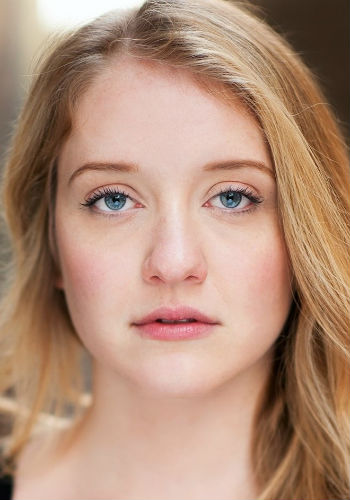
Alex Malone

Alex Malone

Julian Kuo: What are the similarities between you and Illse? Is there something that you feel really connects the two of you?
Alex Malone: We are pretty much the same person (minus the really awful stuff that happens to her). She and I are both pretty hippy and we both have a habit of speaking our minds. We actually had a costume fitting the other day and Mitchell decided I’d just wear the dress I wore to the theatre after hours of trying stuff on.

What’s the worst/most embarrassing thing that has ever happened to you on stage?
I’m a sucker for a corpse and I find a lot of inappropriate stuff funny, so probably laughing in a death scene would be the worst thing I’ve done on stage. Not my proudest performance.

If you were a girl living in Germany during the 1890’s do you think you’d fall into line or would you be the rebel? Why?
I was a bit of a nerd in school and I hate getting in trouble, so I probably would have just kept my head down and finished my sewing. The ‘no sex before marriage’ thing would have sucked though.

I know you studied in Perth over at WAAPA, how are you enjoying the east coast?
I really love it. I grew up in Perth as well so it will always home, but Sydney has been really awesome so far, plus most of WAAPA is here anyway so half the time it feels like I’m still in school.

After a long night in the theatre, what’s your favourite midnight snack?
A dirty kebab on the way home. Extra cheese.

Julian Kuo and Alex Malone can be seen in Spring Awakening the Musical.
Dates: 27 April – 14 May, 2016
Venue: ATYP

Review: All Good Things (ATYP)

atypVenue: ATYP (Walsh Bay NSW), Feb 3 – 20, 2016
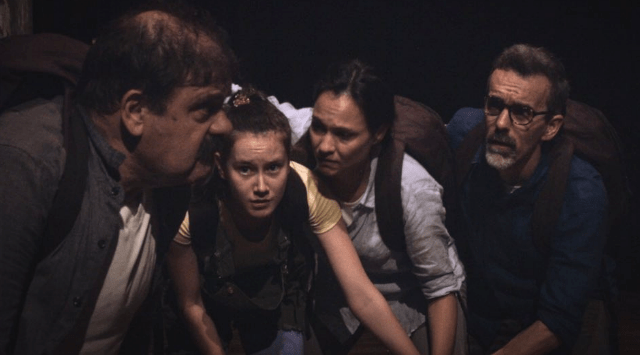
Playwrights: Michael J Cornford, Alberto Di Troia, Piri Eddy, Georgia Goode, Kirby Medway, Callum McLean, Gemma Neall, Rachel O’Regan, Morgan St. Clair, Ciella William
Director: Iain Sinclair
Cast: Simone Cheuanghane, Simon Croker, Martin Hoggart, Poppy Lynch, Moreblessing Maturure, Sarah Meacham, Alex Packard, Jonas Thompson, May Tran, Darius Williams
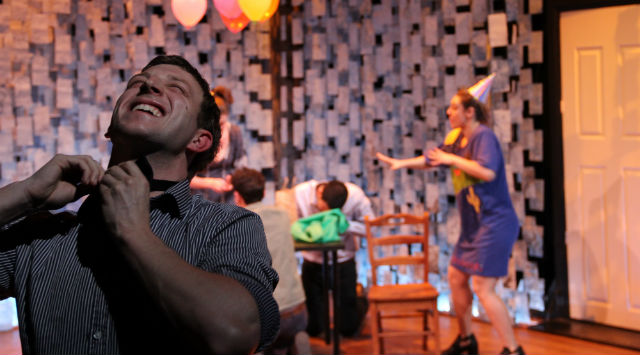
Image by Tracey Schramm

Theatre review (of a preview performance)
Ten short monologues are interwoven on an intimate stage, with ten young actors presenting a new generation’s perspective of where we are and where we are approaching. Through stories about adolescence, identity, sexuality and desire, we observe in All Good Things, the world’s evolution and we wonder about the things that change and those that remain the same. We conceive of the future as a time that will bear differences, yet human nature seems to be fundamentally immovable. The linearity of time misleads us into thinking that we leave everything behind, yet the truth seems to be that although we are ever-changing, we will never be anything other than human.

There is wonderful and starkly inspired writing to be found in this collection of plays. Each one individualistic, offering a wild range of styles and tones, from simple narratives that pack a punch, to poetic abstractions that affect with beguiling efficacy. Iain Sinclair’s direction provides an almost miraculous cohesion that allows us to absorb the fragments as a whole, manipulating our senses and emotions as though following a conventional theatrical plot. The format he creates attempts to bring an evenness to the disparate source material, but the more anecdotal pieces leave a greater impression. Callum Mclean’s Changing Room, Gemma Neall’s Jailbait and Morgan St. Clair’s Possession in particular, involving gender and strong sexuality, are captivating tales told intelligently.

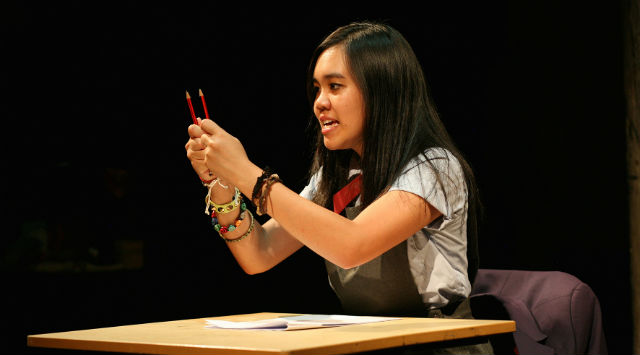
The show features a talented and vibrant cast of youngsters from diverse ethnic backgrounds; a rainbow of skin and hair colours but all sharing a singular Australian-accented voice. Darius Williams is charming, confident and effortlessly engaging in the role of David in Piri Eddy’s Teeth. The wide range of emotion he portrays so convincingly, and his infectious humour make his performance a highlight of the production. In Rachel O’Regan’s Red Bull, May Tran depicts a girl cracking under the pressure of an examination, with marvellous precision and clarity. Poppy Lynch in Bright by Ciella William is daring, energetic and charismatic, and Jonas Thompson in Kirby Medway’s The Fuzz is a keen comedian with beautifully timed punchlines that any audience would find irresistible.

Through the wealth of talent on show here, we catch a glimpse of the things that really matter to our young artists. Not every work is deep or serious, but even when encountering moments of frivolity, we see honesty and commitment to their craft. The value of innocence has always been important in art, and on this occasion, we connect with that special quality that will always be rare in the oft too clever art form of theatre. Together with an excellent and thoughtful team of designers (Michael Toisuta’s sound design is stunning), Iain Sinclair has introduced a great deal of sophistication to the production, but the youthful effervescence of every artist is never subdued, and it is their idealism and their hopes that stay with us the strongest.

www.atyp.com.au

Review: Patrice Balbina’s Chance Encounter With The End Of The World (ATYP)

atypVenue: ATYP (Walsh Bay NSW), Jan 20 – Jan 23, 2016
Director: Fraser Corfield
Cast: Raul Atalaia, Holly Fraser, Emilie Leclerc, Giuditta Mingucci, Yves Simard
Image by Ben Pugh

Theatre review
Patrice Balbina is a 10-year-old asylum seeker. The character might be fictional, but what she goes through is representative of the experiences that millions have shared. It is a familiar story of struggle, but told from the other side of the fence. The work is devised by artists from Australia, Canada, Germany, Italy, Portugal and the UK, countries that offer refuge, and where debates about our responsibilities as citizens of the world rage on. Much of our pervasive news media is concerned with how willing or ready we are as developed nations to receive immigrants, with minimal consideration for the reality of life experienced by those waiting to be granted asylum.

What the collective has created here is an earnest portrayal of the plight of those who had fallen victim to unjust and illegal persecution. Patrice’s family leaves their home to escape violent threats, finding themselves in the mercy of people smugglers, a small boat and the ocean. The story never gets complicated, but it does not delve very deep into its potent themes either. Its scenes are beautifully choreographed and energetically performed, but it brings little fresh information to an admittedly tired topic. For a subject matter that is in our attention day after day, and had been for at least 15 years (since 9-11), we wish for the play to provide fresh perspectives for our jaded minds, or maybe emotional resonance for our callused hearts. Patrice’s story feels like a polite and sanitised iteration of what many of us have often imagined to be much more dramatic and harrowing.

From our privileged first world positions, we hear of murders in foreign lands, deaths in the sea, and fatalities in camps. It takes pictures of toddlers washed ashore to move us to action. Tales about other people’s catastrophes have to be desperately brutal before we even begin to lift a finger, so we have to wonder if political discussions in the theatre about the global refugee crisis can ever take a gentle approach. There are no black or white, easy answers to the state of affairs. Even in the realm of make-believe, finding a way to get to a solution is fraught with uncertainty.

www.atyp.com.au

Review: War Crimes (ATYP)

atypVenue: ATYP (Walsh Bay NSW), Jul 15 – Aug 1, 2015
Director: Alex Evans
Playwright: Angelia Betzien
Cast: Hannah Cox, Holly Fraser, Charlotte Hazzard, Odetta Quinn, Jane Watt
Image by Tracey Schramm

Theatre review
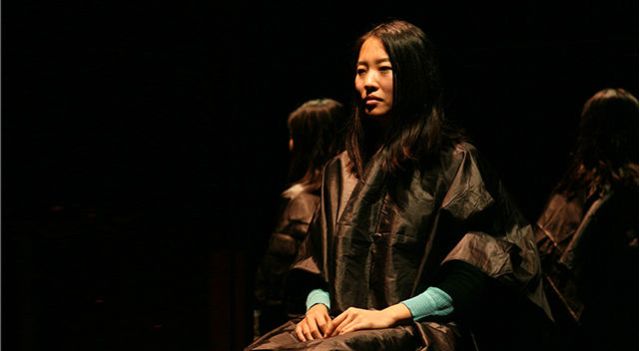
Art allows some of the most sensitive and intelligent of our community a platform to articulate their concerns about the world we share. Discussion on matters of social importance have become increasingly controlled by governing parties and mainstream media, leaving the arts to be one of the few avenues remaining, where ideas affecting us all can be exchanged thoughtfully and generously. Angelia Betzein’s War Crimes is not overtly political, but it is deeply interested in the state of affairs on the land that we share. Through the experiences of 5 young women at the end of their schooling days, we examine life in a regional town and its inhabitants’ troubling relationship with issues of poverty, misogyny, homophobia and racism, the four key controversies in modern discourse. Betzein’s writing draws inspiration from the language of our underprivileged youth but captured within a frame of poetry and emotional luxuriance, it communicates a gritty realism through a familiar theatrical structure that helps us understand the distant microcosm being deconstructed.

Direction by Alex Evans creates a landscape that confronts us with its brutality, but introduces disarming episodes of tenderness that move us, often unexpectedly. Evans is extraordinarily detailed with his portrayal of characters and relationships, and it is the depth and subtlety of the universal human experience being uncovered that is the most enjoyable feature of the production. Although his work with the team of actors is utterly outstanding, his control of atmosphere through collaborative efforts with technical designers should not go unremarked. Lights by Alex Berlage are imaginative and dynamic, creating a vista that is earthy yet sophisticated, and with plenty of variation between scenes to keep our eyes captivated. Tom Hogan’s intuitive sound work embraces the action on stage to help amplify the impact and significance being developed at each moment. Scene transitions rely on Hogan’s ability to manipulate our mood and level of engagement, so that shifts in time and place are established seamlessly.

The performances in War Crimes are impressive. We marvel at the five actors’ ability to appear so powerfully present, and their enthusiasm to share these concepts and stories is gloriously magnetic. Jane Watt is sensational in both her roles; a teenage troublemaker and a middle-aged Iraqi are both vividly portrayed with an exuberance that shows a courageous talent. Watt’s tendency for risky artistic choices is a real joy to behold and her energy is often called upon to bring vibrancy to the stage. One of the play’s most poignant moment comes from Hannah Cox, who as Jordan, professes her love by recreating cave drawings for the object of her desire. The surrender of her self in the hope for Jade’s reciprocation is unbelievably delicate and honest, and within those several seconds of stage time, all eyes are on her quivering facial features while we feel the intensity and clarity of her pure and transcendental love.

In order for our lives to be made better, it is important that we take a good hard look at our problems. It is easy to revel in self-delusion, and to be lied to. We cannot rely on powerful groups to give us the truth, as it is often to their advantage that the plight of the underprivileged is kept under wraps. The ruling and upper classes will maintain the status quo by the continued oppression of others, so we must gather information from alternate sources, such as the participants of independent theatre. War Crimes paints a picture of contemporary Australia that is at once ugly and beautiful. It has a harsh accuracy that can make it a bitter pill to swallow, but if we want the awful truth, this is just the kind of remedy we need more of.

www.atyp.com.au

Review: Between Us (ATYP)

atypVenue: ATYP (Walsh Bay NSW), Feb 4 – 21, 2015
Director: Sarah Parsons
Playwrights: Joel Burrows, Tahlee Fereday, Sharni McDermott, Tom Mesker, Julia Patey, Kathleen Quere, Callan Purcell, Caitlin Richardson, Fiona Spitzkowsky, Amanda Yeo.
Cast: Katy Avery, Christian Charisiou, Jordan Cowan, Patrick Cullen, Rebecca Cuttance, Airlie Dodds, Kelly Huynh, Lucia May, Dominic Roebuck, Gemma Scoble, Michael Smith
Image by Tracey Schramm

Theatre review (of preview performance)
The ten short pieces in Between Us are connected by the idea of secrets. These young Australian stories range from the deep and dark to the wonderfully inspired, all with a personal and revelatory perspective that aim to divulge something truthful. Nine are monologues, perhaps a reflection on the introspective nature of early adulthood. We do not get fervent commentary on our society and politics, but we are certainly witness to a fierce interrogation into human behaviour and its nature.

Direction by Sarah Parsons is adventurous and quite masterful. Her courageous use of space gives emotional and spacial dimension to each piece, respecting their individually distinct voices, and allowing their individual idiosyncrasies to take shape on stage. Transitions are sensitively and creatively manoeuvred so that the experience is fluid and cohesive as an integrated entity, while each writer’s own colour is staunchly retained. Parsons’ work with actors is wildly impressive in Between Us. Every segment is performed with surprising depth and sophistication, so that characters are meaningful beyond their ten minutes of showtime. We are drawn into these bite sized moments, sometimes seeing with astonishing clarity what is being expressed, and sometimes seduced into a sense of intrigue that leaves us hungry for more.

Fiona Spitzkowsky’s Accidents Happen is a remarkably funny yet brutal piece about parenting and ambition. Her blend of the macabre with a casual, almost unassuming everyday humour is a thrill to experience. Performed by Rebecca Cuttance with impeccable timing and focus, this is a programme highlight that exemplifies the intelligence and talent that is being showcased at ATYP. Pink Hair by Amanda Yeo is written with beautiful structure and shrewd acumen. It is technically accomplished, but also visceral and engaging. Kelly Huynh’s interpretation gives a magnetism and moving humanity to the play’s protagonist, and we are enthralled by her thorough authenticity and precision, without the actor having to move a limb more than once or twice during the segment’s entire duration. Also noteworthy are the production’s three male players, Christian Charisiou, Patrick Cullen and Michael Smith, all memorable for their refreshing and solid presences, and conspicuous, burgeoning star quality.

There is so much to like about Between Us, including its design aspects and technical proficiencies. Melanie Liertz’s set and Alexander Berlage’s lights are outstanding, and stage management is executed to perfection by Olivia Benson and her crew. It is almost unbelievable that these short plays can conspire to deliver something so substantial and rewarding, but it does. It is no secret that the Australian Theatre for Young People is a crucial element in the continuing progress of our artistic landscape, but on this occasion, the stepping stone has itself become a thing to celebrate.

www.atyp.com.au

Suzy Goes See’s Best Of 2014

sgs-best2014

2014 has been a busy year. Choosing memorable moments from the 194 shows I had reviewed in these 12 months is a mind-bending exercise, but a wonderful opportunity that shows just how amazing and vibrant, theatre people are in Sydney. Thank you to artists, companies, publicists and punters who continue to support Suzy Goes See. Have a lovely holiday season and a happy new year! Now on to the Best Of 2014 list (all in random order)…

Suzy x

 Avant Garde Angels
The bravest and most creatively experimental works in 2014.

 Quirky Questers
The most unusual and colourful characters to appear on our stages in 2014.

♥ Design Doyennes
Outstanding visual design in 2014. Fabulous lights, sets and costumes.

♥ Darlings Of Dance
Breathtaking brilliance in the dance space of 2014.

♥ Musical Marvels
Outstanding performers in cabaret and musicals in 2014.

♥ Second Fiddle Superstars
Scene-stealers of 2014 in supporting roles.

♥ Ensemble Excellence
Casts in 2014 rich with chemistry and talent.

♥ Champs Of Comedy
Best comedic performances of 2014.

♥ Daredevils Of Drama
Best actors in dramatic roles in 2014.

♥ Wise With Words
Best new scripts of 2014.

 Directorial Dominance
Best direction in 2014.

♥ Shows Of The Year
The mighty Top 10.

♥ Suzy’s Special Soft Spot
A special mention for the diversity of cultures that have featured in its programming this year.

  • ATYP

End

sgs-best2014a

Photography by Roderick Ng, Dec 2014

End

Best of 2018 | Best of 2017 | Best of 2016Best of 2015Best Of 2013

Review: Platonov (Mophead / Catnip Productions )

mophead1Venue: ATYP (Walsh Bay NSW), Nov 5 – 22, 2014
Playwright: Anton Chekhov (adapted by Anthony Skuse)
Director: Anthony Skuse
Cast: Gary Clementson, Charlie Garber, Suzanne Pereira, Amy Hack, Geraldine Hakewill, Graeme McRae, Sam O’Sullivan, Jason Perini, Matilda Ridgway, Eloise Snape, Dorje Swallow, Sam Trotman, Terry Karabelas, Edward McKenna
Image by Matthew Neville

Theatre review
“Impoverished nobility, bored gentry, long afternoons, and a gun” is Anthony Skuse’s characterisation of Chekhov’s legacy, and in this new adaptation of Platonov, Skuse constructs a languid late nineteenth century Russian town, focusing on the title character’s love affairs, and the acquisition of an estate by the underclass. Skuse’s script contains several strong narratives with complex psychological and emotional dimensions, but the work is surprisingly comical, buoyed by a young cast who seems determined to keep proceedings light and frothy.

Skuse’s use of space is aesthetically outstanding. His stage design is minimal, but through the sensitive positioning of a generous number of chairs and actors, scenes come to life and we experience a sublime transformation of time and space. Lighting design by Chris Page and sound by Alistair Wallace are subtle but powerful in effecting atmosphere with a dramatic elegance. The innovative use of chorus and Russian folk songs further enhances the theatrical experience, and this is where most of the performers excel. Direction of performance timing and energy is executed well, but motivations tend to be surface, and it is this lack of gravity that tarnishes the production. Costume is not credited, and the cast often looks as though they are still in rehearsal garb, which detracts from the social and class structures that inform much of the play’s content.

Leading man Charlie Garber is charismatic, with an impressive presence, but his approach is persistently farcical, and he anchors the production in a frivolity that sits uncomfortably with Chekhov’s weighty themes. Platonov’s spinelessness can be humorous, but it is also a serious element that ultimately represents the core reason for the destruction of lives in the story. We may perceive the responsibility associated with the lack of courage and virtue in key personalities, but the show needs to deliver something more poignant in order for its audience to connect on a personal and emotional level. Sam Trotman as Sergei demonstrates a much stronger commitment to the role’s authenticity. His ascension from puerility to anguish over the course of the play is thoroughly compelling, and his fierce vitality adds a much needed edge to a production that tends to be too understated in its storytelling.

The show successfully removes conventional stylistic touches that could be thought of as clichéd in standard representations of Chekhov’s scripts, but the vacuity left behind in their absence is not sufficiently compensated by the show’s moderate sense of originality. Skuse wishes to expose the essence of these character’s very beings, to achieve an understanding of how we function as individuals and as societies, but the language required to communicate those concepts seem to ask for something more elaborate and substantial. It turns out that stripping something bare does not necessarily give easy access to the truth, and what we think of as cosmetic could actually hold significance and meaning.

www.mophead.com.au | www.catnipproductions.com

5 Questions with Narek Arman

narekarmanWhat is your favourite swear word?
I use the phrase “fuck that shit” quite a bit…

What are you wearing?
Underwear. Too cool for school, I know.

What is love?
Shrek is love, Shrek is life.

What was the last show you saw, and how many stars do you give it?
To be completely honest, I don’t recall the name of the last show I saw but I thought it was worth 3 and a half stars.

Is your new show going to be any good?
Oh you bet it’s going to be good!


Narek Arman plays the role of Aaron in Sugarland. Read Suzy’s review here.
Show dates: 27 Aug – 13 Sep, 2014
Show venue: ATYP