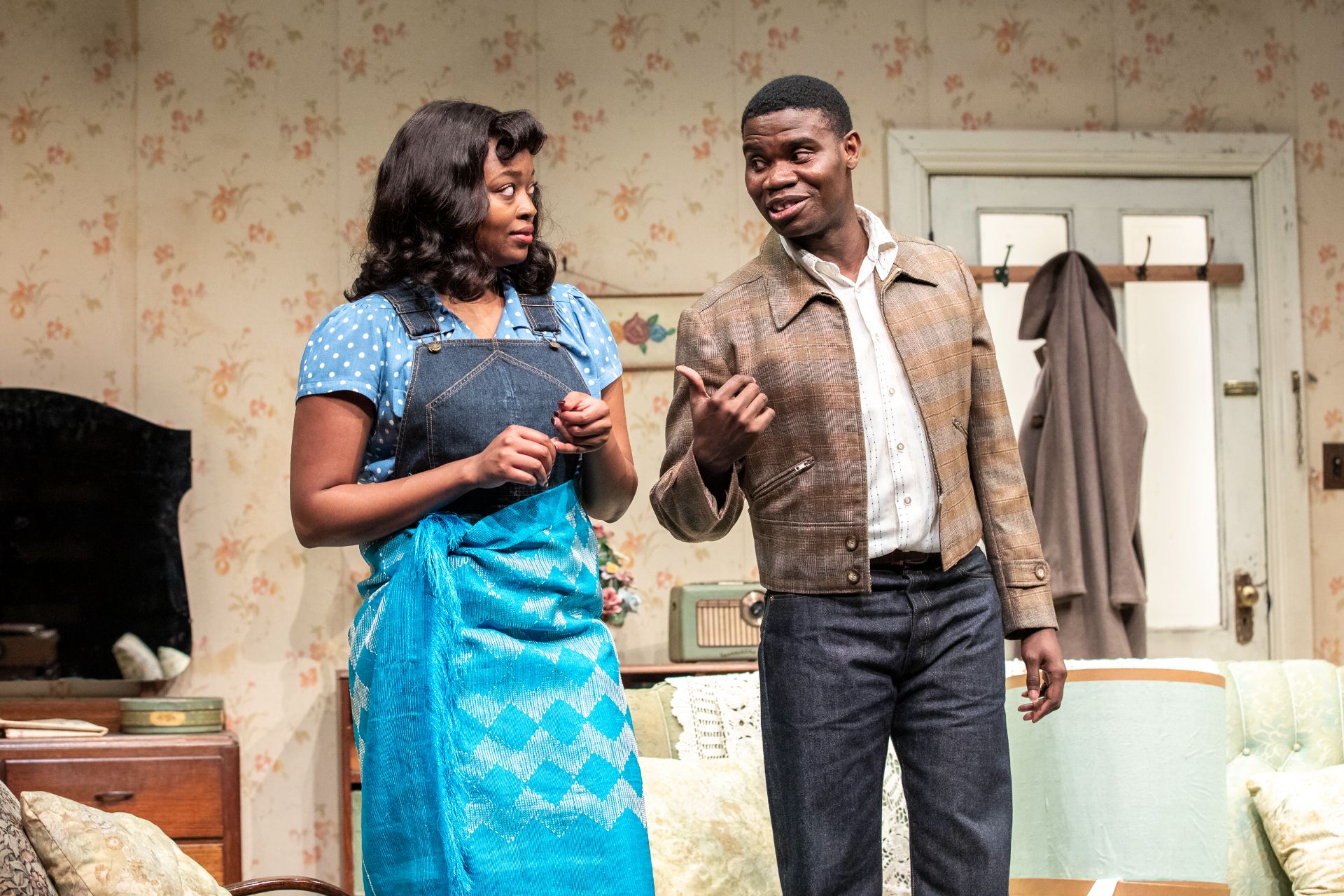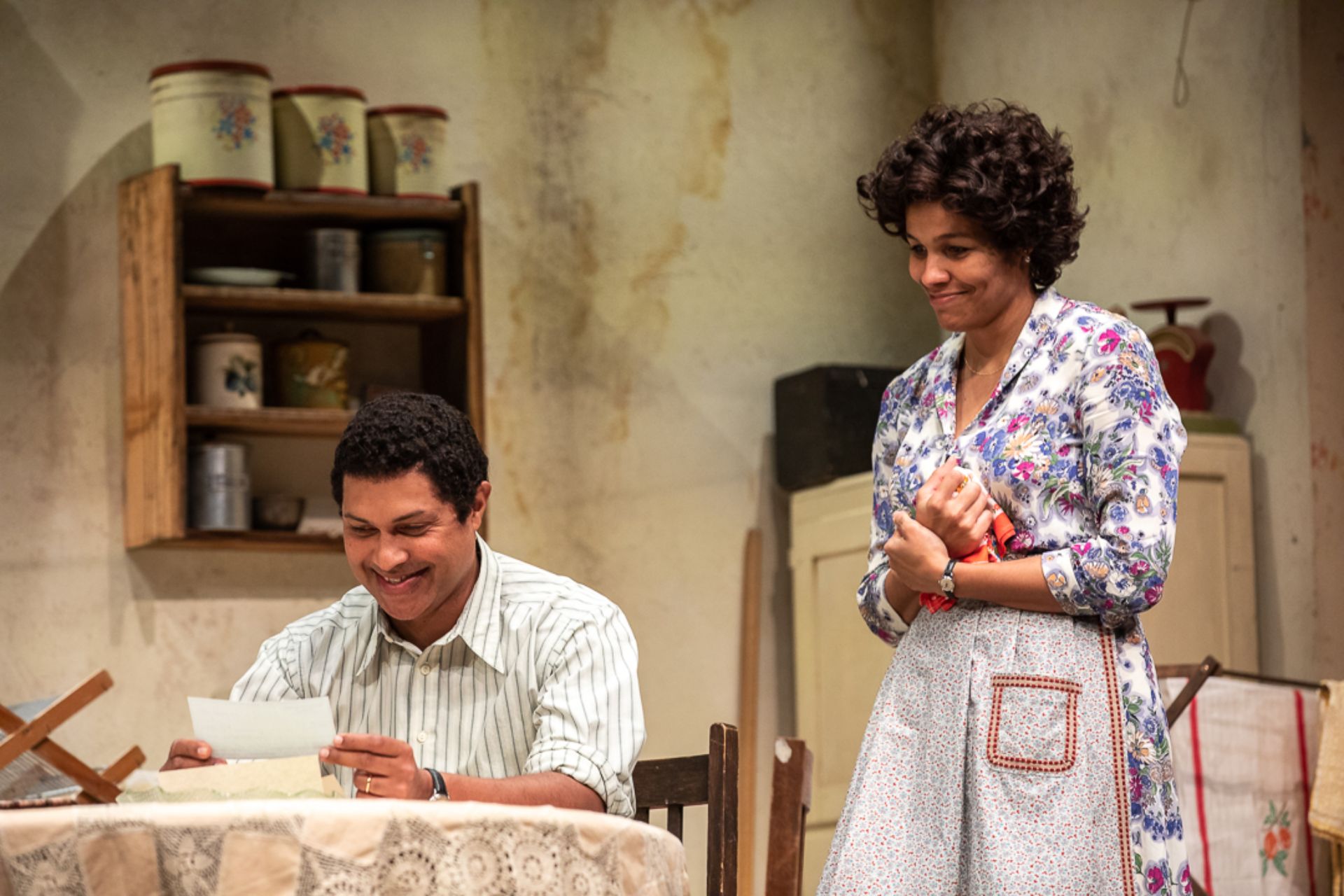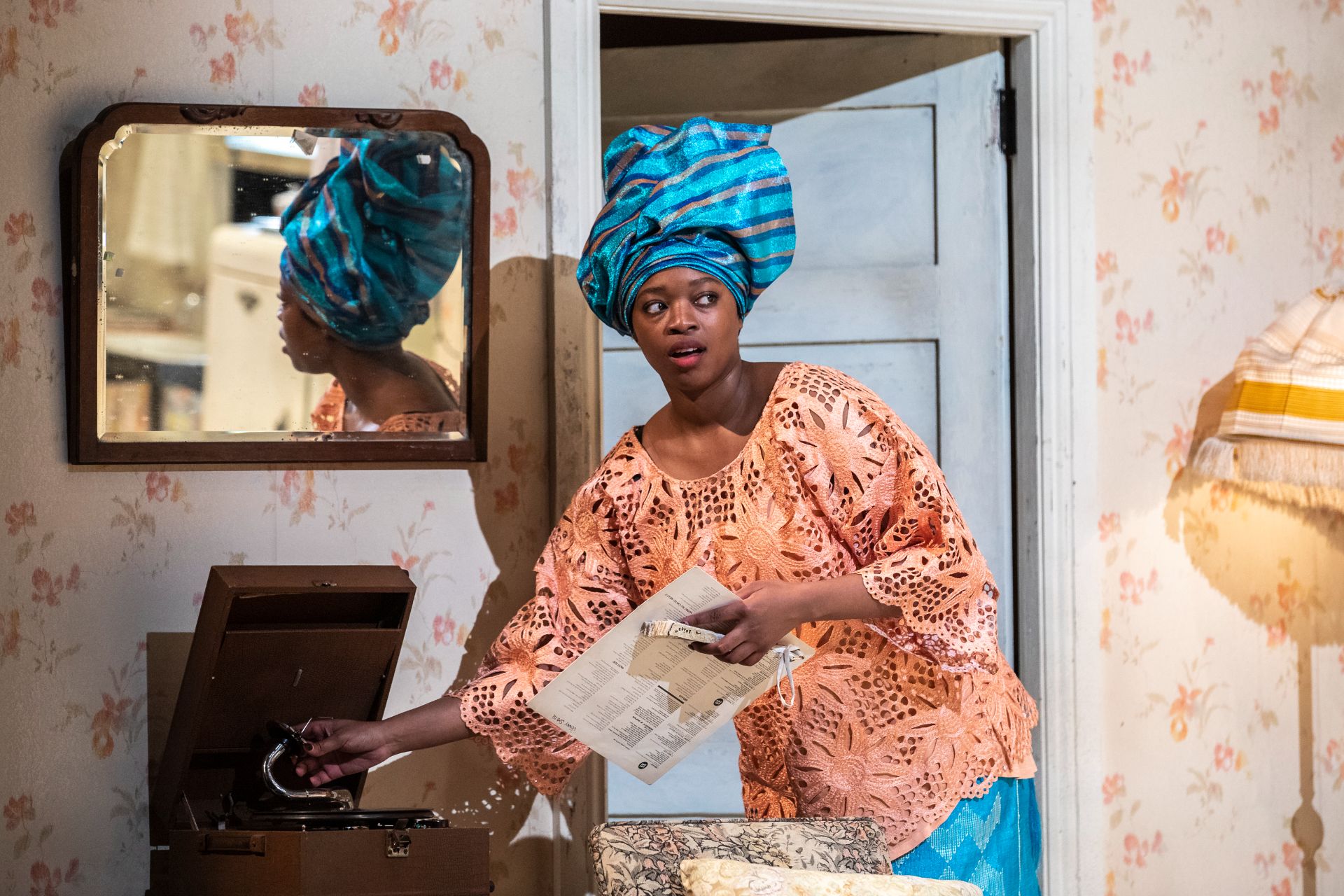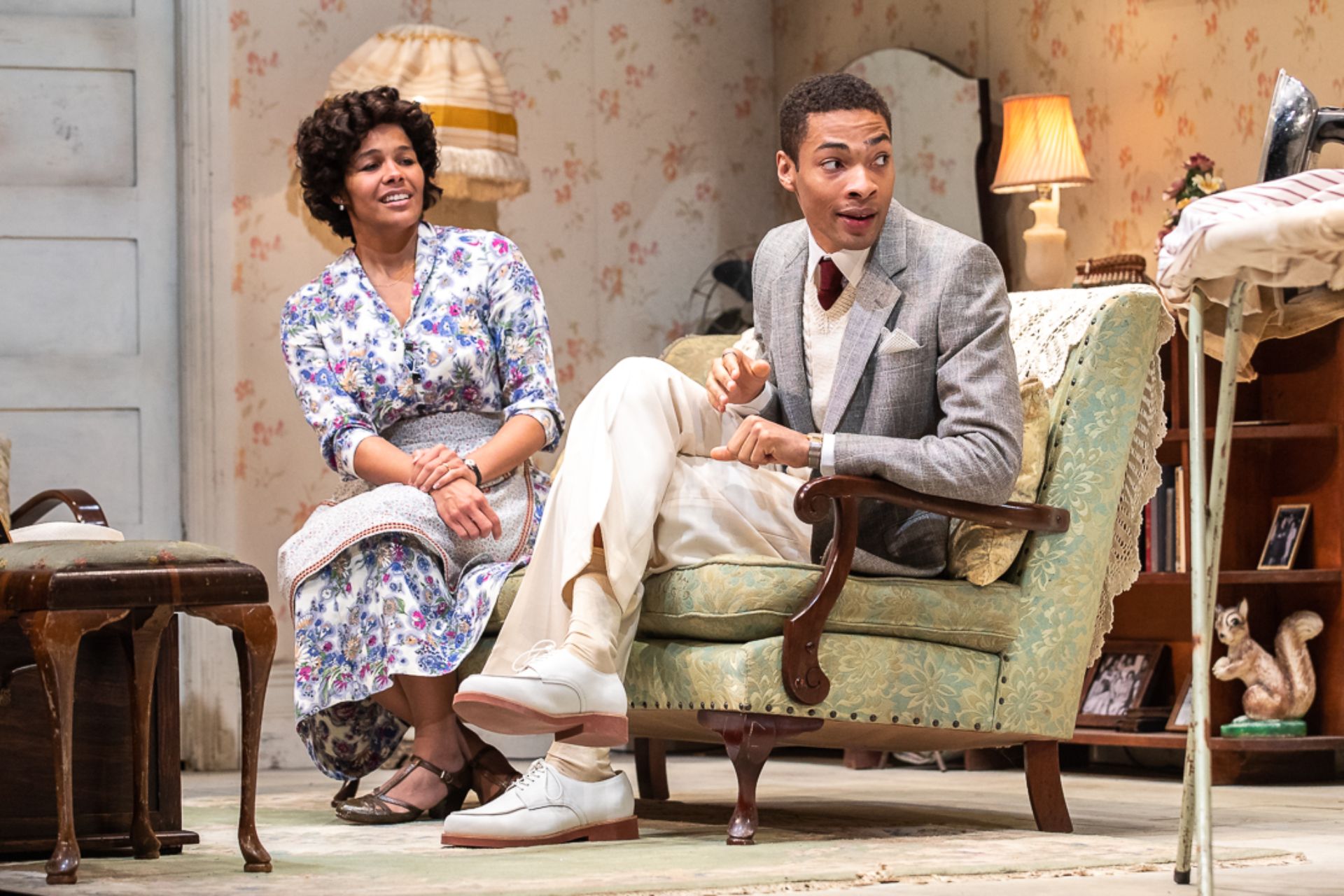

Review: The Poison Of Polygamy (Sydney Theatre Company)

Venue: Wharf 1 Sydney Theatre Company (Walsh Bay NSW), Jun 8 – Jul 15, 2023
Playwright: Anchuli Felicia King (based on the novel by Wong Shee Ping, translated by Ely Finch)
Director: Courtney Stewart
Cast: Ray Chong Nee, Hsin-Ju Ely, Silvan Rus, Shan-Ree Tan, Merlynn Tong, Kimie Tsukakoshi, Anna Yen, Gareth Yuen
Images by Prudence Upton

Theatre review

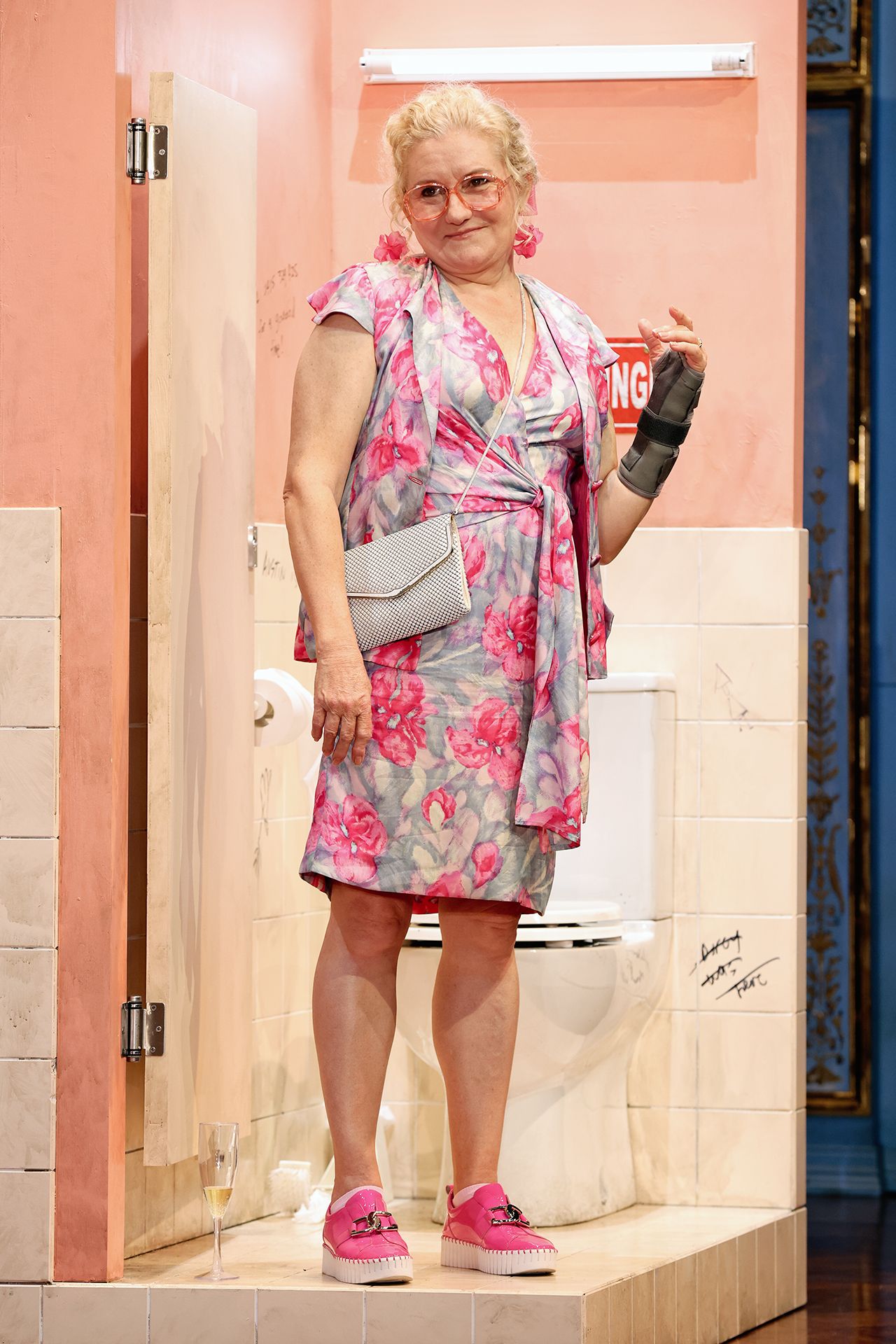
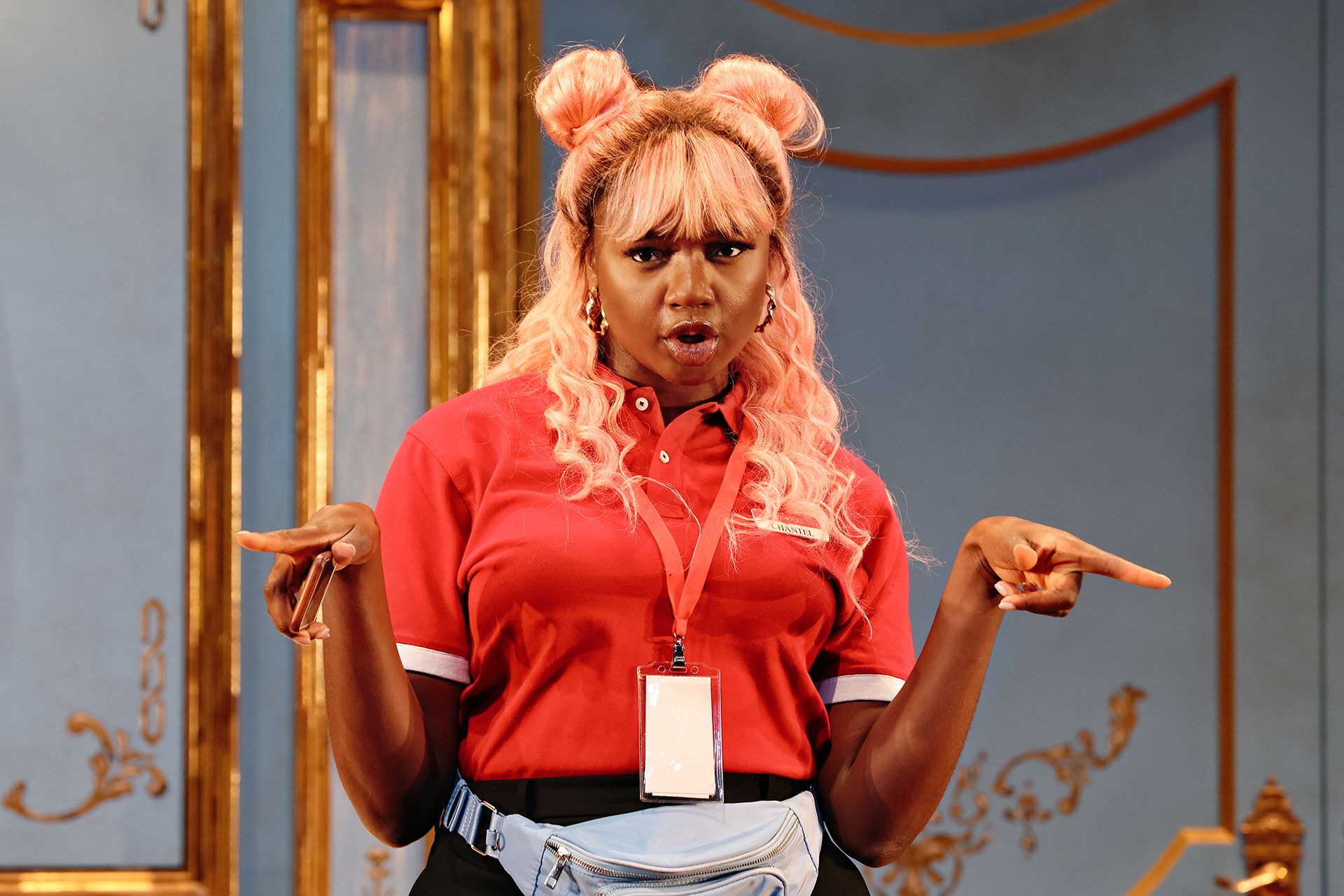
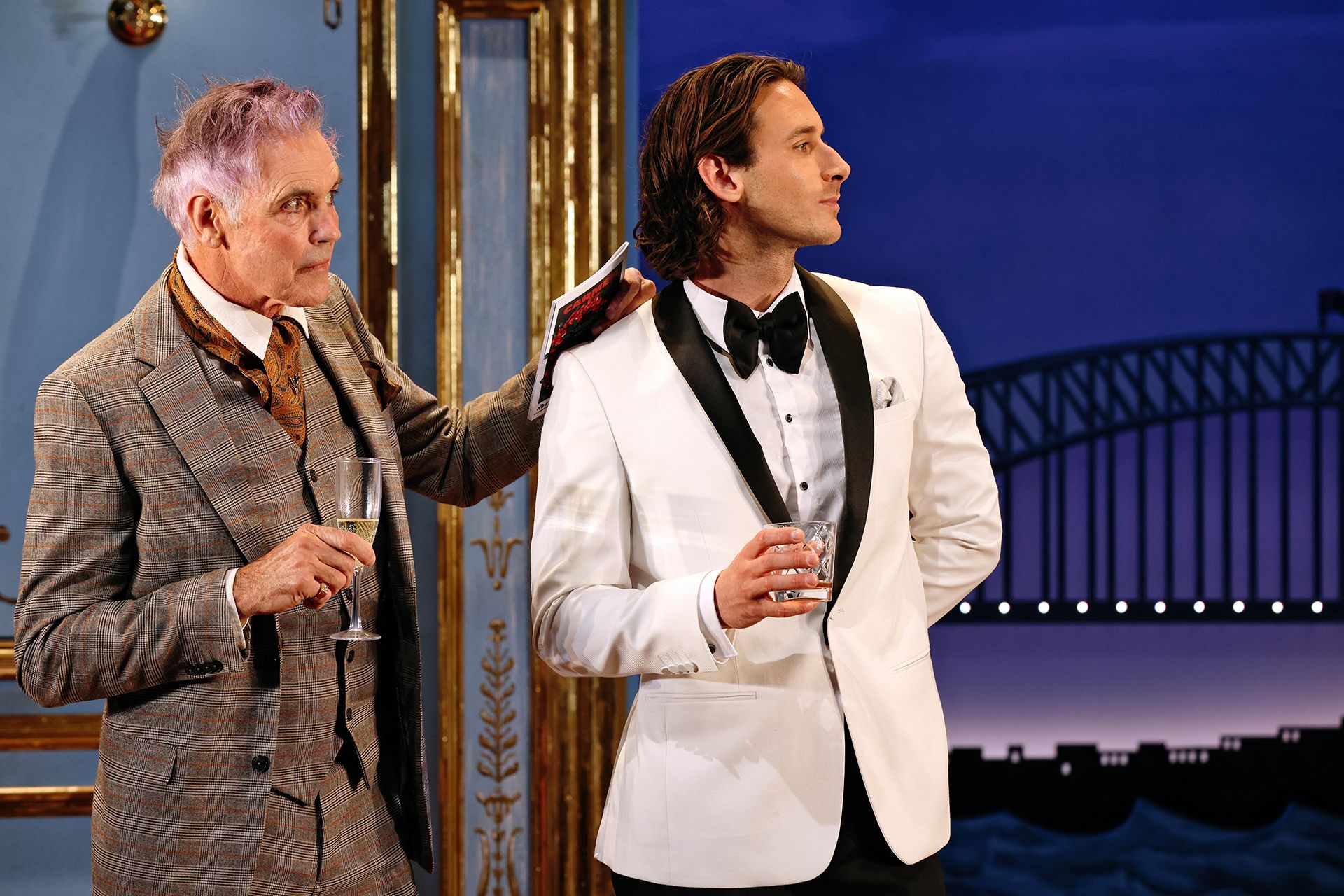
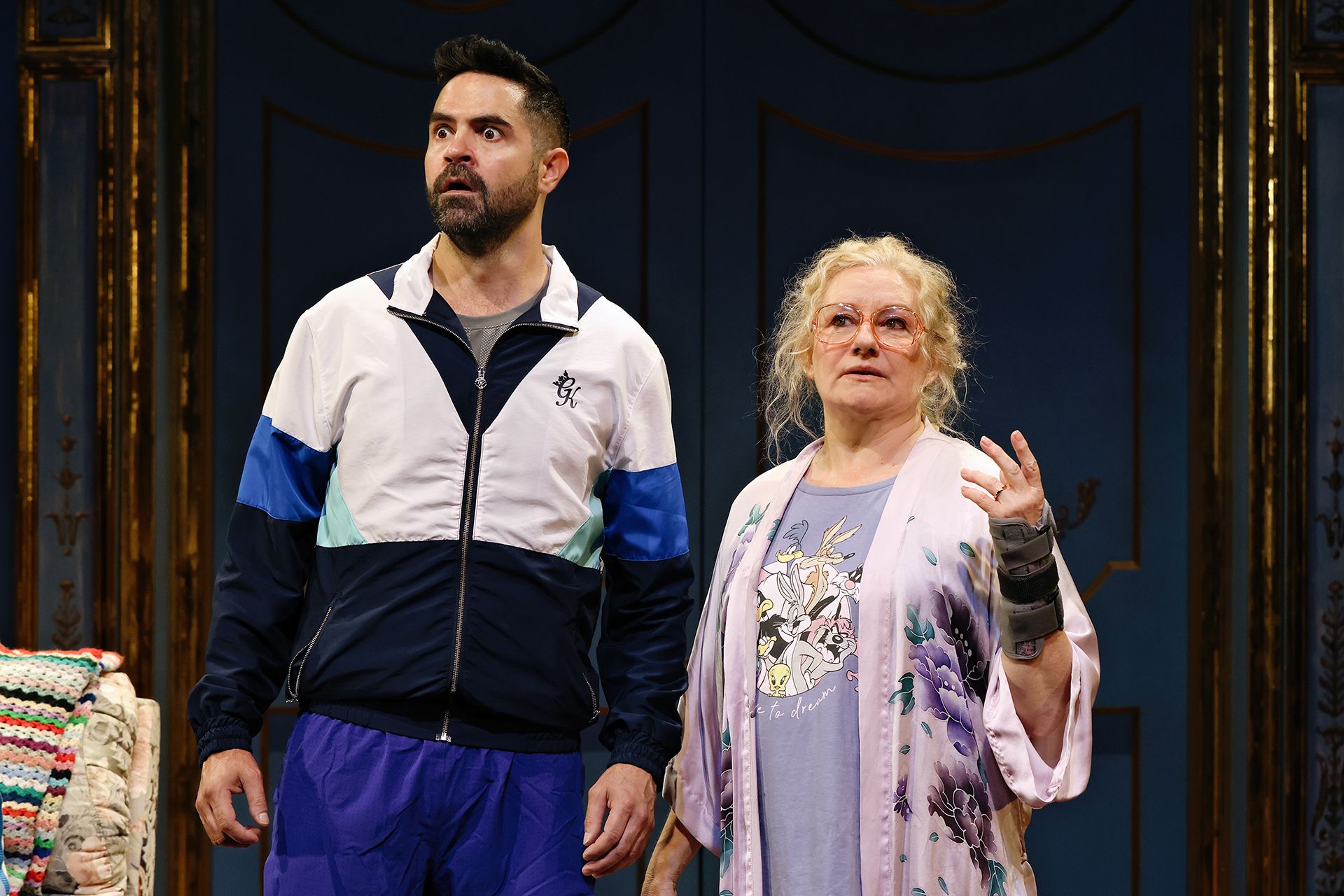
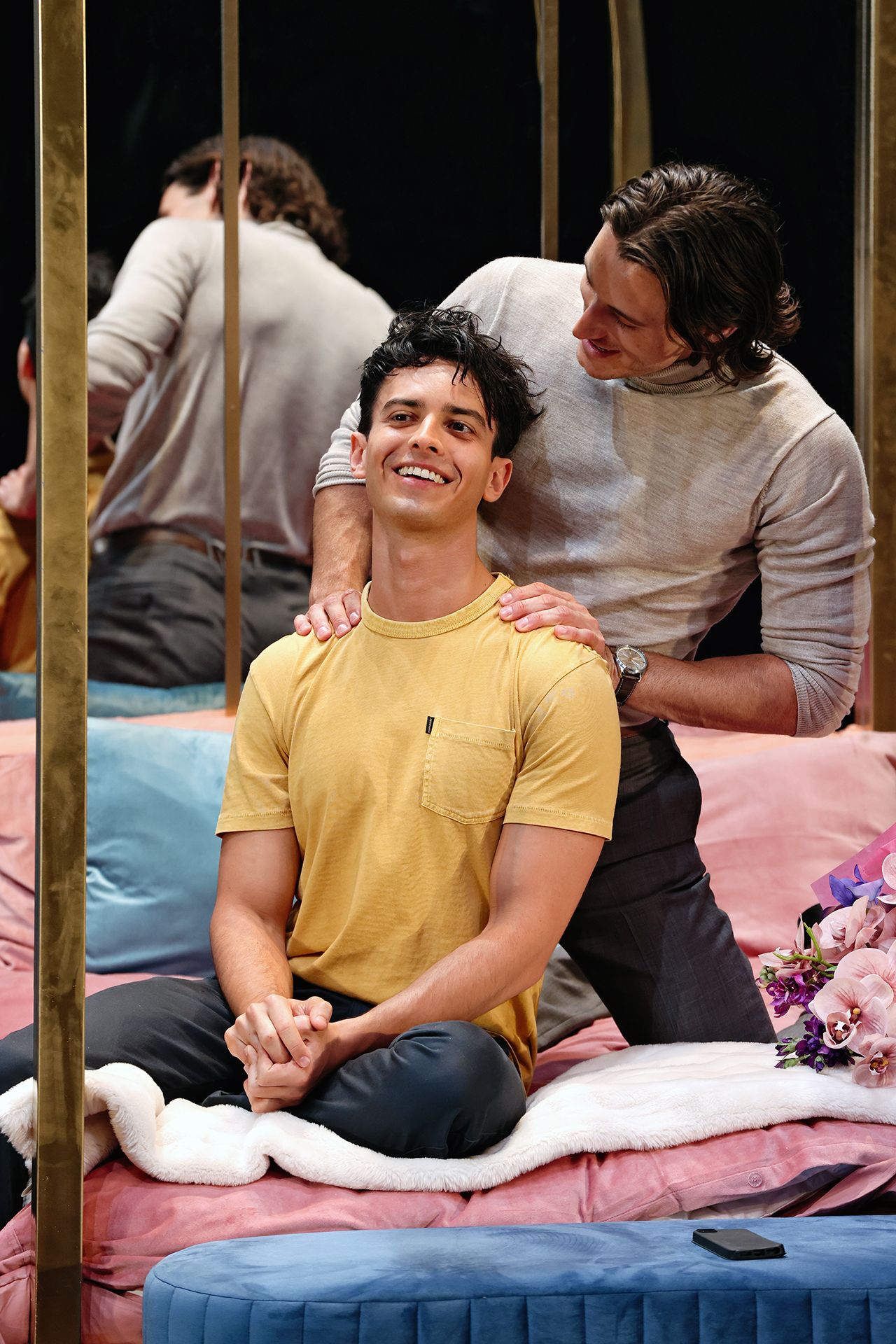
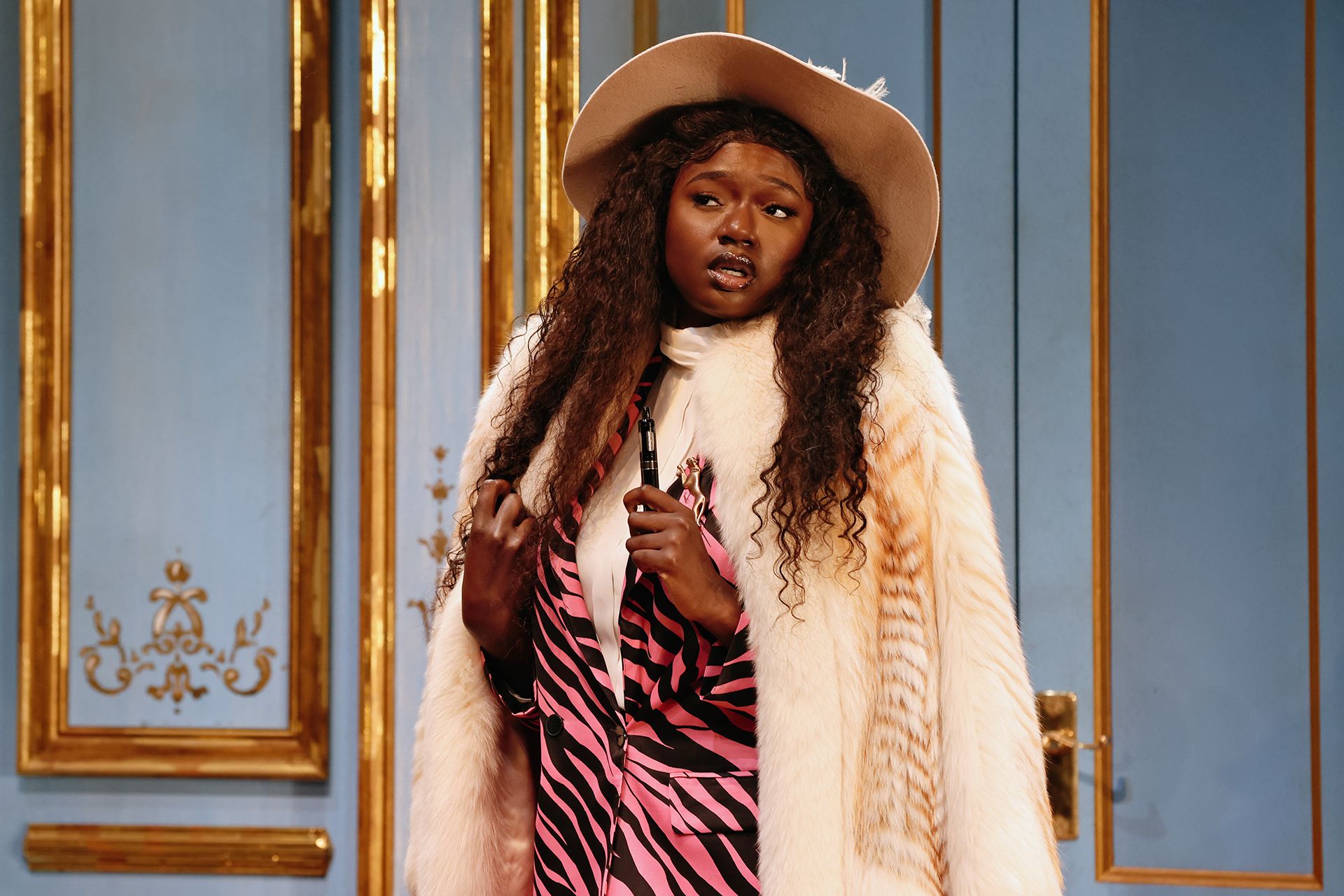
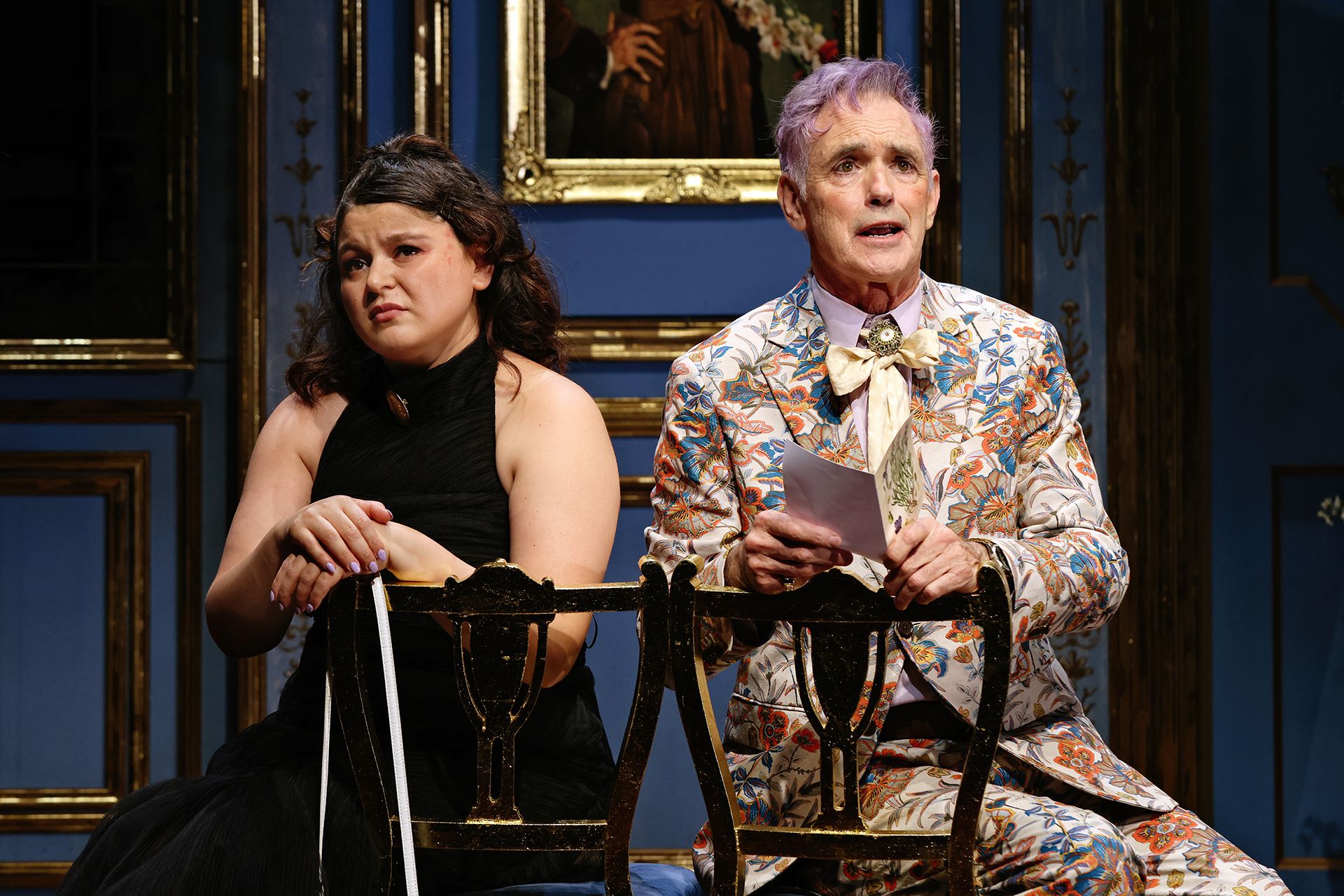
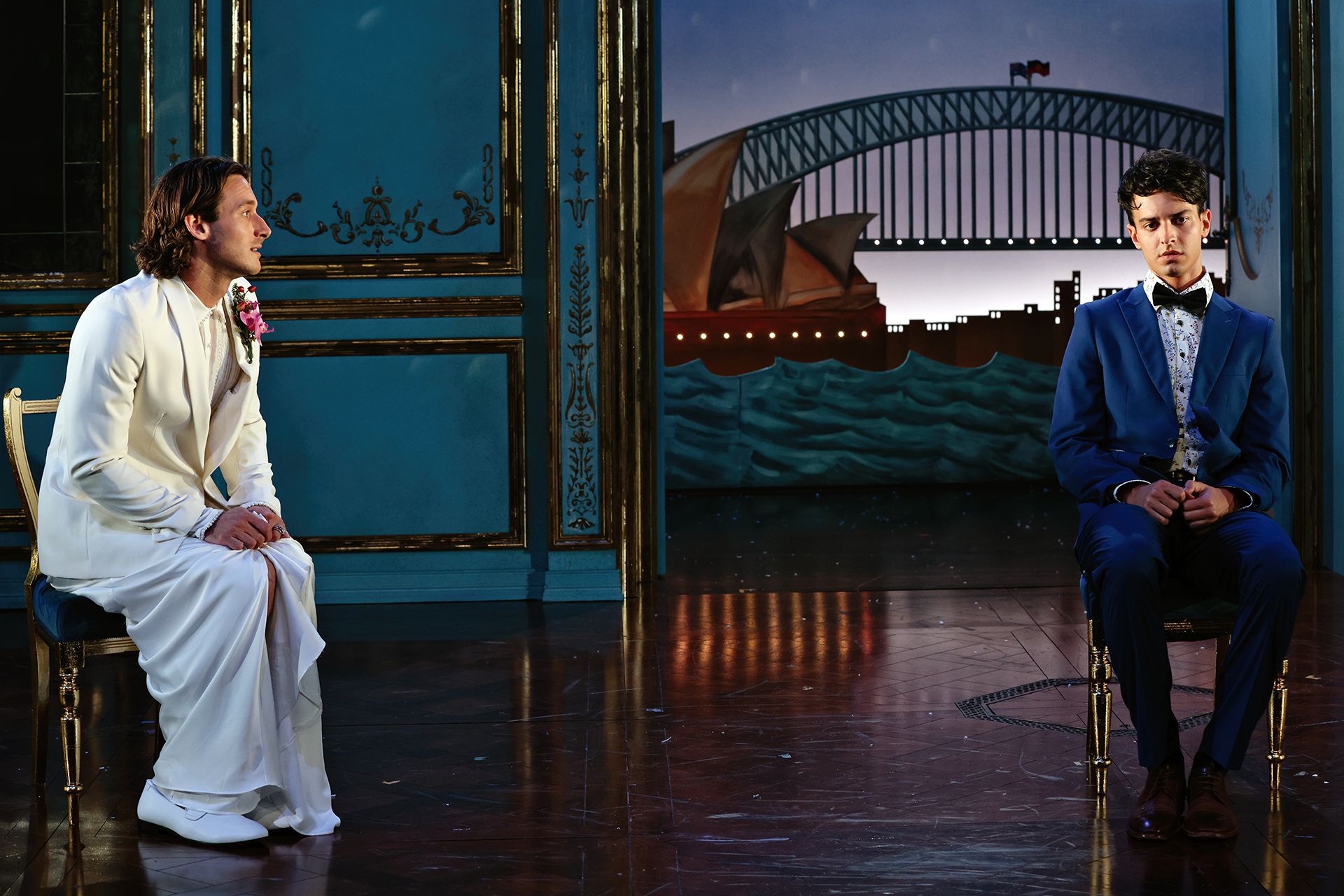
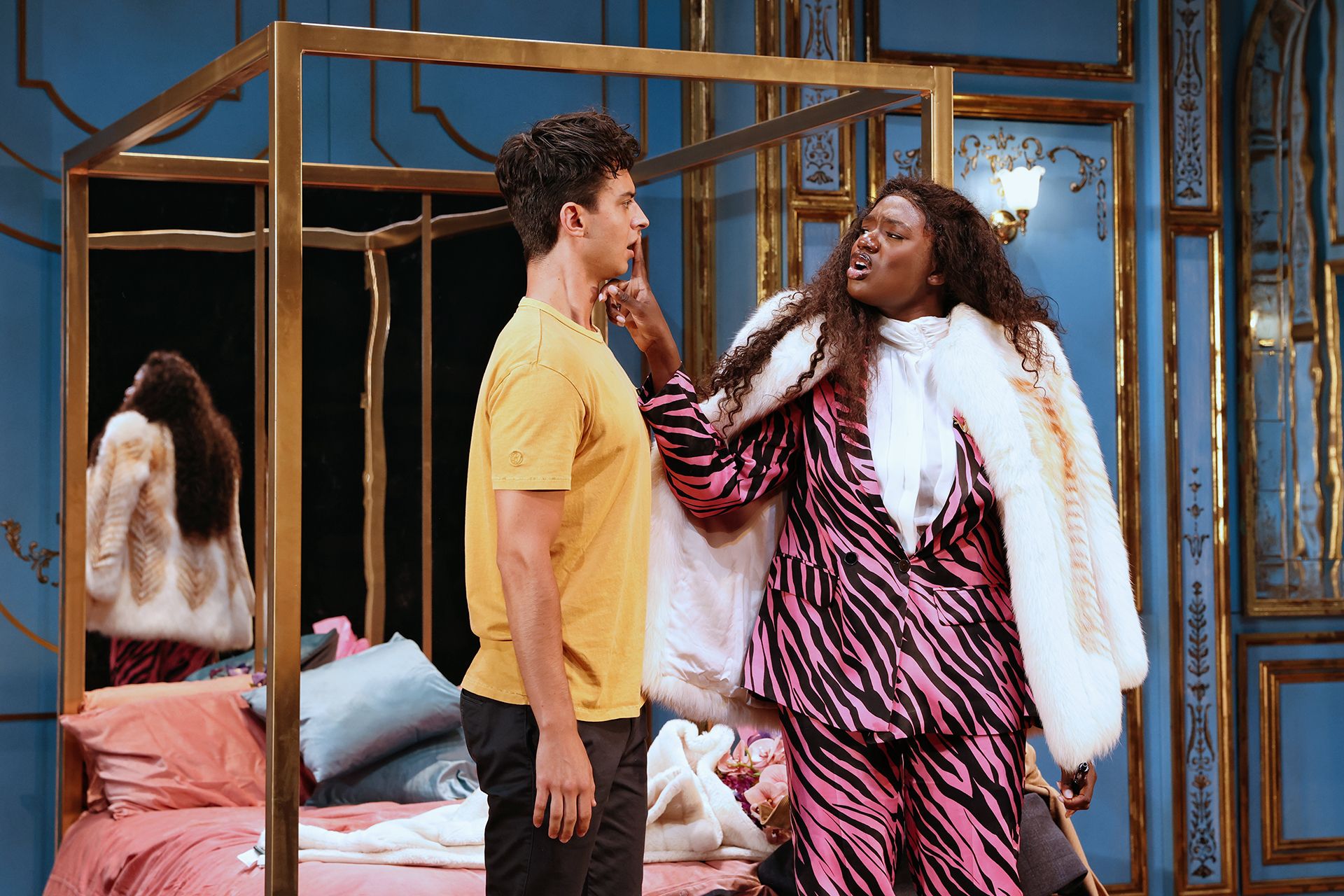
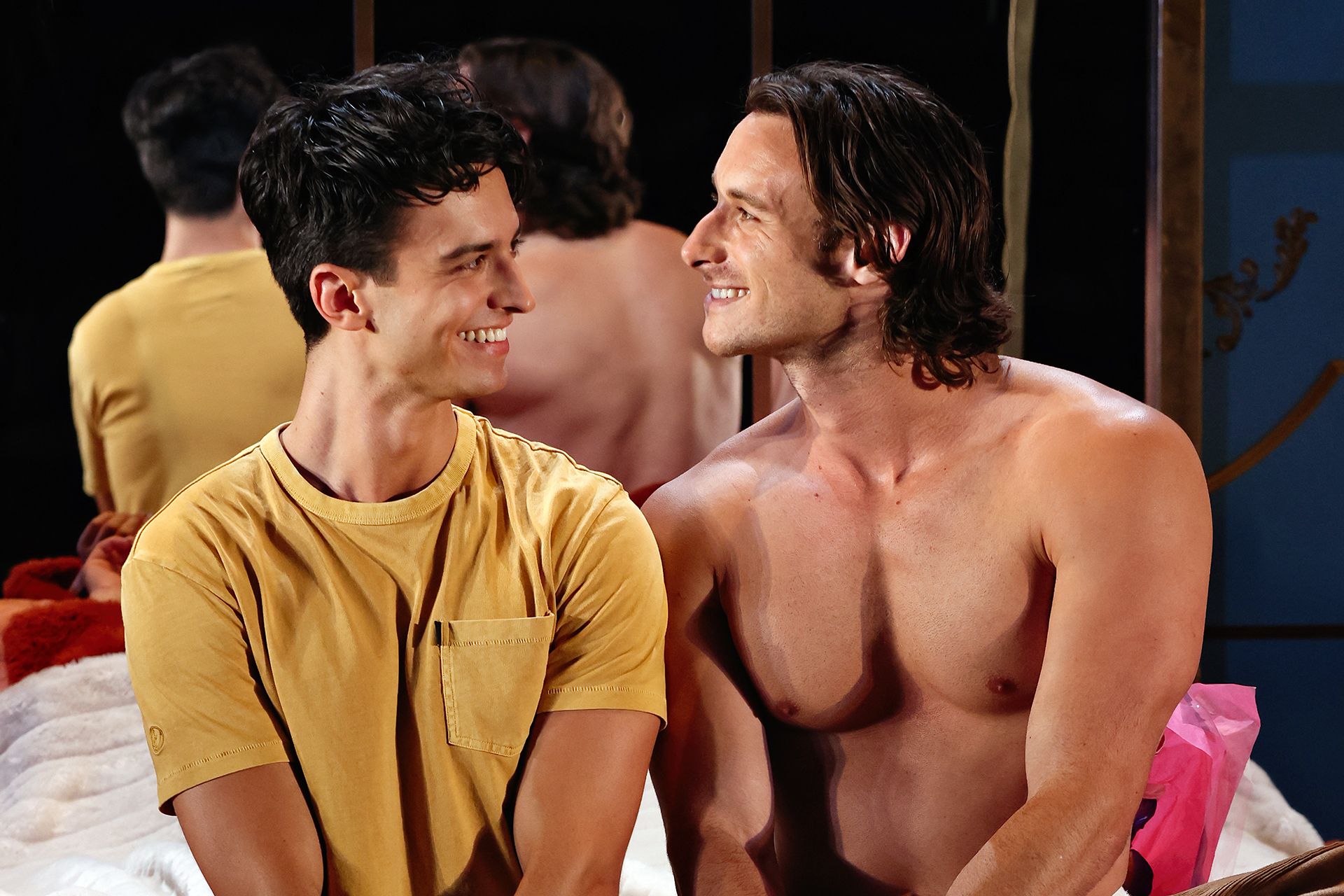
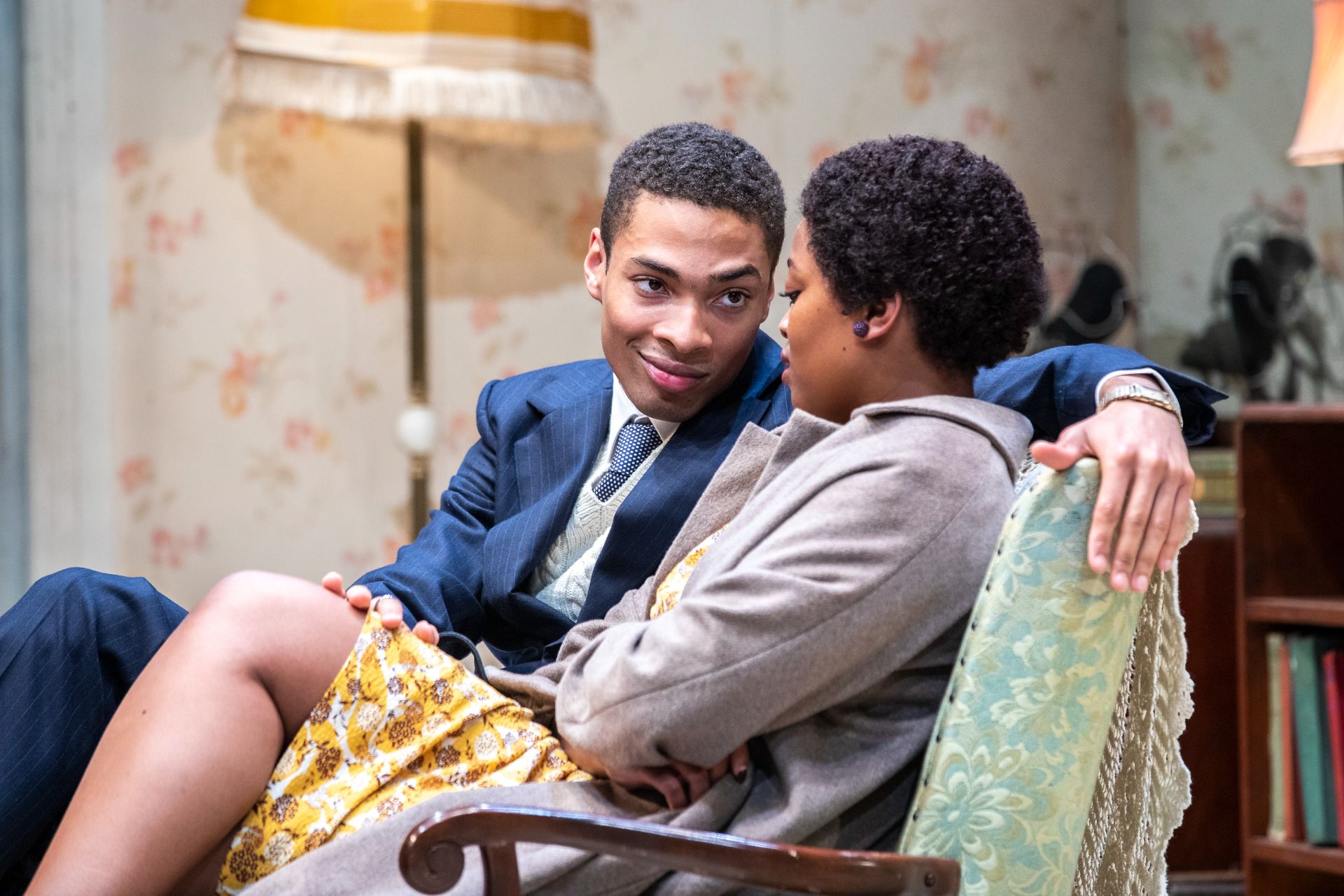
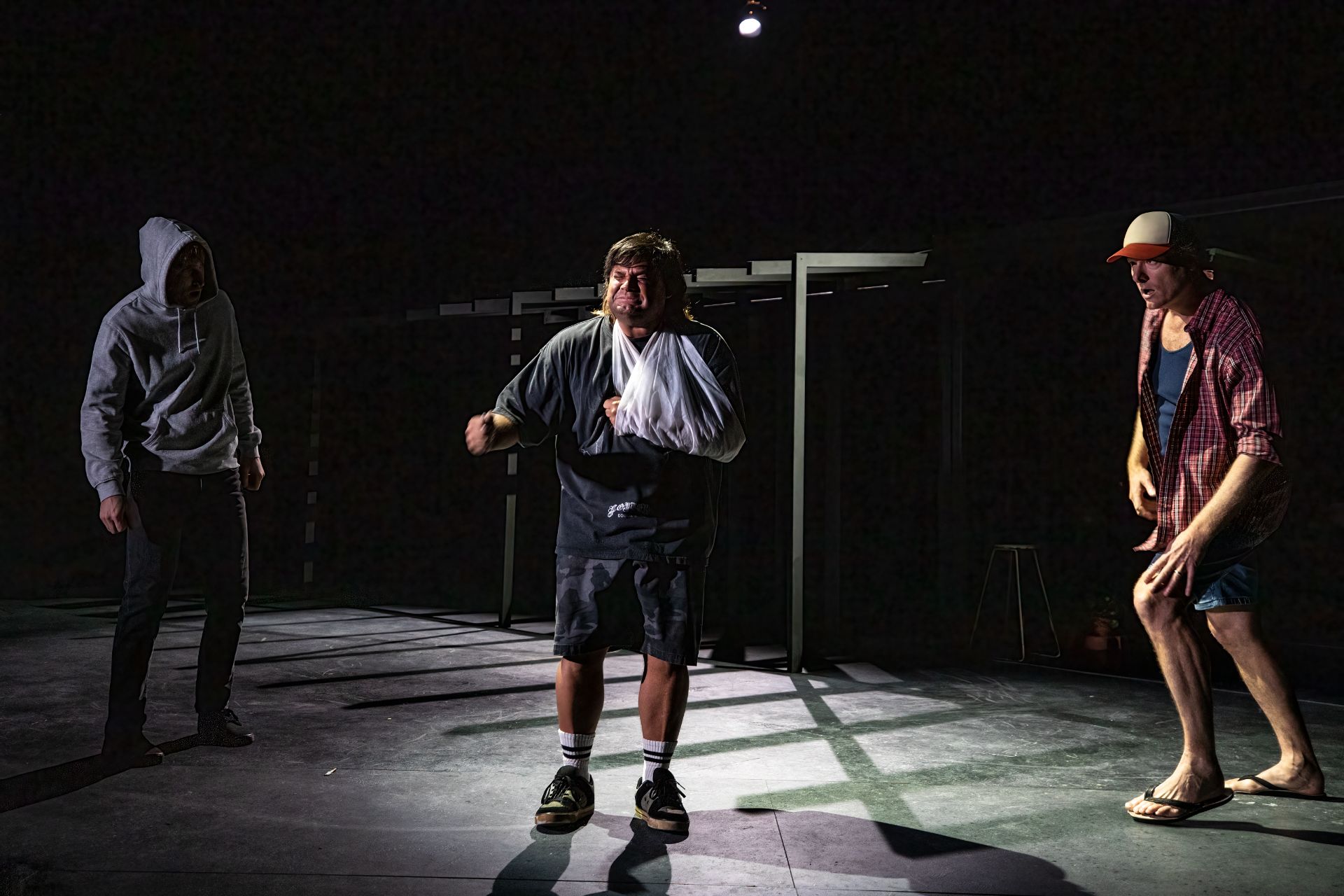
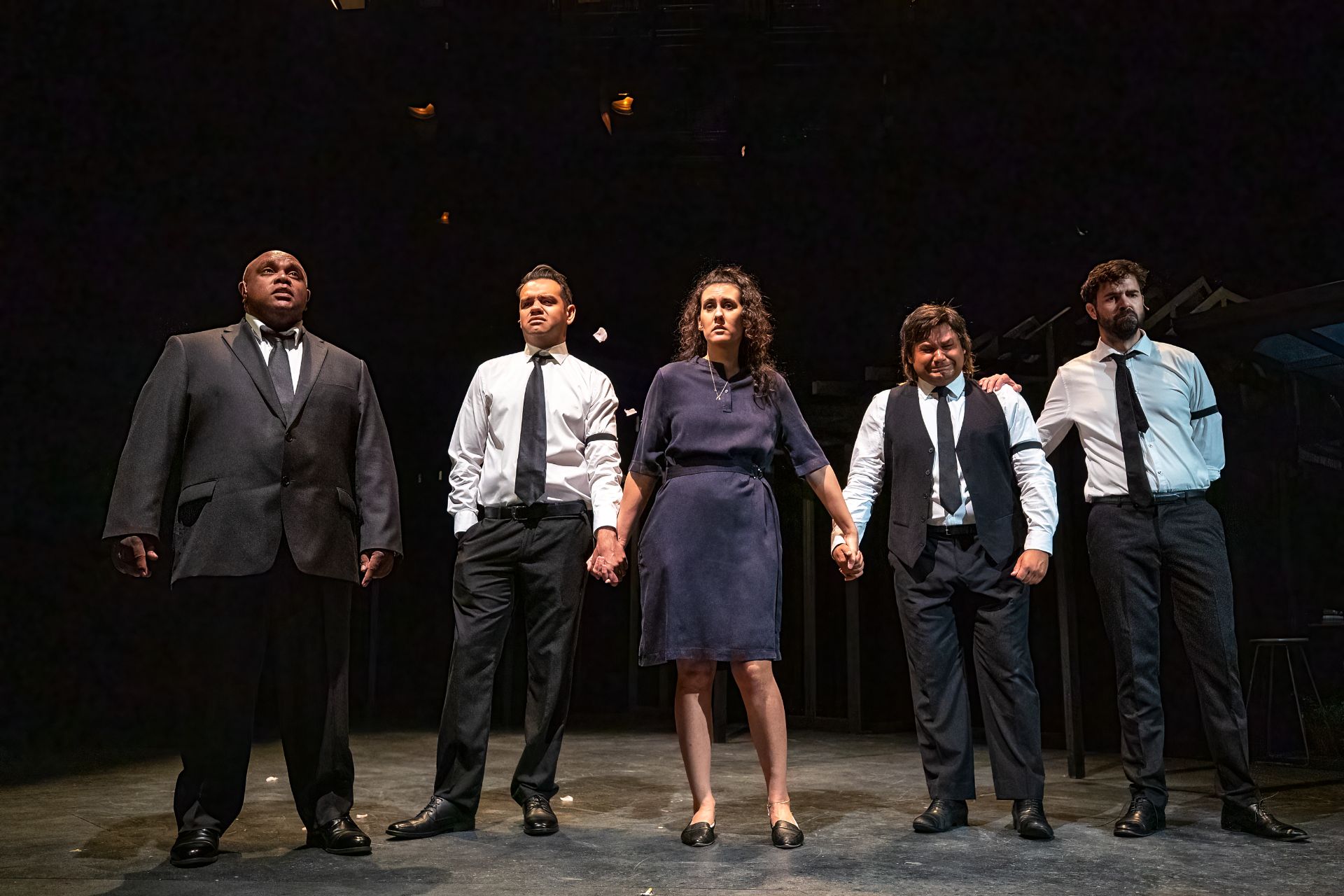
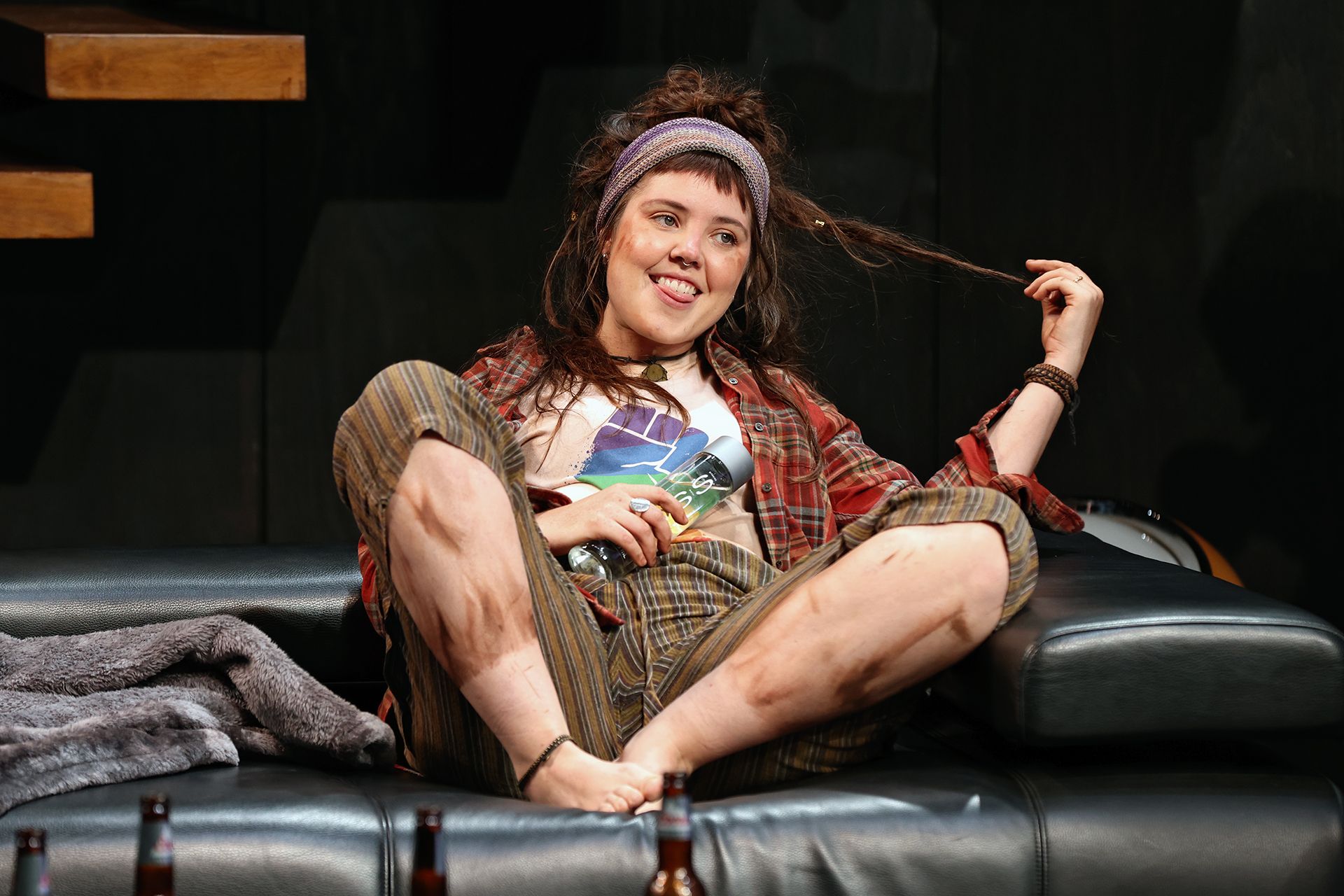
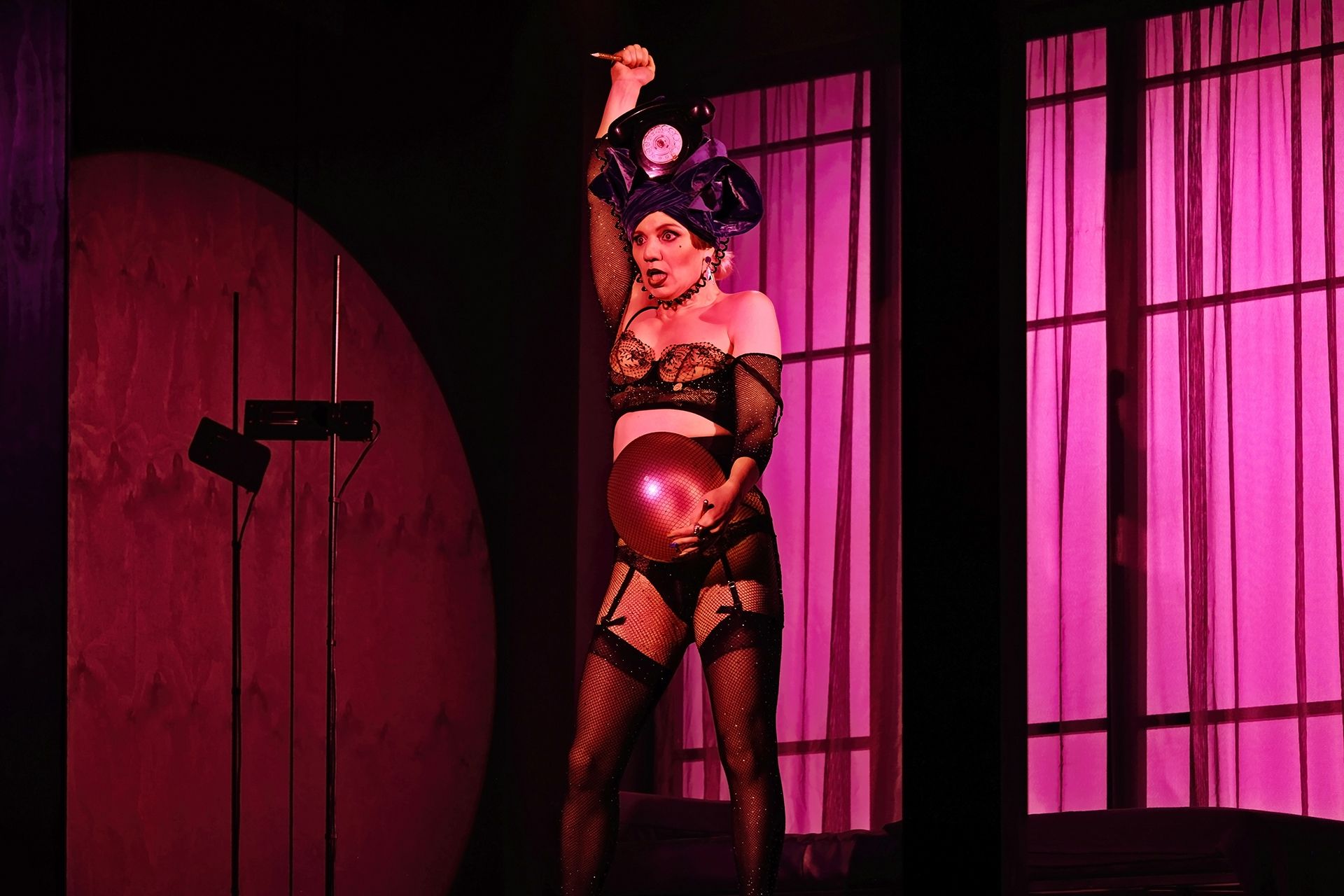
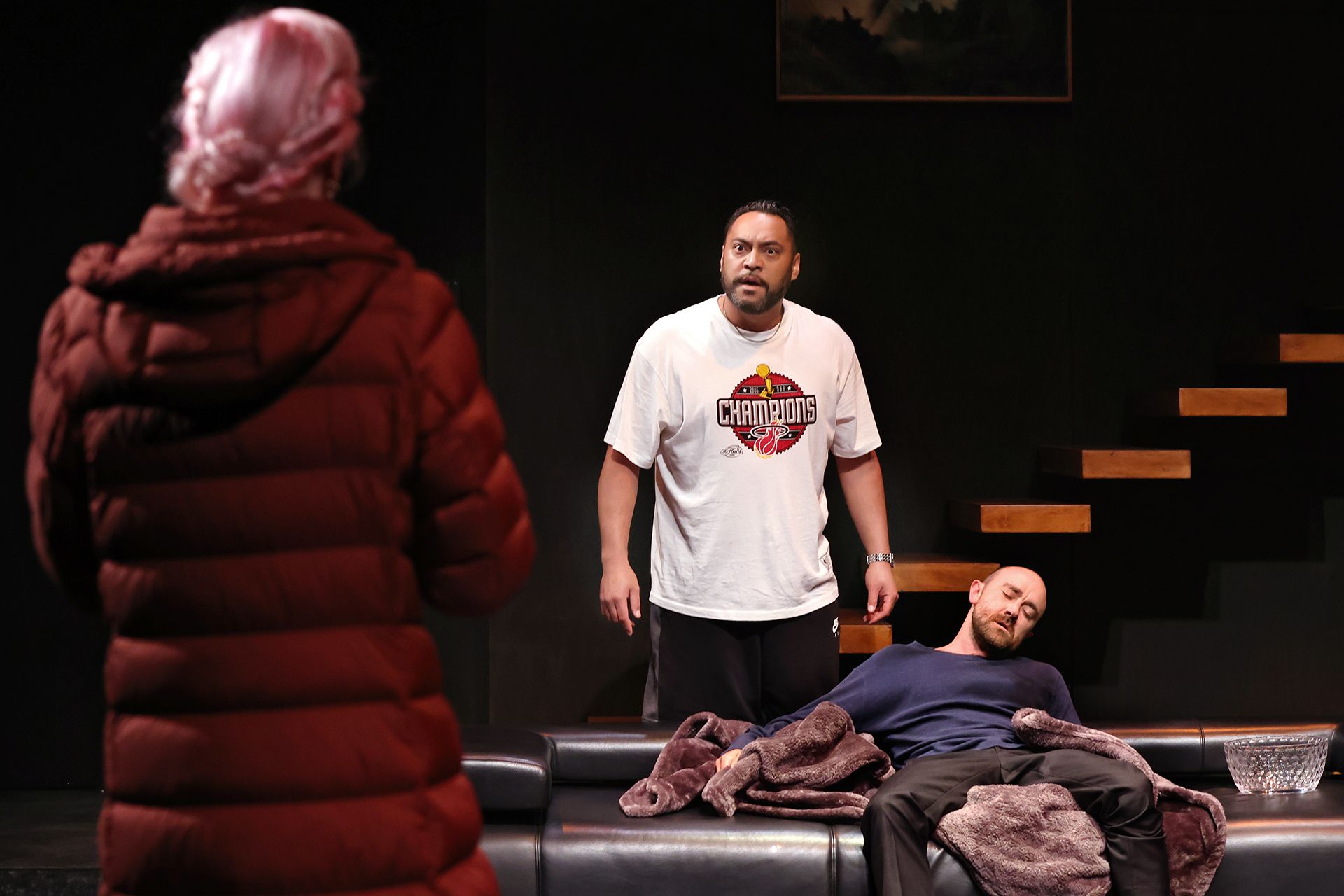
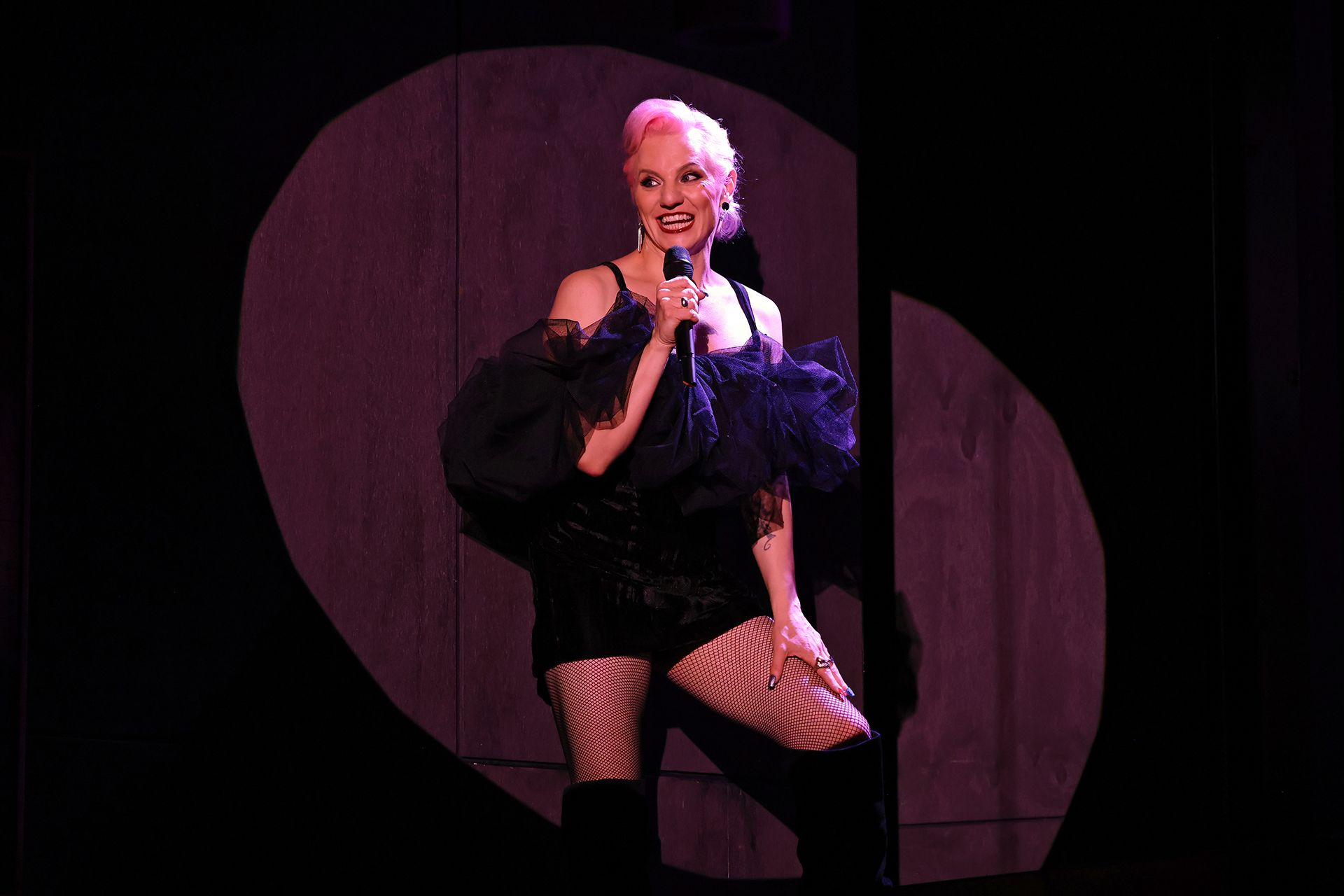
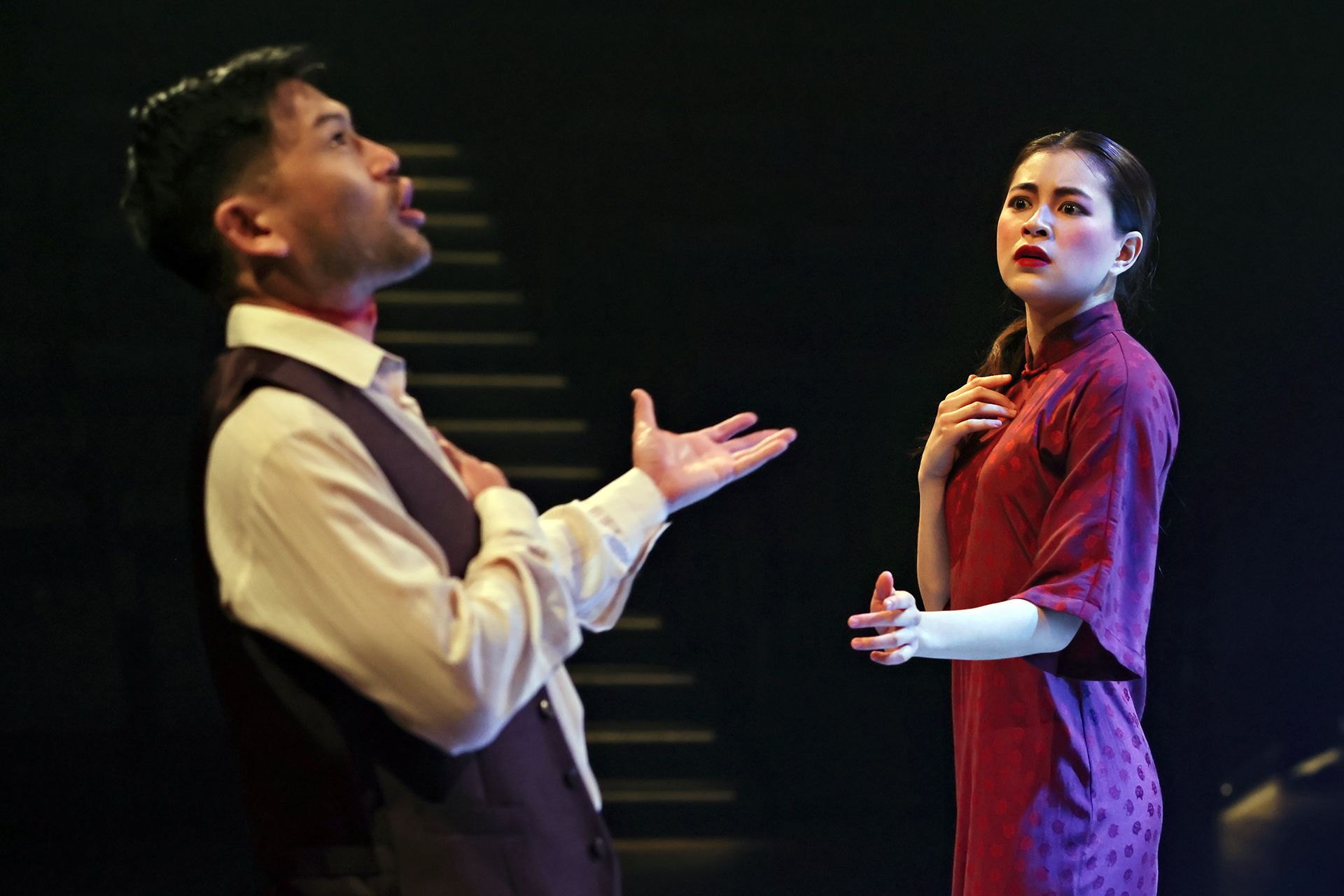
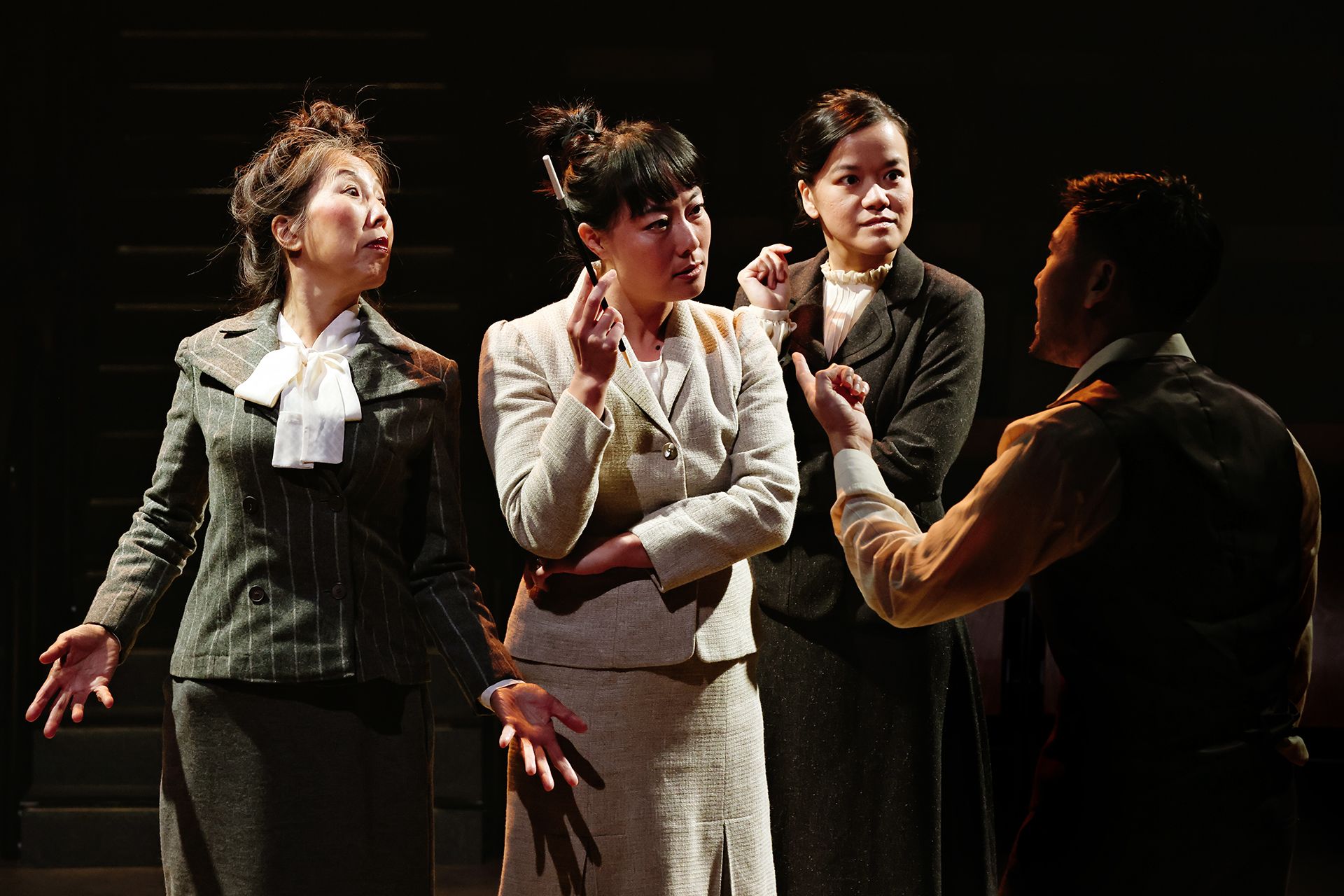
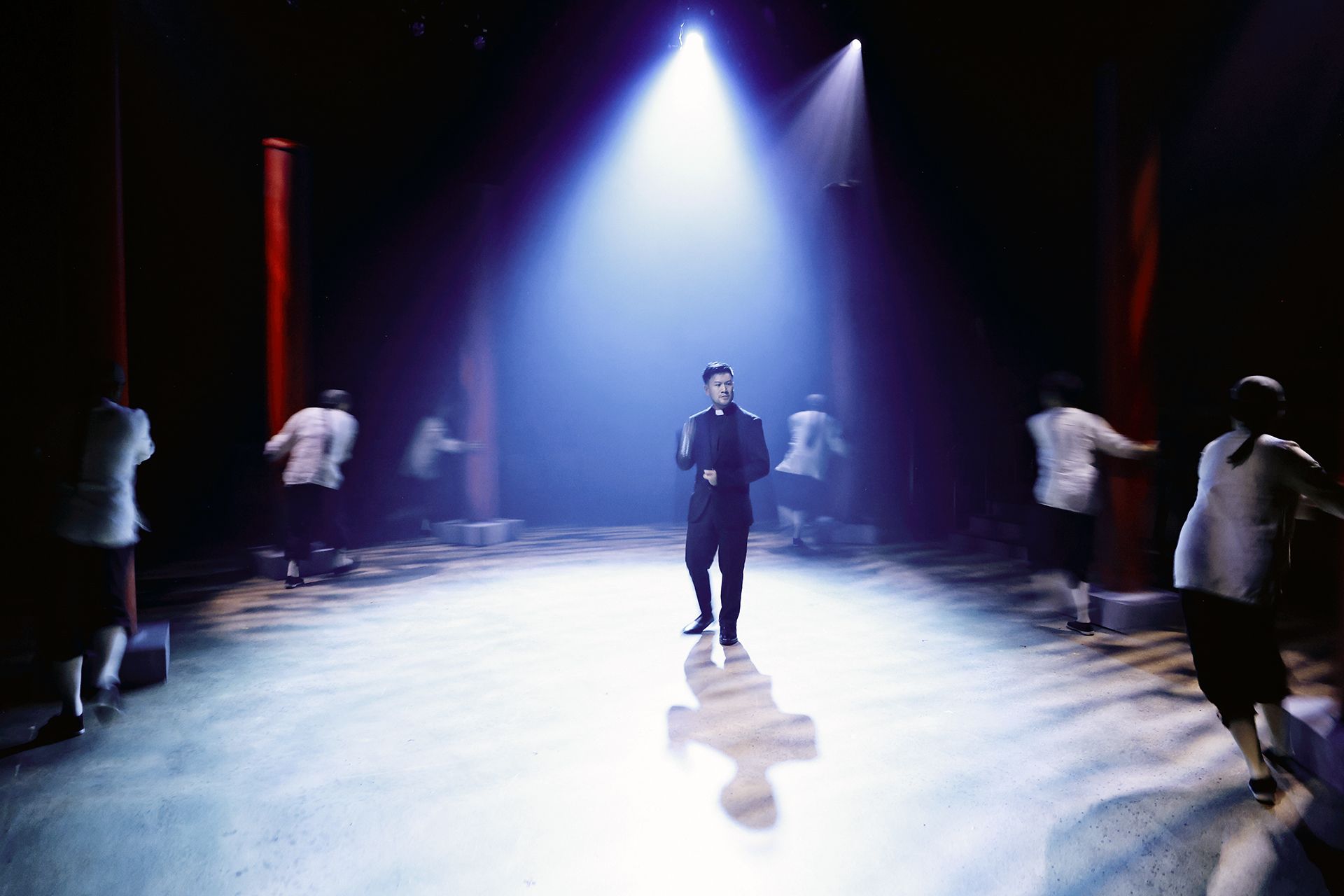
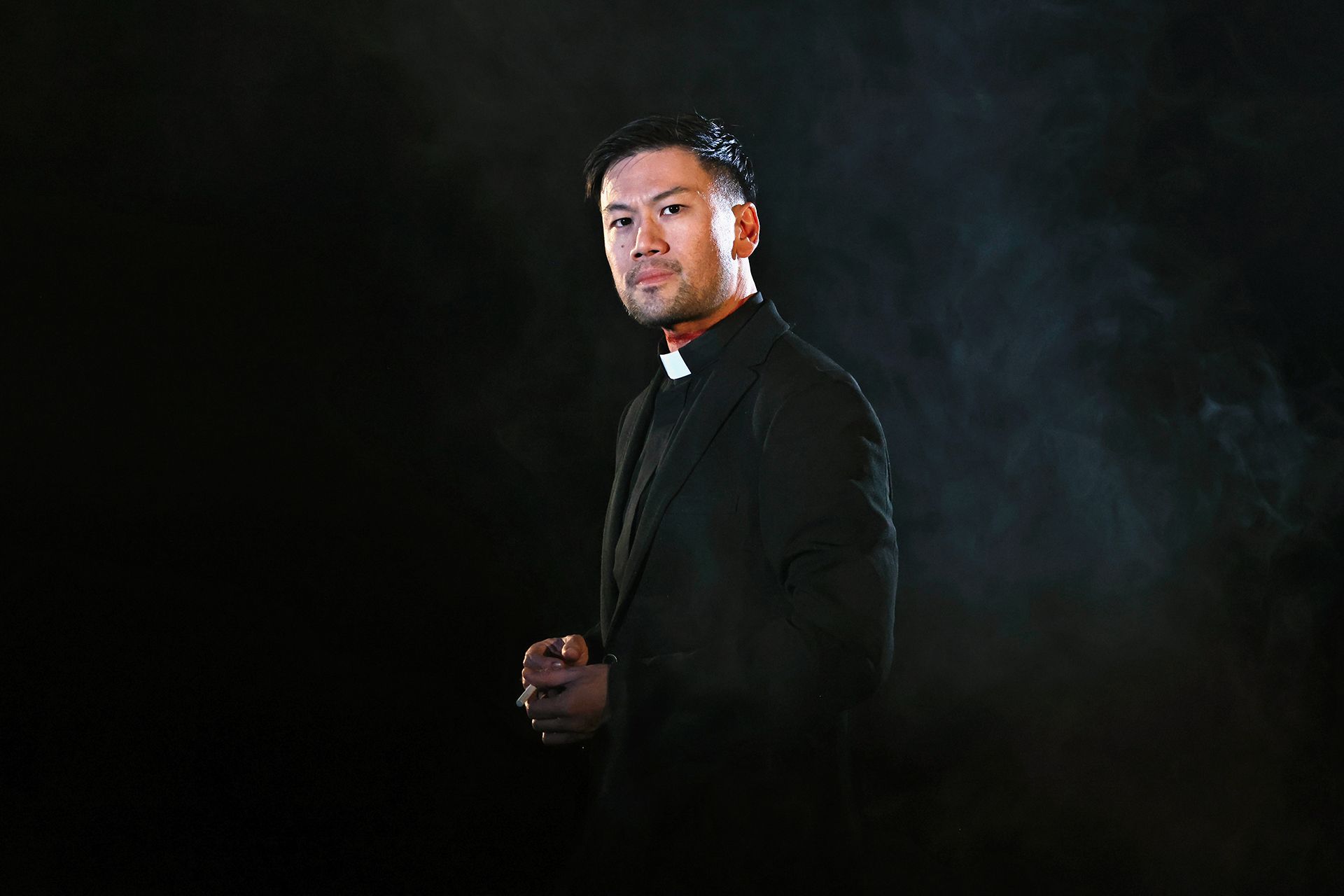
Sleep-Sick appears from the very beginning, as a ghost with his throat brutally slit, indicating that things do not end well. In the 1909 novel The Poison of Polygamy《多妻毒》by Wong Shee Ping 黃樹屏, our narrating protagonist tells his epic story, of journeys between Guangdong in China, and Victoria in Australia, during the goldrush era. We soon discover that it was Sleep-Sick’s opium habit that instigated this riveting chain of events, one that Wong had undoubtedly conceived as a moralistic tale. Involving sins of greed and debauchery, The Poison of Polygamy is typical of traditional Chinese attitudes, in a style that is not unlike many classics charting a man’s downfall, following his failure to abstain from depravity.

In Anchuli Felicia King’s stage adaptation however, the moral centre is shifted from personal foibles, to an emphasis on deficiencies that are cultural and systemic in nature. Sleep-Sick’s narrative now operates as allegory, in a play that demonstrates undeniable interest, in the nature of capitalism and the detrimental effects of colonialism. King’s reshaping of The Poison of Polygamy is thereby turned into something much more pertinent to our times, one that addresses our unmitigating concerns around the idea of a decline in this civilisation. All the amusing salaciousness that feature in the original is however gloriously retained. Money, sex, and murder are key ingredients, in a show that explores our most primal and unchanging desires.

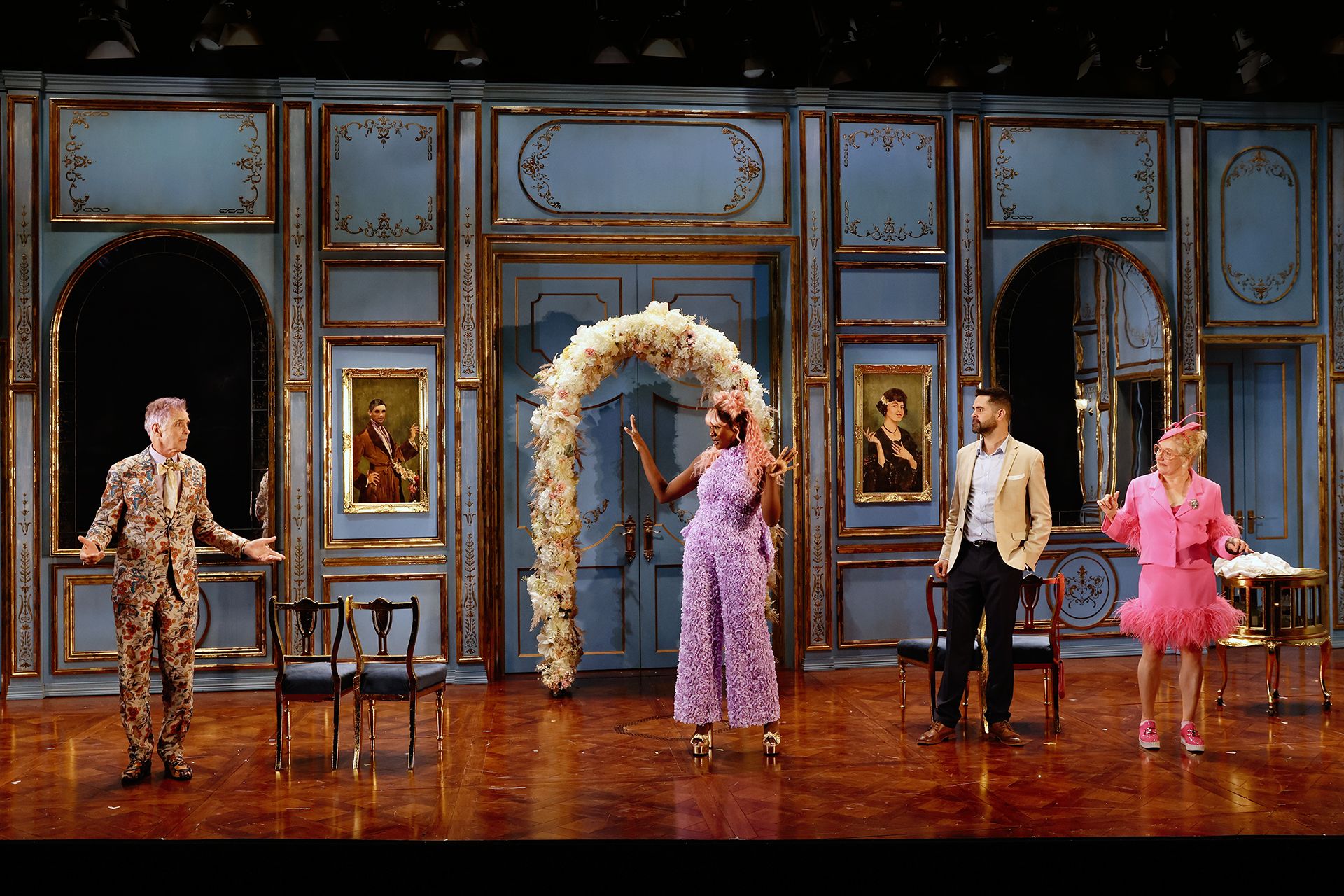
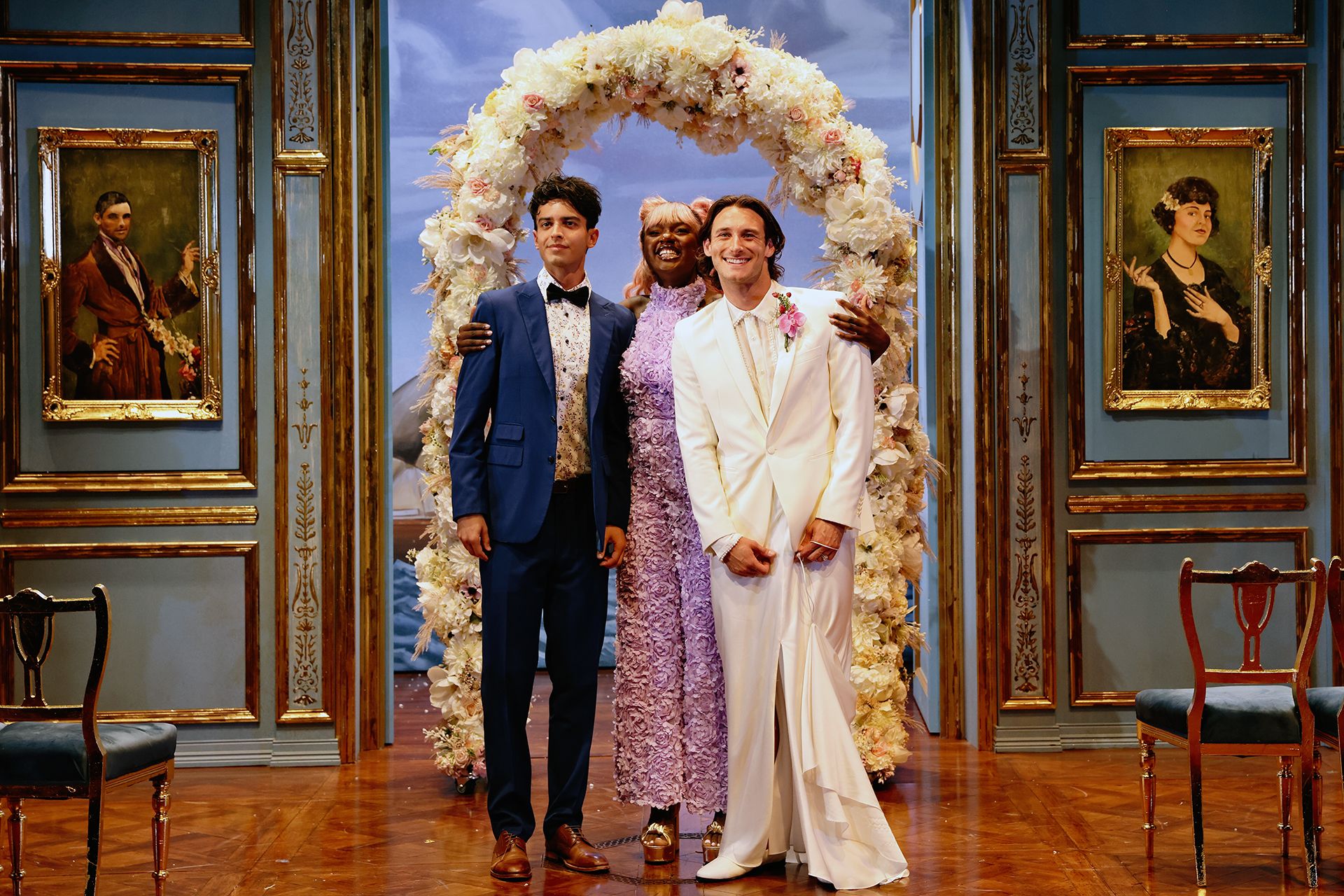
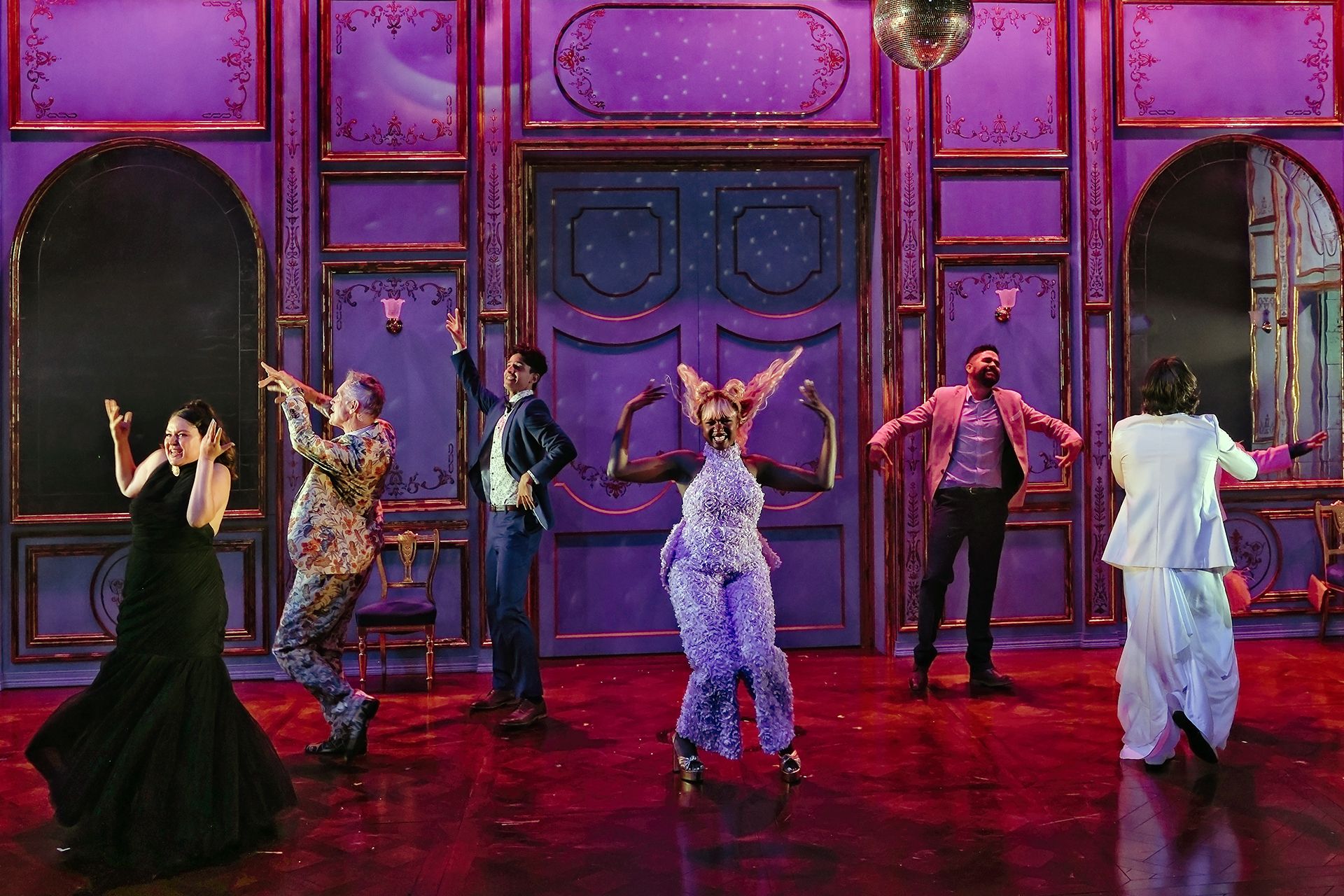
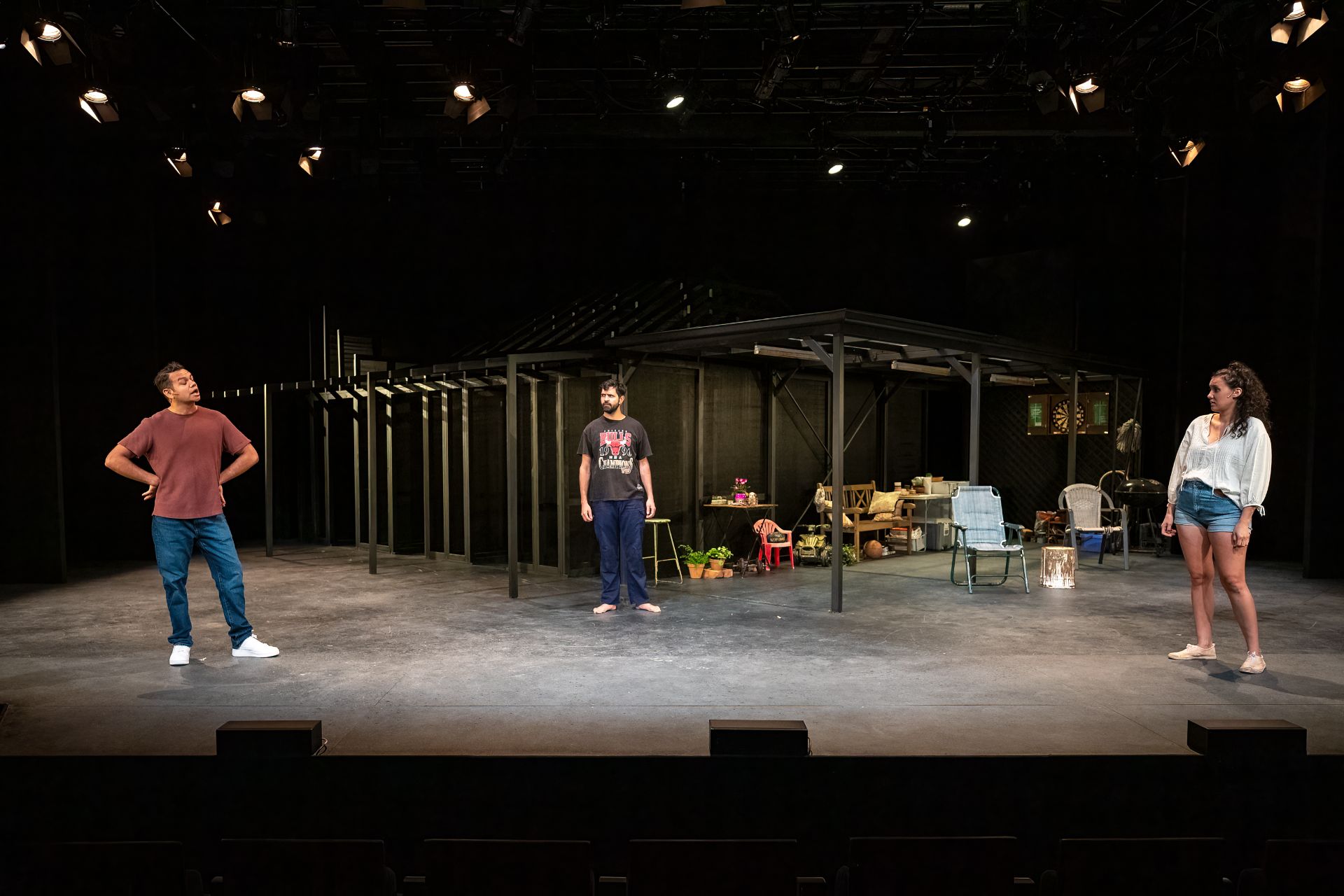
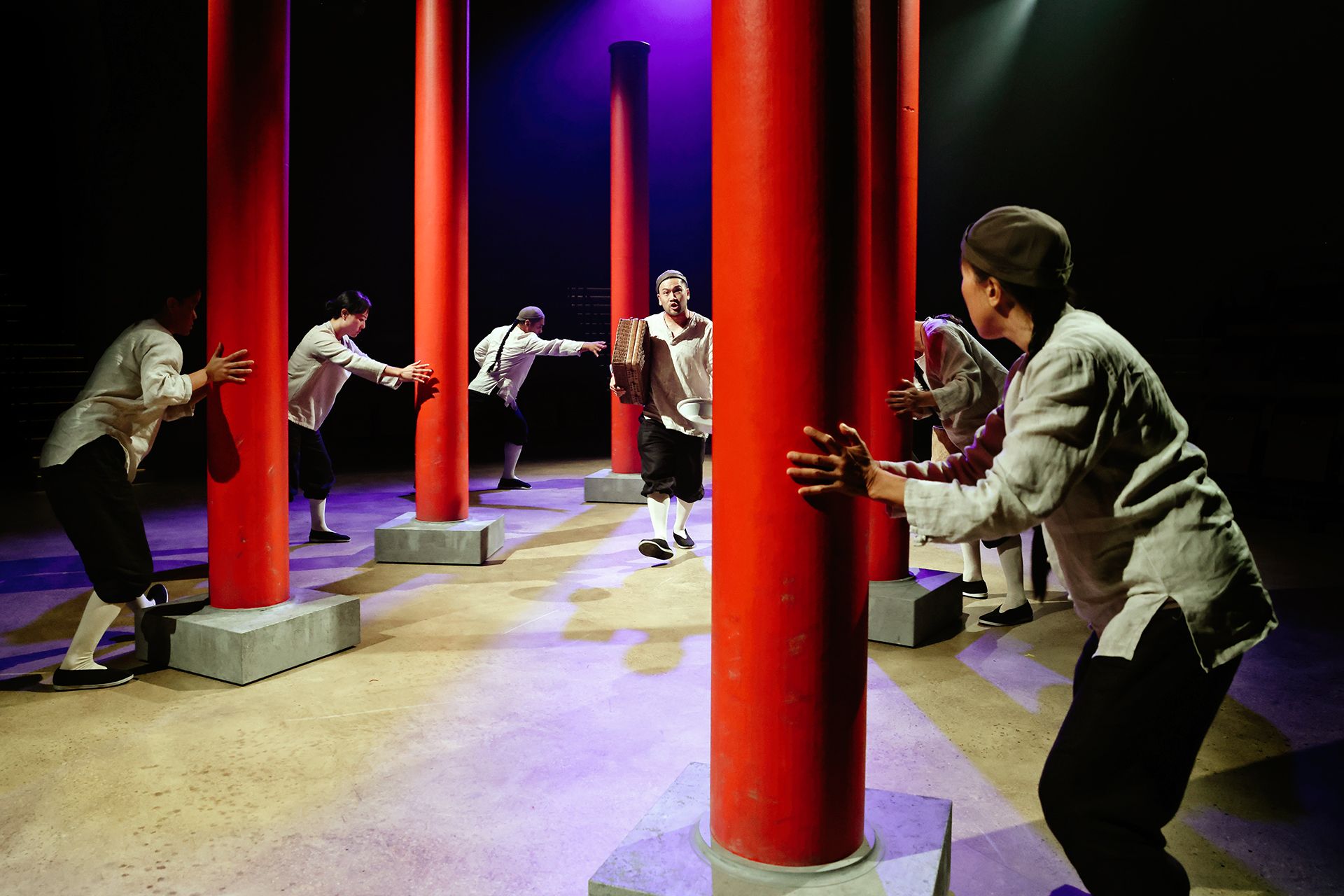
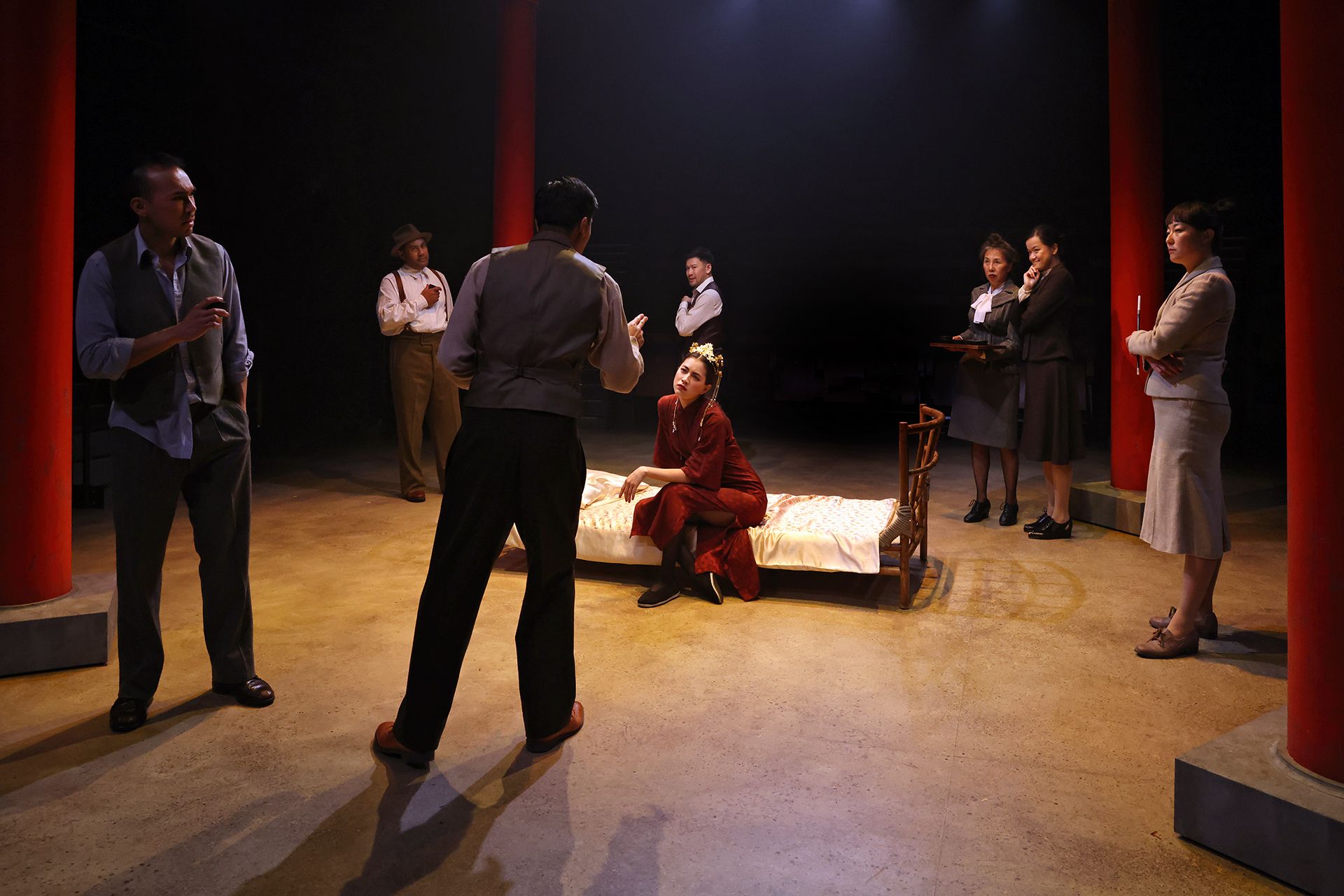
The production satisfies on many levels, under the astute directorship of Courtney Stewart, who utilises fully the text’s numerous dimensions, to deliver a complex and thoroughly engrossing work of theatre. Highly innovative and wonderfully imaginative, Stewart transforms an empty stage into  exciting scenes, offering an experience that pulsates with a continual sense of anticipation as a result of its unpredictability, and disarming with its scintillating sardonic humour.

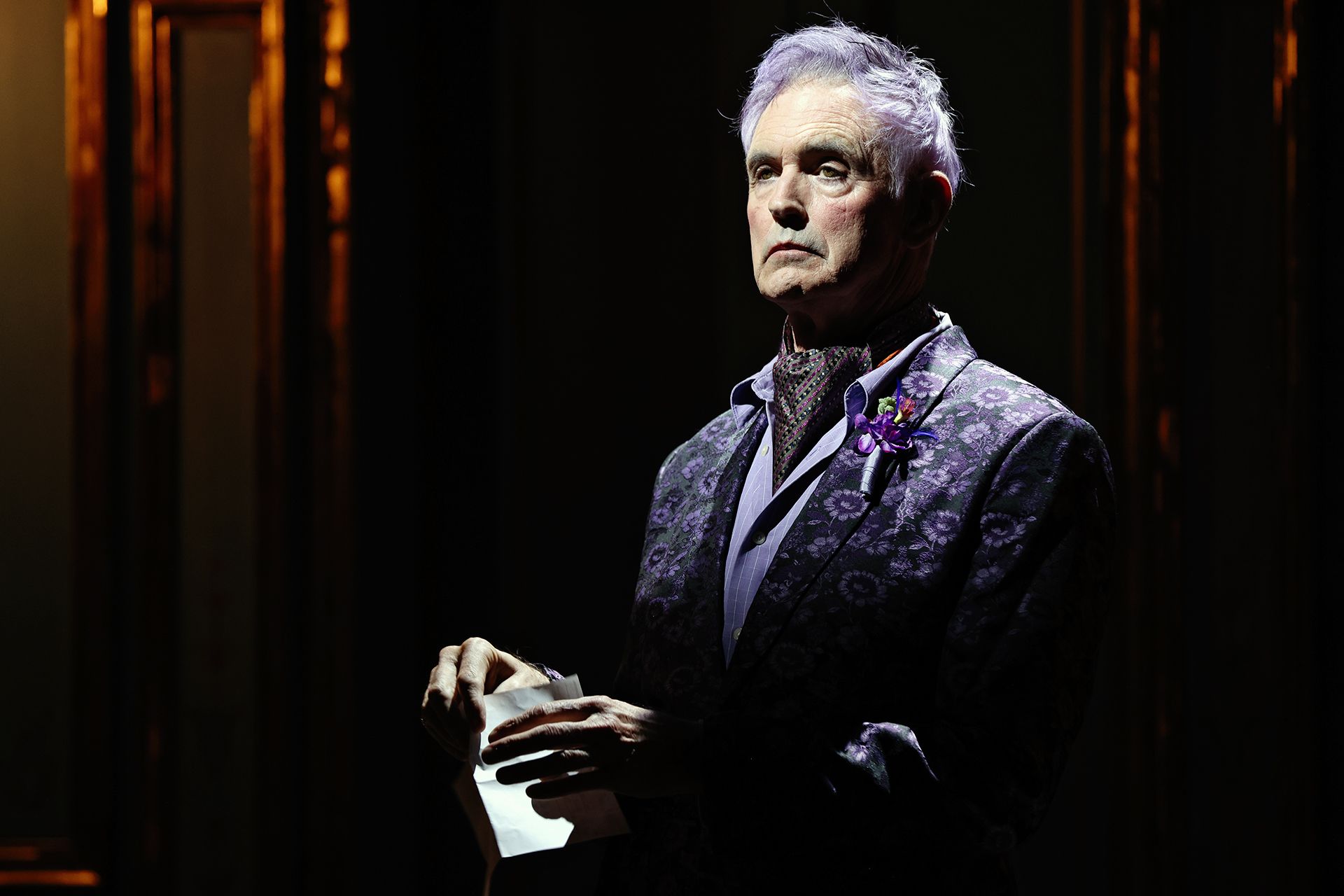
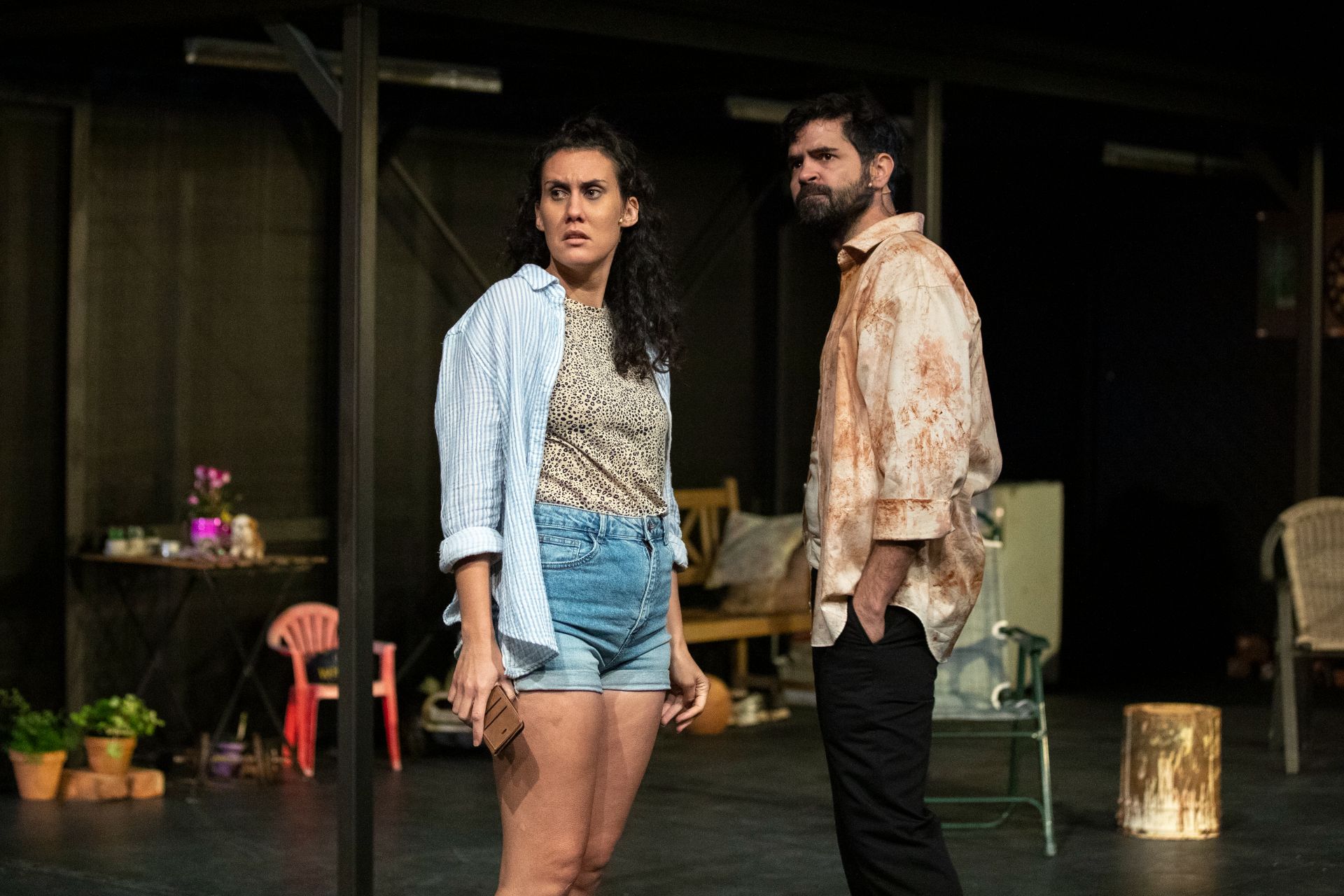
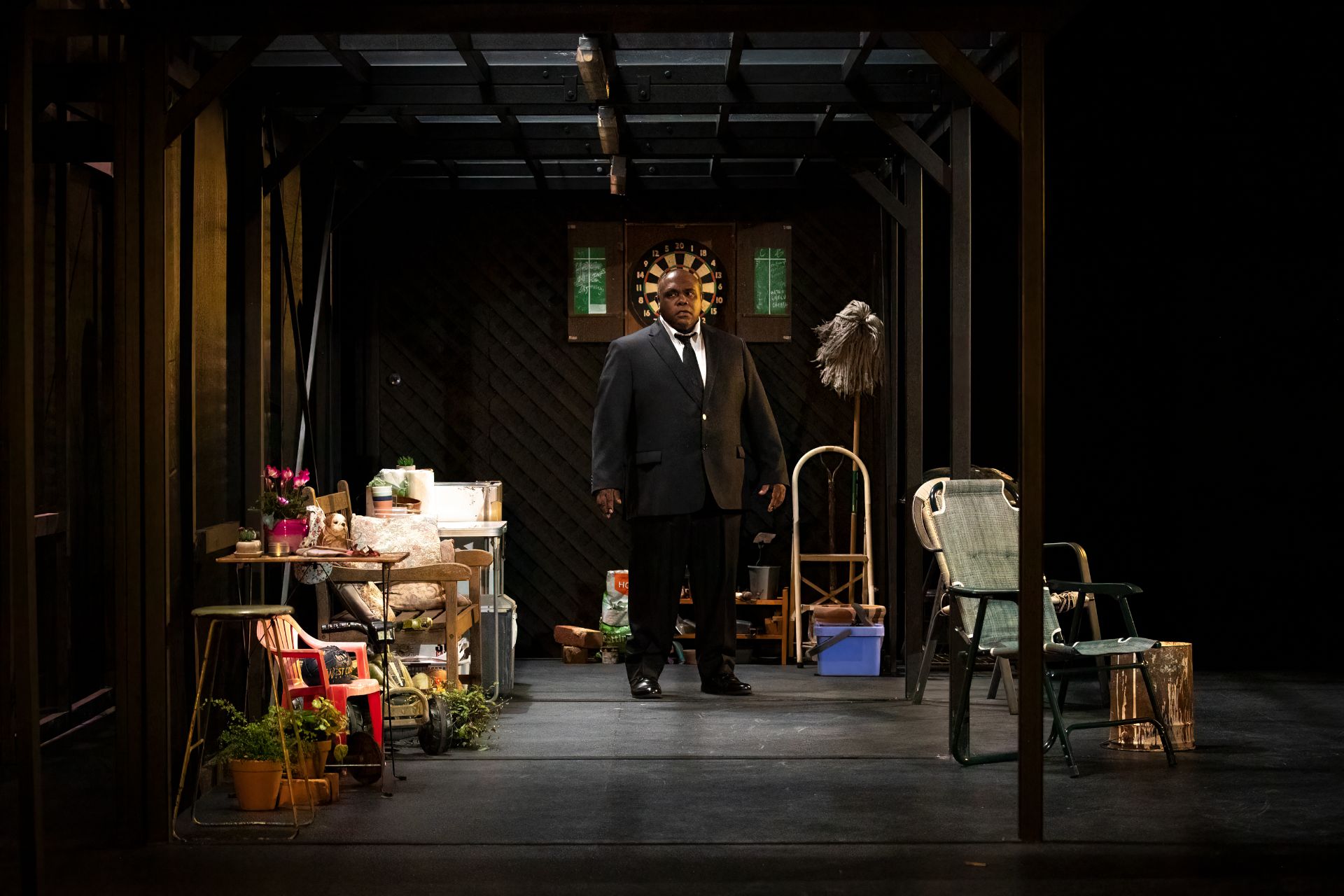
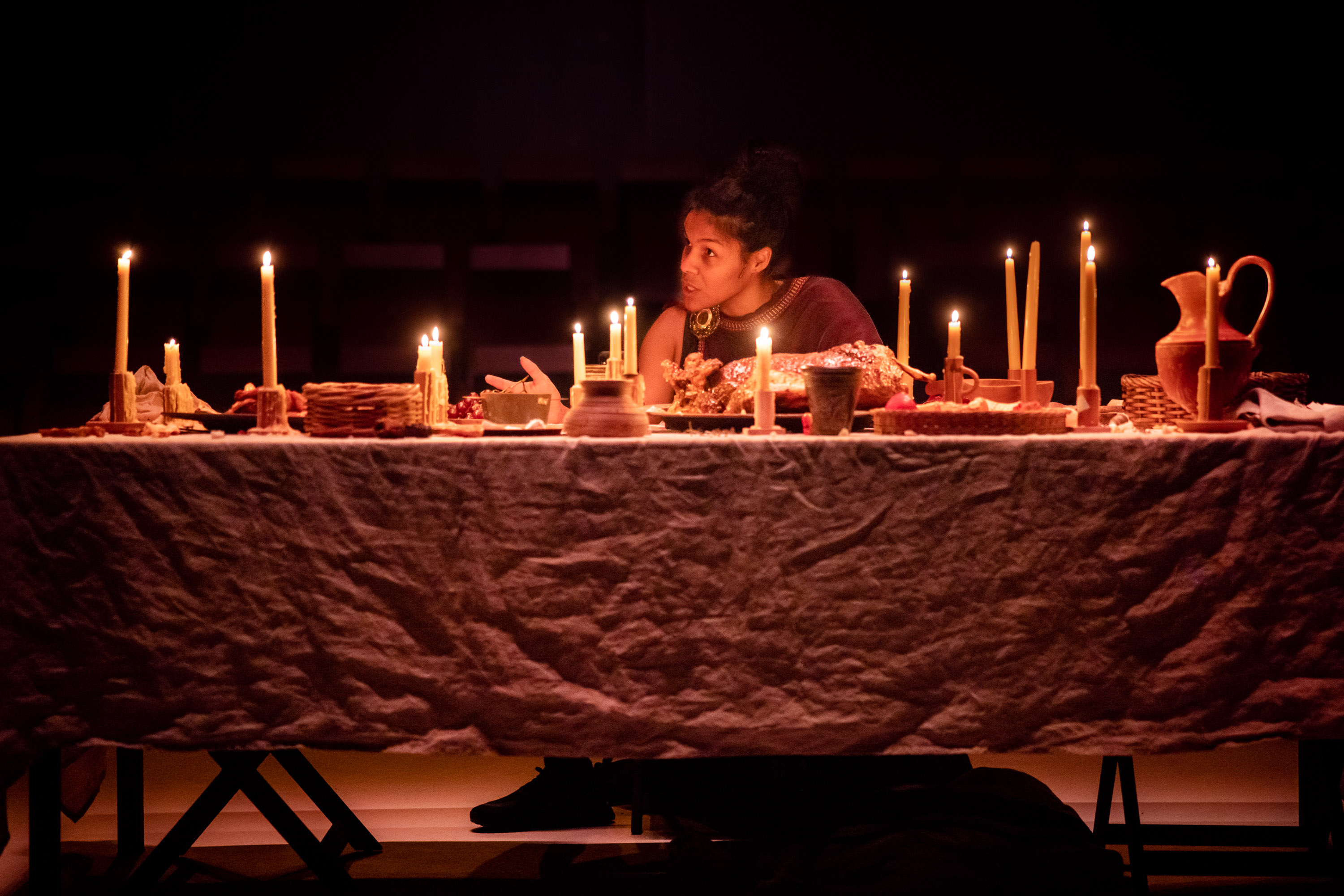
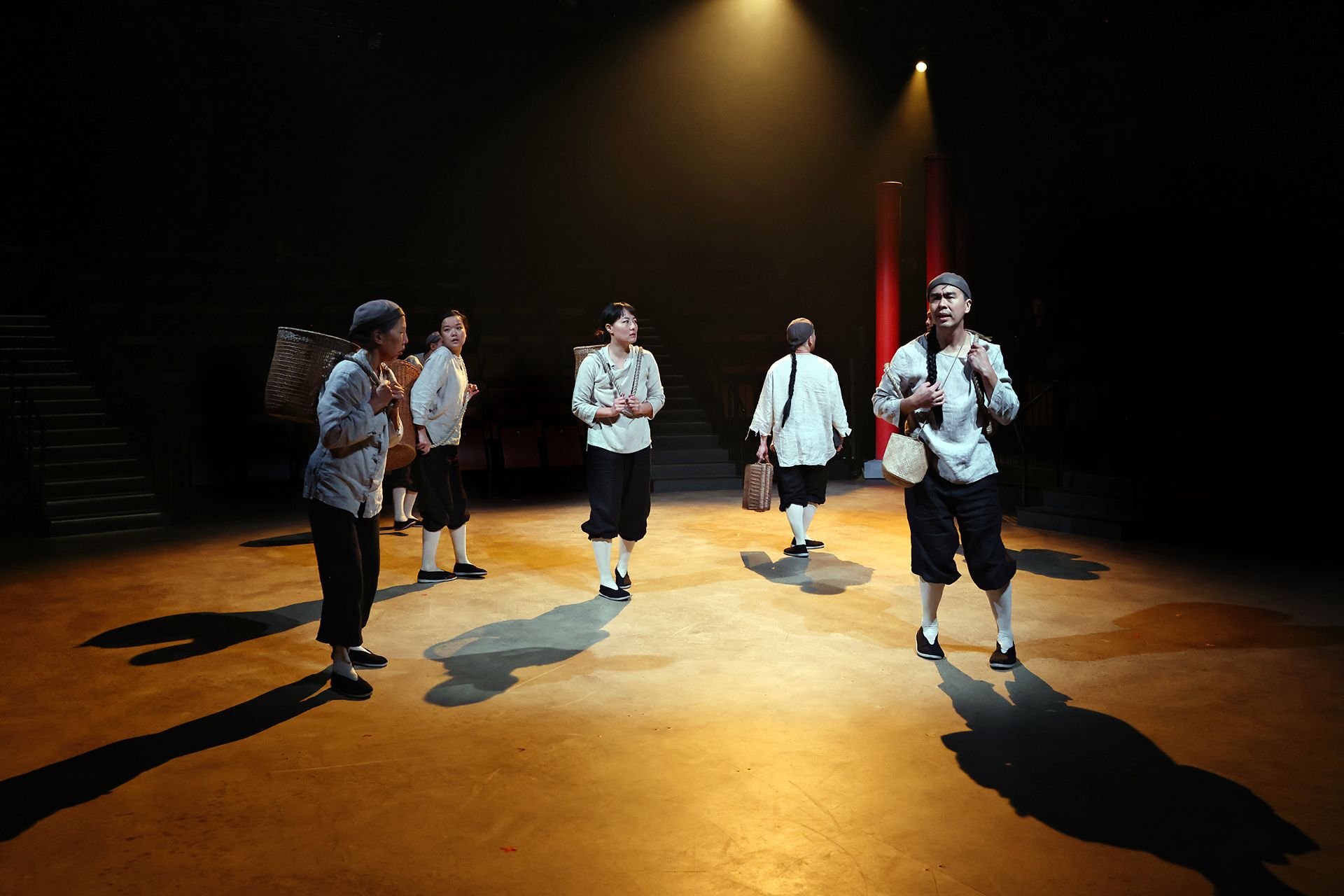
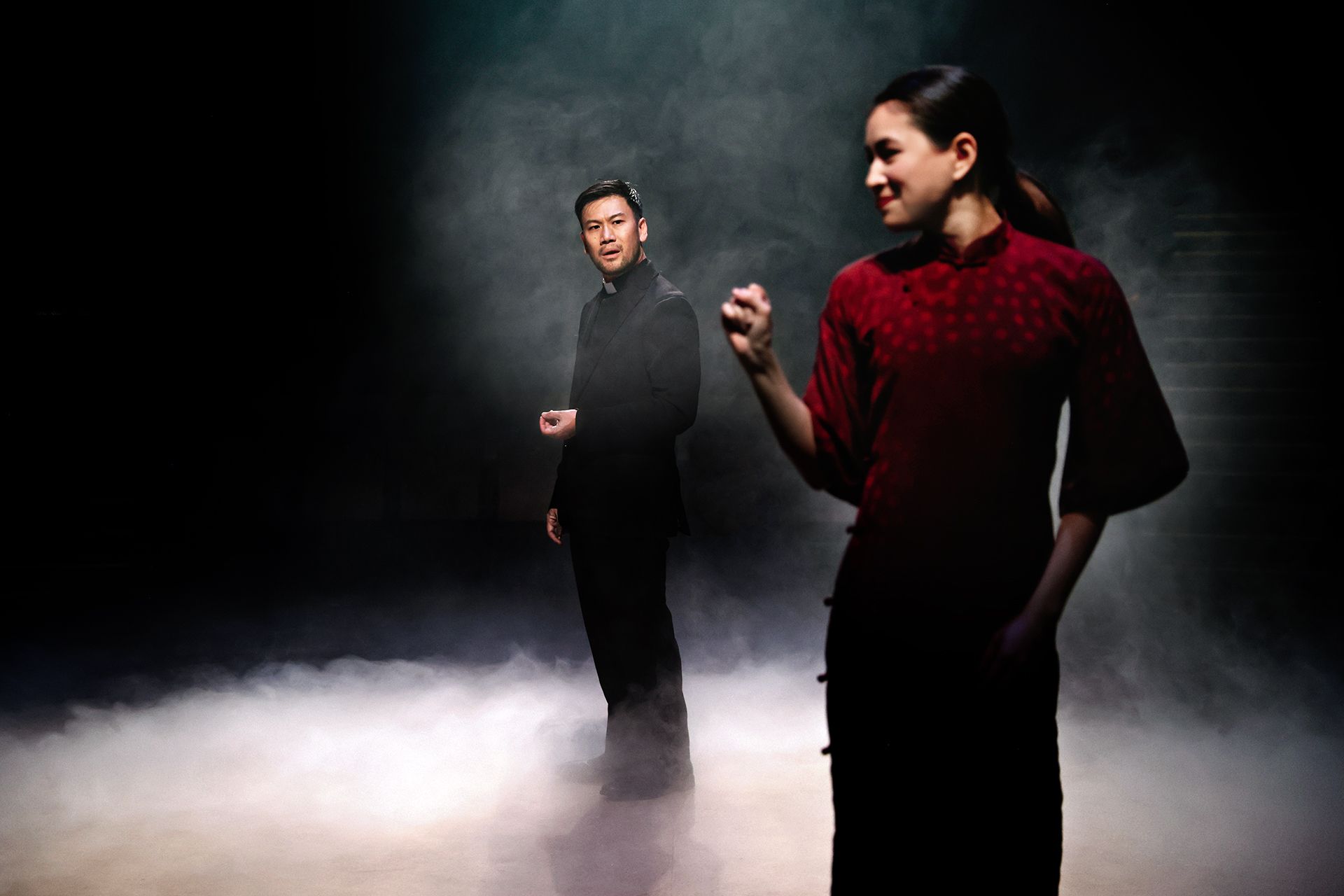
James Lew’s design is thankfully only elementally evocative of what might be considered a Chinese aesthetic, able to circumvent the cliché of chinoiserie, whilst creating imagery that look commensurate with how we believe this world to have been. Lights by Ben Hughes are rigorously conceived, agile in shifting us between distinct spaces, and powerful at manufacturing atmosphere. Music by Matt Hsu couches the action in an air of authenticity, and along with sound design by Guy Webster, engage our hearing for a consistent feeling of enrichment, subconsciously perhaps, that boosts our enjoyment.

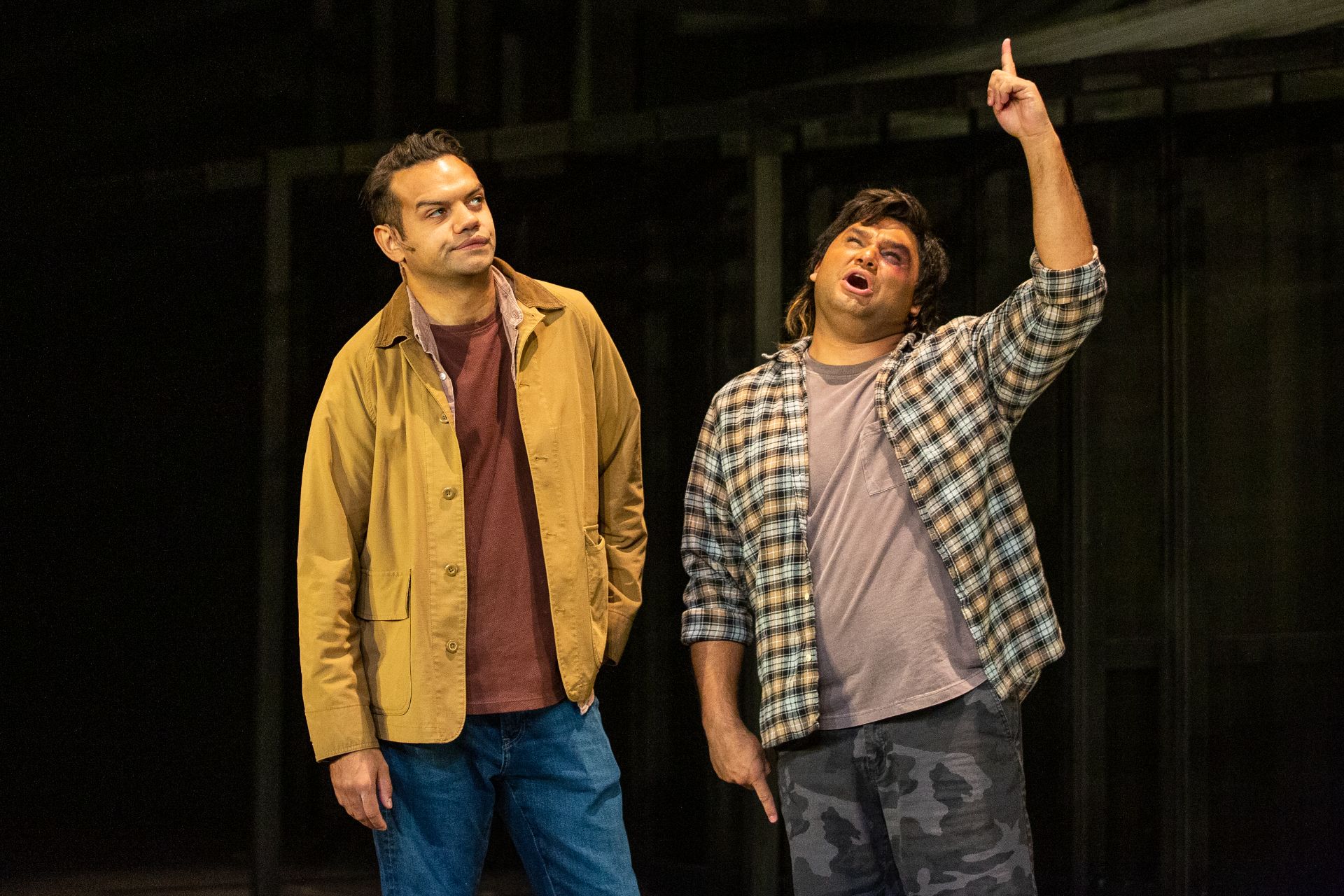
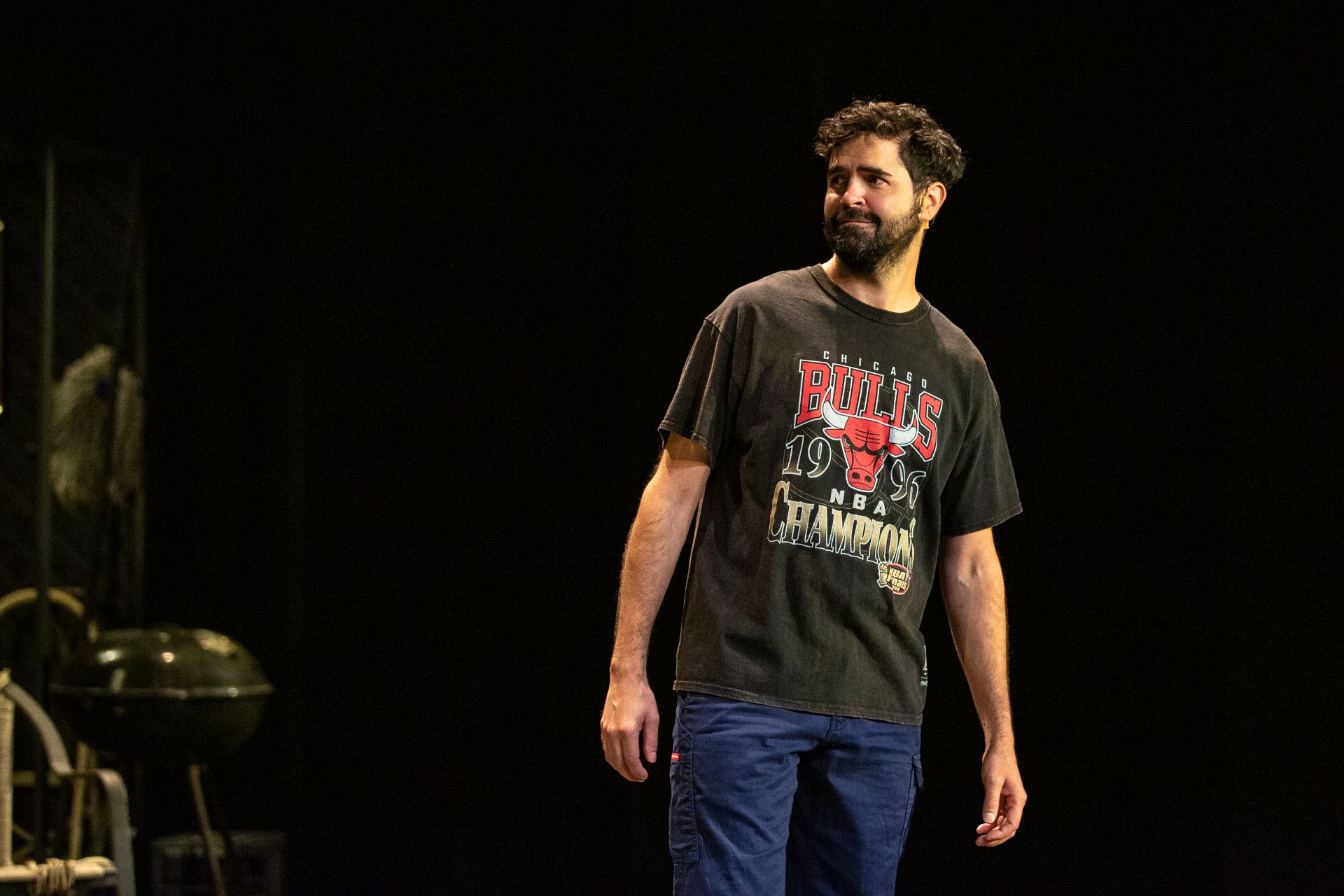
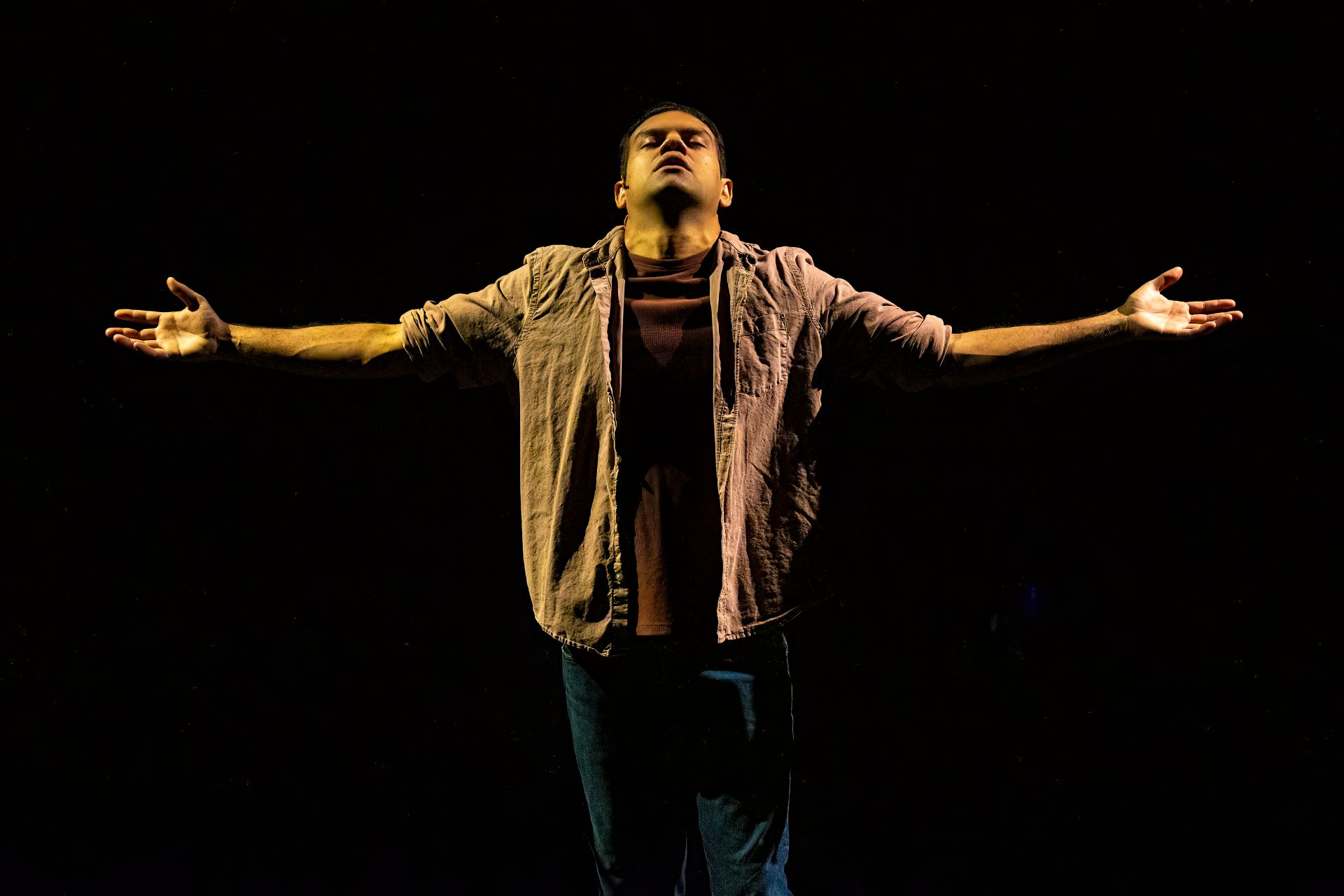
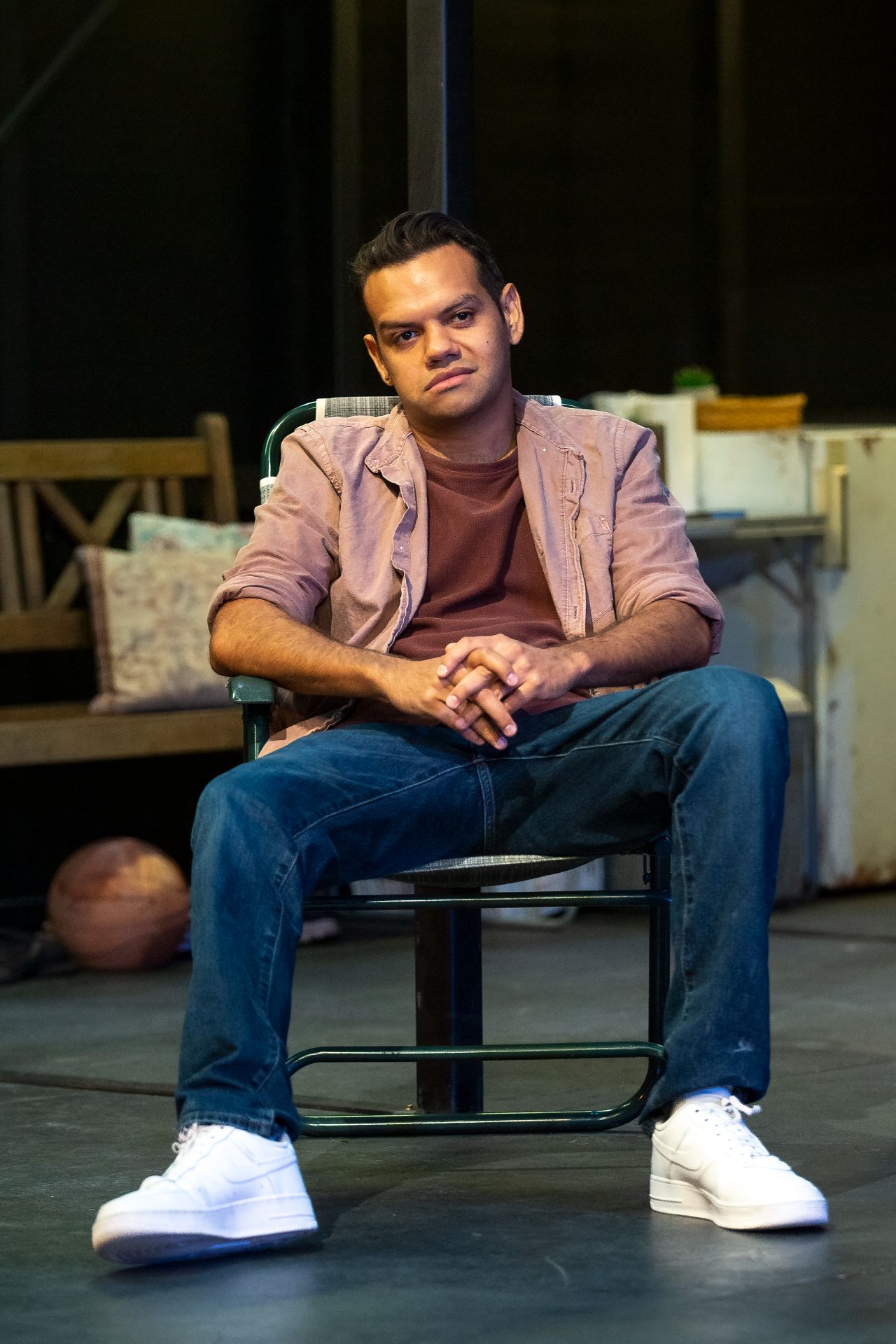
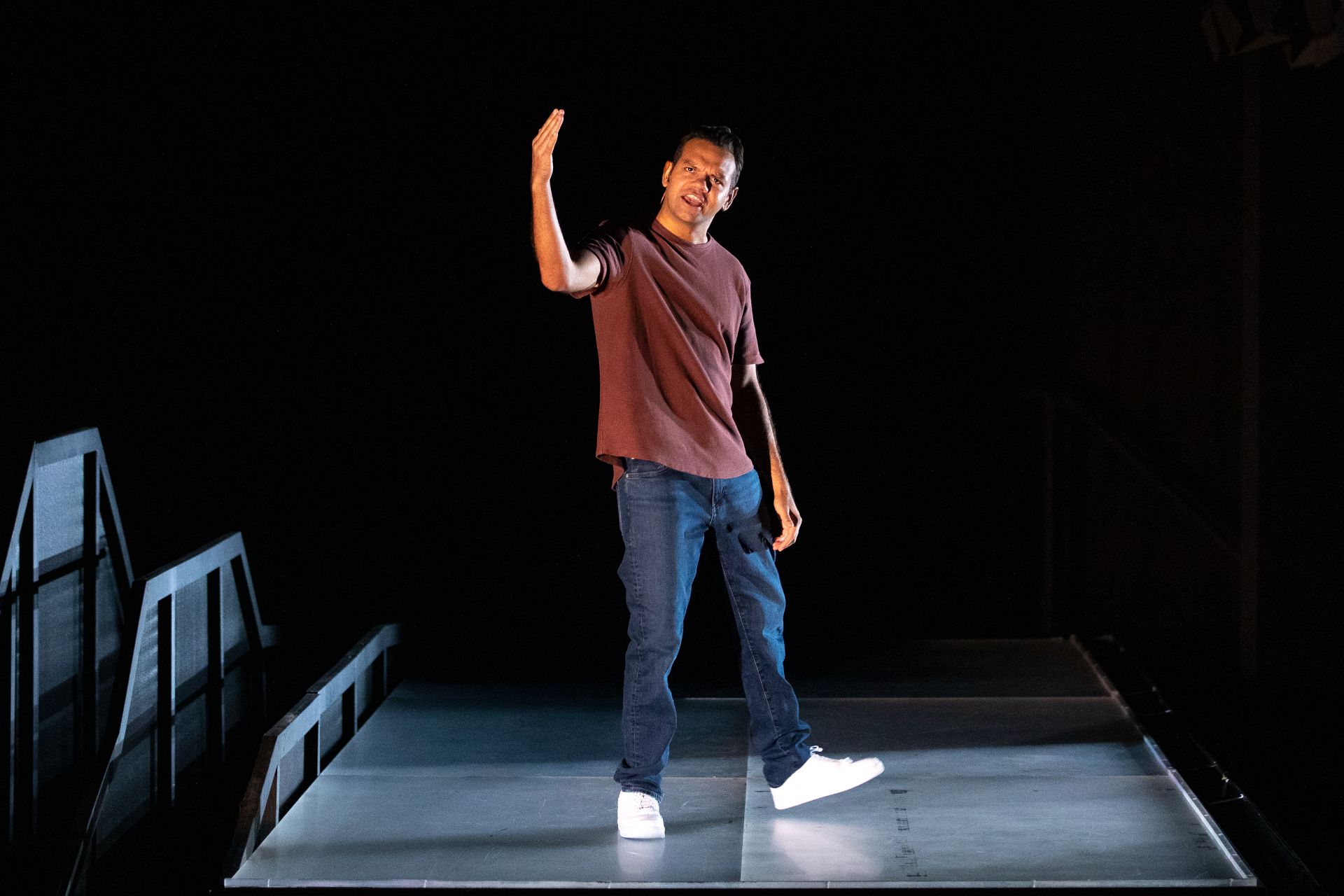
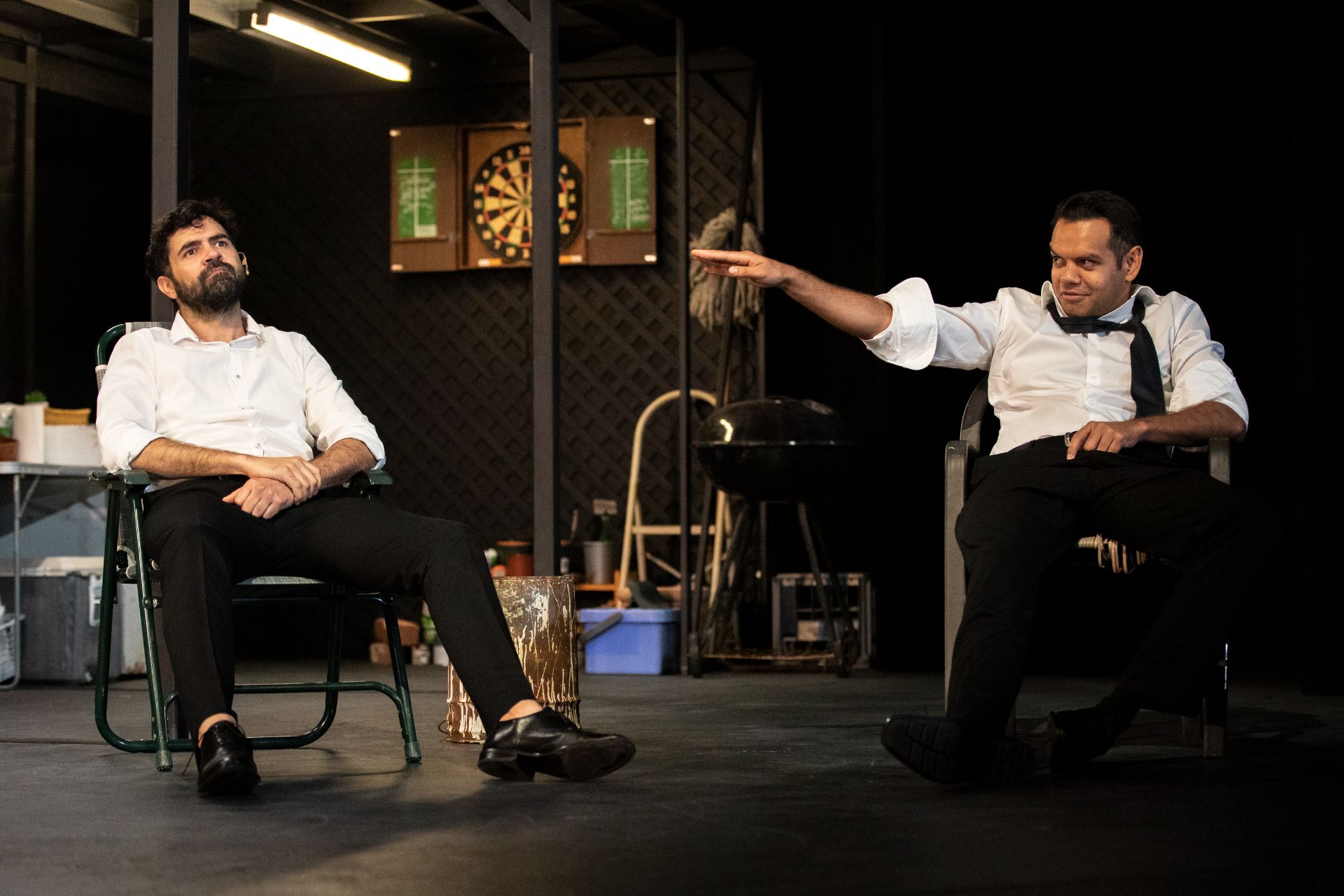
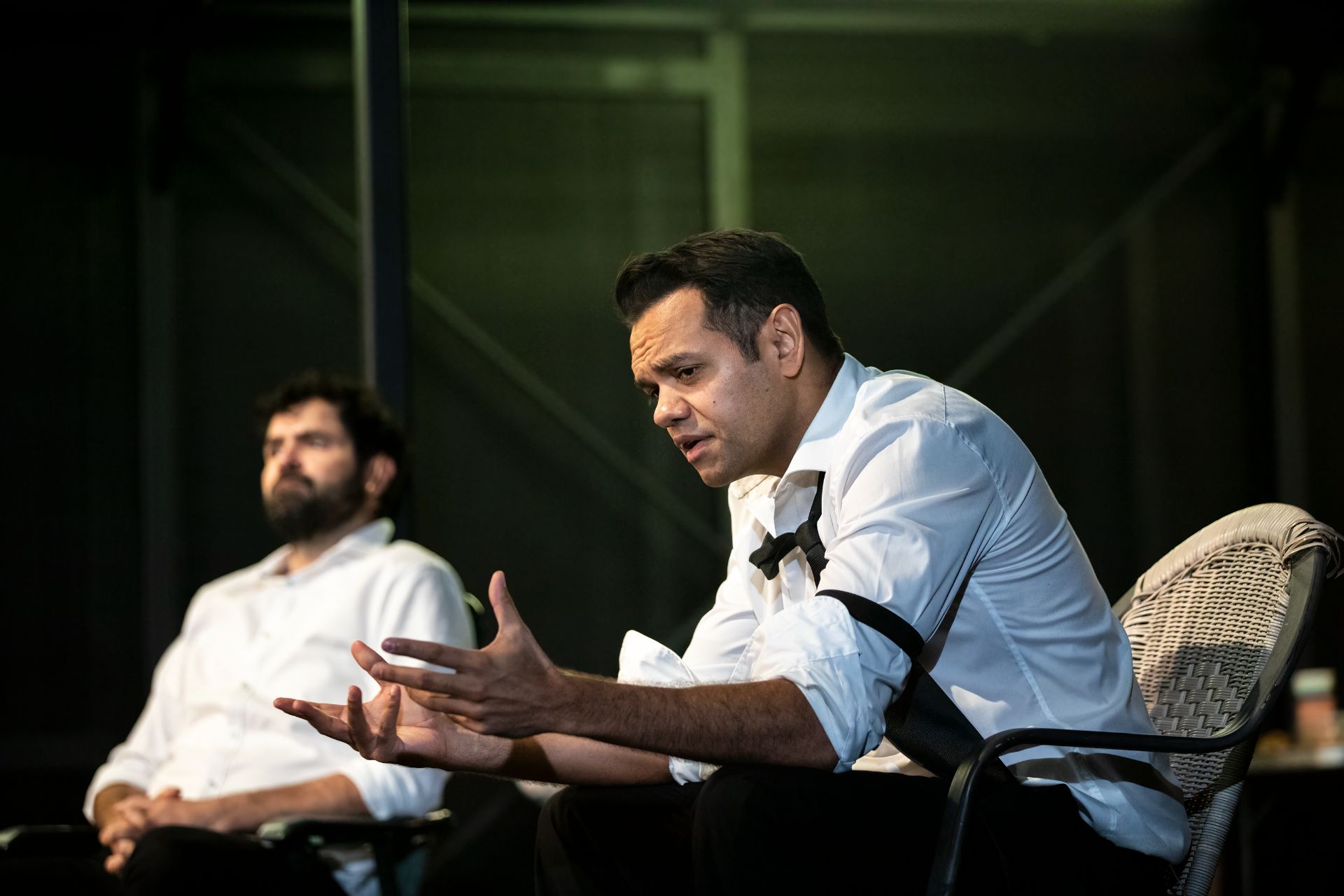
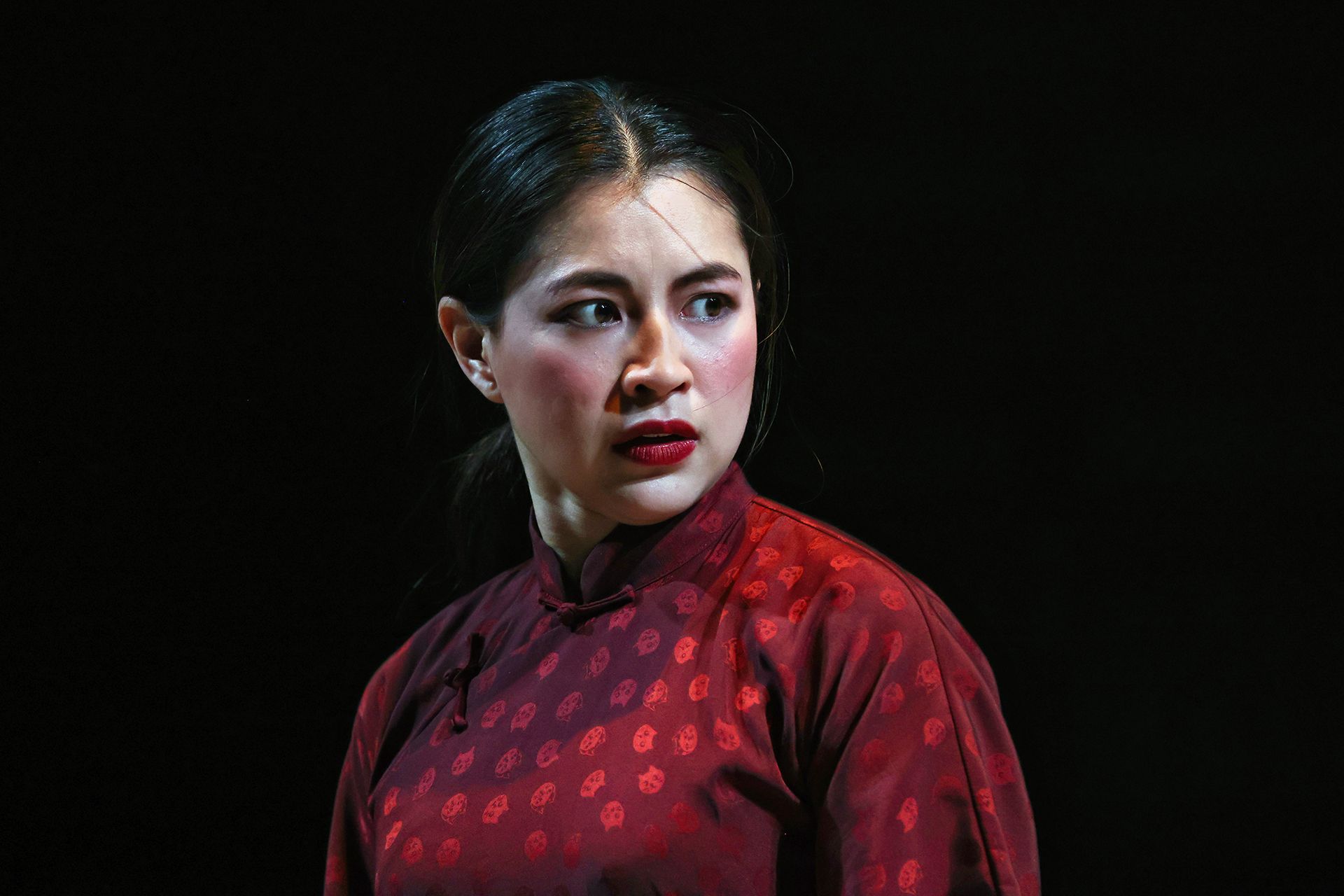
Actor Shan-Ree Tan is an extraordinary leading man, totally captivating with his intricate depictions of and commentary on Sleep-Sick, successfully transforming a character with many flaws into a person we are desperate to know everything about. Kimie Tsukakoshi plays femme fatale Tsiu Hei with delicious aplomb, stunning in her unapologetically grand portrayal of the seductive villain, somehow never descending into caricature, and always able to provide psychological rationale for all the outrageous behaviour.

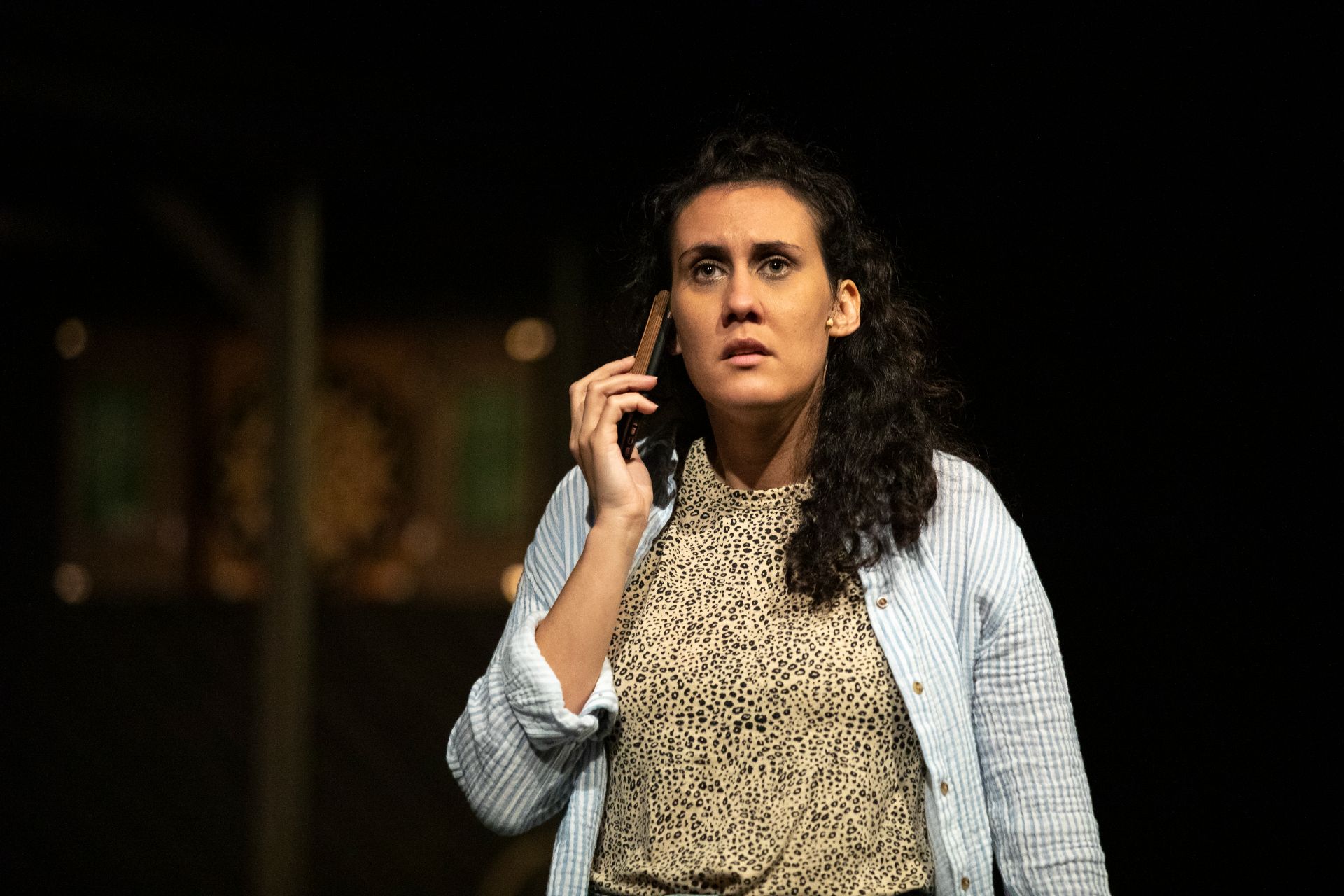
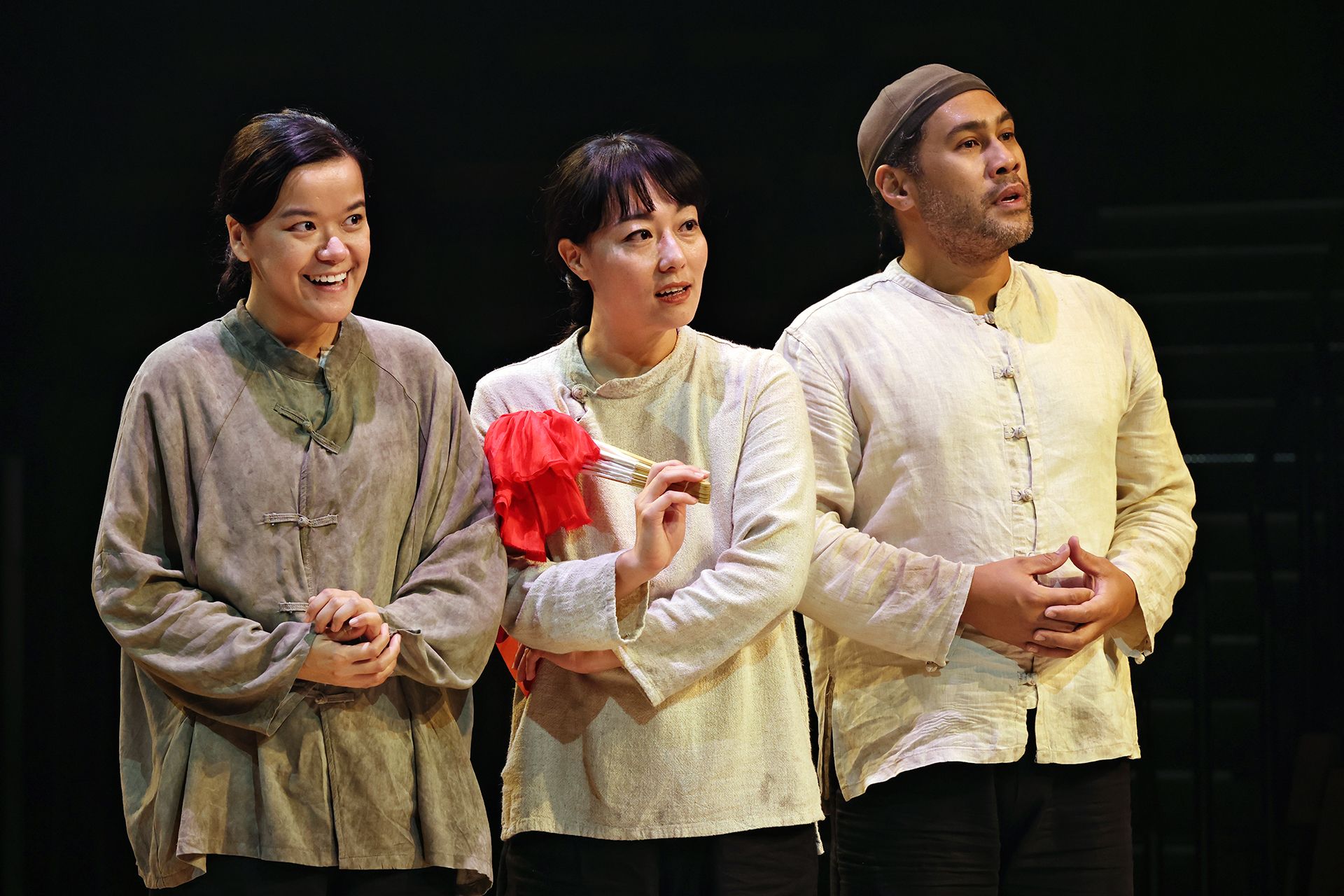
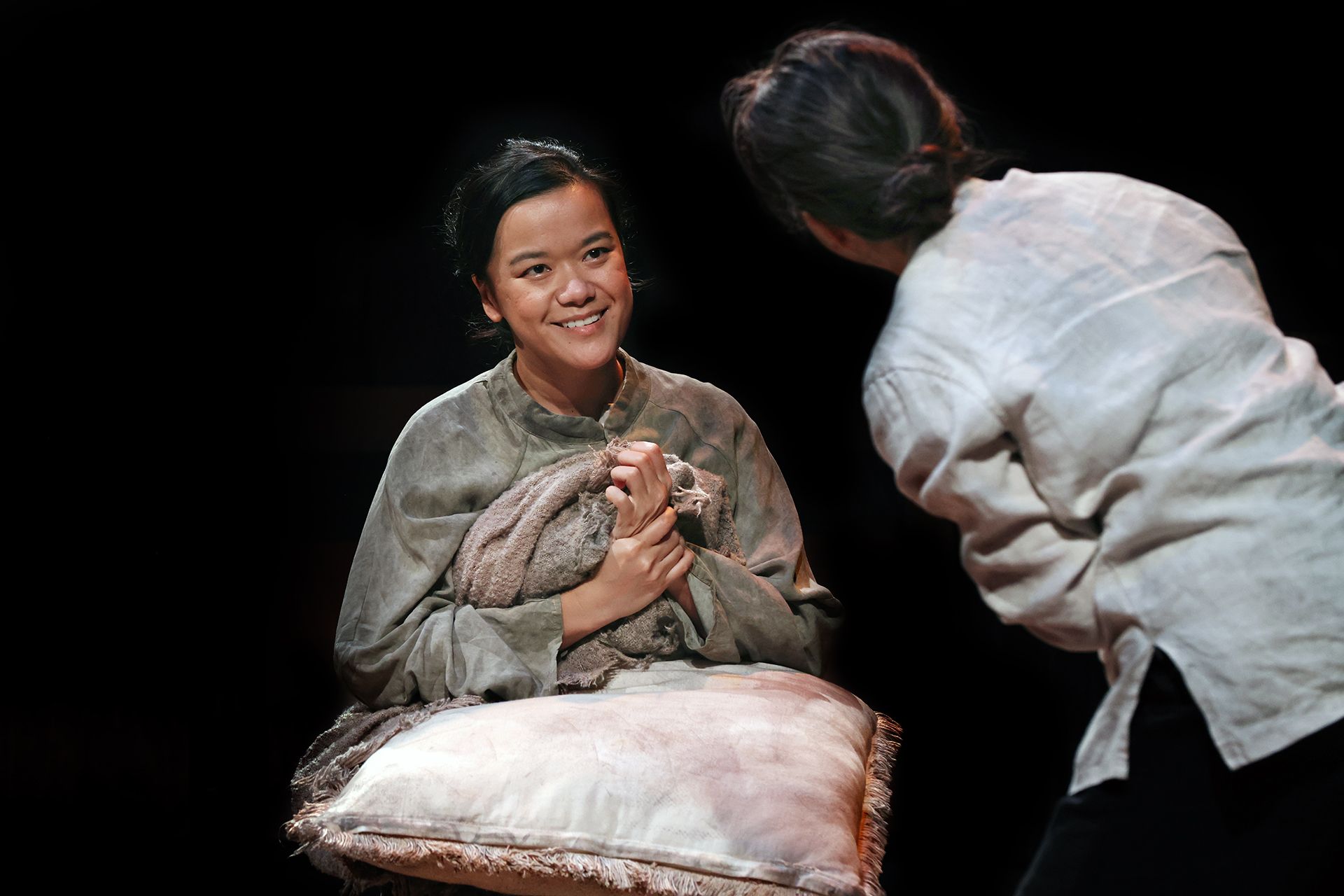
Sleep-Sick’s long suffering wife Ma is made dignified by Merlynn Tong’s mettle and spirit. Her capacity to represent both the hardest and softest aspects of the old-fashioned Chinese woman, conveys an admirable defiance alongside the inevitable victimisation that defines her narrative. The incredibly versatile Gareth Yuen shines not only as the poet Pan, but also in two smaller roles Ng and Song, unforgettable with his impeccable timing, and a meticulously calibrated physicality that draws us deep into the nuances of everything he wishes to say. It is a fantastic cast of eight, each performer contributing passion and diligence, in what feels like an unprecedented production about Asian-Australian identities.

Through a story about early Chinese settlers, we are invited to contemplate both the contributions of minority communities on this land, as well as our rarely interrogated complicity in colonialism. The dispossession of Indigenous peoples is our greatest sin, one that non-Indigenous people of colour have yet to sufficiently own up to. In The Poison of Polygamy we observe also the disturbing congruence between Asian and white values, especially in terms of how we regard money. We may be able to celebrate what might be thought of as an Asian proclivity for sharing and for society building, but there is no denying our tendencies for exploitation and pillage. Wrongdoers in the play eventually meet their punishment, but the ending is far from happy ever after. There is a lesson to be learned about how we rectify mistakes, not only of our own but also of our forebears, and one suspects a major paradigm shift is in order.
www.sydneytheatre.com.au | www.laboite.com.au

Review: Fences (Sydney Theatre Company)

Venue: Wharf 1 Sydney Theatre Company (Walsh Bay NSW), Mar 25 – May 6, 2023
Playwright: August Wilson
Director: Shari Sebbens
Cast: Bert LaBonté, Markus Hamilton, Damon Manns, Molly Moriarty, Zahra Newman, Dorian Nkono, Darius Williams
Images by Daniel Boud

Theatre review

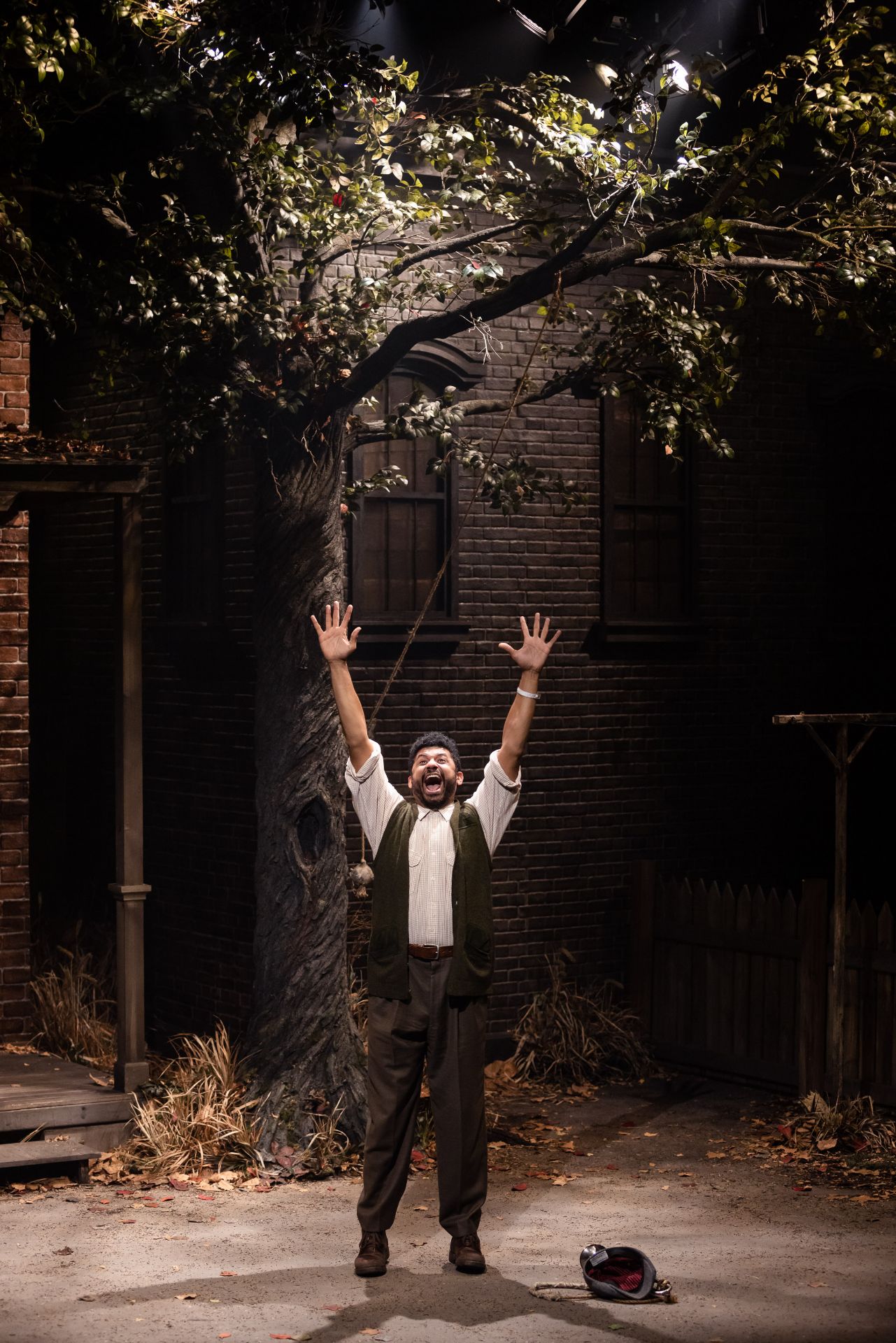
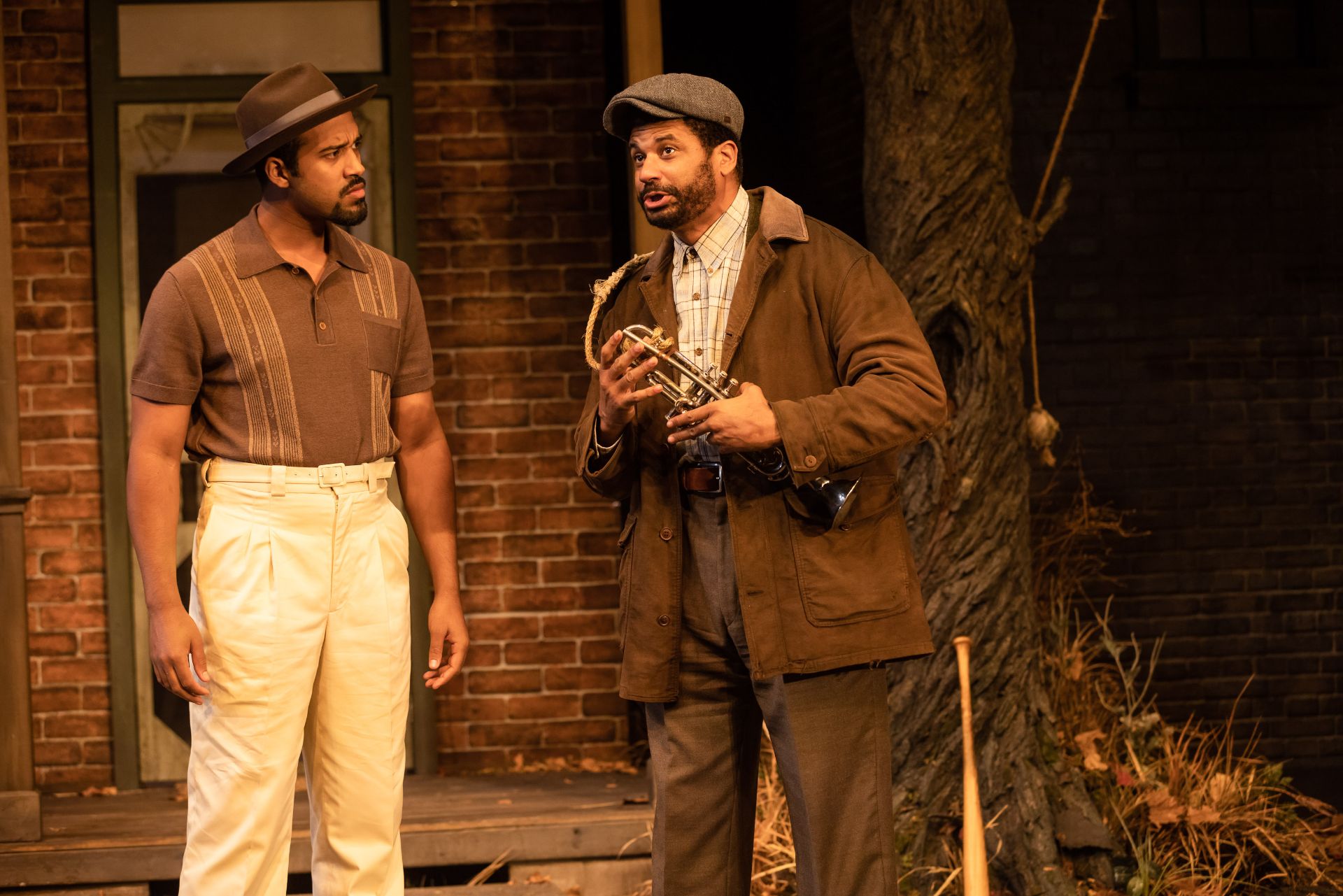
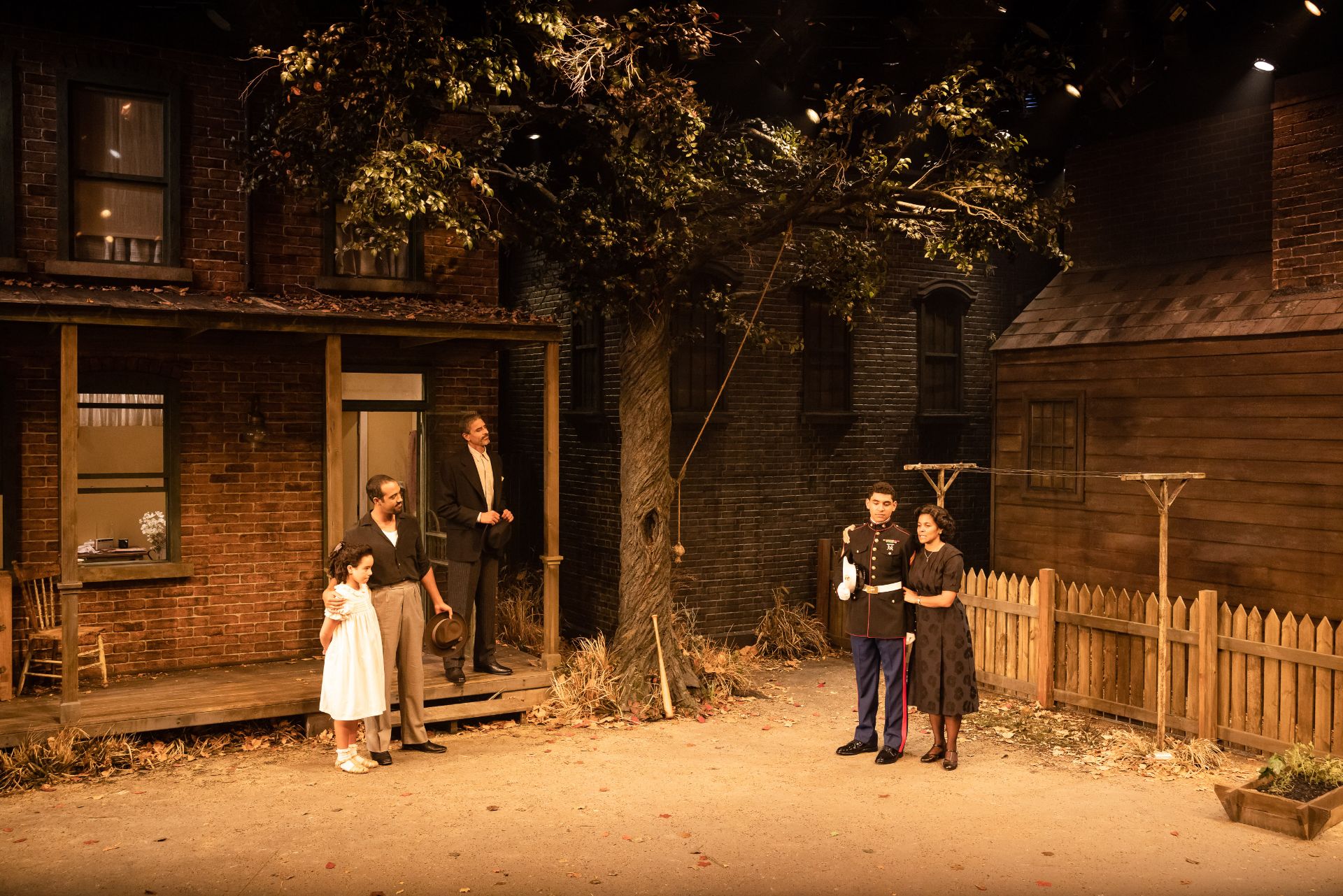
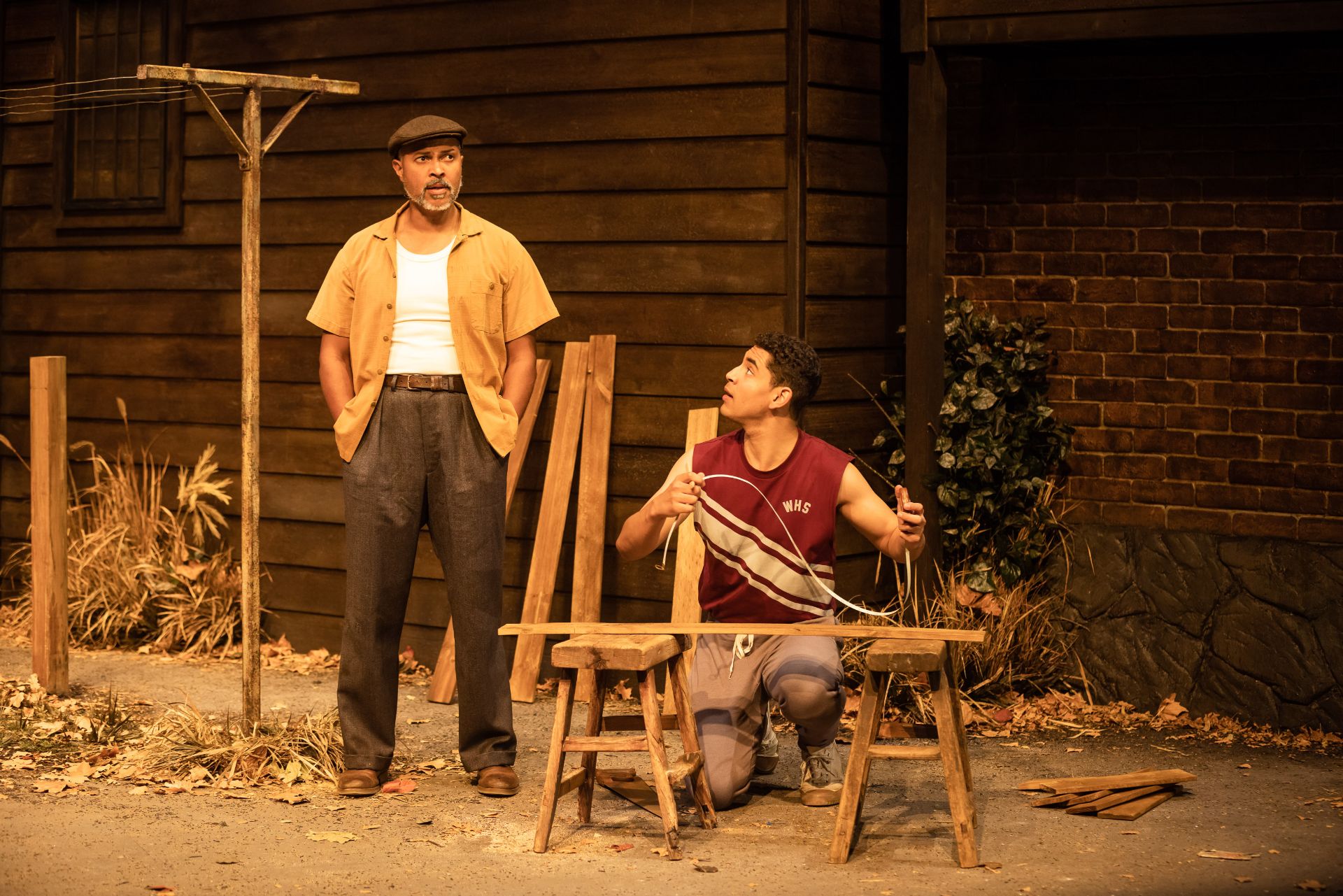
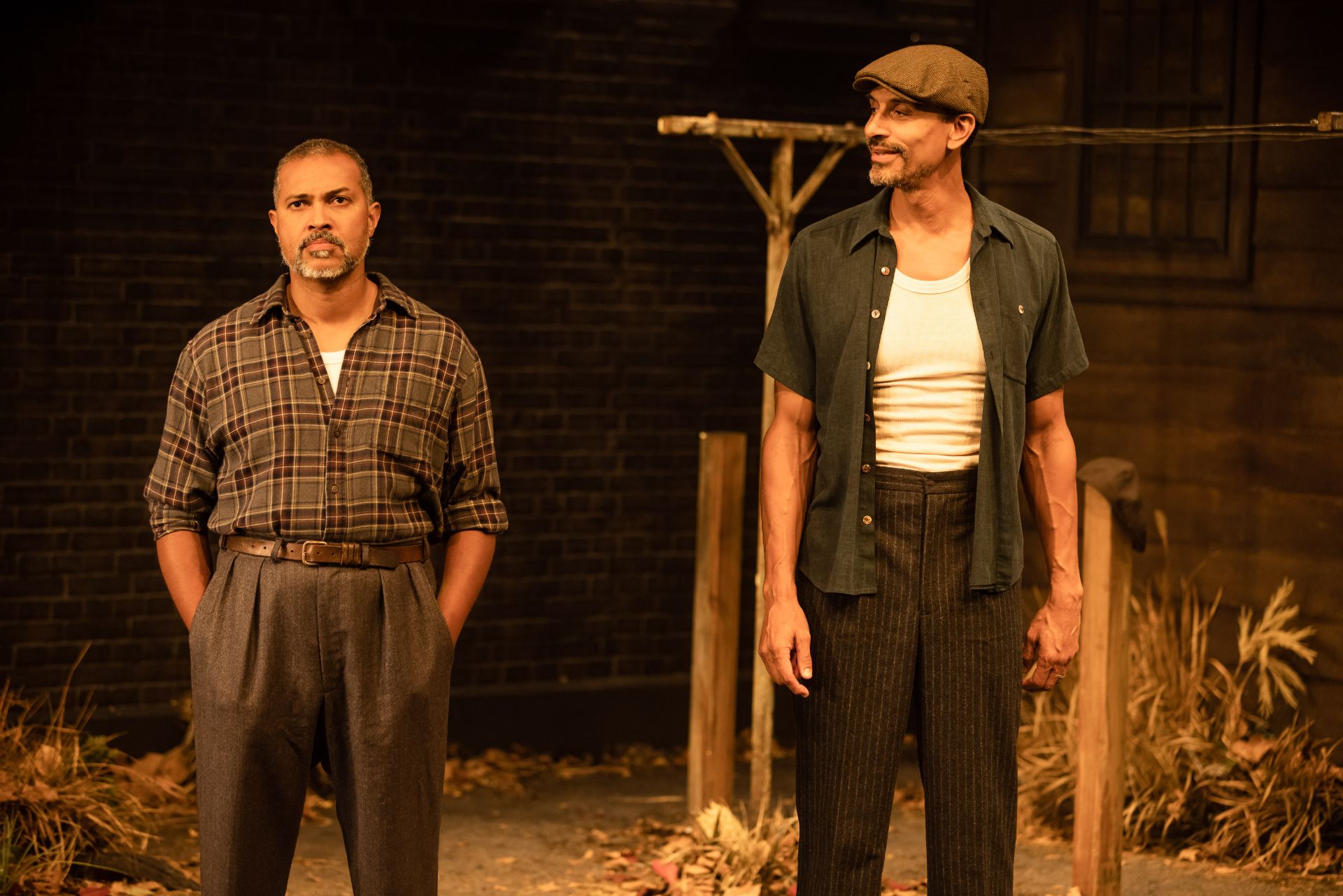
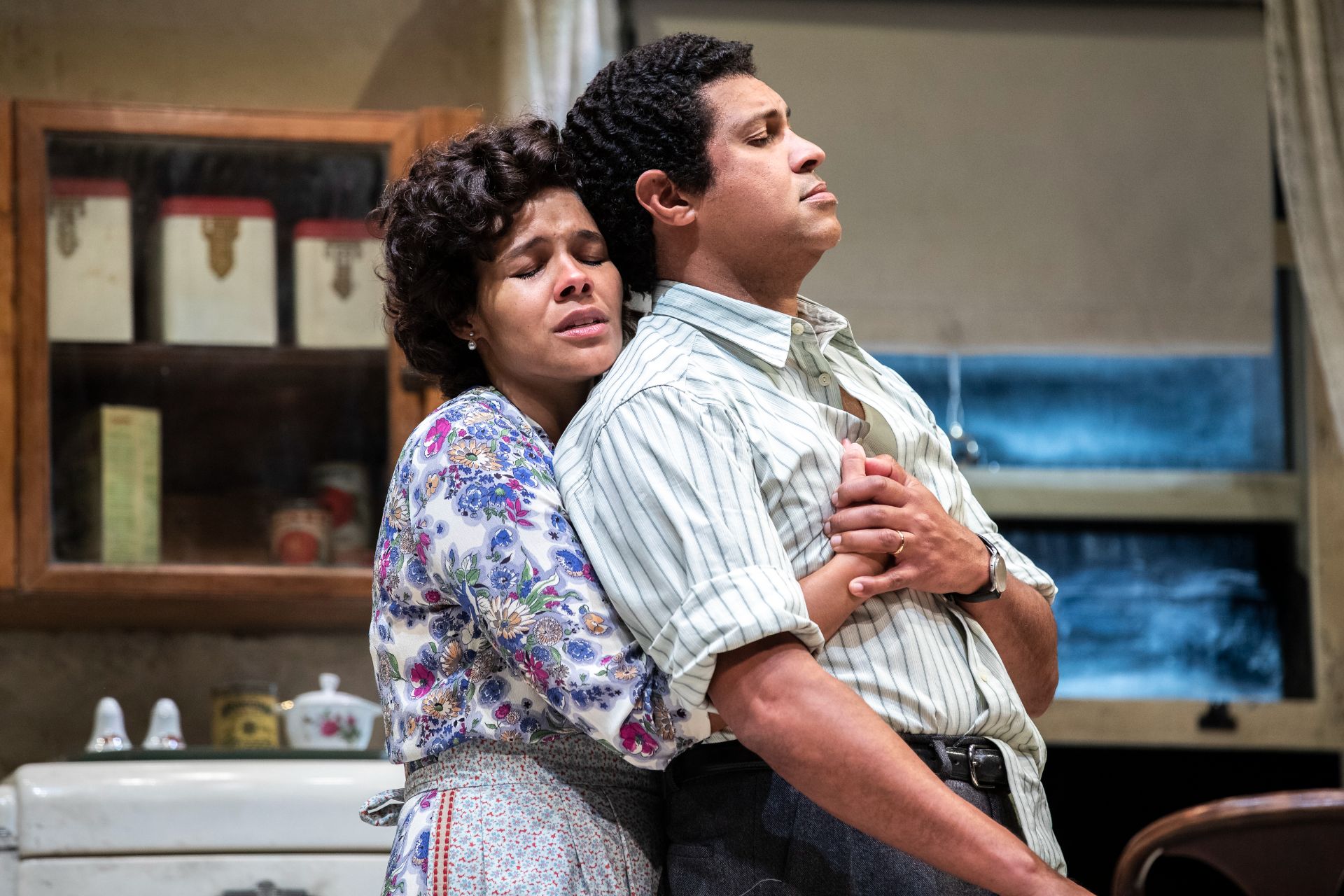
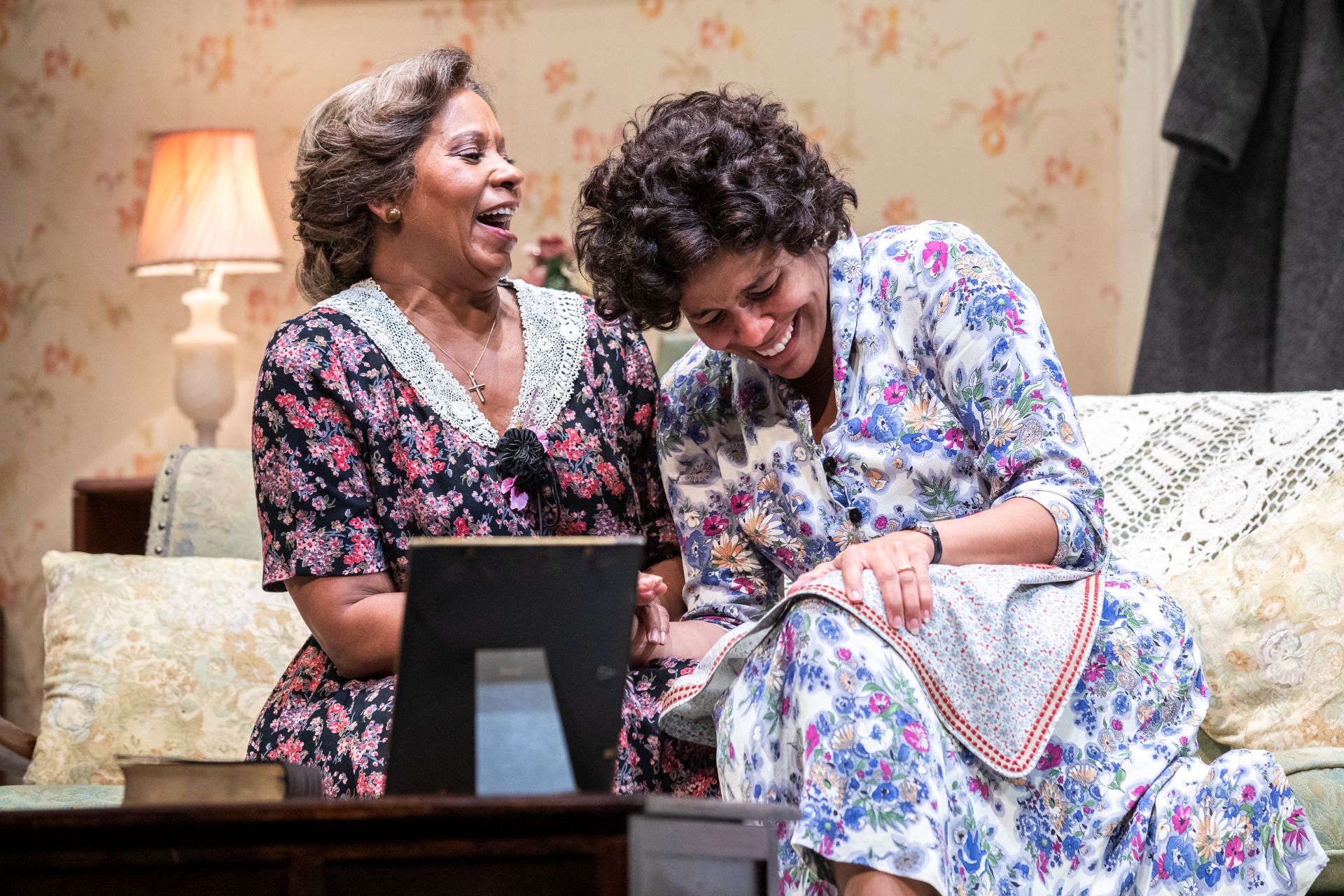
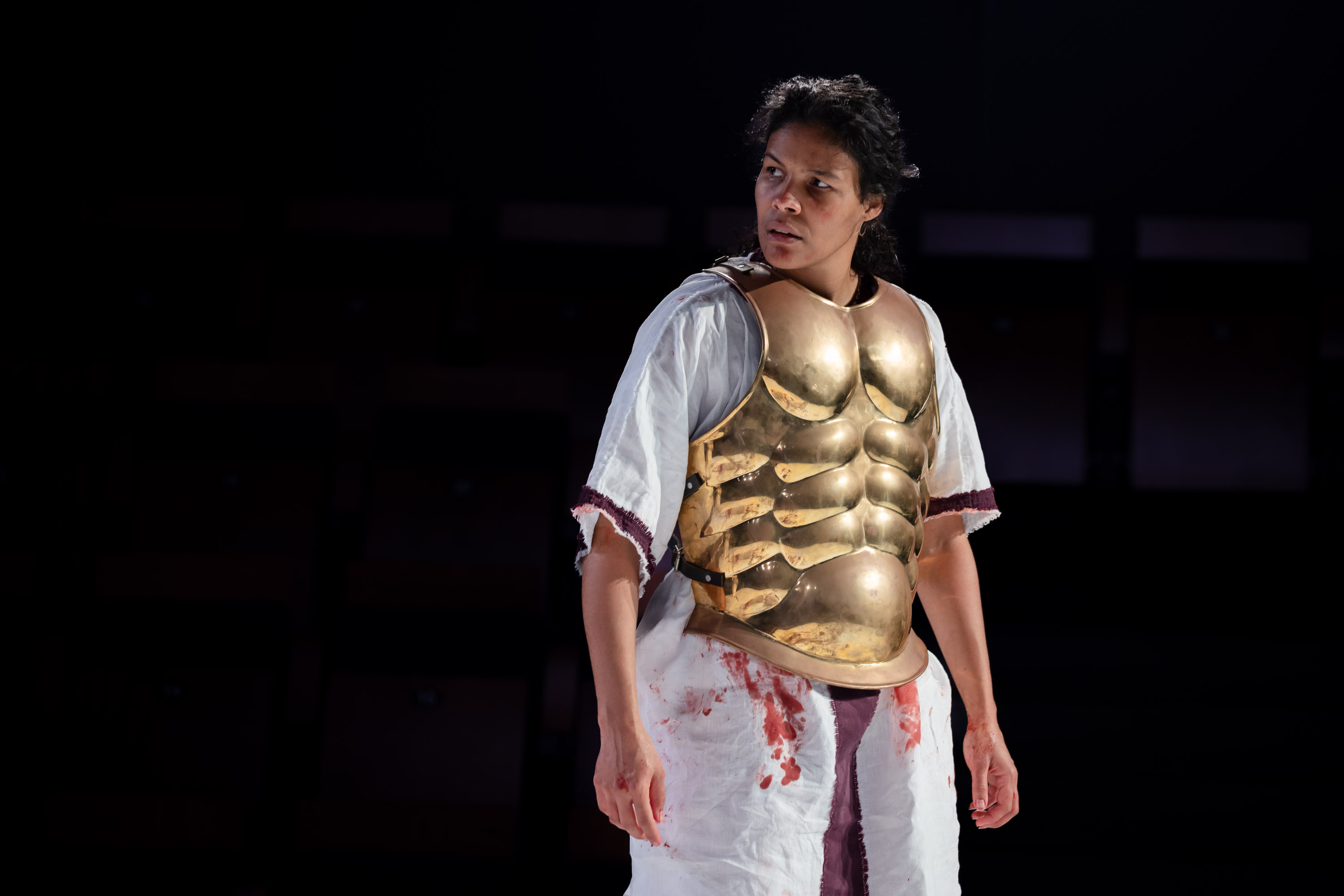
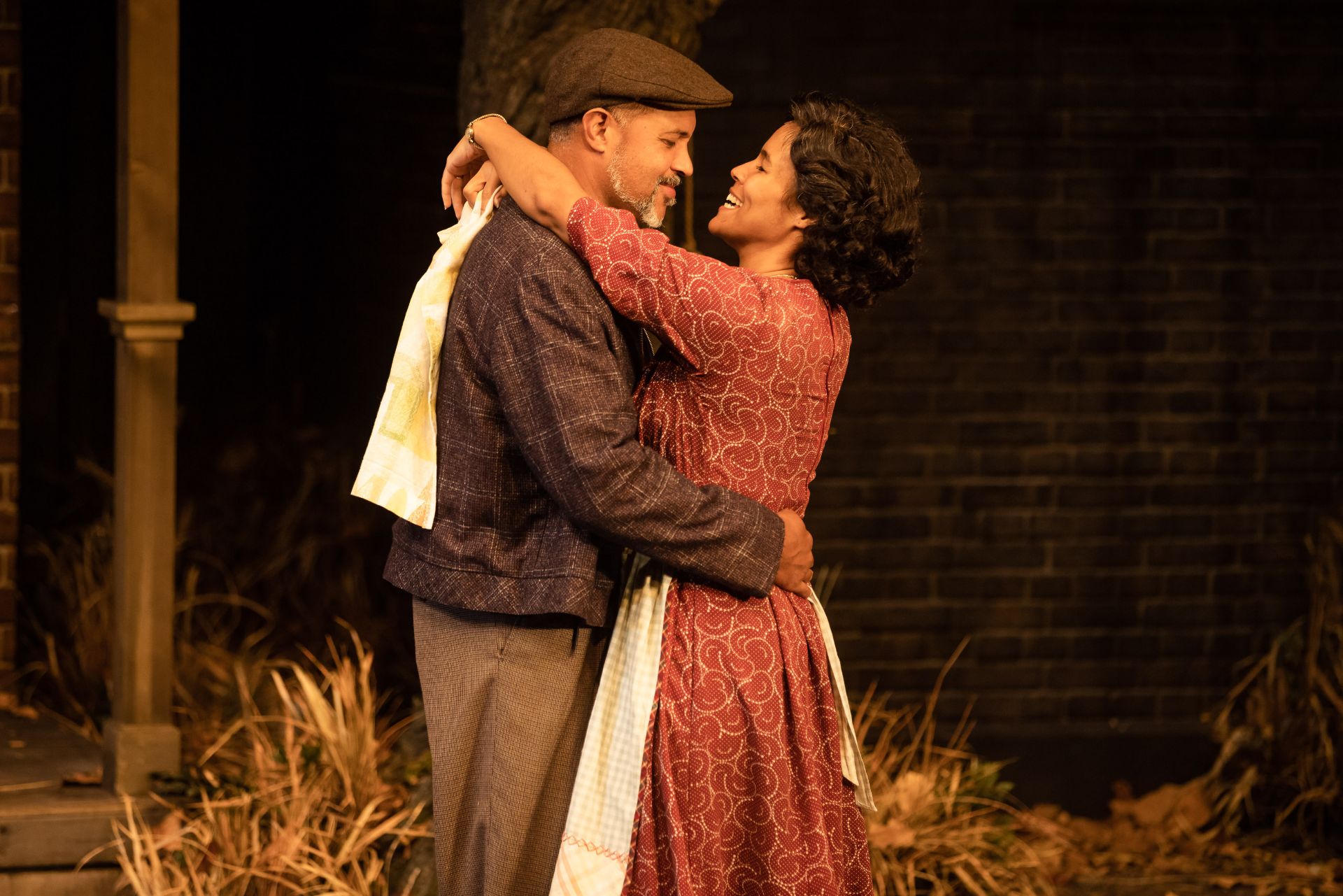
In 1950s Pittsburgh USA, Troy and Rose try their level best at making a life for themselves and their children. Harsh conditions as evidenced most concretely in discriminatory Jim Crow laws of the time however, means that the couple’s dreams were always going to be dashed, no matter their effort. August Wilson’s Fences deals with the effects of racial subjugation, from the microcosmic perspective of a single family unit, and its inevitable disintegration. As with all great tragedies, we find ourselves rooting for characters, but also simultaneously anticipating their demise. In Fences, we understand that it is not the playwright’s manipulations that prevent the Maxsons from thriving, but the very realities of racism and its accompanying systemic reverberations, that have kept generations of African-Americans from fulfilling their greatest potential.

Powerfully directed by Shari Sebbens, the production speaks pointedly on both the intimate and the broader social contexts, of the Maxson family’s story. The drama works poignantly whether one is concerned with the personal aspects of Fences, or the implications on community, of a far-reaching story like this. Sebbens’ work feels beautifully organic, yet its intricacies are honed with great detail, resulting in a meticulously rendered presentation that always sings naturally and connects profoundly.

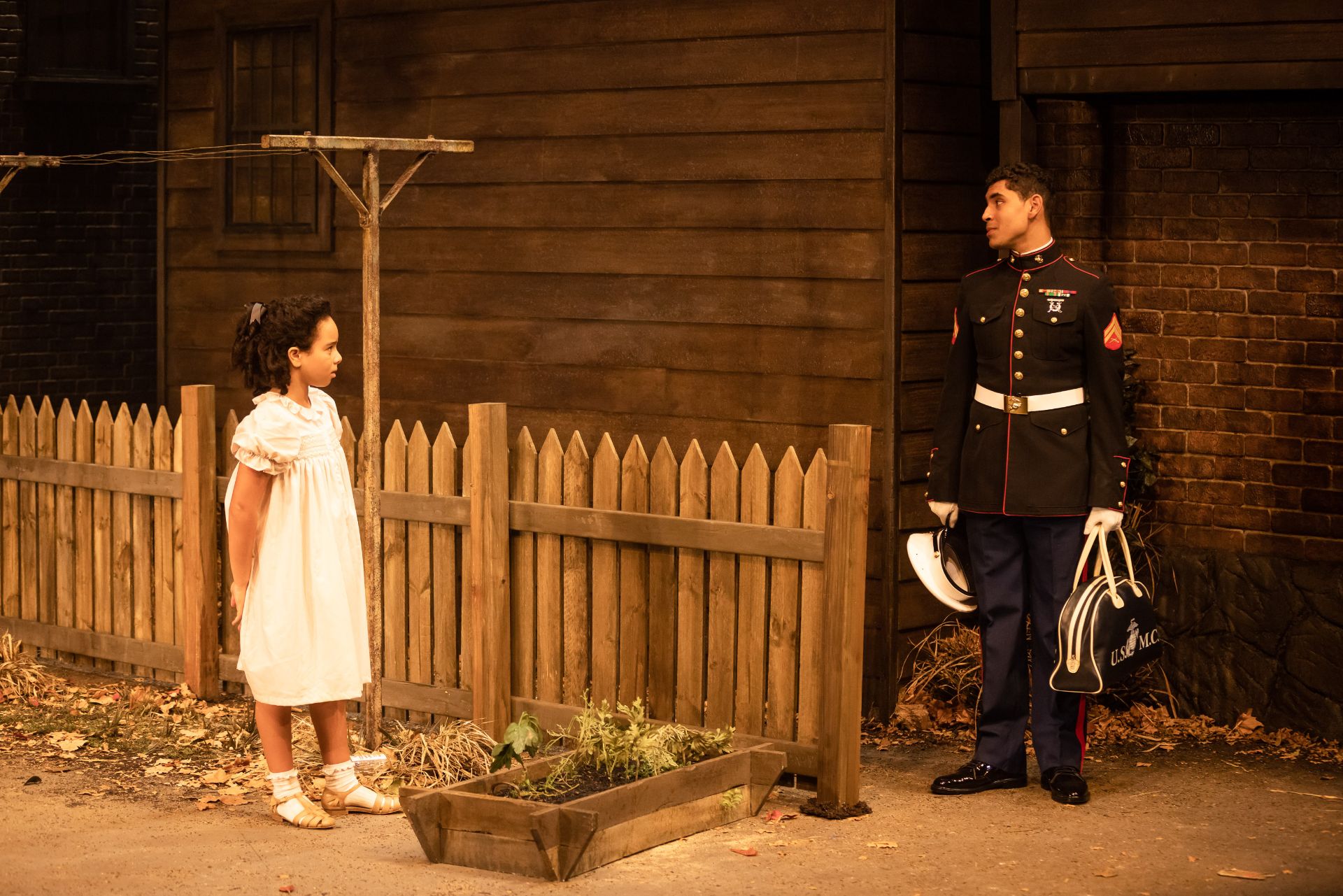
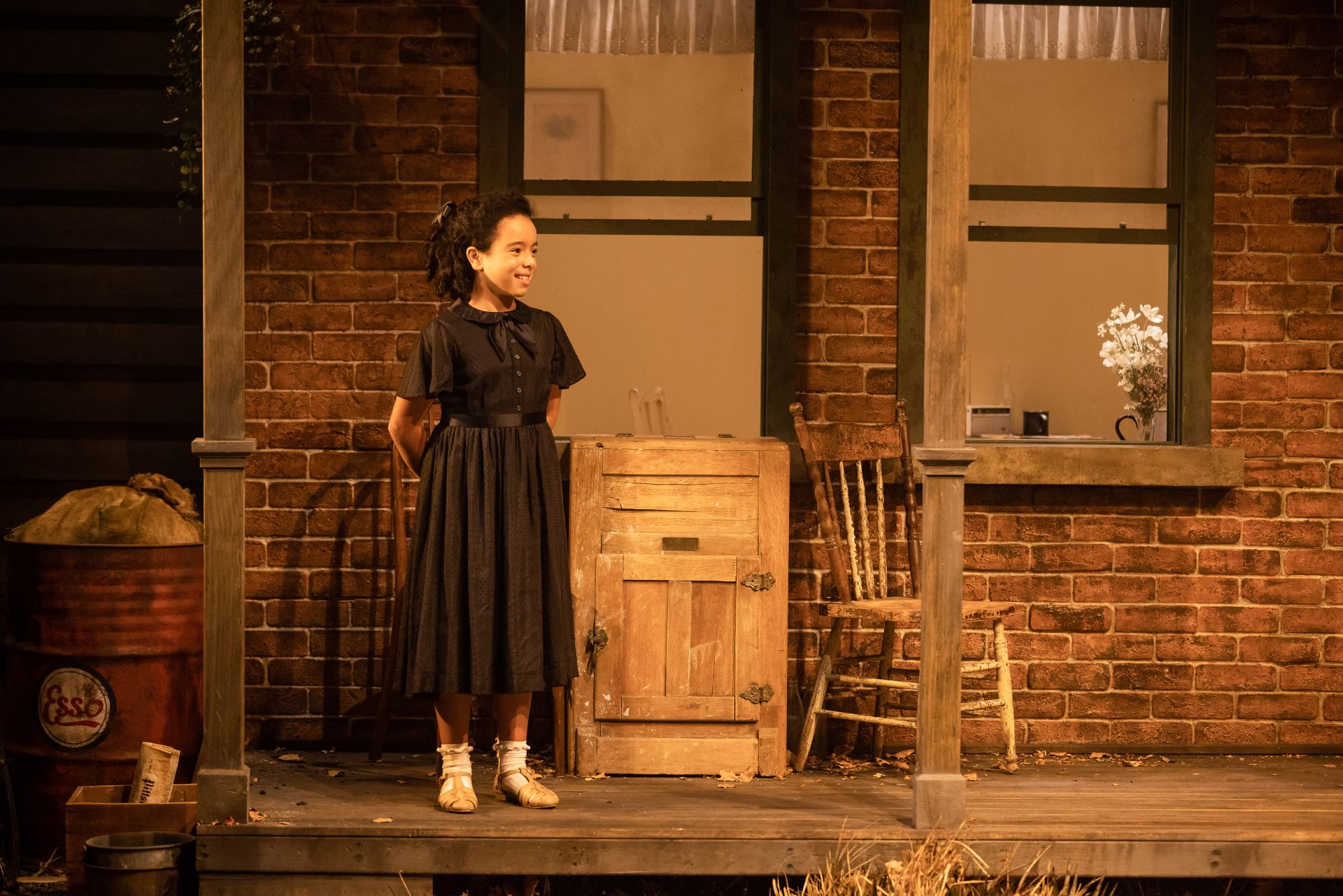
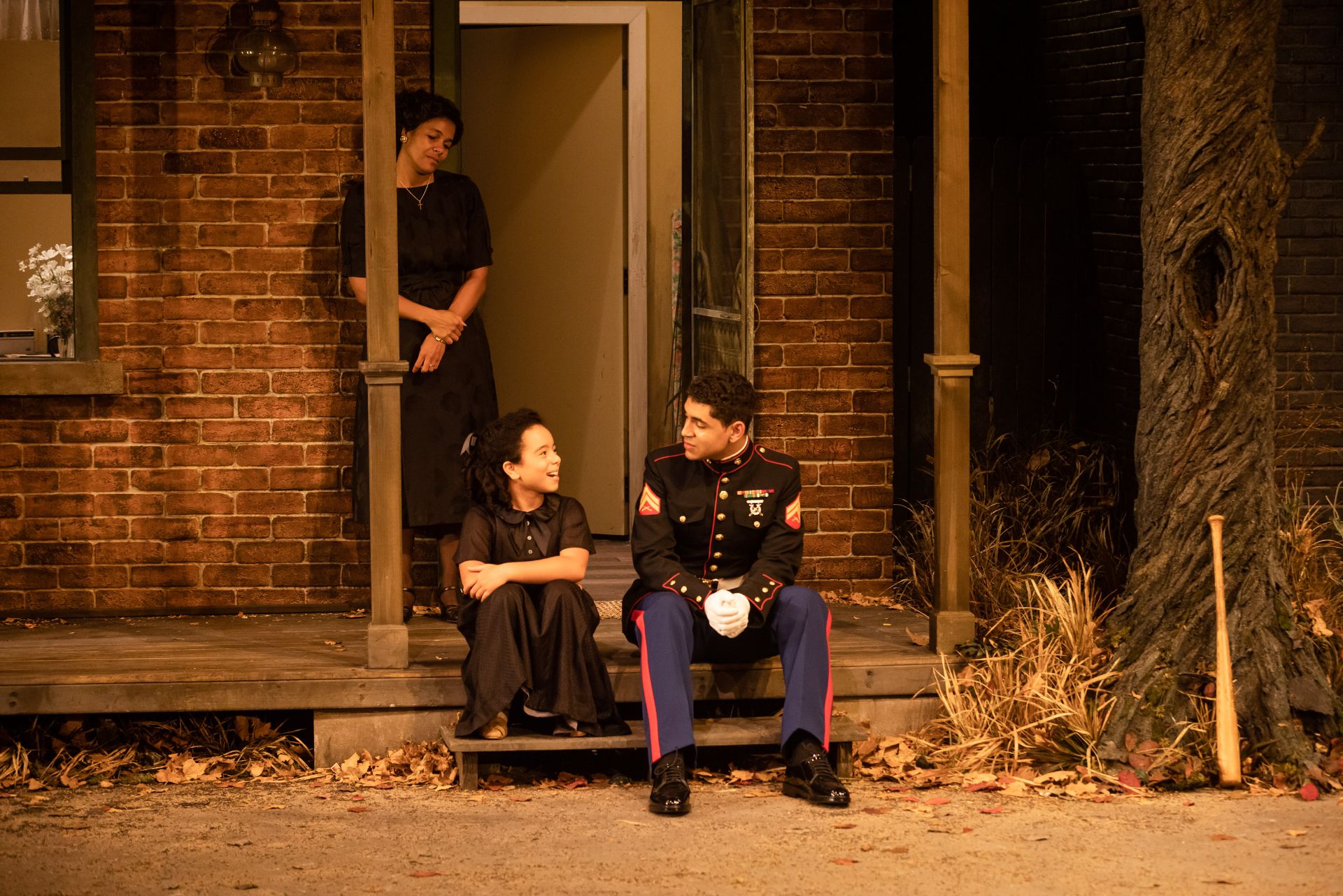
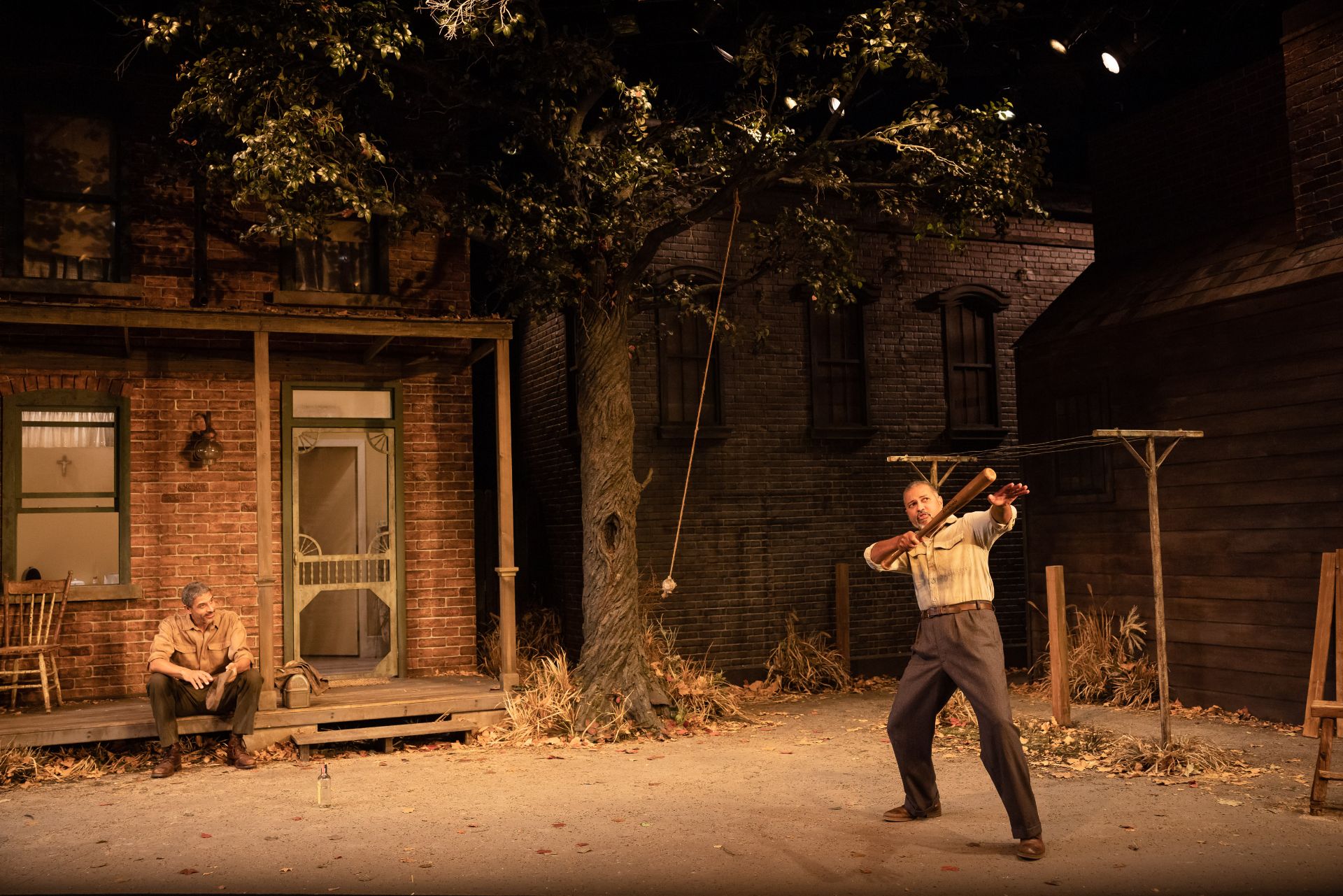
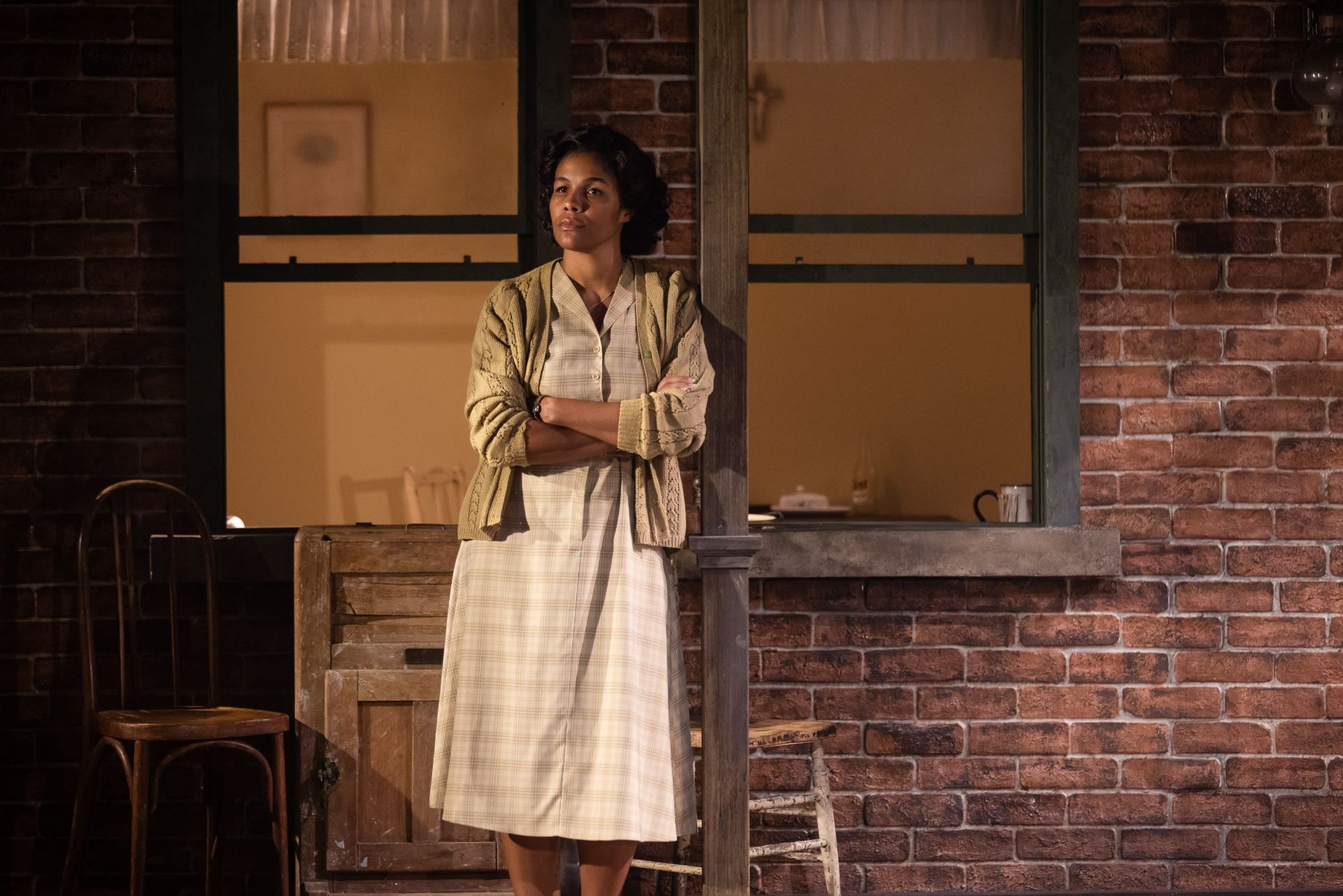
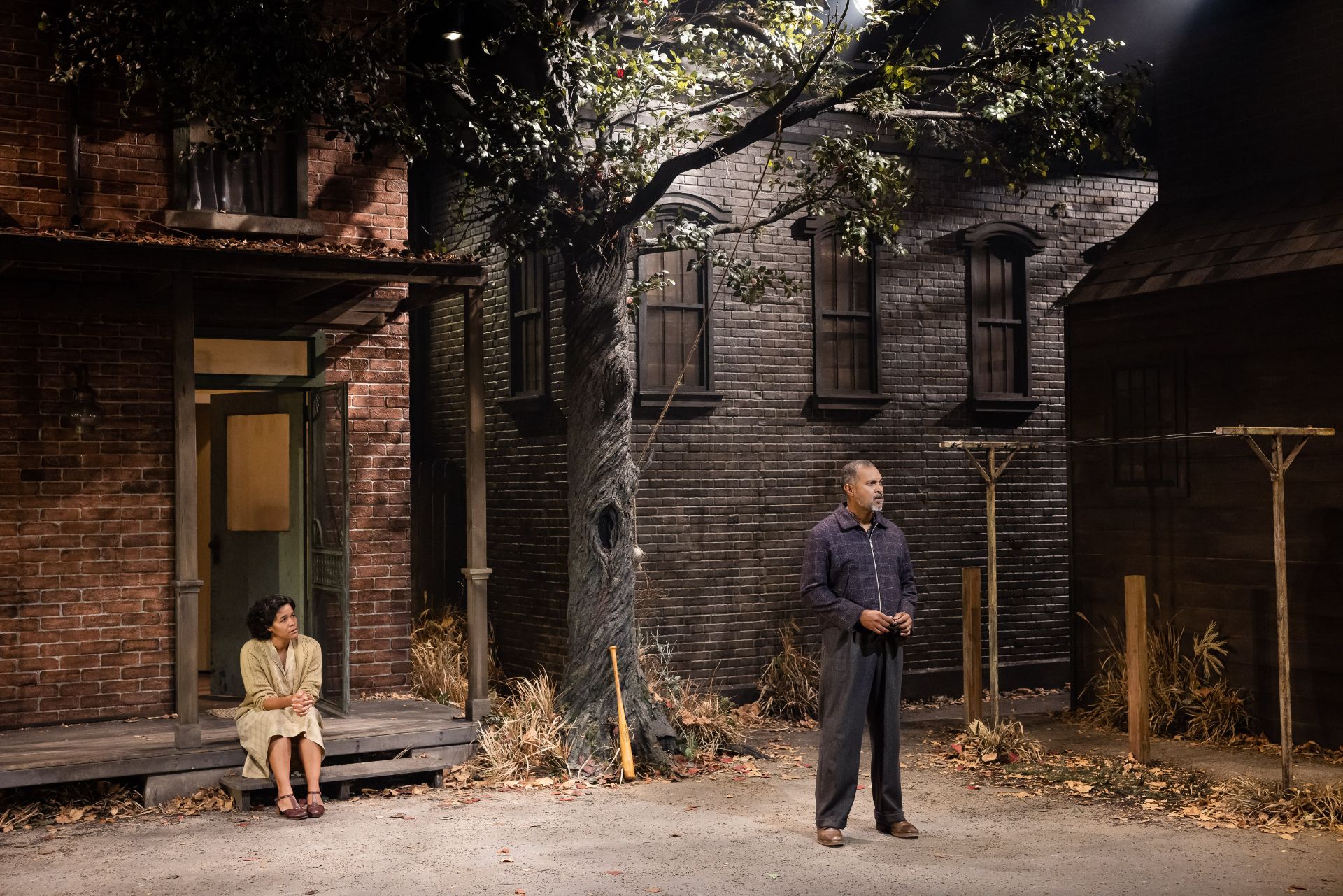
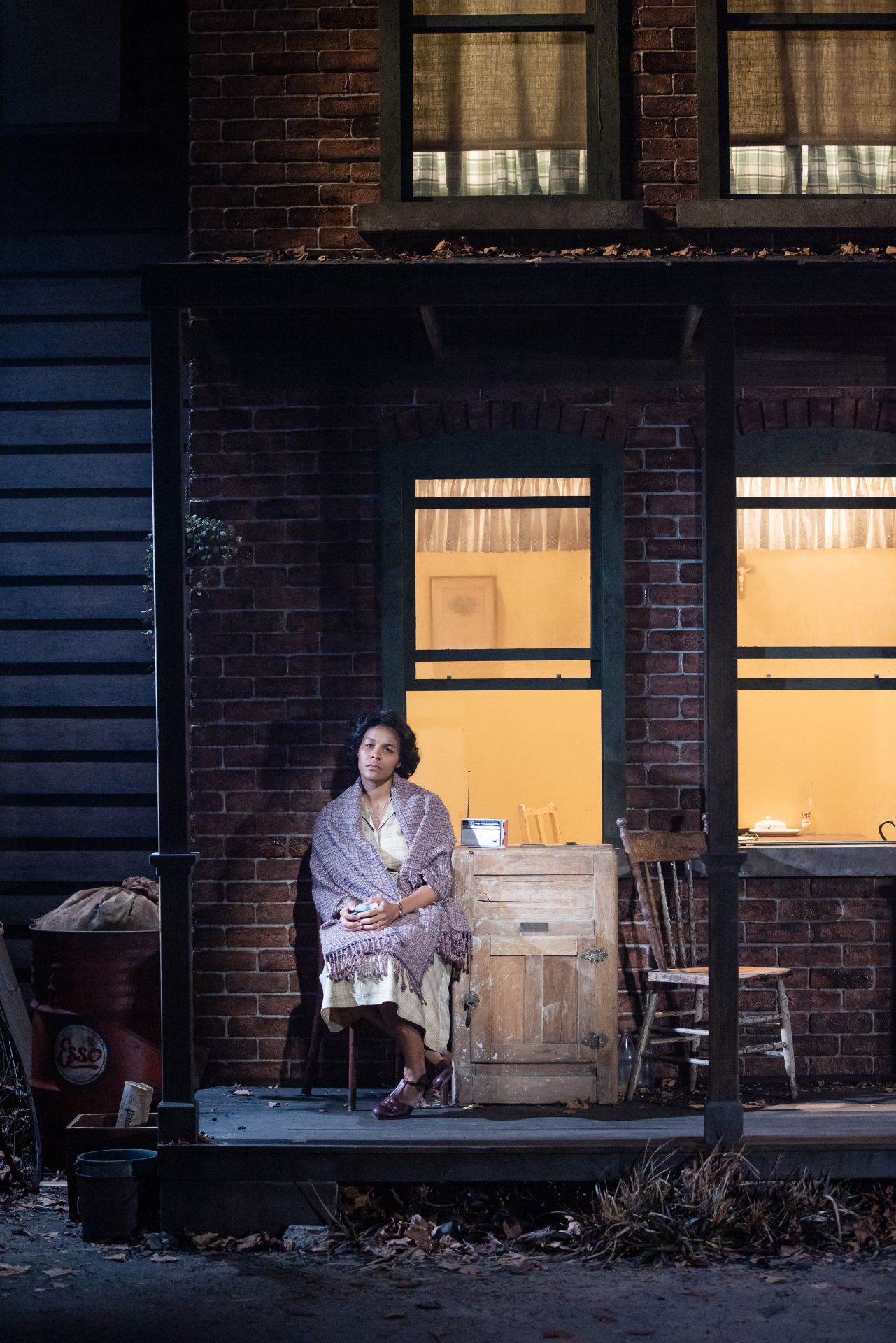
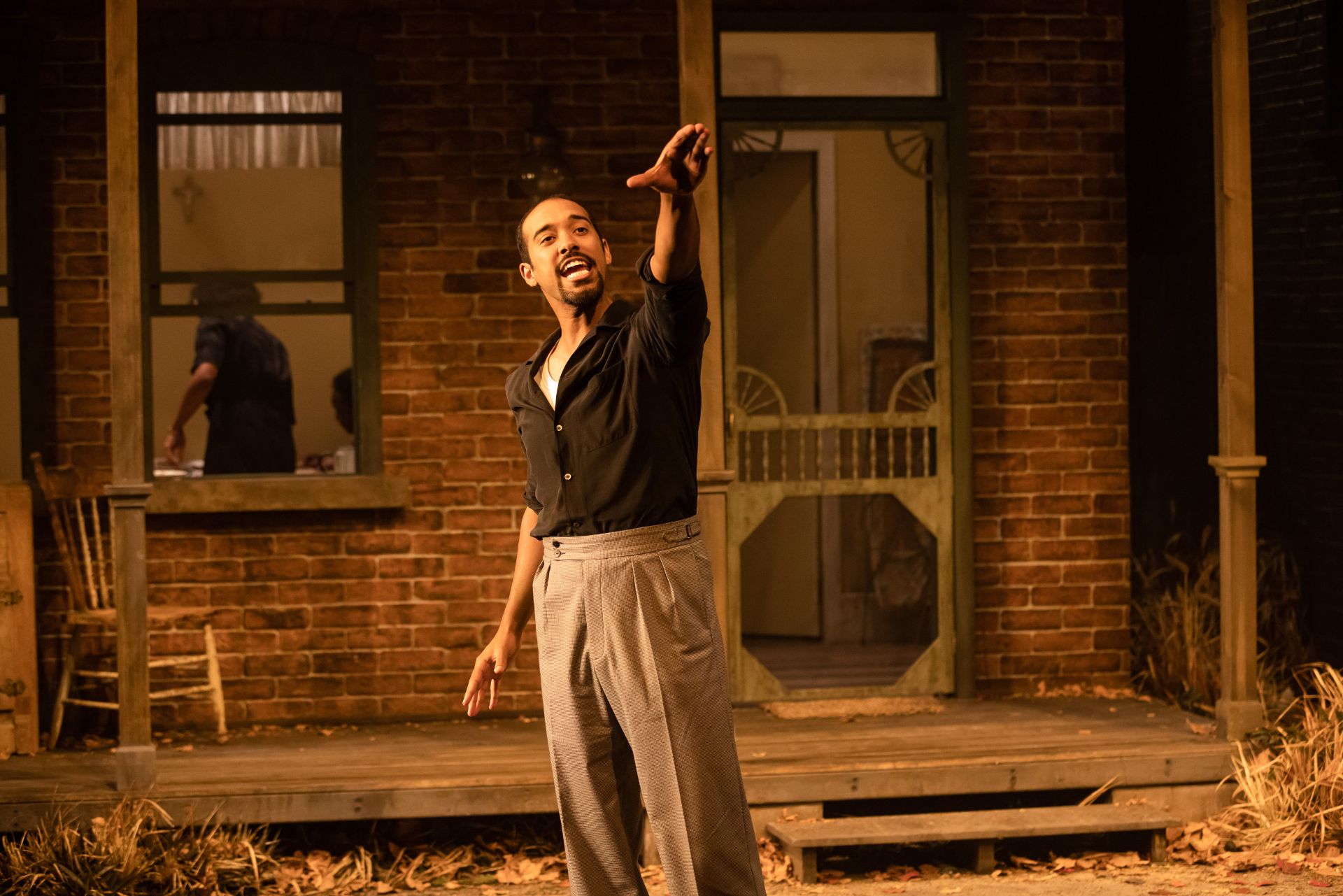
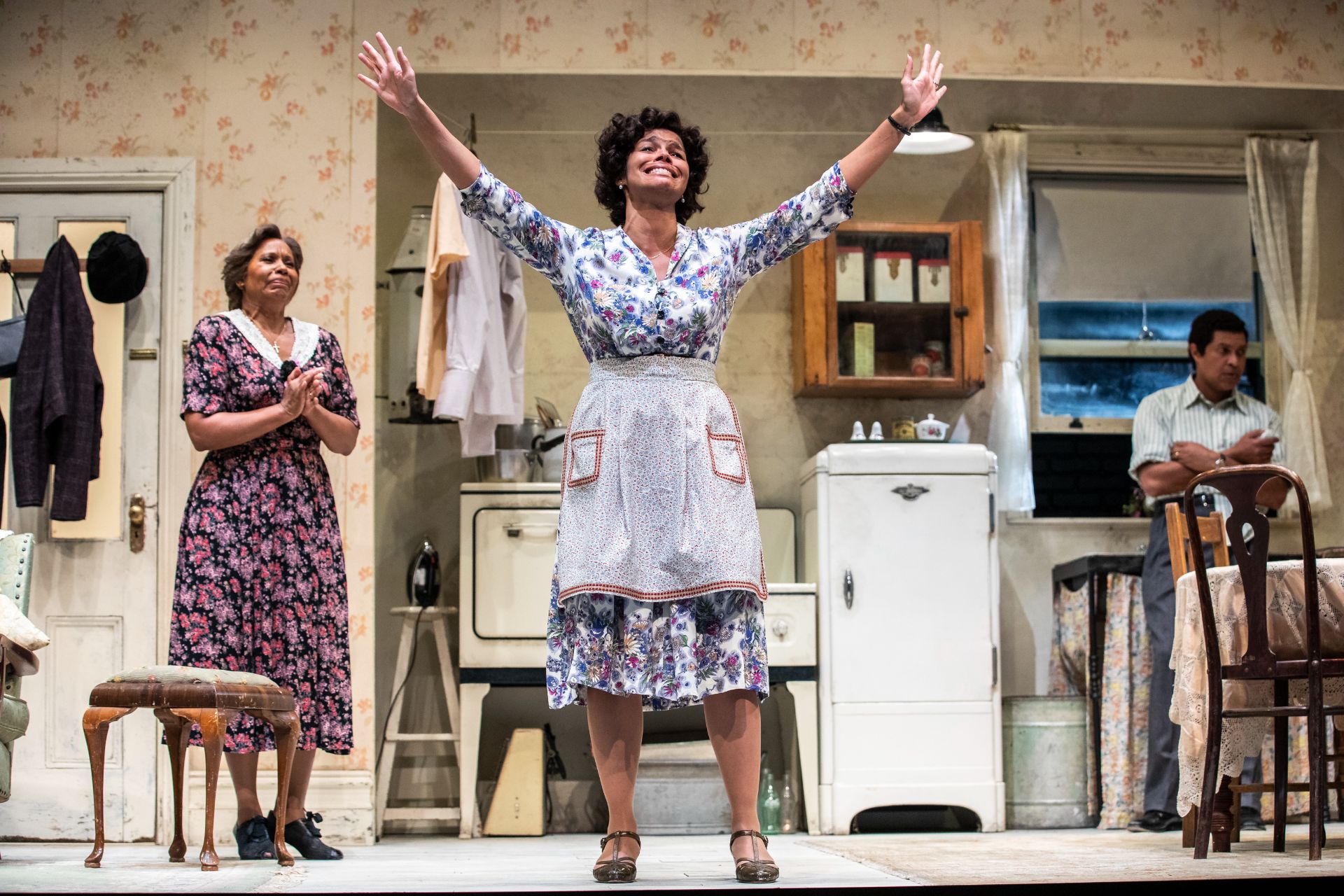
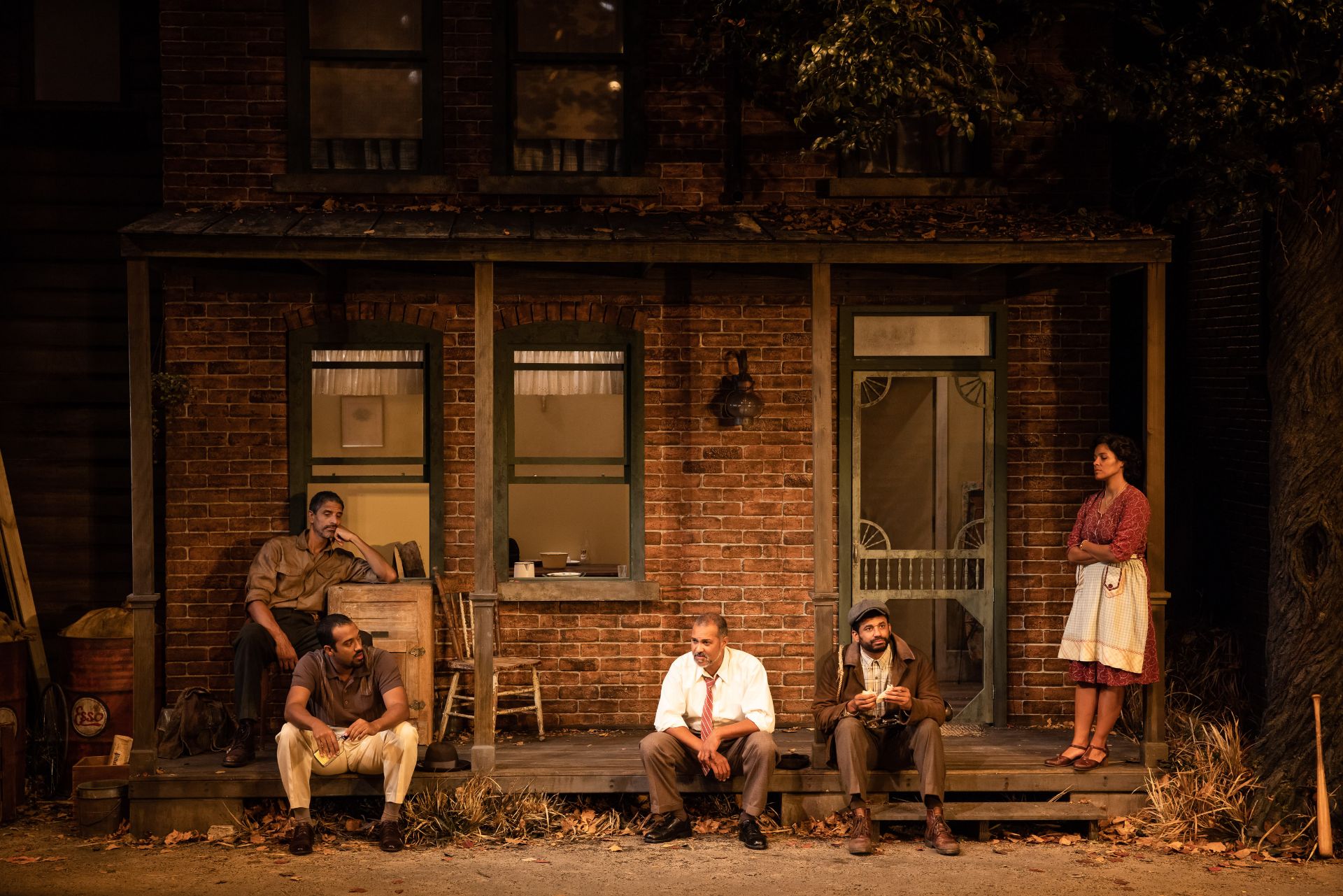
Set design by Jeremy Allen transports us somewhere thoroughly believable. Even though the Maxsons’ front yard from 70 years ago only exists in our imagination, what our eyes encounter is something that seems replete with verisimilitude, as are Allen’s costumes, similarly accurate in their depictions of Black life in mid-century Pennsylvania. Verity Hampson’s lights are conservatively, but thoughtfully, calibrated to engender an intense sentimentality, for a play that requires of us, emotional as well as intellectual investment. Sensual and soulful music by Brendon Boney draws from American Blues traditions, so that our sensibilities remain firmly in that historic time and place, one comprising the complex embroilment of bittersweet nostalgia and despicable oppression.

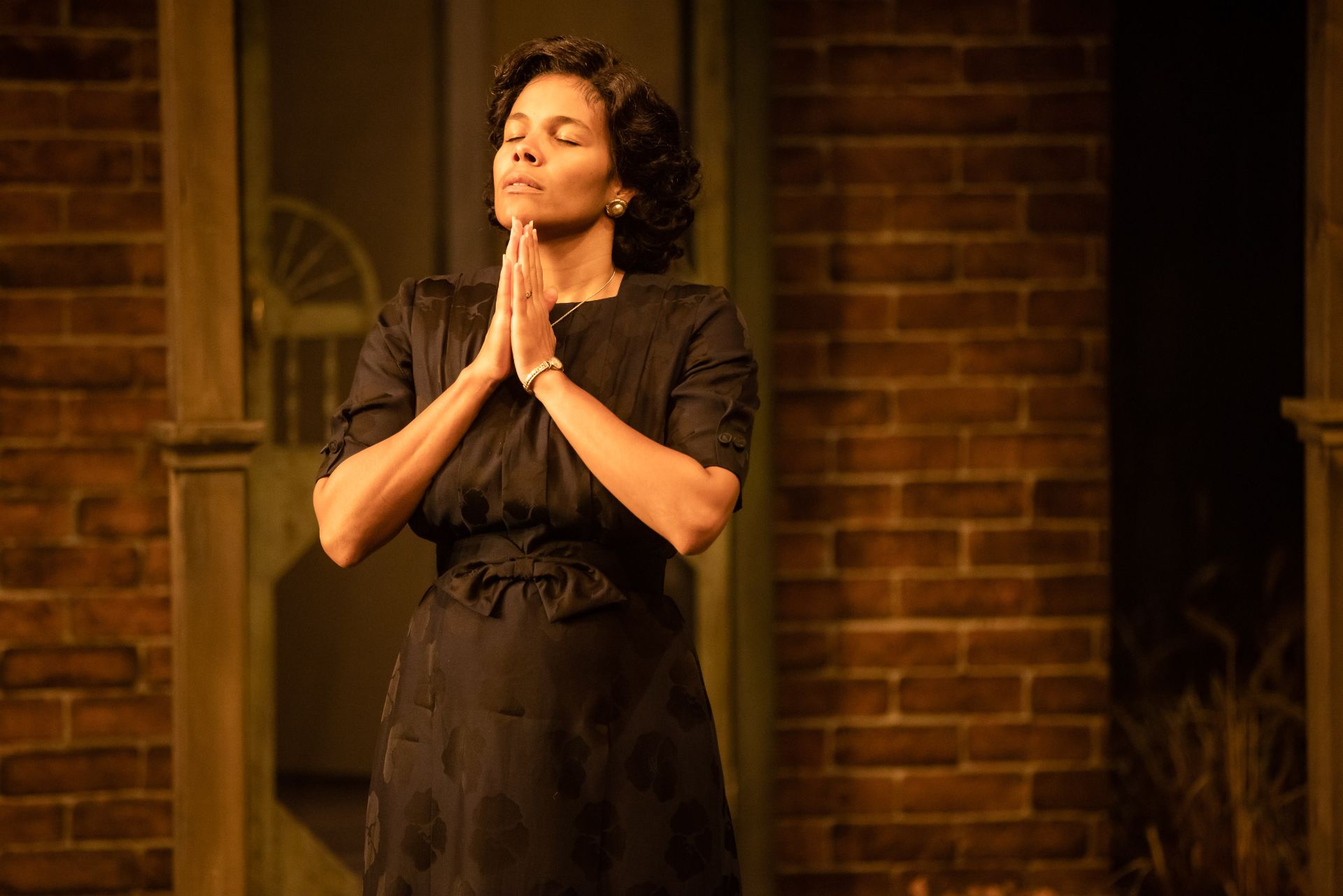
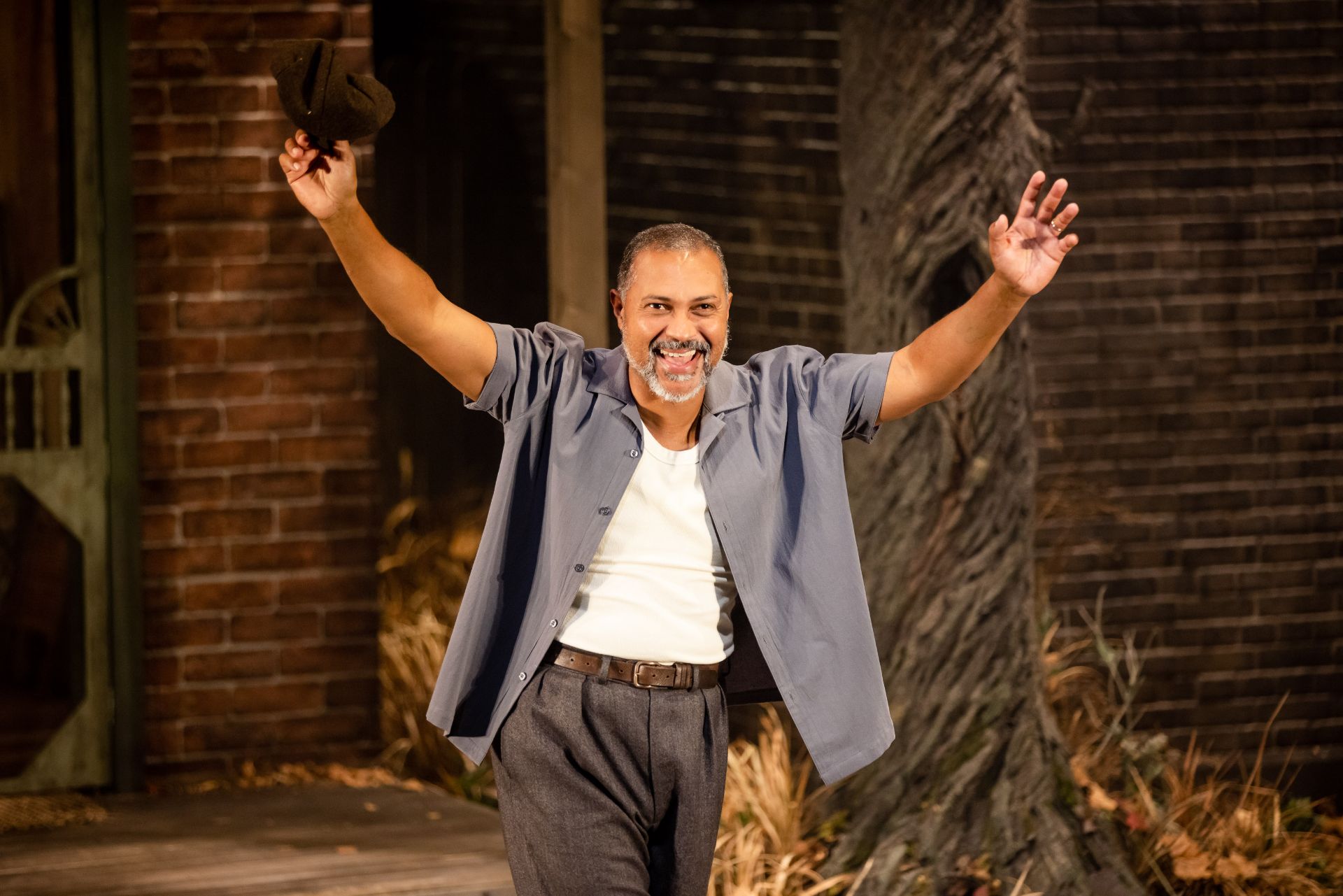
Actor Bert LaBonté delivers sensationally as Troy, with unremitting authenticity and disarming passion. He is heartbreaking yet reprehensible, sympathetic yet frustrating, in his noble portrayals of emasculation and righteous indignation. Zahra Newman brings great vigour to her interpretation of Rose, allowing the feminine half of the Fences story to make an almost comparable impact. Highly engaging is Darius Williams as son Cory, impressively nuanced and exquisitely tender, in a devastating narrative of circular histories. Markus Hamilton too, has us captivated as the mirthful Bono, with perfect timing and an extraordinary presence. Other cast members are Damon Manns, Molly Moriarty and Dorian Nkono, each one more charming than the other, in a show full of persuasive and likeable personalities.

Troy is fixated on his shattered hopes of becoming a professional baseball player of great renown. It is true that no person’s life can be guaranteed happiness ever after, based on the reversal of a singular precedent circumstance. It is also true however, that if racism is not the annihilating force pervasive in so many of our lives, Troy would have achieved not only his heart’s desire, but also a significantly improved existence overall, for himself and for his loved ones. Like Troy, many of us are conditioned to think more about personal failures, than to figure out ways to dismantle those harmful systems, within which all have to operate. Despondency is understandable, but those energies can be turned outwards, negative as they may be, to forge new paths that could bend the arc of history.

www.sydneytheatre.com.au

Review: Hubris & Humiliation (Sydney Theatre Company)

Venue: Wharf 1 Sydney Theatre Company (Walsh Bay NSW), Jan 20 – Mar 4, 2023
Playwright: Lewis Trenton
Director: Dean Bryant
Cast: Henrietta Enyonam Amevor, Mathew Cooper, Roman Delo, Celia Ireland, Melissa Kahraman, Andrew McFarlane, Ryan Panizza
Images by Prudence Upton

Theatre review

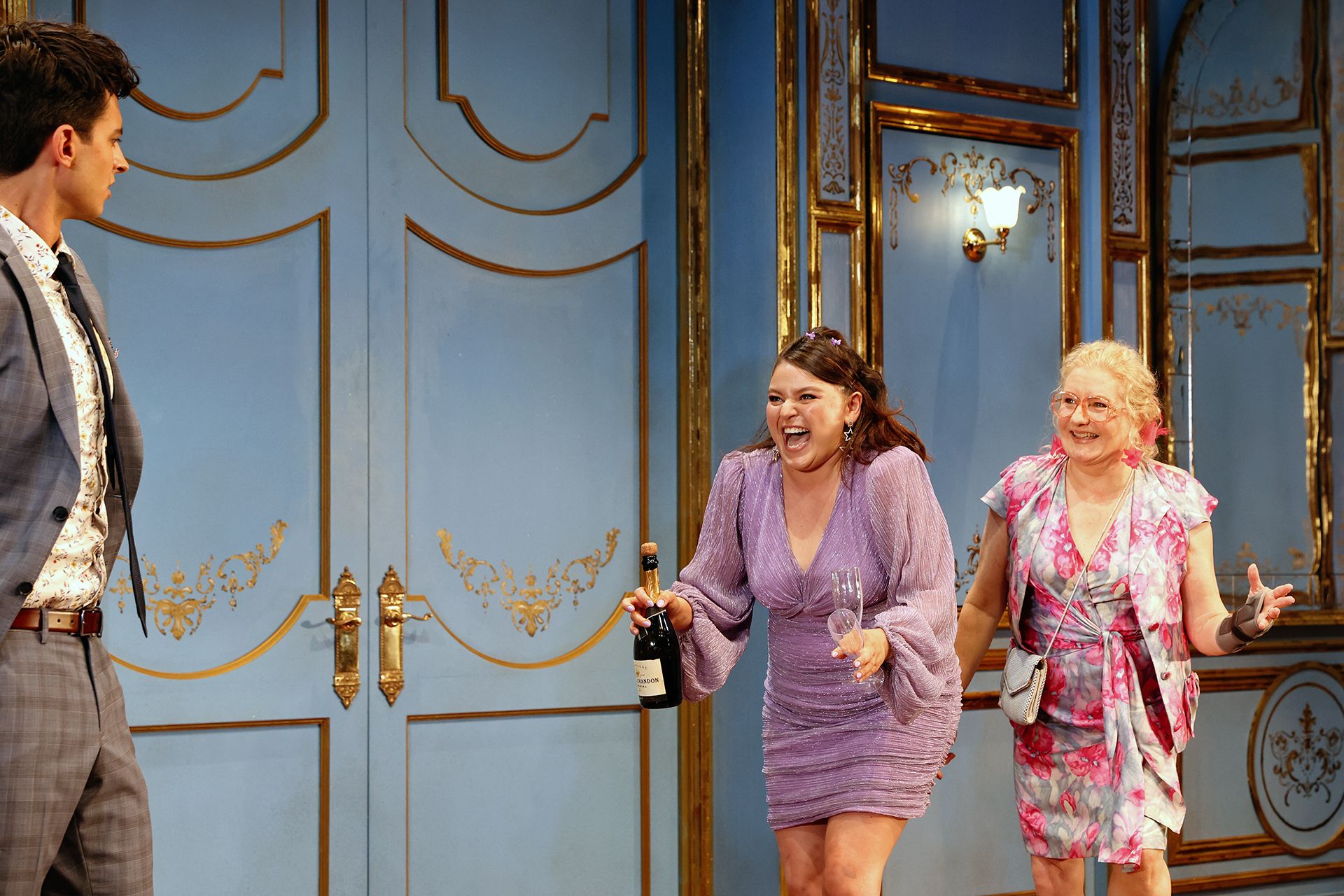
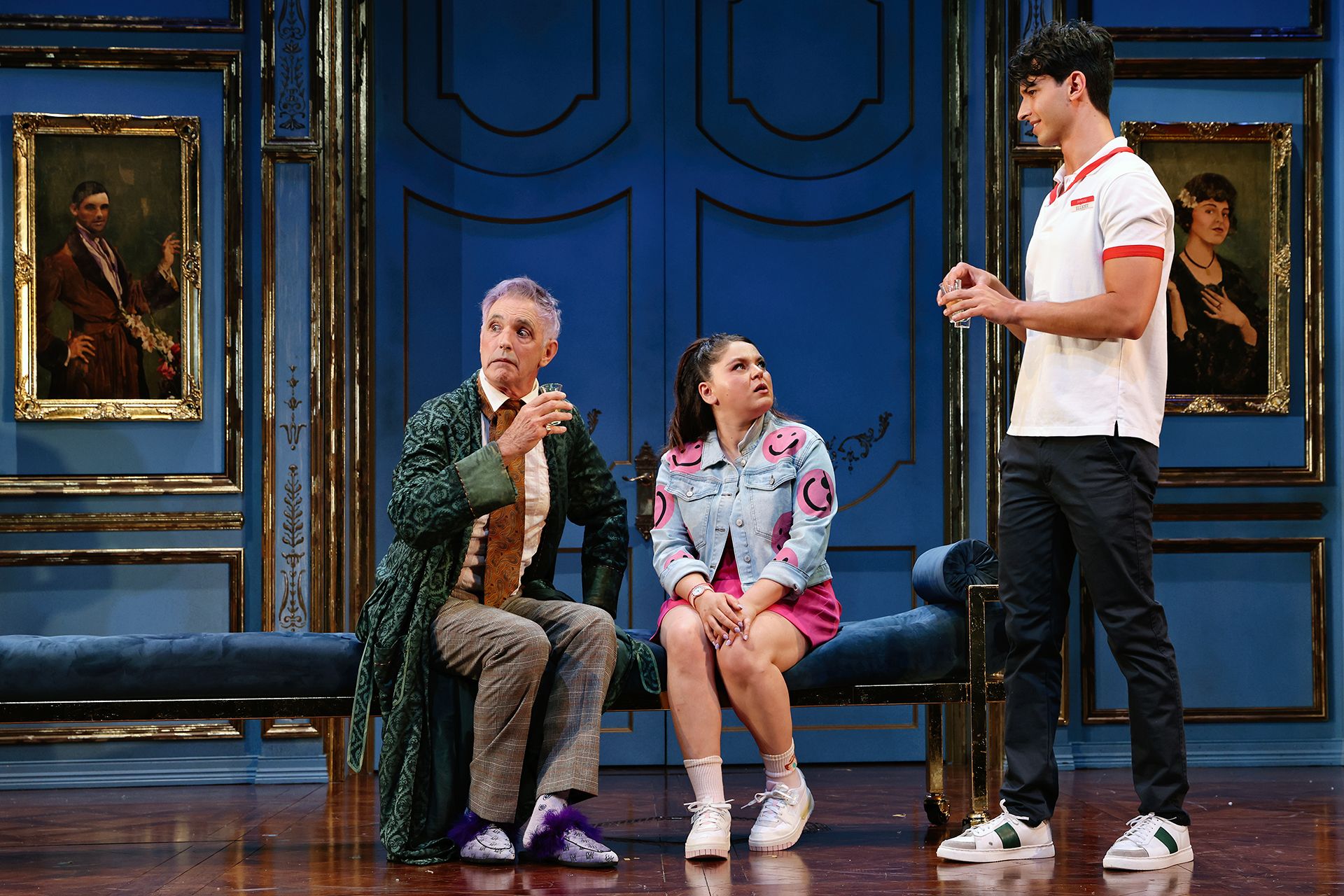
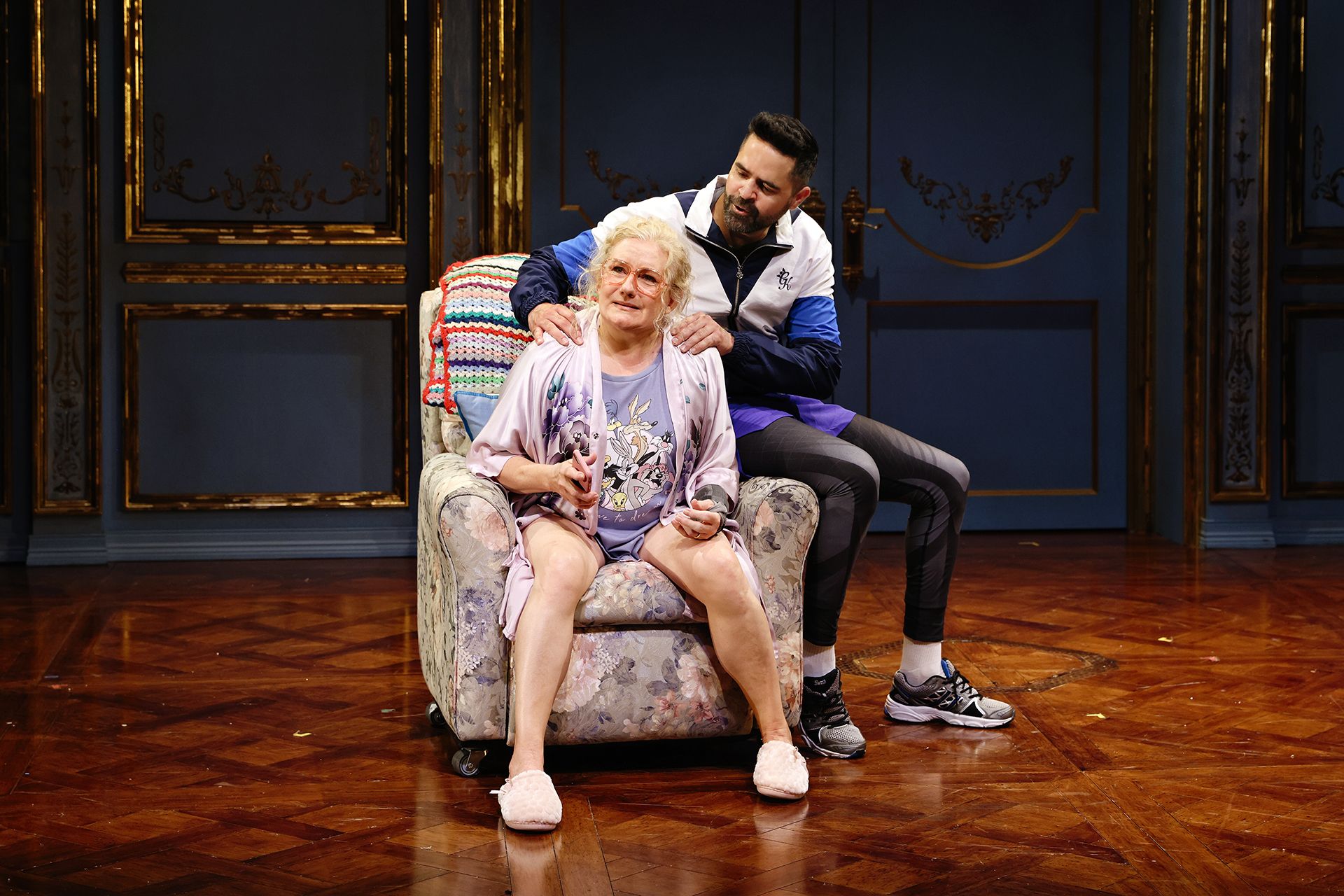
Elliott is leaving Brisbane to work in Sydney, and also to find a rich husband, because his mother Bernice has lost hundreds of thousands of dollars, to a catfishing incident. Much like the Jane Austen oeuvre, from which it takes inspiration, Lewis Trenton’s Hubris & Humiliation is on some levels an examination of class, and on others a frivolous romantic romp. Its plot may unravel to a flimsy conclusion, but the journey is nonetheless satisfying, with witty dialogue and fabulously observed characters, making for a truly wonderful time at the theatre.

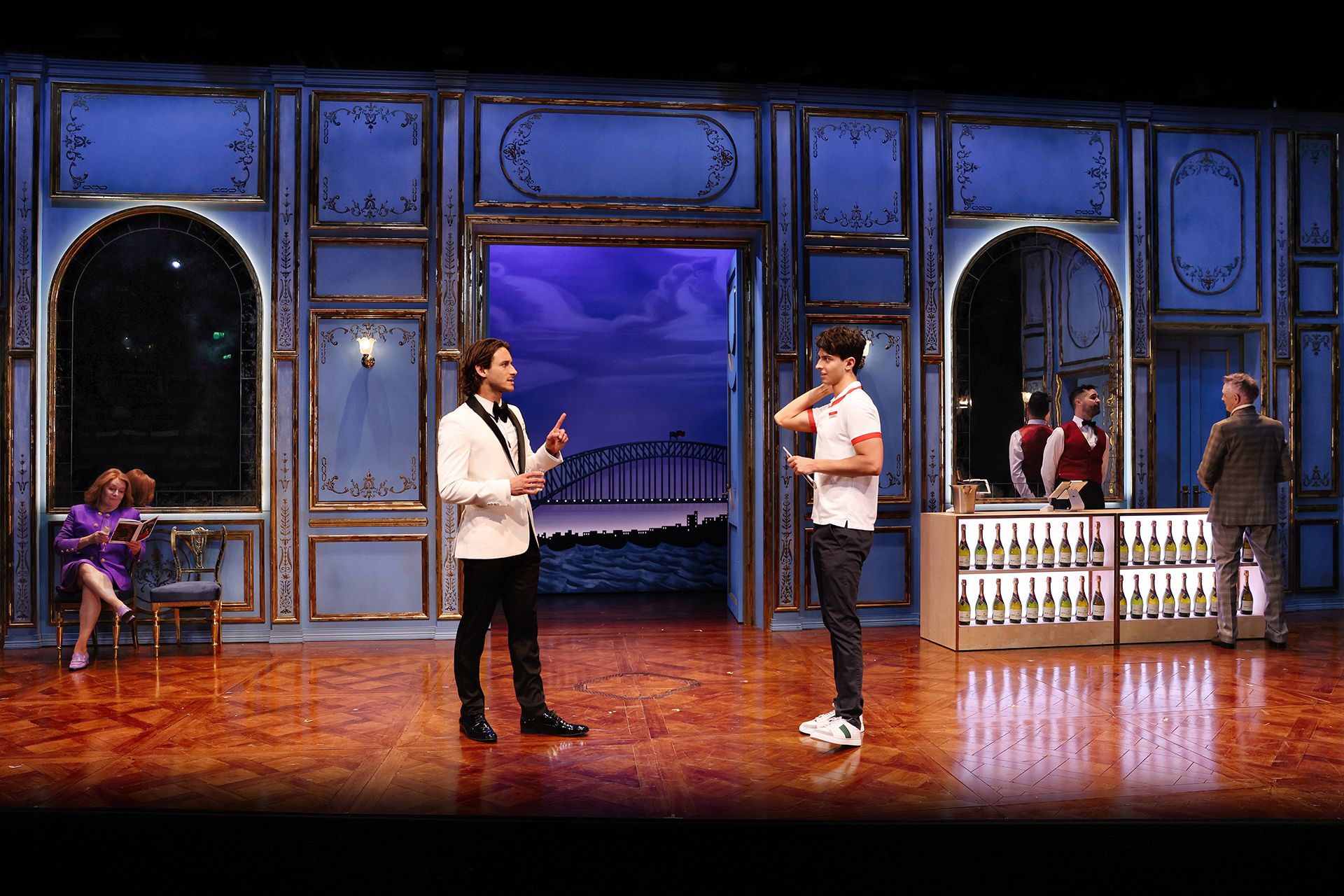
Direction by Dean Bryant is unabashedly campy, but laced with an acerbic edge to prevent any sense of hollow affectation. His show is relentlessly effervescent, amusing at every turn, often dazzling with genuine hilarity. Set design by Isabel Hudson is suitably ostentatious, with a commendable versatility that accommodates the play’s many location changes. Hudson’s costumes are brightly hued, to keep our eyes sated and occupied. Lights by Alexander Berlage provide amplification to the brassy quality of the piece, but are also effective at delivering emotional tenderness when required. There is an elegant restraint to Matthew Frank’s sound and music, able to facilitate action and elicit responses, but careful to remain unobtrusive.

Extraordinary work by the cast of Hubris & Humiliation makes it an utterly memorable experience. Elliott is played by Roman Delo, whose exceptional instincts bring impressive elevation to a role that could easily be perceived as banal. Delo’s confident charisma is the unequivocal lynchpin, of this staging’s success. Ryan Panizza plays dual roles Warren and William with conviction, offering strong counterpoint to Elliott’s incorruptibility.

Women performers steal the show, along with our hearts, in a range of supporting parts that give depth and substance, to the irrepressible comedy. Henrietta Enyonam Amevor, Celia Ireland and Melissa Kahraman are inventive and joyful, each demonstrating their own admirable talents, in the exalted art of mirthful storytelling. Matthew Cooper and Andrew MacFarlane create fascinating personalities that address our need for progressive versions of masculinity, in this tale of new unions and modern sexualities.

It is funny how we care so much about the sex lives of others. This need to probe and police what people do in private, is however no laughing matter, with many having suffered persecution through the ages, for not following the rules. Hubris & Humiliation takes place not in Austen’s Regency era, but in the here and now, and to see everyone free to make new rules in its emancipatory narrative, is gratifying. Nothing should hold us back from life’s infinite pleasures, as long as we stick to the simple principle, that no one gets hurt, and that enthusiastic consent remains integral to every kind of sexy.

www.sydneytheatre.com.au

Review: RBG: Of Many, One (Sydney Theatre Company)

Venue: Wharf 1 Sydney Theatre Company (Walsh Bay NSW), Oct 29 – Dec 23, 2022
Playwright: Suzie Miller
Director: Priscilla Jackman
Cast: Heather Mitchell
Images by Prudence Upton

Theatre review

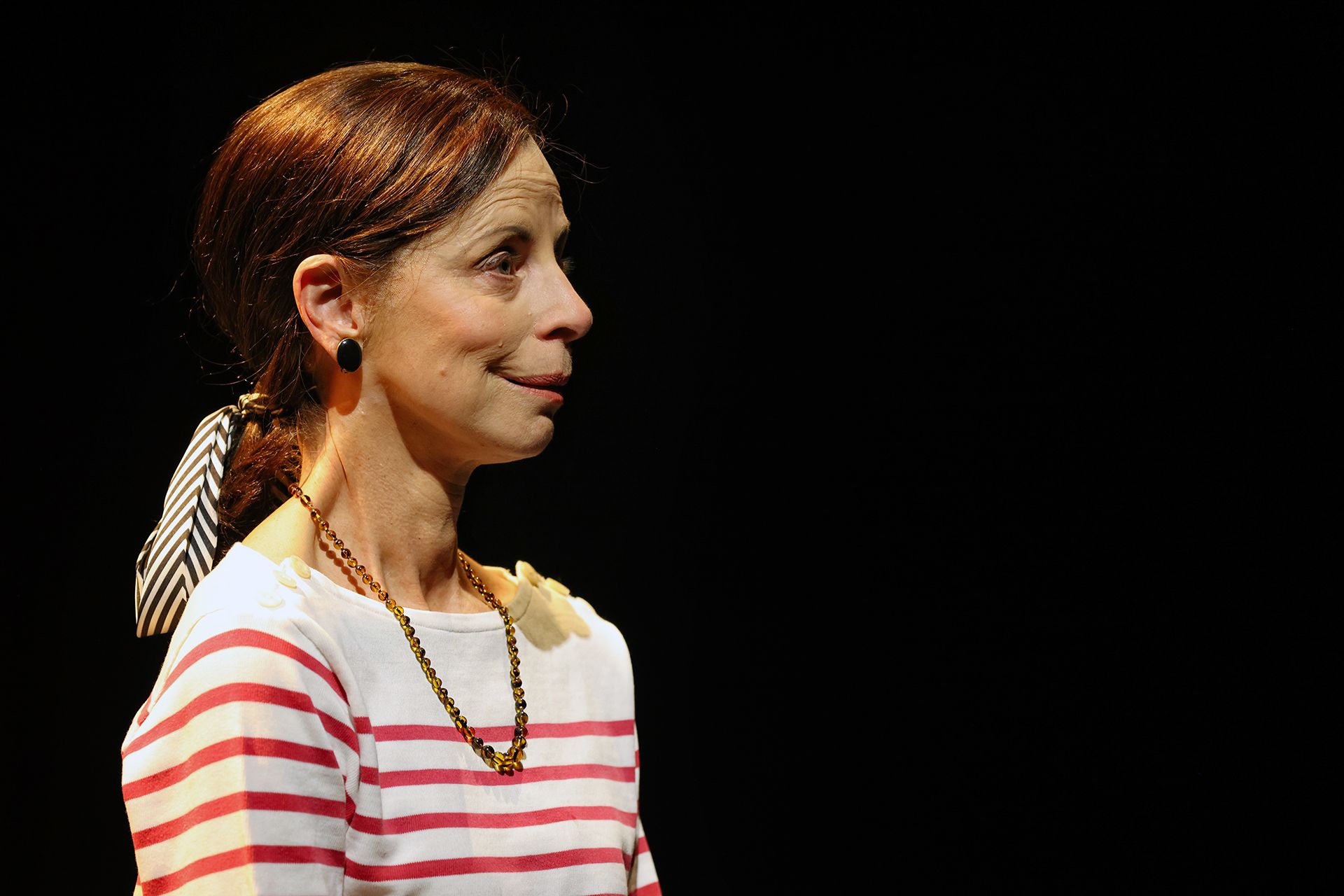
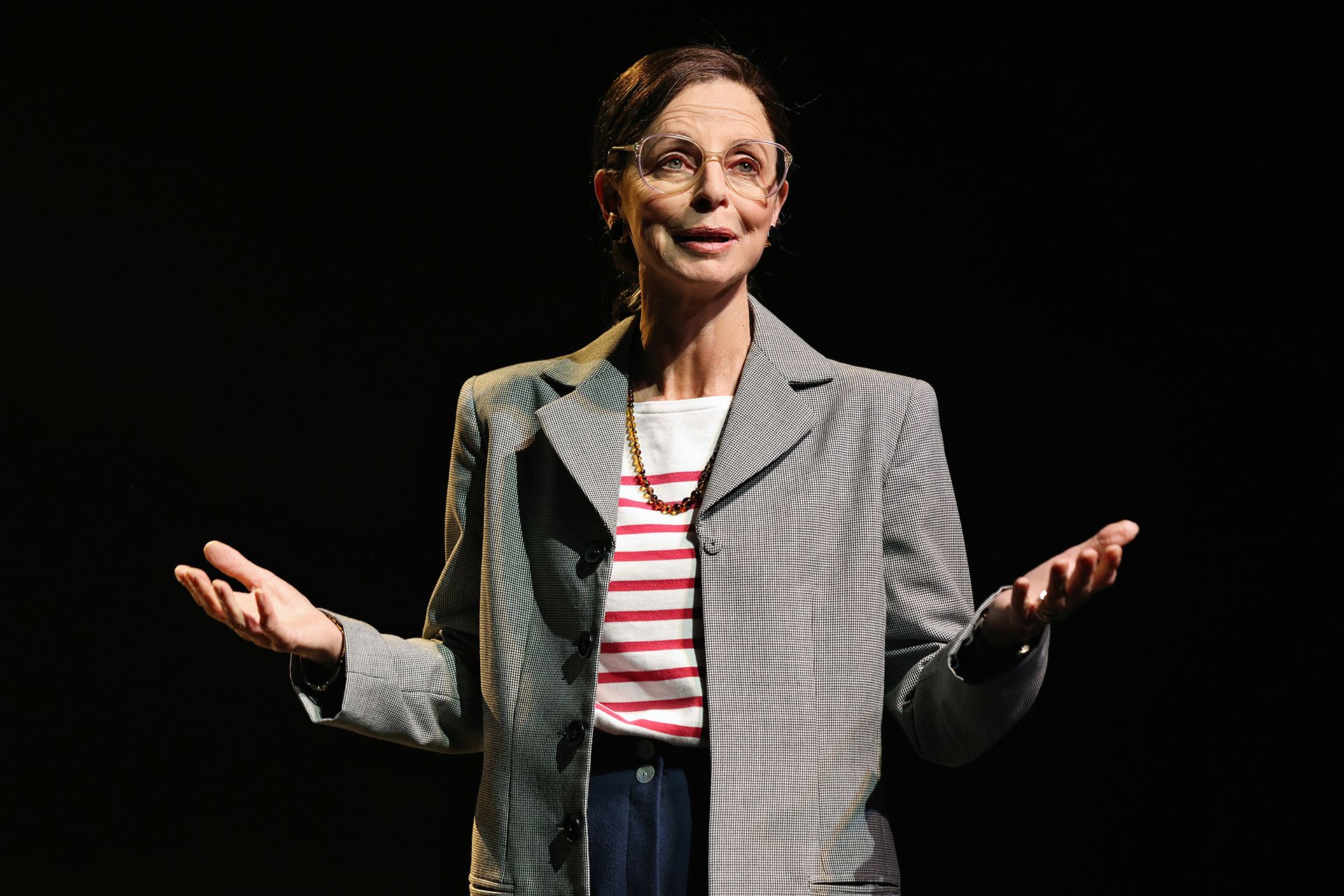
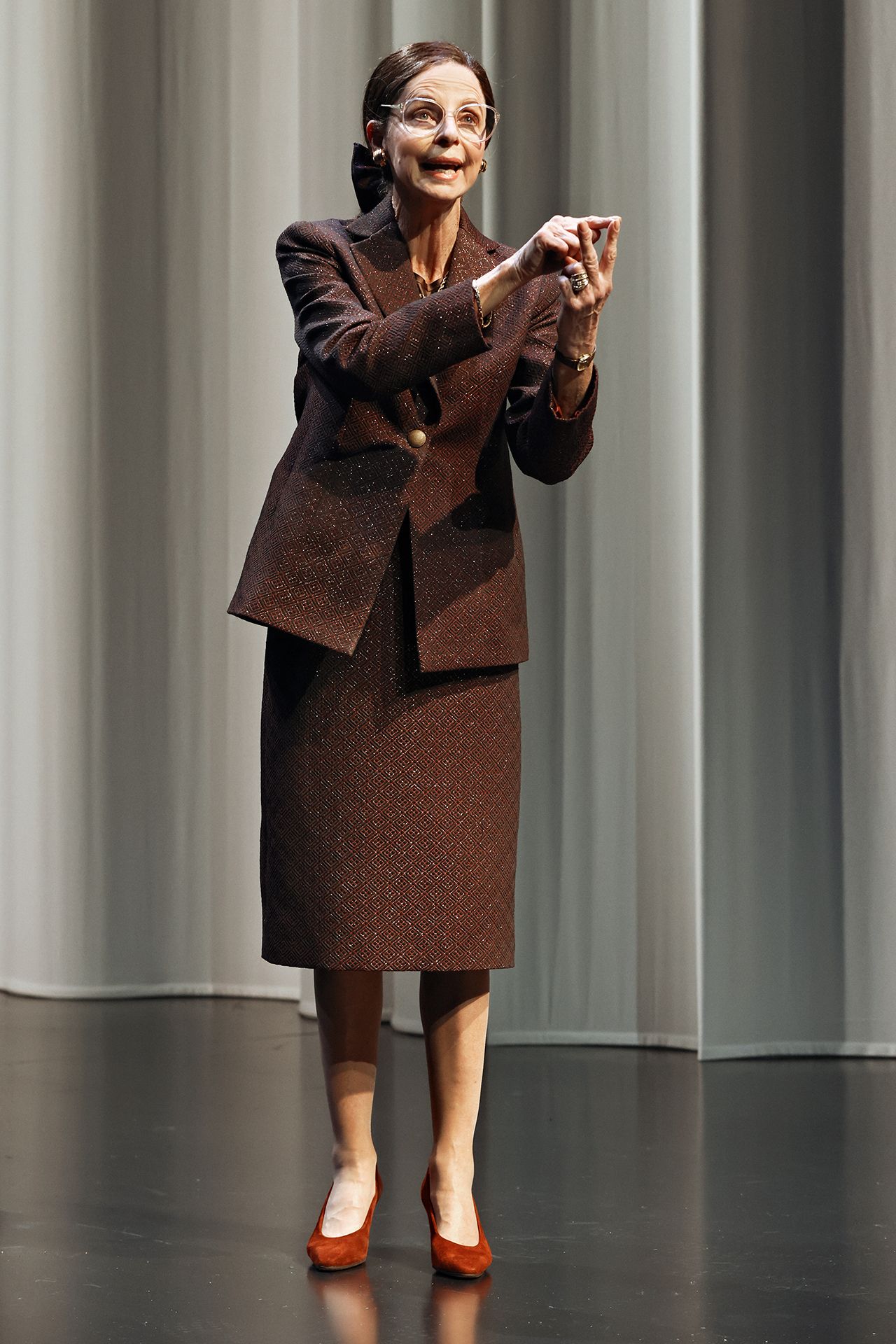
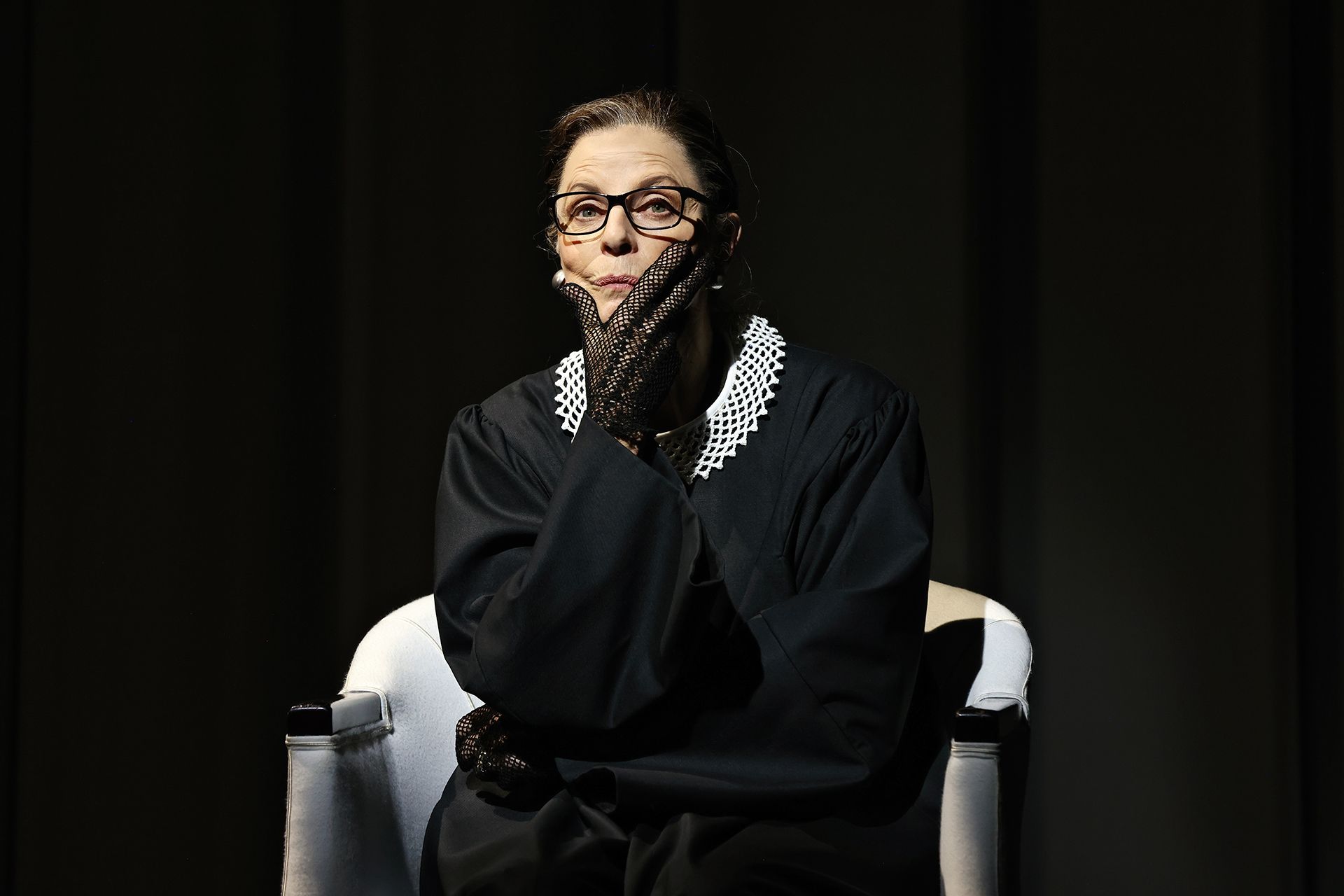
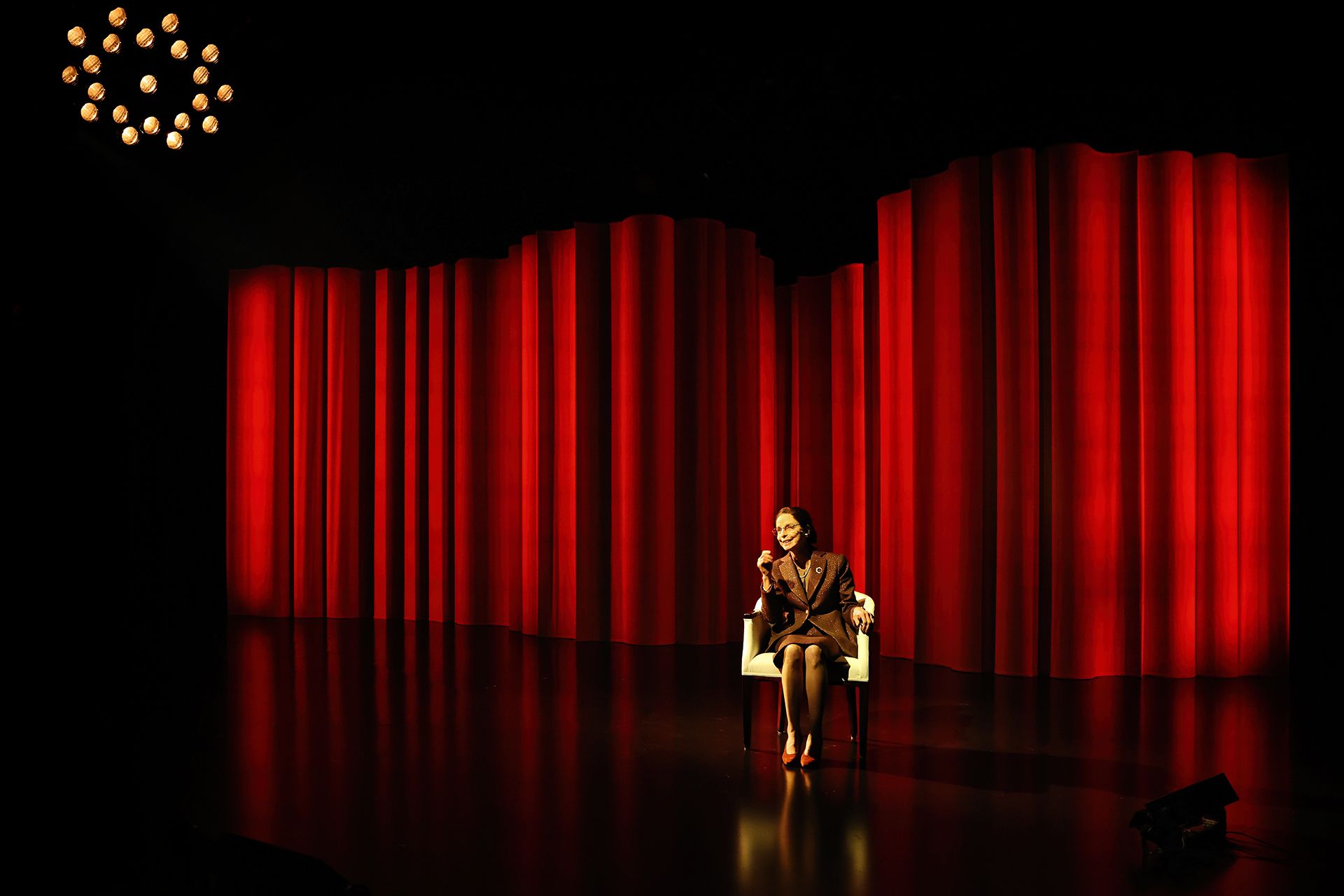
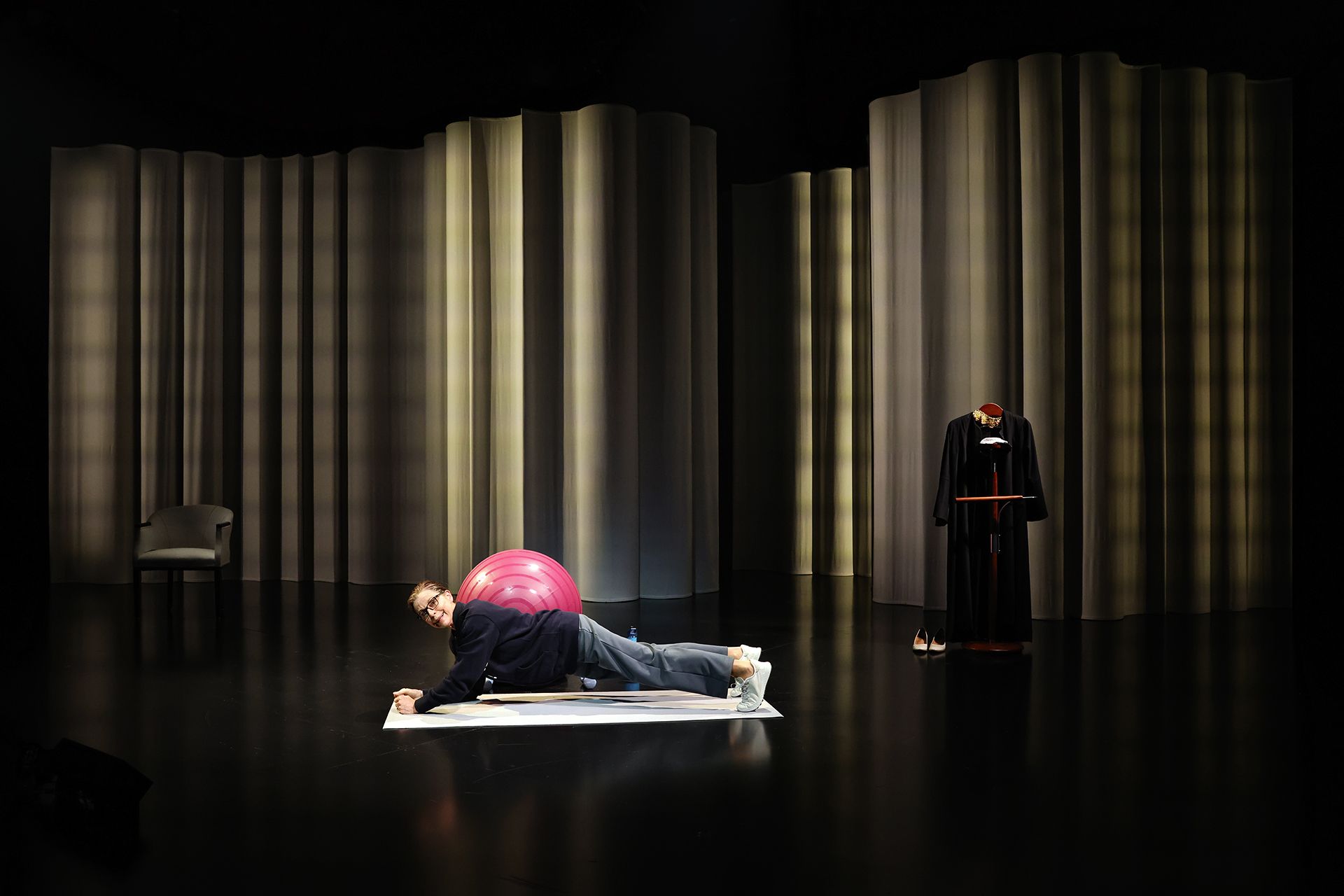
Associate justice of the Supreme Court of the Unites States, Ruth Bader Ginsburg was not the first woman appointed to that position, but is certainly the most famous feminist icon to have emerged from that Court. In Suzie Miller’s RBG: Of Many, One we get acquainted with Ginsburg’s significant legacy as a trailblazer, and witness the ways in which she had left an indelible mark, on the most patriarchal of boys’ clubs. Ginsburg’s personal life was an immaculate one, devoid of scandal or controversy, but playwright Miller is nonetheless able to excavate at the most important of her professional achievements, to compose a work that informs and inspires.

A worthy tribute to an intelligent and courageous woman, RBG: Of Many, One is directed by Priscilla Jackman, who manufactures an unmistakeably reverential aura for the staging. Having passed away just two years ago, Ginsburg’s story, although not a mournful one, does reverberate with a sense of melancholy. Furthermore, recent events pertaining to the Dobbs decision that overturns Roe v Wade, thereby upending 50 years of abortion rights, feels a direct consequence of Ginsburg’s death. The work is still a celebration of a great life, but the darkness of current realities, makes the experience a truly sombre one.

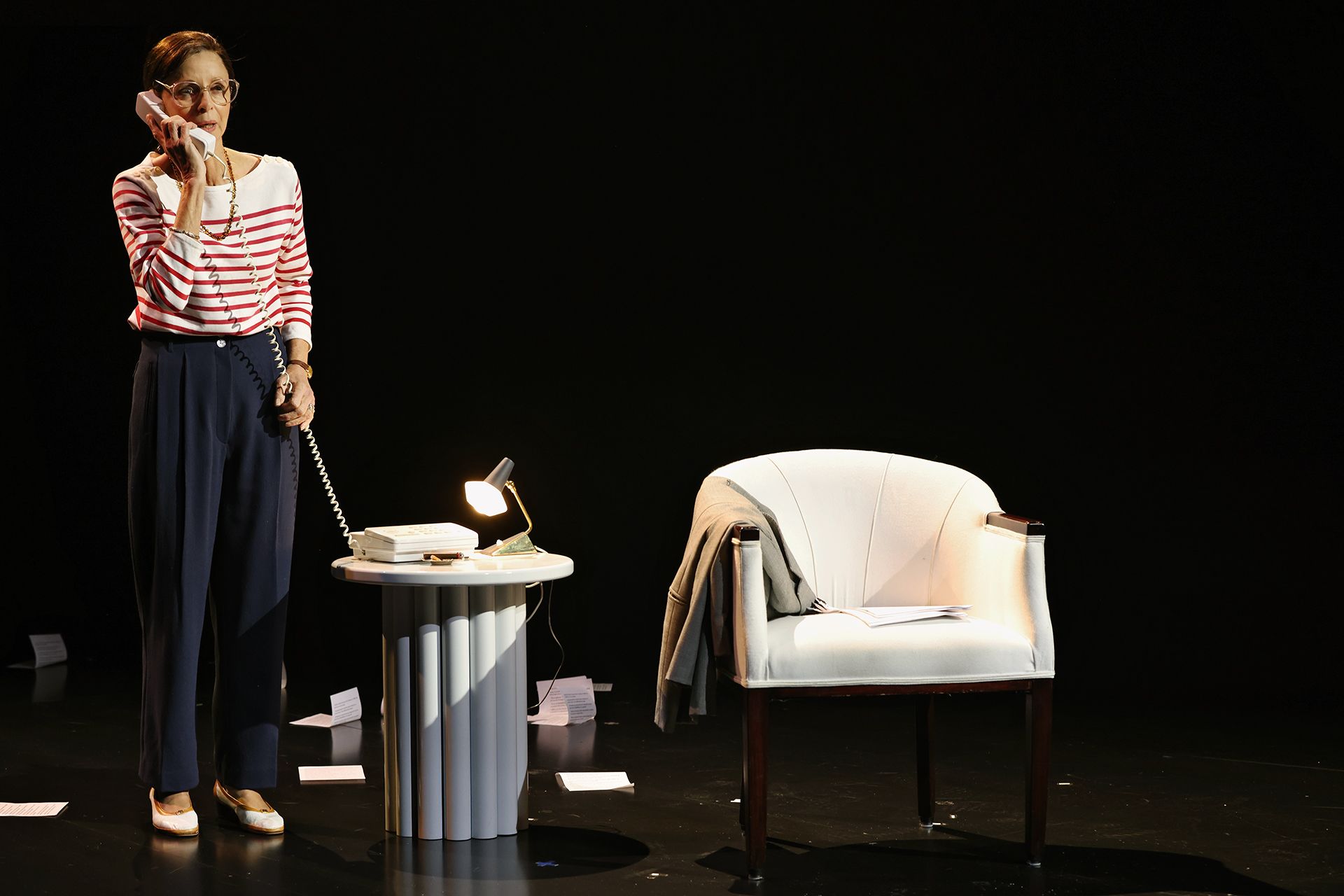
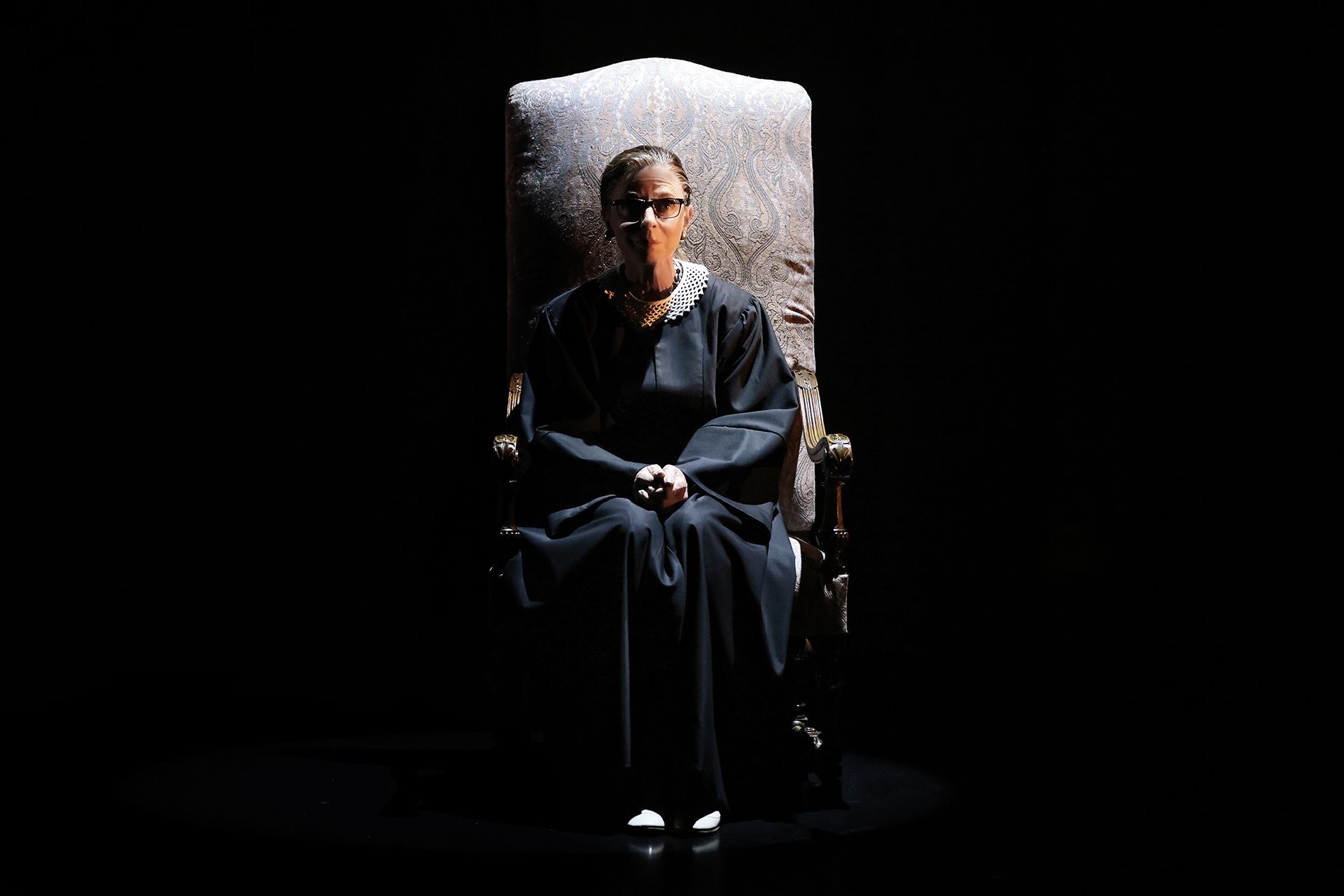
Production design by David Fleischer implements an understated elegance that corresponds with the heroin’s image in our collective memory, but several instances requiring stagehands to manually deliver props, can appear somewhat awkward. Alexander Berlage’s lights provide much-needed visual dynamism for the one-woman show, sensitively rendered to help us navigate the many shifts in time and place, whilst delivering beautiful imagery through the duration. Music by Paul Charlier is memorable for its vigour, although not always at appropriate levels.

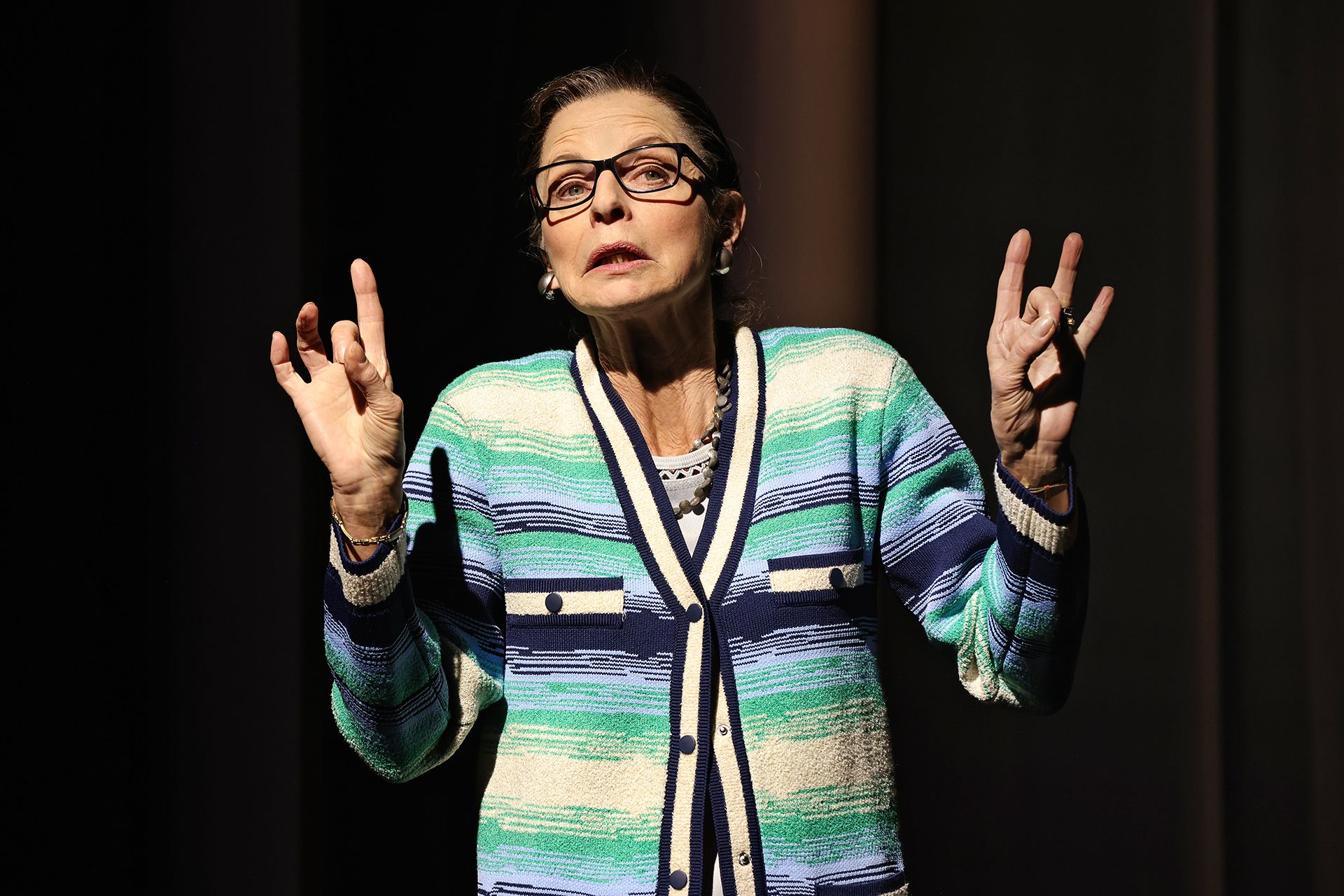
Actor Heather Mitchell brings an exceptional charisma that is somehow commensurate, with our unreasonable expectations of meeting the legend in the flesh. Technical brilliance is demonstrated especially through Mitchell’s distinct portrayals of Ginsburg at different ages, as she performs the role from childhood to her twilight years. At 90 minutes, RBG: Of Many, One is unquestionably demanding, and although not quite flawless, it is a performance that proves to be highly satisfying.

It is wonderful to be able to honour Ginsburg for her many great achievements, and with that commemoration be reminded that so much remains to be accomplished. Dissent is necessary not only in our courts. Injustice rears its ugly head, much more readily outside of rarefied spaces. The example set by The Notorious R.B.G. should not only be one of career progression, but one that epitomises a spirit of defiance and daring. Her narrative is one of selflessness, characterised by a zeal to work on behalf of those who have less power, so that communities become more fair and equitable. We will not all rise to high positions, but to make it known when things go wrong, is a responsibility many of us can bear.

www.sydneytheatre.com.au

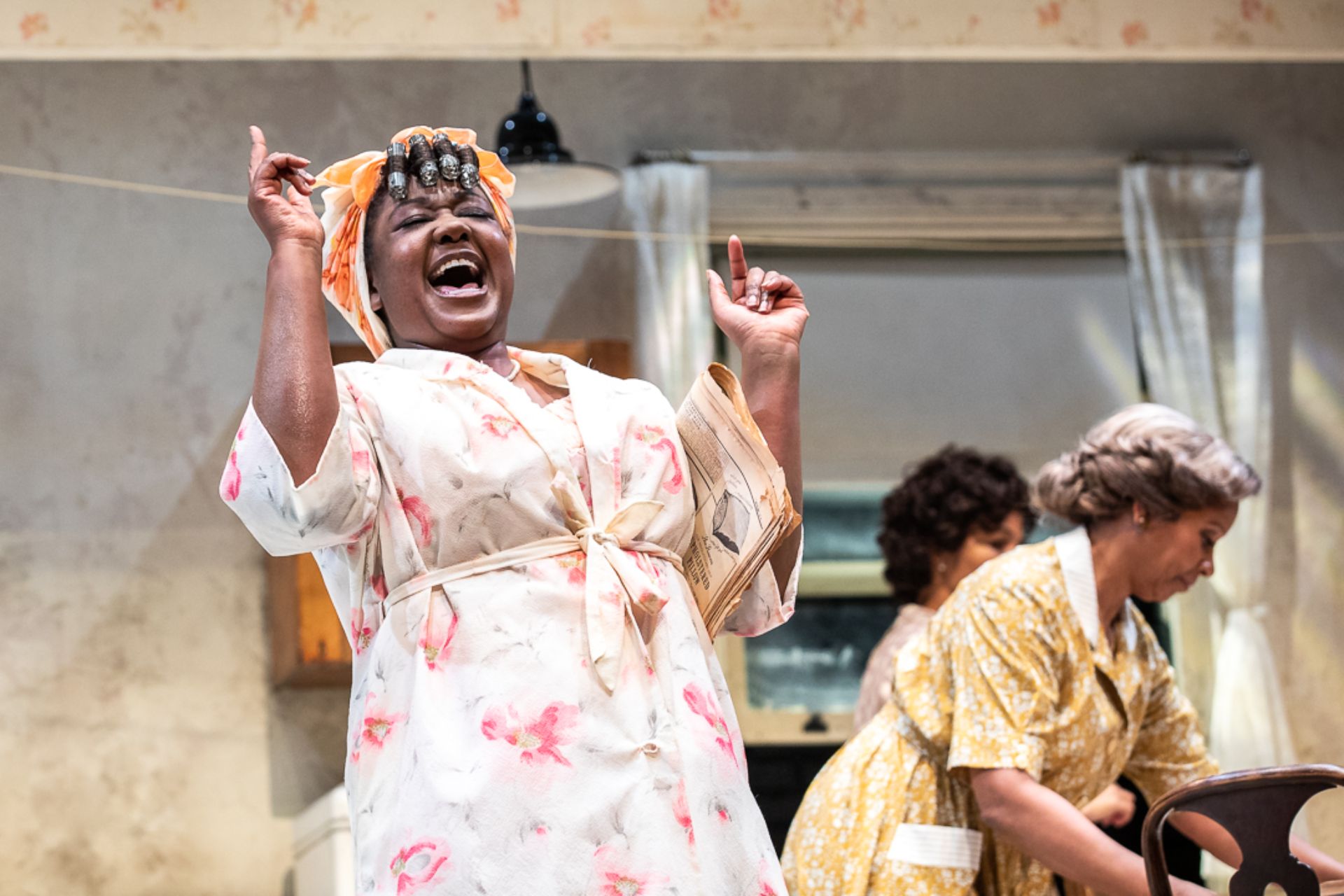
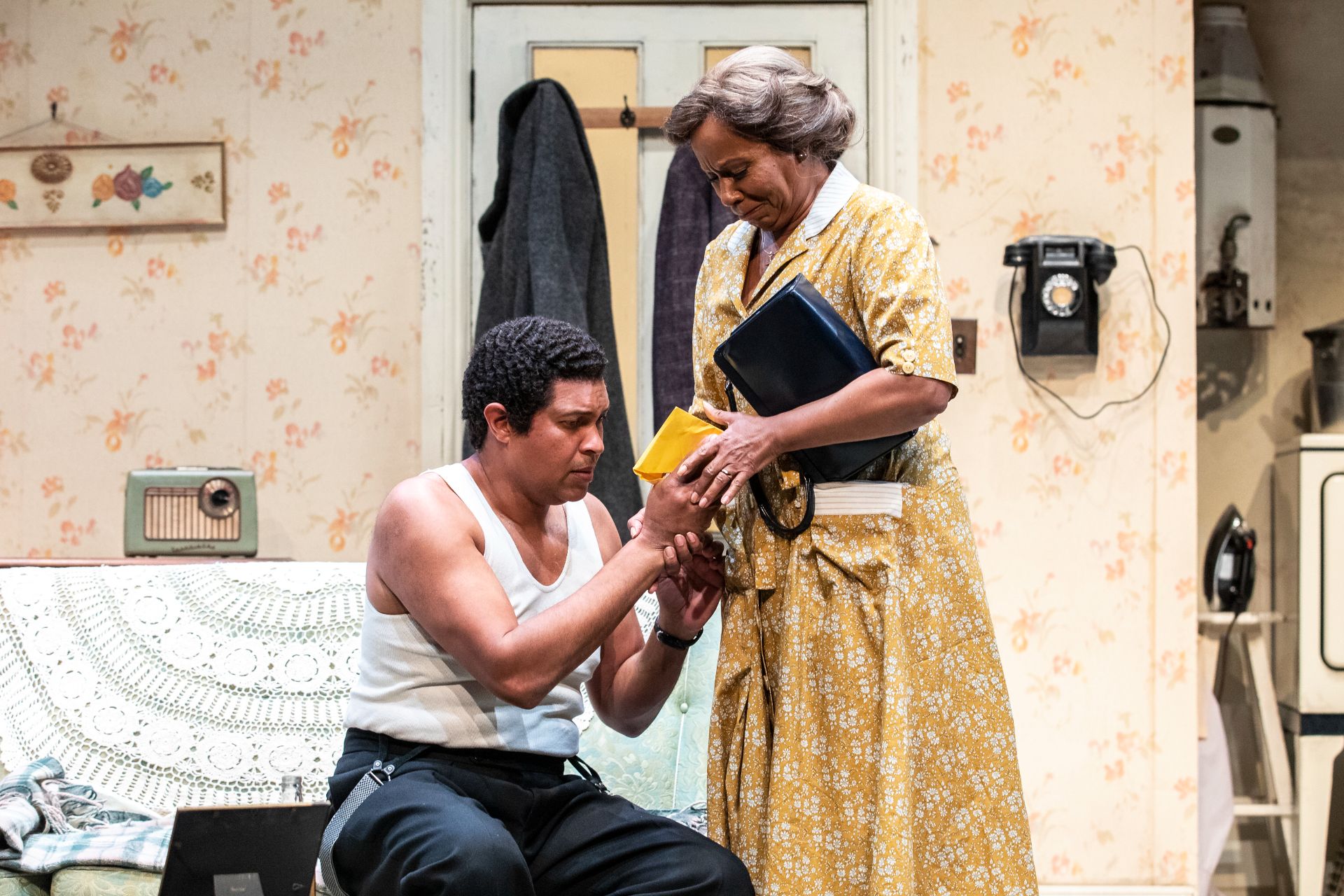
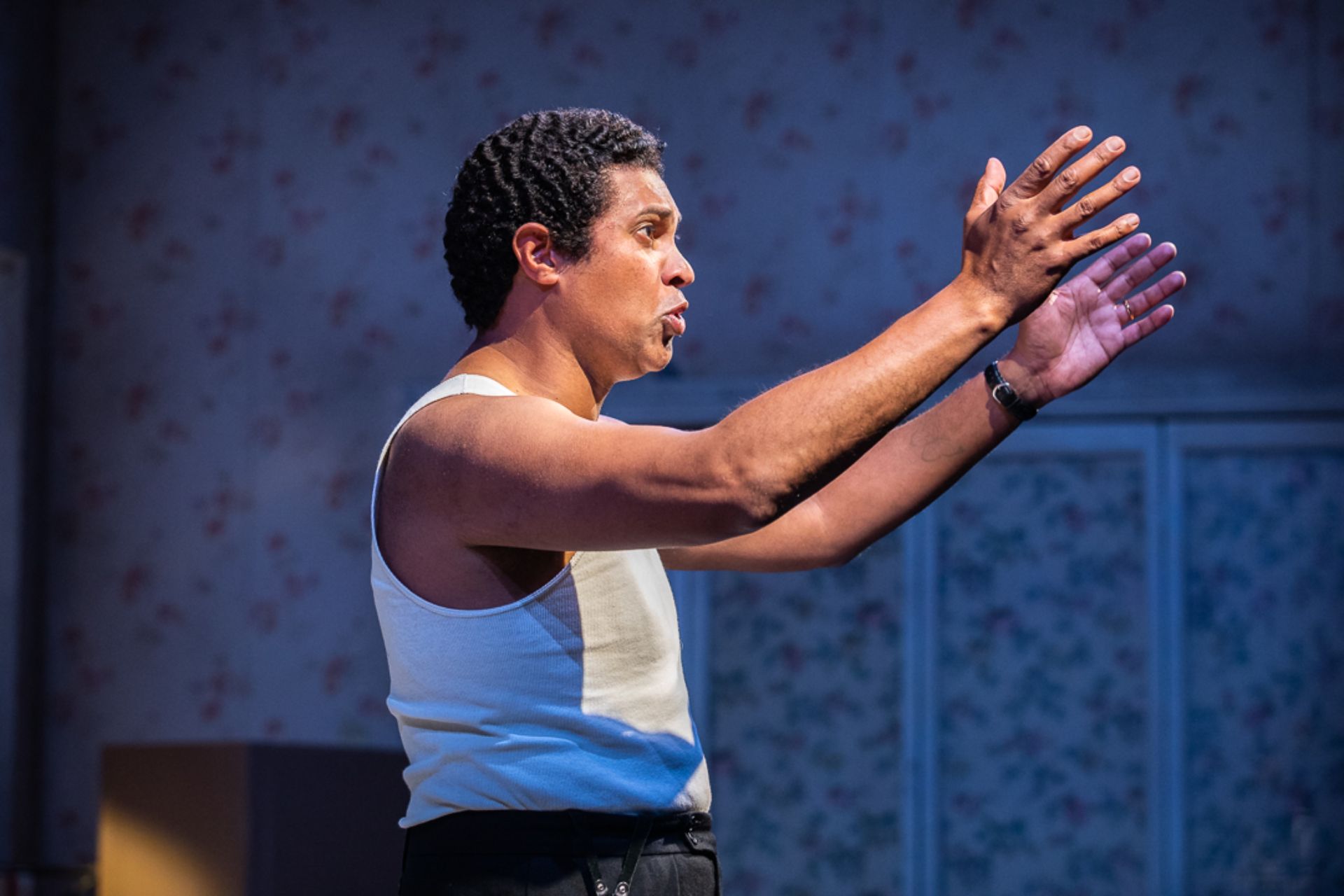
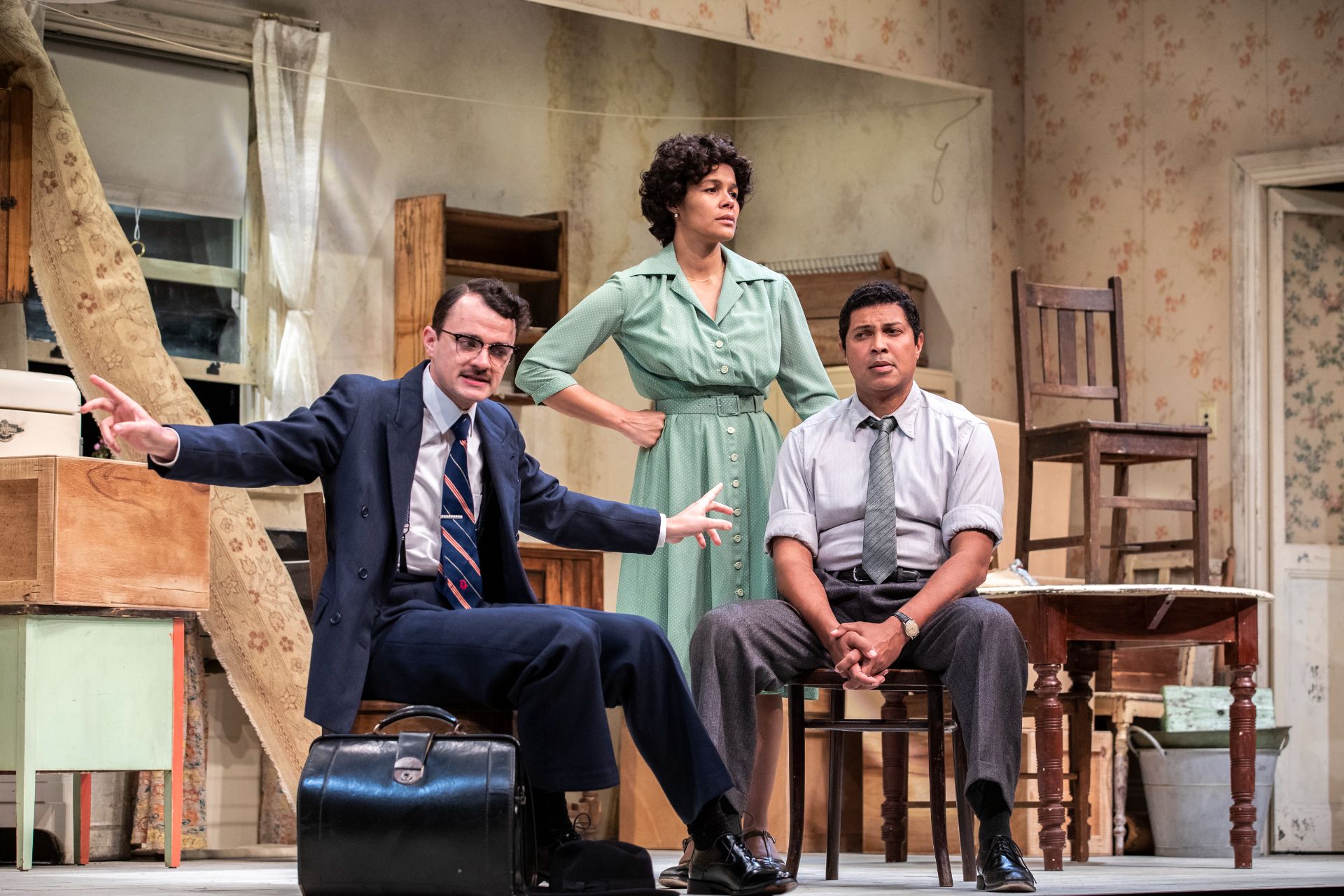
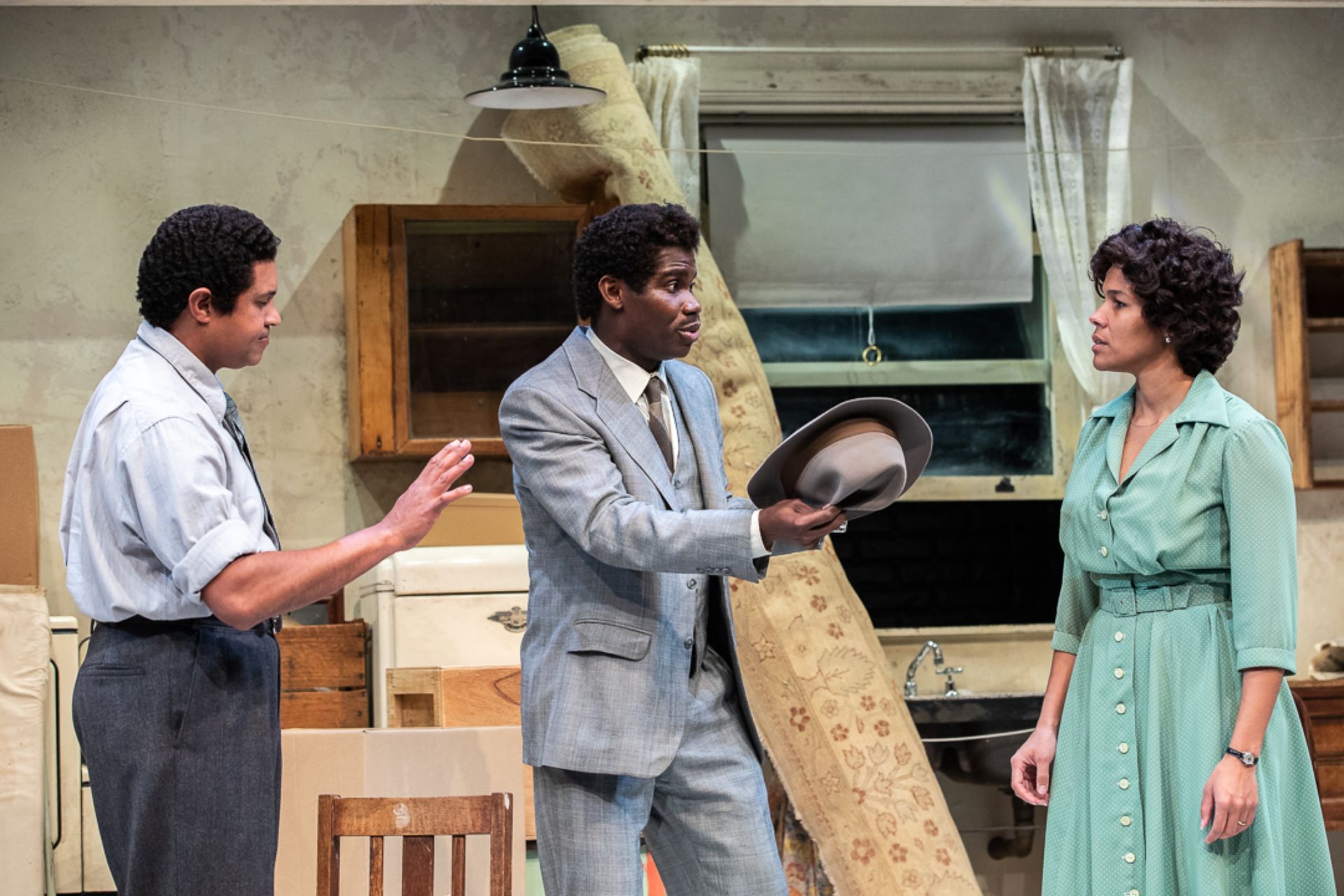
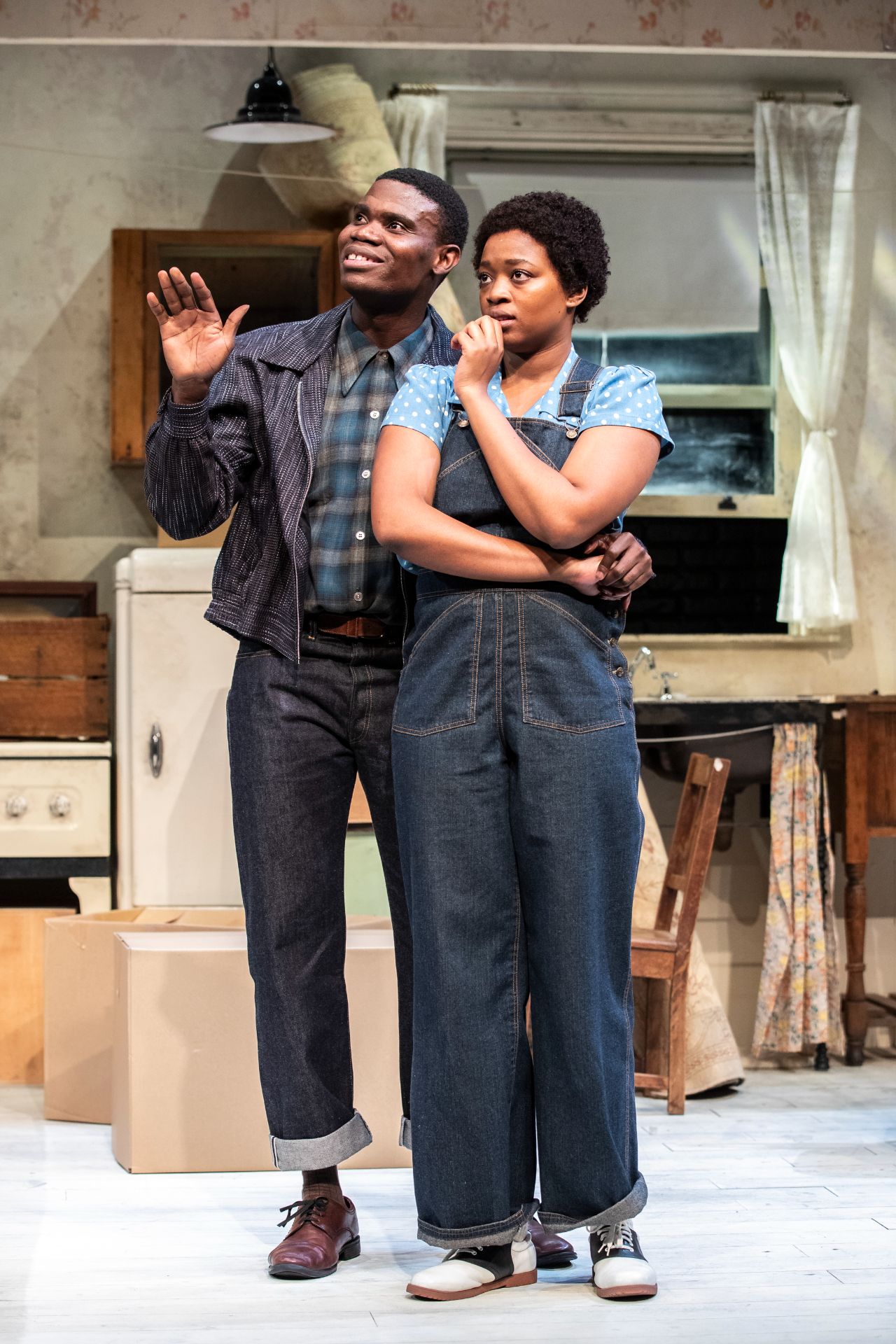
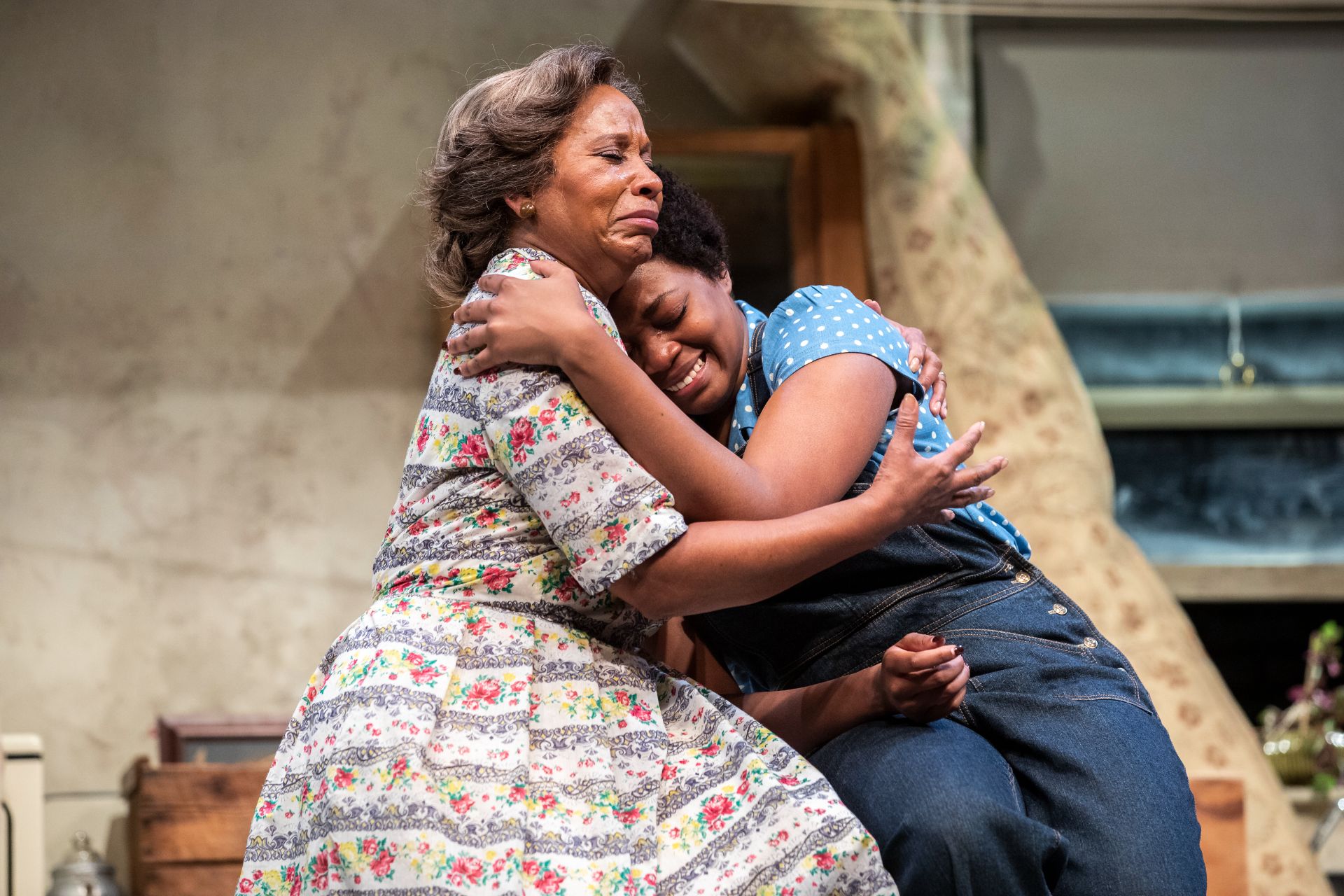
Review: A Raisin In The Sun (Sydney Theatre Company)

Venue: Wharf 1 Sydney Theatre Company (Walsh Bay NSW), Aug 27 – Oct 15, 2022
Playwright: Lorraine Hansberry
Director: Wesley Enoch
Cast: Nancy Denis, Bert LaBonté, Angela Mahlatjie, Zahra Newman, Gayle Samuels, Leinad Walker, Jacob Warner, Adolphus Waylee, Ibrahima Yade
Images by Joseph Mayers

Theatre review

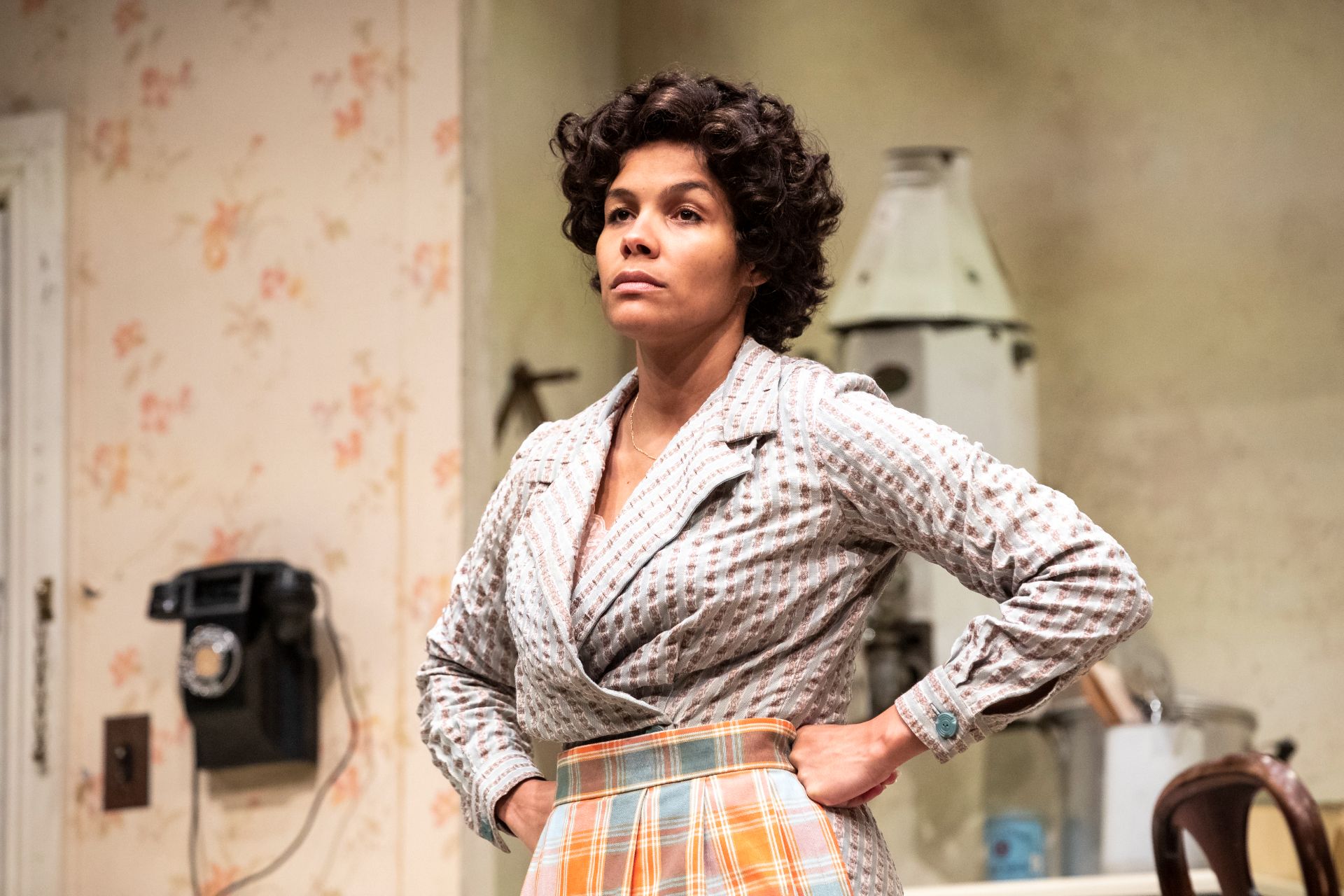
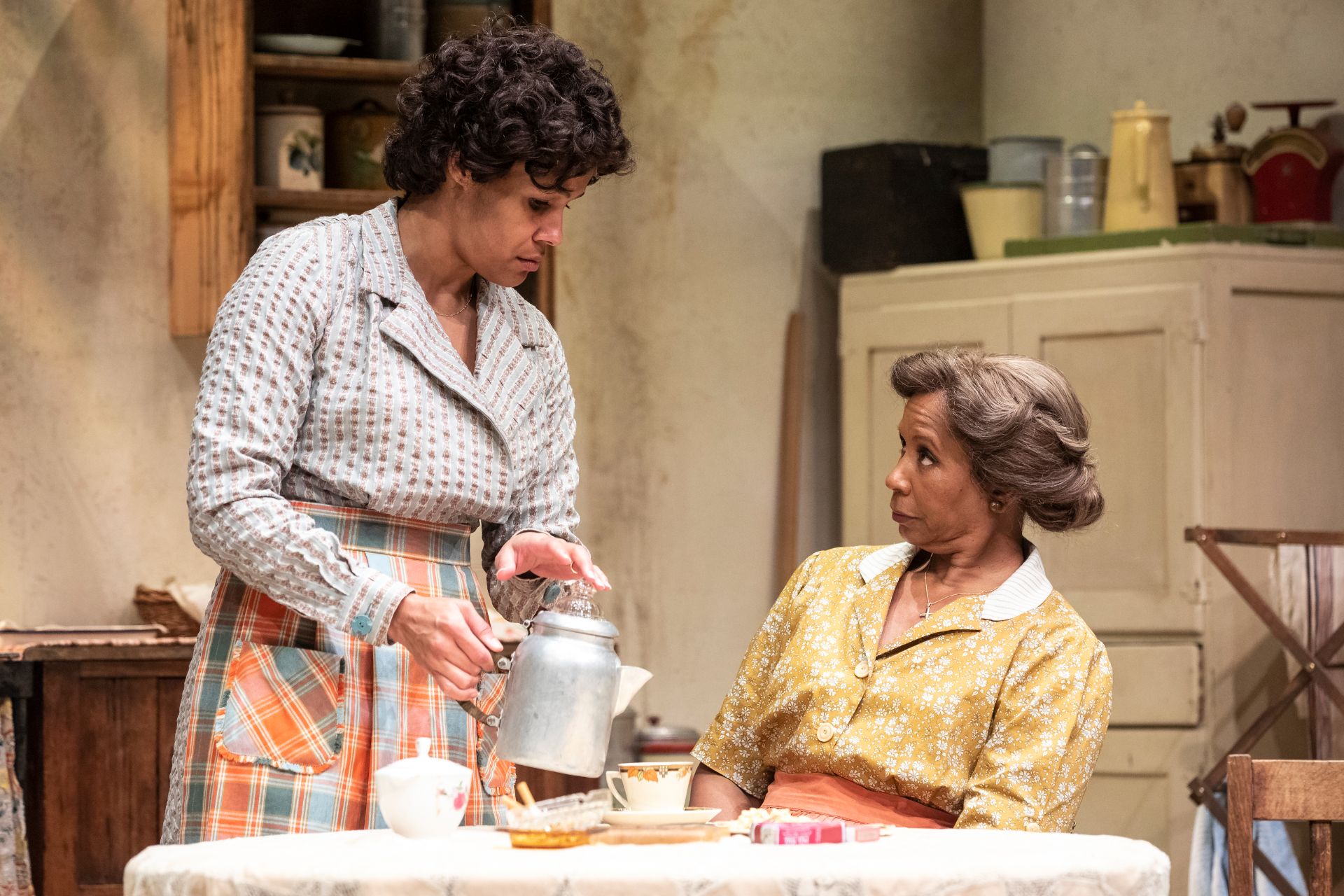
It was 1959 when Lorraine Hansberry’s A Raisin in the Sun debuted on Broadway, telling the story of a Chicago family living in poverty. Lena Younger is waiting for an insurance cheque to arrive, upon the death of her husband. Her son Walter is determined to invest that money in a liquor business, to which Lena has religious objections. The drama is constructed around the $10,000 and how this Black family had needed to lose the head of their household, before they could have a real chance at life.

Appearing between the Montgomery bus boycott of 1955, and Dr. Martin Luther King, Jr.’s 1963 “I Have a Dream” speech at the March on Washington, Hansberry’s ground-breaking play was the first by an African-American woman to be produced on Broadway. With A Raisin in the Sun, Hansberry also became the first African-American writer to win the New York Drama Critics’ Circle Award, so it is no exaggeration, to state that the cultural significance of the work is truly immense.

63 years on, there is little in the play that has diminished in relevance. In fact, with the exacerbation of wealth gaps everywhere, Hansberry’s observations on economic disparities, are as pertinent as they had always been. Her concerns about racial injustice, at our time of renewed vigour for social activism, retain their resonance. Hansberry’s depictions of women within patriarchal systems, were already modern and sophisticated during her times, so feminists too will have the rare pleasure of seeing intelligent and authentic women in a mid-century play, created many years before the second wave.

Director Wesley Enoch honours beautifully Hansberry’s vision, in a production that feels perfectly appropriate, in its choices to be faithful to an original text, that demonstrates itself to require little to no updating. Enoch ensures that all of the politics in A Raisin in the Sun is accentuated, whilst its humour and drama are harnessed robustly, to deliver a show that proves consistently riveting, involving characters that are as spirited as they are enchanting.

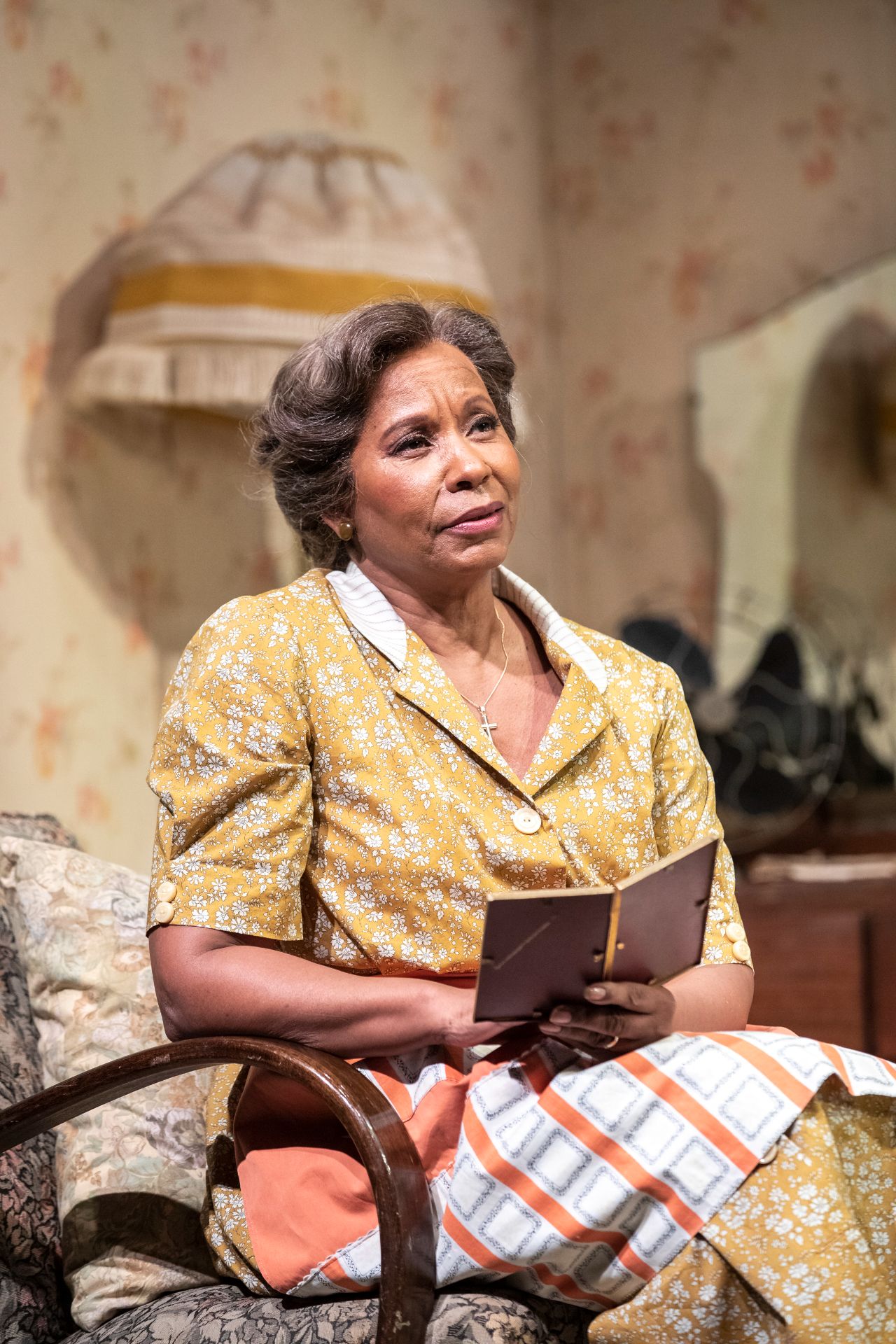
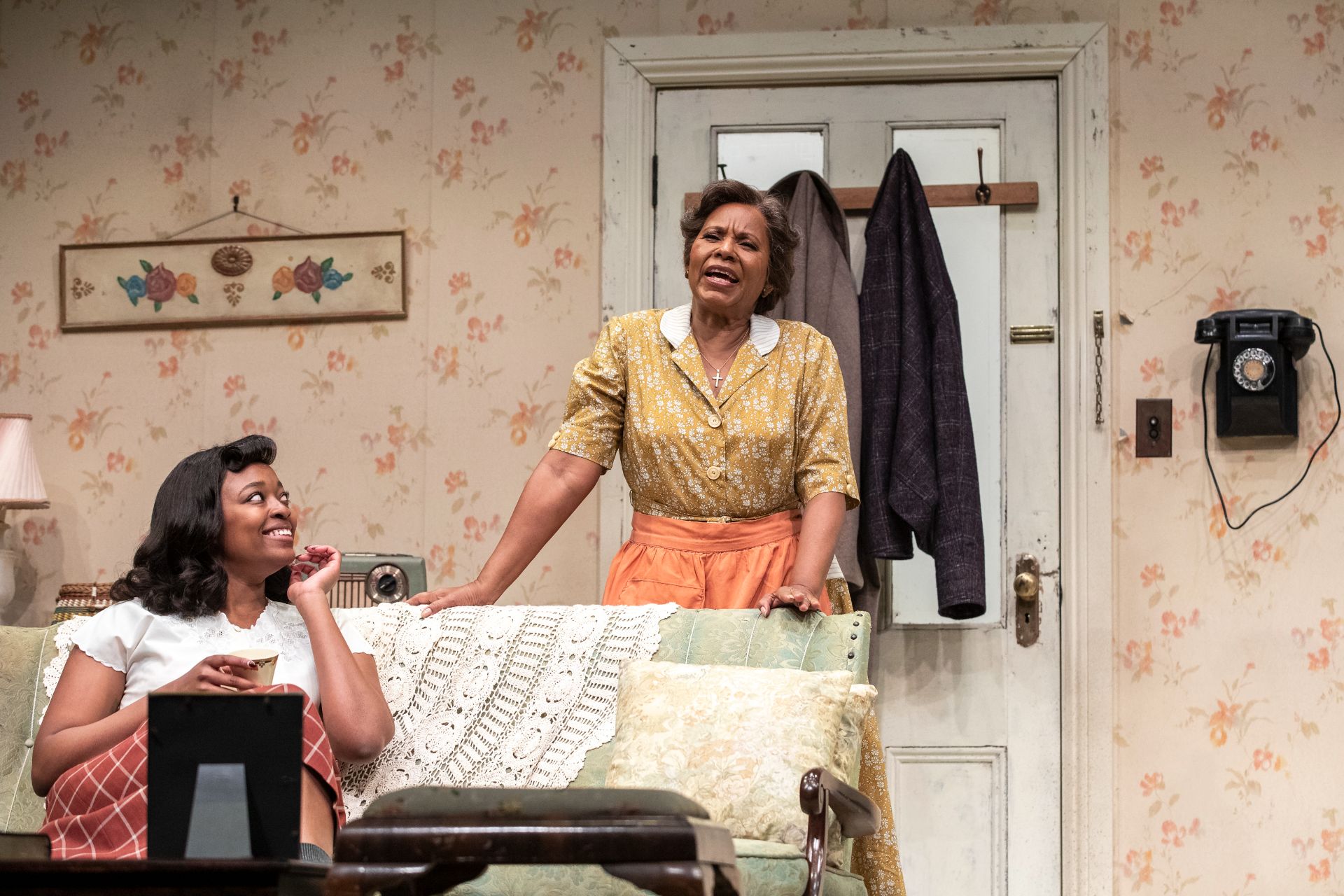
Brimming with charisma is Gayle Samuels, who plays Lena, an older woman who knows the limitations of her only son, but who also understands what he needs, to be able to hold his head high, as a Black man in the United States of America. Samuels’ is a vivacious performance, that conveys both the intensity of emotions for a person in Lena’s position, and the stoicism needed to deal with the challenging circumstances she is given. 

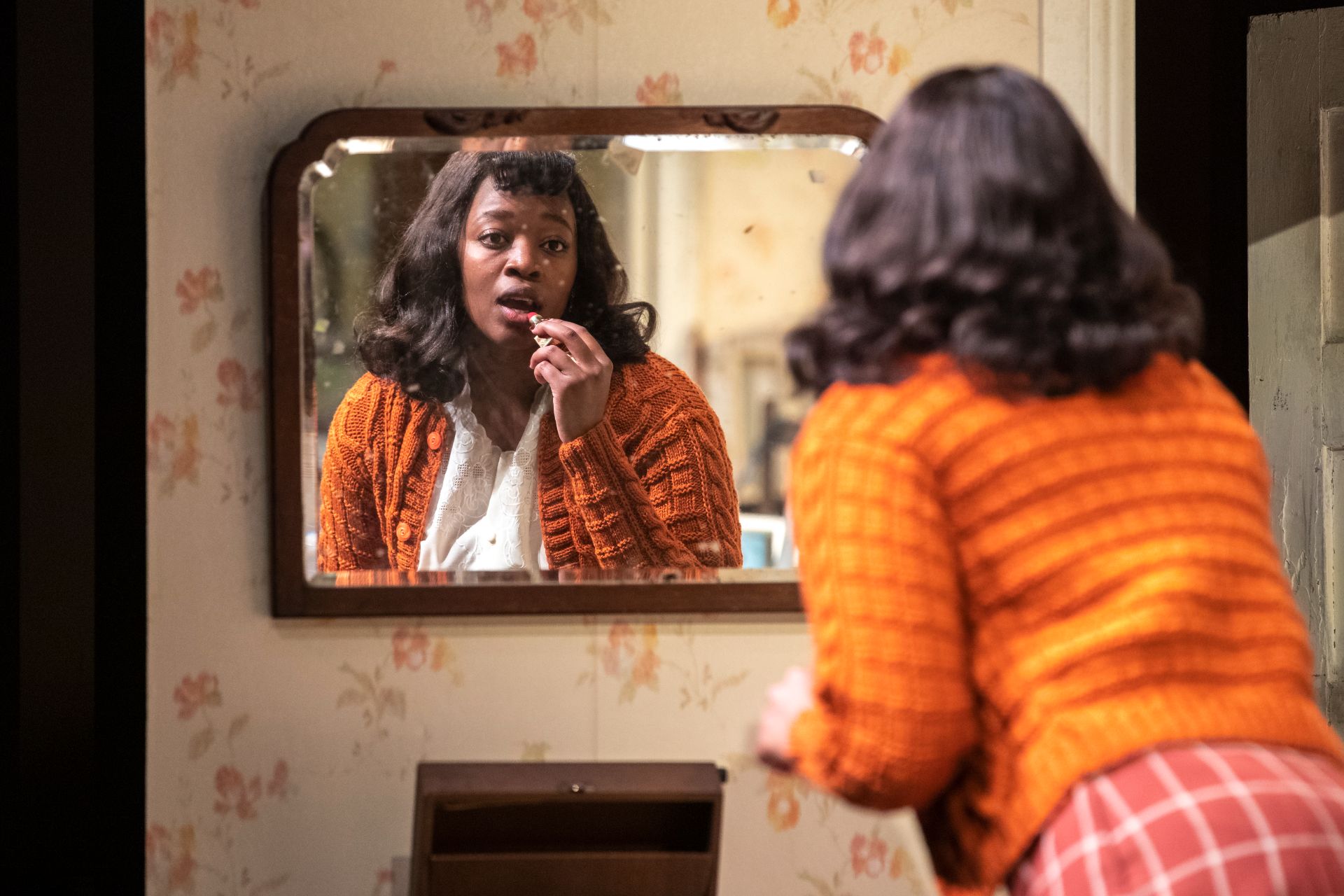
In the role of Walter is Bert LaBonté who brings both dignity and fallibility, to a tale of systemic oppression. Equally vulnerable and compelling, as Walter’s wife Ruth, is Zahra Newman whose determination to fortify a role that can easily be misinterpreted as subservient, is admirably judicious. Walter’s 20-year-old sister Beneatha is performed with astute ebullience, and excellent comic timing, by Angela Mahlatjie, another magnetic presence on a stage filled with marvellous actors. Supporting parts feature Nancy Denis, Leinad Walker, Jacob Warner, Adolphus Waylee and Ibrahim Yade; a cast memorable for their dedication and dazzling talent.

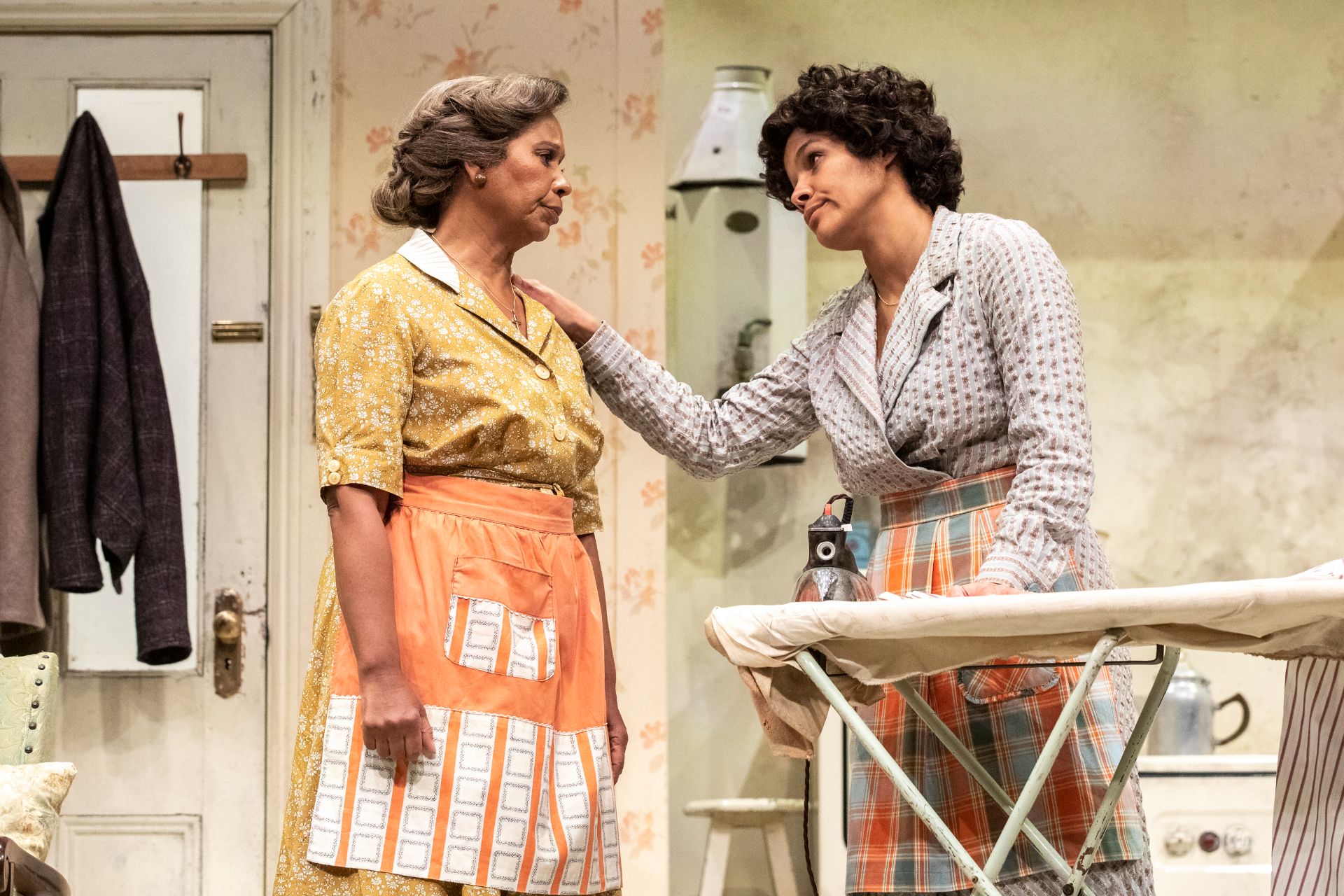
Designed by Mel Page, the presentation is suitably traditional in style, having us travel back decades, only to come to the realisation that so little has changed. Verity Hampson’s lights are similarly circumspect, totally devoid of gimmickry, for a taste of a classic theatre form that can still do so much for hearts and minds. Sound by Brendon Boney is subtly rendered, except during scene changes, in which we are given the opportunity to delight in music reminiscent of twentieth-century North America, the kind of which is underpinned by their African diaspora.

It is not often that we immediately think of slavery as a part of Australian colonial history, but the dispossession and displacement of Black peoples on this land, are at least as traumatic, and are certainly as consequential, as those suffered in other places. We do however, have a deficiency in our language, when discussing the nature of prejudice and violations on this land, having experienced colonisation in ways that are different from the United States, where the legacy of slavery has steered so much of discourse in their activism spaces.

It would appear that the way in which white people have pillaged this land, have over the centuries, manifested in modes of obfuscation, and that the (misguided) idea that we were not built on slavery, means that more explicit avenues of castigation, are not available to those seeking redress today. The atrocities are however utterly real, and learning from the fighters who have come before, even those overseas like Lorraine Hansberry, will always be an invaluable part of our strategies in decolonising this so-called Australia.

www.sydneytheatre.com.au

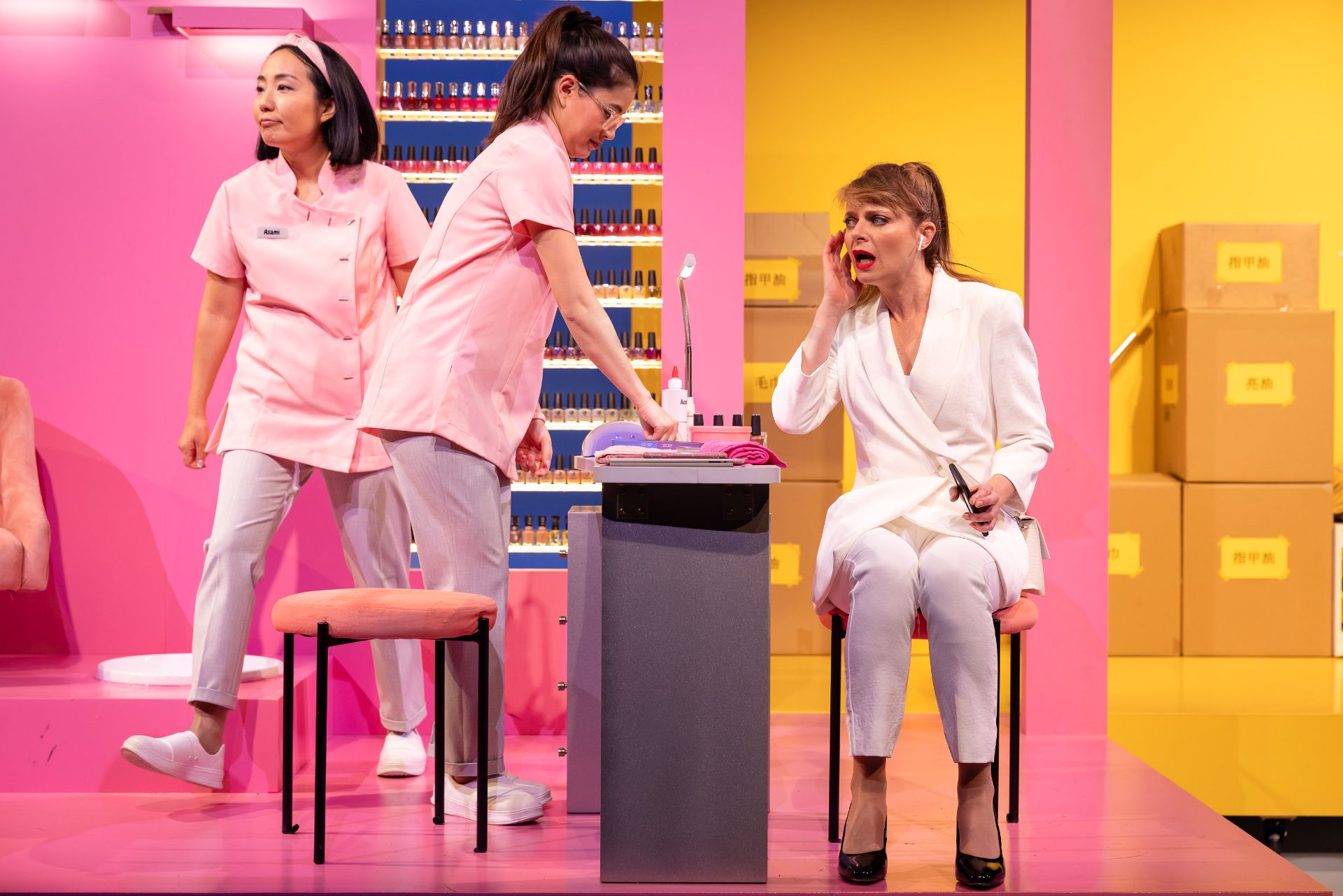
Review: Top Coat (Sydney Theatre Company)

Venue: Wharf 1 Sydney Theatre Company (Walsh Bay NSW), Jun 25 – Aug 6, 2022
Playwright: Michelle Law
Director: Courtney Stewart
Cast: John Batchelor, Amber McMahon, Matty Mills, Kimie Tsukakoshi, Arisa Yura
Images by Daniel Boud

Theatre review

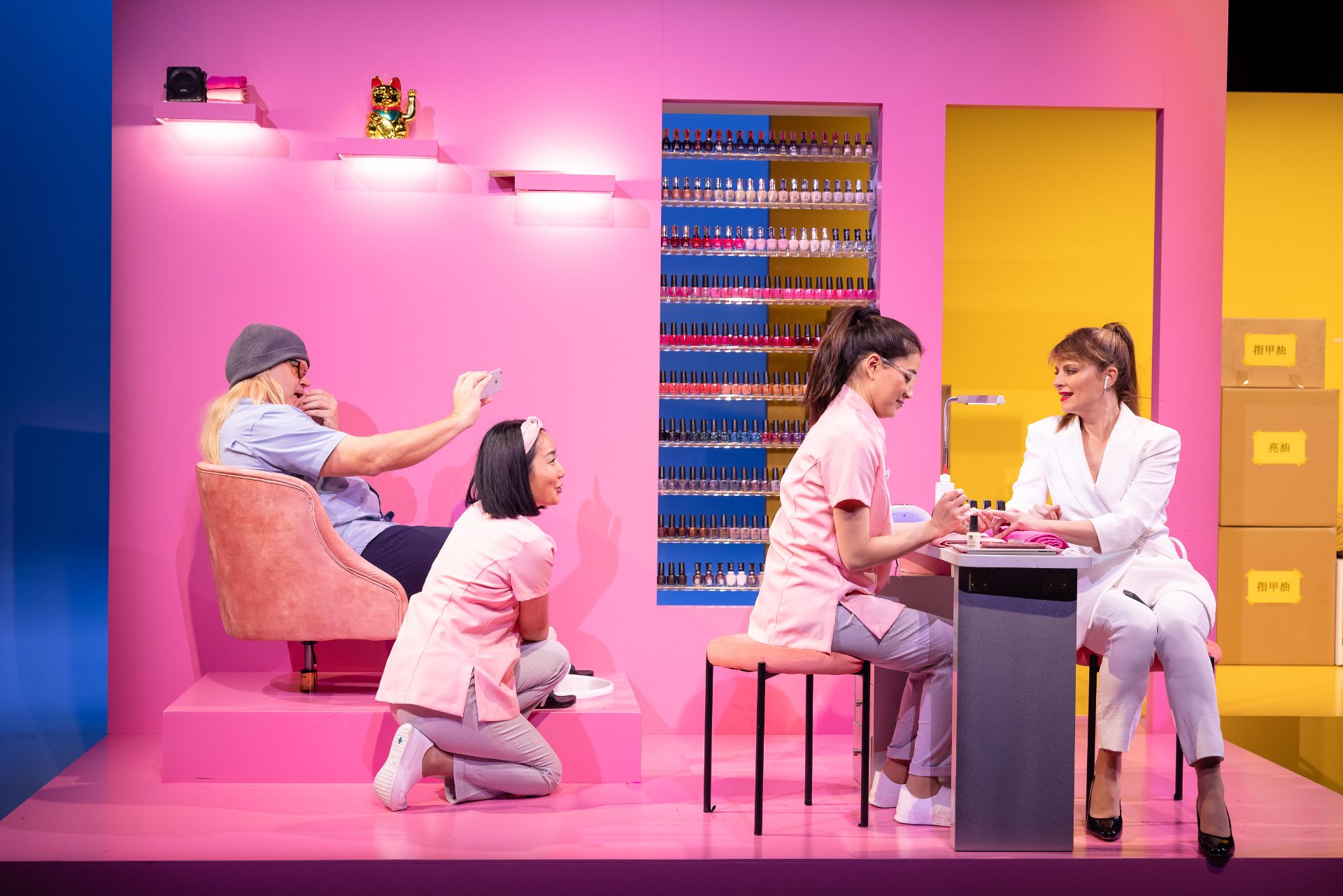
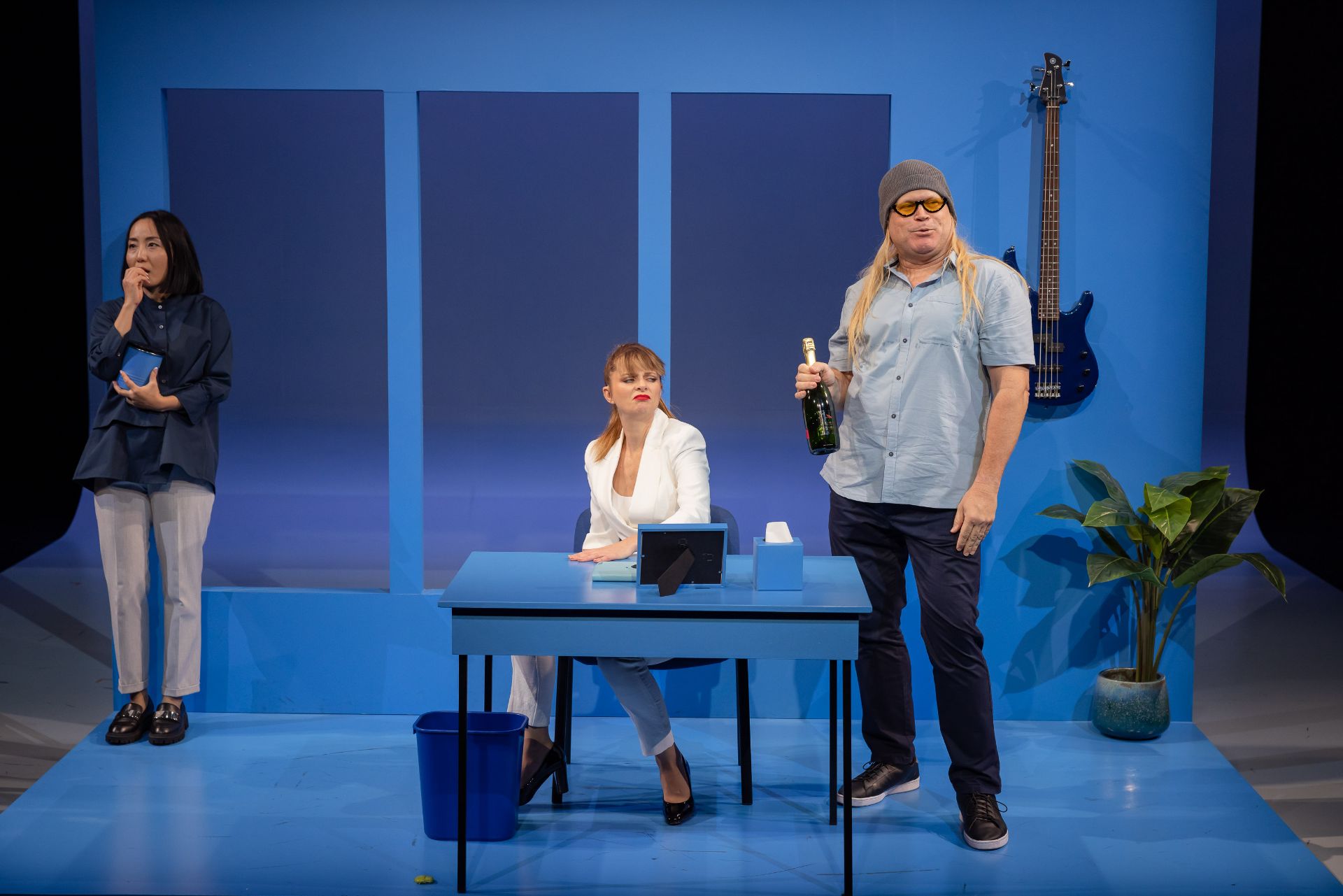
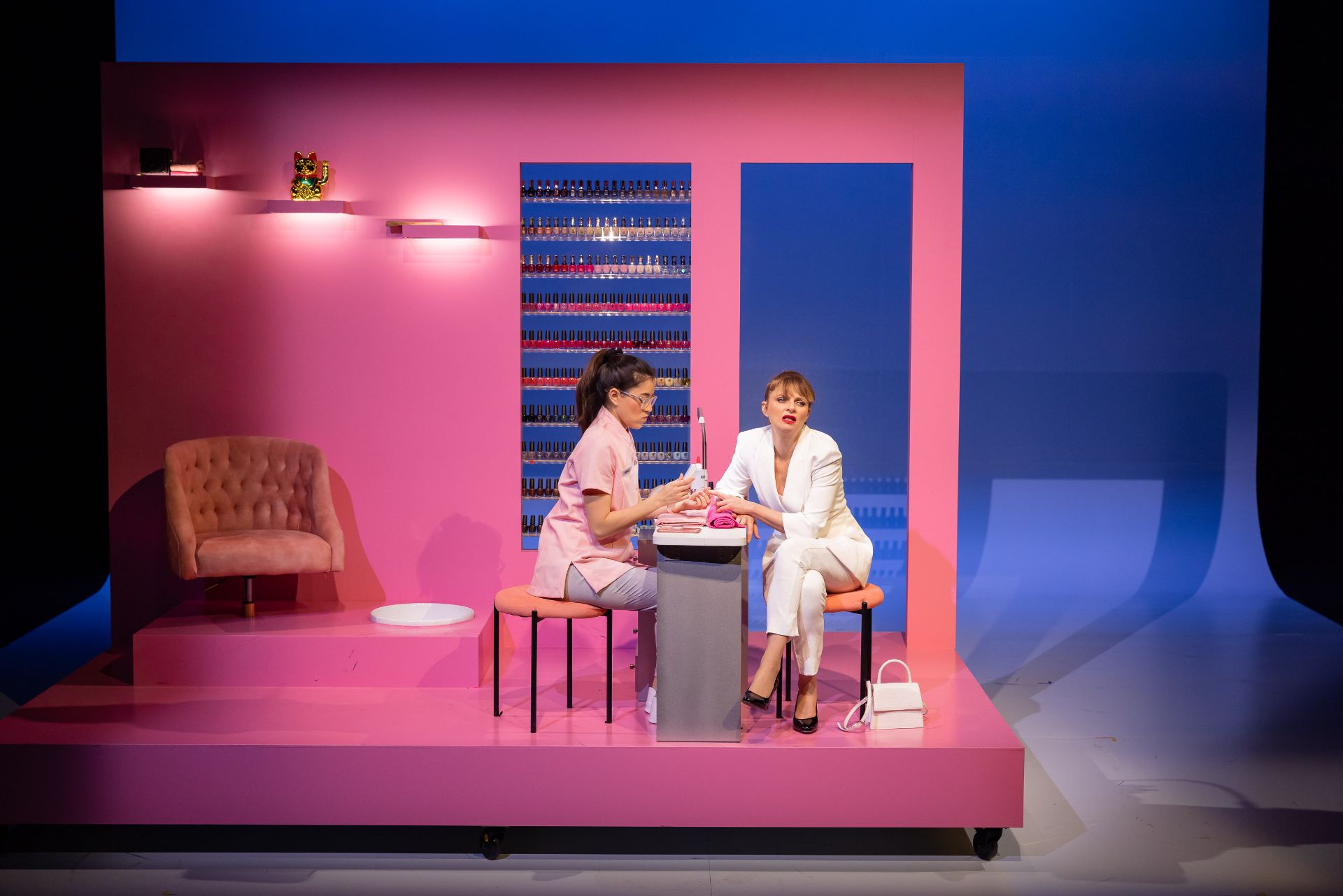
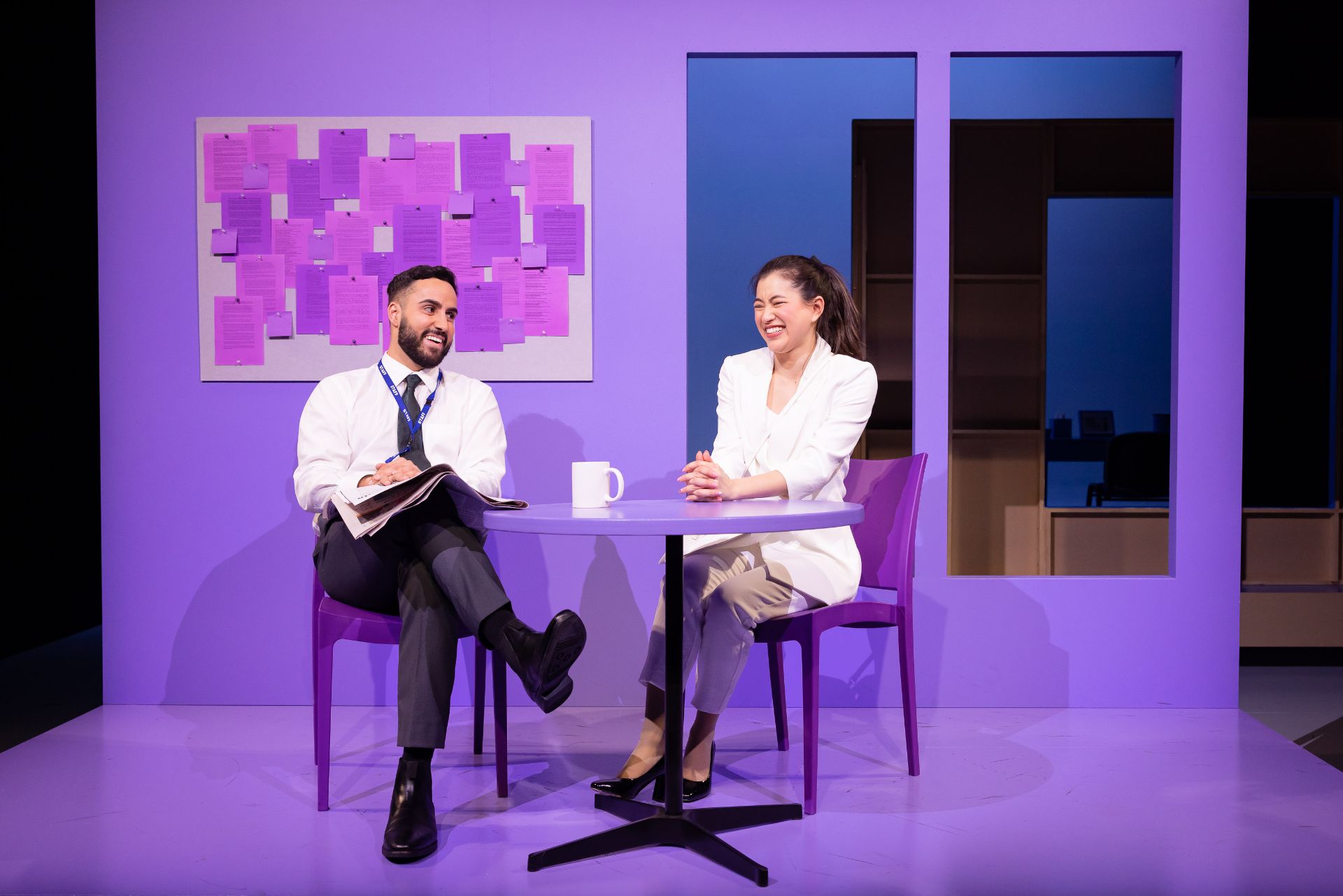
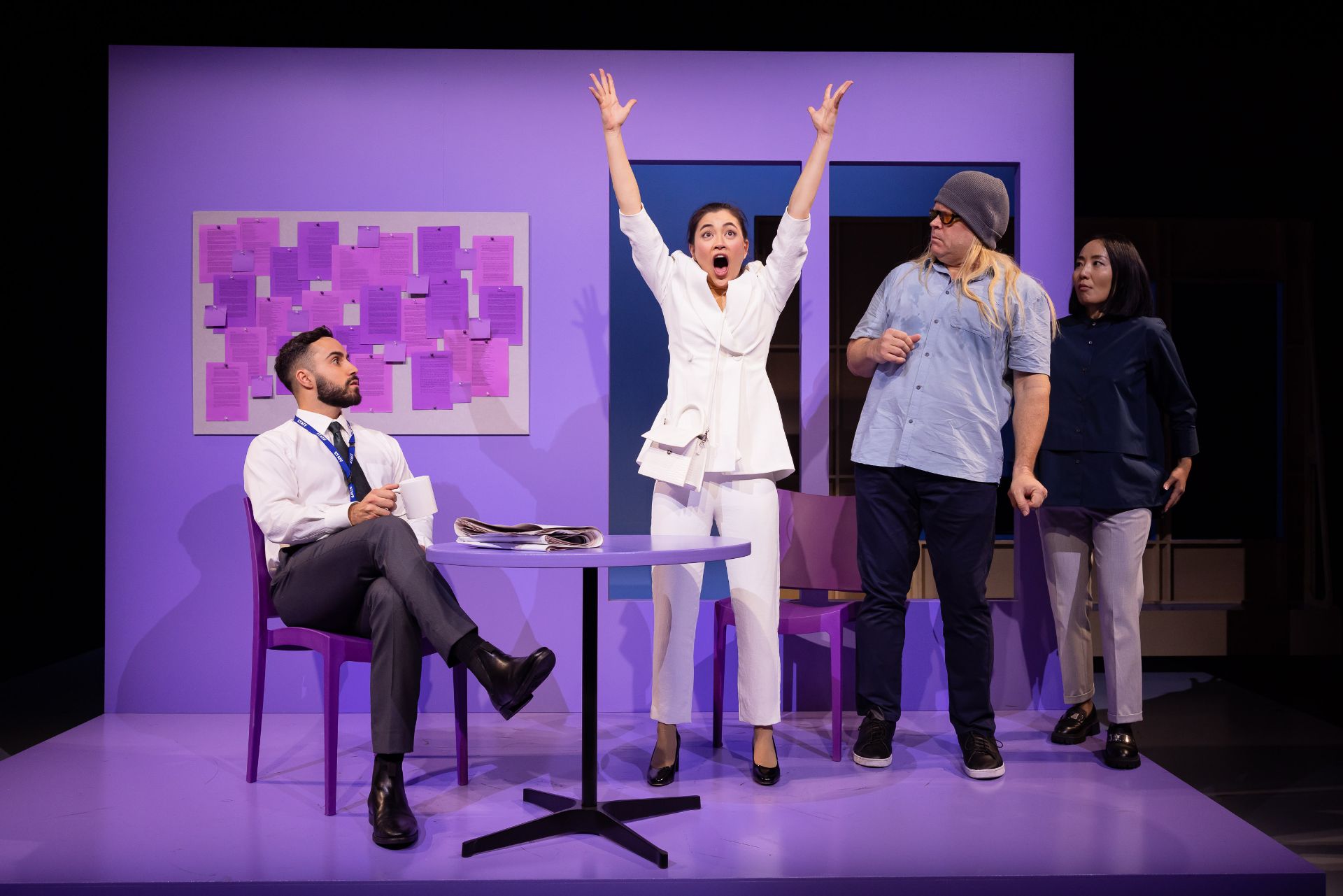
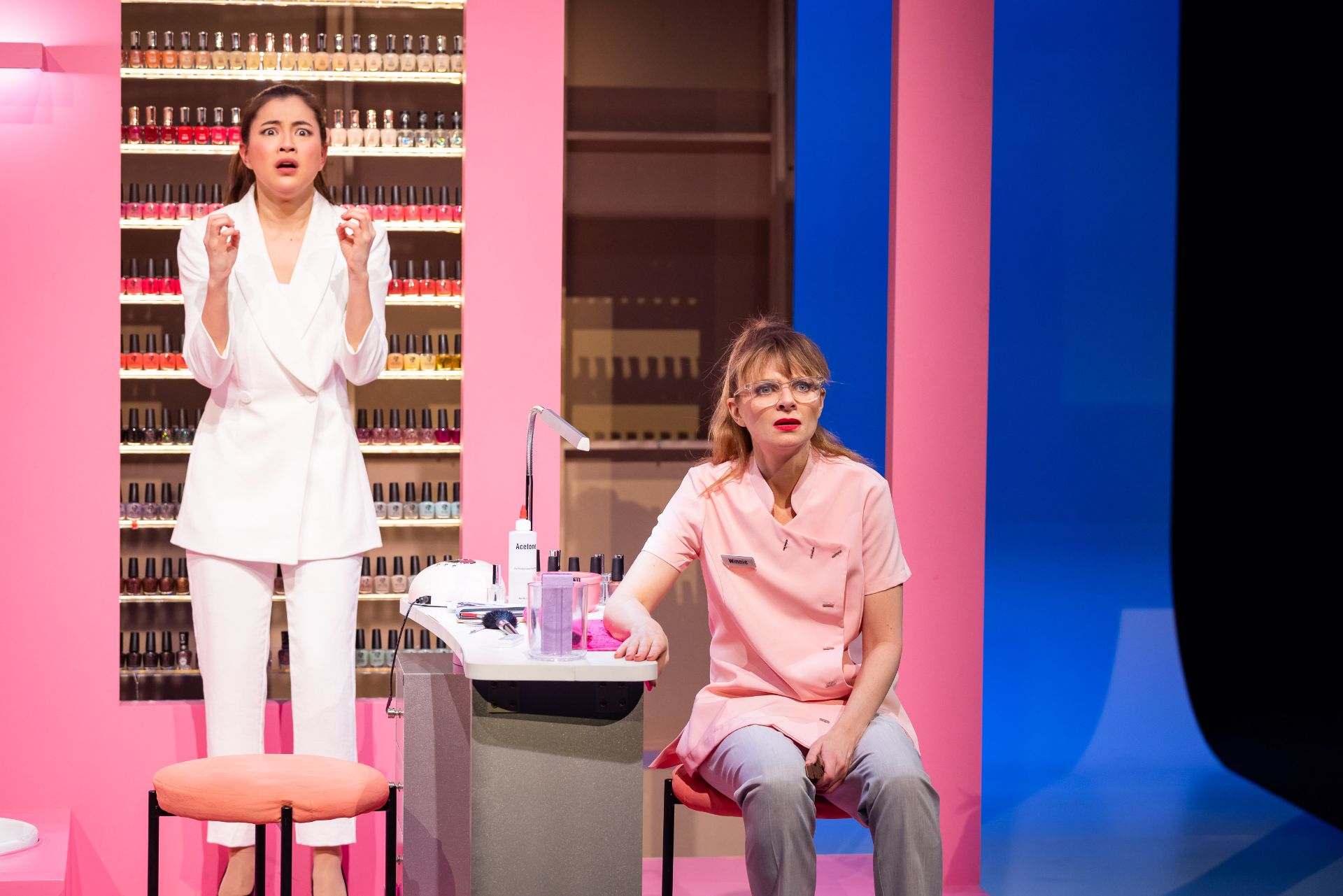
Many great stories have been told, using the fantasy of switching bodies as conceit, to help us think about what it must be like to walk in others’ shoes. In Michelle Law’s Top Coat, a nail artist and a television executive jump into each other’s bodies, so that we may explore the differences of living on this land, in terms of race, status, and opportunity. It is about the disparities that exist, between being white and not being white, in colonised Australia.

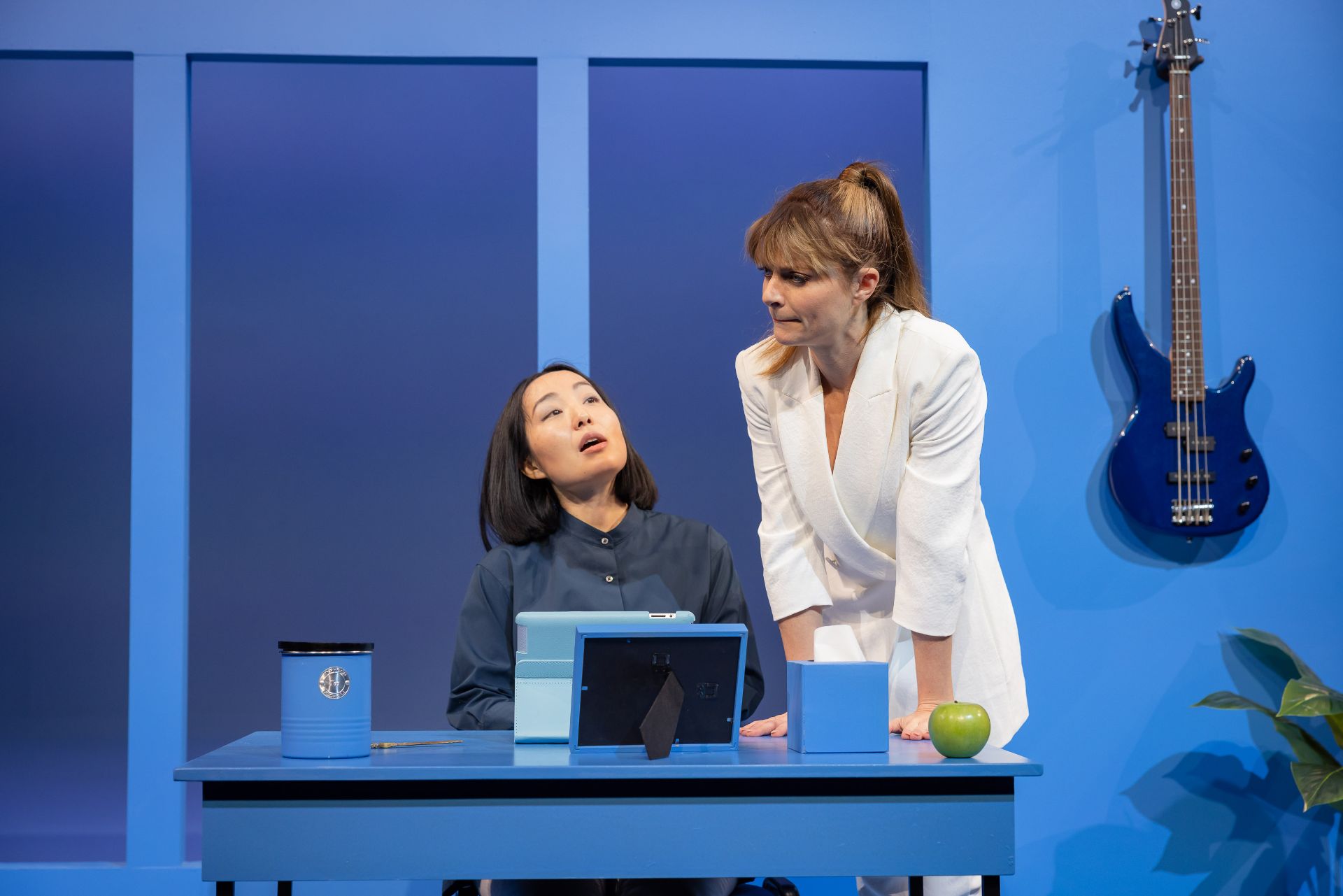
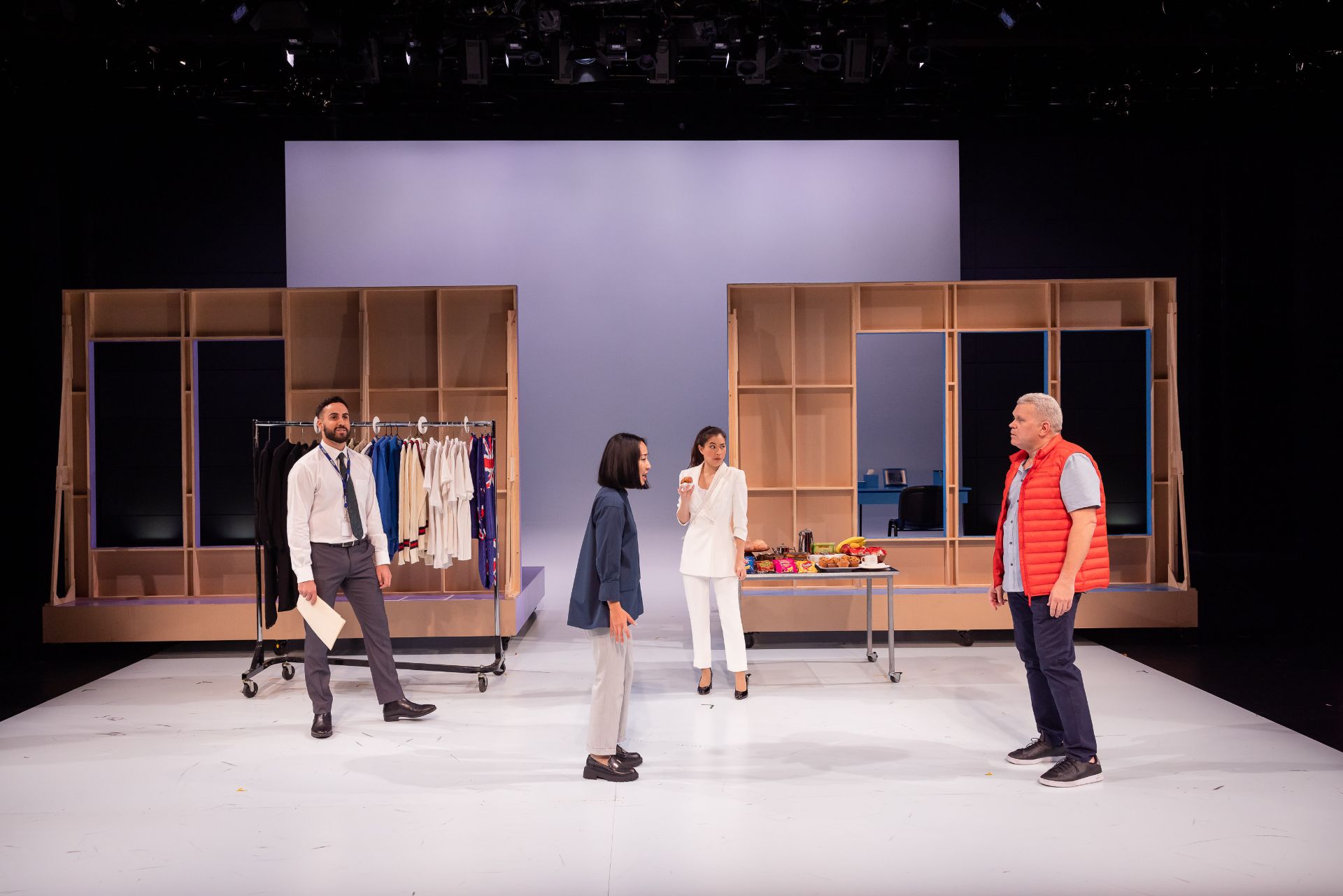
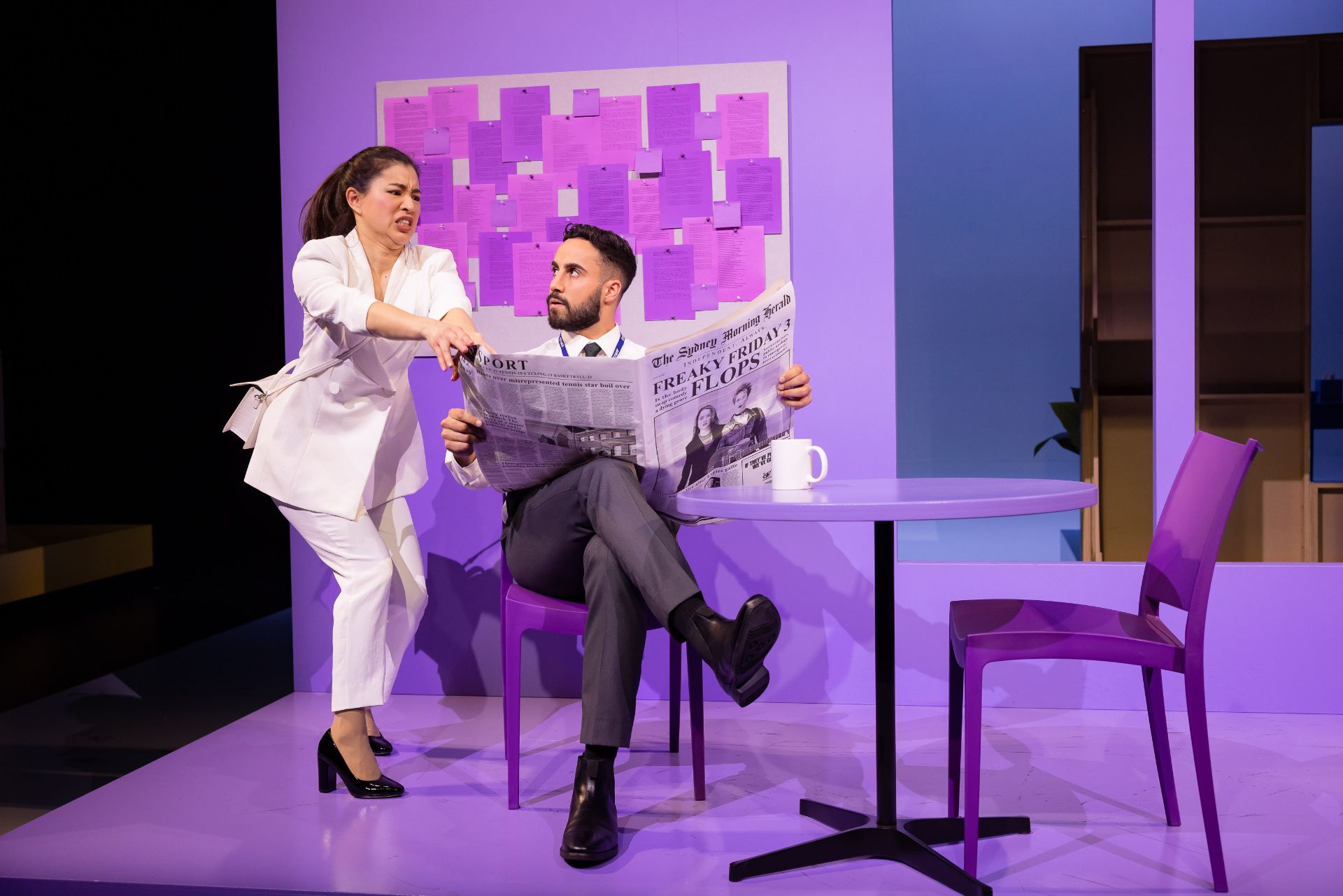
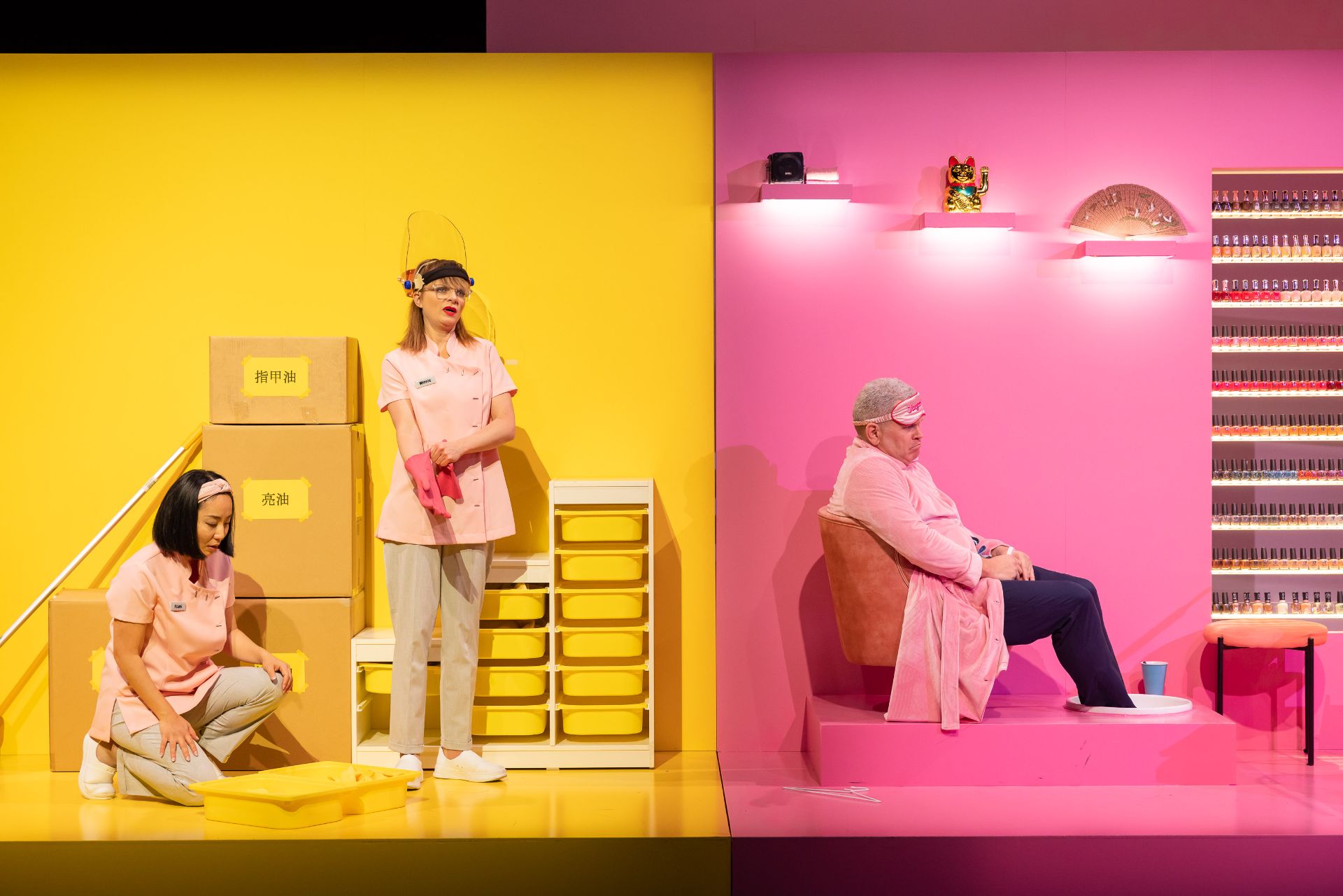
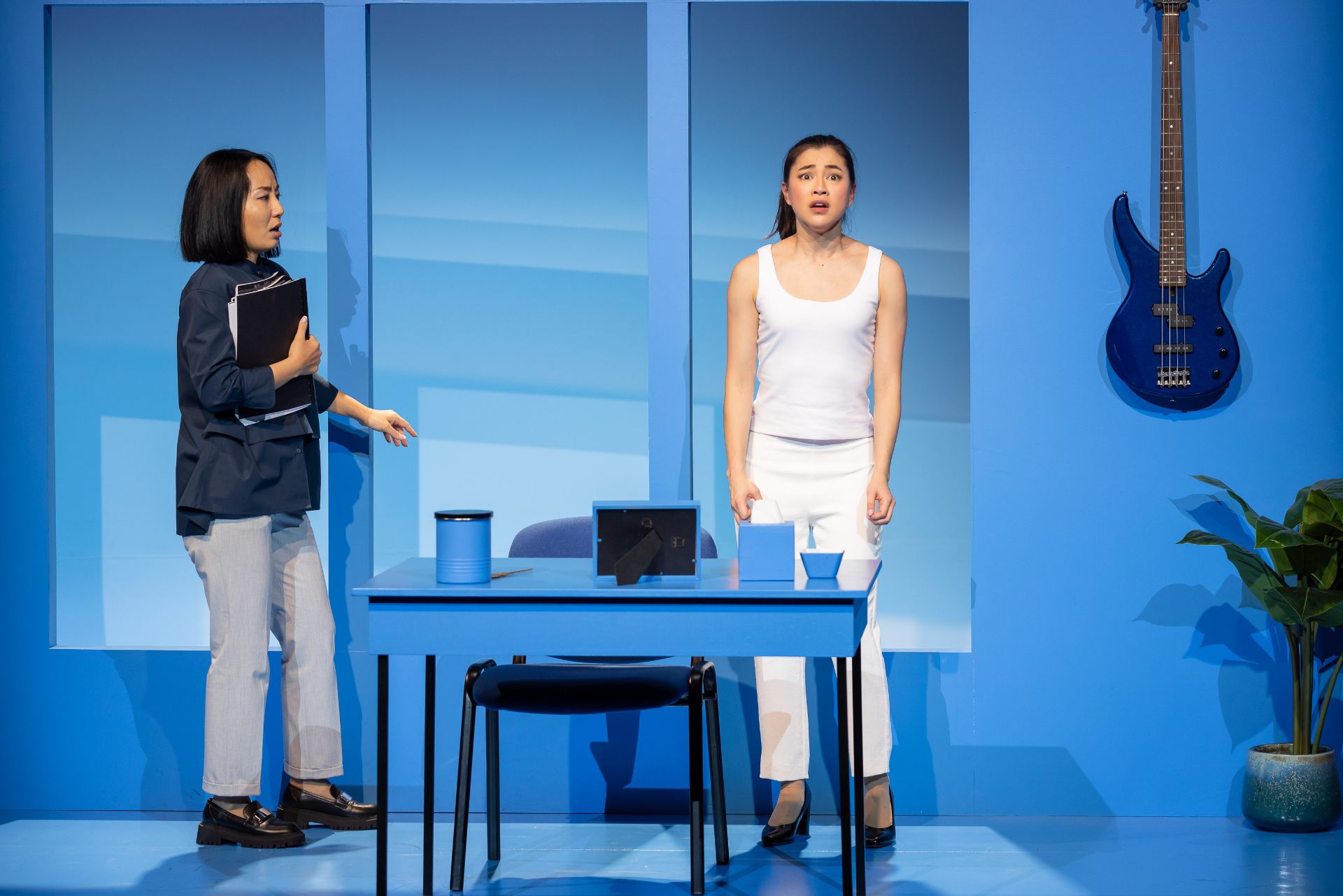
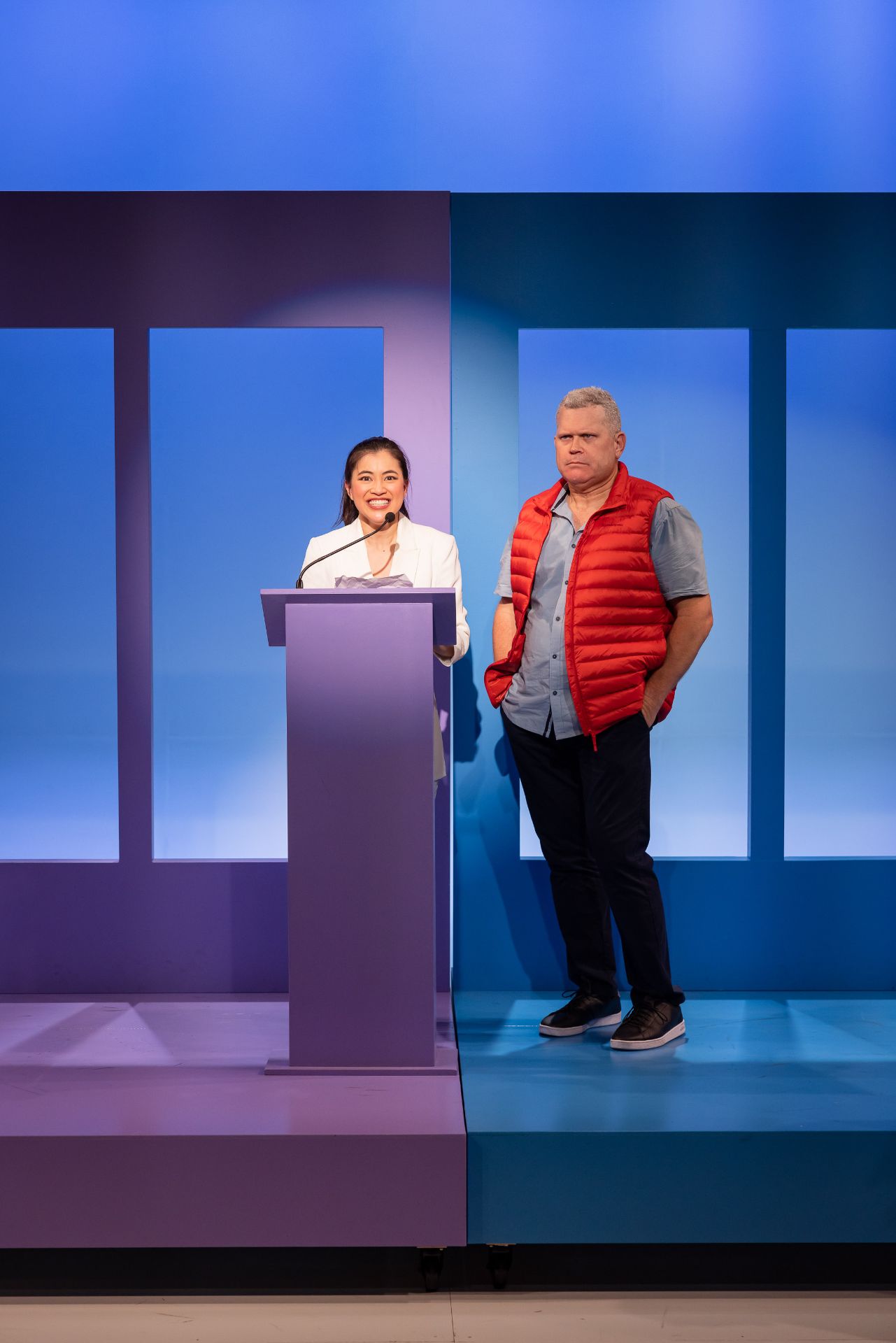
Cleverly imagined, Top Coat challenges longstanding beliefs about meritocracy, by displacing two women from completely divergent backgrounds in the other’s occupation. While it comes as no surprise that Kate fails at providing the simplest of manicures, we are shaken to a realisation that Winnie has little problems playing with the big boys of tv land, simply by looking the part and talking big. The problem of course, is that the only way for Winnie to look the part, that is to become a white person, requires that her narrative be intervened with utter fantasy. Winnie can do the job, she simply will never be allowed to.

Top Coat is entirely outrageous, so it only makes sense to have the story presented as comedy. Laughs however, are few and far between. Law’s writing is wonderfully provocative, but many of her jokes prove less than effective. Director Courtney Stewart struggles to locate a suitable tone and style of farce, resulting in a production that delivers vibrant energy, but that only infrequently lands its punchlines. The moral of the story, and its political point though, are powerfully conveyed, for a show that is ultimately more entertaining with its ideas than for its humour.

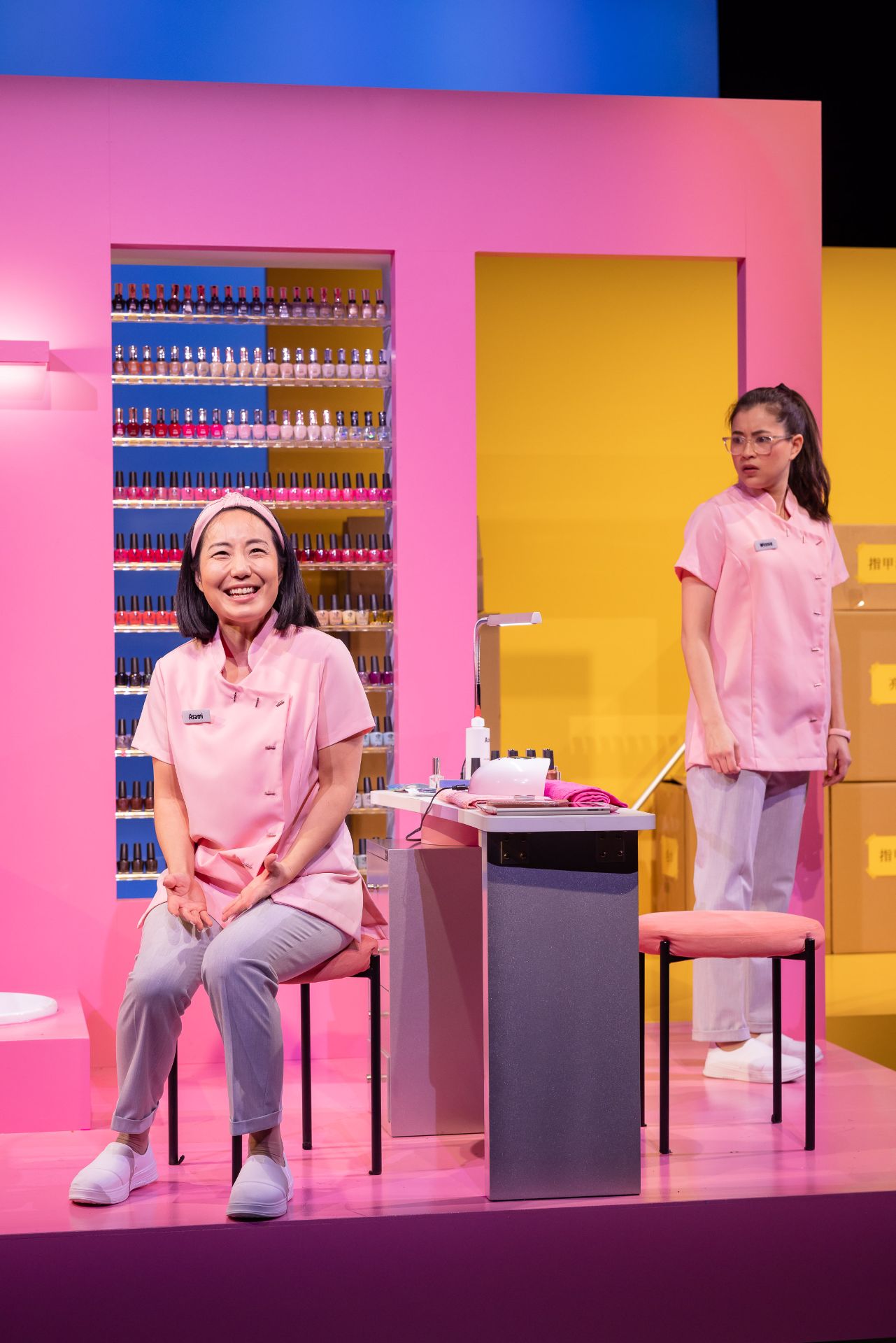
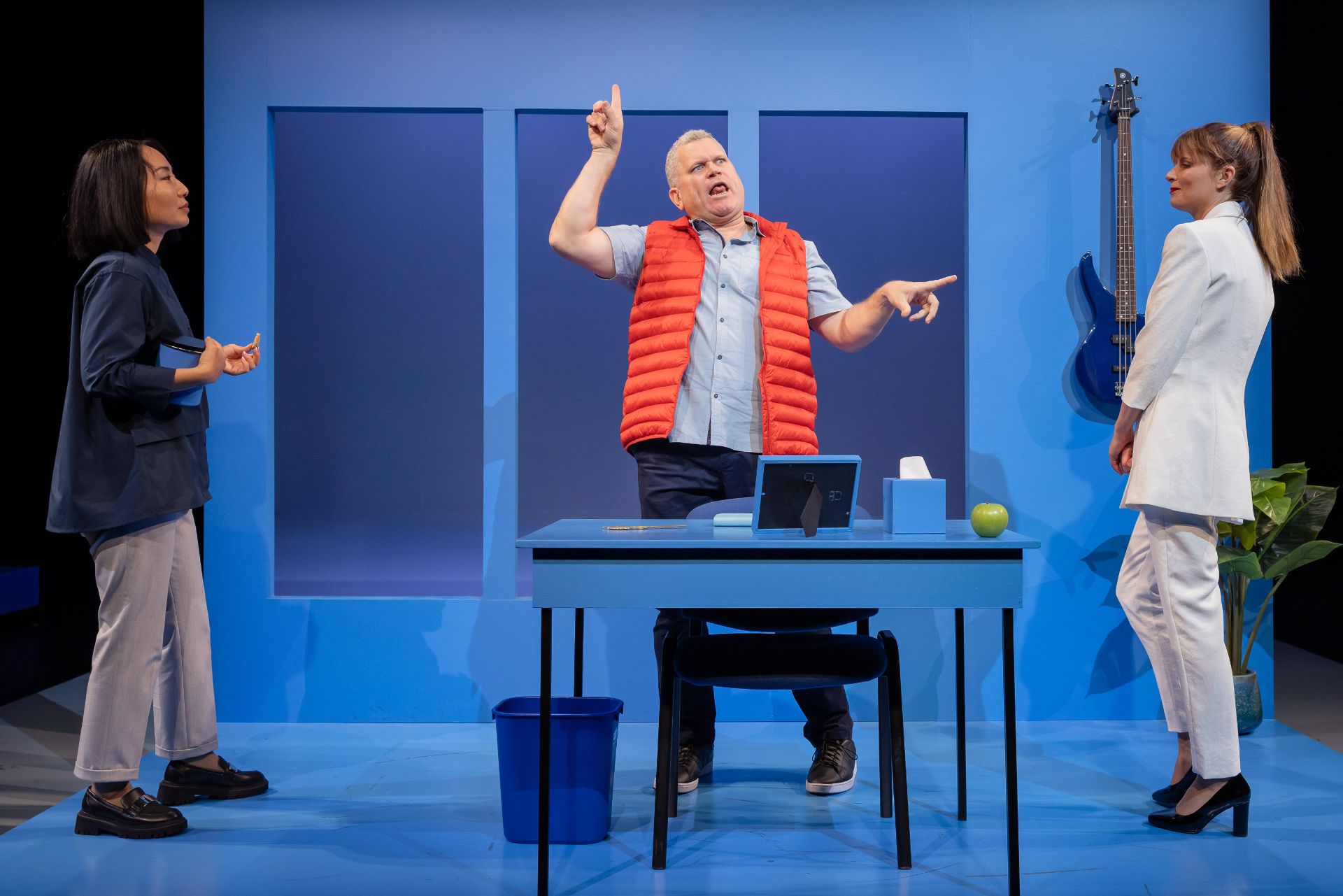
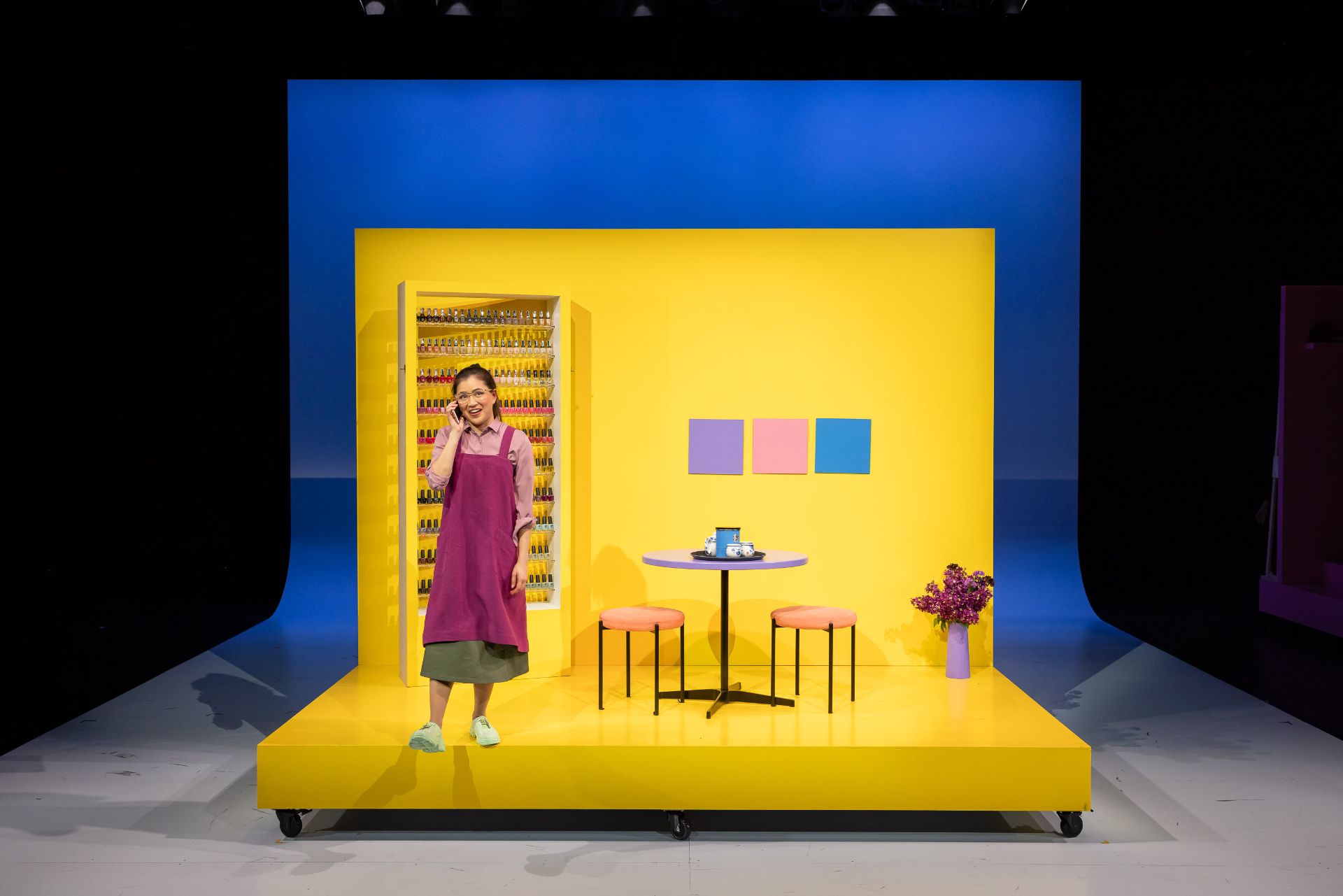
Designer James Lew provides jubilantly colourful sets that are visually exciting, but that consume inordinately long amounts of time between scenes to establish. Michael Toisuta’s music intercedes to occupy those moments of transition, keeping the atmosphere spirited, and preparing our sensibilities for what is to follow. Lights by a proficient Kate Baldwin ensure our attention is maintained on relevant portions of the expansive stage, and memorable for playful instances making full use of the play’s comical supernatural aspects.

Actor Kimie Tsukakoshi brings great exuberance to the role of Winnie, with unwavering levels of commitment that keep us firmly on side. Amber McMahon is appropriately animated as Kate, able to make believable even the most bizarre of situations.

There is perhaps no real way for any person to know what it must be like to experience the world as someone else, especially when all our lives can be so vastly different. What we are capable of doing however, is to understand the nature of injustice and disadvantage, and to believe that efforts at seeking redress, should always be an ongoing concern in our democratic lives. Where people refuse to acknowledge uneven playing fields, as well as other manifestations of prejudice, those at the losing end need to find the wherewithal to fight for what is right.

For too long, Asian-Australians and other people of colour, have conformed to notions of the model minority, only to find ourselves as permanently subjugated and silenced second-class citizens. New discussions are now ongoing, as instigated by work like Top Coat, from a younger generation that has begun to see the requirements of politeness for the weapon that it is, in preventing us from ever having things our way. Rage brings people to breaking points, and that is where rules are dismantled.

www.sydneytheatre.com.au

Review: City Of Gold (Sydney Theatre Company)

Venue: Wharf 1 Sydney Theatre Company (Walsh Bay NSW), May 7 – Jun 11, 2022
Playwright: Meyne Wyatt
Director: Shari Sebbens
Cast: Mathew Cooper, St John Cowcher, Simone Detourbet, Ian Michael, Myles Pollard, Trevor Ryan, Meyne Wyatt
Images by Joseph Mayers

Theatre review
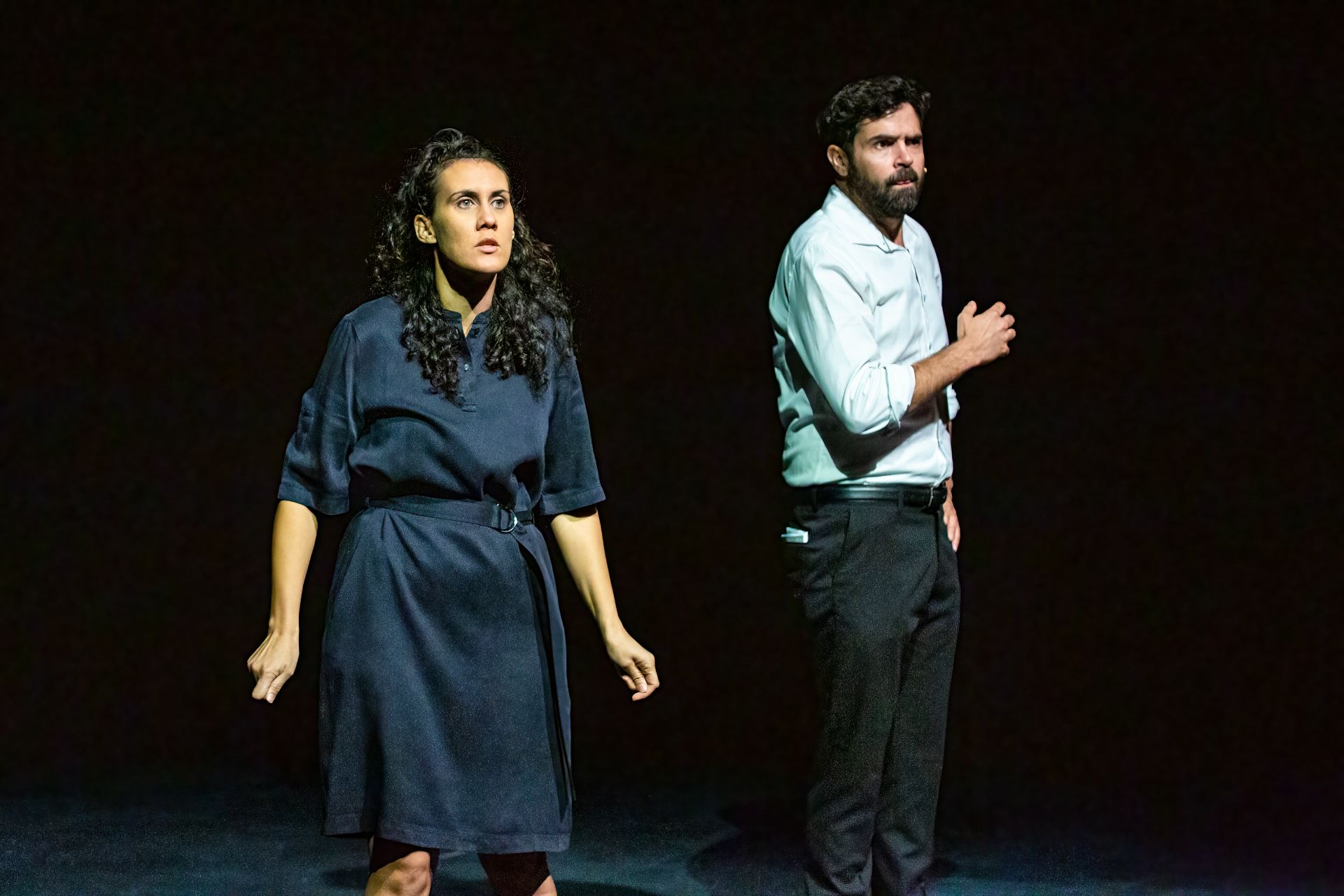
Breythe is trying to establish a career for himself as an actor, but when called home to Kalgoorlie, he is reminded that there are far more important things that require his attention. In Meyne Wyatt’s City of Gold, it is that tension between one’s need for personal fulfilment, and their responsibilities to community, that drives the story.

In Breythe’s case, being an Aboriginal man, makes that juxtaposition even more pronounced. For most of us, self-preservation involves compromises, when participating in dominant systems that control resource distribution in the economy. To play with the big boys, we have to obey their rules, and if the big boys are determined to annihilate one’s community, one is destined to never be able to operate with true integrity.

To pay for his father’s funeral, Breythe has to perform in a problematic television advertisement. To help one’s community, one often has to sleep with the enemy. First Nations peoples, more than any other on this land, understand that subsistence may be permitted, but for the marginalised to thrive, not as exceptional individuals but as whole communities, is nigh on impossible. In fact, like Breythe we find ourselves in positions of pseudo betrayal, when trying to represent and advance causes. The white patriarchy will tempt us with its crumbs, and some of us will pick them up, always hoping that a difference would be made.

Wyatt’s very deep reflections on Indigenous identity are brought to scintillating life by Shari Sebbens’ passionate yet humorous direction. It is political theatre that speaks with a level of authenticity rarely seen; one which prioritises in its viewership, the same minority culture it wishes to represent. Those of us who are not its main concern, benefit from observing through that ajar door, a perspective so kindly made available, so that those of us on the outside who proclaim to be supportive, can feel closer to the nuances of their predicament. Sebbens keeps the discussion in the family, understanding that to care too much about the white gaze, does little to help unearth the truth.

Set design by Tyler Hill makes a literal statement about the outside-inside demarcation of family life, with its left-right split of the performance space. More interesting is its incorporation of hidden scrims to facilitate the depiction of supernatural dimensions, allowing us to draw important connections with the dead and the living, in City of Gold. Verity Hampson’s lights are understated, in complete service of the storytelling, while Rachael Dease’s music gives affirmation to the wide range of emotions being depicted.

As actor, Wyatt’s performance as Breythe is a searing one, filled with a righteous indignation that is satisfying both in terms of its capacity for driving home a message, and for its sheer theatricality. His chemistry with Mathew Cooper, who plays brother Mateo, is invulnerable and effortless; their tumultuous brotherly love is portrayed with great power. Simone Detourbet’s earnest interpretation of their sister Carina is tenderly moving, and Ian Michael breaks our heart as cousin Cliffhanger, beautifully elevating a smaller part to something unforgettable, with his palpably generous approach to characterisation.
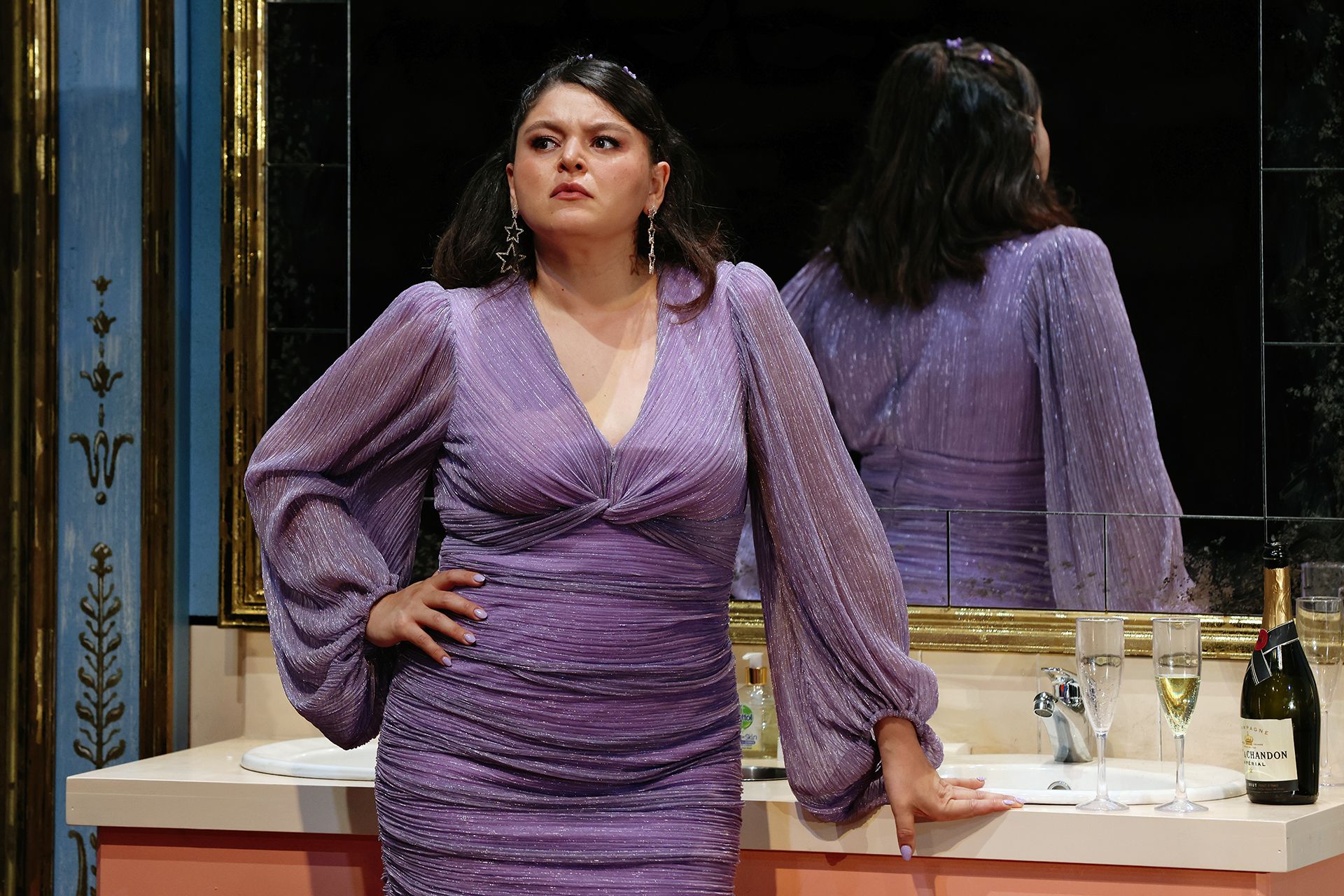
The abruptness to the ending of City of Gold seems intentional in depriving us of any catharsis. It provokes us into taking a stand, leaving no room for ambiguity, in how an Australian viewer would position oneself, at the show’s conclusion. It is right, that the situation is framed as a binary one; you are either anti-racist, or you are racist at least by default. You can make contributions to improving the situation, or you can stand on the sidelines and let injustices perpetuate. Feeling bad is not enough, but there is only so much theatre can do for you.

www.bsstc.com.auwww.sydneytheatre.com.au

Review: Triple X (Sydney Theatre Company)

Venue: Wharf 1 Sydney Theatre Company (Walsh Bay NSW), Jan 8 – Feb 26, 2022
Playwright: Glace Chase
Director: Paige Rattray
Cast: Glace Chase, Josh McConville, Christen O’Leary, Anthony Taufa, Contessa Treffone
Images by Brett Boardman, Prudence Upton

Theatre review
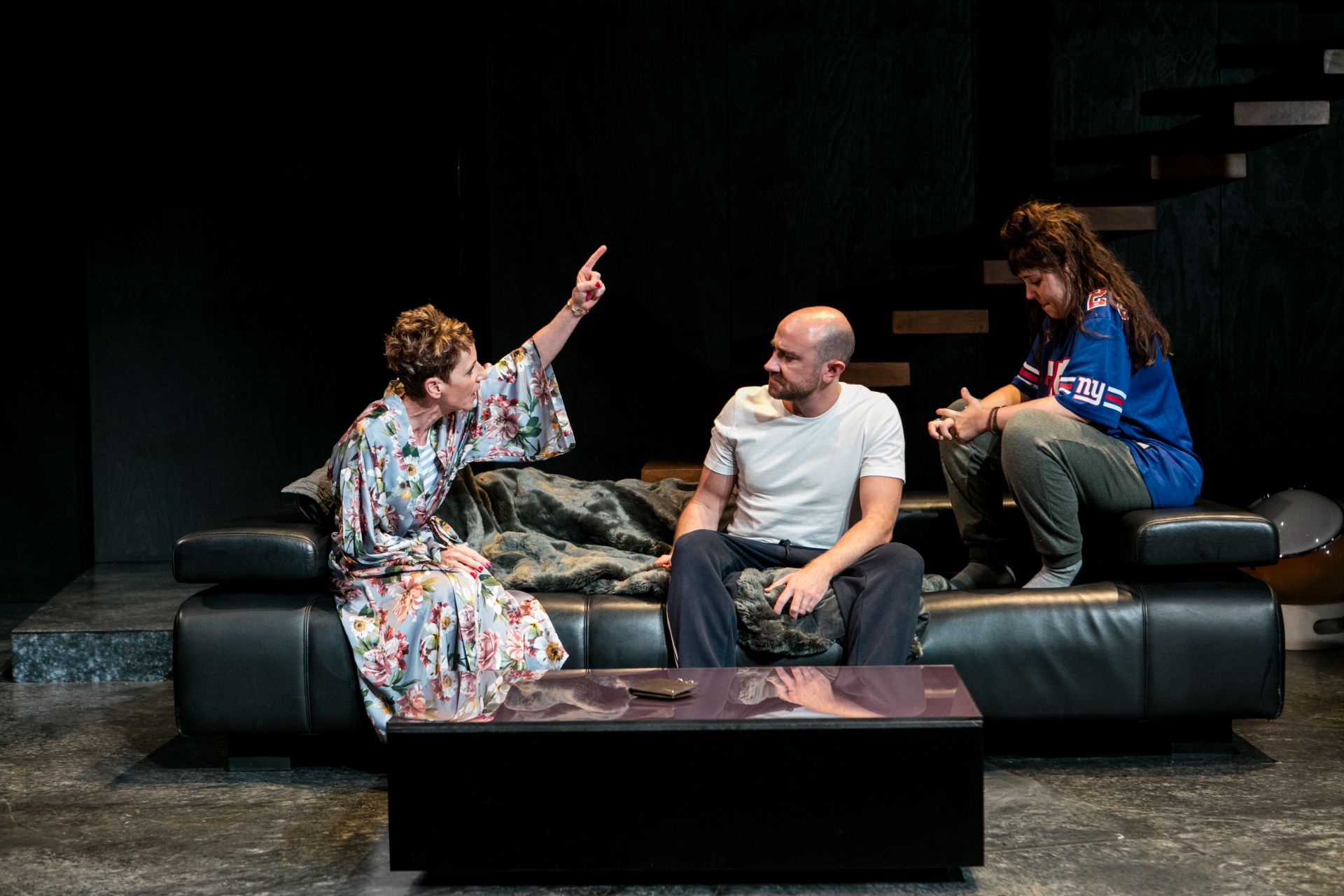
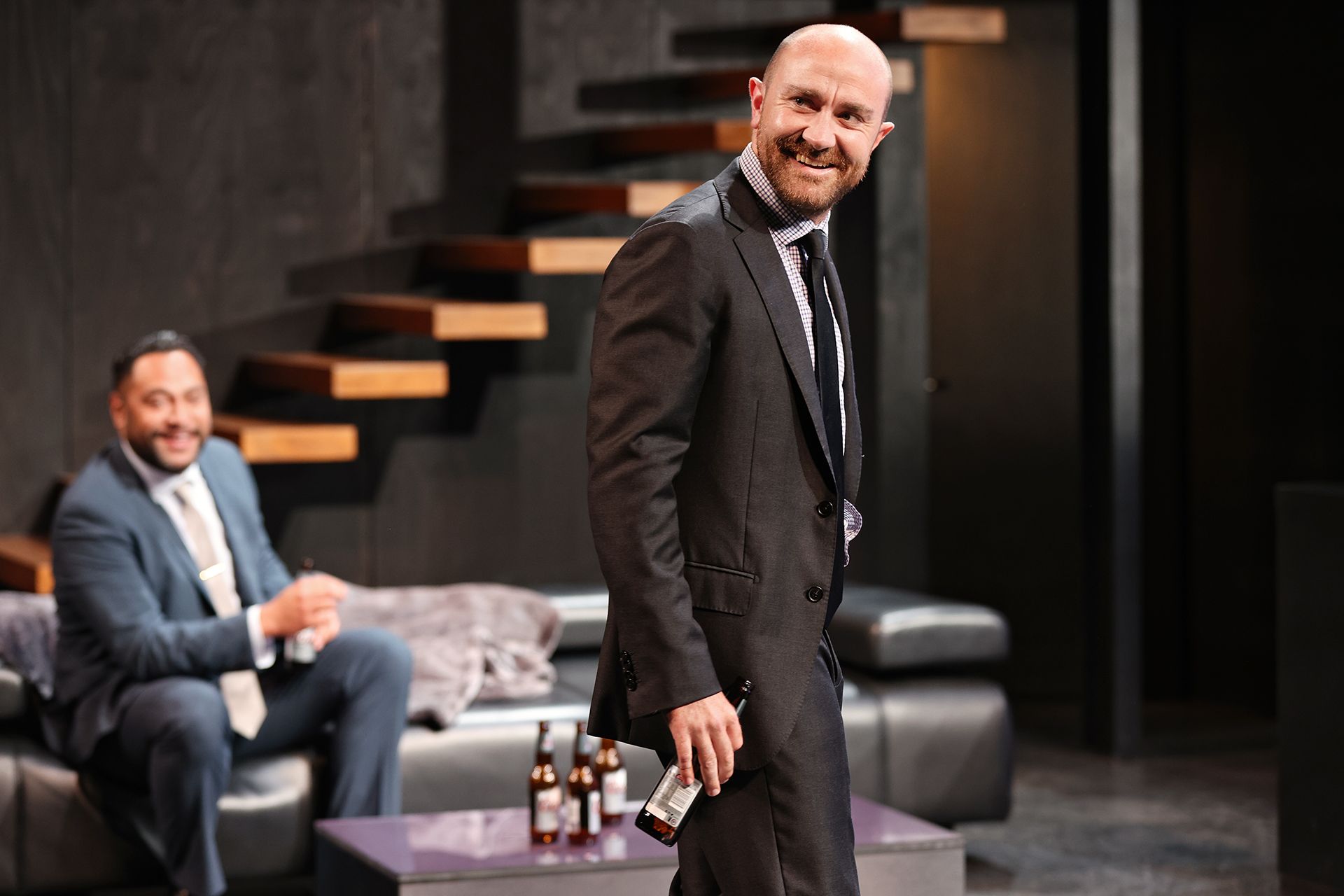
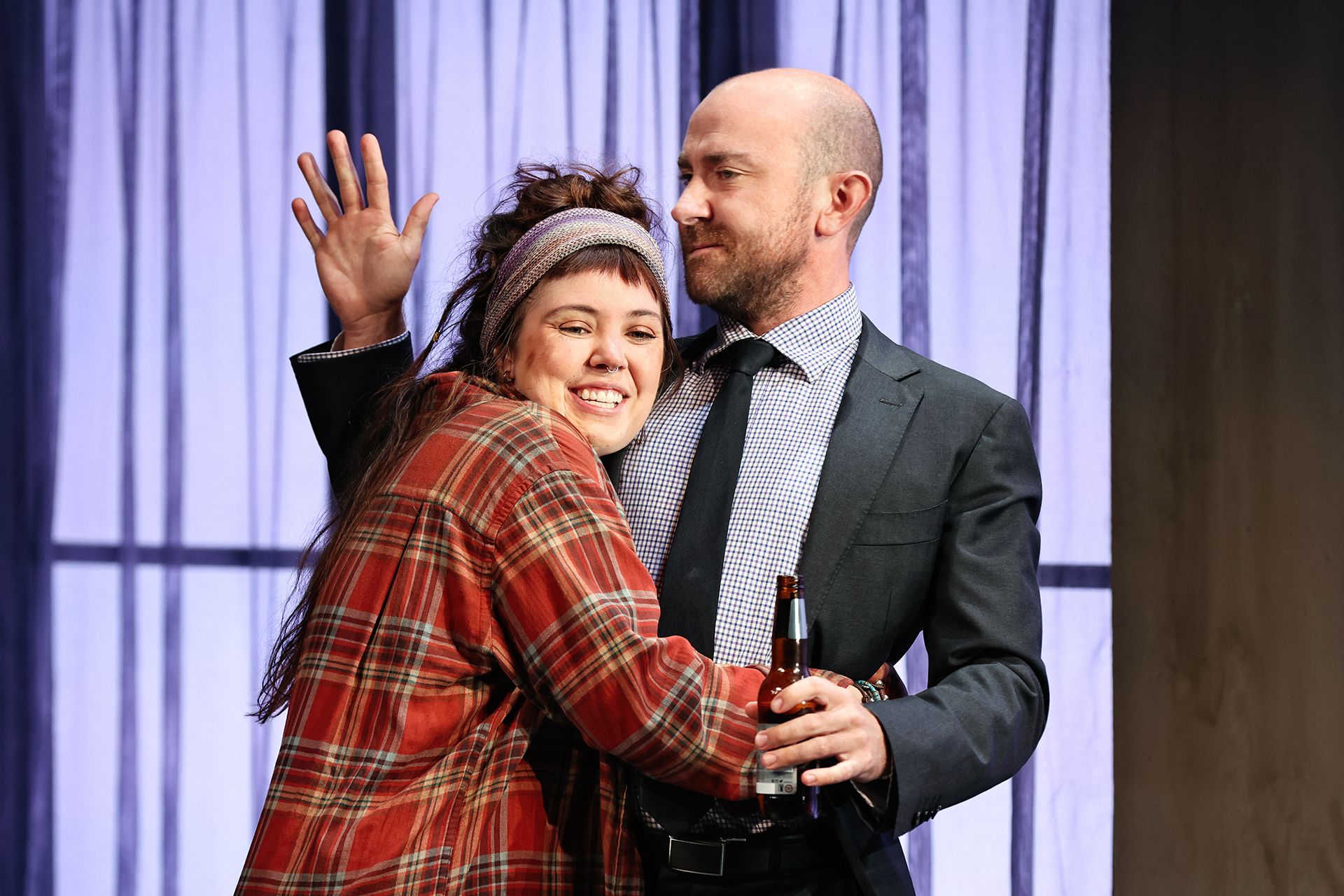
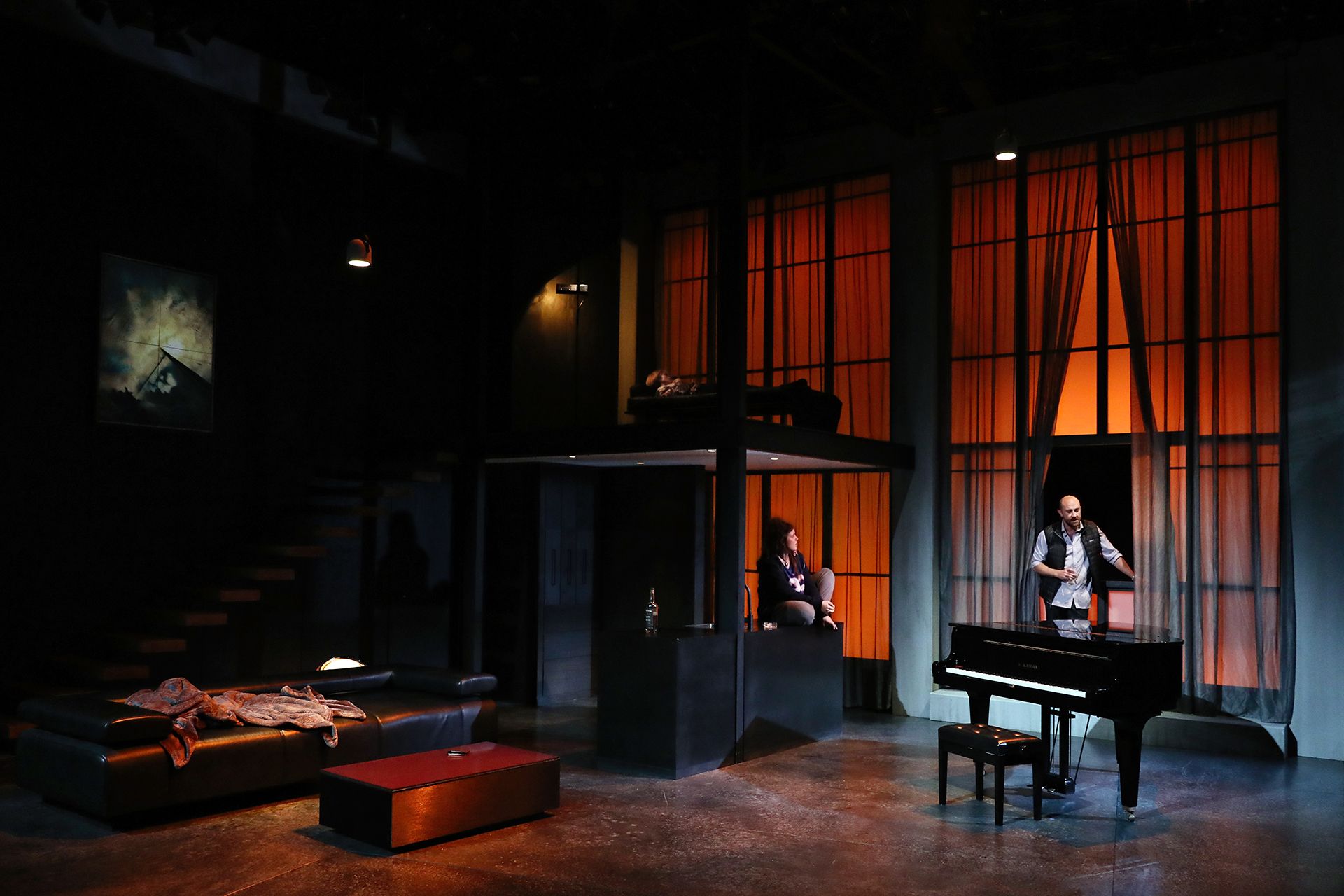
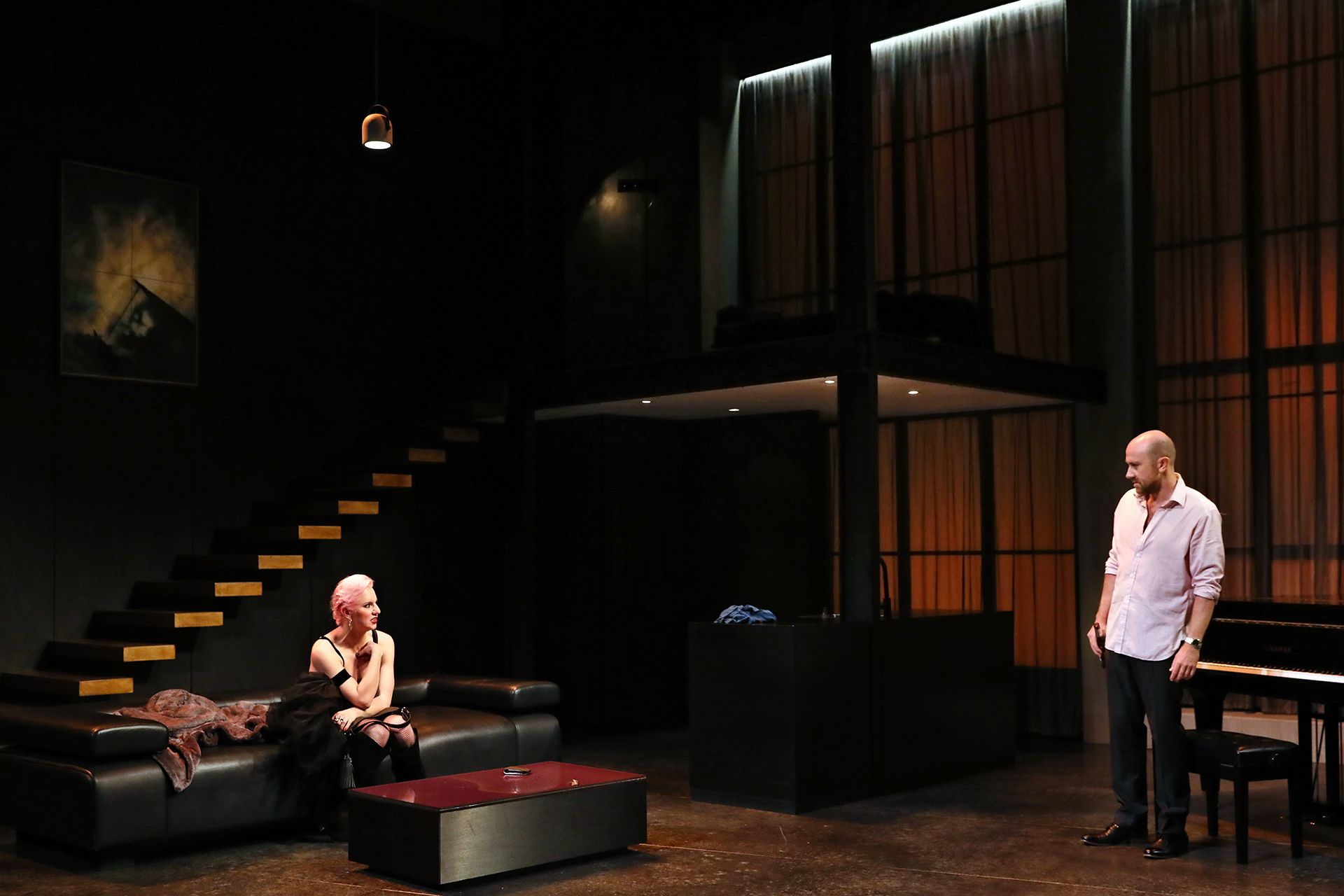
Not only does Scotty have a highflying job on Wall Street, he lives in a US$3.5 million Tribeca loft, and is about to marry a Birkin-toting Kymberly. Everything looks to be peachy keen, but on the inside, he is a complete mess. The only saving grace is his secret affair with trans entertainer Dexie, but Scotty relegates the sole joy of his existence to the dark allegorical closet, afraid that the truth will destroy all.

Glace Chase’s Triple X tells an age-old story, but such is the severity of its associated taboo, that it feels like we are taking this conversation to the public domain, for the very first time. Chase’s writing is intricate and insightful, replete with splendid wit and a generosity of spirit that allows her show its wide appeal. The depth of honesty she is able to access for the play, is so confronting it feels almost self-sacrificial. The result of course, is the initiation of a big and necessary discussion, that is crucial to the well-being of trans people everywhere.

The show is given vibrant and taut direction by Paige Rattray, who makes the near three hours of Triple X feel a mere blink of an eye. The comedy is wild and raucous, yet bears an unmistakeable sense of sophistication. The deconstruction and analysis of ideas, are accomplished with admirable thoroughness. For all the irony and sarcasm dripping off of Triple X, there is thankfully no ambiguity to the important message it imparts.

Designer Renée Mulder establishes on the stage, a versatile and highly functional set that provides a wealth of possibilities, whilst making Scotty’s apartment look every bit the million dollar listing that it aims to depict. Costumes are convincingly assembled, with several of Dexie’s more flamboyant outfits demonstrating great style and humour. Light by Ben Hughes too, add colour and texture that wonderfully enhance the mood of each scene.
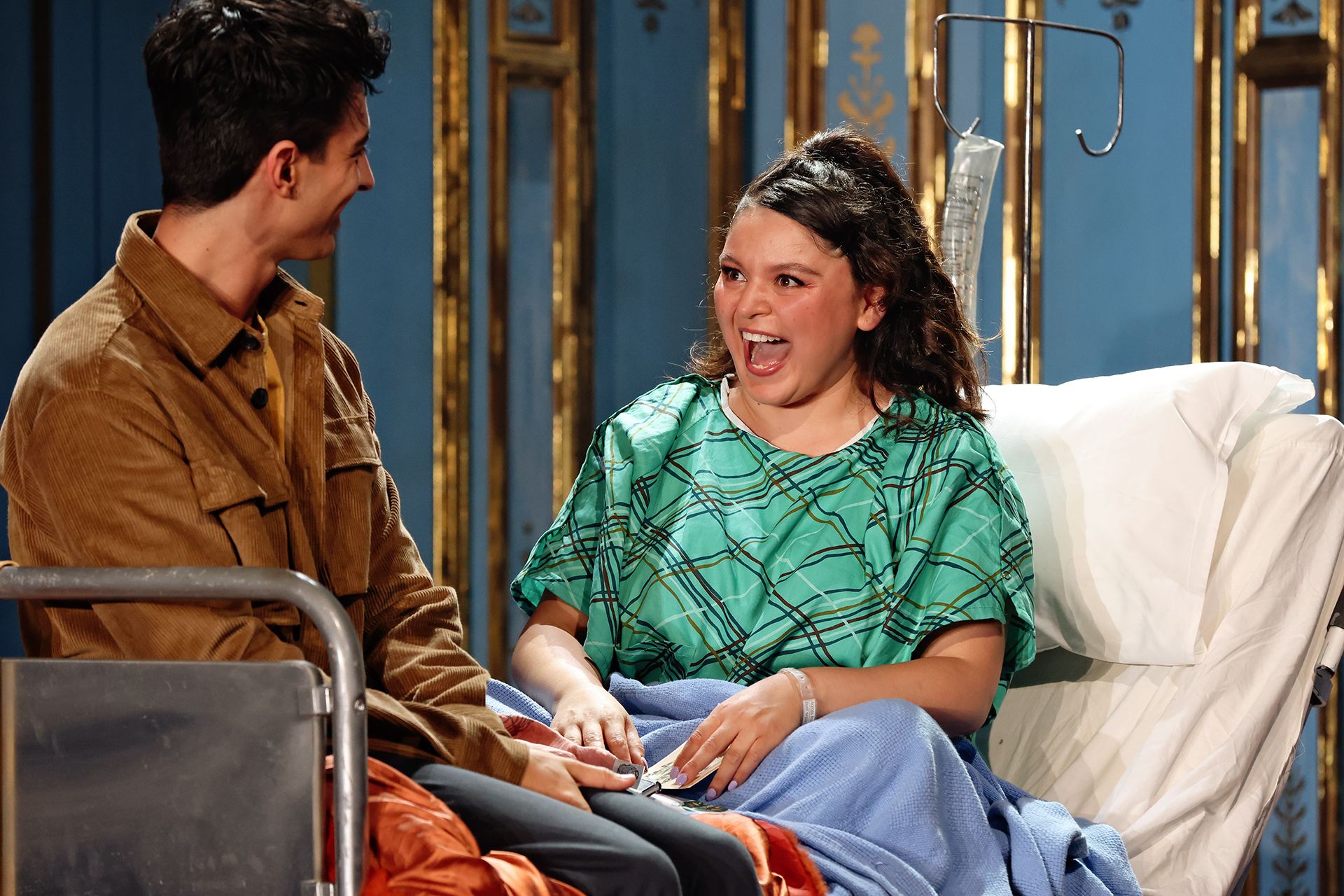
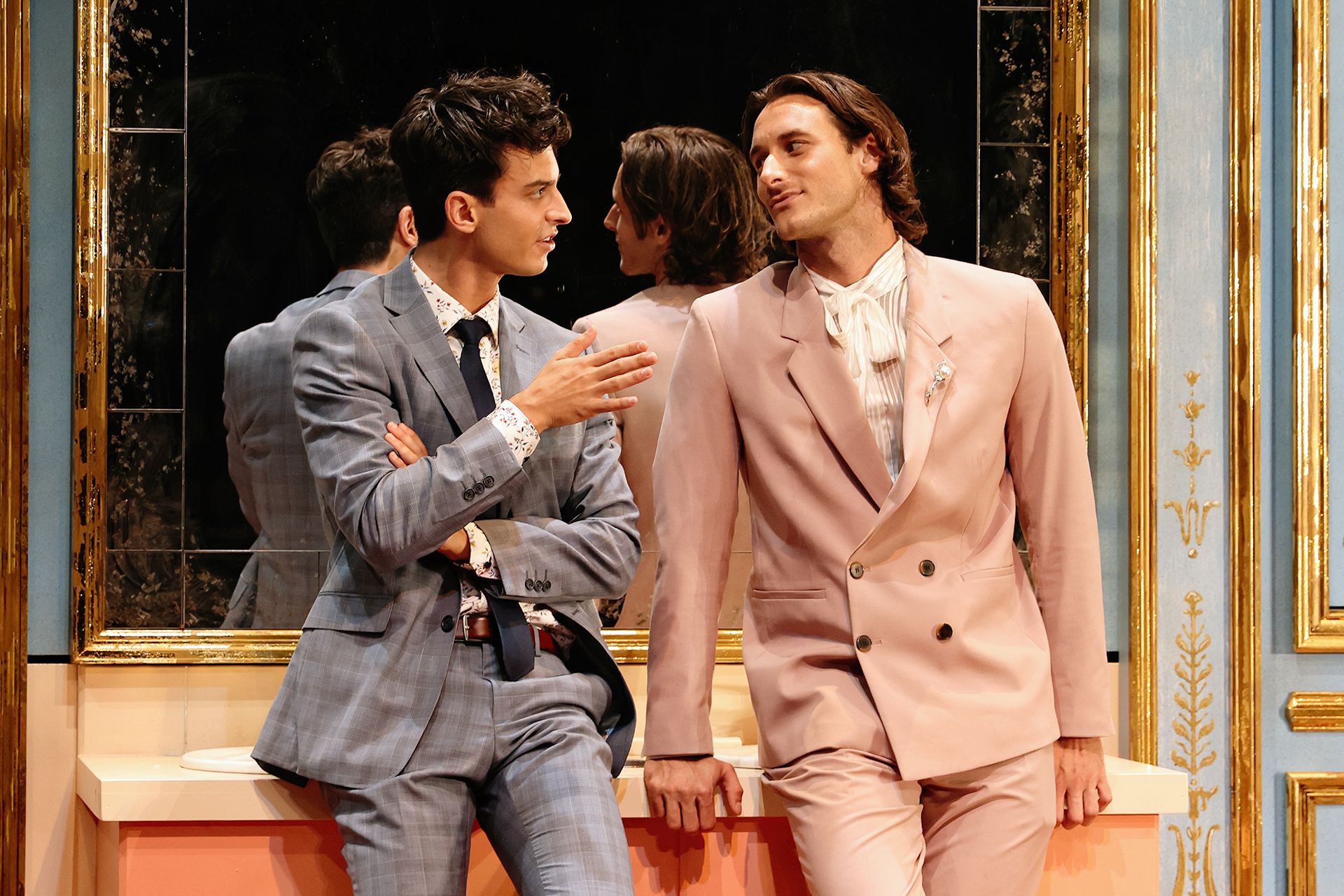
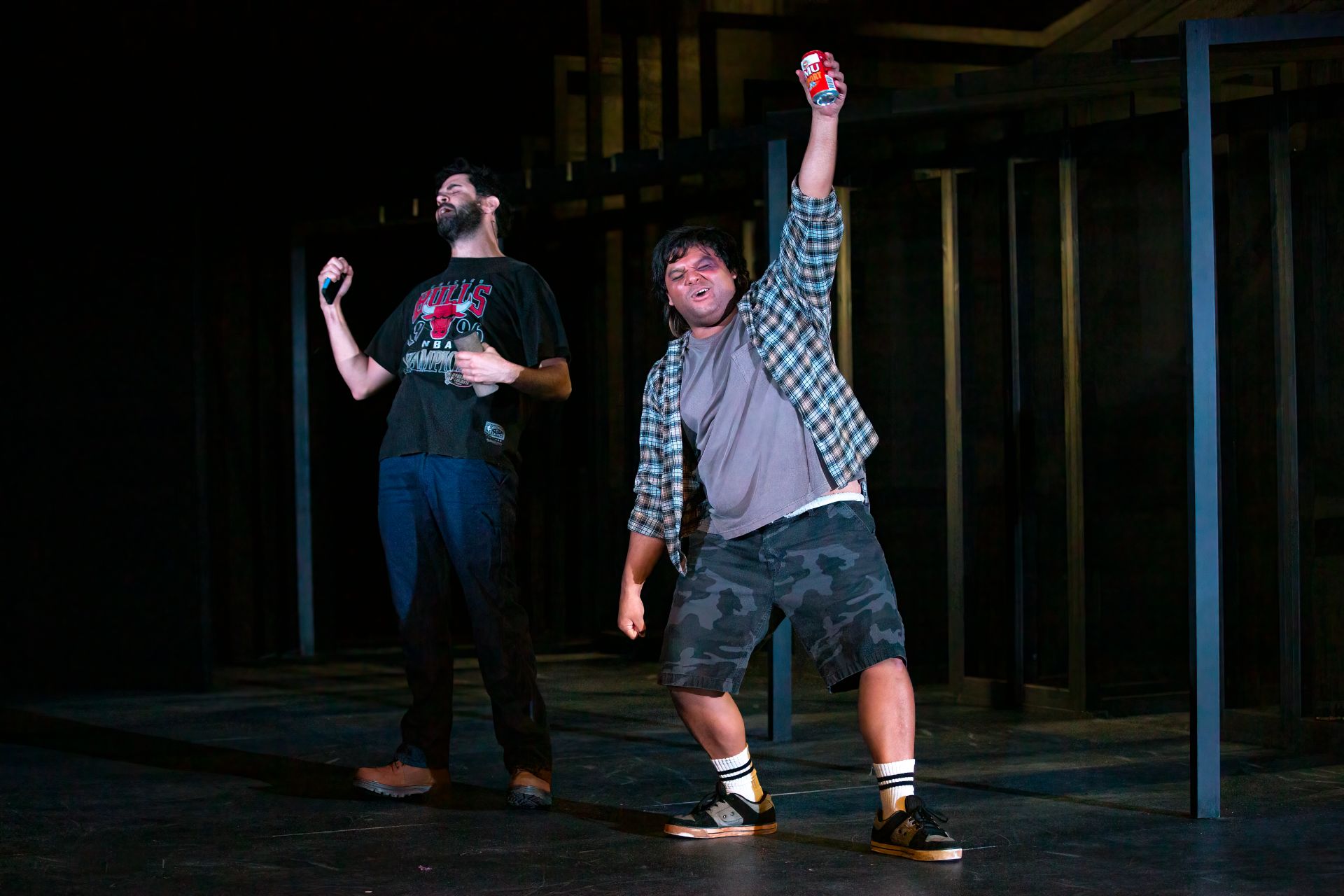
Chase herself plays Dexie, the scruffy warrior from clubland, and provocateur whose very presence insists the truth be out. The uncompromising authenticity that Chase brings to the role, is the lynchpin of the entire exercise. She makes us fall in love with Dexie, and respond with appropriate outrage, at the injustices that befall her. Josh McConville scintillates as Scotty, with boundless energy, both physical and emotional, to convey the frenzied discontentment that the character goes through in every waking moment.
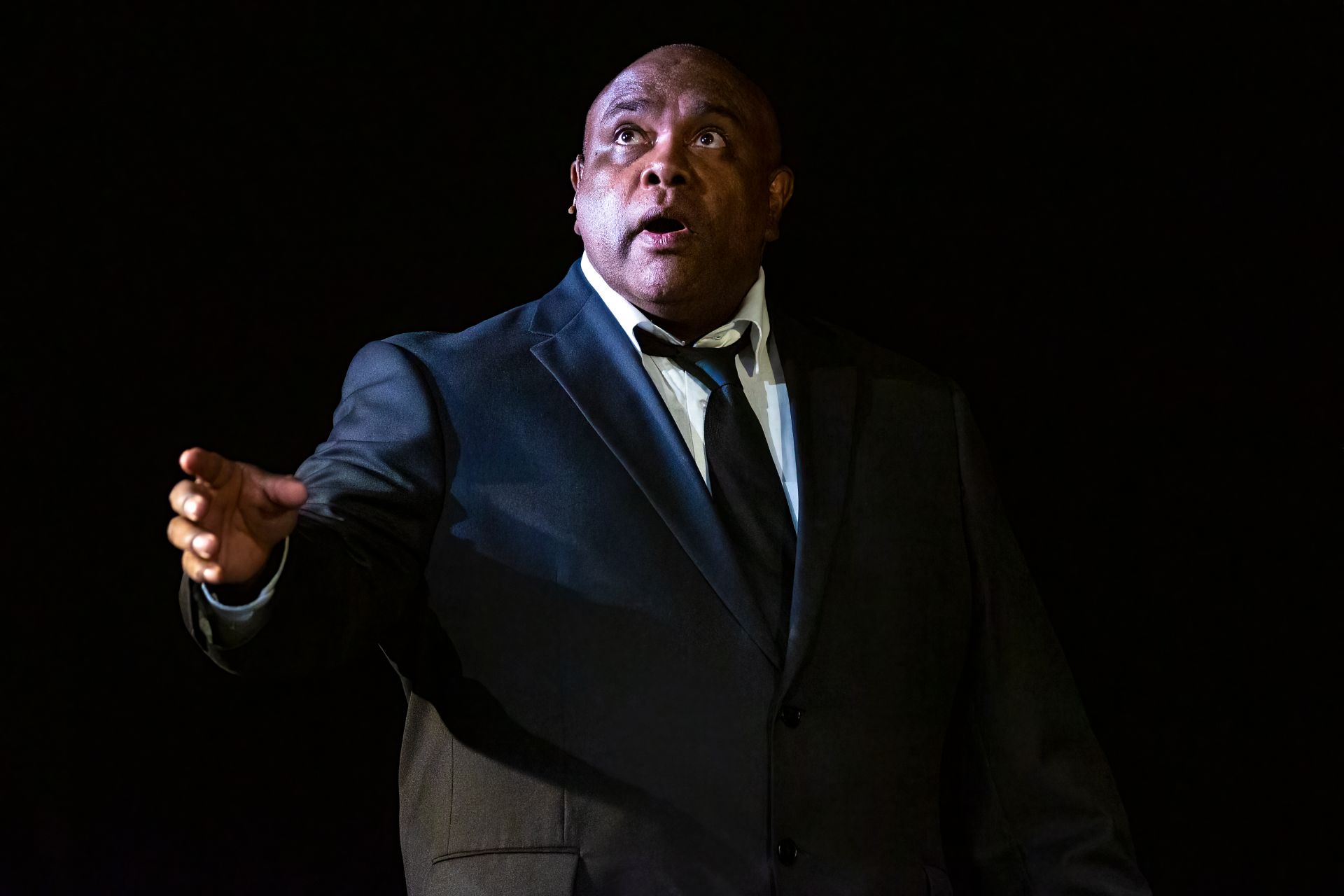
Similarly full of vigour is Christen O’Leary, whose unforgettable performance as Deborah, proves an unequivocal highlight of the production. Captivating and irresistibly funny, yet able to bring sincerity to her work, O’Leary is truly remarkable. Anthony Taufa and Contessa Treffone both create likeable personalities, who add dynamism and complexity to the story being told. The entire cast is passionate, with an infectious earnestness that really drive home the urgency of all that is being discussed.

The main thing that Triple X says, is that although there is nothing wrong with Dexie, and that she lives her life to the fullest of her abilities, the world around her is constantly trying to pull her down. Even when she finds love unexpectedly, the embarrassing predictability of a man’s cowardice, is determined to replace pleasure with misery, joy with anguish. Of course Dexie deserves love, but more than that, she deserves dignity, and the well-founded wisdom of knowing better.
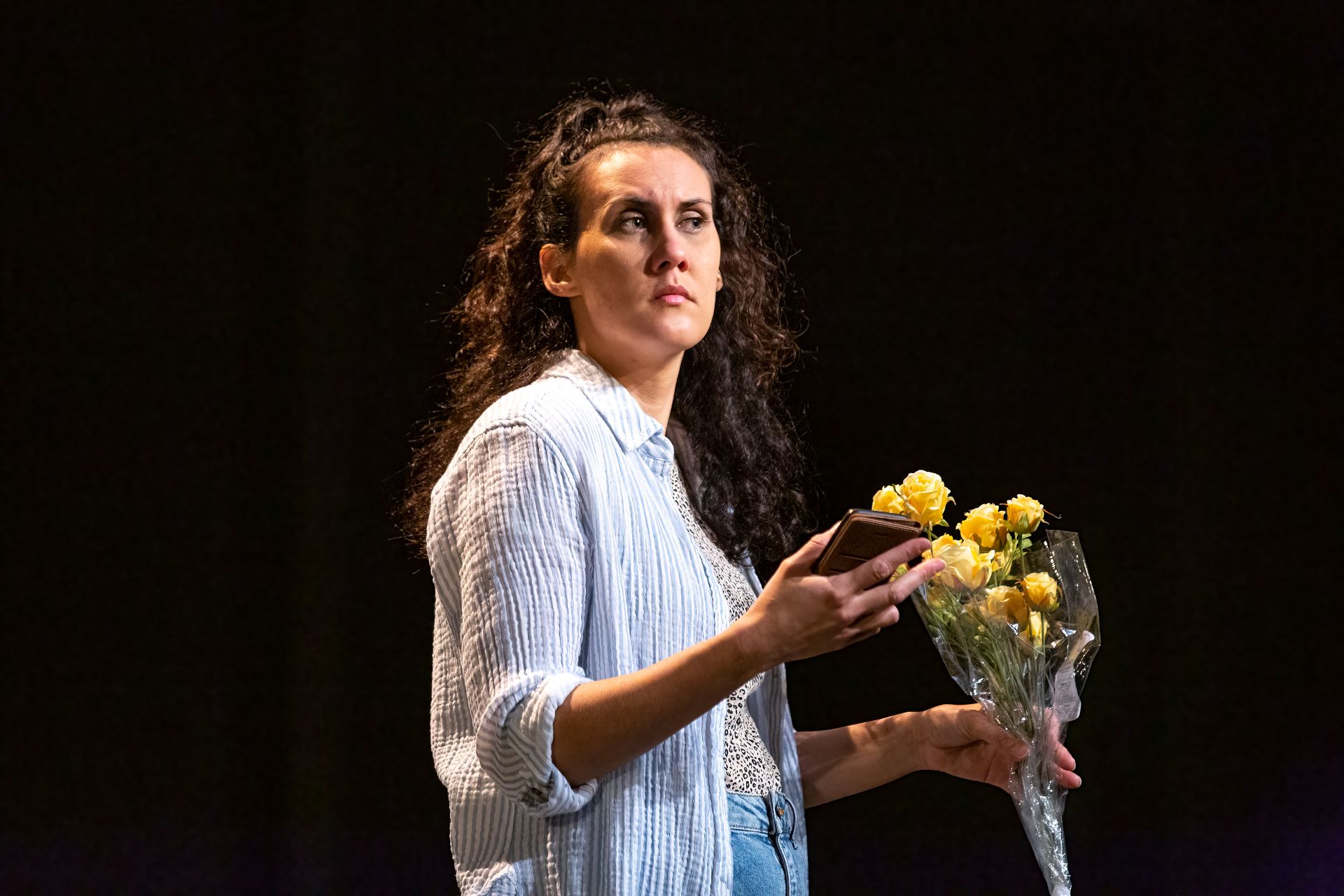
For Scotty, the affair means much more than it does to Dexie. Trans women of a certain age have seen it all before, and there will always be plenty more fish in the sea, should one choose to partake in a never-ending revolving door of fleeting romances. On the other hand, for men like Scotty who know that intimacy with a trans woman, is part of their journey to true happiness, to lose a love could easily be an irrevocable error. Those who remain cowards shall find no peace, and those who relish in bravery certainly deserve no cowards.
www.sydneytheatre.com.au

Review: Julius Caesar (Sydney Theatre Company)

Venue: Wharf 1 Sydney Theatre Company (Walsh Bay NSW), Nov 15 – Dec 23, 2021
Playwright: William Shakespeare
Director: Kip Williams
Cast: Geraldine Hakewill, Ewen Leslie, Zahra Newman
Images by Daniel Boud

Theatre review
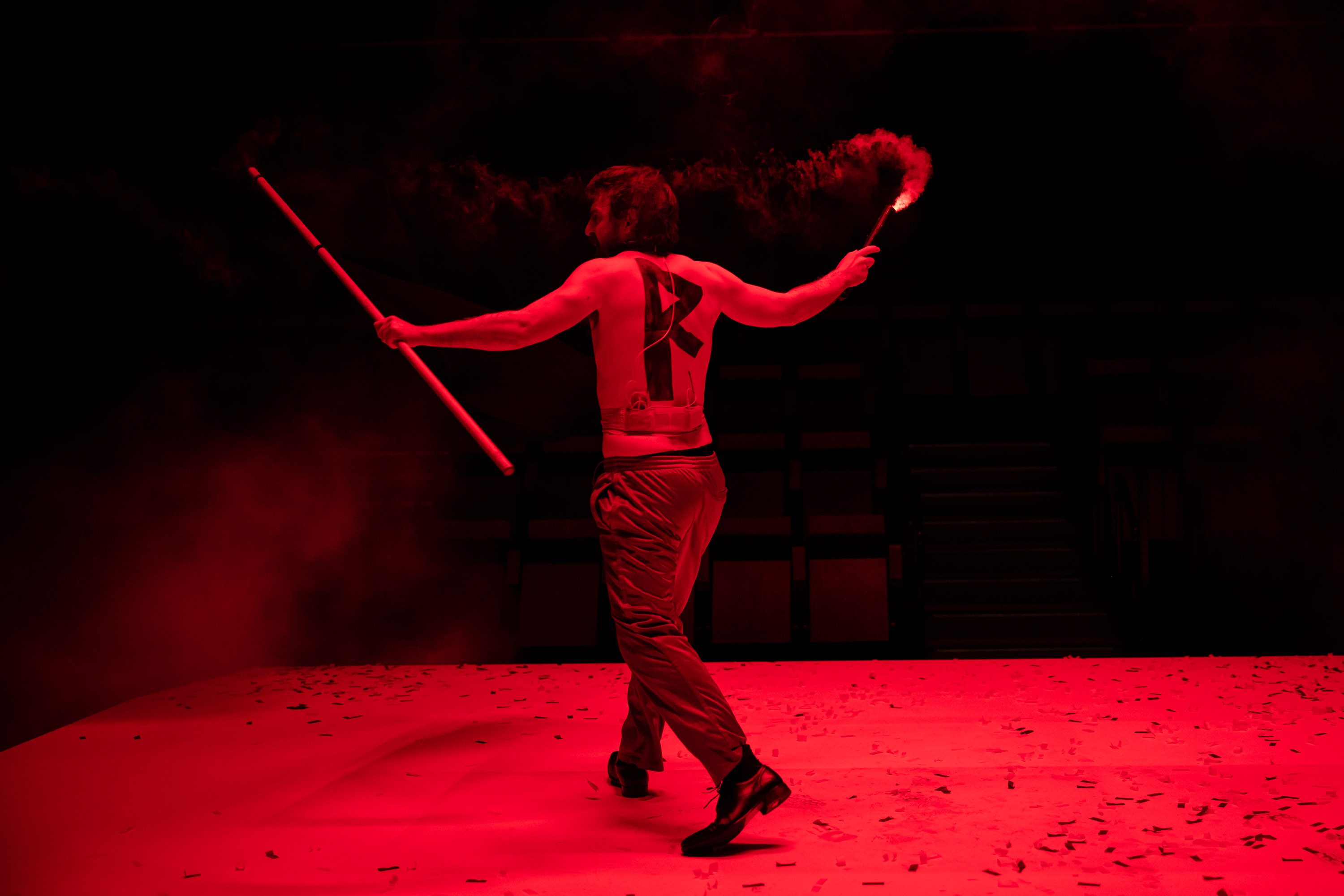
When the Roman leader is assassinated in Shakespeare’s Julius Caesar, it is the very nature of democracy that comes into question. Two millennia after the fateful incident, we are still pondering, and living, the delusive meanings of democracy in our political realities. The men in Shakespeare’s play continue to bear a certain ambiguity in terms of their being good or bad, right or wrong. Fortunately for audiences of Kip Williams’ modern day adaptation, it is the all too familiar malevolence of 21st century communications technology that takes a lot of the unequivocal blame.

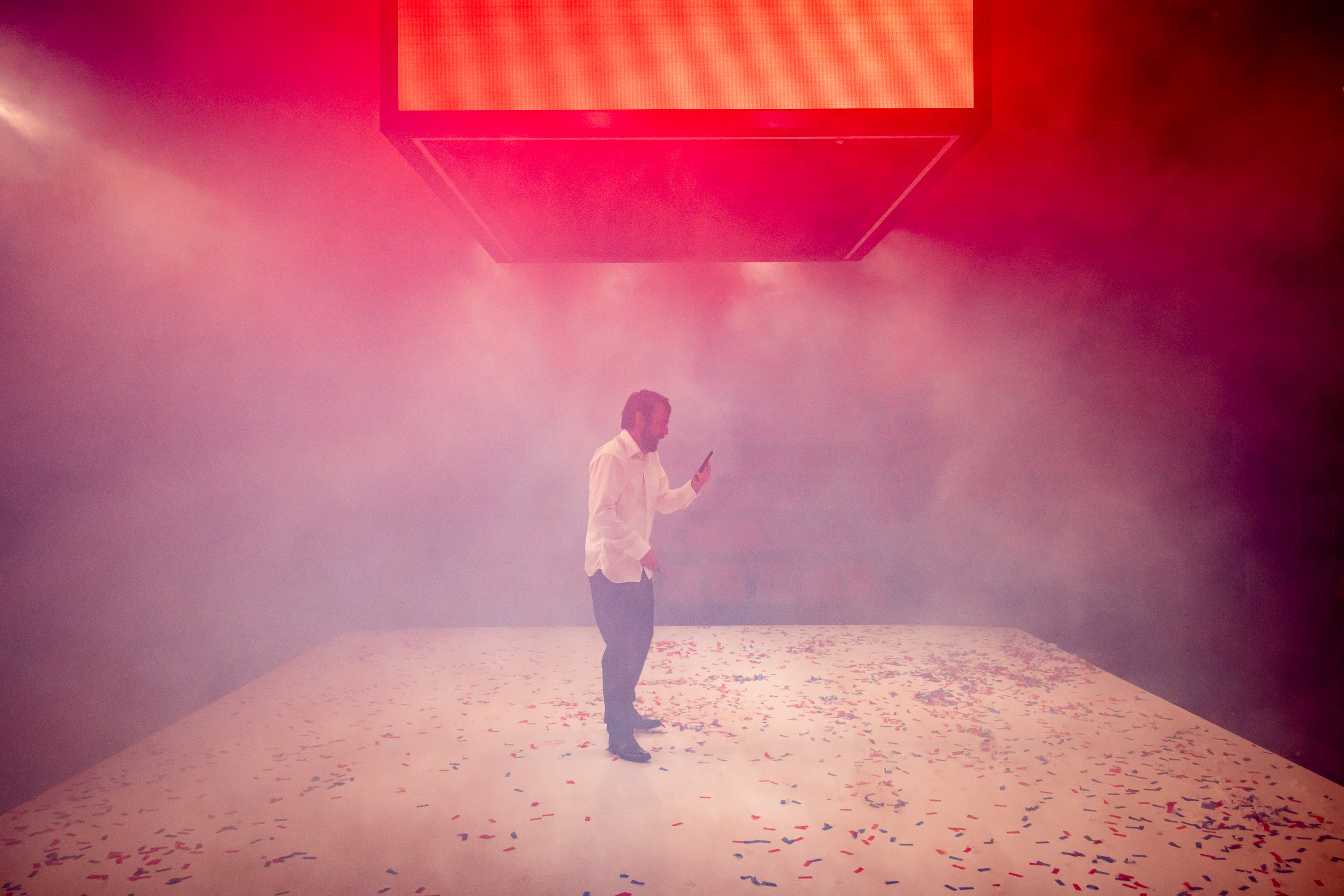
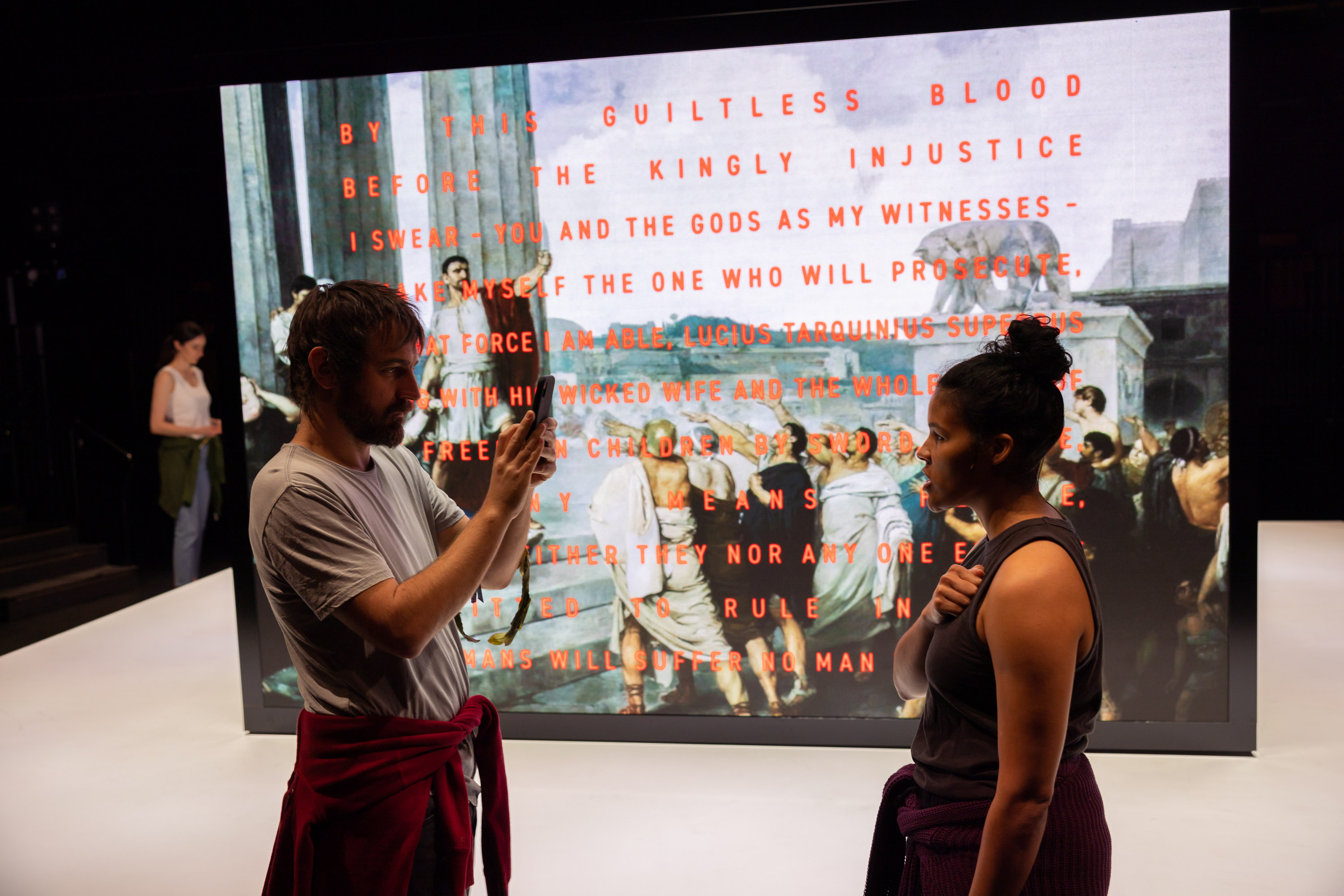
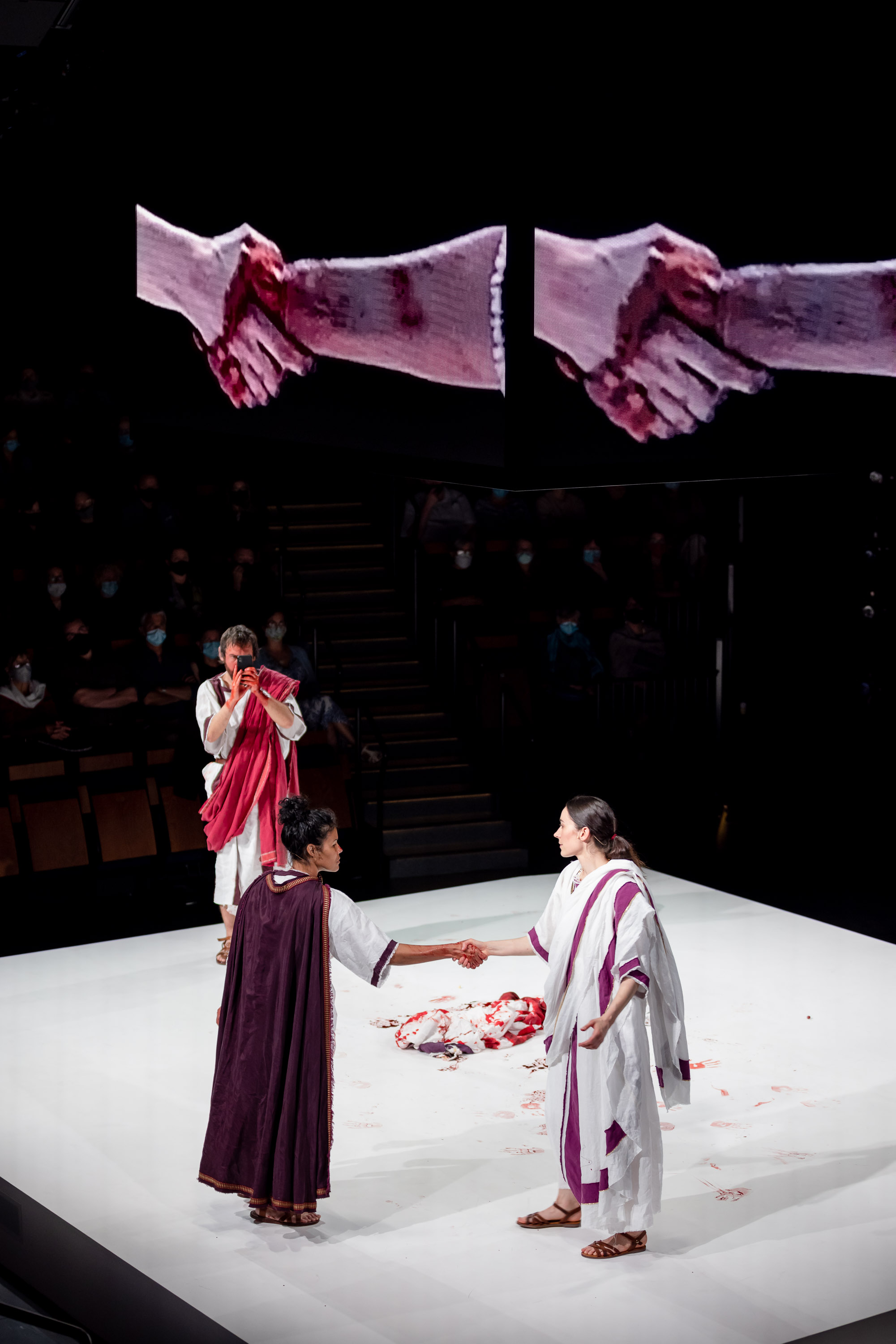
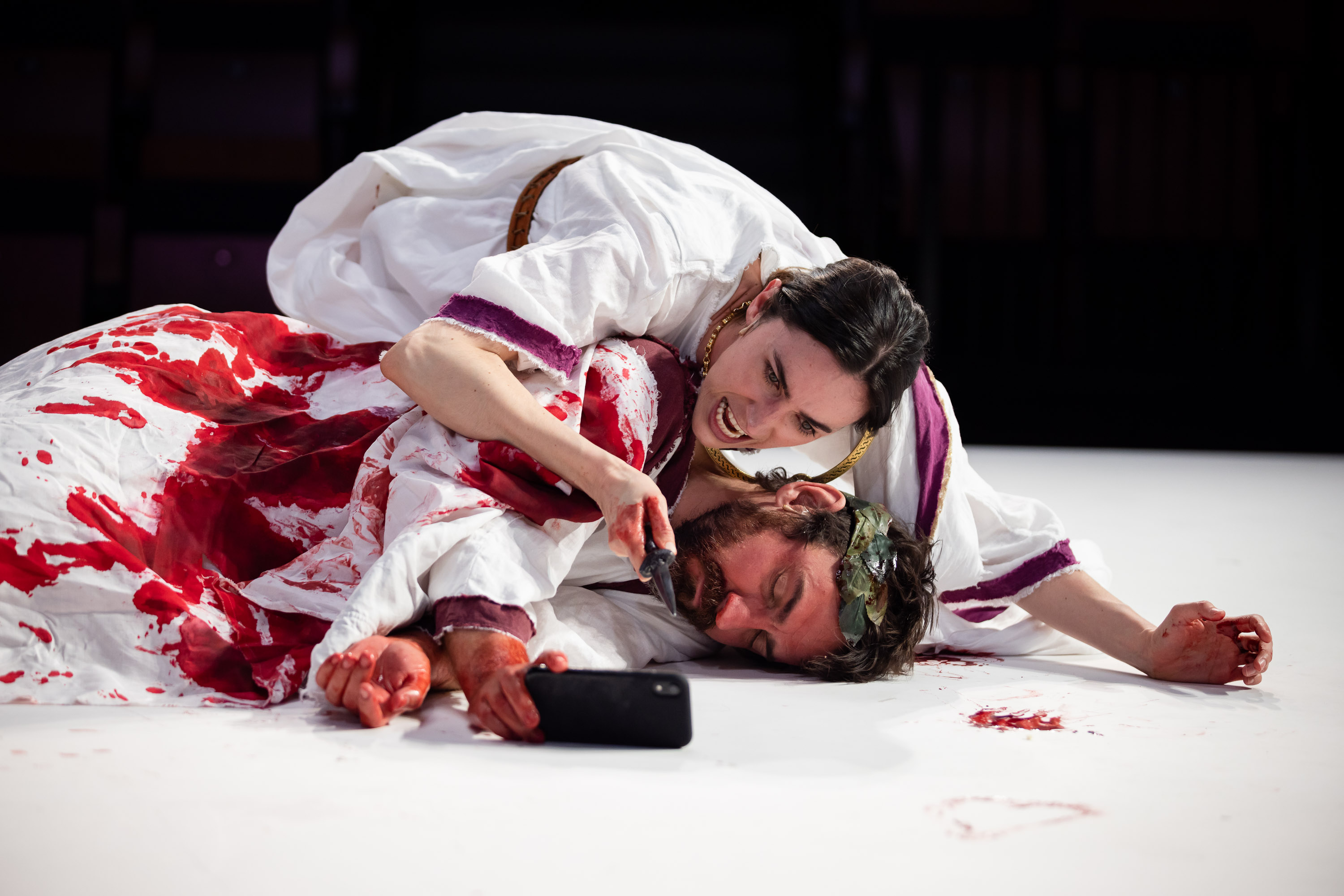
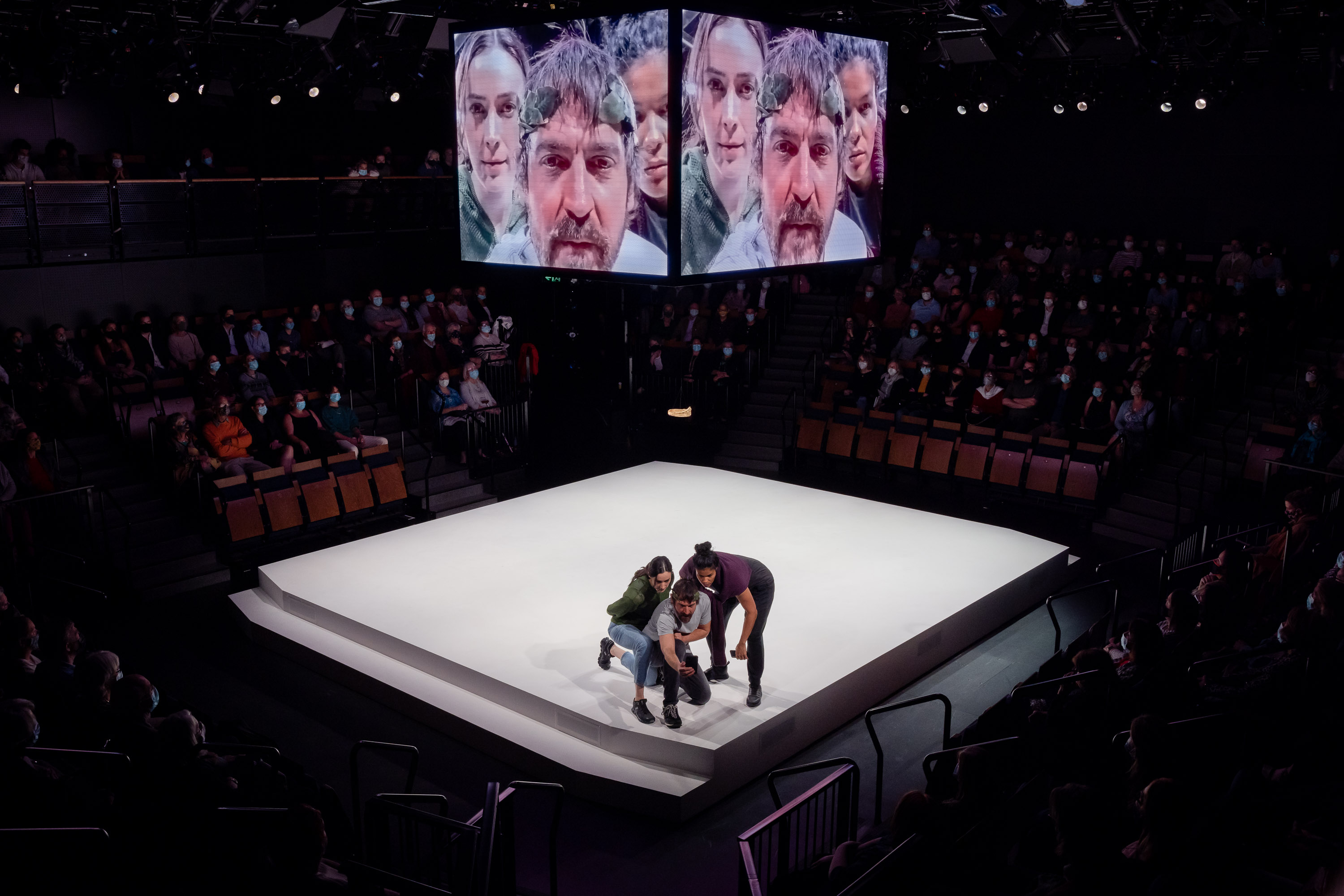
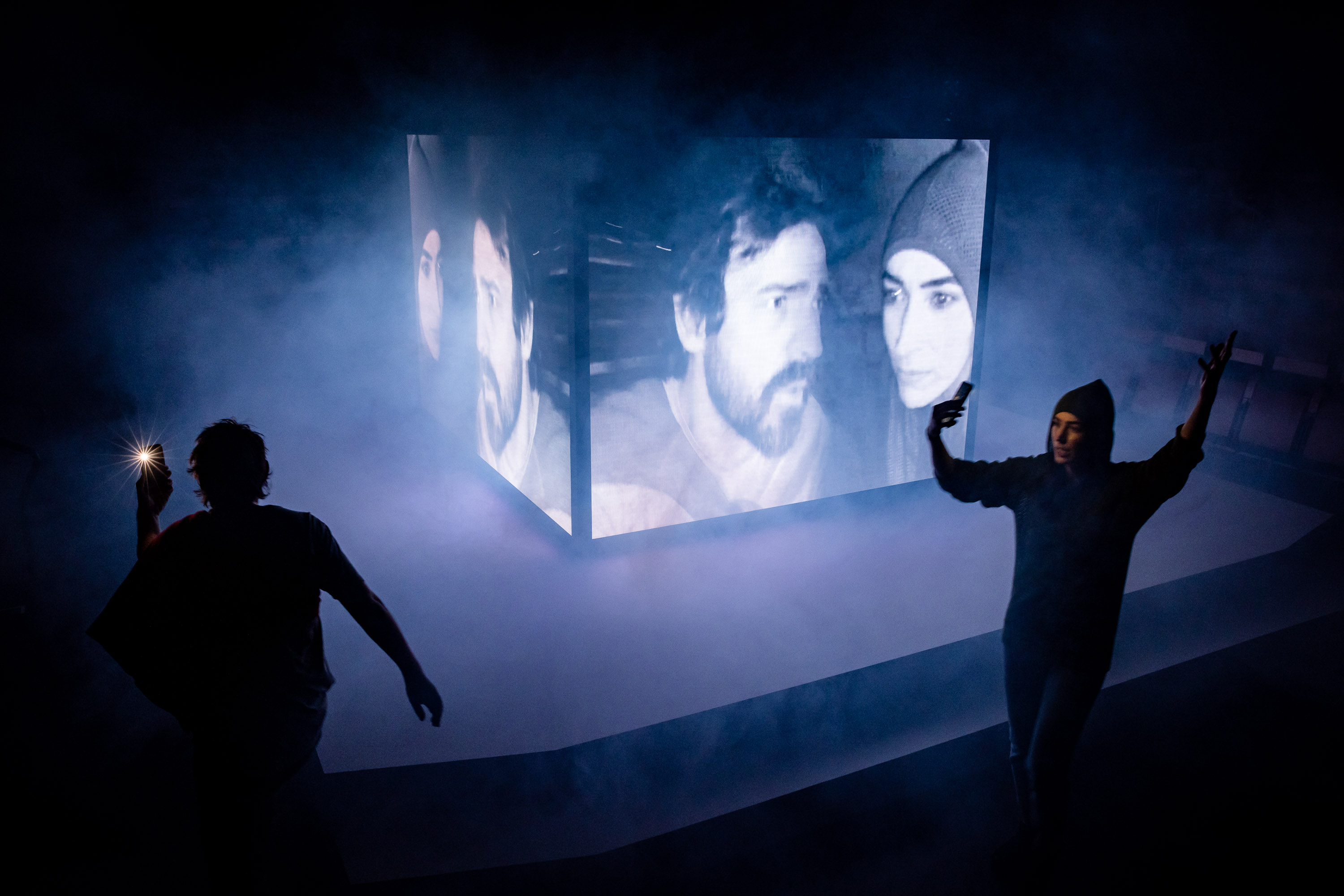
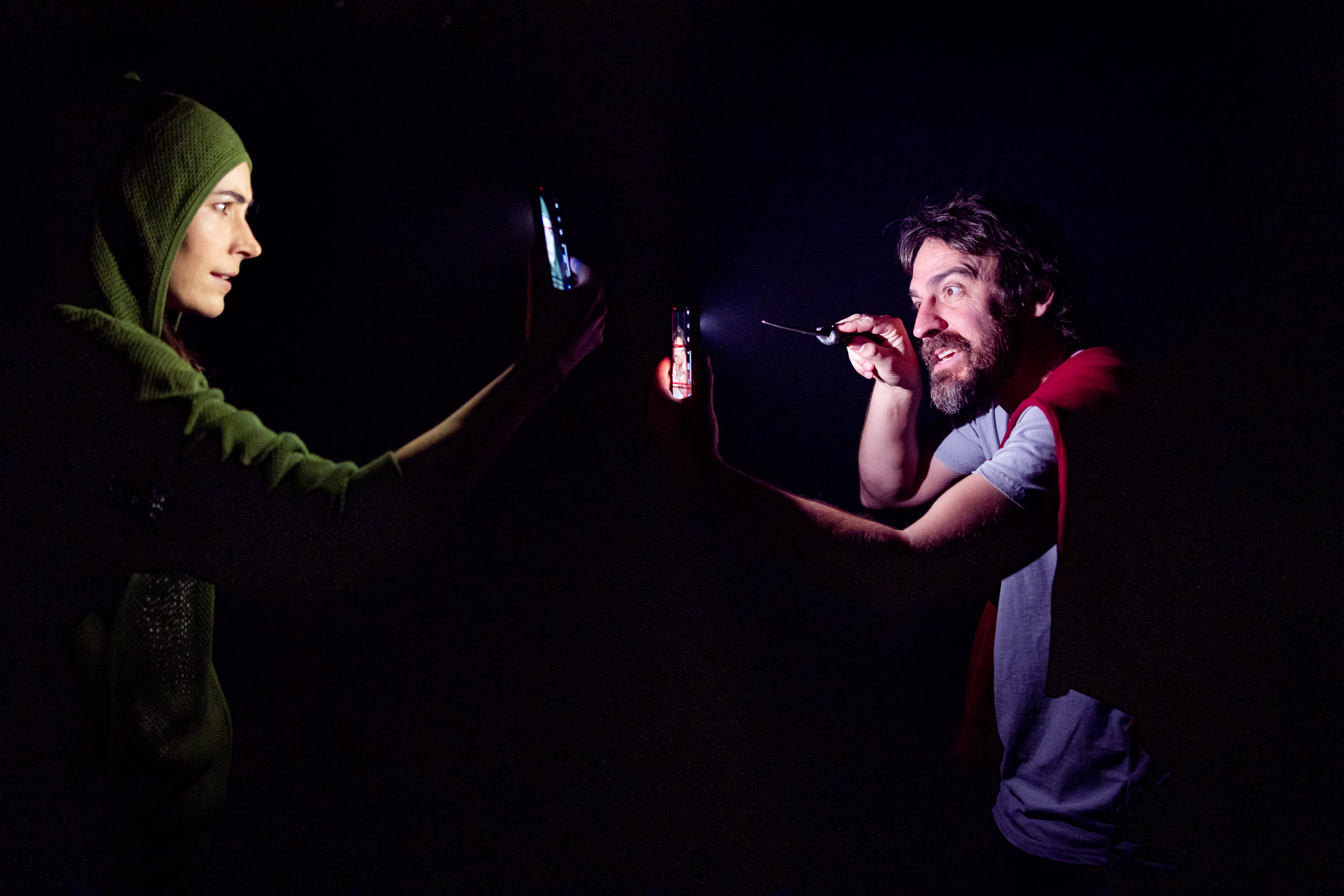
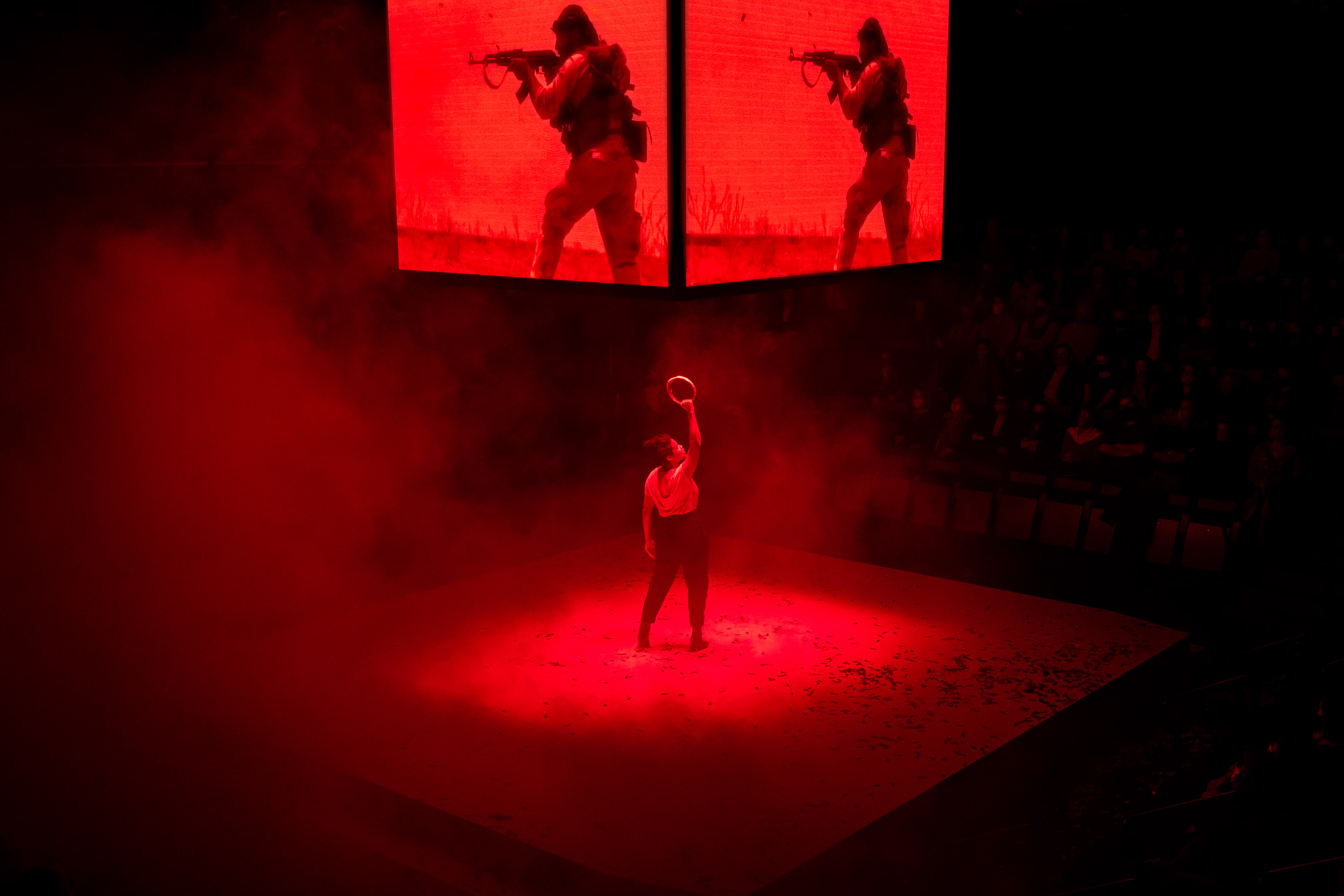
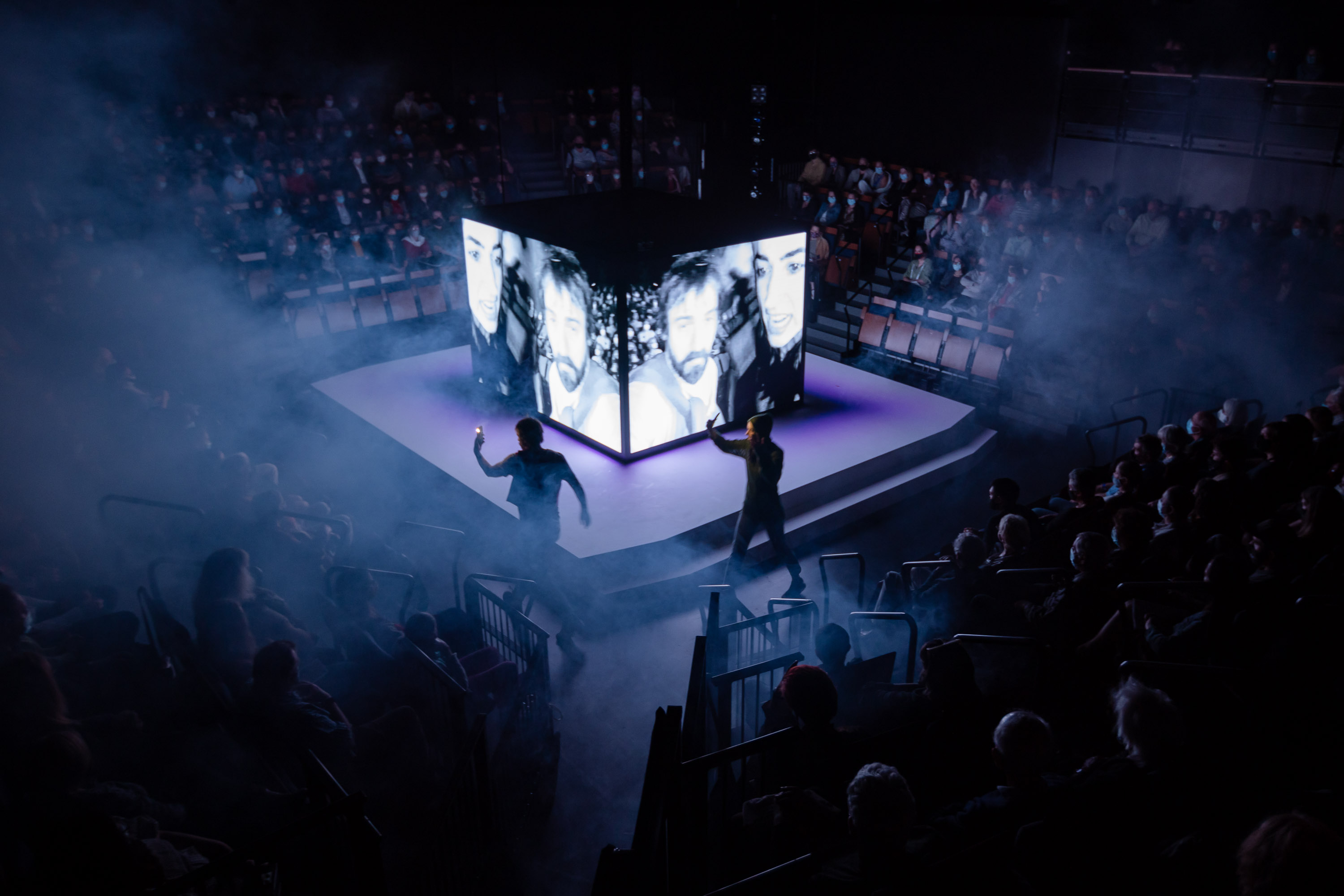
Mobile phones and social media, in addition to traditional news platforms, are the convenient new villains in this regeneration of the old classic. Video monitors occupy centre stage with an aggressive dominance, and actors are virtually never without their phones, always with camera on, pointing at themselves and at one another. We have to consume the play in ways that are similar, to how we consume the daily news about politics. Devices and screens overwhelm our senses, so that whatever is live and actually material, becomes secondary to digital transmissions.

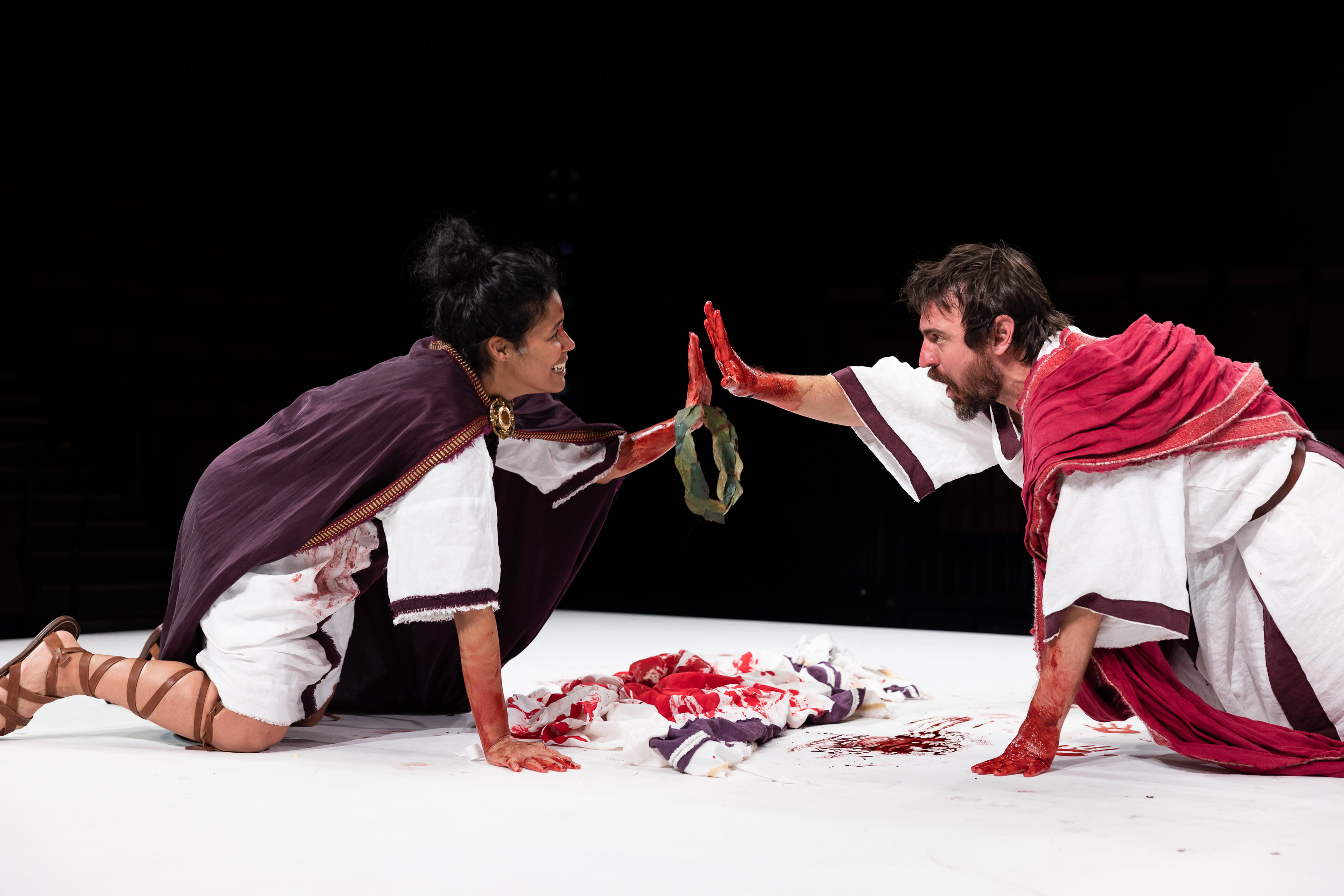
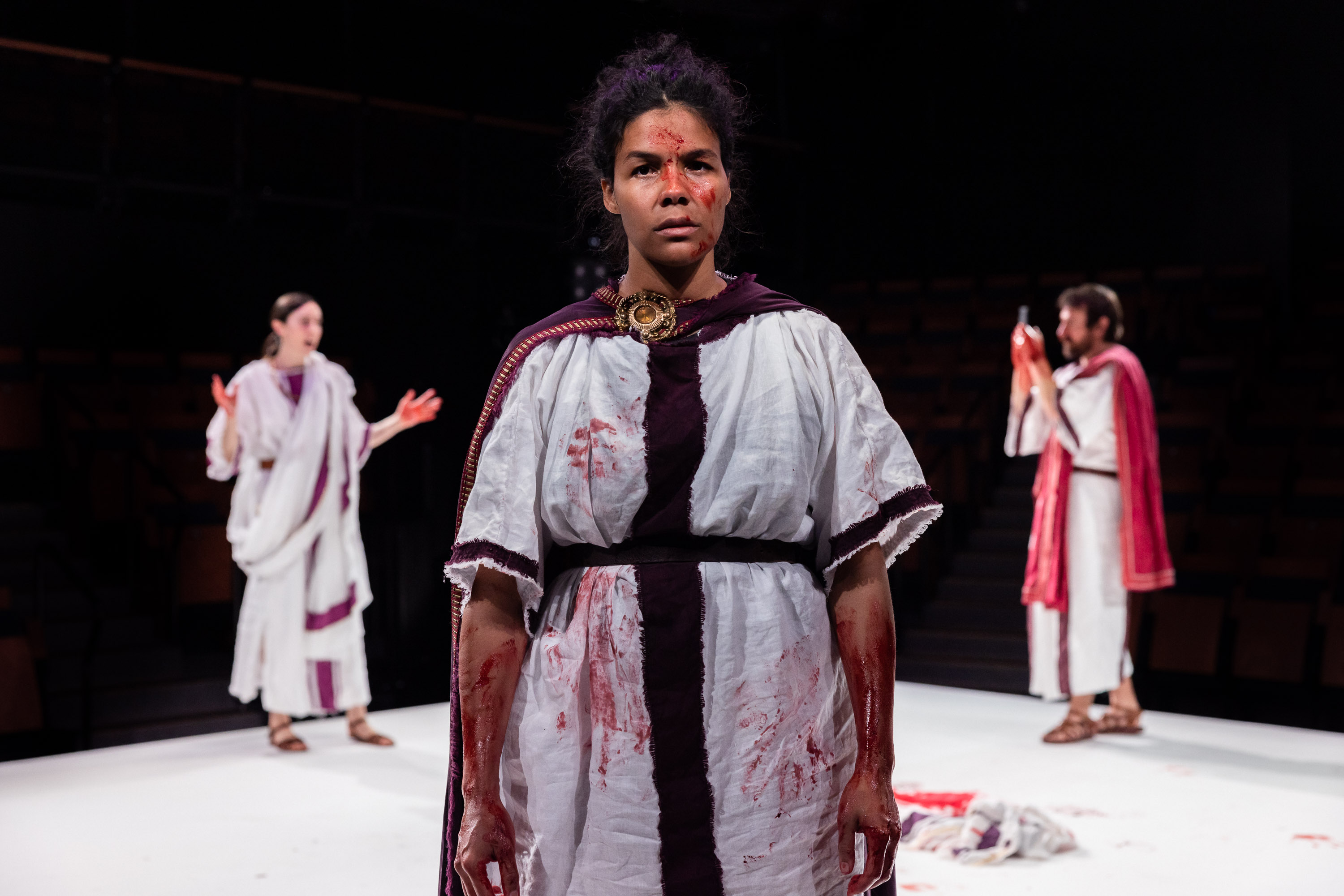
We struggle to distinguish, the important from the distracting, and the truth from fake news. Williams’ direction makes the unrelenting noise that is so pervasive in our media habits, a central feature of his theatrical presentation, and the more he indulges in histrionics, the more we are seduced by all the frenzy. The story escalates along with our gleeful enjoyment of sequences that become increasingly hideous, and we begin to wonder if all the heartache and bloodshed, can only exist because of our audienceship. Our passive attention is made to take responsibility, in this salient reminder that under capitalism, the consumer is king.

David Bergman’s work on video design is humorous, detailed and dynamic. The abundant cultural references made therein, form a subtext for this version of Julius Caesar that not only updates the tale for contemporary sensibilities, it reframes the discussion about democracy to include technology and capitalism, so that the discourse feels urgent and strikingly intimate. Correspondingly, Stefan Gregory’s music and sound design takes charge of our nerve centres, in order that we can only respond to the series of egregious events, with appropriate revulsion. Also noteworthy are Elizabeth Gadsby’s set and costume design, offering efficient and unpretentious solutions to an otherwise complex staging. Lights by Amelia Lever-Davidson too are unobtrusive, yet satisfyingly dramatic in its various manifestations.

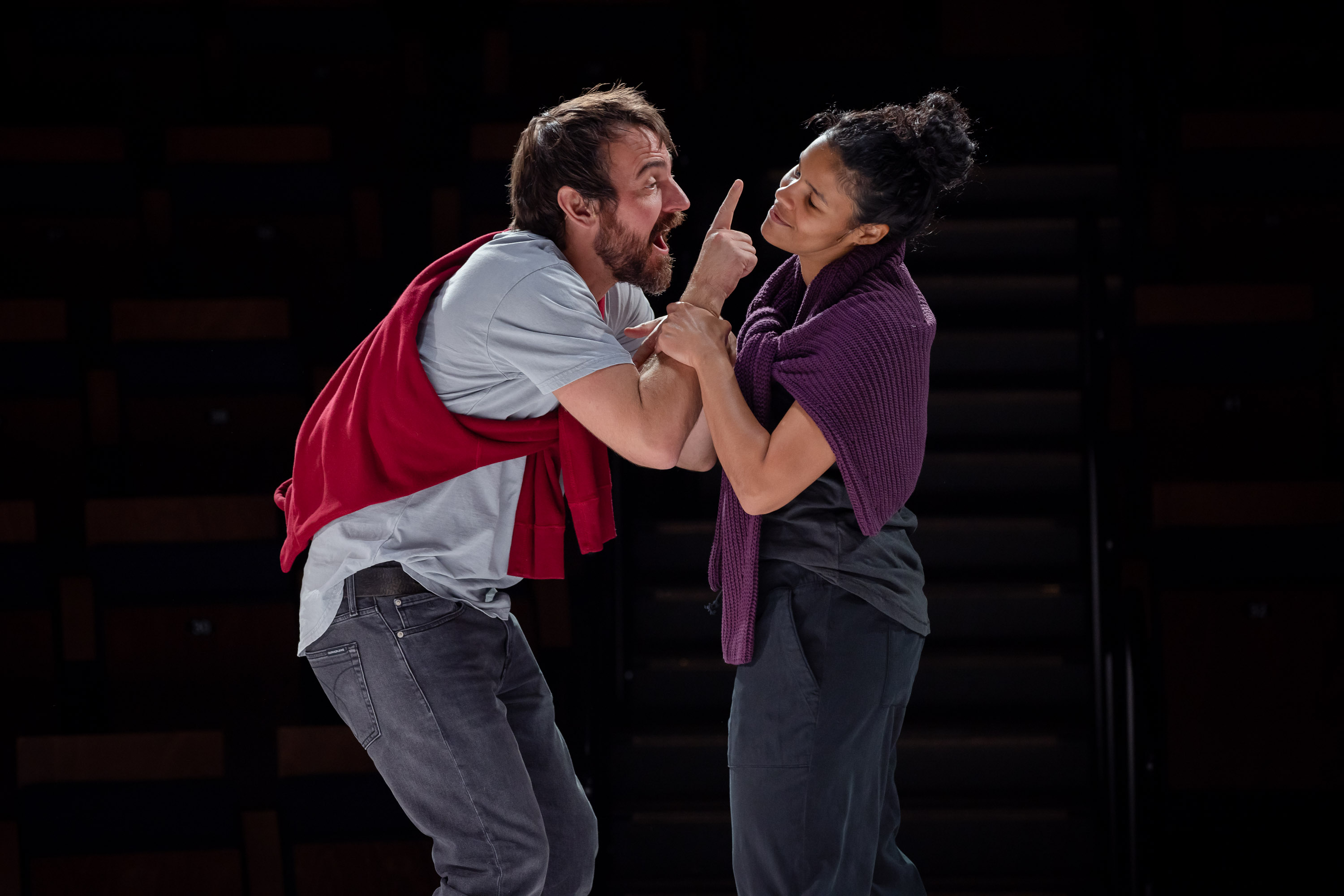
The three stellar actors called upon to play all the roles, are undeniably sublime. Geraldine Hakewill, Ewen Leslie and Zahra Newman impress with their thorough familiarity with the material, but it is their ability to engender an air of unpredictability that keeps us enthralled. It is live theatre in which everything is planned to the most minute, yet we experience it as though everything is coming from visceral impulses of each moment. Each performer is independently magnetic and powerful, but as a singular unit, they deliver a theatrical experience remarkably bold in its inventiveness, and thrilling in its capacity to make the story feel so immediate and involving.

The camera’s omnipresence strip the characters in Julius Caesar of their sincerity. Aware of being on screen at all times, their every word and deed can only appear performative, if not completely devoid of authenticity. It comes as a surprise then, that some of us still believe in our leaders, even when they are unabashedly hamming it up for our screens, shamelessly spouting nonsensical hyperbole and harmful rhetoric. The effectiveness with which media personalities (politicians and others) can use capitalism and technology to manipulate our sense of truth, to their advantage, is now a foregone conclusion. The end of the production is grim, as though proclaiming that resistance is futile, a statement only a scant few would dare refute.

www.sydneytheatre.com.au

Review: The 7 Stages Of Grieving (Sydney Theatre Company)

Venue: Wharf 1 Sydney Theatre Company (Walsh Bay NSW), May 21 – Jun 19, 2021
Playwrights: Wesley Enoch, Deborah Mailman
Director: Shari Sebbens
Cast: Elaine Crombie
Images by Joseph Mayers

Theatre review
In popular understandings of psychological processes, there are well-known stages of grief, that relate to loss and anguish. Less commonly spoken of, are the sorrowful experiences of our Indigenous, that stem from over two centuries of colonisation. In The 7 Stages of Grieving by Wesley Enoch and Deborah Mailman, a veil is lifted with great generosity, on the burdens of Blackness in this country.

A one-woman play in which the soul of a people is laid bare, The 7 Stages of Grieving offers a valuable opportunity to obtain a condensed overview of challenges faced by our First Nations. Although living in divergent communities, these marginalised voices are given a unified focus, in order that we may cultivate an appropriate attitude and response, for the critical improvements needed for Black lives on this land.

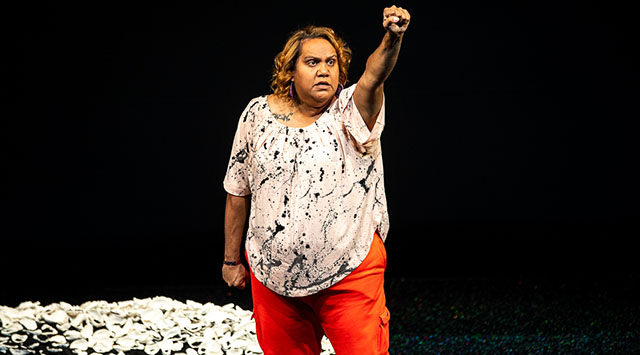
The storyteller takes us through seven phases of Aboriginal history, namely Dreaming, Invasion, Genocide, Protection, Assimilation, Self-Determination, and Reconciliation. Performed by Elaine Crombie who takes on the daunting challenge of representing an entire non-monolithic culture, we see her indomitable and joyful spirit shine through, even as she makes her way through one catastrophic anecdote after another. Crombie resists being defined by adversity; demonstrating that it is in fact a combination of defiance and resilience, that is truly formative.

Directed by Shari Sebbens, the show is memorable for both its gravity and its levity, juxtaposing hardship with humour, to deliver what are arguably the most important messages of our time. Set design by Elizabeth Gadsby (inspired by the work of Megan Cope) too, contrasts shimmering surfaces against earthy shrines, to communicate a sense of struggle in those who fight harder than most to survive. Verity Hampson’s lights and video projections, offer impressive visual variety, while Steve Francis’ work on music and sound, take our minds to ethereal places, as though creating a momentary paradigm shift, in this communal sharing of theatrical magic.

At the show’s conclusion, we are spared the indignity of walking away with little more than melancholy or worse, resignation. The artists urge us to take action, even prescribing “The 7 Actions of Healing” to assist in transforming what is normally a passive audience, into an activated one. Indeed, there is always a danger that the hard work of minority communities, is consumed as a kind of perverse entertainment, or a vehicle to raise awareness at best, but nothing besides.

The labour of presenting one’s trauma, to those directly and indirectly responsible, is rarely received with any comparable urgency. 26 years after the first staging of The 7 Stages of Grieving, we can now take this time to acknowledge the advancements that have and have not been made, since 1995. Whatever we decide is the current state of affairs, it is hard to deny that the room to improve, remains infinitely vast.

www.sydneytheatre.com.au