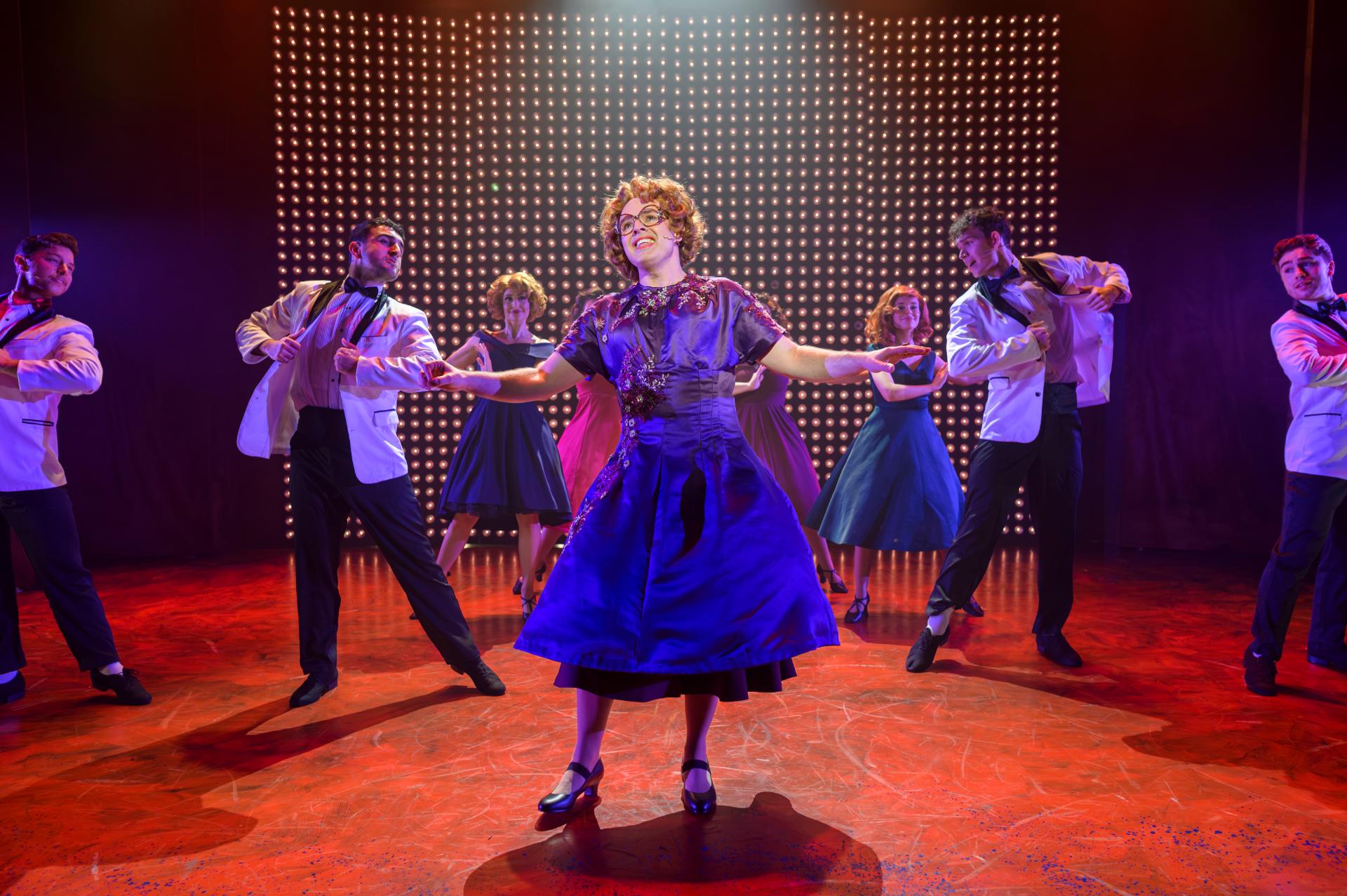
Venue: Teatro (Leichhardt NSW), May 26 – Jun 21, 2026
Book: Robert Horn
Music & Lyrics: David Yazbek
Directors: Cameron Mitchell
Cast: Andrew Bevis, Chris Huntly-Turner, Brendan Irving, Elena Kokubo, Donna Lee, Lachlan O’Brien, Tyran Stig, Alana Tranter.
Images by Robert Miniter
Theatre review
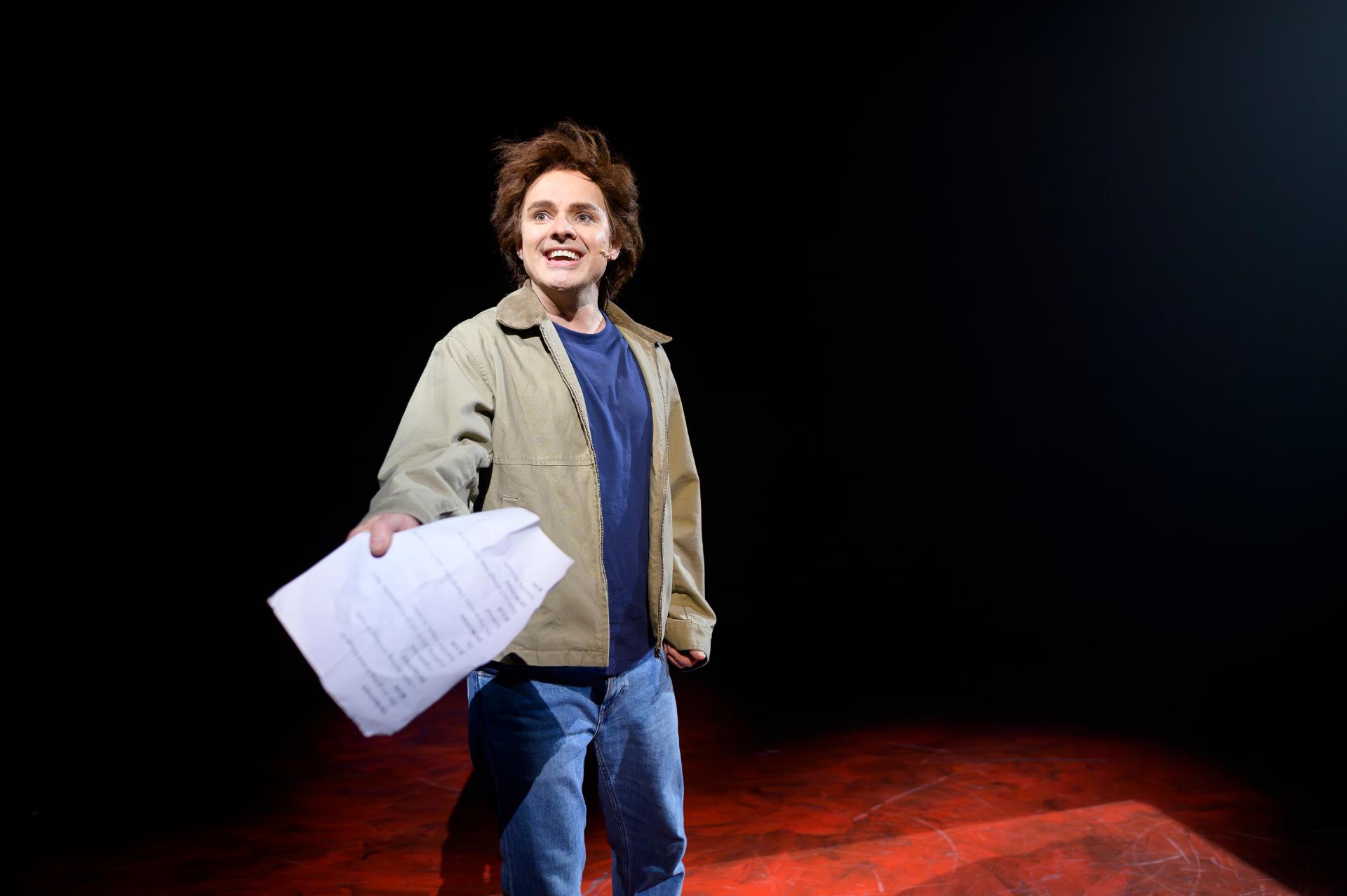
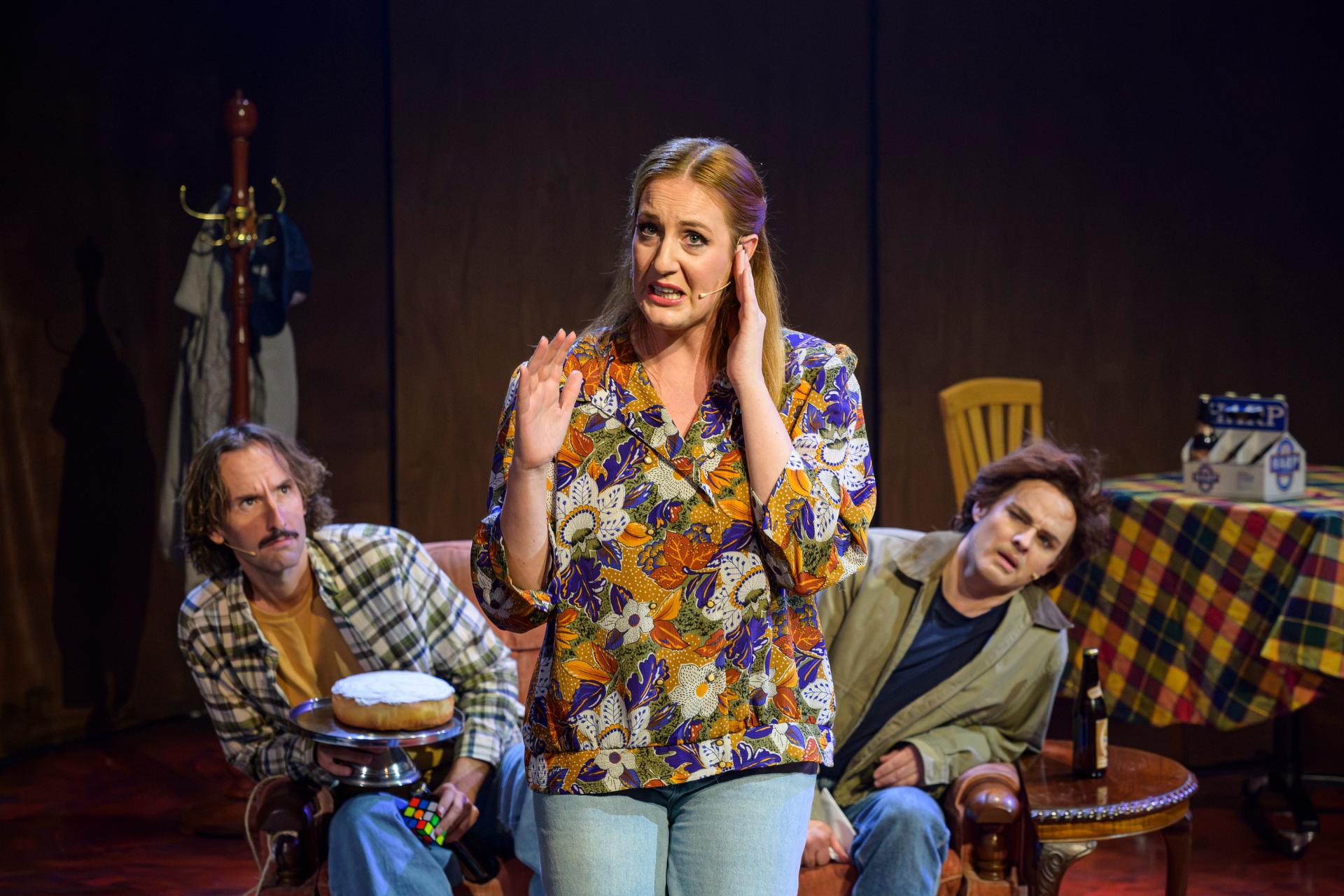
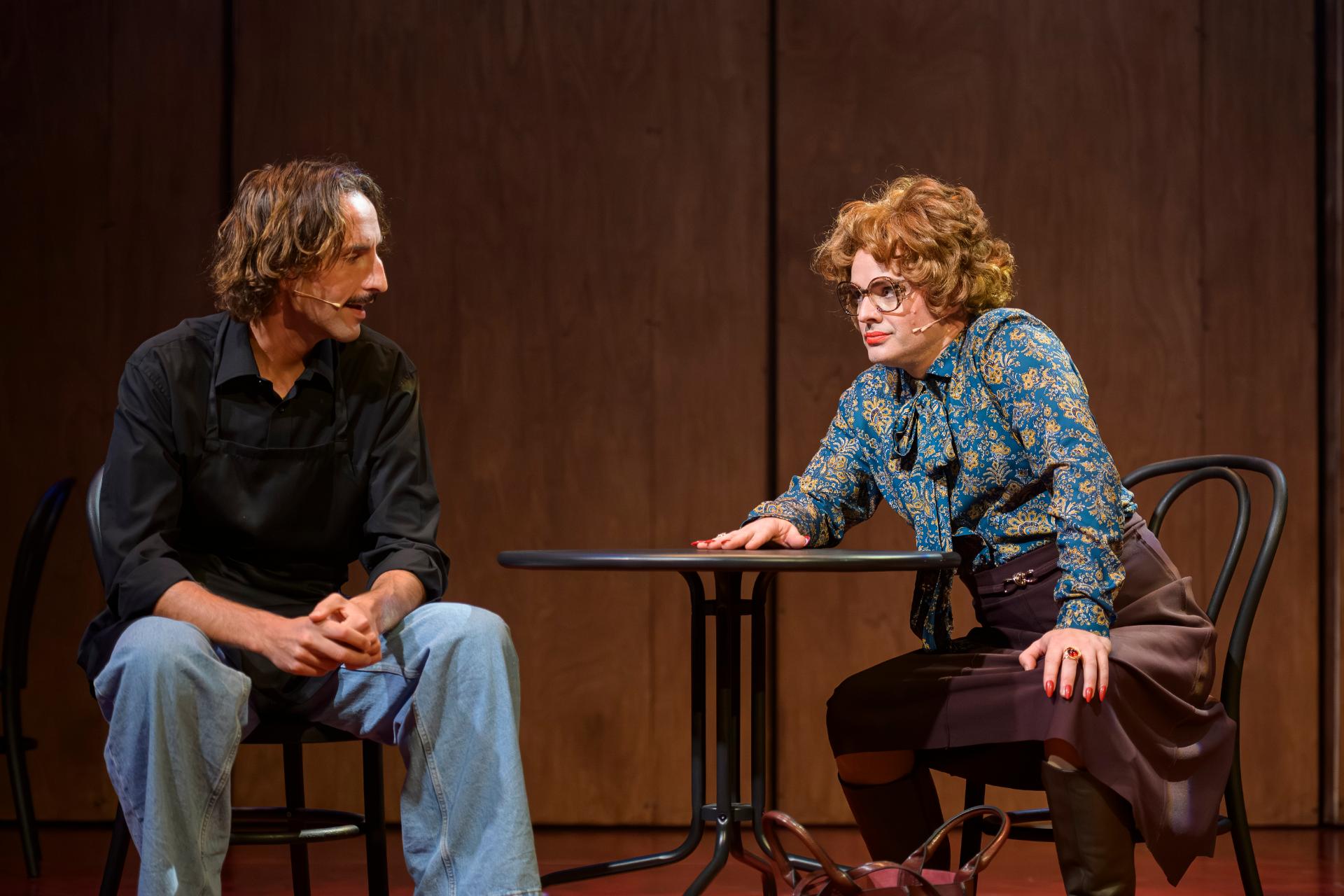
Michael Dorsey, an actor of considerable talent but negligible employability, seizes an unexpected opportunity when an audition calls specifically for a woman. His decision to adopt the persona of Dorothy Michaels sets in motion a cascade of consequences far more triumphant than he could have anticipated. This stage adaptation of the 1982 film Tootsie—sharing both its title and its essential premise—derives considerable vitality from David Yazbek’s effervescent, jaunty score and, perhaps more crucially, from Robert Horn’s exceptionally nimble book, which manages to render the narrative with a contemporary sensibility that largely obviates the mustiness one might expect from a four-decade-old property. That a story of this vintage could be resuscitated without appearing anachronistic or, worse, tone-deaf in the current cultural climate is no small feat; the production merits particular praise for its interrogation of gender inequity through a lens that feels immediate rather than merely dutiful.
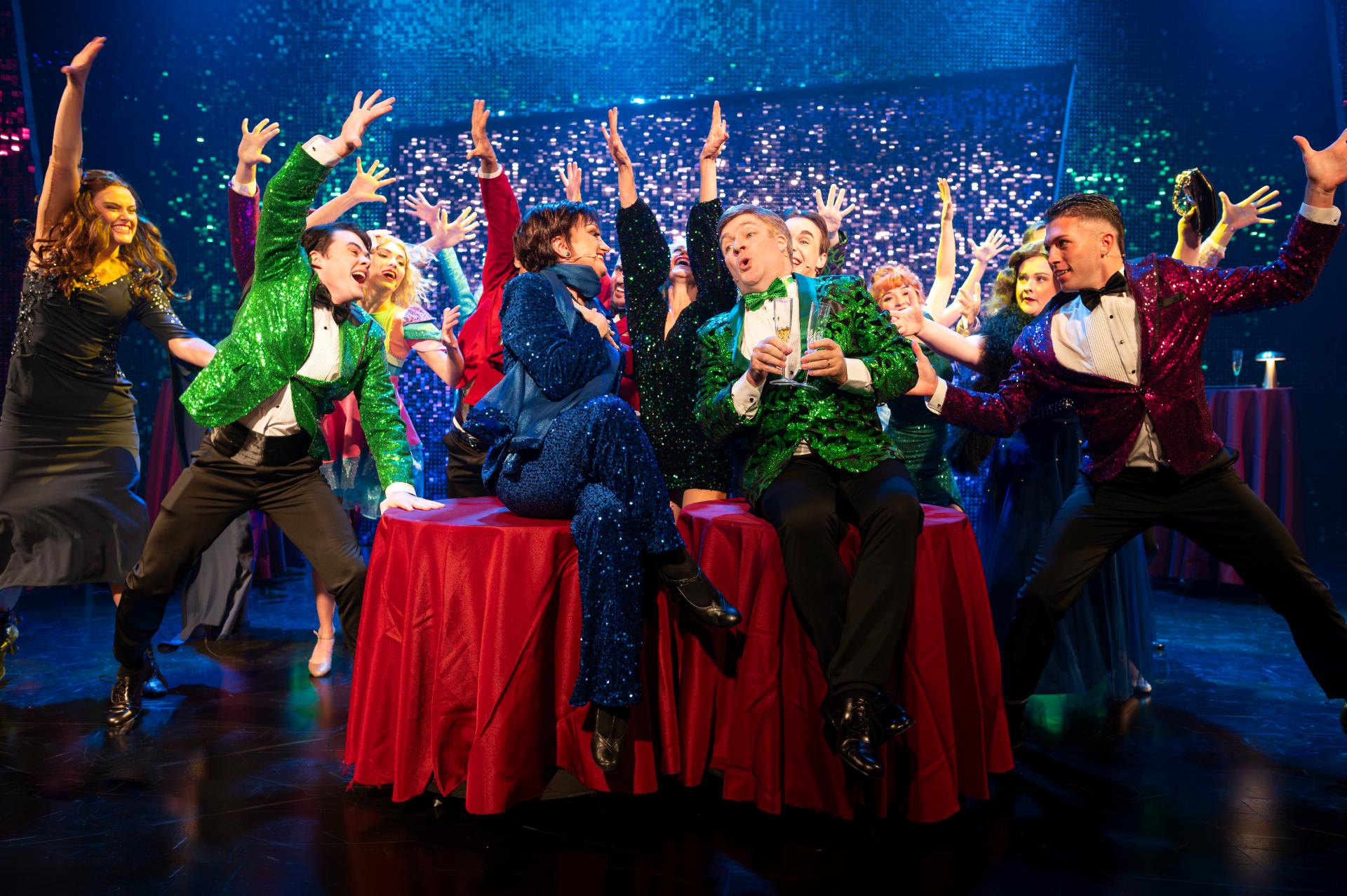
Under Cameron Mitchell’s direction and choreography, the work sustains its entertainment value without sacrificing narrative coherence, navigating its inherently preposterous premise with such assurance that one scarcely questions the plausibility of the central deception. Mitchell possesses the rare capacity to suspend disbelief not through obfuscation but through the sheer force of theatrical conviction, rendering the absurd eminently digestible.
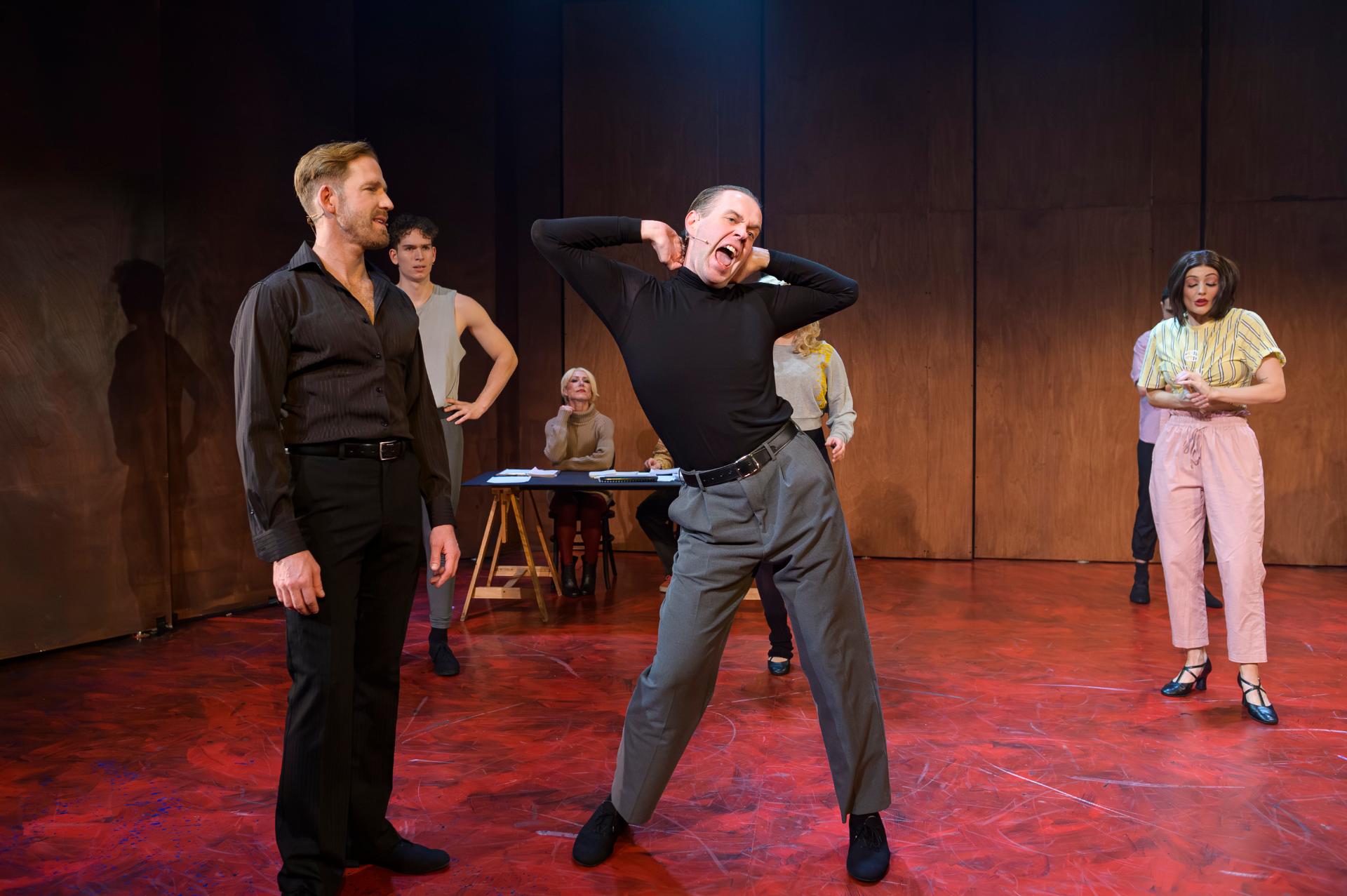
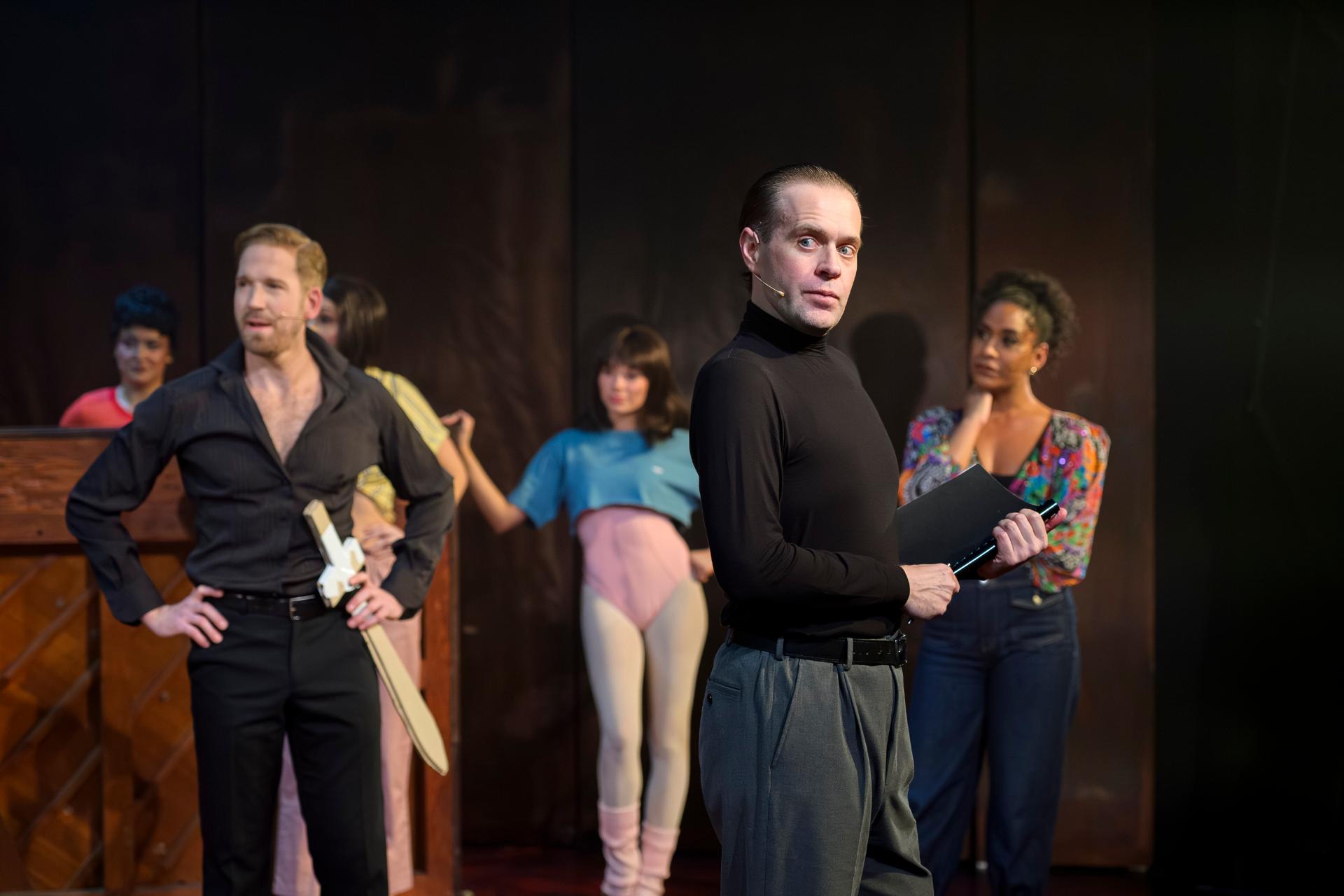
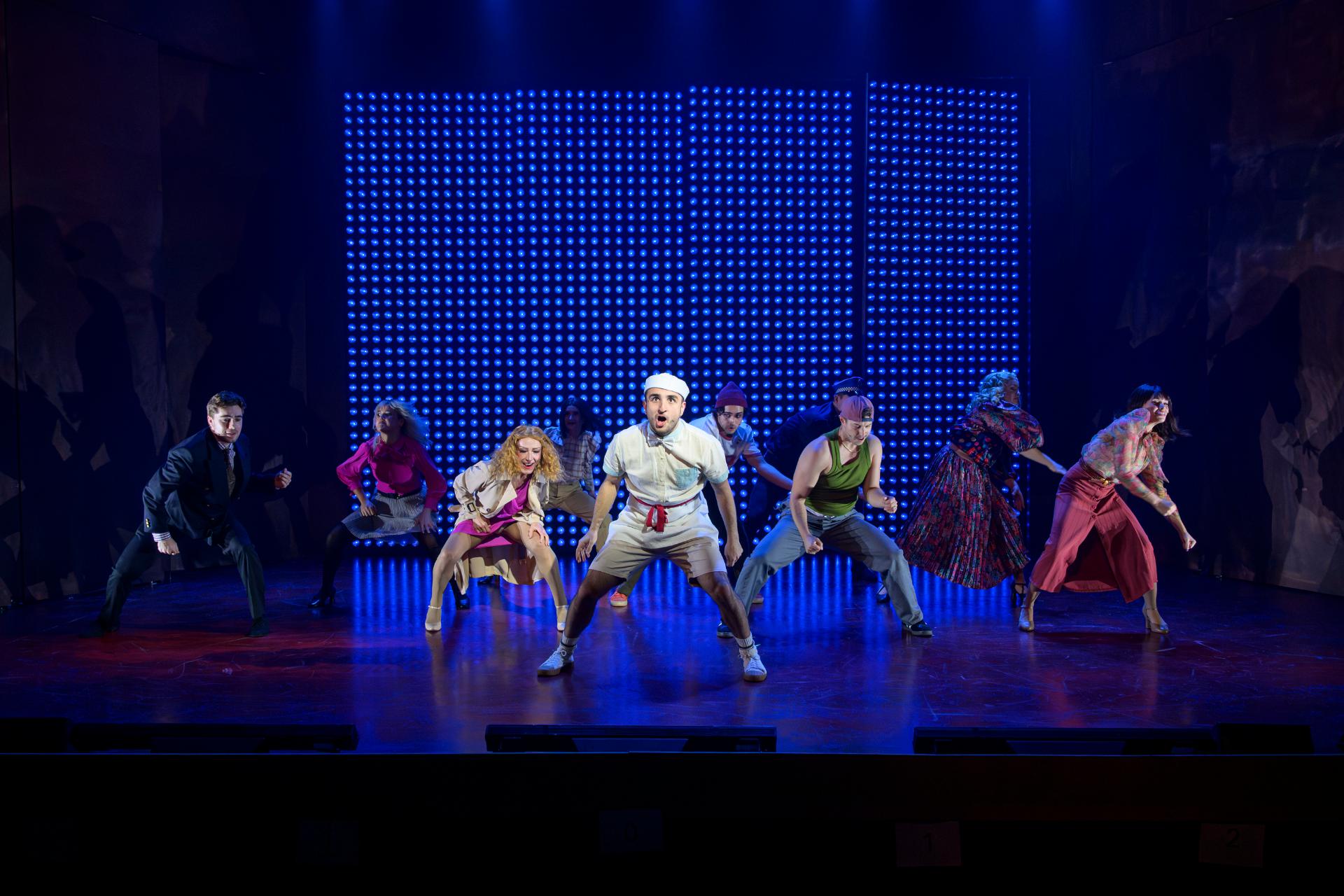
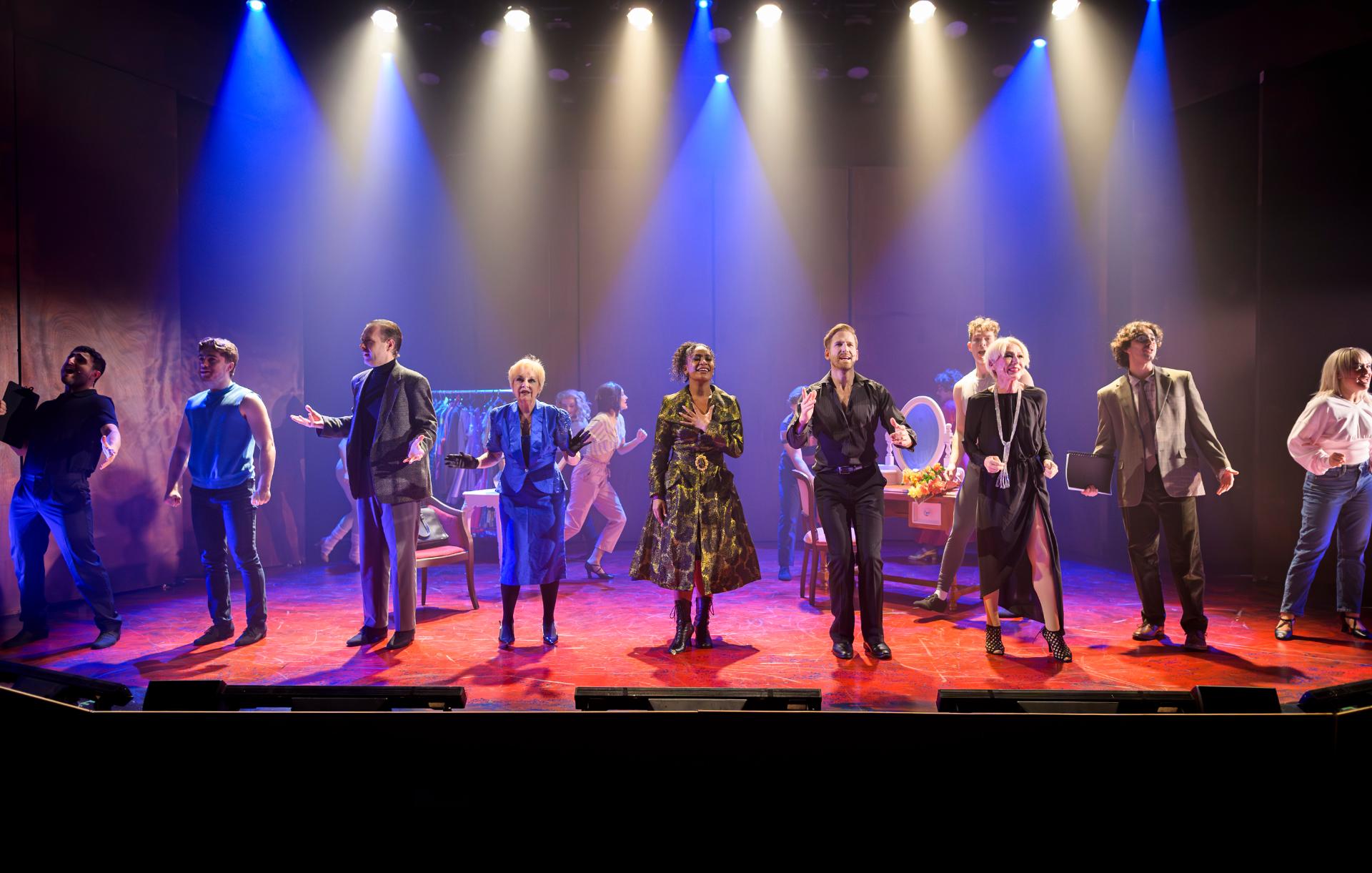
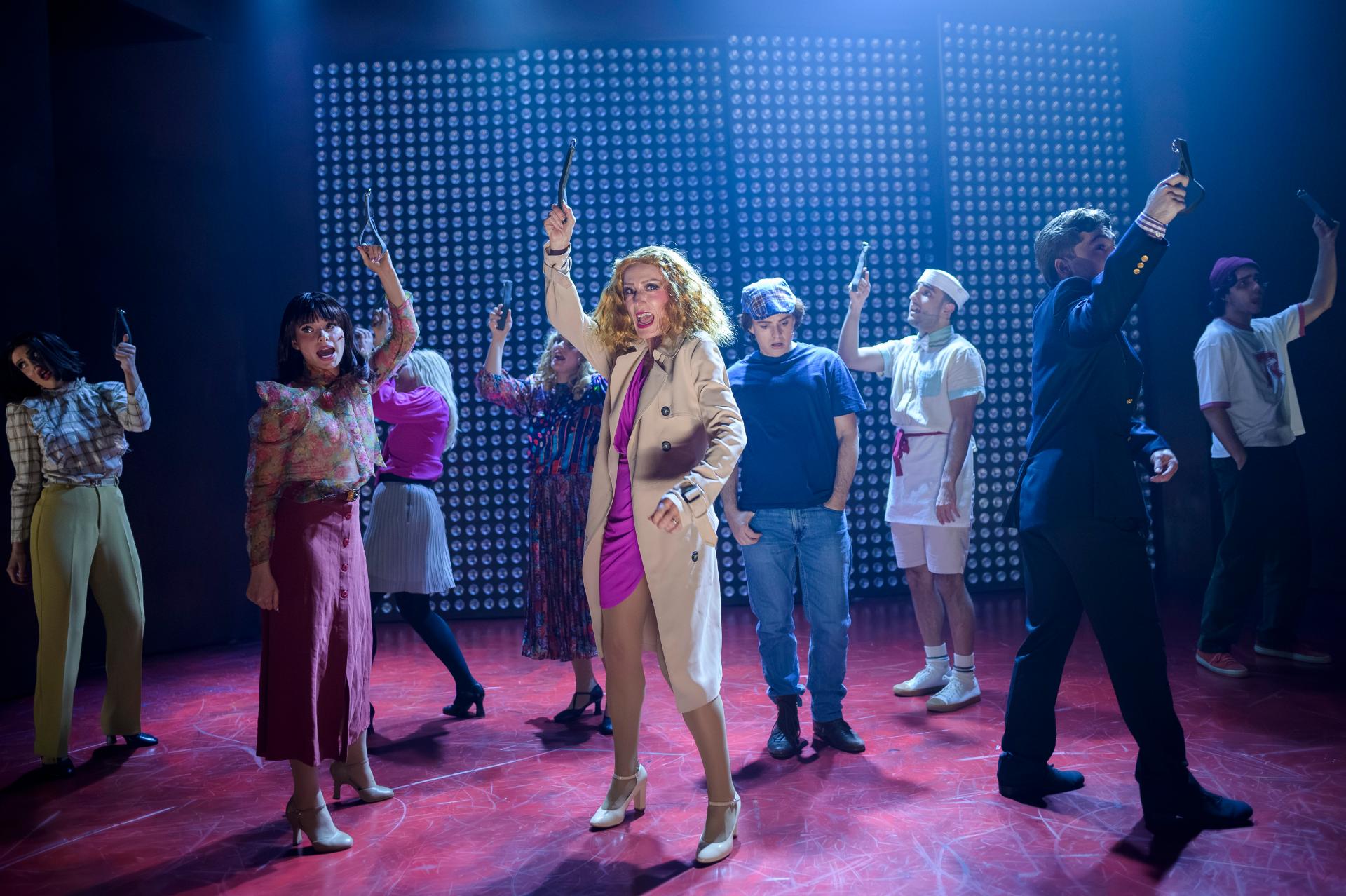
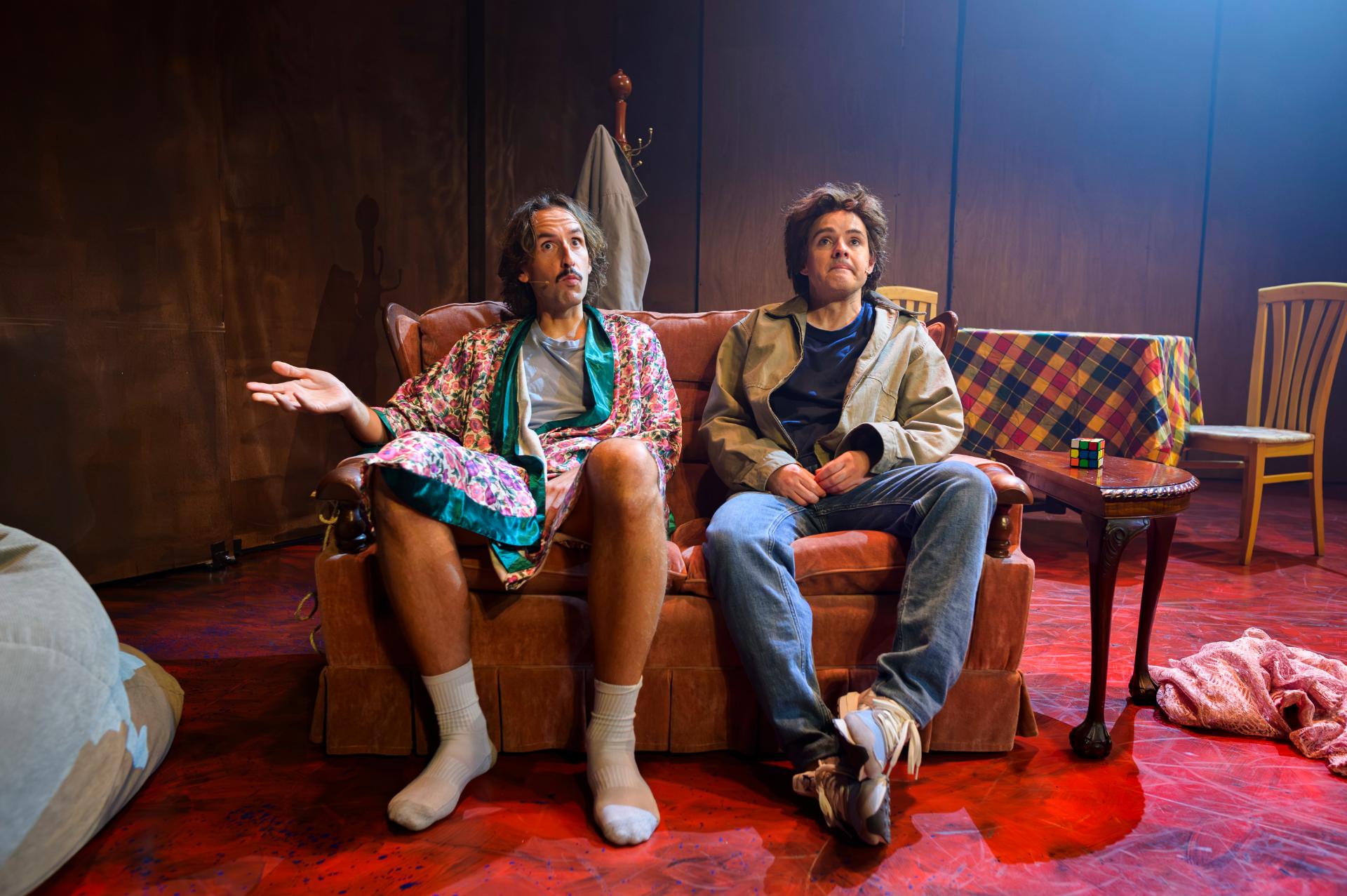
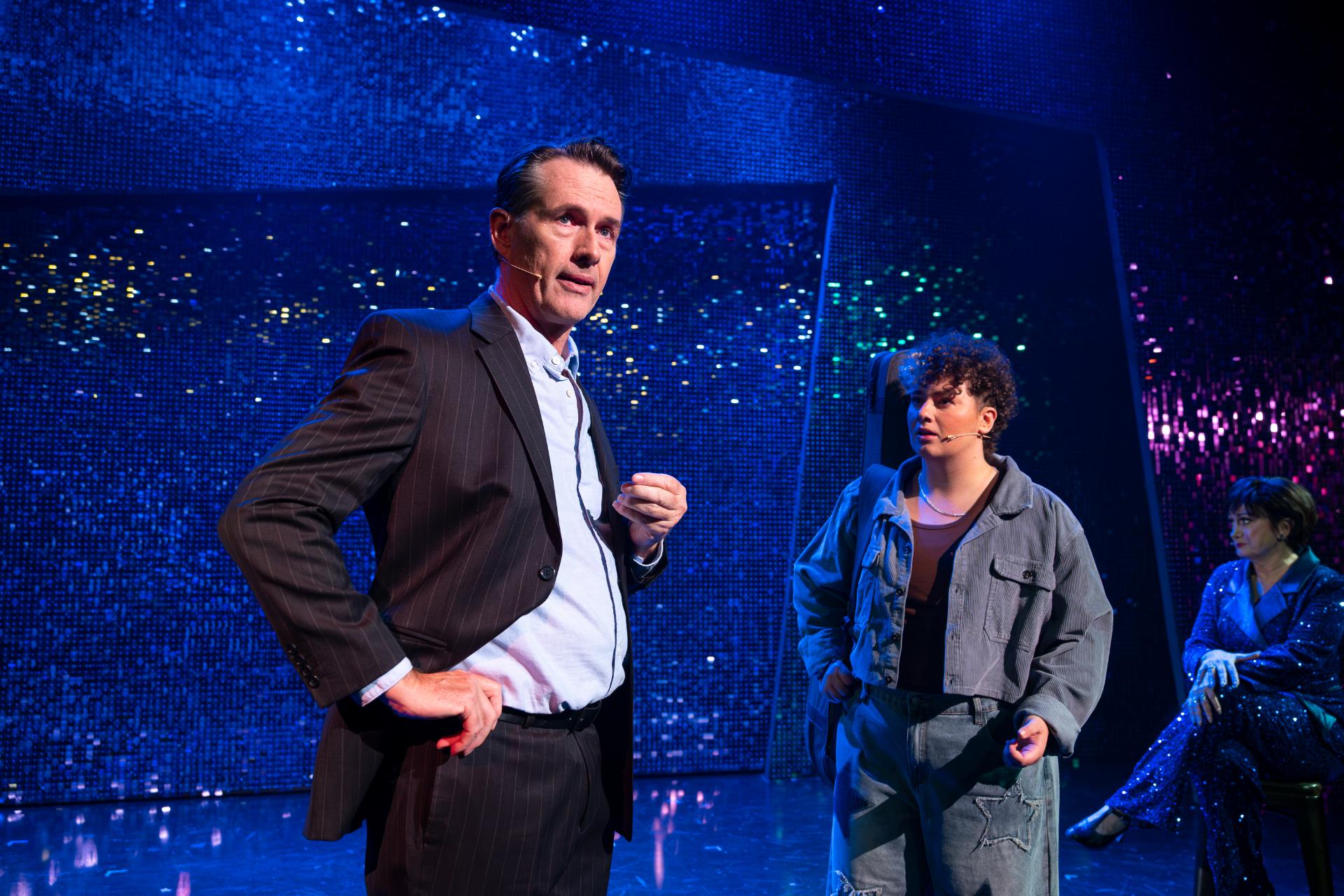
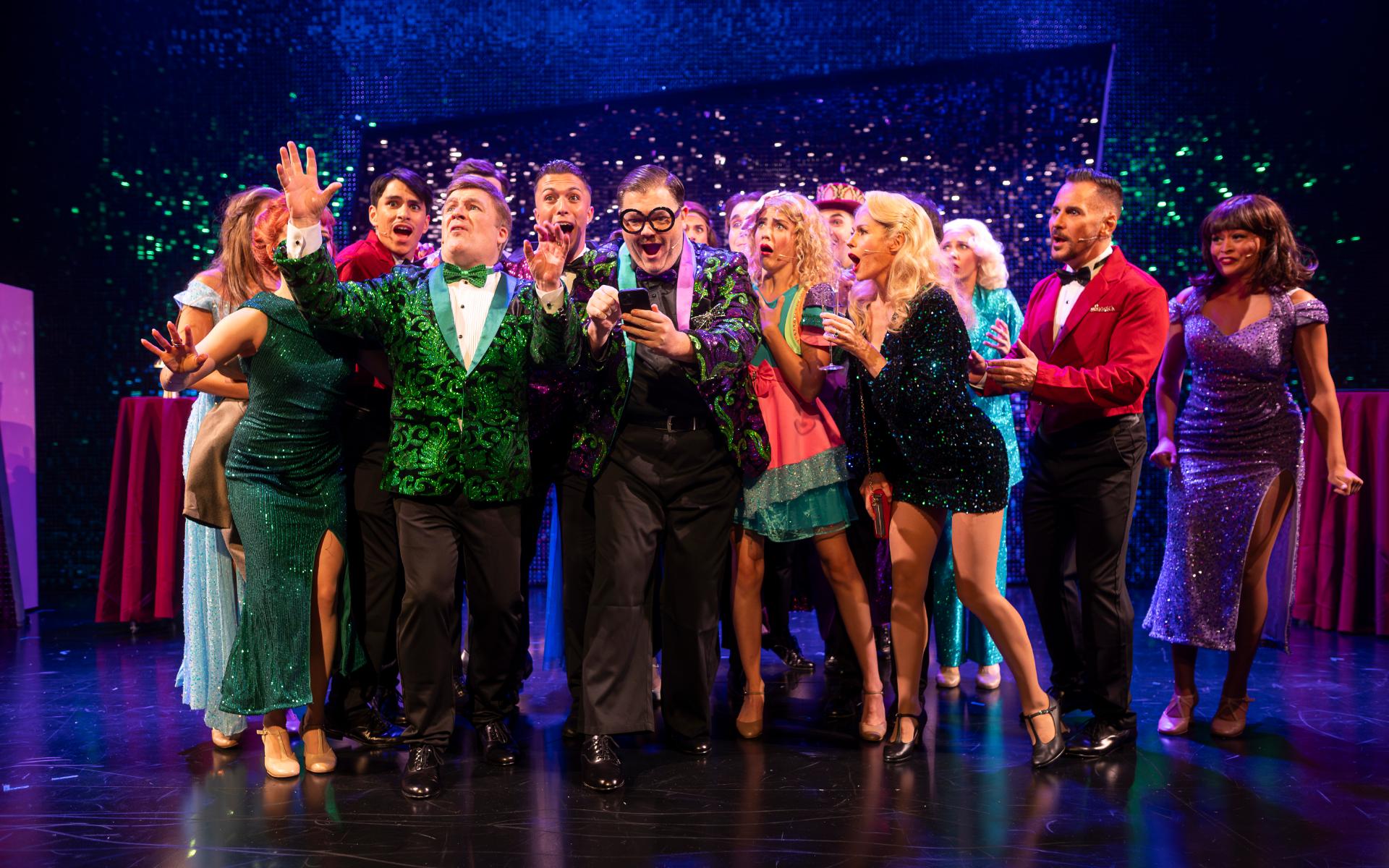
Where the production falter is in its visual execution. The design elements, regrettably, undermine rather than elevate the material. Angela White’s costumes and Helen Thatcher’s wigs suffer from a conspicuous parsimony, appearing neither flattering nor sufficiently polished to support the illusion upon which the drama depends. Dan Potra’s set, painted in a disconcerting and rather aggressive shade of red, has a rough-hewn, provisional quality that feels more workshop than finished production. Peter Rubie’s lighting design offers a measure of redemption, imparting occasional visual sophistication to the proceedings, though it ultimately stops short of genuine ingenuity or surprise.
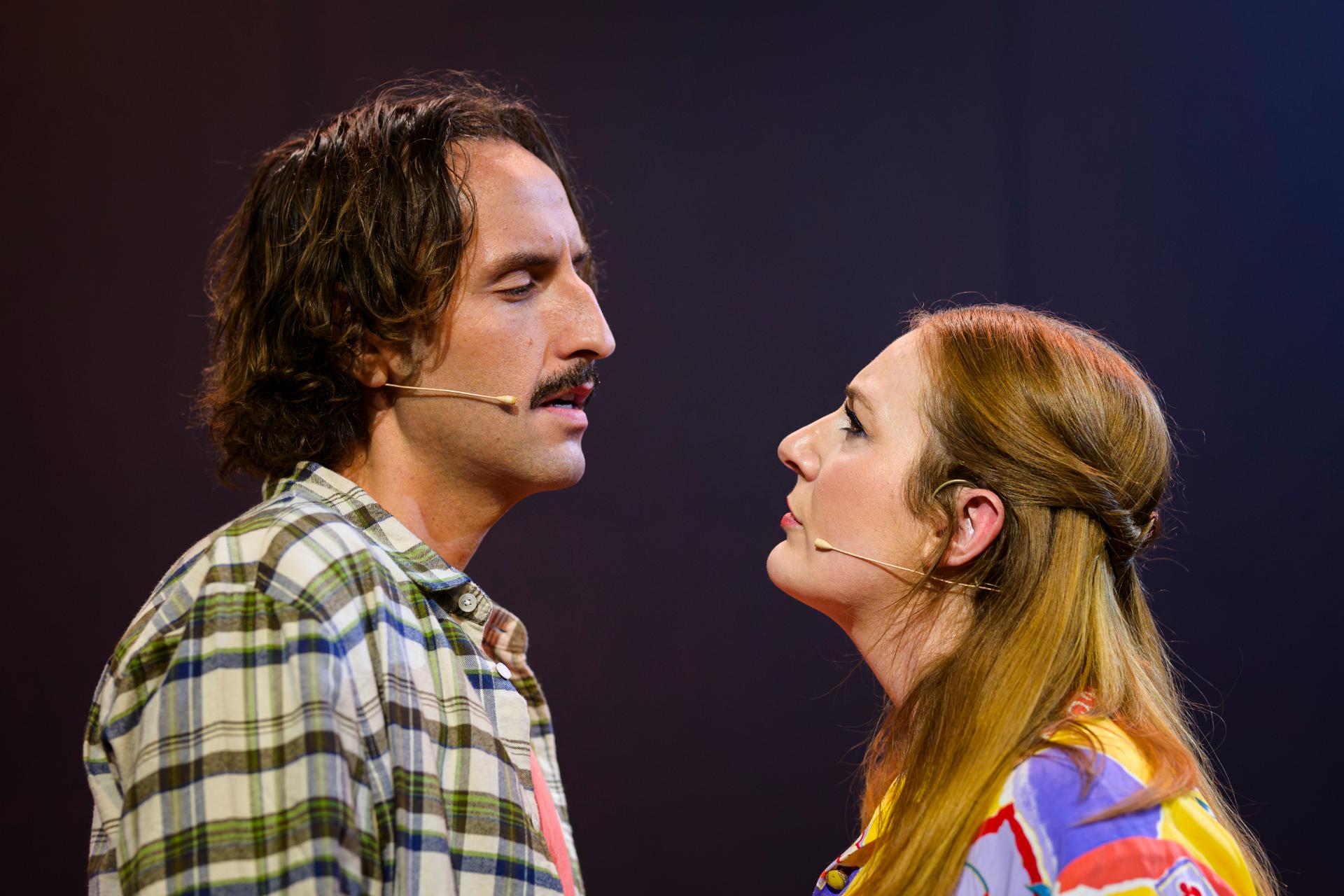
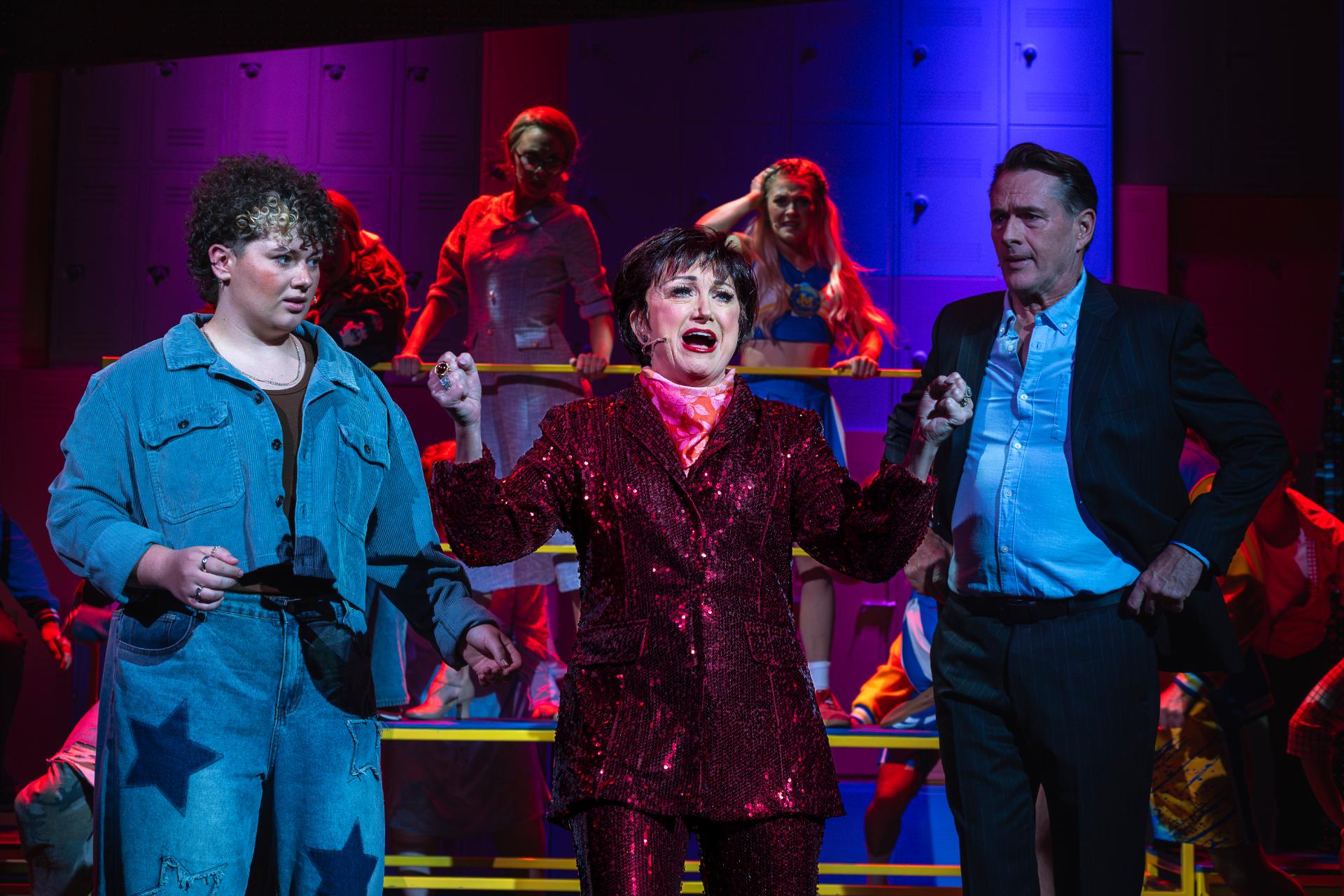
In the formidable role of Michael/Dorothy, Andrew Bevis shoulders an almost impossible burden and, unfortunately, delivers a performance that falls short of the role’s demands. His vocal work proves inconsistent, and more damagingly, he lacks the magnetism necessary to anchor so outsized a character. The romantic chemistry between his Michael and Julia, portrayed by Elenoa Rokobaro, is essentially nonexistent—a deficiency rendered all the more conspicuous by Rokobaro’s own transcendent vocal performance, which stands as one of the production’s undeniable glories. The supporting ensemble, by contrast, is uniformly superb. Tyran Stig and Alana Trantner emerge as particular treasures, creating indelible characterizations distinguished by vocal excellence and a comic timing that feels both spontaneous and impeccably wrought.
The art of drag, it must be acknowledged, has undergone a profound evolution since Tootsie first appeared, migrating from the margins of subcultural expression to occupy an unprecedented position in mainstream consciousness. Its potency resides in what it reveals about the constructed nature of gender—the fluidity of identity itself—and in its implicit argument for a radical, unconditional acceptance that transcends the arbitrary taxonomies by which we so often classify one another. In 2026, one might reasonably expect this narrative to plumb such themes with greater depth and daring, particularly given its determination to remain accessible to family audiences. Yet if this staging does not fully exploit the rich thematic territory now available to it, it nonetheless succeeds in being genuinely delightful, navigating its material with a lightness of touch that thankfully avoids the pitfalls of either creepiness or regression. That, in itself, is no inconsiderable achievement.



 Suzy Goes See