Review: The View Upstairs (Hayes Theatre)

Venue: Hayes Theatre Co (Potts Point NSW), Feb 8 – Mar 11, 2018
Book, Music & Lyrics: Max Vernon
Director: Shaun Rennie
Cast: Henry Brett, Thomas Campbell, Nick Errol, Ryan Gonzalez, Martelle Hammer, Anthony Harkin, David Hooley, Markesha McCoy, Madison McKoy, Stephen Madsen
Image by John McCrae

Theatre review
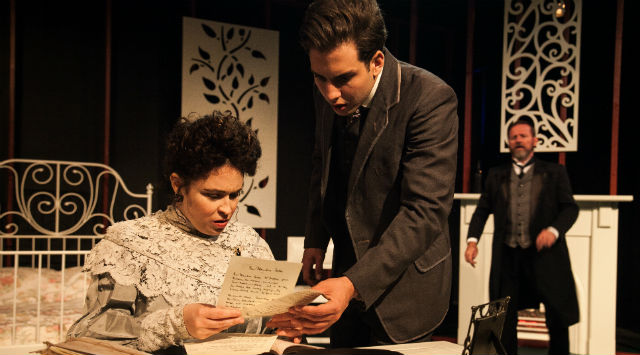
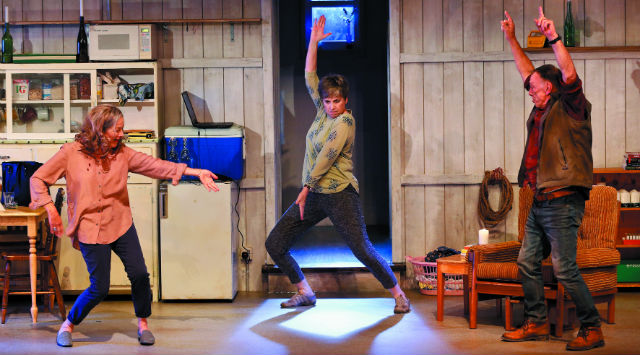
Wes is an obnoxious brat, a twenty-something social media star escaping New York, for the less competitive town of New Orleans. The View Upstairs by Max Vernon imagines a hallucinatory haze, in which our protagonist encounters the inhabitants of a local gay bar circa 1973. It is a musical in which the gay Millennial travels over time and space to meet his cultural forebears, for historical lessons about those whose shoulders he stands on. In 2018 we have finally arrived at a time, when many young queers of Western civilisations are oblivious to the arduous journey required, to attain our current state of equality and tolerance. Wes takes things for granted and lives a reckless life, until he comes face to face with stories he never knew would resonate at such depth.

The View Upstairs is an undoubtedly well-meaning piece of writing, with beautiful sentimentality and a pervasive warmth, but its songs and narrative structure bear a derivative quality that is less than inspiring. Director Shaun Rennie focuses cleverly, on bringing heart and soul to the production, keeping us emotionally engaged in spite of the meandering, lacklustre plot. Isabel Hudson’s colourful set design is appropriately humorous; effective in its recollection of a period remembered for being less than aesthetically sophisticated, but infinitely more genuine in the way communities interact.

A charming cast performs the show, impressively well-rehearsed and with great ardour. Leading man Henry Brett is eminently convincing as Wes, bringing a wonderful intensity to the more dramatic scenes, and consistently bowling us over with some truly sensational singing. Similarly gifted is Markesha McCoy, whose voice is capable of bringing any house down, and on this occasion, we are grateful to be audience to her magnificence. Martelle Hammer and David Hooley are memorable for contributing a dimension of vulnerability to the story, both striking in the authenticity they deliver through their portrayals of the underclass.

Without the knowledge of how things have come to be, so much of daily life can seem meaningless. The immense achievements of the gay rights movement are enjoyed by so many of us in the West today, but it is becoming increasingly evident, that those who benefit most, are least aware of the sacrifices required to arrive at this point of evolution. LGBTQI elders had all wished for brighter futures, but few had imagined that with the eradication of prejudice, comes the blind ignorance of entitlement. The best qualities of humanity, whether compassion, resilience or ingenuity, are often derived from great adversity. When life becomes easy for our children, we have to worry about the virtues they fail to cultivate.

www.hayestheatre.com.au

Review: Metamorphoses (Apocalypse Theatre Company)

Venue: Old Fitzroy Theatre (Woolloomooloo NSW), Feb 8 – Mar 10, 2018
Playwright: Mary Zimmerman
Director: Dino Dimitriadis
Cast: Claudette Clarke, Deborah Galanos, Jonny Hawkins, David Helman, Sam Marques, Bardiya McKinnon, Diana Popovska, Hannah Raven, Sebastian Robinson, Zoe Terakes
Images by Robert Catto

Theatre review
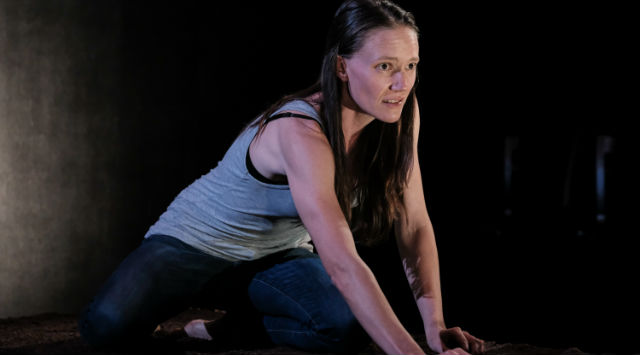
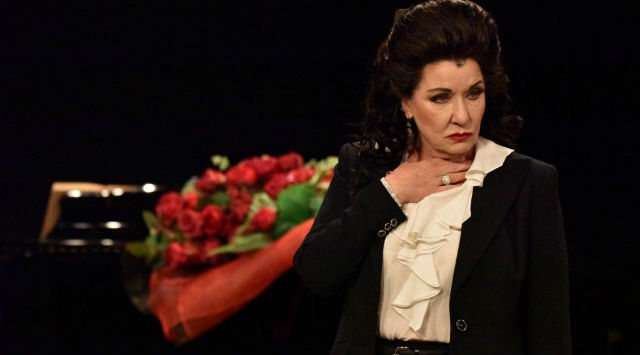
Mary Zimmerman’s Metamorphoses is a retelling of Greek tales; a collection of short stories from ancient times that continue to fascinate, in this epoch of secular pragmatism. Celestial beings and supernatural events that defy explanation, yet instinctively comprehensible, and resonant with our natural appreciation for the magical, conspire as though to impart moral lessons. It is uncertain if we can learn anything new from these antiquated recurring tales, but as a work of art, what Metamorphoses does achieve, supersedes the traditional functions of mythologies.

All the great passions we associate with Aphrodite, Eros, Orpheus, et al. are retained in the production, to serve as vehicle for director Dino Dimitriadis’ exhilarating investigations into themes of gender, sex and beauty. The penises and breasts of performers are ascribed, as though at random, to characters with intractably gendered pronouns, confronting our beliefs about the woman-man binary. When Myrra appears with a penis, and Midas with an ample bosom, we cannot help but question these visions. We know the experience of gender to be real, but Metamorphoses presents them as hallucinatory, urging us to expand our understanding of the relationship between human anatomy and human nature. Its persistent queering of these origin stories, again and again, works with the plasticity of our minds, to help us dismantle and defeat useless and quite harmful restrictions, so that a process of intellectual and intuitive transformation may occur for us all.

Featuring an impossibly attractive cast, including David Helman and Hannah Raven who beguile us with their extraordinary physique and sensational burlesque expertise, adding an unexpected dimension of decadent performativity to an atmosphere that is already disarmingly sensual. Deborah Galanos and Jonny Hawkins bring us some very big personalities, so deeply satisfying in this rare occasion of exquisite flamboyance. Sam Marques, Diana Popovska and Sebastian Robinson deliver memorable sequences of dramatic poignancy, utilising both god-given and cultivated talents to connect with our desire for meaning and inspiration. Claudette Clark, Bardiya McKinnon and Zoe Terakes are soulful presences with delicate vulnerabilities that draw us in. These heavenly bodies are positioned on stage, inviting us to embrace all the wonder and horror that we are, in the most liberating, poetically earthy way.

Extravagantly imagined, and expertly manifested, the design of Metamorphoses offers a level of aesthetic engagement that is at least as thrilling as the text from which it germinates. Jonathan Hindmarsh’s work on set and costumes represents a lethal combination of resourcefulness and sophistication that is as fabulously enchanting as it is impressive. Lighting designer Benjamin Brockman really goes to town for this show, with a fervent sense of creative freedom irrepressibly evident in every change of illumination, subtle or vivid. Some of Brockman’s images are truly breathtaking. Music may not always be playing prominently, but Ben Pierpoint’s compositions are crucial to how our attention is brought to focus for each scene. The quality of transcendence he is able to introduce to these otherworldly spaces, is thoroughly remarkable.

The language of beauty is being spoken in Metamorphoses. Much of what the show communicates, resides beyond the capacity of words, and its success as an entity of fine art, makes it an exemplary work of modern Australia theatre. We gather in these communal spaces to address a need, but we rarely know the nature of that appetite. Often, we find ways to verbalise the results, but when we see great art, the gravity of what is left unsaid, must never be underestimated, and on this occasion, it is the complex feelings that keep evading explanation, that hold its true value.

www.apocalypsetheatrecompany.com

Review: Visiting Hours (Kings Cross Theatre)

Venue: Kings Cross Theatre (Kings Cross NSW), Feb 7 – 17, 2018
Playwrights: John Harrison, Constantine Costi, Michael Costi
Directors: John Harrison, Michael Dean
Cast: Keiren Brereton, Tara Clark, Rose Costi, Laura Djanegara, Sarah Evans, Cheyne Fynn, Jasper Garner Gore, Richard Hilliar, Derbail Kinsella, Sheila Kumar, Yannick Lawry, Kianah Marlena, Suz Mawer, Tom McCracken, Jim McCrudden, Joshua McElroy, Rebecca Claire Moret, Mansoor Noor, Heather Prowse, Monica Sayers, Katherine Shearer, Emma White, Elijah Williams, Nicole Wineberg, Arisa Yura
Image by Clare Hawley

Theatre review
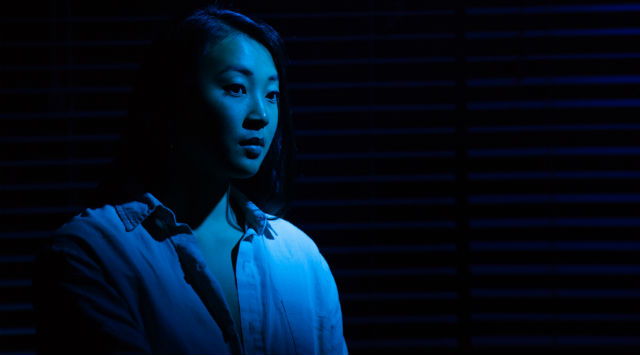
The people who work in hospitals are among some of the best human beings we have, but the experience of visiting medical institutions is often harrowing. We are at our most vulnerable, quite literally putting our lives in the hands of others. The immersive theatre production Visiting Hours, written by John Harrison, Constantine Costi and Michael Costi, investigates that very notion of having to submit to health experts and authorities, of being in a situation where one’s mortality is constantly under threat and question. We venture through ten or so spaces, guided by strange or menacing personalities, never knowing what is to come.

The experience is often terrifying, but in a humorous, often childlike way, where we engage in the sensation of fear, understanding that no real danger is ever present. The spaces are marvellously designed to deliver a sense of nightmarish foreboding, whilst stimulating all our senses in a range of unexpectedly pleasurable ways. Benjamin Brockman’s lights are almost inappropriately sexy, in their many spectacular evocations of tension and anxiety. Production design by Anna Gardiner offers spatial configurations that constantly surprise and amuse. Tegan Nicholls’ sounds are powerfully hypnotic, in how they coax us into strange realms of fantasy.

Visiting Hours is a thrilling show, and its demands of us as active participants in the story, are rich enough to elicit genuinely complex reactions, without ever crossing any lines. The first half involves a high level of interactivity, delivering intensely fascinating sequences that captivate all our senses and intellect. As it progresses however, we are released into more conventional and passive modes of audienceship, and even though we continue to be gripped by its continual atmospheric fluctuations, our minds struggle to focus on the show’s sudden reliance on spoken text. Our minds and bodies remain preoccupied with the multidimensional appeal of spaces, and can only listen sporadically to the words being said. Nonetheless, there is no question that the work is beautifully performed, by a huge cast of 26 actors, all convincing, charming and playfully provocative with their individual roles.

We all have to live inside power structures that keep us subjugated. Being at the bottom of the pile is sometimes involuntary, sometimes complicit. Visiting Hours challenges us to think about compliance and choice, and to examine the meaning of free will, when society seems to have a persistent appetite for deception and oppression. False gods in white coats can often appear to be all we have, but the ability to think for oneself and the courage to obey one’s own intuition, are always on hand.

www.kingsxtheatre.com

Review: Chrysalis (ATYP)

Venue: SBW Stables Theatre (Darlinghurst NSW), Jan 31 – Feb 17, 2018
Playwrights: Joseph Brown, Pippa Ellams, Harry Goodlet, Liz Hobart, Alexander Lee-Rekers, Madelaine Nunn, Julia Rorke, David Stewart, Phoebe Sullivan, Gretel Vella
Director: Rachel Chant
Cast: Brenton Bell, Anika Bhatia, Caitlin Burley, Jeremi Campese, Claire Crighton, Ben Tarlinton, Clare Taylor, Margaret Thanos
Image by Tracey Schramm

Theatre review
The delicate allure of a butterfly in full glory, is always under threat. The idea of a pupa however, is infinitely more satisfying, with its imminent beauty promising only majesty and wonder. This collection of ten short plays by young Australians may be named Chrysalis, but not only does it feature talent brimming with awesome potential, it showcases some surprisingly mature work that is already soaring with splendour. To witness such youthful triumph is indeed breathtaking.

An unequivocal highlight is a trio of remarkable and exhilarating monologues for the teenage girl. Writers Pippa Ellams, Julia Rorke and Phoebe Sullivan each deliver pieces that are playful, poignant and powerful, all giving extraordinary voice to female characters we routinely underestimate. Joseph Brown and Harry Goodlet show us in their respective segments, starkly different ways our boys behave with each other, but both are unabashedly tender in their depiction of affection and kindness, a refreshing change from the all too familiar rowdy machismo we have come to expect, of narratives concerned with Australian men and their mateship.

Director Rachel Chant does outstanding work in helping us find a sense of cohesion for the disparate plays, through her exquisite calibration, from story to story, of tone and style. Also impressive is her work here with the brilliant cast of eight. Every actor in Chrysalis is compelling and persuasive, all of whom are sensational with the incredible depth and authenticity they put on display. A sophisticated sense of humour further elevates the production, giving us some very smart laughs in addition to its many moving moments.

It is so marvellous seeing our young talk about their need for anywhere but here. Ambition is admirable, and when coupled with aptitude, the sense of optimism it provides is truly invigorating. The life of an artist is not an easy one, and many will fail to cut the mustard, but those who persist will be greatly rewarded, although rarely in accordance with early expectations. We must all grow up, and to choose to grow alongside the practise of art, is at once noble, and brave.

www.atyp.com.au

Review: Debris (Blood Moon Theatre / LZA Theatre)

Venue: Blood Moon Theatre (Potts Point NSW), Jan 30 – Feb 10, 2018
Playwright: Dennis Kelly
Director: Liz Arday
Cast: Aslam Abdus-samad, Lana Kershaw
Image by Zaina Ahmed

Theatre review
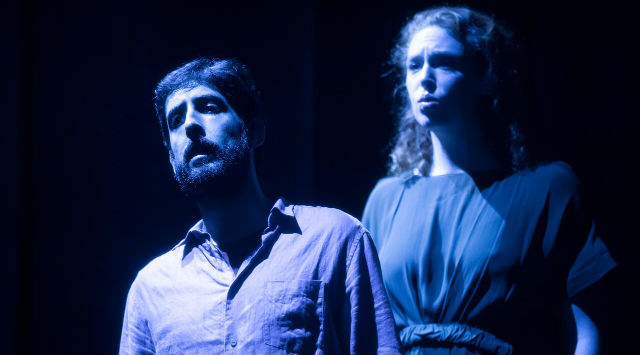
It was only several weeks ago, at the very beginning of 2018, that we first heard about the shocking case of the Turpin family in California, where 13 children were discovered to have been held captive and tortured by their own parents. In Dennis Kelly’s 2003 play Debris, we meet Michelle and Michael, teenage siblings neglected, abused and exposed to horrific conditions at home. Under the care of adults who are perhaps insane, or simply evil, the atrocities that we witness are the stuff of nightmares.

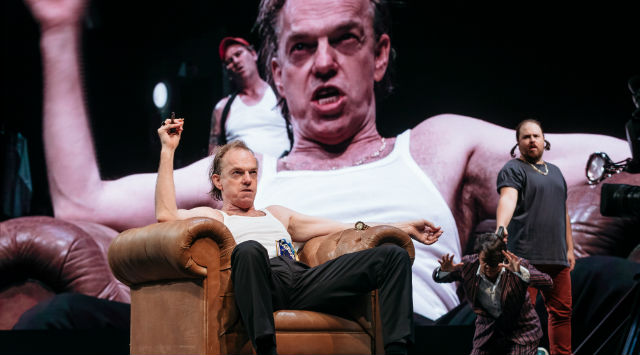
The play is intense and confrontational, possibly exploitative in its relentless depictions of trauma. Director Liz Arday establishes an enticing style and mood for her production, informed by cabaret traditions, complete with microphone stands and tinsel curtains, but there is a repetitious quality to the way its scenes are carried out that can wear thin. Nonetheless, Debris is memorable for excellent design work, with Arday’s own sensitive work on sound and Liam O’Keefe’s adventurous lights, both in collusion to manufacture a sense of electrifying theatricality and macabre decadence.

Two powerful actors bring the characters to life, on a stage that they imbue with frenzied savagery. Aslam Abdus-samad is a captivating presence, delivering spectacle after spectacle, with his penchant for the extravagant. Also very glamorous is Lana Kershaw, who proves herself the consummate storyteller, able to convey depths of meaning and emotion, in addition to her splendid recital of Kelly’s ostentatious words.

Art allows us to delve into the good and bad of humanity, but some behaviour it seems, will forever be beyond comprehension. The best that Debris can do, is to convince us of the depravity that we are capable of, and even though we hunger for an understanding of the origins of these extremities, we should probably be grateful that such abomination exists outside of our personal consciousness. The fact remains that we are capable of terrible things, and societies need to prevent them from occurring, whether or not we know how they come to be. The protection of children, especially, requires no justification. We only need to be aware of the dangers they are susceptible to, and look after them with unflagging vigilance.

www.lza-theatre.xyz | www.bloodmoontheatre.com

Review: Blind Tasting (The Old 505 Theatre / Subtlenuance)

Venue: Old 505 Theatre (Newtown NSW), Jan 30 – Feb 3, 2018
Playwright: Paul Gilchrist
Director: Paul Gilchrist
Cast: Sylvia Keays
Image by Liam O’Keefe

Theatre review
To thoroughly experience this mysterious thing called life, we have no real alternative but to dive into it head first. In Blind Tasting, Sophie learns the ropes as she goes along. Unlike her colleague Kirstie, who is determined to control everything, Sophie realises instinctively, the futility of that fussy perfectionist approach. Of course, mistakes are made, and heartache ensues, but there is no doubting Sophie’s self-determined way to a richer and wiser existence.

As we sip the wine that Sophie offers, we notice the thrill of the unknown and observe how essential it is to have an appreciation for the precarious and insecure qualities of our being. The wine may or may not be delicious, but it is only in the tasting of it, that one can be certain. No other opinion can ever take the place of that subjective participation.

Written by Paul Gilchrist, Blind Tasting is potent with its sense of joyful optimism, expressed through the playwright’s penchant for a poetic language that is remarkably luscious and evocative. The one-woman show is performed by Sylvia Keays, a presence that is gentle but persuasive, especially effective in the play’s moments of melancholy. The production is an engaging one, refreshing in its use of wine tasting as situation and analogy, but its delivery of drama requires greater gumption, for us to have a firmer identification with its narrative, and for its point to be made with stronger resonance.

Connoisseurs occupy themselves with the grading and sparring, of every wine bottle that they come across. It is human nature to compare and categorise the things we make contact with, but the deeper we get, into games of “finding the best”, the narrower our perspectives become, and the smaller our worlds devolve. With every label that we put on things, we also cast upon them, the restriction of possibilities. Sophie learns not to accept the pigeonholes that people want for her, and we wish for her to break the rules, as and when they find her.

www.old505theatre.com | www.subtlenuance.com

Review: Darlinghurst Nights (Hayes Theatre)

Venue: Hayes Theatre Co (Potts Point NSW), Jan 4 – Feb 3, 2018
Book: Katherine Thomson (based on the book by Kenneth Slessor, and original concept by Andrew James)
Music: Max Lambert
Director: Lee Lewis
Cast: Baylie Carson, Andrew Cutcliffe, Natalie Gamsu, Abe Mitchell, Billie Rose Prichard, Sean O’Shea, Justin Smith
Image by Brett Boardman

Theatre review
For many who reside in Sydney, the Darlinghurst area marks the heart of our city. It may not be the official “central business district”, but its spirit represents how we think of home, at our most wistful moments. Darlinghurst Nights, the musical and the locale alike, are a little tawdry and decadent, always seedy but romantic, full of melancholic nostalgia. The story by Katherine Thomson, based on Kenneth Slessor’s 1933 book, is a bittersweet embodiment of the bohemian essence we love associating with Sydney and the Kings Cross area, inventively devoid of the bourgeoisie.

Colourful characters and their dramatic stories are brought to the stage by Lee Lewis’ passionate direction, offering dreamy and ghostly tribute to lives that continue to gloriously disgrace the area. Historical tales are accompanied by Lee’s modern sensibility, allowing for a convergence of past and present, so that we relate intimately with the action unfolding before us. The production is cleverly designed by Mason Browne, whose set and costumes help to tell the story with remarkable sophistication and minimal fuss. Lighting designer Trent Suidgeest is especially noteworthy with his very thorough and imaginative work, in introducing a sense of poetic evanescence to all that we see, persistently exploring ideas for emotional landscapes that keep us firmly engaged with the show.

The cast is strong, a well-rehearsed bunch admirable for their restrained approach to the musical format. Each personality is convincingly portrayed, and whether raspy voiced or vividly sparkling in tone, every song is performed with great conviction. There is exceptional beauty in Max Lambert’s music for Darlinghurst Nights. Crossing over from classical to jazz and pop, Lambert has the intricately conceived entirety blended into one seamless work, that feels so marvellously accurate in its sonic representation of this city.

Ultimately, it is all illusory of course, our sentimental fantasy of this Sydney that has no big business, no bureaucracy and no black history. In Darlinghurst Nights, the truth is not allowed to get in the way of a good story, but as this nation strives to move towards a stronger future, a greater honesty needs to inform the way we think and talk about ourselves. We can no longer afford to leave buried, all our hard and inconvenient truths.

www.hayestheatre.com.au

Review: Mother (Belvoir St Theatre / If Theatre)

Venue: Belvoir St Theatre (Surry Hills NSW), Jan 24 – Fe 11, 2018
Playwright: Daniel Keene
Director: Matt Scholten
Cast: Noni Hazlehurst
Image by Brett Boardman

Theatre review
Christie’s misfortune is deeper than any we have ever encountered. Having lost everything, she is on the streets with only memories of trauma, to while the days away, like a waking recurring nightmare. Daniel Keene’s Mother is about the hardest life a person can bear, a shocking Greek tragedy made real and salient for our times. It goes beyond an examination of mental health deterioration, to create a portrayal of the person underneath the illness, with all her humanity intact.

Keene is fascinated by the monster or, more accurately, the social pariah, but is interested in reaching a compassionate understanding of what we usually and conveniently regard as abhorrent. Mother insists that we connect with its subject. Countless moments of disarming poignancy, make us identify with this strange creature. It rejects our impulse to think of Christie as alien and disposable, insisting that we walk a mile in her shoes.

The role is magnificently performed by Noni Hazlehurst, who proves that perfection in art, is attainable and not just an abstract construct. She presents her one-woman show with flawless technical brilliance, leaving us in awe of the superhuman feat that is under way, whilst keeping us firmly locked into the narrative of Christie’s utter destitution. Hazlehurst being at the top of her game, allows us to see so clearly, what it is like for a woman languishing at the very bottom of the heap. The actor’s capacity for persuasion is extraordinary. The sense of authenticity that Hazlehurst is able to convey, feels boundless; there seems no delineation between the suffering of actor and character. She tells a tale of pain, and we are shaken by it, no matter where we think the anguish comes from.

It is an exceedingly elegant piece of direction by Matt Scholten, whose minimal approach is impressive in its confidence, but it is questionable if the staging adequately addresses Belvoir’s comparatively large auditorium. The production is a dynamic one that oscillates deftly between states declarative and poetic, with the quieter scenes tending to wane slightly in the big hall. Sound design by Darius Kerdijk is inventive and effectively evocative, and Tom Willis’ lights add an ephemeral beauty to the potent melancholy he establishes for the space. Costume designer Kat Chan ensures that Christie looks every bit the vagrant we pretend not to see in every Australian city.

A tremendous sadness permeates the play, and we are moved to consider our relationship with the homeless. Whether or not we wish to make personal connections, it is of fundamental importance that we are cognisant of our responsibilities regarding all the neighbours who surround us, no matter how they reside. Humanity is worth nothing, if we choose not to care for those in need. Christie, like any human being, is not blameless, but the moment we give up on trying to bring improvements to her life, is when we have to seriously interrogate our priorities as a first-world society.

www.belvoir.com.au

Review: My Urrwai (Belvoir St Theatre / Performing Lines)

Venue: Belvoir St Theatre (Surry Hills NSW), Jan 19 – Feb 4, 2018
Playwright: Ghenoa Gela
Director: Rachael Maza
Cast: Ghenoa Gela
Image by David Charles Collins

Theatre review
Ghenoa Gela is a Torres Strait Islander born in Rockhampton. Efforts to keep culture in her veins have always been deliberate and laborious; it is a constant battle for Indigenous Australians to resist colonisation and to retain their own identities. In My Urrwai, Gela shows us what it is like to be a woman of native heritage living in modern Australia, bringing particular focus to the unjust burden that black people have to bear, whilst existing on their own rightful lands, that white people had forcefully usurped.

Part of the tale involves a significant first visit to Gela’s extended family in the Torres Strait Islands, where she finds herself in moments of alienation, as well as extraordinary connection. My Urrwai is, among many things, a deep meditation about the need to belong, and with it, we examine the hugely important themes of displacement and repudiation as experienced by our First Nations peoples for 230 years and counting.

Formative and crucial fragments of Gela’s life are compiled intelligently, for an autobiography that feels impressively comprehensive in its scope. Even though My Urrwai does contain colourful idiosyncrasies, the earnest care with which it discusses issues of race is unmistakable, as it is probably inevitable that this one-woman show would be called upon to represent entire communities. The need for more productions featuring Torres Strait Islander voices, simply cannot be overstated.

As performer, Gela is an outstanding talent, combining years of training in stage disciplines, with an enviable presence, to produce the consummate storyteller. Her remarkably exacting and agile physicality, plus an uncanny ability to speak with great resonance, sonorous and philosophical, are the key ingredients in this wonderfully moving piece of theatre. Proving himself to be equally accomplished, is lighting designer Niklas Pajanti, whose work accurately prompts a wide range of emotional responses, from transcendent beauty to chilling terror. Director Rachael Maza’s sensitive manipulations of space, ensures that each scene is received crystal clear, whether in their inception, intent or purpose.

Unlike most plays we see on the Australian stage, My Urrwai is conscientious about acknowledging the multicultural aspect of our audiences. It understands that we do not all come from the same place, even if we do wish to identify as one. It is welcoming of all peoples, but it certainly does not subordinate those whose culture is on display. The ease with which it addresses Torres Strait Islander viewers, and its ability to establish a theatrical language that rejects white experience as the centre of all our orbits, is admirable. The process of decolonisation in how we do and think about art in Australia is a massively difficult one, but Ghenoa Gela and My Urrwai are jubilant rays of hope, undeniable in their brilliance.

www.performinglines.org.au | www.ilbijerri.com.au | www.belvoir.com.au

Review: Buried (The Old 505 Theatre)

Venue: Old 505 Theatre (Newtown NSW), Jan 17 – 27, 2018
Playwright: Xavier Coy
Director: Johann Walraven
Cast: Amelia Campbell, Tara Clark, Xavier Coy, Nicholas Denton
Image by Liam O’Keefe

Theatre review
The Sandpiper is the shorter of two plays by Xavier Coy, featured in Buried. Involving a psychotherapy session where things go awry, the piece is perhaps too conventionally structured, and too brief, resulting in a predictable story that proves anti-climactic. Much more substantial, and persuasive, is Smokin’ Joe, the second Buried play, dealing with class and masculinity in a typically Australian context. Its dialogue is fresh and playful, and its stakes are high, with challenging ideas and curious turns of events that keep us engaged.

Director Johann Walraven, too, invests more deeply into Smokin’ Joe, with nuance and complexities fleshed out effectively, to express the often hidden conundrums of being a man in Australia. Actor Nicholas Denton is captivating as Finn, humorous and exacting in his portrayal of a nineteen year-old discovering himself and finding his place in this often cruel world. Playwright Coy takes on the role of Dylan with admirable conviction and focus, to create a character that is at once familiar, and tenaciously intriguing.

There are secrets in Buried; things that people hide from others, and things that exist in plain sight but that are waiting to be named. Through art, talented individuals can identify the illusory and the elusive that swirl around us in the ether, and give them shape or form, so that we can gain a better understanding of what it is that we do and experience, as beings who walk this earth. It is a high calling, and the consequences are sacred.

www.old505theatre.com | www.facebook.com/wheelscoproductions