Review: The Shifting Heart (White Box Theatre)

Venue: Seymour Centre (Chippendale NSW), Mar 8 – 24, 2018
Playwright: Richard Beynon
Director: Kim Hardwick
Cast: Laurence Coy, Lucas Linehan, Dina Panozzo, Tony Poli, Di Smith, David Soncin, Ariadne Sgouros
Image by Danielle Lyonne

Theatre review
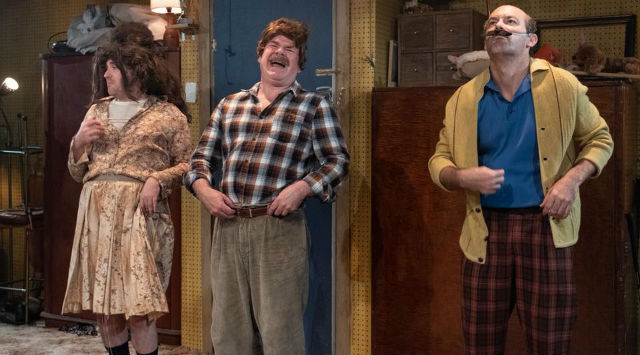
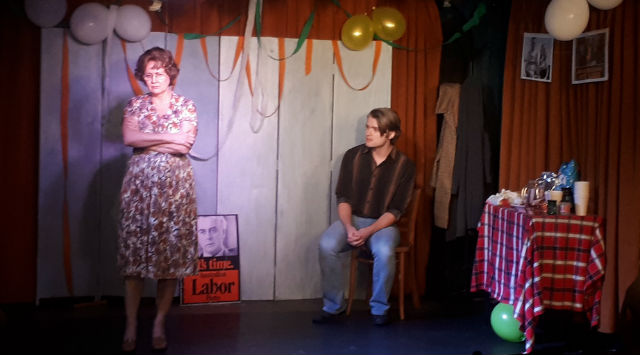
It is Christmas time 1956, and the Bianchi home in Melbourne is bustling with activity. The family is getting excited about the festivities ahead, occupying themselves with the frenzied yet mundane business of the Australian summer. We soon discover, however, that beneath the Bianchis’ attempts to go about their normal lives, they have to contend with the social stigma of being recent immigrants to a land where strange and cruel attitudes prevail, about which people are deserving, and not deserving, of being here.

Richard Benyon’s 61 year-old play The Shifting Heart is concerned with a peculiar brand of racism that we undertake, whereby earlier immigrants persecute later immigrants, whilst Indigenous peoples are routinely neglected. The Bianchis discover that although legally permitted to settle here, many do not extend them a welcome. Benyon portrays the family trying to get on with life the best they can, amidst the unjust obstacles heaved at them every day.

It is a sensitive piece of writing, offering insights that remain pertinent; a valuable study of how racial prejudice operates in societies like ours, with an ever evolving racial composition. As a work of drama though, scenes of emotional vigour seem to occur few and far between, and its manufacture of tension tends to be overly understated.

Directed by Kim Hardwick, the production is a persuasive one. We may not be heavily invested in its personalities, but their stories are certainly believable. Isabel Hudson’s set and costumes, along with Martin Kinnane’s lights, are beautifully evocative, affecting our imagination with flair and efficiency.

Dina Panozzo and Tony Poli, as Momma and Poppa Bianchi, bring chemistry and warmth to the stage, both effective in transporting us to another time of our shameful history. David Soncin leaves a strong impression as Gino Bianchi, the gregarious and passionate young Italian-Australian determined to live unhampered by prejudice. Their neighbour Leila Pratt is played by the very likeable Di Smith, relied upon to deliver much needed humour, and effervescence, in this weighty observation of Australian life.

There is no denying that humans everywhere cannot help but create difference, seemingly for the purpose of baseless discrimination. Bigotry is not natural to our children but somehow, a need to hate is developed as we mature, and whether it pertains to race or to other arbitrary features, we learn to feel good about ourselves by exerting power over others. This is ubiquitous, but we must never think it irreversible.

www.whiteboxtheatre.com.au

Review: Antony And Cleopatra (Bell Shakespeare)

Venue: Sydney Opera House (Sydney NSW), Mar 3 – Apr 7, 2018
Playwright: William Shakespeare
Director: Peter Evans
Cast: Johnny Carr, Ray Chong Nee, Joseph Del Re, Lucy Goleby, Catherine McClements, Ursula Mills, Zindzi Okenyo, Gareth Reeves, Steve Rodgers, Jo Turner, Janine Watson
Image by Heidrun Löhr

Theatre review
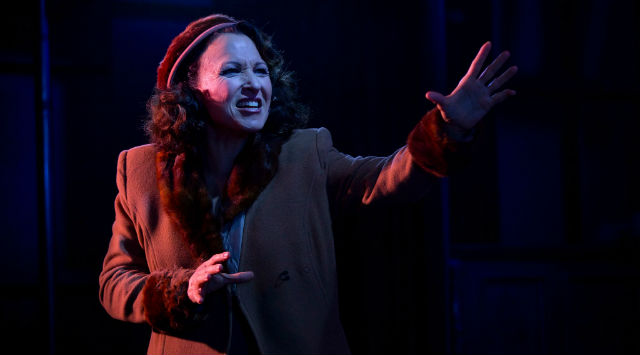
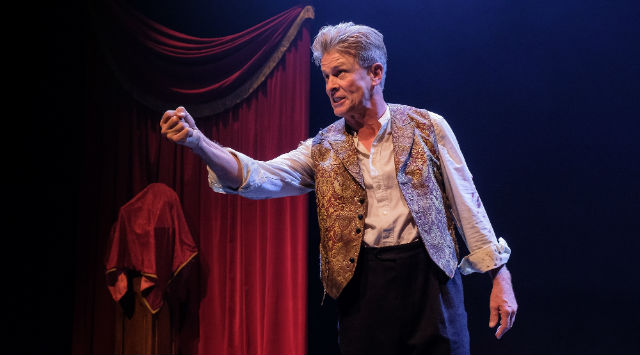
In Shakespeare’s version of the historical drama, we see Antony of Rome trying to sort out the world’s problems, while his lover Cleopatra of Egypt attends to matters of the heart. A story of two of the world’s legendary leaders is twisted askew in Antony And Cleopatra, and we observe how much the idea of a female ruler was disturbing to the English mind. Under Shakespeare’s depiction, the woman’s decisions are made around the feelings she carries for her beau, but the man is allowed to get on with business as usual, burdened by much more than a love affair.

The production is beautifully presented. Anna Cordingley’s simple solution for set design conveys stately glamour with little fuss or ostentation, and her costumes achieve a remarkable level of sophistication, crucial in making the royal characters convincing. Lights by Benjamin Cisterne are similarly attractive, especially impressive when displaying bold choices, although many instances of unintended glare from a reflective backdrop, are more than a little distracting. Director Peter Evans does well in manufacturing a visually captivating piece of theatre; his work with abstract physical movement is particularly effective, but the classic tragedy struggles to find any genuine sense of poignancy on this stage.

Cleopatra is played by Catherine McClements, who brings good humour to the piece, cleverly subverting much of Shakespeare’s inanely “feminised” dialogue. The actor is a powerful presence, and we submit to her queenly preeminence with little effort. Johnny Carr is an intense Antony, charming in his conviction, but a strange interpretation of the role’s final moments, sets the scene for an anticlimactic conclusion to the play. An absence of chemistry between the two leads, further diminishes the potential for greater piquancy in this ancient romance. Moments of drama can however, be found in scenes that feature supporting actor Lucy Goleby, who introduces both vigour and nuance to her depictions, of Pompey and Scarrus, adding excitement and significant tension to the show. Also memorable is the luminescent Zindzi Okenyo, sensuous and strong as Egypt’s maid of honour Charmian.

The women are languid in Antony And Cleopatra. Seductive and emotional, and despite visible attempts to elevate status and meanings around them, Cleopatra’s romantic fixation keeps the story firmly in a sphere of gender inequality. We wish for relationships to help us be better people, who will do better things, but what we see happen between these protagonists is quite the opposite. Love is a destructive and retrogressive force, causing people to lose their minds and weaken their fortitude. Just four years before the play’s first staging, Elizabeth I of England ended her reign, remaining to her last breath, The Virgin Queen, if not for anything true about what men can do to a woman, then certainly for what men can write about women.

www.bellshakespeare.com.au

Review: Being Dead (Don Quixote) (MKA Theatre / Unofficial Kerith Fan Club)

Venue: Kings Cross Theatre (Kings Cross NSW), Mar 6 – 10, 2018
Creation and performance: Kerith Manderson-Galvin

Theatre review
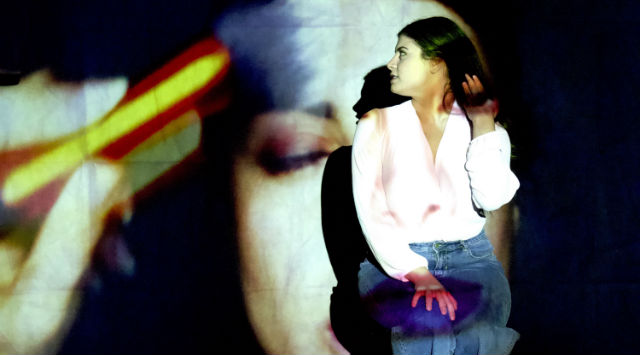
In Being Dead, Kerith Manderson-Galvin is constantly “corpsing”, or “breaking”, unable to commit to the theatrical device known as a character. This is all a ruse of course, in this avant-garde variant of the Don Quixote story. A work of art is to be created, a show is anticipated to be staged, and the accompanying ambitions are, as always, unimaginably grand. Artists needs to be brave; we expect performers to be polished up, ready and flawlessly poised, but that does not mean a negation of their humanly vulnerabilities.

Manderson-Galvin’s presentation embraces qualities normally prohibited. Hesitant, apologetic, confused and very nervous, the actor reveals all that conventional wisdom deems unsuitable for theatrical consumption. These states of being, although negative, are unquestionably authentic, and within the text’s radical employment, they become saliently relevant to its story of wild aspiration. To dream big, one’s weaknesses cannot be ignored. In throwing one’s all into a project, imperfections too require attention.

The character we see, never really knows when their show begins. They are fearful and indecisive, in a perpetual state of procrastination, but for the audience, it is clear that the performance is underway the moment we see the genius Manderson-Galvin pacing on stage, portraying the fear that grips anyone who wishes to accomplish something extraordinary. It is a strange discipline that is being flaunted, an odd coupling of overt awkwardness and concealed deliberateness. It is false bravado turned inside out, for an experience wonderfully unusual and perversely delightful.

Equally enjoyable are its several sequences of sheer beauty, unpredictable and comforting, gestures of kindness perhaps, to release us of its otherwise stubborn edginess. Lights by Jason Crick and sound by Jules Pascoe, keep the production contained and coherent, pleasant elements that we cling to, like a security blanket, amid Being Dead‘s resolve to challenge and disturb.

Unbeknownst to themself, our protagonist succeeds in their search for something magical. Preoccupied with anxiety, they fail to detect all the good that is being created. Fear is a monster, an adversary to be combated with great fortitude and ferocity. Strength will deliver victories, but stillness is necessary, if the rewards are to be appreciated.

www.mka.org.auwww.unofficialkerithfanclub.com

Review: Cage (The Old 505 Theatre)

Venue: Old 505 Theatre (Newtown NSW), Feb 27 – Mar 3, 2018
Playwright: Jordan Shea
Director: Shae Riches
Cast: Josh Anderson, Badaidilaga Maftuh-Flynn, Patrick Diggins

Theatre review
Three young men from Australia are banged up abroad, imprisoned in Bangkok for a night of debauchery gone awry. In trouble because they had neglected to understand and respect local customs, Jordan Shea’s Cage takes these characters through the wringer, to depict the kind of obnoxious ignorance, contempt and imperialistic attitudes so prevalent in the way we conduct ourselves, in relation to our Asian neighbours.

Our colonial story is a persisting one. From the time of early European immigration, a wanton disregard of established cultures has operated as a pervasive force seeking to redefine and repurpose Australia and the region. In Cage, we see ourselves go to Thailand as tourists, thinking that the sole purpose of an entire country’s existence is to serve our need for mindless amusement. The punishment issued by Shea’s writing, for that continual and outrageous dereliction, is scathing and quite satisfying.

Directed by Shae Riches, the show is an effectively provocative one that brings illumination, to a problem that we already know to be true. Some scenes prove to be much more riveting than others, but as a whole, the production is unquestionably rewarding. Set design by Antoinette Barbouttis is cleverly conceived, restrained, and highly efficient in its ability to shape our imagination. Lights by Liam O’Keefe are dynamic and appropriately dramatic, while Alexander Lee-Rekers’ adventurous ideas with sound help extend the play’s dimensions beyond its prison walls.

Performances are strong, particularly impressive is Badaidilaga Maftuh-Flynn as Cuong, who creates astonishing authenticity for some very outlandish scenarios. The naive Ryan is played by Patrick Diggins, whose concentration translates into persuasiveness, and we almost begin to sympathise with his character’s predicament. Bryce the ghastly bogan, a hideous personality that is sadly all too familiar, is brought to life by Josh Anderson, especially affecting in the play’s more emotional sequences.

Parts of our national identity are incredibly generous, but there is no denying the reprehensible sides to our nature. The examination of ourselves in the context of a foreign prison, exposes some of our worst qualities, allowing us to see the devil inside. Whether abroad or at home, our capacity for damage is unrelenting. If power can only recognise power, it only follows that retribution is the only language that can hope to induce hindrance.

www.old505theatre.com

Review: Lethal Indifference (Sydney Theatre Company)

Venue: Wharf 1 Sydney Theatre Company (Walsh Bay NSW), Feb 17 – Mar 10, 2018
Playwright: Anna Barnes
Director: Jessica Arthur
Cast: Emily Barclay
Image by Prudence Upton

Theatre review
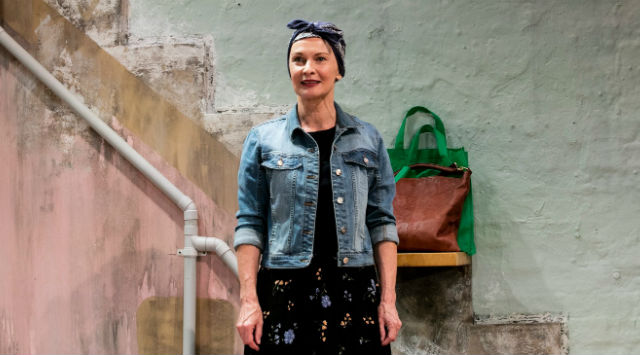
Reema is an Indian bride, brought to Melbourne to be starved, bashed and raped by her new husband Ajay. We know this, because a white woman is onstage telling us the harrowing story. The intention in Anna Barnes’ Lethal Indifference is good, of course, as it shines a light on domestic violence, one of Australia’s biggest problems. The one-woman show however, affords no space to any of its Indian characters, only an unnamed protagonist who works as a media representative of an anti-violence organisation, struggling to cope with the weight of her vocation.

To place a white person at the centre of Reema’s story is deeply problematic. The removal of already underrepresented ethnic minorities from our theatres is reprehensible, especially when their stories are at the core of what is being discussed. If it were a woman of colour who takes to the stage, this issue might well be dissipated. It is noteworthy that in fact, there is no reason at all that requires our storyteller to be white, if we wish to examine the production from this perspective.

Also, Lethal Indifference unwittingly presents domestic violence as an “ethnic” problem, with its heavy reliance on Reema and Ajay, where we know for a fact that domestic violence occurs indiscriminately in all types of households. To single out a racial minority to facilitate this discussion, instead of having the unnamed woman “tidy up her own backyard” so to speak, using instead, stories of white families, is objectionable.

The heavily pregnant Emily Barclay stars, with suitable charm, leaving us feeling as bad for her character as we do the true victims of domestic violence. Barclay’s portrayal of second-hand “vicarious” trauma almost succeeds in stealing the thunder from Rameen, the invisible character who has clearly paid the much greater price for Lethal Indifference‘s melodrama.

It is a polished piece of theatre, with Mel Page’s ominous set design drawing us into the dark world that is being evoked, providing stark gravity to the space that is being explored. Director Jessica Arthur creates sufficient variation within the long monologue, to sustain our attention and interest. The production’s seeming ignorance about its own racial problem, is astonishing, considering the surface sophistication that it so proudly exhibits.

When we talk about women’s problems, we need also be sensitive to other forms of subjugation and persecution that people suffer in our communities. It is not a matter of white women’s problems being less worthy of analysis than those borne by women of colour, but in the process of discussing any prejudice and injustice from a context of Australian whiteness, we must fight for the voices of ethnic minorities to be duly represented. The disappearance of Reema from this production, one that boasts an all-white stable of cast and creatives, reveals so much about our failures in Australian art and society.

www.sydneytheatre.com.au

Review: Strangers In Between (Seymour Centre)

Venue: Seymour Centre (Chippendale NSW), Feb 14 – Mar 2, 2018
Playwright: Tommy Murphy
Director: Daniel Lammin
Cast: Simon Burke, Wil King, Guy Simon
Image by Sarah Walker

Theatre review
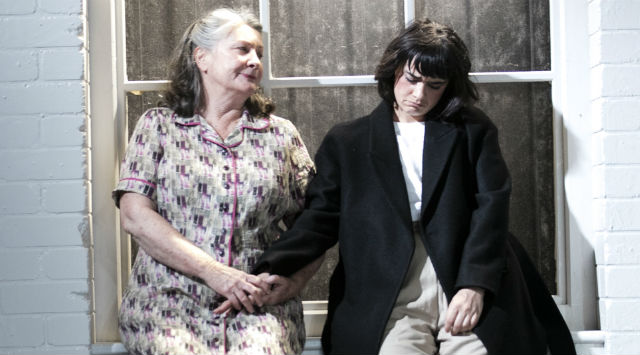
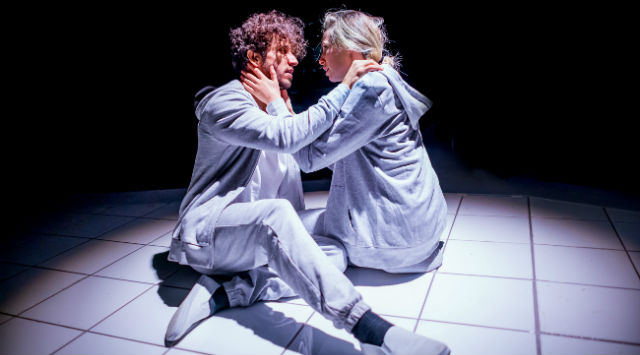
Not everyone is lucky enough to have families who offer affection and support. For many LGBTQI people, the system of kinship is often a manufactured one, relying on families that we have chosen for ourselves rather than the ones we were born into. The prejudices that continue to divide us, are very alive in Tommy Murphy’s Strangers In Between, a story that takes place in the early years of this new century. Shane has left the country town of Goulburn, for the bright lights, and acceptance, of the broadminded city folk in Sydney. The teenager runs from the systematic bigotry of home, in search of a community he hopes would be welcoming. Queer children will always be birthed by straight parents, so the threat of domestic conflict will perhaps never completely diminish, therefore Murphy’s tale of belonging can be thought of as a timeless one.

Actor Wil King is dramatic, but convincing, in the role of Shane. Delivering both theatricality and nuance, King is as compelling as he is sensitive, for a depiction of innocence that is unexpectedly moving. His intensity can occasionally prove overbearing, but there is no denying the trenchant perspectives he brings to the stage. The middle-aged gay man Peter, is played by the delightful Simon Burke, who creates a camp and compassionate personality many will find endearingly familiar. It is a delicate performance that combines a cool exterior with a warm heart, to accurately portray a Darlinghurst “scene queen” type. Also very accomplished is Guy Simon, who impresses in his dual roles of Will and Ben, characters as different as night and day, but both equally authentic with all that they convey. Director Daniel Lammin does exceptional work in bringing the play to life. His minimal approach ensures that the bonds that form between the men, are depicted with clarity and profundity, so that the audience is transported to a space of reflection and appreciation for the communities that we are part of.

The LGBTQI rights movement has delivered significant change to perceptions and acceptance, but the more freedoms we attain, the less likely we seem to want to attach ourselves to ideas of community. The Darlinghurst in Strangers In Between, from just thirteen years ago, has now lost its vibrancy. What was once a tight-knit locale, is now dispersed and aloof. The queer city slickers today are powerful and entitled, protected by advancements in attitudes and legislation. We no longer hold on to each other for dear life. In the past, young ones like Shane were able to fall into the nurturing arms of Oxford Street, but what happens today and hereafter, looks to be ever less optimistic.

www.dontbedown.net | www.fortyfivedownstairs.com

Review: Joan (Seymour Centre)

Venue: Seymour Centre (Chippendale NSW), Feb 16 – 18, 2018
Playwright: Lucy J Skilbeck
Director: Lucy J Skilbeck
Cast: Lucy Jane Parkinson
Image by Robert Day

Theatre review
When they burned Joan of Arc to death at the age of 19, it was punishment for the charge of heresy, of dressing in men’s clothes. In Lucy J Skilbeck’s Joan, we acknowledge the warrior as a queer figure, finally indulging in the highly probable idea that the hero was in fact transgender. For those whose gender identities are never a complicated matter, this might seem a little like making mountains out of molehills, but for many LGBTQI individuals, Joan’s story of persecution is one that needs to be recognised for what it is.

In Skilbeck’s revised account of events, we sometimes see Joan as a lesbian in love with Saint Catherine, sometimes a drag king, but mostly we are encouraged, finally, to regard Joan as a person unable to comply with age-old rules of gender. The masculine armour was not merely an instrument of practicality for the fighter. We now know those struggles to be commonplace, that trans people exist everywhere, and that we always were. The restoration of queer and trans perspectives in our legends and histories is crucial to the way we think about ourselves, and represents an urgent demand that society validates all our contributions to the world; past, present and future.

Lucy Jane Parkinson showcases a wealth of talents, as performer of the one-person show. A captivating presence, versatile and confident in their effortless vacillation between goofy and sentimental, Parkinson presents a character determined to steal our hearts one way or another. Their ability to maintain a personal connection with all of the audience, for the show’s entire duration, is a stunning feat, achieved through an intense sense of vulnerability and a precise, exhaustive familiarity with the work.

Joan of Arc’s legend was always about gender, yet for centuries, that story was told with a major obfuscation at its very core. When society refuses trans people the freedom to be ourselves, by misgendering us, and by forcing us to adhere to its narrow definitions of gender, that cruelty and injustice will invariably have reverberations beyond the immediate, and the damage caused is always greater than any of us would be ready to admit. This is why reinstating Joan’s truth in our historical memory, for the benefit of LGBTQI generations hereafter, is important. The meaning of gender is little more than the imposition of restrictions, to manufacture a system of control over individuals. It benefits few, yet virtually all of us participate in its fictions. We can dream to demolish these beliefs, but before we reach that point of enlightenment, all these rules have to be loosened, if only to salvage what is left of our humanity.

www.milkpresents.com

Review: Top Girls (Sydney Theatre Company)

Venue: Sydney Opera House (Sydney NSW), Feb 12 – Mar 24, 2018
Playwright: Caryl Churchill
Director: Imara Savage
Cast: Paula Arundell, Kate Box, Michelle Lim Davidson, Claire Lovering, Heather Mitchell, Helen Thomson, Contessa Treffone
Image by Brett Boardman

Theatre review
Caryl Churchill’s Top Girls exposes our discomfort with stories that talk of societal problems, without the service of convenient villains. We have a hard time thinking about structures that have proven themselves unacceptable, without being able to place blame on individuals or archetypes. Churchill encourages us instead, to examine the ways in which those systems insist on our acquiescence at every turn, making us complicit some or all of the time, often keeping us ignorant of our participation in the damage being caused.

Angie has two role models at home, each representing dichotomous extremes of how we perceive the economy, society and our womanhood. It is Thatcher’s Britain in 1982, and the world seems to have split into simple distinctions of certain people deserving privilege, and others who are not. Angie thinks that emulating her aunt, Marlene, would deliver a more rewarding life, but what she sees, is only the surface of how things operate. She buys into the notion that success looks a certain way, and to attain it, one only needs to take certain steps of action. Churchill exposes, through Angie’s naivety, and in extremely subtle ways, the lies that are sold to us, and that we perpetuate every day.

Director Imara Savage’s faithful presentation of Churchill’s feminist declarations, keeps Top Girls as unconventional as ever. Its non-linearity and contradictory complexities seem to make for a show that is eternally refreshing. It confronts how we discuss gender, through a sustained reliance on symbolism over declarative language, for a more accurate depiction of the insidious nature of capitalistic corruption and deprivation. David Fleischer’s functional, unobtrusive set design allows little distraction from the important matters at hand.

The production succeeds in using what is in many ways a difficult text, to create a captivating work of theatre. The intellectual stimulation it provides, is challenging and unrelenting, but ultimately gratifying. Even though statements in the plot are made with a sense of ambiguity, our interpretations are never permitted to diverge from its political position. Actor Kate Box is particularly effective as Angie’s mother, Joyce, a woman defined by failure, who Box argues for, with great dignity and zeal.

It is a very impressive ensemble that takes the stage, featuring more than a few moments of brilliance from each performer. The luminous Helen Thomson brings excellent irony to Marlene’s fragile image of the woman who has it all, assisted wonderfully by Renée Mulder’s incisive costume designs and Lauren A. Proietti’s humorous wigs. Claire Lovering and Heather Mitchell are both memorably acerbic with their comedy, while Paula Arundell and Michelle Lim Davidson bring nuanced gravitas to the complicated souls that they inhabit. The youthful innocence of Angie is astutely portrayed by Contessa Treffone who proves herself a compelling presence, simultaneously measured and effervescent.

2018 is an exciting time to embrace feminism, but as long as opposition forces exist, implementing acts of feminism will always be difficult. To identify, attack and destroy unjust structures that are pervasive and normalised, is a task unspeakably enormous. To take on the interrogation and diminishment of things believed to be incontrovertibly true, is thankless to say the least, but of course, the best of us will persist. Tolerating subjugation may be easier for many, but for others, the compromise to integrity is unbearable.

www.sydneytheatre.com.au

Review: Love, Me (The Old 505 Theatre)

Venue: Old 505 Theatre (Newtown NSW), Feb 13 – 17, 2018
Playwright: Joseph Brown
Director: Joseph Brown
Cast: Danny Ball, Oliver Crump, Enya Daly, Ariadne Sgouros, Annie Stafford
Image by Jasmin Simmons

Theatre review
Christmas is by any definition, a special day for Australians. It is imperative for many to convene with those who are closest, but with closeness comes a level of trust that seems to allow a certain irregular level of liberty in how we communicate. Fighting at festive seasons is almost de rigueur. We let loose on those we love, knowing that forgiveness is assured. Joseph Brown’s Love, Me sees a group of young adults celebrate Christmas, for the first time, without parents and immediate family. It is their chosen family that has now become priority, even if the way they connect might suggest otherwise.

The five Millennials are, true to form, capable individuals yet to find their footing. Without ambition or responsibilities, their emotions take precedence over pragmatic concerns. The characters in Love, Me, like most of our young, spend too much time and energy seeking affirmation, from friends and lovers, constantly hungry for gratification from vanity. They do little for others, obsessed only with trying to find people that could make themselves feel complete. The playwright captures those experiences and perspectives well, and his dialogue is crafted skillfully, although a more critical or ironic approach would give the work a broader appeal.

There is a peculiar lack of energy to the staging, with much of the portrayals kept too interior and quiet. The actors work hard to present authenticity, but the show requires greater power in the nuances they try to articulate. More memorable are Danny Ball and Ariadne Sgouros who offer exuberance, both to be commended for their gregarious approach to storytelling.

“If you can’t love yourself, how the hell you gonna love somebody else,” the drag icon RuPaul often says. It is completely natural that we seek to be loved, but that desire seems only to operate as a force that projects externally. There is an undeniable feeling of emptiness that compels us to look for fulfilment by others, yet evidence shows that the truer, more enduring form of contentment has to be derived independently. What happens thereafter, can only be delightful.

www.old505theatre.com

Review: The View Upstairs (Hayes Theatre)

Venue: Hayes Theatre Co (Potts Point NSW), Feb 8 – Mar 11, 2018
Book, Music & Lyrics: Max Vernon
Director: Shaun Rennie
Cast: Henry Brett, Thomas Campbell, Nick Errol, Ryan Gonzalez, Martelle Hammer, Anthony Harkin, David Hooley, Markesha McCoy, Madison McKoy, Stephen Madsen
Image by John McCrae

Theatre review
Wes is an obnoxious brat, a twenty-something social media star escaping New York, for the less competitive town of New Orleans. The View Upstairs by Max Vernon imagines a hallucinatory haze, in which our protagonist encounters the inhabitants of a local gay bar circa 1973. It is a musical in which the gay Millennial travels over time and space to meet his cultural forebears, for historical lessons about those whose shoulders he stands on. In 2018 we have finally arrived at a time, when many young queers of Western civilisations are oblivious to the arduous journey required, to attain our current state of equality and tolerance. Wes takes things for granted and lives a reckless life, until he comes face to face with stories he never knew would resonate at such depth.

The View Upstairs is an undoubtedly well-meaning piece of writing, with beautiful sentimentality and a pervasive warmth, but its songs and narrative structure bear a derivative quality that is less than inspiring. Director Shaun Rennie focuses cleverly, on bringing heart and soul to the production, keeping us emotionally engaged in spite of the meandering, lacklustre plot. Isabel Hudson’s colourful set design is appropriately humorous; effective in its recollection of a period remembered for being less than aesthetically sophisticated, but infinitely more genuine in the way communities interact.

A charming cast performs the show, impressively well-rehearsed and with great ardour. Leading man Henry Brett is eminently convincing as Wes, bringing a wonderful intensity to the more dramatic scenes, and consistently bowling us over with some truly sensational singing. Similarly gifted is Markesha McCoy, whose voice is capable of bringing any house down, and on this occasion, we are grateful to be audience to her magnificence. Martelle Hammer and David Hooley are memorable for contributing a dimension of vulnerability to the story, both striking in the authenticity they deliver through their portrayals of the underclass.

Without the knowledge of how things have come to be, so much of daily life can seem meaningless. The immense achievements of the gay rights movement are enjoyed by so many of us in the West today, but it is becoming increasingly evident, that those who benefit most, are least aware of the sacrifices required to arrive at this point of evolution. LGBTQI elders had all wished for brighter futures, but few had imagined that with the eradication of prejudice, comes the blind ignorance of entitlement. The best qualities of humanity, whether compassion, resilience or ingenuity, are often derived from great adversity. When life becomes easy for our children, we have to worry about the virtues they fail to cultivate.

www.hayestheatre.com.au