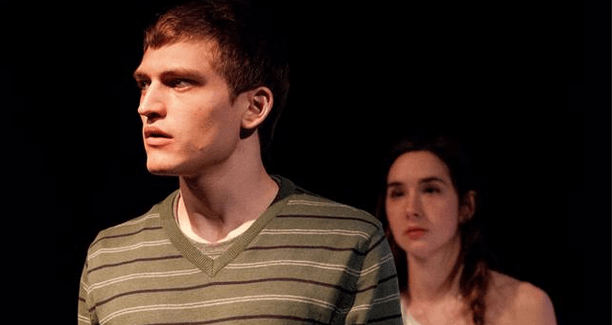
Rosencrantz And Guildenstern Are Dead (Sydney Theatre Company)

art-hamlet-202-620x349[1]Venue: Sydney Theatre at Walsh Bay (Sydney NSW), Aug 6 – Sep 14, 2013
Playwright: Tom Stoppard
Director: Simon Phillips
Actors: Tim Minchin, Toby Schmitz, Ewen Leslie

Theatre review
Tom Stoppard’s 1966 work is embraced by many for its extraordinary wit and intellect. Sydney Theatre Company attracts vasts numbers of audiences, and it is a brave choice to present this play that many a lay person will find too wordy, philosophical, and abstract. Big chunks of text and their associated big ideas are delivered successively and quickly, and it is a challenging experience trying to keep up with every concept being discussed. However, like many great works of art, it is not only what you understand, but also what you don’t understand that makes the consumption of it necessary and worthwhile. Art inspires and elevates, even while it confuses.

From a technical perspective, the company continues to impress. Design elements are faultless, and execution of sound and lighting are perfectly honed to a fine craft. The theatre seats 900 people but it never feels too vast, even for a show like this where majority of the action involves just two actors. Performances are excellent, with Tim Minchin’s uncanny ability to blur the line between actor and role consistently outshining his counterparts. He seems so completely natural on stage, one can hardly imagine a different “real person” existing separately when the show is over. Ewen Leslie is the real showman in this production. He creates a mischievous character, infectious in his playfulness, and setting the stage alight at every entrance. After Cat On A Hot Tin Roof with Belvoir St Theatre, and the Tony Krawitz film, Dead Europe, it is thrilling to see Leslie’s departure from dark and broody roles to one that is full of vigour and hilarity.

Rosencrantz and Guildenstern Are Dead can be considered highbrow, but it’s central theme of “life and death” is universal. Playing with words, theatrical mechanisms, philosophical theories will not appeal to all, but we can relate to the existential conundrum that is the one constant in our lives. It is infinitely more satisfying to watch Rosencrantz and Guildenstern wrestling with the meaning of life, than for one to be engaged in endless self-examination. With any luck, you might even encounter ideas that could provide some level of enlightenment and make that arduous process, sometimes known as life, a bit more bearable.

www.sydneytheatre.com.au

Fireface (Stories Like These)

FIREFACE   Production PhotosVenue: ATYP Under The Wharf (Walsh Bay NSW), Aug 1 – 17, 2013
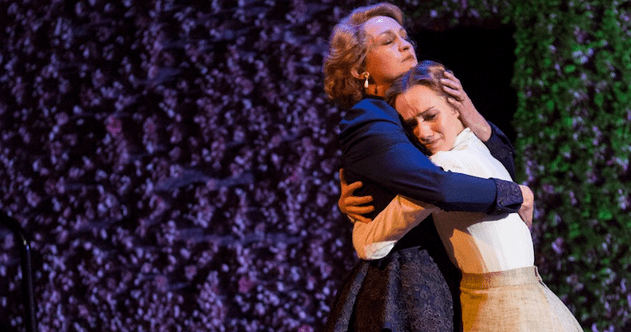
Playwright: Marius Von Mayenburg, translated by Maja Zade
Director: Luke Rogers
Actors: Darcy Brown, Darcie Irwin-Simpson, James Lugton, Lucy Miller, Ryan Bennett
Image credit: Phyllis Wong

Theatre review
The “nurture vs nature” debate is always a lively one, so building a play around that theme almost guarantees an exciting and instantly controversial exercise. Director Luke Rogers’ take on Fireface is powerful and thought-provoking. He deliberately restricts his work from providing easy answers, relying instead on the strength of the questions themselves to captivate his audience. Arguments and counter-arguments are presented with subtlety, producing theatre that is cerebral and discursive.

Set design is beautifully simple. The director’s use of the awkward wedge-shaped stage, basing all the action around a singular big table shows talent and thoughtfulness. Lighting and sound are pushed to their limit in terms of how much they can be utilised in what is essentially a narrative based play. They add to the drama, and assist with the innumerable scene changes in Von Mayenburg’s script, but are at times too noticeable and distracting. The final moments are fractured by several successive black outs, which unfortunately impede the story from developing with a greater sense of urgency.

Darcy Brown stars in the lead role and turns in a stunning performance. In addition to his enigmatic charisma, his artistic choices always feel just right, and the character he has created is simultaneously strange, compelling and frightening. James Lugton plays the distant, withdrawn father with painful accuracy. His role might be characterised by stupefying inanity, but the actor’s every appearance is entrancing. This is a strong cast, and their cohesion within the show’s unusual style and tone is thoroughly impressive. Together with Rogers, the work they have created here is intellectually demanding, and an artful triumph.

www.storieslikethese.com

Mrs Warren’s Profession (Sydney Theatre Company)

STC_MrsWarrensProfession_HelenLizzie_AM18323.jpg  788×1181Venue: Wharf 1 Sydney Theatre Company (Walsh Bay NSW), Jul 4 – 20, 2013
Playwright: George Bernard Shaw
Director: Sarah Giles
Actors: Helen Thomson, Lizzie Schebesta, Eamon Farren, Drew Forsythe, Martin Jacobs, David Whitney

Theatre review
This cast of six in Shaw’s late 19th century work is truly remarkable. All players are convincing, nuanced and colourful, and their chemistry with each other is frequently breathtaking. The two female leads are particularly enthralling, both effortless with their magnetic charisma. It is important that this mother-daughter pairing appeals to the audience symmetrically in order for the philosophical ideas in Shaw’s work to be effective, and in the case of this production, this balance is indeed one of its great strengths.

Ms Helen Thomson plays Mrs. Kitty Warren, and her performance is astoundingly brilliant. With every entrance, the stage is lit by her luminous presence, which is entirely appropriate and necessary for such a grandiose and controversial character. Thomson’s every calculated variation in her voice and perfectly designed physical gestures create not only the most alluring and commanding character onstage, but also presents a vigorous philosophical argument to the central theme of morality that could have easily collapsed at the hands of a lesser actor.

While it is easy to be lost in the actors’ magnificence, this production of Mrs Warren’s Profession explores morals, money and motherhood both effectively and intriguingly. It is a testament to the strength of Giles’ direction that the themes in this 120 year-old play still come across contentious and fascinating.

Special mention must be made of the beautiful costume and hair design, which are effectively transformative for the players, and help to create a sense of time and space within the minimal set design. The backdrop, also visually stunning, works effectively in conjuring up visions of splendid English gardens within the confines of a modern black box theatre. Music between scenes sets the tone perfectly for the action that is about to begin again.

Mrs Warren’s Profession by the Sydney Theatre Company is quite simply unmissable.

www.sydneytheatre.com.au

The Maids (Sydney Theatre Company)

906946-130601-rev-theatre2[1]Venue: Sydney Theatre at Walsh Bay (Sydney NSW), Jun 4 – Jul 20, 2013
Playwright: Jean Genet
Director: Benedict Andrews
Actors: Cate Blanchett, Isabelle Huppert, Elizabeth Debicki

Theatre review
It’s difficult to find Genet’s script relevant in Australia today, as the concept of “domestic help” is far removed from our day-to-day realities. Of course, the employee/employer relationship is commonplace, but our experience of it isn’t quite as oppressive and stifling an environment as portrayed in the play. Therefore, it is form rather than content that is of interest in this production by the Sydney Theatre Company.

All three actors are charismatic, vibrant and thoughtful in their interpretations of the text. There are many macabrely humorous moments played with twisted aplomb by these fearless women, providing not just comic relief, but also a sense of gravity and doom while avoiding a monotonous heaviness that could have easily permeated throughout. A very large screen captures these enigmatic faces in tight close ups (with cameras in the wings), feeding the adoring audience with the star power they desire. This same medium however, is also often distracting and awkward. Our eyes are kept too busy, trying to keep up with too much action, and we quite literally lose the plot at several points.

The set design and lighting are sumptuous. Several costumes look like real couture pieces the script proclaims them to be, and they are truly mesmerising (one is said to be a McQueen). The seductive glamour and luxury of the visual design makes sense within the context of the decadent world in which they dwell. On the other hand, the choice and use of music does not work nearly as well, with inappropriate tunes jumping jarringly in at several points, as though someone had clicked the wrong button on an iPod.

Ultimately, this production is about performance, and the art of acting. Huppert’s less than perfect command of the English language is a minor fault, but witnessing the best in the world onstage tackle an outlandish and flamboyant text is not only satisfying, but thoroughly and wonderfully exhilarating.

www.sydneytheatre.com.au

Fury (Sydney Theatre Company)

Fury_716x402_3[1]Venue: Wharf 1 Sydney Theatre Company (Walsh Bay NSW), Apr 15 – Jun 8, 2013
Playwright: Joanna Murray-Smith
Director: Andrew Upton
Actors: Sarah Peirse, Robert Menzies, Harry Greenwood

Theatre review
Murray-Smith’s new work is complex and nuanced, exploring the anxieties of contemporary middle-class Australia. A broad range of themes are explored, from class and racial politics, to marriage, parenting and the education system.

The performance commences disappointingly with a young actor seemingly unsure of her role in the plot, yet distractingly forceful with her facial expressions. Thankfully she exits early on and allows for the stronger players to take over, but her subsequent appearances do nothing in assisting with the development of the story.

On the other hand, Sarah Peirse is wonderfully compelling in the lead role. Her thorough understanding of the character’s world and the writer’s words are impressive and she provides the audience with a generous dose of drama that is both profound and entertaining. At times, however, it looked as though she would have benefited from a less minimal set. The bareness of the stage might have established the coldness of the intellectual “ivory tower” in which the family resides, but it also demanded too much of the actors who looked stranded in empty spaces for so much of the play’s duration.

Upton’s direction is particularly strong in conveying the play’s crucial ideas. Some complicated ideas are staged and performed with palpable clarity, and this is a great achievement. Less successful are the lighter moments, especially in the first half, which come across contrived and tired. There is however, no doubt that the strength of the “important scenes” more than make up for those momentary lapses.

www.sydneytheatre.com.au

G (Australian Dance Theatre)

G-Hero-feature[1]Venue: Sydney Theatre at Walsh Bay (Sydney NSW), May 16 – 18, 2013
Choreographer: Garry Stewart
Music: Luke Smiles

Theatre review
This re-construction of the classical Giselle delivers an incredible amount of punch and excitement, leaving its audience on a high as though it had witnessed an action movie in the flesh, rather than a work created from the deconstruction of ballet.

One could argue that the star of the show is composer Smiles, whose music overwhelms and guides the viewer through the hour long performance, providing logic and narrative to the dancers’ work. Less effective is the massive electronic screen, which spouts words throughout, supposedly complementing the choreography in some way, but is actually both ugly and distracting.

Stewart’s choreography is intriguing and captivating. The pace of the work is urgently energetic, but he also provides variety throughout to prevent any moments of monotony. The incessant procession of bodies only ever entering stage right, and their frequently breathtaking super-human feats make this a real spectacle of a performance, but in the end, the beauty of its dance still breaks through and touches. What remains is sublime.

www.adt.org.au

One Man, Two Guvnors (National Theatre of Great Britain)

OM2G_F11[1]Venue: Sydney Theatre at Walsh Bay (Sydney NSW), Apr 2 – May 11, 2013
Playwright: Richard Bean, based on The Servant of Two Masters by Carlo Goldoni
Songs: Grant Olding
Director: Nicholas Hytner
Actors: Owain Arthur, Edward Bennett, Amy Booth-Steel, Alicia Davies

Theatre review
This work of nostalgia references British comedy in the 60s and 70s, utilising every familiar mechanism that contemporary audiences would know from Benny Hill, Are You Being Served, and the Carry On films. It cleverly incorporates an endless string of raucous gags, unafraid of the lowbrow but carefully avoiding anything that would be deemed “bad taste” by today’s standards, such as the homophobia and misogyny that had featured prominently in the past.

Hynter’s direction brings to Sydney a breath of fresh air, a kind of theatre less concerned with “high culture”, and more to do with pantomime and commedia dell’arte. Sydney Theatre at Walsh Bay felt like it had been administered a shot of adrenaline; not a minute passed without screams of laughter were hurled at the stage in joyful appreciation.

Theatre is serious business, one which comprises hundreds of different disciplines. Even in the realm of pure entertainment such as this production, One Man, Two Guvnors demonstrates what can be achieved when great skill and talent are applied perfectly.

www.nationaltheatre.org.uk