Review: Vice (Emu Productions)

emuproductionsVenue: King Street Theatre (Newtown NSW), Apr 21 – May 9, 2015
Playwright: Melvyn Morrow
Director: Elaine Hudson
Cast: Margi De Ferranti, Jonathan Deves, Roger Gimblett, Christopher Hamilton, Jess Loudon, Benjamin McCann

Theatre review
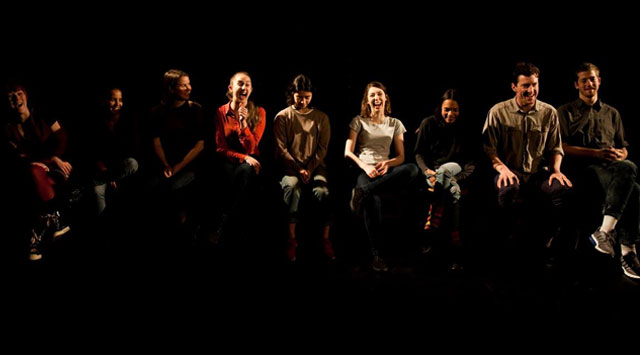
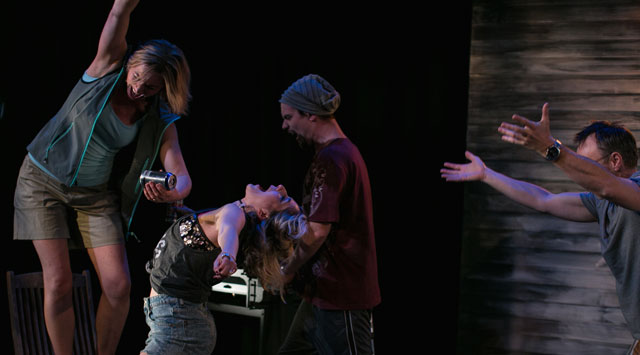
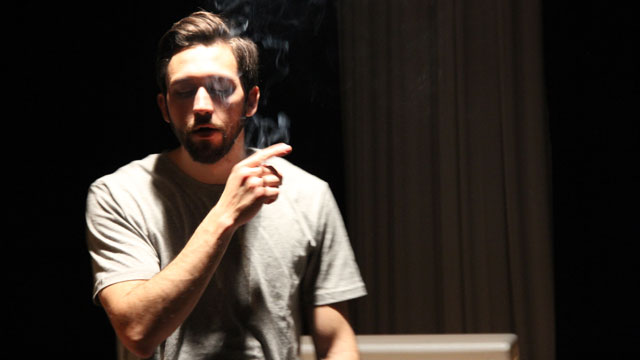
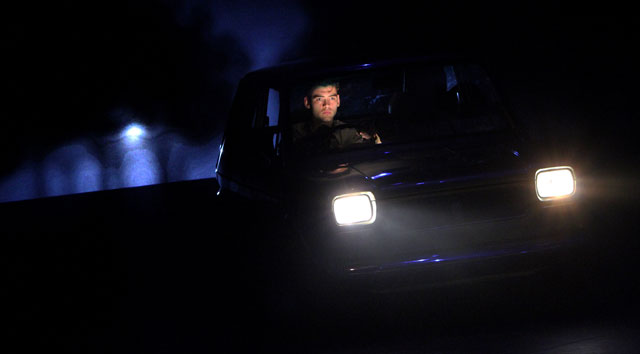
Writing a play about hot topics of the day is a delicate operation. Reiterating dominant schools of thought without adding new perspectives will make the work seem lightweight and redundant, but proffering alternative ideas can be dangerous, especially when the issue is a sensitive one. Melvyn Morrow’s Vice joins the very contemporary discussion on the sexual assault of children by authority figures in religious institutions. We meet Jasper, a manipulative eighteen year-old who uses his burgeoning sexuality as currency, and the guardians at his affluent high school who exploit their custodial positions over students in their care. The illusion of consent that exists between people in hierarchical organisations become further complicated by the issue of age. Society acknowledges a certain legal age where people become adults, but within the paradigm of school and family, we believe in a sacred sense of protection that must prevail for all our daughters and sons. Morrow writes with an ambiguity that inspires thought, and although unlikely to change anyone’s moral position, his story opens up points in a hackneyed argument that may have been previously overlooked. The play’s structure is engaging and tight, with character transformations and edgy dialogue that provide drama and intellectual stimulation.

Direction by Elaine Hudson is punchy and passionate, and although personalities are not always convincing, their narratives are conveyed with enough clarity so that the plot retains its complexities without losing too much coherence. Morrow’s script is often witty, but comedy is not handled well in the production. The cast is under-rehearsed with an inordinate frequency of actors tripping over lines, and several key roles are approached with insufficient depth, resulting in emotions that lack accuracy. The play is situated in modern day Sydney, but its speech emulates an artificial upper class affectation that seems to have been awkwardly derived from mid twentieth century English film and television, that can occasionally cause a troubling dislocation of space and time. On a brighter note, all performances are energetic, with an enjoyable urgency that holds our attention. Playing Olivia Fox is Jess Loudon who attacks with conviction and a charming boldness. Her part is simpler than the other darker characters, but Loudon brings nuance and texture to create a presence on stage that the audience can relate to.

Societal progression involves the dismantlement of old organisations that have proven themselves contrary to democratic ideologies. The pervasiveness and influence of religion in our lives run thorough and broad. Many profit from archaic power structures, and are determined to sustain them by deceptive and cowardly means. The rich and powerful choose a status quo that requires poverty and powerlessness to exist, so resistance and change can only occur at snail place (if at all). Communities are divided and conquered by a 1% of humanity, that insist we continue to participate, knowingly and unconsciously, in all the rituals of daily life that perpetuate our own oppression, in ignorance and isolation. Only when we find an appetite for destruction big enough and brave enough, that revolution can happen. There is a gentle flame in Vice that can inspire, and perhaps provide a spark that can lead to a solution for these disturbing circumstances that we should all be very concerned about.

www.kingstreettheatre.com.au

Review: Deathtrap (Darlinghurst Theatre Company)

darlinghursttheatreVenue: Eternity Playhouse (Darlinghurst NSW), Apr 10 – May 10, 2015
Playwright: Ira Levin
Director: Jo Turner
Cast: Timothy Dashwood, Drew Fairley, Sophie Gregg, Andrew McFarlane, Georgina Symes
Image by Helen White

Theatre review
In Ira Levin’s Deathtrap, the chief ingredient for a hit theatre show is thought to be the script on which a production is based. The characters scheme and struggle to find a golden ticket that would lead to fame and fortune on Broadway, believing that nothing is out of bounds in that pursuit. Murder and betrayal are but part of the process in their creation of a smash manuscript. Levin’s own writing is witty and wild. His comedy is derived from an enthusiasm for irony, which finds its way through the entire text. Nothing can be taken seriously, yet everything rings with a hint of truth.

Jo Turner’s direction of the production is suitably morbid, and in spite of its outlandish contexts, he ensures that the personalities we meet are always believable. The plot makes good sense under his guidance, but tension never quite reaches a feverish pitch, and the humour is oddly subtle. Mystery and thriller elements are more effectively manufactured, with substantial assistance from composer and sound designer Marty Jamieson whose work here is unquestionably outstanding. Also delightful is Michael Hankin’s set, which introduces a sophisticated aesthetic to the stage, and establishes a very elegant solution to the show’s many entrances and exits.

Leading man Andrew McFarlane owns the stage with a larger than life presence as the conceited celebrity playwright, Sidney Bruhl. McFarlane works beautifully with the cynical tone of Levin’s writing to acknowledge the theatrical self-awareness of the play and to invite us along to its in-joke style of presentation. He is ably supported by Timothy Dashwood who brings energy and conviction to his role as the young apprentice writer, Clifford Anderson. The cast connects on a level of narrative accuracy, but there is little comic chemistry to be found. There is a flamboyant spirit at the heart of the material that its actual execution does not always live up to.

Scripts are often the starting point of a show, but no amount of genius writing can guarantee an impressive live experience. Deathtrap seems to have all the qualities of a gripping and intelligent comedy/thriller, but what actually happens on stage, although amusing, is not very powerful. The play talks a lot about ambition, and the team that has put this version together is clearly aiming at something quite spectacular, but its landing spot is not quite as planned.

www.darlinghursttheatre.com

Review: Haircuts (Mantouridion Theatre)

haircutsVenue: Mantouridion Theatre (Marrickville NSW), Apr 15 – 26, 2015
Playwright: Con Nats
Director: Lex Marinos
Cast: Demitra Alexandria, Valentino Arico, John Derum, Barbara Gouskos, Adam Hatzimanolis, Richard Hilliar, Tim Ressos

Theatre review
Successful plays encapsulate a slice of life and represent to its audience something meaningful. Con Nats’ Haircuts is an ambitious work that tries to bring many different threads together, revealing a hunger to tell many stories and an urgency for committing a wealth of ideas to the stage. Its narrative style is conventional, but its structure is less so. Focus shifts regularly, and subplots become overwhelming, resulting in a disorienting uncertainty about the show’s main plot and its centre. There is a big emphasis on multiculturalism, which although interesting, does not contribute directly to the way key narratives unfold. Machismo is also explored thoroughly, and frequently used for laughs, but it contributes to an uncomfortable gender imbalance where all the women in the play are constantly defined against their husbands, fathers and sons.

Direction of the work by Lex Marinos is a passionate effort, and individual scenes are carefully explored, but the production does not assemble into a cohesive whole. The awkward imbalances between amusing asides that take up too much time, and poignant character developments that go past too gently, cause important elements to lose clarity and the play can often seem undecided about what it intends to convey. Performances are uneven but strong players include Barbara Gouskos who brings a beautiful gravity to the role of Angela, delivering a convincing, albeit brief, portrayal of a woman who has experienced very dark days. Her measured approach is authentically emotional and with it, she introduces to us a special and resonant moment of shared humanity. Richard Hilliar’s Stanley is a quiet and tender contrast to the clamorous goings-on, and offers up the only well-rounded personality in a throng of unoriginal stereotypes. His chemistry with co-actors can be improved, but the actor does his best to anchor the show in a position of subtlety that helps us relate to the world being depicted.

The production requires distillation, but even in its imperfect form, it is not without strengths. Some of the dialogue is beautifully deep, and much of the acting is energetic and earnest, in fact it might be said that there is often too much of a good thing, which could only lead to the ridiculously obvious conclusion that Haircuts needs a bit of shearing.

conats.wix.com/haircuts

Review: Orphans (Old Fitz Theatre / Red Line Productions)

oldfitzVenue: Old Fitzroy Theatre (Woolloomooloo NSW), Apr 14 – May 9, 2015
Playwright: Lyle Kessler
Director: Anthony Gooley
Cast: Danny Adcock, Aaron Glenane, Andrew Henry
Image by Rupert Reid

Theatre review
Many have likened love to air, associating both with an absolute necessity for survival. Unlike air however, love can manifest in many unpredictable ways, and in Orphans, we see how the best of intentions can become cruel behaviour responsible for untold suffering. Phillip and Treat are brothers who have grown up without parents. They share a close mutual reliance, but without any guidance, their instincts have created young men who are dysfunctional together and apart. Beneath the boisterous tone of Lyle Kessler’s writing, is a tender depiction of relationships that has the potential to move and to connect with every person’s experiences of difficult family dynamics. We all have an understanding of the imperfections that exist in our homes, and the accuracy at which the brothers’ problematic and insular world is explored, allows for thorough identification and empathy.

The production is directed well by Anthony Gooley, who ensures that characters are complex and fascinating, with an amplified realism that provides a sense of familiarity even though the circumstances being staged are fairly extreme. It is an unusual and unpredictable story, relayed with vigour and heightened drama, but we do not perceive a great sense of purpose to the director’s work, other than to establish an atmosphere of enthrallment for the duration of the play. We are gripped for its entirety but leave without discovering great insight that matches the gravity of what is seen. The character of Harold is a father figure who destabilises the brothers’ cozy dwelling, performed by Danny Adcock with excellent conviction and strength, but the role is positioned neither enigmatic enough nor believable enough. Harold’s presence does not always make sense in the narrative, and our questioning of his authenticity is an unfortunate dissuasion.

Aaron Glenane turns in a magnificent performance as the younger brother, Phillip. The actor is marvelously nuanced in his intensity, expressing with great efficacy an exhaustive range of psychological possibilities and physical attributes, completely captivating in a beautifully embellished characterisation of damaged innocence. Glenane’s approach is adventurous and playful, but also sensitive and studied. He understands chemistry instinctively, and fosters a strong bond with colleagues and audience that keeps us invested in Phillip’s plight. Offering a macho and manic counterbalance is Treat, the older brother played by Andrew Henry with a threatening and exuberant energy that keeps us anxiously seduced. The largeness of his personality keeps us on the edge, tense in anticipation of his next outburst of trespass or feelings. It is a powerful performance, but Henry’s final scene requires further finessing. A transition of emotion occurs too suddenly and unexpectedly, taking lustre away from the Orphans‘ concluding moment of piquancy.

We encounter strangers every day, but letting new people into our lives is a rare occurrence. The desire for a sense of permanence and security means that we prevent new influences from infiltrating, whether positive or negative. Phillip and Treat had made a habit of their suffering, unaware that a better way of life was within their grasp. Inspiration resides everywhere, and we must be able to welcome it in when the right ones present themselves, so that life can be lived to the fullest, and with any luck, be survived by a legacy of something good.

www.oldfitztheatre.com

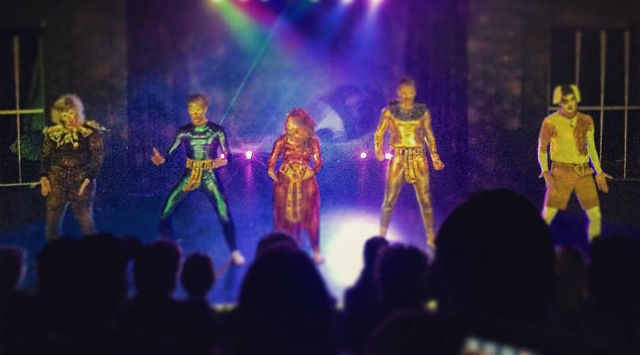
Review: Rocky Horror Show (Lyric Theatre)

rockyhorrorVenue: Lyric Theatre (Sydney NSW), from Apr 11, 2015
Music, lyrics and book: Richard O’Brien
Director: Chris Luscombe
Choreographer: Nathan Wright
Cast: Angelique Cassimatis, Nicholas Christo, Brendan Irving, Kristian Lavercombe, Amy Lehpamer, Stephen Mahy, Craig McLachlan, Bert Newton, Jayde Westaby

Theatre review
The Rocky Horror musical and its Australian star are icons within their own realms. They have their loyal followings, all coming with fixed expectations that have been cultivated from years of interaction and fandom. There is nothing at all that is unpredictable in this particular incarnation. Richard O’Brien’s material has dated and Craig McLachlan is no shinier a star than he was thirty years ago, but no ticket holder anticipates seeing anything out of the ordinary, other than a very well iterated version of the usual fare.

The production provides as much colour and fun as a dvd viewing of the 1975 film could deliver. Things feel old-fashioned but charming, and while we no longer respond to the show’s shock factor, its kitsch value is still unique and remarkable. The gender and sexual subversion that is fundamental to Rocky Horror‘s success is now passé and much too mild to resonate with the same sense of danger experienced four decades ago, but it provides context for very blue comedy, which this particular Dr. Frank N. Furter does not shy away from. McLachlan’s comic timing is not the key to his enduring popularity, but his determination and exceptional commitment to the stage carries an infectious joy that allows the two hour show to occur in the blink of an eye. The performer leads the cast with an exuberant and playful energy, but lacks the elegance of Tim Curry’s legendary rendition on celluloid. McLachlan’s singing is surprisingly strong, but the more memorable numbers are presented by Amy Lehpamer (Janet Weiss) and Kristian Lavercombe (Riff Raff), who impress with a kind of polish specific to stars of musical theatre, complete with piercing, unwavering vocals and irresistible pizzazz that entertains all from front row up to the nosebleeds.

Theatre, like life, needs occasional lashings of frivolity to provide some balance to the inevitable gloominess that afflicts everyone from time to time. Janet and Brad go through a profound metamorphosis in the story, having seen things that were previously unimaginable, and come away with lessons that are unfathomable to many. Some of us hope for that kind of poignancy every time we devote time and money to the arts, but others prefer to leave the auditorium with nothing more than a few laughs and several delightful song and dance sequences. Rocky Horror Show is lightweight but it does not pretend to be anything much more, and if Frank N Furter has lost his edge, we should probably be grateful that androgyny and gender fluidity is no longer an effective freak show centrepiece.

www.rockyhorror.com.au

Review: Seeing Unseen (Old 505 Theatre)

old505Venue: Old 505 Theatre (Surry Hills NSW), Apr 8 – 26, 2015
Devised by: Gareth Boylan, Michael Cullen, Kerri Glasscock, Michael Pigott
Director: Gareth Boylan
Cast: Michael Cullen, Kerri Glasscock, Michael Pigott

Theatre review
Nature and technology are a convenient dichotomy. We like thinking that they are mutually exclusive, as though nature has no part to play in the advancement of technology, and we imagine an ideal state where the primitive is pure and only good. This romantic notion of a regression of time that could bring us back to some place better, is the catalyst for many of the ideas in Seeing Unseen. The work is surreal and abstract, and slightly science fiction in style, but the universe it depicts is familiar to us. It is concerned with our daily lives, with all our petty interests and preoccupations, except it amplifies and articulates the parts that should be automatic and unheeded, and everything becomes strange. The play is about relationships, human volition, memory and of course, technology. Its narrative is an odd one, and even though we understand all that is happening, the key to its purpose can only be found late into the piece. The mysterious nature of its structure is a hugely satisfying one that keeps us on our toes, and makes our minds work overtime, trying to put pieces together, and to construct meaning out of a deceptive and fractured text.

Performance styles by the outstandingly cohesive yet individually brilliant trio of Michael Cullen, Kerri Glasscock and Michael Pigott, run the gamut from soap opera naturalism to high art avant garde. The fluidity of form, and confidence in composition means that its very original mode of presentation, although unique and deeply interesting, never feels forced or patronising. We know that we are witnessing brave creativity in unorthodox motion, but it is engaging and friendly. Gareth Boylan’s direction is sensitive to his audience’s needs and capacities. He keeps us satisfied by providing our senses with what they crave, but always adds an extra dimension that causes a little disorientation. We are offered more than we bargain for, and it is thrilling. There is however, a sense of repetition in the plot that can outstay its welcome. The premise of the work is basic, and the way it manifests on stage does not vary enough over the hour long duration, and things become predictable towards its end.

Seeing Unseen gives our hearts and brains a good work out, leaving no place for feelings to hide, and no moment for the head to dull. The show is quiet but tense, and it lures you into its unusual explorations, sharing its passionate sense of wonder, but always holding back slightly and never explaining too much. If one is interested only in the moral of the story, there is frankly not a great deal to write home about, but understanding how this small team of artists turn energy, time and inspiration into a magical communal experience in an empty space, is terribly impressive. Art, like technology, is only meaningful when it moves forward, and on this occasion, the search for a new frontier has returned excellent results.

www.venue505.com/theatre

Review: The Anzac Project (Ensemble Theatre)

ensembleVenue: Ensemble Theatre (Kirribilli NSW), Apr 2 – May 10, 2015.
Playwrights: Geoffrey Atherden (Dear Mum And Dad), Vanessa Bates (Light Begins To Fade)
Director: Mark Kilmurry
Actors: Anita Hegh, Eric Beecroft, Amy Mathews, David Terry
Image by Clare Hawley

Theatre review
Sacred cows insist on their stories being told repeatedly. Communities ascribe reverential value to our heroes, and lest we forget, their narratives are rehashed and recounted time and time again. With each passing year and with each new conflict, our attitudes about war, soldiers and nationhood change, and how we discuss these icons might alter accordingly but in the case of Australia’s Anzac legend, its social significance is guarded by a fierce loyalty that keeps its myth exceptionally pristine.

Ensemble Theatre’s The Anzac Project is a centennial commemoration of the 1915 Battle of Gallipoli, an event deeply meaningful to many Australians. Comprised of two plays, Geoffrey Atherden’s Dear Mum And Dad and Vanessa Bates’ Light Begins To Fade, the production attempts a fresh look at the hundred year story, with both pieces featuring characters from 1915 and 2015, juxtaposing time and tide to find a new way to represent our relationship with that monumental event in World War I. Artistic and subtle use of abstraction gives the work a sense of sophistication, but Atherden’s more prominent reliance on building a conventional narrative around a soldier is emotionally engaging, while Bates’ more sceptical approach, is too muted for dramatic effect, even if it is conceptually seductive. Mark Kilmurry’s direction is always respectful of the subject at hand, but he finds many opportunities to bring colour and energy to prevent the production from plunging too deeply into sombreness. His skill at creating an active and vibrant stage is to be admired, and his cleverness and flair with tricky scene transitions must not be left unacknowledged.

The cast of four is passionate and lively, with David Terry’s exuberance often stealing the show. The actor’s playfulness delivers a host of surprises, along with cheeky laughs, to what could have been a predictable retelling of these old tales. Anita Hegh’s versatility comes into full view with her portrayal of seven characters, each with a distinctive flavour and individual authenticity. The performers are required to constantly shift between roles, and although executed well, it demands of the audience a concentration that should be spent on more nuanced aspects of the plays.

As long as young people are being sent off to fight, we will always look upon sacrifices of our military organisations as worthy. Today, we are wary of making any statement that might be interpreted as a glorification of war, but by the same token, we hang on to the belief that our soldiers must be honoured. The tension between good and evil in this case is rarely explored sufficiently, perhaps because this Pandora’s box is a taboo that can never be breached. Art has the ability to bring intellect into any space, and to suggest alternate methods of exploring conventional thought, but sometimes the level of courage needed to articulate the unspeakable and profoundly unpopular, is simply beyond the capacity of any single person.

www.ensemble.com.au

Review: Jerry And Tom (Insomniac Theatre)

insomniactheatreVenue: Exchange Hotel (Balmain NSW), Apr 9 – 30, 2015
Playwright: Rick Cleveland
Director: Maggie Scott
Cast: Boris Bkric, Steve Maresca, Andrew Mead
Image by GiGee Photography

Theatre review
Rick Cleveland’s Jerry And Tom is a fairly uncomplicated comedy about two family men who also happen to moonlight as ruthless hitmen. We go from one humorous scenario to another, depicting their gruesome murders, all with a charming Bronx-type accent. Maggie Scott’s direction is a simple, no frills approach that focuses on character dynamics and chemistry. Pacing of the piece is jaunty and very light, with a delightful clarity in the way its plot is conveyed. The comedy is consistent but mild, and given the exaggerated context, a greater sense of irony would probably provide the show with a stronger edge.

Performances are polished and compelling, with all three actors showing good commitment and enthusiasm. Boris Brkic has a laid-back charm that makes his portrayal believable, and a keen sense of timing that allows a hint of authenticity to elevate his role Tom from mere caricature. Jerry is played by Steve Maresca whose infectious enjoyment of the stage connects with us, and although the actor’s serious side is quite obviously less developed than his funny side, he holds his own against more seasoned counterparts. Andrew Mead plays the remaining characters with excellent energy, although more versatility is required for a greater differentiation between personalities. There is a general cautiousness that feels too safe for the material at hand. We need a playfulness to meet with the reckless attitude of the narratives, but the performers seem too careful or apprehensive perhaps, to give the show the wild abandon it deserves.

Music from the television series Dexter underscores most of the blacked out scene changes, but unlike Dexter, we explore very little of the “dark passenger” that compels Jerry And Tom to do the things they do. Without enough psychological bite, the show ends up feeling a little too frothy, and after 90 minutes of senseless killing, we try to find meaning but discover emptiness instead. The production is not always satisfying, but the good work of karma does prevail in the story, and sometimes, that is all than we can bargain for.

www.facebook.com/insomniact.page

Review: Endgame (Sydney Theatre Company)

Venue: Roslyn Packer Theatre at Walsh Bay (Sydney NSW), Mar 31 – May 9, 2015
Playwright: Samuel Beckett
Director: Andrew Upton
Cast: Tom Budge, Sarah Peirse, Bruce Spence, Hugo Weaving
Images by Lisa Tomasetti

Theatre review (originally published at Auditorium Magazine)
On stage, artists can communicate ideas that they believe to be of interest to the wider community. They can also use it as grounds for exploration, to develop an improved understanding of the nature of their practice, or to investigate issues surrounding our lives. Stories are shared and concepts are illustrated, that may or may not connect with audiences but we never quite leave the theatre the same as when we first arrived. Samuel Beckett’s Endgame is light on narrative, but heavy on inventiveness, guided by a profound curiosity that brutally interrogates the fundamentals of existence. It is the most self-aware of texts, constantly drawing attention to the very act of writing, and also to the fragile artifice of its theatricality. If philosophy is its fixation, then any sense of conventionality must be removed from its structure, in order that everything may come under scrutiny, including basic notions of character and plot.

The play is both accessible and inaccessible. It challenges the way we read, and how we make sense, in the theatrical space, of language and signs, but it does not intend to alienate. Director Andrew Upton retains the integrity of Beckett’s words, sometimes impenetrable but always marvellous, and creates around them an intoxicating live experience that fascinates at every moment. Unreservedly intellectual, it is no surprise that one can be made to feel out of their depth at times, but the work’s density constantly morphs so that a switch in tone or subject inevitably occurs, and we become engaged again, only more thoroughly than ever, as our capacities gradually grow in their level of receptiveness. Upton’s voice increases in clarity over time, and the piece gains power accordingly.

Hugo Weaving is mesmeric as the hideous and hateful Hamm. Even in a wheelchair with legs bound and eyes obscured behind opaque spectacles, the star is irresistibly charismatic, and completely enthralling. Edith Piaf was said to have declared that she could sing the phone book and make it sound great. Similarly, Weaving captivates us with every word, even when we find our minds struggling to match the depth of what is being expounded. The extreme meticulousness of his approach seizes our attention, and the wild and unpredictable flourishes he builds into every scene and stanza is truly magnificent to witness. Endgame discusses the distinctions between meaninglessness and meaningfulness. Under Weaving’s spell, all that unfolds feels meaningful, and we are encouraged to seek a cerebral equivalent to the emotional sensations delivered to our gut. Also turning in a stunning performance is Tom Budge in the role of Clov, the voluntary slave who waits on Hamm for no straightforward reason. The actor opens the play in a wordless sequence, impressing us with his extraordinary physical expression. Part mime and part dance, the beauty of his execution shines in spite of the depressively ominous context he helps set up. Budge goes on to prove himself sensitive to the needs of black comedy, constantly toying with the delicate balance between morbidity and humour, much to our twisted delight. His dynamic range is quite exceptional, and the character he creates is fascinating from every perspective.

The single-act play does not require nor permit much flamboyance with design, but there is no shortage of creativity on show here. Nick Schlieper’s set is a dungeon built so horrifying, it could only have been dreamt up by a healthy dose of genius irony. The generous Roslyn Packer stage is expertly curtailed to evoke the oppressiveness explored in Beckett’s writing, and that shrunken performance space provides amplification for the performance energies so brilliantly harnessed. Lights also by Schlieper, and sound by Max Lyandvert are restrained but unquestionably satisfying, always in subtle control over our sensory reactions. Renée Mulder flexes her costume design muscles within the narrow demands of the piece, embellishing characters with objects and textures of interest and creating extraordinary colours out of a dark, sombre vista.

Difficult texts must exist, or our artistic landscape is worth nothing. If everything is within one’s grasp, one ceases to evolve. Endgame is about two hours long, but it contains wisdom from entire lifetimes by several outstanding minds. This production seduces with entertaining touches and intriguing elements, then presents life’s big questions in rarely articulated ways. If its propositions are unfamiliar, revisiting them seems necessary, like a good book that engages and bewilders, it tempts you at its end, to return to the start for another bout.

www.sydneytheatre.com.au

Review: Pvt. Wars (Dudley St Productions)

dudleystVenue: Old Fitz Theatre (Woolloomooloo NSW), Mar 17 – Apr 5, 2015
Writer: James McLure
Director: Mark Lee
Cast: Michael Booth, Thomas Campbell, Tom Oakley
Image by Rupert Reid

Theatre review
In James McLure’s Pvt. Wars we visit three injured soldiers at a rehabilitation facility. The play was first staged in 1979, but there is no clear indication of the time at which the action takes place. It could be the aftermath of any war, because the ramifications of sending young people to battle never seem to change. Some return victorious, but many end up dead or damaged. It is not a fiercely anti-war piece, but McLure’s writing does place focus on these individuals’ physical and psychological afflictions. Comedy is created from the interplay of their mental dysfunctions, as well as from the tensions derived from their divergent social classes and from the points of dissent, and assent, as cohabitants of the hospital.

Direction of the work by Mark Lee is gentle and elegant. The resultant work is funny, but its laughter comes naturally from the honest exploration of characters, rather than it being a desperate priority. The show is about trauma, but it is kept light-hearted by an evasive masculine approach to pain. The three men come face to face with each other’s terror, but they skirt around the issues, rarely able to address them directly.

Michael Booth plays Silvio, the overcompensating alpha male who brings energy and a sense of danger to the stage. The actor appears to be distracted at several points, but his timing is effective nonetheless, and the sense of barely hidden distress and anxiety he introduces, is a significant contributor to the dynamic pace of the show. The more sophisticated Natwick is performed by Thomas Campbell, an actor with a disarmingly sensitive presence that provides an air of authenticity to proceedings. His very regular sequences of letter-writing to Natwick’s mother is let down by poor sound design, but his warmth is an inviting quality that we connect well with. Tom Oakley’s character Gately sits centre stage for virtually the entire duration, repairing an old radio. He is perennially hopeful, but struggles every day to find direction and meaning. Oakley’s portrayal resists theatrical gesticulation and embellishment, but conveys that confused determination beautifully, with a confident and touching simplicity.

The play comes to a conclusion that intends to be poignant, but a sudden loss of clarity interferes. The story surprises us at the end when it takes an abstract and abrupt turn, leaving us to our own beliefs about war, soldiers and manhood. It does not make any persuasive arguments to change our political affiliations, and its social commentary is subtle. Perhaps all it requires is for us to remember that individual lives are affected, often dramatically, while we become increasingly numbed by headlines that are no longer able to occupy more than a few moments each morning.

www.oldfitztheatre.com