Review: My Zinc Bed (Ensemble Theatre)

ensembleVenue: Ensemble Theatre (Kirribilli NSW), Oct 10 – Nov 22, 2015
Playwright: David Hare
Director: Mark Kilmurry
Cast: Danielle Carter, Sam O’Sullivan, Sean Taylor
Image by Clare Hawley

Theatre review
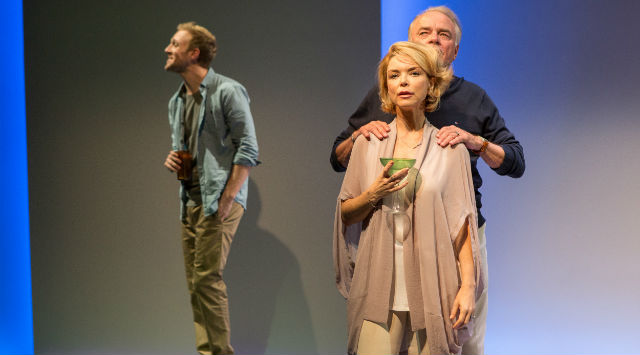
Addiction might be termed a modern phenomenon. In recent years, conditions of all kinds ranging from alcohol and drug use, to sexual and stealing behaviours, have become forms of addiction, almost achieving medical or pathological legitimacy in the general discourse of Western life. David Hare’s My Zinc Bed examines the meanings behind this contemporary way of looking at human volition and responsibility, and the quality of human weakness versus expectations regarding the individual’s contribution or dependence on society. The script is extremely contemplative, punctuated by stimulating and controversial ideas that can be challenging, although the tone of the work is notably gentle and compassionate. We are encouraged to examine the human condition from a refreshing perspective and to evaluate our assumptions about addictions of different kinds, but always being mindful about the vulnerabilities that we share.

Mark Kilmurry’s direction is interested in all the philosophical content of the text, and succeeds in making his play a relentlessly thoughtful one, while maintaining a dramatic tension that keeps us engaged throughout. Characters in the play are not particularly likeable, but their experiences are readily identifiable, and Kilmurry ensures that their exchanges never fail to fascinate. Visual elements are effectively minimal, but subtle design flourishes are executed with remarkable elegance. Tobhiyah Stone Feller’s set and Nicholas Higgins lights provide the illusion of emptiness, but provide immense scope for sentimental fluctuations. What appears to be cold and hard on the surface, is actually quite subconsciously moving with each transition of scenes.

There are breathtaking performances to be found in the production. All three actors demonstrate a thorough understanding of text and characters, and their interactions are consistently powerful. Every line is delivered with the sizzle of subtext and mystery, and we are seduced into worlds of imagination and reflection. The rhapsodic Sean Taylor is as magnetic as he is convincing. We are lured into studying his every minute gesture, believing them to be of great significance, and his commanding voice is simply irresistible. The actor’s presence is an overwhelming one, and it is fortuitous that his abilities at storytelling are no less impressive. Danielle Carter’s part requires her to display extraordinary inner complexity and also to portray the somewhat customary femme fatale with a forceful allure, both of which she performs with tremendous impact. The central Paul Peplow is played by Sam O’Sullivan, who brings earnestness, passion and emotional intensity to a personality that is more than familiar to many of our lives. His work feels genuine, and the believability of his creation is crucial to the show’s success.

Being social means that we rely on each other. Every person is both strong and weak, and there is a constant negotiation that happens in how much we are willing to forgive, how we apportion blame, and how far we can extend kindness. Paradigms of illness and disease demand of us generosity, but like anything social, they stand to be exploited in ways that will not always find universal agreement. Addiction is real, but also false. Like any label of identification, it provides an indication of circumstances, that must always be prepared to be questioned.

www.ensemble.com.au

Review: The Book Club (Ensemble Theatre)

ensembleVenue: Ensemble Theatre (Kirribilli NSW), Aug 26 – Oct 3, 2015
Playwright: Roger Hall (adapted by Rodney Fisher)
Director: Rodney Fisher
Cast: Amanda Muggleton
Image by Tom Blunt

Theatre review (of a preview performance)
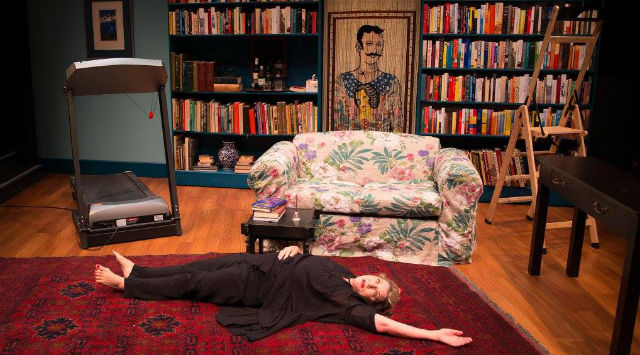
The Book Club by Roger Hall takes a light-hearted look at the follies of a middle aged, middle class Australian woman, who without the stresses of a career or financial uncertainty, occupies her time by indulging in love affairs with books and sex. It is a joyful life, and while her story is mostly inconsequential, it does offer a refreshing way of looking at marriage in contemporary times. Traditional notions of monogamy and fidelity persist, but what actually happens in secret is anybody’s guess. Husbands and books are entirely different things but the effort required to remain faithful to either, can be equally onerous under certain circumstances.

Hall’s script has several disparate focuses, and runs at approximately 90 minutes, which is a longer duration than most monologues can sustain. This production by director Rodney Fisher struggles to establish a comfortable plot trajectory, and the play takes a lot of time before getting to the crux of its own existence, but it is fortunately able to deliver more than a few laughs along the way to keep us entertained. Star of the show Amanda Muggleton is an exuberant and affable presence as Deb, with a natural innate ability to charm as the sole performer of the piece, but on the occasion of this final preview before opening night, it is clear that further rehearsal time is required. In sections of the play where the actor is confident, the rhythms and nuances she creates are completely delightful, but in her many unsure moments, tensions are lost and concentration proves challenging. There were 5 requests for line prompts, which demonstrate quite obviously the prematurity of the work, and we are prevented from engaging with the show at any valuable depth.

Marriage and art are constantly under scrutiny. There is an idea of success that we apply not only from within but that we also invite from the public. Our social nature means that we crave approval for the things we do, no matter how personal, and we want things to always work out. When writing a book, the process can be intensely insular, but ultimately, the finished product goes out into the big wide world, and the author opens themselves to criticisms of all kinds. In a marriage, a couple works in private to find harmony and happiness together, and then present to society the best image of unity they can muster. Not every book will be deemed a success, and not every day in married life is perfect, but it is in the doing, not the accolades, that true meaning is found, successful or not.

www.ensemble.com.au

Review: Mothers And Sons (Ensemble Theatre)

ensembleVenue: Ensemble Theatre (Kirribilli NSW), Aug 21 – Sep 27, 2015
Playwright: Terrence McNally
Director: Sandra Bates
Cast: Tim Draxl, Thomas Fisher, Jason Langley, Anne Tenney
Image by Clare Hawley

Theatre review
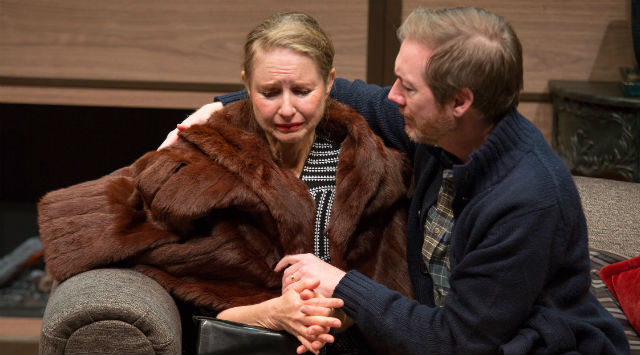
In Mothers And Sons, Terrence McNally uses the simplest of stories to present a range of thoughtful and provocative themes that are relevant to both our contemporary concerns, and to perennial troubles of human nature. Katharine comes to visit an impossibly perfect gay couple, Cal and Will, at their apartment in Manhattan. Andre (Katharine’s son and Cal’s previous partner) had died of AIDS 20 years ago, and it is only now that Katharine decides to pick up the pieces, and to find resolution with demons of the past that continue to haunt her. McNally’s writing is emotional, intelligently meaningful, and striking in its lyrical beauty. There is also an engaging humour in its dry wit and dark comedy that underscore the tormented relationships being dissected.

Sandra Bates’ direction of the piece explores with sensitivity, the many social issues and personal afflictions characteristic of the play. There is a deliberate gravitas that gives the production its integrity, and whether dealing with intimate matters like resentment and regret, or wider subjects of kinship and homophobia, Bates is able to give them all a reverential emphasis that encourages its audience to handle with care. The play tends however, to be too serious in tone, especially at its early stages, where our encounter with personalities require a lighter touch.

Played by Anne Tenney, Katharine is a staunch figure, a mean old woman whose incessant use of the word “hate” reveals as much about herself as it does her pessimistic view of, well, everything. Tenney’s portrayal is psychologically convincing and ultimately a moving one, but the comical eccentricities of her character’s melancholic despair are not embraced with enough power. The actor delivers a few laughs over the course of the show, but the exuberance of the text is frequently downplayed to accommodate a more literal interpretation of Katharine’s depressed experience of the world. Jason Langley is an extremely gentle Cal, very amiable and authentic, but insufficiently agitated in his tensions with Katharine, and often too subtle with his passion for his gay rights and lovers. Both actors create together, a stunning final scene of breathtaking sentimentality, but the arduous journey towards the play’s conclusion could be managed with greater, and more entertaining, turbulence. Adding a dimension of liveliness to proceedings is Tim Draxl in the supporting role of Cal’s husband Will. Draxl sustains an impressive energy through sequences of shifting temperaments, and is relied upon to provide breaths of fresh air at each entrance, to a very restrained stage.

We all feel the trajectory of time and the way it moves things forward, with or without our selves. Katharine is deeply unhappy, but she refuses to accept the transformations that occur around her, and withdraws from participating in the joys of life that are easily within reach. The feelings of being hard done-by are familiar to everyone, and Mothers And Sons illustrates with excellent clarity, the anguish of being enslaved by one’s own obstinacy. It also persuades us on the changing nature of the family unit; how we conceive of same-sex marriages and the bearing of children within those unions. A woman unable to reconcile her homophobia with her son’s sexuality punishes much more than herself. Hate tries to contaminate its environment, and often it succeeds, but truth and the human conscience has a way of defeating its poison, even if the process needs to drudge through generations of struggle and wasted lives.

www.ensemble.com.au

Review: Ladies In Lavender (Ensemble Theatre)

ensemble2Venue: Ensemble Theatre (Kirribilli NSW), Jul 3 – Aug 15, 2015
Playwright: Shaun McKenna
Director: Nicole Buffoni
Cast: Gael Ballantyne, Penny Cook, Sharon Flanagan, Lisa Gormley, Benjamin Hoetjes, Daniel Mitchell
Image by Clare Hawley

Theatre review
Shaun McKenna’s Ladies In Lavender is a 2012 stage adaptation of an original short story from 1908, and a more well-known 2004 film. It is a gentle story, with characters of an advanced age taking centre stage, allowing us to take a look at the experience of growing old and learning about a time in life that most of us will arrive at. Janet and Ursula are sisters in an English country town, lonely and isolated, but not without a zest for life and a sense of humour. We observe the nature of desire for the elderly, and consider the differences and similarities between young and old, when dealing with infatuations and relationships in general.

Direction of the piece by Nicole Buffoni is charming and lighthearted, with a respectful attitude towards its senior characters that encourages us to look at them with more complexity than we might usually do. The show is slightly low in energy, with a languid tone that can seem repetitive, but its personalities are endearing, and we follow their journeys with interest. Buffoni makes good use of the text to create a show that is entertaining at many points, although not all moments feel authentic within a presentation style that tends to be fairly surface. Both leading ladies display good commitment on stage, but we require greater dynamism and depth from their performances in order for the production to be more emotionally affecting.

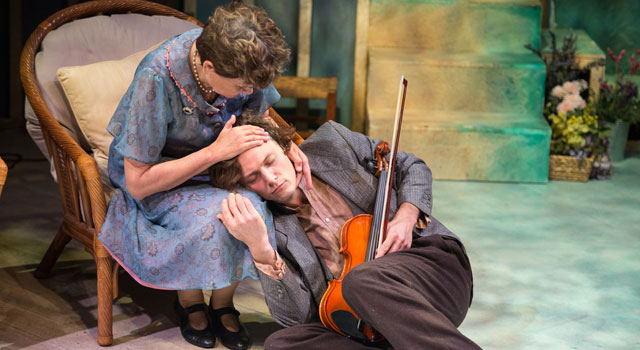
Supporting actors Gael Ballantyne and Daniel Mitchell provide eccentric colour, and both deliver consistent waves of laughter with accomplished comedic skills, keeping us amused and delighted. Benjamin Hoetjes plays Andre, a young man who finds himself stranded and unwittingly, the instigator of some domestic destabilisation. Hoetjes has a convincing innocence that is crucial to the plot’s effectiveness, and his charismatic effervescence helps us understand the affections of the women around him. The actor’s abilities on the violin cannot go unremarked, as the kind of versatility he possesses as a multi-faceted performer is quite extraordinary.

There is something too quiet and mild about this production. We long to witness the passions inferred in the story, but they are portrayed too subdued. Life develops differently for each individual, and every person’s place in the world is never replicated, but one hopes that all who pass through this existence catches glimpses of the many highs it offers. At the theatre too, we want to come in contact with amplified realities and the feelings that come along with them. Ladies In Lavender is essentially about celebrating life and mortality, and we should remember to be overjoyed at being part of it all.

www.ensemble.com.au

Review: Educating Rita (Ensemble Theatre)

ensembleVenue: Ensemble Theatre (Kirribilli NSW), May 21 – Jun 28, 2015
Playwright: Willy Russell
Director: Mark Kilmurry
Cast: Catherine McGraffin, Mark Kilmurry
Image by Clare Hawley

Theatre review
Willy Russell’s Educating Rita makes a case for aspirations, but not in capitalistic terms or in the form of the all too common middle-class pipe dream. He talks about the importance of culture and choice in all our lives, and suggests that the greatest value of life resides in the active pursuit of self-betterment. The very act of finding greater meanings and knowledge, is the key to enriching one’s existence. The effectiveness of Russell’s narrative relies on the obstructions that we face, especially repressive forces in our surrounds that hold us back and prevalent apathetic attitudes of our communities. Frank is an alcoholic, who is all but resigned from hopes, dreams and ambitions. He has removed the clock from his office wall and hides it along with the secret bottles of booze that occupy the back of bookshelves, so that he can deny the fact that time is passing him by, while he drinks his days away. Through his education of Rita, we observe all that Frank has to offer the world, but he does not acknowledge his own talents, and lets himself flounder and descend towards oblivion.

Direction of the work by Mark Kilmurry is beautifully executed, and very moving. Both characters are engaging and solidly established, so that we feel an instant familiarity that helps us become quickly invested in their stories. Kilmurry has created an environment where both actors collaborate intimately with little ego in the way of storytelling, and what they present often resonates with extraordinary authenticity, and we relate to the play from very personal and deep perspectives. As a performer, Kilmurry is lively and multifarious. His work is vivid, with remarkable clarity in intention and expression, but his character evolution as Frank is insufficiently dramatic in latter scenes for tensions to sustain beyond the show’s very exciting first half. Catherine McGraffin is an effervescent Rita, with the right variety and amount of charisma to let her role translate powerfully and emotionally. Through her heartfelt approach to the material at hand, we are able to examine our own lives, and to think about the parallels between Rita’s experiences and the choices we have made for ourselves. McGraffin’s intuitive and unrestrained style of performance takes hold of our empathy at will, but Rita’s progression later in the piece becomes unnecessarily subdued, resulting in the play seeming to lose steam over time.

Rita’s thirst for knowledge and her eagerness to lift the veil on secrets of the big, wide world is an inspiration, and Frank’s tragedy is a cautionary tale perhaps, of the increasingly parochial ways we live. Interaction with culture requires broad minds, but affluent societies are complacent. We spend time and energy chasing pleasures, but neglect the more challenging and meaningful parts of life. As we make our communities more wealthy and stable, interesting ideas become dangerous and we shut them out. It is difficult to be progressive in 2015 Australia, where fear is becoming a virtue, and we become increasingly protective against enemies real and imagined. The theatre might be a safe and sometimes conservative space where risky thoughts are contained, but at least they (theatre and risky thoughts) are both still thriving, and patrons can always leave with some degree of choice as to the freedoms they will allow themselves.

www.ensemble.com.au

Review: The Anzac Project (Ensemble Theatre)

ensembleVenue: Ensemble Theatre (Kirribilli NSW), Apr 2 – May 10, 2015.
Playwrights: Geoffrey Atherden (Dear Mum And Dad), Vanessa Bates (Light Begins To Fade)
Director: Mark Kilmurry
Actors: Anita Hegh, Eric Beecroft, Amy Mathews, David Terry
Image by Clare Hawley

Theatre review
Sacred cows insist on their stories being told repeatedly. Communities ascribe reverential value to our heroes, and lest we forget, their narratives are rehashed and recounted time and time again. With each passing year and with each new conflict, our attitudes about war, soldiers and nationhood change, and how we discuss these icons might alter accordingly but in the case of Australia’s Anzac legend, its social significance is guarded by a fierce loyalty that keeps its myth exceptionally pristine.

Ensemble Theatre’s The Anzac Project is a centennial commemoration of the 1915 Battle of Gallipoli, an event deeply meaningful to many Australians. Comprised of two plays, Geoffrey Atherden’s Dear Mum And Dad and Vanessa Bates’ Light Begins To Fade, the production attempts a fresh look at the hundred year story, with both pieces featuring characters from 1915 and 2015, juxtaposing time and tide to find a new way to represent our relationship with that monumental event in World War I. Artistic and subtle use of abstraction gives the work a sense of sophistication, but Atherden’s more prominent reliance on building a conventional narrative around a soldier is emotionally engaging, while Bates’ more sceptical approach, is too muted for dramatic effect, even if it is conceptually seductive. Mark Kilmurry’s direction is always respectful of the subject at hand, but he finds many opportunities to bring colour and energy to prevent the production from plunging too deeply into sombreness. His skill at creating an active and vibrant stage is to be admired, and his cleverness and flair with tricky scene transitions must not be left unacknowledged.

The cast of four is passionate and lively, with David Terry’s exuberance often stealing the show. The actor’s playfulness delivers a host of surprises, along with cheeky laughs, to what could have been a predictable retelling of these old tales. Anita Hegh’s versatility comes into full view with her portrayal of seven characters, each with a distinctive flavour and individual authenticity. The performers are required to constantly shift between roles, and although executed well, it demands of the audience a concentration that should be spent on more nuanced aspects of the plays.

As long as young people are being sent off to fight, we will always look upon sacrifices of our military organisations as worthy. Today, we are wary of making any statement that might be interpreted as a glorification of war, but by the same token, we hang on to the belief that our soldiers must be honoured. The tension between good and evil in this case is rarely explored sufficiently, perhaps because this Pandora’s box is a taboo that can never be breached. Art has the ability to bring intellect into any space, and to suggest alternate methods of exploring conventional thought, but sometimes the level of courage needed to articulate the unspeakable and profoundly unpopular, is simply beyond the capacity of any single person.

www.ensemble.com.au

5 Questions with Haiha Le

haihaleWhat is your favourite swear word?
I’m not discerning. I love them all, swearing is shitfuckincuntty rad! I started timidly, a late bloomer at 16, but once the floodgates opened I became a veritable gutter mouth.

What are you wearing?
Nothing but the blood of a virgin coconut (organic & cold pressed).

What is love?
A four letter English word worth seven points in scrabble. In Vietnamese it’s Yêu, which sounds like ‘Ewww’ when pronounced in English.

What was the last show you saw, and how many stars do you give it?
Cyrano de Bergerac at Sydney Theatre Company. I give it 3 gold stickers. Props to the actors though, they get 5 gold stickers.

Is your new show going to be any good?
Hells yeh, hi five!

Haiha Le is starring in Dream Home by David Williamson.
Show dates: 31 Jan – 28 Mar, 2015
Show venue: Ensemble Theatre

Suzy Goes See’s Best Of 2014

sgs-best2014

2014 has been a busy year. Choosing memorable moments from the 194 shows I had reviewed in these 12 months is a mind-bending exercise, but a wonderful opportunity that shows just how amazing and vibrant, theatre people are in Sydney. Thank you to artists, companies, publicists and punters who continue to support Suzy Goes See. Have a lovely holiday season and a happy new year! Now on to the Best Of 2014 list (all in random order)…

Suzy x

 Avant Garde Angels
The bravest and most creatively experimental works in 2014.

 Quirky Questers
The most unusual and colourful characters to appear on our stages in 2014.

♥ Design Doyennes
Outstanding visual design in 2014. Fabulous lights, sets and costumes.

♥ Darlings Of Dance
Breathtaking brilliance in the dance space of 2014.

♥ Musical Marvels
Outstanding performers in cabaret and musicals in 2014.

♥ Second Fiddle Superstars
Scene-stealers of 2014 in supporting roles.

♥ Ensemble Excellence
Casts in 2014 rich with chemistry and talent.

♥ Champs Of Comedy
Best comedic performances of 2014.

♥ Daredevils Of Drama
Best actors in dramatic roles in 2014.

♥ Wise With Words
Best new scripts of 2014.

 Directorial Dominance
Best direction in 2014.

♥ Shows Of The Year
The mighty Top 10.

♥ Suzy’s Special Soft Spot
A special mention for the diversity of cultures that have featured in its programming this year.

  • ATYP

End

sgs-best2014a

Photography by Roderick Ng, Dec 2014

End

Best of 2018 | Best of 2017 | Best of 2016Best of 2015Best Of 2013

Review: Absent Friends (Ensemble Theatre)

Venue: Ensemble Theatre (Kirribilli NSW), Dec 4, 2014 – Jan 24, 2015.
Playwright: Alan Ayckbourn
Director: Mark Kilmurry
Cast: Michelle Doake, Darren Gilshenan, Brian Meegan, Jessica Sullivan, Richard Sydenham, Queenie Van De Zandt
Images by Katy Green Loughrey

Theatre review
Theatre is much more than storytelling, but the allure of a captivating narrative is hard to resist. In Alan Ayckbourn’s 1974 play Absent Friends, a vague context is set up as a springboard for innovative use of time and space, and in the case of director Mark Kilmurry’s efforts, to deliver an unusual and unexpected form of comedy that challenges our notions of performance and entertainment. Diana is throwing a tea party for an old friend who is mourning the death of his fiancée. The group comprises six distinct and diverse personalities, each independently fascinating but unified by a mode of presentation clearly established by Kilmurry.

The show is often absurd and slapstick in tone, and we find ourselves laughing at inane moments that have little to do with the story, but it strives for something that is ultimately quite precise and polished. The enjoyment of the work lies in the way human traits and behaviour are exaggerated so that we recognise parts of life that are usually too subtle to grip our attention. Small things matter, and the production moves focus away from key plot points to emphasise minute interchanges that occur between friends. It encourages us to appreciate friendship not for the impact they may have on major life events, but for the unadulterated bliss derived from physical company and emotional closeness. Kilmurry’s direction is brave, but not always effective. The work depends heavily on the cast’s chemistry with its audience and achieving that familiarity was hit and miss on opening night.

Darren Gilshenan plays Colin, the recently bereaved, with effervescent irony and a mischievous presence. The actor’s sense of humour is a perfect match for the farce that unfolds. We believe the tragedy that Colin experiences, but are also persuaded by Gilshenan’s comic charms and impeccable timing. In the role of Marge is Queenie Van De Zandt, whose considered and dynamic approach provides some of the show’s biggest laughs. Her work is enchanting, exacting and hilarious, with an edginess that provides a vibrant energy whenever she takes centre stage. Michelle Doake and Richard Sydenham both perform outrageously memorable scenes, but are less consistent with their level of engagement with viewers.

We all need to laugh, but what people consider funny is a mystery, and attempts at locating keys to that mystery requires constant reinvention. Absent Friends has an experimental spirit that lights up the theatre. It takes many risks, and while they may not all pay off, the work impresses with its exhilarating and original take on live performance. The play may be forty years-old, but the jokes it presents are fresh as a daisy.

www.ensemble.com.au

Review: Blue/Orange (Ensemble Theatre)

ensembletheatreVenue: Ensemble Theatre (Kirribilli NSW), Oct 23 – Nov 29, 2014.
Playwright: Joe Penhall
Director: Anna Crawford
Cast: Ian Meadows, Dorian Nkono, Sean Taylor
Image by Clare Hawley

Theatre review (originally published at Auditorium Magazine)
Health services are a crucial part of all civilisations, where access to medical professionals is a basic human right, regardless of class and creed. The subject of mental health is a growing area of concern in the West, with awareness and understanding of relevant issues fast improving through our communities. Joe Penhall’s script centres around Christopher, a mental health patient with the UK’s National Health Service. Surrounding him are two doctors, Bruce is the younger of the pair, idealistic but naive, and Robert is the authority figure of the hospital, seasoned and carnivorously ambitious. A fight ensues with Christopher caught in the middle, and as the plot unfolds, the play’s themes expand simultaneously. Christopher’s African ethnicity and low social status are the linchpin that brings into discussion, not just the intriguing process of psychiatric diagnosis and the health industry in general, but also race relations in contemporary settings and the machinations of authority (and its betrayal) in our daily social structures.

The ideas are big, but Penhall’s story is precise and simple. His captivating dialogue is rich with humour, controversy and intellect, consistently entertaining our senses and challenging our ethics. Some portions could be more succinct, but Penhall’s words and their rhythms are brilliantly crafted, as evidenced by the thrilling and energetic narratives that the show’s cast and director are able to create from the text. Anna Crawford’s direction is decidedly wonderful. The comedy of the piece is powerfully delivered, and the immense joy of being in an auditorium with laughter erupting at every turn is simply theatrical magic. Crawford introduces a daring freedom that encourages her actors to make risky choices, and much to our delight, they all seem to work. Likewise, the many scenes of altercation are loaded with explosive drama, always with a threatening tension and dangerous intrigue. Philosophical and ethical arguments in the work are the ingredients that make it feel substantial, and they are perfectly tuned, disallowed from disrupting dramatic flow, but often given an ambiguity that makes the ideas seductively confronting.

The use of space is however, not always elegant. Actors are frequently positioned so that their facial expressions are not available to big sections of the audience, which can be frustrating as well as distracting. Set pieces are composed of generic furniture elements from public sector offices, all terribly unattractive. The space has not been designed to be a realistic one, yet the several chairs and tables seem to use the notion of realism or accuracy as a convenient justification. A work of this calibre requires greater imagination and creativity in its visual design, and not be allowed to pale in comparison.

In the role of Robert is Sean Taylor, whose virtuoso performance bears the kind of astonishing glory that leaves a lasting impression. The most dangerous villain is the one who combines truths with lies, so that you are kept on his side, giving him benefit of the doubt until too late. Taylor makes it hard for us to know if his character is an evil racist doctor, or a progressive thinker, and our struggle in trying to figure him out is a masochistic pleasure. The actor is full of confidence and his presence is all-consuming; we cannot keep our eyes off of him. Taylor’s marvellous voice provides all that we need to know, and his face expresses everything his character wishes, but also contradicts the doctor’s intentions.

The show is thoroughly rehearsed, with every actor appearing to know exactly what they wish to achieve, yet the stage feels to be a spontaneous one. Dorian Nkono is extremely lively and likeable as Christopher, the patient who may or may not be schizophrenic. Nkono’s control over his physicality and the way he uses movement enrich the role and provide a vibrant energy that elevates the play to a level of theatre that is more than words. His sense for comedy is outstanding. Nkono is a truly funny actor whose approach ranges from subtle to slapstick, but an emphasis on storytelling makes his work authentic and compelling.

The young Dr Bruce is played by Ian Meadows who has the arduous task of maintaining composure as the only unassertive personality in the show. He often gets overwhelmed by his gargantuan counterparts, but he resists irrelevant exaggeration, and delivers a performance that is ultimately a truthful one. Meadow’s work is less flamboyant, which means that the ideological arguments he represents can get subsumed at certain points, but he manages to find a climax at the concluding moments to match in energy and produce an impressive ending to the piece.

Racism and mental illness are contentious issues that elude easy definition. We understand them in abstraction, but how they are discussed and dealt with in reality involves constant negotiation between vacillations of subjectivities. In Blue/Orange,  the powerful and the powerless collide in a system that attempts to be fair, just and democratic. We might all want the best for the world that we share, but our perspectives are different, and finding agreement on a unified destination becomes problematic. The doctor should know what is best for the patient, but the patient is not without rights and opinions. In assigning authority to some, society risks the removal of rights from others, but the ironic creation of power structures seems to be the only mechanism we have for finding harmony.

www.ensemble.com.au