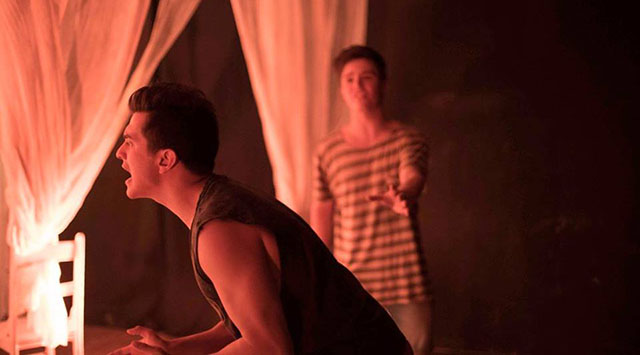
Review: The Measure Of A Man (New Theatre)

gavinroachVenue: New Theatre (Newtown NSW), Sep 13 – 17, 2016
Playwright: Gavin Roach
Director: Lauren Hopley
Cast: Gavin Roach
Image by Jarrod Rose

Theatre review
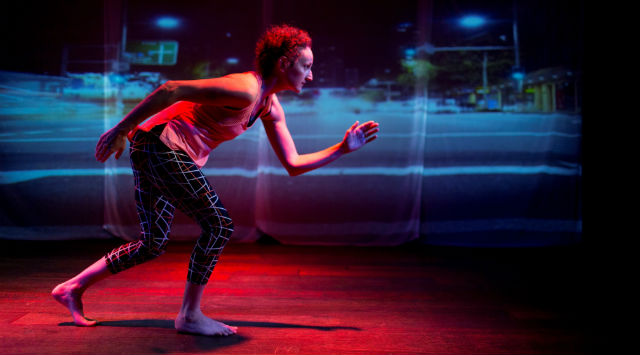
The monologue begins with Gavin Roach talking about penis size, a discussion indicative of the inadequacies that men can feel. The Measure Of A Man is not entirely about genitals, but it is about sex, and the effects on one’s emotional well-being when sexual dysfunctions appear. Roach’s writing endeavours to be absolutely revealing, and its vulnerability can be disarming, but for a context of physical and mental health, his disclosures have a tendency to dwell on symptoms rather than a deeper exploration into the causes of his worries. We find out in great detail, many of the issues the unnamed character faces with regard to sexual activity, but there is little insight into the reasons that might let us identify more closely with his circumstances.

Roach is a charming performer, able to present both humour and pathos with excellent conviction. His strong presence has a vivacious energy that provides an essential liveliness to the one-man-show format, but the play’s strong tendency for melancholy misses many an opportunity for scenes of comedy and mirth. Sex is a serious matter, but it is also very funny, and joking about it does not diminish its resonance. We connect more with Roach when he is self-effacing and camp. When performing his distinct style of flirty and transparent frivolity, we sense an ironic but truer depiction of his inner-self than when he shifts into high drama. Perhaps the stakes are too low to match.

Frank descriptions of unreliable body parts and lustful misadventures in The Measure Of A Man represent a progressive sex positive attitude that many will find refreshing and liberating. Queer artists have often faced the problem of having to play to mainstream heteronormative audiences, and in the process, become compromised and misleadingly puritanical in their expressions. As societies become more embracing of diversity and honesty in how we talk about sex, sexuality and gender, queer work can begin to be less pandering. Good taste will always exist, but artists must find a way to let their truths protrude, even if just a few meagre inches.

www.newtheatre.org.au

Review: Young Pretender (New Theatre)

newtheatreVenue: New Theatre (Newtown NSW), Sep 13 – 17, 2016
Playwright: E. V. Crowe
Director: Mark G Nagle
Cast: Ryan Bown, Shaun McEachern, Madelaine Osborn
Image by Caitlin Hodder

Theatre review
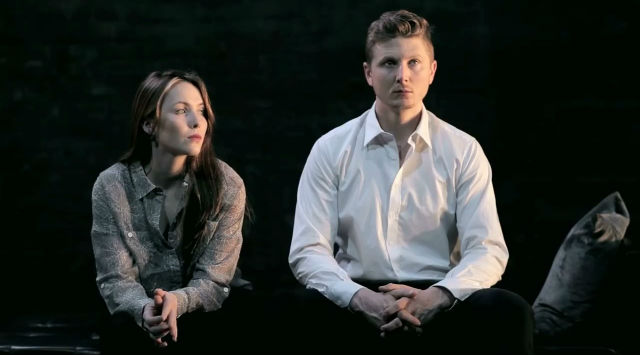
Bonnie Prince Charlie plays a significant part in the Scottish psyche. His failed Jacobite rising of 1745 is a representation of the problematic relationship many perceive to exist between Scotland and the United Kingdom. E. V. Crowe’s Young Pretender is a re-imagined account of the young man at his most memorable. It is a play that relies on an audience’s assumed knowledge, if not a shared passion for the legendary figure. A regular Australian crowd is at best indifferent about the show’s protagonist, and many of us would be forgiven to be completely ignorant about his legacy and indeed, eighteenth century Scottish history.

Without sufficient initiation into its context, the production can prove disorienting. No great effort is made to adapt the work for its dislocated audience, and we struggle to find relevance in any of its drama. The cast is attractive and energetic, but characters being portrayed remain distant, even though good focus is displayed on stage. It is noteworthy however, that Caitlin Hodder’s costumes are cleverly designed, flattering, and the sole visual element that aims to provide the production with a sense of style.

We all love a rebel. We spend must of our lives adhering to rules and regulations, only to find discontentment as compensation. In our stories, we look to those who dare to resist the constraints and encumbrances of society, to walk their own paths so that we may follow in their footsteps, if only in our fantasies. Making art in today’s state of advanced capitalism, is often an act of great defiance. Only a select few are rewarded appropriately, while the rest spend their time creating with little hope of considerable support or approval. We cannot base all our decisions on reward and accolades; some wars are to be be fought even when defeat is anticipated, for the meaning of life lies somewhere beyond the sovereignty of money and power. True artists will do what they have to do regardless of the oppressive nature of our environment, and only pretenders will ever be hampered by the will of others.

www.newtheatre.org.au

Review: Metamorphoses (Montague Basement)

montaguebasementVenue: Erskineville Town Hall (Erskineville NSW), Sep 13 – 17, 2016
Creators: Imogen Gardam, Lulu Howes, Saro Lusty-Cavallari (based on the poem by Ovid)
Dramaturg: Pierce Wilcox
Cast: Lulu Howes, Saro Lusty-Cavallari
Image by Zaina Ahmed

Theatre review
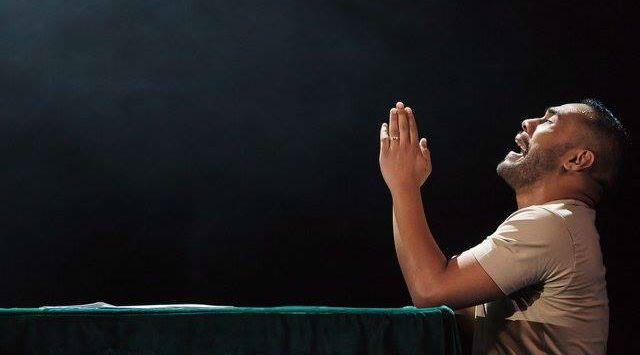
Turning Ovid’s two thousand year-old poem into a work for the theatre in Sydney today, is an exercise in adaptation full of possibilities. Every choice is a reflection of the interpreters’ relationship with the world, and with the art form itself. The very decision to take on a project of this nature, is indicative of a desire to experiment with the social aspects of both; theatre, and that immortal classic being interrogated. Imogen Gardam, Lulu Howes and Saro Lusty-Cavallari explore what a work represents when it refuses to be forgotten, and what it means in contemporary society when individuals meet at the theatre to relive it.

Each scene that corresponds to Ovid’s fifteen books, is given its own distinct identity and stylistic genre. Even though there is a conscious effort in manufacturing something quite erratic as inspired by the original, the use of only two actors with infrequent alterations to their appearance limits our ability to perceive the staging with as much variety as is evidently attempted. Our minds give in to a habitual need to create a sense of consistency with the faces we see before us, and the big range of characters is often conflated into a simplification of understanding involving one man and one woman. Perhaps the performers bring along a passion to their performance that has a tendency to appear homogeneous. It can also be said that although energetic in their approach, an ambiguity to their engagement with the work delivers an experience that can be elusive and frustrating. We wish for greater finesse either in the poetic nature of what is being created, or in the meanings that it is able to evoke.

There is abstract beauty to be found in this version of Metamorphoses, as well as political ideas that hold importance and relevance, but neither is willing to become concrete enough for us to grasp with a greater sense of enthralment. If a work aims to alienate, it should keep our feelings at bay but our minds captivated. Art is not always about earning likes, but it should secure attention, especially when it actively rejects the conventional and banal. Little of what we do can endure millennia, but the promise of a resonant instant is all it takes to keep us striving.

www.montaguebasement.com

Review: Keep Calling (PACT Centre for Emerging Artists)

keepcallingVenue: PACT Centre for Emerging Artists (Erskineville NSW), Sep 13 – 17, 2016
Playwright: Chelsea Ingram
Director: Herman Pretorius
Cast: Chelsea Ingram, Luke Edward Smith
Image by Isabelle Munhos

Theatre review
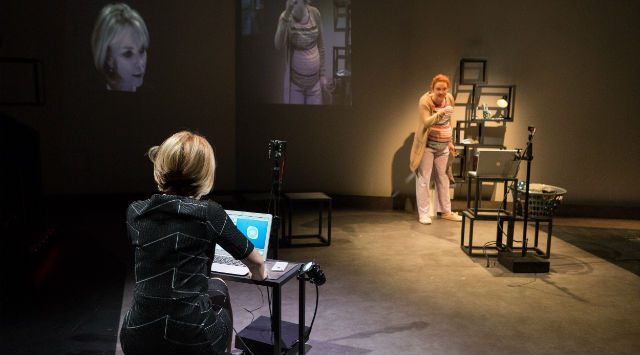
Chelsea Ingram’s Keep Calling is about an unusual relationship, and the agony of existence when taboo becomes an integral element to one’s identity. The play presents a valuable opportunity to take a rare look at something deemed objectionable, and even though it stops short of advocating any specific ethical perspective, it nonetheless confronts the way we think of the themes being portrayed. For some, the material might prove controversial, but for others, its depictions can seem coy; it is a delicate balance that Ingram tries to maintain, but an edgier approach would make the show more memorable.

There is an undeniable mystery built into the plot, even though the production struggles to effectively manufacture a sense of intrigue. Its characters are vulnerable, but Keep Calling‘s immersion in their suffering is insufficiently convincing for us to respond with empathy. The style of presentation is wild and loud, allowing us to access the emotional upheavals taking place, but we rarely make contact with an authentic foundation on which the drama should be built upon, and the play leaves us feeling somewhat detached.

We can all understand Stacey and Sam’s desolation even though few of us have experienced their circumstance. Their story is unique, but only a flimsy membrane away from our realities. How we formulate rules for living is often arbitrary, and Keep Calling</em is a reminder of the ambiguity that can exist in what we wish to be incontrovertibly true. Societies have come to accept that love can take many forms, but there are limits to what they can accept. What is considered illicit in a particular time and place, is legitimate in another. It is easy to say "as long as nobody gets hurt," but how we define and detect damage is yet another quandary.

www.pact.net.au

Review: Reflections Of A Cause (On The Cusp Productions)

onthecuspVenue: The Depot Theatre (Marrickville NSW), Sep 7 – 10, 2016
Playwright: Sage Godrei
Director: Joy Roberts
Cast: Ivan Chew, Macushla Cross, Emma Dalton, Benjamin Hanly, Chris Miller, Anthony Yangoyan

Theatre review
It is a simple story that looks at a pair of lovers as they begin their relationship, and also at their deteriorated state twenty years later. Made more substantial by a wide range of ideas, the play unfortunately becomes a complicated one that struggles to find focus and clarity. Scenes vary from the very basic, to the very obtuse, and although the show’s experimental spirit is commendable, it suffers from appearing hesitant and irresolute in what it wishes to achieve.

There are certainly passionate assertions to be found, especially in Chris Miller’s performance, but the message of Reflections Of A Cause is largely lost. Its characters’ experiences might appear familiar, but a weak narrative structure prevents us from connecting with any of its drama, and the tenuous inclusion of social issues into the couple’s journey only serves to confuse and alienate.

The play contains elements that could certainly be made interesting. It may be too raw and immaturely presented, but it is neither mindless nor frivolous. In any of the art that we make, it is crucial that we identify what it is we wish to say, and then do all we can to communicate those ideas. There will always be noise that interfere, but it is the artist’s discipline that makes sure what they consider most important, be the most indelible of each experience.

www.onthecuspprod.com

Review: Atlantis (Subtlenuance Theatre)

subtlenuanceVenue: Kings Cross Theatre Kings Cross NSW), Sep 6 – 10, 2016
Playwright: Paul Gilchrist
Director: Kit Bennett
Cast: Sylvia Keays, Antony Talia, Madeleine Withington

Theatre review
A meaningful existence can only ever be understood from a position of subjective experience. In Paul Gilchrist’s Atlantis, things may contain inherent value, but it is up to us to bring interpretation to them, and we have a choice in how we read the world and how we immerse ourselves in the inevitable living of it. We all rely on tall tales to get us through each day and night, calling them mythologies, religion, science or mathematics, for it is intrinsically human to want to make sense of things. Our consciousness must be shaped, but what form it may take is subject to the mind’s plasticity, and in Atlanits, Gilchrist demonstrates a kind of self-determining fate that results from the stories we create for ourselves.

Of course, the play’s events can only happen in a place like Australia where a vast majority of us are rich and free. It is Gilchrist’s point, to make the best of our privilege. We are in a position to dream big, and to disregard cultural restrictions and social fears, so that we can have better lives, and do good for the world, in ways that are perhaps original and trailblazing. If we followed every rule, our evolution will never take momentous leaps forward. Anomalous advancements require people who dare be radical; whether Mahatma Gandhi or Elizabeth I, it is always the maverick who establishes a legacy.

Atlanits is a soulful work, full of spirit, but with its feet planted firmly on the ground. Its words take hold of our imagination, and argue convincingly for perspectives that are only optimistic and inspiring. Actor Antony Talia does a splendid job of helping us navigate between reality and idealism, with his remarkably engaging presence and an impressive commitment to authenticity. There is excellent humour written into early sections of the play, but they are unfortunately lost in the production’s overly square focus on the deeper lessons, that could probably be left until later in the piece.

The work is staged with poignancy in mind, but more adventurous exploration of physicality would drive its message more effectively. Attention is placed on Gilchrist’s beautiful words, but our other senses need to be manipulated more for a richer theatre, as we commune to share space and ideas. It might be an exaggeration to say that “if you build it, they will come,” but magic must start somewhere, and it never comes from fear.

www.subtlenuance.com

Review: Letters To Lindy (Seymour Centre)

merrigongVenue: Seymour Centre (Chippendale NSW), Sep 2 – 10, 2016
Playwright: Alana Valentine
Director: Darren Yap
Cast: Jeanette Cronin, Glenn Hazeldine, Phillip Hinton, Jane Phegan
Image by Lisa Tomasetti

Theatre review
There was always something impenetrable about Lindy Chamberlain. Without performing appropriately the role of a distraught mother losing her child, many Australians found her coolness disarming. Alana Valentine’s Letters To Lindy too, does not reveal enough of the protagonist’s inner world. A substantial portion of the show is absorbed in recounting events that are already familiar, and although it does provide glimpses into Chamberlain’s deeper thoughts, the play’s structure although earnest, does not quite deliver a poignancy that lives up to its central, harrowing incident. The mother retains a sense of detachment from her public, and we once again struggle to connect.

Jeanette Cronin is star of the show, impressively dynamic in her approach, with surprising interpretations that prevent Chamberlain’s story from turning cliché. Director Darren Yap pitches the performance at a level suitable to the vast auditorium, encouraging actors to bring a vigour to the stage that keeps us attentive. Of the supporting cast, Glenn Hazeldine is particularly charming in a wide ranging suite of personalities, colourfully portraying each character with a delightful, and thoughtful, sensitivity.

We have no right to demand that Lindy Chamberlain acts out a part to fit a narrative that pleases us. In fact, she is to be commended for going against the grain of stereotype, especially in this new era of pervasive and obsessive media scrutiny, to insist on presenting a face of authenticity. As a theatrical work however, Letters To Lindy needs to fulfil our need for something more engaging, and more moving, in its drama.

The cruelty that societies are so ready to dispense on individuals, especially those in the public eye, have to be kept in check, yet we keep creating opportunities for those injustices to be amplified. It seems our need to witch hunt does not cease, even when we already know better.

www.merrigong.com.auwww.seymourcentre.com

Review: Gloria (Griffin Theatre Company)

griffinVenue: SBW Stables Theatre (Kings Cross NSW), Aug 26 – Oct 8, 2016
Playwright: Benedict Andrews
Director: Lee Lewis
Cast: Kristy Best, Chloe Bayliss, Marta Dusseldorp, Louis Fontaine, Huw Higginson, Meyne Wyatt, Pierce Wilcox
Image by Brett Boardman

Theatre review
Gloria is a mother and a wife, but to everyone around her and to herself, she is first and foremost, a star of the stage. Having spent her life playing many legendary tragic heroines, Gloria knows more about the fictional women of Western theatre than she does the actor who portrays them. Benedict Andrew’s script is stylised and abstract, an imaginative creation that parallels Gloria’s struggle for coherence. The leading lady’s existence is one of disorientation and tumult, and Andrew’s writing relishes in that chaos for a work striking in its originality and remarkable boldness.

Equally audacious is director Lee Lewis’ resolve to reach the truth in the enigmatic world of Gloria, where obfuscation and secrets are given their due, while a foundation of instinctive authenticity is established with absolute imperviousness. Every artistic and mysterious flourish, no matter how flamboyant (including Steve Toulmin’s extraordinary music), is anchored in startling emotional precision and intensity, conveyed through a captivating combination of deep understanding and steely determination.

The actors provide an unforgettable experience, visceral and immediate, persistently surprising and colourful, with a baroque sensibility that elevates the theatrical form to a rare level of infectious excitement. Marta Dusseldorp is devastating as Gloria. In a state of constant distress and confusion, Dusseldorp’s embodiment of Gloria is tenacious, powerful and very, very dark.

The play is intentionally coy about Gloria’s problems, therefore even though emotions are almost always at a fever pitch, its moments of melodrama are few. The audience is then free to find an interpretation of her narrative, so we rely on our own faculties to impose upon Gloria, a reading of her story that will only ever be partially accurate. The actor wishes to step onto the stage with nothing of herself, and everything of the person she represents. An emptiness resides in her, and because the soul is constantly morphing for another, it forgets itself.

www.griffintheatre.com.au

Review: Before The Water Gets Cold (Smoking Gum Theatre)

smokinggumVenue: Sydney Theatre School (Chippendale NSW), Aug 23 – 27, 2016
Playwright: Charles O’Grady
Director: Lucinda Vitek
Cast: Samuel Beazley, Robin Chen, Julia Robertson, Amy Zhang

Theatre review
Part poetry, part dance and part play, Before The Water Gets Cold is a multidisciplinary exploration into the nature of artistic expression. With themes of love and loneliness providing its main threads of inspiration, what we see on stage are four performers inhabiting a range of personalities, not to convey a narrative, but to evoke sensations and emotions that we are all familiar with.

The work is guided by an innovative spirit, and is often a refreshing experience, although significant portions can seem clichéd, due to its inability to transcend the derivative. Writing, direction and choreography exhibit moments of beauty through their various modes of experimentation, but a greater sense of originality, or perhaps boldness, is missing in the production.

Performer Julia Robertson is memorable for her captivating presence, and a surprising authenticity that she brings, even to the more absurdist sequences of the show. Her work with Robin Chen in a montage composed of romantic movie quotations is particularly delightful. Composer Josephine Gibson and sound designer Jeaux Pfeffer contribute proficiently to this collaboration, both sensitive and understated in style, for a delicate air that envelopes the auditorium.

Before The Water Gets Cold wishes to marry logic with something more ephemeral, but a greater trust in the visceral instance would allow us to dive in deeper into its artistry. The mind gets in the way of much of life’s pleasures, and at the theatre, an opportunity for us to be in touch with the magic of the here and now is always present, if only we resist the temptation to analyse everything even before it begins to happen.

www.smokinggumtheatre.com

Review: Look Back In Anger (Red Line Productions)

redlineVenue: Old Fitzroy Theatre (Woolloomooloo NSW), Aug 16 – Sep 10, 2016 | Belvoir St Theatre (Surry Hills NSW), Sep 13 – 17, 2016
Playwright: John Osborne
Directors: Damien Ryan, Lizzie Schebesta
Cast: Robin Goldsworthy, Andrew Henry, Melissa Bonne, Chantelle Jamieson
Image by John Marmaras

Theatre review
Jimmy is a very angry young man, and in Look Back In Anger, we are subjected to a series of his incessant, long and very tedious rants that prove themselves to be ultimately ineffectual, and highly irritating. At one point, he insists “that voice that cries out doesn’t have to be a weakling’s does it?”

1956 it seems, was a completely different time. Today, a white man with youth and a university education, living in a Western society, is considered to be in possession of the greatest of privileges, and we have no patience for their complaints about their perceived (and possibly, imagined) injustices of life. Of course, residing in positions of advantage does not automatically absolve a person of angst and self-proclaimed victimhood. Jimmy’s grief with our troubled existence is valid, and it is his right to refuse to suck it up, grin and bear it, but like all the furious white male voices that rule the talk-back radio waves, we can choose to ignore their shrill babble. John Osborne’s play is well structured, but its themes and concerns could not be more dated, and for many feminists, not much is lost if Look Back In Anger, along with its overt misogyny, is left dead, buried and cremated.

From a technical perspective however, co-directors Damien Ryan and Lizzie Schebesta have revived the play with admirable accuracy and nuance, delivering powerful drama, especially to those more welcoming of its ethos. Also accomplished are its designers; Jonathan Hindmarsh’s set and Anna Gardiner’s costumes add meaningful, dynamic touches to the look of the piece, thoughtfully utilising the space’s intimacy to provide a vibrant immediacy to the experience.

The cast is uniformly strong, with each actor contributing impressive depth in their characterisations of less than inspiring personalities. Osborne’s dialogue is provocative (to say the least), and his lines are given tremendous fervour by an ensemble insistent on winning us over. Andrew Henry is at his bombastic best as Jimmy, with a portrayal so passionate and convincing that we struggle to detach our dislike for the character from what is actually an excellent performance by the leading man. Henry finds scintillating chemistry with each of his co-stars, and it must be said that every scene is captivating, but also undeniably excruciating for audiences less tolerant of its turgid drivel.

Like many works of art (good or bad) that cause exasperation, Look Back In Anger will spark discussion. In its time, the work was relevant for its interest in class consciousness and issues of poverty, but these ideas have evolved into something that is now inseparable from contexts of race and gender. In the past, audiences were able to understand the world from Jimmy’s perspective, but today, the world turns the tables and puts him under scrutiny. We are made to look at anxieties of the white man, but his anger scarcely raises a brow. Perhaps it is only himself who could possibly benefit from wallowing in that distorted and narcissistic reflection.

www.oldfitztheatre.com