Review: Antigone (Sport For Jove Theatre)

sportforjoveVenue: Seymour Centre (Chippendale NSW), Oct 6 – 22, 2016
Playwright: Sophocles (adapted by Damien Ryan)
Directors: Terry Karabelas, Damien Ryan
Cast: Andrea Demetriades, Anna Volska, Deborah Galanos, Elijah Williams, Fiona Press, Janine Watson, Joseph Del Re, Louisa Mignone, Marie Kamara, Thomas Royce-Hampton, William Zappa
Image by Marnya Rothe

Theatre review
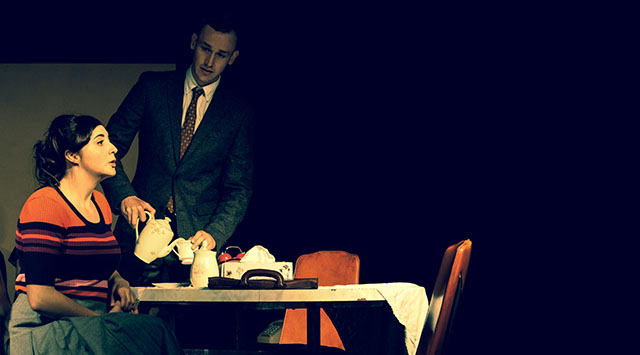
In Damien Ryan’s adaptation of Antigone, a single word ‘terrorism’ leads the charge in transforming the ancient text into a story for our times. Language and its accompanying sensibilities are disarmingly modern in the suddenly new play, and we are compelled to engage with its ideas in a thoroughly contemporary manner. It makes us think about the inconvenient evolution of democracy in the age of social media, and the frightening consequences of vacuous personalities running for office. We confront the demonisation and scapegoating of people who have been turned into the public enemy du jour, and examine the eternal dilemma of making sacrifices for the greater good. Almost like a time capsule of culture as it stands, with many of today’s concerns contained in a tale from ages past.

The production encourages our minds to build associations between the unfolding story with our immediate realities, delivering resonances that can feel disparate and divergent, but direction of the work (by Ryan and Terry Karabelas) maintains a dramatic focus with its emphasis on characters and atmosphere. The use of percussive instruments provide tremendous manipulation to mood, and to meaning; Thomas Royce-Hampton’s ability to create just the right sounds at every crucial moment of tension is one of the show’s strokes of genius. The chorus is effectively utilised to steer our moral compasses, along with our emotions, for a theatrical experience that captivates our senses and intellect. It must be noted that there is an elegance and often very delightful approach to the chorus’ stylistic work that brings surprising texture to the show. Visual design is beautifully considered and confidently executed, with Matt Cox’s lights and Melanie Liertz’s set, impressive from the very start.

It is an appealing cast, fortified by excellent chemistry and timing, exuberantly alive for the entire duration. Andrea Demetriades is an earthy Antigone, restrained and almost minimalist in performance style, but consistently believable. More could be made of her crises, that will allow the actor greater space to showcase her abilities, and for us to feel closer to the plight of Thebes’ people. Courage, determination and strength of will are Antigone’s dominant qualities, but they are often left offstage. We witness the aftermath of her heroic deeds, but not the very moments of bravery that are central to how we know her to be. When Antigone defies the demands of community and the state’s decree, she is moved by conscience and love. Through her actions, we arrive at an absolute truth, discovering something fundamental to human experience. She urges us to persist with what we know to be right, and her tender age teaches us to be suspicious of grown-up notions of shades of grey. How a person chooses to live in the real world, becomes that person’s own reality. Antigone is dead at 15, but her life held only pure and good.

www.sportforjove.com.au

Review: Marat/Sade (New Theatre)

newtheatreVenue: New Theatre (Newtown NSW), Oct 5 – Nov 5, 2016
Playwright: Peter Weiss (translated by Geoffrey Skelton and Adrian Mitchell)
Director: Barry French
Cast: Tom Aldous, Kaiya Bartholomew, Andrea Blight, Debra Bryan, Lyn Collingwood, Garreth Cruikshank, Tahlia Hoffman Hayes, Tim De Sousa, Gregory Dias, Patrick Howard, Isaro Kayitesi, Mark Langham, Leilani Loau, Jim McCrudden, Lynn Roise, Emmanuel Said, Irene Sarrinikolaou, Alia Seror-O’Neill, Liam Smith, Peter Talmacs, Annette van Roden, Jacque Vickers
Image by Bob Seary

Theatre review
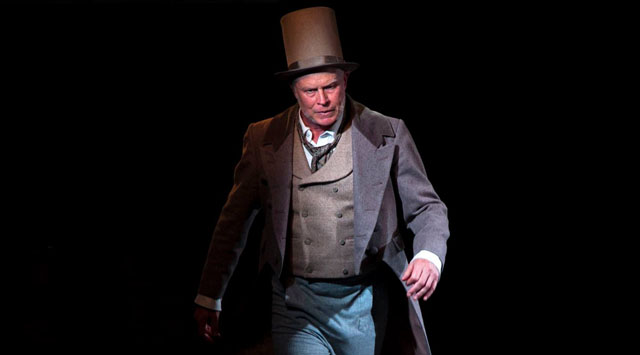
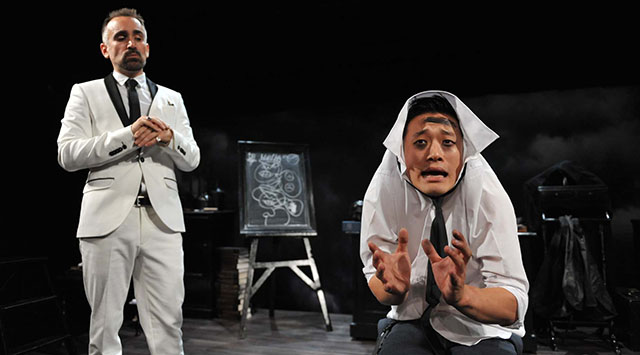
Originally conceived as a work set inside a psychiatric hospital, director Barry French’s version moves the action to a modern day asylum centre, with characters transposed from the mentally ill to asylum seekers who have gone mad from incarceration. A lot of the production makes good sense, with the play’s concerns and motivations proving to stand the test of time, but the text remains a difficult one half a century after its 1964 premiere.

Fragmented and purposefully incoherent, Marat/Sade is a fiercely anti-capitalist work that challenges how we think of society and art, and was never meant to be an easy one to stomach. It relies on the creation of spectacle and a sense of presence unique to the experience of live theatre, to keep the audience intrigued and captivated. French does well at manufacturing a dynamic stage with powerful imagery, featuring excellent design work by Tom Bannerman (set), Spiros Hristias (lights) and Nicola Block (costumes). Further, the incorporation of a very large cast comprising over 20 actors provides a sumptuous visual majesty, but the calibre of performers are highly inconsistent.

Our attention fades in and out, depending on the quality of acting being showcased, and the general sense of visceral energy stirred by the writing’s violent insanity, is only occasionally authentic and seldom severe enough to fascinate or convince. There are however, memorable personalities in the show, including Jim McCrudden as the Herald who demonstrates exceptional flair and nuance in his charming theatrics, as well as Debra Bryan and Leilani Loau whose committed portrayals of tragic hysteria, deliver some of the play’s richer characterisations.

Also noteworthy is Nate Edmondson’s original music, thoroughly creative, with a welcome exuberance adding texture and depth to the staging. Performed to a backing track, we are struck by the beauty of the score’s arrangement, and are left hankering for an opportunity to hear the songs sung completely live in tandem with musicians.

On the surface, Marat/Sade urges the downtrodden to rise up for a revolution, but what it really does, is facilitate discussion on social injustices that have to be rectified. The play talks about the French Revolution of 1808, but with the passage of time, ideas of radical action seem to have lost their lustre. Many of us at the theatre are the complacent middle class, and shows like this aim to help expand our consciousness to include the lives of those who suffer under our oppression, but doing more than providing lip service seems always to remain a challenge. Stories of asylum seekers who ask for our mercy continue to be told, but how we respond is presently inadequate, if all we can do is talk.

www.newtheatre.org.au

Review: Dream Lover (Sydney Lyric Theatre)

dreamloverVenue: Sydney Lyric Theatre (Sydney NSW), Sep 22 – Nov 27, 2016
Original concept and stage play: Frank Howson, John Michael Howson
Dramaturg/Script Consultant: Carolyn Burns
Director: Simon Phillips
Cast: David Campbell, Martin Crewes, Hannah Fredericksen, Bert LaBonte, Marney McQueen, Caroline O’Connor
Image by Brian Geach

Theatre review

In the musical Dream Lover, Bobby Darin is a nice guy with a career to be proud of. Undeniably talented, the Italian-American from New York’s Bronx county made it big in show business in the middle of the twentieth century, leaving behind an impressive catalogue of songs, but an uneventful life story. The show starts off slowly, with characters that take time to connect, and a doggedly polite plot that resists sensationalism, mindful of a need to honour the late star, thereby sacrificing opportunities for a greater sense of theatricality and humour. Our emotions are guided by the quietly simmering narrative, so even though all its musical numbers are strong, the viewing experience only becomes exuberant later in the piece when its dramatic stakes finally gain height.

The jukebox musical format is carefully and cleverly utilised here, with preexisting songs from Darin and his era, assembled and rearranged to form a surprisingly coherent and entertaining show. Set design is striking but inflexible, with an undiminishable glitz distracting from its many sombre scenes, although remarkably effective in its visual demarcation of space. The production boasts an outstanding cast, with quintessential showman David Campbell in the lead, overflowing with extraordinary charm and skill, stealing hearts in every melody. There are moments when Campbell seems restrained and overly cautious in his portrayal of a venerated hero, and occasional issues with sound balance can be disappointing, but his powerful presence, astonishing commitment and infectious passion, guarantee a spectacular night at the theatre. Also noteworthy are Martin Crewes as Darin’s manager Steve Blauner, and Hannah Fredericksen as Darin’s wife Sandra Dee, both captivating personalities who provide solid support with unequivocal artistic brilliance.

Bobby Darin is from a time when we knew to celebrate dignity. There is no dirt in Dream Lover, which will take many of today’s audiences by surprise. Scandalous biographies are where the money is; in entertainment today, whether reality TV, tell-all books or on any other conceivable digital configuration, we consume crudeness as a matter of habit. It is troubling that the kind of career that Darin had enjoyed, could cease to be valued and appreciated in this new economy of vulgarity and gossip on steroids, where music is routinely sold in a package along with celebrity humiliation. Dream Lover may be about the past, but its ability to remind us of better days offers a nostalgic glimmer of hope. It inspires a longing for something purer, and on days like these, it could be the best that we can cling to.

wwww.dreamlover.com.au

Review: Hitchcock’s Birds (Edgeware Forum)

edgewareforumVenue: Erskineville Town Hall (Erskineville NSW), Sep 27 – 30, 2016
Playwright: Laura Johnston
Director: Laura Johnston
Cast: Laura Johnston

Theatre review
Even though Alfred Hitchcock’s films were usually about male protagonists, it is his leading ladies that remain unforgettable. In Hitchcock’s Birds, Laura Johnston presents a compilation of anecdotes, ranging from the cautiously dubious to the downright objectionable, by a series of legendary blonde bombshells who had worked with the master of suspense. Misogyny in Hitchcock’s films is a common topic of discussion, so the insight that Johnston’s one-woman show wishes to provide, will not be new to many. It is however, wonderfully nostalgic, with characters and a performance style that harks back to the golden age of 1950’s Hollywood, and because “they don’t make them like they used to,” this is a production that will appeal to many who continue to hunger for that old world glamour.

As actor, Johnston is most effective in sultrier and heavier sections. At home in the skin of the femme fatale, she brings excellent theatricality to the likes of Tippi Hedren, Grace Kelly and Kim Novak. Zanier personalities like Doris Day and Janet Leigh on the other hand, can seem less confident, and slightly laboured. Even though Johnston does well in creating different voices and mannerisms for her various roles, it is clear that Hitchcock’s penchant for archetype does not make it easy for a greater sense of differentiation between each woman, and the use of slide projections is required to help us identify the stars being depicted. Hitchcock’s Birds is a strong concept and there is good work to be found in the way mood is manufactured for this staging, but its duration is too brief for our emotions to engage at a gratifying level of intensity.

Hitchcock’s is a man’s world, and the women in it must play by its rules or risk condemnation. When workplaces are patriarchal, as so many continue to be, its women must choose whether to obey, withdraw or defy. Whichever option is selected, it is uncommon that power imbalances are ever subverted or given redress. Film in Hollywood and everywhere else, is still dominated by men, but theatre is an alternative to the art form that is currently experiencing a vigorous progression towards gender equity. It is only when we tell our stories, on our own terms, that empowerment for our sisterhood can truly begin to materialise.

www.edgewareforum.com

Review: Side Show (One Eyed Man Productions)

oneeyedmanVenue: Hayes Theatre Co (Potts Point NSW), Sep 23 – Oct 16, 2016
Book & Lyrics: Bill Russell
Music: Henry Krieger
Director: Richard Carroll
Choreography: Amy Campbell
Musical Direction: Conrad Hamill
Cast: Daniel Belle, Gabriel Brown, Laura Bunting, Kerrie Anne Greenland, Michael Hart, Bree Langridge, Lachlan Martin, Joshua Mulheran, Elenoa Rokobaro, Berynn Schwerdt, Timothy Springs, Hannah Waterman
Image by Kurt Sneddon

Theatre review
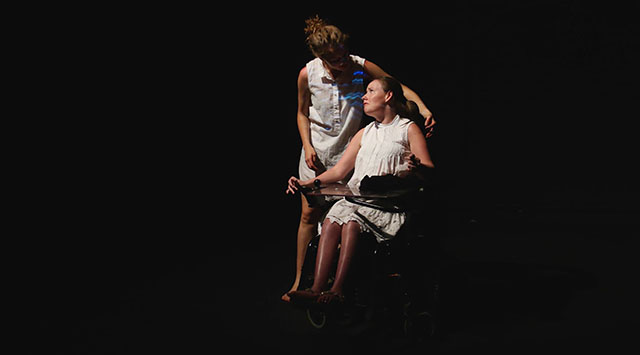
Daisy and Violet Hilton were conjoined twins who in the 1930s, caused a sensation in the American vaudeville circuit. We meet them in the musical Side Show, as their ascent to fame begins, and encounter the highs and lows of the women’s irrefutable difference, in a world determined to treat them as anything but normal. Its plot is unconventional, and for a musical to have at its centre an unpredictable story, is remarkably refreshing. Instead of distinct good and bad categories as is common for the genre, characters exist in spaces of grey, resulting in a tale that surprises with its realism. The songs are beautifully composed, with unusual depth and textures that forsake formulaic writing in favour of accurate representations of human emotion.

Laura Bunting and Kerrie Anne Greenland are the splendid twins, with a persuasive sisterly closeness that keeps us firmly on their side. Bunting plays the extrovert Daisy with an alluring effervescence, while Greenland uses an earnest approach to tug at the heartstrings. Both are excellent singers, although Greenland’s very big notes are undeniably scene-stealing. In the role of Buddy is Gabriel Brown, who impresses with nifty footwork, along with a striking presence, for a character memorable for his exceptional charm. Director Richard Carroll successfully introduces a dignified air to the “freak show” context, but the production often seems too stagnant and minimal in its use of space. There is an admirable restraint in Carroll’s rejection of creating scenes that are overly sentimental, but the show would benefit from greater amplification of its more humorous elements.

Side Show is an elegant work that is respectful in its portrayals, but there is a persistent gentleness that can make it feel somewhat distant. Art must always be aware of cliché and do all it can to avoid it, like it does on this occasion, but the temptation to resort to the tried and tested is always present. The musical format has a strong tendency towards the “garden-variety”, mainly due to commercial pressures, but also because of the seemingly inherent limitations of the genre. There are few avant-garde musicals for good reason. It is a theatrical form with rules that cannot be broken, and that insists on subjugation of its artists, but for some of those who do give in, the rewards can be spectacular. True fulfilment might have been elusive, but Daisy and Violet had a taste of fame and fortune by giving the crowds what they want, and that is a level of success many could only ever dream of.

www.hayestheatre.com.au

Review: Remembering Pirates (Darlinghurst Theatre Company)

darloVenue: Eternity Playhouse (Darlinghurst NSW), Sep 16 – Oct 16, 2016
Playwright: Christopher Harley
Director: Iain Sinclair
Cast: Robert Alexander, Fraser Crane, Emma Palmer, Simon London, Stephen Multari
Image by Helen White

Theatre review
The stories we tell can either be fictional or factual, and things that happen in our lives can be real or imagined. These concepts reflect our reliance on dichotomies, and a tendency to think of the world in black and white binary terms. Christopher Harley’s play is certainly not just one thing or another. It might be about dreams, faith or rationality. It could also be about family, childhood and illness. A strange narrative, with a simplicity that allows us to interpret and understand it however we choose. Remembering Pirates is hard to engage with. Its characters are distant, humourless, and with emotions that seem plastic despite their intensity. Without a doubt, fantastic ideas can be detected in all of its dramatic moments, but we react with nonchalance, maybe because its need for mystery causes it to keep too much hidden from us.

There is much to admire in how the production works with both surreal and naturalistic elements, blurring the boundaries between the two, to formulate a world that keeps us guessing. Its dreamlike atmosphere is created well, albeit somewhat monotonously. The play has the potential to grow very ominous and menacing, but its sojourns into darker territory are few and far between. Actor Simon London leads the cast with impressive presence and commitment. His effortless charisma keeps us from becoming too alienated from the peculiar protagonist, successfully retaining our attention through his several mystifying junctures.

Delusions are purely solitary experiences. When two people share the same, it becomes reality. Truth is a shifting entity in Remembering Pirates, and we often find ourselves kept outside of its hallucinatory indulgences. It is not clear if participants in the making of the show are able to find a unified vision for their project, but what they do make accessible needs greater depth and poignancy to accompany the big themes being discussed. Fantasy can always be found at the theatre, but it needs to be more than fanciful, before it can fuel our soul and give us what we truly need from art.

www.darlinghursttheatre.com

Review: The Drover’s Wife (Belvoir St Theatre)

belvoirVenue: Belvoir St Theatre (Surry Hills NSW), Sep 17 – Oct 16, 2016
Playwright: Leah Purcell
Director: Leticia Cáceres
Cast: Tony Cogin, Mark Coles Smith, Benedict Hardie, Will McDonald, Leah Purcell
Image by Brett Boardman

Theatre review
In Leah Purcell’s The Drover’s Wife, race relations in Australia are placed front and centre, and we have nowhere to hide from its confrontations. 1893 is in some ways a long time ago, but in Aboriginal terms especially, we can still think of the story as a contemporary one. The invasion is ongoing, and the carnage, although better disguised, still persists. The cruelty and brutality demonstrated in Purcell’s play is a necessary point of discussion for our nation. Turning abstract into flesh, we look into the face of horror, and any denial of responsibility is impossible. When Molly meets Yadaka, revelations are made about identity and how it is constructed or understood in Australia. We watch fanatic bigotry in action at its extremes, and relate it to what we know to happen today, and can only react with despondence and anger.

It is a powerful piece of writing, unforgiving and unrelenting in its accusations, balanced by a sensitive incorporation of grace and compassion in its depictions. What Leticia Cáceres brings to the stage as director, is cuttingly honest but with a lucid rationality that prevents us from feeling alienated by its outrage. The relationship between Molly and Yadaka is a tricky one that goes through drastic transformations, and the production’s ability to portray it with authenticity, convincing at every point, is deeply impressive and the linchpin to its success. As actor, Purcell’s formidable presence is captivating, and Mark Coles Smith, as Yadaka, is equally compelling, with a dynamic and empathetic approach that mesmerises. Tony Cogin and Benedict Hardie play a range of objectionable and revolting characters who are thoroughly disturbing, but it must be said that their work is remarkably bold, and brilliantly conceived.

A statement that promises redress is made at the play’s end, but what it represents is not an optimistic prophecy. What we have instead, is a continuing process of struggle and suffering that generations of Aboriginal people are enduring. The Drover’s Wife wants us to look at the injustices of 1893 and recognise that, although much has changed in over a hundred years, much of the same remains. A dominant foreign culture exists on this land that requires the subjugation of our native communities. European colonisation, at its very foundations, disallows any room for its oppressed to gain autonomy or sovereignty, unless we begin to acknowledge the need for a radical dismantling of systems. The damage may be severe, but we must believe that reparations are possible, and the urgency for them to occur cannot be overstated.

www.belvoir.com.au

Review: Crocodile Tears (Brevity Theatre)

brevityVenue: Tatler Sydney (Darlinghurst NSW), Sep 21 & 28, 2016
Playwright: Olivia O’Flynn
Director: Alexander Butt
Cast: Olivia O’Flynn

Theatre review
Tilly Devine was a legendary personality of the Sydney underworld. Violent and ruthless, the Darlinghurst madam is brought back to life in Olivia O’Flynn’s short play Crocodile Tears, which cashes in on the glamorous mystique of clandestine criminality. It is an archetypal bad girl story that appeals to our curiosity and thirst for sordid details on things we never dare experience first-hand. Although severely condensed, the play is a powerful representation of Devine’s heyday that offers glimpses into her notorious exploits, and the impulses behind them. For a monologue, O’Flynn makes the right decision to keep the work brief, but its drama prompts many questions that leave us wanting more.

O’Flynn’s own vibrant interpretation of the role builds a strong and satisfying narrative, but there is a significant distance between the actor’s youthful qualities and Devine’s much darker, seedy existence that never really gets breached. We hear amazing tales that inspire wild imaginary visions, but the activity we actually see on stage is subdued by comparison. Nevertheless, the production is an entertaining one that delivers energy and amusement in abundance.

Only a narrow scope of historical figures is ever remembered. Myths are perpetuated to serve dominant ideologies, and subversive types are conveniently forgotten. Modern Australia is built, uniquely, on the backs of many indecorous women and men, and much as we try to wipe away our ignoble past, its presence can never be denied. Tilly Devine may have left us a long time ago, and the memory of her legacy continues to fade away, but human nature will continue its replication of experience, warts and all, generation after generation.

www.brevitytheatre.com.au

Review: 4 Minutes 12 Seconds (Outhouse Theatre Co)

outhouseVenue: Old Fitzroy Theatre (Woolloomooloo NSW), Sep 13 – Oct 8, 2016
Playwright: James Fritz
Director: Craig Baldwin
Cast: Kate Cheel, Felix Johnson, Danielle King, Jeremy Waters
Image by Rupert Reid

Theatre review
There is a monster in the house, and we need to know where he has come from. Jack is seventeen and, to his parents, suddenly no longer a boy, but a strange being whose abhorrent behaviour towards his ex-girlfriend shocks the family to its very foundations. James Fritz’s 4 Minutes 12 Seconds is about the parenting of boys, the evolving nature of sex, and most of all, it is about misogyny; all examined against a backdrop of today’s advanced state of information technology. There are few things that can be definitively termed “new”, but the current proliferation of pornography is unprecedented. We have a level of access that permits anyone, children and teenagers included, unrestricted consumption, and unlike anything we had known before, an unimaginable ease in its production and distribution by any individual.

Jack is from a generation where sex education is derived almost entirely from the limitless abyss of our internet. Their personalities and sexualities are not shaped by anything considered or cautious, but the exact opposite. Where we used to rely on the constrictions of tradition and religion to help us navigate the always tricky process of teaching intimacy, the unpoliceable world wide web is now imposing itself on unsupervised youngsters, who open themselves up to every undeniable putridity that we have let free in cyberspace. Where a separation had existed between real sex and fantasy, is now a hazardous conflation indistinguishable to the young ones. What used to be titillating in the darkest recesses of our mind but never to be realised, is now thought of as normal. A culture of subjecting women to humiliation and violation is no longer containable in fictional pornography. What was once taboo and rigorously concealed is now part of the sexual DNA of young heterosexual men. If rape pornography is the only kind that can excite, what happens in real life between men and women can only be tragic.

Fritz’s play explains a problem that can appear in any aspirational middle-class home. Through nuanced and revelatory descriptions of how parents think and act in this modern world, we are able to make sense of the objectionable ways in which young adults behave. Each of Fritz’s characters, whether or not they appear on stage, are manifested with stunning detail, and the psychological accuracy of his work prohibits us from any possible denial of the sad state of affairs we are currently living through. The transformations we observe in Di and David, as they come to terms with their son’s actions, is absolute drama, powerful and compelling. The plot in 4 Minutes 12 Seconds is scintillating at every turn. Provocatively entertaining, but also relentless in its need to challenge and inform. It is a play of the now, and essential for all.

This production, helmed by director Craig Baldwin, is as engrossing as any work of theatre one could wish for. All its moments are replete with emotion and energy, keeping us deeply involved in both its sentimental and intellectual dimensions. Danielle King’s outstanding performance as Di insists that we invest completely in her conundrums. The actor’s incisive humour wins us over from her first line of dialogue, and sustains our empathy with unmitigated authenticity even when her struggles with morality become tenuous. Also wonderful is Jeremy Waters in the role of David, whose portrayals of both good and evil, resonate with such immense honesty and truth, that our humanity refuses to let us detach from his reality, even when the going gets very tough. Design aspects of the show are also remarkable. Baldwin’s own work on sound, Hugh O’Connor’s set and Christopher Page’s lights are dynamic, sophisticated and innovative.

There is a lot to love in 4 Minutes 12 Seconds, but its message is dark, dire, and desperate. We can easily say that parents need to do more to prevent our boys from growing up like Jack, but it is incontrovertibly true that the internet’s pervasiveness is a threat to young minds that no one has an impervious solution for. It has always been our duty to provide a shield from harm and corruption, but what we are currently facing is indomitable if our aim is to keep that danger under subjugation. Misinformation is inevitable, but it can be counteracted. Education is the perennial answer to a stronger future, and in this case, the only weapon we have against a force of sheer evil.

www.oldfitztheatre.com | www.outhousetheatre.org

Review: Transience (Leftofcentre Theatre Co)

leftofcentreVenue: Kings Cross Theatre (Kings Cross NSW), Sep 13 – 18, 2016
Playwright: Clare Hennessy
Director: Clemence Williams
Cast: Julia Christensen, Kate Pimblett, Eve Shepherdson Beck
Image by Charlie O’Grady

Theatre review
Gender has always been a means of policing behaviour. We look at one’s genitals at birth and assign a whole universe of expectations that have nothing to do with the individual’s own nature and desires. The world is split in two halves, male and female, and any deviation that threatens to transgress that dichotomy is traditionally prohibited.

In Clare Hennessy’s pseudo sci-fi Transience, society continues to monitor us through gender expression, but this time only one mode of existence is permitted. The script is rich with modern ideas, and memorable for its progressive and discerning attitude. Although its concepts are deeply contemplated and well articulated, its plot does not develop far enough to create a stronger sense of narrative. A quirky comedy is effectively manufactured throughout, but its character’s emotions are depicted too gently to elicit a more empathetic response.

An accomplished cast of youthful actors is impressively connected with the material at hand. Passionate and accurate with the play’s messages, their portrayals convey an inspiring and firm sense of purpose. There are issues however, with conversational rhythms causing the show’s pace to feel excessively ambling, but proficient work from lighting designer Liam O’Keefe and composer Nick Turton offer valuable variance to the production’s mood that helps retain our attention.

Transience is concerned not only with gender. It is also a discussion on matters of free speech and social cohesion. With the advent of information technology and social media, democracy has evolved into a new beast that demands a constant evaluation on how our voices are heard. As individuals gain ever-increasing access to platforms for their unitary thoughts and politics, it is tempting to see humankind as being fractured and divided. Our egos want to feel special and we want always to be recognised as different from the rest, but in fact, our humanity is only, if ever, slightly divergent. Unity of life is an ultimate truth, but our minds do not easily come to terms with it.

www.leftofcentreau.com