Review: Sunset Strip (The Uncertainty Principle / Griffin Theatre Company)

Venue: SBW Stables Theatre (Kings Cross NSW), Jun 14 – Jul 1, 2017
Playwright: Suzie Miller
Director: Anthony Skuse
Cast: Emma Jackson, Simon Lyndon, Lex Marinos, Georgina Symes
Image by Patrick Boland

Theatre review
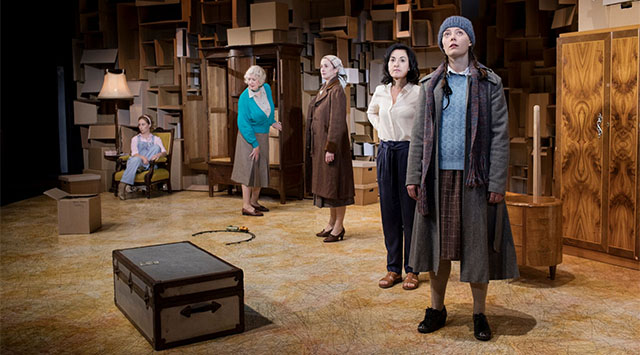
Phoebe has lost custody of her children, due to a history of illicit drug use. Her sister Caroline has been battling cancer, while dealing with a relationship breakup. Their father Ray is suffering dementia. Life is hard, as we well know, but it is not all doom and gloom with these sisters. They are determined to get on with it, making the best of the cards they were dealt.

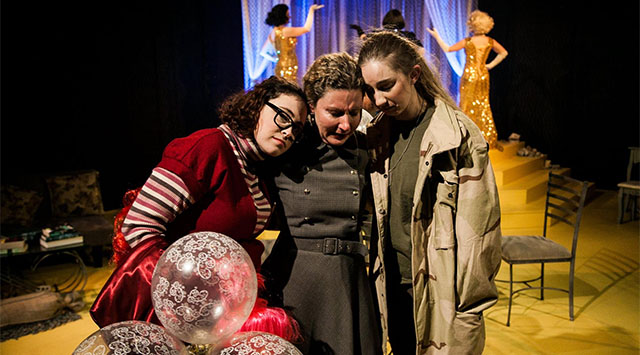
In Sunset Strip, playwright Suzie Miller brings a family together at a time when they are in desperate need of each other’s support. None of them realises this kindred reliance of course, for it is easy to take these relationships for granted, and like many of us, Phoebe and Caroline have resentments, jealousies and unresolved issues from the past, so their reunion was always going to be precarious.

Miller’s detailing of that delicate balance, between joy and pain in how they love, is full of tenderness, subtle but powerful. Their interchanges are nuanced, splendidly complex, and always with a gentle, familiar ring that will remind us of our own homes. When families talk, it is what we say between the lines that matters most, and Sunset Strip‘s sensitive explication of those dynamics, is what makes it feel like every person’s story.

Director Anthony Skuse’s quiet approach to storytelling is a perfect fit for the play. In this intimate venue, the drama envelopes as it unfolds, and we fall deeper and deeper into its emotional grip. Skuse’s work for Sunset Strip transcends the need for a dominant narrative, getting us to the heart of its characters by simply presenting four individuals who are so thoroughly authentic and vulnerable, that finding a meaningful connection with them is inevitable. This is theatre at its most moving (sans manipulative show tunes and fantastical storylines), made even more affecting by audience members sobbing uncontrollably in neighbouring seats.

Emma Jackson and Georgina Symes play the siblings, both laid bare spectacularly, allowing us to peer right into their fractured souls. The part of their ailing father is performed by Lex Marinos, who has us transfixed in the precision of his approach, and heartbroken by his depiction of a parent who can no longer provide guidance and care. Simon Lyndon is the love interest who offers much more than meets the eye, with an ability to introduce disarming and devastating poignancy, when you least expect it. These actors are truly wonderful.

No amount of love, can prevent people from growing apart, but it is in the capacity to make sacrifices, that the depths of love is revealed. Love is not about holding tight, in fact, it is more often about letting go, but there will come moments where people are required to sit together, maybe to laugh, or maybe to fight, so that love can do its job. When life turns too hard, loneliness will only add fuel to fire. Not every problem will have solutions, but a warm embrace makes everything, miraculously, easier.

www.griffintheatre.com,au

Review: Cyrano De Bergerac (Sport For Jove Theatre)

Venue: Seymour Centre (Chippendale NSW), Jun 15 – 24, 2017
Playwright: Edmond Rostand (adaptation by Damien Ryan)
Director: Damien Ryan
Cast: Andrew Johnston, Barry French, Bernadette Ryan, Christopher Stalley, Christopher Tomkinson, Damien Ryan, Drew Livingston, Francesca Savige, James Lugton, John Turnbull, Julian Garner, Lizzie Schebesta, Madeleine Jones, Melanie Dobson, Thom Blake, Tim Walter, Wendy Strehlow
Image by Phil Erbacher

Theatre review
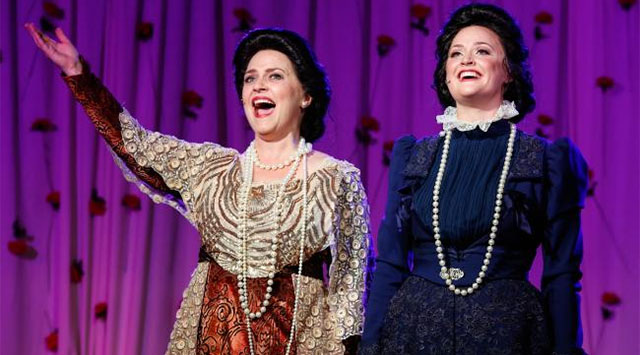
Women, no matter how intellectual or beautiful, are not to be trusted with their own decisions in Cyrano De Bergerac. Edward Rostand’s 120 year-old play is a romantic fantasy about an ugly man who successfully deceives and misleads the object of his desire, so that his feelings can be reciprocated. His nose, of legendary proportions, clearly does not stand in the way of human vanity.

Roxanne’s lust for the handsome Christian, is presented as foolish and absurd, hence illegitimate, in the old-fashioned play, because of course, the verbosely articulate Cyrano is the appropriate match, if a girl is to experience true love. Women are once again infantilised, and our sexuality subjugated, in order that patriarchal ideals can be presented as superior.

Tiresome ideologies of the original are retained in this recent adaptation, but there is no doubt that Damien Ryan’s remarkable wit and extraordinary talent with words, have polished up Cyrano De Bergerac, rolled it in glitter, and all but blinds us from its inferior politics. Ryan’s work is supremely clever, often very beautiful, and for the many who find enjoyment in its brand of outlandish romance, this is a play that will prove deeply satisfying.

Ryan’s work as actor too, is marvellous. Brilliantly funny, and irresistibly charming, he convinces us that sexual attractiveness is completely irrelevant, and that Cyrano is the only man for Roxanne. Lizzie Schebesta expends her efforts into the side of Roxanne that is repeatedly emphasised to be intellectual, and does all she can to elevate the role from the embarrassing gullibility that is Rostand’s creation. It is a very vivacious cast, relentlessly amusing, and audiences will be held captive for its entire 3.5 hour duration.

There are no big pertinent messages in Cyrano De Bergerac that need our urgent attention. We can certainly be entertained by other much more relevant stories, but this French play continues the perseverate tradition of European occupation of the arts in Australia. For over two centuries, we import these works, as though the purposes they serve are somehow irreplaceable or worse, more resonant than what we can find in the art of our own region. It offers an accurate reflection of the ongoing attitude of colonisation that persists (why else would all 18 actors on this stage be of Caucasian appearance?), even though we wish to think ourselves a modern, progressive and inclusive society.

www.sportforjove.com.au

Review: Slut (Old Fitz Theatre / Edgeware Forum)

Venue: Old Fitzroy Theatre (Woolloomooloo NSW), May 23 – Jun 3, 2017
Playwright: Patricia Cornelius
Director: Erin Taylor
Cast: Julia Dray, Bobbie-Jean Henning, Jessica Keogh, Danielle Stamoulos, Maryann Wright
Image by Clare Hawley

Theatre review
For the girls in Patricia Cornelius’ Slut, nothing is more important than being popular. That hunger to be liked, by all and sundry, is a curious thing that many possess, and in Cornelius’ play, we explore the way teenage girls are socialised to place unparalleled value on attention, admiration and approval. We are at school, and Lolita is the first of five good friends, to bloom. Her breasts develop and the world begins to sexualise her, long before she feels those urges for herself.

She encounters lascivious attention, and learns to reciprocate. There is something powerful in being seen, and the effect of that recognition, and the accompanying scrutiny, becomes all-consuming. Lolita pursues that gaze with a frightful ferocity, quickly learning that her worth resides squarely in her ability to be objectified in that uncompromisingly sexual manner. She comes under attack, predictably, by her peers who consider her a pariah, after having previously marvelled at her new-found power. As a result, she discovers a deep and detrimental shame, and attaches it firmly to her sexual nature.

It is a cruel existence that Lolita has to endure, and director Erin Taylor’s portrayal of that brutality is certainly vivid. The production is rhythmically precise and in its half-hour duration, we are thoroughly captivated by all that it wishes to communicate. All five actors are very strong and the tautness of their performance is highly enjoyable, although it must be said, that the roles are undeniably simplistic. Jessica Keogh’s depiction of Lolita is suitably vivacious yet tragic, perfectly presenting the playwright’s perspective of a victimised and very sad protagonist.

It is unfortunate that Lolita never manages to negotiate between friendships and her sexual dominance. That the play structures the two as being mutually exclusive, is perhaps an accurate observation of what happens in our high schools, but the lack of nuance in this representation creates an impression that can feel overly convenient. The absence of parental figures is also a glaring omission that is never explained. If our young is left in the wild to fend for themselves, we can be sure that disasters will happen, but our society knows its duty of care. Slut talks about the way our girls cause harm to one another, but it is our guidance, not their ignorance, that should be questioned.

www.facebook.com/…

Review: Jatinga (Bakehouse Theatre Company)

Venue: Kings Cross Theatre (Kings Cross NSW), Jun 9 – 24, 2017
Playwright: Purva Naresh
Director: Suzanne Millar
Cast: Sapna Bhavnani, Karina Bracken, Claudette Clarke, Jarrod Crellin, Faezeh Jalali, Sheila Kumar, Suz Mawer, Bali Padda, Monroe Reimers, Trishala Sharma, Teresa Tate Britten, Amrik Tumber
Image by Natasha Narula

Theatre review
In the north-eastern region of India, a tourist hot-spot exists in the village of Jatinga, known for the mysterious phenomenon of birds plunging to their death, every year after the monsoon season. In Purva Naresh’s play Jatinga, it is the phenomenon of “runaway girls” that takes focus. Journalist Madhumita discovers five young women escaping harrowing fates, and in her efforts to publish a story that draws attention to their plight, she finds herself thinking like villagers hungry for tourism dollars, deciding whether to resort to sensationalism, in order that the greater good can be served.

The play is purposeful, and undeniably powerful. Addressing issues of poverty, Jatinga is relevant to audiences of all nations, at a time when economic inequality is a serious social concern. We may not suffer the same symptoms in the developed world, but the fact that the refugee crisis is unsolved and escalating, and that we continue to obsess over “terrorist threats”, show that persistent disparities, that our first-world systems thrive on, are creating problems that have landed us in a state of emergency. The rich will always want the poor separate and contained, but the poor can often break through the barriers of money. Radical action is always an option, when people have nothing to lose.

The women in Jatinga tell simple stories, but the production is strangely convoluted. Shifting timelines and interweaving narratives provide a sense of theatricality, but unnecessary confusion often gets in the way of our empathy. The show must be lauded however, for not turning to “disaster porn” to keep us engaged. The women are victims, but they are also spirited and strong individuals. Director Suzanne Millar’s resolve in portraying them as such, is certainly admirable.

An excellent cast, wonderfully cohesive, perform a colourful work replete with vigour and sincerity. Suz Mawer is captivating, and tremendously persuasive, as the journalist Madhumita. Her thorough authenticity holds the piece together, even though the stakes are admittedly lowest for the character she portrays. Also noteworthy is Nate Edmondson’s work on music, transportative and transformative in its effect, from scene to scene.

When the birds take to suicide, we wish for it to be an act of nature, and convince ourselves that things stay in balance with their sacrifice. Murmurs of the birds actually being killed by villagers, are disregarded by the tourists who wish to witness something romantic and extraordinary. We bury the truth, in order that our fabricated realities can be sustained. We want to think that refugees have proper channels to seek asylum, and we want to believe that terrorists are mentally ill. We insist that the poor only need work harder to create better lives, and we sweep the truth under carpets, sit back and watch as towers are burnt to ashes.

www.bakehousetheatrecompany.com.au

Review: I Love You Now (Darlinghurst Theatre Company)

Venue: Eternity Playhouse (Darlinghurst NSW), Jun 9 – Jul 9, 2017
Playwright: Jeanette Cronin
Director: Kim Hardwick
Cast: Jeanette Cronin, Paul Gleeson
Image by Robert Catto

Theatre review
The stage is disguised as a hotel room, and two actors play out a series of infidelities in short episodes. The fragments are unified by the amorous theme, but how they fit together as a complete entity is the creative, and intriguing, challenge it presents to its audience. Jeanette Cronin’s I Love You Now takes conventional stories and puts them in a poetic structure, so that the telling of an ordinary tale, can lead to the discovery of greater meanings in everyday life.

Things happen, forming chaotic and arbitrary moments, but the human mind has an insatiable need for narratives. We make connections between incidents, and are determined to read into things, as though the urge to understand, is as basic and inexorable as breathing. While we attempt to make coherence of the scenes as they unfold in I Love You Now, we find ourselves beginning to fall in love instead, with transience. Sure, it is possible to formulate a whole of the parts, but it is really the fleeting moments of beauty and genius that gives us nourishment. Our impulse is to dedicate our attention to a big picture, but what is of greater satisfaction, are the minute occurrences that can so easily slip away, if we do not let go of the desire to be master of every situation.

Director Kim Hardwick’s task is to find balance and harmony in the storytelling, so that appropriate weight is assigned to each of the play’s divergent intentions and concerns. The writing presents many possibilities, and Hardwick demonstrates great sensitivity and fortitude, in her ability to mine for resonance in the many unexpected corners of I Love You Now, persuading our minds to find appreciation for the layer upon layer of ideas and observations, that constitute this deeply textured work of art.

A remarkably polished production, with Isabel Hudson’s set design creating a very solid first impression (the hotel room is glamorous and incredibly convincing), and Martin Kinnane’s lights speaking softly but intricately, the visuals are sumptuous but never obtrusive. As though providing accompaniment to singers centre stage, music is performed live, by Max Lambert and Roger Lock, whose instincts compel us to remain engaged with the play, even when it veers off to slightly obtuse places.

Cronin herself takes on the female roles, while Paul Gleeson is the masculine counterpart. Both are fabulously accomplished; impressive with the complexities and elegance they bring to the show, and as a couple, their infallible chemistry is the main drawcard. It is always what happens between them that is captivating, and important. We watch how they treat each other, listen to the way they speak to one another, inside this room of secrets, and through a range of characters and their clandestine intimacies, our own fires of curiosity and passion, are stoked back to life.

www.darlinghursttheatre.com

Review: Oedipus Doesn’t Live Here Anymore (ATYP)

Venue: ATYP (Walsh Bay NSW), Jun 7 – 24, 2017
Playwright: Daniel Evan (after Sophocles)
Director: Fraser Corfield
Cast: Caitlin Burley, Jeremi Campese, Mia Evans Rorris, Joshua McElroy
Images by Tracey Schramm

Theatre review
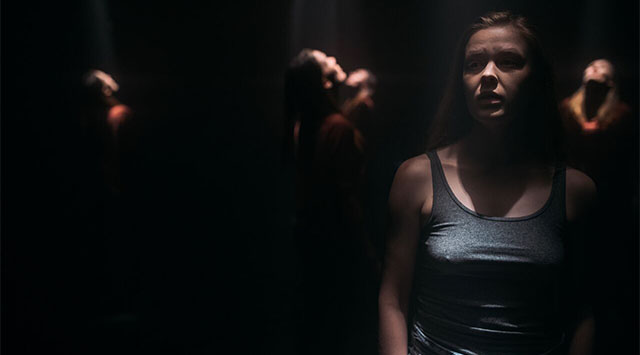
The story of Oedipus and his mother/wife Jocasta has remained in our consciousness over the centuries. The resonance that it provides, whether emotional, moral or simply shocking, is unquestionably deep, but in Daniel Evan’s rendition, it is the tangents departing from the classic narrative that are its real concern. In Oedipus Doesn’t Live Here Anymore, the familiar tale of taboo and tragedy, provides the framework for a passionate and somewhat erratic theatrical experience. Less drama, more experimentation, Evan’s elaborate embellishments reflect a barrage of contemporary ideas that give an unmistakable impression of rejuvenation, although the sense of turmoil so characteristic of Sophocles’ creation is certainly missed.

Director Fraser Corfield uses the intricacies of the text, to formulate a dynamic staging memorable for its quick and vibrant episodes, featuring a host of colourful and surprising characters. The cast of four demonstrates extraordinary focus and conviction, along with an exciting inventiveness that gives their show texture, dimension and depth. Caitlin Burley and Jeremi Campese are confident players who connect effortlessly with the audience, both actors charming and entertaining with the diverse range of personality types they put forth. Mia Evans Rorris and Joshua McElroy provide stable grounding to the production, sensitive and considered in their approach to the many roles they inhabit.

The show is remarkably well designed. The formidable set, evocative of urban dilapidation is as dazzling as it is dangerous; Melanie Liertz’s transformation of the challenging space is quite an achievement. Emma Lockhart-Wilson’s lights address the play’s unrelenting movement of time and space, with excellent certitude and power. Sound by Steve Francis and Chrysoulla Markoulli’s music, give the show a splendid sophistication and cohesion.

It is not a particularly poignant retelling of Oedipus’ life, but we certainly come away gratified by the evidence of a successful collaboration, that showcases some very significant talent.

www.atyp.com.au

Review: The Village Bike (Cross Pollinate Productions)

Venue: Old Fitzroy Theatre (Woolloomooloo NSW), Jun 7 – Jul 8, 2017
Playwright: Penelope Skinner
Director: Rachel Chant
Cast: Kate Bookallil, Sophie Gregg, Jamie Oxenbould, Rupert Reid, Gabrielle Scawthorn, Benedict Wall
Image by Andre Vasquez

Theatre review
Becky is unable to get laid because her husband has irrational fears regarding the baby in her womb. Increasingly frustrated, she finds herself seeking gratification elsewhere. Penelope Skinner’s very riveting The Village Bike makes a powerful statement about marriage and monogamy, and the ways in which these age-old institutions and ideologies continue to form restraints, allowing society to control the lives of individuals, women especially, from the most intimate levels.

It plays almost like a revision of the Aga saga; that genre of slightly camp, English middle-class country life drama. The characters are familiar, and their stories are set, invariably, in an unassuming domesticity. Certainly, the work is critical of the way we conceive of a respectable woman. It challenges the unquestioned rules dictating what is acceptable, and objectionable, of a woman’s sexuality, and also the language we use that gives definition, and weight, to those restrictions.

In mocking that romantic and pedestrian style of storytelling, we see the wildness of Becky’s narrative resist the confines of form. Our protagonist is not playing by the rules, so the rules quickly become visible. In breaking the illusion of happily ever after, we are compelled to study her situation, and because we can relate to Becky’s desires so completely, we have to interrogate the systematic failures that we all have to operate under.

Although political and intellectual, the production is equally stimulating on other fronts. Rachel Chant’s direction ensures each personality we meet is distinct and vividly manifested, so we know exactly what it is that makes them tick (and how they contribute to the play’s tragic circumstances). Sequences oscillate between comedy and drama effortlessly, with moments of breathtaking sexual tension giving an excellent sense of texture and dimension to what we see, hear and feel. Persistent issues with spacial use however, detract from an otherwise polished and very well-rehearsed presentation that is as engaging as it is titillating.

Gabrielle Scawthorne stars as the woman who fucks up. Honest and vulnerable, she keeps us in love with Becky through every transgression. Scawthorne is sensational in the part, thoroughly psychological and physically detailed, turning a confronting role into a beautifully empathetic creature full of charm and disarming authenticity. Supporting actors too, are impressive, each one complex and humorous, all bringing a delicious, and rare, boldness to the telling of an uncompromisingly sexual tale.

By play’s end, Becky is rendered powerless. Entrapped by a world that permits only narrow definitions of motherhood and marriage, she has nowhere to go, but to accept her subjugation. Some have said that bicycling had contributed immensely to the emancipation of women in the 1890s, but today, calling a woman a bike, is to call a woman a harlot, whore, slut, skank; a common and convenient means of suppressing female sexuality, in order that the myth of the weaker sex is perpetuated. There is no greater threat to the patriarchy than a sovereign womanhood that rejects the Madonna/Whore dichotomy. When our sex is no longer tethered to imagined virtues in concordance with family, society and culture, is when a greater liberty can be found, for all the genders.

www.crosspollinate.com.au

Review: How To Build A Home (Ever After Theatre)

Venue: Balmain Uniting Church (Balmain NSW), Jun 1 – 3, 2017
Contributing Writer: Emily Dash
Directors: Natalie Rose, Alice Osborne, Marnie Palomares
Cast: Kerrie Ann Bezzina, Christine Blanche, Matthew Cutmore, Emily Dash, Glennen Fahey, Sophie Grivas, Tom Hancock, Emma Plant, Roddy Salinas

Theatre review
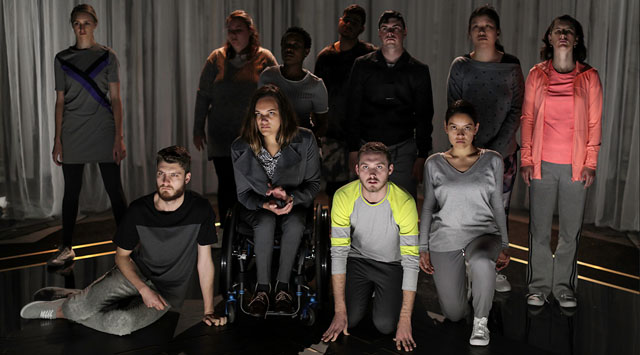
The idea of a dream home is explored by differently abled performers in How To Build A Home. An opportunity for all to reflect upon concepts such as personal limitations and aspirations, social obligations and privacy, the often abstract work may leave a lot to our imagination, but there is no mistaking the statement it makes about the importance of security and care that we all need in order to have fulfilling lives.

The show is full of spirited whimsy, with an enthusiastic cast offering up vim and vigour, along with a genuine vulnerability that is quite captivating. A collaborative segment featuring Emily Dash reciting a poignant monologue, alongside Tom Hancock on piano establishing an atmosphere of sombre drama, is beautifully, and hauntingly, rendered. Also memorable is Sophie Grivas’ idea of a house with three disco rooms, reminding us that our bodies, whether moving or stationary, are to be loved and pampered.

Visual design by Mirabelle Wouters, and James Brown’s work on sound and music, give the production an excellent sense of polish. The space they have created is glamorous yet unpretentious, a homely environment we find to be simultaneously comfortable and inspiring.

As long as we are alive, every individual has a right to space, and that space must be treated with respect. The home is both mundane and sacred, and recognising it as such, encourages us to honour every breath taken and every second that ticks past. Life is too short for any of us to be perfunctory about the time that we have been gifted. When we realise that every here and now is special, each moment experienced, and its corresponding place, has the possibility to nourish and fulfil, as though always at home, sweet home.

www.everaftertheatre.com

Review: An Unseasonable Fall Of Snow (Ewan Productions)

Venue: The Actors Pulse (Redfern NSW), May 30 – Jun 3, 2017
Playwright: Gary Henderson
Director: Giles Gartrell-Mills
Cast: Alex Ewan, Nico Papademetriou, Randall

Theatre review
The setting looks like an office, for lawyers or the police perhaps, but we never really find out where Arthur and Liam actually are, as we witness the aggressive interrogations taking place. Gary Henderson’s An Unseasonable Fall Of Snow involves two deaths, a mystery that takes the form of an intriguing puzzle, challenging its viewer to discover its secrets before everything is laid bare at the end.

Director Giles Gartrell-Mills orchestrates an enjoyable ride, luring us into the enigmatic qualities of the play with a quiet elegance. Sound and lights are underutilised, so we are not quite spellbound by its flirtations with the supernatural, but the plot is nonetheless effectively relayed for an engaging hour of theatre.

Arthur is played by Nico Papademetriou, who makes us believe that there is always more being hidden away, a convincing mastermind of sorts, and we need to know all the cards that he holds close to his chest. Alex Ewan is impressive as Liam, volatile yet operatic in his portrayal of a young man deep in trouble. It is a performance thoroughly considered, and boldly executed, leading to a result that illustrates some of the more obscure facets of human nature, while providing an exciting sense of high drama to the piece.

When snow falls in springtime, nothing is quite what it seems. We wish for life to adhere to expectations, but the forces in control of existence are far greater than any individual’s volition. If we find ourselves walking into a blizzard, when all we had wanted was a garden of green, there is no changing how nature wishes to be, and we must look to our desires for answers on how the inside can be in harmony with outside.

www.facebook.com/…

Review: Only Heaven Knows (Luckiest Productions)

Venue: Hayes Theatre Co (Potts Point NSW), May 26 – Jul 1, 2017
Music, Book, Lyrics: Alex Harding
Director: Shaun Rennie
Cast: Mathew Backer, Blazey Best, Tim Draxl, Ben Hall, Hayden Tee
Image by Robert Catto

Theatre review
Tim and Cliff’s love story begins in 1944, probably the most dangerous of times for gay men, with many impounded in European concentration camps, and the rest of the world correspondingly paranoid and cruel in their treatment of homosexuality. Alex Harding’s Only Heaven Knows remembers queer life in mid-20th Century Sydney, and the resilient community that persisted to thrive, with a dignified integrity, in the face of unrelenting and brutal persecution.

It is the subplots that captivate. Minor characters who chronicle struggles of a traumatic past, retain their pertinence, proving themselves more resonant than a central romance that seems unremarkable by comparison. The work is flamboyantly sentimental, but is only occasional moving. We are engaged instead by its textual complexity, seduced by an opportunity to analyse its sociopolitical connotations and to examine the degrees of relevance its narratives continue to hold over our existence today.

Production design attempts to address the frequent changes of settings, but scene transitions can often lack elegance. Performers take awkwardly long walks before finding the stage. Entrances and exits notwithstanding, the show is sensitively brought together by director Shaun Rennie, with a warm sincerity that elevates a slightly dated play from 1988, to something that is strikingly urgent. The ghost of Lea Sonia, a drag queen character, has the freedom to travel through time, to make references about marriage equality, and Grindr, so that history is resurrected for good reason.

There are marked divergences in terms of singing ability, but the cast is surprisingly cohesive. In the world of musical theatre, scene-stealing show-offs are almost encouraged, so it is a rare treat to be able to adore every performer equally. Matthew Backer is impressive with the thoroughness of nuance he introduces to all his roles, and is truly unforgettable in a scene that brutally portrays the experience of electroconvulsive therapy inflicted upon “sexual deviants” of the time. Blazey Best and Hayden Tee are excellent with their comedy, both actors sharp and confident, while adhering to the subtle tones of the production. The lovebirds, played by Tim Draxl and Ben Hall, are tender and effortlessly convincing, making the most out of fairly colourless material.

It is important that young ones know our queer histories, and it is important that love stories are made for people who identify differently from the mainstream. In 1944, queer folk had few past lessons to draw upon, and nothing in the future that they could look forward to. Only Heaven Knows allows us to grow with the knowledge that people had been through worse, but things keep getting better. It also serves as reminder the depth of depravity that societies are capable of, and that a sense of moral vigilance must never be taken lightly. The game of endless persecution may shift its focus away from one community to another, but those who had suffered must not be complacent in their newfound emancipation, but continue with a resistance against senseless violence and oppression.

www.hayestheatre.com.au