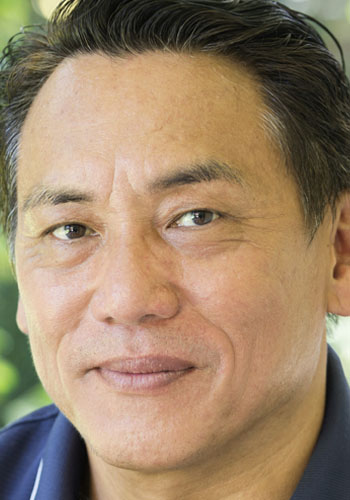
5 Questions with Markesha McCoy and Madison McKoy

Markesha McCoy

Madison McKoy: How did you come to be involved in The View Upstairs?
Markesha McCoy: I flew to Sydney to be a part of Trevor Ashley’s new panto The Bodybag. It was a hilarious parody based off of the cult classic The Bodyguard. One of the producers for The View Upstairs, Gus Murray, played our strapping bodyguard and asked me if I wanted to stick around and be a part of the show. I’m so glad he did because I’m having an amazing time.

What’s challenging about bringing this script to life?
Teaching the audience about the tragic events that took place and the inequality we still face today while still making them laugh as well.

How is your character similar to and/or different from you?
We are very similar. We both love hard but keep a stone cold face. Hard to trust but once we do, we’ll do anything for anyone we’ve brought into our lives. The only difference I feel we have is our sexual preference haha.

Without giving anything away, what is your favourite line of dialogue from the show?
“I’m not just a basic bitch, another wannabe nouveau riche tipping toward a breakdown.”

If you had a magic wand, what role/show would you do next?
Aida in Aida.

Madison McKoy

Markesha McCoy: What’s your favourite colour?
Madison McKoy: My fave colour is purple. Yellow is a close second.

If you could have dinner with three of your favourite celebrities, dead or alive, who would it be?
Janet Jackson: I’ve loved her music and performance since primary school.
Barak Obama: I’d love to chat with him about life in general.
Suzanne Vega: The lyrics and melodies to her folk-style music are wonderful. I was turned on to her by a mate back in the 80s. Actually, we probably wouldn’t eat. We’d just sing. 🙂

What has been your favourite role to play?
I played Jim in the musical Big River some years ago. I thoroughly enjoyed the whole experience. It’s def a role I’d like to play again.

So you’re originally from America, whats something you miss from the States?
Yes. I’m originally from North Carolina and migrated to Australia in 1994. My family is the main thing I miss. I used to miss Oreo biscuits, I mean, cookies but you can get them in Oz these days. When I first arrived, they were only available in gourmet food stores. Yes, I actually paid $15.00 for a bag of Oreos, ha ha ha.

What can you learn from your character Willie in The View Upstairs?
Willie is a man of the world. He’s definitely seen some things! Some of his top advice is to keep living, keep trying to better yourself, and be kind to others.

Markesha McCoy and Madison McKoy can be seen in The View Upstairs the musical.
Dates: 8 Feb – 11 Mar, 2018
Venue: Hayes Theatre

5 Questions with Anika Bhatia and Margaret Thanos

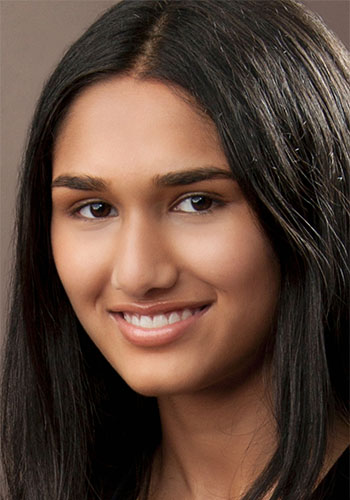
Anika Bhatia

Margaret Thanos: What is something you admire most about the theatre?
Anika Bhatia: It allows us to think differently. There are constantly new ideas being discovered and explored and old ideas being recreated in new ways. It’s not just a form of entertainment. It is the most visceral art form. It allows us to vicariously see the truth to our own selves and reflect, evaluate and learn and even sometimes laugh or cry during the process.

If you could meet one famous theatre person who would you choose and why?
Damien Ryan from Sport for Jove Theatre. I attended two of his lecture programs for my HSC on The Crucible and Julius Caesar and I was just so impressed and started fan-girling a lot. He’s incredible.

Why is it important that we talk about young people issues?
Because young people are the future?! The struggles of beauty expectations, masculinity, isolation, cyberbullying, the pressure to conform and have sex permeate throughout the play. The decisions that young people make in the face of these struggles become defining moments of their life so it’s important to understand how we make them.

Tell me a little fun fact about you.
Well, I was born in India and moved to Sydney when I was 5. My mum said that we had some connections to the King of Rajasthan at one stage! Fun stuff!

What is something that you have learnt over the course of rehearsals for Intersection 2018: Chrysalis.
It’s been really fun to uncover the truth behind the texts and experience that with Rachel Chant and the creative team. I also learnt a lot from being able to talk to Gretel Vella, the writer of one of the scenes I’m in and understand and discuss the characters and her inspirations for them. From both Rachel and Bec, the assistant director, I’ve learnt that taking risks is really important in the rehearsal process and being able to trust myself and stay committed to my creative decisions.

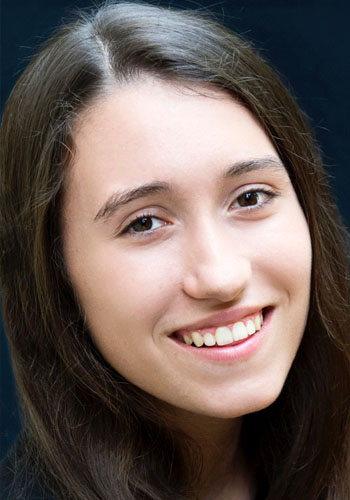
Margaret Thanos

Anika Bhatia: What is your favourite line/moment in the play? 
Margaret Thanos: “You got bitten by that strange duck that followed you home.” – Blood On Bloody Blood Ladder. It’s not a line that I say, but it’s still glorious! 

How do you get into character? 
I think a lot about whatever has happened just before the scene, so I have the mindset to go into the situation as they would. I think about how they feel about what has just happened and what I want to get out of this scene. I also pace around in the physical way that my character does, so I get a sense of their body and the way that they carry themselves. It helps to remind my brain and body that I am not being Margaret in that moment, but I am someone else in their own life. 

Are there any similarities or differences between you and your character Jess from Victoria’s Secret Angel Virgin/Bakerz Delight?
Well, Jess and I are very different on so many levels! She really allows the opinions of what other people say to get to her, and worries about what other people will think, regardless of her own feelings and I think that is where we are most different. She also talks a mile a minute and basically spills out any thoughts that come into her head, while I tend to take more time with what I say. However, there are definitely similarities too! We are both 17, and I love how she has an awareness of the social issues in town, she sometimes builds things up in her mind to be bigger than what they need to be, and I think I do that too, and she gets annoyed at people interrupting her education – which is definitely a trait of mine! 

What is it like working with Rachel Chant?
Honestly, it is SO AMAZING. I am truly blown away by her insight into the play, the intricate meaning in every moment and her attention to detail. The crew and cast on this production is so fabulously talented and I am so grateful to have been a part of Intersection 2018: Chrysalis

What makes this show great for young people and adults alike? 
As a 17 year old you are really on the precipice of your life, waiting for it to start almost, while completing a really stressful period of school. You are also constantly thinking about the future so there are a lot of conflicted and confused ideas running around in your head and I think this show captures that really well. I truly believe that many young people who watch this show will resonate with at least one of the short plays. I think it’s great for young people that so many awkward situations that are typical for 17 year olds are being shown through this play, to show that these fears and desires that they have are not individual to them, but that so many others are going through the exact same experience. For adults, especially ones that have young people in their lives, I think that this show really looks into the teenage condition and all the great and terrible moments being 17 brings with it, and I think that is something really important for adults to understand and empathise with. 

Anika Bhatia and Margaret Thanos are appearing in Intersection 2018: Chrysalis.
Dates: 31 January – 17 February, 2018
Venue: SBW Stables Theatre

5 Questions with Claudette Clarke and Diana Popovska

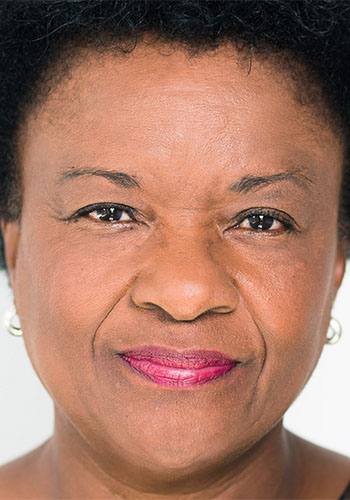
Claudette Clarke

Diana Popovska: Which character do you most relate to in Metamorphoses and why?
Claudette Clarke: I am not sure which character I most relate to in Metamorphoses but I have researched Aphrodite the most because she is the main character I play and some of these qualities are parts of my personality. Aphrodite is mischievous, angry and revengeful to mortals who refuse to fall in love. Goddess of love, sex and procreation; beauty, seduction, pleasure and happiness. Antithesis curses for non-compliance of the laws of love are: Sexual repulsion; Unnatural desires (incest, bestiality, etc.); Love unreciprocated; Ugliness. Some of these curses are played out in Metamorphoses.

This is your second time working with Dino, how is it different?
I worked with Dino many years ago in his very memorable production of To Kill A Mockingbird. Almost the entire season was booked out and people still talk about the production. The plays are both “classics” and here Dino is directing a queer reading of Zimmerman’s modern adaptation of Ovid’s verse to reflect current times. I am really enjoying working with him again. I love the way he pushes boundaries. As an actor of African Caribbean decent, I immediately identified with the topic of black and white in Mockingbird whereas it was interesting for me to think in more depth about gender mixes. Although I have always readily accepted difference, this reading pushed me to think further. This production reinforces my belief that, as humans, all we ask is to be respected and loved for who we are.

What has been your favourite moment in rehearsals so far?
My favourite moment in rehearsals came when Johnny Hawkins joined the cast. He has a way of playing and having fun with the characters, exploring possibilities, which is what is required.

Why do you believe this queer reading of ‘Metamorphoses’ is particularly important for the queer community to see?
I think that it is particularly important for the queer community to see this queer reading of Metamorphoses because these poems from Ovid were probably completed around AD 8. It may be reassuring to learn that stories of broader sexual and gender identities have existed for so long.

What excites you most about the staging of this play?
A cast of 10 actors on a tiny stage the whole time promises to be all-encompassing for an intimate audience to experience. The Old Fitz Theatre is one of the most intimate creative theatre spaces in Sydney.

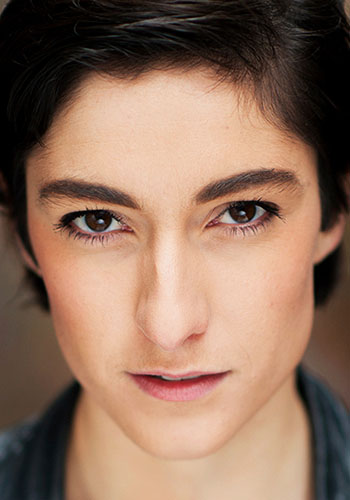
Diana Popovska

Claudette Clarke: What parts of your personality as a human does your parts bring out?
Diana Popovska: I feel like this production and the parts I have been cast in bring out my playfulness as a human more than anything else. It has been such a beautiful experience introducing ‘play’ into the rehearsal room from day one. This has allowed me to connect with the text, our queer reading of the text and my fellow actors in a way which has been visceral and raw. This production has also brought out my queerness and sensual energy, and highlighted how fabulous I feel as a queer woman making theatre.

How does the “queer reading” of Metamorphoses impact on your interpretation of your parts?
I think it is important to understand that these stories are universal. For me, the several characters that I play in this production all experience various human emotions such as grief, love, heartache, lust and so on… This “queer reading” if anything allows me to celebrate more than ever these characters and their experiences, as well as stand there and fight for them and their right to be represented on an Australian stage.

What made you interested to be part of this production of Metamorphoses?
I have always wanted to work with Dino Dimitriadis as a director and when I found out that he was doing Metamorphoses I wanted in because I was incredibly interested to see what he would do with a text so colossal. As a queer identifying woman, I wanted to represent my community on stage during Mardi Gras. I mostly wanted to do this production because I knew it would be a celebration of queerness, a celebration of ‘difference’ and a celebration of the unwavering and all enduring human spirit in the face of hardship.

What kind of kid were you at school?
I was a little bit of a nerd / a little bit cool. I loved playing cards at lunch time and I was even on the debating team for a while. Drama class was my favourite, but I also really enjoyed playing sport too. I feel like I was super friendly with everyone in my year, we had a pretty tight year. I was pretty confident and ‘cool’, except for when it came to telling my high school crush, Katie that I liked them. I was super bashful around her and other girls I liked, and you know what they say, “you snooze, you lose!”.

How do you envisage theatre changing since ‘same sex marriage’ became legal in Australia?
I am hoping that far more companies will open their doors to allow for queer stories to be staged. I am hoping that this will allow for more queer identifying artists and creatives to create work and to see themselves represented in others work far more rapidly. If anything, the arts in Australia have been behind ‘same sex marriage’ for a long while now, it’s actually our government that has needed to pull their finger out. But now that the horrible plebiscite is over, I hope for love and inclusiveness for all queer identifying people and their allies both on and off stage.

Claudette Clarke and Diana Popovska are appearing in Metamorphoses, by Mary Zimmerman.
Dates: 8 February – 10 March, 2018
Venue: Old Fitz Theatre

5 Questions with Travis Jeffery and Hoa Xuande

Travis Jeffery

Hoa Xuande: Before you read Tonsils And Tweezers, going purely from the name, what did you think the play would be about?
Travis Jeffery: I had absolutely no idea what the play was about before I read it. I love the title, but the only thing it gives away is two of the characters names, and even that’s not crystal clear. Will O’Mahony is a very intelligent human and writer so I gathered the title wasn’t going to be literal, but the thought did cross my mind that ‘hey maybe it’s just set at the dentist’.

What kind of kid were you at school?
I was the funny chubby kid at school. Or at least I tried to be funny, I was definitely chubby. My passport photo was taken in 2009 when I was around 107 kgs, these days when I whip it out at the airport I occasionally get laughed at… at least I’m getting laughs 😦

What are the similarities or differences between you and your character?
The importance of friendship is definitely something myself and Tonsils have in common. My friendships are one of the most important parts of my life, whether it’s on or off stage it’s wonderful knowing you have people that will be there for you, including you, Hoa Xuande. At the heart of Tonsils And Tweezers is two best friends trying to help each other work through something traumatic, it’s their friendship that drives the play.

What do you think your character’s name actually is and why?
Interesting question Hoa, lets go with Peter. Purely because in one of the rehearsals James Sweeny, who plays Max, called me Peter when he wasn’t cut off in time. Or maybe his name really is just Tonsils, like Cher!

Where do you go to get your dance moves?
I learnt my moves at the school of hard knocks! Don’t be fooled into thinking I woke up one morning and they were there. Years of hard work and dedication has been put into my skills. Hitting the D-Floor rain, hail or shine to keep my moves in peak condition. Actually to be honest I was born with absolutely no rhythm so dancing is incredibly hard for me, come watch the show and see for your self.

Hoa Xuande

Travis Jeffery: What do you enjoy about Tonsils And Tweezers and Will O’Mahony’s writing?
Hoa Xuande: I’ve had the chance to work with Will twice now on his plays, including the original development of Tonsils And Tweezers, and the thing that really sticks with me about his writing is how frivolous and fun his plays are until it drops you into the deep end and puts you into an emotional mess. Without trying to sound smart he creates these ideas and clues along the way, which ironically makes his plays really clever. In Tonsils And Tweezers we just get to be silly and play until we hand the audience the play’s actual intentions and emotional truth. It’s really fun to do that every night!

What’s the biggest difference between this production and the original?
The biggest difference between this production and the original would have to be the pace between the two shows. The original was put on as part of a double-bill of theatre at the Black Swan State Theatre Company in Perth so we had some time constraints so Will, who also directed the piece himself, really got us to rapid-fire the text. I mean, we really spoke quite fast! But this production has allowed me to just re-discover the text and give the play a little more ‘breathing room’ so it’s nice to be able to just take your time a bit more in this version of the production and make new choices that you hadn’t previously thought about before. It’s just been great to be able to do the same text again but in a different way!

This question has 2 parts! Part 1: What do you like most about rehearsals? Part 2: What do you like most about working with me?
Haha, well… early on in rehearsals, it was interesting to re-discover the play with Travis and Michael and because I had done the play before, I thought, “Nah, I’ll be right.” But as they kept mining the text and discovered things I had completely missed before, I found myself questioning what I actually knew and what my choices were in the previous production and whether I had even understood the play in the first place. So stepping through the play once again in these rehearsals has actually been quite a refreshing feeling. Travis, mate, I like your can-do attitude! Strong choices even if they might be wrong, or always wrong, haha! Nah, actually that was me every day!

Is it true you only own one white shirt and wear it every day?
False, my friend, I actually own more than one white shirt. Three, to be precise. One of which is being used in the show right now! But I choose to wear my ‘rehearsal’ white shirt every day for rehearsal purposes. FYI, it does get washed every week, I think!

Did you ever have a nickname that you hated? Do you have one now?
I’ve had plenty of nicknames or more like mis-pronunciations of my name that’ve probably turned into a nickname at some point in time. The strangest reading of my name once was ‘hon’ and I was like, ‘Interesting, don’t know where the ‘n’ came from but I’ll take it!’ It’s pronounced ‘hwa’ by the way, like a karate chop! That phrase has become attached to my name every time I introduce myself now, haha! But no, never really hated any nicknames. Do I have one now? Don’t know, probably, but Xanadu’s been making the rounds because it looks similar to my last name!

Travis Jeffery and Hoa Xuande can be seen in Tonsils And Tweezers by Will O’Mahony.
Dates: 12 – 29 Jan, 2018
Venue: Kings Cross Theatre

5 Questions with Toby Blome and Contessa Treffone

Toby Blome

Contessa Treffone: Toby Blome, like the chemist, can you describe There Will Be A Climax, with a verb, an adjective and a noun?
Toby Blome: Spin. Round. Baby.

Which do you think came first, the deadly sin or the sloth?
Obviously ‘sloth’ is just fake news created by a bunch of men hundreds of years after the real deadly sins died. Just a political ploy. I don’t believe in any of it. Fake news.

What makes you climax, Toby?
Remembering that statistically at least once every day someone somewhere in the world discovers how hard Mondays can be!

As your idol, what would you say inspires you most about me?
Haha where to begin! How about how you constantly belittle me and everyone else in the cast and that time you swore that I’d never amount to anything and that everyone who loved me was just too guilty to leave.

Toby, you are a tall man. Chicken or beef?
Chicken.

Contessa Treffone

Toby Blome: Contessa Treffone. That’s an interesting name. What has been your relationship with such an interesting name throughout your life?
Contessa Treffone: It’s a hard weight to carry… greatness. You give a child a name like that and they have to be something. Ordinariness was never an option. That’s a lot of pressure that people don’t understand. It’s been hard, Toby. Real hard.

After the show’s first season as part of the 2016 NIDA Director and Designer’s Season you were quoted as yelling “you’re all scum” to the cast at the after party. What brought you back to do the show a second time at the Old Fitz?
Three things Toby.
1. Money. All the money.
2. The promise of more fame. If that’s even possible.
3. A dolphin.

Were you at all surprised by what you created during the devising process?
No.

Contessa, if anyone knows anything about you it’s that you love kale! Fave kale recipe?
I like my kale like I like my men. Raw and quiet.

Were you satisfied with my questions today? If not, any constructive feedback?
4/10. I don’t think this audience knows anything about our show and they clearly don’t know enough about me. Fail on both fronts, Toby.

Toby Blome and Contessa Treffone can be seen in There Will Be A Climax by Alexander Berlage.
Dates: 9 Jan – 3 Feb, 2018
Venue: Old Fitz Theatre

5 Questions with David Morton and Nicholas Paine

David Morton

Nicholas Paine: What’s The Wider Earth about?
David Morton: The Wider Earth is a work of fiction drawn loosely from the historical record. It takes memories of real people, places and events and passes them through the lens of myth. Some may call it blasphemous. Others may caution that the simplicity of the tale undermines the real work of its hero. I hope it might stand as a celebration of the incredible complexity of our planet, and go some small way towards humanising the part played by those brave enough to stand against the dominant thought of their time.

What’s it like developing a new work?
Developing new work brings with it the simultaneously liberating and horrifying reality that everything is in flux, and there is nothing to fall back on. It takes a special group of people to inhabit that chaos, particularly with an opening night looming. Over the last couple of years we’ve had the honour of working with an incredible team of creatives and performers. They’ve not only deftly embraced continuous rewrites, the quirks of puppetry, and other obstacles to the process, but had an insatiable drive and passion to push the work to new heights.

Tell me about the design of the puppets.
The design for the puppets used in the show was undertaken during an intensive eight-month process. The journey of each creature began with us spending time with their real-life counterparts, sketching and taking video as studies to determine the key structures and movement qualities of the different animals and how we could best embody these in the final objects. The drawings and notes from these encounters were then turned into three- dimensional digital renderings of each creature to design the mechanisms that would allow for their controlled movements. Finally, these models were broken into cross sections that could be laid at as a plan to be laser cut into wood, paper and leather pieces.

Over the course of four months a team of fabricators assembled these pieces in the Queensland Theatre workshop. This began with slotting and gluing the main structures together to give the creatures a base form that was then further embellished using wicker. The internal mechanisms were activated with the installation of control systems similar to miniature brake cables, and handles and rods were attached. Each of the puppets was given colour using wood stain and arted with ink. Finally, each had a pair of obsidian (volcanic glass) eyes installed.

How were the puppets introduced into the show?
Similarly to the construction, incorporating the finished puppets into the work followed a series of distinct stages. The first of these involved training the ensemble in the key manipulation techniques used by the Society. These include the focus of the puppet, its breath, and its ability to give an illusion of weight and gravity. Following this, the performers were slowly introduced to the various creatures and undertook extensive research into the movement and behavioural qualities of each. When working out the choreography for each scene we first start by devising the large movements – like where on the stage the puppet travels – and as this becomes embodied by the performers more ne detail is added.

The process of bringing a puppet to life on stage takes an incredible degree of commitment and discipline; unlike an actor who spends a rehearsal period developing a character, a puppet has to first learn how to be alive before we can even start to wonder as to what its character might be. Ultimately, the process isn’t completed until the imagination of an audience turns the movement cues that we give into the illusion of life.

If you could take the show anywhere, where would it be?
The Galapagos Islands, of course!

Nicholas Paine

David Morton: Tell us more about the cast for The Wider Earth.
Nicholas Paine: The production features seven of some of the country’s finest actors and puppeteers. Together, they form the ensemble that will tell you the story. The line between actor/puppeteer is blurred. In some scenes you’ll have actors playing characters alongside puppets, and in other scenes those actors will be manipulating puppets and performing more choreographic sequences. It will certainly keep them on their toes… and hopefully you too!

What is it about Charles Darwin that inspired you to create The Wider Earth?
We were inspired to create this work when we were visiting Handspring Puppet Company in South Africa in 2013. We got talking with the Executive Producer, Basil Jones, about how Charles Darwin stopped in Cape Town on the HMS Beagle just prior to returning home to England. We were both familiar with the work of Charles Darwin but what we didn’t realise was that he was just 27 years old when he made this stop and only 22 when he left on the voyage. We thought that his journey could make a stunning coming of age story, full of exquisite creatures, and to make comment on the wonder of our planet.

Dead Puppet Society went to Brooklyn (New York City) for eight months of pre-production in the creation of The Wider Earth. How was that experience for you?
We were developing the show with St. Ann’s Warehouse for that whole period of time. The specific focus of the development program was on refining the kind of puppetry we wanted to use to tell this story. We were working with eight other companies who also work in visual theatre, which for us was a really eye-opening experience. We’ve never really collaborated or connected with any other puppet-based artists before because it’s not an overly used form in Australia. The residency resulted in a 20-minute work in progress showing. And all of those artists have gone on to further develop their work in very different arenas.

How long from page to stage?
It’s about a three-year process. By the time we open it will have been exactly three years.

If you could take the show anywhere, where would it be?
Shrewsbury, UK. Where Charles Darwin was born.

David Morton and Nicholas Paine are producers of Morton’s The Wider Earth, part of Sydney Festival.
Dates: 17 – 27 January, 2018
Venue: Sydney Opera House

5 Questions with Cristabel Sved and Dubs Yunupingu

Cristabel Sved

Dubs Yunupingu: What 5 words would you use to describe the play?
Cristabel Sved: Magical, theatrical, funny, physical, inspirational.

Do you have a favourite moment in the original book and in the play?
There are lots of brilliant moments in Lewis Carrol’s book of course. An important one for me is when Alice challenges the viewpoint and power of the Queen of Hearts. In our play this is where Alice really comes into herself and finds the courage from her adventures and her encounters with all the other wonderful, fantastical characters to stand up to this imposing authority figure.

What has been the most enjoyable part about bringing this play to life?
I’ve enjoyed so much about working on this show. It’s been great working with Mary Anne Butler, the playwright, who has done an amazing job crafting Lewis Carroll’s story for a new audience. And it’s been an absolute pleasure collaborating with our wonderful creative team and these very special young actors to bring the magic of Wonderland to the stage. Revisiting the text and the character of Alice and finding a new relevance and message for young audiences and their families has been a great journey.

What has been the most difficult part about bringing this play to life?
I think the magical things that happen in Wonderland have been our biggest challenge to bring to the stage, but it’s also been lots of fun. Alice shrinks, grows, visits the cosmos, finds herself floating in a river of her own tears, talks to mice and packs of cards…. Our production design is deliberately low tech. It relies on the theatre’s unique ability to transform ordinary objects into extraordinary things. I can’t wait for audiences to come on the journey with us. Of course, we’re asking them to help us create this magic with the powers of their imagination and this is an important theme in our play too.

If you could make any childhood book into a stage show, what would it be?
I might keep that up my sleeve for now!

Dubs Yunupingu

Cristabel Sved: What 5 words would you use to describe Alice In Wonderland?
Dubs Yunupingu: The five words I would use to describe Alice In Wonderland are magical, adventurous, fun, suspenseful and intriguing.

You play Alice. How would you describe her personality?
The way I would describe Alice’s personality is that she is a very strong girl, she is more of a tomboy in a sense that she loves playing footy and loves a good adventure. She doesn’t want to be the neat and pretty girl everyone expects her to be. All she wants to do is find her voice to be able to express herself. Through her journey in Wonderland she slowly builds up the courage to do so.

What is it you are enjoying most about doing this play?
I am enjoying telling the story and bringing Wonderland to life with my amazing work mates.

If Alice could date any current film star who do you think she would choose and why?
If there was no age limit I would say Johnny Depp because of all the amazing crazy adventures he goes on in all the awesome films he has done. He gets to express himself through so many different characters and I feel that all Alice wants to do is to be able to express herself. 

In a nutshell, how have you approached the role of Alice?
I have gone in full force, no expectations and loving every minute of it.   

Cristabel Sved directs Dubs Yunupingu in Alice In Wonderland, part of Sydney Festival.
Dates: 5 – 27 January, 2018
Venue: Riverside Theatres, Parramatta

5 Questions with Tony Goh and Shan-Ree Tan

Tony Goh

Shan-Ree Tan: So who’s Tony Goh, and how’d he come to be in a theatre in Marrickville with the rest of us?
Tony Goh: Tony is an Australian born Chinese. I was born in Brisbane, grew up in Marrickville, got married, lived in the US for 13 years, started a family – I have two young boys 15 and 13. I have returned to Marrickville through an odd journey and co-incidences. I am currently studying acting and was interested in doing a stage play. Over the past two decades, I dabbled in TV, commercials, and film – including two in the US. So, I have constantly re-inserted acting into my life, perhaps because I am always interested in the lives of others, how others live.

You play a character who’s a big fan of theatre in this play. What’re you a big fan of in real life in that way?
Definitely a fan of movies, but then again who isn’t? I was bitten by the acting bug really young, at age 16, when I went heard they were auditioning for the role of an Asian shopkeeper in a very shortlived TV series called “Arcade” shot in Cremorne shopping arcade. I couldn’t really turn my back away after that even though I never got the part. I’m also a fan of cooking and staying in shape.

We’ve got a pretty diverse cast for a Chekhov, I reckon. Do you feel particularly as an Asian face you’ve got more to prove as an actor? Or does it not really worry you? It worries me…
If I were to enter the entertainment business today, I would feel more pressure to prove myself. Sure there’s still pressure, it comes with the territory. But back in my day…god I sound old, there were fewer parts for Asians, mostly stereotyped roles. I think the Australians are now accustomed to seeing Asians as being well, just Aussies, so there’s little in the way of having to conform to some image. We can just be actors/characters/people. However, I also think there are more roles for Asians nowadays which means there’s a lot more opportunity to showcase the available talent. I think the pressure to prove as an Asian actor could stem from the fact that Asian culture is one of conformity. Conformity and creativity are at odds. It is those Asians or any migrant culture who best absorbs the available culture that will be able to grow and develop as both actors and members of society. I think the issue is one of broader acceptance. We’re lucky in Australia in some respects because we tend to focus on producing drama, which opens the way for dramatic roles, character based. Whereas when I cast my eyes to Hollywood, there tend to be more stereotyped Asian roles. The US is getting better sure with shows like “Fresh Off the boat” but those are few and far between as you’d be hard-pressed to see many Asian actors playing characters as opposed to caricatures.

You’re always a terrifically jovial presence in rehearsal. What have you enjoyed the most about director Anthony Skuse’s process?
I have enjoyed Anthony’s insight, creativity, and patience. He is a great communicator, as a result, you have a clear picture of what is expected of you and what he wants from the scene, the emotion. One of the questions he’s asked us, certainly me, is who is my character, and what do the people around the character mean to my character. Those are questions to shape my own thoughts and bring my own interpretation of the character, yet remain truthful. It is amazing what that has accomplished and the clarity it brings to the preparation process. I also enjoy the cast. We’re a mixed bunch and get along well. We know we have a job to do and we’re not assholes going about it.

What kind of role/project would you want to tackle next, if you had to make a total change from this gig?
A tough question. I won’t go into the personal side of my life, but let’s just say the last four years of my life have been a wild ride, an adventure if you will. I feel I am still trying to find my way in life. I would very much love to pursue further acting endeavours, perhaps as a regular on TV drama series – the typical lawyer, doctor, cop thriller comes to mind. I have long since given up on the dream of making a living in acting, so whatever morsel comes my way I am deeply grateful for.
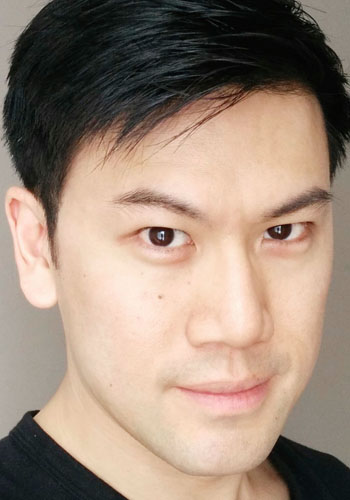
Shan-Ree Tan

Tony Goh: What are you enjoying about working in this play?
Shan-Ree Tan: Ah, everything. Even the challenges of rehearsing on a co-op schedule and all the technical
curveballs that come with any show. Working with Anthony has been brilliant – I’ve really gotten a lot out of his literate, rigorous approach to text and his direction, which is somehow both entirely intuitive yet absolutely precise, and demanding while also being really supportive – and he’s got a great sense of humour. Really enjoying soaking up the learning from our experienced and generous castmates and crew too: serious about the work without taking themselves seriously at all. Definitely feeling like I have to jog very very briskly to keep up, but same, I’m grateful for the chance I’ve got even to share a stage with these folks.

What do you see as the future of acting in a multi-cultural Australia?
Big question! I’m not equipped at all to make any informed predictions – but like you, I’d like to see the performing arts here get to a point similar to where the UK industry seems largely to have gotten to, where it’s largely unremarkable to see culturally diverse actors in almost any production. “Unremarkable” is probably the wrong word. What I mean is that I hope that we can work to make two things happen: one is that we get to an overall much, much better place with “any ethnicity” or colourblind casting where that’s appropriate, and the other is that the appetite for the kinds of Australian stories where an actor’s cultural or ethnic background is an active asset, and can be appropriately provocative, continues to increase. The challenges will be quite radically different for actors from different cultural backgrounds – Indigenous representation or Middle Eastern representation are good examples – so the solutions to perennial hurdles like stereotyping and tokenism will be different.

We’ve seen a quite a few trailblazing Asian arts and media personalities take stage here in recent years and it’s going to be really interesting to see that develop. I’m particularly interested in what’s going to happen in the conversation between media/arts representation reflective of folks like us who grew up in Sydney and are more Aussie than anything else – out in the Hills in my case and in Marrickville in yours – against the popular culture of the beachhead communities of the “new Asia” who are paying attention to a whole other vast entertainment industry. The cultural gulf there alone can be huge, I’m keen to see how it plays out. As far as our production goes: people may wonder why this particular diverse cast was chosen to portray a bunch of ostensible 19th century Russians, particularly with our wildly differing regionalisms, but I like that it adds a new musical range and quite a powerful meta element to it. The play is literally about trying to reinvent theatre in a social context, so I reckon it rewards the approach that Anthony’s taken.

What movie/theatre stars do you admire and why?
Too many, for too many different reasons. A few completely random names from things I’ve seen this year:
Blazey Best. Not reasonable for someone to be able to be that funny and musical while literally standing on her head in the Wharf Review this year. Rob Brydon/Steve Coogan/Michael Winterbottom, the collective team. The Trip was life-changing. Takeshi Kitano. Big fan of his consistent ability to find the darkest, driest laugh possible at everyone’s expense and that he keeps finding new ways to provoke. Kate Mulvany. That lady knows how to Shakespeare. Gary Oldman. He seems to know precisely where to set the dial for whatever movie he’s in. Taika Waititi. What a mad Kiwi wizard. Thanks to my girlfriend for forcing me to sit down to watch What We Do In The Shadows for the first time earlier this year. We’re also at a moment where creatives are using whatever recognition they have to take a stand and speak out on the critical social and political issues that are roiling us right now, even at massive professional and personal cost to themselves. That’s hugely admirable.

What do you think happened (to the characters) after this play?
Is it still possible to spoil the ending of a 120 year old classic? Chekhov’s got a very particular definition of “comedy” – things are just not going to work out well for most of them are they…? Your character, Shamraev, probably makes off all right – I like to think he basically gets left with the estate to do with as he likes. Your wife Polina might have convinced the good doctor Dorn to run off with her before then though. Masha: cirrhosis. Medvedenko: pneumonia, from all that walking through Russian snow.

What don’t your friends know about you, that only your closest, or longest time friends do?
All my vocal impressions of people are now actually just take offs of Rob Brydon doing far superior impressions of those people. To be fair, people work that out pretty fast.

Tony Goh and Shan-Ree Tan can be seen in The Seagull by Anton Chekhov.
Dates: 6 – 16 Dec, 2017
Venue: The Depot Theatre

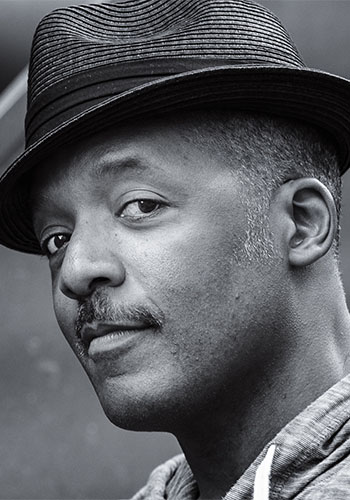
5 Questions with Alex Bryant-Smith and Nicholas Papademetriou

Alex Bryant-Smith

Nicholas Papademetriou: What 5 words would you use to describe The Caretaker using words that start with the letters PINTER?
Alex Bryant-Smith: Psychological. Intense. Nutty. Threatening. Exploitative. Relentless.

You play Mick in The Caretaker. What would Mick do if he won 20 million in the lottery?
Do up the house, flip it, and repeat. Get on the property ladder.

What is it you are enjoying most about doing this play?
I love messing with Davies, and discovering new and deeper ways to play each little moment or
question or line. There is so much depth to the writing, it’s incredible.

If Mick could date any current film star who do you think he’d choose and why?
I don’t know… someone tough and resilient. Jennifer Lawrence? Because she would intimidate him
and thrill him at the same time.

In a nutshell, how have you approached the role of Mick? Has it been a different process to
usual?

The process has been similar to other roles but it took me a while to find his central conflict, the
reason he is there at all. Since then it has been a matter of finding all the juicy little details behind
each line because there are so many, and each one can be played many different ways – so much to
sink your actor’s teeth into!

Nicholas Papademetriou

Nicholas Papademetriou

Alex Bryant-Smith: What 5 words would you use to describe The Caretaker using words that start with the letters HAROLD?
Nicholas Papademetriou: Humorous. Arresting. Rollercoaster. Over-the-top. Loquacious. Disturbing.

You play Davies in The Caretaker. Davies has been “all over”, what would his dream holiday be and why?
He’d love to go somewhere he can spend his entire life without wearing shoes. (Why? You’ll have to come see the play.) But a sandy white beach would be ideal – perhaps Cornwall Beach in Jamaica. Away from the throng, but the odd English eccentric for Davies to banter with.

Jonathan Pryce famously played this role. What would you want ask him about his experience with Davies and The Caretaker?
I’d ask him how he remembered all his lines!

If Davies could have any animal as a pet, what would he choose and why?
A hedgehog. They are mild, expect little and like to keep to themselves, but if anyone messes with them they get instantly spiky. Kindred spirits.

What has been the most difficult part of preparing for this production? Have there been any unique challenges?
The most unique challenge of mastering a Welsh accent that isn’t really a Welsh accent, because Davies isn’t really from Wales… or is he? Retaining the great swathes of dialogue has also been pretty challenging. The other challenge is a constant in all acting: to play the character with honesty and integrity and to respect what the writer intends.

Alex Bryant-Smith and Nicholas Papademetriou can be seen in The Caretaker by Harold Pinter.
Dates: 22 November – 2 December, 2017
Venue: The Actor’s Pulse

5 Questions with Toby Francis and Teagan Wouters

Toby Francis

Teagan Wouters: What was the first album you ever bought?
Toby Francis: The first album I ever bought with my own money was “Punk-o-Rama 6” when I was in Year 7. But the first album that was ever mine was “Aqua Aquarium” when I was about year 7 in age. Those two albums tell you everything you need to know about me, really.

Who was your inspiration as a singer growing up?
Farnham. Hands down. I mean, Freddie Mercury and Barnsey were also gods to me. But Farnham was and is the voice. Around my early 20s, I became obsessed with his voice. I wanted to be able to do what he did and I’d just belt the shit out of his songs until my voice gave out. What he does vocally is incredible.

If you could make any album into a stage show, what would it be?
“My Chemical Romance” – The Black Parade. It’s a great album, it’s theatrical. It has that old school high concept rock and roll that you don’t really see anymore. It is so open to incredible set pieces and costumes. It has such vivid imagery and characters. I’ve thought about what that album would be like on stage a lot.

What song would you choose for your first dance at your wedding? And what song do you want people to play at your funeral?
Wedding: Bright Eyes – “First Day Of My Life”. I found Bright Eyes when I couldn’t sleep one night in high school and a clip came on Rage. I thought it was incredible. And this song is such a simple joy. It’s lyrics aren’t pretentious. But they also aren’t ashamed of being a little twee in places. It’s just real and happy. It’s perfect.

Funeral: Johnny Cash – “We’ll Meet Again”. This song, but not this version, was played at my grandfather’s funeral. He loved to sing and we’d watch Singin’ In The Rain together all the time. When he died, it hit me like a tonne of bricks. I also adore The Ink Spots and their version of this song is the one Johnny Cash covered. So it all fits. I mean, I don’t believe in an after life but I believe in my grandfather.

Top 5 Albums people should listen to?
This isn’t in any order and I’m going for a bit of variety so:
1. “The Feel Good Record Of The Year” – No Use For A Name
2. “Lizzie: The Musical”
3. “Hospice” – The Antlers
4. “Good Kid, M.A.A.D city” – Kendrick Lamar
5. “Transgender Dysphoria Blues” – Against Me!

Teagan Wouters

Toby Francis: What was the first album you ever bought?
“1995 Gay And Lesbian Mardi Gras Party Anthem”. I was 9 years old and heard it playing in a music shop and had to have it! I think I was destined then to have a career in musical theatre.

Who was your favourite artist growing up?
Tina Arena! I just love her effortless voice.

What is your guilty pleasure album?
Anything musical theatre. I’m a musical theatre nerd at heart. And maybe a little Alanis Morissette – “Jagged Little Pill”, to belt out in the car.

What song do you want to be played for the first dance at your wedding? And at your funeral?
Wedding… it will be on loan from my brother because I sang it at his wedding but, “You And I” by Ingrid Michaelson. Something borrowed right?

Funeral… I don’t know! Something that’s happy?!

Song that breaks your heart, and another that lifts you up?
Heartbreaking, Sara Bareilles – “Manhattan”. Uplifting, Wilson Philips – “Hold On”.

Catch Toby Francis and Teagan Wouters in High Fidelity, the musical.
Dates: 18 Nov – 17 Dec, 2017
Venue: Hayes Theatre