Suzy Goes See’s Best Of 2014

sgs-best2014

2014 has been a busy year. Choosing memorable moments from the 194 shows I had reviewed in these 12 months is a mind-bending exercise, but a wonderful opportunity that shows just how amazing and vibrant, theatre people are in Sydney. Thank you to artists, companies, publicists and punters who continue to support Suzy Goes See. Have a lovely holiday season and a happy new year! Now on to the Best Of 2014 list (all in random order)…

Suzy x

 Avant Garde Angels
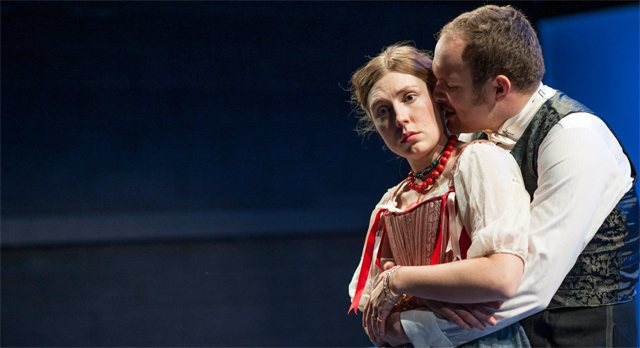
The bravest and most creatively experimental works in 2014.

 Quirky Questers
The most unusual and colourful characters to appear on our stages in 2014.

♥ Design Doyennes
Outstanding visual design in 2014. Fabulous lights, sets and costumes.

♥ Darlings Of Dance
Breathtaking brilliance in the dance space of 2014.

♥ Musical Marvels
Outstanding performers in cabaret and musicals in 2014.

♥ Second Fiddle Superstars
Scene-stealers of 2014 in supporting roles.

♥ Ensemble Excellence
Casts in 2014 rich with chemistry and talent.

♥ Champs Of Comedy
Best comedic performances of 2014.

♥ Daredevils Of Drama
Best actors in dramatic roles in 2014.

♥ Wise With Words
Best new scripts of 2014.

 Directorial Dominance
Best direction in 2014.

♥ Shows Of The Year
The mighty Top 10.

♥ Suzy’s Special Soft Spot
A special mention for the diversity of cultures that have featured in its programming this year.

  • ATYP

End

sgs-best2014a

Photography by Roderick Ng, Dec 2014

End

Best of 2018 | Best of 2017 | Best of 2016Best of 2015Best Of 2013

Review: A Doll’s House (Sport For Jove Theatre)

sportforjoveVenue: Seymour Centre (Chippendale NSW), Jul 17 – Aug 2, 2014
Playwright: Henrik Ibsen (adapted by Adam Cook)
Director: Adam Cook
Cast: Annie Byron, Barry French, Anthony Gooley, Douglas Hansell, Matilda Ridgway, Francesca Savige
Image by Seiya Taguchi

Theatre review
It has been well over a century since Henrik Ibsen’s A Doll’s House first appeared on a Copenhagen stage in 1879, but the play is still a popular choice in Australia today. Its story and characters continue to resonate, and its social commentary remains relevant to many of our lives. The themes of gender politics, marriage and self-actualisation are no less significant than they were in Ibsen’s day. The sexual revolution might have come and gone, but judging by the power of Sport For Jove’s current production, the societal dysfunctions illustrated in A Doll’s House are not yet a relic of the past. Indeed, we face the question of whether these injustices can ever be eradicated, or if it is human nature that insists on power structures that subjugate and oppress.

Adam Cook’s adaptation gives the language a vernacular update, which allows Nora’s world to be accessible by contemporary Australian audiences. There is a familiarity to their speech that positions them as our peers rather than historical literary figures, and we are encouraged to relate to the unfolding events on a personal level. Cook’s flair as a director makes the issues at hand feel immediate and palpable. The realism he creates on stage is a nod to Ibsen’s legacy, and an effective avenue to communicate a sense of the everyday realities that we share with the personalities on stage. Cook is especially thoughtful in his handling of the more politically biting portions of the script. He makes sure that meanings are highlighted, and we are never allowed to ignore the elements that make this a landmark work.

Set and costumes are designed by Hugh O’Connor, who turns in excellent work on both fronts. Set pieces are elegantly selected and coordinated, and the space created is appropriately quaint. The sense of a nouveau riche class is gently evoked in its purposefully elegant blend of blues, greys and wood. The doors in Ibsen’s script are frequently cited, and they do come into focus often but unfortunately, the ones chosen are too modern for the context and can appear disharmonious with the established aesthetic. Costumes are beautiful and flattering, and every ensemble helps with character portrayals. They inspire postures and mannerisms for the actors, and also ignite our imagination with notions of time, space and personalities. It must be noted though, that Torvald’s tuxedo in the final scenes is severely ill-fitted and a disruption to the otherwise charming visuals that O’Connor has created.

Nora is played by Matilda Ridgway with outstanding dynamism and depth. Her delivery is a thorough study of one of Western theatre’s most celebrated characters. Ridgway’s deep understanding of the work’s nuances as well as her intelligent awareness of the audience’s expectations, contribute to a compelling and impressive performance. Her decision to play up Nora’s twee qualities is an interesting one. It pulls into sharp focus the falsity of her marriage, but loses somewhat, the dimension of someone of great fortitude, and someone who is capable of cunning when necessary. Nevertheless, Ridgway’s work in the penultimate scene of upheaval will be fondly remembered for its sheer dramatic force and emotional impact.

Douglas Hansell is an entertaining actor who creates a Torvald that is lively and intriguing. Humour always bubbles under his surface, which makes Torvald’s objectionable features amusing to observe, but by the same token, the presence Hansell provides tends to feel slightly flippant. Anthony Gooley is magnetic when he exhibits Krogstad’s menacing side. The danger he unleashes is thrilling and seductive, but his depiction of desperation is uneven. His love scene with Kristine (played with an alluring stoicism by Francesca Savige) is a little lacking in polish, but it ends on a high note with ardently moving results.

The audacity of the play’s conclusion will never fade. Nora’s eventual decisions are simultaneously controversial and heroic. She justifies her actions with great conviction, and even though Ibsen leaves us little room for doubt, the play ends with a stinging hint of discomfort. Adam Cook and Matilda Ridgway have achieved something quite remarkable. We rejoice in their Nora’s exaltation, but we do not forget the dangers that lie ahead. Like their Nora, we too choose to risk everything, for everything counts for nothing, if all that is lived is a lie.

www.sportforjove.com.au

In Rehearsal: A Doll’s House

Rehearsal images above from A Doll’s House, by Henrik Ibsen.
The show is presented by Sport For Jove Theatre at Seymour Centre, Jul 17 – Aug 2, 2014
More info at www.sportforjove.com.au
Photography: Seiya Taguchi

Review: Twelfth Night, Or What You Will (Sport For Jove Theatre)

rsz_1941449_10152310338275729_1124735746_oVenue: Seymour Centre (Chippendale NSW), Mar 27 – Apr 12, 2014
Playwright: William Shakespeare
Director: Damien Ryan
Actors: Abigail Austin, Anthony Gooley, Bernadette Ryan, Christopher Stalley, Christopher Tomkinson, Damien Strouthos, Edmund Lembke-Hogan, Eloise Winestock, Francesca Savige, George Banders, James Lugton, Megan Drury, Michael Pigott, Robin Goldsworthy, Sam Haft, Teresa Jakovich, Terry Karabelas, Tyran Parke
Image by Seiya Taguchi

Theatre review
There are many ways to stage a Shakespearean play, and the discussion on the different approaches that artists take, is also a discussion on the nature of theatre. Sport For Jove’s production of Twelfth Night is about spectacle and entertainment. It is about skills and techniques from different theatrical disciplines collaborating for a live event that fascinates the senses and amuses the mind. This cast and crew are immersed in a wonderland of freedom, where the best of their talents are drawn out by a spirit of wild playfulness inspired by Shakespeare’s writing, resulting in a work overflowing with conviviality and colour.

There are no deep meanings and big messages in this story, in fact it is very silly. Director Damien Ryan takes the opportunity to remove himself from conventional emphasis on moralistic learnings, politics and intellectualism, and gives us a show that challenges the limits of artistic creativity and the use of the imagination. He seeks to impress not with what is being said, but how things can be said. It is about performance, and presentation. In other words, it is about exploring theatre in the ways it is distinct from other art forms and other media, using theatre to work in a way that nothing else can emulate.

Actor Robin Goldsworthy as Malvolio is quite frankly, faultless. Here is an actor with a very big hat full of comic devices, and he pulls everything out of it for a performance that tickles every funny bone in every conceivable way. Goldsworthy gives a simple character the most complex of treatments that surprises and outsmarts us at every turn. He works hard to regale us, and we are simply and thoroughly enthralled. The range and conviction he displays in this role, along with his extraordinary energy and timing, are breathtaking. This is a Malvolio not to be missed.

Megan Drury as Olivia is delightful. She finds a balance between glamour and absurdity, creating a character that makes us laugh and fall in love simultaneously. Drury’s stage presence is powerful, and there is a boldness in her demeanour that effectively prevents Olivia’s femininity from ever being seen as weak or twee. Anthony Gooley plays Orsino with extraordinary flamboyance, and a sex appeal that is both alluring and hilarious. There is a sense of danger that comes with Gooley’s brave impulsive style, which always seems to be ready for the unexpected, that in turn keeps us riveted and on our toes. Sir Andrew Aguecheek is played by Michael Piggott, who is an extremely physical actor. It is a joy to see the combination of agility and wit in his mode of performance, and the refreshing modern sensibility he introduces, gives the show a very cool edge.

All design elements in the production are terrific. From sound and lights, to sets and costumes, all details are cleverly considered and beautifully executed. They do not upstage the actors, but they do not play second fiddle either. Nothing we see or hear is left to chance. Each moment is crafted with a desire for richness, if not perfection. This is a show that does not take us for fools, and we are never asked to make allowances for anything.

If theatre is about the live experience, of being in a space with artists firing on all cylinders, and having all our senses intrigued and brought to life, Sport For Jove’s accomplishment is outstanding. Shakespeare is revered the world over, but it should not only be about celebrating the playwright’s words. A playwright’s work is only as great as the best physical manifestation it can inspire, and this production of Twelfth Night shows just how much amazing possibility resides in his legacy.

www.sportforjove.com.au

Review: All’s Well That Ends Well (Sport For Jove Theatre)

rsz_img_63263574684765Venue: Seymour Centre (Chippendale NSW), Mar 27 – Apr 12, 2014
Playwright: William Shakespeare
Director: Damien Ryan
Actors: Christopher Stalley, Christopher Tomkinson, Damien Strouthos, Edmund Lembke-Hogan, Eloise Winestock, Francesca Savige, George Banders, James Lugton, Megan Drury, Michael Pigott, Robert Alexander, Robin Goldsworthy, Sam Haft, Sandra Eldridge, Teresa Jakovich
Image by Seiya Taguchi

Theatre review
Sport For Jove’s production of Shakespeare’s All’s Well That Ends Well is sleek and action-packed. Damien Ryan’s direction makes every effort to reach out to his audience to keep us mesmerised and entertained. Like a Hollywood film, everything is made to be seductive, but Ryan has the fortunate knack of giving things a sense of sophistication, including full frontal nudity and a completely insane love story.

One of the Bard’s “problem plays”, it is both a tragedy and a comedy. Ryan takes advantage of its “dramedy” quality and forms a creation full of texture and surprise, maneuvering around the text with a freedom that flaunts his artistic genius and courage. His interpretation is utterly contemporary, frequently fantastical and flamboyant, but never inappropriately so. Shakespeare’s outlandish writing meets its match in Ryan’s wildness. Acutely aware of the pleasure derived from visceral responses in the theatre, Ryan magnifies elements of eroticism, humour, tension and shock that are found in the original text, but also has the talent to keep the central story engaging and plot lines coherent. In other words, his direction leaves nothing more to want.

Shakespeare’s male characters are generally more interesting, and that is certainly the case here. The men in the cast have much more room to play, and their work dominates this stage. Edmund Lembke-Hogan is perfectly cast as Bertram. He has the good looks that make the ludicrous love story almost believable. His performance is spirited but precise, with commanding energy that fills the venue and a disciplined focus that keeps his character defined in spite of the often chaotic settings. Conversely, George Banders shines with the looseness in his acting style. Banders is a thoroughly funny and charming man whose character Parolles is easily the most liked of the show. He reads the audience well, and times his delivery impeccably to get us laughing at every opportunity. The production’s comedy makes its three hours feel a mere breath, and Banders is responsible for the best of it. The King of France is played by Robert Alexander who exemplifies charisma and experience. The meticulous detail in his portrayal turns a smaller role into a spellbinding one. His chemistry with co-actors is excellent but the gravity he brings on stage prevents him from ever being outshone.

Set, lighting and sound design are incredibly impressive. Ambitious in scale and scope, the creatives have outdone themselves with a show that is glorious in its look and feel. Its physical environment seems to be perpetually changing, and except for some mechanical noise issues, stage management is executed quite flawlessly. The versatility of Antoinette Barboutis’ set is a real marvel, but costume design is the one blemish in this grand visual experience.

The story is not an appealing one. A woman going to extremes for the love of a man who had shown her only disdain and humiliation is hardly a great idea for today’s stages, but Sport For Jove Theatre’s magical endeavour has transformed a 500 year-old script into a night of glorious theatre. Shakespeare was their starting point, but where they have ended up is a place beyond his wildest dreams.

www.sportforjove.com.au

5 Questions with Megan Drury

megandruryWhat is your favourite swear word?
Favourite, “Cunt” – delicious in the mouth (innuendo intended)
Most used, “Fuck” – and it’s various conjugations (pun intended)
For particularly frustrating moments (and only to myself) I find a whole improvised emphatic grammatically incorrect string of random expletives very useful.

What are you wearing?
Oh, um… undies.

What is love?
1) An English word used to linguistically interpret strong feelings of compassion, affection, appreciation, attraction, attachment…
2) Freedom and liberation from fear / Pure creativity / An incredible flow of boundless, open energy
3) The Beast (reference: Bloodletting, Concrete Blonde. circa 1990)

What was the last show you saw, and how many stars do you give it?
I saw two shows last week. Stars, out of 5… Stop Kiss 4 1/2, and Once In Royal David’s City 3 1/2.

Is your new show going to be any good?
I’m in a repertory season of two Shakespeare plays! And yes… yes… a thousand times yes!! Twelfth Night, Or What You Will is a remount, so we already know it’s a wonderful, lively, hilarious, moving, joy of a production! You won’t have seen a Twelfth Night like this ever, come along! And… All’s Well That Ends Well is going to be remarkable! Reshaped and freshly interpreted. A rarely performed Shakespeare, it’s an absolute must see, don’t miss it!

Megan Drury is appearing in Twelfth Night and All’s Well That Ends Well.
Show dates: 27 Mar – 12 Apr, 2014
Show venue: Seymour Centre