Review: Oedipus Doesn’t Live Here Anymore (ATYP)

Venue: ATYP (Walsh Bay NSW), Jun 7 – 24, 2017
Playwright: Daniel Evan (after Sophocles)
Director: Fraser Corfield
Cast: Caitlin Burley, Jeremi Campese, Mia Evans Rorris, Joshua McElroy
Images by Tracey Schramm

Theatre review
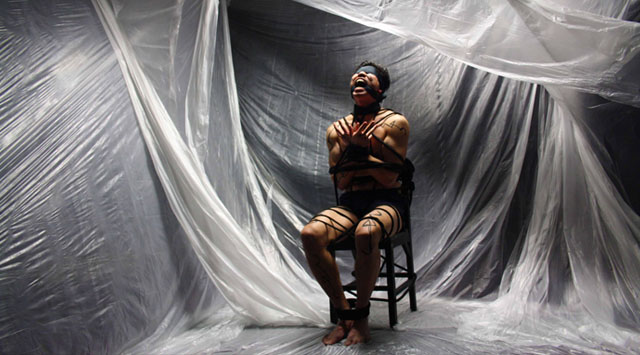
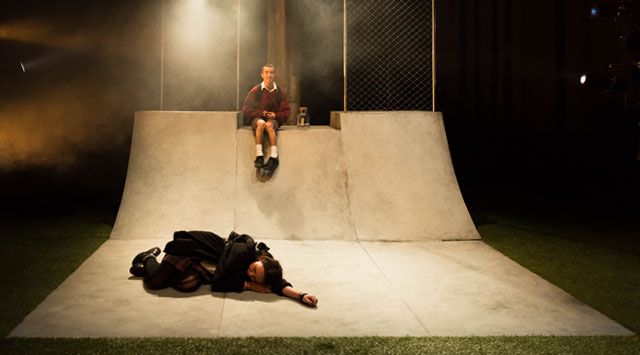
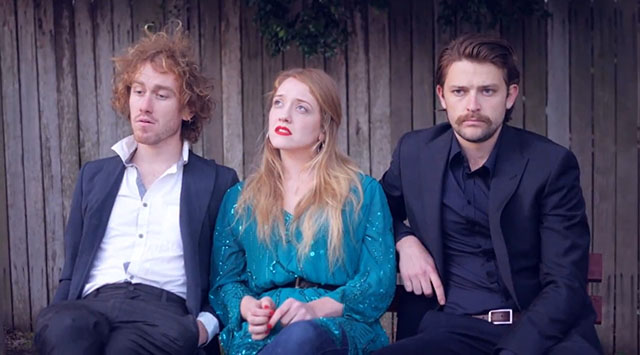
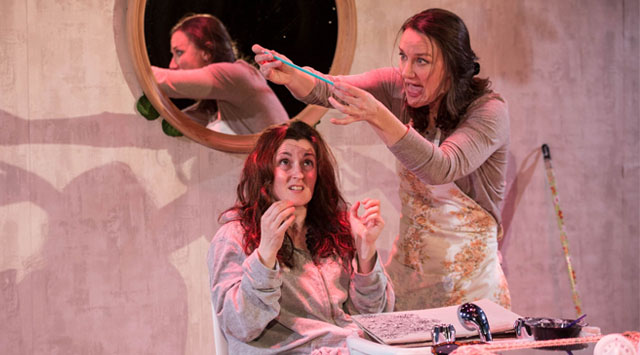
The story of Oedipus and his mother/wife Jocasta has remained in our consciousness over the centuries. The resonance that it provides, whether emotional, moral or simply shocking, is unquestionably deep, but in Daniel Evan’s rendition, it is the tangents departing from the classic narrative that are its real concern. In Oedipus Doesn’t Live Here Anymore, the familiar tale of taboo and tragedy, provides the framework for a passionate and somewhat erratic theatrical experience. Less drama, more experimentation, Evan’s elaborate embellishments reflect a barrage of contemporary ideas that give an unmistakable impression of rejuvenation, although the sense of turmoil so characteristic of Sophocles’ creation is certainly missed.

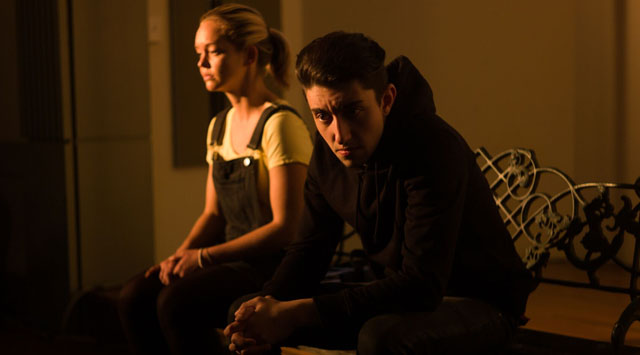
Director Fraser Corfield uses the intricacies of the text, to formulate a dynamic staging memorable for its quick and vibrant episodes, featuring a host of colourful and surprising characters. The cast of four demonstrates extraordinary focus and conviction, along with an exciting inventiveness that gives their show texture, dimension and depth. Caitlin Burley and Jeremi Campese are confident players who connect effortlessly with the audience, both actors charming and entertaining with the diverse range of personality types they put forth. Mia Evans Rorris and Joshua McElroy provide stable grounding to the production, sensitive and considered in their approach to the many roles they inhabit.

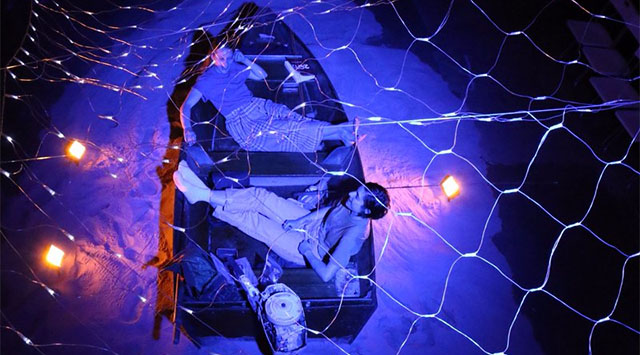
The show is remarkably well designed. The formidable set, evocative of urban dilapidation is as dazzling as it is dangerous; Melanie Liertz’s transformation of the challenging space is quite an achievement. Emma Lockhart-Wilson’s lights address the play’s unrelenting movement of time and space, with excellent certitude and power. Sound by Steve Francis and Chrysoulla Markoulli’s music, give the show a splendid sophistication and cohesion.

It is not a particularly poignant retelling of Oedipus’ life, but we certainly come away gratified by the evidence of a successful collaboration, that showcases some very significant talent.

www.atyp.com.au

Review: The Village Bike (Cross Pollinate Productions)

Venue: Old Fitzroy Theatre (Woolloomooloo NSW), Jun 7 – Jul 8, 2017
Playwright: Penelope Skinner
Director: Rachel Chant
Cast: Kate Bookallil, Sophie Gregg, Jamie Oxenbould, Rupert Reid, Gabrielle Scawthorn, Benedict Wall
Image by Andre Vasquez

Theatre review
Becky is unable to get laid because her husband has irrational fears regarding the baby in her womb. Increasingly frustrated, she finds herself seeking gratification elsewhere. Penelope Skinner’s very riveting The Village Bike makes a powerful statement about marriage and monogamy, and the ways in which these age-old institutions and ideologies continue to form restraints, allowing society to control the lives of individuals, women especially, from the most intimate levels.

It plays almost like a revision of the Aga saga; that genre of slightly camp, English middle-class country life drama. The characters are familiar, and their stories are set, invariably, in an unassuming domesticity. Certainly, the work is critical of the way we conceive of a respectable woman. It challenges the unquestioned rules dictating what is acceptable, and objectionable, of a woman’s sexuality, and also the language we use that gives definition, and weight, to those restrictions.

In mocking that romantic and pedestrian style of storytelling, we see the wildness of Becky’s narrative resist the confines of form. Our protagonist is not playing by the rules, so the rules quickly become visible. In breaking the illusion of happily ever after, we are compelled to study her situation, and because we can relate to Becky’s desires so completely, we have to interrogate the systematic failures that we all have to operate under.

Although political and intellectual, the production is equally stimulating on other fronts. Rachel Chant’s direction ensures each personality we meet is distinct and vividly manifested, so we know exactly what it is that makes them tick (and how they contribute to the play’s tragic circumstances). Sequences oscillate between comedy and drama effortlessly, with moments of breathtaking sexual tension giving an excellent sense of texture and dimension to what we see, hear and feel. Persistent issues with spacial use however, detract from an otherwise polished and very well-rehearsed presentation that is as engaging as it is titillating.

Gabrielle Scawthorne stars as the woman who fucks up. Honest and vulnerable, she keeps us in love with Becky through every transgression. Scawthorne is sensational in the part, thoroughly psychological and physically detailed, turning a confronting role into a beautifully empathetic creature full of charm and disarming authenticity. Supporting actors too, are impressive, each one complex and humorous, all bringing a delicious, and rare, boldness to the telling of an uncompromisingly sexual tale.

By play’s end, Becky is rendered powerless. Entrapped by a world that permits only narrow definitions of motherhood and marriage, she has nowhere to go, but to accept her subjugation. Some have said that bicycling had contributed immensely to the emancipation of women in the 1890s, but today, calling a woman a bike, is to call a woman a harlot, whore, slut, skank; a common and convenient means of suppressing female sexuality, in order that the myth of the weaker sex is perpetuated. There is no greater threat to the patriarchy than a sovereign womanhood that rejects the Madonna/Whore dichotomy. When our sex is no longer tethered to imagined virtues in concordance with family, society and culture, is when a greater liberty can be found, for all the genders.

www.crosspollinate.com.au

Review: The Clean House (New Theatre)

Venue: New Theatre (Newtown NSW), Jun 6 – Jul 8, 2017
Playwright: Sarah Ruhl
Director: Rosane McNamara
Cast: James Bean, Colleen Cook, Mary-Anne Halpin, Alice Livingstone, Keila Terencio
Image © Bob Seary

Theatre review
In Sarah Ruhl’s The Clean House, sisters Lane and Virginia are exemplary women who spend their days obsessing over having to do the right thing. One pursues a fabulous career in medicine, and the other indulges in an irresistible urge to clean houses. Both live in accordance with values our societies deem admirable and righteous, but neither are rewarded with enduring happiness. In fact, the only incidents of true elation in the play, are accompanied with certain death.

The perpetual state of tension between order and chaos, is a succinct way of describing all of human existence. In our desire to put things into structures of subjective logic, we come into conflict with nature, or a conception of nature, that is separate and external to the supreme beings we think ourselves to be. It seems we are the only creations of Mother Earth that insist on agendas that run contrary to the will of all else that makes up the universe.

Ruhl’s magical realism has a feeling of unassuming banality, delivered through its unmitigated look at our relationship with domesticity, yet its imaginative explorations into the often overlooked quirks of simply being, turn the everyday into something endlessly fascinating. The greatest purpose of art, is that it can re-contextualise humanity, so that the unseen is made visible, in order that we may gain new knowledge of the infinitely mysterious self. The Clean House places us firmly inside normalcy, and then reveals what lies beyond its superficial veneers.

The writing is gloriously funny, and under Rosane McNamara’s direction, Ruhl’s humour, along with an undeniable poignancy, are given full illumination. Rich with meaning and amusement, the play is captivating, thoroughly inquisitorial, and McNamara’s subtle approach with its messaging, keeps us keenly intrigued.

The actors tell the story with excellent clarity and conviction, but performance rhythms require finessing for their presentation to communicate at a tighter pace. The impressive Dr Lane is played by Mary-Anne Halpin, focused and decisive with motivations, but slightly lacking in complexity with the interpretations brought to her character. Alice Livingstone is delightful as the decidedly sad Virginia, outstandingly acerbic, and scintillating with irony. The cleaning lady, and aspiring comedian, Matilde is a vivacious presence in Keila Terencio, who delivers impressive theatrical energy, and a powerful sense of purity essential to the work’s ideology.

The personalities in The Clean House are shown for their flaws, but we know that these people cannot help themselves. We can try, and we should try, to be better people, but there is nothing that can turn us invincible. Feelings will be hurt, mistakes will be made, no matter how much we dream up safeguards and assurances. We make it a habit to act as though we are the sole determinants of fate, but there is no certainty to be found in how life wishes to pan itself out. There is however, tremendous satisfaction to be had in the experience of kindness, as we see at the show’s end, and the way acts of compassion are always able to defy regret, is one comfort we can hold on to.

www.newtheatre.org.au

Review: How To Build A Home (Ever After Theatre)

Venue: Balmain Uniting Church (Balmain NSW), Jun 1 – 3, 2017
Contributing Writer: Emily Dash
Directors: Natalie Rose, Alice Osborne, Marnie Palomares
Cast: Kerrie Ann Bezzina, Christine Blanche, Matthew Cutmore, Emily Dash, Glennen Fahey, Sophie Grivas, Tom Hancock, Emma Plant, Roddy Salinas

Theatre review
The idea of a dream home is explored by differently abled performers in How To Build A Home. An opportunity for all to reflect upon concepts such as personal limitations and aspirations, social obligations and privacy, the often abstract work may leave a lot to our imagination, but there is no mistaking the statement it makes about the importance of security and care that we all need in order to have fulfilling lives.

The show is full of spirited whimsy, with an enthusiastic cast offering up vim and vigour, along with a genuine vulnerability that is quite captivating. A collaborative segment featuring Emily Dash reciting a poignant monologue, alongside Tom Hancock on piano establishing an atmosphere of sombre drama, is beautifully, and hauntingly, rendered. Also memorable is Sophie Grivas’ idea of a house with three disco rooms, reminding us that our bodies, whether moving or stationary, are to be loved and pampered.

Visual design by Mirabelle Wouters, and James Brown’s work on sound and music, give the production an excellent sense of polish. The space they have created is glamorous yet unpretentious, a homely environment we find to be simultaneously comfortable and inspiring.

As long as we are alive, every individual has a right to space, and that space must be treated with respect. The home is both mundane and sacred, and recognising it as such, encourages us to honour every breath taken and every second that ticks past. Life is too short for any of us to be perfunctory about the time that we have been gifted. When we realise that every here and now is special, each moment experienced, and its corresponding place, has the possibility to nourish and fulfil, as though always at home, sweet home.

www.everaftertheatre.com

Review: An Unseasonable Fall Of Snow (Ewan Productions)

Venue: The Actors Pulse (Redfern NSW), May 30 – Jun 3, 2017
Playwright: Gary Henderson
Director: Giles Gartrell-Mills
Cast: Alex Ewan, Nico Papademetriou, Randall

Theatre review
The setting looks like an office, for lawyers or the police perhaps, but we never really find out where Arthur and Liam actually are, as we witness the aggressive interrogations taking place. Gary Henderson’s An Unseasonable Fall Of Snow involves two deaths, a mystery that takes the form of an intriguing puzzle, challenging its viewer to discover its secrets before everything is laid bare at the end.

Director Giles Gartrell-Mills orchestrates an enjoyable ride, luring us into the enigmatic qualities of the play with a quiet elegance. Sound and lights are underutilised, so we are not quite spellbound by its flirtations with the supernatural, but the plot is nonetheless effectively relayed for an engaging hour of theatre.

Arthur is played by Nico Papademetriou, who makes us believe that there is always more being hidden away, a convincing mastermind of sorts, and we need to know all the cards that he holds close to his chest. Alex Ewan is impressive as Liam, volatile yet operatic in his portrayal of a young man deep in trouble. It is a performance thoroughly considered, and boldly executed, leading to a result that illustrates some of the more obscure facets of human nature, while providing an exciting sense of high drama to the piece.

When snow falls in springtime, nothing is quite what it seems. We wish for life to adhere to expectations, but the forces in control of existence are far greater than any individual’s volition. If we find ourselves walking into a blizzard, when all we had wanted was a garden of green, there is no changing how nature wishes to be, and we must look to our desires for answers on how the inside can be in harmony with outside.

www.facebook.com/…

Review: Only Heaven Knows (Luckiest Productions)

Venue: Hayes Theatre Co (Potts Point NSW), May 26 – Jul 1, 2017
Music, Book, Lyrics: Alex Harding
Director: Shaun Rennie
Cast: Mathew Backer, Blazey Best, Tim Draxl, Ben Hall, Hayden Tee
Image by Robert Catto

Theatre review
Tim and Cliff’s love story begins in 1944, probably the most dangerous of times for gay men, with many impounded in European concentration camps, and the rest of the world correspondingly paranoid and cruel in their treatment of homosexuality. Alex Harding’s Only Heaven Knows remembers queer life in mid-20th Century Sydney, and the resilient community that persisted to thrive, with a dignified integrity, in the face of unrelenting and brutal persecution.

It is the subplots that captivate. Minor characters who chronicle struggles of a traumatic past, retain their pertinence, proving themselves more resonant than a central romance that seems unremarkable by comparison. The work is flamboyantly sentimental, but is only occasional moving. We are engaged instead by its textual complexity, seduced by an opportunity to analyse its sociopolitical connotations and to examine the degrees of relevance its narratives continue to hold over our existence today.

Production design attempts to address the frequent changes of settings, but scene transitions can often lack elegance. Performers take awkwardly long walks before finding the stage. Entrances and exits notwithstanding, the show is sensitively brought together by director Shaun Rennie, with a warm sincerity that elevates a slightly dated play from 1988, to something that is strikingly urgent. The ghost of Lea Sonia, a drag queen character, has the freedom to travel through time, to make references about marriage equality, and Grindr, so that history is resurrected for good reason.

There are marked divergences in terms of singing ability, but the cast is surprisingly cohesive. In the world of musical theatre, scene-stealing show-offs are almost encouraged, so it is a rare treat to be able to adore every performer equally. Matthew Backer is impressive with the thoroughness of nuance he introduces to all his roles, and is truly unforgettable in a scene that brutally portrays the experience of electroconvulsive therapy inflicted upon “sexual deviants” of the time. Blazey Best and Hayden Tee are excellent with their comedy, both actors sharp and confident, while adhering to the subtle tones of the production. The lovebirds, played by Tim Draxl and Ben Hall, are tender and effortlessly convincing, making the most out of fairly colourless material.

It is important that young ones know our queer histories, and it is important that love stories are made for people who identify differently from the mainstream. In 1944, queer folk had few past lessons to draw upon, and nothing in the future that they could look forward to. Only Heaven Knows allows us to grow with the knowledge that people had been through worse, but things keep getting better. It also serves as reminder the depth of depravity that societies are capable of, and that a sense of moral vigilance must never be taken lightly. The game of endless persecution may shift its focus away from one community to another, but those who had suffered must not be complacent in their newfound emancipation, but continue with a resistance against senseless violence and oppression.

www.hayestheatre.com.au

Review: 2071 (Seymour Centre)

Venue: Seymour Centre (Chippendale NSW), May 26 – Jun 10, 2017
Playwrights: Duncan Macmillan, Chris Rapley
Director: Tim Jones
Cast: Lucy Brownlie, John Gaden, Heath Jelovic, Ellery Joyce, Jacqueline Morrison, Sasha Rose, Matthew Simmons

Theatre review
In 2071: a performance about climate change, we have to listen closely to a lesson about the science of our climate. There are projections to look at, and children forming occasional tableaux to help illustrate the point, but it is only the words that we should pay close attention to. Clearly a very serious matter, and for those of us less keen on scientific study, the details are challenging. It is an issue that requires tremendous focus, but when we invest, with determination, to hear what is being said, 2071 is undoubtedly rewarding.

Essentially a monologue, the writing feels no different from a lecture, dense with facts and evidence. The layperson would struggle to absorb every sentence uttered, but there will certainly be pertinent points that resonate for each individual who is present. It contains no surprises, but the production does communicate a sense of urgency to drive home the message. Music by Andrée Greenwell, and actor John Gaden’s delivery, are responsible for the hastened air of impulsion at conclusion.

The science points to an impending ecological disaster. Whether or not one wishes to accept the causes that lead to this state of devastation, every citizen of the world must commit to improving the conditions in which we have to live. Only the most masochistic and nihilistic will choose to persist with the status quo, but it must surely be a very small minority that wants to watch everything come to a painful ruin. Now is the time to be fearful of complacency and inaction.

www.seymourcentre.com

Review: The Wind In The Underground (Old Fitz Theatre)

Venue: Old Fitzroy Theatre (Woolloomooloo NSW), May 23 – Jun 3, 2017
Playwright: Sam O’Sullivan
Director: Lucy Clements
Cast: Michael Abercromby, Rowan Davie, Whitney Richards, Bishanyia Vincent
Image by Rupert Reid

Theatre review
Wanderlust is meaningful only to those who understand that irresistible urge to travel. Simon returns home from a long trip away, and has to explain to his siblings why he had left them. There is resentment, and a lot of discontentment at home, but the love is nonetheless palpable. Sam O’Sullivan’s The Wind In The Underground is about seeing the world, but all the action lies within a domestic setting. The four characters are a volatile group, but they are not fragile. They fight only because they will always be able to reconcile.

There is little in terms of a compelling narrative that we can hang on to, and dramatic tensions are intermittent, but a superb cast enchants with their extraordinary chemistry. The actors share family secrets that we are only partially privy to. Its characters struggle with disclosures, but the performances leave no room for doubt that something deep and real underpins the exchanges we see on stage. It is a feeling we are all familiar with, and the remarkable talents represent it with an admirable accuracy.

Some people are comfortable with a parochial existence, but others need to explore further afield. This does not have to be about the physical movement that takes place. Our minds are all-powerful, and our beings can be transformed, as long as we wish to seek something higher. The play is about travel, and evolution. For those of us who can sail the seven seas, we will grow that way, but for those who prefer to stay home, every work of literature and art can provide the key to expanding life, far beyond the walls that try to hold us in.

www.oldfitztheatre.com

Review: This Is Not Mills And Boon (Glorious Thing Theatre Co)

Venue: Old 505 Theatre (Newtown NSW), May 23 – Jun 3, 2017
Playwright: Erica J Brennan
Director: Richard Hilliar
Cast: Alison Bennett, Emma Chelsey, Gabe Fancourt, Lynden Jones
Image by Liam O’Keefe

Theatre review
When we first meet Abby, she surprises us with her prudishness. We think of sex as being universally appealing, and in this day and age, talking about sex is certainly de rigueur, if not interminable, so we wonder what problems Abby is struggling with, that makes her so uncomfortable with the topic.

The story unfolds as Abby begins reading, in secret, a collection of erotic stories. Written by her boyfriend’s mother, Nikki Sex’s book is titillating and wild, but also deeply cheesy and frequently nonsensical. We watch as the far-fetched tales begin to unravel the riddle surrounding Abby’s mystifying sexual nature.

Erica J Brennan’s This Is Not Mills And Boon is a smart, ambitious piece that deals with a young woman’s sexual awakening, or more accurately, it is about Abby’s self-discovery beyond the indoctrination and traditions that our young are subject to. There is good attempt at depicting sexuality as being individualistic and idiosyncratic, and hence, a fundamentally deviant feature of what we consider to be human nature, but Brennan’s characters remain bound to an ideal of monogamy and heteronormativity, which prevents the play from foraging deeper into its philosophical interests, thus losing an opportunity to be truly subversive, or edifying, with its declarations.

Director Richard Hilliar introduces a wanton sense of humour to fantasy sequences that makes the show very enjoyable, but a tendency to be overly earnest with our protagonist’s central predicament, can make its naturalistic scenes needlessly severe. Abby needs to lighten up, as does the show.

Funny lady Alison Bennett delivers laughs in all of her extravagant guises. Sharply intuitive, and wonderfully campy, it is a very bawdy performance that pushes all the right buttons (look out for some physical work featuring Bennett’s extraordinarily dexterous tongue). Also very comedic is Gabe Fancourt as the endearing boyfriend Sol, whose unabashed approach to the portrayal of sex object, is as refreshing as it is hilarious.

Although Emma Chelsey’s interpretation of a plain and reserved personality can often feel too literal and hence lacklustre, her Abby is dignified and honest, with a sincerity that makes the whole exercise convincing. The troubling relationship between Abby and her father is a crucial part of the narrative, and Lynden Jones is strong in that role. His lines are perhaps not written with sufficient elegance, but Jones demonstrates excellent conviction even when the dialogue turns precarious.

The show makes fun of “Fifty Shades Of Beige”, but is itself shy with its own interrogations. It may not be Mills and Boon, but it is certainly no Marquis de Sade either. There is a naivety in how it thinks about sex, but its fervent need to reject convention in favour of a self-determined experience of sexuality and of identity, must be celebrated.

What makes each person feel good, is rarely the same, but what makes us all the same, is the need to discover the truth that lies within. It is human to want to poke and prod, to find something that feels resolutely at the core of our existence. Whether through art or through fucking, we can get to the thing that resides deep at the centre, that holds the meaning of life.

www.gloriousthingtheatreco.com

Review: Talking To Terrorists (Emu Productions)

Venue: King Street Theatre (Newtown NSW), May 23 – Jun 3, 2017
Playwright: Robin Soans
Director: Markus Weber
Cast: Mathew Costin, David D’Silva, Kira Fort, Zuzi Fort, Tiffany Joy, Alyson Standen, Kyle Stewart, Joseph JU Taylor, Markus Weber
Image by John Keenan

Theatre review
Robin Soans’ Talking To Terrorists premiered in England just 3 months before the London bombings of 2005. Disasters seemed to strike like never before, and we tried desperately to understand the rapidly changing world, post-9/11. The play investigates the psyche of those touched by horrific events, from perpetrators, to hostages and politicians. Composed largely of interviews with people who had experienced those states of trauma, this work of verbatim theatre opens up discussion about the most pertinent of subjects today. We examine the motivating factors behind these unimaginable atrocities, and in the process of seeing extremists as people, we gain knowledge that had been previously hidden. Humanising evil allows us to gain insight into what was once beyond comprehension.

A wide range of personalities take to the stage, but the production does not always make clear, the identities of all its characters. The confusion that arises does not help the show’s cause. The actors offer glimpses of poignancy, but can be impeded by their emphasis on creating cosmetic impressions, rather than always finding resonance through the very meanings of what they say. Actor Alyson Standen is the most consistent of the group, demonstrating conviction in all of her four roles, and through her enactment of emotional accuracy, we are able to access the truths in what her scenes attempt to communicate. There is no lack of passion in the cast, but their approach requires more detail, and greater nuance, so that we obtain something richer, a result that feels less surface.

As long as we regard terrorists as animals and monsters, we will never be able to convince them of our perspectives. If we can only think of them as absolute enemies, we will never be able to convert them to our way of life. When people are shut out, excluded and ostracised from our existence, then our security means nothing to them. Terrorists will continue to cause us harm, if they know nothing of us. In humanising the foe, we can both begin to see ourselves in the other, and so it is only in the talking that we can hope for a change.

www.kingstreettheatre.com.au