Review: Young Pretender (New Theatre)

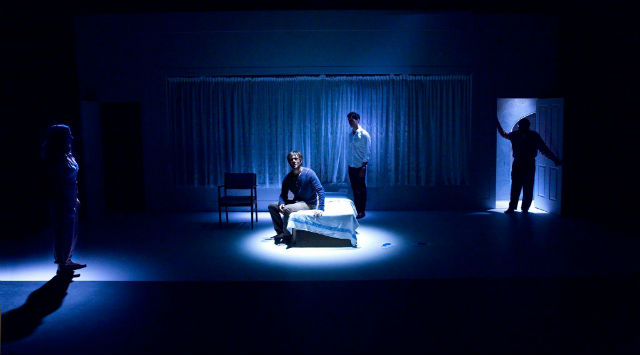
newtheatreVenue: New Theatre (Newtown NSW), Sep 13 – 17, 2016
Playwright: E. V. Crowe
Director: Mark G Nagle
Cast: Ryan Bown, Shaun McEachern, Madelaine Osborn
Image by Caitlin Hodder

Theatre review
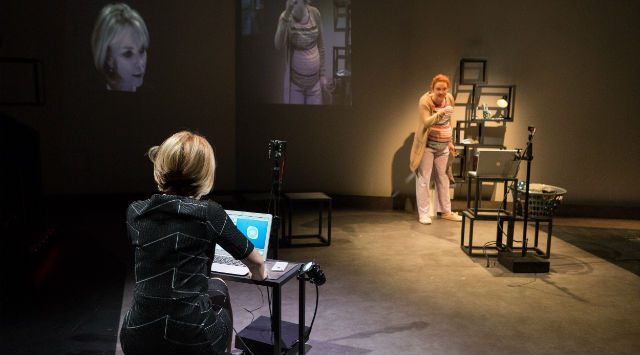
Bonnie Prince Charlie plays a significant part in the Scottish psyche. His failed Jacobite rising of 1745 is a representation of the problematic relationship many perceive to exist between Scotland and the United Kingdom. E. V. Crowe’s Young Pretender is a re-imagined account of the young man at his most memorable. It is a play that relies on an audience’s assumed knowledge, if not a shared passion for the legendary figure. A regular Australian crowd is at best indifferent about the show’s protagonist, and many of us would be forgiven to be completely ignorant about his legacy and indeed, eighteenth century Scottish history.

Without sufficient initiation into its context, the production can prove disorienting. No great effort is made to adapt the work for its dislocated audience, and we struggle to find relevance in any of its drama. The cast is attractive and energetic, but characters being portrayed remain distant, even though good focus is displayed on stage. It is noteworthy however, that Caitlin Hodder’s costumes are cleverly designed, flattering, and the sole visual element that aims to provide the production with a sense of style.

We all love a rebel. We spend must of our lives adhering to rules and regulations, only to find discontentment as compensation. In our stories, we look to those who dare to resist the constraints and encumbrances of society, to walk their own paths so that we may follow in their footsteps, if only in our fantasies. Making art in today’s state of advanced capitalism, is often an act of great defiance. Only a select few are rewarded appropriately, while the rest spend their time creating with little hope of considerable support or approval. We cannot base all our decisions on reward and accolades; some wars are to be be fought even when defeat is anticipated, for the meaning of life lies somewhere beyond the sovereignty of money and power. True artists will do what they have to do regardless of the oppressive nature of our environment, and only pretenders will ever be hampered by the will of others.

www.newtheatre.org.au

Review: A Midsummer Night’s Dream (Sydney Theatre Company)

stcVenue: Sydney Opera House (Sydney NSW), Sep 12 – Oct 22, 2016
Playwright: William Shakespeare
Director: Kip Williams
Cast: Paula Arundell, Matthew Backer, Rob Collins, Honey Debelle, Emma Harvie, Jay James-Moody, Brandon McClelland, Josh McConville, Robert Menzies, Susan Prior, Rose Riley, Rahel Romahn, Bruce Spence
Images by Brett Boardman

Theatre review
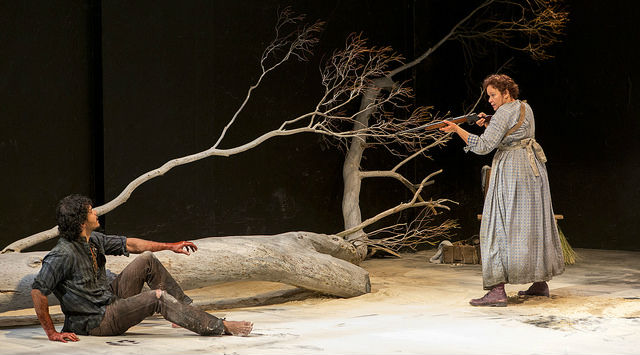
Characters get up to a lot of mischief in A Midsummer Night’s Dream, but what can be construed as humorous, can also be seen as menacing. The play features deception, sabotage, humiliation and misogyny, subversively, and surreptitiously, framed within a category of conventional comedy, leaving the depths of its darkness unacknowledged. One of Western theatre’s most well-known pieces, it is often regarded as light and frothy, fun for the whole family, with themes of romance and fantasy taken to their greatest extremes for hours of harmless entertainment.

Centuries on, it can be argued that much of Shakespeare’s comedy is no longer funny. Some insist that everything Shakespeare had penned can stand the test of time, but others will hold a more objective attitude. Kip Williams looks at the text with modern eyes, judging it with today’s values, and in exposing all that is archaic in the piece, creates something imaginative, powerful and irreverently spectacular. Turning A Midsummer Night’s Dream into a twisted nightmare, it is suddenly mesmerising. Williams’ concept might seem basic, but his detailed execution of a macabre and provocative utopia/dystopia is as sensitive as it is scandalous. Consistently fascinating, and frankly eye-opening, this is some of the most astonishing and iconoclastic theatre, full of spirit; adventurous, brave and ostentatious.

Actor Paula Arundell is unforgettable as Titania, queen of the fairies, via Donatella Versace. Regal, austere and decadent, her creation is strikingly sensual, full of danger and drama, compelling and beguiling in every moment. Arundell attacks her role with a fierce solemnity, resolutely playing against the comedy that we have become used to, in order that a fresh theatricality may be delivered; poetic, surreal, and irrevocably powerful. Also deadly serious are all the production’s design aspects. Chris Williams’ music and Nate Edmondson’s sound design hold us firmly in their dictatorial insistence for dramatic tension, and Alice Babidge’s costumes dare us to look away from the grotesque glamour reminiscent of Leigh Bowery and Cindy Sherman’s brutal legacies.

On stage is a morbid world, resplendently manufactured to satisfy our need for an art that is carnal, wild and audacious. It must be noted however, that the show closes with an abruptness that betrays its fundamental and delicious sophistication. The final transition from a scene of brilliant black humour to its concluding gravitas occurs with surprising carelessness, leaving us disoriented and prematurely awoken from what had been a deeply luscious reverie. Nevertheless, what is achieved here is an instance of magic rarely witnessed, and unlikely to be seen very soon again. Wonderful for its uniqueness, and its gutsy approach to the most time-honoured of classics, this is excellent theatre that reminds us how good it is to be alive, at a time when the ephemeral art form can thrive so brilliantly, and we are here to catch it.

www.sydneytheatre.com.au

Review: Keep Calling (PACT Centre for Emerging Artists)

keepcallingVenue: PACT Centre for Emerging Artists (Erskineville NSW), Sep 13 – 17, 2016
Playwright: Chelsea Ingram
Director: Herman Pretorius
Cast: Chelsea Ingram, Luke Edward Smith
Image by Isabelle Munhos

Theatre review
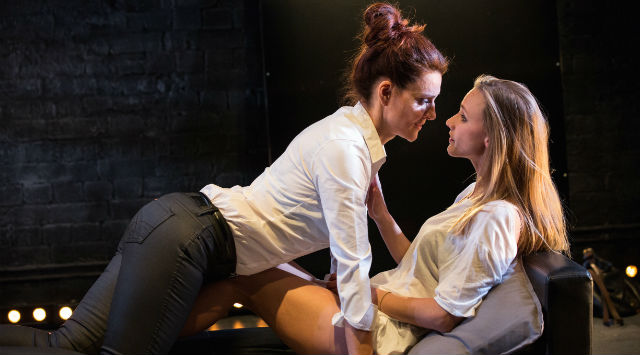
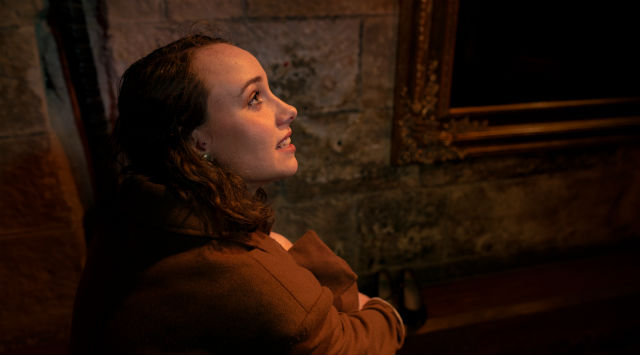
Chelsea Ingram’s Keep Calling is about an unusual relationship, and the agony of existence when taboo becomes an integral element to one’s identity. The play presents a valuable opportunity to take a rare look at something deemed objectionable, and even though it stops short of advocating any specific ethical perspective, it nonetheless confronts the way we think of the themes being portrayed. For some, the material might prove controversial, but for others, its depictions can seem coy; it is a delicate balance that Ingram tries to maintain, but an edgier approach would make the show more memorable.

There is an undeniable mystery built into the plot, even though the production struggles to effectively manufacture a sense of intrigue. Its characters are vulnerable, but Keep Calling‘s immersion in their suffering is insufficiently convincing for us to respond with empathy. The style of presentation is wild and loud, allowing us to access the emotional upheavals taking place, but we rarely make contact with an authentic foundation on which the drama should be built upon, and the play leaves us feeling somewhat detached.

We can all understand Stacey and Sam’s desolation even though few of us have experienced their circumstance. Their story is unique, but only a flimsy membrane away from our realities. How we formulate rules for living is often arbitrary, and Keep Calling</em is a reminder of the ambiguity that can exist in what we wish to be incontrovertibly true. Societies have come to accept that love can take many forms, but there are limits to what they can accept. What is considered illicit in a particular time and place, is legitimate in another. It is easy to say "as long as nobody gets hurt," but how we define and detect damage is yet another quandary.

www.pact.net.au

Review: Reflections Of A Cause (On The Cusp Productions)

onthecuspVenue: The Depot Theatre (Marrickville NSW), Sep 7 – 10, 2016
Playwright: Sage Godrei
Director: Joy Roberts
Cast: Ivan Chew, Macushla Cross, Emma Dalton, Benjamin Hanly, Chris Miller, Anthony Yangoyan

Theatre review
It is a simple story that looks at a pair of lovers as they begin their relationship, and also at their deteriorated state twenty years later. Made more substantial by a wide range of ideas, the play unfortunately becomes a complicated one that struggles to find focus and clarity. Scenes vary from the very basic, to the very obtuse, and although the show’s experimental spirit is commendable, it suffers from appearing hesitant and irresolute in what it wishes to achieve.

There are certainly passionate assertions to be found, especially in Chris Miller’s performance, but the message of Reflections Of A Cause is largely lost. Its characters’ experiences might appear familiar, but a weak narrative structure prevents us from connecting with any of its drama, and the tenuous inclusion of social issues into the couple’s journey only serves to confuse and alienate.

The play contains elements that could certainly be made interesting. It may be too raw and immaturely presented, but it is neither mindless nor frivolous. In any of the art that we make, it is crucial that we identify what it is we wish to say, and then do all we can to communicate those ideas. There will always be noise that interfere, but it is the artist’s discipline that makes sure what they consider most important, be the most indelible of each experience.

www.onthecuspprod.com

Review: Atlantis (Subtlenuance Theatre)

subtlenuanceVenue: Kings Cross Theatre Kings Cross NSW), Sep 6 – 10, 2016
Playwright: Paul Gilchrist
Director: Kit Bennett
Cast: Sylvia Keays, Antony Talia, Madeleine Withington

Theatre review
A meaningful existence can only ever be understood from a position of subjective experience. In Paul Gilchrist’s Atlantis, things may contain inherent value, but it is up to us to bring interpretation to them, and we have a choice in how we read the world and how we immerse ourselves in the inevitable living of it. We all rely on tall tales to get us through each day and night, calling them mythologies, religion, science or mathematics, for it is intrinsically human to want to make sense of things. Our consciousness must be shaped, but what form it may take is subject to the mind’s plasticity, and in Atlanits, Gilchrist demonstrates a kind of self-determining fate that results from the stories we create for ourselves.

Of course, the play’s events can only happen in a place like Australia where a vast majority of us are rich and free. It is Gilchrist’s point, to make the best of our privilege. We are in a position to dream big, and to disregard cultural restrictions and social fears, so that we can have better lives, and do good for the world, in ways that are perhaps original and trailblazing. If we followed every rule, our evolution will never take momentous leaps forward. Anomalous advancements require people who dare be radical; whether Mahatma Gandhi or Elizabeth I, it is always the maverick who establishes a legacy.

Atlanits is a soulful work, full of spirit, but with its feet planted firmly on the ground. Its words take hold of our imagination, and argue convincingly for perspectives that are only optimistic and inspiring. Actor Antony Talia does a splendid job of helping us navigate between reality and idealism, with his remarkably engaging presence and an impressive commitment to authenticity. There is excellent humour written into early sections of the play, but they are unfortunately lost in the production’s overly square focus on the deeper lessons, that could probably be left until later in the piece.

The work is staged with poignancy in mind, but more adventurous exploration of physicality would drive its message more effectively. Attention is placed on Gilchrist’s beautiful words, but our other senses need to be manipulated more for a richer theatre, as we commune to share space and ideas. It might be an exaggeration to say that “if you build it, they will come,” but magic must start somewhere, and it never comes from fear.

www.subtlenuance.com

Review: Gloria (Griffin Theatre Company)

griffinVenue: SBW Stables Theatre (Kings Cross NSW), Aug 26 – Oct 8, 2016
Playwright: Benedict Andrews
Director: Lee Lewis
Cast: Kristy Best, Chloe Bayliss, Marta Dusseldorp, Louis Fontaine, Huw Higginson, Meyne Wyatt, Pierce Wilcox
Image by Brett Boardman

Theatre review
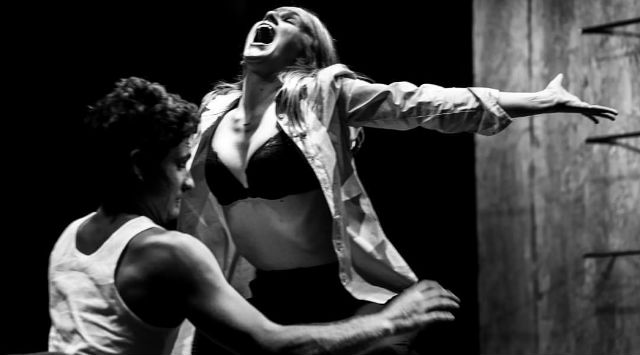
Gloria is a mother and a wife, but to everyone around her and to herself, she is first and foremost, a star of the stage. Having spent her life playing many legendary tragic heroines, Gloria knows more about the fictional women of Western theatre than she does the actor who portrays them. Benedict Andrew’s script is stylised and abstract, an imaginative creation that parallels Gloria’s struggle for coherence. The leading lady’s existence is one of disorientation and tumult, and Andrew’s writing relishes in that chaos for a work striking in its originality and remarkable boldness.

Equally audacious is director Lee Lewis’ resolve to reach the truth in the enigmatic world of Gloria, where obfuscation and secrets are given their due, while a foundation of instinctive authenticity is established with absolute imperviousness. Every artistic and mysterious flourish, no matter how flamboyant (including Steve Toulmin’s extraordinary music), is anchored in startling emotional precision and intensity, conveyed through a captivating combination of deep understanding and steely determination.

The actors provide an unforgettable experience, visceral and immediate, persistently surprising and colourful, with a baroque sensibility that elevates the theatrical form to a rare level of infectious excitement. Marta Dusseldorp is devastating as Gloria. In a state of constant distress and confusion, Dusseldorp’s embodiment of Gloria is tenacious, powerful and very, very dark.

The play is intentionally coy about Gloria’s problems, therefore even though emotions are almost always at a fever pitch, its moments of melodrama are few. The audience is then free to find an interpretation of her narrative, so we rely on our own faculties to impose upon Gloria, a reading of her story that will only ever be partially accurate. The actor wishes to step onto the stage with nothing of herself, and everything of the person she represents. An emptiness resides in her, and because the soul is constantly morphing for another, it forgets itself.

www.griffintheatre.com.au

Review: Barefoot In The Park (Ensemble Theatre)

ensembleVenue: Ensemble Theatre (Kirribilli NSW), Aug 25 – Oct 8, 2016
Playwright: Neil Simon
Director: Mark Kilmurry
Cast: Mia Lethbridge, Daniel Mitchell, Jamie Oxenbould, Georgie Parker, Jake Speer
Image by Clare Hawley

Theatre review
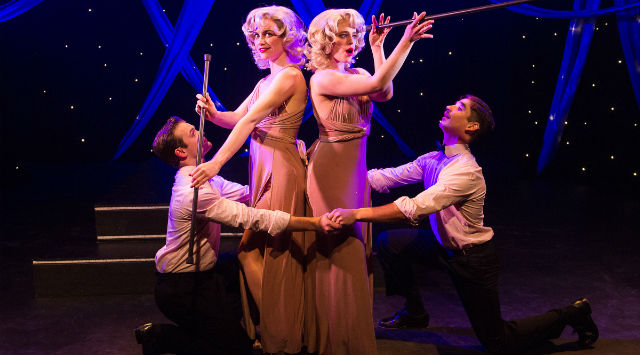
It is the 1960s. Corie and Paul are moving into their tiny New York apartment, about to begin life together as newlyweds. After 6 days of honeymoon bliss cooped up in a hotel room, they emerge to meet us just as the reality of mundanity begins to sink in. Divorce was a topic much more controversial at that time, and the threat of a marriage breakup in Neil Simon’s Barefoot In The Park has lost considerable effect in terms of the dramatic tension it is able to create, but as a frothy comedy, its structure and dialogue retain a classic charm that many will find irresistible.

Mia Lethbridge leads a cast of actors, memorable for their bubbly playfulness and congenial warmth. As Corie, Lethbridge’s perky portrayal of naivety is consistently delightful and surprisingly persuasive, with an energetic presence that holds the show together, along with all its relentless frivolities. Director Mark Kilmurry does an excellent job of the comedy, establishing a brilliant sense of timing for the production’s entirety that ensures top entertainment value, but the development of character conflicts require greater nuance for Simon’s plot to be more believable.

When two people get together and form an intense bond, the pleasures that materialise are almost always coupled with challenges, big and small. In Barefoot In The Park, we want the lovebirds to find a way to sort out their differences. We invest in their romance, because loneliness is an abominable monster that must be vanquished at all cost. Times change, but the fear of being alone is perennial. Without each other, Corie and Paul must find meaning only within themselves but in Neil Simon’s quaint fantasy, they only have to indulge in a mutual infatuation, so that their days may be filled with joy, to have and to hold, till death do they part.

www.ensemble.com.au

Review: Alex & Eve – The Complete Story (Bulldog Theatre Company)

bulldogVenue: Factory Theatre (Marrickville NSW), Aug 25 – 28, 2016
Playwright: Alex Lykos
Director: Alex Lykos
Cast: Chris Argirousis, Anne Marie Cavaco, Sylvia Dritsakis, Michael Kazonis, Janette La Kiss, Alex Lykos, Paul Miskimmon, Jadah Quinn, Kate Ryerson, Sal Sharah

Theatre review
There are many among us who are conservative and traditional, but in multicultural places like Australia, their tendency to be inflexible with visions of how we live together can be problematic. Salwa is Lebanese Muslim, and George is Greek Orthodox, both insular and intolerant of other cultures, refusing to accept the validity of other ways of life, until their offspring force them into a confrontation of wills through the classic contrivance of a mixed marriage. Alex Lykos’ Alex & Eve: The Complete Story combines three episodic plays to tell the couple’s story from their first meeting to the birth of their first child. Its duration is inevitably long, but the script is a tight concoction of high jinks and social commentary that although entirely predictable, is endlessly amusing with its host of vibrant, irresistible archetypes.

The production is a visually basic one that would benefit greatly from more ambitious efforts in set and costume design, but Lykos’ own direction of the work is effectively comedic and fast-paced. There is no attempt at a naturalistic mode of presentation, which can make for an excessively farcical show, but its slapstick is unquestionably charming and proves very appealing to its target audience. Janette La Kiss as Salwa and Michael Kazonis as George are both strikingly present, with flamboyant approaches to performance that captivate and entertain. Both are able to find nuance with their roles, thereby delivering more than stereotypical interpretations of minority elders.

Not being dominant cultures in Australia, the Greek and Lebanese characters have a greater freedom to portray the nature of prejudice in our communities. Some of what they say is objectionable, but their statements are tempered with good humour, and those who speak indiscreetly are exposed for their ignorance. Not one person can be excluded from the world’s politics, but how individuals participate in it, is infinitely variable. Alex & Eve does not talk about terrorism or immigration, but its feuding families are involved in a war that serves to remind us of how we must value peace, no matter how big or small a perspective we may have of the world.

www.bulldogtheatre.com

Review: Before The Water Gets Cold (Smoking Gum Theatre)

smokinggumVenue: Sydney Theatre School (Chippendale NSW), Aug 23 – 27, 2016
Playwright: Charles O’Grady
Director: Lucinda Vitek
Cast: Samuel Beazley, Robin Chen, Julia Robertson, Amy Zhang

Theatre review
Part poetry, part dance and part play, Before The Water Gets Cold is a multidisciplinary exploration into the nature of artistic expression. With themes of love and loneliness providing its main threads of inspiration, what we see on stage are four performers inhabiting a range of personalities, not to convey a narrative, but to evoke sensations and emotions that we are all familiar with.

The work is guided by an innovative spirit, and is often a refreshing experience, although significant portions can seem clichéd, due to its inability to transcend the derivative. Writing, direction and choreography exhibit moments of beauty through their various modes of experimentation, but a greater sense of originality, or perhaps boldness, is missing in the production.

Performer Julia Robertson is memorable for her captivating presence, and a surprising authenticity that she brings, even to the more absurdist sequences of the show. Her work with Robin Chen in a montage composed of romantic movie quotations is particularly delightful. Composer Josephine Gibson and sound designer Jeaux Pfeffer contribute proficiently to this collaboration, both sensitive and understated in style, for a delicate air that envelopes the auditorium.

Before The Water Gets Cold wishes to marry logic with something more ephemeral, but a greater trust in the visceral instance would allow us to dive in deeper into its artistry. The mind gets in the way of much of life’s pleasures, and at the theatre, an opportunity for us to be in touch with the magic of the here and now is always present, if only we resist the temptation to analyse everything even before it begins to happen.

www.smokinggumtheatre.com

Review: Look Back In Anger (Red Line Productions)

redlineVenue: Old Fitzroy Theatre (Woolloomooloo NSW), Aug 16 – Sep 10, 2016 | Belvoir St Theatre (Surry Hills NSW), Sep 13 – 17, 2016
Playwright: John Osborne
Directors: Damien Ryan, Lizzie Schebesta
Cast: Robin Goldsworthy, Andrew Henry, Melissa Bonne, Chantelle Jamieson
Image by John Marmaras

Theatre review
Jimmy is a very angry young man, and in Look Back In Anger, we are subjected to a series of his incessant, long and very tedious rants that prove themselves to be ultimately ineffectual, and highly irritating. At one point, he insists “that voice that cries out doesn’t have to be a weakling’s does it?”

1956 it seems, was a completely different time. Today, a white man with youth and a university education, living in a Western society, is considered to be in possession of the greatest of privileges, and we have no patience for their complaints about their perceived (and possibly, imagined) injustices of life. Of course, residing in positions of advantage does not automatically absolve a person of angst and self-proclaimed victimhood. Jimmy’s grief with our troubled existence is valid, and it is his right to refuse to suck it up, grin and bear it, but like all the furious white male voices that rule the talk-back radio waves, we can choose to ignore their shrill babble. John Osborne’s play is well structured, but its themes and concerns could not be more dated, and for many feminists, not much is lost if Look Back In Anger, along with its overt misogyny, is left dead, buried and cremated.

From a technical perspective however, co-directors Damien Ryan and Lizzie Schebesta have revived the play with admirable accuracy and nuance, delivering powerful drama, especially to those more welcoming of its ethos. Also accomplished are its designers; Jonathan Hindmarsh’s set and Anna Gardiner’s costumes add meaningful, dynamic touches to the look of the piece, thoughtfully utilising the space’s intimacy to provide a vibrant immediacy to the experience.

The cast is uniformly strong, with each actor contributing impressive depth in their characterisations of less than inspiring personalities. Osborne’s dialogue is provocative (to say the least), and his lines are given tremendous fervour by an ensemble insistent on winning us over. Andrew Henry is at his bombastic best as Jimmy, with a portrayal so passionate and convincing that we struggle to detach our dislike for the character from what is actually an excellent performance by the leading man. Henry finds scintillating chemistry with each of his co-stars, and it must be said that every scene is captivating, but also undeniably excruciating for audiences less tolerant of its turgid drivel.

Like many works of art (good or bad) that cause exasperation, Look Back In Anger will spark discussion. In its time, the work was relevant for its interest in class consciousness and issues of poverty, but these ideas have evolved into something that is now inseparable from contexts of race and gender. In the past, audiences were able to understand the world from Jimmy’s perspective, but today, the world turns the tables and puts him under scrutiny. We are made to look at anxieties of the white man, but his anger scarcely raises a brow. Perhaps it is only himself who could possibly benefit from wallowing in that distorted and narcissistic reflection.

www.oldfitztheatre.com