Review: Which Way Home (Ilbijerri Theatre Company)

Venue: Seymour Centre (Chippendale NSW), Jul 4 – Aug 4, 2018
Playwright: Katie Beckett
Director: Rachael Maza
Cast: Katie Beckett, Kamahi Djordon King
Images by Snehargho Ghosh

Theatre review
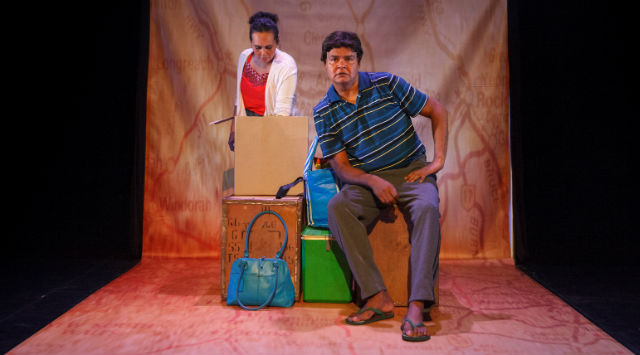
Tash and her father are on a road trip to Lightning Ridge. Even though Tash is the one behind the wheel, she is jittery and hesitant, while her father is at peace, completely trusting that they are going to reach their destination with no troubles at all. Katie Beckett’s Which Way Home is a tender work about the father-daughter relationship, and a look at the ageing process. Young and old are placed in contrast with one another, for an appreciation of the way we mature, and for the value that elders embody in our communities. At its best, the play contains profound observations about family that are rarely articulated in our art, but a tendency to mollify the harder questions about kinship, results in a reduction of poignancy with what is being delivered.

Directed by Rachael Maza, the show feels warm and buoyant, and whether or not we are able to identify with its characters, an effortless charm from both actors keeps us engaged in their journey. Beckett takes on the role of Tash, proving herself a detailed performer adept at telling stories with remarkable clarity. Kamahi Djordon King is an affable presence, with an inviting sense of humour that wins us over. A more naturalistic approach to acting would provide a more authentic experience, but the pair brings a beautiful energy to the piece that many will find reassuring.

Life’s lessons require time. Words of wisdom can be spoken but they are not always heard. It is perhaps our greatest weakness, that the young are doomed to repeat the mistakes of the past, but nature will have its way and insist that we let it take its course. Tash learns all she can from her father, but she can only take things at her own pace. We all have a duty to leave this a better place than how we had found it, and the older we get, the more salient that notion becomes. The children must be taught the best we know how, and we can all but hope that things do keep getting better.

www.ilbijerri.com.au

Review: The Long Forgotten Dream (Sydney Theatre Company)

Venue: Sydney Opera House (Sydney NSW), Jul 23 – Aug 25, 2018
Playwright: H Lawrence Sumner
Director: Neil Armfield
Cast: Jada Alberts, Wayne Blair, Nicholas Brown, Brodi Cubillo, Melissa Jaffer, Ningali Lawford-Wolf, Wesley Patten, Justin Smith, Ian Wilkes
Images by Heidrun Löhr

Theatre review
King Tulla’s remains are being flown back to Australia, after having been detained in England for three generations. His grandson Jeremiah is required to preside over the welcome home ceremony, but the prospect of having to deal with buried trauma and lost family histories, sees him unravelling, as he comes to grips with all that his emotions have struggled to face. There are few stories as profound and important for us today, as H Lawrence Sumner’s The Long Forgotten Dream. It explores the crippling effect of colonialism, on our Indigenous peoples, as well as the paradoxical urgency of their need to recover, to foster a brighter future. Sumner is marvellously revelatory of the Aboriginal experience, splendid in his clarity of language and of thought, for a piece of writing extraordinary for the power it dispenses, and for the wisdom that it contains.

Director Neil Armfield brings palpable life to this tale of lost souls and transposed dimensions. We are moved by the production’s remarkable tenderness, evident in every delicate aspect that it presents on stage. Live music by William Barton is ethereal but incredibly precise, with a spiritual quality that has us responding in accordance with each of its enigmatic inclinations. Jacob Nash’s set design keeps us enthralled, speaking to us as though on a visceral or perhaps instinctive level, in varieties of shapes and proportions, carrying us from space to space. Mark Howett’s sensual lighting style is relied upon to add warmth to the family drama, and gravity to our national concerns. Technical elements of The Long Forgotten Dream are inventive in their conception, and sumptuously executed.

It is an exquisite cast that takes the stage, with leading man Wayne Blair delivering phenomenal intensity and poignancy, to anchor the show in an unyielding point of pertinence. He couples vulnerability with dignity, ensuring that we are moved by Jeremiah’s circumstances and more vitally, by all the wider injustices implied in the depiction of his suffering. It must also be noted that Blair’s whimsical approach to humour is deeply endearing, and a crucial factor in allowing us to identify with a personality that can seem a world away from most of our daily realities. Also very charming is Ningali Lawford-Wolf, who plays Jeremiah’s sister Lizzie, a sassy, bold presence dependable for introducing a vibrant luminosity with every entrance. Jada Alberts is suitably subtle and thoroughly convincing as Jeremiah’s daughter Simone, and Melissa Jaffer is captivating in a somewhat surprising way, when she conveys so effortlessly, the romantic secrets of a 102-year-old woman.

The refusal to listen, may be our biggest pitfall. We can make repetitive and incessant claims of good intentions, but our inability to actually prioritise the needs and demands of Indigenous communities, will only serve to sustain these unacceptable state of affairs. When we think about Aboriginal and Torres Strait Islander ancestral remains and sacred objects being controlled by colonising forces and their institutions, it becomes obvious the degree to which Australia denies the sovereignty of its First Nations. The inequity and, in some cases, inhumanity, they have had to tolerate, can only begin to find atonement when we are able to place their welfare at the very forefront of the national agenda, on equal footing with, if not ahead of, our selfish and exclusionary obsessions.

www.sydneytheatre.com.au

Review: A Taste Of Honey (Belvoir St Theatre)

Venue: Belvoir St Theatre (Surry Hills NSW), Jul 21 – Aug 19, 2018
Playwright: Shelagh Delaney
Director: Eamon Flack
Cast: Taylor Ferguson, Thuso Lekwape, Genevieve Lemon, Josh McConville, Tom Anson Mesker
Images by Brett Boardman

Theatre review
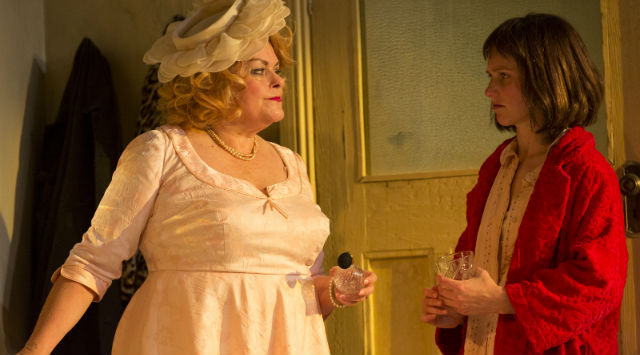
Jo is at the end of her teenage years, but there seems little she can look forward to in adulthood. Jo wishes to be independent of her mother, but Helen has taught her few skills, having spent her life dependent on lovers that never stayed the long haul. British playwright Shelagh Delaney wrote her first piece A Taste Of Honey at the age of 19, expressing youthful angst as it had meant in 1958. Her frustrations with the world, as encapsulated here, is likely a universal quality that recurs with each generation, but it is doubtful that the play’s temporal concerns have been able to retain much resonance.

Delaney’s depiction of negligent parenting in A Taste Of Honey is reliant on the denigration of the maternal character, with a criticism of her promiscuity in Act One that is no longer dramatically efficacious in 2018. In the absence of a persuasive villain, our empathy for the protagonist is compromised. The action happens almost entirely in a small apartment, with only a hint of the outside world evident in Jo’s troubles. The impact on young lives by social dynamics of the time are alluded to, but insufficiently examined. Our contemporary sensibilities look for commensurate details, but the work struggles to deliver more than cursory relevance.

Leading lady Taylor Ferguson is an endearing and compelling presence, with a wonderfully meticulous approach, ensuring that Jo is convincing at every juncture. Genevieve Lemon is a very entertaining Helen, delightfully vivacious in her portrayal of an intriguing personality. The surrounding men (Thuso Lekwape, Josh McConville, Tom Anson Mesker) are individually charming, with each performer able to introduce a greater sense of dimension to their roles than what is perhaps prescribed. The cast does a good job of sustaining our attention, and we stay with them until the end, but it is arguable if the production is able to convey much that is of lasting interest.

Young women today have so much to live for. Certainly, there are disparities between the sexes that are yet to be resolved, but the freedoms we enjoy in the West are hard fought for, and unprecedented. Girls no longer have to grow up into their mothers. Great examples of womanhood are everywhere, and it is no longer unimaginable to choose a courageous path. Jo’s pessimistic circumstances may not be entirely a thing of the past, but the opportunities for abandoning them today, are infinitely greater.

www.belvoir.com.au

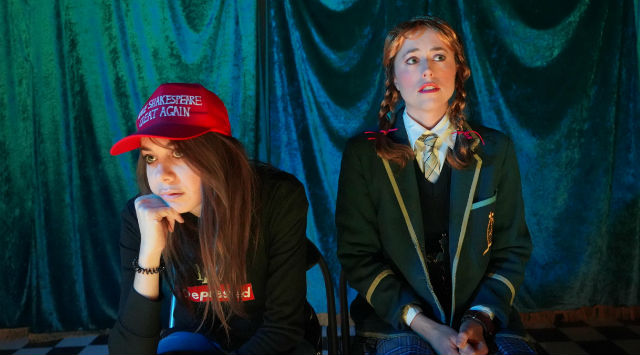
Review: Håmlet – A New Australian Play (Bondi Feast)

Venue: Bondi Pavilion Theatre (Bondi NSW), Jul 24 – 25, 2018
Playwright: Antoinette Barboutis
Director: Victor Kalka
Cast: Antoinette Barboutis, Matt Castley, Philip D’Ambrosio, Amanda Maple-Brown, Linda Nicholls-Gidley, Gemma Scoble, Alexandra Stamell, Alana Stewart

Theatre review
Shakespeare can be considered the foundation of how we do theatre in the West, and is hence the master we study and seek to emulate. He, of course, is not the only male of our species who has shaped and dominated an art form, that had for many centuries disallowed participation by women. Even today, there remains only one female working as Artistic Director at a Sydney main stage theatre company.

Antoinette Barboutis’ Håmlet – A New Australian Play is a radical exercise of deconstruction, of Shakespeare and therefore of the very notion of how we do theatre, under deeply entrenched patriarchal structures. In tandem are personal expressions about the aftermath of sexual assaults. Ophelia is killed off by Shakespeare, but Barboutis endeavours to work her way out of the wilderness. Both projects, to dismantle theatre and to recover from rape, are fraught and highly complicated, resulting in a show that feels unequivocally avant garde.

The play is concerned with identifying and rejecting existing mechanisms, in hope of locating something progressive. The artist succeeds gloriously in tearing apart what might be considered “the establishment”, but it is uncertain what is installed in its place. It is likely that the newness of what is achieved, escapes labelling, but it is undeniable, that what we find accompanying the strangeness of the experience, is an alarming quotient of pain and sorrow.

It is a work of comedy, extremely caustic in tone, and subversive to the core. Director Victor Kalka brings to fruition Barboutis’ ideas, whilst crucially retaining a pervasive rawness that beautifully represents the spirit of Håmlet. The show is at its best when it is at its least polished; unnerving and confusing, it disturbs us in the moment, and leaves us frazzled after, quite possibly in a masochistically satisfying way. Not all will be able to piece together every bizarre fragment, but its control over our visceral responses is clearly very powerful.

Barboutis is a formidable presence, edgy, with a quiet aggression that translates irresistibly on stage. Her wanton disregard of the fourth wall requires that her audience is self-aware, and therefore reflective, of how we are implicated in its ideas. She is determined to not let any of us sit back and get away with creating distance between her world and ours. Linda Nicholls-Gidley and Amanda Maple-Brown are more conventional in performance style, both delivering memorable scenes in their embrace of a wild vision. Four other players, all in black and interjecting at opportune occasions, function as a modern chorus of sorts, bringing energy to the stage when the air of depression becomes unbearable.

Håmlet – A New Australian Play is extraordinary, in what it wants to say, and how it wants to say it. Its artistic integrity is unparalleled, and the way it sticks to its guns, moves us in ways that are unpredictable, and confounding. Some are likely to find it a difficult work to enjoy, or chastise it for being insufficiently entertaining, but the uniqueness of its approach, and the staunchness of its convictions, feel singularly rare and profoundly valuable. We need to react against a way of life that seems determined to keep us parochial, narrow-minded and fearful. Art of this calibre is the inspiration that can help set us free.

www.bondifeast.com.au

Review: Love Song Dedications (Without Richard Mercer) (Ten Tonne Sparrow / PACT)

Venue: PACT Centre for Emerging Artists (Erskineville NSW), Jul 19 – 28, 2018
Playwrights: Tom Hogan, Bonnie Leigh-Dodds
Directors: Tom Hogan, Bonnie Leigh-Dodds
Cast: Tom Hogan, Bonnie Leigh-Dodds

Theatre review
Love Song Dedications was a longstanding radio program featuring classic romantic pop music, alongside real life accounts of love won and love lost. Tom Hogan and Bonnie Leigh-Dodds’ show is a tribute of sorts, using a combination of triple-threat disciplines to create a work of comedy, that is ostensibly about finding the greatest love song of all time. A prominent characteristic of the radio show was its unabashed earnestness, completely devoid of irony and therefore deeply cringe-worthy, and here, Hogan and Leigh-Dodds play with that raw human openness, almost as an antidote for modern art’s obsession with being too clever, to bring focus away from the head and into the heart.

It is an exercise in honesty, of placing the authentic within the inevitable conceits of a theatre piece that must have a beginning, middle and end. Storytelling will always contain verisimilitude, but degrees of fiction seem fundamental to how things work on stage. Hogan and Leigh-Dodds are best friends, and like those on the airwaves speaking via telephones about matters of the heart, they are here to talk about their relationship. We discover how having an audience would affect this process of connection between the two. Turning a friendship into an artistic partnership could be a precarious exercise, but if art is where they communicate best, then perhaps understanding their relationship through a form like this, is their best bet.

Hogan and Leigh-Dodds are intelligent and effervescent, both youthful specimens, full of beans and big ideas. A good command of their bodies, and of space, ensures that we are held attentive for the 70-minute duration. They create a plot trajectory that is surprisingly varied, manufacturing with considerable ingenuity, a multifaceted approach for what seems a very simple point of departure. There are brief moments of energetic dissolution, but we never lose interest in the overarching project of finding that best song.

Creativity, even at its most commercial, evades objective judgement. Beauty is in the eye of the beholder, and for Hogan and Leigh-Dodds the best song from the 104 in their shortlist, is the one that holds the greatest amount of meaning, and of nostalgic value, to their private selves. Their love story informs their selection, but judging from the warmth radiating from the audience, the popular consensus is that their show is very well-liked indeed.

www.tentonnesparrow.com.au

Review: My Carer (Walk Now Productions)

Venue: Hellenic Art Theatre (Marrickville NSW), Jul 19 – 22, 2018
Playwright: Sam Cosentino
Director: Sam Cosentino
Cast: Maria de Marco, Helen Kim, Jacob McLean
Image by Katt Gao

Theatre review
Rebecca endures a lonely and hopeless existence. Having dedicated everything to a career in law, she finds herself at retirement age with nothing but a house and a cleaning lady as companion. Her husband has passed, and their son is estranged, living in a distant city, resentful of his mother’s neglectful behaviour.

Sam Cosentino’s My Carer talks about family discordance, and explores the challenges we face when trying to mend those bridges. The piece is thoughtfully written, mature and insightful with observations that will doubtless strike a chord. As director, Cosentino’s approach is oversimplified, for a production that can feel too basic and pedestrian, but the strength of his text keeps our attention firmly engaged with its characters and themes.

Also captivating is Maria de Marco in the role of Rebecca, offering a powerful depiction of a woman with more than a few regrets, and a prideful obstinacy to accompany them. The nuanced intensity de Marco brings to the stage is sheer theatrical delight. Helen Kim and Jacob McLean are not quite as compelling, but the young performers exhibit a conviction that is nonetheless infectious.

Some apron strings can only be cut with a great deal of ruthlessness. In order that her son may become his own man, Rebecca has to experience a rejection that is as humiliating as it is cruel. What happens in the aftermath proves just as difficult, when a new harmony is sought by both parties, each having to negotiate uncharted terms of their reconciliation. When love is not enough, the choice to take on the hard work that will mend the fissures, is rarely an easy one to make.

www.walknowproductions.com

Review: You Got Older (Mad March Hare Theatre Company)

Venue: Kings Cross Theatre (Kings Cross NSW), Jul 13 – Aug 4, 2018
Playwright: Clare Barron
Director: Claudia Barrie
Cast: Alex Beauman, Harriet Gordon-Anderson, Ainslie McGlynn, Sarah Meacham, Gareth Rickards, Steve Rodgers, Cody Ross
Image by Clare Hawley

Theatre review
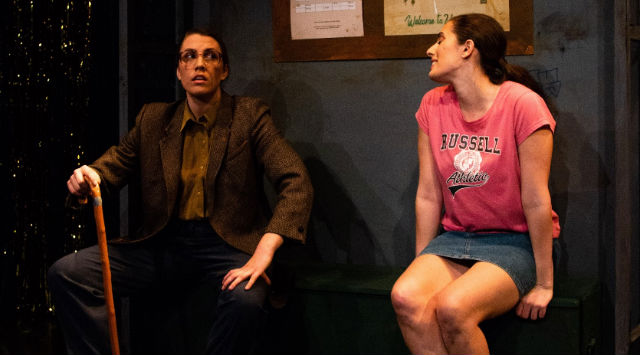
Mae has come home, to care for her father as he undergoes cancer treatment. Clare Barron’s You Got Older is a look at that moment, of suddenly becoming keenly aware of one’s parents’ mortality. In every process of healing, of trying to make someone better, is the salient reminder that life is fragile. Mae is strong for her father, but in the privacy of her own thoughts, anxiety and grief manifest in fantasies of sexual masochism. Role playing is after all, how we are able to get through most of our days.

The subject matter may be heavy, but like the resilience of our human spirit, the show is determined to keep buoyant and optimistic. Director Claudia Barrie brings excellent humour to the production. Although not exactly lighthearted, we are surprised by the delight and joy that the play brings, through its very enjoyable and richly authentic explorations of love and family dynamics. There is no angsty drama here, only a father and his beloved children grappling with the pain of inevitable separation.

A very solid cast takes us through this universal tale. Harriet Gordon-Anderson is entirely convincing as Mae, with all her contradictions and vulnerabilities, but the actor is particularly successful at conveying a strength that is neither heroic nor exceptional, but that is nonetheless profound in its representation of the good that we are capable of. The paternal character is played by a confidently understated Steve Rodgers, who introduces just enough pathos to have us engaged, leaving us grateful that no emotional blackmailing takes place in this presentation. Contributing to the somewhat unexpected elegance of You Got Older are its supporting actors, each one charming and funny, and as a group, perfectly timed and wonderfully captivating.

When someone close is suffering ill health, those on the sidelines might be left feeling helpless, but we also understand that fundamental to the patient’s well-being, is the spiritual care and support we are required to provide. In times of hardship, fear can easily overwhelm, but courage often appears, allowing love to do its job.

www.madmarchtheatreco.com

Review: A Single Act (Chippen Street Theatre)

Venue: Chippen Street Theatre (Chippendale NSW), Jul 12 – 21, 2018
Playwright: Jane Bodie
Director: Travis McMahon
Cast: Dominic Di Paolo, Georgia Nicholas, Evan Piefke, Rachel Slee
Images by Ethan Hatton-Warham

Theatre review
This is a story of two relationships disintegrating against the backdrop of a catastrophe, possibly an act of terrorism that proves to have continual reverberations after its moment of impact. Jane Bodie’s A Single Act places two very conventional couples side by side in the play, unified only by that vague catastrophic event they are all trying to keep out of their minds. One of the women suffers physical abuse from her partner, and we are made to connect the attack on human life that occurs in the domestic sphere, with those in public. It does not make obvious links, so the meanings we try to formulate can feel tenuous, but the parallels regarding damage to person and society are certainly intriguing.

Comprised entirely of two-hander scenes, the show relies heavily on chemistry between our onstage lovers, but the intimacies being presented are rarely convincing. Much of the work on acting seems to be filmic in style, with emphasis placed on voice and facial expressions, while actors’ bodies are left to look as though stranded in space. The subtle writing requires of the cast an extraordinary level of nuance, but the few memorable moments involve very exaggerated manoeuvres. Consequently, the production struggles to communicate more than the surface, although it does keep our minds inquisitive.

Acts of terrorism committed in Australia have been few and far between, but family violence happens around the clock. We often find ourselves engaged in passionate discussions about religious fanatics and asylum seekers, unable to acknowledge much more pressing issues that are quite literally right at our doorsteps. Our beliefs and opinions are so easily manipulated, by economic and political interests that have much to gain from our fear of alien forces, that terrors within our midst can be so effectively rendered invisible. One’s own backyard should always be tended to with great conscientious care, but it is much easier to worry about imagined enemies from foreign lands.

www.chippenstreet.com | www.paleblue.com.au

Review: Hello, Beautiful! (Performing Lines)

Venue: SBW Stables Theatre (Kings Cross NSW), Jul 9 – 14, 2018
Playwright: Hannie Rayson
Director: Matthew Lutton
Cast: Hannie Rayson
Images by Andrew Bott

Theatre review
We live in a world determined to render the older woman invisible. Having exhausted her roles as sex object and mother, she is thought to have turned irrelevant, neither madonna nor whore, made to feel as though she has outstayed her welcome. With Hello, Beautiful! Hannie Rayson claims space as that grande dame, in a theatrical landscape that routinely excludes women of a certain age. Rayson represents only herself in this autobiographical work, but her presence is fundamentally political.

Rayson performs stories from her memoirs, beginning with her childhood in 60s suburbia, through to university, activism, parenthood and an ever-increasingly successful writing career. She offers glimpses of a charmed life, not particularly dramatic or eventful, but we find ourselves captivated by her delightful avidity, and share in the joys of her personal reflections. Staged with little fuss, Matthew Lutton’s direction places emphasis on Rayson’s talents and natural allure, for a simple production that achieves all that it sets out to do.

It is without exception, that societies benefit from knowledge and experience of their elders, yet in so much of Australia, we relegate our seniors to distant corners, anxious about the truths they will tell, and fearful of the mortality that they personify. Hannie Rayson’s contributions are significant and ongoing, and it is our privilege to be able to hear her speak. Bright, young things are dazzling to the senses, but it is at our own peril, that we ignore the only true repositories of wisdom.

www.performinglines.org.au | www.griffintheatre.com.au

Review: Permission To Spin (Apocalypse Theatre Company)

Venue: Old Fitzroy Theatre (Woolloomooloo NSW), Jul 3 – 28, 2018
Playwright: Mary Rachel Brown
Director: Mary Rachel Brown, Dino Dimitriadis
Cast: Yure Covich, Anna Houston, Arky Michael
Images by Robert Catto

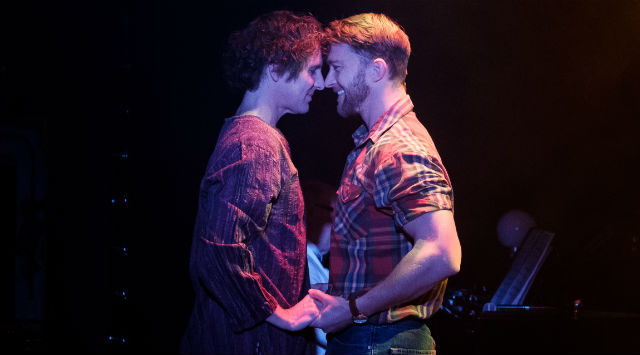
Theatre review
Cristobel is suffering an existential crisis, having learnt about her music being used for gravely nefarious purposes. After 14 years in the highly commercialised industry of children’s entertainment, her integrity is now unable to escape scrutiny, but corporate interests deny all her attempts to quit. Art and commerce are once again at loggerheads, in Mary Rachel Brown’s Permission To Spin, a dramedy that interrogates not only artistic purity, but also our general complicity and participation in the often ugly world of big money.

It begins with a big bang, two businessmen are snorting cocaine, in the midst of a lot of ruckus, wondering how to solve a problem like Cristobel. The laughs are loud and abundant, courtesy of Brown’s witty, often very incisive, dialogue. It is evident however, that the play is intent on seriously exploring our social, economic and political lives, and a gradual but marked change in tone occurs about midway through the hour-long presentation. Direction by Brown and Dino Dimitriadis provide good clarity to ideas, even when the writing turns dense. The contrast in mood, as the play crosses over from funny to heavy, involves an inevitable drop in energy levels, but we are kept attentive by some very resonant postulations.

Three excellent performers accompany us on this trip, helping us navigate the combative activity of Permisson To Spin, and in the process, locate a sense of our communal ethics. Anna Houston provides soul to the piece, simultaneously vulnerable and strong, with incredible nuance that speak volumes in her interpretation of Cristobel. Yure Covich is splendid as an obscene and irredeemably vile corporate asshole, powerful in his embodiment of our social ills and perfect as the show’s bad guy. Arky Michael is wonderfully comical, landing every punchline with remarkable precision and aplomb, displaying himself to be the kind of actor any production could rely on, for charm and interminable effervescence.

All our occupations contribute to greater consequences, even if we think them insignificant. Cristobel is meant to be creating music that is educational at best, innocuous at worst, but she is unable to stop her work from being repurposed in a manner that contradicts all that she believes in. There is a machine that absorbs and integrates us into its operations, to serve its purposes. We do not always have control over its desires, as is proven again and again, by the flaws and inadequacies of the way we execute our democracy. “It was music we were making here until they told us, all they wanted was a sound that could kill someone from a distance… I just pray that someone there can hit the switch.” Kate Bush, Experiment IV, 1986

www.apocalypsetheatrecompany.com