Review: The Wind In The Underground (Old Fitz Theatre)

Venue: Old Fitzroy Theatre (Woolloomooloo NSW), May 23 – Jun 3, 2017
Playwright: Sam O’Sullivan
Director: Lucy Clements
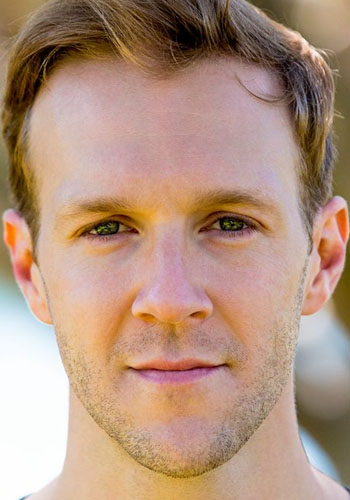
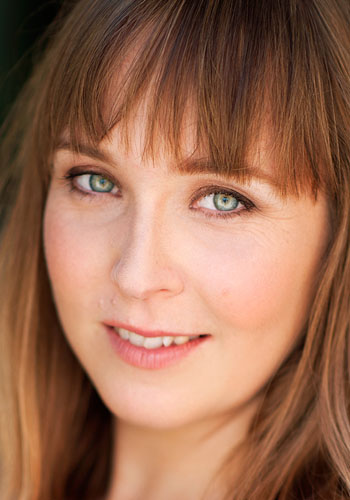
Cast: Michael Abercromby, Rowan Davie, Whitney Richards, Bishanyia Vincent
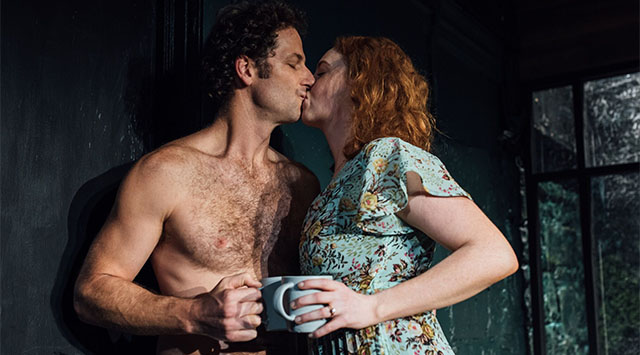
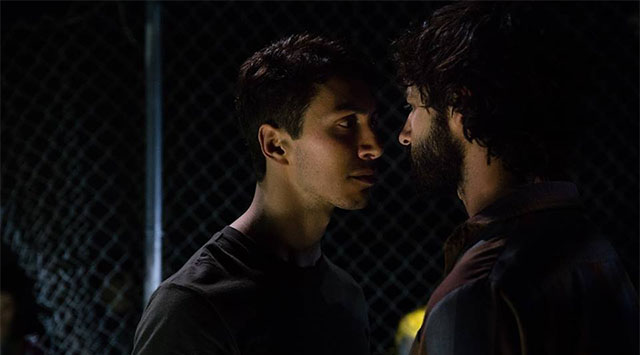
Image by Rupert Reid

Theatre review
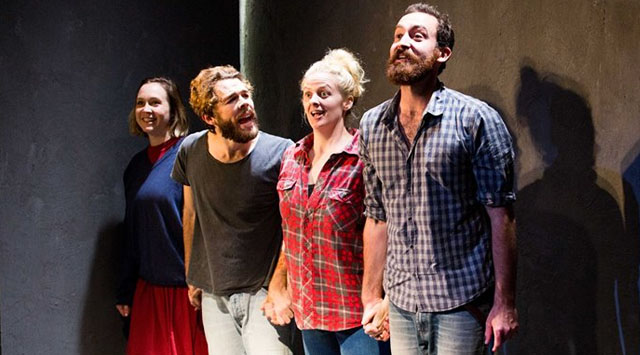
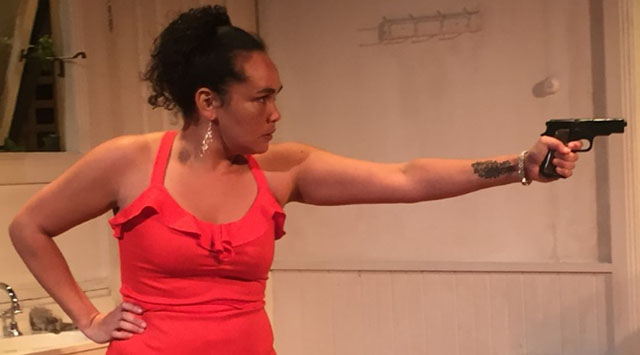
Wanderlust is meaningful only to those who understand that irresistible urge to travel. Simon returns home from a long trip away, and has to explain to his siblings why he had left them. There is resentment, and a lot of discontentment at home, but the love is nonetheless palpable. Sam O’Sullivan’s The Wind In The Underground is about seeing the world, but all the action lies within a domestic setting. The four characters are a volatile group, but they are not fragile. They fight only because they will always be able to reconcile.

There is little in terms of a compelling narrative that we can hang on to, and dramatic tensions are intermittent, but a superb cast enchants with their extraordinary chemistry. The actors share family secrets that we are only partially privy to. Its characters struggle with disclosures, but the performances leave no room for doubt that something deep and real underpins the exchanges we see on stage. It is a feeling we are all familiar with, and the remarkable talents represent it with an admirable accuracy.

Some people are comfortable with a parochial existence, but others need to explore further afield. This does not have to be about the physical movement that takes place. Our minds are all-powerful, and our beings can be transformed, as long as we wish to seek something higher. The play is about travel, and evolution. For those of us who can sail the seven seas, we will grow that way, but for those who prefer to stay home, every work of literature and art can provide the key to expanding life, far beyond the walls that try to hold us in.

www.oldfitztheatre.com

5 Questions with Sam O’Sullivan and Whitney Richards

Sam O’Sullivan

Whitney Richards: What was the seedling from Doubt that started this whole process?
Sam O’Sullivan: In the preface of Doubt, John Patrick Shanley, wrote about the feeling of doubt having negative, weak connotations, however he views it as a sign of strength. He wrote that doubt is the first step towards change and the ability to grow. If we’re too stuck in our ways, too certain of our world, we lose our capacity for empathy and risk isolating ourselves from our fellow humans. I loved this idea and it influenced my entire reading of Shanley’s play. From this, I knew I wanted to write something about doubt as strength.

Are you surprised with how the original idea has evolved into the final product?
Yes and no. My brief from Redline was always to take an element of the play – whatever spoke to me – and run with it. And Doubt is such a rich piece of writing, that there were a lot of directions I could have run. So I’m not too surprised that we have ended up where we are, but in saying that, I think I’ve always been conscious that we are on the same night as Doubt. We want to have a play that will interest the audiences who are coming to see Shanley’s play.

Do you think it’s a happy accident that the team is mostly WA migrants? How has that influenced the production?
It is a happy accident because, with the exception of my relationship with you (Whitney), none of us really knew each other before we started working on this play. But we definitely all bonded very quickly and I think Perth had something to do with that.

What has been different about this quick response process to how you usually work?
I always work for quite sporadic, intense periods and then shove scripts away in a drawer to ferment for a few months while I go something else. This time around, I haven’t been able walk away for too long, so to compensate I think I’ve been a lot more collaborative with the cast and production team to fast track some of the creative decisions.

As a writer/actor, what is it like to step back and hand your work over to other actors? Basically… do you love us?
It’s awful. I’ve never seen a bigger bunch of numpties make something so simple look so difficult. 🙂 But yes, I love you.

Whitney Richards

Sam O’Sullivan: What’s the best and worst thing about travelling alone?
Well, I’ve done this one a lot lately. Although it’s always been paired with touring a show which is really bloody stressful alone. You’re not sharing the workload of scheduling and plans which can be a bugger but also you get to do what you want when you want. At times I’ve felt a little vulnerable. Like I had to be hyper aware of personal safety. I did have my heart broken whilst overseas and that really sucked.

My travel self is my best self. I feel more alive and keen to push myself to try new things. When you travel alone you are without metaphorical baggage. No job title, no relationships. You become more present. You are forced to make friends. And fast track these relationships because you know your have limited time. People see you for who you are which I’ve found to be a confidence boost. I come home feeling more comfortable in my own skin. I do have moments of sadness when something at home triggers a memory from my travels; a song or a person or a show and I have no-one to rekindle the memory with.

What can your siblings do that still drive you nuts?
Actually, I’ve always completely admired my older sisters. They’re intelligent, fiery and hilarious women and mums. There’s a bit of an age gap between us so they never drove me nuts in the way my nieces and nephews do to each other. Such a power play there. It’s fascinating to watch the love and the hate. The care for each other and then the violence! Just like the characters in The Wind In The Underground. It’s been fun playing siblings that grew up together because my sisters and I didn’t get to do that. I’m younger than my sisters so I reckon I was probably the irritating one. I do remember visiting my sister when I had turned 18 and her saying to me “You’re so different. I can have a conversation with you now.”

Whats a private joke that only you and your siblings would find funny?
It might be a WA thing or an us thing…but we’ve always enjoyed the word “jobby”. Its means poo. Yep.

How has rehearsing The Wind In The Underground been different to other plays?
It’s always thrilling to be involved in new works. You get to witness and be a part of the changes that make it a stronger and stronger story. I love hearing from writers about the impetus for the story and characters. It was odd watching Doubt the other night and remembering that The Wind In The Underground is a response to that. It’s such a different world. I think people seeing the double will have an excellent night at the theatre.

The 40 minute slot is something I’ve never done before. The story has to be simpler than a 1hr+ show to have a satisfying beginning middle and end. Claire is an interesting person to explore. She doesn’t say a whole lot so finding a way to thread her emotional journey together continues to be an interesting process for me. She’s stuck in an place I found myself in a few years ago (pre-travel) so that’s been familiar territory.

I hadn’t worked with anyone on our team before, so it’s been a bloody delight getting to know these hilarious humans. We feel like a real family.

Whats your favourite thing about the Old Fitz?
I spend my nights ushering at Belvoir St and Sydney Theatre Company so when I have a night off, I usually try to spend it away from the theatre. I’m embarrassed to admit I don’t see everything at the Old Fitz. I’ve really enjoyed my time there though. Firstly, the space itself is really great. The 60ish seater is truly my favourite. It’s perfect for really hearing and connecting with an audience. You’re much closer to the feedback loop. It reminds me of the beautiful Blue Room theatre in Perth. I’m enjoying the vom entrance very much too.

It seems like Redline have a great connection with the patrons of the pub, the people who run it and the theatre community. So from someone coming in with fresh eyes, that seems to be a beautiful functioning thing. I’m looking forward to our season and hope to see more shows there in the future.

Whitney Richards appears in The Wind In The Underground by Sam O’Sullivan.
Dates: 23 May – 3 June, 2017
Venue: Old Fitz Theatre

Review: Doubt: A Parable (Apocalypse Theatre Company)

Venue: Old Fitzroy Theatre (Woolloomooloo NSW), May 10 – Jun 3, 2017
Playwright: John Patrick Shanley
Director: Dino Dimitriades
Cast: Charmaine Bingwa, Damian de Montemas, Belinda Giblin, Matilda Ridgway
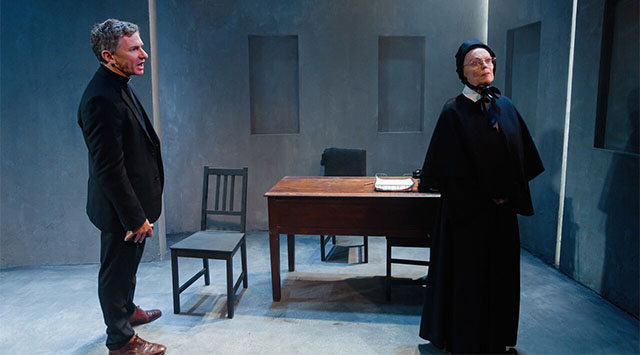
Image by Robert Catto

Theatre review
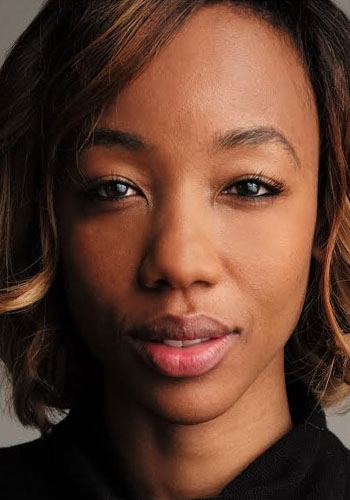
John Patrick Shanley’s genius masterpiece, Doubt: A Parable takes a deep and extensive look at the nature of doubt, and through it, reaches for something fundamentally real about who we are. Its greater power however, lies in its narrative. It is the literal rather than the allegorical that many will find affecting in the play, with the ongoing predicament of paedophile priests in our churches never seeming to find satisfying resolution.

Sister Aloysious possesses no concrete evidence of Father Flynn’s trespasses, but her position as school principal requires that students are protected at all cost. Operating under severely defective systems of patriarchy and the clergy, Aloysious can only do the right thing by dehumanising herself in order that she may be able to undertake necessary measures, “in the pursuit of wrongdoing, one steps away from God.”

This sensitive interpretation by director Dino Dimitriadis pulls close focus to Shanley’s words, with theatrical devices kept at an intentional quiet, so that we garner maximum impact from the extraordinary writing. Design aspects are minimal and unobtrusive, but elegantly effective.

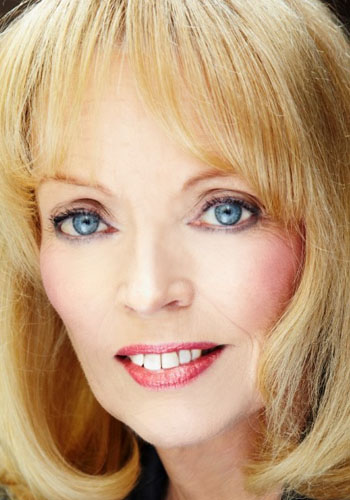
Performed with great detail by an impassioned cast of four, we are offered a marvellous intensity of interplay between characters that could only emerge from exhaustive study and immersion into the text. Belinda Giblin is stunning as Aloysious, psychologically meticulous and emotionally complex, she gives us crystal clear insight into the personality being presented, while providing astute access to the unusual world in which she resides. A wealth of meanings are implied in Shanley’s dialogue, and Giblin makes certain that we receive them all.

Father Flynn’s uncompromising ambiguity is the show’s dramatic lynch pin, brilliantly manufactured by Damian de Montemas whose hints of malice keeps us engrossed and on edge, even if he does sound uncomfortable in his American accent. The magnetic Charmaine Bingwa leaves a strong impression in a singular pivotal scene, embodying Mrs Muller’s specificity of time and space with a remarkable authenticity of presence. Matilda Ridgway is a quirky Sister James, veering slightly too far from naturalism, but whose interpretations are unquestionably entertaining.

We watch these people participate in a religion that has overwhelmed their lives, and wonder if Catholicism takes more than it gives. We see the destruction it causes, and are suspicious of the way it claims to be of benefit to these individuals. We also see the inextricability of religion, and the difficulty of achieving emancipation from its indoctrination. As our nation continues to wage war against “radical Islam”, rapists in our Catholic and Christian churches are allowed to fester year after year. We hear about investigations and inquisitions taking place every day but they deliver little, while our children face dangers that are constant, secretive and insidious. Sister Aloysious does the best she can, but knows that it is not yet enough.

www.apocalypsetheatrecompany.com

5 Questions with Charmaine Bingwa and Belinda Giblin

Charmaine Bingwa

Belinda Giblin: Who is Charmaine Bingwa?
Charmaine Bingwa: I am such an amalgam, but will try to be concise. I was born in Australia and am the youngest of the three children born to my Zimbabwean parents. I grew up in Perth and moved to Sydney on my own when I was 18. In terms of job titles, besides actor I have also turned my hand as director, producer, composer, singer, guitarist, writer, amongst other things. I’m a Scorpio, I don’t sleep very much, I prefer character over comfort, I pretty much always have a script or book in my hand, I like to lead by example, I don’t drink alcohol, I care too much, I love to sing, I value sincerity, I work stupid-hard and I am addicted to making those around me laugh.

Tell us a bit about your journey into the acting profession?
It was quite serendipitous really. I was studying music, I decided to take acting as an elective to help with public speaking. But I loved it and was almost immediately hooked. I got permission to do the acting course in addition to my music degree and here I am!

What is it that draws you to a particular role? What drew you to this particular play?
I like playing complex individuals. I believe that personality traits lie on a spectrum, where the same trait that helps someone, can also hurt or hinder them. For me, that is humanity. For me, that is where the gold lies in characterisation. For me, that is the crux of Doubt: A Parable. I love the investigative process of finding a character. I’ve always been fascinated by how things work; as a kid, I even used to pull apart computers and rebuild them just for shits and giggles.

And at risk of sounding otherworldly, I believe that roles choose me. Certain roles find me at critical junctures of my life when I need to learn or experience something on a deeper level. I also feel like roles gift me, more than I gift them. I’m fastidious in my preparation, so I come away learning so much more about history, people, moments in time, disorders, human nature, personality types or whatever it may be. For a nerd like me, that’s Christmas.

Doubt is set in the Bronx in 1964, if Mrs. Muller were to live under the Trump presidency, would she be a Republican or a Democrat? What would be her political agenda?
I think she would be a Democrat for sure. She would have loved that there had been a President Obama! All this woman wants is progress, and she is willing to put aside short-term well being in exchange for long-term advancement. For her, a Trump presidency would be a hard pill to swallow.

I think Ava DuVernay’s Academy award nominated documentary The 13th puts forward the hypothesis perfectly that the persecution of African American people just reappears in different permutations throughout history; slavery turned into convict leasing, which turned into lynchings and Jim Crow, which turned into the war on drugs and mass incarceration, which turned into police brutality and institutionalised racism. I think she would be heavily involved in the Black Lives Matter movement.

Actors prepare for their roles in different ways. Do you have a “process” that enables you to inhabit a role?
The preparation I do is always dictated by the role. For Mrs Muller I did extensive research as I felt in order to temper the words that come out of her mouth, the audience needs to feel her history. The answers lie in the generations that have gone before her – so backstory was key.

I just keep asking questions – what bible verses does she love, what were her formative years like, what is the one secret she is taking to the grave? I’m always fascinated by what I find. But my most important step is to throw all the technical work I’ve done away and just tell the truth, or tell their truth rather. The rest of my process is a secret!
Belinda Giblin

Charmaine Bingwa: What made you first want to get into acting?
Belinda Giblin: Both my parents and siblings were involved in the Performing Arts in one way or another so I was surrounded by a lot of singing and dancing and acting from an early age. I’ve always had an instinctive need to perform, to put on that “mask” if you like, so the acting profession was a very natural choice for me.

Mind you, I did a few things before I got there, including an Arts degree and a short stint at NIDA. They threw me out of NIDA after one year. I was described as “laconic” and it was suggested that “trial and error” may be my better training! My first job was in the TV series Matlock… in black and white!

John Patrick Shanley says Doubt is the “age-old practise of the wise”. Do you agree and how is this evident in your life?
Absolutely. When I was 16 I thought I knew everything! Nothing had been tested too much at that age. But now, in my 60’s, I am more circumspect because, of course, life keeps changing, the goal posts get moved, nothing is certain and we never stop learning and growing. Therein lies the wisdom I guess. Pretty exciting!

If you and Sister Aloysius had a dinner party and could invite 2 guests each-who would you each bring and why? And yes, they all have to get along!
Oh dear! Well…. Sister Aloysius would invite the Pope of course because she would wish to get his opinion on the “Boys’ Club hierarchy” of the Roman Catholic church and have a few words to say to him about that! And because she is an educated woman and a great lover of words she would invite that famous 19th Century poet Gerard Manley Hopkins, to discuss his religious doubt-filled sonnets, particularly the one about “God’s Grandeur”. Please explain!

I would invite Germaine Greer and that fabulous camp American satirist, Randy Rainbow, to throw into the mix! Sister Aloysius would have a lot in common with Germaine Greer and Randy Rainbow would cheer Gerard up no end! The Pope would sit and smile benignly and fall asleep!

Is there a dream role you are still yet to play?
I’ve never hankered after roles that have been done before, to put my particular stamp on them. There will always be comparisons. I tend to favour something new, as long as the writing is wonderful! Oh what?….did Meryl Streep do Doubt? Why didn’t someone tell me?

We’ve seen you play so many amazingly crafted characters, but what are Belinda Giblin’s defining qualities?
Optimism; humour; resilience; curiosity; tenacity; self-determination; obsessiveness; dedication; compassion…what? Oh, I’m sorry… is that enough? OK.

Charmaine Bingwa and Belinda Giblin can be seen in Doubt: A Parable by John Patrick Shanley.
Dates: 10 May – 3 June, 2017
Venue: Old Fitz Theatre
Review: Bengal Tiger At The Baghdad Zoo (Mad March Hare Theatre Company)

Venue: Old Fitzroy Theatre (Woolloomooloo NSW), Apr 12 – May 6, 2017
Playwright: Rajiv Joseph
Director: Claudia Barrie
Cast: Josh Anderson, Tyler De Nawi, Maggie Dence, Andrew Lindqvist, Stephen Multari, Megan Smart, Aanisa Vylet
Image by Kate Williams

Theatre review
It is a prayer of anguish and pain. In addressing God, Rajiv Joseph offers a meditation on the biggest challenges faced by humankind at this moment in time, from perspectives personal and global. Bengal Tiger At The Baghdad Zoo talks about the ceaseless wars that take place in the middle east, and the sacrifices made to all lives no matter which side of the battle they reside. It also deals heavily with guilt and regret, universal experiences that allow audiences to relate even closer to its characters and stories.

The writing is emotional and imaginative, with ghosts and paranoia haunting the living, and troubling philosophy interrogating the dead. Having Americans and Iraqis at the centre of the action might allow Australian viewers to distance ourselves from its very difficult themes, but the production’s extraordinary intensity is determined to have us embroiled. It is powerful work by director Claudia Barrie, who invests great detail and dynamism into all facets of her show.

An unrelenting atmosphere of tension akin to horror movies and war zones, is marvellously established by a bevy of design talents. Nate Edmondson’s music in particular, impresses with its exceptional precision in calibrating tonal shifts, allowing us to flow with the play’s many surprising and contrasting moods, with no apparent effort at all. Lights are appropriately colourful for a show that revels in its hallucinations, with Benjamin Brockman’s robust approach providing excellent visual variety to a small and restrictive stage. Stephanie Howe’s costumes and Isable Hudon’s set design are simple but always effective and convincing, especially admirable considering the economy at which they operate.

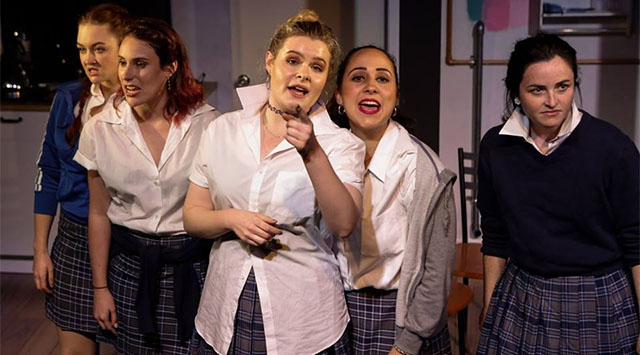
An ensemble of seven remarkable actors perform an unforgettable show, each one commanding, with strong interpretations of their individual parts but beautifully cohesive as a whole. Andrew Lindqvist is stunning as Musa, demonstrating a level of authenticity that makes theatre pure magic. The kinds of torment being described is, to most of us, quite unimaginable, but Musa’s story is laid bare in front of us, entirely convincing and heartbreaking. It is in the way Lindqvist brings meaning to his lines, and in the way his physicality manifests between those lines, that the essence of suffering can be so clearly observed. His work is dramatic and breathtaking, but also profound in its subtle assertions; the actor is fantastic. Josh Anderson and Stephen Multari play American soldiers, both engaging, and moving, with fascinating psychological complexities provides to what are usually reductive ways of portraying military personnel. The eponymous tiger is brought to life by Maggie Dence, who has a tendency to seem overly static, but the quality of omniscience she brings is invaluable. Tyler De Nawi, Megan Smart and Aanisa Vylet are all given scene-stealing opportunities, and although their appearances are relatively brief, they each leave an indelible mark on this stage.

Maybe God does exist out there in the ether, or maybe we are all gods in the here and now. We can crane our necks and ask for answers, but we will never be absolved from doing the best to make the world a better place. We must try to figure things out ourselves, for as we see here, divine intervention never did arrive. For good to happen, it is only up to us, but evil is real, and in Bengal Tiger, it does not know itself. In the play’s pessimism, our actions result in harm, and civilisation is on a downward spiral, but it is a work of fantasy, and how we respond, is another one of its mysteries.

www.madmarchtheatreco.com

5 Questions with Tyler De Nawi and Aanisa Vylet

Tyler De Nawi

Aanisa Vylet: I have been watching you play Uday Hussein. He is quite a cruel man and you as a person have the demeanour of a teddy bear. How do you channel his cruelty?
Tyler De Nawi: When I am behind closed doors in my own space I experiment with how far I can take something. I can have quite a lot of fun with myself… (I know that sounds dirty) but I know how to entertain myself. When I am alone, I can actually push myself to those extremes, to those states of anger, distress. I can drop my mask of Mr Nice Guy and play. It comes from play, playing at home, really taking time to understand what the text is saying. The play is written so well. I just try to let the text breathe on stage.

What is your relationship to Iraq as an Arab Australian?
I grew up with Iraqis and Asyrians in Western Sydney. The word ‘Saddam’ was thrown around loosely at school. Some loved Saddam, some hated Saddam, some didn’t even know how to feel about it… After more research, I have started to see the Husseins as ordinary people. Even though people considered him to be crazy, Uday Hussein was a boy who grew up with a father who would kill his own friends if they betrayed him. His father was unfaithful to his mum and Uday loved his mum. He was product of his own environment. Uday used to own tigers. To me, if he was an animal, he would be a tiger – a predator in captivity.

What is your favourite thing about your Uday Hussein costume?
He is like an “Arab Hugh Hefner”. He wears a three-piece suit with gold buttons on it and a gold tie. It is something else. We are so lucky to have found it. I am still trying to get my hands on a ring, a gold pinky ring. I think that will be my favourite part.

Have you ever been to Iraq?
Never. I have been to Lebanon, Syria, Egypt, Turkey… Wow, all the countries around Iraq but I never been there, no.

Do you feel targeted as an Arab?

I am proud to be Muslim. I am proud to be from an Arab background. We are complex just like every one else. We are messy. We are passionate. We are beautiful, just like everyone else. It is time to stop assuming you can label anyone. Just because I am Arab-Muslim does not mean you know me.

I believe art is the best way to help a society overcome these assumptions.

When I was a kid growing up, driving down the highway I saw big banners from world vision that showed an African child suffering. 20 years later, there are now Syrian kids on banners in the rubble that was once their city. How did we get to this? We haven’t even resolved what is happening in Africa. People from my own heritage have become a charity case. What is next?

Aanisa Vylet

Tyler De Nawi: In this play you are playing two characters – an Iraqi civilian whose home is being raided and a leper. I watch you embody these characters very well. To what extent do you go to embody a character?
Aanisa Vylet: I can inhabit distressed states of being very easily. I don’t know where it comes from. Perhaps it is in my blood, an ancestral pain. When I access those states I think about everyone who is currently suffering in Arab countries and the world right now. I channel anyone I know who is an outsider due to their health as the leper.

I also work in colours and through the physicality of that character. For the Iraqi woman, my feet are bare and I am trying to put on my scarf. As a person from an Islamic background, I understand the vulnerability and nakedness that she would feel when those parts of her body are bare in the presence of foreign military.

With the leper, my body is diagonal and made of sand. The leper is the color grey – the black moves inward, the white tries to reach out. The Iraqi woman is red – passionate and explosive.

If you were stranded in the middle of the desert as an outsider, decaying, what is the food that you would be wishing for?
My mother’s homemade vine leaves. Even though my mum hates cooking, her food is always made with love and makes me feel like I am at home. And Lebanese vine leaves with yoghurt and mint? That is the dish that describes my life. It takes forever to make but tastes so delicious you fight for the last mouthful.

What is your mission as an artist and why were you interested in telling this story?
My mission is to tell stories that are difficult to tell, stories that express the voices of people who are silenced who cannot tell their stories themselves. I aim to tell provocative and engaging stories that don’t exist yet.

And as for Bengal, when I first read the script I thought – “Fuck yes!” and then… “Thank God!” The writing hits the primal part of ourselves that we often forget in our daily life. We need writing like this. We need to be moved in our seats before our brain kicks in.

On top of that I was keen to share a narrative that dealt with “Operation Iraqi Freedom” and to work with the wonderful Mad March Hare Theatre Co.

If you had three wishes from a lamp what would they be?
I would wish that we had proper world leaders again, like Nelson Mandela, leaders who perform not for themselves but for the people they represent. My second wish would be that we respect and improve our treatment of animals and the environment… and I would want my mum to get the operations she needs and my brother, who has Down Syndrome to receive the best and most inclusive life possible.

Why should someone pay $40 to come and see this play?
Because it is incredibly moving, everyone involved is generously bringing themselves and their hearts to the work. Because this play is so relevant to our lives today. Because the play is funny – it is a wonderful and entertaining night at the theatre. This isn’t a close and open your eyes “why the hell did I watch this?” show. At this show you will see artists at play, trying new things. This is ground-breaking, brave theatre. Do yourself a favour – go.

Tyler De Nawi and Aanisa Vylet can be seen in Bengal Tiger At The Baghdad Zoo by Rajiv Joseph.
Dates: 12 Apr – 6 May, 2017
Venue: Old Fitz Theatre

Review: Binary Stars And Best Lives (Old Fitz Theatre)

Venue: Old Fitzroy Theatre (Woolloomooloo NSW), Mar 28 – Apr 8, 2017
Playwright: Samantha Hill
Director: Michael Abercromby
Cast: Katie Beckett, Nathalie Murray, Jenae O’Connor, Amelia Tranter

Theatre review
A gun shot is fired, sending chills down our spines. A woman appears, disoriented, a time-traveller perhaps, or someone from a parallel universe, but more probably, she is just released from prison for shooting her husband some years back. Babe is an astrophysicist, with a keen interest in realms other than the immediate reality. Having given up her own dreams to become trophy wife to a television celebrity, she loses her sense of self, and we find her grasping at straws to justify her existence.

Samantha Hill’s Binary Stars And Best Lives is theatrical, ambitious and complicated, but its cacophony of rich ideas struggle to communicate with clarity. It seems to have a lot to say, including issues about Aboriginality, feminism and materialism, all worthy of exploration, that might be better dealt with if greater attention was put into creating a more cohesive narrative.

Babe is an elusive character, who actor Katie Beckett embraces with conviction, especially in sections of heightened drama and emotion. Amelia Tranter impresses in dual comedic roles, both memorable for different, and absurd, reasons. Nathalie Murray and Jenae O’Connor add further vibrancy and fun to a show that is otherwise more than a little confusing.

We need to have concurrent truths in order that life can be bearable. Whether complementary or conflicting, the different ways we form an understanding of how things happen, must allow some plasticity, or all our days would only be harsh and cruel. Even when Babe is made to face the consequences of her irrefutable actions, her mind provides explanations that she can live with. We all see the world differently, but how we co-exist is the perennial challenge.

www.oldfitztheatre.com

Review: Crimes Of The Heart (Old Fitz Theatre)

Venue: Old Fitzroy Theatre (Woolloomooloo NSW), Mar 15 – Apr 8, 2017
Playwright: Beth Henley
Director: Janine Watson
Cast: Caleb Alloway, Rowan Davie, Amanda Mcgregor, Laura Pike, Renae Small, Amy Usherwood
Image by Rupert Reid

Theatre review
It’s not Russia in 1900, but the three sisters in Beth Henley’s Crimes Of The Heart are similarly oppressed and emotionally tortured. Where Chekhov had expressed these pains in more sociopolitical terms, Henley’s story is specific about the patriarchy that these Magrath ladies have to operate under. They are gregarious personalities who fight hard to make lemonade out of an endless supply of lemons, but things never pan out well. They are trapped, by forces that remain invisible to them, and in their minds, they only have themselves to blame.

Completed in 1978, the play is no longer lustrous, but with our refreshed interest in feminism, its themes have again become pertinent. There are dominant men in these women’s lives who wreak havoc, but we never see them. To many women, especially those in decades past, gender inequity is rarely conspicuous. The Magraths do not for one moment realise the cause of their suffering, and like many of us, we take the blame personally, unable to perceive the wider connotations of how we exist, and the deeply problematic contexts by which we go about our daily business. Janine Watson’s direction takes the comedy to delightfully dark and twisted places for many perverse laughs, but the production’s inability to make forceful, the presence of evil fathers and husbands, is a sore point that prevents the drama and poignancy to sufficiently take hold.

The people who do appear on stage though, are effectively presented. All three sisters, Babe, Lenny and Meg are convincing, and very compelling. Renae Small in particular, is fascinating as Babe, with a subtle but wicked sense of humour that gives the show a distinctive flavour of subversiveness. Her ability to make believable the contradictory qualities of a delicate lady in trouble, but free from the torment of guilt, is truly impressive. Laura Pike demonstrates excellent authority over her depictions of emotion in the role of Lenny, and Amanda McGregor’s energetic theatricality as Meg, give Crimes Of The Heart a richness that keeps us invested in how its characters develop.

Jonathan Hindmarsh’s set design is a remarkable achievement that converts an inconvenient space into the Magrath’s evocative American home of mid-twentieth century. Along with Alexander Berlage’s lights, the actors are framed perfectly, in a manner that represents a constant reminder of the women’s unconscious captivity. Our lives are controlled by forces insidious and surreptitious, and how we experience being, will always have elements that are under the manipulation of others. We may never be able to overcome them all, but understanding systems and their machinations, is how we can begin learning to benefit from them, or to dismantle and debase them. The sisters wish for happier days, but without knowing the cause of their agony, they can only leave their hopes to the powers that be, which in this case, remain concealed and malevolent.

www.imperialartistry.ontrapages.com

5 Questions with Amanda McGregor and Laura Pike

Amanda McGregor

Laura Pike: You are eldest of three girls but Meg is the middle sister. What have you noticed about the middle sister syndrome?
Amand McGregor: Being in the middle feels like it encourages more rebellion. I know as the eldest sister – the first one off the block – I was more disciplined by my parents than my younger sisters were. Everyone knows that by the third kid, parents are more lax, like “Yeah whatever – have ice cream for dinner! Stay out all night long! We cool! You do you!” But the eldest often ends up pretty responsible and measured. I’m generalising, but it’s pretty much on point for me and my sisters, and I think for the McGraths too. Meg certainly is not responsible or measured, she lives in the moment.

Even though I’m the eldest, I certainly went through my wild phases. Meg went straight for the kill and started being a renegade from a young age, probably to differentiate herself from the very well-behaved Lenny – but also in order to mask the pain of her childhood.

Meg is a singer – have you had any aspirations about being a singer?
100% yes. At 13 I sang a TJ Dennis song with a live band at the Boyup Brook Country Music Festival. I wore black jeans and a black tassel midriff top and I felt so cool and like I was definitely a famous country music star. I still have a secret desire to sing country all day every day and be the female Willie Nelson.

Crimes Of The Heart deals with ghosts from the past? Do you have any?
I think we all do. So short answer yes, and the long answer would spill out of me with the right about of bourbon. There are certain relationships in my life where oceans lie between me and someone else because of pain and heartache. The person exists purely as a memory – they’re a ghost. So I can empathise with Meg in that sense. Everyone’s past haunts them from time to time, and I think Meg’s past is painfully unresolved.

What the wildest adventure you’ve ever had?
Probably a night in Hollywood that involved surprise drug deals, Steel Panther, a supposed member of the ‘Bra Boys, and a beautiful pit bull named Brooklyn.

Who do you get as your doppelgänger?
Sarah Jessica Parker when my hair is blonde-ish (a woman literally took a photo once not just OF me, but WITH me because “aw mate you look like that chick from Sex And The City!” It was on the Gold Coast. It was weird. I’m not sure why I posed for the photo). Then when my hair is dark, Winona Ryder, which makes all my dreams come true. I want to be Winona, forever. I think I’ll get a tattoo of her face.

Laura Pike

Amanda McGregor: What’s the most frustrating quality about Lenny that you can relate to?
Laura Pike: Oh my gosh I’ve had SO many cringe moments during rehearsal, where other cast have gone “Oh poor Lenny” and I’ve thought THAT’S ME! Lenny has this beautiful quality, where she takes care of everyone. She has a desperate need to bring people together, free them of their pain and look after others. But in doing so, she leaves herself last. This is definitely something I do and am working on strengthening. Having a healthy amount of selfishness and recognising when I need to fill up my own cup because the more I can do that, the more I can tip over into others cups.

Do you have any phobias?
YES! Waves. I grew up in PNG and we lived right on the water, but I’m so scared of waves. It didn’t help living in Bondi either. I’m especially scared of the part when the wave breaks or starts to barrel. It seems so menacing to me and people always say “you’ve just got to dive under it” but it freaks me out. And I’ve dreamt of tsunamis. I think I need to get onto this!

What are the differences between sisterhood in Mississippi 1974 and sisterhood in Sydney 2017?
Sisterhood is sisterhood, no matter what period of time or place. The relationship between sisters is universal. You grow up together, knowing each other’s vulnerabilities, strengths, traits and personality… oh and triggers. Boy do you know each other’s triggers! The bond between sisters is incredibly special. To be in the company of someone you deeply love and knowing in the pit of your being that you’d do ANYTHING for that person if they needed it. Luckily, some things have changed since the 1970s in regards to feminism and women’s rights. One of the biggest victories in Women’s Rights in the US came in 1972 when Congress approved the Equal Rights Amendment. However Mississippi was the ONLY state legislature that didn’t vote on the amendment. So when Crimes Of The Heart was set (1974) Women’s Rights hadn’t reached the South. Therefore my character Lenny (in dealing with her younger sister Babe’s marriage) is still of that old school mentality; “Don’t interfere; what goes on between and husband and wife is their own business”. Even the simple act of a woman calling a man was taboo. Today, women are more empowered to stand up for each other – I would even go so far as to say there is more of a global sisterhood of support, trust and love.

Lenny is the eldest of 3, you are the youngest of 3. What’s the worse thing your older sisters have done to you?
I also grew up in Cairns in a beautiful ‘Queenslander’ with lattice going all the way around our house. When I was a little one, I always needed to go to the loo in the middle of the night. My eldest sister came to me one day and commented on how brave I was taking such a risk. “What do you mean?” I pleaded and without blinking, she told me about the murderer that used to sit with his gun in the lattice, waiting for me each night. Bed wetting anyone?

What animal could you take down in a fight?
A pig. If it was in their pen. Filled with mud not poo. I snort when I laugh really loudly, so at least I’d fit in!

Amanda McGregor and Laura Pike can be seen in Crimes Of The Heart by Beth Henley.
Dates: 15 March – 8 April, 2017
Venue: Old Fitz Theatre

5 Questions with Daniel Monks and Aleks Mikić

Aleks Mikić

Aleks Mikić

Daniel Monks: What does this play mean to you?
Aleks Mikić : Aside from pressing burning buttons about what it takes to be a soulful, contributing human; Are We Awake is a mesmerising insight into human relationships. This wide, not-so-simple-to-navigate spectrum of ‘relationship’: from strangers to lovers – from isolated independence, through our balanced interdependence all the way to dependency has pros and cons on each end and this play masterfully swathes us through the ups and downs of love. All through the lens of one couples morning, in a deeply detailed, flawed and beautiful relationship. I’d love to say more but subjective spoilers ensue…

Not only are you an amazing actor, but you’re also an incredible rapper, singer & musician – how does your experience and connection to music effect your acting, and vice versa?
That’s very kind of you D Monks! Awh man. Well, we feel it as a viewer; art & performance is either embodied or it’s not. It’s swamped in truth and it hits the spot; or it’s drowning in ego and hits little. “I’ve gotta get this right/skilfully executed/made to look beautiful”. In regards to your q, every shortcoming on stage whether with a microphone in hand, at a drum kit, or in another humans clothes lends itself to growth. Inversely every moment of bravery lends itself to collective courage. Singing against misogyny with a tear falling out of the eye takes giving a fuck less if it’s the ‘cool’ thing to do. With our layers of vulnerability uncovered we shed layers of ego and this takes us ever closer to truth.

What about working on new plays do you find the most thrilling and the most challenging?
How fascinating getting to the core elements of a play as a team; finessing work for the context it is set for; (in this case, a 40min slot at the Old Fitz) and coming out with a product in the end. From the get go, Charlie had written an absolutely brilliant story which made it all the more enjoyable. It was a new experience. I’d never been in that seat, as an actor, free to be heard about what this person may say more or less of in a given situation; and then actually go and say it, night after night. The only evident challenge was locking things in and in time. There was no hardcover copy that said “I am final. This is what your team is telling.” I think we got there though. We got hard in the end…

Who are your dream artistic collaborators?
Aw man the list is large. I could ramble but to name a few… David Lynch, Anderson .Paak, Jordan Rakei, Esperanza Spalding, Erykah Badu, Jill Scott, Stevie Wonder, Meryl Streep, Denzel Washington, Anthony Hopkins, Al Pacino, Robert DeNiro, David Fincher, Peter Jackson, Ramble McHadenough, Yükant B. Serious

What do you love about Endymion, and what frustrates you?
Endymion is a kind soul. Love. Endymion almost gives his soul away. Frustration.

Daniel Monks

Daniel Monks

Aleks Mikić : What was your first performance experience?
Daniel Monks: I would say I came out of the womb performing – but my first performance experience was actually pre-birth, as the unborn fetus in my mother’s belly for her one-woman show, From Here To Maternity, which she performed when she was seven-months pregnant with me. I was really very good; natural, convincing, completely lacked any self-consciousness. My first conscious performance however was Peter Pan in year 2, which I “adapted” into a musical for my class to put on, with myself playing Peter – despite my horrendous singing voice.

What drew you to Are We Awake?
As an actor who is also physically disabled and gay, I was obviously drawn to this play as it explores both queerness & disability from a fresh perspective. More than that though, what most drew me most was its exploration of relationships. The play explores a really pertinent dilemma for a lot of disabled people of; how do you not let your relationships fall into unhealthy codependency, when at times, by necessity, you are dependent on the other for survival. The way in which Charles O’Grady explores this in his writing I find to be incredibly authentic and true to life.

You quake souls into awareness; what’s the first port of call?
Connection. When a person truly connects with another person, no matter their differences, their prejudices can’t survive. What I find so thrilling and motivating about being an actor and a storyteller is the ability to allow audiences to connect and empathise with people they might have otherwise judged. Being a double minority, I know incredibly well what it is like to be perceived as an “other”. Only through empathy and connection can we celebrate our differences and truly understand how at our cores, we are all the same and we are all connected. That’s what I think anyway.

If there were 10 days left on Earth; how would you spend yours?
With my family. Without a doubt. I would spend my final days snuggled up on the couch with them watching mindless tv, playing board games, going to the beach, and just being with them. I wouldn’t want to be anywhere else. My family are my favourite people in the world. Nothing like almost dying as an 11 year old to make you truly appreciate those you love, and become bonded like no other. I’m very grateful to have them.

Give us 4 bars from the mind of Hypnos?
I’m all alone.
I wish I was what you wanted.
I don’t want to be brave anymore.
I deserve this.
(At the time of the play, Hypnos is not the happiest of chappies haha.)

Daniel Monks and Aleks Mikić can be seen in Are We Awake by Charles O’Grady.
Dates: 28 Feb – 11 Mar, 2017
Venue: Old Fitz Theatre