Review: Falsettos (Darlinghurst Theatre Company)

falsettos1Venue: Eternity Playhouse (Darlinghurst NSW), Feb 7 – Mar 16, 2014
Book by William Finn, James Lapine
Music and lyrics: William Finn
Director: Stephen Colyer
Co-musical directors: Nigel Ubrihien, Chris King
Actors: Stephen Anderson, Margi de Ferranti, Ben Hall, Tamlyn Henderson, Elise McCann, Katrina Retallick, Isaac Shaw
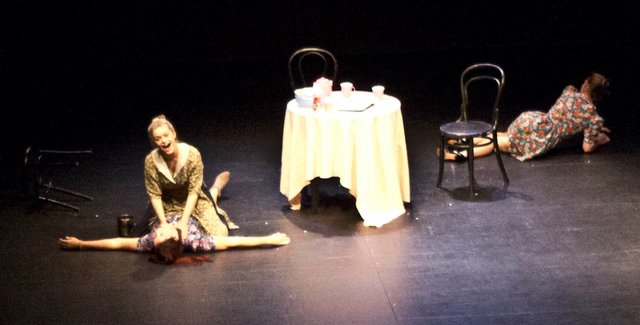
Image by Helen White

Theatre review
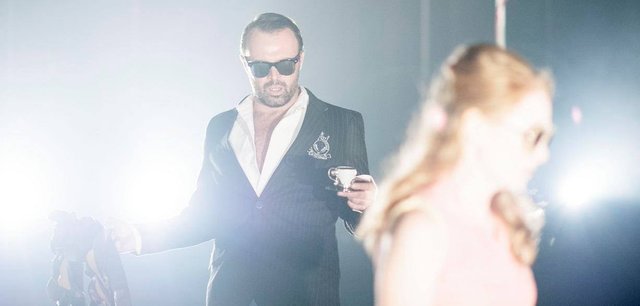
Falsettos is a musical that has everything. More than that, Darlinghurst Theatre’s latest production achieves excellence on many different levels, and provides a theatrical experience that exceeds many shows in Sydney of much grander scales (with far heftier price tags). This is a modest and intimate interpretation of an off-Broadway musical that first took form in 1981, but it surprises with the emotional punch it delivers, and the incredibly impressive standard of choreography, direction and performance.

When an actor is allowed to showcase the clichéd triple-threat in demanding roles, results can be breathtaking, and in the case of lead man Tamlyn Henderson, it is definitely so. Henderson’s performance is skilful and complex. He draws laughter and tears, all the while being Mr Showbiz, all booming singing voice and nifty footwork, but simultaneously completely believable and tender in his characterisation. Henderson is in a word, fantastic.

Katrina Retallick brings an extraordinary warmth to her Trina, and performs the single most memorable number of the night, based entirely on a step aerobics routine. Young actor Isaac Shaw steals hearts in the role of the irresistibly cute Jason, displaying talent and ability that matches up confidently to his adult counterparts.

In spite of his ugly wig and spectacles, Stephen Anderson’s natural charisma is clearly evident. His comic ability is well utilised in the show, and his singing voice is delightfully versatile and reliably resonant. Ben Hall provides the story’s eye candy, and certainly lives up to that challenge. Thankfully, Hall imbues his role with a healthy sense of humour, and is a strong enough singer to hold his own (but does suffer a little from the lack of microphones). It must be noted that Nigel Ubrihien’s solo piano accompaniment is outstanding, and does what a full orchestra sometimes fails to do. The feel and accuracy he contributes to the sonic landscape of the production is absolutely crucial and perfectly executed.

Visual design elements are effective but understated. Ingenuity is shown in the use of seven coffin-like structures that are incorporated elegantly into stage design and choreography, but could probably benefit from a little sprucing up. Our eyes focus on characters, while set, props, costumes and lighting take a back seat in this musical.

Director Stephen Colyer’s extensive background in dance shines through brilliantly. His use of movement and the physical form is intricate, deeply considered, and beautiful. The lines between choreography and direction are entirely blurred. Characters never dance for the sake of dancing alone. Every move is for character development and storytelling. Colyer obviously knows all there is to know about entertainment and show pacing, but he is also careful to handle the material with sensitivity and spirituality, which in turn produces a good level of depth that accompanies the sentimentalities that pervade the writing. The show he has created is artistically inventive and technically accomplished. It is also highly entertaining, thought provoking and full of humanity. This is the musical format thoroughly evolved.

www.darlinghursttheatre.com

Review: Pinball (Duck Duck Goose Theatre Company)

pinball1Venue: TAP Gallery (Darlinghurst NSW), Feb 11 – 28, 2014
Playwright: Alison Lyssa
Director: Sarah Vickery
Actors: Ali Aitken, John Michael Burdon, Leo Domingan, Emma Louise, Faran Martin, Karoline O’Sullivan

Theatre review
Pinball first appeared in 1980/81, providing an early voice for the plight of lesbian mothers, who had faced oppressive heteronormative forces in their fight for rights to custody of their children. Alison Lyssa’s words are powerful and devastating. With the passage of time, her feminist point of view as expressed in the play may resonate differently from original intentions, but her depiction of misogyny and homophobia in Western and Christian societal structures remains accurate, scathing and raw.

Sarah Vickery’s direction, like the pinball, brings colour, movement, bells and whistles to the work, effectively preventing the play from lingering too much in dark and dour territory. There is however an unevenness and disunity in acting styles, which results in confusion with storylines, and performers detracting from each other’s work. Karoline O’Sullivan plays melodrama well and excels with a sense of fragility and earnestness, but without the appropriate support from the rest of the production, her performance seems off-kilter. John Michael Burdon works extremely hard in all of his five roles, and is delightful in scenes that require his assertive flamboyance, but less effective when restraint is needed.

Pinball machines are frustrating. They deny your will and go where they wish, despite all your attempts at imposing control over their journeys. This is also true of revolutionary politics and art. Feminism and queer politics seek to destabilise and correct the failings of our status quo, and theatre has the responsibility to challenge and advance conventions when things become too cosy and predictable. Sometimes it’s just not about you liking it.

www.facebook.com/ddgtheatre

Review: We’re Bastards (Two Peas)

bastards1Venue: Old 505 Theatre (Surry Hills NSW), Feb 6 – 23, 2014
Playwright: Oleg Pupovac
Director: Glen Hamilton
Actors: Tara Clark, Oleg Pupovac
Image by Anna Chase

Theatre review
We’re Bastards is a play that doesn’t go anywhere, about people who don’t go anywhere. Everything seems congested, but within the stagnation, an abundance of characterisation is explored in its main characters. Darling and Joe are siblings living in the disenfranchised lower classes of the United States of America. Their concerns are a world away from our middle class Australian theatre audiences, but they are a pair of oddities that instantly spark our interest. It is a bit of a freak show that unfolds, but care is taken to attempt an explanation for the damage they display.

Oleg Pupovac’s script might be too simple for some tastes, but his strength as an actor shines through within the straightforward context. Pupovac achieves a level of realism with his speech and movement that gives the production a feel of authenticity. His chemistry with Tara Clark, who plays his sister, is a highlight of the show. There is a level of intimacy between the actors that comes across, and adds complexity and mystery to their relationship.

Glen Hamilton’s direction is colourful and energetic, but his style is gentle, which sometimes comes into conflict with the script that resides in a space simultaneously cold and brutal. We’re Bastards is a brave work that takes on a time and place that is ignored but intriguing. It is about the third world that is sprouting in our own backyards in this age of increasingly severe class divisions. We all have a stake in this bastardry/illegitimacy, but it is too easy to turn a blind eye, and it is the job of art to impose these stories of injustices upon us.

www.venue505.com/theatre

Review: Bite Me (ATYP)

rsz_bite_me_5_gxmphotographyVenue: ATYP Under The Wharf (Walsh Bay NSW), Feb 5 – 22, 2014
Director: Anthony Skuse
Playwrights: Jory Anast, Jake Brain, Sophie Hardcastle, Tasnim Hossain, Julian Larnach, Zac Linford, Felicity Pickering, Emily Sheehan, Kyle Walmsley, Keir Wilkins
Actors: Airlie Dodds, Darcie Irwin-Simpson, Joel Jackson, Angelica Madeni, Sam Marques, Paul Musemeci, Julia Rorke, Emily Sheehan, Kate Williams

Theatre review
Each year ATYP (Australian Theatre for Young People) brings together 20 young writers aged between 18 and 26 to participate in their National Studio. As part of the week, the writers are given a common theme and each creates a seven minute monologue for a 17 year old actor. Bite Me presents 10 of those scripts, in an unusual format that brings them together, not as a coherent whole, but a visceral entity that stands alone as a singular work of theatre.

The common theme in all the writing is food, but Anthony Skuse’s direction does not rely on that convenience to tie things together into one obvious unit. Instead, he focuses our attention on the actors’ work and design aspects of the production, to create an experience that is dramatic, thrilling, and avant garde. Skuse is acutely aware of the audience’s senses and all the potentialities an empty space holds for addressing them. His respect for actors and all their capacities is evident, and we are given the best sides of all his performers. Along with movement coach Adèle Jeffreys, Bite Me showcases a kind of image driven theatre that wonderfully imagines bodies in spaces, and pushes the boundaries of creativity within a realm of minimalism.

The cast is a young one, and while their standards of performance vary, all are allowed to present their strengths, and an excellent sense of evenness is achieved in terms of stage time. Julia Rorke, in Kyle Walmsley’s Food Baby, is easily the funniest in the ensemble. Her comic timing is natural and gleeful, and her determination in connecting with the audience is irresistible. Paul Musumeci’s performance of Keir Wilkins’ George is beautifully restrained. Like a caged lion, Musumeci exhibits a powerful magnetism, one resulting from a very controlled expression of a certain mysterious intensity that resides in the actor’s being. Jory Anast’s Pip Nat Georgie is performed by Airlie Dodds who delivers, without the aid of makeup and costumes, a memorable depiction of an archetypal young Australian masculine character. Dodds’ feminine appearance provides the perfect juxtaposition for her character, and allows us to see the actor’s interesting work with great clarity.

Set, lighting and sound design are thoughtful and exquisite. Narratives are scarce in Bite Me, but its atmospherics are dynamic and beautiful. This is a great achievement, given the minimalist approach taken by all the technical components. There have been many other showings of short plays that have entertained or titillated more, but this is a production that fascinates and impresses. It is thoroughly original.

www.atyp.com.au

Review: Proof (Ensemble Theatre)

proofVenue: Ensemble Theatre (Kirribilli NSW), Jan 31 – Mar 8, 2014
Playwright: David Auburn
Director: Sandra Bates
Actors: Matilda Ridgway, Catherine McGraffin, Adriano Cappelletta, Michael Ross

Theatre review
There seems a fine line between genius and madness. Both are by nature alienating, and people who present these qualities frequently feel misunderstood or isolated. In our age of overdiagnosis and hypervigilance, mental conditions seem to be everywhere, presenting to society innumerable challenges relating to the way we manage them in daily lives. As we continue to obsessively pathologise every less than common behaviour including the display of extraordinary talents, so do our tendencies to impose conformity throughout our communities. Proof is a story about a woman’s gift in mathematical ability, and the pressures she faces from living a less than conventional life.

Sandra Bates’ direction relays the story clearly, and pays close attention to dynamics between characters. We have a good sense of who these people are, and the world in which they live is portrayed vividly. Tragic elements of the play are fleshed out particularly well, with themes of death, illness, betrayal and jealousy providing tension and gravitas. The production is however, less effective in its lighter moments, where some of the comedy can be stiff and muted. Bates’s work might not be consistently strong through every scene, but where the drama does work, things get fabulously explosive.

The four actor ensemble is tight and even. These are generous performers who have opened up to their audience and to each other. The frisson between characters is a highlight of the show, and their interchanges are thoroughly enjoyable. Michael Ross plays Robert with ardour and depth. He delves into a realism that appeals to our empathy, but also performs the character’s madness with a fiery gusto that keeps us engrossed. Lead actor Matilda Ridgway is committed and present. She has a warmth that allows us to identify readily with Catherine’s ordeal, but her emotional range requires further expansion in order to hit all the right notes required by the emotionally complex script.

David Auburn’s writing delivers a story that is intriguing and passionate. It is also deceptively simple, and only with protracted excavation can all its subtleties be brought to light in the theatre. In this new production by Ensemble Theatre, we are treated to a fascinating story, told with an authenticity and a gentleness that will resonate with anyone who has ever wondered about the insanity and ingenuity that resides in every person.

www.ensemble.com.au

Review: Hotel Sorrento (The Genesian Theatre)

rsz_sorrento3Venue: The Genesian Theatre (Sydney NSW), Jan 18 – Feb 22, 2014
Playwright: Hannie Rayson
Director: Shane Bates
Actors: Sarah Purdue, Melanie Robinson, Gemma Munro, Barry Moray, Martin Bell, Oliver Beard, Lyn Turnbull Rose, Rob White
Image by Mark Banks

Theatre review
One of the key functions of art (if art has any function at all), is to express and represent concepts of identity. In the case of the Australian identity, the discussion is always a fascinating, and complex one. We are intrinsically invested in the issue, and the diversity of perspectives makes for effortlessly dynamic discourse. Hotel Sorrento was written in 1990 and talks a lot about who we are, who we like to think we are, what others think of us, and why we care. It presents a view of Australia as a nation trying to find its feet, almost like an awkward teenager in the later stages of puberty, unsure of itself but determined to establish something substantial and defined.

This production features a committed cast, including Oliver Beard who plays Troy, an awkward teenager just beginning to understand the mechanisms at play in his family that give meaning to his very being. Sarah Purdue is the strongest actor on this stage, creating a Hilary that is tender and moving despite her parochialism. Purdue’s knack for naturalism provides the perfect tone for the production and she successfully shows us the depths of her character even when the details are not all spelt out in the script. Lyn Turbull Rose is delightful and infectious in a scene talking about yearning and passion as Marge, and Martin Bell injects much needed humour in a show that tends to be overly serious at times.

Shane Bates’ direction focuses on storytelling, and the clarity of his plot is a pleasure. The show however, seems to be a bit oversimplified, and the characters seem a little analogous. We are left with a desire for something more colourful, with slightly more complication and inconvenience. Nevertheless, it is exciting to see a great script remembered and revived with such fitting respect and genuine affection.

www.genesiantheatre.com.au

Review: On The Shore Of The Wide World (Pantsguys / Griffin Theatre Company)

pantsguysVenue: SBW Stables Theatre (Kings Cross NSW), Jan 8 – Feb 1, 2014
Playwright: Simon Stephens
Director: Anthony Skuse
Actors: Alex Beauman, Paul Bertram, Kate Fitzpatrick, Huw Higginson, Graeme McRae, Lily Newbury-Freeman, Emma Palmer, Amanda Stephens-Lee, Alistair Wallace, Jacob Warner

Theatre review
Conventions of drama seek to draw in audiences, to create a kind of psychological and emotional engagement that other art forms do not offer quite as readily. Plays about family dynamics in particular tend to provide an experience that is about sentimentality, whether melancholic or uplifting. On The Shore Of The Wide World however, keeps viewers at arms length, encouraging an objective perspective and intelligent discourse about contemporary middle class family lives. This does not mean that the audience is alienated to an extent that we do not care about its characters. Conversely in fact, Anthony Skuse’s direction appeals to our humanity and allows us to empathise with each diverse personality, while engaging deeply with their challenges and circumstances.

One of the main techniques employed to place the material in an intellectual framework is the positioning of actors on stage even when the scene unfolding does not involve them. We see these “extraneous” characters watching and thinking about what is being played out, and try to scrutinise their responses. This causes a constant tension that adds dimension to every plot development, for we are always reminded of repercussions and contrasting points of view.

The ensemble is marvellous. Characterisations are convincing and intentions are clear. We know who these people are, what they think, and how they feel about each other. Kate Fitzpatrick plays the role of grandmother Ellen with restraint and a whole lot of authenticity. It is a minimal performance that works splendidly within the confines of the intimate theatre, and we never question the validity of the actor’s choices. Fitzpatrick’s work is wonderfully elegant, telling her story very persuasively, while being very still. The most memorable performance in the production belongs to Huw Higginson. The role of Pete is written with a lot of thoroughness, and Higginson’s interpretation is equally exacting. His portrayal is subtle and vulnerable, but the actor is unafraid of dramatics when they are required. His chemistry with all co-players are palpable, creating an on stage family that is entirely believable.

This is an unusual theatrical experience, one that talks to its audience with intelligence about themes that are universal. It addresses our concerns with honesty, but does not provide convenient resolutions. Like a good parent, this is a show that tells you what you need to hear, not what you want to hear.

www.griffintheatre.com.au

Review: Wittenberg (Brevity Theatre / Sydney Independent Theatre Company)

rsz_wittenbergVenue: Old Fitzroy Theatre (Woolloomooloo NSW), Jan 7 – 25, 2014
Playwright: David Davalos
Director: Richard Hilliar
Actors: David Woodland, Alexander Butt, Nick Curnow, Lana Kershaw

Theatre review
Wittenberg is a play that examines the struggle between theology and philosophy. We are positioned along with Hamlet (in his younger years) in the centre of the action, caught between reason and religion. David Davalos’ text is a dense one. Western literature is referenced relentlessly, creating a post-modern structure based on citations of classical concepts, characters and quotations.

Richard Hilliar’s direction is confident and precise. He places equal emphasis on dramatics and content, ensuring a show that appeals intellectually and is also fabulously entertaining. Hilliar does his best to make sense of the lines, which are frequently academic and cerebral, and while some of us might find it challenging to absorb everything, the direction succeeds in keeping us engaged at all times.

Design elements of the production are simple, elegant and effective. The set in particular, works well with the space and the performers. Lighting is creative but also unintrusive. It is a pleasure to see the Old Fitzroy stage given some three-dimensionality and lightness.

Performances are consistently strong, and all actors seem to be very thoroughly rehearsed. Intentions are clear, and their control over their tricky lines are very accomplished. David Woodland’s performance however, is completely show stealing. His portrayal of John Faustus is charismatic, committed and irresistibly convincing. He has a fearless approach that effervesces unceasingly, and he resonates strongly at every turn. We hear his points of view clearly, and we empathise with his vulnerabilities. His co-actors are not weak by any stretch of the imagination, but the show becomes unintentionally asymmetrical in its intellectual arguments due to the overwhelming persuasiveness of one side.

Ultimately, this is not a play that seeks to change anyone’s core beliefs, but it reminds us of the other, and the values it holds close. Wittenberg is about the plurality of our existences, and the constant negotiations we endure in making sense of our daily lives.

www.facebook.com/BrevityTheatreCo

The Dreamer Examines His Pillow (Unpathed Theatre Company)

dreamerexaminesVenue: TAP Gallery (Darlinghurst NSW), Dec 10 – 21, 2013
Playwright: John Patrick Shanley
Director: Vashti Pontaks
Actors: Ainslie Clouston, Scott Lee, Peter McAllum
Image by Tom Bannerman

Theatre review (of preview performance, Dec 11)
The best stories in theatre and film contain messages and morals that are applicable to lives everywhere. The Dreamer Examines His Pillow seeks to unpack profound truths of our shared experiences, and present on stage an enlightened point of view that can enrich and inspire everyone. John Patrick Shanley’s script was written early on in his career, but is masterful in the way it expresses its philosophies, mainly from the perspective of a middle-aged character.

Peter McAllum plays Dad, the aforementioned role, with powerful conviction and exquisite relish. It is evident that McAllum has a good affiliation with the material, and many of the play’s complex ideas are articulated effortlessly and clearly through his portrayal. McAllum is thoroughly enjoyable to watch. He dominates in his scenes, and is quite obviously having the time of his life in this unique gem of an opportunity.

Direction by Vashti Pontaks relies heavily on performances from her three actors, who are all keenly energetic, but who also vary in experience and ability. While they are all focussed and charismatic, the depth of some sections do not always translate well when in the hands of the younger performers. Chemistry is also lacking between the young leads, and humorous moments are sometimes missed. Pontaks’ strength lies in the more serious aspects of the play, but the length of the work requires that its lighter sections deliver the laughs, in order that interest is more effectively sustained.

A lot of Dreamer is about courage, and Pontaks drives that message through beautifully. She also constructs a world where the concept of fear is palpably believable. The courage we need for living full lives, and the courage artists need for bringing their work to fruition, are explored and on display in this earnest and dynamic production. It is up to us to rise from our slumber, and to decide for ourselves whether an unexamined life is worth living.

www.unpathed.com.au

Cowboy Mouth (Such&Such Productions)

rsz_img_8354Venue: TAP Gallery (Darlinghurst NSW), Dec 4 – 7, 2013
Playwrights: Sam Shepard & Patti Smith
Director: Kate Wadey
Actors: Bianca London, Jake Lyall

Theatre review
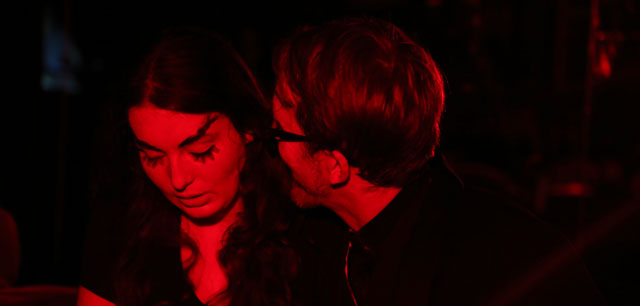
The script is a challenging one. It is full of incoherence, and has consistent stylistic allusions to intoxication. Abstraction is its addiction, and effort is required of both artist and audience to embrace and appreciate it. Words on stage function differently from when they are in a book. We listen to them at a speed dictated by actors, and do not have the luxury to ruminate on complex sections at our own leisure. Fortunately, Kate Wadey’s direction is careful to tell the story visually and through music, creating a show that relies on more than the delivery of lines to connect.

Wadey’s creative decisions are interesting and well thought through. She utilises her actors’ skills well, showing them off in the best light possible, thus drawing us into their bizarre love story. Wadey has chosen to play the characters’ conversation relatively straightforward, which helps with grounding the abstract nature of the writing, but sacrifices the opportunity for more outlandish theatrical expression. There is a sense of restraint that makes for an elegant interpretation, but could at times come across slightly conservative.

Jake Lyall plays Slim with great conviction and power. Within the confines of script and direction, he does a beautiful job of bringing to life a character that we do not necessarily understand a great deal of. He portrays a wide range of emotion with authenticity and clarity, and it is his emotional journey that forms the main plot trajectory on which we travel. Lyall is a charismatic performer who commands attention easily, and shows intelligence in the measured way he tackles the role.

Bianca London’s portrayal of Cavale highlights the innocence of the couple. London has the valuable quality of affability, and the wide-eyed wonder she brings to the piece lightens the work, making it more palatable, although the bleak inebriation that characterises the writers’ legacy from the period is missed. Nostalgia and reminiscence is not a major driving force in this production of Cowboy Mouth, but as an exploration of intimate theatre, it succeeds in creating something unconventional, landing at a space that is certainly off the beaten track.

www.facebook.com/SuchandSuchproductions